i
Information Management
Specialization in Information Technologies
ASSESSING SOFTWARE AS A SERVICE DIFFUSION:
FROM ADOPTION TO ITS CONTINUANCE INTENTION
Ricardo José dos Santos Martins
A thesis submitted in partial fulfillment of the requirements for
the degree of Doctor in Information Management, under the
supervision of Prof. Tiago Oliveira and Prof. Manoj A. Thomas
November, 2016
NOVA Information Management School Universidade Nova de Lisboa
iii Advisors:
Professor Doutor Tiago Oliveira, Co-Supervisor Professor Doutor Manoj A. Thomas, Co-Supervisor
iv
Copyrights © by
Ricardo José dos Santos Martins All rights reserved
v ABSTRACT
Technological progress is enabling firms to acquire software from different architecture environments. One such architecture environment that has produced a considerable impact on the markets is software as a service (SaaS). SaaS focuses on delivering software hosted off-premises and accessed remotely by means of a subscription fee. Recognized by managers and researchers as a promising solution, it is expanding in the software markets. However, SaaS is surrounded by uncertainty as its perceived viability is still questioned. Although this has motivated recent research into the determinants of SaaS, evidence suggests that it is still not enough. Research has much to cover in order to improve our understanding of the SaaS diffusion process.
This dissertation investigates the SaaS diffusion process at a firm level by examining the drivers for each stage. Specifically, we analyze the different influences of the determinant factors on SaaS from the intention to adopt, passing through adoption, routinization and use, as well as its continuance intention. Because SaaS is considered a specific form of information systems outsourcing (ISO), in a first phase we assess the determinants in the context of ISO adoption in order to introduce to its investigation. The purpose of this approach is twofold. First, we test the appropriateness of the theoretical framework selected for the study of SaaS through its application in the analyses of ISO. Second, we find factors of ISO that are transferable to the SaaS context. In a second phase, we consider mediator and moderator influences and propose a new approach of applying a well known theoretical framework in the setting of SaaS adoption.
This dissertation contributes to scholarship by enhancing current knowledge of why firms adopt and use SaaS. It incorporates seven studies individually separated into chapters. Chapter 2 is a detailed literature review on ISO and SaaS. As mentioned above, SaaS a specific form of outsourcing. Chapter 3 introduces the main theme by evaluating the suitability of the base framework proposed in this work on the study of ISO. Chapters 4 and 5 are extensions of chapter 3, in which comparisons of the determinants for ISO adoption in different business areas are performed. In chapter 6 we assess the determinants of the SaaS diffusion process (i.e. intention, adoption, and routinization). The factors that influence SaaS use and its continuance intention are identified in chapter 7. In chapter 8 we provide a new
vi
approach of applying the theoretical framework used in this dissertation in the context of SaaS adoption.
This work adopts a positivist epistemological posture. As for the research methodology, a deductive method is used. All studies of this dissertation with the exception of the one presented in chapter 2 are based on the technology-organization-environment (TOE) framework. Additionally, we integrate TOE framework with other theories to enhance the explanatory power of the model. Thus, in chapters 4 and 5 we use diffusion of innovation (DOI) theory; in chapter 6 the institutional theory (INT) is used, in addition to DOI theory; in chapter 7 we include opportunity-risk framework apart from the theories already mentioned.
The findings of this dissertation confirm that little research has indeed been performed on SaaS adoption, and more efforts are needed to provide an in-depth understanding of the topic. Through the analysis performed in the ISO context in chapters 3, 4, and 5, the TOE framework suitability as a theoretical basis for the study of SaaS is confirmed. Significant factors of ISO that are transferable for the SaaS context are also found. Relative advantage, complexity, technology competence, top management support, and normative pressures are determinants in the intention to adopt stage. Normative pressures are a constant determinant in the intention, adoption, and routinization stages. Additionally, a total effect (direct effect and indirect effect combined) of cost savings, relative advantage, and top management support is found in the adoption stage of SaaS. A cost savings total effect on the intention to adopt is also found. In terms of the post-adoption stages (i.e. SaaS use to its continuance intention) the findings confirm top management support and normative pressures as determinants of SaaS use. SaaS use and perceived opportunities are significant factors for the continuance intention. Moreover, the relationship between SaaS use and continuance intention is moderated by perceived opportunities. Finally, in this research we validate a new conceptual approach for the TOE framework by introducing moderator effects in its application.
This investigation fills a crucial research gap by providing a better understanding of the determinants that affect organizational SaaS diffusion, advancing newer paths of approaching a solid theoretical framework.
vii Keywords
Information systems outsourcing, technology-organization-environment framework, diffusion of innovations, IT adoption, Software-as-a-service (SaaS), Post-adoption, institutional theory (INT), opportunity-risk model, continuance intention, moderator effects.
viii RESUMO
O progresso tecnológico tem possibilitado às empresas a aquisição de software em diferentes ambientes arquitetónicos. Um exemplo de um ambiente distinto de arquitetura tecnológica que tem produzido um impacto considerável no mercado de software é o software as a service (SaaS). O SaaS refere-se a software instalado fora da infraestrutura da empresa, cujo acesso é efetuado remotamente por meio da subscrição do serviço. Reconhecido, quer pelos gestores e investigadores, como uma solução promissora e encontrando-se em fase de expansão nos mercados de software, a sua viabilidade ainda é questionada. Embora esta dúvida tenha motivado a investigação sobre os fatores determinantes do SaaS, evidências sugerem que não é suficiente. Requer-se assim mais investigação para melhorar o nosso entendimento sobre o processo difusão do SaaS.
Esta dissertação investiga os fatores determinantes para cada estágio do processo de difusão do SaaS, ao nível de empresa. Especificamente, analisamos as diferentes influências dos fatores determinantes desde a intenção de adotar, passando pela adoção, rotinização e uso, até à intenção de continuidade do SaaS. Porque o SaaS é considerado uma forma específica de outsourcing de sistemas de informação (ISO), numa primeira fase deste estudo avaliamos os fatores determinantes no contexto da adoção do ISO a fim de introduzir esta investigação. Esta abordagem tem dois objetivos: testar a adequação do quadro teórico escolhido para o estudo do SaaS através da sua aplicação no contexto do ISO e obter os fatores que se revelaram significativos no ISO e que podem ser utilizados no contexto do SaaS. Numa segunda fase, consideramos as influências de fatores moderadores e mediadores no estudo da adoção do SaaS e propomos uma nova abordagem para a aplicação do quadro teórico de referência.
Sete estudos, separados por capítulos, compilam esta investigação. É nosso objetivo ampliar o conhecimento atual sobre como as empresas adotam e usam o SaaS. Como mencionado, o SaaS é uma forma específica de outsourcing, assim o capítulo 2 é uma revisão detalhada da literatura sobre o ISO e SaaS. O capítulo 3 avalia a adequação do quadro teórico base proposto neste trabalho no âmbito do estudo do ISO. Os capítulos 4 e 5 são extensões do capítulo 3, nos quais são efetuadas análises comparativas dos fatores determinantes para a adoção do ISO entre as diferentes áreas de negócio. No capítulo 6, avaliamos os fatores determinantes do processo de difusão do SaaS (intenção, adoção e
ix rotinização). Os fatores que influenciam o seu uso e continuidade são identificados no capítulo 7. No capítulo 8, apresentamos uma nova abordagem para a aplicação do quadro teórico de referência utilizado nesta dissertação, no contexto da adoção do SaaS.
A postura epistemológica adotada é a positivista e utiliza-se o método dedutivo no respeitante à metodologia de pesquisa. Todos os estudos apresentados, com exceção do capítulo 2, são baseados no quadro teórico tecnologia-organização-ambiente (TOE). Adicionalmente, integramos o quadro teórico TOE com outras teorias para aumentar o poder explicativo do modelo. Assim, nos capítulos 4 e 5 utilizamos a teoria difusão da inovação (DOI); No capítulo 6 é utilizada a teoria institucional (INT), em conjunto com a teoria DOI; No capítulo 7, incluímos o quadro teórico oportunidade-risco para além das teorias já mencionadas.
Os resultados desta dissertação confirmam que a investigação sobre a adoção do SaaS é escassa e que são necessários mais esforços para conferir uma maior clareza sobre o tema. Da análise realizada no contexto do ISO, nos capítulos 3, 4 e 5, a adequação do quadro teórico TOE como base teórica de referência para o estudo do SaaS é confirmada. Os fatores determinantes para o ISO e que se adequam ao contexto do SaaS também foram identificados. A vantagem relativa, a complexidade, a competência tecnológica, o apoio da gestão de topo e as pressões normativas são determinantes no estágio da intenção de adotar. As pressões normativas são um fator determinante constante, nos estágios da intenção, adoção e rotinização. Além disso, um efeito total (efeito direto e efeito indireto combinado) da redução de custos, vantagem relativa e apoio da gestão de topo é verificado na fase de adoção do SaaS. Um efeito total de redução de custos sobre a intenção de adotar também é detetado. No que diz respeito aos estágios da pós-adoção (uso do SaaS e a intenção de continuidade), os resultados confirmam o apoio da gestão de topo e pressões normativas como determinantes no uso do SaaS. O uso do SaaS e oportunidades percebidas são fatores significativos para a intenção de continuidade. Além disso, a relação entre o uso do SaaS e a intenção de continuidade é moderada pelas oportunidades percebidas. Finalmente, apresentamos e validamos uma nova abordagem do quadro TOE, introduzindo efeitos moderadores na sua aplicação.
Esta dissertação preenche uma lacuna crucial na investigação, proporcionando um melhor entendimento dos fatores determinantes que afetam o processo de difusão do SaaS e avançando novos caminhos de abordagem de um quadro teórico de referência.
x
Keywords PT:
Outsourcing dos sistemas de informação, quadro tecnologia-organização-ambiente (TOE), difusão da inovação, adoção de TI, Software as a Service, pós-adoção, teoria institucional, modelo oportunidade-risco, intenção de continuidade, efeitos moderadores.
xi PUBLICATIONS
List of publications resulting from this dissertation.
Papers:
Martins, R., Oliveira, T., & Thomas, M. A. (2016). An empirical analysis to assess the determinants of SaaS diffusion in firms. Computers in Human Behavior, 62, 19-33.
Martins, R., Oliveira, T., & Thomas, M. A. (2015). Assessing Organizational Adoption of Information Systems Outsourcing. Journal of Organizational Computing and Electronic Commerce, 25(4), 360-378.
Book chapter:
Martins, Ricardo, and Tiago Oliveira. "Information Systems Outsourcing, the Umbrella Term for e-Business Strategic Management Sourcing: Service Comparison." Handbook of Strategic e-Business Management. Springer Berlin Heidelberg, 2014. 687-705.
ISI Proceedings:
Martins, Ricardo, Tiago Oliveira, and Manoj A. Thomas. "Comparing information systems Outsourcing between human resource and finance." Information Systems and Technologies (CISTI), 2013 8th Iberian Conference on. IEEE, 2013.
xii
ACKNOWLEDGMENTS
During the four amazing years of intensive work and continuous learning, some people proved to be fundamental, as this dissertation would not have been possible without their contribution, and my gratitude goes to all:
To my advisors, Professors Tiago Oliveira and Manoj Thomas, for their expertise, guidance, and encouragement moving forward on this path of investigation. Their suggestions and support contributed to the quality of this work. A special thanks to Professor Tiago for the availability, support and perspective over these years.
To Professor John Huffstot, always available in proofreading the chapters of this dissertation even with very pressing deadlines.
To Nova IMS, for providing me the conditions needed to handle this research. To the teachers and colleagues of the Doctoral Program in Information Management, for their critical thinking.
Finally, to my family, to whom I dedicate this manuscript: my dearest wife Joana for her support, patience, and faith in me. You have offered me love and confidence to pursue this path, and encouraged me to do better. My dearest and beautiful son, Tiago, being your father was the best surprise of this journey, and all your kindness and enthusiasm helped me to persevere. You make everything so much better.
xiii CONTENTS PAGE Chapter 1 – Introduction 1 1.1 MOTIVATION 1 1.2 ADOPTION MODELS 2 1.3 RESEARCH FOCUS 3 1.4 PURPOSE 3 1.5 METHODS 5 1.6 PATH OF RESEARCH 6
Chapter 2 – Information Systems Outsourcing decision: Software as
a Service: literature review 9
2.1 INTRODUCTION 9
2.2 BACKGROUND 10
2.3 RESEARCH METHODOLOGY 11
2.4 FROM ISO TO SAAS 12
2.5 DISCUSSION 17
2.6 CONCLUSIONS 21
Chapter 3 – Assessing organizational adoption of information
systems outsourcing 23
3.1 INTRODUCTION 23
3.2 BACKGROUND 25
3.3 RESEARCH MODEL AND HYPOTHESES 27
3.4 RESEARCH METHODOLOGY 31
3.5 DATA ANALYSIS AND RESULTS 34
3.6 DISCUSSION 36
3.7 IMPLICATIONS AND LIMITATIONS 38
xiv
Chapter 4 – Comparing Information Systems Outsourcing between
Human Resource and Finance 41
4.1 INTRODUCTION 41
4.2 LITERATURE REVIEW 41
4.3 RESEARCH MODEL AND HYPOTHESIS 42
4.4 RESEARCH METHODOLOGY 45
4.5 DATA ANALYSIS 47
4.6 DISCUSSION 50
4.7 THEORETICAL IMPLICATIONS 51
4.8 CONCLUSIONS 52
Chapter 5 – Information systems outsourcing, the umbrella term for
e-business strategic management sourcing: service comparison 53
5.1 INTRODUCTION 53
5.2 LITERATURE REVIEW 54
5.3 RESEARCH MODEL AND HYPOTHESES 55
5.4 RESEARCH METHODOLOGY 59
5.5 DATA ANALYSIS AND RESULTS 63
5.6 DISCUSSION 65
5.7 THEORETICAL IMPLICATIONS 67
5.8 CONCLUSIONS 67
5.9 LIMITATIONS AND FUTURE STUDIES 68
Chapter 6 – An empirical analysis to assess the determinants of
SaaS diffusion in firms 71
6.1 INTRODUCTION 71
6.2 THEORETICAL BACKGROUND 72
6.3 CONCEPTUAL MODEL AND HYPOTHESES 78
6.4 RESEARCH METHODOLOGY 84
6.5 DATA 86
6.6 RESULTS 88
6.7 DISCUSSION 92
6.8 LIMITATIONS AND FUTURE DIRECTIONS 98
xv Chapter 7 – Contextualizing the drivers of SaaS usage and assessing
continuance intention 101 7.1 INTRODUCTION 101 7.2 LITERATURE REVIEW 103 7.3 CONCEPTUAL MODEL 108 7.4 RESEARCH METHODOLOGY 115 7.5 DATA ANALYSIS 117 7.6 DISCUSSION 124 7.7 CONCLUSION 128
Chapter 8 – Is the environmental context of the TOE framework limited to a direct influence on the adoption decision? - An empirical
investigation into the software as a service (SaaS) adoption 129
8.1 INTRODUCTION 129 8.2 THEORETICAL BACKGROUND 131 8.3 CONCEPTUAL MODEL 136 8.4 RESEARCH METHODOLOGY 139 8.5 DATA COLLECTION 140 8.6 DATA ANALYSIS 142 8.7 DISCUSSION 146 8.8 CONCLUSION 149 Chapter 9 – Conclusions 151 9.1 CONTRIBUTIONS 154
9.2 LIMITATIONS AND FUTURE RESEARCH 156
REFERENCES 157
xvi
LIST OF TABLES PAGE
Table 2.1 - Literature reviews on ISO 13
Table 2.2 - Studies on SaaS decision 15
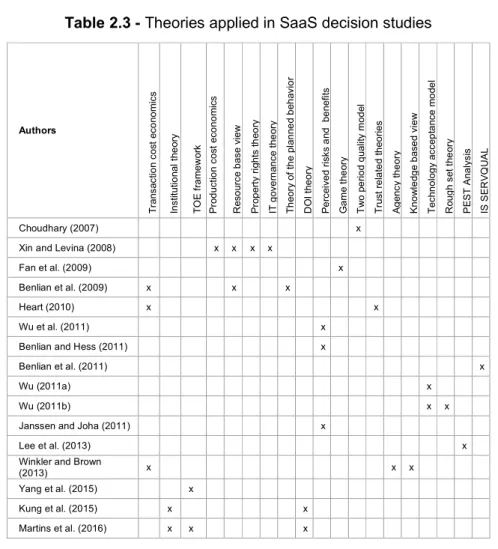
Table 2.3 - Theories applied in SaaS decision studies 18 Table 3.1 - Measurement items on five-point Likert scale (ISO adoption) 31
Table 3.2 - Other measurement items (ISO adoption) 32
Table 3.3 - Sample characteristics (n=261) (ISO adoption) 32 Table 3.4 - Factor and validity analysis (ISO adoption) 33
Table 3.5 - Reliability properties 34
Table 3.6 - Classification table 35
Table 3.7 - Results of the logistic regression analysis 35 Table 4.1 - Measurement items on five-point Likert scale 46
Table 4.2 - Other measurement items (HR vs Finance) 46
Table 4.3 - Factor and validity analysis (HR vs Finance) 48
Table 4.4 - Logistic regression 49
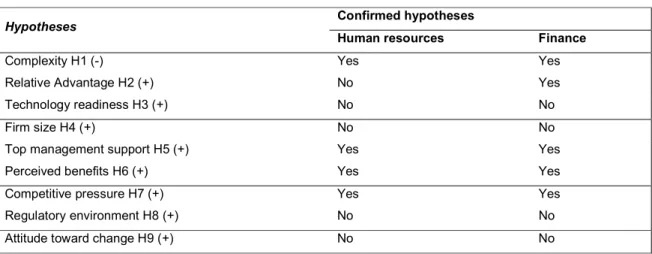
Table 4.5 - Summary of confirmed hypotheses 50
Table 5.1 - Measurement items on five-point Likert scale (service comparison) 60 Table 5.2 - Other measurement items (service comparison) 60 Table 5.3 - Sample characteristics (n=261) (service comparison) 61
Table 5.4 - Factor analysis (service comparison) 62
Table 5.5 - Logistic regression 64
Table 5.6 - Summary of confirmed hypotheses 64
Table 6.1 - Measurement items (SaaS diffusion) 85
Table 6.2 - Testing possible Biases 87
Table 6.3 - Sample characteristics (n=265) (SaaS diffusion) 87
Table 6.4 - CR, AVE and correlations 88
Table 6.5 - Factor analysis (SaaS diffusion) 89
Table 7.1- SaaS diffusion studies published in peer review journals 104
Table 7.2 - Measurement items 116
Table 7.3 - Sample characteristics (n=265) (SaaS post-adoption) 117
Table 7.4 - Correlation Matrix 118
Table 7.5 - Factor analysis (SaaS post-adoption) 119
xvii
Table 8.1 - Studies on SaaS diffusion 132
Table 8.2 - Measurement Items 140
Table 8.3 - Testing possible biases: early vs. late respondents 141
Table 8.4 - Sample characteristics (n=265) 142
Table 8.5 - Correlation, composite reliability (CR), and average variance
extracted (AVE) 143
Table 8.6 - Loadings and cross-loadings 143
Table 8.7 - Formative measurement model evaluation 144
xviii
LIST OF FIGURES PAGE
Figure 1.1 - Research focus on SaaS 3
Figure 3.1 - The research model for the ISO adoption study 27
Figure 3.2 - Likelihood of ISO adoption 36
Figure 4.1 - The conceptual model for deciding on ISO adoption 43 Figure 5.1 - The conceptual model for deciding on ISO adoption 56
Figure 6.1 - SaaS diffusion conceptual model 80
Figure 6.2 - Structural model of SaaS diffusion 91
Figure 7.1 - The conceptual model for post-adoption of SaaS 110 Figure 7.2 - Structural model (variance-based technique) for
post-adoption of SaaS 120
Figure 7.3 - Predicted SaaS continuance intention – Interaction between
perceived opportunities and SaaS use. 121
Figure 8.1 - Conceptual model of SaaS adoption 137
Figure 8.2 - Structural model (variance-based technique) for SaaS adoption 145 Figure 8.3 - Effect of technology competence as a predictor for SaaS adoption 147
xix ABBREVIATIONS
ASP - APPLICATION SERVICE PROVISION(DER) AUC - AREA UNDER THE CURVE
AVE - AVERAGE VARIANCE EXTRACTED BPO - BUSINESS PROCESS OUTSOURCING CR - COMPOSITE RELIABILITY
CRM - CUSTOMER RELATIONSHIP MANAGEMENT (CRM),
DEMATEL - DECISION MAKING TRIAL AND EVALUATION LABORATORY ECT - EXPECTATION CONFIRMATION THEORY
ERP - ENTERPRISE RESOURCE PLANNING GDP - GROSS DOMESTIC PRODUCT
GSCM - GREEN SUPPLY CHAIN MANAGEMENT HRM - HUMAN RESOURCE MANAGEMENT IAAS - INFRASTRUCTURE AS A SERVICE INT - INSTITUTIONAL THEORY
IS - INFORMATION SYSTEMS
ISO - INFORMATION SYSTEMS OUTSOURCING IT - INFORMATION TECHNOLOGY(IES)
KMO - KAISER-MEYER-OLKIN K-S - KOLMOGOROV–SMIRNOV LR - LIKELIHOOD RATIO
OPIS - ON-PREMISE INSTALLATION SOFTWARE PAAS - PLATFORM AS A SERVICE
PEST - POLITICAL, ECONOMIC, SOCIAL, AND TECHNOLOGICAL PLS - PARTIAL LEAST SQUARES
RBV - RESOURCE-BASED VIEW
RFID - RADIO FREQUENCY IDENTIFICATION RST - ROUGH SET THEORY
SAAS - SOFTWARE AS A SERVICE
SEM - STRUCTURAL EQUATION MODELLING TAM - TECHNOLOGY ACCEPTANCE MODEL TBP - THEORY OF PLANNED BEHAVIOR
xx
TCE - TRANSACTION COST ECONOMICS TCT - TRANSACTION COST THEORY
UTUAT - UNIFIED THEORY OF ACCEPTANCE AND USE OF TECHNOLOGY VIF - VARIANCE INFLATION FACTOR
1
Chapter 1 – Introduction
1.1 MOTIVATION
The need for appropriate software to improve firms’ performance is something widely recognized. During a firm’s life cycle, different needs from different types of software are expected. This may entail large and very complicated expenses if the software adoption implies the traditional form of licensing of on-premises installation. Because of this, the access to different types of software was for many years limited to firms that could afford such acquisition. On-demand software emerged to democratize the access of firms to software. This new service model, named information systems outsourcing (ISO), was designed to reduce information technology (IT) costs and improve IT performance (Currie & Seltsikas, 2001; Heart, 2010). A considerable amount of research has been produced in the last 20 years that demonstrates its importance in the software markets. Nowadays, we find new technologies that have emerged based on the same functionality as ISO, such as SaaS (Benlian & Hess, 2011; Heart, 2010). SaaS has introduced a multi-tenant architecture, allowing users to access several software products on demand (Benlian & Hess, 2011). This means that SaaS can properly support demanding business requirements, and suppliers can achieve an economy of scale of their software products (Lee, Chae, & Cho, 2013). SaaS applications are growing in the market place, but there are still uncertainties regarding its viability (Benlian & Hess, 2011). So far, little research has been performed in this field. Thus, it is important to understand the determinant factors for SaaS diffusion at firm level (i.e. from its intention to adopt, adoption, routinization and use, to its continuance intention).
The main motivational factors to do this research are presented as follows: SaaS is gaining an increasing importance in the software markets;
SaaS is a type of outsourcing, researchers found ISO research useful to pave the way to SaaS investigation;
Research on SaaS is limited, and in order to attain a deeper understanding of the dynamic of its determinant factors on the diffusion process more studies are required; Although SaaS is considered a promising solution, it is surrounded by uncertainty
2
The global scope of on-demand software participation and growth leads to knowledge gaps in the scope of technology-organization-environment.
1.2 ADOPTION MODELS
Adoption models for the study of information systems fall into different category levels of analysis. There are models that are used on an individual level of analysis such as the technology acceptance model (TAM) (Davis, Bagozzi, & Warshaw, 1989), and the unified theory of acceptance and use of technology (UTAUT) (Venkatesh, Morris, Davis, & Davis, 2003). On a firm level of analysis, models such as TOE framework (Tornatzky & Fleischer, 1990) and DOI theory (Rogers, 1995) and INT (DiMaggio & Powell, 1983) are used. Others might be used for both levels of analysis (i.e. individual and firm level) such as opportunity risk framework (Benlian & Hess, 2011; Gewald & Dibbern, 2009). Given that the target population of this dissertation is firms operating in Portugal, we focused on the models that fill this requirement. TOE’s framework has been used in several studies to explain the adoption of technological innovations such as mobile supply chain (Chan & Chong, 2013), radio frequency identification (Chong & Chan, 2012; Kim & Garrison, 2010; Wang, Wang, & Yang, 2010), green IT (Bose & Luo, 2011; Thomas, Costa, & Oliveira, 2015), inter-organizational business process standards (Venkatesh, Thong, & Xu, 2012a), e-business (Oliveira & Dhillon, 2015; Oliveira & Martins, 2010a; Zhu, Kraemer, & Xu, 2003; Zhu, Kraemer, & Xu, 2006), SaaS (Yang, Sun, Zhang, & Wang, 2015), and cloud computing (Abdollahzadehgan, Gohary, & Amini, 2013; Low, Chen, & Wu, 2011; Oliveira, Thomas, & Espadanal, 2014). DOI theory (Rogers, 2010) has been used in information systems (IS) research to explain the adoption of Internet (Alam, 2009), e-procurement (Azadegan & Teich, 2010), Radio-frequency identification (RFID) (Tsai, Lee, & Wu, 2010), e-business (Ifinedo, 2011; Zhu, Dong, Xu, & Kraemer, 2006), and cloud computing (Low et al., 2011). The INT has been used in the study of electronic human resource management (Heikkilä, 2013), intranet (Baptista, Newell, & Currie, 2010), and green IS (Butler, 2011).
Literature suggests that the INT enriches the environmental context of the TOE framework (Ciganek, Haseman, & Ramamurthy, 2014; Oliveira & Martins, 2011; Yoon & George, 2013), and gains value when used together with the DOI theory. Finally, opportunity-risk model has been used for the study of business process outsourcing (BPO) (Gewald & Dibbern, 2009), e-commerce (Lee, 2009), and SaaS (Benlian & Hess, 2011).
3 Because the goals of each chapter differ, in each of them we describe the models used and specify in detail the reasons why they have been incorporated together.
1.3 RESEARCH FOCUS
The focus of this dissertation is to understand the determinant factors for SaaS diffusion at firm level, from the intention to adopt to its continuance intention (see Figure 1.1). Related subjects such as application service provision (ASP), and cloud computing are not an issue of interest, and therefore not within the scope of this investigation.
Figure 1.1 – Research focus on SaaS
SaaS has the following characteristics:
- Its acquisition requires a subscription fee;
- The software is hosted on the supplier’s premises; - The access to the software is made via internet;
- It is built in a multi-tenant architecture, which enables suppliers to achieve an economy of scale.
Although SaaS is grounded on cloud computing, literature suggests that a meaningful insight is gained if SaaS is addressed in an isolated manner, since the determinant factors can be quite different depending on the type of cloud service under study (Schneider & Sunyaev, 2014).
1.4 PURPOSE
The purpose of this dissertation is to provide a better understanding of the factors behind SaaS diffusion at a firm level. Given the similarity of SaaS and ISO, we first perform an
4
investigation focusing on ISO. SaaS emerged from ISO, and thus focusing on the latter will be useful to better understand the former. In order to facilitate the clear comprehension of the findings, the different studies that incorporate this research are separated into different chapters.
In chapter 2 a thorough literature review on ISO and SaaS is provided. It summarizes earlier findings and identifies gaps in current knowledge. Although it is the first chapter to be presented, it was the last one to be completed, since it was constantly updated based on the progression of the research.
In chapter 3 we assess the determinants for ISO adoption, as an introductory approach to the main theme. The goal is to examine the suitability of the theoretical basis selected for this study, and to identify the significant factors of ISO adoption which could be transferable to the SaaS context.
In chapters 4 and 5 we examine the reasons for ISO adoption among different business areas. The objective is to deepen the understanding of the topic and promote a comparative analysis. Through this detailed analysis we also intend to confirm the appropriateness of assessing the determinant factors from a technological, organizational, and environmental perspective.
In chapter 6 we analyze the determinants for the SaaS diffusion process. Specifically, we seek to gain a better understanding on the relationship between the factors and the three stages of SaaS diffusion, namely intention, adoption, and routinization. Until now only a few studies have addressed the adoption of SaaS at the firm level (Wu, Lan, & Lee, 2011), most of them focusing on the direct effects of the independent variables on a single stage (i.e. SaaS adoption), and not considering other stages.
In chapter 7 we explore the determinants for post adoption stages of SaaS, namely SaaS usage and its continuance intention. Although the importance of SaaS in today’s global market cannot be ignored, only a few studies have assessed its use, and none of them addressed the strategic continuance intentions. To bring more clarity to the diffusion process, further research on post-adoption dynamics is necessary (Zhu, Dong, et al., 2006).
5 In chapter 8 a different path of applying the theoretical framework is suggested. The TOE framework is one of the most important adoption models at a firm level. Based on IT literature, TOE framework has only direct effects in explaining IT adoption. However, the question arises: can the environment context act as a moderator of the other contexts in the adoption process? In this chapter we propose an integrated research model to analyze the moderator effects of the environment context in the SaaS adoption process.
1.5 METHODS
Literature suggests the existence of three main epistemological perspectives (i.e. positivism, realism, and interpretivism). This dissertation follows the positivist approach. Several methods are required in this investigation, since it develops a new research model based on existing theories to explain SaaS diffusion process. The theory developed is tested in order to enhance our understanding of the topic, a set of hypotheses are introduced taking into account the context of the study, and all hypotheses are empirically tested. The theoretical framework and quantitative approach are described below.
1.5.1 Theoretical frameworks
Chapters 3 to 8 of this research are based on the TOE framework (Tornatzky & Fleischer, 1990). The diffusion of innovation theory (Rogers, 1995) is included in chapters 4, 5, and 6. The opportunity risk model (Benlian & Hess, 2011; Gewald & Dibbern, 2009) is used in chapter 7. Institutional theory is used in chapters 6, 7, and 8.
1.5.2 Quantitative research methods
In chapter 3 data from 261 firms is used to assess the organizational adoption of information systems outsourcing. Data were collected from a survey executed online, with an invitation for participation sent to several managers of firms in Portugal. Due to the dichotomous characteristic of the dependent variable (i.e. adopt or not adopt), logistic regression was used to test the research hypotheses.
In chapters 4 and 5, using the data described in chapter 3, the same method is used for comparing the determinant factors of ISO between different business areas. Particularly, a logistic regression method was used to test the research hypotheses.
6
In chapter 6 the results of another online survey are reported. This survey examined the determinant factors for three stages of SaaS diffusion (i.e. intention, adoption, routinization). Data were collected from a survey executed online, with an invitation for participation sent to several managers of firms in Portugal. A total of 265 usable responses were obtained. Structural equation modelling (SEM) was used to empirically test the research model. Specifically, we used Partial Least Squares (PLS) path modelling, which is a variance based technique required when maximum model complexity and low theoretical information are present (Henseler, Ringle, & Sinkovics, 2009).
In chapter 7 and 8, using the previous data from 265 firms, we used PLS path modelling to investigate the determinants for the post adoption stages of SaaS and to analyze the moderator effects of the TOE framework in the SaaS adoption, respectively.
Chapters 6, 7, and 8 report the results of testing the construct reliability, convergent validity, indicator reliability, and discriminant validity, followed by the assessment of the structural model and the hypotheses testing.
1.6 PATH OF RESEARCH
This dissertation assembles the findings of assorted investigation studies, individually reported in separate chapters. Two of these chapters are already published in international journals with double blind review process (Martins, Oliveira, & Thomas, 2015; Martins, Oliveira, & Thomas, 2016), another is published as a book chapter (Martins & Oliveira, 2014), and another was presented at an international conference (ISI indexed) (Martins, Oliveira, & Thomas, 2013). The remaining chapters are currently submitted for review at international journals.
A detailed literature review of both ISO and SaaS is included in the initial phase of this dissertation (chapter 2), as we realize the importance of ISO for a better understanding of SaaS. Although it was the first chapter to be initiated, it was also the last to be finalized. Based on the reports of earlier research, ISO was found to be a useful support to pave the way to the discussion on SaaS. Chapter 2 is currently under review at an international journal.
7 Because of the contradictory findings and gaps of knowledge verified, a specific theoretical framework that covers technological, organizational, and environmental factors was selected for this investigation. In order to test its suitability and assemble the relevant constructs for the study of SaaS, we first applied the framework in the study of ISO (chapters 3, 4, and 5). Chapter 3 was published in the Journal of Organizational Computing and Electronic Commerce (Martins et al., 2015). Chapter 4 was presented in Lisbon at the Iberian Conference on Information Systems and Technologies (CISTI) (Martins et al., 2013). Chapter 5 was published as a handbook chapter in a Springer strategic e-business management book (Martins & Oliveira, 2014). The publication date does not correspond to the chapter sequence, but the order of the chapters presented in this dissertation follows the true sequence of each study.
With the empirical support of the suitability of the theoretical model and with the constructs gathered, we initiate the focus of the investigation on SaaS, assessing the determinants of the first three stages (i.e. intention, adoption, and routinization) of the diffusion process. In order to do so, a panel of IS research experts re-examined the instrument and appropriateness of the constructs selected for the study of SaaS. Appropriate revisions were made based on their comments and observations. Chapter 6 was published in Computers in Human Behavior journal (Martins et al., 2016). In order to close the diffusion research process, in chapter 7 we initiate the study of the determinants for the post-adoption stages (i.e. SaaS use, its continued intention). Chapter 7 is currently submitted to an international journal, and in the review process.
In a conclusive stage of this investigation, we identified an opportunity to give an important final contribution and enhance the explanatory power of the theoretical framework used by introducing moderator effects. Thus, in chapter 8 we assess the moderator effects of the theoretical framework (i.e. TOE framework) in the context of SaaS adoption. Chapter 8 is currently under review at an international journal.
The conclusions of this research are presented in the last chapter (chapter 9). The fact that the chapters of this investigation are either in a submission process, under review, or were already accepted for publication demonstrate the quality of this dissertation.
9
Chapter 2 – Information Systems Outsourcing decision: Software
as a Service literature review
2.1 INTRODUCTION
Information systems outsourcing (ISO) was considered a relatively new phenomenon in the 1990s (Jens Dibbern, Chin, & Heinzl, 2012). Since it was introduced, much research has been made on the topic, and its scholarship has matched its popularity (Martins et al., 2015). One of the main intriguing paths of analysis for researchers over the years has been why firms choose ISO (Lacity, Khan, Yan, & Willcocks, 2010). Tactical reasons top the list of the most examined factors (i.e. cost reduction, business improvement, uncertainty, business risks, and security concerns) rather than strategic objectives (Lacity et al., 2010). At least 20 theoretical perspectives have been applied (Lacity et al., 2010). Over the years, the vast diversity of theoretical angles and contradictory findings have contributed to finer nuances in our understanding of ISO (Liang, Wang, Xue, & Cui, 2016). Conscious of these issues, researchers have been contributing to academia by reviewing ISO literature from time to time (Dibbern et al. (2004), Lacity et al. (2009), Lacity et al. (2010), Schneider and Sunyaev (2014), and Liang et al. (2016)). Today, new forms of ISO decisions (i.e. re-outsourcing and new sourcing decision models, such as SaaS) have gained increasing interest (Liang et al., 2016).
SaaS has introduced a multi-tenant architecture in the software markets that enables suppliers to perform an economy of scale on their software products and users to access several software products via internet (Lee et al., 2013). In the same architectural form as ISO (Benlian & Hess, 2011; Heart, 2010), it plays an increasingly important role in the software markets (Cho & Chan, 2013). SaaS has captured enthusiasm of researchers and business managers, and is considered a promising information technology (IT) solution (Chou & Chiang, 2013). Saas and ISO share many benefits and disadvantages. Improved agility of the firm’s business and lower up-front investment are some of the most highlighted benefits (Choudhary, 2007). High level of dependency to the supplier and the externalization of critical data are notable disadvantages (Benlian & Hess, 2011).
10
SaaS is increasingly drawing the attention of researchers, and it is foreseeable that more scholarship will emerge in the future. Recent studies have investigated different perspectives on the topic: some approach SaaS from the benefits and risks involved (Benlian & Hess, 2011), others from the environmental pressures perspective (Kung, Cegielski, & Kung, 2015), and some take a more holistic angle that gathers technological, organizational, and environmental factors (Martins et al., 2016; Yang et al., 2015). It is not surprising that most of these theoretical perspectives applied to SaaS have already been applied to ISO. SaaS is recognized as a special form of on-demand outsourcing, and research reported in earlier ISO studies serves as a useful foundation for designing studies on SaaS (Benlian & Hess, 2011).
The purpose of this review is to provide a discourse on SaaS scholarship in order to assist further research on the topic. In doing so, we conducted an in-depth literature review, and used earlier ISO literature to pave the way for the discussion.
The rest of the paper is structured as follows. First, the theoretical backgrounds of SaaS and ISO are presented. Then we present the research methodology and findings. Finally, we discuss the results and conclude.
2.2 BACKGROUND
In this section we give a brief introduction of ISO and SaaS concepts. ISO has been defined in a variety of ways by several authors (Dibbern, Goles & Hirschheim, 2004). Generally, a consensus prevails that outsourcing involves choosing a third party or an outside supplier to perform a task, function, or process, in order to achieve business-level benefits (Sanders, Locke, Moore, & Autry, 2007). Zhu et al. (2001) define ISO as the transfer of responsibility of a business activity or process to another entity. In the context of information systems, it represents a substantial contribution from an external vendor of physical and/or human resources in the constitution of the information technology (IT) infrastructure or its specific components (Loh & Venkatraman, 1992a). Extensive and continuing investments by firms of all sizes in ISO suggest that it is broadly viewed as a value-adding strategy (Gwebu, Wang, & Wang, 2010).
SaaS provides software access in a multi-tenant architecture, allowing users to access several software products on demand (Benlian & Hess, 2011). It emerged as an improved form of the application service provider (ASP) model (Kim et al., 2012; Xin & Levina, 2008),
11 and was the response of the software market to the limitations of the single-tenant ASP architecture. SaaS applications are generally characterized as being easy to access and use, being feature rich, and having good consumer adaptation (Zorrilla & García-Saiz, 2013). Compared to on-premise installation software (OPIS), SaaS has lower implementation costs, higher rate of improvement in software quality, and faster delivery of new features (Choudhary, 2007; Gonzálvez-Gallego, Molina-Castillo, Soto-Acosta, Varajao, & Trigo, 2015). Based on a service model that delivers, maintains, and supports software functions via the Internet, SaaS is mostly used in conjunction with business software to conduct value chain activities (such as customer relationships, human resources, sales, and online transaction management), rather than implemented as direct consumer software (Zorrilla & García-Saiz, 2013).
SaaS is grounded in cloud computing, bundling software delivery with cloud service (Fan, Kumar, & Whinston, 2009; Park & Ryoo, 2013), and transforming IT resources into a ubiquitous service (Susarla, Barua, & Whinston, 2010). Other popular cloud computing services include Infrastructure as a Service (IaaS) and Platform as a Service (PaaS). Unlike SaaS, which relates to software, IaaS refers to the delivery of the infrastructure as service, and PaaS to the virtualization of platforms (Misra & Mondal, 2011). In the published literature, we find many studies addressing the global concept of cloud computing without a proper distinction between the sourcing models. Schneider (2014) advocates that a high degree of technical complexity and limited availability of human assets (knowledge required) may affect SaaS more than IaaS or PaaS. Also, internal IT capabilities are required when adopting IaaS and PaaS, and their absence inhibits their adoption. However, in the case of SaaS internal IT capabilities are more likely to be a driver of adoption (Schneider & Sunyaev, 2014). Thus, reasons for SaaS decision may differ from the rest of the sourcing models that are based on cloud computing. In this review, we focus only on studies that address SaaS.
2.3 RESEARCH METHODOLOGY
Following Webster and Watson’s (2002) guidelines, we examined the most important literature in Information Systems (IS) covering research on ISO and SaaS. This research considered articles published only in top IS journals (e.g. Decision Support Systems, Journal of Strategic Information Systems, Journal of Management Information Systems, Information & Management, Computers in Human Behavior). Given that SaaS is a relatively new concept, we also included top IS level conferences such as ICIS and ECIS. We performed an
12
elaborated search on scholarly databases including EBSCOHost’s Academic Search Complete and Business Source Complete, all databases within Proquest (e.g., ABI/INFORM Complete and the Applied Social Sciences Index and Abstracts), and Google Scholar.
We conducted the search through titles and abstracts using the following keywords: ISO literature review, SaaS decision, Software as a service, outsourcing. The selection targeted papers that reviewed ISO literature and investigated the SaaS adoption decision specifically.
2.4 FROM ISO TO SAAS
ISO establishes democratic fairness of IT capabilities, enabling business transformation and firms’ competitiveness (Loh & Venkatraman, 1992b), but it represents large and difficult-to-reverse investments that have various inherent risks and associated costs (Watjatrakul, 2005). Researchers have investigated ISO and published a large amount of findings.
Dibbern et al. (2004) were the first authors to review the literature covering the first decade of ISO. Their research suggests a change of focus from cost reduction to a more strategic concern at firm level. Their study revealed not only the growing complexity of ISO practice, but also the interests among researchers to apply multiple theoretical perspectives to examine a multifaceted topic (Dibbern et al., 2004). Gonzalez et al. (2006) found that after year 2000, empirical investigation on ISO has increased. Their study found that most of the papers on ISO addressed reasons and risks, and from 2001 to 2005 the focus shifted to new sourcing innovations. Also, they found that the use of transaction economic theories and studies on the clients’/providers’ relationships emerged in that period. Lacity et al. (2009) suggest an increasing focus on other types of sourcing models, such as business process outsourcing (BPO), and application service provision (ASP). They found that cost reduction was the main factor studied, followed by the focus on core capabilities, access to expertise, improved business/process performance, and technical reasons (Lacity et al., 2009). Lacity et al. (2010) pointed out the absence of environmental variables on the study of ISO. Also, they suggested mimetic influences as a significant factor for ISO adoption decision. Schneider and Sunyaev (2014) found that some factors are transferable from ISO to cloud computing. They also found a consistently positive influence of top management support and institutional pressures on ISO. Liang et al. (2016) suggested that novel types of sourcing seem to have resurrected the decision literature on ISO. Table 2.1 provides a summary of the literature on ISO.
13 Table 2.1 - Literature reviews on ISO
Reference Scope Data Method Findings
Dibbern et
al. (2004) ISO concerning why papers and what to outsource, which decision and how to implement, and the outcomes between 1992 and 2000.
84
studies Structured the main explanatory factors and theoretical relationships in five main sourcing issues (why to outsource, what to outsource, which decision process to take, how to implement the sourcing decision, and what is the outcome of the sourcing decision).
From its beginnings ISO evolved as a cost-reduction tool. Similarly, the research focus has expanded from whether or not to outsource to the wider decision domains.
Gonzalez et al. (2006)
ISO papers from 1988 to 2005. They categorized the literature by the client/provider, and economic theoretical perspective. 131
studies Divided the period under study into three blocks for the analysis of the evolution topics of interest in research.
Found a shift on the research focus, from reasons for ISO (as the topic most frequently discussed) to relationships between clients and providers, and the use of transaction economic theories. Also found an increase in the number of papers on other new sourcing technologies, such as offshore and global outsourcing.
Lacity et
al. (2009) ISO papers since 1990 to 2008 concerning adoption and risks.
191
studies Coded 174 variables to report their findings in six different areas.
ISO determinants and success are the research areas most often studied. Cost reduction was the main factor studied. Following ISO strategy (i.e. the strategy behind the decision and effects of ISO decision), and mitigation of ISO risks. Other related research focused on offshore outsourcing, BPO, and the rise, decline, and resurrection of ASP.
Lacity et
al. (2010) ISO papers from 1992 to 2010 concerning adoption and outcomes.
164
studies Coded 36 dependent variables, 138 independent variables, and 741 relationships between independent and dependent variables.
Found that mimetic influences, cost reduction, focus on core capabilities, access to expertise, business improvements, and technical reasons are the most significant factors studied for ISO adoption. Transaction cost (i.e. the effort, time, and costs incurred in searching, and negotiating a service contract with a supplier) and fear of losing control are the main inhibitors.
Schneider and Sunyaev (2014) ISO and CC papers published before April 2014 concerning the determinant factors for its decision.
88
studies Systematic coding of the determinant factors that influence sourcing decisions
Institutional influences and top management support have a consistent positive influence on ISO decision. Research indicated that there are some findings transferable from ISO to the CC context and others that are not.
Liang et
al. (2016) ISO papers from 1992 to 2013 concerning multiple themes (e.g. decisions, risks, BPO, ASP, offshoring, etc)
798
studies Bibliometric method to visualize the analysis citation network path.
Research on ISO decisions has matured after 20 years of evolution. Novel sourcing varieties seem to have resurrected this path of analysis.
14
We acknowledge the detail and recentness of the literature review on ISO. Given that all researchers mentioned have reviewed ISO adoption in detail, we will not replicate their work. Instead, we will use their findings to create a discussion on SaaS.
In SaaS, we found few studies that have discussed SaaS adoption, even though the literature review identified many studies that addressed the current state and development trends of cloud services (Wu, 2011b). Xin and Levina (2008) draw on an economic and strategic management model to study the factors affecting SaaS adoption. They argued that the maturity of the firm’s IT plays an important role in SaaS adoption. Benlian et al. (2009) examined the drivers that influence SaaS adoption for different types of applications. Based on the transaction cost theory (TCT), resource-based view (RBV), and the theory of planned behavior (TBP), their study suggested that social determinants are the main influencers of SaaS adoption. Benlian and Hess (2011) analyzed the opportunities and risks associated with increasing SaaS adoption based on an opportunity-risk model. They proposed that security threats and cost advantages are the dominant factors for SaaS adoption.
Wu (2011a) developed and empirically tested a research model to examine important factors that influence SaaS adoption. The study combines the diffusion of innovation`s theory with technology acceptance model (TAM), which is suitable for analysis at an individual level. The inquiry was limited to the telecommunication industry, and may not sufficiently extend to other industries. Using a case study method involving decision making trial and evaluation laboratory (DEMATEL) approach, Wu (2011b) explored the perceived risks and benefits of adopting SaaS. This study suggested that strategic benefits outweigh the economic advantage in the SaaS adoption decision. However, the significance of the technology, organization, and environment contexts in the adoption of SaaS are not considered in this study.
Lee et al. (2013) employed the political, economic, social, and technological analysis (PEST analysis) to analyze the characteristics of SaaS markets in their initial stages. Their research sought to improve knowledge from a multi-angular point a view, but the data collected were limited to 24 surveys from IT consultants. Kung et al. (2015) used INT theory to assess the adoption of SaaS in manufacturing and retail firms. Their study examined the moderating role of complexity in the INT variables pressures. Yang et al. (2015) explored the technology, organization, and environment contexts in organizational SaaS readiness by proposing a tripod readiness model.
15 Martins et al. (2016) proposed a conceptual model for assessing the determinants of SaaS diffusion process (i.e. intention, adoption, and routinization). Their study addresses the topic from a holistic perspective to evaluate the SaaS decision process and analyze the direct effects, as well as the total (direct and indirect) effects of the variables. Based on an empirical analysis of 265 firms, they demonstrated the usefulness of integrating technology-organization-environment (TOE) framework (Tornatzky & Fleischer, 1990), diffusion of innovations (DOI) theory (Rogers, 2010), and institutional (INT) theory (DiMaggio & Powell, 2000) to better understand the decision process of SaaS. Table 2.2 summarizes pertinent SaaS studies, including their focus, theories used, and conclusions.
Table 2.2 - Studies on SaaS decision Reference IT Theory
/framework Drivers Data Findings (Yang et al.,
2015) SaaS readiness (software as a service)
TOE
framework Technological: Relative advantage, simplicity, compatibility, experience ability. Organizational: IT infrastructure, top management support. Environment:
Competitor pressure, partner pressure.
Others:
Attitude toward SaaS Intention to use SaaS
Data from
173 firms Suggested that organizational users need to prepare from technological, organizational, and environmental aspects when facing SaaS adoption.
(Xin &
Levina, 2008) SaaS adoption Production cost economics, Resource based view, Property rights theory, Institutional theory, IT governance theory.
Degree of desired software customization, demand uncertainty for client-specific functionality, demand uncertainty for service volume, client’s cost capital, number of users, client’s IT capability, institutional influences, enterprise IT architecture.
NA Suggested that the maturity of the firm’s IT plays an important role in SaaS adoption.
(Benlian et
al., 2009) SaaS adoption in different application types Transaction cost theory, Resource-based view, Theory of planned behavior TCT: Application specificity, application adoption uncertainty. RBV: Strategic value of application, application inimitability.
TPB: attitude toward SaaS-adoption, subjective norm.
Survey of 374 IT executives,
Germany
Suggest that social influence, attitude toward SaaS-adoption, adoption uncertainty, and strategic value to be the strongest and most consistent drivers across all application types. Firm size does not matter in SaaS-adoption, since large enterprises and small- and medium-sized companies had similar adoption rates.
16
(Kung et al.,
2015) SaaS adoption Institutional theory, DOI theory
Coercive pressure, mimetic pressure, normative pressure, and perceived complexity
Survey of 289 retail firms
Suggested that INT constructs help to describe how environmental pressures affect intention to adopt SaaS. (Lee et al., 2013) SaaS adoption
PEST analysis Customer factors, market factors, economic factors, supplier factors, political factors, social factors, technological factors.
Survey in 3 firms (24 responses)
Suggested customer and economic factors as most important for SaaS adoption. Supplier’s attitude and the environment are inhibitors. (Wu et al.,
2011) SaaS adoption Perceived Risks and Perceived Benefits
Perceived Risks and
Perceived Benefits factors Case study Suggested that strategic benefits outweigh the economic advantage in the SaaS adoption decision.
(Fan et al.,
2009) SaaS and traditional software
Game theory
approach Comparative statistics SaaS providers have to incur significant operation cost. In the long run, service operation cost may significantly affect SaaS firm’s ability to improve its software quality. (Choudhary,
2007) SaaS and perpetual licensing software
Two-period
quality model Price in period, software quality at different time periods, buyer type, ratio of second-generation vs. first-generation users, ratio of cost of quality for SaaS vs, perpetual licensing, benefit from basic features, component of utility function, social welfare under perpetual licensing and SaaS.
NA Suggested that SaaS leads to greater investment in product development under most conditions, compared to perpetual licensing. (Benlian &
Hess, 2011) SaaS adoption Opportunity-risk framework Salient risks beliefs: performance, economic, strategic, security, managerial risks.
Salient opportunities beliefs: cost advantage, strategic flexibility, focus on core competencies, access to specialized resources, quality improvements. Survey of 349 IT executives, Germany Suggested security threats and cost advantages as the main factors to consider in SaaS adoption. (Benlian, Koufaris, & Hess, 2011) SaaS quality and usage continuance IS
SERVQUAL Rapport, responsiveness, reliability, flexibility, features, security, SaaS quality, perceived usefulness, satisfaction, SaaS continuance intention.
Survey of
172 firms Suggested that service quality has much more impact on satisfaction then on perceived usefulness.
(Martins et
al., 2016) SaaS diffusion TOE framework, INT theory, and DOI theory
Normative pressures are drivers for the three stages of SaaS diffusion. The influence of technological,
organizational, and environmental variables vary in each stage of the diffusion process.
Survey of
265 firms Suggested that factors from the technological, organizational, and environmental contexts act distinctively between the different stages of SaaS diffusion (i.e. intention, adoption, and routinization).
17 (Heart, 2010) SaaS
adoption Conceptual model based on transaction cost economics (TCE) and trust-related theories
Perceived risk of systems unavailability, perceived risk of data insecurity, perceived risk of SaaS, perceived reputation of SaaS vendor, perceived capabilities of the SaaS vendor, and perceived trust in the SaaS vendor
143 respondents, the majority (96%) from firms
Suggested that the reputation and trust in the vendor are essential for minimizing SaaS risks and for firms to adopt it.
(Janssen &
Joha, 2011) Saas adoption in the public sector
- SaaS benefits and risks according to four categories classification: economic, technical, political, and strategic stream.
13
Interviewees The main benefit is having cost advantage without the need to install, control, and maintain the software. The main disadvantage is related to privacy and exposing or losing critical data. (Winkler &
Brown, 2013) Decision rights between SaaS and on-premise software Agency theory, TCE, and knowledge-based view. IT governance, origin of initiative, specificity, scope of use, IT knowledge in business units, business knowledge in IT unit
Survey of
207 firms Suggested that business competencies in IT units are even more important for IT units that seek to have decision rights for SaaS applications.
(Wu, 2011a) SaaS
adoption Technology Acceptance Model (TAM)
Marketing efforts, social influence, perceived benefits, attitude toward technology innovations, security and trust, perceived usefulness, perceived ease of use, behavioral intention Survey 120 members of the Taiwan Style Competence Study Group Suggested perceived usefulness and perceived ease of use as two key
determinants of behavioral intention to use SaaS.
(Wu, 2011b) SaaS
adoption TAM, and Rough Set Theory (RST)
Social influence, perceived benefits, attitude toward technology innovations, security and trust, perceived usefulness, perceived ease of use, behavioral intention
Survey 246
firms Suggested that providers must respond to users’ concerns regarding cost-effectiveness, compatibility, security, and backups. Also, the users should examine their capabilities and strategies in terms of SaaS adoption.
Table 2.3 synthesizes the theories applied to the study of SaaS. It can be seen that transaction cost economics, institutional theory, technology-organization-environment framework, resource based view, diffusion of innovation theory, perceived benefits and risks, and technology acceptance model were applied in more than one study.
2.5 DISCUSSION
In this study we conducted a literature review on ISO and SaaS. Based on earlier ISO literature, we provide an overview of the major streams of past ISO research. We then present a discussion of current research on SaaS.
Through our analysis it seems consensual that ISO decision research was one of the hottest topics of IS research in 1990s. Although this research path slowed around 2000, it has been
18
Table 2.3 - Theories applied in SaaS decision studies
Authors T ra ns ac tio n c os t ec o no m ic s In st itu tio na l t he or y T O E f ra m e w or k P ro d uc tio n co st e co n o m ic s R es o ur ce b as e v ie w P ro p er ty r ig ht s th eo ry IT g ov e rn an ce t he or y T h eo ry o f th e p la n ne d b eh av io r D O I t he o ry P e rc ei ve d r is ks a nd be ne fit s G a m e th e or y T w o pe rio d q ua lit y m od el T ru st r e la te d th eo rie s A g en cy th e o ry K n o w le dg e b as e d vi e w T ec hn o lo g y ac ce p ta nc e m o de l R ou g h se t t he or y P E S T A na ly si s IS S E R V Q U A L Choudhary (2007) x Xin and Levina (2008) x x x x
Fan et al. (2009) x Benlian et al. (2009) x x x
Heart (2010) x x
Wu et al. (2011) x Benlian and Hess (2011) x
Benlian et al. (2011) x
Wu (2011a) x
Wu (2011b) x x
Janssen and Joha (2011) x
Lee et al. (2013) x
Winkler and Brown
(2013) x x x
Yang et al. (2015) x
Kung et al. (2015) x x Martins et al. (2016) x x x
revived since 2006 (Liang et al., 2016), as the progressive technological development allowed ISO to evolve. In order to follow its evolution, the research expanded and integrated other factors beyond economical cost reduction factors that may influence its adoption. Technical and organization factors began to be incorporated in the later studies of ISO adoption (Lacity et al., 2009). As an example, one of the first organizational factors studied was the firm size and the industry (Dibbern et al., 2004). At that time, these factors were found to be significant influencers in the ISO decision. Studies supported that smaller firms and manufacturing industries were more likely to adopt ISO (Sobol & Apte, 1995). Today, studies support the same likelihood for larger firms, as these firms recognize ISO’s potential and benefit from an internal structure capable of dealing with whatever risks that might arise from ISO (Martins et al., 2015).
19 Another stream of analysis is the risks associated with ISO. Until 1995 risks were a topic that captured most of the interest among academic researchers (Benlian & Hess, 2011; Gonzalez et al., 2006). Security concerns and fear of losing control were the most commonly identified inhibitors of ISO adoption (Lacity et al., 2010). Economic risks were also the target of examination, as researchers started to be conscious of the possible “hidden costs” of ISO (Benlian & Hess, 2011). ISO risk analysis decreased until 2000, but after 2001 it re-emerged (Gonzalez et al., 2006). As researchers began to study certain types of ISO, such as offshoring or ASP, studies focused on risks emerged (Lacity et al., 2009). During the last 20 years several theories have been applied to the study of ISO in order to cover all the factors that persuade firms to consider ISO adoption. Despite the multiple theoretical perspectives applied in ISO studies, little research has been made to address the influence of environmental variables in ISO studies (Lacity et al., 2010).
SaaS literature has benefitted from ISO literature. Because researchers recognize it as a sourcing variety of ISO, they design their studies considering what was already accomplished with ISO. Thus, although researchers continue to consider economic factors in the study of SaaS, they are already expanding the research stream to incorporate risks and environmental factors.
The economic feature of SaaS was one of the first to come under study. Xin and Levina (2008) brought it to discussion using concepts based on production cost economics. They identified three sources of cost savings (i.e. economy of scale, a solution to deal with uncertainty, and financial costs of capital - a solution to economize on fixed capital cost by spreading the service cost over time). Although their analysis did not offer empirical evidence of these propositions, it has been cited in many studies, as it was one of the first that examined the topic. Another economic theory applied was the transaction cost economics (TCE) theory. Benlian et al. (2009) assessed the application specificity (i.e. certain applications involving specific processes and data may have a negative impact in SaaS adoption, due to its monitoring complexity), and adoption uncertainty (i.e. the difficulty to establish clear contracts when business and technology drive complexity, which could negatively affect SaaS adoption). Although they found uncertainty to be a factor that influences the adoption of several enterprise applications (e.g. Office suites, CRM, and ERP), in terms of application specificity there was no empirical evidence of its influence on the adoption process. Heart (2010) posited that several risks (e.g. security) and increased transaction costs, negatively influence the intention to adopt SaaS. Also, they posited that