Urinary se cre to ry IgA afte r
nutritio nal re habilitatio n
Departamento de Nutrição, Unidade de Pesquisa, Centro de Ciências da Saúde, Universidade Federal de Pernambuco, Recife, PE, Brasil
M.R. Teodósio and E.C.M. O liveira
Abstract
We studied the secretory IgA (sIgA) response of the mucosal urinary tract of malnourished children before and after nutritional rehabilita-tion. sIgA concentration (mg/l) was determined by ELISA in 187 children aged 3 months to 5 years. The children, who frequented a day care center, were divided into four groups, according to nutritional status: 57 were eutrophic, 49 were undergrown, 57 were moderately malnourished and 24 were severely malnourished. In addition, dip slide (Urotube, Roche) and dip-stick (Combur 9-Boehringer) tests showed that children had no bacteriuria or any other urinary abnor-malities. Plasma albumin concentration (g/dl) was significantly lower (P<0.005) in the severely malnourished group (mean 3.0 ± 0.3 SD) than in the eutrophic group (mean 4.0 ± 0.5 SD). When each nutri-tional state was analyzed, no significant differences in the sIgA were found between the 0 1 and 1 5 year age range. In the moderately and severely malnourished groups, sIgA (0.36 and 0.45, respectively) was significantly lower than in the eutrophic (0.69) and undergrown (0.75) groups. Ninety-five children were included in the 8-month follow-up study; 30 children were excluded from the follow-up be-cause 4 had bacteriuria, 11 had leukocyturia, 8 had proteinuria and 7 had hematuria. Among the malnourished children, 40% showed nutri-tional improvement (P<0.05) and significantly increased sIgA as compared to reference values for the eutrophic and undergrown groups. These data suggest that malnourished children have a signif-icantly lower urinary sIgA than eutrophic children. After nutritional rehabilitation, they develop local immunity with a significant increase in sIgA.
Co rre spo nde nce
M.R. Teodósio Estrada Real do Poço, 394 Casa Forte
52061-200 Recife, PE Brasil
Fax: + 55-81-271-8473 E-mail: teodósio@ netpe.com.br
Research supported by FACEPE and CNPq.
Received December 4, 1997 Accepted January 20, 1999
Ke y words
·Urinary tract
·Local immune response ·Secretory IgA
·Nutritional status
Intro ductio n
The immune system of the mucous mem-branes is under the influence of many factors such as diet (1), microbial flora and changes in the hormonal levels of the organism (2). Secretory IgA (sIgA) is the predominant im-munoglobulin in mucosal immunity and prob-ably exerts an important protective effect on
urinary tract infection by preventing bacteria from adhering to uroepithelial cells (2-4).
re-sponse in the mucosal urinary tract of mal-nourished children before and after nutri-tional rehabilitation.
Subje cts and Me thods
Subje cts
The study involved a group of 187 chil-dren aged 3 months to 5 years frequenting day-care centers in low-income communi-ties of the metropolitan Recife area, Brazil. Nutritional status was determined by weight and height measurements and expressed as percentile (P) for age and sex according to the National Center for Health Statistics (12). Four groups were considered: eutrophic with weight and height equal to or above P10; undergrown with normal weight and height below P10; chronic moderately malnour-ished with weight and height between P10 and P3; chronic severely malnourished with weight and height below P3. Children with hereditary disorders, nephropathies, obesity or urinary tract infection were excluded from the study.
The study was approved by the Ethics Committee of the Universidade Federal de Pernambuco and informed consent was ob-tained from the parents of the children.
Me tho ds
Children were weighed and measured for height on a monthly basis on the day of urine collection. A 16-kg capacity scale (Filizola model) was used to weigh children under 2 years of age; older children were weighed to the nearest milligram on a 160-kg capacity scale (Filizola model). Heights for children under 2 years of age were measured using an anthropometric scale; older children were measured to the nearest millimeter using the Stanley somatometric tape.
A midstream urine specimen was col-lected into a sterile tube between 8:00 and 10:00 a.m., after appropriate hygiene.
Bacte-riuria was determined by the dip-slide method (Urotube, Roche). In addition, the dip-stick (Combur 9, Boehringer) was used to assess the presence of leukocytes, nitrite, red blood cells or protein. The results were interpreted visually according to standard color charts.
Urinary sIgA concentration (mg/l) was measured by ELISA, according to a proce-dure previously developed at the Nephrol-ogy Laboratory, Escola Paulista de Medi-cina, Universidade Federal de São Paulo, Brazil (13). Polystyrene microplates (Hemobag Produtos Químicos Ltda., Cam-pinas, SP, Brazil) were coated with sheep anti-human SC antibodies purified by af-finity chromatography at a concentration of 5 µg/ml, in a 0.1 M sodium bicarbonate buffer, pH 9.0, and incubated for 24 h at 4o
C. After washing (3x) with 0.05% PBS Tween, 0.5% bovine serum albumin in PBS solution was added, and incubated for 1 h at 37o
C to coat sites not covered by the antibody. After washing, triplicates of the samples (100 µl per well) diluted in 0.05% 20 Tween 0.5 M PBS NaCl were added to the microplates and incubated for 24 h at 4o
C. After washing, peroxidase-conjugated sheep anti-human IgA antibodies were added, diluted to 1/1,500 in 0.05% 20 Tween 0.5 M PBS NaCl, and incubated for 2 h at 37o
C. Washing was repeated and 0.4 mg/ml orthophenylenedi-amine in 0.1 M citrate and 0.2 M phosphate buffer, pH 5.0, with H2O2 at a 0.01% final
concentration was added and incubated for 30 min at room temperature. The reaction was stopped by adding 25 µl 1.0 M H2SO4 to
each well, and the color developed was meas-ured on a #307C microplate reader, at the 492 nm wavelength. The color of three microplate wells to which no samples were added was used as blank. IgA semipurified in the laboratory itself was used for con-structing the standard curve. With this meth-odology the confidence interval (5th and 95th percentiles) for urinary sIgA concentra-tion was 0.26 to 2.30 mg/dl (14).
by the alkaline picrate method. Plasma total protein was determined by the biuret method (Biolab, Rio de Janeiro, RJ, Brazil) and the protidogram by electrophoresis using cellu-lose (Cellogel, Milano, Italy).
Fo llo w-up
Ninety-five children who attended four day-care centers 5 days per week (Monday through Friday) were included in the follow-up. All of them received the same daily care from a pediatrician, a nutritionist and two health care assistants. Body weight was termined every 15 days and height was de-termined 2, 4, 6 and 8 months after the beginning of the study. During an 8-month period the children were checked monthly for urinary sIgA and creatinine. In addition, a urine specimen was collected to determine bacteriuria or other urinary abnormalities.
Nutritional rehabilitation was associated with cure from malnutrition, i.e., malnour-ished children at the beginning of the 8-month follow-up were considered eutrophic at the final evaluation.
Statistical analysis
Secretory IgA concentration is reported as median. Urinary creatinine and plasma albumin are reported as mean ± SD. The
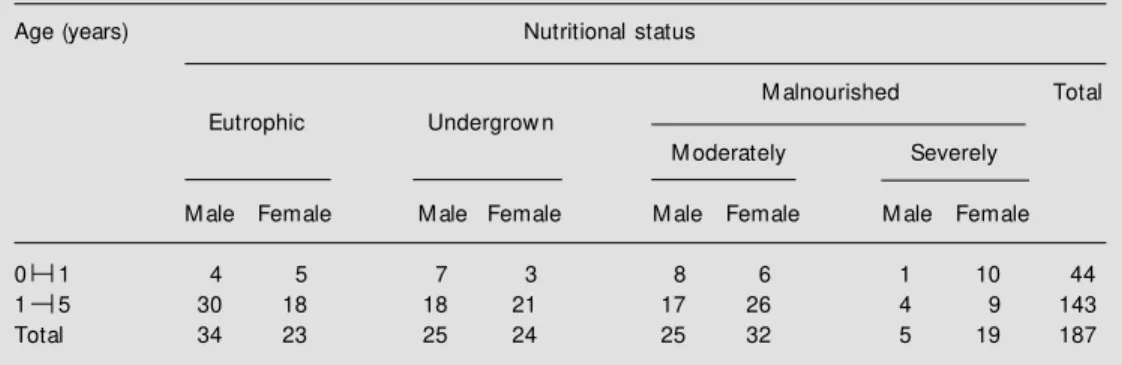
Table 1 - Nutritional status of 187 children w ho participated in the study.
Nutritional status w as assigned on the basis of w eight and height for age and sex using National Center for Health Statistics (12).
Age (years) Nutritional status
M alnourished Total
Eutrophic Undergrow n
M oderately Severely
M ale Female M ale Female M ale Female M ale Female
0 1 4 5 7 3 8 6 1 10 44
1 5 30 18 18 21 17 26 4 9 143
Total 34 23 25 24 25 32 5 19 187
Mann-Whitney test was used to evaluate the differences in sIgA between equally nour-ished children aged 0 1 and 1 5 years. The differences in sIgA in different nutritional conditions were analyzed by the Kruskal-Wallis test. The Wilcoxon rank-sum test was used to analyze sIgA differences at the be-ginning and at the end of the study. Differ-ences in creatinine concentration were ana-lyzed by the Mann-Whitney test since values did not fit a Gaussian distribution. The dif-ferences in plasma albumin concentration between different nutritional conditions were analyzed by the Student t-test. The
signifi-cance in the percentage of nutritional im-provement or rehabilitation during the 8-month period was analyzed by the MacNemar test.
A P value <0.05 was taken as significant.
Re sults
Plasma albumin concentration was sig-nificantly lower (P<0.005) in the severely malnourished group than in the eutrophic group (Table 2). Urinary creatinine (mg/dl) was significantly lower in the moderately and severely malnourished children (38.8 ± 27.8 and 35.3 ± 22.0, respectively) than in eutrophic children (60.0 ± 35.6) of the same age range.
When analyzed for each type of nutri-tional status, differences in sIgA were not significant between 0 1 and 1 5 years of
Table 2 – Plasma total protein, albumin (A) and g-globulin (g) of the children in the study.
Data are reported as mean ± SD. * Albumin and A/g significantly low er than in the eutrophic group (P<0.05; Student t-test); * *g-globulin significantly higher than in the eutrophic group (P<0.05; Student t-test).
Nutritional status Total protein Albumin g-globulin A/g
(g/dl) (g/dl) (g/dl)
Eutrophic (N = 57) 7.3 ± 0.8 4.0 ± 0.5 1.4 ± 0.3 1.2 ± 0.3
Undergrow n (N = 49) 7.3 ± 0.6 3.6 ± 0.4* 1.6 ± 0.4* * 1.0 ± 0.3*
M oderately malnourished (N = 57) 7.0 ± 0.7 3.1 ± 0.4* 1.7 ± 0.6* * 0.9 ± 0.2*
Severely malnourished (N = 24) 6.7 ± 0.9* 3.0 ± 0.3* 1.5 ± 0.5 0.9 ± 0.2*
age. sIgA was significantly lower in the mod-erately and severely malnourished children than in eutrophic and undergrown children (Table 3). Among the 95 children followed up, a significant percentage (40%; P<0.05) showed nutritional improvement. The uri-nary sIgA concentration of 27 malnourished children with nutritional rehabilitation at the end of the study was significantly increased compared to reference values for the eutrophic or undergrown groups (Figures 1 and 2).
Table 3 - M edian and range of urinary sIgA concentration and excretion rate in children of different nutritional status.
* Significantly low er than in the eutrophic and undergrow n groups (P<0.05; M ann-Whitney test).
Nutritional status Age (years) sIgA (mg/l) sIgA excretion rate
(mg/g creatinine)
N M edian Range N M edian Range
Eutrophic 0 1 9 0.63 (0.23-1.80) 9 1.14 (0.60-2.20)
1 5 48 0.73 (0.17-1.90) 44 1.60 (0.25-3.91)
0 5 57 0.69 (0.17-1.90) 53 1.47 (0.25-3.91)
Undergrow n 0 1 10 0.46 (0.17-1.80) 8 1.57 (1.10-3.25)
1 5 39 0.85 (0.18-2.20) 33 1.43 (0.53-3.00)
0 5 49 0.75 (0.17-2.20) 41 1.45 (0.58-3.25)
M oderately 0 1 14 0.45* (0.15-1.60) 14 1.78 (0.44-2.66)
malnourished 1 5 43 0.35* (0.06-1.90) 41 1.03 (0.16-3.64)
0 5 57 0.36* (0.06-1.90) 55 1.31 (0.16-3.64)
Severely 0 1 11 0.31* (0.04-0.83) 8 0.96 (0.30-1.50)
malnourished 1 5 13 0.74* (0.03-1.50) 12 1.21 (0.15-3.16)
D iscussio n
The children in the age range studied did not show any sign of sIgA increase with age, nor was any significant difference in sIgA concentration detected during the early months of life. These results do not agree with data in the literature concerning local antibody ontogenesis. Fliedner et al. (15) failed to detect sIgA in the urine of eight infants under 6 months of age.
Urinary secretory IgA has been studied in the duodenal fluid, saliva, tears and urine of malnourished children, with conflicting results (6,8,9). In the present study, urinary creatinine was significantly lower in mal-nourished children than in eutrophic chil-dren. This finding must be considered in the evaluation of the sIgA excretion rate (mg sIgA/g creatinine), which did not differ sig-nificantly between malnutrition and normal nutritional status. Urinary creatinine has been used to predict muscle mass. When dietary creatinine is negligible and kidney function is normal, the amount formed and excreted depends on the creatine concentration in muscle and muscle mass. In malnourished children the low levels of urinary creatinine reflect a direct deleterious effect of protein-calorie malnutrition on the kidney and repre-sent a physiologic response to the nutritional insult (16). This adaptation by the kidney to a deficient diet limits the use of the mg sIgA/ g creatinine index. This finding must be considered in the evaluation of urinary sIgA excretion rate in malnourished children.
As is the case for all immunoglobulins, sIgA, which is predominant in mucosal im-munity, has a double function, i.e., to recog-nize and eliminate the antigen. Secretory IgA antibodies exert their function by bind-ing to antigenic epitopes on the invadbind-ing microorganisms, limiting their mobility and adhesion to the epithelium of the mucous membrane (2,3,17). There are few refer-ences to epidemiologic studies on urinary tract infection in Brazilian children. Teodósio
Figure 1 - M edian urinary sIgA concentration of children aged 3 months to 5 years w ho w ere eutrophic or malnourished at the beginning of the 8-month follow -up, and w ith nutritional rehabilitation at the final evalua-tion. Data are reported as me-dian of urinary sIgA for 27 mal-nourished and 38 eutrophic chil-dren.
Figure 2 – Effect of nutritional rehabilitation on urinary sIgA of malnourished children w ho re-ceived (N = 27), or not (N = 38), nutritional rehabilitation for 8 months. Data are reported as sIgA mg/l urine. A, Without nu-tritional rehabilitation: median before 0.88 mg/l, median after 0.82 mg/l. B, With nutritional re-habilitation: median before 0.51 mg/l, median after 1.09 mg/l (P<0.05 compared to before re-habilitation, Wilcoxon test).
s lg A ( m e d ia n ) 1.2 1.0 0.8 0.6 0.4 0.2 0.0
0 1 2 3 4 5 6 7 8
Follow -up (months) M alnourished Eutrophic U ri n a ry s Ig A ( m g /l ) 2.4 A. Without nutritional rehabilitation B. Nutritional rehabilitation 1.4 1.2 1.0 0.8 0.6
Before After Before After
et al. (5) and Leite et al. (18) reported a high prevalence of urinary tract infection in chil-dren from low-income communities of Great Recife, PE and Salvador, BA, Brazil, respec-tively. In children with chronic protein-en-ergy malnutrition the abnormal local im-mune response of the urinary tract may be a factor contributing to the genesis of non-obstructive urinary tract infection (19).
Prospective and long-term studies will be needed, however, to identify specific local antibodies that oppose the antigens of the infecting microorganism and to provide a measure of the intensity and specificity of
the local immune response in malnourished children.
Our results indicate that malnourished children have significantly lower urinary sIgA than eutrophic children. After nutritional re-habilitation they develop the local immunity with a significant increase in sIgA.
Ackno wle dgm e nts
We thank Dr. Aparecido Pereira, Labora-tório de Nefrologia, Escola Paulista de Me-dicina, Universidade Federal de São Paulo, for technical assistance.
Re fe re nce s
1. Alverdy JA, Burke D, Aoys E & M oss GS (1990). The effect of dietary glutamine on the mucosal immunoglobulin response. In: M acDonald TT, Challacombe SJ, Bland PW, Stokes CR, Heatley RV & M ow at AM (Editors), Advances in M ucosal Immunol-ogy. Kluw er Academic Publishers, Lon-don, 398-399.
2. Drutz DJ & M ills J (1987). Immunity and infection. In: Stites DP, Stobo JD & Willis JV (Editors), Basic and Clinical Immunol-ogy. 6th edn. Appleton and Lange, Cali-fornia, 167-185.
3. Kunin CM (1987). Principles of urinary bac-teriology and immunology of urinary tract infections. In: Kunin CM (Editor), Detec-tion, Prevention and M anagement of Uri-nary Tract Infections. 4th edn. Lea and Febiger, Philadelphia, 125-193.
4. Soderhall M , Normark S, Ishidaw a K, Karlsson K, Teneberg S, Winberg J & M olby R (1997). Induction of protective immunity after Escherichia coli bladder in-fection in primates. Dependence of the globoside specific P. fimbriae tip adhesin and its cognate receptor. Journal of Clini-cal Investigation, 100: 364-372.
5. Teodósio M R, Pereira AB, Nagao A & M agalhães Filho M (1993). IgA secretória na urina de crianças port adoras de inf ecção do t rat o urinário (ITU) e diferentes estados nutricionais: segui-mento de 12 meses. Jornal de Pediatria, 69: 300-305.
6. Nagao AT, Pilagallo M I, Pereira AB, Carneiro SM & Hanson LA (1995).
Quanti-fication of salivary, urinary and fecal se-cretory IgA, as w ell as in saliva titers and avidities of IgA antibodies in children liv-ing at different levels of antigenic expo-sure and undernutrition. Advances in Ex-perimental M edicine and Biology, 371A: 507-511.
7. Green F & Heyw orth B (1980). Immuno-globulin-containing cells in jejunal mucosa of children w ith protein-energy malnutri-tion and gastroenteritis. Archives of Dis-ease in Childhood, 55: 380-383. 8. Watson RR, M cM urray DN, M artin P &
Reyes M A (1985). Effect of age, malnutri-tion and renutrimalnutri-tion on free secretory com-ponent and IgA in secretions. American Journal of Clinical Nutrition, 42: 281-288. 9. Reddy V, Reghuramulu N & Bhaskaram C
(1976). Secretory IgA in protein-calorie malnutrition. Archives of Disease in Child-hood, 51: 871-874.
10. Nagao AT, Pilagallo M I & Pereira AB (1993). Quantitation of salivary and faecal sIgA in children living in different condi-tions of antigenic exposure. Journal of Tropical Pediatrics, 39: 278-283. 11. Teodósio M R, Nagao A, Pereira AB &
Ramos OL (1990). The secretory IgA (sIgA) response in the mucosal urinary t ract of m alnourished children. In: M acDonald TT, Challacombe SJ, Bland PW, Stokes CR, Heatley RV & M ow at AM (Editors), Advances in M ucosal Immunol-ogy. Kluw er Academic Publishers, Lon-don, 880-886.
12. World Health Organization (1980). M
edi-cion del efecto nutriedi-cional. In: OM S, Ginebra, 77-107.
13. Nagao AT (1987). Desenvolvimento de métodos imunoradiométricos e imunoen-zimáticos para dosagem de IgA secretória e com ponent e secret ório no soro humano. M aster’s thesis in M icrobiology and Immunology, Universidade Federal de São Paulo, São Paulo, Brasil.
14. Teodósio M R (1988). Concentração e índice de excreção da IgA secretória na urina de crianças normais em idade esco-lar. M aster’s thesis in Nephrology, Uni-versidade Federal de São Paulo, São Paulo, Brasil.
15. Fliedner M , M ekls O, Rauterberg EW & Ritz E (1986). Urinary sIgA in children w ith urinary tract infection. Journal of Pediat-rics, 109: 416-421.
16. Alleyne GAO (1973). Effects of chronic protein-calorie malnutrition on the kidney. Kidney International, 3: 129-141. 17. Roberts JA (1996). Factors predisposing
to urinary tract infections in children. Pe-diatric Nephrology, 10: 517-522. 18. Leite EB, Rocha H, Krayclrete D, M ello
M E, Vional M artins KRS, Souza RM & M artinelli R (1994). Estudo de infecção do trato urinário em crianças com e sem desnut rição prot éico-calórica. Jornal Brasileiro de Nefrologia, 1: 25-29. 19. Buchanan N & Jeninfer AF (1973). Urinary