BIOMEDICAL SCIENCES
AND
CLINICAL INVESTIGATION
www.bjournal.com.br
www.bjournal.com.br
Institutional Sponsors
The Brazilian Journal of Medical and Biological Research is partially financed by
Hotsite of proteomics metabolomics developped by:
Braz J Med Biol Res, July 2010, Volume 43(7) 663-676
doi: 10.1590/S0100-879X2010007500047
Long-term social recognition memory in adult male rats: factor analysis
of the social and non-social behaviors
Long-term social recognition memory in
adult male rats: factor analysis of the
social and non-social behaviors
P.J. Moura
1, S.T. Meirelles
2and G.F. Xavier
11Departamento de Fisiologia, 2Departamento de Ecologia, Instituto de Biociências,
Universidade de São Paulo, São Paulo, SP, Brasil
Abstract
A modified version of the intruder-resident paradigm was used to investigate if social recognition memory lasts at least 24 h. One
hundred and forty-six adult male Wistar rats were used. Independent groups of rats were exposed to an intruder for 0.083, 0.5, 2,
24, or 168 h and tested 24 h after the first encounter with the familiar or a different conspecific. Factor analysis was employed to
identify associations between behaviors and treatments. Resident rats exhibited a 24-h social recognition memory, as indicated
by a 3- to 5-fold decrease in social behaviors in the second encounter with the same conspecific compared to those observed for a different conspecific, when the duration of the first encounter was 2 h or longer. It was possible to distinguish between two different categories of social behaviors and their expression depended on the duration of the first encounter. Sniffing the anogenital area (49.9% of the social behaviors), sniffing the body (17.9%), sniffing the head (3%), and following the conspecific
(3.1%), exhibited mostly by resident rats, characterized social investigation and revealed long-term social recognition memory. However, dominance (23.8%) and mild aggression (2.3%), exhibited by both resident and intruders, characterized social
ago-nistic behaviors and were not affected by memory. Differently, sniffing the environment (76.8% of the non-social behaviors) and
rearing (14.3%), both exhibited mostly by adult intruder rats, characterized non-social behaviors. Together, these results show
that social recognition memory in rats may last at least 24 h after a 2-h or longer exposure to the conspecific.
Key words: Agonistic behavior; Long-term social recognition memory; Non-social behavior; Principal component analysis; Social behavior; Social investigation
Introduction
Correspondence: G.F. Xavier, Rua do Matão, Travessa 14, 101, 05508-900 São Paulo, SP, Brasil. Fax: +55-11-3091-7568. E-mail: [email protected]
The present address of P.J. Moura is Veterinary and Animal Sciences Department, UMass, Amherst, MA, USA.
Received November 6, 2009. Accepted May 12, 2010. Available online May 28, 2010. Published July 9, 2010. Recognition of a conspecific is advantageous because
members of the group can spend time on activities related to group management and protection rather than on vig-orous investigation of a previously met non-hazardous individual. Social memory refers to the ability of animals to
change their social behaviors towards a conspecific as a
consequence of a previous social encounter with it. Social recognition memory in rodents seems to be based mainly on olfactory cues (1-5).
A popular behavioral model used to assess rodents’ social recognition memory in the laboratory is the
intruder-resident paradigm (6-11). Briefly, when an intruder conspe
-cific is introduced within a resident male rat’s home cage for
a 5-min encounter, the resident rat exhibits intense social investigation activity towards the intruder. The introduction
There have been attempts to increase the duration of social recognition memory in this behavioral task (6,7). For instance, by using two successive 5-min exposures to the intruder, Dantzer et al. (7) demonstrated consistent social recognition memory when testing was performed 2 h after the last exposure. Similarly, when Sekiguchi et al. (6) tested the effects of either one 30-min exposure or six 5-min exposures to the familiar intruder with ITIs of 10 min and tested the animals 24 h later, their results showed that social recognition memory had vanished for both groups.
Burman and Mendl (14) group-housed four juvenile female rats for 18 days. These subjects were then isolated for 1, 48, or 96 h and then simultaneously exposed to odor cues originating from unfamiliar rats and from former
cage-mates. The juvenile female rats spent significantly more
time investigating the unfamiliar odor when their isolation period was 1 and 48 h, but not 96 h, indicating that they remembered former cage-mates for at least 48 h.
The present study employed a modified version of the
intruder-resident paradigm to investigate the effects of
increasing time exposure to an adult intruder conspecific
on the social recognition memory evaluated 24 h after
the end of the first encounter. Independent groups of rats were exposed to an intruder conspecific for 0.083 (5 min),
0.5 (30 min), 2, 24, or 168 h and tested 24 h after the end
of the first encounter with either the familiar or a different adult intruder conspecific. Social and non-social behaviors
of both resident and intruder rats were separately scored. Furthermore, a factor analysis was employed to identify possible associations between scored behaviors and their relationships with the treatments. The results clearly show that social recognition memory in rats may last at least 24 h. It was also shown that detailed analysis of the behavioral scores may contribute to a better understanding of the social relationships established during performance of the intruder-resident paradigm.
Subjects and Methods
Subjects
A total of 146 naive male Wistar rats (Rattus norvegicus) from the Biosciences Institute colony, about 12 weeks old at the beginning of the experiments, were used. Groups of 4-5 rats were maintained in the same cage (40 x 32 x 16.5 cm) with fresh bedding. Light was provided from 6-18 h, and room temperature was maintained at 21 ± 3°C. Food and water were available ad libitum. Animals were handled individually 5 min per day for 2 days before the beginning of the experiments in order to reduce manipulation-induced stress. Since rats exhibit more social behaviors during their inactive phase (15), all experiments were run from 8:00 to 11:00 h. Half the rats were used as intruders and the other half as residents (see below); these social roles were as-signed at random. During the experiments, it was ensured that residents and intruders had never shared a cage before.
All procedures described respected the Institute guidelines about animal experimentation, which comply with national and international rules and policies (see www.mct.gov.br and www.oacu.od.nih.gov).
Behavioral procedure
Behavioral tests were run in a 39 x 32 x 18-cm Plexiglas cage with fresh bedding. A video camera (Sony CCD, China) positioned 30 cm behind a transparent cage wall allowed tape recording of the social interaction.
A modified version of the intruder-resident paradigm (for review, see Ref. 16) was used. One hour before testing
started, the animals were transported from the animal facility to the testing room. The so-called residents were then placed individually inside the testing chamber 20 min before the
introduction of an adult intruder conspecific within the same chamber. Adult conspecifics were used as intruders in order to provide the resident rats with a more significant social
stimulus (see Ref. 16, for studies involving mice). Because an adult intruder represents a potential territorial competitor for the resident rat, this should increase social recognition
memory of the latter rat. This first encounter lasted 0.083 h
(5 min; N = 14), 0.5 h (30 min; N = 14), 2 (N = 16), 24 (N = 15), or 168 h (N = 14), depending on the group. At the end of this encounter, the intruder rat was removed and placed in another cage and residents remained within the same testing chamber for 24 h. During this time, residents and intruders were maintained on opposite sides of the animal
facility. One hour before the second encounter, rats were
transported to the experimental room. During the second social encounter, the residents were exposed to either the familiar (same) or a different (unfamiliar) intruder for 10 min. Residents and intruders were exposed either to the familiar or to a different resident during the second encounter, and
rats exposed to different conspecifics in the second en
-counter had similar prior experiences with a conspecific in terms of duration of the first encounter (i.e., intruders whose first encounter lasted, for instance, 2 h were exposed to
unfamiliar residents exposed to an intruder for 2 h). The second encounter was video recorded, allowing scoring of the time spent by both the resident and the
in-truder rats performing social or non-social behaviors, defined
according to previous studies (see Refs. 4,7 9) and accord-ing to the most frequent behaviors observed duraccord-ing social encounters (Moura PJ, unpublished data). Social behaviors
included 1) sniffing the conspecific’s anogenital region (ANO), 2) sniffing the conspecific’s head (HEAD), 3) sniffing the conspecific’s body (BODY), 4) following the conspecific (FOLL), 5) dominance behavior (DOM; corresponding to handling the conspecific whose back is either on the floor
or against the wall), and 6) mild aggression (AGGR; to beat
using the legs); non-social behaviors included 7) sniffing the environment (ENV), 8) self-grooming (GROOM), and
the conspecific were observed. A home-made
computer-assisted data acquisition system allowed an experimenter blind to the treatments to score each individual behavior during four time bins of 150 s each; the successive time bins corresponded to the time intervals from 0 to 150, 150 to 300, 300 to 450, and 450 to 600 s.
Data analysis
The total time spent by each rat exhibiting social and non-social behaviors was calculated for each time bin and also for the complete second encounter. Furthermore, the relative percentage of time spent performing each scored behavior relative to the total time of its corresponding cat-egory (social or non-social) was also calculated for each rat. For representational purposes, a general mean, including both resident and intruder rats exposed to all experimental conditions, was calculated. Finally, taking into account the results of the principal component analysis (PCA; see be-low), it seemed relevant to subdivide social behaviors into two categories. Thus, we calculated the total time each rat spent performing either 1) social investigatory behaviors, which corresponded to the sum of time spent performing
ANO, HEAD, BODY, and FOLL, or 2) social agonistic
behaviors, which corresponded to the sum of times spent
performing DOM and AGGR. Even though the social be -haviors and their subcategories, social investigatory and social agonistic behaviors partially overlap, it seemed relevant, for comparison purposes, to analyze and show them all (see below).
PCA. The time spent by both residents and intruders performing each scored behavior during the second
en-counter was subjected to a PCA procedure. Original values,
including 146 units representing data of each individual rat
containing nine variables (ANO, HEAD, BODY, FOLL, DOM, AGGR, REAR, GROOM, and ENV), were centered and
standardized, providing a correlation matrix for the eigen analysis. The respective samples were related to the group’s
treatment (time duration of the first encounter), the social role (resident or intruder), familiarity with the conspecific
during the second encounter (familiar or different) and, preliminarily, four time bins. After this preliminary analysis,
only scores relative to the first time bin were included in
the PCA due to an increase in dispersion and loss of signal detected through the reduction of the variance explained by the analysis procedure (see below). A square root transfor-mation was used to correct for an implicit quadratic factor related to the properties of the measurement scale, and to homogenize and reduce the dispersion of the original matrix d. The results were represented by the average of each group’s scores on a Euclidian biplot. PCA scores were
also analyzed by ANOVA.
A preliminary PCA including the four time bins revealed a high colinearity among the responses, possibly due to the fact that they were taken sequentially. Thus, in order to minimize the impact of this factor on the general
analy-sis, only the first time bin scores (measured from zero to
150 s of the second encounter) were included thereafter in the PCA.
Correlations between the loading factors generated by processing individual scores were revealed by the PCA and were interpreted following the guidelines proposed by Cohen (19); i.e., 1) positive 1.00 to 0.50 values and negative
Table 1. Description of the social and non-social behaviors performed by both the resident and the intruder rats.
Code Description Social behaviors
Sniffing the anogenital region ANO The animal’s nose is 1 cm or less from the conspecific’s anogenital area; the conspecific may be held during sniffing.
Sniffing the head HEAD The animal’s nose is 1 cm or less from the conspecific’s head; the conspecific may be
held during sniffing.
Sniffing the body BODY The animal’s nose is 1 cm or less from the conspecific’s body with exception of the anogenital and head areas; the conspecific may be held during sniffing.
Following the conspecific FOLL The animal walks towards the conspecific, trying to approach it.
Dominance behavior DOM The animal holds the conspecific with the latter’s back or ventral part on the floor. Aggression AGGR The animal stands on its hindlegs facing the conspecific and hits the latter with its
forepaws. Non-social behaviors
Sniffing the environment ENV The animal sniffs the cage walls standing on two or four paws (in the latter case, touching the cage walls with its forepaws) or sniffs the bedding.
Self-grooming GROOM The animal performs movements such as wiping, licking, and scratching its own head and body fur.
Rearing REAR The animal stands on its hindlegs without touching the cage walls and performs up and
-1.00 to -0.50 values were considered to be large correla-tions, 2) positive 0.49 to 0.30 and negative -0.49 to -0.30 values were considered to be medium correlations, and 3) positive 0.29 to 0.10 or negative -0.29 to -0.10 values were considered to be small correlations.
Since three principal components explained about 66.3% of the data variance, they were further analyzed using a general linear model (GLM) to test the hypothesis that the segregation of all variables applied.
The analyses design included “familiarity”, “social role”
and “first encounter duration” as the between-subject fac -tors and each component axis as the within-subject fac-tors. The post hoc Tukey HSD test was used when applicable. Statistical procedures were run using the Statistical Pack-age for the Social Sciences (SPSS) and the MultiVariate Statistical Package(MVSP); graphs were prepared using the Sigma Plot Package.
Analysis of variance (ANOVA)
The times spent by the rats performing each individu-ally scored behavior and the total time spent performing social and non-social behaviors and their subcategories (social investigatory and social agonistic behaviors) were
compared using traditional repeated measures ANOVA.
Between-subject factors included 1) “social role” (intruder
versus resident), 2) “familiarity” with the conspecific (familiar versus different), and 3) “first encounter duration” (0.083
h (5 min), 0.5 h (30 min), 2, 24, and 168 h (7 days)) and the within-subject factor included 4) “time bins”. Separate
ANOVAs were run for each individual score and for the total
times exhibiting social, non-social, social investigatory, and social agonistic behaviors. The Tukey HSD test was used for post hoc comparisons. The level of significance was set
at P < 0.05. The statistical procedures were carried out with the Statistica software (StatSoft, USA).
Results
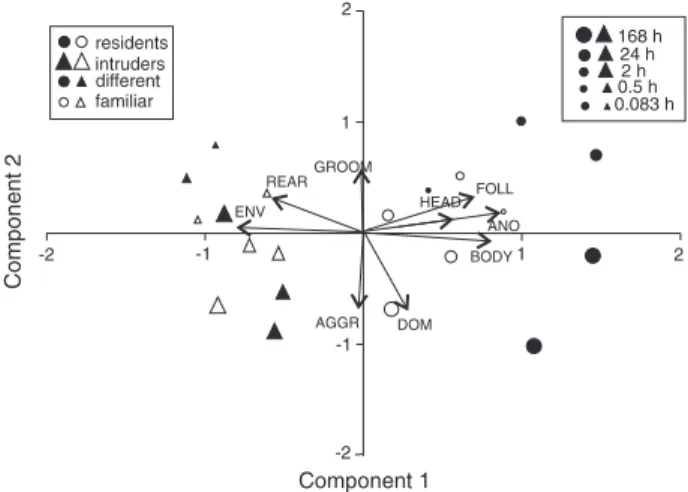
Figure 1 shows the total time spent by both resident and intruder rats performing social (Figure 1A,D), social investi-gatory (Figure 1B,E) and non-social behaviors (Figure 1C,F) during the second encounter. Table 2 shows the percent time of each behavior scored relative to the total time of its corresponding (social and non-social) category. Figure 2 represents the PCA axes (see below). Figures 3, 4, and 5 show the time spent by resident and intruder rats exhibiting social investigatory behaviors, social agonistic behaviors and non-social behaviors, respectively, along the four time bins of the second encounter with either the familiar or a
different intruder, separated according to the first encounter duration (see ANOVA for these results below).
PCA
The overall variance was explained by the first and
second synthetic axes corresponding to 53.8 and 37.6%, respectively.
The variable loadings on the first and second axes al -lowed exploration of the main sources of interactions for the
Figure 1. Time spent by resident (top panels) and intruder (bottom panels) rats exhibiting social (A and D), social investigatory (B and
E) and non-social behaviors (C and F) during the second encounter with either a familiar (open bars) or a different (filled bars) conspe
rats’ behavior. Table 3 shows the loading factors for each individual behavior in each of the principal components considered. Table 4 shows the correlation matrix for pairs of behaviors: 1) the large positive correlations involving
ANO and BODY, ANO and FOLL, BODY and HEAD, and BODY and FOLL; 2) the large negativecorrelations between
ENV and ANO, ENV and BODY, and ENV and FOLL; 3) the medium positive correlations between ANO and HEAD, HEAD and FOLL, and ENV and REAR, and 4) the medium negative correlations between REAR and ANO, REAR and BODY, and REAR and FOLL.
The variables ANO, HEAD, BODY, and FOLL, in con
-trast to ENV and REAR, polarized the first component axis and comprised the main source of variance. While ANO, HEAD, BODY, and FOLL exhibited positive correlations
with each other, ENV and REAR both exhibited negative correlations with these, representing the main bifurcation in the behavioral patterns. Thus, these behaviors may
col-lectively characterize information gathering. On the positive side of the axis ANO, HEAD, BODY, and FOLL correspond to direct investigation of the conspecific, related to social
information gathering. Thus, these individual scores can be
Table 2. Percent of time spent exhibiting each of the behaviors relative to the total time of their social and non-social behaviors.
% of total time Social behaviors
ANO 49.9%
HEAD 3.0%
BODY 17.9%
FOLL 3.1%
DOM 23.8%
AGGR 2.3%
Total 100%
Non-social behaviors
ENV 76.8%
GROOM 8.9%
REAR 14.3%
Total 100%
For abbreviations, see Table 1.
Table 3. Major contributions to the overall variance (loading
fac-tors) on the first, second and third principal components resulting
from the principal component analysis applied to the social and non-social behavioral data.
Components
1st 2nd 3rd
Social behaviors
ANO 0.841* 0.181 -0.241
HEAD 0.591* 0.123 0.569*
BODY 0.819* -0.082 0.248
FOLL 0.798* 0.283 -0.249
DOM 0.256 -0.704* 0.187
AGGR -0.029 -0.670* 0.272 Non-social behaviors
ENV -0.789* 0.042 0.204
GROOM -0.023 0.530* 0.696*
REAR -0.579* 0.307 0.001
Higher loading factors are indicated by asterisks (principal com-ponent analysis). For abbreviations, see Table 1.
Table 4. Correlation matrix for pairs of behaviors employed in principal component analy-sis obtained by the centering and standardization of the original matrix.
Behaviors HEAD+ BODY+ FOLL+ DOM+ AGGR+ ENV# GROOM# REAR#
ANO+ 0.352* 0.541* 0.735* 0.030 -0.095 -0.679* -0.038 -0.388*
HEAD+ 0.562* 0.324* 0.132 -0.024 -0.283 0.210 -0.247
BODY+ 0.545* 0.280 0.054 -0.547* 0.038 -0.400*
FOLL+ 0.003 -0.196 -0.575* -0.010 -0.324*
DOM+ 0.207 -0.174 -0.188 -0.243
AGGR+ -0.036 -0.092 -0.094
ENV# 0.087 0.333*
GROOM# 0.098
REAR#
grouped as characterizing social investigatory behavior. Note that these scores were mainly correlated with the resident rats’ behavior (Figure 2, circles, and Figure 1A,B),
particularly those exposed to different conspecifics in the
second encounter (Figure 2, black circles, and Figure 1A,B,
black bars), after being exposed to a conspecific for 2 h or
longer (Figure 2, greater black circles, and Figure 1A,B). As
a matter of fact, resident rats exposed to longer first encoun -ters (2, 24, and 168 h) exhibited more social investigation towards different intruders compared to that seen towards the familiar intruder (Figure 2, longer distance between the white and black circles of corresponding sizes for larger, but not smaller, circles, and Figure 1A,B). Conversely, resident
rats exposed to shorter first encounters (0.083 and 0.5 h)
did not exhibit any difference in social investigation towards the familiar or different intruder (Figure 2, shorter distance between the white and black circles of corresponding smaller
sizes, and Figure 1A,B). On the negative side of the first
principal component axis, ENV and REAR characterized non-social (or environmental) information gathering, being
mainly correlated with the intruder rat’s behavior (Figure 2, triangles, and Figure 1F).
Figure 2 also shows that the second principal component
was mainly determined by GROOM, usually considered to reflect an individual conflict-related behavior, on the posi
-tive side of the axis, in contrast to AGGR and DOM, on the
negative side of the same axis, related to social interactions that contribute to the establishment of hierarchical relation-ships in social groups. Thus, the second component of the PCA seems to be characterized by agonistic-induced
self-conflict. The AGGR and DOM behaviors are usually
included among social behaviors; however, the present analysis revealed that their nature differed from that of social investigatory behaviors (compare Figures 3 and 4). Thus, it seemed plausible to include them in a different subcategory named social agonistic behavior. In general, independent of the social role, there seems to be a segregation; while
GROOM behavior was mainly observed in subjects exposed to shorter first encounters (Figure 2, smaller circles and
triangles on the positive side of the second component),
reflecting greater conflict, social agonistic behaviors were mainly seen in subjects exposed to longer first encoun -ters (Figure 2, larger circles and triangles on the negative
side of the second component). These figures suggest that shorter first encounters lead to greater expression of individual conflict-related behaviors during the second encounter, but that longer first encounters lead to greater
agonistic-induced behaviors during the second encounter (Figures 2 and 4).
A GLM for PCA scores on the first principal component revealed significant effects for the main factors of 1) “social
role” (F1,145 = 10.051, P < 0.0001) and 2) “familiarity” (F1,145 = 3.019, P < 0.005); in addition, it revealed significant interaction
effects for 3) “familiarity” and “social role” (F1,145 = 12.652, P < 0.001), 4) “familiarity” and “first encounter duration” (F4,145 = 4.012, P < 0.005), and 5) “familiarity”, “social role” and “first
encounter duration” (F4,145 = 3.263, P < 0.05). Thus, the increase in the first encounter duration rendered resident rats
capable of recognizing the familiar intruder and discriminating it from the different intruder, in spite of a 24-h time interval
between the first and second encounters.
A similar GLM analysis for critical PCA scores of the
second principal component revealed significant effects of the “first encounter duration” (F4,145 = 10.544, P < 0.0001). As a matter of fact, while shorter first encounters resulted in both resident and intruder rats exhibiting more GROOM behavior, longer first encounters resulted in them exhibiting more AGGR and DOM behaviors (Figure 2, smaller circles
and triangles on the positive side of the second component, and larger circles and triangles on the negative side of it).
ANOVA
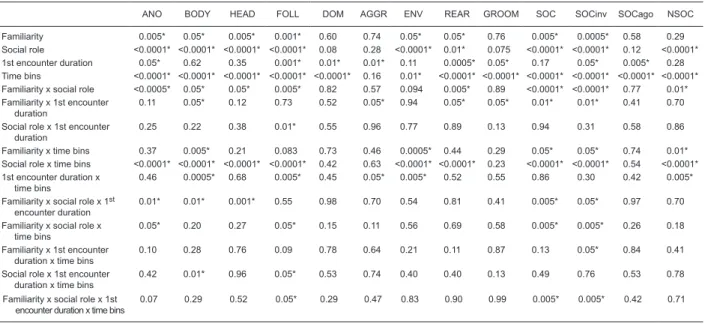
Table 5 shows the P values of the ANOVA involving
each scored social (Figure 1A,D) and non-social (Figures 1C,F and 5) behavior and the subcategories of social
Figure 2. Euclidian biplot of the variables and average group
scores on the first and second axes resulting from the principal
component analysis applied on the correlation matrix that was
ob-tained by centering and standardizing the original data. The first
component, explaining 37.6% of the variance in the matrix, may collectively be characterized as information gathering. It included
ANO, BODY, HEAD, and FOLL, which relate to social informa -tion gathering, and, in contrast, ENV and REAR, which refer to environmental information gathering. While social investigatory behaviors were mainly generated by resident rats (circles), non-social behaviors were mainly generated by the intruder rats (trian-gles). The second principal component, explaining 16.1% of the variance in the matrix, seems to be characterized by
agonistic-in-duced self-conflict since it was determined by GROOM opposed by AGGR and DOM. Thus, it seems to relate to social interactions
that contribute to the establishment of hierarchical relationships
Figure 3. Time spent by resident (left panels) and intruder (right panels) rats exhibiting social investigatory behaviors during the second encounter with either a familiar (continuous line)
or a different (dotted line) conspecific, as a function of four successive time bins, after a first
Figure 4. Time spent by resident (left panels) and intruder (right panels) rats exhibiting social ago-nistic behaviors during the second encounter with either a familiar (continuous line) or a different
(dotted line) conspecific, as a function of four successive time bins, after a first encounter with a
Figure 5. Time spent by resident (left panels) and intruder (right panels) rats exhibiting non-social behaviors during the second encounter with either a familiar (continuous line) or a different (dotted
line) conspecific, as a function of four successive time bins, after a first encounter with a duration
investigatory (Figures 1B,E and 3) and social agonistic (Figure 4) behaviors.
As expected, these results essentially confirm the
major outcomes of the PCA. Together, they indicate that the resident rats exhibited more social behaviors, particularly social investigatory behaviors, relative to the intruder rats (compare Figure 1A,D, 1B,E, and the left and right panels of Figure 3), especially when the second
encounter involved a different intruder and when the first
encounter lasted 2 h or longer (Figures 1A,B and 3E,G,I). In addition, note that these social investigatory behaviors were greater at the beginning of the second encounter (Figure 3, left panels), decreasing along time bins (Figure
3E,G,I). Furthermore, very long first encounters (168 h)
accelerated this decrease of social investigation towards a different intruder (compare Figure 3E,G,I, during second, third and fourth time bins).
Even though, as expected, the behavioral outcomes
reflected by social behavior (Figure 1A) and the subcat -egory social investigatory behaviors (Figure 1B) were similar, while social investigatory behaviors towards the familiar intruder consistently decreased as a function of
the increase in duration of the first encounter (Figure 1B,
open bars), total social behaviors did not decrease (Figure
1A, open bars). This effect was related to the significant
increase of the subcategory of social agonistic behavior for both resident and intruder rats as the duration of the
first encounter increased (Figure 4). As a consequence,
though resident rats exposed to an intruder for 168 h did
exhibit a significant difference in the time spent exhibiting
social investigatory behaviors towards a different intruder
as compared to the familiar intruder (P < 0.05, Tukey test), this difference was not seen for the time spent exhibiting total social behaviors (P > 0.05, Tukey test).
The intruder adult rats exhibited greater non-social behavioral scores compared to resident rats (Figure 1C,F). Interestingly, this effect was stronger when the intruder rats were exposed to a different resident rat compared to exposure to the familiar resident rat (Figures 1F and 5, right panels). Since 76.8% of the non-social behaviors
correspond to sniffing the environment (Table 2), these
results suggest that the intruder rats are also capable of
recognizing the conspecific they had been previously ex
-posed to by sniffing the cage walls and bedding where the
resident rat was maintained, leaving its olfactory signature scent in it (see below).
A gradual increase of non-social behaviors along time bins was observed in resident rats, in general, reaching the highest level in the last time bin (450-600 s; Figure
5, left panels). This result might reflect the time course of
priorities of the resident rat when exposed to an intruder rat; that is, the resident rat starts investigating the intruder at the beginning of the encounter and then investigates the environment. This interpretation also applies to the occur-rence of the increased expression of non-social behaviors by resident rats at the beginning of the exposure to a familiar
conspecific (e.g., Figure 5G). Similar effects were not seen
in the intruder rats (Figure 5) that spent longer times ex-hibiting non-social behaviors during the second encounter (Figure 5, right panels), particularly when exposed to a dif-ferent resident rat as compared to exposure to the familiar resident rat (Figures 1F and 5, right panels).
Table 5. P values resulting from traditional ANOVAs involving each behavior scored as a function of familiarity, social role, 1st encoun
-ter duration, and time bins, as well as their in-teractions for each scored behavior including total time exhibiting social (SOC), and non-social (NSOC) behaviors, as well as the sub-categories of non-social investigatory (SOCinv) and non-social agonistic behaviors (SOCago).
ANO BODY HEAD FOLL DOM AGGR ENV REAR GROOM SOC SOCinv SOCago NSOC
Familiarity 0.005* 0.05* 0.005* 0.001* 0.60 0.74 0.05* 0.05* 0.76 0.005* 0.0005* 0.58 0.29
Social role <0.0001* <0.0001* <0.0001* <0.0001* 0.08 0.28 <0.0001* 0.01* 0.075 <0.0001* <0.0001* 0.12 <0.0001*
1st encounter duration 0.05* 0.62 0.35 0.001* 0.01* 0.01* 0.11 0.0005* 0.05* 0.17 0.05* 0.005* 0.28
Time bins <0.0001* <0.0001* <0.0001* <0.0001* <0.0001* 0.16 0.01* <0.0001* <0.0001* <0.0001* <0.0001* <0.0001* <0.0001* Familiarity x social role <0.0005* 0.05* 0.05* 0.005* 0.82 0.57 0.094 0.005* 0.89 <0.0001* <0.0001* 0.77 0.01* Familiarity x 1st encounter
duration
0.11 0.05* 0.12 0.73 0.52 0.05* 0.94 0.05* 0.05* 0.01* 0.01* 0.41 0.70
Social role x 1st encounter duration
0.25 0.22 0.38 0.01* 0.55 0.96 0.77 0.89 0.13 0.94 0.31 0.58 0.86
Familiarity x time bins 0.37 0.005* 0.21 0.083 0.73 0.46 0.0005* 0.44 0.29 0.05* 0.05* 0.74 0.01*
Social role x time bins <0.0001* <0.0001* <0.0001* <0.0001* 0.42 0.63 <0.0001* <0.0001* 0.23 <0.0001* <0.0001* 0.54 <0.0001* 1st encounter duration x
time bins
0.46 0.0005* 0.68 0.005* 0.45 0.05* 0.005* 0.52 0.55 0.86 0.30 0.42 0.005*
Familiarity x social role x 1st encounter duration
0.01* 0.01* 0.001* 0.55 0.98 0.70 0.54 0.81 0.41 0.005* 0.05* 0.97 0.70
Familiarity x social role x time bins
0.05* 0.20 0.27 0.05* 0.15 0.11 0.56 0.69 0.58 0.005* 0.005* 0.26 0.18
Familiarity x 1st encounter duration x time bins
0.10 0.28 0.76 0.09 0.78 0.64 0.21 0.11 0.87 0.13 0.05* 0.84 0.41
Social role x 1st encounter duration x time bins
0.42 0.01* 0.96 0.05* 0.53 0.74 0.40 0.40 0.13 0.49 0.76 0.53 0.78
Familiarity x social role x 1st encounter duration x time bins
Discussion
To our knowledge, the results of the present study show
for the first time that male rats exhibit social recognition
memory that lasts at least 24 h. This effect was revealed
by a significantly longer social investigation by the resident rats exposed to a different adult intruder conspecific as
compared to exposure to the adult familiar intruder
con-specific (Figure 1A,B).
In addition, the results of the present study also showed that no social recognition memory was seen in the second
encounter occurring 24 h after a first encounter lasting 5
or 30 min (Figure 1A,B). This particular observation agrees with reports that a resident rat’s social recognition memory
of a juvenile intruder conspecific does not last more than 60 min when the duration of the first encounter is 30 min
or less (4,6-12,20).
Duration of social recognition memory
Prior attempts to enhance retention of the social rec-ognition memory in rats involved manipulation of different aspects of the intruder-resident paradigm (6,7,18).
Dantzer et al. (7) gathered evidence showing that adult rats recognized a juvenile after a single 5-min exposure to
it when testing occurred 30 min, but not 2 h, after the first
encounter. This social memory was enhanced after another 5-min exposure to the familiar juvenile. This result suggested
that an increase in the duration of the first encounter could
prolong social memory, as we show in the present study. Sekiguchi et al. (6) found no evidence that resident rats could recognize a juvenile met for a total of 2 h (divided into multiple shorter sessions) when a 24-h interval between encounter sessions was used. However, Sekiguchi et al. (6) exposed the familiar juvenile intruder six times per day for four days, while in the present study an adult intruder was presented in a single 2-h session. This continuous 2-h
exposure to the conspecific intruder may have helped the
resident rat to gather more consistent information for later memory recognition. In addition, while Sekiguchi et al. (6) used a juvenile intruder, in the present study we used an
adult intruder. Since an adult conspecific may represent a
potential competitor for the territory of the resident animal, remembering a previous encounter with it may represent a more meaningful experience compared to a previous encounter with the juvenile intruder, thus improving memory. Furthermore, the resident rats in the experiment of Seki-guchi et al. (6) were 1.5 years old while the ones used in the present study were 3 months old. It is well known that the memory of young adult rats is better than that of old adult rats (21,22).
The results of the present study showing that long-term coexistence increases the duration of social recognition
memory do not conflict with Burman and Mendl’s (14) who
reported that female juveniles discriminate the odor from a former female cage-mate up to 48 h after separation. In
addition, the present research extended their study showing
that 2 h of continuous exposure to a male con-specific adult
rat was enough to generate a long-term social recognition memory, thus providing a feasible model for investigating the processes underlying this type of long-term memory.
Critical categories of social behaviors
In agreement with the literature in the area (6,7,11,17,18)
we included ANO, HEAD, BODY, FOLL, DOM, and AGGR
scores in the category of social behaviors. However, the PCA involving individually scored behaviors revealed that they are coherently segregated into two main independent principal components (Figure 2). Thus, in addition to the collective “social behavior” category, two relevant subcategories were
defined, social investigatory behaviors (including ANO, HEAD, BODY, and FOLL) and social agonistic behavior (including DOM and AGGR).
The present study revealed both 1) a substantial decrease in social investigatory behaviors towards the
familiar intruder with increasing duration of the first en -counter (Figure 1B, open bars) and 2) an increase of social investigatory behaviors towards a different intruder when
the first encounter lasted 2, 24 and, to a lesser extent, 168 h (Figure 1B, filled bars). This demonstrates that rats do
exhibited a 24-h long social recognition memory when the
first encounter lasted 2, 24, and 168 h.
Interestingly, there was no significant decrease in the
time spent by the resident rats performing (total) social behaviors when the residents were exposed to the
intrud-ers for 168 h in the first encounter (Figure 1A, open bar).
This occurred because the time spent by the resident rats
exhibiting social agonistic behaviors significantly increased with increasing duration of the first encounter (Figure 4),
compensating for the decrease seen in the time spent ex-hibiting social investigatory behaviors. The importance of this effect should not be underestimated; the use of either the category of social behaviors, as employed by most of studies in the area, or the subcategory of social investiga-torybehavior, as also employed in this study, could lead to different conclusions. As shown above, resident rats
whose first encounters lasted 168 h did exhibit significant
differences in the time spent exhibiting the subcategory of social investigatory behaviors towards a different intruder compared to that seen towards a familiar intruder and thus could be considered to exhibit a 24-h duration social recognition memory. However, this comparison was not
statistically significant for the category of social behaviors.
potential to detect social recognition memory may have been
limited, as exemplified in the present study by the different
statistical results when comparing social behaviors and social investigatory behaviors. In fact, some prior studies excluded aggressive behavior from the “social behavior” category (4,7,10,18).
Most of the social investigation by the resident rats
oc-curred in the first time bin and then decreased along time
bins (Figure 3). The time spent by the resident rats exhibit-ing social investigatory behaviors towards the familiar and
the different intruders indicates that longer first encounters
accelerate the rate of reduction of social investigation along time bins in spite of the lack of social recognition. It is as if there was a transfer of habituation of the social
investiga-tory activity from the first to the second encounters and this habituation was sensitive to the duration of the first
encounter.
This effect also occurred for the resident rats whose first
encounters lasted 2 (Figure 3E), 24 (Figure 3G), and 168 h (Figure 3I); in fact, the stronger reduction of social investi-gatory behaviors towards the familiar intruders associated
with longer first encounters supports this interpretation. However, since first encounters lasting 2 h or longer allow
gathering enough information for social recognition memory, the resulting increased social investigation towards a differ-ent intruder would have overcome this habituation effect,
masking it. Accordingly, resident rats whose first encounter
lasted 168 h exhibited lesser social investigation and greater transfer of habituation to the second encounter (Figure 3I), which contributed to the reduction of time spent exhibiting social investigatory behaviors.
Social recognition memory in the intruder rats?
The adult intruder rats involved in the present study did
not present any significant differences in the time perform -ing social investigatory behaviors towards a familiar or a different intruder (Figure 1E). Even though these data could
be interpreted as reflecting a lack of social recognition
memory by the intruder rats, one has to be cautious about this interpretation (see below).
Thor and Holloway (18) reported that juvenile intrud-ers exhibit social recognition memory only when the time
interval between the first and the second encounter is
less than 4 min. These investigators concluded that social recognition memory is shorter in younger rats than in adult rats. It would be tempting to ascribe this apparent lack of social recognition memory by our intruder rats to the 24-h
time interval between the first and the second encounter.
However, the intruder rats involved in the present experi-ment were as old as the resident rats, permitting us to rule out this possibility.
Procedural differences between the treatments of resi-dent and intruder rats may have provided a more disturbing experimental condition for the intruder rats compared to the resident rats, thus interfering with their social
recogni-tion memory (11). Favoring this interpretarecogni-tion (Moura PJ, Venkitaramani DV, Tashev R, Lombrosso PL, Xavier GF, unpublished observations) showed that transportation of resident rats from the experimental room to the animal
facilities 0.5, but not 6 h, after the first encounter strongly
interfered with social recognition memory tested in a second encounter 24 h later.
It was noticeable that exposure of the so-called “resi-dent rats” to the testing chamber for only 20 min before the
beginning of the first encounter was enough to determine
that they would assume a behavioral pattern that charac-terized them as “residents”, similar to mice (16). First, they had the opportunity to urinate in the clean testing chamber and in the novel bedding, thus giving to this environment its individual signature scent (23), which could then modu-late the reaction of both residents and intruders. Second, because they had the opportunity to explore the chamber before the intruder, they concentrated their investigation on the intruder, gathering relatively more social information. The relative contribution of each of these factors to the amount of social and non-social investigation in the second encounter is not clear.
Intruder rats exhibited longer times of non-social behav-iors (Figure 1F,C, respectively, and Figures 2 and 5). This effect was stronger when the intruder rats were exposed to a different resident rat than to the familiar resident rat (Figures 1F and 4). It could be thought that this increased
environmental investigation reflects a reaction to odors of different conspecifics present in the testing chamber (see
Ref. 23), when the intruder is different. Intruder rats exposed to familiar residents were introduced into a chamber contain-ing only the odors of the resident rats, in addition to their own odor possibly left on the chamber walls and bedding
during the first encounter. This could help to understand
why non-social investigation was greater for intruder rats exposed to different resident rats. The present data do not allow further evaluation of these hypotheses.
Interestingly, resident rats exhibited a gradual increase of the time spent exhibiting non-social behaviors along time
bins (Figure 5, left panels). This may reflect the investigative
priorities of the resident rat when exposed to an intruder rat, that is, after investigating the intruder at the beginning of the encounter, the resident rat investigates the environment in order to evaluate to what extent the intruder introduced any changes in “his territory”. Similar effects were not seen in the intruder rats, who spent longer times exhibiting non-social behaviors along the complete second encounter (Figure 5, right panels).
Critical scores in the intruder-resident paradigm
named “social agonistic behaviors”, related to the establish-ment of social hierarchies. Among the social investigatory
behaviors, anogenital and body sniffing corresponded to
about 50 and 18%, respectively, of the total social behaviors
(Table 2). On the other hand, among the social agonistic
behavior, dominance corresponded to about 24% of the total social behaviors. While social investigatory behaviors were exhibited mainly by resident rats exposed to different intruders, social agonistic behaviors were exhibited mainly
by both resident and intruder rats exposed to the conspecific
for a longer period of time.
Previous studies have reported the critical importance of anogenital investigation for social recognition memory. For instance, Ferguson et al. (3) reported that male rodents not only closely sniff the anogenital region but also lick it. These investigators emphasized the fact that male rodents
usually do not sniff conspecifics at a distance, which would
imply that the male is utilizing pheromonal, nonvolatile
odorants to recognize the conspecific (24,25). Apparently,
the rat’s urine contains chemical compounds important for social recognition; supposedly, when the rat performs self-grooming it spreads olfactory cues along the body and
head (8), rendering itself recognizable to conspecifics. This would explain why sniffing the anogenital region and the
body strongly contributed to social investigatory behaviors in the present study.
While sniffing the environment was responsible for about
76.8% of the non-social behaviors, rearing was responsible
for about 14% of them. Most of the environmental sniffing
was directed towards the cage walls and bedding. It is known that dirt bedding has putative volatile odorants and
nonvolatile compounds, including urinary proteins that have
been suggested to be involved in intra-specific communica
-tion (26,27). Thus, even though sniffing the environment
could also provide social information, this seemed to have contributed to social recognition only in a limited fashion. PCA revealed that ENV was positively correlated with REAR
and negatively correlated with ANO, BODY and FOLL, sug -gesting that the subjects exhibiting ENV were only gather-ing environmental information and not social information. However, the present data do not allow formulation of a clearer picture about this issue and more studies would be required to evaluate these possibilities.
The results of the present study showed that male rats exhibit long-term social recognition memory that lasts at least 24 h after a single 2 h or longer exposure to the
adult male conspecific. In addition, results showed that the
subcategory of social investigatory behaviors corresponded to a more appropriate index of social recognition memory than the one usually adopted in other laboratories, that also include social agonistic behaviors. This demonstration of long-term social recognition memory in rats opens several possibilities of using this behavioral paradigm for studies
involving identification of cellular and molecular mechanisms
involved in this type of memory. In addition, it also provides a new behavioral model for studying manipulations that may interfere with memory consolidation.
Acknowledgments
Research supported by CAPES, FAPESP and CNPq.
References
1. Popik P, Wolterink G, De Brabander H, van Ree JM. Neu-ropeptides related to [Arg8]vasopressin facilitates social recognition in rats. Physiol Behav 1991; 49: 1031-1035.
2. Carr WJ, Yee L, Gable D, Marasco E. Olfactory recognition of conspecifics by domestic Norway rats. J Comp Physiol Psychol 1976; 90: 821-828.
3. Ferguson JN, Young LJ, Insel TR. The neuroendocrine basis
of social recognition. Front Neuroendocrinol 2002; 23: 200-224.
4. Gheusi G, Bluthe RM, Goodall G, Dantzer R. Ethological study of the effects of tetrahydroaminoacridine (THA) on social recognition in rats. Psychopharmacology 1994; 114: 644-650.
5. Young LJ. The neurobiology of social recognition, approach,
and avoidance. Biol Psychiatry 2002; 51: 18-26.
6. Sekiguchi R, Wolterink G, van Ree JM. Short duration of retroactive facilitation of social recognition in rats. Physiol Behav 1991; 50: 1253-1256.
7. Dantzer R, Bluthe RM, Koob GF, Le Moal M. Modulation of social memory in male rats by neurohypophyseal peptides.
Psychopharmacology 1987; 91: 363-368.
8. Popik P, van Ree JM. Neurohypophyseal peptides and social
recognition in rats. Prog Brain Res 1998; 119: 415-436. 9. Popik P, Vetulani J, Bisaga A, van Ree JM. Recognition cue
in the rat’s social memory paradigm. J Basic Clin Physiol Pharmacol 1991; 2: 315-327.
10. Prediger RD, Batista LC, Miyoshi E, Takahashi RN. Facilita-tion of short-term social memory by ethanol in rats is medi-ated by dopaminergic receptors. Behav Brain Res 2004; 153: 149-157.
11. Burman OH, Mendl M. Short-term social memory in the
laboratory rat: its susceptibility to disturbance. Appl Anim Behav Sci 2000; 67: 241-254.
12. Prediger RD, Takahashi RN. Ethanol improves short-term social memory in rats. Involvement of opioid and muscarinic receptors. Eur J Pharmacol 2003; 462: 115-123.
13. Marin JC, Moura PJ, Cysneiros RM, Colugnati DB, Cavalheiro EA, Scorza FA, et al. Temporal lobe epilepsy and social behavior: an animal model for autism? Epilepsy Behav 2008; 13: 43-46.
14. Burman O, Mendl M. Long-term social memory in the labora -tory rat (Rattus norvegicus). Anim Welf 2006; 15: 379-382. 15. Moura PJ, Gimenes-Junior JA, Valentinuzzi VS, Xavier GF.
recognition memory. Physiol Behav 2009; 96: 51-56. 16. Kogan JH, Frankland PW, Silva AJ. Long-term memory
un-derlying hippocampus-dependent social recognition in mice.
Hippocampus 2000; 10: 47-56.
17. Burman OH, Mendl M. The effects of environmental context
on laboratory rat social recognition. Anim Behav 1999; 58: 629-634.
18. Thor DH, Holloway WR. Social memory of the male labora-tory rat. J Comp Physiol Psychol 1982; 96: 1000-1006. 19. Cohen J. Statistical power analysis for the behavioral
sci-ences. Hillsdale: Erlbaum; 1988.
20. Engelmann M, Landgraf R. Microdialysis administration of vasopressin into the septum improves social recognition in Brattleboro rats. Physiol Behav 1994; 55: 145-149. 21. Erickson CA, Barnes CA. The neurobiology of memory
changes in normal aging. Exp Gerontol 2003; 38: 61-69. 22. Roman FS, Alescio-Lautier B, Soumireu-Mourat B.
Age-related learning and memory deficits in odor-reward associa -tion in rats. Neurobiol Aging 1996; 17: 31-40.
23. Sawyer TF, Hengehold AK, Perez WA. Chemosensory and hormonal mediation of social memory in male rats. Behav Neurosci 1984; 98: 908-913.
24. Halpern M. The organization and function of the vomerona-sal system. Annu Rev Neurosci 1987; 10: 325-362. 25. Wysocki CJ, Wellington JL, Beauchamp GK. Access of
urinary nonvolatiles to the mammalian vomeronasal organ.
Science 1980; 207: 781-783.
26. Hurst JL, Payne CE, Nevison CM, Marie AD, Humphries RE, Robertson DH, et al. Individual recognition in mice mediated by major urinary proteins. Nature 2001; 414: 631-634. 27. Jemiolo B, Alberts J, Sochinski-Wiggins S, Harvey S,