A Work Project, presented as part of the requirements for the Award of a
Masters’ Degree in Finance from NOVA School of Business and Economics
and a Masters’ Degree in Management Science from Louvain School of
Management
Chinese investment in Europe and Portugal:
The case of EDP
Duarte Leiria Antunes Raminhos Pereira, nº 2301
A Project carried out under the supervision of:
Professor Fernando Anjos
Professor Ilham Riachi
2
Chinese investment in Europe and Portugal: The case of EDP
Abstract
This report addresses the question: “Was the CTG partnership successful for EDP?”. The People’s Republic of China, through years of economic growth, and under the “Go Global” initiative, has increased substantially its investment in foreign economies. Portugal is no exception to this trend. With the purpose of analyzing the impact of these investments to target firms, the China Three Gorges’ 21.35% acquisition of EDP, with a subsequent establishment of a strategic alliance, was studied. This investment constitutes the largest made by a Chinese firm in the Portuguese market. Through data gathered from company reports, press releases and
Bloomberg, the success of the partnership was measured. This paper reaches the conclusion that
the partnership was successful for the EDP group, and for its shareholders.
3
Table of contents
List of tables ... 4
Introduction & research method ... 5
PRC: Overseas investments ... 6
PRC’s investment in Europe: a recent phenomenon? ... 6
Investment in Portugal: opportunistic deals or strong interest? ... 9
PRC’s interests: the energy sector ... 13
The future for Chinese OFDI ... 16
Literature review: Strategic alliances ... 18
Theoretical introduction ... 18
Measuring the success of strategic alliances: a troublesome topic ... 20
EDP-CTG: Introduction ... 22
EDP: Company profile ... 22
CTG: Company profile ... 26
The winner takes it all ... 28
EDP-CTG: Strategic partnership ... 30
EDP and CTG: a good marriage? ... 30
Partnership goals ... 36
Shareholders’ return: an improvement ... 40
EDP’s financial health ... 43
Concluding remarks & limitations ... 46
Further research topics ... 48
4
List of tables
Table 1 – Top 10 largest investments by Chinese firms in Portugal (2010-2017) ... 12
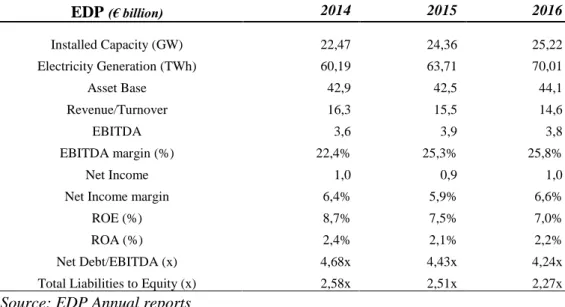
Table 2 – EDP: Key financial data (2014-2016) ... 26
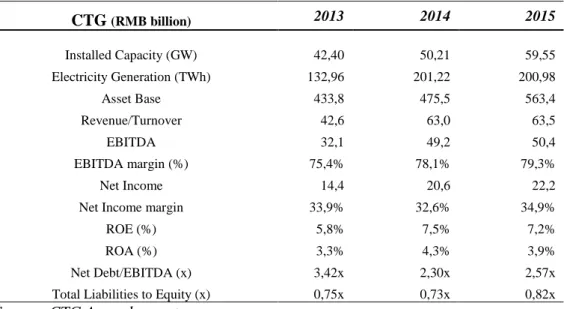
Table 3 – CTG: Key financial data (2013-2015) ... 28
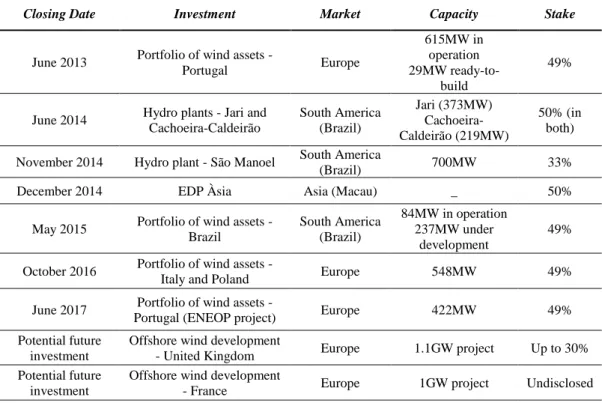
Table 4 – CTG’s investments in EDP ... 35
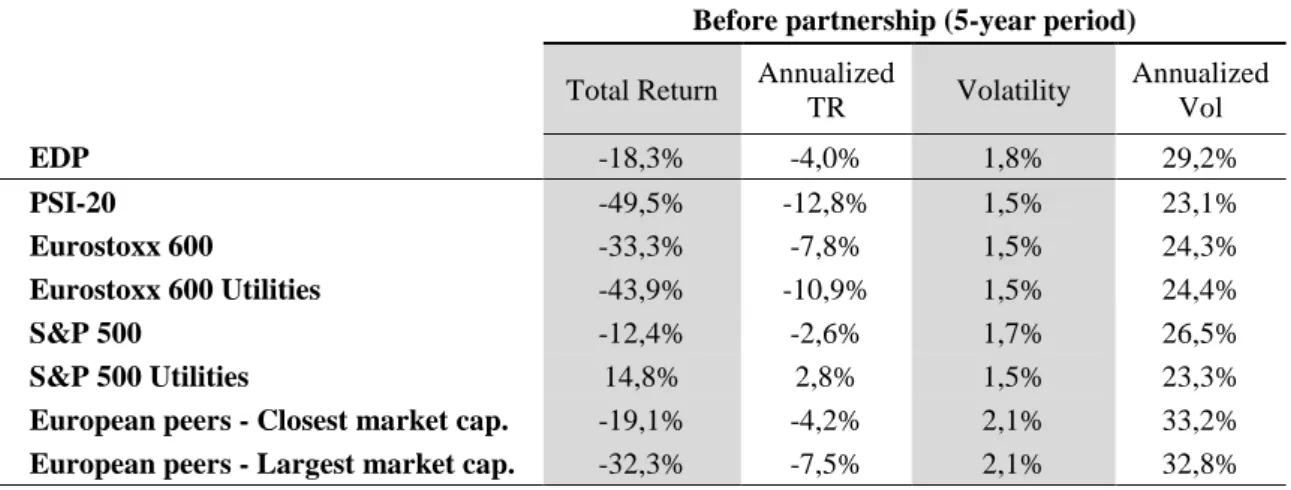
Table 5 – Stock performance (before partnership) ... 41
Table 6 – Stock performance (during partnership) ... 41
5
Introduction & research method
The date was 22/12/2011. China Three Gorges, a Chinese state-owned clean energy group, was announced as the acquirer of the Portuguese State’s stake in EDP – Energias de Portugal, one of Europe’s major integrated electricity operators. CTG became EDP’s largest shareholder, with a 21.35% stake, and joined as a new partner, with the establishment of a long-term strategic partnership between both firms, envisioning the development of renewable energy sources. The main objective of this paper is to integrate this acquisition in a broader Chinese outward foreign direct investment (OFDI) context, with a focus on Europe and more specifically, Portugal. Firstly, an overview of the Chinese OFDI trends will be studied, with an emphasis in the mentioned markets and in the energy sector. Afterwards, the impact of these Chinese investments to the respective recipients will be investigated, with the use of the EDP-CTG alliance as a case-study, a good example of the People’s Republic of China (PRC) investment culture and strategic aspirations. Besides, the EDP acquisition was also the largest M&A investment in Portugal by a Chinese firm, marking the beginning of further waves of investments into the country. The study of the alliance success for EDP will consist in a general observation of its evolution, in line with initial expectations, and a quantitative analysis (stock performance and financial ratios’ studies). The studies aggregate the use of publicly available sources of information, such as Bloomberg, companies’ annual reports and press releases. Thus, as part of the quantitative analysis, EDP’s stock performance was measured. Daily closing stock prices were taken from Bloomberg, excluding non-trading days, adequately adjusted for distributions such as dividends and stock splits, from two 5-year periods, before and during the EDP-CTG partnership. An equivalent method and time range was used for other stocks/indexes, obtained to allow for a comparison with EDP. Finally, total return for both periods and volatility (standard deviation from daily returns) were computed.
6
Regarding the beginning of each 5-year period, Nain & Wang (2016) found the presence of significant cumulative abnormal returns (CARs) to target companies around the announcement of minority stake acquisitions, in a (-10,10) day window. Thus, the analysis will be developed around that period, an adjustment to avoid the intense speculation around the event. A 21-day period provides a long enough period to capture the reaction of the market, but short enough to exclude other unrelated events (Schoenberg, 2006).
EDP’s stock performance was compared to a group of European electric utilities and relevant indexes. Regarding the domestic market, PSI-20 was taken. Secondly, to compare the performance with developed markets, the S&P 500 and Eurostoxx 600 were also used. Within both markets, EDP’s stock performance was compared to the sector, against S&P 500 Utilities and Eurostoxx 600 Utilities sector indexes. Finally, two groups of comparable utilities in the European sector were extracted, with similar core businesses to EDP. Under these criteria (as of 11/07/2017), the group of firms with the closest market capitalization (Verbund, Fortrum,
CEZ, RWE and Centrica), and the group with the highest market capitalization in the market
(Enel, Engie, EDF, Iberdrola and Endesa) were both used.
EDP’s financial position was also studied. A total of 19 diverse financial ratios were observed, in both 5-year periods, including – capital efficiency, profitability, growth, solvency, liquidity and valuation – ratios. For comparison purposes, the same 10 European utilities were considered.
PRC: Overseas investments
PRC’s investment in Europe: a recent phenomenon?
The EU-China economic relationship has been marked by strong FDI flows. However, while the European investment into China began in the 1980s, supporting China’s evolution, Chinese investment in Europe is a more recent phenomenon, from mid-2000s onwards. From that point,
7
Chinese global FDI has been growing rapidly, particularly from 2005. In fact, Chinese global FDI has been growing at a pace of around 30% annually, during 2005-2015, leading to an economic transition of being an importer to being an exporter of capital. The European Union has been emerging as a key destination for this FDI. In 2016, the FDI flows to the EU amounted to €35bn, with a 77% increase from 2015 (Hanemann & Huotari, 2017).
This sharp evolution was supported by the PRC’s initiatives and policies. Since 2000, with the
“Go Global” initiative, the PRC strongly promoted investment abroad, with continuous policy
liberalizations for outbound investments and an internationalization-based growth model based on pushing for a market-driven and modern economy. Recently, the “Go Global” concept continues to be a reality, in line with the PRC’s 12th 5-year plan (2011-2015) and 13th 5-year
plan (2016-2020) - series of 5-year plans for social and economic development - and the Third
Plenum reforms, which supported a deregulation of controls for outbound investments and provided incentives for internationalization, among other pro-global measures.
Furthermore, beyond broad reforms, numerous ongoing initiatives, favoring the PRC’s interests, continue to support outbound investments and international cooperation. Highlighting some of the most important, the “Made in China 2025” initiative (industry processes’ innovation and technological development) partly uses OFDI as a ladder for assess to
know-how and technology. Another example is the “One Belt, One Road” initiative, in which China
has ambitious plans to create land-based and maritime routes with other regions (a concept similar to the ancient network Silk Route), including Europe.
Following PRC’s interests, Chinese firms’ goals are also in line with international expansion. Firms have been expanding their activities to become more competitive in a global environment, diversifying their operations from a gradually saturated domestic market. Moreover, they aim at gaining access to critical distribution channels, physical assets,
8
established brand names, technological capabilities, R&D infrastructure, human capital and
know-how.
Following Hanemann & Huotari (2017) report, in Europe, while these FDI flows were traditionally carried out by state-owned enterprises (SOEs) - majority of the total yearly investments until 2015 -, private sector companies have been increasingly important in the investment mix. In 2016, their investments represented nearly 75% of total Chinese FDI into Europe, against 30% in 2015. In what accounts for the geographical distribution of the total investments, traditionally they were directed at natural resources present in developing economies. More recently, they have shifted to advanced economies, where the EU became a major recipient, in a context of a weakened economy within the crisis environment. At a first stage of this shift, they were directed at the largest European economies, namely Germany, the United Kingdom and France. While these economies continue to be major targets of the investment (accounted for 59% in 2016), in recent years there has been a higher diversification, such as to Southern European economies (around 40% in 2015). In fact, this mainly originated from the opportunities available in previously state-controlled sectors such as transportation and utilities, as it was the case of EDP. Eastern and Northern European countries also have been growing targets of Chinese OFDI into Europe.
With respect to the main sectors of investment in the EU, the tendency has also been of gradual diversification. In the 2000-2014 period, the largest bulk went to utilities, particularly for the acquisition of fossil fuels and renewable energy infrastructure, making energy the largest target sector of investment, with 28%. Besides energy, the automotive (13%), agriculture and food (12%), and real estate (11%) attracted most Chinese OFDI during the period (Hanemann & Huotari, 2015). Recently, Chinese interests shifted to a more diverse asset mix, with an overall focus on high-tech, services, and infrastructure assets.
9
In conclusion, Europe has become as a key target for the PRC’s OFDI. Undoubtfully, this inflow of Chinese capital was crucial to an European economy, fragilized by a harsh global financial crisis, potentiating economic growth. However, while these investments are a crucial capital source, there are still risks (Hanemann & Huotari, 2015). The main concerns are: (1) – Increased dependence by European member-states on Chinese investment; (2) – Increased internal competition over Chinese FDI; (3) – Enhanced China’s political influence due to the more predominant presence in Europe; (4) – China’s attitude to Europe’s FDI, restricting access to several sectors of the economy, with a generally discriminatory and unwelcoming stance; (5) – Unfair level playing field in the market place due to the large subsidization, advantages and general support given by the government for several Chinese state-owned or even privately held firms (with operational goals in line with national aspirations). As a result, Chinese firms can make offers in bidding processes more attractive than their competitors’. Besides, there is little transparency about secondary sources of financing and investor relations in privately-held firms, which often also tie those companies to state-led groups; (6) – Control over
state-of-the-art European technology and know-how, impacting its global competitiveness; (7) – National
security concerns, particularly due to the control over sensitive information and critical assets.
Investment in Portugal: opportunistic deals or strong interest?
Following a similar trend as in Europe, Portugal has also been the target of FDI recently, particularly from 2011 onwards (before only some specific companies, such as Huawei or ZTE, both telecommunication companies, were present in Portugal through their subsidiaries). In fact, Portugal during 2000-2016 received a total value of Chinese FDI of €5.7bn, which represents around 6% of the total OFDI into the EU-28 during the period, being the 6th country receiving the highest total investment. If we take the 2000-2014 period into account, the Chinese FDI in Portugal totaled €5.1bn, leading to a 4th position, standing only below Germany, France and the UK (Hanemann & Huotari 2016, 2015). However, according to another study
10
(Casaburi, 2017),until 2015, Portugal was the country with the largest Chinese investment-to-GDP ratio in Europe, at around 3.3% (2015), being the largest recipient according to its size. These values are only close to Ireland and Hungary, both with 3.2%.
Chinese Investment in Portugal surged after a period of economic crisis in the Eurozone, and particularly, a period of recession in Portugal, with a highly indebted government, which applied for a bail-out program in 2011, to stabilize its public finances. As a result, it established a 3-year plan (2011-2014) with the “European troika” (composed by the International Monetary Fund, the European Central Bank and the European Commission), in which a central measure was to develop a process of various privatizations of state-owned assets in sectors such as energy, transportation, communications and insurance, resulting in clear opportunities for international investors. As a result, Chinese companies took advantage of attractive asset pricing in a depressed economy, together with the Portuguese Government’s openness to foreign capital, to expand their global reach, by entering the European market. Chinese companies often presented the best offers, through the support and financial backing provided by the Chinese State to SOEs (such as CTG). In this context, the CTG’s minority acquisition of EDP, for an amount of €2.7bn in 2011, marked the beginning of a series of investments in Portugal in the subsequent periods. As it will be further discussed, this allowed EDP to obtain considerable financial support at a difficult time, while it allowed CTG to expand its activity into Europe and other EDP core markets such as Brazil. Potentially, it could also gain access to other Portuguese-speaking African countries (such as Angola or Mozambique), or other South American or North American markets.
In fact, due to the committed credit lines defined in initial deals, the Chinese financial sector entered the market. An example of this is the establishment of two large financial sector SOEs, the Industrial and Commercial Bank of China (in 2012) and Bank of China (in 2013), in Lisbon.
11
Following the initial operation of EDP, another transaction within the energy sector was the 25% acquisition of REN – Redes Energéticas Nacionais (Portuguese firm, responsible for electricity transmission and natural gas transport) by State Grid Corporation of China (state-owned electric utility), for an amount of €387m (2012). Indeed, the energy sector has been a major target for Chinese FDI. Further investments in the sector include CTG’s investments in EDP, within the partnership context, in renewable assets (49% - EDP Renewables Portugal and 49% - ENEOP’s wind assets portfolio).
It is relevant to mention that other transactions, such as Sinopec’s (Chinese state-owned oil & gas company) investment in Galp Energia (Portuguese integrated natural gas & oil group), particularly in its Brazilian oil exploration assets, were not considered as they were not directly made into the Portuguese market.
Outside the energy sector, the largest investments made in Portugal came from private investors, particularly Fosun International, a Chinese international conglomerate and investment company, with an interest in the Portuguese market. Its major acquisitions in Portugal were in insurance, with the €1bn acquisition of Caixa Seguros (2014), – obtaining 30% of the national insurance market - in the healthcare sector, with the acquisition of Luz Saúde (2015), and in the banking sector, with the minority purchase of 16,7% of BCP (Banco
Comercial Português), in 2016. Another important M&A transaction in the financial sector was
the complete takeover of Banco Espírito Santo de Investimento (BESI) by the Chinese financial group Haitong Securities (2014). Fosun also detains a presence in the Portuguese energy market, with a position of roughly 5% in REN.
At a first stage, Chinese investments were mainly minority acquisitions, as a strategy to prevent hostility from the local market. However, the gradual greater receptivity to Chinese FDI, was reflected in a progressively higher number of majority or even complete takeovers. In fact, the Chinese FDI into Portugal has showed a predominant number of large-scale M&A activity, as
12
opposed to fewer greenfield projects – e.g. Yuwibuy.com (e-commerce firm), in 2015, or Huawei, present in Portugal since 2011.
Nevertheless, the investments extend beyond large acquisitions. The investments also target small and medium-size companies, specialized in a broad range of activities. Such example is the acquisition of 30% of EIP (Electricidade Industrial Portuguesa, specialized in the production and distribution of electricity), recently in 2016 by Shandong Taikai Power Engineering or the acquisition, in 2013, of Compagnie Générale des Eaux Portugal (water purification and treatment firm) by the conglomerate Beijing Enterprises. Overall, the top 10 largest M&A investments by Chinese firms in the Portuguese market are displayed below:
Table 1 – Top 10 largest investments by Chinese firms in Portugal (2010-2017)
Year Target Buyer Transaction
Value Stake Sector
2011 EDP - Energias de Portugal China Three Gorges € 2.7 bn 21% Energy 2014 Caixa Seguros (Fidelidade, Multicare & Cares) Fosun International € 1 bn 80% Insurance 2014 Espirito Santo Saúde (Luz Saúde) Fosun International € 460 m 96% Healthcare 2012 REN - Redes Energéticas Nacionais State Grid Corp of
China € 387 m 25% Energy
2014 BESI - Banco Espírito Santo de Investimento Haitong Securities € 379 m 100% Financial 2012 EDP Renováveis Portugal China Three Gorges € 368 m 49% Energy 2017 EDPR (ENEOP wind assets) China Three Gorges € 248 m 49% Energy 2016 BCP - Banco Comercial Português Fosun International € 175 m 17% Financial 2013 Compagnie Générale des Eaux (Portugal) Beijing Enterprises € 95 m 100% Water 2016 TAP - Transportes Aéreos Portugueses Hainan Airlines € 30 m 23% Airlines Source: Bloomberg; Press Releases
At a smaller scale, investments were primarily made in small commercial activity and in the real estate sector. These investments have been enhanced by the Gold Visa initiative, launched in 2012, which grants non-EU citizens residency permits if they purchase a property or make an investment over a certain value for different types of investments. The great majority of these permits have gone so far to Chinese citizens. Besides, Portugal’s favorable legal environment, with significant bureaucracy reductions in recent years, together with an attractive tax regime, also further encourages outside investment.
13
Summing up, the recent wave of Chinese investments goes beyond a range of opportunistic deals, due to attractive pricing within the privatization context, to a stronger continuous interest, at various levels, supported by the opportunities present in the local market. In the future, we can expect a reinforcement of this investment, particularly, according to Casaburi (2017), apart from the financial sector, in the energy and waste treatment areas, in medium-sized firms with a strong brand image and which can capitalize on it to internationalize its activities (e.g. food and beverage industry) and finally, in companies present in the leisure and sports sector.
PRC’s interests: the energy sector
As mentioned, since 2011, Chinese OFDI into Europe has markedly increased, hitting an all-time high value in 2016. The European energy sector was a major target of this investment. Traditionally, the energy markets in European countries were associated to high governmental control, supported by complex regulatory frameworks, with monopoly-like markets, and strong barriers to foreign companies. However, with the wave of market liberalization and privatization operations established by European governments, which began in the 1980s, this status gradually changed. Furthermore, the European financial crisis, bringing substantial reforms and the privatization operations for several state-owned assets, further impacted energy markets, particularly in Southern Europe countries such as Greece and Portugal (Pareja-Alcaraz, 2016). Thus, the changing market structure, the opportunities available, together with the liberalization of PRC’s outward investments, and a need to develop renewable energies capabilities, in line with PRC’s sustainability goals, have been the major factors to explain the recent surge of Chinese FDI in Europe’s energy sector.
In fact, Chinese firms have been investing in every part of the energy market, including traditional energy generation, renewable energy projects, power grids and recently, in nuclear power (Conrad & Kostka, 2016). These investments are predominately market-seeking, due to a saturated domestic market, and know-how or technology-seeking, particularly in the
14
renewable energy sector. Moreover, these investments in the European sector can be tied to Chinese State’s interests, such as assuring the security of fossil fuels’ supply, ensuring “cleaner” energy production and use, and enhancing the market position of domestic energy companies (Liedtke, 2016).
Further analyzing these energy interests of the PRC, it is necessary to address the evolution of its economy. China’s fast-paced economic evolution and transformation has had an impact on the country’s energy use. Currently, China is the largest energy consumer in the world, with most of its consumption supported by coal (62%) and oil (19%), and a less significant percentage being attributable to hydroelectric (9%) and renewable energy (3%), percentages below developed economies such as the US or Europe (BP, 2017). During its evolution, China’s energy needs forced the country to increase its reliance on imports, on coal, natural gas and more importantly, on oil, with great dependence on foreign sources. Consequently, one of the main Chinese energy interests has been to ensure the appropriate supply security of fossil fuels. In fact, global investments by Chinese firms have been a tool to establish partnerships and secure deals with oil-producing regions (Jiang & Ding, 2014).
However, this increased domestic energy consumption, together with the lack of appropriate infrastructure, technology or safety regulations to support a sustainable growth, has led to troubling environmental and public health problems which has led “sustainability” to be a core concept regarding energy (Liedtke, 2016). There are several studies regarding the effects of the consequent pollution on public health, as a result of the excessive use of coal in China, particularly, and due to the continuous high percentage of fossil fuels in the energy mix. China’s sustainable development thus needs to be based on an effort to increase the share of “clean” energy sources in the total mix and promote higher efficiency in energy production and consumption. In this sense, PRC’s promoted the sector international expansion to enhance
15
domestic firms’ technological capabilities, energy-industrial competences and management
expertise.
In fact, Europe has historically been investing in the renewable energy sector, establishing a leading position regarding technological advancement. With extensive government support for the achievement of ambitious targets (e.g. recently in the context of EU’s energy and climate goals for 2030, it wishes to achieve the target of 27%, regarding final energy consumption in the EU, from renewable energy sources), the EU has gradually become a model for new energy development (Curran, Lv & Spigarelli, 2016). In this sense, the PRC, due to its “sustainability” goals, constantly endorsed, such as recently in the 13th 5-year plan (2016-2020), had a lot to gain by investing in the European renewable energy sector.
On another topic, in what concerns target countries of the PRC’s FDI into the European energy sector, these gradually became more diversified. As in the general context of total FDI in the EU, traditionally the largest portion of the investment went to the “Big Three” economies, Germany, France and the UK. However, more recently, there has been an increase in the interest for Southern and less significantly, for Central Europe. In fact, investments in Southern Europe (Portugal, Spain, Italy and Greece) were very limited between 2000-2008, but increased after the European financial crisis of 2008-2009, with a significant growth thereafter. Regarding the European energy sector, these countries accounted for a 24% of total FDI into the sector over 2000-2014. From that investment, its majority went by far to Portugal and Italy (Pareja-Alcaraz, 2016).
Undeniably, Chinese investment has been an important source of capital for the European energy sector. Most importantly, it provided access to credit to weakened Southern European economies at a difficult time, as it was the case for Portugal, and EDP.
16
The future for Chinese OFDI
As aforementioned, PRC’s outbound investment policy liberalization shift, and substantial economic growth over the last decade has led China to become one of the key worldwide players in cross-border direct investment and M&A activity. In 2016, China achieved an all-time high OFDI value, becoming the second-largest global investor country after the United States, with $217bn and $318bn, respectively (OECD, 2017). Regarding M&A, in 2016, the PRC completed $140bn worth of M&A transactions, also in second place after the US.
However, the future for China’s OFDI is uncertain. Chinese investors are facing short-term challenges which can compromise the sustainability of PRC’s overseas investment strategy (White&Case & Rhodium Group, 2017). Firstly, there has been an increase in outbound capital flows control. As a consequence of the extensive liberalization of administrative regulations over outward investments in the last decade (the latest round in 2014), China’s financial account in its balance of payments changed from constant surpluses to significant deficits over the last few years (2014-2016). In response to this, it is expected for the PRC to revitalize some of the forgone administrative controls to outbound investments, increasing scrutiny and control, to promote more strategic investments. Secondly, a short to medium-term challenge is the elevated levels of indebtedness of the Chinese corporate sector, particularly state-owned enterprises. In fact, its corporate debt-to-GDP ratio stood at over 160% in 2016, which can impact firms’ ability to keep the pace of investments. Thirdly, another risk is related to the attitude of target economies to Chinese capital. As mentioned before, this includes concerns about national security, lack of reciprocity for foreign investment or the strong role of the state and industrial policies in the activity of Chinese firms. At a short-time range, all these challenges are a considerable threat to the country’s OFDI.
Nonetheless, if they are efficiently managed, trends suggest that China’s OFDI will remain strong in the upcoming years. In fact, China, which recently moved from being an importer to
17
being an exporter of capital, is still far from reaching its accumulated inward investments (IFDI), over the years, of $2.8 trillion (until 2015), against $1.1 trillion of accumulated OFDI. Since countries’ accumulated net FDI positions tend to balance when GDP-per-capita increases, strong China’s OFDI levels can be expected over the next few years (White&Case & Rhodium
Group, 2017). Moreover, even after a steep increase over the years, its relative accumulated
OFDI value is still at very low levels, when compared to other economies. In 2015, the accumulated Chinese OFDI represented 10% of its GDP, considerably behind developed economies such as the UK (72%), France (65%) or Germany (58%), and behind emerging markets such as Brazil (16%) (White&Case & Rhodium Group, 2017).
In sum, these fundamentals support an enormous potential for sustained high levels of Chinese OFDI over the upcoming years. Even though some short-term challenges need to be addressed, the fundamentals suggest that Chinese OFDI average yearly flows will continue to grow, and China will remain an important capital source for other world economies, with a very important impact on global markets. Despite this medium to long-term trend, recent news (Lusa, 2017) revealed that Chinese OFDI investment in 2017 (until end of July) has had a decline of 44% against the same period in 2016. As a mentioned short-term challenge, this was primarily a result of higher controls on outbound investments promoted by Chinese regulators, in an effort to improve firms’ investments’ quality. Nevertheless, this temporary slowdown should not compromise the potential and the importance of Chinese OFDI for the next few years.
Summing up, the PRC’s overseas investments, have been, and will be, of great importance for the global markets and for the target companies (and countries). In order to study the dynamics of these investments and its impact for target firms more closely, the EDP-CTG partnership will be used as a case-study. The 21,35% acquisition was the largest investment in Portugal (by a Chinese firm) and one of the largest in Europe. Therefore, to study its impact, the success
18
of the partnership and its accretive value for EDP will be studied. However, before diving into the alliance itself, a short theoretical background regarding strategic alliances will be made.
Literature review: Strategic alliances
Theoretical introduction
Under the M&A concept, operations between companies can take numerous forms. According to Nakamura (2005), M&A consists in a broad concept which includes all operations from pure mergers to strategic alliances. In fact, while in the “narrow sense” it only refers to actual mergers and acquisitions, in a broader sense it also refers to other types of cooperation (e.g. cooperation in R&D, cooperation in marketing & sales, joint ventures). We will focus on those types of cooperation, which can be referred to as strategic alliances.
Strategic alliances can be defined as an agreed interfirm relationship between two or more firms, which remain legally independent, involving the exchange, sharing or co-development of resources, competences and capabilities (Gulati, 1995). The term “partnership” can be used to define a strategic alliance, consisting in businesses working cooperatively to explore mutually beneficial opportunities and achieve a sustained competitive advantage (Wei, 2007). Literature on strategic alliances defines various potential motives for alliances (Gulati, 1995; Kogut 1988). From market-seeking aspirations, access to technology, risk and cost sharing, economies of scale, new product development, among others, there are an extensive number of reasons to enter a strategic agreement (Knoke & Todeva, 2005). However, in general, alliances allow companies to learn from their partners and gain access to further resources and capabilities, permitting them to enter new markets or improve their existing competitive position in existing markets (Russo & Cesarani, 2017).
Regarding the typology of strategic alliances, they are different approaches. In fact, they can take numerous forms such as joint ventures, joint R&D, distribution agreements, licensing
19
agreements, franchising, among others (Gates, 1993; Yoshino & Rangan, 1995). With the purpose of aggregating these types of alliance structures, several typologies have been developed. K. Das & Teng (2000) integrate several approaches to define 4 main types of strategic alliances: (1) Equity joint ventures – involves the creation of a separate entity, owned by the alliance partners; (2) – Minority equity alliances – one or more partners own an equity stake in others; (3) – Bilateral contract-based alliances – with no equity positions involved, partners must deploy their resources and work cooperatively continuously (e.g. joint R&D, joint marketing efforts); (4) – Unilateral contract-based alliances – involved partners carry their contract obligations on an individual basis, with little collaboration (e.g. licensing agreements, R&D contracts).
Undoubtfully, strategic alliances have become increasingly important in company activities, as a response to the challenges imposed by the rapid technological changes, market globalization and the uncertainty, complexity and turbulence in the current business environment. On average, firms engage in 1.3 new alliances per year (Bodnaruk et al, 2013). Competition can no longer be seen as merely between individual firms, but between alliance networks (Brondoni, 2010). Alliances are seen as a catalyst for enhanced value creation, as several studies suggest that on average, alliances create economic value to the involved parties (Anand & Khanna, 2000). Nevertheless, even though they can create value, roughly 50% of the alliances end up failing (Linwei et al, 2017). These studies support the growing understanding of the importance of allying with external partners, but also the difficulty in building a successful alliance. While numerous reasons can be appointed for the failure of an alliance, the primary reasons can be related to opportunistic behaviors or to the lack of fit between partners (Park & Ungson, 2001). In sum, while strategic alliances are of vital importance for firms, their success rate continues to be low. Managing an alliance is a cumbersome process, ranging from the alliance formation phase, contractual drafting, to the actual alliance operational phase. Overall, creating value in
20
alliances is a 3-step process (Bain, 2017; Kale & Singh, 2009). Firstly, at the formation phase (1), partner selection is crucial, ensuring fit between working cultures and alliance goals. Success of the alliance is dependent on a high level of strategic, cultural and organizational fit. Secondly, a detailed contract must be drafted (2), to reduce the risk of opportunistic behavior and promote an efficient alliance management framework. For instance, mutual rights, obligations, exchange processes, conflict resolution measures, expected alliance outputs, among others, should all be carefully explained in the produced contract. Finally, reaching the actual management of the alliance, ensuring partner commitment (3) is crucial, through day-to-day monitoring of the alliance, addressing contingencies as they arise with appropriate frameworks for maintaining cooperation and coordination among alliance partners, efficiently managing potential conflicts. In fact, the creation of a dedicated alliance function, managing all alliance-related activities, has been shown to have positive impact on success rates and value creation (Dyer et al, 2001). Moreover, ensuring constant communication and information sharing is also a critical success factor, enhancing trust.
Finally, the alliance evaluation phase comes to represent the moment when partners evaluate the alliance, studying its past performance, and decide the future alliance development. The main options are early termination, natural end, alliance structural change, extension or partner takeover (Tjemkes et al, 2013). In this sense, alliance success assessment is, therefore, a critical part of any strategic alliance, and a critical part of this paper.
Measuring the success of strategic alliances: a troublesome topic
It is crucial to define appropriate performance measures to an alliance so that parent companies can understand what should be improved during its course, and understand its overall success once it is over, as a basis for future partnerships.
Nevertheless, the success assessment of strategic alliances is an area of study with little consensus (Shaw & Kauser, 2004). This results from the lack of understanding regarding the
21
nature of measures that should be evaluated, leading to the conclusion that it is difficult to define a set of standard measures to define and compare the success of strategic alliances (Luo, 2002). In this sense, it is hard to define standard measures as the performance should be linked to each alliance’s objectives and the underlying strategic factors which compelled companies to form an alliance (Shaw & Kauser, 2004).
In sum, even though alliance performance measurement is crucial, there exists conflicting literature over the most appropriate success measures. Some groups can be defined, such as financial, objective and subjective measures (Shaw & Kauser, 2004). Financial measures relate to the fulfillment of economic objectives of the alliance, such as profitability and growth targets. However, this may be an insufficient measure of alliance success, as it does not take into account other objectives, particularly of a more strategic nature, harder to express by financial indicators. In fact, even though a company could show poor financial results, it could have achieved its strategic intentions, and the alliance could have been successful. Regarding objective measures, these relate to measures such as the duration of the alliance, its stability and potential termination, for instance. Again, there is extensive criticism to these measures. Each strategic alliance has specific objectives and specificities, and it is hard to use measures of success such as the survival, duration or termination of a partnership, as they are very limited measures of collaborative effectiveness, which could lead to wrong conclusions. For instance, the early termination of an alliance may happen due to an earlier fulfillment of its pre-defined goals. Finally, subjective measures are also a widely used form of measuring alliance success. It refers to subjective assessments regarding the success of the partnership. There are also limitations in the use of these measures, such as potential biased responses.
As shown, there exists little consensus over the most appropriate measures to verify success. Therefore, the EDP-CTG partnership will not be analyzed over a specific type of standard success measures, but will be assessed against the pre-defined partnership criteria/goals and
22
inherent strategic motivations, set at the beginning of the partnership. Moreover, as one of the main financial goals defined was the creation of value for EDP’s shareholders, inherent to any firm’s strategic decision, a more specific and detailed analysis will be performed on this subject, through the observation of two 5-year periods before and after the partnership announcement. Supporting this analysis, the financial health of the company will also be examined during the same periods. This second analysis will allow to address the potential speculation surrounding the stock market, by examining whether the company shows any actual improvement to its operational and financial situation, and thus whether it presents a solid basis for sustainable growth. Nevertheless, an introduction of both companies’ profiles and the minority acquisition context is required, before the partnership itself is studied.
EDP-CTG: Introduction
EDP: Company profile
EDP – Energias de Portugal – was initially created as a public company in 1976, as a result of a nationalization process in which the thirteen major mainland Portuguese electric companies were merged. However, from 1997 onwards, the company was the target of a re-privatization process which comprised a total of 8 stages, from the initial public offering (IPO) established in 1997, until the acquisition of the State’s stake in EDP by CTG. In fact, this process came in line with the European energy market liberalization waves, which began with the acknowledgement of the inefficiencies afflicting the utilities market, due a strong State influence in the companies’ activities. As a result, to reduce the problems associated with this lack of efficiency, it was agreed that it was necessary to proceed with the liberalization of the market, in order to increase competition (Clifton et all, 2011). In fact, as mentioned, from 1980 onwards, in the EU, several countries started to pursue this liberalization, with privatization and deregulation policies, with the purpose of ending monopolies and creating integrated energy
23
markets, again, with the overall goal of inducing competition as a method to create a more efficient sector with benefits to all participants (Haar & Jones, 2008). Portugal, even though at a slower pace than other European economies, followed this trend.
EDP is a Portuguese-based listed company (trading in the NYSE Euronext Lisbon), and a vertically integrated utility, being one of European’s major energy operators. EDP establishes its operations in three main divisions, which consist in EDP Iberia, EDP Renováveis (EDPR, EDP’s renewable energy division) and EDP Brazil. Iberia consists in the core business of the group (53% of EBITDA in 2016, Annual report).
EDP is the largest generator, distributor and supplier of electricity in Portugal and the third largest generator in Iberia (also being present in the distribution and supply activities in Spain). In Iberia, it was until recently present in gas distribution and supply activities, being one of the largest gas distributors. However, due to a recent portfolio reshuffling strategy to focus on core
activities (increase exposure to the growth potential of the renewables segment) and divest
non-core businesses, due to the low-scale and low potential synergies with EDP’s remaining portfolio, EDP has now abandoned its activity of gas distribution in Iberia, while still maintaining gas supply operations (EDP - investor presentation May 17). The cash proceeds from gas distribution assets’ disposals were intended to be used for EDP to buy the minorities’ held EDPR stake of 22.5%, aiming full control, and also to reduce its indebtedness levels. The divestment was made earlier this year, through the sale of 100% of both subsidiaries, Naturgas
Energía Distribución and EDP Gás, in Spain and Portugal, respectively (Machado, 2017).
While EDP, as mentioned, maintains its gas supply business, it can be considered a residual business with little influence in EDP’s earnings.
The company operates worldwide through its renewable energy subsidiary, EDP Renováveis, which is also listed in the NYSE Euronext Lisbon. EDPR was listed publicly in 2008 after a
24
renewable energy sources. Currently, EDP owns a 77.5% stake in the company. As mentioned, in March 2017, as part of the strategy shift to enhance the integration of EDP’s portfolio, the group expressed its intention in buying the remaining 22.5% stake in EDPR, offering 6,8€ per share (6,75€ after the distributed dividend), which would entail an investment of €1,33bn (Faria, 2017). The offered price, while corresponding to a premium of 10,5% over the average price in the previous 6 months to the preliminary announcement, it was far from the 8€ IPO price. Even though the stock was trading above the offered price, EDP did not change it, which caused criticism and resistance of some minority investors. As a result, EDPR remained in the market and the group only managed to buy an additional 5,03% of the shares, now owning 82.56% (Teixeira, 2017). However, there are still options available for its integration, such as a potential merger resulting in its incorporation in EDP (stock exchange). However, this is not a likely option, and cannot be excluded the possibility that EDP may launch another offer later (legally, can only do it from August 2018 onwards).
In fact, EDPR, which is present solely in the electricity generation segment, is one of the largest wind power operators in the world, present in Portugal, Spain, United States, Canada, Brazil, France, Belgium, Italy, Poland, Romania and Mexico, while also currently developing wind projects in the United Kingdom, being the lead responsible for the group’s internationalization. Regarding solar power generation, the company is present in Portugal, Romania and in the United States. The North American market is of great importance for EDPR, since until 2020, it is expected that 65% of the company’s growth will be developed in this market (EDP - Capital Markets Day 2016). The market is particularly attractive due to the existence of tax incentives and the establishment of PPAs (long-term power purchase contracts).
Regarding EDP Brazil, the group detains a 51% stake in the company (traded at the São Paulo
Stock Exchange, as of 2005). Since 1996, the group has operated in the Brazilian market in the
25
transmission market. As of end-year 2016, it is the 5th largest private company regarding installed capacity in the country (mainly hydroelectric plants), the 6th distributor of energy (two concessions, in São Paulo and Espírito Santo states) and the 4th largest private group regarding electricity supply in the liberalized market.
EDP has therefore a large and strong worldwide presence, with activities in 14 countries (including offices in China and Angola), an employee base of over 12000 employees, serving around 9.8 million electricity customers and 1.5 million gas customers, as of end-year 2016. The Group had a total installed capacity of 25.2 GW (gigawatts), with a generation of 70 TWh (terawatt-hour) in 2016, mainly from renewable energy sources (65%). In 2016, EDP managed an asset base of €44bn, achieving an EBITDA of €3,76bn. Moreover, the Group’s performance is defined by a low-risk profile, since the weight of the regulated or long-term contracted business represented 87% of total EBITDA in 2016. Also, the portfolio was geographically diversified, with around 55% of the EBITDA from outside Portugal, in the same year.
Regarding its credit profile, according to the most recent information (Bloomberg), EDP’s LT credit rating is: Moody’s: Baa3 (Stable); S&P: BBB- (Stable); Fitch: BBB- (Stable);
26 Table 2 – EDP: Key financial data (2014-2016)
EDP (€ billion) 2014 2015 2016 Installed Capacity (GW) 22,47 24,36 25,22 Electricity Generation (TWh) 60,19 63,71 70,01 Asset Base 42,9 42,5 44,1 Revenue/Turnover 16,3 15,5 14,6 EBITDA 3,6 3,9 3,8 EBITDA margin (%) 22,4% 25,3% 25,8% Net Income 1,0 0,9 1,0
Net Income margin 6,4% 5,9% 6,6%
ROE (%) 8,7% 7,5% 7,0%
ROA (%) 2,4% 2,1% 2,2%
Net Debt/EBITDA (x) 4,68x 4,43x 4,24x
Total Liabilities to Equity (x) 2,58x 2,51x 2,27x Source: EDP Annual reports
Finally, regarding EDP’s shareholder structure, as of 2016, the majority of EDP’s shareholders were foreign (88%), mainly from Europe (45%) and the great majority were institutional investors (92%). Its main shareholders are: (1) CTG – 21,35%; (2) Capital Group Companies
– 12,00% (3) Oppidum Capital – 7,19% (4) Blackrock – 5,00%; Mubadala Investment Company – 4.06% and CNIC Co; 3.02%.
CTG: Company profile
China Three Gorges Corporation is a 100% state-owned and fully supported group founded in 1993 with the purpose of building the Three Gorges Project and developing the Yangtze River, the longest river in Asia and third longest in the world. CTG manages the Three Gorges hydropower station, the largest hydropower plant worldwide with an installed capacity of 22.5 GW and with an electricity production in 2015 of 87 TWh. Moreover, China Yangtze Power, a listed company in the Shanghai Stock Exchange, is a majority-owned subsidiary of CTG (72%) and is responsible for the operation of four large-scale hydropower plants across the Yangtze river (including the Three Gorges dam), with a total installed capacity of 45.5 GW.
27
CTG, throughout years of accelerated growth, is now the worlds’ largest developer of hydropower infrastructure in terms of installed capacity and the largest clean energy company in China, with ambitious goals of achieving in 2020 a target of 90 GW in installed capacity, fully from renewable energy sources. In this sense, the group positions itself as a renewable-power generation company, developing its activity mainly in the development and operation of large-scale hydropower plants, having progressively enhanced its activity to wind and solar power, entering both businesses in 2007 and 2011, respectively. Besides having an extensive portfolio of onshore and offshore wind, solar and hydropower operations within China, the company has also follows an international business expansion strategy. By the end of 2015, the group had a presence in 45 countries, including familiar EDP markets (Europe & Brazil). In particular, CTG heavily invested in hydro and wind assets in Brazil, the world’s second largest hydropower market, in which CTG is the second largest private power generation company. The company has also established its presence in Europe, which it believes to be a key market for its investments. Its partnership with EDP is key for CTG to develop its activity in this market.
In 2015 (most recent annual report), CTG, with over 18000 employees, had a total installed capacity of 59.6 GW, holding an approximate 15.8% of the Chinese installed hydropower capacity. Its total assets amounted to RMB 563.4bn (Chinese yuan), with operating revenues of RMB 63.5bn and a net income of RMB 22.2bn. Furthermore, according to the most recent information (Bloomberg), CTG’s LT credit rating is: Moody’s: A1 (Stable); S&P: A+
(Negative); Fitch: A+ (Stable). Moreover, Chinese credit agencies Lianhe and Chengxin both
provide a credit rating of AAA (Stable) to CTG. Below is presented key financial data for the 2013-2015 period:
28 Table 3 – CTG: Key financial data (2013-2015)
CTG (RMB billion) 2013 2014 2015 Installed Capacity (GW) 42,40 50,21 59,55 Electricity Generation (TWh) 132,96 201,22 200,98 Asset Base 433,8 475,5 563,4 Revenue/Turnover 42,6 63,0 63,5 EBITDA 32,1 49,2 50,4 EBITDA margin (%) 75,4% 78,1% 79,3% Net Income 14,4 20,6 22,2
Net Income margin 33,9% 32,6% 34,9%
ROE (%) 5,8% 7,5% 7,2%
ROA (%) 3,3% 4,3% 3,9%
Net Debt/EBITDA (x) 3,42x 2,30x 2,57x
Total Liabilities to Equity (x) 0,75x 0,73x 0,82x Source: CTG Annual report
Note: For reference: 1 RMB ≃ 0,13€.
The winner takes it all
As mentioned, the European market liberalization process resulted in sector companies’ privatizations, as was the case for Portugal. The acquisition of 21.35% of EDP’s share capital was made in this re-privatization context, which started in June 1997 (IPO), and continued through 8phases, until the deal that was stroke between EDP and China Three Gorges in 2011. This last stage was based on a direct sale of Parpública’s stake (Portuguese State) in the company, which maintained a minority stake of 4% until February 2013, when it completely left its position in EDP.
Regarding the sale process, CTG ended up winning the bid against the German firm E.ON, and the Brazilian groups Electrobras and Cemig, all participants in the electrical power sector. The final offer accepted consisted in a global price of €2.69bn, representing a premium of 54% relatively to EDP’s share market price at 21/12/2011 (2.25€), for a total of 780.633.782 shares (Campos, 2011). In fact, the proposals of the three main candidates for EDP’s Parpública stake were defined as follows (adapted from Campos, 2011):
29 China Three Gorges – 2.69€ billion cash offer, for a 21.35% stake, which consisted in a final
price of 3.45€ per share. Moreover, commitment in providing EDP with access to a credit line of up to €2bn, secured by China Development Bank, with a potential additional line of additional €2bn. CTG also committed to invest in minority equity stakes in operational and
ready-to-build renewable projects with EDP up to an additional €2bn. Finally, CTG committed
to construct a wind turbine factory in Portugal until 2013, by the Chinese turbine manufacturer
Goldwind (CTG is a shareholder of the company).
E.ON – 2.54€ billion offer for the 21.35%, representing a price of 3.25€ per share. However,
the company would partially pay the acquisition through the delivery of a Spanish subsidiary, which develops its activity in thermoelectric generation and in the distribution of electricity, equivalent to €1.8bn. Additionally, it committed in providing a line of credit in the amount of 400€ million to EDP. Finally, as additional features, it committed in buying minority positions in wind farms of EDPR (undisclosed amount) and in creating an R&D Center for renewable energy sources.
Electrobras – 2.56€ billion offer for the 21.35% (3.28€ per share). Moreover, it committed in
buying minority positions in EDP’s wind farms, with an investment of up to €1bn. However, the company established some requirements for the acquisition, such as an increase of voting rights limit from 20 to 32%, together with an agreement with other EDP’s shareholders to achieve a position of 33.33% in its capital.
CTG’s proposal was the one which offered the most value to the Portuguese State, directly with the highest premium, and it was also the best deal for EDP. At the time, the deal was based on a total amount of potential funding of up to €6bn, supported by Chinese state-owned companies’ ability to provide attractive deals with strong financial support, due to the backing of the Government and state-owned banks.Besides, CTG also offered a clear strategic alignment with
30
EDP, in the sense of combining efforts to become world leaders in renewable energy production, through the establishment of a strategic partnership.
EDP-CTG: Strategic partnership
EDP and CTG: a good marriage?
The study of the actual partnership between both firms will be composed of three parts. Firstly, an overview of the development of the partnership will be made, establishing a parallel with initial expectations (EDP - Strategic Partnership with China Three Gorges presentation, 2011). Secondly, the main pre-defined goals/criteria will be individually analyzed. Finally, the impact on EDP’s stock performance and financial position will also be studied, in more detail.
In 2011, CTG entered EDP as a new shareholder. In fact, it became its largest shareholder, with a 21.35% stake, and with an equivalent amount of exercisable voting rights. CTG maintained this position over the years (even after the committed 4-year lock-up & standstill period) and it expressed its intent in maintaining its equity stake in EDP for the foreseeable future (Lusa, 2016). This endorses the long-term view of Chinese investments and its strategic nature, rather than financial. In fact, this was one of the most significant gains for EDP, as CTG’s presence enhanced stability and its long-term vision was in line with EDP’s long-term strategy (ambitious renewable energy expansion plan).
Regarding its equity stake, it is worth noting that, with the presence of CNIC Co Ltd, with a 3.02% stake, the PRC owns a total of 24.37% voting rights in EDP (the limit on voting rights stands at 25%). In a possible scenario, if the combined stake of both companies increases over 25%, the voting rights attributable to the PRC would be limited to 25%, which could create a conflict between both companies and EDP (Lusa, 2016). Besides, Chinese companies normally do not hold more shares than the voting rights that can have in a firm.
31
Furthermore, CTG was also given the appropriate representation at the General and
Supervisory Board. Currently, referring to the 3-year period between 2015 and 2017, EDP has
five members (5/21) in the Board, with its Chairman (Eduardo Catroga) being a representative of China Three Gorges Corporation (Annual report, 2016).
Besides becoming a new shareholder, CTG also appeared as a new partner. In fact, both companies, exploring similarities and complementarities in their capabilities and overall strategy, committed to combine their efforts to become global leaders in renewable energy. For this, both became strong partners in the joint exploration, development and ownership of renewable projects, in new and existing markets, and shared know-how and capabilities in renewable technologies. In fact, with this strong alliance and a combination of diverse initiatives, both companies managed to considerably improve their “clean” energy capabilities, in line with their goal. In fact, outside the initially agreed financing structure to be provided by CTG, both companies have developed side initiatives with the purpose of further endorsing their cooperation. An example was the establishment of a joint venture, called Hydro Global JV, outside the €2bn investment plan. The objective of this alliance was to join forces in the exploration and development of renewable energy projects together in emerging markets, with a focus on South America, Africa and Southeast Asia. The partnership is expected to apply for market opportunities in the construction and operation of small to medium-sized hydropower stations. So far, and for the first time signaling an investment outside the traditional markets of both companies, Hydro Global signed a deal with the Peruvian State to develop the 206 MW - San Gaban III - hydro project in Peru (Baltazar, 2016). This deal enforces both companies’ planned diversification strategy to non-traditional markets.
Furthermore, another important initiative developed within the EDP-CTG partnership was related to the establishment of an R&D center, inaugurated in October 2014, with the purpose of promoting a collaborative approach to technology and knowledge development. The NEW
32
R&D Center, installed in Sacavém (Portugal), joins competences from both companies’ subsidiaries - EDP Labelec and SIDRI (Shanghai Investigation, Design & Research Institute) - and focuses on cooperation in R&D activities regarding new energy technologies, technical collaboration and joint participation in worldwide projects (New R&D, 2014). In sum, both actions show the strong cooperation between both firms, through the establishment of initiatives outside the main pre-defined structure of the partnership.
Alternatively, moving back to the main pre-defined structure of the partnership, as it was already mentioned, CTG committed to invest up to €2bn in minority stakes in EDP projects, €800m of which would be invested in the first year after the closing of the deal, implemented in May 2012. Moreover, it committed in providing a credit facility of up to €2bn, at corporate level. While this, had it been fulfilled, would add considerable financial and liquidity strength to EDP, allowing for the coverage of its financing needs from mid-2013 to mid-2015 at the time, the actual timing and amounts provided were not in line with initial expectations.
Regarding the provided debt support, the first tranche was given in July 2012, as China Development Bank approved a loan of €1bn to EDP. In fact, this loan was critical, as it was given at a time of very difficult access to credit (during the financial aid program to Portugal, where financing to Southern European countries was very limited), allowing to enhance EDP’s financial flexibility and also to transmit greater visibility to the market regarding EDP’s asset portfolio and growth opportunities. An example of this enhanced visibility, within the PRC, was the loan provided in October 2012 by the Bank of China, of €800m. Besides, Chinese banks also had a role in other arranged credit facilities throughout the years by EDP with diverse groups of domestic and international banks. However, contrary to what was expected initially to be received (€2bn), the second tranche was not yet arranged by CTG. However, as the credit market conditions gradually improved for EDP overtime, it was no longer critical to receive this second tranche.
33
Secondly, regarding the equity support provided by CTG, from the €2bn initially agreed (planned for the 2012-2015 period), so far there is only evidence of €1.6bn completed, taking into account the recent sale (completed in June 30th, 2017) of a 49% minority stake in a 422 MW portfolio of wind assets in Portugal, from the ENEOP consortium (48 wind farms, in a 1335 MW project, won in government auction in 2006). This project assigned to EDPR part of its portfolio (since EDPR was one of its shareholders), during the asset split process in 2015. Before this sale, for a final value of €248m, CTG’s minority investments amounted to €1.4bn. Regarding the timing of these investments compared to initial plans, they were partly in accordance with the initial expectations. In what refers to the 12 months after the closing of the deal (which entered into force in May 2012), CTG investments were slightly behind schedule, with nonetheless significant progress until the end of 2013, when there was perceptibility for €1bn of CTG investments. In 2015, when it was expected for the total amount of €2bn to be invested, CTG’s agreed investments stood at €1.4bn. Overall, again, the investment timings were not in line with initial expectations, even though this was mainly a result of EDP progressively gaining access to other financing means.
Focusing on the co-owned projects by CTG and EDP, traditionally, the investments were directed at operational wind assets of EDPR (greatest value-added for CTG), spread across Europe and in Brazil. However, CTG also has an underlying desire in looking for opportunities in North America, a strong and important market, where EDPR already a considerable portfolio of wind farms such as in New York, Iowa, Texas and other states. The North American market is also a major part of the group’s planned capacity additions for the 16-20 Business Plan. CTG already owns minority positions in wind assets’ portfolios in Italy, Poland, Portugal and Brazil. Furthermore, and as a part of the strategic EDP-CTG agreement for the remaining portion of the agreed €2bn, there are already potential co-investment opportunities, tied to wind portfolios in the United Kingdom and France. In the UK, it relates to the Moray Offshore
34
renewable, an offshore wind project off the coast of Scotland, with an expected capacity of 1.1 GW, where CTG would detain a position of up to 30%. Additionally, a similar project in France, with a planned capacity of 1 GW, can be also be a target of CTG investment for the accomplishment of the remaining portion of the €2bn (EDP - Capital Markets Day 2016). However, the investments were not solely directed to wind power. In fact, CTG has also reinforced its hydro capacity, by acquiring the rights to develop three hydro projects in Brazil with EDP (with a total capacity of close to 1.3 GW), namely Santo António do Jarí (50% stake),
Cachoeira-Caldeirão (50% stake) and São Manoel (33% stake). The success of the cooperation
in these projects between CTG and EDP can be supported by its efficient execution on time and on cost. The hydro project of Santo Antonio do Jarí was delivered 3.5 months ahead of the initial schedule and Cachoeira-Caldeirão began its operations 8 months ahead of schedule. Finally, and moving beyond the traditional Brazilian and European markets, CTG has also invested in EDP Ásia in 2014 (50% stake), a company which holds a 21.2% stake in CEM (Companhia de Electricidade de Macau), the exclusive concessionaire for the transmission, distribution and commercialization of electricity in MSAR (Macau Special Administrative
35 Table 4 – CTG’s investments in EDP
To conclude, it is important to mention the benefits of these equity investments for EDPR. On one hand, the investments done by CTG were directed at operational projects owned by EDPR, and therefore partly contributed to EDPR’s self-funding strategic pillar, known as its asset
rotation program. With this pillar, EDPR sells minority stakes in mature renewable generation
assets to institutional investors, remaining in control and directing the proceeds to invest in further growth opportunities. This is a very important part of EDPR’s strategy. As an example, over EDPR’s 2016-2020 BP, it plans to finance its planned capacity additions of 3.5 GW through asset rotation (€1.1bn) and organic cash generation (€3.9bn) (EDP - Capital Markets Day 2016).
On the other hand, the investments were also directed at more embryonic projects, with the co-financing of its development (co-funding CAPEX), and the sharing of future risks and benefits of the project.
Closing Date Investment Market Capacity Stake
June 2013 Portfolio of wind assets -
Portugal Europe 615MW in operation 29MW ready-to-build 49%
June 2014 Hydro plants - Jari and Cachoeira-Caldeirão South America (Brazil) Jari (373MW) Cachoeira-Caldeirão (219MW) 50% (in both) November 2014 Hydro plant - São Manoel South America
(Brazil) 700MW 33%
December 2014 EDP Àsia Asia (Macau) _ 50%
May 2015 Portfolio of wind assets - Brazil South America (Brazil) 84MW in operation 237MW under development 49%
October 2016 Portfolio of wind assets -
Italy and Poland Europe 548MW 49%
June 2017 Portfolio of wind assets -
Portugal (ENEOP project) Europe 422MW 49% Potential future
investment
Offshore wind development
- United Kingdom Europe 1.1GW project Up to 30% Potential future
investment
Offshore wind development
- France Europe 1GW project Undisclosed
36
In general, CTG’s investments provided a solid financing structure to EDP, through which it improved its financial position, allowing it to follow further growth opportunities. Moreover, beyond the mentioned financing structure (debt and equity), at first glance, the partnership proved to bring benefits to both parties, based on a close cooperation, at different levels.
Partnership goals
EDP defined six key criteria at the establishment of the strategic partnership (EDP - Strategic Partnership with China Three Gorges presentation, 2011), grouped in two fields, Strategic &
Corporate Governance and Financial goals. Therefore, to study the partnership success, these
initial objectives are going to be studied and compared with initial expectations.
Maintenance of EDP’s identity (core businesses): EDP did maintain its core businesses.
Currently, it still develops its activity through EDP Iberia, EDP Brazil and EDP Renováveis. In end-year 2016, EBITDA was roughly split as follows: EDP Iberia (53,1%), EDP Renováveis (31,2%) and EDP Brazil (15,8%). Moreover, over the years, EDP also reinforced its position in traditional markets, namely in Europe, US & Canada and South America.
On one hand, CTG’s investments were directed at EDPR-controlled renewable projects in its key markets (Brazil and Europe). However, EDP did not invest in CTG’s key markets (Asia). According to the initial partnership agreement, each firm had preferred co-investor status in each firms’ traditional markets. However, EDP did not diversify to Asia. Entering a new market would require a substantial cost, which could affect its results, and would not be compatible with maintaining or reducing leverage ratios. Moreover, this diversification, to an unknown market, would most certainly be accompanied with a negative reaction from investors.
Minimize conflicts of interest: No significant conflicts have originated from the partnership.
EDP has in place rigorous mechanisms to monitor and assess matters of conflicts of interest associated with the relation with its shareholders, namely through the Corporate Governance