Offi cial Publication of the Brazilian Society of Anesthesiology www.sba.com.br
REVISTA
BRASILEIRA DE
ANESTESIOLOGIA
Abstract
Background and objectives: To investigate the clinic effectiveness, safety and feasibility of Narcotrend® monitor for evaluation of depth of anesthesia in congenital heart disease (CHD) infants undergoing cardiac surgery.
Methods: A total of 80 infants receiving general anesthesia in selective surgery were randomly selected. Infants were assigned into two groups (n = 40 per group). In the Narcotrend group, the depth of anesthesia was monitored with the Narcotrend monitor. In the standard group, the depth of anesthesia was controlled according to the experience. The mean arterial pressure (MAP) and heart rate (HR) were determined, as well as the dose of fentanyl, muscle relaxant, recovery time and extubation time were recorded.
Results: In both groups, vital signs were stable during the surgery. When compared with the standard group, the MAP and HR were more stable, the total dose of fentanyl and muscle relaxant were signifi cantly reduced and the recovery time and extubation time were markedly shortened in the Narcotrend group.
Conclusion: The application of Narcotrend monitor was benefi cial to the control of the depth of anesthesia in CHD infants receiving total intravenous anesthesia, in which small amount of narcotics can achieve optimal anesthesia. Moreover, the recovery time and extubation time are reduced and the harmful consequence such as intraoperative awareness can be avoided.
© 2013 Sociedade Brasileira de Anestesiologia. Published by Elsevier Editora Ltda. All rights reserved.
Application of Narcotrend® Monitor for Evaluation
of Depth of Anesthesia in Infants Undergoing
Cardiac Surgery: a Prospective Control Study
Yiyan Jiang*
1, Bin Qiao
1, Lili Wu
1, Xiaona Lin
11. MD, Cardiovascular Institution of Jinan Military General Hospital, Jinan, China Received from Jinan Military General Hospital, Jinan, China.
Submitted on March 3, 2012. Approved on June 4, 2012.
Keywords:
Electroencephalography; Infant;
Heart Diseases/ congenital;
Anesthesia, Intravenous; Monitoring.
SCIENTIFIC ARTICLE
*Corresponding author: Jinan Military General Hospital, Jinan, China. E-mail: [email protected].
ISSN/$ - see front metter c 2013 Sociedade Brasileira de Anestesiologia. Published by Elsevier Editora Ltda. All rights reserved.
Introduction
As the depth of anesthesia cannot be reliably judged by the cardiovascular measurements alone, especially during total intravenous anesthesia, a reliable method is needed to me-asure the hypnotic component of sedation and anesthesia 1.
There is currently much interest in the estimation of the depth of anesthesia by electroencephalography (EEG), as
it may help to prevent underdosage and awareness, avoid overdosage as well as to allow rapid recovery 2.Hypnotic
The Narcotrend depth of anesthesia monitor (MonitorTechnik, Bad Bramstedt, Germany) is a computer-based EEG monitor designed to measure the depth of anesthesia 4. It was developed by a research group at the
Hannover University Medical School (Germany) and uses algorithms for automatic assessment of the raw EEG during the anesthesia and sedation. Two EEG channels are recorded and the signals from the two hemispheres of the brain are compared. The Narcotrend algorithm is based on a pattern recognition of the raw EEG and classifi es the EEG epochs in different stages - from A (awake) to F (increasing burst suppression down to electrical silence). It differentiates a total of 14 different stages, displaying them on a computer along with raw signal EEG, median frequency, spectral edge frequency and a trend analysis.
Children can benefi t from depth of anesthesia monito-ring for several reasons. The incidence of awareness dumonito-ring anesthesia in children is 4~8 times higher than in adults 5.
Furthermore, the doses of anesthetics are remarkably diffe-rent between children and adults, due in part to a higher clearance and volume of distribution in children 6. EEG
monitoring may help the anesthesiologists to better adjust the doses of anesthetics to individual needs 7. The precise
dosing of anesthetics leading to improved recovery and home readiness also yields cost savings.
Unlike other monitor devices, the age-related changes in the EEG are incorporated into the Narcotrend algorithm. Numerous studies have evaluated the role of Narcotrend monitor in adult anesthesia, yielding mixed results 8,9.
In children, there are only a few reports on the use of Narcotrend monitor in the inhalation anesthesia 10,11. These
studies suggest that, during sevofl urane or desfl urane-based anesthesia, the EEG monitoring with Narcotrend monitor can differentiate awake children from those who are deeply anesthetized.
Numerous studies have demonstrated that intra-operative monitoring of depth of anesthesia is important to assure a successful surgery, maintain vital signs, preserve stable hemodynamics, reduce side effects, achieve the optimal anesthesia, realize favorable analgesic and muscle relaxing, avoid the intra-operative awareness and facilitate rapid recovery 12. In this study, we performed intra-operative
anesthesia monitored with the Narcotrend monitor in infants with congenital heart disease (CHD) who were admitted to the Institute of Heart Diseases, and evaluated the effecti-veness, safety and feasibility of Narcotrend for evaluating depth of anesthesia.
Methods
Patients and grouping
A total of 80 infants aged 5 to 10 months and diagnosed with CHD were recruited from January 2010 to October 2011 and randomly allocated into two groups. In the Narcotrend group, depth of anesthesia was monitored intra-operatively (n = 40). In the standard group, the depth of anesthesia was monitored according to the clinical experience (n = 40). The heart function was classifi ed as grade II-III. The CHD included atrial septal defect (ASD; n = 20), ASD + ventricular septal defect (VSD) (n = 20), patent ductus arteriosis + ASD + VSD
(n = 20), descending aortic coarctation (n = 10), VSD + Mitral or tricuspid regurgitation (n = 10). Infants with a history of central nervous system diseases or cerebrovascular diseases were excluded from this study.
Total intravenous anesthesia
In both groups, infants received total intravenous anesthesia. After intravenous access, we determined anesthesia induction, tracheal intubation, skin incising, thoracotomy, establishment of cardiopulmonary bypass, aortic cross-clamping, cooling, intracardiac deformity correction, aortic opening, rewarming, discontinuation of cardiopulmonary bypass, extubation and wound closure, the mean arterial pressure (MAP), heart rate (HR), body temperature, arterial oxygen saturation (SaO2), NT stage (NTS), NT index (NTI), total dose of sedative, total dose of analgesic, total dose of muscle relaxant, recovery time and extubation time. Before surgery, patients had fasted for 4-6 hours and oral midazolam (0.5 mg.kg-1) was administered
at 30 minutes before surgery. Three electrodes were placed on the forehead and then connected to the anesthesia monitor. The skin resistance was < 6.0 kilohm and the difference be-tween two electrodes was < 2.5 kilohm. When the data were stabilized for 3 minutes, the parameters were monitored as the baseline level.
Processing and records
After recording baseline data, we performed intravenous injection of fentanyl (5-10 μg.kg-1), vecuronium bromide
(0.1-0.15 mg.kg-1) and midazolam (0.02 mg.kg-1) to induce
anesthesia. When the patient had no awareness and their muscle relaxed, we carried out intranasal intubation. The tide volume and respiratory rate were maintained at 10 ml.kg-1 and 32-34 breaths.min-1, respectively. Ventilation
was done with air and oxygen in pressure control mode for anesthesia maintenance. In the Narcotrend group, the narcotic was administered according to the fi ndings during anesthesia monitoring. In the standard group, the narcotic was administered according to the clinical experience. In both groups, anesthesia maintenance was carried out with fentanyl, vecuronium bromide and midazolam. After surgery, patients were transferred to the intensive care unit (ICU). When the disease condition was stable, extubation was done. Indications for extubation included the recovery of spontaneous breathing, consciousness, stable cardiac and pulmonary functions, urine volume of > 3-4 ml.kg.-1min-1,
275
a Prospective Control Study
and extubation time were recorded. We used time to re-covery, extubation time and intra-operative awareness for statistical analysis.
Statistical analysis
We employed SPSS version 12.0 for Windows for statistical analysis. Quantitative data were expressed as mean ± stan-dard deviation (SD). Comparisons between two groups were done with t test and a value of P < 0.05 was considered
statistically signifi cant. Qualitative data were expressed as percentage and compared with chi square test (Table 1).
Results
Surgery time was 120-180 minutes; the aorta was clamped for 45-95 minutes, and the cardiopulmonary bypassing was performed for 58-110 minutes. There were no marked diffe-rences in age, gender, height, body weight, disease distribu-tion and type of surgery between the two groups.
Case presentation
A 6-month-old male infant weighing 7 kg was classifi ed as ASA III and diagnosed with VSD+MI+TI. During the surgery, we monitored depth of anesthesia with Narcotrend monitor.
The NTS and NTI were A-B0 and 90-95, respectively. Sedation was succesful and we used intravenous fentanyl (5 μg) and vecuronium (0.75 mg) for anesthesia induction followed by tracheal intubation. When the NTS was D1, the NTI was 47, heart rate was 135 beats.min-1, and blood pressure was
90-95/45-65 mmHg, suggesting stable anesthesia induction. We did cardio-pulmonary bypass (CPB) and administered fentanyl (5 μg) and vecuronium (0.75 mg) again. The NTS was D2,, NTI was 40-42, and body temperature was 27-30℃.
The NTS of E0, NTI of 30-28 and body temperature of 25℃
suggested favorable anesthesia. When the NTS was E1 and NTI was 19-21, anesthesia was a little bit deep and we administered the above drugs additionally. After surgery, we rewarmed the patient to 30℃. When the NTS was D
2
and NTI was 40-45, fentanyl (5 μg.kg-1) and vecuronium
(0.5 mg) were administered. When the body temperature reached 36.5℃, NTS was D2-C2, and NTI was 65, in which
the aorta clamping was done for 75 min and cardiopulmonary bypass was performed for 95 min. When the patient was discharged from the surgery room, the NTS was C0,-B1 and NTI was 75-81. At 2.5 h after surgery, extubation was done and mechanical ventilation discontinued. The patient had conscious awareness and normal movement in all limbs. No complications were observed and he got discharged 8 days after surgery.
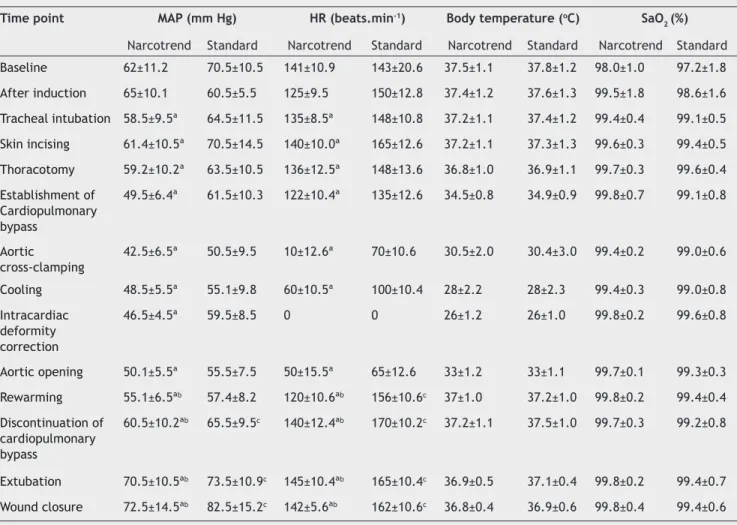
Table 1 Vital signs in two groups at different time points.
Time point MAP (mm Hg) HR (beats.min-1) Body temperature (oC) SaO
2 (%) Narcotrend Standard Narcotrend Standard Narcotrend Standard Narcotrend Standard
Baseline 62±11.2 70.5±10.5 141±10.9 143±20.6 37.5±1.1 37.8±1.2 98.0±1.0 97.2±1.8
After induction 65±10.1 60.5±5.5 125±9.5 150±12.8 37.4±1.2 37.6±1.3 99.5±1.8 98.6±1.6
Tracheal intubation 58.5±9.5ª 64.5±11.5 135±8.5ª 148±10.8 37.2±1.1 37.4±1.2 99.4±0.4 99.1±0.5
Skin incising 61.4±10.5ª 70.5±14.5 140±10.0ª 165±12.6 37.2±1.1 37.3±1.3 99.6±0.3 99.4±0.5
Thoracotomy 59.2±10.2ª 63.5±10.5 136±12.5ª 148±13.6 36.8±1.0 36.9±1.1 99.7±0.3 99.6±0.4
Establishment of Cardiopulmonary bypass
49.5±6.4ª 61.5±10.3 122±10.4ª 135±12.6 34.5±0.8 34.9±0.9 99.8±0.7 99.1±0.8
Aortic cross-clamping
42.5±6.5ª 50.5±9.5 10±12.6ª 70±10.6 30.5±2.0 30.4±3.0 99.4±0.2 99.0±0.6
Cooling 48.5±5.5ª 55.1±9.8 60±10.5ª 100±10.4 28±2.2 28±2.3 99.4±0.3 99.0±0.8
Intracardiac deformity correction
46.5±4.5ª 59.5±8.5 0 0 26±1.2 26±1.0 99.8±0.2 99.6±0.8
Aortic opening 50.1±5.5ª 55.5±7.5 50±15.5ª 65±12.6 33±1.2 33±1.1 99.7±0.1 99.3±0.3
Rewarming 55.1±6.5ªb 57.4±8.2 120±10.6ªb 156±10.6c 37±1.0 37.2±1.0 99.8±0.2 99.4±0.4
Discontinuation of cardiopulmonary bypass
60.5±10.2ªb 65.5±9.5c 140±12.4ªb 170±10.2c 37.2±1.1 37.5±1.0 99.7±0.3 99.2±0.8
Extubation 70.5±10.5ªb 73.5±10.9c 145±10.4ªb 165±10.4c 36.9±0.5 37.1±0.4 99.8±0.2 99.4±0.7
Wound closure 72.5±14.5ªb 82.5±15.2c 142±5.6ªb 162±10.6c 36.8±0.4 36.9±0.6 99.8±0.4 99.4±0.6
NT anesthesia
Under Narcotrend monitoring, the vital signs were stable during the surgery, during anesthesia induction, mainte-nance and recovery. Maintemainte-nance was easy to achieve. The Narcotrend monitor can refl ect the depth of anesthesia and sedation through detecting brain waves, which may be used to regulate narcotics/sedatives dosage. In the anesthesia control in the Narcotrend Group, NTS was maintained at D0-2 before CPB and NTI was 40-52. Following CPB, anesthesia was maintained at D or E0-2 with reduction of body temperatu-re, NTI was 35-5, and NTS at F0-1 should be avoided. The NTI of 20-14 can reduce the dose of narcotics or increase the interval between two administrations. When the body temperature returned to 28-30℃, additional narcotics were
required. After CPB discontinuation, anesthesia was then maintained at D-B and NTI was above 58-60 (Table 2).
Table 2 Anesthesia procedures.
Narcotrend stage
Narcotrend index
Awake A 95-100
B0 90-94
Sedated B1 85-89
B2 80-84
Light anesthesia C0 75-79
C1 70-74
C2 65-69
General anesthesia D1 57-64
D2 47-56
D3 37-46
General anesthesia with deep hypnosis
E0 27-36
E1 20-26
E2 13-19
General anesthesia with increasing burst suppression
F0 5-12
F1 1-4
Narcotrend stage and index (version 4.0) 14
Table 3 Surgery time, time of aorta clamping and time of CPB in children with different CHDs.
Type of surgery n Surgery time (min) Time of aorta clamping (min) Time of CPB (min)
ASD 20 120 50-70 60-75
ASD+VSD 20 122 70-85 75-85
ASD+PDA 20 130 60-70 75-90
COA 10 160 80-90 85-100
VSD+MI+TI 10 180 75-95 80-110
Comparisons
In both groups, the vital signs were stable during surgery. When compared with the standard group, the MAP and HR were more stable (P < 0.05), and the total dose of sedative, analgesic and muscle relaxant was signifi cantly reduced in the Narcotrend group (Table 3). In the Narcotrend group, the time to recovery and extubation time were 2.5 ± 1.0 h and 3.0 ± 1.0 h, respectively, and intra-operative awareness and breathing were absent. In the standard group, the time to recovery and extubation time were 5.5 ± 1.0 h and 10.0 ± 1.0 h, respectively, and intra-operative awareness and breathing were present in two infants. Signifi cant differences between two groups (P < 0.05) were noted in recovery time, extubation time and intra-operative awareness and breathing.
Discussion
Our results revealed that, with the help of anesthesia depth monitoring with the Narcotrend monitor, a low dose of anesthetics is required to achieve optimal anesthesia, the time to recovery from the anesthesia shortened, intra-operative awareness is avoided and the hemodynamics are maintained stable.
General anesthesia does not promote effective strategies for monitoring its depth. Currently, observation of clinical signs remains instrumental in monitoring depth of anesthesia during surgery. Clinical signs are diffi cult to measure, aside from blood pressure and heart rate. Moreover, the interaction between surgery and anesthesia complicates clinical signs, which adds further diffi culty to the monitoring of anesthesia depth13-14. Clinical signs vary among patients because they
present different responses to surgery and anesthesia, which may result in deep or light anesthesia.
277
a Prospective Control Study
prediction of analgesic and immobilization. Thus, BIS has signifi cant limitation in clinical anesthesia guidance. In AEP detection, sound stimulation is required and, thus, cannot be used in deaf patients. AEP can be used to monitor deep anesthesia when auditory feedback is absent and excessive anesthesia is diffi cult to identify. The index is nearly zero and detection is susceptible to be interrupted by the alter-nating current and noise. Detection of anesthesia depth with Narcotrend monitor is a new strategy for monitoring depth of anesthesia, in which the EEG can be detected to refl ect brain status. This detection is based on raw EEG and uses Kugler Multi-parameter statistics and computer processing. In the detection, the EEG signals are classifi ed into 6 levels that include 14 stages: A0-2, B0-2, C0-2, D0-2, E0-2 and F0-1. In addition, the changes in the power spectrum of α, ß, γ and δ are also presented. Level A represents consciousness, level B sedation, level C light anesthesia, level D general anesthe-sia, level E deep anesthesia and level F absence of EEG.15
In addition, 100 points are used to refl ect the EEG index (100 = conciousness, 0 = deepest anesthesia), describing the whole process from consciousness to deep anesthesia, which allows application to be more precise. The quantifi cation of anesthesia has the characteristics of individualization. Thus, monitoring of depth of anesthesia with Narcotrend monitor is superior to that with BIS and AEP 16.
Heart surgery anesthesia is different from that in other surgeries. Besides routine management, hypothermia and CPB are required for surgery. Thus, the anesthetic dosage and depth are diffi cult to control. Light anesthesia is not po-tent enough to inhibit movement, stretch and pain refl exes. Stress increased heart rate and blood pressure may elevate oxygen consumption, which may aggravate the myocardial ischemia and / or hypoxia, resulting in an increased risk for surgical complications. Conversely, deep anesthesia may suppress respiration and circulation and prolong the course of diseases, which may worsen damage to circulation and respiration or even cause death. Following treatment with awakening extension drugs may cause cardiovascular side effects. For patients treated with cardiovascular drugs (such as digitalis, β-blocker), acetylcholinesterase inhibitors to treat cardiovascular side effects may cause bradycardia and arrhythmia. When the depth of anesthesia is monitored using the Narcotrend monitor, anesthesia may be guided according to the anesthesia index, which makes the dose of anesthetics more precise.
In the standard group (a 6-month-old patient weighing 7 kg), anesthetics were administered 2-3 times from anes-thesia induction to tracheal intubation, in which 3-5 μg of fentanyl and 0.75 mg of vecuronium were administered (0.35 mg of midazolam was given once). During the CPB (1 h), anesthetics were administered 2-3 times. In addition, the anesthetics were administered twice from the CPB disconti-nuation to wound closure (50 min). In the present study, the anesthetics were administered 7-8 times during the entire surgery. The total dose of fentanyl was 35-40 μg and that of vecuronium was 5~5.6 mg. In the Narcotrend group, anesthe-tics were administered 1-2 times from anesthesia induction to tracheal intubation. During the CPB (1 h), anesthetics were administered 1-2 times. In addition, the anesthetics were administered once from the CPB discontinuation to wound closure (50 min). In the present study, the anesthe-tics were administered 4-5 times during the entire surgery. The total dose of fentanyl was 20-25 μg and of vecuronium was 3-3.75 mg. Statistical analysis showed the total dose of anesthetics was markedly higher in the standard group than in the Narcotrend group.
In the standard group, time to recovery was 5-6 h and extubation time was 7-10 h. In the Narcotrend group, the time to recovery was shorter than 2-3 h and extubation time was 2.5-3.5 h. In the standard group, the patients recovered slowly, the recovery was incomplete and patients presented agitation and excitation. In several patients, non-invasive mechanical ventilation was required. In the Narcotrend group, recovery from anesthesia was smooth and the con-sequence of muscle relaxation, sedation and analgesic was absent. Agitation and excitation were not observed and mechanical ventilation was not required following extuba-tion. In the standard group, 2 patients developed movement refl ex, limb movement and eyelash refl ex during the surgery, suggesting intra-operative awareness. Thus, evaluation of anesthesia depth with heart rate, blood pressure and SpO2 is unreasonable and experience shows it is not reliable due to absence of quantitative variables. During the routine monitoring of anesthesia depth, administration of anesthe-tics at pre-designed time points is not feasible, which may lead to instable anesthesia (deep or light anesthesia). Our results demonstrated that the Narcotrend monitor could be used to monitor the depth of anesthesia precisely, which is superior to other strategies and can be used to guide anes-thesia (Tables 4-5).
Table 4 Total dose of sedative, analgesic and muscle relaxant in two groups.
Group Midazolam (mg) Fentanyl (μg) Vecuronium bromide (mg)
Narcotrend 0.5±0.1a 10±1.2 a 3.2±0.4a
Standard 0.6±0.2 20±1.4 4.5±1.0
aP < 0.05 vs. standard group; mean ± SD.
Table 5 Time to recovery and extubation time.
Group Time to recovery Extubation time
Narcotrend 2.5 ± 1.5 3.0± 1.0
Standard 5.5 ± 1.2 10.0 ± 1.3
Detection with continuous electrodes may assure high-quality EEG signals. The Narcotrend monitor has some advan-tages. It has two channels: one is used for EEG monitoring during general anesthesia, and the other to compare the statuses of two hemispheres 17-20. Anesthesia depth monitoring
with the Narcotrend monitor has no infl uence on the heart surgery in the presence of CPB, but BIS may affect the CPB. Thus, pulsatile perfusion may signifi cantly affect the brain electrical activity and consciousness, and low or high PaO2 and low PaCO2 may reduce the blood fl ow and also inhibit brain electrical activity. Hypothermia can also compromise brain electrical activity. Thus, although the changes in BIS are closely related to CPB, determination of anesthesia depth cannot completely depend on BIS during the CPB and hypothermia.
There were still limitations in this study. 1) During the CPB, rapid body temperature reduction leads to the display of F in the monitor, suggesting deep anesthesia. This is not consistent with the actual condition thus, requiring further studies; 2) The NT electrode for infants is a little bit large, and its fi xation requires the aid of tape. However, this does not infl uence monitoring. It is imperative to manufacture the electrode in a small size. In future studies, additional indicators (such as blood pressure and body movement), together with that displayed in Narcotrend can be used to evaluate the depth of anesthesia. In addition, the monitoring of, respiration and arterial oxygen saturation may also be integrated into the Narcotrend monitor, benefi tting intra-operative monitoring of anesthesia. In addition, a warning device can be integrated into this monitor to detect general anesthesia and burst suppression.
In sum, the Narcotrend monitor can be used to individu-ally and quantitatively monitor the depth of anesthesia for infants receiving heart surgery, in which the vital signs and hemodynamics are stable and the depth of anesthesia is in-tuitive and defi nite. This is a multi-faceted, multi-parameter, continuous and real-time method for the monitoring of anes-thesia depth with promise in future clinical practice.
Confl ict of interest
All authors declare no confl ict of interest.
References
1. Tang ZH, Liu SH, Cheng ZG, Li QC, Wang YJ, Guo QL - Narcotrend for monitoring the anesthetic depth during endotracheal intubation in sevofl urane anaesthesia. Nan Fang Yi Ke Da Xue Xue Bao. 2010;30(7):1654-1657, 1662.
2. Gan TJ, Glass PS, Windsor A, Payne F, Rosow C, Sebel P, Manberg P - Bispectral index monitoring allows faster emergence and improved recovery from propofol, alfentanil, and nitrous oxide anaesthesia. Anesthesiology. 1997;87:808-815.
3. Schultz B, Grouven U, Schultz A - Automatic classifi cation algorithms of the EEG monitor Narcotrend for routinely recorded EEG data from general anaesthesia: a validation study. Biomed Technik. 2002;47:9-13.
4. Lai RC, Lu YL, Huang W, et al. - Application of a narcotrend-assisted anaesthesia in-depth monitor in the microwave coagulation for liver cancer during total intravenous anaesthesia with propofol and fentanyl. Chin J Cancer. 2010;29(1):117-120.
5. Davidson AJ, Huang GH, Czarnecki C, et al. - Awareness during anaesthesia in children: a prospective cohort study. Anesth Analg. 2005;100:653-661.
6. Mazoit JX - Pharmacokinetic / pharmacodynamic modeling of anesthetics in children: therapeutic implications. Paediatr Drugs. 2006;8:139-150.
7. Powers KS, Nazarian EB, Tapyrik SA, et al. - Bispectral index as a guide for titration of propofol during procedural sedation among children. Pediatrics. 2005;115:1666-1674.
8. Schneider G, Kochs EF, Horn B, Kreuzer M, Ningler M - Narcotrend® does not adequately detect the transition between awareness and unconsciousness in surgical patients. Anesthesiology. 2004;101:1105-1111.
9. Kreuer S, Bruhn J, Larsen R, Bialas P, Wilhelm W - Comparability of Narcotrend™ index and bispectral index during propofol anaesthesia. Br J Anaesth. 2004; 93:235-240.
10. Weber F, Gruber M, Taeger K - The correlation of the Narcotrend® Index and classical electroencephalographic parameters with endtidal desflurane concentrations and hemodynamic parameters in different age groups. Paediatr Anaesth. 2005;15:378-384.
11. Weber F, Hollnberger H, Gruber M, Frank B, Taeger K - The correlation of the Narcotrend Index with endtidal sevofl urane concentrations and hemodynamic parameters in children. Pediatr Anesth. 2005;15:727-732.
12. Kent CD, Domino KB - Depth of anaesthesia. Curr Opin Anaesthesiol. 2009;22(6):782-787.
13. Kreuer S, Biedler A, Larsen R, Altmann S, Wilhelm W - Narcotrend monitoring allows faster emergence and a reduction of drug consumption in propofol–remifentanil anaesthesia. Anesthesiology. 2003;99:34-41.
14. Kreuer S, Wilhelm W - The Narcotrend monitor. Best Pract Res Clin Anaesthesiol. 2006;20(1):11111-9.
15. Panousis P, Heller AR, Burghardt M, Bleyl JU, Koch T - The effects of electromyographic activity on the accuracy of the Narcotrend monitor compared with the Bispectral Index during combined anaesthesia. Anaesthesia. 2007;62(9):868-874.
16. Sinha PK, Koshy T - Monitoring Devices forMeasuring the Depth of Anaesthesia – An overview. Indian Journal of Anaesthesia. 2007; 51(5): 365-381.
17. Sandin RH, Enlund G, Samuelsson P, Lennmarken C. Awareness during anaesthesia: a prospective case study. Lancet. 2000; 355(9205):707-711.
18. Pa l a n c a B J , M a s h o u r G A , Av i d a n M S - Pr o c e s s e d electroencephalogram in depth of anaesthesia monitoring. Curr Opin Anaesthesiol. 2009;22(5):553-559.
19. Kreuer S,Wilhelm W.–The Narcotrend monitor. Best Pract Res Clin Anaestheisol. 2006;20:111-119.