Introduction
The relationship between oestrogen and muscle strength:
a current perspective
CDD. 20.ed. 618.175 796.07
http://dx.doi.org/10.1590/1807-55092014000200339
Kirsty Jayne ELLIOTT-SALE
* *School of Sciencea n d Te c h n o l o g y, N o t t i n g h a m Tr e n t University - Nottingham - United Kingdom.
During the eighties and nineties there was
much debate and controversy about the eff ects of
ovarian hormones on muscle strength in females
1-5.
Researchers used various models of reproductive
functioning to investigate this relationship including;
the menstrual cycle
6, the menopause
7, in vitro
fertilisation (IVF) treatment
8, pregnancy
9, oral
contraceptives
10(OC’s) and hormone replacement
therapies
11(HRT’s). Since then, numerous review
papers
12-14have been published, yet the number of
original research outputs has declined. To date, there
is still no consensus regarding the role of oestrogen in
force production or universal guidelines for advising
females about reproductive status and skeletal muscle
function. Th
is review will consider data from the
last ten years examining the relationship between
oestrogen and muscle strength. It is important to
study this relationship as the female hormonal milieu
changes across the lifespan and muscle strength
is an enabling factor which facilitates functional
independence and athletic performance.
Interestingly, the association between sex hormones
and the muscular system was fi rst noted almost 100
years before the majority of research in this fi eld was
conducted: Jacobi
15observed periodic changes in
muscle strength during the menstrual cycle. Since
then, several authors have linked cyclical changes
in muscle strength, in eumenorrheic females, with
fl uctuations in ovarian hormone levels across the
menstrual cycle
3,4,10,16-17. However, there is also
substantial evidence to the contrary
1,5,18-20. During
the same period, numerous authors have reported
a notable reduction in strength at the onset on the
menopause that can be preserved by HRT
11,21-23. In
contrast, a similar number of reports have contradicted
this evidence and have shown no relationship
2,7,24-25.
Th
e infl uence of OC’s on muscle function is also
confusing with some authors
16,26suggesting an
Abstract
The relationship between muscle strength and oestrogen is ambiguous and is still largely unresolved. The
evidence for and against an effect of oestradiol on determinants of muscle function is equivocal and often
contradictory. The bulk of the research in this area was performed during the eighties and nineties, using
models of reproductive functioning such as; the menstrual cycle, the menopause and hormone replacement
therapy, oral contraceptives and in vitro fertilisation treatment, to alter the female hormonal milieu. In the
last decade, approximately 15 papers have demonstrated a relationship, both positive and negative, between
the concentration of oestrogen and skeletal muscle strength. Conversely, around 20 articles have not shown
any infl uence of oestrogen on a number of strength measures. The majority of these studies were performed
using post-menopausal and eumenorrheic females. Most current studies use hormonal assays to confi rm
oestrogen status, however no recent studies have reported the bioavailable concentration of oestradiol.
Similarly, no research in the last 10 years has used in vitro fertilisation treatment or pregnancy as acute and
chronic models of supra-physiological changes in sex hormone concentration. Future work should focus on
performing meta-analyses on each of the key components of muscle strength in an attempt to elucidate a
causal relationship. In addition, models of reproductive functioning that cause the greatest magnitude of
change to oestrogen concentration should be used, while controlling as many confounding factors as possible.
eff ect and others showing no diff erence
4,10. For a
comprehensive review of the literature published
between 1980 and 2000 see
Cable and Elliott
12.
Data from this era was impaired by a variety of
design issues such as; inconsistent terminologies (e.g.
menstrual cycle phase and postmenopausal status),
inaccurate methods (e.g. basal body temperature
assessment to confirm ovulation), subjective
measures (e.g. retrospective questionnaires to
establish menstrual cycle phase), grouping
non-homogenous participants (e.g. using OC and
The evidence for an effect of oestrogen on muscle strength
HRT users on different brands and types of
exogenous steroid supplementation) and comparing
incompatible strength measures (e.g. different
test modalities and muscle types). For a detailed
summary of these and other issues see Cable and
Elliott
12, Elliott-Sale et al.
27and
Elliott-Sale and Martin
28. Th
e purpose of this current
perspective is to summarise the research published
since 2004 and to critically evaluate if the research
from the eighties and nineties has infl uenced and
informed the research design of recent studies.
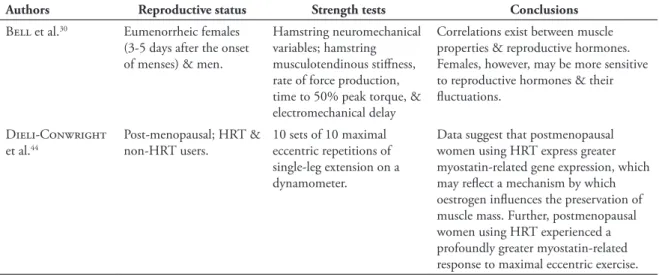
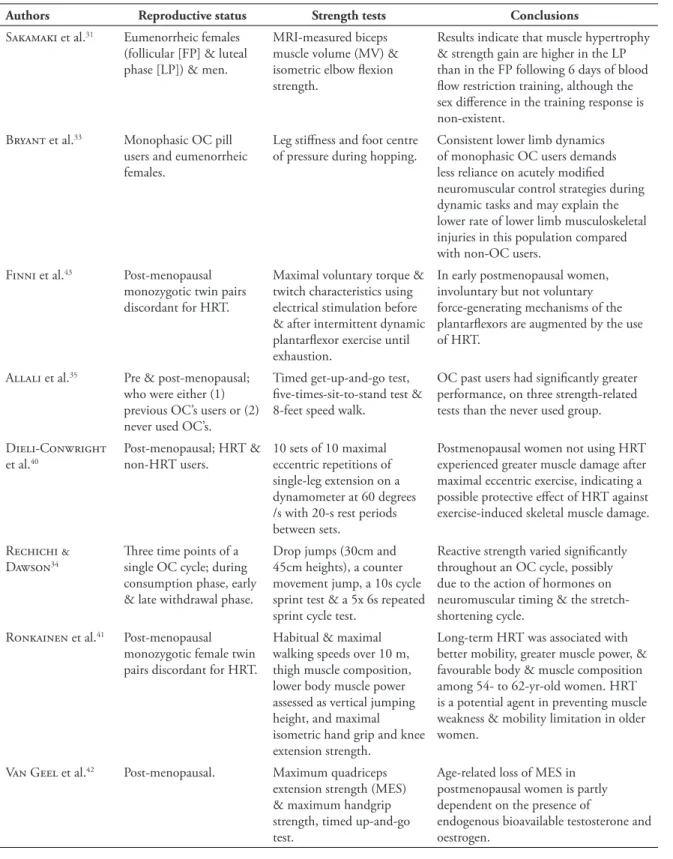
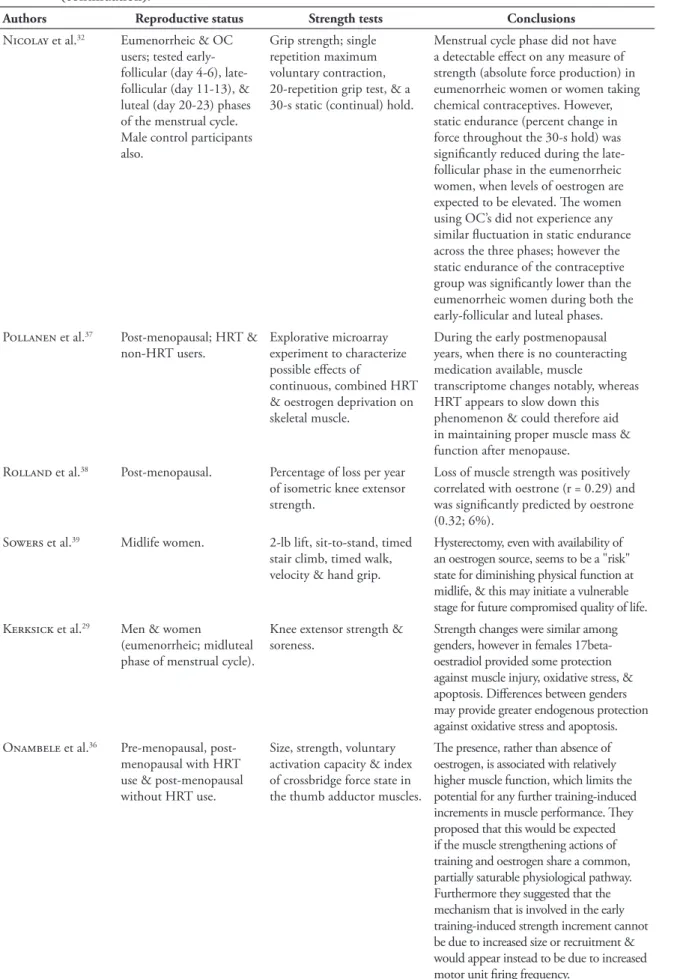
During the last ten years approximately 15 papers
have shown an eff ect of oestrogen on muscle strength
or determinants of muscle strength (TABLE 1).
Th
ree studies used the menstrual cycle as a model
of reproductive functioning
29, while two further
studies combined the menstrual cycle with OC
use
32-33. One report examined the effects of OC
consumption and withdrawal on strength
34and one
combined previous OC use with a control group
that had never used OC’s
35. Undoubtedly, the most
common reproductive functioning models used in
the literature in the last decade were the menopause
and HRT
36-44. Th
ese models were used to investigate
numerous facets of muscle strength including; muscle
stiff ness
30and soreness
29, dynamic and isometric force
production
38,43, power
41, endurance
32, performance
33,
functional capacity
39and gene expression
37. Generally,
the relationship between oestrogen and muscle strength
was positive; high concentrations of oestradiol were
associated with the preservation of muscle strength
and mass in addition to mobility and function
36-44.
However, one study showed a negative relationship
between oestrogen concentrations and muscle
function; Allali et al.
35showed increased performance
in a number of functional tests in previous OC users.
Only one study showed a detrimental eff ect of high
concentrations of oestrogen on muscle function;
Nicolay et al.
32found that static handgrip endurance
was reduced in the late-follicular phase of the menstrual
cycle when oestrogen levels are high.
TABLE 1 - Studies showing an effect of oestrogen on muscle strength or determinants of muscle strength.
Authors Reproductive status Strength tests Conclusions
Bell et al.30 Eumenorrheic females (3-5 days after the onset of menses) & men.
Hamstring neuromechanical variables; hamstring musculotendinous stiff ness, rate of force production, time to 50% peak torque, & electromechanical delay
Correlations exist between muscle properties & reproductive hormones. Females, however, may be more sensitive to reproductive hormones & their fl uctuations.
Dieli-Conwright et al.44
Post-menopausal; HRT & non-HRT users.
10 sets of 10 maximal eccentric repetitions of single-leg extension on a dynamometer.
Data suggest that postmenopausal women using HRT express greater myostatin-related gene expression, which may refl ect a mechanism by which oestrogen infl uences the preservation of muscle mass. Further, postmenopausal women using HRT experienced a profoundly greater myostatin-related response to maximal eccentric exercise.
TABLE 1 - Studies showing an effect of oestrogen on muscle strength or determinants of muscle strength (continuation).
Authors Reproductive status Strength tests Conclusions
Sakamaki et al.31 Eumenorrheic females
(follicular [FP] & luteal phase [LP]) & men.
MRI-measured biceps muscle volume (MV) & isometric elbow fl exion strength.
Results indicate that muscle hypertrophy & strength gain are higher in the LP than in the FP following 6 days of blood fl ow restriction training, although the sex diff erence in the training response is non-existent.
Bryant et al.33 Monophasic OC pill
users and eumenorrheic females.
Leg stiff ness and foot centre of pressure during hopping.
Consistent lower limb dynamics of monophasic OC users demands less reliance on acutely modifi ed neuromuscular control strategies during dynamic tasks and may explain the lower rate of lower limb musculoskeletal injuries in this population compared with non-OC users.
Finni et al.43 Post-menopausal
monozygotic twin pairs discordant for HRT.
Maximal voluntary torque & twitch characteristics using electrical stimulation before & after intermittent dynamic plantarfl exor exercise until exhaustion.
In early postmenopausal women, involuntary but not voluntary force-generating mechanisms of the plantarfl exors are augmented by the use of HRT.
Allali et al.35 Pre & post-menopausal;
who were either (1) previous OC’s users or (2) never used OC’s.
Timed get-up-and-go test, fi ve-times-sit-to-stand test & 8-feet speed walk.
OC past users had signifi cantly greater performance, on three strength-related tests than the never used group.
Dieli-Conwright et al.40
Post-menopausal; HRT & non-HRT users.
10 sets of 10 maximal eccentric repetitions of single-leg extension on a dynamometer at 60 degrees /s with 20-s rest periods between sets.
Postmenopausal women not using HRT experienced greater muscle damage after maximal eccentric exercise, indicating a possible protective eff ect of HRT against exercise-induced skeletal muscle damage.
Rechichi & Dawson34
Th ree time points of a single OC cycle; during consumption phase, early & late withdrawal phase.
Drop jumps (30cm and 45cm heights), a counter movement jump, a 10s cycle sprint test & a 5x 6s repeated sprint cycle test.
Reactive strength varied signifi cantly throughout an OC cycle, possibly due to the action of hormones on neuromuscular timing & the stretch-shortening cycle.
Ronkainen et al.41 Post-menopausal
monozygotic female twin pairs discordant for HRT.
Habitual & maximal walking speeds over 10 m, thigh muscle composition, lower body muscle power assessed as vertical jumping height, and maximal isometric hand grip and knee extension strength.
Long-term HRT was associated with better mobility, greater muscle power, & favourable body & muscle composition among 54- to 62-yr-old women. HRT is a potential agent in preventing muscle weakness & mobility limitation in older women.
Van Geel et al.42 Post-menopausal. Maximum quadriceps
extension strength (MES) & maximum handgrip strength, timed up-and-go test.
Age-related loss of MES in postmenopausal women is partly dependent on the presence of
endogenous bioavailable testosterone and oestrogen.
TABLE 1 - Studies showing an effect of oestrogen on muscle strength or determinants of muscle strength (continuation).
Authors Reproductive status Strength tests Conclusions
Nicolay et al.32 Eumenorrheic & OC users; tested early-follicular (day 4-6), late-follicular (day 11-13), & luteal (day 20-23) phases of the menstrual cycle. Male control participants also.
Grip strength; single repetition maximum voluntary contraction, 20-repetition grip test, & a 30-s static (continual) hold.
Menstrual cycle phase did not have a detectable eff ect on any measure of strength (absolute force production) in eumenorrheic women or women taking chemical contraceptives. However, static endurance (percent change in force throughout the 30-s hold) was signifi cantly reduced during the late-follicular phase in the eumenorrheic women, when levels of oestrogen are expected to be elevated. Th e women using OC’s did not experience any similar fl uctuation in static endurance across the three phases; however the static endurance of the contraceptive group was signifi cantly lower than the eumenorrheic women during both the early-follicular and luteal phases.
Pollanen et al.37 Post-menopausal; HRT & non-HRT users.
Explorative microarray experiment to characterize possible eff ects of
continuous, combined HRT & oestrogen deprivation on skeletal muscle.
During the early postmenopausal years, when there is no counteracting medication available, muscle
transcriptome changes notably, whereas HRT appears to slow down this phenomenon & could therefore aid in maintaining proper muscle mass & function after menopause.
Rolland et al.38 Post-menopausal. Percentage of loss per year
of isometric knee extensor strength.
Loss of muscle strength was positively correlated with oestrone (r = 0.29) and was signifi cantly predicted by oestrone (0.32; 6%).
Sowers et al.39 Midlife women. 2-lb lift, sit-to-stand, timed
stair climb, timed walk, velocity & hand grip.
Hysterectomy, even with availability of an oestrogen source, seems to be a "risk" state for diminishing physical function at midlife, & this may initiate a vulnerable stage for future compromised quality of life.
Kerksick et al.29 Men & women
(eumenorrheic; midluteal phase of menstrual cycle).
Knee extensor strength & soreness.
Strength changes were similar among genders, however in females 17beta-oestradiol provided some protection against muscle injury, oxidative stress, & apoptosis. Diff erences between genders may provide greater endogenous protection against oxidative stress and apoptosis.
Onambele et al.36 Pre-menopausal, post-menopausal with HRT use & post-menopausal without HRT use.
Size, strength, voluntary activation capacity & index of crossbridge force state in the thumb adductor muscles.
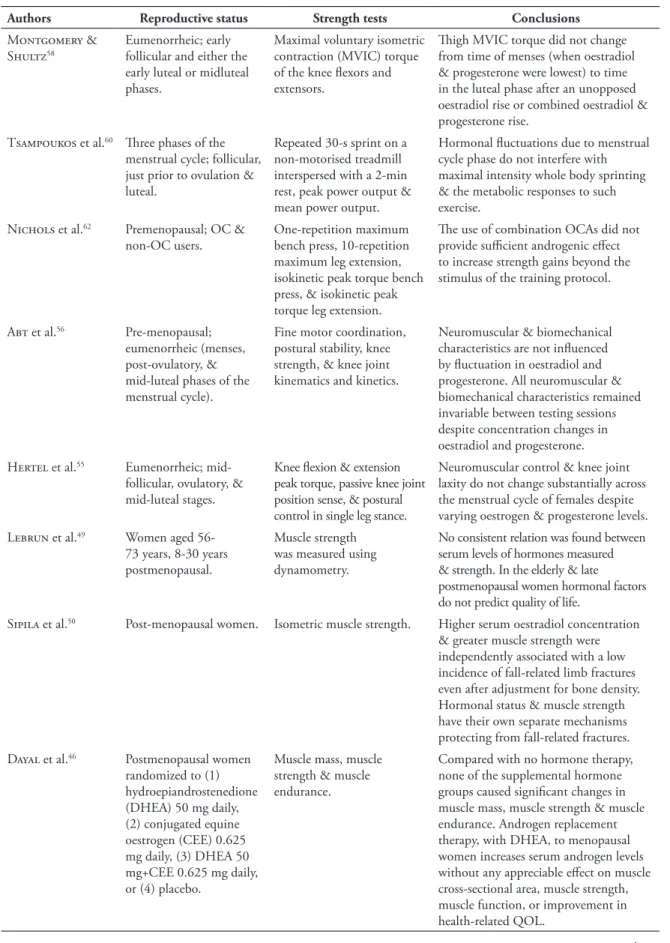
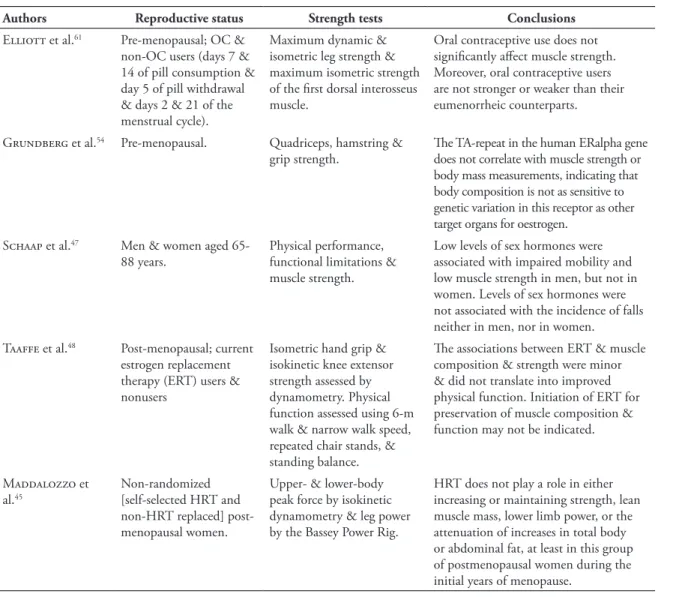
The evidence against an effect of oestrogen on muscle strength
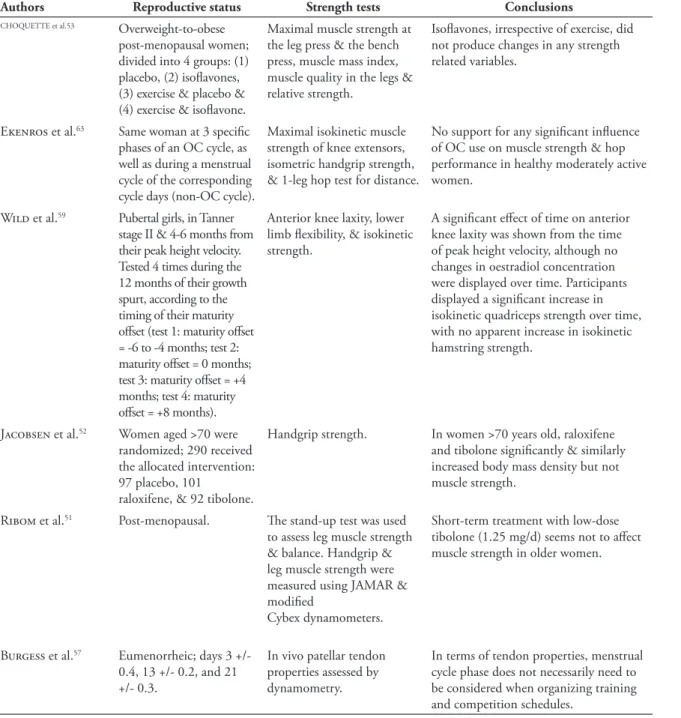
TABLE 2 - Studies showing no effect of oestrogen on muscle strength or determinants of muscle strength.
Since 2004, approximately 20 studies have not
shown any relationship between oestrogen and
muscle strength (TABLE 2). Of these studies, nine
employed a menopause model with and without
HRT
45-53, while six used the menstrual cycle
54-60. One
study used a pubertal model
59and the remaining
studies used OC’s
61-63. Muscle function was
assessed through a variety of measures including;
maximal dynamic
53and isometric
58strength,
endurance
46, performance
60, power
45and functional
capacity
48. Despite signifi cant changes in oestrogen
concentration, none of these studies were able
to demonstrate the putative role of oestrogen in
determining muscle strength.
Authors Reproductive status Strength tests Conclusions
CHOQUETTE et al.53 Overweight-to-obese
post-menopausal women; divided into 4 groups: (1) placebo, (2) isofl avones, (3) exercise & placebo & (4) exercise & isofl avone.
Maximal muscle strength at the leg press & the bench press, muscle mass index, muscle quality in the legs & relative strength.
Isofl avones, irrespective of exercise, did not produce changes in any strength related variables.
Ekenros et al.63 Same woman at 3 specifi c
phases of an OC cycle, as well as during a menstrual cycle of the corresponding cycle days (non-OC cycle).
Maximal isokinetic muscle strength of knee extensors, isometric handgrip strength, & 1-leg hop test for distance.
No support for any signifi cant infl uence of OC use on muscle strength & hop performance in healthy moderately active women.
Wild et al.59 Pubertal girls, in Tanner
stage II & 4-6 months from their peak height velocity. Tested 4 times during the 12 months of their growth spurt, according to the timing of their maturity off set (test 1: maturity off set = -6 to -4 months; test 2: maturity off set = 0 months; test 3: maturity off set = +4 months; test 4: maturity off set = +8 months).
Anterior knee laxity, lower limb fl exibility, & isokinetic strength.
A signifi cant eff ect of time on anterior knee laxity was shown from the time of peak height velocity, although no changes in oestradiol concentration were displayed over time. Participants displayed a signifi cant increase in isokinetic quadriceps strength over time, with no apparent increase in isokinetic hamstring strength.
Jacobsen et al.52 Women aged >70 were
randomized; 290 received the allocated intervention: 97 placebo, 101
raloxifene, & 92 tibolone.
Handgrip strength. In women >70 years old, raloxifene and tibolone signifi cantly & similarly increased body mass density but not muscle strength.
Ribom et al.51 Post-menopausal. Th e stand-up test was used
to assess leg muscle strength & balance. Handgrip & leg muscle strength were measured using JAMAR & modifi ed
Cybex dynamometers.
Short-term treatment with low-dose tibolone (1.25 mg/d) seems not to aff ect muscle strength in older women.
Burgess et al.57 Eumenorrheic; days 3 +/-
0.4, 13 +/- 0.2, and 21 +/- 0.3.
In vivo patellar tendon properties assessed by dynamometry.
In terms of tendon properties, menstrual cycle phase does not necessarily need to be considered when organizing training and competition schedules.
Authors Reproductive status Strength tests Conclusions
Montgomery & Shultz58
Eumenorrheic; early follicular and either the early luteal or midluteal phases.
Maximal voluntary isometric contraction (MVIC) torque of the knee fl exors and extensors.
Th igh MVIC torque did not change from time of menses (when oestradiol & progesterone were lowest) to time in the luteal phase after an unopposed oestradiol rise or combined oestradiol & progesterone rise.
Tsampoukos et al.60 Th ree phases of the menstrual cycle; follicular, just prior to ovulation & luteal.
Repeated 30-s sprint on a non-motorised treadmill interspersed with a 2-min rest, peak power output & mean power output.
Hormonal fl uctuations due to menstrual cycle phase do not interfere with maximal intensity whole body sprinting & the metabolic responses to such exercise.
Nichols et al.62 Premenopausal; OC & non-OC users.
One-repetition maximum bench press, 10-repetition maximum leg extension, isokinetic peak torque bench press, & isokinetic peak torque leg extension.
Th e use of combination OCAs did not provide suffi cient androgenic eff ect to increase strength gains beyond the stimulus of the training protocol.
Abt et al.56 Pre-menopausal; eumenorrheic (menses, post-ovulatory, & mid-luteal phases of the menstrual cycle).
Fine motor coordination, postural stability, knee strength, & knee joint kinematics and kinetics.
Neuromuscular & biomechanical characteristics are not infl uenced by fl uctuation in oestradiol and progesterone. All neuromuscular & biomechanical characteristics remained invariable between testing sessions despite concentration changes in oestradiol and progesterone. Hertel et al.55 Eumenorrheic;
mid-follicular, ovulatory, & mid-luteal stages.
Knee fl exion & extension peak torque, passive knee joint position sense, & postural control in single leg stance.
Neuromuscular control & knee joint laxity do not change substantially across the menstrual cycle of females despite varying oestrogen & progesterone levels.
Lebrun et al.49 Women aged 56-73 years, 8-30 years postmenopausal.
Muscle strength was measured using dynamometry.
No consistent relation was found between serum levels of hormones measured & strength. In the elderly & late postmenopausal women hormonal factors do not predict quality of life.
Sipila et al.50 Post-menopausal women. Isometric muscle strength. Higher serum oestradiol concentration & greater muscle strength were independently associated with a low incidence of fall-related limb fractures even after adjustment for bone density. Hormonal status & muscle strength have their own separate mechanisms protecting from fall-related fractures.
Dayal et al.46 Postmenopausal women randomized to (1) hydroepiandrostenedione (DHEA) 50 mg daily, (2) conjugated equine oestrogen (CEE) 0.625 mg daily, (3) DHEA 50 mg+CEE 0.625 mg daily, or (4) placebo.
Muscle mass, muscle strength & muscle endurance.
Compared with no hormone therapy, none of the supplemental hormone groups caused signifi cant changes in muscle mass, muscle strength & muscle endurance. Androgen replacement therapy, with DHEA, to menopausal women increases serum androgen levels without any appreciable eff ect on muscle cross-sectional area, muscle strength, muscle function, or improvement in health-related QOL.
TABLE 2 - Studies showing no effect of oestrogen on muscle strength or determinants of muscle strength (continuation).
Methodological issues and advancements
Th
e menopause and the menstrual cycle remain
the most popular models for investigating the eff ects
of oestrogen on muscle strength; accounting for more
than two thirds of recent publications. Surprisingly, the
IVF model has not been used 2004, despite providing
acute supra-physiological changes in oestradiol
concentration without the confounding factors
associated with the menopause and the menstrual
cycle: notably age and inter and intra-individual
variability in hormone secretion. In addition, both
puberty and pregnancy have been under-utilised,
even though they provide substantial chronic natural
changes in the female hormonal milieu
9.
It is encouraging to note that the majority of
recent studies have used blood samples to confi rm
reproductive status; post-menopausal
38,50, menstrual
cycle phase
29-30and OC use
9,34. However, no
studies have specifi cally measured the bioavailable
concentration of oestradiol, which may be of particular
interest for studies using post-menopausal groups;
previous work has shown that the bioavailability of
oestradiol did not signifi cantly diff er between two
phases of the menstrual cycle
64. Th
e bioavailable
part of oestrogen is not a set proportion of the total
concentration and is dependent on its affi
nity to
and concentration of its binding protein. Th
erefore,
models of reproductive functioning, such as the
menopause, might influence the bioavailable
concentration of oestradiol and subsequently its
relationship with muscle strength. Moreover, there are
TABLE 2 - Studies showing no effect of oestrogen on muscle strength or determinants of muscle strength (continuation).
Authors Reproductive status Strength tests Conclusions
Elliott et al.61 Pre-menopausal; OC & non-OC users (days 7 & 14 of pill consumption & day 5 of pill withdrawal & days 2 & 21 of the menstrual cycle).
Maximum dynamic & isometric leg strength & maximum isometric strength of the fi rst dorsal interosseus muscle.
Oral contraceptive use does not signifi cantly aff ect muscle strength. Moreover, oral contraceptive users are not stronger or weaker than their eumenorrheic counterparts.
Grundberg et al.54 Pre-menopausal. Quadriceps, hamstring & grip strength.
Th e TA-repeat in the human ERalpha gene does not correlate with muscle strength or body mass measurements, indicating that body composition is not as sensitive to genetic variation in this receptor as other target organs for oestrogen.
Schaap et al.47 Men & women aged 65-88 years.
Physical performance, functional limitations & muscle strength.
Low levels of sex hormones were associated with impaired mobility and low muscle strength in men, but not in women. Levels of sex hormones were not associated with the incidence of falls neither in men, nor in women.
Taaffe et al.48 Post-menopausal; current estrogen replacement therapy (ERT) users & nonusers
Isometric hand grip & isokinetic knee extensor strength assessed by dynamometry. Physical function assessed using 6-m walk & narrow walk speed, repeated chair stands, & standing balance.
Th e associations between ERT & muscle composition & strength were minor & did not translate into improved physical function. Initiation of ERT for preservation of muscle composition & function may not be indicated.
Maddalozzo et al.45
Non-randomized [self-selected HRT and non-HRT replaced] post-menopausal women.
Upper- & lower-body peak force by isokinetic dynamometry & leg power by the Bassey Power Rig.
1. Higgs SL, Robertson LA. Cyclic variations in perceived exertion and physical work capacity in females. Can J Appl Sport Sci. 1981;6:191-6.
2. Cauley JA, Petrini AM, LaPorte RE, et al. Th e decline in grip strength in the menopause: relationship to physical activity, estrogen use and anthropometric factors. J Chronic Dis. 1987;40:115-20.
3. Davies BN, Elford JCC, Jamieson KF. Variations in performance in simple muscle tests at diff erent phases of the mens-trual cycle. J Sports Med Phys Fitness. 1991;31:532-7.
4. Phillips SK, Sanderson AG, Birch K, Bruce SA, Woledge RC. Changes in maximal voluntary force of human adductor pollicis muscle during the menstrual cycle. J Physiol. 1996;496:551-7.
5. White MJ, Weeks C. No evidence for a change in the voluntary or electrically evoked contractile characteristics of the triceps surae during the human menstrual cycle. J Physiol. 1998;506:119.
6. Bassey EJ, Coates L, Culpen J, Littlewood JJ, Owen M, Wilson K. Natural variations in oestrogen and FSH levels in eumenorrheic women in negative association with voluntary muscle strength. J Physiol. 1995;489:45.
7. Armstrong AL, Oborne J, Coupland CAC, MacPearson MB, Bassey EL, Wallace WA. Eff ects of hormone replacement therapy on muscle performance and balance in postmenopausal women. Clin Sci (Lond). 1996;91:685-90.
8. Greeves JP, Cable NT, Luckas MJM, Reilly T, Biljan MM. Eff ects of acute changes in oestrogen on muscle function of the fi rst dorsal interosseus muscle in humans. J Physiol. 1997;500:265-70.
9. Elliott KJ, Cable NT, Reilly T, Sefton V, Kingsland C, Diver M. Eff ects of supra-physiological changes in human ovarian hormone levels on maximum force production of the fi rst dorsal interosseus muscle. Exp Physiol. 2005;90:215-23. 10. Sarwar, R, Niclos BB, Rutherford OM. Changes in muscle strength, relaxation rate and fatigability during the human
menstrual cycle. J Physiol. 1996;493:267-72.
11. Skelton DA, Phillips SK, Bruce SA, Naylor CH, Woledge RC. Hormone replacement therapy increases isometric muscle strength of adductor pollicis in post-menopausal women. Clin Sci (Lond). 1999;96:357-64.
12. Cable NT, Elliott KJ. Th e infl uence of reproductive hormones on muscle strength. Biol Rhythm Res. 2004;35:235-44. 13. Burrows M, Peters CE. Th e infl uence of oral contraceptives on athletic performance in female athletes. Sports Med.
2007;37:557-74.
References
To date, there is still no unanimous consensus
regarding the eff ect of oestrogen on muscle strength.
Th
ere is almost the same number of papers supporting
an eff ect of oestrogen on skeletal muscle function as
there are showing no eff ect. Moreover, both positive
and negative correlations have been reported when
an eff ect was evident. Future work should focus on
discrete elements of muscle strength and use the
best and most appropriate models of reproductive
functioning available; i.e. models that cause the greatest
magnitude of change in sex hormone concentration
(e.g. IVF). In addition, future work should aim to
control as many confounding factors as possible (e.g.
age, smoking, exercise status etc.). Moreover, there is
a need to conduct meta-analyses on previous research
in order to move towards a conclusion on this topic.
Conclusions
still a number of publications that have used a variety
of types and brands of OC’s
33,63and HRT’s
39,41, which
can lead to extremely large variation in hormone
concentration when grouped together and may
ultimately lead to type II errors
27.
Th
e term “muscle strength” is too ambiguous
and makes comparing studies and drawing any
conclusions very diffi
cult. In the last decade, over 20
indices of muscle strength or determinants of muscle
14. Rechichi C, Dawson B, Goodman C. Athletic performance and the oral contraceptive. Int J Sports Physiol Perform. 2009;4:151-62.
15. Jacobi MP. Th e question of rest for women during menstruation. New York: G.P. Putnam’s sons; 1877.
16. Wirth JC, Lohman TG. Th e relationship of static muscle function to use of oral contraceptives. Med Sci Sports Exerc. 1982;14:16-20.
17. Beltran Niclos B, Welsh L, Sarwar R, Rutherford OM. Gender and age comparisons of the contractile properties of human quadriceps muscle. J Physiol. 1995;483:131.
18. Dibrezzo R, Fort IL, Brown B. Relationship among strength, endurance, weight and body fat during three phases of the menstrual cycle. J Sports Med Phys Fitness. 1991;31:89-94.
19. Lebrun CM, McKenzie DC, Prior JC, Taunton JE. Eff ects of menstrual cycle phase on athletic performance. Med Sci Sports Exerc. 1995;27:437-44.
20. Gur H. Concentric and eccentric isokinetic measurements in knee muscles during the menstrual cycle: a special refe-rence to reciprocal moment ratios. Arch Phys Med Rehabil. 1997;78:501-5.
21. Phillips SK, Rook KM, Siddle NC, Bruce SA, Woledge RC. Muscle weakness in women occurs at an earlier age than in men, but is preserved by hormone replacement therapy. Clin Sci (Lond). 1993;84:95-8.
22. Calmels P, Vico L, Alexandre C, Minaire P. Cross-sectional study of muscle strength and bone mineral density in a population of 106 women between the ages of 44 and 87 years: relationship with age and menopause. Eur J Appl Physiol Occup Physiol. 1995;70:180-6.
23. Greeves JP, Cable NT, Reilly T, Kingsland C. Changes in muscle strength in women following the menopause: a
longitudinal assessment of the effi cacy of hormone replacement therapy. Clin Sci (Lond). 1999;97:79-84.
24. Taaff e DR, Villa ML, Delay R, Marcus R. Maximal muscle strength of elderly women is not infl uenced by oestrogen status. Age Ageing. 1995;24:329-33.
25. Bassey EJ, Mockett SP, Fentem PH. Lack of variation in muscle strength with menstrual status in healthy women aged 45-54 years: data from a national survey. Eur J Appl Physiol Occup Physiol. 1996;73:382-6.
26. Th ompson HS, Hyatt JP, De Souza MJ, Clarkson PM. Th e eff ects of oral contraceptives on delayed onset muscle soreness following exercise. Contraception. 1997;56:59-65.
27. Elliott-Sale KJ, Smith S, Bacon J, et al. Examining the role of oral contraceptive users as an experimental and/or control group in athletic performance studies. Contraception. 2013;88:408-12.
28. Elliott-Sale KJ, Martin D. Th e use of diff erent models of female reproductive status in human performance research; with a specifi c focus on muscle strength. [Short Communication]. Androl Gynecol: Curr Res. 2013;1:4.
29. Kerksick C, Taylor L 4th, Harvey A, Willoughby D. Gender-related diff erences in muscle injury, oxidative stress, and apoptosis. Med Sci Sports Exerc. 2008;40:1772-80.
30. Bell DR, Blackburn JT, Ondrak KS, et al. Th e eff ects of oral contraceptive use on muscle stiff ness across the menstrual cycle. Clin J Sport Med. 2011;21:467-73.
31. Sakamaki M, Yasuda T, Abe T. Comparison of low-intensity blood fl ow-restricted training-induced muscular hyper-trophy in eumenorrheic women in the follicular phase and luteal phase and age-matched men. Clin Physiol Funct Imaging. 2012;32:185-91.
32. Nicolay CW, Kenney JL, Lucki NC. Grip strength and endurance throughout the menstrual cycle in eumenorrheic and women using oral contraceptives. Int J Ind Ergon. 2007; 35: 605-18.
33. Bryant AL, Crossley KM, Bartold S, Hohmann E, Clark RA. Estrogen-induced eff ects on the neuro-mechanics of hopping in humans. Arbeitsphysiologie. 2011;111:245-52.
34. Rechichi C, Dawson B. Eff ect of oral contraceptive cycle phase on performance in team sport players. J Sci Med Sport. 2009;12:190-5.
35. Allali F, El Mansouri L, Abourazzak Fz, et al. Th e eff ect of past use of oral contraceptive on bone mineral density, bone biochemical markers and muscle strength in healthy pre and post-menopausal women. BMC Womens Health. 2009;31:3-9.
36. Onambele GN, Bruce SA, Woledge RC. Oestrogen status in relation to the early training responses in human thumb adductor muscles. Acta Physiol (Oxf ). 2006;188:41-52.
37. Pöllänen E, Ronkainen PH, Suominen H, et al. Muscular transcriptome in postmenopausal women with or without hormone replacement. Rejuvenation Res. 2007;10:485-500.
39. Sowers M, Tomey K, Jannausch M, Eyvazzadeh A, Nan B, Randolph J Jr. Physical functioning and menopause states. Obstet Gynecol. 2007;110:1290-6.
40. Dieli-Conwright CM, Spektor TM, Rice JC, Sattler FR, Schroeder ET. Hormone therapy attenuates exercise-induced skeletal muscle damage in postmenopausal women. J Appl Physiol. (1985). 2009;107:853-8.
41. Ronkainen PH, Kovanen V, Alén M, et al. Postmenopausal hormone replacement therapy modifi es skeletal muscle composition and function: a study with monozygotic twin pairs. J Appl Physiol. 2009;107:25-33.
42. van Geel TA, Geusens PP, Winkens B, Sels JP, Dinant GJ. Measures of bioavailable serum testosterone and estradiol and their relationships with muscle mass, muscle strength and bone mineral density in postmenopausal women: a cross-sectional study. Eur J Endocrinol. 2009;160:681-7.
43. Finni T, Noorkoiv M, Pöllänen E, et al. Muscle function in monozygotic female twin pairs discordant for hormone replacement therapy. Muscle Nerve. 2011;44:769-75.
44. Dieli-Conwright CM, Spektor TM, Rice JC, Sattler FR, Schroeder ET. Hormone therapy and maximal eccentric exercise alters myostatin-related gene expression in postmenopausal women. J Strength Cond Res. 2012;26:1374-82. 45. Maddalozzo GF, Cardinal BJ, Li F, Snow CM. Th e association between hormone therapy use and changes in strength
and body composition in early postmenopausal women. Menopause. 2004;11:438-46.
46. Dayal M, Sammel MD, Zhao J, Hummel AC, Vandenbourne K, Barnhart KT. Supplementation with DHEA: eff ect on muscle size, strength, quality of life, and lipids. J Womens Health (Larchmt). 2005;14:391-400.
47. Schaap LA, Pluijm SM, Smit JH, et al. Th e association of sex hormone levels with poor mobility, low muscle strength and incidence of falls among older men and women. Clin Endocrinol (Oxf ). 2005;63:152-60.
48. Taaff e DR, Newman AB, Haggerty CL, et al. Estrogen replacement, muscle composition, and physical function: the Health ABC Study. Med Sci Sports Exerc. 2005;37:1741-7.
49. Lebrun CE, van der Schouw YT, de Jong FH, Pols HA, Grobbee DE, Lamberts SW. Relations between body composition, functional and hormonal parameters and quality of life in healthy postmenopausal women. Maturitas. 2006;55:82-92. 50. Sipilä S, Heikkinen E, Cheng S, et al. Endogenous hormones, muscle strength, and risk of fall-related fractures in
older women. Gerontol A Biol Sci Med Sci. 2006;61:92-6.
51. Ribom EL, Svensson P, van Os S, Larsson M, Naessen T. Low-dose tibolone (1.25 mg/d) does not aff ect muscle strength in older women. Menopause. 2011;18:194-7.
52. Jacobsen DE, Melis RJ, Verhaar HJ, Olde Rikkert MG. Raloxifene and tibolone in elderly women: a randomized, double-blind, double-dummy, placebo-controlled trial. J Am Med Dir Assoc. 2012;13:189.e1-7.
53. Choquette S, Dion T, Brochu M, Dionne IJ. Soy isofl avones and exercise to improve physical capacity in postmeno-pausal women. Climacteric. 2013;16:70-7.
54. Grundberg E, Ribom EL, Brändström H, Ljunggren O, Mallmin H, Kindmark A. A TA-repeat polymorphism in the gene for the estrogen receptor alpha does not correlate with muscle strength or body composition in young adult Swedish women. Maturitas. 2005;50:153-60.
55. Hertel J, Williams NI, Olmsted-Kramer LC, Leidy HJ, Putukian M. Neuromuscular performance and knee laxity do not change across the menstrual cycle in female athletes. Knee Surg Sports Traumatol Arthrosc. 2006;14:817-22. 56. Abt JP, Sell TC, Laudner KG, et al. Neuromuscular and biomechanical characteristics do not vary across the menstrual
cycle. Knee Surg Sports Traumatol Arthrosc. 2007;15:901-7.
57. Burgess KE, Pearson SJ, Onambélé GL. Patellar tendon properties with fl uctuating menstrual cycle hormones. J Strength Cond Res. 2010;24:2088-95.
58. Montgomery MM, Shultz SJ. Isometric knee-extension and knee-fl exion torque production during early follicular and postovulatory phases in recreationally active women. J Athl Train. 2010;45:586-93.
59. Wild CY, Steele JR, Munro BJ. Musculoskeletal and estrogen changes during the adolescent growth spurt in girls. Med Sci Sports Exerc. 2013;45:138-45.
60. Tsampoukos A, Peckham EA, James R, Nevill ME. Eff ect of menstrual cycle phase on sprinting performance. Eur J Appl Physiol. 2010;109:659-67.
61. Elliott KJ, Cable NT, Reilly T. Does oral contraceptive use aff ect maximum force production in women? Br J Sports Med. 2005;39:15-9.
62. Nichols AW, Hetzler RK, Villanueva RJ, Stickley CD, Kimura IF. Eff ects of combination oral contraceptives on strength development in women athletes. J Strength Cond Res. 2008;22:1625-32.
ENDEREÇO Kirsty Elliott-Sale Sport, Health and Performance Enhancement (SHAPE)
Research Group School of Science and Technology Nottingham Trent University Clifton Lane Clifton - Nottingham - NG11 8NS - UK e-mail: [email protected]
Recebido para publicação: 20/03/2014 Aceito: 07/04/2014