Universidade Nova de Lisboa
Inês da Silva Farinha
Mestre em BiotecnologiaProcess optimization of cell-wall polysaccharides production by
Komagataella pastoris
Dissertação para obtenção do Grau de Doutor em Engenharia Química e Bioquímica, Especialidade Engenharia Bioquímica
Orientador: Doutora Maria Filomena Andrade de Freitas, Investigadora, Faculdade de Ciências e Tecnologia - Universidade Nova de Lisboa
Orientador: Professor Pedro Manuel Moreira da Rocha Vilarinho, CEO, Pharma73 S.A.
Júri:
Presidente: Professora Doutora Maria D’Ascensão Carvalho Fernandes de Miranda Reis
Arguentes: Professor Manuel António Coimbra Rodrigues da Silva Doutor Bruno Sommer Ferreira
Vogais: Professora Doutora Maria D’Ascensão Carvalho Fernandes de Miranda Reis
Doutor Luís Miguel Monteiro Mafra
Doutora Maria Filomena Andrade de Freitas Doutor Filipe Manuel Rodrigues Leitão de Aguiar
iii
Process optimization of cell-wall polysaccharides
production by
Komagataella pastoris
Copyright © Inês da Silva Farinha, Faculdade de Ciências e Tecnologia, Universidade Nova de Lisboa
A Faculdade de Ciências e Tecnologia e a Universidade Nova de Lisboa tem o direito, perpétuo e sem limites geográficos, de arquivar e publicar esta dissertação através de exemplares
v “Se tiveres asas e raízes, tu possuis o futuro. Precisas das asas para voar, sonhar e acreditar. Mas precisas das raízes para receberes a sabedoria dos mais velhos”
vii
Agradecimentos
Em primeiro lugar, gostaria de agradecer à minha orientadora Dra. Filomena Freitas, por todo o apoio e disponibilidade ao longo destes anos. Foi um privilégio trabalhar contigo.
À Professora Maria Ascensão Reis, por todo o apoio e amizade.
Ao Professor Pedro Vilarinho e ao Dr. Filipe Aguiar pela oportunidade que me foi dada de poder trabalhar com a Pharma73 S.A.. A possibilidade de trabalhar em ambiente empresarial foi uma experiência muito enriquecedora.
À minha colega Diana Araújo pela ajuda num dos trabalhos incluídos nesta tese e à minha colega Sílvia Baptista pela ajuda dada do lado da empresa noutros trabalhos que foram surgindo, permitindo assim que me pudesse dedicar mais a este trabalho.
Aos meus colegas do Bioeng e do grupo de membranas, em particular a todos do laboratório 407, Rita Valério, Joana Monte, Mafalda Cadima, Sofia Fraga, Carmo Fraga, Jorge André, Mafalda Lopes e Inês Meireles. Obrigada a todos pela ajuda, companhia e boa
disposição!
À Sílvia Antunes, Madalena Cruz e Margarida Carvalho. Um obrigada especial a vocês, que foram a minha grande companhia nesta aventura.
Ao Nuno Costa, do Laboratório de Análises pela preciosa ajuda nas análises dos açúcares no Dionex.
À Professora Elvira Fortunato, Dra. Ana Pimentel e Dra. Rita Branquinho do
CENIMAT, ao Dr. Luís Mafra da Universidade de Aveiro, ao Professor Christian Grandfils da Universidade de Liége e ao Paulo Duarte, pela disponibilidade e ajuda na parte da
caracterização dos polímeros.
À Fundação para a Ciência e Tecnologia e à Pharma73 S.A. pelo financiamento da bolsa de doutoramento.
A todos os meus familiares e amigos. Muito obrigada por todo o apoio e paciência ao longo destes anos.
ix
Abstract
This PhD thesis had the objective of optimizing the process developed by Pharma73 S.A. for cultivation of the yeast Komagataella pastoris to produce the cell-wall polysaccharides,
chitin-glucan complex (CGC) and mannans.
A repeated fed-batch strategy was developed that resulted in the stable and reproducible production of biomass and CGC. Seven consecutive fed-batch cycles were maintained, with a daily biomass production of 119-124 g/L and a CGC volumetric productivity of 13-20 g/L.day. Reducing the dissolved oxygen (DO) level from 50 to 15% was demonstrated to result in an overall volumetric productivity of 8.67 and 10.69 g/L.day, for CGC and mannans, respectively. The CGC and mannans composition was not significantly affected by the reduction of the DO level. Medium K was developed to avoid the operational problems associated with the use of Basal Salts Medium (BSM). Medium K was successfully implemented in the repeated fed-batch process, where the CGC and mannans productivities were improved to 17.5-26 and 19.2-26.4 g/L.day, respectively, without compromising the composition of the two polysaccharides.
The downstream was optimized to obtain both polysaccharides with high extraction efficiency and purity. The optimized extraction conditions included treating the biomass with NaOH 4 M, at 84 ºC, during 4 h. The structural analysis of the polysaccharides revealed the presence of -glucans and -chitin, in the CGC, and -mannans. Both polysaccharides degraded at high temperatures: above 300 ºC for CGC and between 233-253 ºC for mannans.
The work performed in this thesis resulted in a 3.4-fold increase of the CGC
productivity and the extraction of mannans from K. pastoris was demonstrated for the first time.
The optimization of this production process made the process simpler and resulted in considerable savings in terms of overall production costs.
Key-words: Chitin-glucan complex (CGC), Mannans, Komagataella pastoris, high cell density
xi
Resumo
Esta tese de doutoramento teve como objetivo a otimização do processo desenvolvido pela empresa Pharma73 S.A. para o cultivo da levedura Komagataella pastoris, para a produção
de polissacáridos da parede celular, complexo quitina-glucanos (CQG) e mananos.
Foi desenvolvido um processo de produção cíclico semi-contínuo, que resultou numa produção de biomassa e de CQG estável e reprodutível. Sete ciclos semi-contínuos consecutivos foram mantidos, com uma produção diária de biomassa de 119-124 g/L e uma produtividade volumétrica de CQG de 13-20 g/L.dia. Reduzir o nível de oxigénio dissolvido (OD) de 50 para 15% resultou numa produtividade volumétrica global de 8.67 e 10.69 g/L.dia, para o CQG e mananos, respetivamente. A composição de CQG e mananos não foi afetada significativamente pela redução do nível de OD. O Meio K foi desenvolvido de forma a evitar os problemas
operacionais associados ao uso de Meio Básico Salino (MBS). O Meio K foi implementado com sucesso num processo cíclico semi-contínuo, onde foram melhoradas as produtividades de CQG e mananos para 17.5-26 e 19.2-26.4 g/L.dia, respetivamente, sem comprometer a composição dos dois polissacáridos.
A extração e purificação foram otimizadas para se obter os dois polissacáridos com elevada eficiência de extração e pureza. As condições de extração otimizadas incluiu o tratamento da biomassa com NaOH 4M, a 84 ºC, durante 4 h. A análise estrutural dos polissacáridos revelou a presença de -glucanos e -quitina, no CQG, e -mananos. Os dois polissacáridos degradam a elevadas temperaturas: acima dos 300 ºC para o CQG e entre 233-253 ºC para as mananos.
O trabalho desenvolvido nesta tese resultou num aumento de 3.4 vezes da produtividade em CQG e a extracção de mananos a partir da K. pastoris foi demonstrada pela primeira vez. A
otimização deste processo de produção tornou o processo mais simples e dela resultaram poupanças consideráveis ao nível dos seus custos de produção.
Palavras-chave: Complexo quitina-glucanos (CQG), Mananos, Komagataella pastoris, cultivo
xiii
Nomenclature
Abreviations
13C-NMR – 13C Solid-state Nuclear Magnetic Resonance
AIM – Alkaline Insoluble Material ANOVA – Analysis of Variance ASM – Alkaline Soluble Material BSM – Basal Salts Medium
CCRD – Central Composite Rotatable Design CGC – Chitin-glucan Complex
CHS - Chitin Synthases CI – Crystallinity Index CP – Cross-Polarization CSD – Corn Steep Dextrose CWI – Cell-Wall Integrity DCW – Dry cell Weight DO – Dissolved Oxygen
DSC – Differential Scanning Calorimetry FTIR - Fourier Transform Infrared Spectroscopy GPI – Glycosylphosphatidyl Inositol
GRAS – General Recognized as Safe
HPLC – High Performance Liquid Chromatography MALS – Multi-Angle Light Scattering
MAS – Magic-Angle Spinning
MBSM – Modified Basal Salts Medium MLR – Multiple Linear Regression MM – Minimal Medium
MSM – Minimal Salt Medium Mw – Molecular Weight
PBS – Phosphate-Buffered Saline solution PDI -Polydispersity Index
PTM – Pichia Trace Mineral solution
RI – Refractive Index
xiv
SLPM – Standard Liters Per Minute TGA – Thermogravimetric Analysis XRD – X-ray Diffraction
Variables
CGCPBS – Chitin-glucan Complex treated with PBS
CGCpure – Pure Chitin-glucan Complex
DCW – Dry Cell Weight (g/L)
I110 – Maximum intensity of the diffraction of the (110) lattice peak at 2 ≈ º
Iam – Intensity of the amorphous material at 2 ≈ º
Mw – Molecular weight (Da)
p-value – Regression parameter significance
qS – Specific substrate consumption rate (gs/gx.h)
R2 – Multiple correlation coefficient
rC – CGC volumetric productivity (g/L.day)
rM – Mannans volumetric productivity (g/L.day)
rX – Biomass volumetric productivity (g/L.day)
t - time
Tdeg – Degradation temperature (ºC)
X – Coded value for independent variable at CCRD X – DCW at time t (g/L)
X0 – DCW at time = 0 (g/L)
YC/S – CGC yield on substrate basis (gc/gs)
YM/S – Mannans yield on substrate basis (gm/gs)
Yp – Predicted response of CCRD
YX/S – Biomass yield on substrate basis (gx/gs)
Greek letters
– axial level in RSM
– regression coefficient of CCRD
– chemical shift (ppm)
xv
Table of contents
1.1. Motivation ... 3
1.2. Thesis outline ... 3
2.1. Yeast cell-wall composition ... 7
2.2. Chitin-glucan complex (CGC) ... 8
2.3. Mannans ... 10
2.4. Komagataella pastoris ... 10
3.1. Abstract ... 17
3.2. Introduction ... 17
3.3. Materials and methods ... 19
3.3.1. Yeast strain and culture medium ... 19
3.3.2. Fed-batch bioreactor cultivation ... 19
3.3.3. Implementation of CGC production under repeated fed-batch mode ... 20
3.3.4. CGC Extraction ... 20
3.3.5. Analytical Techniques ... 21
3.4. Results and discussion ... 22
3.4.1. Fed-batch cultivation under DO-stat mode ... 22
3.4.2. Fed-batch cultivation with predefined profile ... 27
3.4.3. Repeated fed-batch cultivation ... 29
3.5. Conclusions ... 31
4.1. Abstract ... 35
4.2. Introduction ... 35
Chapter 1... 1
Motivation and thesis outline ... 1
Chapter 2... 5
State of the art ... 5
Chapter 3... 15
Implementation of a repeated fed-batch process for the production of chitin-glucan complex by Komagataella pastoris ... 15
Chapter 4... 33
xvi
4.3. Materials and methods ... 37
4.3.1. Yeast strain and culture medium ... 37
4.3.2. Batch bioreactor cultivations ... 37
4.3.3. Fed-batch bioreactor cultivation ... 37
4.3.4. Analytical techniques ... 38
4.3.5. Polymers extraction ... 38
4.3.6. Polymers characterization ... 39
4.3.7. Kinetic parameters ... 39
4.4. Results and discussion ... 40
4.4.1. Effect of the DO level on K. pastoris cultivation ... 40
4.4.1.1. Biomass production ... 40
4.4.1.2. CGC production ... 44
4.4.1.3. Mannans production ... 45
4.4.2. Fed-batch bioreactor cultivation ... 46
4.5. Conclusions ... 50
5.1. Abstract ... 53
5.2. Introduction ... 53
5.3. Materials and methods ... 54
5.3.1. Yeast strain ... 54
5.3.2. Shake flask experiments ... 55
5.3.3. Bioreactor cultivation ... 57
5.3.4. Analytical techniques ... 58
5.3.5. Cell-wall polysaccharides extraction ... 58
5.3.6. Polysaccharides characterization... 58
5.4. Results and discussion ... 59
5.4.1. Media screening experiments ... 59
4.4.2. Medium K design ... 61
5.4.3. Validation of Medium K in shake flask cultivation ... 62
5.4.4. Validation of Medium K in fed-batch bioreactor cultivation ... 63
5.4.5. Polysaccharides characterization... 66
5.5. Conclusions ... 66
Chapter 5... 51
xvii
6.1. Abstract ... 69
6.2. Introduction ... 69
6.3. Materials and methods ... 70
6.3.1. CGC production ... 70
6.3.2. CGC extraction procedures ... 70
6.3.3. CGC characterization ... 72
6.3.3.1. Composition ... 72
6.3.3.2. Infrared spectroscopy ... 72
6.3.3.3. 13C Solid-state nuclear magnetic resonance ... 73
6.3.3.4. X-ray diffraction ... 73
6.3.3.5. Thermal properties ... 73
6.3.3.6. Average molecular weight and polydispersity index ... 74
6.4. Results and discussion ... 74
6.4.1. CGC extraction from K. pastoris biomass ... 74
6.4.2. Polymer Characterization ... 77
6.4.2.1. Infrared spectroscopy ... 77
6.4.2.2. 13C solid-state NMR ... 80
6.4.2.3. X-ray diffraction ... 82
6.4.2.4. Thermal properties ... 86
6.4.2.5. Molecular weight analysis by Size Exclusion Chromatography (SEC) ... 89
6.5. Conclusions ... 89
7.1. Abstract ... 93
7.2. Introduction ... 93
7.3. Materials and methods ... 94
7.3.1. Cell-wall polysaccharides extraction ... 94
7.3.2. Experimental design ... 95
7.3.3. Validation experiments ... 96
7.3.4. Polysaccharides characterization... 96
7.4. Results and discussion ... 96
7.4.1. CGC and mannans extraction ... 96
Chapter 6... 67
Chitin-glucan complex production by Komagataella pastoris: downstream optimization and product characterization ... 67
Chapter 7... 91
xviii
7.4.1.1. Experimental analysis ... 97
7.4.1.2. RSM model ... 98
7.4.1.3. Model validation ... 104
7.4.2. CGC characterization ... 104
7.4.2.1. Composition ... 104
7.4.2.2. Infrared spectroscopy ... 105
7.4.2.3. Thermal properties ... 107
7.4.3. Mannans characterization ... 108
7.4.3.1. Composition ... 108
7.4.3.2. Molecular mass distribution... 108
7.4.3.3. Infrared spectroscopy ... 110
7.4.3.4. Thermal properties ... 111
7.5. Conclusions ... 113
8.1 Conclusions ... 117
8.2 Future work ... 118
Chapter 8... 115
Conclusions and future work ... 115
xix
List of figures
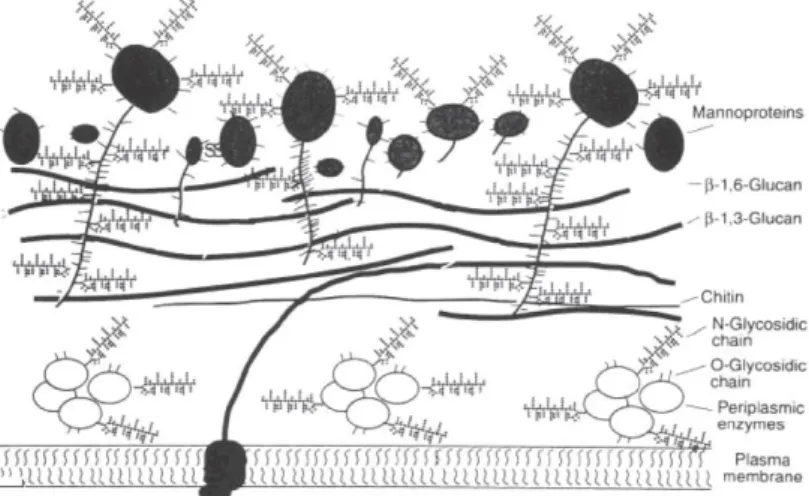
Figure 2.1 – Composition and structure of a yeast cell-wall (Kogan et al., 2008) ... 7
Figure 2.2 – CGC production process from K. pastoris biomass as described by Roca et al.
(2012). ... 14
Figure 3.1 – Cultivation profiles obtained in Experiment A for the cultivation of Komagataella pastoris DSM 70877 under a DO-stat mode: (A) offline data (▲, glycerol concentration; ■,
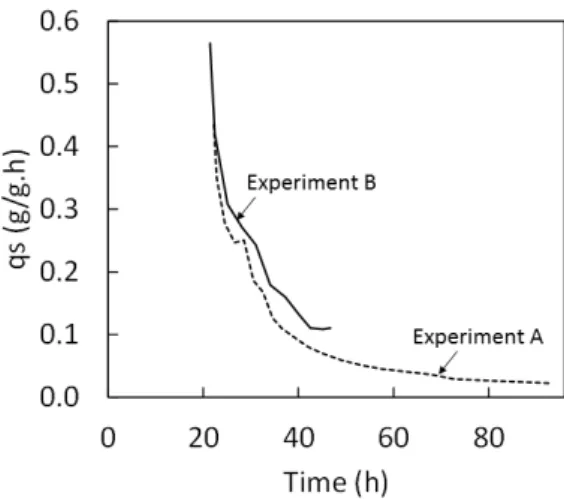
CGC; ●, DCW); (B) online data (−−, DO concentration; − −, Stirring speed; − −, Glycerol Feed). The arrows are pointing to the respective axis of each parameter. ... 23 Figure 3.2 – Specific glycerol consumption rate in Experiments A (DO-stat mode) and B (cultivation with a predefined profile) during the fed-batch phase of the cultivation runs. ... 26 Figure 3.3 – Cultivation profiles obtained in Experiment B for the cultivation of Komagataella pastoris DSM 70877 with a predefined feeding profile: (A) offline data (▲, glycerol
concentration; ■, CGC; ●, DCW); (B) online data (−−, DO concentration; −−, Stirring speed; − −, Glycerol Feed). The arrows are pointing to the respective axis of each parameter. ... 27 Figure 3.4 – Cultivation profiles obtained in Experiment C for the repeated fed-batch cultivation of Komagataella pastoris DSM 70877: (A) ▲, glycerol concentration; (B) ●, DCW; , CGC.
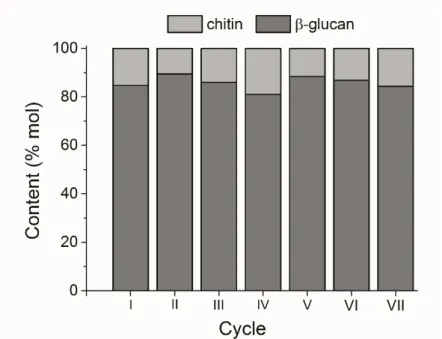
The arrows are pointing to the respective axis of each parameter. ... 29 Figure 3.5 – Chitin:glucan molar ratio of the CGC produced in each cycle of the repeated fed-batch Experiment C. ... 31
Figure 4.1 – Cultivation profiles obtained in DO batch experiments for the cultivation of
Komagataella pastoris DSM 70877: (A) 5%, (B) 10%, (C) 15%, (D) 30% and (E) 50%. Offline
data: ▲, glycerol concentration; ■, DCW. Online data: −−, DO concentration; −−, Stirring speed. The arrows are pointing to the respective axis of each parameter. ... 42 Figure 4.2 – Cultivation profiles obtained in fed-batch experiment with Komagataella pastoris
DSM 70877: ▲, glycerol concentration; ●, DCW; ■, CGC; ♦, Mannans. The arrows are
pointing to the respective axis of each parameter. ... 47
xx
Figure 5.2 – DCW results obtained for the K. pastoris shake flasks experiments for (A) PO4
2-and (B) K+ ions, used for the Medium K design: □, Exp. 1; ■, Exp. 2-5. ... 62
Figure 5.3 – Results obtained for the K. pastoris bioreactor cultivation with Medium K: ■,
DCW; ●, CGC; ▲, Mannans. ... 63
Figure 6.1 – Schematic representation of the procedures used for extraction and purification of CGC from K. pastoris biomass. ... 71
Figure 6.2 – FTIR spectra of (A) CGCPBS, (B) CGCpure, (C) crab shell chitin, (D) KiOsmetine®
and (E) Laminarin. ... 78 Figure 6.3 – 13C CPMAS-NMR spectrum of CGC
pure (A). Resonance assignment is shown in
agreement with the atom labelling shown (B) in the -glucan and chitin molecular structures. # represents the carbon resonances involved in β-(1-6)-glycosilic bonds. Apostrophe represents the carbon resonances of chitin. Asterisks depict impurities. ... 81 Figure 6.4 – X-ray powder diffractograms of (A) CGCPBS, (B) CGCpure, (C) crab shell chitin, (D)
KiOsmetine® and (E) Laminarin. ... 83
Figure 6.5 – Thermogravimetric Analysis (TGA) and Differential Scanning Calorimetry (DSC) curves of (A) CGCPBS, (B) CGCpure, (C) crab shell chitin, (D) KiOsmetine® and (E) Laminarin.
... 88
Figure 7.1 – Parity plots for observed and predicted values for the responses studied in the RSM model: CGC Extraction Efficiency (A), Mannoproteins Extraction Efficiency (B), CGC Purity (C) and Mannans Purity (D). ... 99 Figure 7.2 – Response surface plots for experimental design model for the CGC Extraction Yield (A-C), Mannans Extraction Yield (D-F), CGC Purity (G-I) and Mannans Purity (J-L), as a function of temperature, reaction time and NaOH concentration. ... 103 Figure 7.3 – FTIR spectra of CGCc obtained in the model validation experiment C. ... 105
Figure 7.4 – Thermogravimetric analysis (TGA) and differential scanning calorimetry (DSC) curves of CGCc. ... 107
Figure 7.5 – Size exclusion chromatograms (SEC) of MNa, MNb and MNc. ... 109
Figure 7.6 – FTIR spectra of MNa, MNb and MNc. ... 111
xxi Figure 8.1 – Comparison between the K. pastoris bioprocess described by Roca et al. (2012)
xxiii
List of tables
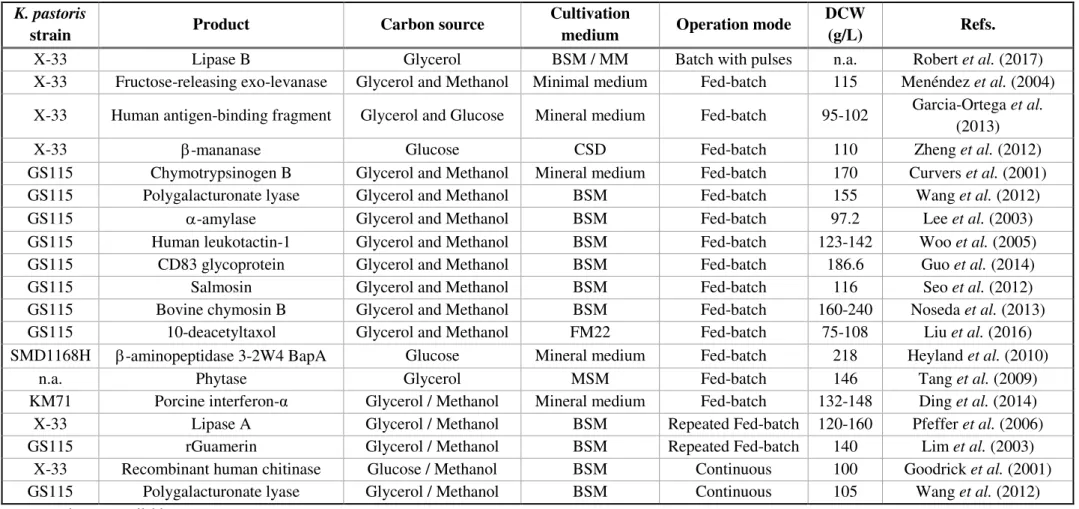
Table 2.1 – CGC content in the biomass of several yeast and fungi strains. ... 9 Table 2.2 – Mannans content in the biomass of several yeast strains. ... 10 Table 2.3 – K. pastoris high cell density bioproduction processes. Its products, biomass
production (dry cell weight, DCW) and fermentation characteristics: carbon source, cultivation media (Basal Salts Medium, BSM; Minimal Medium, MM; Corn Steep Dextrose medium, CSD; FM22; Minimum Salt Medium MSM) and operation modes... 12
Table 3.1– Results obtained for the cultivation of K. pastoris DSM 70877 in glycerol under
different operation modes (dry cell weight, DCW; overall biomass, rX, and CGC, rC, volumetric
productivities; yield of biomass, YX/S, and CGC, YC/S, on a substrate basis). ... 24
Table 4.1 – Results obtained in the DO batch experiments for K. pastoris growth and polymers
production: maximum specific cell growth rate (max); dry cell weight (DCW); overall CGC (rC)
and mannans (rM) volumetric productivities; yields of CGC (YC/S) and mannans (YM/S) on a
substrate basis. ... 43 Table 4.2 – Results obtained in the fed-batch experiment for K. pastoris biomass and polymers production and comparison with the literature: dry cell weight (DCW); overall CGC (rC) and
mannans (rM), volumetric productivities; yields of biomass (YX/S), CGC (YC/S) and mannans
(YM/S) on glycerol basis. ... 48
Table 5.1 – Culture media composition (per liter) used for cultivation of Komagataella pastoris.
... 56 Table 5.2 – Results obtained in the shake flasks experiments for K. pastoris growth and cell
wall polysaccharides production: dry cell weight (DCW); CGC and mannans content in biomass (CGC and mannans content, respectively); CGC and mannans concentration (CGC and
Mannans, respectively)... 60 Table 5.3 – Overall biomass and polysaccharides production obtained in fed-batch bioreactor cultivation of Komagataella pastoris DSM 70877 (dry cell weight (DCW), overall biomass (rx),
CGC (rC) and mannans (rM) volumetric productivities; yield of biomass (YX/S) CGC, (YCGC/S) and
xxiv
Table 6.1 – Extraction yield, chitin:-glucan molar ratio and content in protein, inorganic salts and water of the CGC polymer samples obtained with the different procedures tested. ... 75 Table 6.2 – FTIR spectral values of the main bands for the polymer samples: crab shell chitin, Laminarin, KiOsmetine®, CGC
PBS and CGCpure. ... 79
Table 6.3 – Physico-chemical properties comparison of K. pastoris CGCs with chitin and/or
-glucan containing polymers from other strains and commercial polymers (CI: crystallinity index; Mw: molecular weight; Tdeg: degradation temperature). ... 85
Table 7.1 – Central composite rotatable design (CCRD) with three independent variables, X1
(temperature, T), X2 (reaction time, t) and X3 (NaOH concentration, [NaOH]), and the observed
responses studied: Y1 and Y2 (CGC and Mannans extraction yields, respectively); Y3and Y4
(CGC and Mannans purity, respectively). ... 97 Table 7.2 – Analysis of variance (ANOVA) of CGC and mannans central composite design: model and lack of fit significance levels (p-values) and correlation values (R2) for the responses
studied: CGC and Mannans Extraction Yields, CGC and Mannans Purity. ... 99 Table 7.3 – Multiple linear regression (MLR) analysis of the polynomial model: constants and
p-values for linear, quadratic and interaction effects of temperature (T), reaction time (t) and
NaOH concentration ([NaOH]) for the responses studied: CGC Extraction Yield (wt%),
Mannans Extraction Yield (wt%), CGC Purity (%) and Mannans Purity (%). ... 101 Table 7.4 – Experiment A (65 ºC, 2 h, NaOH 1 M), B (65 ºC, 2 h, NaOH 5 M) and C (84 ºC, 4 h, NaOH 4 M) results of model validation: comparison between observed and predicted results for CGC Extraction Yield (wt%), Mannans Extraction Yield (wt%), CGC Purity (%) and Mannans Purity (%). ... 104 Table 7.5 – FTIR spectral values of the main bands for the CGC and mannans samples obtained in experimental design model validation. ... 106 Table 7.6 – Average molecular weight of the mannans obtained in the model validation
1
Chapter 1
Motivation and thesis outline
3
1.1.
Motivation
In the last years, the interest in yeast cell-wall polysaccharides, namely chitin-glucan complex (CGC) and mannans, has been increasing, mostly due to their bioactive properties and high range of potential applications. Nowadays, CGC is already commercially produced as a by-product of citric acid by-production by the fungi Aspergillus niger (Kytozyme©’s KioTransine®,
http://kitozyme.com). Mannans from Saccharomyces cerevisiae (Elicityl’s mannans,
http://www.elicityl-oligotech.com) can also be found in the market.
In view of the valuable properties of CGC and mannans, the patented bioprocess proposed by Pharma73 S.A. (http://www.pharma73.com) has high interest and potential for industrial development (Reis et al., 2010; Freitas, Roca, et al., 2013; Freitas et al., 2015). The
higher biomass concentration achieved using a simple culture medium with a low-cost carbon source, such as glycerol, combined with high products productivities, makes Pharma73 S.A. process more competitive, comparing with other fungal cell-wall polysaccharides production processes (Feofilova et al., 2006; Zlotnikov et al., 2007; Smirnou, Krcmar and Prochazkova,
2011). However, the Pharma73 S.A. process (also described in Roca et al. (2012)), resulted in a
highly impure CGC, mannans were not recovered and the CGC volumetric productivity was still low. Therefore, there was a need to improve these products productivities and optimize the downstream procedures to reach pure polysaccharides, in order to make this bioprocess more economically viable.
The main objective of this PhD thesis was the optimization of the K. pastoris bioprocess
developed by Pharma73 S.A. to obtain CGC and mannans, by increasing the products productivities and reducing the production costs, at the same time. In this way, this thesis included some fermentation and downstream optimization studies. For optimization of the fermentation, a repeated fed-batch process was established, the dissolved oxygen level was optimized, and a new culture medium was developed, to increase the polysaccharides
productivities. The downstream (polysaccharides extraction and purification) was optimized to obtain pure CGC and mannans, by developing a simple purification process and evaluating the impact of the extraction conditions on final products properties.
1.2.
Thesis outline
4
scientific papers published in international peer reviewed journals and another two manuscripts were already submitted. Part of this work was also included in the international patent
applications WO2013140222 and WO2015177622, owned by Pharma73 S.A. (Freitas, Roca, et al., 2013; Freitas et al., 2015).
This PhD thesis is organized according to the following chapters: - Chapter 2 – describes the state of the art
- Chapter 3 – includes the experiments performed for the implementation of a repeated fed-batch process to improve the CGC productivity
- Chapter 4 – study of the dissolved oxygen level influence on cell-wall polysaccharides production
- Chapter 5 – culture medium design to improve the K. pastoris cell-wall polysaccharides
production
- Chapter 6 – downstream process development to obtain a pure CGC and its physico-chemical properties
- Chapter 7 – study of the influence of basic extraction conditions on K. pastoris
5
Chapter 2
State of the art
7 Polysaccharides are biomolecules composed of sugar units covalently linked to form polymeric chains. They are one of the most abundant materials available in nature from wide and diverse origins. Polysaccharides can be found in plants (e.g., glucomannans, cellulose), animals (e.g., chitin), algae (e.g., alginates, carrageenan), bacteria (e.g., xanthan, gellan) and yeasts/fungi (e.g., chitin, glucans) (Rinaudo, 2008). These biomaterials are being the subject of increasing interest due to their renewable, biodegradable, non-toxic and biocompatible
properties. Besides that, many possess biological activity (e.g., immunologic,
anti-inflammatory, antioxidant and antiviral activities) that makes them interesting for use in the medical and pharmaceutical fields (Liu, Willför and Xu, 2015; Shi, 2016). Moreover, polysaccharides can be used in food and cosmetic products and processes, as well as in wastewater treatment, oil recovery and many other industrial applications (Blackburn, 2004; Freitas et al., 2014; Hamed, Özogul and Regenstein, 2016).
This PhD thesis was focused on chitin-glucan complex (CGC) and mannans extracted from the cell-wall polysaccharides of the yeast Komagataella pastoris, including bioprocess
development and optimization, as well as polysaccharides characterization.
2.1.
Yeast cell-wall composition
The yeast cell-wall is a dynamic structure that ensures the cell’s viability and
morphogenesis (Gow, Latge and Munro, 2017). In most yeast cultures, the cell-wall represents up to 25% of the cells dry weight, being a double layer structure mainly composed of
polysaccharides: -glucans (around 60%), mannans (around 40%) and chitin (up to 2%) (Figure 2.1) (Lipke and Ovalle, 1998; Bowman and Free, 2006; Klis, Boorsma and De Groot, 2006; Kogani et al., 2008; Brown et al., 2014).
State of the art
8
The major polysaccharide component of the cell-wall is -(1,3)-glucans, helix structures composed of glucose units. Combined with chitin, these glucans contribute to the elasticity and mechanic strength of the cell-wall (Klis et al., 2002). Chitin is a linear polysaccharide composed
of N-acetylglucosamine units, mostly present in the bud scar and in lateral wall of the yeast cells (Klis et al., 2002). This crystalline polysaccharide plays an important role in cell division cycle
and contributes to the rigidity and strength of the cell-wall (Bowman and Free, 2006; Arroyo et al., 2016). The inner cell-wall includes -(1,3)-glucans covalently linked to chitin, both
synthesized in the plasma membrane (Arroyo et al., 2016). Beyond -(1,3)-glucans, cell-wall
composition also includes another type of glucans, -(1,6)-glucans, which are responsible for the linkage between the two cell-wall layers, connecting the -(1,3)-glucans to
glycosylphosphatidyl inositol(GPI)-dependent cell-wall proteins of the outer cell-wall (Gow, Latge and Munro, 2017).
The outer cell-wall is mainly composed of highly glycosylated mannans (50-95% of carbohydrates) (Lipke and Ovalle, 1998) that are synthesized in the endoplasmic reticulum (Arroyo et al., 2016). They include linear -(1,6)-mannans highly branched with -(1,2) and
-(1,3) side chains (Gow, Latge and Munro, 2017). These mannans have several functions in the yeast cell-wall, including the maintenance of cell integrity, the protection against external agents and the transmission of intracellular signals in response to external stimuli (Bowman and Free, 2006).
The composition of the cell-wall can be affected by several environmental factors, including oxidative stress, medium composition, temperature, external pH and oxygen levels (Aguilar-Uscanga and Francois, 2003; Pillet et al., 2014). Under certain conditions, the yeast
cells activate the cell-wall integrity (CWI) pathway to avoid loss of viability. The activation of the CWI can result in increased production of some components, such as chitin and mannans, and/or in the reorganization of the linkages in other components (Smits, van den Ende and Klis, 2001; Klis, Boorsma and De Groot, 2006; Arroyo et al., 2016).
2.2.
Chitin-glucan complex (CGC)
Chitin-glucan complex (CGC) is a co-polymer of covalently linked chitin and -(1,3)-glucans (Arroyo et al., 2016). It is a natural cell-wall component of most yeast and fungi
State of the art
9 Table 2.1 – CGC content in the biomass of several yeast and fungi strains.
Microorganism CGC content (%) Refs.
Cephaliophora tropica 12-27 Zlotnikov et al. (2007)
Armillariella mellea 4.5 Ivshin et al. (2007);
Ivshina et al. (2009)
Morchella esculenta 9.6 Ivshina et al. (2009)
Schizophyllum commune 15-30 Smirnou, Krcmar and Prochazkova
(2011)
Aspergillus niger 15-18 Feofilova et al. (2006)
Pichia pastoris 11-20 Roca et al. (2012);
Chagas et al. (2014)
CGC is insoluble in water and in most organic solvents, being a dimethlyacetamide (DMAc)/lithium chloride solution the best option to solubilize it (Pillai, Paul and Sharma, 2009; Hamed, Özogul and Regenstein, 2016). However, CGC is hygroscopic and has high swelling capacity. It combines the antimicrobial, antioxidant and hemostatic effects of chitin (Younes and Rinaudo, 2015; Hamed, Özogul and Regenstein, 2016; Singh, Shitiz and Singh, 2017) with the anti-inflammatory, anti-tumor, hypocholesterol and immunomodulating activities of -glucans (Dalonso, Goldman and Gern, 2015; Kagimura et al., 2015; De Oliva-Neto et al., 2016;
Zhu, Du and Xu, 2016). Since CGC is composed of two bioactive polysaccharide moieties, there has been a growing interest on this biopolymer, especially for use in the pharmaceutical and medical fields (Giavasis, 2014; Freitas, Roca and Reis, 2015). For example, CGC can be used for the treatment of obesity and diabetes (Neyrinck et al., 2012; Marzorati, Maquet and
Possemiers, 2017), for wound healing (Abdel-Mohsen et al., 2016) or surgical adhesives
(Pravata, 2012). Moreover, CGC can be used in other applications fields, such as cosmetic formulations (Gautier et al., 2008; Gautier, Bruyere and Maquet, 2010), food additives (Kulev
and Negrutsa, 2015), in wine clarification (Bornet and Teissedre, 2008) or as a metal absorbent (Skorik, Pestov and Yatluk, 2010). The use of fungal CGC as food supplement was already authorized by Food and Drug Administration (FDA) (GRAS Notice No. 412;
http://www.fda.gov). Recently, Pharma73 S.A. also proposed the use of CGC as a
pharmaceutical excipient, due to its high bulk density and compression capacity, important issues for processing of pharmaceutical formulations into solid dosage forms (Freitas, Roca, et al., 2013; Freitas et al., 2015).
State of the art
10
2.3.
Mannans
Mannans are homo- or heteropolymers mainly composed of mannose units that can be covalently linked to cell-wall proteins, in the form of mannoproteins. This polysaccharide is also a yeast cell-wall component with the main function of protecting the cell from the osmotic pressure and keep the cell’s integrity, especially during the cell cycle (Liu et al., 2015).
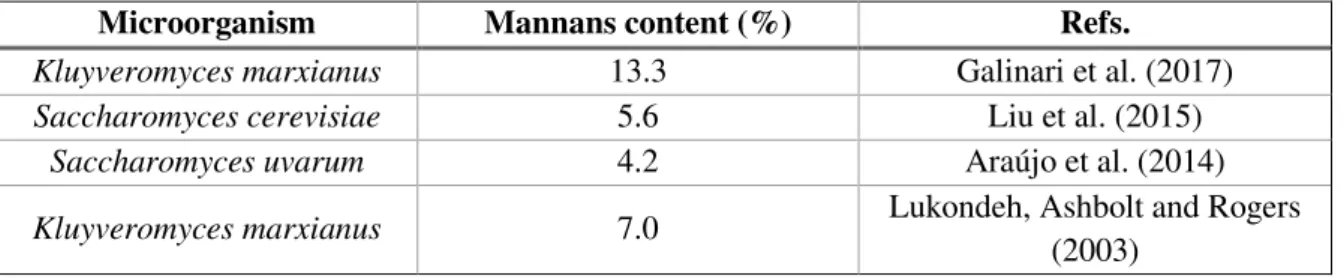
Mannans can be extracted from several yeast strains, representing between 4 and 13% of the cell dry weight content (Table 2.2).
Table 2.2 – Mannans content in the biomass of several yeast strains.
Mannans are soluble polysaccharides, with emulsifying and stabilizer properties (Lukondeh, Ashbolt and Rogers, 2003; Araújo et al., 2014). Because of this, mannans can be
used in cosmetic formulations (Paufique, 2008) and food products, such as mayonnaise (Araújo
et al., 2014). Like CGC, mannans are also interesting materials for the pharmaceutical and
medical fields, due to their reported antioxidant and antimutagenic properties (Križková et al.,
2001; Machová and Bystrický, 2013; Liu and Huang, 2018). Mannans were recently proposed for use in allergy vaccines and immunotherapy (Ueno et al., 2013; Manzano et al., 2016; Yuba et al., 2017).
2.4.
Komagataella pastoris
Komagataella pastoris, formerly known as Pichia pastoris, is a methylotrophic and
anaerobic facultative yeast culture (Yamada et al., 1995; Kurtzman, 2009; Morales et al., 2014). K. pastoris was introduced in the 1970s by Phillips Petroleum to produce single cell proteins
and, nowadays, is one of the most used cultures for the production of recombinant proteins (Cereghino and Cregg, 2000; Çalık et al., 2015; Looser et al., 2015; Spohner et al., 2015;
Schmideder et al., 2016). The increasing interest on this GRAS (General Recognized as Safe)
Microorganism Mannans content (%) Refs.
Kluyveromyces marxianus 13.3 Galinari et al. (2017)
Saccharomyces cerevisiae 5.6 Liu et al. (2015)
Saccharomyces uvarum 4.2 Araújo et al. (2014)
Kluyveromyces marxianus 7.0 Lukondeh, Ashbolt and Rogers
State of the art
11 culture to be used as an expression vector for the production of recombinant proteins is mainly due to its simplicity of molecular genetic manipulation and the capacity of achieving high biomass concentrations (over 100 g/L), using simple mineral media with low-cost carbon sources, such as glycerol, glucose and methanol (Cos et al., 2006; Looser et al., 2015; Spohner et al., 2015; Pais-Chanfrau and Trujillo-Toledo, 2016; Schmideder et al., 2016) (Table 2.3).
From the several culture media already used in K. pastoris fermentations, the Basal
Salts Medium (BSM) proposed by Invitrogen Co. (Carlsbad, CA, USA) is the most frequently used (Table 2.3). However, the use of this medium includes some operational problems, due to its turbidity with high ionic strengths and the formation of precipitates, especially at pH values above 5 and after sterilization, generating an unbalanced nutrients composition (Zhang, Inan and Meagher, 2000; Cos et al., 2006; Ghosalkar, Sahai and Srivastava, 2008; Pais-Chanfrau and Trujillo-Toledo, 2016).
Several modes of operation have been tested for K. pastoris cultivation, including batch,
fed-batch and continuous modes (Potvin, Ahmad and Zhang, 2012) (Table 2.3). The most common operation mode is the fed-batch strategy (Çalık et al., 2015). A typical fed-batch
process for K. pastoris recombinant proteins production includes: a batch phase using glucose
or glycerol as carbon sources, to obtain high biomass concentration; a glucose/glycerol fed-batch phase with the addition of a feeding solution (usually with an exponential feeding rate), to maximize the biomass concentration; and, a fed-batch induction phase with methanol to induce proteins production (Zhang, Inan and Meagher, 2000; Cos et al., 2006; Gao and Shi, 2013;
State of the art
12
Table 2.3 –K. pastoris high cell density bioproduction processes. Its products, biomass production (dry cell weight, DCW) and fermentation characteristics: carbon source, cultivation media (Basal Salts Medium, BSM; Minimal Medium, MM; Corn Steep Dextrose medium, CSD; FM22; Minimum Salt Medium MSM) and operation modes
K. pastoris
strain Product Carbon source
Cultivation
medium Operation mode
DCW
(g/L) Refs.
X-33 Lipase B Glycerol BSM / MM Batch with pulses n.a. Robert et al. (2017)
X-33 Fructose-releasing exo-levanase Glycerol and Methanol Minimal medium Fed-batch 115 Menéndez et al. (2004)
X-33 Human antigen-binding fragment Glycerol and Glucose Mineral medium Fed-batch 95-102 Garcia-Ortega et al. (2013)
X-33 -mananase Glucose CSD Fed-batch 110 Zheng et al. (2012)
GS115 Chymotrypsinogen B Glycerol and Methanol Mineral medium Fed-batch 170 Curvers et al. (2001)
GS115 Polygalacturonate lyase Glycerol and Methanol BSM Fed-batch 155 Wang et al. (2012)
GS115 -amylase Glycerol and Methanol BSM Fed-batch 97.2 Lee et al. (2003)
GS115 Human leukotactin-1 Glycerol and Methanol BSM Fed-batch 123-142 Woo et al. (2005)
GS115 CD83 glycoprotein Glycerol and Methanol BSM Fed-batch 186.6 Guo et al. (2014)
GS115 Salmosin Glycerol and Methanol BSM Fed-batch 116 Seo et al. (2012)
GS115 Bovine chymosin B Glycerol and Methanol BSM Fed-batch 160-240 Noseda et al. (2013)
GS115 10-deacetyltaxol Glycerol and Methanol FM22 Fed-batch 75-108 Liu et al. (2016)
SMD1168H -aminopeptidase 3-2W4 BapA Glucose Mineral medium Fed-batch 218 Heyland et al. (2010)
n.a. Phytase Glycerol MSM Fed-batch 146 Tang et al. (2009)
KM71 Porcine interferon-α Glycerol / Methanol Mineral medium Fed-batch 132-148 Ding et al. (2014)
X-33 Lipase A Glycerol / Methanol BSM Repeated Fed-batch 120-160 Pfeffer et al. (2006)
GS115 rGuamerin Glycerol / Methanol BSM Repeated Fed-batch 140 Lim et al. (2003)
X-33 Recombinant human chitinase Glucose / Methanol BSM Continuous 100 Goodrick et al. (2001)
GS115 Polygalacturonate lyase Glycerol / Methanol BSM Continuous 105 Wang et al. (2012)
State of the art
13 Recently, the use of K. pastoris as a source of yeast cell-wall polysaccharides, CGC and
mannans, was proposed by Pharma73 S.A., in a patented bioprocess (Reis et al., 2010; Freitas,
Roca, et al., 2013; Freitas et al., 2015). Since cell-wall polysaccharides production is growth
associated, K. pastoris became an interesting culture for this bioprocess due to its capacity to
achieved high biomass concentration (above 100 g/L) with high specific cell growth rates (Roca
et al., 2012). A typical CGC production process is shown in Figure 2.2, based on the
bioproduction process described by Roca et al. (2012). Briefly, this process includes a fed-batch
fermentation with BSM supplemented with glycerol as the sole carbon source, to produce around 100 g/L of dry biomass concentration and 25 g/L of CGC. The biomass and CGC productivities of the process were 58.5 g/L.day and 14.6 g/L.day, respectively.
In that study, recovery of CGC involves several steps as depicted in Figure 2.2. CGC extraction from the biomass involved a hot alkaline treatment with NaOH 1 M, at 65 ºC, during 2 h. The CGC present in the alkaline insoluble material (AIM) was washed with phosphate buffer solution (PBS), ethanol and water, resulting in a rather impure polymer, with 18 wt% of inorganic salts, 9.5 wt% of protein and 28 wt% of mannose (Roca et al., 2012). Although
State of the art
14
Fermentation
Fed-batch process; 2 L bioreactor; BSM (Initial volume: 1.4 L, 41 h, 30 ºC, pH 5, DO 50 %)
Batch phase: 26 h
Fed-batch phase: 15 h, exponencial feeding profile
Extraction
(NaOH 1 M, 65 ºC, 2 h)
AIM
2 x H2O washes
2 x PBS washes
Ethanol wash
H2O wash
CGC
15
Chapter 3
Implementation of a repeated
fed-batch process for the production of
chitin-glucan complex by
Komagataella pastoris
The results presented in this chapter were published in the peer reviewed paper:
Implementation of a repeated fed-batch process for the production of chitin-glucan complex by Komagataella pastoris
17
3.1.
Abstract
The yeast Komagataella pastoris was cultivated under different fed-batch strategies for
the production of chitin-glucan complex (CGC), a co-polymer of chitin and -glucan. The tested fed-batch strategies included dissolved oxygen (DO)-stat mode, predefined feeding profile and repeated fed-batch operation. Although high cell dry mass and high CGC production were obtained under the tested DO-stat strategy in a 94 h cultivation (159 and 29 g/L, respectively), the overall biomass and CGC productivities were low (41 and 7.4 g/L.day, respectively). Cultivation with a predefined profile significantly improved both biomass and CGC volumetric productivities (87 and 10.8 g/L.day, respectively). Hence, this strategy was used to implement a repeated fed-batch process comprising 7 consecutive cycles. A daily production of 119-124 g/L of biomass with a CGC content of 11-16 wt% was obtained, thus proving this cultivation strategy is adequate to reach a high CGC productivity that ranged between 13 and 20 g/L.day. The process was stable and reproducible in terms of CGC productivity and polymer
composition, making it a promising strategy for further process development.
3.2.
Introduction
Chitin-glucan complex (CGC) is a cell-wall component of most yeasts and fungi, contributing to the stability and protection of the cell (Aguilar-Uscanga and Francois, 2003; Klis, Boorsma and De Groot, 2006). Composed of chitin and -glucans, this nontoxic and biologically active copolymer is a valuable biomaterial for use in pharmaceutical, cosmetic and food applications (Gautier et al., 2008; Freitas, Alves, et al., 2013; Freitas, Roca, et al., 2013;
Mogoşanu and Grumezescu, 2014). CGC has also the advantage of being a non-animal chitin source (Roca et al., 2012).
Komagataella pastoris, formerly known as Pichia pastoris (Yamada et al., 1995), is a
methylotrophic yeast that was recently proposed as a source of CGC in a patented bioprocess (Reis et al., 2010; Freitas, Roca, et al., 2013) based on the use of glycerol (Roca et al., 2012;
Chagas et al., 2014). K. pastoris is widely used for the production of recombinant proteins due
to its capacity in achieving high cell densities and high product productivities (Spohner et al.,
2015). Most of K. pastoris production processes are performed under fed-batch mode, using
generally glucose/glycerol and methanol as carbon sources, for the growth and heterologous protein induction phases, respectively (Zhang, Inan and Meagher, 2000; Potvin, Ahmad and Zhang, 2012; Looser et al., 2015). The fed-batch mode is usually preferred over batch
Implementation of a repeated fed-batch process for the production of chitin-glucan complex by Komagataella pastoris
18
during the extended cultivation periods (Potvin, Ahmad and Zhang, 2012; Croughan, Konstantinov and Cooney, 2015).
Different feeding strategies have been tested for the fed-batch cultivation of K. pastoris,
including the use of exponential feeding profiles (Oliveira et al., 2005; Martens et al., 2011;
Roca et al., 2012), the dissolved oxygen (DO)-stat mode (Lim et al., 2003; Yamawaki et al.,
2007; Hu et al., 2008; Ding et al., 2014), sequential pulse feeding (Pfeffer et al., 2006; Hu et al.,
2008), constant feeding flow (Curvers et al., 2001; Bhatacharya, Pandey and Mukherjee, 2007)
and repeated fed-batch operation (Lim et al., 2003; Ohya, Ohyama and Kobayashi, 2005;
Pfeffer et al., 2006; Martens et al., 2011). Most of these substrate feeding strategies were
developed to maximize the production of heterologous proteins by different P. pastoris strains
(Cos et al., 2006). Since different target products were envisaged in each of those processes, it
is difficult to compare the performance of the tested fed-batch strategies. Moreover, many of them were based on monitoring and controlling methanol concentration to avoid its
accumulation to inhibitory values in the broth (Cos et al., 2006).
Among the proposed fed-batch strategies, the repeated fed-batch presents several advantages. This type of fermentation process consists in a cyclic fed-batch operation, where, at the end of each cycle, a defined volume of the fermentation broth is purged from the reactor and replaced by fresh medium. The broth left inside the reactor serves as inoculum for the following cycle (Ohya, Ohyama and Kobayashi, 2005; Lim and Shin, 2013). Operation under a repeated batch mode joins in the same fermentation process the advantages of the conventional fed-batch with those of continuous fermentation. It allows for achieving higher product
productivities by keeping the culture’s viability for longer operation periods, so that high cell density and high product production is maintained along this multi-cycle operation (Potvin, Ahmad and Zhang, 2012; Lim and Shin, 2013). Moreover, it avoids the need for reactor
cleaning and sterilization steps between fed-batch cycles (Ohya, Ohyama and Kobayashi, 2005). This cultivation strategy was successfully used for the production of Lipase A (Pfeffer et al.,
2006) and rGuamerin (Lim et al., 2003) by P. pastoris strains X33 and GS115, respectively,
wherein high cell densities were achieved (120-160 g/L) during 10-11 consecutive fed-batch cycles.
In previous work, K. pastoris was cultivated under a fed-batch mode with and
exponential feeding profile for the production of CGC (Roca et al., 2012). In this work,
Implementation of a repeated fed-batch process for the production of chitin-glucan complex by Komagataella pastoris
19
3.3.
Materials and methods
3.3.1. Yeast strain and culture medium
In all experiments, Komagataella pastoris strain DSM 70877 was cultivated in standard
Basal Salts Medium (BSM) (Pichia Fermentation Process Guidelines, Invitrogen) containing per liter of solution: H3PO4 (85%), 26.7 mL; CaSO4.2H2O, 1.176 g; K2SO4, 18.2 g; MgSO4.7H2O,
14.9 g; KOH, 4.13 g; glycerol (86-88 wt%, Scharlau), 50 g and 4.35 mL of Pichia trace mineral
(PTM) solution. PTM solution had the following composition (per liter): CuSO4.5H2O, 6 g; NaI,
0.08 g; MnSO4.H2O, 3 g; Na2MoO4.2H2O, 0.2 g; H3BO3, 0.02 g; CoCl2.6H2O, 0.5 g; ZnCl2, 20
g; FeSO4.7H2O, 65 g; Biotin, 0.2 g and H2SO4, 5 mL. The PTM solution was filter sterilized
separately and added to the BSM after its sterilization at 120 ºC, during 20 min. Ammonium hydroxide (25%, v/v) was used to set the medium’s pH to 5.0, serving also as the nitrogen source.
3.3.2. Fed-batch bioreactor cultivation
For the bioreactor experiments, inocula were prepared by inoculating 2 × 1 mL of the cryopreserved culture in 2 × 150 mL BSM supplemented with 50 g/L glycerol (in 500 mL baffled shake-flasks) and incubating during 40 h, at 30 ºC and 200 rpm, to ensure that the culture is at exponential growth phase at the moment of the broth transfer to the bioreactor.
The broth thus obtained was used to inoculate a 5 L bioreactor (BioStat B-plus, Sartorius) with an initial working volume of 3 L. The 5 L bioreactor used in these experiments had an internal height:internal diameter ratio of 2.2 (160:345 mm), two Rushton impellers with 6 blades in each one (blade dimension: 15 × 13 mm), 4 buffles with 204 mm of height and a ring sparger with 14 holes and 58.5 mm diameter.
All experiments were performed with controlled temperature at 30 ºC. The pH was controlled at 5.0 by the automatic addition of a 25% (v/v) ammonium hydroxide solution. The air flow rate was kept constant at 3 SLPM (standard liters per minute). The dissolved oxygen (DO) level was controlled at 50% of the air saturation by an automatic cascade comprising the variation of the stirring rate (300-2000 rpm) and supplementation of the air stream with pure oxygen that was triggered when the maximum stirring rate was not enough to maintain the DO level at the set point.
Implementation of a repeated fed-batch process for the production of chitin-glucan complex by Komagataella pastoris
20
glycerol (86-88 wt%) supplemented with PTM solution (24 mL per liter of glycerol). Online data acquisition was performed using BioCTR software developed by Eusébio (2006). Samples (≈ 25 mL) were periodically withdrawn from the bioreactor for determination of the dry cell weight (DCW), glycerol and ammonia concentrations, CGC content in the biomass and polymer composition.
In experiment A (DO-stat mode), the feeding flow rate was controlled as a function of DO level (under a constant stirring of 1300 rpm), i.e., when the DO level rose above 50%, the substrate was automatically fed to the bioreactor until the DO reached the set point again. In experiment B (predefined feeding profile), the feeding profile was set at the Biostat B-plus control unit, which automatically fed the reactor with substrate at a rate that gradually increased from 9.3 to 24 g/L.h (considering the reactor’s starting volume) over the 22.5 h of the fed-batch phase, giving an overall glycerol feeding of 1178 g.
3.3.3. Implementation of CGC production under repeated fed-batch mode
The repeated fed-batch cultivation of K. pastoris for CGC production comprised 7
cycles. The experiment was initiated by inoculating the bioreactor as described above for experiments A and B. The first cycle comprised a 24 h batch phase and a 23 h fed-batch phase wherein the feeding rate increased from 8 to 12 g/L.h to give an overall glycerol feeding of 722 g. The subsequent 6 cycles took 23 h, with a 6 h batch phase and a 17 h fed-batch phase, with the feeding rate increasing from 14 to 16 g/L.h (overall glycerol feed of 764-799 g). At the end of each cycle, 90% of the culture broth (≈ 3.5 L) were withdrawn from the reactor under aseptic conditions. The remaining broth (≈ 380 mL) was kept in the reactor, serving as inoculum for the following cycle. The new cycle was initiated by filling the bioreactor with 2.6 L of fresh BSM medium.
In all cycles, the reactor was operated as described above for experiments A and B in terms of temperature (30 ºC), pH (5.0) and DO level (50%) control. Online data was acquired by the BioCTR software (Eusébio, 2006). Samples (≈ 25 mL) were periodically withdrawn from the bioreactor for determination of the DCW, glycerol and ammonia concentrations, CGC content in the biomass and polymer composition.
3.3.4. CGC Extraction
For extraction of CGC from K. pastoris, dried biomass samples (≈ 100 mg) were treated
with NaOH 5 M (30 mL), at 65 ºC, for 2 h. After cooling, the suspension was centrifuged (8,000 × g, 10 min) and the alkaline insoluble material (AIM) was resuspended in deionized water (30
Implementation of a repeated fed-batch process for the production of chitin-glucan complex by Komagataella pastoris
21 washed twice with deionized water (30 mL, for each wash) and, finally, the CGC samples were freeze dried. All extractions were performed in duplicate.
3.3.5. Analytical Techniques
For the determination of the DCW, 5 mL culture broth samples were centrifuged at 8,000 × g for 10 min. The cell-free supernatant was used for glycerol and ammonia
quantification, while the pellet was used for the gravimetric quantification of biomass concentration. The pellet was washed twice (resuspension in 5 mL deionized water and centrifuged at 8,000 × g for 10 min) and freeze-dried. Three replicas were used for the
quantification of DCW.
For glycerol quantification, the cell-free supernatant was analyzed by High Performance Liquid Chromatography (HPLC), in a Dionex ICS 3000 equipment with a Shodex RI-101 detector. The analysis was performed using an Aminex 87H Biorad column, at 30 ºC with H2SO4 10 mN as eluent, at a flow rate of 0.6 mL/min. Glycerol (Scharlau) was used as standard,
at concentrations of 0.005-1.0 g/L. The samples were diluted in order to have their
concentration in glycerol below 1.0 g/L. Ammonia was quantified in the cell-free supernatant by segmented flow analysis (Skalar san++, Skalar Analytical, The Netherlands). An ammonia chloride solution was used as standard, at a concentration range of 4.0-20.0 ppm.The samples were diluted to have their concentration below 20 ppm.
Implementation of a repeated fed-batch process for the production of chitin-glucan complex by Komagataella pastoris
22
3.4.
Results and discussion
3.4.1. Fed-batch cultivation under DO-stat mode
The results obtained in experiment A, wherein the bioreactor was operated under a DO-stat mode, are presented in Figure 3.1 and Table 3.1. During the batch phase, the culture grew at a maximum specific cell growth rate of 0.15 h-1, reaching a DCW of 20 g/L within 24 h of
cultivation (Figure 3.1A). Concomitant with cell growth, the DO level decreased during the first hours of cultivation, being controlled at 50% of the air saturation by automatically increasing the stirring rate (Figure 3.1B). The fed-batch phase was initiated when a sudden increase of the DO level above 50%, accompanied by a reduction of the stirring rate, was noticed (Figure 3.1B), which was indicative of carbon source exhaustion (Figure 3.1A). This sharp increase of the DO level is commonly used as an online signal for initiating the fed-batch phase of Pichia pastoris processes (Cos et al., 2006). From that point on, the stirring rate was kept constant and
the DO level was controlled at 50% by automatically supplying the feeding solution (glycerol supplemented with trace elements) to the bioreactor. This strategy allowed the culture to continue growing. During the first 8 h of fed-batch phase, a feeding flow rate of 8.3 g/L.h provided enough glycerol to maintain a high specific cell growth rate (0.14 h-1). However,
Implementation of a repeated fed-batch process for the production of chitin-glucan complex by Komagataella pastoris
23 Figure 3.1 – Cultivation profiles obtained in Experiment A for the cultivation of Komagataella pastoris DSM 70877 under a DO-stat mode: (A) offline data (▲, glycerol concentration; ■, CGC; ●, DCW); (B) online data (−−, DO concentration; − −, Stirring speed; − −, Glycerol Feed). The arrows are pointing to the respective axis of each parameter.
0 10 20 30 40 50 60 CGC ( g/L); G ly cerol (g/L) 0 30 60 90 120 150 180 A DCW (g/L)
Batch Phase Fed-Batch Phase
B
0 20 40 60 80
0 15 30 45 60 75 90 DO ( %) Time (h) 0 200 400 600 800 1000 1200 1400 Sti rr er (r pm) ; Glyc
Implementation of a repeated fed-batch process for the production of chitin-glucan complex by Komagataella pastoris
24
Table 3.1 – Results obtained for the cultivation of K. pastoris DSM 70877 in glycerol under different operation modes (dry cell weight, DCW; overall biomass, rX, and CGC, rC, volumetric productivities; yield of biomass, YX/S, and CGC, YC/S, on a substrate basis).
Experiment Cultivation mode DCW
(g/L)
rX
(g/L.day)
YX/S
(gx/gs)
CGC content (wt%)
CGC (g/L)
rC
(g/L.day)
YC/S
(gc/gs)
A DO-stat mode 159 41 0.41 18 29 7.4 0.08
B Predefined profile feeding 170 87 0.46 12 21 10.8 0.06
C Repeated fed-batch 119–124 99–111* 0.39–0.44 11-16 13-20 13–20* 0.05–0.08
Implementation of a repeated fed-batch process for the production of chitin-glucan complex by Komagataella pastoris
25 A final DCW of 159 g/L was attained at the end of the run (94 h), corresponding to an overall biomass volumetric productivity of 41 g/L.day (Table 3.1). Although the biomass concentration obtained in this study was considerably higher than that reported by Roca et al.
(2012) for cultivation of K. pastoris DSM 70877 in glycerol (104 g/L), the biomass volumetric
productivity was not improved. Lower biomass concentration (132-151 g/L) but higher volumetric productivity values (59-118 g/L.day) were also reported for the cultivation of other strains with glycerol using the DO-stat strategy. Hu et al. (2008) reported a DCW of 147 g/L
and a biomass productivity of 59 g/L.day for the cultivation of P. pastoris GS115 for the
biosynthesis of S-adenosyl-L-methionine. Another example is the production of phytase by a P. pastoris strain, in which 146 g/L of biomass were produced with an overall biomass
productivity of 66 g/L.day (Tang et al., 2009). Ding et al. (2014) optimized a DO-stat strategy
for cultivation of P. pastoris KM71 for production of porcine interferon- that reached biomass
concentration values between 132 and 151 g/L within 27-32 h of cultivation.
All the glycerol fed to the bioreactor was consumed by the culture, giving a total substrate consumption of 1429 g (Figure 3.1B). A biomass yield of 0.41 gx/gs was obtained in
Experiment A (Table 3.1). Although this yield is lower than that reported by Roca et al. (2012)
for cultivation of K. pastoris DSM 70877 in glycerol (0.55 gx/gs), it is within the range reported
for P. pastoris GS115, 0.34-0.61 gx/gs (Ren, Yuan and Bellgardt, 2003; Bhatacharya, Pandey
and Mukherjee, 2007; Jungo, Marison and von Stockar, 2007).
The specific glycerol consumption rate was not constant throughout the run, reaching values as high as 0.40 gS/gX.h until around 36 h of cultivation, but gradually decreasing
thereafter (< 0.1 gS/gX.h) (Figure 3.2). This result suggests that the amount of substrate that was
automatically fed to the culture as a function of DO level might have been limiting or some of the medium components was depleted, thus restricting cell growth. On the other hand, the observed reduction of the specific glycerol consumption rate and, also, the specific growth rate, may be due to cell aging and senescence. In the tested fed-batch DO-stat strategy, all the cells were kept in the bioreactor for a rather extended period of time, during which senescent cells have accumulated. Yeast cells are only able to complete a certain number of cell cycles before entering the resting state (Austriaco, 1996). Moreover, the cell cycle length increases as the cells get older and the aged cells of many yeasts tend to accumulate intracellular lipid granules (Austriaco, 1996). Therefore, under certain cultivation conditions, yeast cells may show signs of aging and senescence that include a continuous decrease of the metabolism and cell cycle, which will have a significantly influence on the process productivity and yield (Curvers et al.,
Implementation of a repeated fed-batch process for the production of chitin-glucan complex by Komagataella pastoris
26
At the end of Experiment A, 29 g/L CGC were produced, corresponding to an overall volumetric productivity of 7.4 g/L.day (Table 3.1). The CGC content in the biomass achieved in Experiment A (18 wt%) was higher than that reported previously for K. pastoris DSM 70877
cells (11-14%) (Chagas et al., 2014). This result may be related to the carbon limiting
conditions the culture was subjected to during operation under the DO-stat strategy tested. Moreover, the CGC obtained in Experiment A had a chitin:glucan molar ratio of 22:78, which is higher than that reported in previous studies (4:96-16:84) for CGC extracted from K. pastoris
DSM 70877 biomass (Roca et al., 2012; Chagas et al., 2014). It is known that imposing stress
conditions to yeasts and fungi can trigger metabolic changes that involve the cell-wall structure, especially the polysaccharides synthesis pathways (Aguilar-Uscanga and Francois, 2003; Klis, Boorsma and De Groot, 2006; Hall, 2015). In particular, nutrient starvation has been reported to lead to increased chitin and CGC content (Feofilova, 2010). On the other hand, it may also be related to the accumulation of aged cell in the bioreactor, as discussed above. In fact, yeast cell that have been through several budding divisions will present more budding scars, whose main component is chitin (Holan et al., 1981; Sinclair, Mills and Guarente, 1998). Hence, the higher
chitin content may be indicative of cell senescence.
The results obtained with Experiment A have shown that the DO-stat cultivation strategy tested was not the most appropriate for CGC production since although high DCW and CGC production were reached, the overall productivities were not improved, probably due to the generation of a senescent culture and/or to the substrate limiting conditions it was subjected to during the run.
Implementation of a repeated fed-batch process for the production of chitin-glucan complex by Komagataella pastoris
27 3.4.2. Fed-batch cultivation with predefined profile
Based on the results of Experiment A, a predefined feeding profile was set for the fed-batch phase of Experiment B aiming to guaranty enough glycerol was made available to the culture and substrate limitation was avoided, as well as to improve the biomass and product volumetric productivities by shortening cultivation time. Similarly to Experiment A, in
Experiment B the culture grew with a maximum specific cell growth rate of 0.15 h-1 and a DCW
of 20 g/L was reached within 24 h of cultivation (Figure 3.3A).
Implementation of a repeated fed-batch process for the production of chitin-glucan complex by Komagataella pastoris
28
the culture and substrate limitation was avoided. Afterwards, the feed flow rate was gradually increased to 22.5 g/L.h over the following 23 h, to match the culture’s needs as it grew to higher cell density. This predefined profile apparently provided an adequate glycerol feeding, since the culture maintained a specific cell growth rate of 0.13 h-1 for most of the fed-batch phase. Similar
to what was observed in Experiment A, in Experiment B, the ammonium concentration ranged between 5.8 and 7.1 g/L, confirming that there was not no limitation of the nitrogen source in the reactor during the entire process.
At around 37 h of cultivation (Figure 3.3A), there was a reduction of the culture’s specific growth rate, which was related to the increasing temperature in the bioreactor. In fact, as the cell density became higher, it was not possible to control the temperature at the intended setpoint (30 ºC) since a glass bioreactor was used in this study. Hence, during the fed-batch phase, it was difficult to control the temperature and, during the last hours of the experiment, it rose above 35 ºC, which probably impaired cell growth. The cell growth of several K. pastoris
strains was reported to be optimal for temperatures between 28 and 34 ºC (Cos et al., 2006;
Gasser et al., 2007; Eda Çelik et al., 2008; Chagas et al., 2014). Chagas et al. (2014) reported
decreased cell growth rates for K. pastoris DSM 70877 cultivation at temperatures above 34 ºC.
To overcome such temperature control problems, a compromise between the specific growth rate and the glycerol feed rate must be made, so the cultivation of K. pastoris is possible within
the technical limitations of the available equipment (Looser et al., 2015).
Despite the temperature control problems experienced during the run, a final DCW of 170 g/L was achieved (Table 3.1). This value is similar to those reported by Curvers et al.
(2001) and Jungo et al. (2007), 150-170 g/L, in mixed substrates (glycerol and methanol)
cultivations of P. pastoris GS115. The overall biomass volumetric productivity obtained in
Experiment B, 87 g/L.day, was considerably improved when compared with Experiment A, 41 g/L.day (Table 3.1), and also higher than the values reported by Curvers et al. (2001) and Jungo et al. (2007), 44-66 g/L.day.
A total of 1355 g of glycerol were consumed during the 47 h cultivation run (Figure 3.3B), giving a biomass yield of 0.46 gx/gs (Table 3.1). This value is higher than that obtained in
Experiment A (0.41 gx/gs), thus showing the culture used the substrate more efficiently for cell
growth. Similarly to Experiment A, the specific substrate consumption rate was above 0.40 gS/gX.h up to around 30 h of cultivation but it decreased thereafter to below 0.20 gS/gX.h (Figure
3.2), which was probably due the higher temperature the culture was exposed to.
Implementation of a repeated fed-batch process for the production of chitin-glucan complex by Komagataella pastoris
29 experiment A, 22:78, and also higher than the values reported in previous studies, ≤ 16:84 (Roca
et al., 2012; Chagas et al., 2014). This higher chitin:glucan molar ratio might have been due to
the higher temperature the culture was exposed during the last hours of the run. Indeed, exposing yeast cells to high temperature has been reported to lead to increased chitin and CGC content (Feofilova, 2010).
3.4.3. Repeated fed-batch cultivation
The cultivation strategy tested in Experiment B proved to be successful since the process was significantly improved in terms of both biomass and CGC volumetric productivity. Hence, in Experiment C (Figure 3.4), a repeated fed-batch process was implemented for the production of CGC, using a feeding profile based on that tested in Experiment B. However, considering K. pastoris cell growth to reach high densities was compromised by the inability to
control the temperature in the glass bioreactor, in Experiment C, the feeding flow rate was reduced to avoid such problems and make it possible to continue the study in the available equipment. The temperature control problems encountered in this study are not likely to occur at larger production scales, wherein steel fermenters equipped with efficient temperature control systems are used.