Universidade de Lisboa
Faculdade de Farmácia
Chemical site-selective functionalization of proteins with boronic
acids
Roberto Russo
Orientadores: Professor Doutor Pedro Miguel Pimenta Gois Doutor Gonçalo Jose Lopes Bernardes
Tese orientada pelo e coorientada pelo, especialmente elaborada para obtenção do grau de Doutor em Doutoramento em Farmacia, especialidade de Química Farmacêutica e Terapêutica
Universidade de Lisboa
Faculdade de Farmácia
Chemical site-selective functionalization of proteins with boronic
acids
Roberto Russo
Orientadores: Professor Doutor Pedro Miguel Pimenta Gois Doutor Gonçalo Jose Lopes Bernardes
Tese orientada pelo e coorientada pelo, especialmente elaborada para obtenção do grau de Doutor em Doutoramento em Farmacia, especialidade de Química Farmacêutica e Terapêutica Júri:
Presidente: Doutor António José Leitão das Neves Almeida, Professor Catedrático e Presidente do Concelho Científico da Faculdade de Farmácia da Universidade de Lisboa
Vogais:
- Doutor Francisco Corzana López, Professor Titular de Universidad, Universidad de la Rioja, Espanha;
- Doutora Maria Manuel Martinho Sequeira Barata Marques, Professora Auxiliaria com Agragação, Faculdade de Ciências e Tecnologia da Universidade Nova de Lisboa;
- Doutor Tiago Correia de Oliveira Rodrigues, Investigador Auxiliar, Faculdade de Medicina da Universidade de Lisboa;
- Doutor Carlos Alberto Mateus Afonso, Professor Catedrático, Faculdade de Farmácia da Universidade de Lisboa
- Doutor Pedro Miguel Pimenta Gois, Professor Auxiliari com Agragação, Faculdade de Farmácia da Universidade de Lisboa, Orientador
Este trabalho foi financiado através da bolsa de doutoramento MSCA-ITN-2015-ETN-675007.
2019
O presente trabalho foi desenvolvido sob orientação do Professor Doutor Pedro M. P. Góis do iMed.ULisboa (Instituto de Investigação do Medicamento) da Faculdade de Farmácia da Universidade de Lisboa e co-orientação do Doutor Gonçalo J. L. Bernardes, do Instituto de Medicina Molecular da Faculdade de Medicina da Universidade de Lisboa. Este trabalho foi financiado pela Marie Skłodowska-Curie Actions ITN - ProteinConjugates através da bolsa de doutoramento MSCA-ITN-2015-ETN-675007.
This work was developed under scientific supervision of Professor Dr. Pedro M. P. Góis from iMed.ULisboa (Instituto de Investigação do Medicamento), Faculty of Pharmacy, University of Lisbon and co-supervision of Dr. Gonçalo J. L. Bernardes, from the Instituto de Medicina Molecular, Faculty of Medicine, University of Lisbon. This work was financially supported by the Marie Skłodowska-Curie Actions ITN - ProteinConjugates, through the grant MSCA-ITN-2015-ETN-675007.
I
List of Publications and Awards
Papers in International Scientific Periodicals with Referees:
J. P. M. António, R. Russo, C. P. Carvalho, P. M. S. D. Cal, P. M. P. Gois, “Boronic acids as building blocks for the construction of therapeutically useful bioconjugates”. Chem. Soc. Rev. 2019,DOI: 10.1039/c9cs00184k
Book Chapter:
S. Aguiar, J. Dias, A. M. Manuel, R. Russo, P. M. P. Gois, F. A. da Silva and J. Goncalves. Chapter Five - Chimeric Small Antibody Fragments as Strategy to Deliver Therapeutic Payloads; in “Therapeutic Proteins and Peptides”, ed. R. Donev, Academic Press, 2018, vol. 112, pp. 143–182.
Patent Submission:
Roberto Russo, Rita I. C. Padanha, Pedro M. P. Gois, “On the use of 3-Hydroxy Quinolinones as Boron Hot-Spot for the preparation of protein conjugates, their uses and methods for their preparation”, PT20181000078171.
Oral Communications in Scientific Conferences:
Roberto Russo, Rita I. C. Padanha, Fabio Fernandes, Luis F. Veiros, Pedro M. P. Gois “Engineering Boron Hot-Spots for the Site-Selective Formation of Iminoboronates on Peptide Chains”. Chemistry and Biology CrossTalks, held in Lisbon, January 2019.
Roberto Russo, Rita I. C. Padanha, Luis F. Veiros, Pedro M. P. Gois “Functionalized 3-Hydroxyquinolinones as Boronic Acid Hot-Spots”. MedChemSicily, held in Palermo, July 2018.
Roberto Russo, Rita I. C. Padanha, Luis F. Veiros, Pedro M. P. Gois “Functionalized 3-Hydroxyquinolinones as Boronic Acid Hot-Spots”. ITN ProteinConjugateS Summer School Meeting, held in Vienna, July 2018.
Roberto Russo, Luis F. Veiros, Pedro M. P. Gois “Bioconjugation of boronic acids via a 3-Hydroxy-Quinolinone platform”. 2nd Encontro do Colégio de Química da Ulisboa, held in Lisbon, October 2017.
Roberto Russo, Luis F. Veiros, Pedro M. P. Gois “Development of small molecular hotspots for boronic acid bioconjugation”. ITN ProteinConjugateS mid-term
II meeting, held in Bruxelles, October 2017.
Roberto Russo, Luis F. Veiros, Pedro M. P. Gois “Development of small molecular hotspots for boronic acid bioconjugation”. ITN ProteinConjugateS meeting, held in London, July 2017.
Poster Communications in Scientific Conferences:
Roberto Russo, Rita I. C. Padanha, Fabio Fernandes, Luis F. Veiros, Pedro M. P. Gois “Engineering Boron Hot-Spots for the Site-Selective Formation of Iminoboronates on Peptide Chains”. 2nd PSL Chemical Biology Symposium, held in Paris, January 2019.
Roberto Russo, Roberta Paterna, Pedro M. P. Gois “3HQs as responsive handles for boronic acid bioconjugation”. 10th iMed.ULisboa Postgraduate Students Meeting & 3rd i3DU Meeting, held in Lisbon, July 2018.
Roberto Russo, Roberta Paterna, Pedro M. P. Gois “3HQs as responsive handles for boronic acid bioconjugation”.12th ENQO and 5ENQT, held in Coimbra, January 2018.
Roberto Russo, Roberta Paterna, Pedro M. P. Gois “Development of small molecular cores for boronic acid ligation in peptides”. XXVENSPQ, held in Lisbon, July 2017.
III
IV
Table of contents
List of Publications and Awards ... I Agradecimentos ... III Figure Index ... VI Table Index ... X Scheme Index ... XI Abbreviations and Symbols ... XVIII Abstract ... XX Resumo ... XXI
Chapter I ... 1
State of Art - Boronic Acids in Bioconjugation ... 1
I.1. Overview on Boronic Acids ... 2
I.2. Therapeuthic Bioconjugates ... 4
I.3. Boronic Acids in Bioconjugation ... 5
I.3.1 Boronic Acids as Payloads ... 6
I.3.2 Boronate Esters... 10
I.3.3 Iminoboronates... 16
Chapter II ... 23
Modification of the 3-Hydroxy Quinolinone (3HQ) Scaffold for Boronic acid ligation ... 23
II.1 Rationale and Goals ... 25
II.2 Results and discussion ... 26
II.2.1 Preliminary studies on boronic acid ligation with 3HQs ... 26
II.2.2 Evolution of the 3HQ scaffold ... 31
II.2.3 Peptide modification with 3HQs ... 40
II.3 Conclusions ... 45
Chapter III ... 47
3HQs as Boronic Acid Hotspots for site-selective iminoboronate formation ... 47
V
III.2 Results and discussion ... 50
III.2.1 Model reactions ... 50
III.2.2 Peptide modification ... 62
III.2.3 Construction of a fluorescent bioconjugate ... 67
III.3 Conclusions ... 72
Chapter IV ... 74
3HQs as New Human Phenylalanine Hydroxylase Multivalent Modulators ... 74
Chapter V ... 92
Supporting Information ... 92
V.1. Experimental section of Chapter II ... 93
V.1.2 Synthesis and structural characterization ... 93
V.1.3 ESI-MS experiments ... 109
V.1.4 Determination of Ka via fluorimetric competitive titration with Alizarin 126 V.1.5 DFT calculations ... 134
V.2. Experimental section of Chapter III ... 138
V.2.2. Synthesis and structural characterization ... 138
V.2.3. ESI-MS experiments ... 145
V.2.4. Computational studies ... 175
V.2.5. In vitro internalization experiments ... 179
V.3. Experimental section of Chapter IV ... 187
V.3.1. Synthesis and structural characterization ... 187
V.3.2. Production and purification of recombinant hPAH ... 196
V.3.3. Enzymatic activity assays ... 197
V.3.4. Thermal stability assays ... 197
V.3.5. Docking studies ... 198
VI
Figure Index
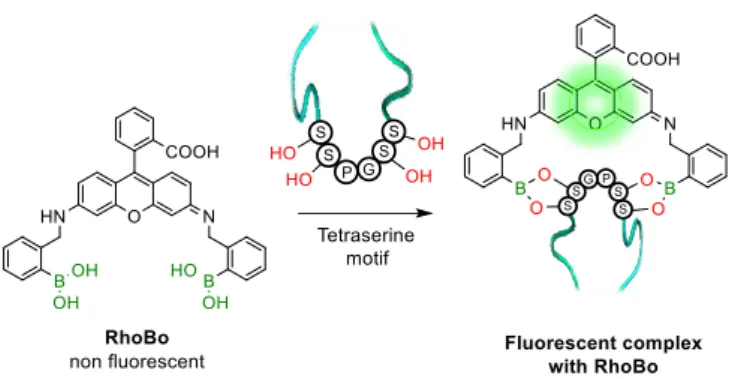
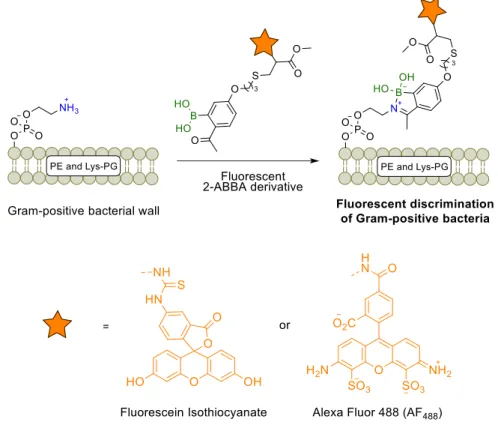
Figure 1 – Conformational shift of the Boron atom ... 2 Figure 2 – General reactivity of Boronic acids ... 3 Figure 3 – Structure and functional components of the FDA-approved ADC Brentuximab Vedotin ... 4 Figure 4 – Structure of FDA-approved drugs containing the BA moiety ... 7 Figure 5 - ROS-mediated activation of prodrugs/quenched probes: SN-38 prodrug is transformed into SN-38 in the presence of ROS (A); A quenched coumarin derivative is activated in the presence of ROS (B); ROS trigger a self-immolative cascade to release the active drug (C). ... 9 Figure 6 - pH-Dependent formation equilibrium of a boronic ester in aqueous solution. 12 Figure 7 – BE-promoted attachment of a clickable handle on a glycoprotein through a proximity-driven SN2 reaction. ... 13 Figure 8 - Representation of RhoBo fluorescent complex upon tetraserine sequence recognition. ... 14 Figure 9 - Incorporation of a p-boronophenylalanine non-canonical amino acid into proteins allows their detection and purification through BE formation. ... 15 Figure 10 - Formation of stable BEs; (A) The highly strained nopoldiol binds tightly but reversibly to PBA; (B) The introduction of a synergistic thiosemicarbazone renders the BE with nopoldiol irreversible. ... 16 Figure 11 - Strategies for amine condensation with carbonyl compounds. (A) Imine formation, reversibility in aqueous media and reductive amination. (B) Iminoboronate formation and reversibility in aqueous media. ... 17 Figure 12 - Iminoboronate protein modification and reversibility in aqueous media ... 18 Figure 13 - Iminoboronate-based bioconjugation to anchor fluorophores, clickable handles, PEG derivatives and paclitaxel. ... 19 Figure 14 - Fluorescent Gram-positive bacteria discrimination based on a selective lipid-iminoboronates formation. ... 20 Figure 15 - Iminoboronate formation enables reversible peptide macrocyclization ... 21 Figure 16 - Aminomethyl phenols and 2-ABBA derivatives react to form N,O-Iminoboronates ... 22
VII
Figure 17 – ESI-MS spectrum of model reaction between 3HQ 1 and PBA ... 26 Figure 18 – Complexation equilibrium of Alizarin with PBA (A), UV-VIS spectrum of the titration of AL with PBA (B), Fluorescence emission spectrum of the titration, recorded with λexc=620 nm (C) ... 30 Figure 19 – Competitive equilibrium for the complexation of PBA by Alizarin and 3HQ 1 (A) Fluorescence emission of the titration of AL-PBA complex with 3HQ 1 (B) ... 31 Figure 20 – Fluorescence spectrum of the titration of the AL-PBA complex with 3HQ glycine derivative 29 ... 38 Figure 21 – 11B NMR spectra of 2-FBBA (A) and of 3HQ-iminoboronated 51 (B) obtained in a 1:4 DMSO-d6:PBS solution at RT ... 54 Figure 22 – 15N NMR spectra of product 51 (A) and of its benzylimine analogue (B) obtained in a 1:4 DMSO-d6:PBS solution at RT ... 55 Figure 23 – 1H NMR spectra of 2-FBBA (A) and of product 51 (B) ... 57 Figure 24 – MS-MS fragmentation spectrum of the peak with m/z=780.2 (A) and proposed structure of the radical cation fragment corresponding to m/z=575.2 (B). ... 60 Figure 25 – ESI-MS spectra of compound 58b incubated at pH 7 for 32h (A), with 10 eq of glucose for 32h (B), with 10% BSA for 32h (C) and with 10 eq of GSH for 8h (D) ... 62 Figure 26 – Confocal microscopy images of the incubation of compounds 71, 73 and 72 in HT29 colon cancer cells. ... 71 Figure 27 – Catalytic hydroxylation of L-Phe by hPAH (A). Structure of the BH4 cofactor, of the basic 3HQ core and of the envisioned 3HQ-based multivalent hPAH modulators. .. 78 Figure 28 – Protocols for the three assays performed to evaluate the effect of 3HQ derivatives on the activity of hPAH ... 80 Figure 29 – Activity of hPAH in the presence of 3HQ derivatives from series 1 in three different conditions: Non-activated (blue); Compound-activated (red) and Compound/Substrate-activated (green). ... 81 Figure 30 - Change in the thermal stability of hPAH in the presence of 3HQs from series 1. The mid-point of thermal denaturation (Tm) is indicated in blue for the regulatory domain (Tm1) and in red for the catalytic one (Tm2) ... 82 Figure 31 - Activity of hPAH in the presence of 3HQ derivatives from series 2 in three different conditions: Non-activated (blue); Compound-activated (red) and Compound/Substrate-activated (green). ... 84
VIII
Figure 32 - Change in the thermal stability of hPAH in the presence of 3HQs from series 2. The mid-point of thermal denaturation (Tm) is indicated in blue for the regulatory domain
(Tm1) and in red for the catalytic one (Tm2) ... 85
Figure 33 - Activity of hPAH in the presence of 3HQ derivatives from series 3 in three different conditions: Non-activated (blue); Compound-activated (red) and Compound/Substrate-activated (green). ... 86
Figure 34 - Change in the thermal stability of hPAH in the presence of 3HQs from series 3. The mid-point of thermal denaturation (Tm) is indicated in blue for the regulatory domain (Tm1) and in red for the catalytic one (Tm2) ... 86
Figure 35 - Best docking poses of selected 3HQ derivatives into the active site of hPAH: structures for compound 76 (A), 81 (B), 90 (C) and 92 (D), along with superimposition of the 4 compounds in the active site (E) and on the hPAH surface (F). ... 88
Figure 36 – Crystal structure of the catalytic site of hPAH with BH4 cofactor and norleucine (NLE) substrate analogue (PDB ID: 1MMT) (A) and superimposition of the best docking poses of 3HQ derivatives 76, 81, 90 and 92 in the catalytic centre of hPAH (PDB ID: 1MMT). ... 89
Figure 37 – UV-VIS spectra of Alizarin (black) and PBA (red) ... 126
Figure 38 – UV-VIS spectrum of the titration of Alizarin with PBA ... 127
Figure 39 – Fluorescence spectrum of the titration fo Alizarin with PBA ... 127
Figure 40 – Benesi-Hildebrand plot for the titration of Alizarin with PBA ... 128
Figure 41 – UV-VIS spectrum of Alizarin and 3HQ 29 ... 131
Figure 42 – UV-VIS spectrum of the titration of the PBA-Alizarin system with 3HQ 29 131 Figure 43 – Fluorescence spectrum of the titration of the PBA-Alizarin system with 3HQ 29 ... 132
Figure 44 – UV-VIS spectra of 3HQ 31 and Alizarin ... 133
Figure 45 – UV-VIS of the competitive titration of the PBA-Alizarin system with 3HQ 31 ... 133
Figure 46 – Fluorescence spectrum of the titration of the PBA-Alizarin system with 3HQ 31 ... 134
Figure 47 - Confocal microscopy image of untreated cells and ROI areas ... 180 Figure 48 - Confocal microscopy image of cells treated with probe 71 and ROI areas 181
IX
Figure 49 - Confocal microscopy image of cells treated with conjugate 73 and ROI areas ... 183 Figure 50 - Confocal microscopy image of cells treated with conjugate 72 and ROI areas ... 185 Figure 51 - Chromatographic profile of recombinant hPAH, obtained by size exclusion chromatography (SEC) ... 196
X
Table Index
Table 1 – Structure and yields relative to 3HQ amino acid derivatives 29-35 ... 35 Table 2 – Relative fluorescence intensity measured inside the cells incubated with: Irreversible conjugate 72, NBD-FBBA fluorescent probe 71 and reversible conjugate 73. ... 72 Table 3 – Equation parameters and mathematical treatment of the Benesi-Hildebrandt plot for the titration of Alizarin with PBA ... 129 Table 4 - Calculated distances (Å) of the selected 3HQs to the catalytic non-heme iron and its ligands and to specific amino acid residues that interact with catecholamines ... 199 Table 5 - Calculated distances (Å) of the selected 3HQs to specific amino acid residues, involved in cofactor (BH4) and substrate (l-Phe) binding ... 201
XI
Scheme Index
Scheme 1 - 3HQ scaffold and its metal-chelating reactivity, along with expected reactivity
with BAs ... 25
Scheme 2 – Model reaction of 3HQ 1 with PBA ... 26
Scheme 3 – Possible coordination modes of PBA to 3HQ 1 ... 27
Scheme 4 – Methylated derivatives of the simple 3HQ scaffold ... 27
Scheme 5 - Complexes generated from the reaction of 1 with a panel of BAs ... 28
Scheme 6 – Fluorescent complex formation between AL and PBA and ligand-triggered complex displacement ... 29
Scheme 7 – Known procedure towards 4-amide 3HQs ... 32
Scheme 8 – Synthetic route towards NHS-diazoacetate 18 ... 32
Scheme 9 – Synthesis of 4-carboxamide-3HQ 22 and subsequent reaction with PBA in bioconjugation conditions(A) along with the ESI-MS of the reaction (B) ... 33
Scheme 10 – Reaction of 4-CF3 PBA with 4-carboxamide-3HQ derivatives 22 (A) and 25 (B), along with relative ESI-MS spectra. ... 34
Scheme 11 – Synthesis of fluorinated NHS 3HQ derivative 28 and its use in the synthesis of a library of 3HQ amino acid derivatives ... 35
Scheme 12 – Reaction of glycine derivative 29 (A), leucine derivative 31 (B) and phenylalanine derivative 33 (C) with 4-CF3 PBA and relative ESI-MS spectra ... 36
Scheme 13 – DFT calculations showing the energies related to the two possible coordination modes of 4-amide 3HQ derivatives ... 39
Scheme 14 – Reaction of N-methylated 3HQ 40 with 4-CF3-PBA (A) and relative ESI-MS spectrum (B). ... 39
Scheme 15 – Functional 3HQ unit for the construction of bioconjugates ... 40
Scheme 16 – Synthesis of 3HQ-maleimide 46 (A) and ESI-MS spectrum of its reaction with 4-CF3 PBA in bioconjugation conditions (B) ... 41
Scheme 17 – Functionalization of the laminin fragment with 42 (A) and relative ESI-MS spectrum (B) ... 42
Scheme 18 – Reaction of 3HQ-laminin derivative 47 with 4-CF3 PBA (A) and relative ESI-MS spectrum (B) ... 43
XII
Scheme 19 – Reaction of 3HQ-laminin derivative 47 with Bortezomib (A) and relative ESI-MS spectrum (B) ... 44 Scheme 20 – Traditional iminoboronate formation with 2-CBBAs (A) and site-selective iminoboronate formation based on the 3HQ platform (B) ... 50 Scheme 21 - Functionalization of CysOMe with 42 and subsequent HQ-iminoboronate formation with 2-CBBAs in bioconjugation conditions (A), ESI-MS spectra of the reaction of 3HQ-CysOMe 50 with 2-FBBA (B) and with 2-ABBA (C). ... 51 Scheme 22 – Reaction of intermediate 50 with FBBA isomers (A), reaction of acetylated intermediate 50b with 2FBBA (B) and relative ESI-MS spectra (C). ... 52 Scheme 23 – Energetic profile of the reaction of 3HQ-CysOMe intermediate 50 with the various isomers of FBBA derived from DFT calculations performed using the Gaussian 09 software package ... 53 Scheme 24 – Functionalization of dipeptides 58 - 61 with BHS 42 and subsequent reaction with 2FBBA in bioconjugation conditions (A) along with spectra corresponding to the formation of products 58b (B), 59b (C), 60b (D) and 61b (E). ... 58 Scheme 25 – Functionalization of Cys-Lys dipeptide 62 with BHS 42 and subsequent reaction with 2FBBA (A) along with ESI-MS spectrum of the reaction (B) ... 59 Scheme 26 – 3HQ-iminoboronate formation on Cys-Leu dipeptide 58 (A) and relative ESI-MS spectra after 12 hours (B) and 4 weeks (C) of incubation at pH 7 and 37 ºC. ... 61 Scheme 27 – Modification of the c-Ovalbumin fragment with 3HQ-BHS 42 (A) and relative ESI-MS spectrum (B) ... 63 Scheme 28 – Reaction of 3HQ-c-Ovalbumin derivative 63 with 10 or 1000 eq of 2FBBA, along with ESI-MS spectra corresponding to the resulting products 64 and 64b ... 64 Scheme 29 – Reaction of the 3HQ-functionalized cys-RGD peptide 65 with 2FBBA (A) along with the ESI-MS spectrum of the reaction (B). ... 65 Scheme 30 – Reaction of 3HQ-F3 peptide 67 with 2FBBA (A) and ESI-MS spectrum of the reaction, with deconvolution of the peaks corresponding to product 68 (B) and 69 (C). 67 Scheme 31 – Reaction of 3HQ-laminin 47 with 2FBBA (A) and relative ESI-MS spectrum (B) ... 69 Scheme 32 – Structure of NBD-2FBBA fluorescent probe 71, 3HQ-laminin-NBD reversible conjugate 73 and of covalent NBD-laminin conjugate 72 ... 70 Scheme 33 – First series of 3HQ derivatives tested as hPAH modulators ... 79
XIII
Scheme 34 – Series 2 of 3HQ derivatives, based on the –OCF3 3HQ scaffold ... 83
Scheme 35 - Series 3 of 3HQ derivatives, bearing different amino acid substituents .... 85
Scheme 36 – Synthetic scheme for the preparation of simple 3HQ cores ... 94
Scheme 37 – Synthetic route towards diazo-NHS intermediate 18 ... 95
Scheme 38 – Synthetic route towards 3HQ-NHS derivatives 21 and 28 ... 97
Scheme 39 – General route towards benzyl amide 3HQs 22, 25 and 40 ... 99
Scheme 40 – Synthetic route towards 3HQ BHS 42 ... 105
Scheme 41 – Reaction of basic 3HQ core 1 with PBA (A) and relative ESI-MS spectrum (B) ... 109
Scheme 42 – Reaction of 3HQ 4 with PBA (A) and relative ESI-MS spectrum (B) ... 110
Scheme 43 – Reaction of 3HQ 5 with PBA (A) and relative ESI-MS spectrum (B) ... 110
Scheme 44 – Reaction of simple 3HQ core 1 with 4-CF3-PBA (A) and relative ESI-MS spectrum (B) ... 111
Scheme 45 – Reaction of simple 3HQ core 1 with 4-FBBA (A) and relative ESI-MS spectrum (B) ... 111
Scheme 46 – Reaction of simple 3HQ core 1 with 4-FBBA (A) and relative ESI-MS spectrum (B) ... 112
Scheme 47 – Reaction of simple 3HQ core 1 with 3-NH2-PBA (A) and relative ESI-MS spectrum (B) ... 112
Scheme 48 – Reaction of simple 3HQ core 1 with 3-Cl-PBA (A) and relative ESI-MS spectrum (B) ... 113
Scheme 49 – Reaction of simple 3HQ core 1 with 3-Cl-PBA (A) and relative ESI-MS spectrum (B) ... 113
Scheme 50 – Reaction of simple 3HQ core 1 with cyclohexyl-BA (A) and relative ESI-MS spectrum (B) ... 114
Scheme 51 – Reaction of 3HQ-benzylamide derivative 22 with PBA (A) and relative ESI-MS spectrum (B) ... 115
Scheme 52 - Reaction of 3HQ-benzylamide derivative 22 with 4-CF3-PBA (A) and relative ESI-MS spectrum (B) ... 116
Scheme 53 - Reaction of 3HQ-benzylamide derivative 25 with 4-CF3-PBA (A) and relative ESI-MS spectrum (B) ... 116
XIV
Scheme 54 - Reaction of 3HQ-methylbenzylamide derivative 40 with 4-CF3-PBA (A) and
relative ESI-MS spectrum (B) ... 117
Scheme 55 - Reaction of 3HQ-glycine derivative 29 with 4-CF3-PBA (A) and relative ESI-MS spectrum (B) ... 118
Scheme 56 - Reaction of 3HQ-alanine derivative 30 with 4-CF3-PBA (A) and relative ESI-MS spectrum (B) ... 118
Scheme 57 - Reaction of 3HQ-leucine derivative 31 with 4-CF3-PBA (A) and relative ESI-MS spectrum (B) ... 119
Scheme 58 - Reaction of 3HQ-phenylglycine derivative 32 with 4-CF3-PBA (A) and relative ESI-MS spectrum (B) ... 120
Scheme 59 - Reaction of 3HQ-phenylalanine derivative 33 with 4-CF3-PBA (A) and relative ESI-MS spectrum (B) ... 120
Scheme 60 - Reaction of 3HQ-serine derivative 34 with 4-CF3-PBA (A) and relative ESI-MS spectrum (B) ... 121
Scheme 61 - Reaction of 3HQ-cysteine derivative 35 with 4-CF3-PBA (A) and relative ESI-MS spectrum (B) ... 122
Scheme 62 - Reaction of 3HQ- boron hotspot 42 with 4-CF3-PBA (A) and relative ESI-MS spectrum (B) ... 122
Scheme 63 – Functionalization of the laminin fragment with 3HQ-boron hotspot 42 (A) and relative ESI-MS spectrum (B) ... 123
Scheme 64 – Reaction of 3HQ-modified laminin fragment 47 with 4-CF3 PBA (A) and relative ESI-MS spectrum (B) ... 124
Scheme 65 – Reaction of 3HQ-modified laminin fragment 47 with Bortezomib (A) and relative ESI-MS spectrum (B) ... 125
Scheme 66 – Complexation equilibrium of Alizarin with PBA ... 126
Scheme 67 – Synthesis of ehylenodiamine-NBD 104 ... 138
Scheme 68 – Synthetic route towards 2FBBA-NBD probe 71 ... 140
Scheme 69 - Reaction of 3HQ boron hotspot 42 with cysteine methyl ester in bioconjugation conditions (A) and relative ESI-MS spectrum (B) ... 146
Scheme 70 – Reaction of BHS-CysOMe adduct 50 with 2-FBBA in bioconjugation conditions (A) and relative ESI-MS spectrum (B) ... 147
XV
Scheme 71 – Reaction of BHS-CysOMe adduct 50 with 2-ABBA in bioconjugation conditions (A) and relative ESI-MS spectrum (B) ... 148 Scheme 72 – Reaction of BHS-CysOMe adduct 50 with 3-FBBA in bioconjugation conditions (A) and relative ESI-MS spectrum (B) ... 149 Scheme 73 – Reaction of BHS-CysOMe adduct 50 with 4-FBBA in bioconjugation conditions (A) and relative ESI-MS spectrum (B) ... 149 Scheme 74 - Reaction of 3HQ boron hotspot 42 with N-Acetyl cysteine in bioconjugation conditions (A) and relative ESI-MS spectrum (B) ... 150 Scheme 75 – Reaction of BHS-N-Acetyl Cys adduct 50b with 2-FBBA in bioconjugation conditions (A) and relative ESI-MS spectrum (B) ... 151 Scheme 76 Functionalization of dipeptide 58 with BHS 42 and subsequent reaction with 2-FBBA in bioconjugation conditions (A) along with ESI-MS spectrum of the first step of the reaction (B) and of 3HQ-iminoboronate formation (C) ... 152 Scheme 77 Functionalization of dipeptide 56 with BHS 42 and subsequent reaction with 2-FBBA in bioconjugation conditions (A) along with ESI-MS spectrum of the first step of the reaction (B) and of 3HQ-iminoboronate formation (C) ... 153 Scheme 78 Functionalization of dipeptide 60 with BHS 42 and subsequent reaction with 2-FBBA in bioconjugation conditions (A) along with ESI-MS spectrum of the first step of the reaction (B) and of 3HQ-iminoboronate formation (C) ... 154 Scheme 79 Functionalization of dipeptide 61 with BHS 42 and subsequent reaction with 2-FBBA in bioconjugation conditions (A) along with ESI-MS spectrum of the first step of the reaction (B) and of 3HQ-iminoboronate formation (C) ... 155 Scheme 80 Functionalization of dipeptide 62 with BHS 42 and subsequent reaction with 2-FBBA in bioconjugation conditions (A) along with ESI-MS spectrum of the first step of the reaction (B) and of 3HQ-iminoboronate formation (C) ... 156 Scheme 81 – MS-MS spectrum of the fragmentation of 62b (A) and proposed structure of the fragment obtained (B) ... 157 Scheme 82 – ESI-MS spectra of 58b at pH 7 after 12h (A) and 4 weekes (B) ... 157 Scheme 83 – ESI-MS spectra of 58b at pH 4.5 after 8h (A), 24h (B) and 32h (C) ... 158 Scheme 84 – ESI-MS spectra of 58b with 10 eq of glucose after 8h (A), 24h (B) and 32h (C) ... 159
XVI
Scheme 85 – ESI-MS spectra of 58b with 10 eq of GSH after 8h (A), 24h (B) and 32h (C) ... 159 Scheme 86 – ESI-MS spectra of 58b with 10% of BSA after 8h (A), 24h (B) and 32h (C) ... 160 Scheme 87 – Functionalization of C-Ovalbumin fragment with BHS 42 (A) and relative ESI-MS spectrum (B) ... 161 Scheme 88 – Reaction of C-Ovalbumin-BHS derivative 63 with 2-FBBA (A) and relative ESI-MS spectrum (B) ... 162 Scheme 89 – Reaction of C-Ovalbumin-BHS derivative 63 with 1000 eq of 2-FBBA (A) and relative ESI-MS spectrum (B) ... 163 Scheme 90 – ESI-MS spectrum of the solution of 64b after 24h of dialysis in ammonium acetate pH 7 20 Mm (A) and structure of C-Ovalbumin 3HQ-iminoboronate 64 (B) ... 164 Scheme 91 – Functionalization of the Cys-RGD peptide with BHS 42 (A) and relative ESI-MS spectrum (B) ... 165 Scheme 92 – Reaction of 3HQ-Cys-RGD derivative 65 with 2-FBBA (A) and relative ESI-MS spectrum (B) ... 166 Scheme 93 Functionalization of F3-Cys peptide with BHS 42 (A) along with relative ESI-MS spectrum (B) and deconvolution of the peaks belonging to 67 (C) ... 168 Scheme 94 – Reaction of F3-Cys-BHS 67 with 2FBBA (A) and relative ESI-MS spectrum (B) ... 169 Scheme 95 –ESI-MS spectrum of the reaction mixture after 12h of dialysis (A) along with structure of the starting F3-Cys-BHS 67 ... 170 Scheme 96 – Functionalization of Laminin fragment peptide with BHS 42 (A) and relative ESI-MS spectrum (B) ... 171 Scheme 97 – Reaction of Laminin-BHS 47 with 2FBBA (A) along with relative ESI-MS spectrum (B) ... 172 Scheme 98 - Reaction of BHS-Laminin 47 with 2FBBA-NBD 71 (A) and relative ESI-MS spectrum (B) ... 173 Scheme 99 – Reaction of Laminin fragment with NBD-maleimide derivative 113 (A) along with relative ESI-MS spectrum (B) ... 174 Scheme 100 – Synthetic route towards Synthesis of 4-NHS-3HQ derivatives 117-119 187 Scheme 101 – Synthetic route towards 3HQ-phenylalanine derivatives 74 - 77 ... 189
XVII
Scheme 102 – Synthetic route towards 4-carboxamide 3HQ derivatives 78-81 ... 192 Scheme 103 – Synthetic route towards 4-carboxamide 3HQ derivatives 78-81 ... 194
XVIII
Abbreviations and Symbols
3HQ(s) – 3-hydroxy quinolinone ADC(s) – Antibody drug conjugate(s) Ab – Antibody
AL – Alizarin
BA(s) – Boronic acid(s) BE(s) – Boronate Ester(s) Bn – Benzyl
11B-NMR – 11Boron Nuclear magnetic resonance BSA – Bovine serum albumine
Btz – Bortezomib
13C-NMR – 13Carbon Nuclear magnetic resonance 2-ABBA – 2-acetyl benzene boronic acid
2-CBBA(s) – 2-carbonyl benzene boronic acid(s) 2-FBBA – 2-formyl benzene boronic acid
DFT – Density functional theory DMF – Dimethylformamide DMSO – Dimethyl sulfoxide equiv. – Equivalents
ESI-MS – Electrospray ionization mass spectrometry FDA – Food and Drug Administration
GSH – Reduced glutathione
1H-NMR – 1Hydrogen Nuclear magnetic resonance HPA - Hyperphanylalaninemia
hPAH – Human Phenylalanyne hydroxylase HPLC – High-performance liquid chromatography HRMS – High resolution mass spectrometry IC50 – half maximal inhibitory concentration
LC-MS – Liquid-chromatography mass spectrometry LRMS – Low resolution mass spectrometry
mp – Melting point
NBD – 7-nitrobenzooxadiazole NHS – N-hydroxy succinimide PBA – Phenyl boronic acid
XIX PBS – Phosphate buffer saline
PEG – Polyethylene glycol Ph – Phenyl
PKU – Phenylketonuria RNA(s) – Ribonucleic acid(s) ROS – Reactive oxygen species RT – Room temperature
SI – Supporting information
siRNA(s) – Short interfering ribonucleic acid(s)
TBTU – O-(Benzotriazol-1-yl)-N,N,N′,N′-tetramethyluronium tetrafluoroborate t-Bu – tert-butyl
TDC – Targeting drug conjugates
XX
Abstract
Chemical conjugation of a biomolecule, such as a peptide or a nucleic acid, with a functional molecule, for example a drug or a fluorophore, yields a bioconjugate, a polyfunctional entity that combines the properties of its components to elicit a biological effect. This kind of assemblies have found many successful applications, allowing the precise imaging of biological processes and delivering innovative treatments to the clinic, especially in oncology. The success of this class of constructs is determined by their ability to deliver the payload of choice to specific targets inside a biológical environment thanks to the targeting ability of the biomolecule. In order to have a functional conjugate, the payload must be linked to the targeting unit without altering the structure and function of the latter, preserving its ability to interact with the biological target. As a consequence, bioconjugation reactions must be performed in aqueous environment at physiological pH, avoiding strong reagents that might compromise the integrity of the biomolecule. Moreover, this ligation needs to be stable in physiological conditions while allowing the release of the payload in response to a stimulus that characterizes the biological target (pH, oxidative stress, enzymes).
Boronic acids are a class of biocompatible reagents with the ability to form reversible covalent ligations in water, leading to their successful application in the development of stimulus-responsive bioconjugates.
In this thesis, the 3-hydroxy quinolinone (3HQ) scaffold was studied as potential ligand for boronic acids in bioconjugation conditions, with the objective of using it as a functional unit for the reversible ligation of boronic acids to proteins. This scaffold was optimized for the desired purpose, yielding a structure that was successfully applied for the construction of a non-internalizing fluorescent bioconjugate. The resulting conjugate was tested in vitro, confirming its ability to deliver a borylated fluorescent probe to HT-29 cancer cells by targeting the 67 Laminin receptor.
Additionally, the 3HQ motif was explored as multivalent modulator of human phenylalanine hydroxylase (hPAH), a protein whose mutation is the cause of phenylketonuria (PKU). In this study, various assays were performed to assess the ability of 3 series of derivatives to stabilyze the structure of hPAH and to increase its catalytic activity. Finally, the best performing compounds from this study were docked onto the structure of hPAH to gain additional insight on their activity.
Keywords: Boronic acids, Bioconjugation, Reversible ligations, Heterocyclic scaffolds, Biological chemistry
XXI
Resumo
A conjugação de uma molécula funcional, como um fármaco ou um fluoróforo, com uma biomolécula com propriedades de direcionamento (p.ex. proteína ou ácido nucleico) origina uma estrutura denominada de bioconjugado. Este tipo de conjugados combinam eficazmente as propriedades dos dois componentes, com o objetivo de obter uma função biológica específica e direcionada, podendo esta ser esta terapêutica, imagiológica, teranóstica, entre outras. O sucesso deste tipo de assemblagens depende, como tal, da capacidade da própria biomolécula em exercer eficazmente as suas propriedades de direcionamento para um alvo definido, assim como da capacidade da molécula funcional em manter as suas propriedades desde a administração do conjugado, até ao alvo, onde vai cumprir as suas funções seletivamente. Este processo constitui portanto uma importante vantagem sobre técnicas e terapêuticas sem direcionamento e tem levado a um aumento na investigação das suas aplicações em investigação biológica e na terapia de precisão.
Consequentemente, é imperativo que a ligação da carga (fármaco ou fluoróforo) com a biomolécula não altere nem a sua estrutura nem as propriedades biológicas da biomolécula, a fim de preservar a sua habilidade de interagir com o próprio alvo. Por esta razão, a química utilizada na formação de bioconjugados deve ser compatível com meios biológicos, ou seja funcionar em ambientes aquosos, pH fisiológico e sem a utilização de reagentes que podem comprometer a estrutura da biomolécula. Além disso, a ligação entre os dois componentes do bioconjugado deve manter-se estável nas condições fisiológicas, mas ser reversível em resposta a determinados estímulos que caracterizam o ambiente alvo, de forma a libertarem a molécula funcional inalterada.
Os ácidos borónicos são uma classe de compostos orgânicos que contêm um átomo de boro trivalente, com dois substituintes hidroxilicos e um substituinte alquílico ou arílico. Este tipo de compostos têm várias propriedades adequadas para bioconjugação. Em primeiro lugar, a sua biocompatibilidade e estabilidade em meios biológicos. A reatividade dos ácidos borónicos está relacionada com a acidez de Lewis do átomo de boro que, com a própria orbital p vazia, pode aceitar pares de eletrões desemparelhados. Este comportamento permite a interconversão dos ácidos borónicos entre a forma trigonal planar e a forma tetraédrica depois de aceitar um ligando adicional, formando ligações dinâmicas e reversíveis.
O foco desta tese de doutoramento foi o desenvolvimento de novas estratégias para bioconjugação baseadas em ligações reversíveis promovidas por ácidos borónicos. Neste
XXII
contexto, a primeira modalidade de ligação explorada foram os ésteres borónicos, que resultam da reação entre ácidos borónicos e ligandos bidentados que podem coordenar o átomo de boro. Este tipo de ligandos bidentados geralmente contém grupos hidroxilo ou aminas para ligar o centro de boro, gerando estruturas que estão em equilíbrio entre a forma trigonal planar e a forma tetraédrica, onde o boro se encontra carregado negativamente.
O primeiro passo deste projeto foi a pesquisa de novas estruturas para a quelação de ácidos borónicos, com base em vários scaffolds de produtos naturais. Uma das estruturas moleculares que suscitou a nossa atenção foi a 3-hydroxiquinolinona (3HQ), um biciclo heteroaromático que constitui o esqueleto de vários alcaloides da Vinca. Esta molécula, apesar de simples, possui diversas características interessantes para a nossa pesquisa. Na verdade, esta molécula possui uma estrutura pseudopeptídica, sendo um isóstero do aminoácido glicina, e sobretudo, é conhecida por ser um bom ligando para vários catiões metálicos divalentes. Estudos preliminares sobre a reatividade da 3HQ simples com ácidos borónicos em condições de bioconjugação (meio aquoso, pH fisiológico, temperatura ambiente e alta diluição) mostraram a formação do éster borónico desejado após apenas 5 minutos de reação, confirmando as nossas expectativas.
Seguidamente, realizámos um estudo focando na modificação estrutural da 3HQ com o objetivo não só de otimizar a reatividade com ácidos borónicos, mas também, inserir uma unidade funcional na posição 4 do heterociclo para uma futura conjugação com proteínas. A execução deste estudo implicou o desenvolvimento de uma nova estratégia sintética para a obtenção da 3HQ com um substituinte carboxamida na posição 4, uma vez que as metodologias conhecidas na literatura apresentam limitações em termos de rendimento e degradação dos produtos desejados.
A nova via sintética, descrita nesta tese, tem como base a utilização de um intermediário versátil, o NHS diazo acetato que, através de uma sequência tandem de inserção/expansão de anel com vários derivados da isatina, permite a síntese rápida e eficiente de várias 3HQ com uma unidade de NHS em posição 4. A reação destes intermediários 3HQ-4NHS com aminas primárias e secundárias é capaz de originar uma série de derivados 4-carboxamida 3HQ de uma forma simples e rápida. A síntese de vários 3HQ, com diferentes substituintes tanto no biciclo, como na posição carboxamida, e a sua capacidade em complexar ácidos borónicos em condições de bioconjugação possibilitou uma analise estrutura-atividade de forma a obtermos a estrutura mais eficaz. Esta análise salientou a importância de colocar um substituinte electro-atractor na posição 7 da 3HQ, para aumentar a acidez do grupo fenólico e melhorar a afinidade para ácidos borónicos. Adicionalmente, observou-se um efeito detrimental na presença de
XXIII
impedimento estérico na posição 4-carboxamida em relação à sua reatividade, tendo esta tendência sido confirmada com a medição das constantes de afinidade de dois derivados da 3HQ por meio de um ensaio de titulação competitiva da alizarina. De facto, neste ensaio, o derivado com uma glicina na posição 4 mostrou uma afinidade de quase 7 vezes superior do que registado para a 4-carboxileucina 3HQ, na complexação do ácido fenil borónico.
Tendo o derivado fluorado e com um substituinte 4-carboxiglicina emergido como a melhor estrutura para a complexação de ácidos borónicos, esta foi posteriormente modificada com a introdução de uma unidade de maleimida. Este composto, graças à sua unidade maleimida, foi utilizado para modificar um péptido modelo no seu resíduo de cisteína, gerando um derivado péptido-3HQ. No entanto a reatividade deste péptido modificado com a 3HQ resultou ser sub-ótima na complexação de ácidos borónicos em condições de bioconjugação, provavelmente devido ao forte impedimento estérico que a cadeia do péptido impõe na estrutura final.
Visando ultrapassar esta limitação encontrada na reatividade de péptidos modificados com a plataforma 3HQ em complexar ácidos borónicos simples, uma abordagem alternativa foi empregue de forma a aumentar o ganho energético da ligação entre 3HQ e ácidos borónicos. Com este objetivo, a plataforma 3HQ foi aplicada para direcionar e estabilizar a formação de iminoboronatos em resíduos de cisteína N - terminais.
Esta nova abordagem, baseada na utilização do mesmo derivado 3HQ-glicina-maleimida desenvolvido previamente, tem como objetivo a solução de duas importantes limitações de iminoboronatos clássicos: a estabilidade e a seletividade. Os iminoboronatos são derivados da reação de uma amina primária e um ácido borónico com um substituinte carbonilico na posição 2, ou seja, iminas estabilizadas por uma ligação dativa entre o átomo de azoto e o boro. Este tipo de assemblagens obtiveram sucesso no contexto da bioconjugação devido à sua cinética de formação rápida e biocompatibilidade, juntamente com o seu carácter reversível em presença de vários estímulos (açucares, dopamina, glutationa, pH acídico). Infelizmente, algumas aplicações não são apropriadas ao uso de iminoboronatos devido à sua estabilidade limitada em meios biológicos complexos, assim como a impossibilidade de controlar o local de modificação, uma vez que todas as aminas expostas podem ser modificadas com esta abordagem.
A viabilidade da utilização da plataforma 3HQ para promover a formação de iminoboronatos estabilizados em cisteínas N-terminais foi testada em varias reações modelo, utilizando em primeiro lugar a cisteína como parceiro reacional e, subsequentemente, vários dipéptidos com cisteínas N-terminais. As experiências modelo
XXIV
confirmaram as nossas hipóteses, tendo os 3HQ-iminoboronatos formados por meio desta nova abordagem resultado em conjugados mais estáveis que os iminoboronates clássicos, inclusivamente na presença de pH acídico, glucose e albumina. É importante realçar que estes ainda possuem um carácter de reversibilidade na presença de glutationa. Adicionalmente, a reação com péptidos modelo confirmaram a seletividade deste método, uma vez que na presença de vários grupos amina disponíveis para formar iminoboronatos, a seletividade para a cisteína N - terminal modificada com a plataforma 3HQ foi observada. A formação do 3HQ-iminoboronato foi investigada e caracterizada por meio de espectroscopia RMN de azoto, boro e hidrogénio, confirmando a presença de uma estrutura de iminoboronato estabilizada por interação com a unidade de 3HQ. Esta plataforma inovadora foi aplicada na construção de um conjugado não-internalizante para a entrega de sondas fluorescentes boriladas em células cancerígenas HT29. Este conjugado foi sintetizado utilizando um fragmento de laminina como unidade de direcionamento, o que permitiu validar o receptor deste péptido, 67LR, como alvo viável para a entrega de moléculas ativas boriladas em células de carcinoma colo-rectal. No último capitulo desta tese, a síntese de uma pequena bilioteca de 3-hidroxi quinolinonas foi aplicada no desenvolvimento de moduladores da atividade da fenilalanina hidroxilase, a enzima responsável pelo metabolismo da fenilalanina. Esta enzima é suscetivel a várias mutações genéticas, o que causa diversas disfunções resultantes da acumulação tóxica de fenilalanina no organismo. Como estas mutações causam uma falha na estrutura e na atividade da proteína, a abordagem farmacológica neste sentido consiste no desenvolvimento de pequenas moléculas, chamadas chaperonas, com a habilidade de restaurar a funcionalidade nativa desta enzima. Neste contesto, três famílias de 3HQ foram sintetizadas e testadas pela sua habilidade em estabilizar a estrutura correta da fenflalanina hidroxilase e, ao mesmo tempo, aumentar a sua atividade enzimática. Entre os vários derivados, os 4 compostos que deram os melhores resultados foram selecionados para estudos de docking molecular no centro ativo da enzima, o que permitiu a racionalização dos resultados obtidos.
Palavras-chave: : Ácidos boronicos, Bioconjugação, Ligações reversiveis, Estructuras heterocíclicas, Química biológica
1
Chapter I
State of Art - Boronic Acids in Bioconjugation
Abstract
The construction of therapeuthic conjugates has been one of the most powerful tools that entered the landscape of chemical biology in the last decades, allowing the precise imaging of biological processes and delivering innovative treatments to the clinic. In this framework, boronic acids have found success as functional components of bioconjugates due to their reversible nature, which makes them ideal for the development of stimulus-responsive constructs. Even though many biocompatible reactions based on boronic acids are known, the investigation in this area is still thriving thanks to the vast possibilities for tuning this functionality for different applications, yielding constructs with specific chemical behaviour.
2
I.1.
Overview on Boronic Acids
Boron is the fifth element of the periodic table, a semi-metal with one less proton than carbon, making it an element with various interesting properties and a unique chemistry. The defining characteristic of boron’s chemistry is the empty p orbital that this element possesses, which allows it to establish reversible covalent bonds with oxygen and nitrogen nucleophiles. This Lewis acid-base reaction results in the central boron atom interconversion between an uncharged trigonal planar structure and an anionic tetravalent species, with a geometry and an isoelectronic structure that are equivalent to a neutral
sp3-hybridized carbon (Figure 1). Also, the similarity of boron to carbon is particularly evident in aromatic structures, as B-O and B-N bonds are isoelectronic, isovalent and isosteric to C=N and C=C bonds, respectively.[1–4]
Trigonal Planar (sp2)
Tetrahedral (sp3)
Figure 1 – Conformational shift of the Boron atom
In nature, boron is mostly found as boric acid, either in its mineral form sassolite, which is present in volcanic areas, or as a salt in seawater. Boric acid is a harmless (LD50 5.14 g/Kg for rats)[5] compound that is naturally uptaken by plants as nutrient, hence several natural products deriving from its metabolism have been isolated. Even though many of these products are known (e.g. boromycin, tartrolon B, borophycin and AI-2) and have shown interesting properties (e.g. antibiotic, anti-HIV, anticancer, antimicrobial, antibacterial, antihepatitis), the labile nature of boron complexation makes the isolation of such entities difficult, and the disassembly of these structures during extraction and purification processes leaves us with just a partial understanding of boron’s important role in nature.[6] Throughout the years, several families of boron-based compounds have found success in different areas, such as therapeutic applications, imaging, catalysis, hydrogen storage and many others but, for the scope of this thesis, the focus will stay on boronic acids (BAs), their properties and their application in bioconjugation.
3
Boronic acids are trivalent boron compounds bearing two hydroxyl substituents and an alkyl or aryl moiety which were reported for the first time in 1860[7] but only gained popularity once hydroboration methodologies made structurally diverse derivatives synthetically available.[8,9] Given their Lewis acid character, boronic acids have the ability to form dynamic covalent bonds with Lewis base donors, both in organic and aqueous media, which is one of the most important aspect of this element’s unique reactivity. In time, BAs became one of the most prevalent reagents in modern synthesis, enabling the effective construction of different types of C-C and C-heteroatom bonds.[10]
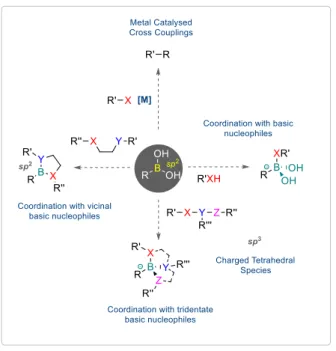
Figure 2 – General reactivity of Boronic acids
Apart from their use as reagents, BAs also exhibit unique properties that are now well appreciated in the areas of medicinal chemistry, chemical biology and material sciences, as BAs can bind nucleophiles in aqueous conditions to generate various boronate species. In recent years, these reactions became a powerful synthetic strategy to construct self-organizing systems, sensors and many different types of functional materials.[11,12] Due to their mild Lewis acidity, BAs are typically uncharged at physiologic conditions and retain the ability to reversibly coordinate oxygen-based nucleophiles, namely at the active site of proteases.[13] The discovery that BAs may be used as transition-state analogue protein inhibitors triggered a burgeoning interest among the medicinal chemistry community that was using boronated compounds mostly for their ability to emit alpha particles under neutron bombardment (boron neutron capture therapy).[14–16]
4
Notably, boronic acids nowadays occupy an important niche in medicinal chemistry, with FDA-approved representatives in various therapeutic areas as well as several candidates in the pipeline.
I.2.
Therapeutic Bioconjugates
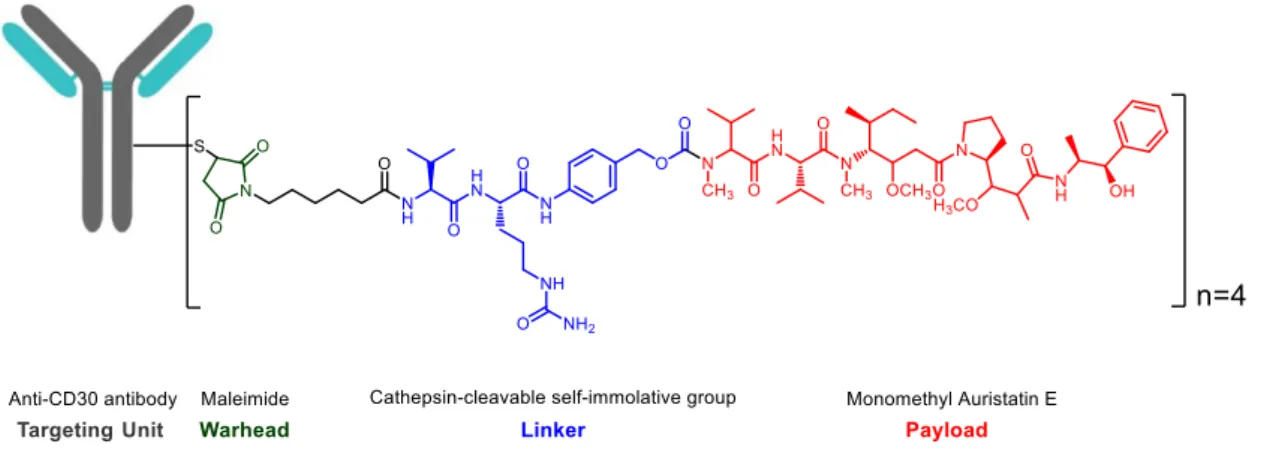
Bioconjugates are multifunctional constructs in which biomolecules like peptides and proteins, small vitamins or nucleic acids are endowed with the properties of specific payloads (e.g., biological activity and fluorescence). This approach harnesses the targeting potential of biomolecules, exploiting the ones that are selectively recognized by receptors associated with a disease to deliver the desired cargo to the affected area. These entities have been successfully applied in the clinic, mainly in the field of cancer therapy, as they offer the possibility to selectively deliver cytotoxic drugs to tumoural tissues, a valuable feature in a field in which target engagement is crucial to avoid severe side-effects. In this framework, antibodies have been the first biomolecules to see success as targeting units, as demonstrated by the clinical approval of several antibody-drug conjugates (ADCs).[17–19] With the success gained from these initial applications, several other entities have been explored as targeting units, expanding the toolbox of therapeutic drug conjugates. Independently from the nature of the construct, the general structure of therapeutic bioconjugates can be reduced to 4 fundamental components: the targeting unit, the warhead, the linker and the payload (Figure 3).
Figure 3 – Structure and functional components of the FDA-approved ADC Brentuximab Vedotin
As already mentioned, the targeting unit is constituted by a biomolecule (protein, vitamin, small peptide) that is selectively recognized by receptors that are overexpressed in the diseased area, and thus is able to direct the conjugate towards the desired location.[20] The payload is the cargo that will be released by the conjugate, which can have a therapeutic
5
(drugs, radionucleotides) and/or diagnostic (contrast agents, fluorescent probes) function.[21,22] The synthesis of bioconjugates by direct chemical installation of the molecular payload onto the biomolecule is often impossible due to the lack of suitable chemical functions that may be used in the bioconjugation process. In order to conjugate the payload to the targeting unit, it is necessary to have a moiety that is able to selectively modify proteins in biocompatible conditions, indicated as the warhead. This unit occupies a unique chemical space in the framework of organic reagents, as several properties are required for a successful warhead. First of all, the reactivity of chemical warheads needs to be compatible with biological conditions (aqueous environment, neutral pH, high dilution) and cannot perturb the structure and function of the protein upon modification. It is also imperative that the modification happens in a selective manner, in order to control the attachment site and the number of units appended to the protein, with the objective of obtaining homogenous conjugates.[23–27] Finally, the linker is the unit that ensures the proper delivery of the payload. This part of the conjugate, in fact, needs to be a stimulus-responsive moiety that is be stable in physiological conditions, and then disassemble in response to a certain trigger associated with the targeted environment (pH, oxidative stress, enzymes), releasing the payload in its active form.[28,29]
I.3.
Boronic Acids in Bioconjugation
As the core functionality of a bioconjugate lies in its ability to selectively release the payload in the desired environment, the chemistry used to connect the cargo to the targeting unit is intimately related to clinical effectiveness. Namely, the function of the biomolecule should not be significantly altered by the attachment of the payload and the conjugate stability should be maintained in circulation until it reaches the diseased site, where the different chemical environment will trigger the payload activation. In the framework of improving the different aspects of bioconjugates’ construction, many efforts have been pointed at discovering new conjugation strategies for better warheads and linker technologies, with the objective of developing more homogeneous and stimuli-responsive conjugates. In recent years, boronic acids’ unique reactivity, dynamic coordination properties under physiological conditions and biocompatibility brought them into the limelight of chemical biology. In fact, this reversible covalent functionality enables the synthesis of bioconjugates with suitable properties to be used in the fields of bioconjugation, live-cell-imaging, theranostics and selective drug delivery. Also, having already two representatives in the clinic as cancer treatment and being a useful prodrug moiety, BAs constitute valuable payloads as well. In the framework of this thesis, this
6
chapter will give an introduction on the use of boronic acids as payloads and of two of the most used bioconjugation technologies involving boronic acids, namely boronate esters and iminoboronates.
I.3.1
Boronic Acids as Payloads
Thanks to protocols such as the Miyaura borylation, the boronic acid function can be synthetically introduced in the structure of organic molecules, vastly expanding the chemical space that this class of compounds can occupy.[30] This has not only expanded the research on BA-based drugs, which have already shown strong potential, but also on their incorporation in pre-existing structures to endow them with novel properties.[31] Over the past decades, many boron-containing bioactive molecules have been developed, prevalently as protease inhibitors.[32] Presently, more than 400 protein structures have been crystallized with BAs and are available in the Protein Data Bank.[33] The analysis of these structures indicates that the activity of BAs is mainly related to the inhibition of serine proteases, as they are able to form a tetracoordinated boronate complex by coordination with the hydroxyl side chain of the active serine residue, mimicking the structure of the natural transition state. Despite the focus on serine proteases, BA’s ability to coordinate nucleophilic residues makes them able to also bind threonine[34] and histidine.[35–38] Other nucleophilic residues, such as lysine, arginine, tyrosine and cysteine, could represent potential targets for the development of BA-based inhibitors, but so far have not been reported. Despite showing efficacy in vitro[4], only few drugs containing the BA moiety have made it to the clinic, namely the proteasome inhibitors Bortezomib (Velcade®)[39] and Ixazomib (Ninlaro®)[40] for the treatment of multiple myeloma, the antifungal agent Tavaborole (KERYDIN®)[41], Crisaborole (Eucrisa®)[42] for the topical treatment of eczema and the inhibitor of β-Lactamase, Vaborbactam[43] (Figure 4).
7
Figure 4 – Structure of FDA-approved drugs containing the BA moiety
The main problem in translating the positive in vitro results of BA-based drugs to the clinic is the poor pharmacokinetic profile of boronic acids in their open shell form, as they are able to interact non-specifically with different naturally-occurring nucleophiles.[44] One of the main strategies to avoid this pitfall is the derivatization of the boronic acid moiety as a boronate ester, shielding its reactivity. The comparison between the two FDA-approved proteasome inhibitors Bortezomib and Ixazomib is an excellent example to illustrate how this modification affects the pharmacokinetics of BA-based drug. Both drugs bind the same biological target, the β5-subunit of the 20S proteasome with comparable IC50 values in the low-nanomolar range. However, Bortezomib, which was approved in 2003, is used in the clinic in its simple BA form and requires intravenous or subcutaneous administration.[45] On the other hand, Ixazomib, approved in 2015, is administered with its BA moiety derivatized as citrate ester, thus restraining its activity and improving the pharmacokinetic properties of the drug. Thanks to this functionalization, Ixazomib became the first orally-available proteasome inhibitor, bringing a substantial improvement to patients’ quality of life.[46]
Incorporating the BA moiety in heterocyclic structures, such as benzoxaboroles, offers another possibility to address BA’s pharmacokinetic issues, as shown for Tavaborole and Crisaborole. In fact, recent reports demonstrate that many B-N heterocycles are able to improve the stability of boronic acids without interfering with their selectivity and inhibitory activity.[47].
Another interesting property of boronic acids is their susceptibility towards reactive oxygen species (ROS). In fact, aromatic boronic acids can be converted to phenols in the presence
8
of hydrogen peroxide or other ROS, following an analogous mechanism to the one of the oxidation step of the Brown hydroboration-oxidation reaction. Since the concentration of ROS is abnormally high in both inflammated and tumoural environment, BAs are useful for the development of prodrugs and imaging systems that can be applied in these contexts.[48] This unique reactivity has led many research groups to replace phenol moieties with boronic acids in drugs and fluorescent probes alike, obtaining ROS-responsive structures. One of the first instances of this approach comes from Lu and co-workers,[49] which replaced the phenol of SN-38, the active metabolite of the FDA-approved drug Irinotecan, with a BA, obtaining a ROS-activatable prodrug. (Figure 5A). The oxidation of this molecule was shown to happen with H2O2 concentrations as low as 0.5 mM, which led to better in vivo results than Irinotecan itself in glioblastoma xenograft mice models. As inflammated tissues also present high concentrations of ROS, Kang and co-workers reported the synthesis of a borylated precursor of p-hydroxybenzyl alcohol, an anti-inflammatory agent. Derivatization of p-hydroxybenzyl alcohol as a hydroxymethyl boronic ester improved its efficacy in the treatment of ischemia-reperfusion injury by not only being selectively activated at the desired location, but also by increasing its circulation half-life.[50] Exploiting the reactivity between boronic acids and reactive oxygen species, many research groups have developed ROS-activated turn-on fluorescent probes. Wang and co-workers, for example, developed a BA derivative of coumarin, a highly fluorescent molecule that bears a phenol group that is crucial for its fluorescence properties. The borylation of coumarin, in fact, turned off its fluorescent properties, which were restored in a concentration-dependent fashion by incubation with H2O2 (Figure 5B).[51] This approach[52–57] has been adopted by many other research groups that developed a plethora of borylated probes for the imaging of various ROS-related phenomena.[58–67] Boronic acid oxidation reactions can also be used as a trigger for initiating a self-immolative cascade for the libertation of active molecules. For example, Cohen and co-workers developed various systems in which the conversion of a BA into phenol triggers a self-immolative cascade that disassembles BA-based linkers (Figure 5C).[68]
9
Figure 5 - ROS-mediated activation of prodrugs/quenched probes: SN-38 prodrug is transformed into SN-38 in the presence of ROS (A); A quenched coumarin derivative is activated in the presence of ROS (B); ROS trigger a self-immolative cascade to release
the active drug (C).
These platforms have been employed both for the construction of prodrugs, as well as delivery systems in the construction of targeted drug conjugates. A more complex system was reported by Kim and co-workers that, combining some of the previously illustrated concepts, reported the synthesis of a hybrid moiety constituted by a coumarin unit and SN-38 for theranostic applications.[69] Incubation of this compound inside cancer cells led to the H2O2-mediated oxidation of the borylated coumarin which, in turn, triggered an electron cascade that ultimately released SN-38 and coumarin, providing localized fluorescence and cytotoxic effect at the same time. Despite the many technologies developed in this field, there is, however, still one fundamental challenge to be addressed, which is the development of BA probes that are ROS-specific. In fact, since the various reactive oxygen species are endowed with different roles in living organisms, it is valuable to devise
10
molecular platforms that can selectively respond to one specific reactive species. Until now, few BA-based methods have shown selectivity for a single species, though in the future this approach could constitute an important tool to visualize ROS signalling, understand its biomolecular basis and exploit it for more accurate drug delivery.
Moreover, boronic acids have been reported to passively permeate cells with remarkable efficiency, thanks to their ability to form transient interactions with the several glycans commonly present on cell surfaces. This behaviour opened the door to several applications, promoting the internalization of several bioactive molecules and functional systems.[70,71]
Given their properties, boronated payloads are valuable units in bioconjugation, combining stimulus-responsiveness, biocompatibility and versatility. Furthermore, as boronic acids are prone to react promiscuously with endogenous biomolecules, their insertion in bioconjugates is particularly useful to limit this behaviour and improve their pharmacokinetic properties.
I.3.2
Boronate Esters
As previously mentioned, in order to have a functioning bioconjugate, the properties of the biomolecule should not be altered by the attachment of the payload. This is a non-trivial challenge, as the majority of reaction known in organic synthesis require conditions that are not compatible with the preservation of the structure of biomolecules (i. e. high temperatures, organic solvents, oxidative/reductive conditions, extreme pH values, etc.). To address this issue, various biocompatible reactions were explored, leading to the development of several means of building covalent bonds onto biomolecules in aqueous conditions. Biocompatibility is a necessary feature for the building of a successful chemical warhead, however, it is not sufficient, as it is also important to have control over the site and the number of modifications performed, in order to produce homogenous conjugates that have rationalizable properties and batch-to-batch reproducibility.
Over the last years, several developments in this field have been reported, however, most of the chemical warhead used in bioconjugation were designed to yield covalent ligations, relying on the linker unit for the stimulus-responsive cargo release. Despite their potential to prepare conjugates that may respond to a predetermined stimulus, the use of reversible ligation methods has been rather overlooked in this area. The use of BAs as warheads for biomolecule functionalization is particularly attractive as it can be used to design
11
responsive bioconjugates, as BAs can selectively establish reversible covalent bonds with a diverse set of biological entities under biocompatible conditions.[72] Using BAs as warheads adds value to the construction of bioconjugates, as their reversible nature renders the use of a linker unit for the selective release of the payload superfluous, allowing for the construction of simpler, more compact conjugates.
One of the first functionalities to be explored in this context are boronate esters (BEs), which are the product of the nucleophilic attack of an alcohol onto a boronic acid. Notably, the ability of boronic acid to react with various naturally-occurring nucleophiles in aqueous conditions is particularly pronounced towards the complexation of vicinal hydroxyl groups, such as carbohydrates and catechols, yielding cyclic BEs with reaction rates of 102-103 M -1s-1.[73–76] Given the relatively fast formation kinetics and the good stability in aqueous conditions, boronate esters have found widespread application as warhead, linker and recognition units.
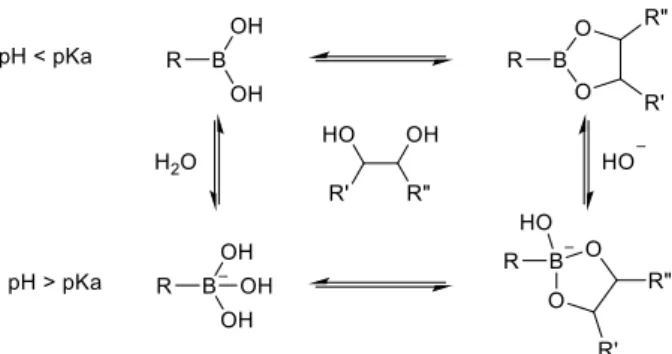
The equilibrium of boronate esters formation in water has been object of many studies, as it is a rather complex multi-step process, some of which are still matter of investigation.[77– 79] In the context of bioconjugation, boronate esters are appreciated for their dynamic nature, as their formation-disassembly equilibrium depends on both pH and competition effects. BE formation is favoured at basic pH, as it allows for the formation of the tetrahedral boronate anion, which contributes to the stability of the product (Figure 6).[80] On the other hand, lower pH values trigger the hydrolysis of these constructs, allowing to build reversible conjugates that can respond to acidic conditions by disassembling.[81] As low pH values are found in tumoural environment, as well as in cytosolic compartments, the acid-mediated hydrolysis of BE constructs constitutes a useful property for selective payload release.
12
Figure 6 - pH-Dependent formation equilibrium of a boronic ester in aqueous solution.
Moreover, since boronate ester formation is a dynamic equilibrium, BEs can be disrupted by the presence of other BA ligands, as the competition between the available ligands will favour the formation of the most stable BE. Hence, even relatively stable BEs can be displaced by the interaction of the BA with a stronger ligand, which represents yet another possible release mechanism for payloads installed through this functionality. In general, the diols that show the best affinity for BAs are cyclic or hindered cis-1,2 diols, which yield rather stable complexes.[81] Given their reactivity with diols, boronic acids have also been widely employed for the detection and quantification of carbohydrates, however, such applications will not be discussed in this chapter.[82–84] In the field of protein modification, the interaction between boronic acids and carbohydrates has been exploited for the traceless labelling of glycoproteins, based on transient BE formation. As described by Lin and co-workers, the attachment of a clickable alkyne handle on a phenyl boronic acid moiety via a reactive tosyl spacer allowed the installation of the handle onto the protein by proximity-driven SN2 reaction. This approach relies on the formation of a boronate ester between phenyl boronic acid (PBA) and the carbohydrates of the glycoproteins, which primes the tosyl-appended clickable handle to be attacked by a nucleophilic residue of the protein. Displacement of the BE via incubation with glycerol or sorbitol, which have higher affinity for PBA than the sugars of the glycoprotein, ensures the removal of the boronated warhead, affording the traceless modification of the target protein (Figure 7). The protein obtained after this process can easily be used for pull-down essays thanks to the alkyne handle, allowing for the discovery of new glycoproteins and studying their interaction with other proteins.[85]