Factors associated with alcohol consumption
among public maintenance workers
Fatores associados ao consumo de álcool entre trabalhadores públicos da manutenção Factores asociados al consumo de alcohol entre empleados públicos de mantenimiento
Jaqueline Lemos de Oliveira1 Jacqueline de Souza1
Corresponding author Jaqueline Lemos de Oliveira
http://o rcid.org/0000-0003-3699-0280 E-mail: [email protected]
DOI:
http://dx.doi.org/10.1590/1982-0194201800004
1Escola de Enfermagem, Universidade de São Paulo, Ribeirão Preto, SP, Brazil.
Confl icts of interest: please be advised that there is no potential confl ict of interest.
Abstract
Objective: To analyze alcohol consumption among public maintenance workers and identify the associated sociodemographic factors.
Methods: This is a quantitative cross-sectional study conducted with the public maintenance workers of a university in the state of São Paulo, Brazil. Data were collected using a sociodemographic questionnaire and the Alcohol Use Disorders Identifi cation Test (AUDIT).
Results: It was found that 78% of the workers had consumed alcoholic beverages in the last 12 months. Of these workers, 43% were low-risk consumers, 50% were heavy drinkers, and 7% showed a pattern of consumption that is indicative of dependency. Moreover, 54% reported they had four or more drinks and 82% reported they were binge drinkers. The factors associated with consumption were years of schooling, position, gender, income, and skin color, and the consumption of four or more doses was associated with the position of manual laborer.
Conclusion: It was identifi ed that the prevalence of workers with “hazardous use” or “dependence symptoms” was greater (in descriptive terms) than the prevalence identifi ed in a major national survey. Years of schooling was the most relevant demographic factor since the chances of “hazardous use” or “dependence symptoms” increased by 20% as each year of schooling decreased.
Resumo
Objetivo: Analisar o consumo de álcool entre trabalhadores públicos da manutenção e identifi car os fatores sociodemográfi cos associados.
Métodos: Estudo quantitativo transversal, realizado com trabalhadores públicos da manutenção de uma universidade do interior do estado de São Paulo. Foi utilizado um questionário de dados sociodemográfi cos e o Teste para Identifi cação de Problemas Relacionados ao uso de Álcool (AUDIT).
Resultados: Identifi cou-se que 78% dos trabalhadores consumiram bebidas alcoólicas nos últimos 12 meses. Dentre os participantes não abstêmios, 43% apresentaram consumo de baixo risco, 50% eram bebedores abusivos e 7% se encontravam no padrão de consumo indicativa de dependência. Destaca-se que 54% referiram o consumo de quatro doses ou mais quando bebiam e 82% dos participantes referiram consumo em binge. Os fatores associados ao consumo foram anos de estudo, função, gênero, renda e cor e o consumo de quatro doses ou mais foi associado com a função de trabalhador braçal.
Conclusão: Identifi cou-se que a prevalência do consumo de trabalhadores no padrão “consumo abusivo ou provável dependência” foi maior (em termos descritivos) do que a identifi cada em um dos principais levantamentos nacionais. Os anos de estudo foi o fator sociodemográfi co de maior relevância, uma vez que, cada ano a menos de estudo aumentava cerca de 20% as chances de “consumo abusivo ou provável dependência”.
Resumen
Objetivo: Analizar el consumo de alcohol entre empleados públicos de mantenimiento e identifi car los factores sociodemográfi cos asociados.
Métodos: Estudio cuantitativo transversal, con empleados públicos de mantenimiento de universidad del interior del Estado de São Paulo. Se aplicó cuestionario sociodemográfi co y Prueba de Identifi cación de Trastornos Relacionados con el Consumo de Alcohol (AUDIT).
Resultados: El 78% de los empleados consumieron alcohol em los últimos 12 meses. Entre los no abstemios, 43% presentaba consumo de bajo riesgo, 50% abusaba de la bebida y 7% estaban registrados como dependientes del alcohol. El 54% refi rió consumir 4 dosis o más cuando bebían, 82% informó el consumo en binge. Los factores asociados al consumo fueron años de escolarización, función, sexo, ingresos y color, y el consumo de 4 o más dosis estuvo asociado a la función de jornalero.
Conclusión: La prevalencia del consumo en empleados registrados como de “consumo abusivo o probable dependencia” fue mayor (descriptivamente) que la identifi cada en un importante relevamiento nacional. La escolarización fue el factor sociodemográfi co más relevante, toda vez que cada año menos de estudio incrementó aproximadamente 20% las chances de “consumo abusivo o probable dependencia”.
Keywords
Alcohol-related disorders; Alcohol drinking; Workers; Occupational health; Occupational health nursing
Descritores
Transtornos relacionados ao uso de álcool; Consumo de bebidas alcoólicas; Trabalhadores; Saúde do trabalhador; Enfermagem do trabalho
Descriptores
Trastornos relacionados con alcohol; Consumo de bebidas alcohólicas; Trabajadores; Salud laboral; Enfermería del trabajo
Submitted
September 25, 2017
Accepted
January 23, 2018
How to cite:
Introduction
The consumption of alcohol as a strategy to cope with stress has been associated with some individual attributes, such as a lack of psychosocial resources to appropriately respond to tense situations and suffering.(1) Moreover, alcohol may be consumed
to relieve work-related stress due to its pharmaco-logical effects (soothing, exhilarating, stimulating, relaxing, sleep inducer, anesthetic and antiseptic).(2)
Consequently, people engaged in productive activities are increasingly resorting to daily alcohol consumption, which eventually causes decreased productivity, changes in work, interpersonal, social, and family relations, and damage to their health.(1,3)
Several authors have conducted studies to iden-tify professions with working conditions that pro-mote alcohol consumption, such as gravediggers, nurses, truckers, street cleaners, and self-employed workers.(3,4-6) In addition, socially under-privileged
activities, work in dry, hot or polluted locations, and positions that cause mental or physical fatigue leading to burnout have been associated with the use of alcohol as relief for tension and suffering.(3-6)
Some researchers have investigated the sociode-mographic factors associated with alcohol use among workers; (7,8) however, studies with the specific
popula-tion of maintenance workers were not identified. Most prior studies on alcoholism among workers(1,4,9-13)
chiefly consider hazardous use or dependence symp-toms without specifically analyzing factors such as fre-quency of consumption or binge drinking.According to the World Health Organization, binge drinking, also known as heavy episodic drinking, is the con-sumption of high levels (60 grams or more) of alco-hol on a single occasion.(14) In view of the specificities
of gender in relation to drinking, binge drinking has been characterized as the consumption of four or more doses for women and five or more doses for men on a single occasion.(15,16)
Binge drinking is an important indicator of con-sumption, regardless of whether the individual meets the criteria of dependency, as it may indicate frequent involvement in health or safety risk situations.
Thus, the aim of this study was to analyze alco-hol consumption among public maintenance
work-ers and identify sociodemographic factors associat-ed with the different facets of alcohol consumption (frequency, typical quantity, binge drinking, and pattern).
Methods
This is a quantitative cross-sectional study conduct-ed with the public maintenance workers of a uni-versity in the state of São Paulo, Brazil.
The sector has 112 employees. The inclusion criterion was individuals who have been working in the sector for at least one year. The exclusion cri-terion was workers on holiday, leave or on a trial period during data collection. All the workers met the inclusion criteria and five fell into the criterion for exclusion. All the eligible workers were invited in person and 35 refused to participate in the study, resulting in a sample of 72 workers.
This study observed the ethical requirements specified in resolution 466/2012 of the National Health Council (approval 22074313.5.0000.5393).
Data were collected by an undergraduate nurs-ing student trained to apply the instrument, in a private room at the participants’ workplace, at a time scheduled with the head of the sector. The data collection instruments were a sociodemograph-ic questionnaire and the Alcohol Use Disorders Identification Test (AUDIT) validated for use in Brazil.(17-19)
Consumption was analyzed according to the following variables: frequency (based on question one of the AUDIT), typical quantity (based on question two of the AUDIT), binge drinking,(14-16)
(considered in this study as five or more doses in a single event with some frequency over the past 12 months, based on question three of the AUDIT), and consumption pattern (from the total score clas-sification of the AUDIT). In this study, on average and according to the previous recommendations(17)
The Mann Whitney test was used to analyze the difference in consumption frequency (score of question one - ordinal classification) between the groups, based on the sociodemographic factors - gender, color, marital status, religion, and family income.
Pearson’s chi-squared test and Fisher´s exact test were used to analyze the association between typical quantity, binge drinking, and the sociodemographic variables. In this analysis, the variable typical quan-tity was divided into “three doses or less” or “more than three doses “and the variable binge drinking was divided into “yes” or “no”.
In relation to age (which showed normal dis-tribution, Kolmogorov-Smirnof test, p=0.295), the Student’s t-test was used according to the following groups: a) typical quantity (three doses or less/more than three doses), b) binge drink-ing (yes/no), and c) consumption pattern (low-risk consumption/hazardous use or dependence symptoms).
In relation to the years of study (which did not show normal distribution, Kolmogorov-Smirnof test, p=0.002) the Mann Whitney test was used considering the groups a) typical quantity, b) binge drinking, and c) consumption pattern.
Additionally, multiple logistic regression anal-ysis was performed using the consumption pattern as outcome variable. The analyzed independent variables were age (years), gender, color, marital status, schooling (years), religion, number of chil-dren (up to 1 child/2 or more chilchil-dren), position, and family income. SPSS version 22 was used for the analyses.
Based on the strategy of associations between the studied dimensions (sociodemographic charac-teristics), three explanatory models of binary logis-tic regression were drafted to introduce the variables in block form. Only the variables with a statistical significance (p<0.05) in the previous model were transferred to the subsequent model. The exit crite-rion for all the variables introduced in each model was p<0.20. The final regression model contained only the variables with the greatest statistical signifi-cance. The forward stepwise method was adopted to introduce the variables into the models. The level of
significance was p<0.05 and the confidence interval (CI) was 95 % with calculation of the adjusted odds ratios. The analyses were carried out with the help of a statistician.
Results
As shown in table 1, most of the participants were white, male, manual workers; 43.1% were in the 46 to 55 age group; and 80.6% had a partner. The average ( ) years of schooling of the participants was 10 years and the standard deviation (σ) was 3.35 years.
Only 16(22%) workers had been teetotalers in the last 12 months and 56(78%) workers had consumed alcoholic beverages during this period. Figure 1 shows the consumption pattern of the par-ticipants. As observed in the Figure, the individuals with a hazardous use pattern (n=28) or with depen-dency symptoms (n=4) totaled 32(44%).
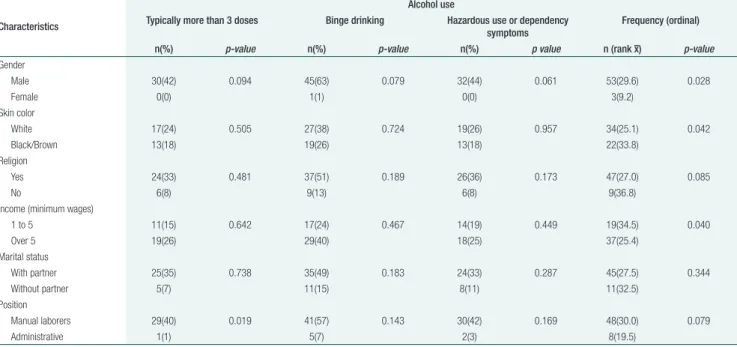
Table 2 shows typical quantity, binge drinking, consumption pattern, and frequency with the asso-ciated sociodemographic factors.
Table 1. Sociodemographic data of the public maintenance workers (n=72)
Characteristics n(%)
Gender Male Female
67(93) 5(7) Age group
25 to 35 years 36 to 45 years 46 to 55 years 56 to 66 years Skin color
White Brown Black Olive
8(11.1) 14(19.4) 31(43.1) 19(26.4)
43(59.7) 22(30.6) 6(8.3) 1(1.4) Religion
Catholic Evangelical/ Protestant
Spiritualist Other None Marital status
With partner Without partner Position
Manual laborers Administrative
42(58.3) 15(20.8) 3(4.2) 3(4.2) 9(12.5)
58(80.6) 14(19.4)
62(86.1) 10(13.9)
Family income (minimum wages) 1 to 5
Over 5
The typical quantity was significantly associat-ed the workers’ position: 96.7% of those who con-sumed four or more drinks were manual laborers.
In terms of frequency, a statistically significant difference was identified between workers of
dif-ferent income ranges, suggesting the lower-income individuals drank more often. There was a statis-tically significant difference in the frequency of consumption between the male and female work-ers, suggesting the males consumed alcohol more
Figure 1. Distribution of public maintenance workers according to the pattern of consumption (n=72)
All participants (n=72)
Participants who consumed alcohol (n=56)
Alcohol users
Non-consumers in the last 12 months
Low-risk consumption Hazardous use Dependence symptoms
Table 2. Sociodemographic data and the relationship with the alcohol consumption pattern of the public maintenance workers (n=72)
Characteristics
Alcohol use
Typically more than 3 doses Binge drinking Hazardous use or dependency symptoms
Frequency (ordinal)
n(%) p-value n(%) p-value n(%) p value n (rank ) p-value
Gender
Male 30(42) 0.094 45(63) 0.079 32(44) 0.061 53(29.6) 0.028
Female 0(0) 1(1) 0(0) 3(9.2)
Skin color
White 17(24) 0.505 27(38) 0.724 19(26) 0.957 34(25.1) 0.042
Black/Brown 13(18) 19(26) 13(18) 22(33.8)
Religion
Yes 24(33) 0.481 37(51) 0.189 26(36) 0.173 47(27.0) 0.085
No 6(8) 9(13) 6(8) 9(36.8)
Income (minimum wages)
1 to 5 11(15) 0.642 17(24) 0.467 14(19) 0.449 19(34.5) 0.040
Over 5 19(26) 29(40) 18(25) 37(25.4)
Marital status
With partner 25(35) 0.738 35(49) 0.183 24(33) 0.287 45(27.5) 0.344
Without partner 5(7) 11(15) 8(11) 11(32.5)
Position
Manual laborers 29(40) 0.019 41(57) 0.143 30(42) 0.169 48(30.0) 0.079
frequently. A statistically significant difference was also identified in the frequency among white or black/brown-skinned workers, indicating black/ brown-skinned workers consumed alcoholic bev-erages more frequently.
In addition, binge drinking was not associated with any of the studied variables (Table 2).
The variable years of schooling showed a statis-tically significant difference between workers with different patterns of consumption ( rank: “low-risk consumption”, 43.3 and “hazardous use or depen-dence symptoms”, 28; p=0.001). The final logistic regression model also pointed out this variable as a factor associated with the consumption of alco-hol; that is, the chances of hazardous use or depen-dence symptoms increased by 20.4% as each year of schooling decreased (odds ratio=0.796; CI 95% - 0.676-0.939; p=0.007; estimated error=0.084). The other variables showed no significant associa-tion with the outcome variable.
No age difference was found between the stud-ied groups, namely a) typical quantity (“three doses or less” or “more than three doses”), b) binge drink-ing (“yes” or “no”), and c) consumption pattern (“low-risk consumption” or “hazardous use or de-pendence symptoms”).
Discussion
Considering one of the aims of this study was to identify the sociodemographic factors associated with alcohol use, it is understood that several subjective is-sues may permeate this phenomenon; however, due to the adopted method, these issues were not taken into account. Further studies designed to enter the universe of meanings of public maintenance workers who consume alcohol can shed valuable light on this phenomenon. Some important limitations are the sample size and the numbers of workers who refused to participate in this study. Moreover, the compari-son between the sample and the general population was restricted to one of the national surveys, since the different indicators used in the other studies prevent-ed a comparison between the prevalence of alcohol use in adults and patterns of alcohol use.
Nevertheless, this study provides new insight into the various factors associated with alcohol use among workers considering the different facets of this consumption. It also provides specific data on this population of public maintenance workers.
In relation to alcohol use in the studied pop-ulation, a high prevalence of users (77.8%; n=56) was detected in relation to the average present-ed in one of the main national surveys (50%).(20)
Consequently, the prevalence of workers with “haz-ardous use or dependence symptoms” was also high (57.1% of users; n=32), almost five times greater than the average presented in a major national sur-vey (17 %).(20)
Specifically in relation to the pattern of hazard-ous use or dependence symptoms, 44% (n=32) of the participants (n=72) fell into this consumption pattern. This percentage is greater than the percent-age identified in previous studies among general workers (13.4% for migrant workers in Florida(21)
and 13.7% for industry workers in Tanzania(22)) and
among public officials in Brazil (12.7% for health workers(10) and 13.5% for transport workers).(11)
These studies, however, were not specifically de-signed for maintenance workers. Thus, this result suggests this group is probably more susceptible to risk or dependency.
In this study, 35.7% (n=20) of public mainte-nance workers drank at least once a week, below the findings of the last national survey, in which 53% of the population consumed alcohol at least once a week.(20) The sample of the national survey
covered the entire population, without specificity or schooling, and included teenagers, which evi-dently interferes with any comparisons between these results.
However, according to the results, 46.4% of the public maintenance workers stated they typically consume three doses or less, and 82.1% (n=46) re-ported they typically have five or more drinks on a single occasion, characterizing binge drinking, which is considered an important health risk fac-tor and is strongly related to violent behavior.(14-16,23)
In this study, an association was detected be-tween typical quantity and position; 96.7% (n=29) of the participants who consumed four or more doses in a single occasion were manual laborers, corroborating previous research.(7,12,24) This
behav-ior can involve specific work-related risks, since one of the responsibilities of these workers is to operate machinery and equipment, which requires a lot of attention and dexterity. In this regard, 20% to 25% of work-related accidents worldwide involve people who are under the influence of cohol or other drugs. In addition, hazardous al-cohol use has been known to reduce productivity and increase absenteeism.(8)
Furthermore, studies on the subjective aspects of alcohol use are critical for planning resolutive awareness strategies. In this regard, some studies have found peer pressure, climatic conditions of the workplace, and even the use as a way to support work, influence the consumption of high doses of alcohol.(25-27) Future studies could further
investi-gate these issues.
In terms of frequency, in this study, the work-ers with a higher income drank less frequently, which diverges from the results of previous stud-ies showing lower frequencstud-ies in sectors with low-er income.(28,29) This result and the evident
dif-ferences between the risk and protection factors among these workers stress the need to investigate the specific characteristics of the different groups of workers. It should be noted that most studies examined general alcohol use without specifical-ly considering “frequency” as one of the facets of use, resulting in possible divergences in the results comparisons.
Also in relation to frequency, a significant dif-ference was detected between the male and female workers, suggesting male workers consume alcohol more frequently. This result corroborates the find-ings of previous studies that addressed the variables frequency and quantity together.(10,24,25,30)
The higher use of alcohol by men has been pointed out in studies conducted in different re-gions of the world.(10,21,22,31) This tendency is
at-tributed to some cultural and physiological as-pects.(31) The culture of male domination and the
association of alcohol with leisure and relaxation greatly influence the maintenance of this pattern of consumption.(31,32)
Moreover, the profile of the analyzed sample is mostly male (93%), and this result may reflect the cultural assumption that maintenance work is mostly masculine. This finding was also identified in previous studies.(13,25)
The relationship between workers with a lower risk of consumption and more years of schooling corroborates some previous studies and diverges from others due to differences between the stud-ied populations (men/women; adults/youths; un-employed workers/students, among others) and the categories used to identify schooling among individuals.(28,29,32)
In this study, 27.8% of participants had eight years of schooling or less. This result may be the consequence of the greater stability of public uni-versity workers in general and the fact that high-er education does not imply carehigh-er progression in some positions. Moreover, manual laborers (the position of most of the study participants) may not feel motivated to improve their edu-cation since their work requires less intellectual complexity.
The results also show a higher frequency of consumption among people who stated they were black/brown-skinned, unlike other studies con-ducted with adult health workers(33,34) and transport
workers.(11) These studies included the item race/
color in the sociodemographic analysis but they did not identify an association between this characteris-tic and alcohol use.(11,33,34)
Thus, the result of this study certainly points to a specificity of maintenance workers. Historically, black and brown-skinned people are more suscep-tible to conditions of socioeconomic vulnerability and alcohol use can become an escape valve for the adversities of everyday life.(35) Studies indicate
in-equalities in health indicators related to race/colour refer to the social determinants of health as an influ-ential factor in the worse health conditions of black people compared to white people.(33) Studies that
social inequality. Thus, studies with a specific meth-odological design for these issues are also important to address the problem of alcohol use.
A brief intervention consists of a set of risk level screening practices and actions performed by pro-fessionals according to the identified consumption pattern.(36) Furthermore, a brief intervention
iden-tifies problems related to alcohol consumption and provides individual counselling to prevent hazard-ous use and/or encourage treatment.(36)
It is a simple, low cost resource that can be ap-plied by professionals of various fields.(37,38) In
par-ticular, nurses are trained to provide critical health awareness actions and promote the quality of life of the population,(37,38) which makes them key
el-ements in brief interventions in different settings. In view of the promising results of prior studies with workers,(37) and the characteristics of alcohol
use in the studied sample, a brief intervention is an important tool for nurses in health services(38) and
organizational environments to cause shifts in the drinking behavior of these workers.
Conclusion
The prevalence of alcohol consumption among the public maintenance workers was greater than the results found in a major national survey. These find-ings stress the importance of targeted prevention strategies for maintenance workers and promot-ing studies and alternative techniques to cope with stress. The planning of preventive actions for this group of workers should consider criteria of depen-dence and binge drinking, which is common even among drinkers who are not in the hazardous use pattern and, according to this study, is highly prev-alent among the public maintenance workers. The regular use of screening tools and brief intervention strategies can complement preventive actions in this setting. Future studies should investigate the sub-jective factors associated with alcohol use, including qualitative data and studies with a research design that enables a deeper analysis of the race/color fac-tor and psychosocial differences related to the posi-tion of these workers.
Collaborations
Oliveira JL and Souza J declare they contributed with the project design, analysis, and interpretation of data, redaction of the article, a critical review of the intellectual content, and final approval of the version for publication.
References
1. Brites RM, Abreu AM, Pinto JE. [Prevalence of alcoholism in the profile of disability retirement among employees of a federal university]. Rev Bras Enferm. 2014;67(3):373-80. Portuguese.
2. Brasil. Organização Pan-Americana da Saúde no Brasil. Doenças relacionadas ao trabalho: manual de procedimentos para os serviços de saúde. Brasília (DF): Ministério da Saúde; 2001.
3. Sousa MN, Andrade M. [Stress and fatigue among urban cleaning workers]. Arq Ciênc Saúde. 2017; 24(1):59-64. Portuguese.
4. Sá CM. [Attitudes of the nurse against the alcohol dependent worker: literature review]. Carpe Diem: Rev Cult Cient UNIFACEX. 2014;12(1):2-17. Portuguese.
5. Oliveira LC, Almeida CV, Barroso LP, Gouvea MJ, Muñoz DR, Leyton V. [Truck drivers’ traffic accidents in the State of São Paulo: prevalence and predictors]. Ciênc Saúde Coletiva. 2016;21(12):3757-67. Portuguese. 6. Santos AC, Menta SA. [Reflecting the interface between rural work
and mental health of citriculture workers]. Cad Ter Ocup UFSCar. 2016;24(4):765-75. Portuguese.
7. Londoño J, Álvarez ML. [Consumption of psychoactive substances by nursing aides]. Rev Cuid. 2017;8(2):1591-8. Spanish.
8. Edvardsen HM, Moan IS, Christophersen AS, Gjerde H. Use of alcohol and drugs by employees in selected business areas in Norway: a study using oral fluid testing and questionnaires. J Occup Med Toxicol. 2015 10(46):2-10. 9. Moraes RJ, Barroco SM. [Current conceptions of alcoholism:
hegemonic research, advances and contradictions]. Psicol Teor Pesqui. 2016;32(1):229-37. Portuguese.
10. Brites RM, Abreu AM. [Alcohol consumption pattern among workers and socioeconomic profile]. Acta Paul Enferm. 2014; 27(2):93-9. Portuguese. 11. Cunha NO, Giatti L, Assunção AA. Factors associated with alcohol
abuse and dependence among public transport workers in the metropolitan region of Belo Horizonte. Int Arch Occup Environ Health. 2016 ;89(6):881-90.
12. Burnhams NH, Parry C, Laubscher R, London L. Prevalence and predictors of problematic alcohol use, risky sexual practices and other negative consequences associated with alcohol use among safety and security employees in the Western Cape, South Africa. Subst. abuse treat. prev. policy. 2014 ;9(14):2-10.
13. Rosso GL, Montomoli C, Candura SM. AUDIT-C score and its association with risky behaviours among professional drivers. Int J Drug Policy. 2016;(28):128–32.
15. Saraiva SS, Maia Filho ALM. [Alcohol consumption and binge drinking among Dental students of a university]. Rev Bras Odontol. 2015;72( 1/2):104-8. Portuguese.
16. National Institute on Alcohol Abuse and Alcoholism - NIAAA website. [Internet] [cited 2017 Out 30] Available from: http://pubs.niaaa.nih. gov/publications/aa68/aa68.htm.
17. Babor TF, Higgins-Biddle JC, Saunders JB, Monteiro MG. A U D I T - The Alcohol Use Disorders Identification Test Guidelines for Use in Primary Care. 2nd ed. Geneva: World Health Organization; 2001.
18. Méndez B. Uma versão brasileira do AUDIT – Alcohol use disorders identification test [dissertação]. Pelotas: Universidade Federal de Pelotas, Faculdade de Medicina, Departamento de Medicina Social; 1999.
19. Lima CT, Freire AC, Silva AP, Teixeira RM, Farell M, Prince M. Concurrent and construct validity of the AUDIT in an urban Brazilian sample. Alcohol Alcohol. 2005;40(6):584-9.
20. II Levantamento Nacional de Álcool e Drogas (LENAD) – 2012 [Internet]. Laranjeira RS, et al., supervisor. São Paulo: Instituto Nacional de Ciência e Tecnologia para Políticas Públicas de Álcool e Outras Drogas (INPAD), UNIFESP; 2014. [citado 2018 Jan 20]. Disponível em: http://inpad.org.br/lenad/.
21. Sánchez J. Alcohol use among Latino migrant workers in South Florida. Drug Alcohol Depend. 2015;151:241–9.
22. Francis JM, Weiss HA, Mshana G, Baisley K, Grosskurth H, Kapiga SH. The epidemiology of alcohol use and alcohol use disorders among young people in northern Tanzania. PLOS ONE. 2015;10(10): e0140041.
23. Sanchez ZM. [Binge drinking among young Brazilians and the promotion of alcoholic beverages: a Public Health concern]. Epidemiol Serv Saúde. 2017 ;26(1):195-8. Portuguese.
24. Gossage JP, Snell CL, Parry CD, Marais AS, Barnard R, Vries M, et.al. Alcohol use, working conditions, job benefits, and the legacy of the “Dop” system among farm workers in the Western Cape Province, South Africa: Hope Despite High Levels of Risky Drinking. Int J Environ Res Public Health. 2014 2016;11(7):7406–24.
25. Costa EE, Viana DM, Silva AG, Machado RM. [Pattern of use of alcohol and other drugs by construction workers hired by a municipality in Minas Gerais, Brazil]. Rev Baiana Enferm. 2013;27(1):76-81. Portuguese.
26. Su S, Li X, Lin D, Zhang C, Qiao S, Zhou Y. Social-context factors, refusal self-efficacy, and alcohol use among female sex workers in China. Psychol Health Med. 2015 ;20(8):889–95.
27. Pinheiro ML, Muniz LF, Silva MC, Resille DP, Telles Filho PCP Amphetamines consumption and alcohol for truck drivers. J Nurs UFPE On line. 2015; 9(7):8519-25.
28. Cibeira GH, Muller C, Lazzaretti R, Nader GA, Caleffi M. [Alcohol consumption, social and economic factors and excess weight: a cross-sectional study]. Ciênc Saúde Coletiva. 2013;18(12):3577-84. Portuguese.
29. Acselrad G, Karam ML, David HM, Alarcon S. Consumo de bebidas alcoólicas no Brasil Estudo com base em fontes secundárias. Relatório de Pesquisa [Internet]. 2012 [citado 2017 Jan 28]. Disponível em: http://flacso.org.br/files/2015/02/RelatorioConsumodo AlcoolnoBrasilFlacso05082012.pdf . Portuguese
30. Luis MV, Luchesi LB, Barbosa SP, Lopez KS, Santos JL. Patterns of alcohol use among patients who visited community emergency care services in southwestern Brazil. Br J Med Med Res. 2014;4(35): 5689-98.
31. Erol A, Karpyak VC. Sex and gender-related differences in alcohol use and its consequences: Contemporary knowledge and future research considerations. Drug Alcohol Depend. 2015;(156):1-13.
32. Ferreira LN, Bispo Júnior JP, Sales ZN, Casotti CA, Braga Junior AC. [Prevalence and associated factors of alcohol abuse and alcohol addiction]. Ciênc Saúde Coletiva. 2013;18(11):3409-18. Portuguese. 33. Jomar RT, Abreu AM, Griep RH. [Patterns of alcohol consumption and
associated factors among adult users of primary health care services of Rio de Janeiro, Brazil]. Ciênc Saúde Coletiva. 2014;19(1): 27-38. Portuguese.
34. Pereira CF, Vargas D, Silva AR. Alcohol use: user correspondence analysis of primary care health services. J Nurs UFPE On line. 2016;10(8):2956-64.
35. Silva NA, Oliveira JL, Souza J. [Alcohol and tobacco consumption among seamstresses from the city of Formiga - Minas Gerais]. SMAD Rev Eletr Saúde Mental Alcool Drog. 2016;12(4):222-30. Portuguese. 36. Babor TF, Higgins-Biddle. Intervenções breves. Para consumo de risco
e nocivo de bebidas alcoólicas. Guia para utilização em cuidados primários de saúde. Remelhe J, Topa J, tradutores. Geneva: World Health Organization; 2001.
37. Pereira MO, Anginoni BM, Ferreira NC, Oliveira MA, Vargas D, Colvero LA. [Effectiveness of the brief intervention for the use of abusive alcohol in the primary: systematic review]. Rev Bras Enferm. 2013 ;66(3): 420-8. Portuguese.