* Extracted from the dissertation: “O ensino de graduação em enfermagem: tendências metodológicas e a segurança do paciente com enfoque nas medidas de prevenção e controle de infecções”, Pontifícia Universidade Católica de Goiás, 2016. ** Invited authors CIAQ 2016. 1 Pontifícia Universidade Católica de Goiás, Escola de Ciências Sociais e da Saúde, Goiânia, GO, Brazil.
2 Universidade Federal de Goiás, Faculdade de Enfermagem, Goiânia, GO, Brazil.
ABSTRACT
Objective: To characterize teaching about patient safety and standard precautionary measures for infection prevention and control in undergraduate nursing courses. Method: A descriptive documentary analysis study carried out in undergraduate courses, with a concept equal to or greater than three in the National Student Performance Exam and in the Preliminary Course Concept, located in the state of Goiás, Brazil. Results: Six education institutions participated, with the majority being private with curricular structure by discipline. Six pedagogical projects and 273 subject plans were analyzed. The most discussed topics for patient safety development were human factors related to communication, interpersonal relationships, and principles and techniques. Thirty-nine (39) disciplines contemplated teaching infection prevention and control measures, and the most approached topics were personal protective equipment and hand hygiene. Conclusion: Teaching about patient safety presented strong gaps in the six evaluated courses. There is fragility in teaching infection prevention and control measures. The data indicate the need to review the Course Pedagogical Projects in order to incorporate necessary educational demands for training professionals so that they develop safe and quality care.
DESCRIPTORS
Infection Control; Education, Nursing; Education, Higher; Universal Precautions; Patient Safety.
Infection control and patient safety measures
addressed in nursing pedagogical projects
*,**Controle de infecções e medidas de segurança do paciente abordados em projetos pedagógicos da enfermagem
Control de infecciones y medidas de seguridad del paciente abordados en proyectos pedagógicos de la enfermería
Elisângela Rodrigues Boeira1, Adenicia Custódia Silva e Souza1,Milca Severino Pereira1,Vanessa da Silva Carvalho Vila1, Anaclara Ferreira Veiga Tipple2
How to cite this article:
Boeira ER, Souza ACS, Pereira MS, Vila VSC, Tipple AFV. Infection control and patient safety measures addressed in nursing pedagogical projects. Rev Esc Enferm USP. 2019;53:e03420. DOI: http://dx.doi.org/10.1590/S1980-220X2017042303420
Received: 10/26/2017 Approved: 09/04/2018
Corresponding author:
Elisângela Rodrigues Boeira Av. Universitária, 1069, Bloco B, Sala 303, Setor Universitário CEP 74605-010 – Goiânia, GO, Brazil [email protected]
INTRODUCTION
Patient safety involves the prevention and control of infections(1), among other aspects. Healthcare-associated infections (HAIs) represent a worldwide problem, so build-ing well-established knowledge about prevention and con-trol measures for these infections during the undergradu-ation course training is a priority in the teaching-learning process, especially because they are closely related to patient safety(2-3).
Data from the World Health Organization show that out of every 100 patients hospitalized in health settings, seven from developed countries and 10 from developing countries acquire healthcare-associated infections(3).
These infections increase hospitalization time, lead to long-term disability, microbial resistance to antibi-otics, high costs to patients and health institutions, and increased mortality. These risks demonstrate that the promotion of safe practices should be a priority in healthcare(1).
The promotion of a safe environment in care spaces includes anti-infectious protection actions, including the Standard Precautions (SPs), which are basic protection mea-sures used in healthcare, and therefore mandatory knowledge to be built into all health courses.
SPs promote the protection of professionals and users of health services, including Hand Hygiene (HH), the use and handling of Personal Protective Equipment (PPE), safety with injectables, sharps disposal, cleaning and disinfection of potentially contaminated equipment or surfaces in the patient environment and the processing of health products(4).
Studies show that there is low adherence to these mea-sures, and a lack of knowledge of health professionals is one of the factors that interferes with adherence to standard precautions(5-6). This fact may be related to professional training, since there are gaps in curricular contents and in teaching practice that make it difficult to build solid knowledge for infection prevention and control(7).
The World Health Organization is concerned about this issue, and has published the Patient Safety Curriculum Guide, which suggests introducing the teaching of patient safety in a systematic way in the curricula of undergraduate courses in health(1).
Considering the high rates of HAIs, the low adherence to SPs, and the emerging need to adopt measures for patient safety in healthcare, the following research question arose: What subjects are addressed in teaching patient safety and in infection prevention and control measures in undergraduate nursing courses?
A critical-reflexive analysis of the Pedagogical Projects and contents of the subjects taught in professional train-ing can contribute to indicate ways of improvement in the participating institutions.
Thus, this study aimed to characterize teaching about patient safety and standard precaution measures for the infection prevention and control in undergraduate nursing courses.
METHOD
An exploratory descriptive documentary analysis study carried out in Nursing Undergraduate Courses of Higher Education Institutions (HEI) with authorized operation in the state of Goiás, Brazil.
Courses were included that presented a concept equal to or higher than three in the National Examination of Student Performance (Exame Nacional de Desempenho de Estudantes – ENADE) and in the Preliminary Course Concept (Conceito Preliminar de Curso – CPC)(8).
The analyzed documents were the Pedagogical Projects of the Courses (PPC) and the Discipline Plans. The collec-tion took place in the period from May to June 2015 by three researchers, along with the assistance of two scientific initia-tion fellows in the educainitia-tional instituinitia-tions’ own space, after the coordinator’s consent and availability of the documents. During the collection, it was possible to clarify doubts with the coordinator regarding aspects which were not clearly stated in the Pedagogical Project.
Data were recorded in two worksheets based on the National Curriculum Guidelines (NCG) of the undergradu-ate Nursing Program and the World Health Organization Patient Safety Curriculum Guide(1,9). The collected variables were: human, professional and organizational factors related to patient safety; and principles, theories and activities to ensure patient safety and the quality of health care. The data recording in each unit lasted from 6 to 10 hours.
The results were processed on a Microsoft Excel work-sheet analyzed through descriptive, frequency and percent-age statistics, and discussed in light of the theoretical refer-ence on patient safety and teaching of infection prevention and control measures.
The study was approved by the Research Ethics Committee of the Pontifícia Universidade Católica de Goiás, under proto-col number 1780/2011, and observing ethical principles and postulates according to Resolution of the National Health Council (Conselho Nacional de Saúde – CNS) no. 466/2012 and its supplements(10). The six courses were identified by the letters A, B, C, D, E, F to preserve their identities.
RESULTS
Thirty-five (35) undergraduate Nursing Courses were found in operation in the state of Goiás, in January 2015, of which 33 were face-to-face, and two were distance learn-ing(8). Seven courses met the inclusion criteria; however, one HEI refused to participate in the study. Thus, six undergrad-uate Nursing Courses participated in the study. We analyzed the six Pedagogical Projects and the 273 discipline plans offered by them.
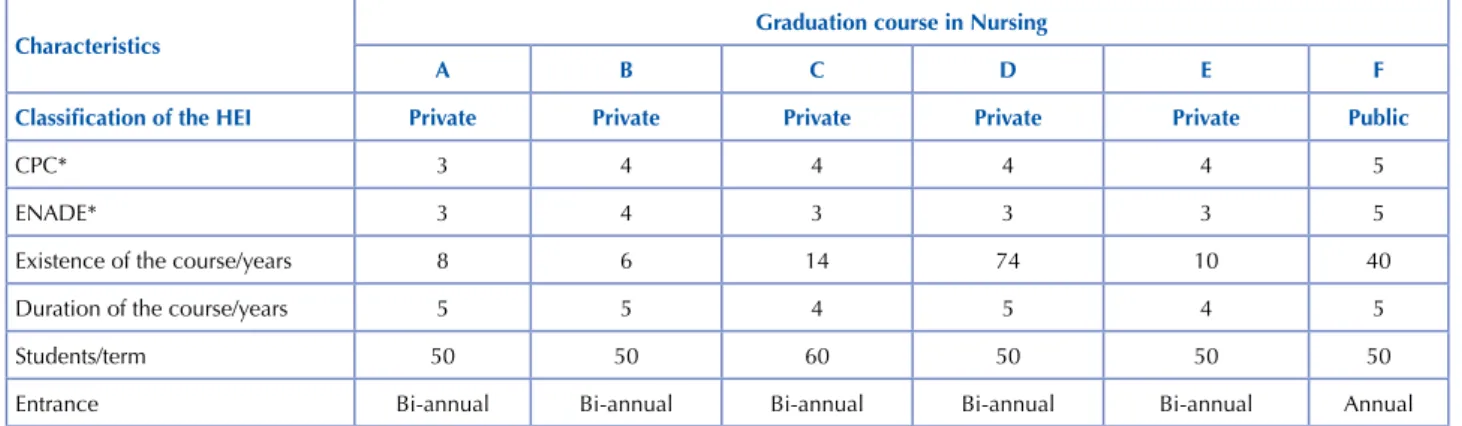
Chart 1 describes the characteristics of these Courses presented in the Pedagogical Projects.
The PPC of the six institutions define the competences to be developed by the students according to those proposed in the NCG(9), but do not add specifics such as the develop-ment of skills for safe care. This competence only appears explicitly in one subject of one of the courses.
The topics related to patient safety covered in the six undergraduate nursing courses are shown in Table 1.
Of the 273 discipline plans analyzed, 39 contemplated teaching infection prevention and control measures. The courses had at least one subject that addressed the theme, and in three courses the theme was not addressed in the disciplines that make up primary healthcare. In one course, the theme was only present in the disciplines of the specific clinical cycle of nursing. The number of teachers who teach courses on prevention and control of infections varied from one teacher in course A to
two teachers in courses B, C, D, E and F. The teaching of these measures is given in a punctual way and in specific disciplines. It was observed that the teacher who contemplated this content in the specific discipline of biosafety in course A taught eight more subjects in the same course, and the con-tent of the subject was not identified in any of them.
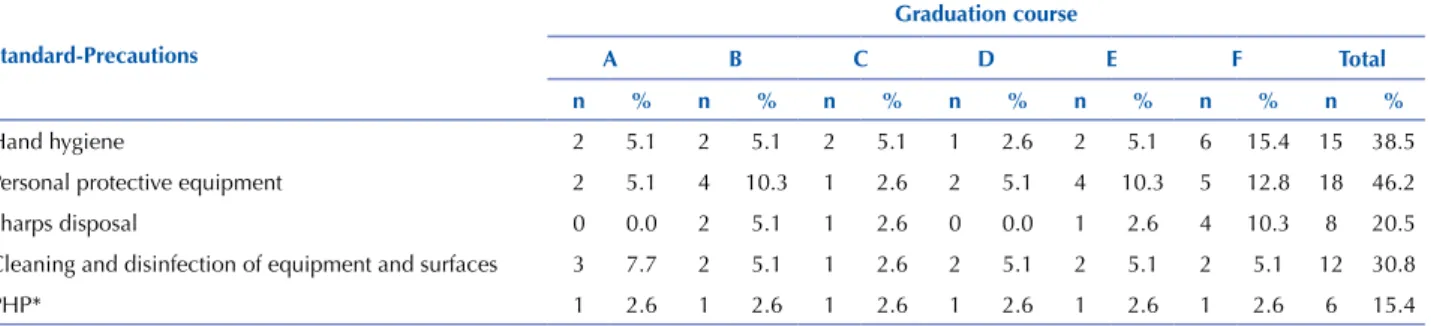
Table 2 presents the standard precautions approach taught in the six courses.
Regarding the bibliographic references in the 39 dis-ciplines that address the standard precautionary measures, 74.4% use books, 43.6% refer to normalizing organizations such as ANVISA (Agência Nacional de Vigilância Sanitária – National HealthSurveillance Agency), 15.4% use recom-mendations of the World Health Organization, and 7.7% use Centers for Disease Control and Prevention.
Chart 1 – Characteristics of the six undergraduate Nursing Courses in the state of Goiás, Brazil, 2015.
Characteristics Graduation course in Nursing
A B C D E F
Classification of the HEI Private Private Private Private Private Public
CPC* 3 4 4 4 4 5
ENADE* 3 4 3 3 3 5
Existence of the course/years 8 6 14 74 10 40
Duration of the course/years 5 5 4 5 4 5
Students/term 50 50 60 50 50 50
Entrance Bi-annual Bi-annual Bi-annual Bi-annual Bi-annual Annual
* Data from the National Institute of Studies and Educational Research Anísio Teixeira (Instituto Nacional de Estudos e Pesquisas Educacionais Anísio Teixeira - INEP), referring to the year 2013.
Table 1 – Subjects addressed in teaching patient safety in the disciplines of the six undergraduate Nursing Courses in the state of Goiás, Brazil, 2015.
Subject Yes No In part
n % n % n %
Meaning of Patient Safety 16 5.9 226 82.8 31 11.4
Human factors related to the use of Technology and Equipment 83 30.4 168 61.5 22 8.1
Human factors related to Communication 113 41.4 136 49.8 24 8.8
Human factors associated with Interpersonal Relationships 95 34.8 149 54.6 29 10.6
Human factors related to Organizational Culture 57 20.9 190 69.6 26 9.5
Complexity of the organizational system as a whole articulated 50 18.3 196 71.8 27 9.9
Professional role in the multidisciplinary team 81 29.7 171 62.6 21 7.7
Role of team in care and harm reduction 41 15.0 198 72.5 34 12.5
Occurrence of errors and measures to prevent damage 30 11.0 212 77.7 31 11.4
Clinical risk management for improving the quality and safety of healthcare 50 18.3 196 71.8 27 9.9
Principles, theories, tools, activities and techniques to improve the quality of care 107 39.2 144 52.7 22 8.1
Involvement of the patient and their caregiver in safe care 33 12.1 223 81.7 17 6.2
Risks of infection in the healthcare environment and measures for prevention and control 38 13.9 201 73.6 34 12.5
Risks of errors in surgical procedures and error-checking protocols 9 3.3 246 90.1 18 6.6
Main errors in drug administration 13 4.8 234 85.7 26 9.5
Table 2 – Approach of the standard precautions in teaching infection prevention and control measures in the disciplines of the six undergraduate Nursing Courses of the state of Goiás, Brazil, 2015.
Standard-Precautions
Graduation course
A B C D E F Total
n % n % n % n % n % n % n %
Hand hygiene 2 5.1 2 5.1 2 5.1 1 2.6 2 5.1 6 15.4 15 38.5
Personal protective equipment 2 5.1 4 10.3 1 2.6 2 5.1 4 10.3 5 12.8 18 46.2
Sharps disposal 0 0.0 2 5.1 1 2.6 0 0.0 1 2.6 4 10.3 8 20.5
Cleaning and disinfection of equipment and surfaces 3 7.7 2 5.1 1 2.6 2 5.1 2 5.1 2 5.1 12 30.8
PHP* 1 2.6 1 2.6 1 2.6 1 2.6 1 2.6 1 2.6 6 15.4
*Processing of Health Products. Note: (n=39).
DISCUSSION
The six undergraduate Nursing Courses follow the minimum workload established by Resolution no. 4 of April 6, 2009(11). Most present a disciplinary structure and without content integration; the difficulty of this integration was even observed between disciplines taught by the same teacher.
The results indicated that the subject of patient safety was not considered as a competence to be developed in all Pedagogical Projects. It consists of only one discipline in one of the courses, and its content is only approached in a few disciplines.
The data showed that the subject has not yet been incorporated into training nursing students. It is con-sidered that the infection prevention and control mea-sures and the patient safety are cross-cutting themes that must permeate all training of health professionals, and especially those of nursing. This transversality needs to be done by teachers in order to imprint the responsibil-ity for safety in the care at all stages of care, and not to expect that the students will fortuitously associate this important knowledge, built in a specific and isolated way, to other knowledge.
The curriculum, as a way to be covered, has the role of integrating the contents of the disciplines that com-pose it, giving the student experiences during their aca-demic training in searching for the necessary constructs and conducts for forming ethical professionals who are responsible for safe care(12).
The development of these attributes requires over-coming resistance to change, poor reflection on teaching, fragmentation of teaching and the dichotomy between thinking and doing(13).
Overcoming curricular fragmentation requires ing that enables a dialogical relationship between teach-ers, service professionals, students and users of the ser-vices, in order to allow broad, general and critical training. This curricular change is necessary for developing skills and abilities for authentic care during the teaching-learn-ing process(14).
The content contemplated for preventing and control-ling infections are in accordance with the recommenda-tions of the World Health Organization(1), but not all courses have specific disciplines that systematize this
content, and the few disciplines that work the subject as content do not detail its deepening.
Patient safety regarding the general aspects such as communication, interpersonal relationships, organiza-tional culture, teamwork, as well as the specific aspects inherent to error prevention, is still carried out in an incipient way. The development of the necessary com-petencies for nurses to carry out safe healthcare activi-ties requires concretization of this content in a synergic way between theory and practice, permeating the whole course. One study has shown that education for patient safety is hampered by deficiencies in the culture of clinical practice environments during the academic training(15).
The literature reports that some patient safety items advocated by the National Patient Safety Plan (PNSP) are addressed in healthcare courses such as preventing and controlling infections and prescribing and administrating medications, but without the emphasis on its importance in patient safety, and has not become a culture in clinical practice and teaching(16).
Understanding the risks of errors in surgical proce-dures and medication administration, measures to prevent damage, and understanding the patient’s participation in care are subjects that are not explored in the disciplines of the six courses. This fragility identified in the discipline plans reveals the existence of obstacles in the students’ qualification regarding the environmental practice of patient safety and signals the need to review curricula with a focus on these aspects(17).
Interpersonal relationship is an important attribute for communication in health settings. Failures in com-munication can cause embarrassing situations, especially if associated with patient identification and errors and damages that compromise health security. Strategies to improve communication between staff can prepare students for safer, comprehensive and complex care in the workplace(18).
contribute to developing awareness and autonomy for performing safe health practices.
In developing practical and internship activities, the student joins the unit’s work team and develops their skills and abilities through doing and observing, and of course observing practicing professionals as important references and even how-to models for doing and being. This fact reinforces the need for articulation between teaching and service, with a view to the student’s devel-opment of skills and attitudes permeated by a critical and ethical stance of care.
Most of the disciplines did not explain the safe admin-istration of medicines and the measures for safe surgeries in their content, nor the management of the inherent risks in such care.
Important topics for infection prevention and control such as hand hygiene, use of personal protective equip-ment, surface cleaning and disinfection, processing of health products and sharps disposal were addressed in only 39 of the 273 subjects of the six courses. However, it ranged from one to six disciplines in each course.
Although hand hygiene was considered the main infection prevention and control measure(1) and its implicit application at all levels of care, this topic was only addressed in 15 (38.5%) of the 39 disciplines dis-tributed among the six courses. This result indicates that a measure of infection prevention, which must be inherent in any care, is little explored in the teaching and learning process of nursing courses, strengthening the explanation of low professional adherence to this measure, which puts the safety and the lives of patients at risk.
The lack of knowledge on principles, technique and moments of hand hygiene is a barrier that, coupled with innumerable others such as lack of inputs, structural conditions and personal beliefs, make this simple pro-cedure complex(20).
Experiential strategies are fundamental and effective for promoting good habits in the early years of gradu-ate training, but do not guarantee long-term behavior change(21). Students should experience and perform hand hygiene using the correct technique and at all indicated times during care activities developed throughout the course. The concretization of this knowledge should be such that hand hygiene becomes an inherent part of any care technique.
The consequence of this gap in training is the lack of preparation of the graduates to assume responsibility for the clinic in work environments, as they encounter the barriers arising from failures in training, which together with little experience may interfere in providing safe and quality care.
Responsibility should be instilled in students even in their initial years of training, as adherence to safe prac-tices is reflected in care, making the health environment safer(18-19).
When graduates of undergraduate courses are faced with practical reality and perceive the weaknesses of their training, they must seek training programs that help them
to develop the skills and attitudes necessary for the chal-lenges of school transition to professional practice(22), as well as learning to seek new scientific evidence to support their practice.
The data show that most of the bibliographical refer-ences used in the 39 disciplines that deal with this subject are composed of books, which although are excellent, they are outdated due to the replacement slowness of copies in public libraries. The fact that there are no updated articles which show advances in knowledge is suggestive that the students have not been alerted to the search for new knowledge to support clinical practice.
A study showed that from the perception of nursing students, they did not develop all the necessary skills to enter the labor market and reported gaps related to leadership, management and teamwork(23).
Graduates must develop the necessary skills for autonomous and authentic professional exercise in their undergraduate course. These competences established by the NCG(9) should be expressed in the PPC and guide the entire curriculum. The disciplines should contain dif-ferent specific contents such as patient safety(1,19), which should be structured in a transversal way in order to give consistency to the teaching-learning process and ensure the training of professionals who are competent to prac-tice safe healthcare.
The transversality required to reach learning in both the practice of infection control and in the provision of safe care was not captured in the depth and breadth expected in the pedagogical projects and in the disciplinary plans.
From this perspective, inclusion of the theme in the curricula of the undergraduate Nursing Courses can pro-vide support for future professionals to incorporate safe practices into their healthcare environment, creating a safety culture. An organizational culture is reflected in good professional practices; it is an ally for improving the safety climate, both of the patient and the professional(1). A limitation of this study was not including courses with an evaluation lower than three in the ENADE and CPC, or distance courses. However, the results presented by the courses that have a better evaluation highlight the urgent need to review the teaching of patient safety and standard precautions and infection control.
CONCLUSION
Teaching infection control and safety measures in under-graduate Nursing Courses presented strong gaps in the six evaluated courses. In spite of contemplating what is recom-mended by the Patient Safety Curriculum Guide, the subject is approached in only a few disciplines in all the evaluated courses, and few teachers have incorporated it in their disciplines.
There is fragility in teaching infection prevention and con-trol measures. This teaching is still compartmentalized and does not permeate across the course, which may compromise the development of skills for the safe exercise of care.
RESUMO
Objetivo: Caracterizar o ensino acerca da segurança do paciente e das medidas de precauções-padrão para prevenção e controle de infecções, nos cursos de graduação em enfermagem. Método: Estudo descritivo de análise documental realizado em Cursos de Graduação, com conceito igual ou superior a três no Exame Nacional de Desempenho de Estudantes e no Conceito Preliminar de Curso, localizados no estado de Goiás, Brasil. Resultados: Participaram seis instituições de ensino, a maioria de caráter privado, com estrutura curricular por disciplina. Foram analisados seis projetos pedagógicos e 273 planos de disciplinas. Os temas mais abordados para o desenvolvimento de segurança do paciente foram os fatores humanos relacionados à comunicação, ao relacionamento interpessoal e aos princípios e técnicas. Trinta e nove disciplinas comtemplaram o ensino das medidas de prevenção e controle das infecções, e os temas mais abordados foram equipamento de proteção individual e higiene das mãos. Conclusão: O ensino acerca da segurança do paciente apresentou contundentes lacunas nos seis cursos avaliados. Há fragilidade no ensino das medidas de prevenção e controle de infecções. Os dados indicam a necessidade de rever os Projetos Pedagógicos de Curso, no sentido de incorporar demandas de ensino necessárias à formação de profissionais, para que estes desenvolvam um cuidado seguro e de qualidade.
DESCRITORES
Controle de Infecções; Educação em Enfermagem; Educação Superior; Preocupações Universais; Segurança do Paciente.
RESUMEN
Objetivo: Caracterizar la enseñanza acerca de la seguridad del paciente y las medidas de precauciones estándar para prevención y
control de infecciones, en las carreras de grado en enfermería. Método: Estudio descriptivo de análisis documental realizado en Carreras
de Grado, con concepto igual o superior a tres en el Examen Nacional de Desempeño de Estudiantes y en el Concepto Preliminar de Carrera, ubicadas en el Estado de Goiás, Brasil. Resultados: Participaron seis centros de enseñanza, la mayoría de carácter privado, con
estructura curricular por asignatura. Fueron analizados seis proyectos pedagógicos y 273 planes de estudios de asignaturas. Los temas más abordados para el desarrollo de seguridad del paciente fueron los factores humanos relacionados con la comunicación, la relación interpersonal y los principios y técnicas. Treinta y nueve asignaturas contemplaron la enseñanza de las medidas de prevención y control de las infecciones, y los temas más abordados fueron equipo de protección individual e higiene de las manos. Conclusión: La enseñanza
acerca de la seguridad del paciente presentó contundentes huecos en las seis carreras evaluadas. Existe fragilidad en la enseñanza de las medidas de prevención y control de infecciones. Los datos señalan la necesidad de revisar los Proyectos Pedagógicos de Carrera, a fin de incorporar demandas de enseñanza necesarias a la formación de profesionales, para que estos desarrollen un cuidado seguro y de calidad.
DESCRIPTORES
Control de Infecciones; Educación en Enfermería; Educación Superior; Precauciones Universales; Seguridad del Paciente.
REFERENCES
1. World Health Organization. Patient safety curriculum guide: multi-professional edition [Internet]. Geneva: WHO; 2011 [cited 2017 Oct 24]. Available from: http://www.who.int/patientsafety/education/mp_curriculum_guide/en/
2. Rosenthal VD, Maki DG, Mehta Y, Leblebicioglu H, Memish ZA, Al-Mousa HH, et al. International Nosocomial Infection Control Consortium (INICC) report, data summary of 43 countries for 2007-2012. Device-associated module. Am J Infect Control. 2014;42(9):942-56. DOI: http://dx.doi.org/10.1016/j.ajic.2014.05.029
3. World Health Organization. Good hand hygiene by health workers protects patients from drug resistant infections [Internet]. Geneva: WHO; 2014 [cited 2017 Oct 24]. Available from: http://www.who.int/mediacentre/news/releases/2014/hand-hygiene/en/
4. Centers for Disease Control and Prevention. Guide to infection prevention for outpatient settings: minimum expectations for safe care [Internet]. Atlanta: CDC; 2016 [cited 2017 Oct 24]. Available from: http://www.cdc.gov/HAI/settings/outpatient/outpatient-care-guidelines.html
5. Kinlay JR, Flaherty KA, Scanlon P, Mehrotra P, Potter-Bynoe G, Sandora T. Barriers to the use of face protection for standard precautions by health care workers. Am J Infect Control [Internet]. 2014 [cited 2017 Oct 24];42(6):S97-S8. DOI: https://doi. org/10.1016/j.ajic.2014.03.219
6. Piai-Morais TH, Souza OF, Figueiredo RM. Factors influencing adherence to standard precautions among nursing professionals in
psychiatric hospitals. Rev Esc Enferm USP [Internet]. 2015 [cited 2017 Oct 24];49(3):473-80. Available from: http://www.scielo.br/ scielo.php?script=sci_arttext&pid=S0080-62342015000300473&lng=en&nrm=iso&tlng=en&ORIGINALLANG=en
7. Ward DJ. The barriers and motivators to learning infection control in clinical placements: interviews with midwifery students. Nurse Educ Today. 2013;33(5):486-91. DOI: http://dx.doi.org/10.1016/j.nedt.2012.05.024
8. Instituto Nacional de Estudos e Pesquisas Educacionais. Indicadores de Qualidade da Educação Superior [Internet]. 2011 [citado 2016 dez. 02]. Disponível em: http://portal.inep.gov.br/web/guest/conceito-enade
9. Brasil. Ministério da Educação. Resolução CNE/CES n. 3, de 7 de novembro de 2001. Institui as Diretrizes Curriculares do Curso de Graduação em Enfermagem [Internet]. Brasília; 2001 [citado 2016 dez. 02]. Disponível em: http://portal.mec.gov.br/cne/arquivos/ pdf/Enf.pdf
10. Brasil. Ministério da Saúde; Conselho Nacional de Saúde. Resolução n. 466, de 12 de dezembro de 2012. Dispõe sobre diretrizes e normas regulamentadoras de pesquisas envolvendo seres humanos [Internet]. Brasília; 2012 [citado 2016 dez. 02]. Disponível em: http://conselho.saude.gov.br/resolucoes/2012/Reso466.pdf
12. Moraes BA, Costa NMSC. Understanding the curriculum the light of training guiding health in Brazil. Rev Esc Enferm USP [Internet]. 2016 [cited 2017 Oct 24];50(n.spe):9-16. Available from: www.scielo.br/scielo.php?script=sci_arttext&pid=S0080-62342016001100009&lng=en&nrm=iso&tlng=en
13. Silva MG, Fernandes JD, Teixeira GAS, Silva RMO. Contemporany formal nursing education process: challenges and perspectives. Texto Contexto Enferm. 2010;19(1):176-84.
14. Bettancourt L, Muñoz LA, Merighi MAB, Santos MF. Nursing teachers in clinical training areas: a phenomenological focus. Rev Latino Am Enfermagem [Internet]. 2011 [cited 2017 Oct 24];19(5):1197-204. Available from: //www.scielo.br/scielo.php?script=sci_ arttext&pid=S0104-11692011000500018&lng=en&nrm=iso&tlng=en
15. Ginsburg LR, Tregunno D, Norton PG. Self-reported patient safety competence among new graduates in medicine, nursing and pharmacy. BMJ Qual Saf [Internet]. 2013 [cited 2017 Oct 24];22(2):147-54. Available from: www.ncbi.nlm.nih.gov/pmc/articles/ PMC3585493/
16. Brasil. Ministério da Saúde; Agência Nacional de Vigilância Sanitária. Assistência Segura: uma reflexão teórica aplicada à prática
[Internet]. Brasília: ANVISA; 2013. [citado 2016 dez. 02]. Disponível em: http://www20.anvisa.gov.br/segurancadopaciente/images/ documentos/livros/Livro1-Assistencia_Segura.pdf
17. Lukewich J, Edge DS, Tranmer J, Raymond J, Miron J, Ginsburg L, et al. Undergraduate baccalaureate nursing students’ self-reported
confidence in learning about patient safety in the classroom and clinical settings: an annual cross-sectional study (2010-2013). Int
J Nurs Stud. 2015;52(5):930-8. DOI: http://dx.doi.org/10.1016/j.ijnurstu.2015.01.010
18. Liaw SY, Zhou WT, Lau TC, Siau C, Chan SW. An interprofessional communication training using simulation to enhance safe care for a deteriorating patient. Nurse Educ Today. 2014;34(2):259-64. DOI: http://dx.doi.org/10.1016/j.nedt.2013.02.019
19. Steven A, Magnusson C, Smith P, Pearson PH. Patient safety in nursing education: contexts, tensions and feeling safe to learn. Nurse Educ Today. 2014;34(2):277-84. DOI: http://dx.doi.org/10.1016/j.nedt.2013.04.025
20. Škodová M, Gimeno-Benítez A, Martínez-Redondo E, Morán-Cortés JF, Jiménez-Romano R, Gimeno-Ortiz A. (2015). Hand hygiene technique quality evaluation in nursing and medicine students of two academic courses. Rev Latino Am Enferm [Internet]. 2015 [cited 2017 Oct 24];23(4):708-17. Available from: www.scielo.br/scielo.php?script=sci_arttext&pid=S0104-11692015000400708&ln g=en&nrm=iso&tlng=en
21. Salmon S, Wang XB, Seetoh T, Lee SY, Fisher DA. A novel approach to improve hand hygiene compliance of student nurses. Antimicrob Resist Infect Control [Internet]. 2013 [cited 2017 Oct 24];2:16. Available from: https://www.ncbi.nlm.nih.gov/pmc/ articles/PMC3679881/
22. Zamanzadeh V, Jasemi M, Valizadeh L, Keogh B, Taleghani F. Lack of preparation: Iranian nurses’ experiences during transition from college to clinical practice. J Prof Nurs. 2015;31(4):365-73. DOI: http://dx.doi.org/10.1016/j.profnurs.2015.01.005
23. Blažun H, Kokol P, Vošner J. Survey on specific nursing competences: students’ perceptions. Nurse Educ Pract. 2015;15(5):359-65.
DOI: http://dx.doi.org/10.1016/j.nepr.2015.02.002
Financial support
Fundação de Amparo à Pesquisa do Estado de Goiás (FAPEG).