New wheat genotypes tolerant to aluminum toxicity
obtained by mutation induction
(1)Augusto Tulmann Neto(2), Marcelo Correa Alves(3), Carlos Eduardo de Oliveira Camargo(4), Jairo Lopes de Castro(4) e Wilson Penteado Ferreira Filho(4)
Abstract _ Seed from the sensitive wheat (Triticum aestivum L.)cultivar Anahuac was treated to gamma-ray irradiation and eleven Al3+ tolerant mutants selected. The objective was to compare these mutants
to the original Anahuac and to the tolerant wheat cultivars IAC-24 and IAC-60 from 1994 to 1996 in acid (Capão Bonito) and limed (Monte Alegre do Sul) soil field trials, in the State of São Paulo, Brazil. Grain yield and agronomic characteristics were analyzed. All the mutant lines yielded higher than the sensitive Anahuac cultivar in the acid soils of Capão Bonito. Under limed soil conditions, 10 mutants had a similar yield to the original sensitive cultivar and one a lower yield. The majority of the mutants were similar in yield to the tolerant cultivars IAC-24 and IAC-60 under both conditions. Some of the mutants showed altered agronomic characteristics, but these alterations did not generally influence the grain yield. The results indicated that tolerant lines with good characteristics may be obtained from a susceptible cultivar by mutation induction, thus allowing cropping under conditions where Al3+ is a
limiting factor.
Index terms: acid soil, liming, breeding methods, mutants, gamma radiation, agronomic characters, grain yield, plant breeding.
Novos genótipos de trigo tolerantes a toxicidade de alumínio obtidos por meio de indução de mutação
Resumo _ Onze mutantes tolerantes a Al3+ foram selecionados a partir de sementes da cultivar de trigo
(Triticum aestivum L.)sensível Anahuac, tratadas com raios-gama. O objetivo deste trabalho foi comparar esses mutantes com a cultivar original e as tolerantes IAC-24 e IAC-60 de 1994 a 1996, em ensaios de campo em solo ácido (Capão Bonito) e corrigido (Monte Alegre do Sul) no Estado de São Paulo. Produção de grãos e várias características agronômicas foram analisadas. Todas as linhagens mutantes produziram mais que a cultivar sensível em solos ácidos em Capão Bonito. Em solos corrigidos, dez mutantes apresentaram produção similar à Anahuac original e um, menor produção. A maioria dos mutantes apresentou produção similar à das cultivares tolerantes IAC-24 e IAC-60 em ambas as condições. Alguns dos mutantes mostraram alterações em características agronômicas, mas tais alterações em geral não afetaram a produção de grãos. Os resultados indicaram que linhagens tolerantes com boas características podem ser obtidas de cultivares sensíveis a partir de indução de mutação, permitindo o cultivo em condições nas quais o Al3+ é um fator limitante.
Termos para indexação: solo ácido, calagem, métodos de melhoramento, mutante, raios-gama, caracte-rísticas agronômicas, rendimento de grãos, melhoramento de plantas.
Introduction
Breeding for aluminum tolerant cultivars is among
the main objectives of wheat (
Triticum aestivum
L.)
breeding in the State of São Paulo (Camargo, 1993)
since Al
3+sensitivity is an important limiting factor
for yield in the majority of acid soils. Deficiency in
an agronomic characteristic, such as aluminum
tolerance may be corrected in a cultivar which has a
series of other good traits by using chemical or
physical mutagens.
(1)Accepted for publication on January 26, 2000.
(2)Universidade de São Paulo (USP), Centro de Energia Nuclear
na Agricultura (CENA), Caixa Postal 96, CEP 13400-970 Piracicaba, SP. E-mail: [email protected]
(3)Centro de Informática na Agricultura (CIAGRI), USP, Caixa Postal 9, CEP 13418-900 Piracicaba, SP.
E-mail: [email protected]
(4)Instituto Agronômico (IAC), Caixa Postal 28,
Wheat mutation induction has been used in Brazil
with several objectives, and mutants for earliness,
plant height, disease resistance and Al
3+toxicity
tolerance have been obtained (Camargo et al., 1996;
Tulmann Neto et al., 1996). In the case of the sensitive
cultivar Anahuac, the objective was to obtain Al
3+tolerance mutants without alteration to the basic
characteristics of the cultivar following the previously
described strategy. As in other crops, once the mutant
is obtained, it is necessary to test its performance in
various locations and years prior to deciding whether
it may substitute the original cultivar or will need to
be intercrossed in a breeding program.
Mutants obtained from gamma-rays irradiated
seeds of the sensitive wheat cultivar Anahuac
previously screened in nutrient solution for Al
3+tolerance (Camargo et al., 1987) were further selected
under field conditions. The present study was carried
out to assess the mutant lines and the original
Anahuac, IAC-24 and IAC-60 cultivars.
Material and Methods
Eleven ‘Anahuac’ mutant lines (numbered mutant 18 to 28), tolerant to Al3+ toxicity in nutritive solutions (using
method proposed by Camargo & Oliveira, 1981), were assessed under field conditions, in two location of the State of São Paulo, Brazil. These mutant lines were obtained after field selection in the M3 generation derived from seeds
of Anahuac treated with 260 Gy (mutant lines 18 to 24) and 310 Gy (mutant lines 25 to 28) gamma-rays as described by Camargo et al. (1996).
The cultivars Anahuac, of Mexican origin, semidwarf, early cycle and sensitive to Al3+ toxicity; IAC-24,
semidwarf, early cycle and tolerant to Al3+ and IAC-60,
average height, medium cycle and tolerant to Al3+ were
used as controls in the experiments. The last two cultivars were selected from crosses of the Instituto Agronômico de Campinas (IAC) wheat breeding program.
Three experiments were set up at the Capão Bonito Experimental Station, São Paulo State, under upland and acid soil (Latosol) conditions (climate wheat zone B), in March, 1994, 1995 and 1996. Two experiments were also sown at the Monte Alegre do Sul Experimental Station, São Paulo State (climate zone H), in limed soil (Podzol) under sprinkler irrigation, in April, 1994 and 1995. The climate wheat zones were established according to the rain distribution and temperature (Instituto Agronômico, 1996). A randomized complete block experimental design, with
four replications per location was used. Each trial was made up of 80 plots, each one formed by six 3-meter rows, spaced at 0.20 m. A 0.60 m space was left between plots. Eighty viable seeds/meter were sown, totaling 1,440 seeds per plot, in an evaluated area of 3.6 m2. The fertilizers were
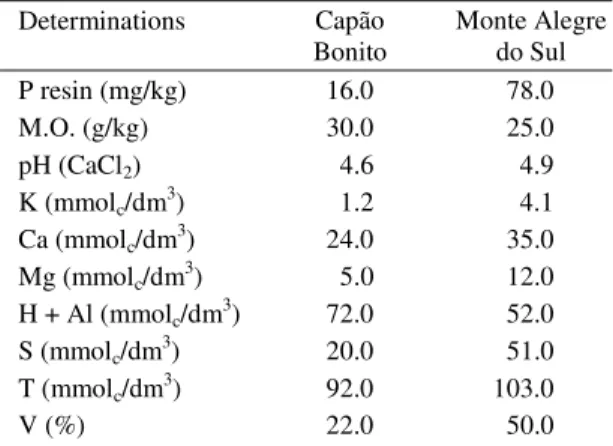
spread on the soil before the seeding time and after that they were incorporated into the soil. The amount of the applied fertilizers in the two locations were based on the fertilizers recommendations tables of Instituto Agronômi-co (Ray et al., 1985). In Table 1 the results of the soil analysis carried out in Capão Bonito and Monte Alegre do Sul are presented.
The following data were collected: period from emergence to flowering and maturity (flowering and life cycle), lodging (scale 0 without lodging to 5 maximum lodging), plant height, spike length, number of spikelets per spike, grains per spike and spikelet, weight of 100 grains and grain yield. These parameters were assessed according to Camargo et al. (1991).
Other characteristics such as spike length, number of spikelets per spike, number of grains per spike and per spikelet and weight of 100 grains which are related to yield components were analyzed in the Monte Alegre do Sul experiment, only in 1994, to have a preliminary comparison between the mutants and original Anahuac for these characteristics.
A joint analysis of variance for years at each location, for the assessed parameters, except yield components, was carried out. An analysis of the residual mean squares was performed to check for discrepancies and validate the joint analysis.
The assumptions of the analysis of variance were checked before proceeding to the joint analysis in order to detect and correct problems of scale of the variable response, the presence of outliners, absence of variance equality, excessively influential values and design problems. This analysis was carried out using the LBA software from SAS and whenever necessary the indicated transformation was adopted to obtain the maximum likelihood.
Results and Discussion
Working with wheat mutants, Barriga et al. (1996)
indicated the need to establish yield stability by
analyzing production for several years and locations
before a final recommendation is made. As pointed
out by Maluszynski et al.
(1995),
mutants obtained
after mutagenic treatment are very often released
directly to farmers after yield trials, but could also
be included as improved germplasm in breeding
programs. They observed that in wheat cropping for
bakeries, only 35 out of 140 mutant cultivars were
obtained from indirect use in crosses. This means that
in the majority of cases there were no large alterations
induced by the mutagenics in the original material.
However, in several selected wheat mutants obtained
in other countries, alterations have been found for
other characteristics besides the object of the
origi-nal selection (Donini et al., 1984).
Grain yield
The genotype (mutant lines and cultivars), year
and genotype and year interaction mean squares in
the joint analysis of variance for grain yield for the
experiments at Capão Bonito (1994-96) were
significant. In these experiments, under upland
conditions in acid soil, and base saturation
percentages of 22 on the arable layer, the yield results
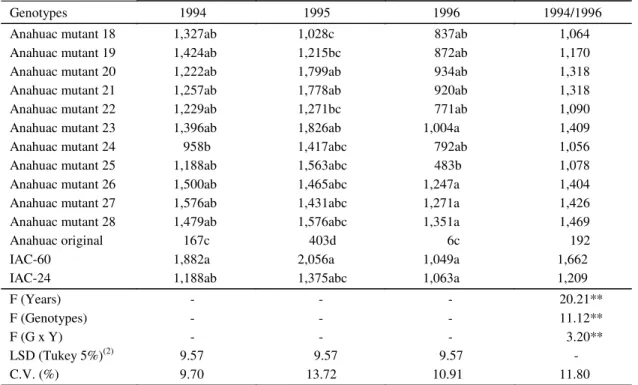
(Table 2) showed that the control cultivars IAC-60
and IAC-24 were tolerant, and Anahuac, a cultivar very
sensitive to aluminum toxicity. Table 2 shows
comparison of the mutants and the original Anahuac
cultivar using the Tukey test. The mutant yields were
higher in all years indicating the advantages of the
aluminum tolerance obtained for this soil condition.
The comparison among the 11 mutants showed, as
indicated by the significant interaction among
genotypes and years in the analysis of variance, that
some mutants have higher yield (or lower) than others
depending on the year. In 1995 the mutant 23 had a
higher yield than mutants 18 and 27, but in 1994 and
1996 their yields were similar. It must be emphasized
that, in the three years, several mutants (mutants 20,
23, 26, 27 and 28, for example) had high yield means
similar to those of the tolerant controls IAC-60 and
IAC-24.
The joint analysis of variance mean squares for
yield in the experiments in Monte Alegre do Sul
(1994-1995) indicated that the year and genotypes
effects were significant. On the other hand, the
genotype x year interaction effects were not
significant (Table 3). When the Tukey test was
applied for the comparison of the genotypes’ grain
yield means for the two years, it was found that only
mutant 25 yielded less than the original Anahuac
cultivar and the other two IAC cultivars. The other
mutants had similar yields to those of the tolerant
controls. This indicates that ten of the mutants
selected for tolerance to Al
3+toxicity were as
productive in limed soils as in acid soils. Similar to
the results obtained in Capão Bonito, mutants 20, 26,
27 and 28 had high yield levels.
In the present work, tolerant mutants were found.
The experiments under acid soil conditions showed
that all the mutants yield more than the original
cul-tivar; but under limed soil there was no difference
among the genotypes, except for mutant 25, which
produced less. The grain yield results obtained for
the two studied locations are in agreement with those
obtained by Felicio et al. (1998). They demonstrated
that the grain yield of different genotypes was reduced
50% under acid soil and upland condition, in
comparison with limed soil and irrigated soil.
Lodging
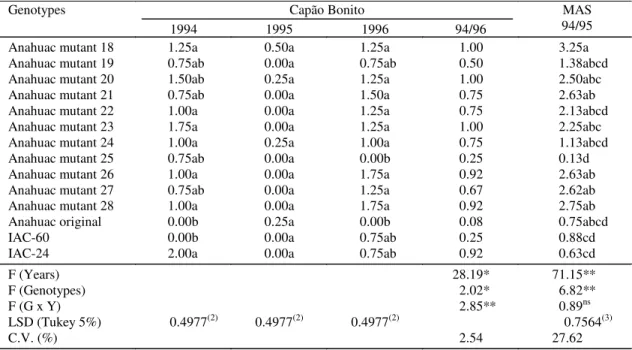
Table 4 indicates that in Capão Bonito there were
significant lodging effects for years, genotypes and
(1)Analysis made at the Centro de Solos e Recursos Agroindustriais,
Insti-tuto Agronômico de Campinas, SP, Brazil. Determinations Capão
Bonito Monte Alegredo Sul
P resin (mg/kg) 16.0 78.0
M.O. (g/kg) 30.0 25.0
pH (CaCl2) 4.6 4.9
K (mmolc/dm3) 1.2 4.1
Ca (mmolc/dm3) 24.0 35.0
Mg (mmolc/dm3) 5.0 12.0
H + Al (mmolc/dm3) 72.0 52.0
S (mmolc/dm3) 20.0 51.0
T (mmolc/dm3) 92.0 103.0
V (%) 22.0 50.0
interaction. The comparison of the means within years
shows that lodging was low for all the genotypes. In
1995 there were no differences among the genotypes
and in 1994 and 1996, various mutants had greater
lodging values than the original Anahuac cultivar.
Lodging resistance is related to plants with a vigorous
and healthy root system, short and sturdy straw,
resistant straw that does not break in the wind and
resistance to disease pathogens and insects that attack
and weaken the straw and root system (Poehlmann
& Sleper, 1995). In the present case the results
indicated that mutant plants presented the highest
lodging percentage. Under acid soil in Capão Bonito
the tolerant to aluminum toxicity mutants showed
normal development, but the original Anahuac
culti-var presented low plant development due to its high
sensibility to aluminum toxicity. This may be
explained when the mean heights for the original
Anahuac cultivar (Table 5) are observed; as it is
sensitive to aluminum and generally had lower plant
height as a reflex of the damaging Al
3+effect.
Although the greater plant height is obviously not
solely responsible for greater lodging (Poehlmann
& Sleper, 1995), it is doubtless one of the important
factors in its occurrence.
The interaction was not significant among
genotypes and years in Monte Alegre do Sul
(Table 4). Comparison of the mutants and the
origi-nal cultivar showed no significant differences.
Mutant 25 had the lowest lodging values
comparatively to those of the other mutants, except
mutants 19, 22 and 24. Six of the mutants had greater
lodging than IAC-24 and IAC-60.
Plant height
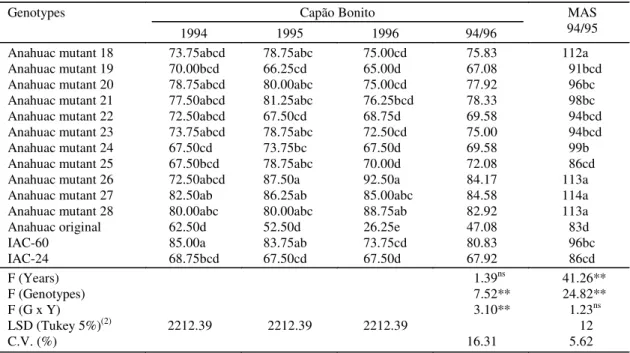
The comparison of the means in 1994 indicated
that the majority of mutants had no plant height
differences to the original Anahuac cultivar, but the
(1)Means followed by the same letter did not differ by the Tukey test. (2) Value obtained with data transformed to x.**Significant at 1% level of probability.
Genotypes 1994 1995 1996 1994/1996
Anahuac mutant 18 1,327ab 1,028c 837ab 1,064
Anahuac mutant 19 1,424ab 1,215bc 872ab 1,170
Anahuac mutant 20 1,222ab 1,799ab 934ab 1,318
Anahuac mutant 21 1,257ab 1,778ab 920ab 1,318
Anahuac mutant 22 1,229ab 1,271bc 771ab 1,090
Anahuac mutant 23 1,396ab 1,826ab 1,004a 1,409
Anahuac mutant 24 958b 1,417abc 792ab 1,056
Anahuac mutant 25 1,188ab 1,563abc 483b 1,078
Anahuac mutant 26 1,500ab 1,465abc 1,247a 1,404
Anahuac mutant 27 1,576ab 1,431abc 1,271a 1,426
Anahuac mutant 28 1,479ab 1,576abc 1,351a 1,469
Anahuac original 167c 403d 6c 192
IAC-60 1,882a 2,056a 1,049a 1,662
IAC-24 1,188ab 1,375abc 1,063a 1,209
F (Years) - - - 20.21**
F (Genotypes) - - - 11.12**
F (G x Y) - - - 3.20**
LSD (Tukey 5%)(2) 9.57 9.57 9.57
-C.V. (%) 9.70 13.72 10.91 11.80
mutants 27 and 28 were slightly higher (Table 5). In
1995, only mutants 19 and 22 were similar to the
control and the others were higher; in 1996 all the
mutants were higher than the control.
There was a significant year interaction in Monte
Alegre do Sul (Table 5). Comparison between
mutants and the original cultivar showed that seven
mutants were higher than the original cultivar. This
could indicate the occurrence of a mutation which
affected the plant height, besides aluminum toxicity
tolerance. The greater height of these mutants could
be an undesirable characteristic for lodging. However,
the mutants did not differ from the control for this
characteristic in this location (Table 4).
Flowering cycle
The significance of genotypes, years, genotypes x
years, and mean flowering cycles for the three
experiments set up at Capão Bonito are shown in
Table 6. It was observed that the flowering cycle in
1994 and 1995, when compared with 1996, was lower
for all genotypes. The higher temperatures in these
years were responsible for this reduction. When the
mutants were compared with the original cultivar, it
can be seen that in 1994 there were differences in the
cycle only for mutant 25 (longer cycle). In 1995, the
cycles were similar and in 1996 only mutant 26, with
a smaller cycle, differed from the control. Therefore,
under these conditions with the exception of
mutants 25 and 26, all others had similar flowering
time as the original Anahuac cultivar.
In Monte Alegre do Sul, Table 6 indicates that in
1994 six mutants (19, 22, 23, 24, 26 and 27) were
earlier and five (18, 20, 21, 25 and 28) had cycles
similar to the original Anahuac. In 1995 all the
mutants had similar flowering comparatively to the
original cultivar.
Maturity
The results from Capão Bonito (Table 7) indicate
a significant interaction among genotype and years.
When the mutants were compared with the original
cultivar in 1994, only mutant 25 had similar maturity,
while all other mutants were earlier. In 1995, ten
mutants were cycle similar to the control and
mutant 25 had the latest flowering. In 1996, the
mutants 24, 26, 27, and 28 were earlier than Anahuac
and the others had a similar cycle. This suggests that
in 1994 climatic factors were responsible for the
different behavior of the mutants in relation to
maturity cycle. In the other years, the majority of the
mutants had the same cycle or were much earlier than
the original cultivar (except for mutant 25 which was
later in 1995). It is well known that greater earliness
may be an advantage and from this point of view this
alteration did not disqualify the mutant. It must be
said, however, that the original Anahuac is not
recommended for planting under acid soil conditions
and that when this happens, as in the present
experiment, poor plant development is observed and
therefore comparisons of the maturity cycle as well
as other characteristics under these conditions should
be taken with caution.
In Monte Alegre do Sul (Table 7) the mutants
showed similar maturity to the original cultivar in
(1)Means followed by the same letter did not differ by the Tukey test. (2) Value
obtained with data transformed to log x. ns Nonsignificant. **Significant
at 1% of probability.
Genotypes 1994 1995 1994/95
Anahuac mutant 18 3,354 2,243 2,799a Anahuac mutant 19 3,070 2,354 2,712a Anahuac mutant 20 3,264 2,611 2,938a Anahuac mutant 21 3,542 2,333 2,937a Anahuac mutant 22 3,333 2,069 2,676a Anahuac mutant 23 3,507 2,042 2,774a Anahuac mutant 24 2,653 2,125 2,389ab Anahuac mutant 25 2,216 1,632 1,924b Anahuac mutant 26 3,445 2,500 2,972a Anahuac mutant 27 3,570 2,493 3,031a Anahuac mutant 28 3,049 2,250 2,649a Anahuac original 3,285 2,104 2,694a
IAC-60 3,403 2,805 3,104a
IAC-24 3,097 2,254 2,566ab
F (Years) - - 148.72**
F (Genotypes) - - 5.34**
F (G x Y) - - 1.46ns
LSD. (Tukey 5%)(2) - - 0.3037
C.V. (%) 13.40 10.14 2.61
Table 4. Lodging mean (0 = least lodging; 5 = maximum lodging) of plants in the experiments at Capão Bonito and
Monte Alegre do Sul (MAS), in the years 1994/1996(1).
Capão Bonito Genotypes
1994 1995 1996 94/96
MAS 94/95
Anahuac mutant 18 1.25a 0.50a 1.25a 1.00 3.25a
Anahuac mutant 19 0.75ab 0.00a 0.75ab 0.50 1.38abcd
Anahuac mutant 20 1.50ab 0.25a 1.25a 1.00 2.50abc
Anahuac mutant 21 0.75ab 0.00a 1.50a 0.75 2.63ab
Anahuac mutant 22 1.00a 0.00a 1.25a 0.75 2.13abcd
Anahuac mutant 23 1.75a 0.00a 1.25a 1.00 2.25abc
Anahuac mutant 24 1.00a 0.25a 1.00a 0.75 1.13abcd
Anahuac mutant 25 0.75ab 0.00a 0.00b 0.25 0.13d
Anahuac mutant 26 1.00a 0.00a 1.75a 0.92 2.63ab
Anahuac mutant 27 0.75ab 0.00a 1.25a 0.67 2.62ab
Anahuac mutant 28 1.00a 0.00a 1.75a 0.92 2.75ab
Anahuac original 0.00b 0.25a 0.00b 0.08 0.75abcd
IAC-60 0.00b 0.00a 0.75ab 0.25 0.88cd
IAC-24 2.00a 0.00a 0.75ab 0.92 0.63cd
F (Years) 28.19* 71.15**
F (Genotypes) 2.02* 6.82**
F (G x Y) 2.85** 0.89ns
LSD (Tukey 5%) 0.4977(2) 0.4977(2) 0.4977(2) 0.7564(3)
C.V. (%) 2.54 27.62
(1)Means followed by the same letter do not differ by Tukey test at 5% level of probability. (2) Value obtained with data transformed to 1/ x 0,5 + . (3) Value
obtained by the data transformed to x. ns Nonsignificant. * Significant at 5% of probability. ** Significant at 1% of probability.
both 1994 and 1995 years. Under corrected soil
conditions the Anahuac cultivar expressed its true
maturity cycle. This seems to indicate that there was
no mutation affecting the maturity cycle of some
mutants as could have been expected considering the
Capão Bonito data.
Other characteristics
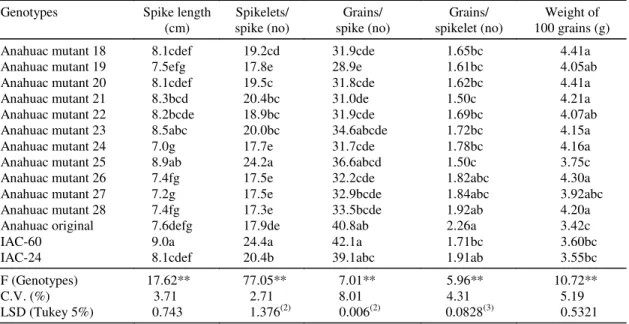
The data indicate that differences exist between
the mutants and the original Anahuac cultivar for all
the assessed traits (Table 8). These differences varied
among the mutants according to the trait. For those
traits where differences were found, the mutants had
higher or lower values comparatively to the control.
For spike length, nine mutants were similar to the
control and two had higher values. For the number
of grains per spike, four mutants had similar values
and seven lower values. These assessed characteristics
are quantitative and were not the primary objective
of the selection made to obtain the mutants. Long
(1)Means followed by the same letter did not differ by Tukey test at 5% of probability. (2) Value obtained with data transformed to X2 . ns Nonsignificant.
** Significant at 1% of probability.
Capão Bonito Genotypes
1994 1995 1996 94/96
MAS 94/95
Anahuac mutant 18 73.75abcd 78.75abc 75.00cd 75.83 112a
Anahuac mutant 19 70.00bcd 66.25cd 65.00d 67.08 91bcd
Anahuac mutant 20 78.75abcd 80.00abc 75.00cd 77.92 96bc
Anahuac mutant 21 77.50abcd 81.25abc 76.25bcd 78.33 98bc
Anahuac mutant 22 72.50abcd 67.50cd 68.75d 69.58 94bcd
Anahuac mutant 23 73.75abcd 78.75abc 72.50cd 75.00 94bcd
Anahuac mutant 24 67.50cd 73.75bc 67.50d 69.58 99b
Anahuac mutant 25 67.50bcd 78.75abc 70.00d 72.08 86cd
Anahuac mutant 26 72.50abcd 87.50a 92.50a 84.17 113a
Anahuac mutant 27 82.50ab 86.25ab 85.00abc 84.58 114a
Anahuac mutant 28 80.00abc 80.00abc 88.75ab 82.92 113a
Anahuac original 62.50d 52.50d 26.25e 47.08 83d
IAC-60 85.00a 83.75ab 73.75cd 80.83 96bc
IAC-24 68.75bcd 67.50cd 67.50d 67.92 86cd
F (Years) 1.39ns 41.26**
F (Genotypes) 7.52** 24.82**
F (G x Y) 3.10** 1.23ns
LSD (Tukey 5%)(2) 2212.39 2212.39 2212.39 12
C.V. (%) 16.31 5.62
Table 5. Plant height mean (in cm) in the experiments at Capão Bonito and Monte Alegre do Sul (MAS), 1994/1996(1).
Capão Bonito Monte Alegre do Sul
Genotypes
1994 1995 1996 1994/96 1994 1995 1994/95
Anahuac mutant 18 47.00cd 46.00bc 67.00ab 53.33 69.75bcd 68.75abc 69.25 Anahuac mutant 19 50.00bcd 47.75abc 70.50ab 56.00 69.00cd 67.25bc 68.13 Anahuac mutant 20 48.75bcd 46.00bc 70.50ab 55.10 70.25bcd 68.75abc 69.50 Anahuac mutant 21 50.75bc 46.00bc 74.00a 56.92 70.25bcd 70.25abc 70.25 Anahuac mutant 22 48.25bcd 47.75abc 68.75ab 54.92 69.00cd 69.25abc 69.13 Anahuac mutant 23 47.00cd 44.75c 70.50ab 54.08 68.00cd 69.75abc 68.88 Anahuac mutant 24 45.25cd 42.25c 63.50ab 50.33 64.00d 66.50c 65.25 Anahuac mutant 25 68.00a 52.25ab 74.00a 64.75 76.00abc 74.00abc 75.00 Anahuac mutant 26 45.25cd 44.75c 61.75b 50.58 68.00cd 67.25bc 67.63 Anahuac mutant 27 45.75cd 44.75c 67.00ab 52.50 68.00cd 68.00bc 68.00 Anahuac mutant 28 44.00d 46.00bc 63.50ab 51.17 68.25bcd 66.25c 67.75 Anahuac original 50.00bcd 47.75abc 74.00a 57.25 77.25ab 73.75abc 75.50
IAC -60 58.50a 51.75ab 74.00a 64.42 79.50a 75.00ab 77.25
IAC 24 55.25ab 54.50a 72.25a 60.67 74.75abc 76.25a 75.50
F (Years) - - - 222.52** - - 2.49ns
F (Genotypes) - - - 6.78** - - 13.27**
F (G x Y) - - - 3.04** - - 2.44**
LSD (Tukey 5%) 0.00885(2) 0.00885(2) 0.00885(2) - 8.21 8.21
-C.V. (%) - - - 1.46 - - 2.61
Table 6. Mean cycle (in days) from emergence to flowering in the experiments at Capão Bonito and Monte Alegre do
Sul, 1994/1996(1).
(1) Means followed by the same letter do not differ by the Tukey test at 5% of probability. (2) Value obtained through joint analyses, original data transformed
Table 7. Mean cycle (in days) from emergence to maturity in the experiments of Capão Bonito and Monte Alegre do
Sul, 1994/96(1).
Capão Bonito Monte Alegre do Sul
Genotypes
1994 1995 1996 1994/96 1994 1995 1994/95
Anahuac mutant 18 113.00b 118.75b 128.50abc 120.10 113.00b 114.00abc 113.50 Anahuac mutant 19 114.75b 118.75b 130.25ab 121.25 112.75b 112.25bc 112.50 Anahuac mutant 20 113.00b 117.00b 130.50ab 120.17 114.25b 114.25abc 114.25 Anahuac mutant 21 116.50b 117.00b 132.00a 121.83 113.75b 115.75abc 114.75 Anahuac mutant 22 113.00b 117.00b 130.25ab 120.08 112.75b 112.50bc 112.63 Anahuac mutant 23 113.00b 117.00b 130.25ab 120.08 112.75b 112.75bc 112.75 Anahuac mutant 24 113.00b 117.00b 125.00c 118.33 112.75b 111.00c 118.88 Anahuac mutant 25 127.00a 124.00a 133.00a 128.00 112.75b 124.00a 118.38 Anahuac mutant 26 113.00b 118.75ab 125.00c 118.92 113.00b 112.75bc 112.88 Anahuac mutant 27 113.00b 122.25ab 126.75bc 120.67 113.00b 115.75abc 114.38 Anahuac mutant 28 113.00b 117.00b 125.00c 118.33 113.00b 115.75abc 114.38 Anahuac original 127.00a 117.00b 133.00a 125.67 116.75ab 114.00abc 115.38
IAC -60 127.00a 124.00a 132.00a 127.67 126.00a 124.00abc 125.00
IAC 24 127.00a 124.00a 132.50a 127.83 118.25ab 122.25ab 120.25
F (Years) - - - 61.30** - - 1.50ns
F (Genotypes) - - - 3.95** - - 8.17**
F (G x Y) - - - 8.68** - - 4.01**
LSD (Tukey 5%) 5.16 5.16 5.16 - 10.80 10.80
-C.V. (%) - - - 1.75 - - 1.64
(1)Means followed by the same letter do not differ by the Tukey test at 5% level of probability. ns Nonsignificant. ** Significant at 1% of probability.
Genotypes Spike length
(cm)
Spikelets/ spike (no)
Grains/ spike (no)
Grains/ spikelet (no)
Weight of 100 grains (g)
Anahuac mutant 18 8.1cdef 19.2cd 31.9cde 1.65bc 4.41a
Anahuac mutant 19 7.5efg 17.8e 28.9e 1.61bc 4.05ab
Anahuac mutant 20 8.1cdef 19.5c 31.8cde 1.62bc 4.41a
Anahuac mutant 21 8.3bcd 20.4bc 31.0de 1.50c 4.21a
Anahuac mutant 22 8.2bcde 18.9bc 31.9cde 1.69bc 4.07ab
Anahuac mutant 23 8.5abc 20.0bc 34.6abcde 1.72bc 4.15a
Anahuac mutant 24 7.0g 17.7e 31.7cde 1.78bc 4.16a
Anahuac mutant 25 8.9ab 24.2a 36.6abcd 1.50c 3.75c
Anahuac mutant 26 7.4fg 17.5e 32.2cde 1.82abc 4.30a
Anahuac mutant 27 7.2g 17.5e 32.9bcde 1.84abc 3.92abc
Anahuac mutant 28 7.4fg 17.3e 33.5bcde 1.92ab 4.20a
Anahuac original 7.6defg 17.9de 40.8ab 2.26a 3.42c
IAC-60 9.0a 24.4a 42.1a 1.71bc 3.60bc
IAC-24 8.1cdef 20.4b 39.1abc 1.91ab 3.55bc
F (Genotypes) 17.62** 77.05** 7.01** 5.96** 10.72**
C.V. (%) 3.71 2.71 8.01 4.31 5.19
LSD (Tukey 5%) 0.743 1.376(2) 0.006(2) 0.0828(3) 0.5321
(1) Means followed by the same letter did not differ by the Tukey test. (2) Value obtained with data transformed to 1/x. (3) Value obtained with data transformed
to 1/ x. ** Significant at 1% of probability.
grains. The number of grains per spike was similar,
but the mutant had a lower number of grains per
spikelet, so there was a compensation which resulted
in similar yield. For the majority of the mutants
evaluated such compensations were observed. The
exception was mutant 25 which produced less than
the original Anahuac cultivar probably because even
though it had a longer spike and greater number of
spikelets per spike, the number of grains per spikelet
was greatly reduced.
Conclusions
1. Eleven mutant lines obtained by gamma-ray
radiation from the Anahuac cultivar are higher
yielding than the original Anahuac cultivar in acid
soil under upland conditions; the majority of mutant
lines has similar yield to the IAC-60 and IAC-24
cultivars, which are tolerant to aluminum toxicity.
2. Ten mutant lines and the controls Anahuac,
IAC-60 and IAC-24 do not differ among themselves
for grain yield in corrected soils under sprinkle
irrigation.
3. These mutants are indicated as a substitute for
the Anahuac cultivar for acid soil.
4. Aluminum tolerant lines with good agronomic
characteristics are obtained from susceptible
culti-var by mutation induction.
Acknowledgements
To Cooperatives of the Paranapanema Valley; to
FAPESP and to International Atomic Energy Agency,
Vienna, Austria, for supporting this study.
References
BARRIGA, P.; FUENTES, R.; SEEMANN, P.; MANQUIÁN, N. Yield stability of wheat mutant lines. In: INTERNATIONAL ATOMIC ENERGY AGENCY (Vienna, Austria). The use of mutation techniques for crop improvement in Latin America. Vienna, 1996.
p. 141-148.
BOROJEVIC, K.; SESEK, S. Process influencing the evolution of irradiated wheat populations. In: INTERNATIONAL ATOMIC ENERGY AGENCY
(Vienna, Austria). Induced mutation: a tool in plant
research. Vienna, 1981. p. 127-141.
CAMARGO, C. E. de O. Trigo. In: FURLANI, A. M. C.; VIEGAS, G. P. (Ed.). Melhoramento de plantas no Ins-tituto Agronômico de Campinas. Campinas : Instituto
Agronômico, 1993. p. 433-488.
CAMARGO, C. E. de O.; FELICIO, J. C.; FERREIRA FILHO, A. W. P.; BARROS, B. de C.; FREITAS, J. G. de; PETTINELLI JÚNIOR, A.; GALLO, P. B.; KANTHACK, R. A. D. Melhoramento do trigo. XXVIII. Novos genótipos oriundos de populações híbridas introduzidas de Oregon (USA) no Estado de São Paulo. Bragantia, Campinas, v. 50, p. 225-246, 1991.
CAMARGO, C. E. de O.; FELICIO, J. C.; FERREIRA FILHO, A. W. P.; PETTINELLI JÚNIOR, A.; TULMANN NETO, A.; ANDO, A. Mutation breeding of wheat in São Paulo State, Brazil. In: INTERNATIONAL ATOMIC ENERGY AGENCY (Vienna, Austria). The use of mutation techniques for crop improvement in Latin America. Vienna, 1996. p. 95-111.
CAMARGO, C. E. de O.; FELICIO, J. C.; ROCHA JÚNIOR, L. S. Trigo: tolerância ao alumínio em solução nutritiva. Bragantia, Campinas, v. 46, p. 183-190, 1987.
CAMARGO, C. E. de O.; OLIVEIRA, O. F. Tolerância de cultivares de trigo a diferentes níveis de alumínio em solução nutritiva e no solo. Bragantia,Campinas, v. 40,
p. 21-31, 1981.
DONINI, B.; KAWAI, T.; MICKE, A. Spectrum of mutant characters utilized in developing improved cultivars. In: INTERNATIONAL ATOMIC ENERGY AGENCY (Vienna, Austria). Selection in mutation breeding. Vienna, 1984. p. 7-31.
FELICIO, J. C.; CAMARGO, C. E. de O.; GERMANI, R.; GALLO, P. B.; CASTRO, J. L.; KANTHACK, R. A. D. Melhoramento do trigo. XXXII. Avaliação de novos genótipos derivados do IAC 24 quanto às características agronômicas e à qualidade tecnológica. Bragantia, Cam-pinas, v. 57, p. 61-80, 1998.
INSTITUTO AGRONÔMICO (Campinas, São Paulo).
Recomendações da Comissão Técnica de Trigo da Secretaria de Agricultura e Abastecimento do Estado de São Paulo. Campinas, 1996. 68 p. (IAC. Boletim Técnico,167).
mutation techniques for crop improvement. Euphytica,
Dordrecht, v. 85, p. 303-315, 1995.
POEHLMANN, J. M.; SLEPER, D. A. Breeding wheat. In: _____. Breeding field crops. Ames : Iowa State University Press, 1995. p. 259-277.
RAY, B. V.; SILVA, N. M.; BATAGLIA, O. C.; QUAGGIO, J. A.; CANTARELLA, H.; BELINAZZI JÚNIOR, R.; DECHEN, A. R.; TRANI, P. E.
Recomen-dações de adubação e calagem para o Estado de São Paulo. Campinas : Instituto Agronômico, 1985. 107 p. (IAC. Boletim Técnico, 100).