Corresponding Author: Maria José dos Reis
Rua Tenente João Batista de Godoy, 17 Jardim das Oliveiras
CEP 13043-640 Campinas, SP, Brasil E-mail: [email protected] 2010 Jul-Aug; 18(4):740-7
www.eerp.usp.br/rlae
Nursing Care of Women Who Suffered Sexual Violence
1Maria José dos Reis
2Maria Helena Baena de Moraes Lopes
3Rosângela Higa
4Aloísio José Bedone
5The aim of this study was to characterize the nursing care, provided to women who suffered
sexual violence, treated at The Women’s Hospital-CAISM/UNICAMP. A retrospective,
descriptive study performed using 146 nursing care records of women attended from June
2006 to May 2007. The results showed that the majority of attendances occurred during
the day period, that there was consistency between the interventions and the nursing
diagnoses identified, and that women reported having received guidance in accordance with
the protocol of the program. The nursing consultation time was greater at night (p=0.0227)
and the women frequently understood the health risks resulting from sexual violence
(p=0.0072), the use of antiretrovirals according to their daily activities (p=0.0397) and
they were more focused on the purpose of the serology (p=0.0351). We concluded that the
care provided was shown to be appropriate and of a better quality in the nightshift period.
Descriptors: Sexual Violence; Nursing Evaluation Research; Nursing Care; Women’s
Health.
1 Paper extrated from Master’s Thesis “Vivência de enfermeiros na assistência à mulher que sofreu violência sexual” presented
to Programa de Pós-graduação do Departamento de Tocoginecologia, Faculdade de Ciências Médicas, Universidade Estadual de Campinas, SP, Brazil.
2 RN, M.Sc., Hospital da Mulher, Universidade Estadual de Campinas, SP, Brazil. E-mail: [email protected].
3 RN, Free Lecture, Associate Professor, Faculdade de Ciências Médicas, Universidade Estadual de Campinas, SP, Brazil. E-mail:
4 RN, Hospital da Mulher, Universidade Estadual de Campinas, SP, Brazil. Doctoral Student, Faculdade de Ciências Médicas, Universidade
Estadual de Campinas, SP, Brazil. E-mail: [email protected].
5 Physician, Associate Professor, Faculdade de Ciências Médicas, Universidade Estadual de Campinas, SP, Brazil. E-mail:
Atendimento de enfermagem às mulheres que sofrem violência sexual
O objetivo deste estudo foi caracterizar a assistência de enfermagem prestada pelo
enfermeiro às mulheres que sofreram violência sexual, atendidas no Hospital da Mulher -CAISM/Unicamp. Foi realizado estudo retrospectivo e descritivo com 146 ichas de atendimento de enfermagem a mulheres, entre junho de 2006 a maio de 2007. Os
resultados mostraram que a maioria dos atendimentos ocorreu durante o período diurno, houve coerência entre as intervenções e os diagnósticos de enfermagem identiicados, e as mulheres relataram que receberam orientações de acordo com o protocolo do
programa. O tempo da consulta de enfermagem foi maior no período noturno (p=0,0227)
e essas mulheres mais frequentemente conheciam os riscos de saúde, decorrentes da
violência sexual (p=0,0072), adequaram os horários do antirretrovirais, de acordo com suas atividades diárias (p=0,0397), e estavam mais orientadas quanto à inalidade das sorologias (p=0,0351). Conclui-se que o atendimento prestado mostrou-se adequado e
com melhor qualidade no plantão noturno.
Descritores: Violência Sexual; Pesquisa em Avaliação de Enfermagem; Cuidados de
Enfermagem; Saúde da Mulher.
Atención de enfermería a mujeres que sufren violencia sexual
Nuestro objetivo fue caracterizar la asistencia prestada por los enfermeros a las mujeres
que sufrieron violencia sexual atendidas en el Hospital de la Mujer–CAISM (UNICAMP). Fue realizado un estudio retrospectivo y descriptivo con 146 ichas de atención de enfermería de mujeres atendidas entre junio de 2006 a mayo de 2007. Los resultados
mostraron que la mayoría de las atenciones ocurrieron durante el período diurno, hubo coherencia entre las intervenciones y los diagnósticos de enfermería identiicados y las mujeres relataron que recibieron orientaciones de acuerdo con el protocolo del programa.
El tiempo de consulta de enfermería fue mayor en el período nocturno (p=0,0227) y se
constató que esas mujeres frecuentemente conocían los riesgos de salud provenientes
de la violencia sexual (p=0,0072), adecuaban los horarios de los antirretrovirales de
acuerdo con sus actividades diarias (p=0,0397) y estaban más orientadas en cuanto a la inalidad de las serologías (p=0,0351). Concluimos que la atención prestada se mostró adecuada y con mejor calidad en el plantón nocturno.
Descriptores: Violencia Sexual; Investigación en Evaluación de Enfermería; Atención de
Enfermería, Salud de la Mujer.
Introduction
In the last two decades, the entities linked to human
rights and international institutions such as the World
Health Organization (WHO) and the Pan-American Health
Organization (PAHO) have recognized violence against
women as a public health problem due to the diverse
injuries to the women’s health, such as gynecological,
gastrointestinal and psychiatric disorders, drug and alcohol
abuse(1).
Considering the types of violence suffered by women,
sexual violence is one of the most frequent with serious
implications for physical and mental health. However, it has
been ignored and is rarely included in programs of sexual
and reproductive health, however, in recent years it has
received attention from various social sectors in Brazil,
since it is a historical and cultural issue that affects women
As the physical trauma of genitalia or other body
parts may or may not be present, the physical and psychological consequences can be immediate or
long term. Given this fact, it is necessary that health professionals are informed about this subject and know how to evaluate the signs and symptoms, in order to
prevent and treat the consequences(3). Since the theme
of sexual violence was very recently incorporated into some undergraduate courses in the medical ield(4) it
became necessary to discuss this phenomenon in their curriculum in order to prepare and train the professional
to assist this population(3). The quality of care, as
attested by the large adherence of the clientele attended,
and the possibility to serve as a center of sensitization and training within the health area, indicates that the participation of the University is necessary and useful in
addressing sexual violence(5).
With this perspective, in the University of Campinas
(UNICAMP), the Center for Integral Attention to Women’s Health (The Women’s Hospital - CAISM), a teaching hospital specializing in the care of women’s
health and newborns, has become one of the pioneering services in the country to assist women who suffer
sexual violence, creating a program called Special Care, which has individual multidisciplinary protocols and a trained team aimed at preventing unwanted pregnancy,
sexually transmitted diseases (STDs), including the human immunodeiciency virus (HIV) and promoting the physical, psychological and social recuperation of sexually assaulted women.
According to the nursing protocol, urgent/immediate (up to 5 days after the assault) and later (after 5 days)
care is offered 24 hours a day, prioritized at the moment at which a client arrives at the service in a private and calm place. The client is received by the nurse who obtains data on anamnesis; executes the medical prescription, such as
emergency contraception (EC) and chemoprophylaxis for viral and non-viral STDs, performs nursing interventions according to nursing diagnoses identiied, and gives guidance related to medical treatment. In the outpatient
follow-up, which begins after seven days of immediate/ emergency or later care, nursing care is provided for six months(6).
All nurses who work in the program received
training in the attendance; however, the nursing care had not yet been the object of analysis. It is known that an inadequate posture of the health professional, due to personal values and beliefs can interfere with the
quality of care provided and with treatment adherence. Indeed, high rates of discontinuity in the adherence to antiretroviral therapy (HAART) have been observed due
to lack of understanding of the proposed treatment(7).
Moreover, in the literature, reports of some dificulties in sensitizing the team are found, both in the user embracement and in the need to break
down prejudice in the acceptance of the statements of women, this dificulty could be related to cultural and moral values that most health professionals have
in relation to the theme(4). It can be perceived then,
that the training of the teams should include both, technical knowledge as a relection on their attitudes, about their concepts of violence, and direct contact
with victims of aggression. Because, often, the concern of health professionals in treating the victim using
only the care protocol and not being attentive to the
issues that involve the subjectivity of the other person, along with haste in the care can produce the opposite
result to that expected, i.e. further violence(8). This
aspect cannot be neglected, thus, constant technical
and psychological support for the teams is important, in order not to deviate from the goal of non-patronizing
humanized care(9).
Faced with this, it was necessary to understand
the nursing care in the user embracement, with a view to improving the nurse-client relationship, favoring a
more effective and collaborative user embracement for
the adhesion to the proposed treatment. Therefore, the aim of this study was to characterize the nursing care
provided, at The Women’s Hospital - CAISM / UNICAMP, to women who had suffered sexual violence.
Methods
A retrospective, descriptive study was conducted.
Due to the particular characteristic of the study, to characterize the care provided in a speciic service, it was chosen to analyze the data corresponding to one year of
attendance. Taking as base the mean annual attendance from the years 2003 to 2005, the examination of
approximately 175 records was expected.
An instrument constructed speciically for this study was used, which allowed the characterization of nursing care by collecting data from nursing consultation
records in the client register completed during the nursing attendance. The instrument was evaluated by
two researchers with experience in the area of women’s
health before being used. All the records of women treated between June 2006 and May 2007 were included
and those that were not located or did not contain an immediate/emergency nursing care record excluded.
During this period 172 women that had suffered sexual violence were assisted. 26 records were excluded, being
Reis MJ, Lopes MHBM, Higa R, Bedone AJ.
the service, and 11 that did not contain an immediate/
emergency nursing care record. Therefore, 146 records were analyzed.
For the characterization of nursing care, data were collected in the form of immediate/emergency care (Single record of Special Immediate Care - Multidisciplinary).
The following variables were considered: duration of attendance (less than 30 minutes, 30 to 60 minutes, or
60 minutes or more) period of service (day or night), completion of the instrument (complete or partial); nursing diagnoses reported in a checklist (yes or no)
or added, and nursing interventions consistent with the nursing diagnoses and collaborative problems identiied (yes, no or partially).
From the irst nursing consultation record in outpatient services (Special Care Outpatient - Nursing
Consultation - New Case) data were obtained about the attendance. Recorded in this document are, in the form
of a check-list, according to the report of the women, whether they received guidance from the nurse during the user embracement in immediate/emergency care
(yes, no or do not remember) in relation to: risk of acquiring STDs or unwanted pregnancy; vaccination card and irst dose of vaccine for hepatitis B; adequacy of HAART schedule; adequacy of schedule of taking their medicines according to the user’s daily activities,
side effects of HAART, purpose of serology collected, nutrition, oral hydration and condom use.
Data were entered into an Excel®
spreadsheet (version 2003, Microsoft Corporation), and the absolute
and relative frequencies of the variables were calculated.
To compare care between the day and night periods, the
Chi-square or Fisher Exact test were used as indicated, and the logistic regression test. The level of signiicance was 5% (p <0.05).
The study was approved by the Research Commission
of the Obstetrics and Gynecology Department/CAISM of UNICAMP and the Research Ethics Committee of the Faculty
of Medical Sciences of UNICAMP (Protocol No. 546/2006)
in accordance with the standards recommended by Resolution 196/96 of the National Health Council. The
Research Ethics Committee waived the application of the
Free Prior Informed Consent form.
Results
The 146 records analyzed represented 84.9% of
the attendances carried out during the study period. A percentage of 74.7% of nursing records were fully completed, 91% had identiied nursing diagnoses, and 73.6% had nursing interventions. Between 70.8% and
83.9% of women reported having received counseling/ interventions according to the protocol of the program.
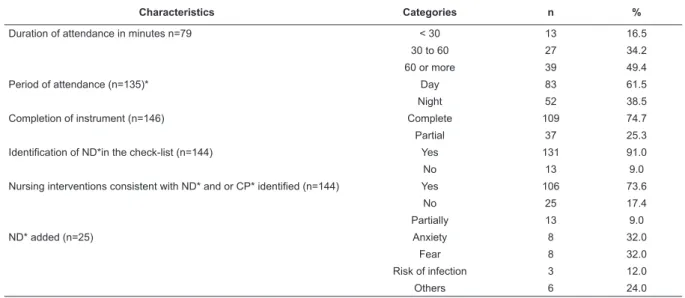
Table 1 presents the characteristics of nursing care in the Special Care Program - Immediate, it was
observed that half of the visits lasted 60 minutes or
more, most of which occurred during the day period and the instruments were illed out completely. There was consistency of interventions with nursing diagnoses and collaborative problems identiied.
Characteristics Categories n %
Duration of attendance in minutes n=79 < 30 13 16.5
30 to 60 27 34.2
60 or more 39 49.4
Period of attendance (n=135)* Day 83 61.5
Night 52 38.5
Completion of instrument (n=146) Complete 109 74.7
Partial 37 25.3
Identification of ND*in the check-list (n=144) Yes 131 91.0
No 13 9.0
Nursing interventions consistent with ND* and or CP* identified (n=144) Yes 106 73.6
No 25 17.4
Partially 13 9.0
ND* added (n=25) Anxiety 8 32.0
Fear 8 32.0
Risk of infection 3 12.0
Others 6 24.0
Table 1 - Characterization of nursing care in the Special Care Program - Immediate. CAISM/UNICAMP, 2006-2007
* day 07:00 to 19:00 and night 19:00 to 07:00 / ND= Nursing Diagnosis / CP= Collaborative Problems
It was observed that 70.8% to 83.9% of women
who attended the outpatient nursing consultation
reported having received recommendations according to
Table 2 - Guidelines received from the nurses in the Special Care Program - Immediate, according to the women attended.
CAISM/UNICAMP, 2006-2007
Characteristics Categories n %
Understanding of risks for the woman n=106) Yes 79 74.5
Do not remember 25 23.6
No 2 1.9
Delivery of Vaccination Card (n=106) Yes 75 70.8
No 31 29.2
Adequate scheduling of ARV* (n=93) Yes 78 83.9
No 15 16.1
Information about adequate scheduling (n=93) Yes 79 84.9
Do not remember 7 7.5
No 7 7.5
Information about the collateral effects of the ARV* (n=93) Yes 76 81.7
Do not remember 12 12.9
No 5 5.4
Information about the serology (n=93) Yes 74 79.6
Do not remember 14 15.1
No 5 5.4
Information about nutrition and oral hydration (n=93) Yes 75 80.6
Do not remember 13 14.0
No 5 5.4
Information about the use of condoms (n=92) Yes 71 77.2
Do not remember 15 16.3
No 6 6.5
*ARV = antiretrovirals
Comparing care between day and night periods, it
can be observed in Table 3 that the length of nursing
consultation was greater at night, and that women
attended in this period more often: knew the health risks
resulting from sexual violence; made use of ARV drugs
at times appropriate to their daily activities; and were
more informed about the purpose of serological tests for
STD and HIV collected in the immediate care.
Table 3 - Nursing care characteristics in the Program of Assistance of Victims of Sexual Violence which were signiicantly different between the day and night periods (n=146). CAISM/UNICAMP, 2006-2007
Characteristics Categories
Day* Night*
p-value**
n % n %
Duration of attendance in minutes (n=79) 0.0227
< 30 11 24.4 02 5.9
30 to 60 17 37.8 10 29.4
60 or more 17 37.8 22 64.7
Total 45 100.0 34 100.0
Understanding of health risks (n=101)*** 0.0072
Yes 42 65.6 33 89.2
No 22 34.4 04 10.8
Total 64 100.0 37 100.0
Adequate scheduling of ARV (n=88)*** 0.0397
Yes 41 77.4 33 94.3
No 12 22.6 02 5.7
Total 53 100.0 35 100.0
Information about the serology (n=88)*** 0.0351
Yes 37 69.8 32 91.4
No 16 30.2 3 8.6
Total 53 100.0 35 100.0
Reis MJ, Lopes MHBM, Higa R, Bedone AJ.
The logistic regression test was carried out to verify
if the characteristics of nursing care, as shown in Table 3, were inluenced by the time of consultation, independent of that being day or night. There were no signiicant differences observed.
Discussion
Research conducted at The Woman’s Hospital - CAISM/
UNICAMP between October 1999 and February 2002(9)
showed that at that time, just over 80% of women who suffered sexual violence attended the irst control with the gynecologist, while less than 50% returned for the second
visit and only 29% completed the six-month follow-up.
In this study, as some records were excluded
from analysis, one can consider that at least 84.9% of
women who attended the service returned to the service for the irst consultation of outpatient follow-up with the multidisciplinary team, which suggests that there
was a slight increase in service adhesion or at least the
maintenance of their index. One possible explanation for
this may be the fact that, currently, the outpatient follow-up
is performed at The Woman’s Hospital - CAISM/UNICAMP,
concentrating the attendance of the multidisciplinary team
in the same physical space, and the women who miss the irst appointment are invited by members of that team.
Women who suffer sexual violence require more
than the simple application of protocols, they expect to receive a digniied attendance, respectful and welcoming, which protects them from re-victimization, because they
need emotional support, since their self-esteem and
their ego may have been injured more severely than
any physical injury that may be presented(3).
When the women maintain ties with the personnel
of the team after the termination of treatment this
reveals that there was quality in the user embracement,
indicates that they liked the service, and manifests
as a willingness to return(4), thus, it is necessary that
the professional show sympathy and understanding,
willingness to listen with respect and interest, and be prepared to give emotional support in the irst attendance.
Although, in a previous study conducted at The
Women’s Hospital - CAISM/UNICAMP(10) the majority
of cases of sexual violence (79.5%) occurred between
18:00 and 06:00, actually the majority of nursing
attendances (61.5%) were realized during the day
period. It is likely that the violence continues to occur
more frequently at night, but a woman looks for help
in the morning.
The time spent in care, 60 minutes or more,
demonstrates the welcoming attitude in the
nurse-client relationship, since the nurse must be able to
have a comprehensive and neutral stance, i.e. not
demonstrate personal manifestations(11) that might
interfere with the user embracement and, consequently,
in the adherence to treatment. In fact, researchers
believe that individualized attention is the great ally of
improved adhesion and the nurse-client relationship,
the most important tool in for its effectiveness(12).
Trust is the key element of this relationship and for it
to occur it is necessary to establish empathy, credibility
in the professional, respect for privacy and, above all,
the understanding of the information and the client’s
behavior.
To systematize, individualize, manage and assume
the role of provider of nursing care together with the team, basing this scientiically, is the goal and desire that nurses have demonstrated(13). In addition, to
characterize the quality of care offered it is important
to consider the steps of the nursing process, which
includes the anamnesis, diagnoses, results and nursing
interventions. Faced with this, it can be consider that
nursing care performed at The Women’s Hospital -
CAISM/UNICAMP has been adequate and, in the way
it is proposed, permits assistance for the needs of the
nurses, once the service is systematized, individualized,
and allows the nurses to provide direct care, based on scientiic evidence.
The results show that the vast majority of women conirmed having been guided by the nurses regarding emergency contraception (EC), the risks and
prevention of STD/HIV, the importance of condom use,
the use of ARVs and their side effects during the user
embracement, which suggests the information has been
given in an adequate way. These orientations are the
basis of attendance in order that, among other problems,
virgin women suffer a higher risk of HIV infection, with
the perforation of the hymen, and considering that
60% of women do not use any contraceptive method,
the vulnerability to pregnancy is evident, therefore,
understanding and correct use of EC and of HAART in the irst hours after the rape can prevent pregnancy and the risk of acquiring HIV(14).
However, there is a need to closely monitor
professionals to understand conditions that might be
implicated in the increased risk of not understanding the
information offered, which can lead to noncompliance with
treatment. A survey which evaluated the adherence to HIV
sexual violence showed that noncompliance was attributed
to psychological and/or emotional disorders and not
understanding of the treatment(6). Another study, carried
out in our department, showed that among women who
completed six months of follow-up with the infectologist, the
incidence of abandonment of chemoprophylaxis treatment
of HIV was 1.5 times greater among those with incomplete
elementary education when compared to those who had a
university education(15).
Most of the nurses on the night shift took 60
minutes or longer to perform an attendance. It is likely
that time spent was directly related to the fact of the
multidisciplinary team not being complete during the
night and that the nurses need to provide immediate interventions when the identiication of the nursing diagnoses related to psychological or social changes in
an attempt to minimize the feelings and/or psychosocial dificulties before they receive specialized assistance. The night shift comprises 12 hours of work and could be
a facilitating factor, allowing nurses to devote more time
to nursing user embracement/consultation, which would
justify a higher quality of care in this period. However,
the question is whether the longer consultation time can
lead to a higher quality of care, since the characteristics of care were not inluenced by the consultation time and were by the period in which women were received.
Considering this fact, a plausible explanation would be
the different preparation of the nurses on the two shifts.
This study did not characterize the nurses responsible for
care, but it is possible that nurses working night shifts
are more experienced, with more training to act in the
area and, because they are better prepared to develop
this type of care, can carry it out with higher quality.
Other possible explanations must be sought, such
as the possibility that the nurses of the day-shift more frequently isolate themselves or “anesthetize” their
emotions, so that they do not interfere in the interaction
with others, causing distancing, forgetting that to provide an effective interaction with women who suffer
sexual violence and their families, is of fundamental importance not only in the user embracement, but also
in the recovery at a situation that is full of anguish, revulsion and insecurity.
Conclusions
The time spent, of 60 minutes or more, demonstrated
that the nurses had a welcoming attitude during the
immediate /emergency care of women who suffered sexual violence. The return to nursing consultations in
the outpatient sample was 84.9%. The account of these women that they had received orientation on health
risks resulting from sexual violence and the purpose of serology collected, as well as the use of ARV drugs in
schedules appropriate to their daily activities, indicated that the immediate/emergency nursing care was
adequate, in accordance with the protocol established
by the institution and followed the steps of the nursing process. Women received more information in the night
period, in which the consultation was longer, but this fact alone does not justify the higher quality of care of
the night shift team.
This study did not investigate the length of
experience and training of nurses involved, nor the quality of the nurse-client relationship. Therefore, these
aspects can be the subjects of other studies aimed at
evaluating the quality of nursing care.
References
1. Rede Saúde (BR). Rede Nacional Feminista de Saúde e Direitos Reprodutivos. Jornal da Rede Saúde - São Paulo [Internet]; 1999. [acesso em: 12 setembro 2007]. Disponível em: http:// www.redesaude.org.br/jornal.htm
2. Bedone AJ, Faúndes A. Atendimento Integral às Mulheres Vítimas de Violência Sexual: Centro de Assistência Integral à Saúde da Mulher da Universidade Estadual de Campinas Fórum. Cad Saúde Pública. 2007;23(2):465-9.
3. Faúndes A, Rosas CF, Bedone A, Orozco LT. Violência Sexual: Procedimentos indicados e seus resultados nos atendimentos de urgência de mulheres vitimas de estupro. Rev Bras Gineco. Obstet. 2006;28(2):26-35.
4. Oliveira EM Barbosa RM, Moura AAVM, Kossel KV, Mourelli K, Botelho LFF, Stoianov M. Atendimento às Mulheres Vítimas de Violência Sexual: Um estudo qualitativo. Rev Saúde Pública. 2005;39(3): 376-82.
5. Mattar R, Abrahão AR, Andalaft J Neto, Colas OR, Schroeder I, Machado SJR, et al. Assistência multiprofissional à vítima de violência sexual: a experiência da Universidade Federal de São Paulo. Cad Saúde Pública. 2007;23(2):459-64.
6. Higa R, Mondaca AA, Reis MJ, Lopes MHBM. Atendimento à mulher vítima de violência sexual: protocolo de assistência de enfermagem. Rev Esc Enferm USP. 2008; 42(2):377-82. 7. Diniz NMF, Almeida LCG, Ribeiro BCS, Macêdo VG. Women victims of sexual violence: adherence to chemoprevention of HIV. Rev. Latino-Am. Enfermagem. [internet]. 2007; 15(1): 7-12. [acesso em: 12 setembro 2007]. Disponível em: http:// www.scielo.br/pdf/rlae/v15n1/v15n1a02.pdf
Reis MJ, Lopes MHBM, Higa R, Bedone AJ.
9. Correa MEC, Labronici LM, Trigueiro TH. Sentir-se impotente:Um sentimento Expresso por Cuidadores de Vítimas de Violência Sexual. Rev. Latino-Am. Enfermagem. 2009 maio-junho;17(3):289-94.
10. Oshikata CT, Bedone A J, Faúndes A. Atendimento de emergência a mulheres que sofrem violência sexual: características das mulheres e resultados até seis meses pós-agressão. Cad Saúde Pública 2005; 21(1):192-9.
11. Ministério da Saúde (BR). Secretaria de Políticas de Saúde. Departamento de Gestão de Política Estratégico. Área Técnica Saúde da Mulher. Normas sobre a prevenção sobre prevenção e tratamento dos agravos resultante da violência sexual contra a mulher e o adolescente. Brasília: Ministério da Saúde; 2002. [acesso em: 10 abril 2006]. Disponível em: http://bvsms.saude. gov.br/bvs/publicacoes/caderno6_saude_mulher.pdf
12. Figueiredo RM, Sinkoc VM, Tomazim CC, Gallani MCBJ, Colombri MRC. Adherence of AIDS patients to treatment with antiretroviral drugs in a university hospital: difficulties observed and suggestions of interventions. Rev. Latino-Am. Enfermagem. [internet]. 2001; 9(4):50-5. [acesso em: 12 setembro 2007]. Disponível em: http://www.scielo.br/pdf/rlae/v9n4/11483.pdf 13. Carraro TE, Kletemberg DF, Gonçalves LM. O ensino da metodologia da assistência de enfermagem no Paraná. Rev Bras Enferm. 2003;56(5):499-501.
14. Drezett J, Baldacini I, Nisida IVV, Nassif VC, Nápoli PC. Estudo da adesão à quimioprofilaxia anti-retroviral para a infecção por HIV em mulheres sexualmente vitimadas. Rev Bras Ginecol Obstet. 1999; 21(9):539-44.
15. Garcia MT, Figueiredo RM, Moretti ML, Resende MR, Bedone AJ, Papaiordanou PMO. Postexposure prophylaxis after sexual assaults: a prospective cohort study. Sexual Transm Dis.2005; 32(4):214–9.
Received: Aug. 13th 2009