MEDICATION SYSTEM: ANALYSIS OF ACTIONS TAKEN BY
PROFESSIONALS IN PSYCHIATRIC UNITS
Maristela Monteschi Souta1, Paulo Celso Prado Telles Filho2, Kelly Graziani Giacchero Vedana3, Luiz Jorge Pedrão4, Adriana Inocenti Miasso5
1 PhD in Sciences. Ribeirão Preto, São Paulo, Brazil. E-mail: [email protected]
2 PhD in Nursing. Professor, Universidade Federal dos Vales do Jequitinhonha e Mucuri. Teóilo Otoni, Minas Gerais, Brazil. E-mail: [email protected]
3 PhD in Nursing. Professor, Psychiatric Nursing Department, Escola de Enfermagem de Riberão Preto (EERP), Universidade de São Paulo (USP). Ribeirão Preto, São Paulo, Brazil. E-mail: [email protected]
4 PhD in Nursing. Professor, Psychiatric Nursing Department, EERP/USP. Ribeirão Preto, São Paulo, Brazil. E-mail: lujope@eerp. usp.br
5 PhD in Nursing. Professor, Psychiatric Nursing Department, EERP/USP. Ribeirão Preto, São Paulo, Brazil. E-mail: amiasso@ hotmail.com
ABSTRACT: This study analyzed the medication systems in psychiatric units of a general hospital and a psychiatric hospital in the state of São Paulo, Brazil. It is a quantitative and cross-sectional, exploratory survey study with 144 professionals from the areas of medication, nursing and pharmacy. Data were collected by direct, non-participative observation and by medical records review. Data were analyzed using descriptive statistics. Factors that affect patient safety, such as interruptions during prescription, handwritten changes to electronic prescriptions, limited handling of the electronic prescription system, unavailable clinical pharmacy, mistakes in activities related to the preparation and administration of medications and other factors were identiied. The study reveals the susceptible points for the occurrence of medication errors in psychiatric hospitalization departments and discusses recommendations and technological resources that can promote security in the medication system.
DESCRITORS: Medication errors. Safety management. Medication system. Mental health.
SISTEMA DE MEDICAÇÃO: ANÁLISE DAS AÇÕES DOS PROFISSIONAIS
EM UNIDADES DE INTERNAÇÃO PSIQUIÁTRICA
RESUMO: Este estudo analisou os sistemas de medicação em unidades de psiquiatria de um hospital geral e de um hospital psiquiátrico, do interior de São Paulo, Brasil. Trata-se de estudo quantitativo, transversal, tipo survey exploratório e realizado com 144 proissionais da medicina, enfermagem e farmácia. Os dados foram coletados por observação não participante direta e revisão em prontuários e foram analisados por estatística descritiva. Foram identiicados fatores que desfavorecem a segurança do paciente como interrupções, durante a atividade de prescrição, alterações manuscritas em prescrições eletrônicas, restrições no manuseio do sistema eletrônico de prescrição, indisponibilidade de farmácia clínica, falhas nas atividades relacionadas ao preparo e à administração dos medicamentos e outros. Este estudo revela pontos vulneráveis para a ocorrência de erros de medicação em serviços de internação psiquiátrica e discute recomendações e recursos tecnológicos que podem promover a segurança no sistema de medicação.
DESCRITORES: Erros de medicação. Gerenciamento de segurança. Sistema de medicação. Saúde mental.
SISTEMA DE MEDICACÍON: ANÁLISIS DE LAS ACCIONES
PROFESIONALES EN UNIDADES PSIQUIÁTRICAS
RESUMEN: Este estudio analizó los sistemas de medicación en unidades psiquiátricas de un hospital general y de un hospital psiquiátrico del interior del estado de Sao Paulo, en Brasil. Estudio cuantitativo, transversal y exploratorio. Participaron de la encuesta 144 profesionales de medicina, enfermería y farmacia. Los datos fueron obtenidos por medio de observación no participante directa y revisión de ichas médicas y se analizaron por estadística descriptiva. Fueron identiicados factores que no favorecen la seguridad del paciente como: interrupciones durante la actividad de prescripción; modiicaciones escritas en prescripciones electrónicas; restricciones en la manipulación del sistema electrónico de prescripción, indisponibilidad farmacéutica; fallas en las actividades relacionadas en la preparación y administración de los medicamentos, y otros factores. Este estudio revela puntos vulnerables para casos de errores de medicación en servicios de internación psiquiátrica y discute recomendaciones y recursos tecnológicos que pueden promover la seguridad en el sistema de medicación. DESCRIPTORES: Errores de medicación. Administración de seguridad. Sistema de medicación. Salud mental.
INTRODUCTION
The medication system in hospital institutions is complex, and involves consecutive actions of different health professionals. This can lead to the occurrence of medication errors1 at different stages,
such as prescription, dispensation, preparation and administration.
Nowadays, medication errors are brought to light because they affect the quality of patient care and contribute to increase morbidity, mortality,
length of hospital stay and inancial health costs.2-4
There is a shortage of studies on medication errors in psychiatry, especially in comparison with other health areas.5 However, a study conducted in
the United Kingdom observed that medication er-rors are common in mental health services, and that 56.2% of the errors occurred in patients hospitalized in wards, during three months of hospitalization.6
Another study of medication errors in a Japanese psychiatric hospital found a 2.14 rate of medication errors reported for every 1,000 patients per day, which suggests the underreporting of medication errors in the studied context.7 The focus of assistance
should therefore be on strategies that prevent errors at different stages of the medication system and ensure patient safety. Among these strategies, a systemic approach to medication error, which con-siders failures in the medication system processes and not errors incurred by professionals involved stands out. Thus, the strategy is to prevent errors
instead of inding a culprit.8
Internationally, error-related data in medica-tion administramedica-tion are alarming; since nurses are highly involved in this process, they are
co-respon-sible for the good low of the medication system.
Consequently, nursing is fundamental for the reduc-tion and prevenreduc-tion of medicareduc-tion errors.1,9-10 Nurses
must play an active role in identifying, reporting and analyzing errors in the medication system. Furthermore, their role is essential for monitoring, planning interventions and policies to promote safety, medication administration and maximize
beneits of patient-related care.3
This study is relevant because it is an oppor-tunity to show susceptible issues for on the occur-rence of medication errors at the different stages of the medication system in psychiatric units and, to provide support in implementing practical actions that can lead to an effective change to the current
medication systems. Within this context, this study was aimed at analyzing the medication prescrip-tion, dispensaprescrip-tion, preparation and administrations processes in psychiatric units of a general hospital
(GH) and a psychiatric hospital (PH), both in the
state of São Paulo, Brazil.
METHOD
This is a quantitative, cross-sectional ex-ploratory survey study. It was performed in two
psychiatric units of a public GH and four psy -chiatric units for acute patients care of a public
PH, in 2012 and during the irst semester of 2013.
The psychiatric units of the general hospital had a total of 24 beds, 15 in unit A and 9 in unit B. In the psychiatric hospital, the following were
in-vestigated: unit C as “irst admission” (17 beds), unit D as “psychosocial care” (15 beds), unit E as “acute male” (13 beds) and unit F “acute female”
(13 beds), totaling 58 beds.
The sample in both hospitals consisted of all the professionals who met the inclusion criteria: staff of the units under study in charge of func-tions related to the medication of hospitalized patients. Professionals who were off duty or on vacation during the data collection period were excluded.
The study population was composed of all professionals of the medical (13), nursing (99) and pharmaceutical (54) teams of the investigated units. Thirteen professionals refused to participate in the study, and nine were absent. Therefore, the sample included 12 doctors, 17 nurses, 65 nursing assistants and/or technicians, 13 pharmacists and 37 pharmacy assistants, totaling 144 professionals.
A trained researcher made direct and non-participative observations for data collection in the hospitalization units and in hospital phar-macies. The observations focused on the medica-tion prescripmedica-tion, dispensamedica-tion, preparamedica-tion and administration performed by these profession-als. During data collection, when more than one professional was involved in the activity only the
irst healthcare professional to start the activity
was observed.
Each process was observed for a week in each unit, divided into three morning shifts, two afternoon shifts and two night shifts. The number
of medications in this period. The observation followed an adapted a structured script,11 which
was used to collect data from prescriptions.12 .The
data were analyzed using descriptive statistics and presented in tables, with absolute and relative frequencies.
The study was approved by the Research Ethics Committee (Process HCRP No. 6911/2010). Participants signed an Informed Consent Form for Participation in Research, in accordance with Reso-lution N. 196/96.
RESULTS
The medication system, in both hospitals, involved several steps and different professional
categories. Some differences were identiied when the study sites’ lowcharts were compared. In the
dispensation process, services differed as to the professionals who participated in the process, the containers in which the patients’ medications were placed, and in the drug transportation and distribu-tion to the units. Clerks and messengers participated
in the dispensation at the GH, as opposed to the PH,
where the pharmacy assistants were predominantly in charge.
Messengers were responsible for medication distribution at the inpatient units at the GH, while,
nursing professionals collected medications from the Pharmacy and took them to the sectors at the PH. The messengers’ distribution system reduced the nursing staff’s activity load and allowed for faster medication delivery, since delivery was the messenger’s single task.
It was observed that nursing professionals at
the GH checked the dispensed medications when
they received them and when they separated them for the patients. At the PH, nursing professionals only checked each patient’s drugs at the time of separating them in the unit.
A lowchart of the hospitals, showing general
aspects of the medication prescription, dispensa-tion, preparation and administration processes is presented below.
Figure 1- General Hospital (GH) and Psychiatric
Hospital (PH) comparative lowchart
The steps in the medication system are pre-sented below.
Medication prescription process
At the GH, unit A had an exclusive place for
medical prescription, and unit B was often shared with other professionals. In the four investigated units of the PH, there were exclusive places for
In all studied units, low volume radio and fans were on at the time of prescription. In addition, the team, patients, phones and conversations near the person doing the prescription caused interruptions. In both hospitals, the medical prescription was electronic, but it was observed that handwritten changes were made after the initial prescription.
At the PH, electronic system operation was
compromised by the dificulties the professionals
had in handling the system, and by occasional tech-nical issues, such as blocking the checking of some medications and medical prescription duplication.
In both hospitals, it was observed that pre-scriptions were issued without medical assessment
during the shift. At the GH, prescriptions were
issued daily, while at the PH, they were valid for approximately ten days.
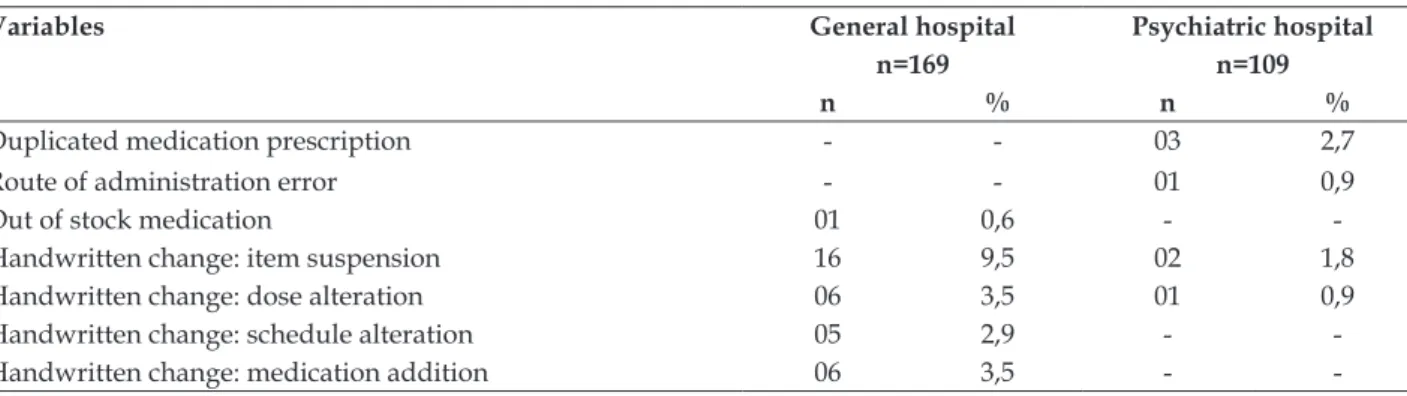
Table 1 shows the distribution of problems
identiied in the prescriptions. At the GH, 114 medi -cal prescriptions were analyzed in unit A and 55 in unit B, totaling 169 prescriptions. At the PH, 109 prescriptions were analyzed, out of which 37 were from unit C, 31 from unit D, 18 from unit E and 23 and from unit F.
Table 1- Distribution of problems identiied in prescriptions from a General Hospital and a Psychiatric
Hospital. Ribeirão Preto-SP, Brazil, 2013
Variables General hospital Psychiatric hospital
n=169 n=109
n % n %
Duplicated medication prescription - - 03 2,7
Route of administration error - - 01 0,9
Out of stock medication 01 0,6 -
-Handwritten change: item suspension 16 9,5 02 1,8
Handwritten change: dose alteration 06 3,5 01 0,9
Handwritten change: schedule alteration 05 2,9 -
-Handwritten change: medication addition 06 3,5 -
-At the GH, 19.4% of prescriptions were
changed by hand , while only 2.7% at the PH . At the PH, duplicated prescriptions (2.7%) and an er-ror in the route of administration of the prescribed medication (0.9%) occurred. The duplicated items on prescriptions were related to such medications as dipyrone sodium and mucilloid; in a single prescrip-tion, there was duplication of biperiden, haloperidol and sertraline.
Regarding the medication prescribed with an inadequate route of administration, dipyrone was prescribed for nasal use, due to a selection error in the electronic system. The route of administration was not corrected in the electronic system or by the prescriber.
With regard to handwritten changes, a change in an antibiotic schedule was highlighted.
The medication had been prescribed for Monday,
Wednesday and Friday, and the doctor changed it manually for Tuesday, Thursday and Saturday. Such conduct generates potential errors, since the pharmacy dispenses antibiotics according to the original electronic prescription.
Medication dispensation process
The dispensing pharmacies at the GH and
the PH medications for the investigated units have common characteristics. Both followed the
regula-tions of Ordinance SVS/MS No. 344/98,13 were
open 24 hours a day and had a higher number of dispensations in the morning. The medications were arranged in alphabetical order and sorted by active ingredient name. In both institutions, pharmacy as-sistants performed the reposition and the validity and integrity control.
Clinical and psychiatric medications were stored in separate stocks in the two hospitals. At the
GH, controlled medications were locked, as opposed
to the PH. The pharmacy assistants responsible for
the psychotropic room in the GH did not rotate for
Pharmacists did not systematically review the pharmacy prescriptions under investigation. There were not enough pharmacists to assist in
the wards, and clariications were provided over
the phone.
Wards at the GH had a small supply of medi -cations such as analgesics, large volume solutions, emergency medication and psychotropic drugs. The mini psychotropic stock was dispensed, in accordance with Decree N. 344/98,13 and restored
upon medical prescription, after medication use. At the PH, errors were observed in the separa-tion of medicasepara-tions, including a greater or smaller dosage than prescribed, and changed medications. However, incorrect doses were not dispensed because all errors in medication separation were
blocked by the electronic system. Manual registra -tion of dispensed medica-tions was observed in some situations. When the system requested information, the pharmacy assistants continued the registration without checking the medication and information beforehand. Another problem was changing the medication after electronic system registration and
before the sealing process.
Medication preparation and administration
process
There were sinks for hand washing and a stor-age room for medication in the places designated for medication preparation. These places were oc-casionally unlocked, which can contribute towards inadequate medication use.
Situations in which medication packages were opened during preparation were registered. This can lead to tablet exchange, as they are no longer
identiiable. At the PH, medications were admin -istered in front of the nurses’ station, and patients crowded while they waited for their medication.
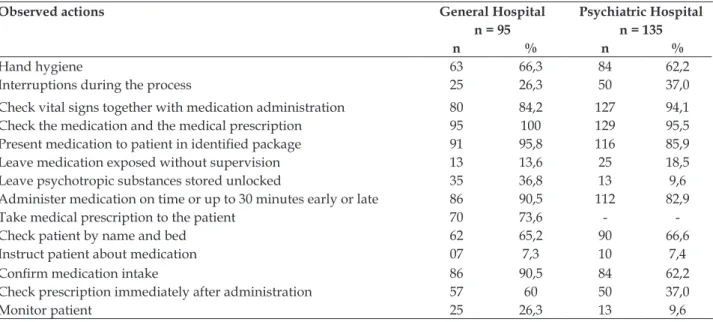
Table 2 shows the distribution of nursing technicians or assistants’ actions. All actions were observed for each patient during a week: some patients were observed more than once, on differ-ent days, and each observation was counted. This
justiies the totals of 95 and 135 patients in the GH
and the PH, respectively.
Table 2 - Distribution of nursing technicians’ or assistants’ actions in the patient medication preparation and administration stage at the General Hospital and the Psychiatric Hospital. Ribeirão Preto-SP, Brazil, 2013
Observed actions General Hospital Psychiatric Hospital
n = 95 n = 135
n % n %
Hand hygiene 63 66,3 84 62,2
Interruptions during the process 25 26,3 50 37,0
Check vital signs together with medication administration 80 84,2 127 94,1
Check the medication and the medical prescription 95 100 129 95,5
Present medication to patient in identiied package 91 95,8 116 85,9
Leave medication exposed without supervision 13 13,6 25 18,5
Leave psychotropic substances stored unlocked 35 36,8 13 9,6
Administer medication on time or up to 30 minutes early or late 86 90,5 112 82,9
Take medical prescription to the patient 70 73,6 -
-Check patient by name and bed 62 65,2 90 66,6
Instruct patient about medication 07 7,3 10 7,4
Conirm medication intake 86 90,5 84 62,2
Check prescription immediately after administration 57 60 50 37,0
Monitor patient 25 26,3 13 9,6
In table 2, it can be seen that only the medication and medical prescription check was
performed for all patients, only at the GH. Errors
were recorded in all other actions in both hospi-tals, and potential mistakes were observed at this stage of the medication system as well. Hand
hy-giene was not performed in 33.7% of procedures
at the GH, and 37.8% at the PH. Moreover, it was
observed that some professionals consecutively administered medications to several patients
and only performed hand hygiene before the irst
No nursing professional took the prescription to the patient when administering the medication at the PH. All professionals prepared the medication in advance and did not check the prescription with the patient. Such action was done with 73.6% of the
patients at the GH. There were mistakes in checking
the patient by name and bed. A minority of patients was instructed when receiving the medication (7.3%
at the GH and 7.4% at the PH) - this was the least
performed action in medication administration.
Conirmation of drug intake was for only
for 62.2% of patients at the PH, and for 90.5% at
the GH. A minority of patients was monitored after medication administration (26.3% at the HG
and 9.6% at the PH). The participation of nurses was not observed in medication preparation and administration medications in either hospital.
Regarding proposal for improvement to the medication system, an information center was
be-ing implemented at the GH, includbe-ing medication
manuals for electronic access designed by a mul-tidisciplinary team. Some sectors (which did not include psychiatry) had a clinical pharmacy and pharmacovigilance-related actions. The implemen-tation of a unit dose medication system and bedside
technology use had been planned. The GH had
proposals to improve the medication system and to develop a pharmacovigilance program.
DISCUSSION
The medication system lowchart for both
hospitals reveals differences that can affect the system’s safety and operation. Electronic medical prescription indicated an effort to prevent medica-tion errors - the use of technology to computerize medical prescriptions can prevent errors related to writing or reading the handwritten prescription.2
The professionals had dificulties to use the
electronic prescription properly and handwritten changes occurred after the initial prescription. Exclusive electronic medication prescription is in-dicated as an important strategy to prevent errors and problems arising from the poor understanding of prescription.14 To prevent medication errors, it is
recommended is to make all changes electronically and immediately inform the entire team. The medi-cal prescription should be systematimedi-cally consulted during medication preparation and administration.
The Brazilian Common Denomination ( De-nominação Comum Brasileira, DCB) states that the prescription should be legible and include the
dosage, route of administration, concentration, prescription date, duration of treatment, amount of
medication, patient identiication, pharmaceutical
form and the physician’s seal with his/her Regional
Medical Board registration number.15 The electronic prescription includes mandatory ields that ensure
this information is registered.
There was noise and disruption in the environ-ment where the prescription was issued, which can interfere with patient safety and contribute towards
mistakes in the prescription process. Organizational
strategies are necessary in order to lessen them.16
Duplicated prescriptions were observed at the PH, which can contribute towards the dispen-sation and administration of duplicated items and therefore, constitute potential medication error. Such aspect is alarming as psychiatric drugs, often prescribed in psychiatric units, present high risk of toxicity and may expose patients to poisoning, when administered in double doses.
The department of nursing intercepted the error in the medication prescribed with the inad-equate route of administration. It should be noted that routes for which there is no application of a medication should be blocked in the electronic system for patient safety. The literature shows that when the nursing staff has knowledge of the medications, it becomes an important barrier for medication errors.17
In one of the investigated hospitals, the
dif-iculty professionals had to operate the electronic
system was evident. It is important to highlight that the technological training of professionals is highly recommendedfor the implementation of the electronic system as a tool for patient safety and error prevention.14
The individualized dose dispensation system in both hospitals allows for the review of medical prescriptions, greater control over medication stock and stock reduction in units. However, the unit dose system is a more advanced and secure alternative that does not require nursing manipulation, since the medication is available in the exact dose needed for each patient, for up to 24 hours.18
of prescriptions by a pharmacist is mandatory, and must prioritize potentially dangerous or high surveillance medication. The use of an electronic program is highly recommended for pharmaceuti-cal support in the process of prescription analysis. Therefore, the pharmacist must observe the concen-tration, viability, physical-chemical and pharma-cological compatibility of the components, dosage, pharmaceutical form, route of administration and time of administration.21 Furthermore, investments
in the clinical pharmacist’s performance can
gener-ate direct beneits to patient safety and maximize
the quality of care.22
Regarding the medication preparation and administration procedure - a stage of the nursing staff’s competence system - the observed failures are
potential for medication errors. Medication admin -istration represents the last chance of checking and preventing errors, which is fundamental to reduce preventable harm to the patient.1,9 However, a study in psychiatric wards in Denmark identiied that the
majority (75%) of medication errors that occurred were related to the medication administration step.9
The lack of hand hygiene was observed in most procedures. The literature shows that hands must be sanitized each time the nursing staff offers care, including medications, to prevent infection.23 Mistakes related to checking the patient’s
name and bed were observed in both hospitals.
Patient identiication during the medication prepa -ration and administ-ration process is the premise to prevent mistakes that lead to patient changes. Ac-cording to the literature, the patients must be asked their full name before the medication is
adminis-tered. In addition, the use of at least two identiiers to conirm the correct patient is necessary, such as
the name in the patient’s bracelet, bed and chart.21
Surprisingly, patient instruction at the time of drug administration was one of the actions the nursing professionals least performed actions.
Failures to conirm medication intake were also
observed. Knowledge of the drug treatment is rel-evant for the patient to intercept errors at the time the medication is administered.Thus, guidance on
medications and conirmation of intake are particu -larly important among people with mental disor-ders, because treatment compliance in this patient group is a major challenge to clinical practice.24
The patient must always be monitored after medication administration. In this study, however, such action was performed for the minority of
patients. In monitoring, the professional needs to maintain a clear communication with the patient, to consider the patient’s and/or his/her caregiver’s observations and reports on the effects of the ad-ministered drugs, and to register all the monitoring parameters.21
In this study, interruptions in medication
preparation and administration were identiied as
an error. This is strongly supported by the litera-ture.10,25-28 Studies reveal that the main sources of
interruption for nurses are other healthcare profes-sionals, nursing staff, patients, relatives, visitors and self-interruption.25 A recent review of the literature
showed that little is known of how nurses deal with interruptions and distractions during medication administration, and points to the urge for innova-tive and sustainable strategies to overcome this problem.28
Although nurses play a fundamental role in the process of medication preparation and admin-istration, their participation was not observed in this step of the medication system, which is alarm-ing. The nurses’ responsibility in avoiding errors is highlighted since they are trained to maintain a
critical and relective approach and have scientiic
basis on medication administration for the patient’s safety.29 It is necessary to invest to train nurses
com-mitted to patient safety in medication administra-tion.10 Nurses need to understand that medication
administration is a complex, dynamic and multi-faceted phenomenon, and to be competently and responsibly involved in this process.1
It is important to analyze and organize the nursing work process in hospital institutions to optimize the quality of the service provided and to establish an institutional and professional culture of safety, promoting responsibility, non-punitive attitudes and patient safety.30
This study is limited by the cross-sectional model, which does not allow it to establish causal
relations for the issues addressed. Moreover, the
data analyzed is related to a delimited observational period and was limited to the employees of two
public hospitals in a speciic geographic territory,
which can restrict the generalization of results. However, this study represents a breakthrough for the knowledge of safety in medication
administra-tion in psychiatric services, as it is the irst Brazilian
CONCLUSION
This study analyzed the medication system of two psychiatric institutions and discussed strategies, recommendations and technological resources that can promote safety in medication systems. It was observed that organizational problems contribute
towards a deicient culture of safety. Interventions
and adjustments of behaviors, actions, processes, protocols and the structuring of the organization are mandatory, as patient safety is essential for the
qualiication of the care provided.
Health professionals, managers and re-searchers should consider the gaps and potentials observed in the investigated sites in order to plan and implement actions and studies that focus on psychiatric patient safety in drug therapy during their hospitalization.
REFERENCES
1. Leufer T, Cleary-Holdforth J. Let’s do no harm: medication errors in nursing: Part 1. Nurse Educ Prac. 2013 May; 13(3):213-6.
2. Shahrokhi A, Ebrahimpour F, Ghodousi A. Factors effective on medication errors: a nursing view. J Res Pharm Pract. 2013 Jan-Mar; 2(1):18-23.
3. Cheragi MA, Manoocheri H, Mohammadnejad E, Ehsani SR. Types and causes of medication errors from nurse’s viewpoint. Iran J Nurs Midwifery Res. 2013 May-Jun; 18(3):228-31.
4. Choi I, Lee SM, Flynn L, Kim C, Lee S, Kim NK, et al. Incidence and treatment costs attributable to medication errors in hospitalized patients. Res Soc Adm Pharm. 2016; 12(3):428-37.
5. Jayaram G, Doyle D, Steinwachs D, Samuels J. Identifying and reducing medication errors in psychiatry: creating a culture of safety through the use of an adverse event reporting mechanism. J Psychiatr Pract. 2011 Mar; 17(2):81-8.
6. Brownlie K, Schneider C, Culliford R, Fox C, Boukouvalas A, Willan C, et al. Medication reconciliation by a pharmacy technician in a mental health assessment unit. Int J Pharm Clin. 2014 Apr; 36(2):303-9.
7. Higuchi A, Higami Y, Takahama M, Yamakawa M, Makimoto K. Potential underreporting of medication errors in a psychiatric general hospital in Japan. Int J Nurs Pract. 2015; 21 (Suppl 2):2-8.
8. Cano FG, Rozenfeld S. Eventos adversos a medicamentos em hospitais: uma revisão sistemática. Cad Saúde Pública [Internet]. 2009 [cited 2014 Jan 25]; 25(Suppl 3). Available from: http://www. scielo.br/scielo.php?script=sci_arttext&pid=S0102-311X2009001500003&lng=en
9. Soerensen AL, Lisby M, Nielsen LP, Poulsen BK, Mainz J. The medication process in a psychiatric hospital: are errors a potential threat to patient safety? Risk Manag Health Policy. 2013 Sep; 2013(6):23-31. 10. Cleary-Holdforth J, Leufer T. The strategic role of
education in the prevention of medication errors in nursing: Part 2. Nurse Educ Pract. 2013 May; 13(3):217-20.
11. Silva AEBC. Análise do sistema de medicação de um hospital universitário do estado de Goiás [disserta -ção]. Ribeirão Preto (SP): Universidade de São Paulo. Programa de Pós-Graduação em Enfermagem; 2003. 12. Oliveira RC. Análise do sistema de utilização de
medicamentos em dois hospitais da cidade de Recife-PE [tese]. Ribeirão Preto (SP): Universidade de São Paulo. Programa de Pós-Graduação em Enfermagem; 2005.
13. Ministério da Saúde (BR). Portaria n. 344, de 12 de maio de 1998. Aprova o regulamento técnico sobre substâncias e medicamentos sujeitos a controle especial. Diário Oicial da Republica Federativa do Brasil, 13 Fev 1999. Seção 1.
14. Peres HHC, Lima AFC, Cruz DALM, Gaidzinski RR, Oliveira NB, Ortiz DCF, et al. Avaliação de sistema eletrônico para documentação clínica de enfermagem. Acta Paul. Enferm [Internet]. 2012 [cited 2014 Nov 25]; 25(4). Available from:http://www. scielo.br/scielo.php?script=sci_arttext&pid=S0103-1002012000400010&lng=en
15. Dammenhain RA. Manual prático para prescrição de medicamentos de acordo com a legislação sanitária brasileira [manual na Internet]. 2010 [cited 2014 Oct 20]. Available from:http: www.sbrafh.org.br/site/ public/temp/5161ea3ccde67.pdf
16. Ambrosio L, Pumar-Méndez MJ. Factores del entorno de trabajo que inluyen en la ocurrencia de errores de administración de medicación. Anal Sist Sanit Navar. 2013 Jan-Apr; 36(1):77-85.
17. Teixeira TCA, Cassiani SHB. Análise de causa raiz: avaliação de erros de medicação em um hospital universitário. Rev Esc Enferm USP. 2010 Mar; 44(1):139-46.
18. Franco JN, Ribeiro G, D’Innocenzo MBBP. Percepção da equipe de enfermagem sobre fatores causais de erros na administração de medicamentos. Rev Bras Enferm. 2010 Dec; 63(6):927-32.
19. Charpiat B, Goutelle S, Schoeffler M, Aubrun F, Viale JP, Ducerf C, et al. Análise de prescrições por farmacêuticos clínicos no período pós-operatório: um estudo prospectivo de quatro anos. Acta Anaesthesiol Scand. 2012 Jan; 56(8):1047-51.
21. Ministério da Saúde (BR). Portaria n. 2.095, de, 24 de setembro de 2013. Protocolos básicos de segurança do paciente: prevenção de quedas, identificação do paciente e segurança na prescrição, uso e administração de medicamentos. Diário Oicial de República Federativa do Brasil, 25 Set 2013. Seção 1. 22. Salmasi S, Long CM, Khan TM. Interplay of medication
errors and the separation of dispensing. Res Soc Adm Pharm. 2016 Jan-Feb; 12(1):171-2.
23. Coelho MS, Silva Arruda C, Faria Simões SM. Higienização das mãos como estratégia fundamental no controle de infecção hospitalar: um estudo quantitativo. Enferm Global [Internet]. 2011 [cited 2013 Dez 15]; 10(21). Available from:http://scielo. isciii.es/pdf/eg/v10n21/pt_clinica2.pdf
24. Grenard JL, Munjas BA, Adams JL, Suttorp M, Maglione M, McGlynn EA, et al. Depression and medication adherence in the treatment of chronic diseases in the United States: a meta-analysis. J Gen Intern Med. 2011 Oct; 26(10):1175-82.
25. Antoniadis S, Passauer-Baierl S, Baschnegger H, Weigl M. Identiication and interference of intraoperative
distractions and interruptions in operating rooms. J Surg Res. 2014 May; 188(1):21-9.
26. Sorensen EE, Brahe L. Interruptions in clinical nursing practice. J Clin Nurs. 2014 May; 23(9-10):1274-82. 27. Monteiro C, Avelar AFM, Pedreira MLG. Interrupções
de atividades de enfermeiros e a segurança do
paciente: revisão integrativa da literatura.Rev
Latino-AmEnfermagem. 2015 Fev; 23(1):169-79.
28. Hayes C, Jackson D, Davidson PM, Power T. Medica -tion errors in hospitals: a literature review of disrup-tions to nursing practice during medication adminis-tration. J Clin Nurs. 2015 Nov; 24(21-22):3063-76. 29. Fassarella CS, Bueno AAB, Souza ECC. Segurança do
paciente no ambiente hospitalar: os avanços na pre-venção de eventos adversos no sistema de medicação. Rev Red Cuid Saúde. 2013 Jan-Jun; 7(1):1-8.
30. Camerini FG, Silva LD. Segurança do paciente: análise do preparo de medicação intravenosa hospitalar em hospital da rede sentinela. Texto Contexto Enferm [Internet]. 2011 [cited 2014 Nov 20]; 20(1). Available from: http://www.scielo.br/scielo.php?script=sci_ arttext&pid=S0104-07072011000100005
Correspondence: Adriana Inocenti Miasso Escola de Enfermagem de Ribeirão Preto Universidade de São Paulo
Av. Bandeirantes, 3900
14040-902 - Ribeirão Preto, SP, Brazil E-mail: [email protected]