doi: 10.1590/0037-8682-0102-2016
Major Article
Corresponding author:Enf. Ms. Natália Carolina Rodrigues Colombo Gomes.
e-mail: [email protected]
Received 8 August 2016
Accepted 7 February 2017
Prevalence and factors associated with syphilis
in a Reference Center
Natália Carolina Rodrigues Colombo Gomes
[1],
Denise Andrade Pereira Meier
[1],
Flávia Meneguetti Pieri
[1],
Elaine Alves
[1],
Silvia Paulino Ribeiro Albanese
[1],
Edvilson Cristiano Lentine
[2],
Ricardo Alexandre Arcêncio
[3]and Elma Mathias Dessunti
[1][1]. Departamento de Enfermagem, Universidade Estadual de Londrina, Londrina, PR, Brasil. [2]. Centro de Testagem e Aconselhamento, Londrina, PR, Brasil.
[3]. Departamento de Enfermagem em Saúde Pública, Universidade de São Paulo, Ribeirão Preto, SP, Brasil.
Abstract
Introduction: The implementation of the rapid test (RT) for syphilis increases access of vulnerable populations to early diagnosis and treatment, impacting the outcomes of infection.We aimed to assess the prevalence of and factors associated with syphilis in a Center for Testing and Counseling (CTC). Methods: We conducted a cross-sectional study at a Reference Center for
sexually transmitted disease (STD) and acquired immune deiciency syndrome in Londrina, Northern Paraná State, Southern
Brazil. Data regarding the 5,509 individuals who underwent RT from June 2012 to December 2014 were collected from patient records and the CTC Information System and served as the basis to check associations of syphilis cases (346) and cases without syphilis (5,163). Nine patients’ records were not found. OpenEpi was used to perform a prevalence analysis and determine odds ratios to assess the associations between sociodemographic and behavioral variables (independent variables) and cases of
syphilis (dependent variable). An alpha value <0.05 was considered statistically signiicant. Results: The prevalence of syphilis was 6.3%; higher in males (7.5%) than in females (4.3%, p <0.001). Syphilis was associated with an age of 25-34 years, little education, and single marital status. The main associated behavioral factors were men who have sex with men, drug users,
STD patients, and those presenting with an STD in the last year. The use of alcohol, marijuana, cocaine, and crack was signiicantly
associated with syphilis. Conclusions: Strategies for prevention and control of syphilis should be intensiied, especially in
populations identiied as most vulnerable.
Keywords: Syphilis. Prevalence. Serological tests.
INTRODUCTION
Syphilis is a major challenge to public health due to the
signiicant increase in diagnosed cases. The World Health Organization (WHO) estimated that in 2010, there were eleven
million new cases of syphilis per year worldwide1. In 2013, more
than a million people acquired a sexually transmitted disease (STD) each day, and every year 500 million people contract a curable infection, including syphilis2. In Brazil, there are an
estimated 937,000 new cases of STD per year3,4.
Syphilis is caused by Treponema pallidum, a highly pathogenic bacterium5. In acquired syphilis, transmission
occurs predominantly through sexual contact, mainly affecting the genital and anal area. In congenital syphilis, transmission takes place via the placenta or hematogenously from contact
with luids that contain the bacteria at any gestational stage and
clinical stage of maternal disease6.
There are two classiications of acquired syphilis. One,
determined by the infection time, includes recent acquired syphilis (less than a year of infection) and late acquired syphilis (more than a year of infection). The other considers the clinical manifestations and the stages of infection, called primary, secondary and tertiary4.
Most symptoms arise in the irst two stages, which are
considered the longest periods of exposure. The third stage may show no symptoms, giving a false impression of disease resolution, but the consequences may be present. Lasting about a year, the early phase includes the primary, secondary and early latent stages; the late phase is characterized by manifestations of tertiary syphilis7.
immunodeiciency virus (HIV), and pregnant women8-14.
The rapid test (RT), which is regulated by various ministerial orders15-17, was instituted to fulil the need for early diagnosis and
treatment of syphilis. It was justiied by the consequences that an
untreated infection can cause both in pregnant women and in the
general population or speciic groups. The RT is an immunoassay (treponemal) for the detection of speciic antibodies to T.pallidum. It can be performed with a whole blood sample, serum, or plasma and provides results within 30 minutes18.
Given the above, this study aimed to analyze the prevalence of and factors associated with syphilis in a Center for Testing and Counseling (CTC).
METHODS
This was an observational, analytical, and cross-sectional study performed at the Reference Center (RC) for STD and
acquired immune deiciency syndrome (AIDS), located in
Londrina, Paraná State, Brazil. The RC has a testing and counseling center for carrying out RTs for syphilis and other STDs and a clinic for the care of positive cases of syphilis,
human immunodeiciency virus/acquired immunodeiciency syndrome (HIV/AIDS), and other STDs on behalf of the city
and the state’s 17th health region.
The analysis population consisted of 5,509 individuals who underwent rapid testing for syphilis in the period from June 2012 to December 2014.
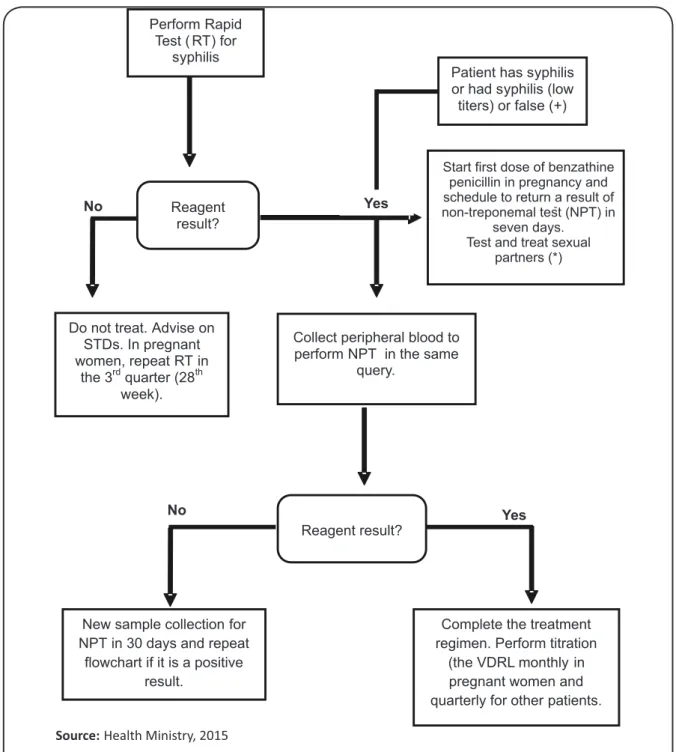
The model adopted in this study followed the routine of the RC in which the initial diagnosis was made by RT (treponemal)
and conirmed by the Venereal Disease Research Laboratory (VDRL) non-treponemal method, as shown in Figure 1.
Data were collected from the patients’ records and the CTC Information System (SI-CTC) proposed by the Ministry
of Health.
Considering the population of all individuals who underwent the test for syphilis, there was a prevalence of positive test of results for syphilis (0: yes, 1: no). Univariate and bivariate analyses were performed using OpenEpi software (version 3.03a), and the data is presented in tables.
Still considering the population of all individuals who underwent the test for syphilis, we performed analyses by crossing the variables associated (independent variables) with the presence of syphilis (dependent variable). In this phase, the chi-squared test of association and odds ratios (OR) with 95%
conidence intervals (95% CI) were used. The signiicance level
was set to 0.05.
Ethical considerations
This study was approved by the Research Ethics Committee of Universidade Estadual de Londrina, with CAAE number
35357914.0.0000.5231 in accordance with Resolution 466/2012 of the National Health Council19.
RESULTS
During the study period, 5,509 RTs were performed, mostly in males (62.5%), those of white race (80.9%), 13-34-year-olds
(55.6%), and those in informal relationships (67.3%; i.e., they were single, separated, or widowed). We observed a higher concentration of individuals who had three years of education or less (41.2%).
The overall prevalence of syphilis was 6.3%, higher in males (7.5%) than in females (4.3%), which was a statistically
signiicant difference (p-value <0.001). In relation to age, the
highest prevalence was observed in the group aged 25 to 34 years (7.4%, p <0.05) and 60 to 90 years (7%).
Regarding the race/color variable, the prevalence of
syphilis was higher among non-whites (7.2%) than among
whites (6.1%); however, this was not a statistically signiicant
difference. Individuals of low education (0-3 years) had a prevalence of 7.7% compared to 4.4% among those whose education included 12 or more years of study (p <0.001). Table 1 shows that a signiicantly higher prevalence rate was identiied
among individuals in an informal relationship (6.6%) than among those with a stable marital union status (5%).
The minimum age of patients with syphilis was 14 years (women) and the maximum was 90 (men) with a mean of 36.4 (SD = 14.44). The study showed the age of men with positive tests was younger than that of women (median, 31 years), with 50% of cases between the ages of 25 and 42 years. Among women, the median age was 37 years, with 50% of cases between 28 and 50 years. It was also observed that a considerable number of individuals above the third age group had a syphilis diagnosis. The sociodemographic variables that were associated with syphilis were male sex, age 25 to 34 years, few years of education, and informal relationships (Table 1).
Table 2 shows the prevalence of syphilis and the odds ratio according to population group. The prevalence was higher among patients with STD (26.1%), MSM (15.2%), and drug users (11.9%), and these groups were strongly associated with syphilis. By analyzing the use of drugs in the last 12 months among individuals with syphilis, we found a prevalence of 9.7%. It was observed that crack, nasally inhaled (snorted) cocaine, marijuana, and alcohol were strongly associated with a positive diagnosis of disease (Table 3).
The prevalence of syphilis was higher among individuals who had used a condom with a casual partner in the past 12 months, in their last relationship, and with their formal partner in their last relationship (p <0.05). It was also observed that the discontinuous use or non-use of a condom with regular partners in the last 12 months was associated with a higher prevalence than was continuous condom use; however, there was no
statistically signiicant difference (p = 0.10). The presence of
an STD in the last 12 months showed a strong association with infection by Trypanosoma pallidum, with a prevalence rate of 37.7% (Table 4).
DISCUSSION
The general prevalence (6.3%) of syphilis identiied in this
study showed a lower rate than that observed in a multicenter study conducted in 10 Brazilian cities. That study found a prevalence of 13.9%, with higher rates in Rio de Janeiro
FIGURE 1 - Flowchart for the management of syphilis using a rapid test and non-treponemal conirmatory test. RT: rapid test;
NPT: non-treponemal test; STDs: sexually transmitted disease; VDRL: venereal disease research laboratory. * Sexual partners with a positive RT should: 1) undergo NPT; 2) be treated for late latent syphilis in the absence of symptoms or clinical history of genital ulcer. The lack of treatment of sexual partners involves inappropriate treatment of the mother, and the conceptus will be considered to have congenital syphilis.
Source:Health Ministry, 2015
Perform Rapid Test ( RT) for
syphilis
Patient has syphilis or had syphilis (low titers) or false (+)
-Reagent result?
Do not treat. Advise on STDs. In pregnant women, repeat RT in
the 3rdquarter (28th week).
Collect peripheral blood to perform NPT in the same
query.
Reagent result?
New sample collection for NPT in 30 days and repeat
flowchart if it is a positive result.
Complete the treatment regimen. Perform titration
(the VDRL monthly in pregnant women and quarterly for other patients.
No Yes
No Yes
Start first dose of benzathine penicillin in pregnancy and schedule to return a result of non-treponemal test (NPT) in
seven days. Test and treat sexual
partners (*)
the São Paulo (Brazil) homeless population, which evaluated the prevalence of syphilis and associated factors using rapid testing in 1,405 individuals, revealed a prevalence of 7%9.
Another study carried out in Angola, Africa among individuals
attending a center of reference and testing for HIV showed
higher positivity for syphilis (15%) among the 431 research subjects21.
Analyzing the prevalence by sex, the results showed it was
greater in men than in women, with a statistically signiicant
difference. In a study whose aim was to examine cases of syphilis acquired, the authors found a higher prevalence in males (73.8%) and in those of sexually active age (58.9% of cases were between 20 and 39 years old)20. With regard to age,
Sociodemographic variables
Positive case of syphilis Negative case of syphilis
p OR (95% CI)
total % total %
Gender (n = 5,509)
female 88 4.3 1,980 95.7 Reference
male 258 7.5 3,183 92.5 <0.001 1.82 (1.42-2.34)
Age (n = 5,463)*
0-12 0 0.0 35 100.0
-13-24 69 4.8 1,368 95.2 Reference
25-34 118 7.4 1,485 92.6 0.003 1.57 (1.16-2.13)
35-44 65 6.4 957 93.6 0.09 1.35 (0.95-1.91)
45-54 42 5.9 664 94.1 0.26 1.25 (0.84-1.86)
55-59 12 5.5 207 94.5 0.65 1.15 (0.62-2.16)
60-90 31 7.0 410 93.0 0.07 1.49 (0.97-2.32)
Race/color (n = 5,502)*
white 271 6.1 4,188 93.9 Reference
nonwhite 75 7.2 968 92.8 0.23 1.17 (0.89-1.53)
Education (years of study) (n = 5,493)*
≥12 55 4.4 1,207 95.6 Reference
4 to 11 115 5.8 1,855 94.2 0.06 1.36 (0.98-1.89)
0 to 3 175 7.7 2,086 92.3 <0.001 1.84 (1.35-2.51)
Civil status (n = 5,505)
stable relationship 90 5.0 1,710 95.0 Reference
informal relationship 243 6.6 3,462 93.4 0.01 1.33 (1.04-172)
TABLE 1
Results of the rapid test for syphilis in individuals attending the Counseling and Testing Center, according to sociodemographic variables. Londrina, Paraná, State, 2012-2014.
OR: odds ratio; 95%CI: conidence interval of 95%; *Some values ignored that were not applicable.
Variables
Positive cases of syphilis Negative cases of syphilis
P OR (95% CI)
total % total %
Population
(n = 5509)
general population* 113 2.8 3,939 97.2 <0.001 Reference
men who have sex with men* 107 15.2 595 84.8 <0.001 6.27 (4.74-8.28)
drug users* 35 11.9 259 88.1 <0.001 4.71 (3.16-7.02)
person with STDs* 36 26.1 102 73.9 0.004 12.3 (8.05-18.79)
others** 19 5.9 304 94.1 <0.001 2.18 (1.32-3.59)
TABLE 2
Result of rapid test for syphilis in individuals followed at the Counseling and Testing Center, according to population group. Londrina, Paraná, State, 2012-2014.
Variables Positive cases of syphilis Negative cases of syphilis p OR (95% CI)
total % total %
Condom use in the last 12 months with formal partner (n = 3,903)*
regular use/ non-use 34 4.7 694 95.3
0.10
Reference
irregular use/non-use 198 6.2 2,977 93.8 1.36 (0.94-1.99)
Condom use at last relationship with formal partner (n = 3,125)*
yes 46 11.1 367 88.9
0.001
Reference
no 174 6.4 2,538 93.6 0.55 (0.39-0.77)
Condom use in the last 12 months with eventual partner (n = 5,505)*
regular use/ non-use 44 6.8 599 93.2
<0.001
Reference
irregular use/non-use 154 3.2 4,708 96.8 0.44 (0.32-0.63)
Condom use at last relationship with eventual partner (n = 1,863)*
yes 53 11.3 414 88.7
0.04
Reference
no 114 8.2 1,282 91.8 0.69 (0.49-0.98)
DST in the last twelve months (n = 5,492)*
no 174 3.4 4,896 96.6
<0.001
Reference
Yyes 159 37.7 263 62.3 17.66 (13.78-22.69)
TABLE 4
Results of the rapid test for syphilis in individuals followed at the Counseling and Testing Center, according to STD reporting in the last 12 months and variables related to the use of condoms. Londrina, Paraná, State, 2012-2014.
*Some values ignored that were not applicable;OR: odds ratio; 95%CI: conidence interval of 95%.
Variables Positive cases of syphilis Negative cases of syphilis p OR (95% CI)
total % total %
Use of drugs in the last 12 months
no 186 4.7 3,745 95.3
<0.001 Reference
yes 151 9.7 1,410 90.3 2.16 (1.72-2.69)
Alcohol use
have never used 182 4.5 3,873 95.5
<0.001 Reference
use/used 155 10.8 1,282 89.2 2.57 (2.06-3.22)
Marijuana use
have never used 267 5.4 4,681 94.6
<0.001 Reference
use/used 70 12.9 474 87.1 2.59 (1.95-3.41)
Cocaine use (nasal inhalation)
have never used 282 5.4 4,893 94.6
<0.001 Reference
use/used 55 17.4 262 82.6 3.64 (2.64-4.96)
Crack use
have never used 292 5.5 4,993 94.5
<0.001 Reference
use/used 45 21.7 162 78.3 4.75 (3.32-6.71)
TABLE 3
Results of rapid test for syphilis in individuals followed at the Counseling and Testing Center, according to variables related to the use of drugs. Londrina, Paraná, State, 2012-2014.
active individuals between 25 and 34 years old, and this was
statistically signiicant. However, our indings highlight the
diagnosis of syphilis in patients in the extremes of age groups, i.e., those 14 to 90 years old.
The precocity of sexual initiation has been considered a risk factor for STDs. In a study of over one hundred thousand teenagers from public and private schools, 28.7% reported that they had sexual intercourse. This index reaches levels similar to other
international surveys conducted by the WHO22,23. By contrast, the
presence of syphilis has been observed both in old age as well as in both sexes in some studies24,25. The authors hypothesize that
pharmaceutical innovations have prolonged the sexual life of individuals, causing an increase in promiscuity mainly in men24,25.
Another relevant issue that is underscored in this study is that a low education level can interfere with the understanding of the guidelines for methods of prevention. This corroborates the results of research carried out in São Paulo and Recife, where the less educated had incorrect information on forms of
prevention and contagion, relected by a higher prevalence of
STDs in this group26. It is understood that some questions of an
educational nature may interfere with the adoption of methods of prevention, for example, low education may contribute to the increase of these infections. Considering that both syphilis and other STDs are transmitted predominantly through sexual contact, several aspects must be considered, including the level of understanding and self-care ability.
The analysis of the marital status corroborates the results of a study carried out in Cuba with 120 individuals who presented serologically positive for syphilis, in which 76.7% had no stable
relationships. It is believed that subjects who have no ixed
association tend to engage more partners and thus increase the possibility of acquiring STDs27.
In relation to our population group, there was a statistically
signiicant difference and strong association with syphilis among
MSM, injecting drug users, and people with STDs. Our study
also identiied other groups: women who have sex with women,
bisexuals, and women who were pregnant.
The population of MSM has been associated with an increased risk for STDs; the prevalence of syphilis shown in an international systematic review was 7.5%, much lower than
that identiied in this study28. A study conducted in Salvador
showed the prevalence of syphilis in MSM was much higher (14%) than the general population of men (1.3%). Consequently, prevention and direct interventions for MSM should be carried out, including social policies aimed at improving their living conditions, reducing stigma, and facilitating closer ties with health services13.
As for pregnant women, few soughtout the CTC to perform
the RT. This inding may be due to low usage of the RT in the Basic Health Units where prenatal care is performed. This argues
for the need for strict testing for syphilis during pregnancy because when untreated, there are serious consequences for both the mother and the fetus or the newborn29.
Sexually transmitted disease TDs and drug use reportedly show a strong association with syphilis. A study in Recife with
400 drug users assessed the risk factors and the prevalence
of both syphilis and HIV in this population. It points out that
most cases were men (71%) and young people in informal relationships who used crack (four days a week) and consumed
multiple drugs. Half of these users had started using illegal drugs
more than six years prior, including marijuana at a young age and before the age of 1830. Drug use among the young in association
with early sexual initiation possibly enhances the vulnerability of young people to syphilis and other STDs30.
Another survey of drug users in 10 Brazilian cities shows
the inluence of alcohol and drugs on vulnerability and exposure to HIV and other STDs, demonstrating their central role in the dynamics of the spread of HIV/AIDS and STDs. For this
reason, it would be strategic to introduce the Hazard Reduction Program to reduce individual and collective damage31. In
accordance with the indings of our research, another study
shows that consumption of alcohol is a predictor for syphilis
when compared to HIV and HBV. In addition, individuals who
drink are more likely to have multiple sexual partners and less likely to use condoms consistently32.
Studies demonstrate that a history of STDs is associated with syphilis, especially in the female population; in pregnant women, they have demonstrated high rates of STDs33, and in
female sex workers, the prevalence of STD was 71.6%. Among these cases, 4.05% were syphilis, with the highest associations
found with Human Papiloma Virus (HPV) (67.7%) and
chlamydia (20.5%) infections34.
Some inconsistencies were found in this study regarding the association of syphilis with condom use in the previous twelve months with a casual partner and the last relationship
with a ixed or casual partner. The authors have considered
the possibility of failures in the CTC record, due to both the lack of understanding of users of the terminology and lack of standardization of recording of information by professionals, i.e. it was not clear what the health care professionals understood about ixed or casual partners.
In general, studies show that condom use prevents transmission of STDs when they are regularly used. A survey,
which has studied the risk of HIV and STDs, showed that the
reasons for using condoms still related more to reproduction control, the main concern of young people, than prevention of
infectious diseases such as syphilis and HIV26.
Another situation identiied in the study was that young
São Paulo residents with a high education level resorted
to HIV testing as soon as they obtained some stability in a
relationship, dispensing with the use of condoms in relations. Older men, especially those of Recife, reported they do not use condoms even in extramarital relationships. The term trust
was present in the statements of both sexes, but with different
connotations. For men, conidence in the partner (girlfriend,
wife, or partner) meant sexual exclusivity. For women, trust in the partner (boyfriend, husband, or partner) did not mean
idelity or sexual exclusivity, but that the partner protected
himself during extramarital relations.
expressed concern about their children’s use of condoms; the study also revealed that women refused to use condoms due to rejection by their partner26. In relation to adult women, especially
the elderly, another study emphasizes their risk in terms of failing to negotiate safe sex in lasting relationships. Marriage is highlighted as a protective factor against disease. Love, loyalty, respect, trust, and complicity create a romantic vision and can lead to the abandonment of the use of condoms, believing they are protected24,25. It appears, therefore, that the use of condoms
involves socio-cultural issues, which differ among genders, ages, and types of partnerships.
The same situation is observed among adolescents in an
analysis of the inluence of asymmetric gender relations that
investigated female exposure to STDs and AIDS in northeastern
Brazil. This study points to female adolescents’ dificulties
in negotiating the use of condoms with their partners. It
was also veriied that there is a lack of speciic preventive
health care actions directed to teenagers in several sectors of
Brazil, speciically in families, schools, bars, clubs, and local
health systems among others. This failure may generate repercussions in sexual and reproductive health throughout the course of life35.
Another study revealed that of 438 individuals of both sexes, 326 (74.4%) mentioned that they had used condoms in the previous year and 112 (25.6%) said they sometimes or never used them over the same period of time36. The study also pointed
out that despite the numerous educational guidelines, condom usage has not been incorporated into the sexual practices of individuals. The reason for this needs to be investigated through new studies.
In conclusion, our study aimed to identify the prevalence of syphilis and the associated risk factors in the population who underwent the rapid test for syphilis. The prevalence of disease was about 6.3% higher in males (7.5%) than in females
(4.3%). It also identiied that male sex, age between 25 and 34
years, few years of education, discontinuous use of condoms, MSM, and casual relationships were all associated with syphilis. Others factors related to cases of syphilis were the use of
drugs in the previous twelve months, speciically crack, nasally
inhaled cocaine, marijuana, and alcohol, and the presence of an STD.
Acknowledgment
We thank Master Renne Rodrigues for guidance on the statistical analysis in this research.
Conlict of interest
The authors declare that there are no conlicts of interest.
Financial support
This research was not sponsored by any institution or other organizations.
REFERENCES
1. World Health Organization (WHO). Progress report 2010. Disponível em: < http://www.who.int./ >. Acesso em 29 jun. 2015. 2. Ministério da Saúde. Secretaria de Cîncia, Tecnologia e Insumos
Estratégicos. Protocolo Clínico e Diretrizes Terap̂uticas Infecções Sexualmente Transmissíveis. Relatório de Recomendação. Brasília: 2015a. 121p. Acesso em: 02 set. 2015
3. Ministério da Saúde. Secretaria de Vigilância em Saúde.
Departamento de DST, AIDS e Hepatites Virais. Portal sobre
AIDS, doenças sexualmente transmissíveis e hepatites virais: DST no Brasil. Brasília: 2011a. Disponível em: <http://www.aids.gov.br/
pagina/dst-no-brasil >. Acesso em: 14 maio 2015.
4. Ministério da Saúde. Secretaria de Vigilância em Saúde.
Departamento de DST, AIDS e Hepatites Virais. Brasília: Boletim Epidemiológico Síilis. Ano I, n. I. 2012a.
5. Pasqualotto AC, Schwarzbold AV. Doenças Infecciosas: consulta rápida. 1ª edição. Porto Alegre, 2006. p. 686.
6. Ministério da Saúde. Secretaria de Vigilância em Saúde.
Departamento de DST, AIDS e Hepatites Virais. Brasília: Boletim Epidemiológico Síilis. 2015e. Disponível em: http://www.aids.gov. br/sites/default/files/anexos/publicacao/2015/58033/_p_boletim_ siilis_2015_inal_pdf_p__15727.pdf. Acesso em: 10 Out. 2015. 7. Talhari S, Cortez CCT. Síilis. In: Veronesi R, editor. Tratado de
infectologia. 4ª. edição. São Paulo: Atheneu, 2009. v. 2. p. 1405-11. 8. Nokhodian Z, Yazdani MR, Yaran M, Shoaei P, Mirian M, Ataei B,
et al. Prevalence and risk factors of HIV, Syphilis, Hepatites B and C among female prisioners in Isfahan, Iran. Hepat Mon. 2012;12
(7):442-7.
9. Pinto VM, Tancredi MV, Ramos de Alencar HD, Camolesi E,
Holcman MM, Grecco JP, et al. Prevalência de Síilis e fatores
associados a população em situação de rua de São Paulo, Brasil, com utilização de Teste Rápido. Rev Bras Epidemiol. 2014;17(2):341-54. 10. Pinto VM, Tancredi MV, Buchalla CM, Miranda AE. History of syphilis in women living with AIDS and associated risk factors in São Paulo, Brazil. Rev Assoc Med. Bras. 2014;60(4):342-8. 11. Adolf R, Bercht F, Aronis ML, Lunardi LW, Schechter M, Sprinz E.
Prevalence and risk factors associated with syphilis in a cohort of
HIV positive individuals in Brazil. AIDS Care. 2012;24(2):252-8.
12. Chang YH, Liu WC, Chang SY, Wu BR, Wu PY, Tsai MS, et al.
Associated factors with syphilis among human immunodeiciency
virus-infected men who have sex with men in Taiwan in the era of combination antiretroviral therapy. J Microbiol Immunol Iinfect. 2014;47(6):533-41.
13. Brignol S, Dourado I, Amorim LD, Kerr LRFS. Vulnerability in the
context of HIV and syphilis infection in a population of men who
have sex with men (MSM) in Salvador, Bahia State, Brazil. Cad Saúde Pública. 2015;31(5):1035-48.
14. Campos ALA, Araújo MAL, Melo SP, Andrade RFV, Gonçalves
MLC. Síilis em parturientes: aspectos relacionados ao parceiro
sexual. Rev Bras Ginecol Obstet. 2012;34(9):397-402.
15. Ministério da Saúde. Portaria nº 3.242, de 30 de dezembro de 2011.
Disp̃e sobre o luxograma laboratorial da síilis e a utilização de testes rápidos para triagem da síilis em situaç̃es especiais e
apresenta outras recomendações. Brasília: 2011c. Disponível em: <http://www.aids.gov.br/sites/default/iles/anexos/page/2010/233/
portaria_3242_12_pdf_28838.pd>f. Acesso em: 18 ago. 2015. 16. Ministério da Saúde. Portaria n° 77 de 12 de Janeiro de 2012.
Dispõe sobre a realização de testes rápidos, na atenção básica
suas parcerias sexuais. Brasília, DF, 2012b. Disponível em: <http://
bvsms.saude.gov.br/bvs/saudelegis/gm/2012/prt0077_12_01_2012.
html>. Acesso em: 25 ago. 2015.
17. Ministério da Saúde. Portaria n° 1.044 de 23 de Julho 2015. Revoga
a Portaria n° 77/GM/MS de 12 de janeiro Brasília, DF, 2015c.
Disponível em: http://www.aids.gov.br/sites/default/iles/anexos/
page/2010/233/pt_n1_044_23072015_revoga_a_portaria_n_77_ de_12_de_31353.pdf Acesso em: 26 ago. 2015
18. Ministério da Saúde. Secretaria de Vigilância em Saúde.
Departamento de DST/AIDS e Hepatites Virais. Teste rápido HIV, síilis e hepatites B e C. Brasília, DF, 2011b. Disponível em: http://www.aids.gov.br/sites/default/iles/anexos/page/2012/50770/ apresentacao_tr_hiv_siilis_e_hepatites_pdf_22046.pdf>. Acesso em: 12 abril 2015.
19. Ministério da Saúde. Resolução 466 de 12 de dezembro de 2012. Diretrizes e normas regulamentadoras de pesquisa envolvendo
seres humanos. Diário Oicial da República Federativa do Brasil.
Ministério da Saúde. Secretaria de Assist̂ncia à Saúde. Conselho Nacional de Saúde, Brasília, 2013. Disponível em: http://conselho.
saude.gov.br/resolucoes/2012/Reso466.pdf. Acesso em 01 set. 2015. 20. Guimarães MDC, Ceccato MGB, Gomes RRFM, Rocha GM,
Camelo LV, Carmo RA, et al. Vulnerabilidade e fatores associados a HIV e síilis em homens que fazem sexo com homens. Rev Méd Minas Gerais. 2013;23(4):412-26. doi: http://www.dx.doi. org/10.5935/2238-3182.20130067.
21. Guimarães Nebenzahl H, Lopes A, Castro R, Pereira F. Prevalence
of human immunodeiciency virus, hepatitis C virus, hepatitis B
virus and syphilis among individuals attending anonymous testing
for HIV in Luanda, Angola. S Afr Med J. 2013;103(3):186-8.
22. Oliveira-Campos M, Nunes ML, Madeira FC, Santos MG, Bregmann SR, Malta DC, et al. Comportamento sexual em adolescentes brasileiros, Pesquisa Nacional de Saúde do Escolar (PeNSE 2012). Rev Bras Epidemiol. 2014;17(supl 1):116-30. 23. Paiva V, Calazans G, Venturi G, Dias R. Idade e uso de preservativo
na iniciação sexual de adolescentes brasileiros. Rev Saúde Pública. 2008;42(supl 1):45-53.
24. Silva CM, Lopes FMVM, Vargens OMC. A vulnerabilidade da mulher idosa em relação à AIDS. Rev Gaúcha Enfermagem. 2010;31(3):450-7.
25. Silva CM, Vargens OMC. A percepção de mulheres quanto à
vulnerabilidade feminina para contrair DST/HIV. Rev Esc Enferm
USP. 2009;43(2):401-6.
26. Garcia S, Souza FM. Vulnerabilidades ao HIV/aids no Contexto Brasileiro: iniquidades de ĝnero, raça e geração. Saude Soc. 2010;19(supl 2):9-20.
27. Domíngues ID, Enríquez OS, Izquierdo AR. Caracterización de un grupo poblacional con diagnóstico de infección por Treponema pallidum. Rev Cub Obstet Ginecol. 2011;37(1):54-64.
28. Zoni AC, González MA, Sjögren HW. Syphilis in the most at-risk populations in Latin America and the Caribbean: a systematic rewiew. Int J Infec Dis. 2013;17(2):e84-e92.
29. Carvalho IS, Brito RS. Síilis congênita no Rio Grande do Norte: estudo descritivo do período 2007-2010. Epidemiol Serv Saúde. 2014;23(2):287-94.
30. Santos NTV. Vulnerabilidade e prevalência de HIV e síilis em usuários de drogas no Recife: resultados de um estudo respondent-driven sampling. Tese de Doutorado. Centro de Pesquisas Aggeu Magalhães. Recife: 2013. p. 154.
31. Oliveira MM. Estudo das redes sociais entre usuários de drogas como fator de vulnerabilidade ou proteção às infecções sexualmente transmissíveis. Dissertação de Mestrado. Escola Nacional de Saúde Pública Sergio Arouca, Rio de Janeiro, 2012. p. 76.
32. Li D, Jia Y, Ruan Y, Liu Y, Li Q, Liang H, et al. Correlates of
incident infections for HIV, Syphilis, and Hepatitis B Vírus in a
cohort of men who have sex with men in Beijing. AIDS Patient Care and STDS. 2010;24(9):595-602.
33. Miranda AE, Rosetti Filho E, Trindade CR, Gouv̂a GM, Costa
DM, Oliveira TG, et al. Prevalência de Siilis e HIV utilizando
testes rápidos em parturientes atendidas nas maternidades públicas
de Vitória, Estado do Espírito Santo. Rev Soc Bras Med Trop.
2009:42(4):386-91.
34. Baldin-Dal Pogetto MR, Silva MG, Parada CMGL. Preval̂ncia de
doenças sexualmente transmissíveis em mulheres proissionais do
sexo, em um município do interior paulista, Brasil. Rev. Latino-Am. Enfermagem. 2011;19(3):493-9.
35. Sampaio J, Santos RC, Callou JLL, Souza BBC. Ele não Quer com Camisinha e eu Quero me Prevenir: exposição de adolescentes do
sexo feminino às DST/aids no semi-árido nordestino. He does not
Want it with Condom and I Want to Protect Myself: exposure of
female adolescents to STD/AIDS in the semi-arid region of the
Brazilian northeast. Rev Saúde Soc. 2011;20(1):171-81.
36. Callegari FM, Pinto-Neto LFS, Medeiros CJ, Scopel CB, Page
K, Miranda AE. Syphilis and HIV co-infecction in patients Who attend an AIDS outpatient clinic in Vitoria, Brazil. AIDS Behav.