The “LOTHAR” Study: Evaluation of Efficacy
and Tolerability of the Fixed Combi nation of
Amlodipine and Losartan in the Treatment of
Essential Hypertension
Osvaldo Kohlmann Jr
1, Wille Oigman
2, Décio Mion Jr.
3, João Carlos Rocha
4, Marco Antonio Mota
Gomes
5, Natalino Salgado
6, Gilson Soares Feitosa
7, Ernesto Dallaverde
8, Artur Beltrame Ribeiro
1 Universidade Federal de São Paulo1, Universidade do Estado do Rio de Janeiro2, Universidade de São Paulo3, Universidade Estadualde Campinas-UNICAMP4, Escola de Ciências Médicas de Alagoas5, Universidade Federal do Maranhão6, Escola Bahiana de
Medicina e Saúde Pública7, Departamento Médico – Biosintética Farmacêutica Ltda8 - São Paulo, SP - Brazil
Mailing Address: Osvaldo Kohlmann Jr • Hospital do Rim e Hipertensão - Rua Leandro Dupret, 365 - 04025-011 - São Paulo, SP - Brazil E-mail: [email protected] Received on 09/02/05 • Accepted on 10/13/05
O
BJECTIVEThe LOTHAR study evaluated medium and long term (one year) effi cacy, tolerability and metabolic effects of the fi xed combination of amlodipine and losartan compared to amlodipine or losartan alone.
M
ETHODSBrazilian multicenter, randomized, double-blind and comparative trial performed with 198 patients in stage 1 and 2 essential hypertension.
R
ESULTSThe fi xed combination has a high antihypertensive effi cacy that is sustained in the long term with very low percentage of loss of blood pressure control. This percentage is incidentally lower than that of the two monotherapy comparative regimens. In the long term, more than 60% of the patients treated with the fi xed combination remained with DBP ≤ 85 mmHg, and the antihypertensive effect, when assessed by ABPM persisted for 24 hours with a trough-to-peak ratio of 76.7%. The frequency of adverse events was quite low in this group, and the long-term incidence of leg edema was approximately four-fold lower than that observed with amlodipine alone. The fi xed combination did not change glucose and lipid metabolism in the medium or in the long term.
C
ONCLUSIONBased on these results, we can say that the combination of amlodipine and losartan – the fi rst fi xed combination of a calcium channel blocker and an angiotensin II receptor blocker available in the pharmaceutical market, is an excellent option for the treatment of a wide range of hypertensive patients.
K
EY WORDSHypertension is known to be the major cardiovascular risk, and its treatment with an adequate blood pressure control signifi cantly reduces the risk of cardiovascular morbidity and mortality1-5.
More recently, the need for a more strict control of blood pressure has been suggested since the reduction of blood pressure to levels lower than 130/85 mmHg provides additional benefi ts regarding both the protection of target organs (morbidity) and cardiovascular mortality6. Thus,
scientifi c normative agencies such as the American Joint National Committee, the World Health Organization, the International Society of Hypertension, and the Brazilian Society of Hypertension emphasize the need of achieving a strict control of blood pressure in the new edition of their guidelines for the treatment of hypertension, and establish a new upper limit for normal blood pressure, that is, 130/85 mmHg, which is signifi cantly lower than the previous limit of 140/90 mmHg3-5.
Clinical practice, however, has demonstrated that pressure levels lower than these new normal limits are very diffi cult to achieve through monotherapy. Large population-based studies have demonstrated that to achieve pressure levels lower than 130/85 mmHg the use of the combination of antihypertensive drugs is necessary in approximately 70% of the population with mild to moderate hypertension6.
Among the antihypertensive drugs currently available, dihydropyridine calcium channel antagonists (DHP-CCA) and angiotensin II AT1receptor blockers (ARB) play an important role because in addition to being effi cient they also have the ability to protect target organs and are associated to a low incidence of adverse events7-11. Incidentally,
angiotensin II receptor blockers have been described to be associated to an incidence of adverse events similar to that observed with the use of placebo and which does not increase with the use of higher doses11. Additionally, these
drugs have a favorable metabolic profi le11-14.
Clinical practice shows synergy in the reduction of blood pressure when these two classes of antihypertensive drugs are used in combination, allowing for a more adequate control of blood pressure, even when each one of the drugs is used at low doses15.
Amlodipide – a calcium channel antagonist dihydro-pyridine derivative, is a potent antihypertensive drug thanks to its potent action as an arterial vasodilator; it also has natriuretic, antiproliferative, and antisclerotic effects7,8,12.
However, this antihypertensive drug class does not promote a venodilation comparable to the arterial effect; it creates an imbalance of hydrostatic forces in peripheral capillaries, and facilitates fl uid extravasation into the interstitial space, which enables the formation of lower extremity edema due to the gravity force7,8,12,15. Lower
extremity edema has been described as a frequent adverse effect of this antihypertensive drug class, and is frequently regarded as the cause of treatment dropout.
The use of lower doses of this calcium antagonist is a way to minimize this effect, since there is a relation between dose used and frequency and intensity of adverse events15. However, clinical practice shows that a
50% reduction in the dose of this antihypertensive drug results in the loss of at least 20% of the hypotensive effect provided by the full dose, thus making the goal of controlling blood pressure diffi cult to achieve15.
An alternative to reduce or even to prevent calcium channel antagonist-induced lower extremity edema is to combine a drug that also promotes venodilation. Similarly to ACE (angiotensin converting enzyme) inhibitors, angiotensin II AT1receptor blockers such as losartan promote both arterial and venous vasodilation, balancing hydrostatic pressure in peripheral capillaries, and thus reducing fl uid extravasation into the interstitium11.
Therefore, in addition to potentiating the reduction in blood pressure, the use of the combination of these two antihypertensive drugs may provide a lower incidence of lower extremity edema resulting from the use of a lower dose of amlodipine and from the venodilator effect of losartan11,15,16,17.
We also know that, as a guideline, antihypertensive treatments should be simple whenever possible because the use of two or more agents is known to have a negative infl uence on the compliance to the long-term treatment of hypertension. Therefore, the use of fi xed combinations of antihypertensive drugs has the advantage of simplifying the treatment, thus allowing a better patient compliance to the long-term hypotensive treatment15,18,19.
Only recently has a fi xed combination of a dihydropyri-dyne calcium channel antagonist – amlodipine, plus an angiotensin II AT1 receptor blocker – losartan, become available in the Brazilian pharmaceutical market.
Finally, we know that to obtain renal and cardiovascular benefi ts from the antihypertensive treatment the adequate control of blood pressure should be sustained in the long term. However, clinical practice shows that this is not an easy task15. Thus, adjustments in the therapeutic regimen
have to be made from time to time, be it in the dose, in the class of drugs, or in the progressive combination of antihypertensive drugs15.
Many are the reasons for the need of frequent adjustments in the therapeutic regimen, such as the change in the fundamental mechanism of blood pressure increase. Thus, the analysis of the antihypertensive effi cacy and of the tolerability of a therapeutic regimen in the long term becomes important.
or an angiotensin II receptor blocker (losartan).
The antihypertensive effi cacy of these therapeutic regimens was evaluated according to international guidelines for the establishment of the effi cacy of an antihypertensive drug, which is based on the degree of reduction of diastolic blood pressure and on the ability to achieve the normal levels of this blood pressure parameter. It is worth pointing out that all drugs currently available for the treatment of hypertension have had their effi cacy rate established according to this international guideline.
In this study, we evaluated the antihypertensive effi cacy for two different criteria of normal blood pressure: DBP ≤
90 mmHg (classic criterion) and DBP ≤ 85 mmHg (new criterion). The latter is used as a parameter to indicate dose titration of the drugs studied. The antihypertensive effect of the three therapeutic regimens was assessed both by using blood pressure taken at the doctor’s offi ce and ambulatory blood pressure monitoring (ABPM). Finally, we also studied the infl uence of these treatments on glucose and lipid metabolism.
M
ETHODS
LOTHAR (standing for “AmLodipino e LOsartana no Tratamento da Hipertensão ARterial” – Amlodipine and Losartan in the Treatment of Hypertension) was a Brazilian multicenter, randomized, double-blind, comparative study with the objective of evaluating the medium and long-term effi cacy and tolerability, and metabolic effects of the fi xed combination of amlodipine and losartan versus amlodipine or losartan alone in the treatment of stage 1 (mild) and 2 (moderate) essential hypertension. The study was conducted in seven clinical research centers, and 204 patients were selected and assigned to the three arms of the study . Six patients were excluded from the study because of protocol violation, non-compliance, and withdrawal of consent, and therefore 198 patients were effectively analyzed for effi cacy and tolerability, 66 assigned in each of the arms of the study.
Following a three-week period of discontinuation of the previous antihypertensive drug (week 0), stage 1 and 2 essential hypertension patients of both genders aged between 21 and 70 years who met study inclusion and exclusion criteria were randomly and double-blindly assigned for treatment with the fi xed combination of amlodipine and losartan at the initial dose of 2.5/50 mg once daily, or amlodipine 5 mg/day, or losartan 50 mg/day for six weeks.
By the end of the sixth week of treatment patients who had achieved the goal of blood pressure reduction (DBP ≤
85 mmHg) were maintained on the drug at the same dose for six additional weeks. The dose of the drug for patients with DBP > 85 mmHg, in turn, was increased for the next six weeks of follow-up to 5.0/100 mg in the case of the fi xed combination, 10 mg in the group of amlodipine alone, and 100 mg for the patients treated with losartan alone. Patients were reevaluated at week 12.
In the initial twelve-week study period, patients were evaluated every three weeks at the doctor’s offi ce for measurements of blood pressure and heart rate in the sitting and standing positions. The blood pressure recorded represents the mean of three consecutive measurements obtained with a mercury sphygmomanometer following a fi ve-minute rest in the sitting position, and two minutes after assuming the standing position. The hypotensive effect of the three therapeutic regimens was also assessed using ambulatory blood pressure monitoring (ABPM, SpaceLabs equipment) performed in all patients at week O (baseline) and at the end of the 12th week of treatment.
To characterize the antihypertensive effi cacy, two indexes were used: the blood pressure normalization rate (in percentage) with two cut-off points – DBP < 90 mmHg and DBP ≤ 85 mmHg, and the effi cacy rate which represents the frequency of blood pressure normalization added to the percentage of patients who had a ≥ 10 mmHg reduction in DBP, despite not having achieved normal DBP levels.
At each visit, we also evaluated body weight and analysis of tolerability based on the frequency of adverse events, complemented by measurement of leg volume at the baseline period, and after six and twelve weeks of treatment (an objective index of lower extremity edema formation) assessed by the volume of fl uid displaced from a full vessel when the leg was placed inside it (Archimedes’ principle).
Safety biochemical parameters (complete blood count, renal function, liver function, electrolytes, protein profi le, and enzymes) and electrocardiogram at rest were also determined in all patients at the baseline (week O) and at the 12th week of antihypertensive treatment. At the same timepoints, glucose metabolism parameter values (blood glucose and blood insulin at fasting and 120 minutes following an oral 75-gram glucose overload, with calculation of insulin sensitivity index) and plasma lipids (total cholesterol, HDL-cholesterol, LDL-cholesterol, and triglycerides) were also recorded. Biochemical parameters were determined using an automated method, and blood insulin was determined using radioimmunoassay. Insulin sensitivity index was calculated with the formula ISI= 100,000/GCAxICA, where GCA and ICA represent glucose curve area and insulin curve area, respectively, which were determined during glucose overload.
At the end of the 12th week of treatment, for purposes of medical ethics, good clinical practice, and compliance to the Brazilian Guideline of Hypertension, only the patients who benefi ted from the therapeutic regimen assigned to them (those who achieved normal blood pressure defi ned as DBP ≤ 85 mmHg or who presented a
This inclusion criterion in the extension phase is justifi ed by the fact that patients considered non-responsive were already taking the maximum allowed dose of the drug they were assigned to for at least six weeks. Since the protocol design did not allow the addition of other drugs to the therapeutic regimen, it would not be a good clinical practice to keep these patients in the study for nine additional months with the same drug regimen. In the extension period, ABPM and electrocardiogram were recorded at weeks 36 and 52 (study termination) for all patients included. Additionally, the safety biochemical parameters previously described, as well as glucose and lipid metabolism parameters were determined once more by the end of the study (week 52). Likewise, patients’ leg volume was recorded at weeks 36 and 52.
Patients with the following conditions were not included in this study: severe or malignant hypertension; secondary hypertension; white coat hypertension, clinically manifest heart failure; myocardial infarction; coronary artery bypass grafting or stroke in the past twelve months; unstable angina; cardiac arrhythmias or atrioventricular block; diabetes; liver diseases; renal failure; blood dyscrasias; history of allergy to the drugs studied; use of medications that could interfere with the drugs studied, and use of investigational drugs in the past thirty days. Women of childbearing age who were not on a medically acceptable contraceptive method were also excluded.
The research protocol was approved by the research ethics committees of the respective institutions to which each participant center belonged and by the National Committee on Research Ethics (CONEP – Comitê Nacional de Ética em Pesquisa). All patients signed the informed consent.
Statistical analysis for the results of the repeated measurements was conducted using variance analysis and verifi ed with the chi-square test. The Kruskal-Wallis non-parametric test was used to evaluate the effects of the different treatments on biochemical parameters.
R
ESULTS
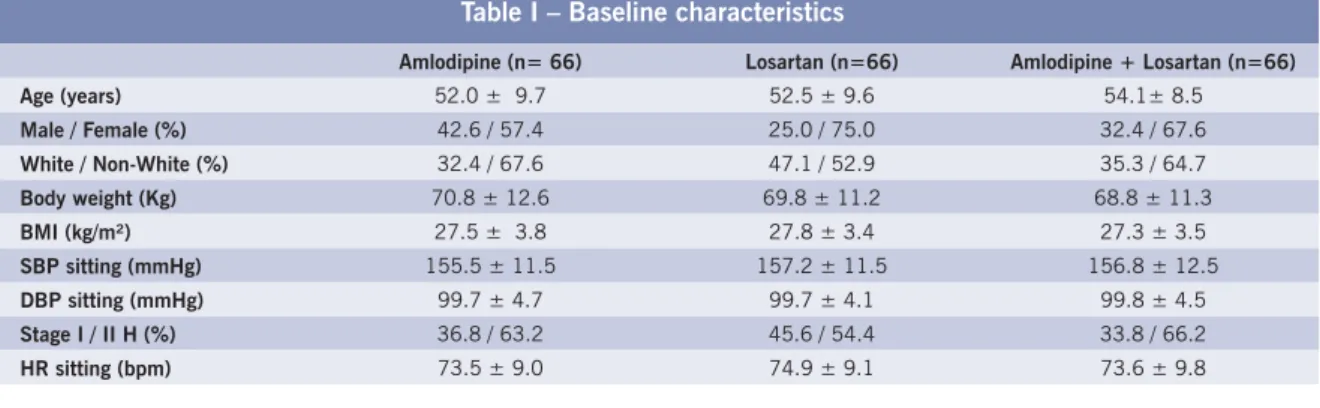
The baseline characteristics of the population included in the study are shown in Table I. We can observe that the
groups were not different in relation to age, body mass index and weight, heart rate, and systolic and diastolic pressure values. The percentage of female patients with stage 2 hypertension was slightly higher in the group assigned to receive losartan alone, although this difference was not statistically signifi cant. Three patients in the amlodipine alone group were prematurely withdrawn (before completing the 12th week of treatment), two of them due to an adverse event, and one due to drug ineffi cacy. In the losartan alone group, four patients interrupted treatment before week 12 (one due to an adverse event, and three due to drug ineffi cacy). In the fi xed combination of amlodipide + losartan group, no patients were prematurely withdrawn from the study.
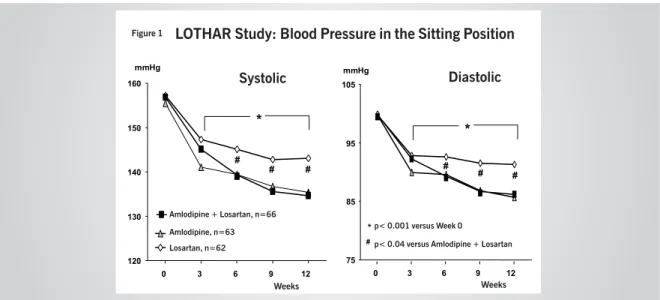
Effects on blood pressure – Antihypertensive effi cacy -In the medium term - The values of systolic and diastolic blood pressure in the sitting position at each visit in the three treatment groups during the fi rst three months of treatment are shown in Figure 1. We can observe that blood pressure in the three groups which was similar in the baseline had a signifi cant reduction as from the third week of treatment in the three groups (p < 0.001 versus week 0) and reached similar values in the groups treated with amlodipine alone and with the fi xed combination of amlodipine and losartan (135.4 ± 12.2 / 85.7 ± 7.0 mmHg and 134.6 ± 15.0 / 86.2 ± 9.4 mmHg, respectively) by the end of week 12.
In the patients treated with losartan alone, blood pressure reduction was lower, although significant, reaching values of 143.1 ± 15.3 / 91.3 ± 9.7 mmHg (p < 0.04 versus amlodipine + losartan) by the end of twelve weeks of treatment. Variations in blood pressure measurement in the standing position during treatment were similar to those recorded in the sitting position, and no episode of orthostatic hypotension was reported in either of the three therapeutic regimens.
To obtain these results, dose titration was necessary for most of the patients in the three therapeutic regimens. Thus, by the end of the twelve weeks of treatment, the maximum dose was being used by 76.2% of the patients treated with amlodipine (10 mg/day), by 82.3% of the patients on losartan (100 mg/day), and by a slightly lower percentage (68.2%) of the patients on the fi xed combination of amlodipine and losartan (5+100 mg/day).
Table I – Baseline characteristics
Amlodipine (n= 66) Losartan (n=66) Amlodipine + Losartan (n=66)
Age (years) 52.0 ± 9.7 52.5 ± 9.6 54.1± 8.5
Male / Female (%) 42.6 / 57.4 25.0 / 75.0 32.4 / 67.6
White / Non-White (%) 32.4 / 67.6 47.1 / 52.9 35.3 / 64.7
Body weight (Kg) 70.8 ± 12.6 69.8 ± 11.2 68.8 ± 11.3
BMI (kg/m²) 27.5 ± 3.8 27.8 ± 3.4 27.3 ± 3.5
SBP sitting (mmHg) 155.5 ± 11.5 157.2 ± 11.5 156.8 ± 12.5
DBP sitting (mmHg) 99.7 ± 4.7 99.7 ± 4.1 99.8 ± 4.5
Stage I / II H (%) 36.8 / 63.2 45.6 / 54.4 33.8 / 66.2
Therefore, by the 12th week of treatment, the mean doses of each therapeutic regimen were: 8.8 mg/day; 91.1 mg/day, and 4.1+86.2 mg/day, respectively, for amlodipine alone, losartan alone, and fi xed combination of amlodipine and losartan groups.
Of the 66 patients treated with the fi xed combination of amlodipine and losartan, 48 (72.2%) achieved a DBP < 90 mmHg by the end of week 12, and in 35 (53%) of them DBP was equal to or lower than 85 mmHg. Similar results were obtained in the group treated with amlodipine alone, 77.3% with DBP < 90 mmHg, and 50% with DBP
≤ 85 mmHg. Among the patients who received losartan alone, the percentage of patients who achieved values of DBP < 90 mmHg and ≤ 85 mmHg was signifi cantly lower: 48.5% and 28.8%, respectively.
The alternative analysis of the antihypertensive effi cacy of the three therapeutic regimens based on the systolic blood pressure response, considering the values of 140 mmHg and 130 mmHg as normal values, revealed antihypertensive effi cacy rates lower than those described for diastolic pressure in the three therapeutic regimens. Again, a higher effi cacy rate was observed in the fi xed combination of amlodipin + losartan group which was nevertheless not statistically different from that of amlodipine alone. The lowest effi cacy rate for systolic blood pressure was observed in the losartan alone group again.
Thus, DBP < 140 mmHg was observed in 68.2%; 63.6% and 41.5% of the patients treated with the fi xed combination; amlodipine alone and losartan alone, respectively. DBP < 130 mmHg was observed in only 33.8% of the patients on the combination, in 31.8% of those on amlodipine alone, and in 18.5% of those treated with losartan alone. The normalization rate of both SBP and DBP was even lower for the three therapeutic regimens, and followed the same pattern described for each blood pressure component alone. Thus, relative frequencies of patients with BP < 140/90 mmHg and <
130/85 mmHg were, respectively, 59.1% and 27.3% in the amlodipine + losartan group; 53.0% and 22.7% in the amlodipine alone group; and only 33.8% and 13.8% among the patients treated with losartan alone.
The antihypertensive effect in the three therapeutic regimens, described by blood pressure measured at the doctor’s offi ce, was confi rmed by ambulatory blood pressure monitoring (ABPM). As shown in Table II, a signifi cant and similar reduction in the 24-hour SBP, DBP and MBP was observed in the amlodipine alone group or in the fi xed combination with losartan group. Similar to what was observed in the measurement taken at the doctor’s offi ce, the blood pressure reduction in the ABPM in patients treated with losartan alone, although signifi cant, was lower (p < 0.001) than that observed in the other two study groups. The antihypertensive effect of the three therapeutic regimens was adequate and sustained in the 24 hours, since the trough-to-peak ratio calculated was higher than 50% in the three regimens, that is, 76.7% for the fi xed combination, 92.1% for amlodipine alone, and 60.1% for losartan alone. Time profi le of systolic and diastolic pressure in ABPM for the group of patients treated with the fi xed combination of amlodipine and losartan is shown in Figure 2. We can observe that the treatment with the fi xed combination of amlodipine at a low dose and losartan during twelve consecutive weeks provided signifi cant reductions in systolic and diastolic pressures both during alertness and sleep, and, therefore, provided an adequate 24-hour blood pressure control.
In the long term - Of the 198 patients who participated in the initial phase of the study, 131 were considered eligible for the extension phase, and eleven patients were excluded from the study due to protocol violation, missing follow-up, or withdrawal of consent. Thus, 120 patients were considered in the long-term effi cacy analysis of the three therapeutic regimens. Of these, 109 completed the study and were assigned as follows: 39 in the amlodipine 120
130 140 150 160
0 3 6 9 12
Anlodipino, n=63 Losartana, n=62 Anlodipino + Losartana, n=66
Semanas mmHg
Sistólica
*
# # #
Estudo LOTHAR: Pressão Arterial Sentada
75 85 95 105
0 3 6 9 12
Semanas mmHg
Diastólica
*
# # #
*p < 0,001 Versus Sem 0
p < 0,04 Versus Anlodipino + Losartana #
Figura 1
LOTHAR Study: Blood Pressure in the Sitting Position
Figure 1Systolic Diastolic
Weeks Weeks
Amlodipine + Losartan, n=66 Amlodipine, n=63 Losartan, n=62
Table II – Ambulatory blood pressure monitoring. Mean values of blood pressure in the 24 hours
Amlodipine (n=62) Losartan (n=63) Amlodipine + Losartan (n=66)
Systolic BP – 24 hours (mmHg)
Baseline 148.7 ± 12.0 149.8 ± 10.7 149.8 ± 9.6
Week 12 130.6 ± 10.8 * 140.8 ± 13.4 * † 130.9 ± 11.4 *
Diastolic BP – 24 hours (mmHg)
Baseline 94.6 ± 6.4 93.8 ± 8.0 95.1 ± 7.0
Week 12 83.1 ± 5.9 * 88.5 ± 7.8 * † 83.2 ± 8.2 *
Mean BP – 24 hours (mmHg)
Baseline 113.3 ± 7.2 113.5 ± 8.1 114.3 ± 6.9
Week 12 99.2 ± 7.0 * 106.5 ± 9.1 * † 99.7 ± 8.5 *
Trough-to-peak ratio
Week 12 92.1% 60.1%% 76.7%
* p< 0.001 versus baseline; † p< 0.001 versus amlodipine and amlodipine + losartan
alone group, 27 in the losartan group, and 43 in the fi xed combination of amlodipine and losartan group.
The drug dose was increased in a small number of patients in the three study groups during the extension phase. Thus, the mean dose by the end of weeks 12 and 52 were, respectively: amlodipine alone (8.9 and 9.2 mg/day); losartan alone (83.3 and 88.9 mg/day) and amlodipine combined with losartan (4.1+81.4 mg/day and 4.2+ 84.9 mg/day).
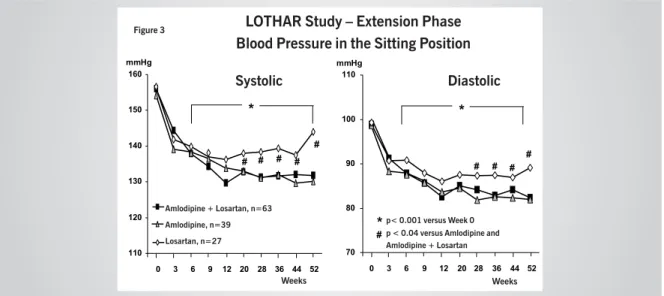
Mean values of systolic and diastolic blood pressure obtained in the sitting position from the baseline period to the 52nd week of treatment only for patients who completed the extension phase of the study are shown in Figure 3. We can observe that the blood pressure reduction obtained with the fi xed combination of amlodipine and losartan observed in the initial phase of the study was sustained for the period of one-year follow-up, and the pattern was not different from that of the amlodipine alone group, which also remained reduced during the 52 weeks
of treatment. Similar to what was observed in the initial phase of the treatment, the long-term blood pressure reduction in the losartan alone group was signifi cantly lower than in the other groups, and a trend of return of the systolic blood pressure to higher levels throughout the treatment period was observed in this group. The same blood pressure variation pattern was observed when BP was measured in the standing position.
Percentage rates of blood pressure normalization (cut-off points for DBP < 90 and ≤ 85 mmHg) and antihypertensive effi cacy (DBP ≤ 85 mmHg or ∆ DBP
≥ 10 mmHg) observed at the weeks 12th and 52nd weeks of treatment with each therapeutic regimen only for patients participating in the extension phase of the study are shown in Table III. As can be observed, effi cacy and blood pressure normalization rates were quite high at week 12 for the three therapeutic regimens, unlike the results presented for the total group at week 12. This fact results from the selection criterion of patients for the
Estudo LOTHAR: MAPA - 12
aSemana
Anlodipino + Losartana
horas 50
70 90 110 130 150 170
8 9 10 11 12 13 14 15 16 17 18 19 20 21 22 23 24 1 2 3 4 5 6 7 PAS
PAD V/P= 76,7 %
Sem 0 Sem 12 n= 66
mmHg
Figura 2
LOTHAR Study: ABPM – Week 12
Amlodipine + Losartan
Figure 2
T/P = 76.7%
Weeks
Week 0 Week 12
SBP
extension phase, of which only patients who had obtained a clinically signifi cant benefi t from the treatments of the initial phase of the study could participate, for purposes of ethics and good clinical practice, as previously explained in details in the methodology section.
In Table III we can observe that a signifi cant loss of antihypertensive effi cacy occurs (a reduction in the percentage of patients with antihypertensive effi cacy) in the long term, especially in the groups treated with losartan alone (from 79.3% to 51.7%) or amlodipine alone (from 97.7% to 75%). In the patients treated with the fi xed combination of amlodipine and losartan, the long-term effi cacy loss was much lower (from 93.6% to 87.2%) than that observed with the other two therapeutic regimens, which means that with this modality of treatment the maintenance of high rates of antihypertensive effi cacy is feasible even in the long term.
The long-term antihypertensive effi cacy of the fi xed combination of amlodipine and losartan was confi rmed with repeated recordings of ABPM performed during the one-year follow-up. As we can see in Figure 4, the degree of reduction of systolic and diastolic blood pressure during the 24 hours – during alertness and sleep, observed after 12 weeks of treatment, was sustained in the same level in the ABPM performed in these patients at weeks 32 and 52 of the study, thus corroborating the long-term maintenance of pressure control.
No signifi cant variations in heart rate were observed
with the different therapeutic regimens, both in the medium and in the long term.
Tolerability: adverse events - The absolute and relative frequencies of patients with adverse events in general and with the two major events (lower extremity edema and headache) reported in the twelve weeks of treatment with the three therapeutic regimens are shown in Table IV. We can observe that in the group treated with losartan alone there was a reduction in the frequency of patients who presented adverse events when compared to the baseline. On the contrary, in the groups treated with the fi xed combination and with amlodipine alone, an increase in the absolute and relative frequencies of patients with adverse events was observed, and this increase was slightly higher, although not signifi cant, among patients who received amlodipine alone. The incidence of headache decreased with the three therapeutic regimens and an increase trend in the frequency of patients with lower extremity edema was observed in the patients who received calcium channel antagonist alone or in combination with losartan. The frequency of patients with edema tended to be slightly higher, although not signifi cantly in the amlodipine alone group.
No signifi cant variation in leg volume measurement was observed among the groups studied during the twelve fi rst weeks of treatment.
When the long-term tolerability of the three antihypertensive regimens was evaluated, we observed that in the group of patients treated with amlodipine
Table III – Medium (three months) and long-term (twelve months) antihypertensive effi cacy
Criterion 1 Normalization (DBP < 90 mmHg)
Criterion 2 -Normalization (DBP≤ 85 mmHg)
Effi cacy
(DBP≤ 85 mmHg + ∆ DBP ≥ 10 mmHg)
Week 12 Week 52 Week 12 Week 52 Week 12 Week 52
Amlodipine 88.6% 77.3% 63.6% 61.3% 97.7% 75.0%
Losartan 79.3% 55.2% 51.7% 31.0 % 79.3% 51.7%
Amlodipine+Losartan 87.2% 85.1% 66.0% 63.8% 93.6% 87.2%
Estudo LOTHAR - Fase Extensão
Pressão Arterial Sentada
110 120 130 140 150 160
0 3 6 9 12 20 28 36 44 52 mmHg
Anlodipino, n=39
Losartana, n=27
Anlodipino + Losartana, n=43
Semanas
Sistólica
*
# # # # #
0 3 6 9 12 20 28 36 44 52 70
80 90 100 110 mmHg
Semanas
Diastólica
*
# # # #
* p < 0,001 Versus Sem 0 p < 0,04 Versus Anlodipino e Anlodipino + Losartana #
Figura 3
LOTHAR Study – Extension Phase
Blood Pressure in the Sitting Position
Figure 3
Systolic Diastolic
Weeks
Amlodipine + Losartan, n=63
Weeks
Amlodipine, n=39 Losartan, n=27
Table IV – Frequency of adverse events at the baseline period and after twelve weeks of treatment
Amlodipine (n=66)
Losartan (n=66)
Amlodipine + Losartan (n=66)
Patients with adverse events
Baseline 11
(16.7%)
15 (22.7%)
12 (18.2%)
Week 12 17
(25.8%)
10 (15.4%)
15 (22.7%)
Patients with headache
Baseline 6
(9.1%)
14 (21.2%)
6 (9.1%)
Week 12 2
(3%)
4 (6.1)
3 (4.5%)
Patients with lower extremity edema
Baseline 0
(0%)
2 (3%)
0 (0%)
Week 12 5
(7.5%)
0 (0%)
3 (4.5%)
alone a progressive increase occurred both in the number of adverse events and in the number of patients who presented at least one adverse event. Differently, in the group who received the fi xed combination, and especially in the group treated with losartan alone, we observed stabilization or even reduction both in the number of events and in the number of patients with adverse events. Thus, by the end of the treatment in the amlodipine group, nineteen adverse events had been reported by thirteen patients, representing a 29.5% incidence of patients with adverse events. In the losartan-alone group only two patients (6.9%) with adverse events were recorded at the last visit (one event per patient). In the fi xed combination of amlodipine and losartan group only seven adverse events were reported by 10.6% of the patients (n = 5).
The relative frequency of patients with lower extremity edema and headache in all visits performed during a one-year follow-up of the patients treated with the three
therapeutic regimens is shown in Figure 5. As we can see, no difference in the incidence of headache among the three drug regimens was observed. In relation to lower extremity edema, we can see that its incidence was progressive and signifi cantly higher in the group of patients treated with amlodipine alone, when compared to losartan alone, and to the fi xed combination. This incidence became stable as of approximately the 20th week of treatment.
Thus, from week 20 the relative frequency of lower extremity edema ranged from 15.9% to 18.2% of the patients treated with amlodipine alone. Differently, in the group treated with the fi xed combination of amlodipine and losartan the incidence of this adverse event was four to fi ve-fold lower than that observed in the patients treated with amlodipine alone, ranging from 2.1% to 4.3% of the population in this group. No patient of the group treated with losartan alone had lower extremity edema.
Again, also in the extension phase, no signifi cant 110
120 130 140 150 160 170
0 12 36 52 0 12 36 52 0 12 36 52 24 horas Vigília Sono
Sem.
Média da P.A. Sistólica
mmHg
Estudo LOTHAR - Fase Extensão
Anlodipino+ Losartana - MAPAs
* * *
* * *
* * *
65 75 85 95 105
0 12 36 52 0 12 36 52 0 12 36 52 24 horas Vigília Sono
Média da P.A. Diastólica
mmHg
* * * * * *
* * * *vs. Sem. 0
Figura 4
LOTHAR Study – Extension Phase
Amlodipine + Losartan – ABPMs
Figure 4
vs. Week 0
24 hours Alertness Sleep
Mean Systolic BP Mean Diastolic BP
variations or differences were observed among the study groups as regards leg volume measurement.
Effects on glucose and lipid metabolism - Glucose and plasma lipid metabolism parameter values assessed at the baseline and at the 12th week of treatment with the three drug regimens are shown in Table V.
As can be seen, no signifi cant variations of blood glucose and blood insulin during fasting and following glucose overload were observed in the three groups. The sensitivity to insulin index was not infl uenced by any of the antihypertensive treatment regimens either. Likewise, no signifi cant changes in the different parameters of lipid profi le were observed during the twelve weeks of treatment with any of the three antihypertensive regimens used.
Thus, the drug regimens used may be considered neutral as regards glucose and plasma lipid metabolism.
The metabolic neutrality of the fi xed combination of amlodipine and losartan was sustained in the long term as can be seen in Figure 6, in which the values of blood glucose and blood insulin during fasting and following glucose overload, of insulin sensitivity index, and of the different parameters of the lipid metabolism remained stable and were not different from those of the baseline during the 52 weeks of treatment with the combination.
D
ISCUSSION
The results of this multicenter study demonstrated that the fi xed combination of amlodipine and losartan has a high antihypertensive effi cacy that is sustained in the long term with a quite reduced percentage of loss of blood pressure control. Based on our results we can state that the long-term antihypertensive effi cacy of the fi xed combination of amlodipine at low doses with higher doses of losartan was higher than that of the two comparative monotherapy regimens using high doses of those drugs
alone. Thus, although we could achieve pressure levels similar to those observed with the fi xed combination by using amlodipine at high doses (more than double the dose used in the fi xed combination), we detected a signifi cant loss rate in the long term, with loss of effi cacy and blood pressure normalization endpoint in a signifi cant number of patients treated with this monotherapy, which is a relevant fact because it implies maintenance of the cardiovascular risk in these patients, and frequent adjustments in the therapeutic regimen.
The high antihypertensive effi cacy rate of amlodipine alone at high doses observed in our study, which was similar to that of the fi xed combination, had already been described in comparative studies of other fi xed combinations of antihypertensive drugs, but always using high doses of this calcium channel antagonist at high doses20,21. In relation to losartan alone, the
superior effi cacy of the fi xed combination was even more evident. Thus, not only did blood pressure remain at upper levels during the treatment with losartan, but also medium and long-term blood pressure normalization rates were quite lower among patients who received this monotherapy treatment. We also observed a signifi cant rate of loss of blood pressure control with losartan alone throughout time.
We observed that, in the long term, more than 60% of the patients treated with the fi xed combination of amlodipine and losartan remained with diastolic blood pressure levels equal to or lower than 85 mmHg, thus achieving the goals recommended by current guidelines for the treatment of hypertension3,4,5. Still regarding
antihypertensive effi cacy, we observed that when it was assessed using systolic blood pressure normalization alone or in combination with diastolic blood pressure, the percentages obtained were lower than those reported when only diastolic blood pressure was considered for the three therapeutic regimens, refl ecting the low effi cacy of the drugs available for the treatment of hypertension in reducing and controlling systolic blood pressure. Again,
Edema de Membros Inferiores
0 4 8 12 16 20
Anlodipino Losartana Anlodipino + Losartana
0 52 0 52 0 52 Sem
%
d
eP
ac
ie
nt
es
Estudo LOTHAR- Extensão -Tolerabilidade
0 2 4 6 8 10
12 Cefaléia
Anlodipino Losartana Anlodipino + Losartana
0 52 0 52 0 52 Sem
%
d
e
P
ac
ie
nt
es
Principais Eventos Adversos (%)
Figura 5
* * * * *
*p<0.05 vs Losartana e Anlodipino + Losartana
LOTHAR Study – Extension Phase – Tolerability
Major Adverse Events (%)
Figure 5
Week
p< 0.05 vs Losartan and Amlodipine + Losartan
Lower Extremity Edema
Week Headache
Amlodipine Losartan Amlodipine + Losartan
Amlodipine Losartan Amlodipine + Losartan
% of P
atients
% of P
Table V - Glucose and lipid metabolism parameters
Amlodipine (n=63)
Losartan (n=62)
Amlodipine + Losartan (n=66)
Fasting blood glucose (mg/dl)
Baseline 96.0 ± 11.6 95.6 ± 9.7 93.6 ± 9.1
Week 12 97.0 ± 11.8 95.4 ± 11.0 96.7 ± 10.8
Blood glucose – two hours – After-overload (mg/dl)
Baseline 124.4 ± 37.9 120.9 ± 39.9 115.8 ± 28.7
Week 12 117.2 ± 33.9 119.6 ± 36.6 117.8 ± 30.5
Fasting blood insulin
Baseline 8.3 ± 4.8 9.7 ± 6.5 7.7 ± 4.3
Week 12 8.9 ± 5.2 10.2 ± 6.9 9.6 ± 7.3
Blood insulin – two hours – After-overload
Baseline 60.7 ± 58.6 71.4 ± 80.0 58.7 ± 54.4
Week 12 53.8 ± 40.2 72.0 ± 73.6 56.9 ± 44.9
Total cholesterol (mg/dl)
Baseline 192.0 ± 42.4 194.9 ± 34.9 192.9 ± 40.2
Week 12 201.6 ± 45.4 192.9 ± 36.4 188.2 ± 34.2
LDL – cholesterol (mg/dl)
Baseline 114.8 ± 36.0 117.9 ± 29.5 114.0 ± 33.6
Week 12 124.1 ± 39.9 114.4 ± 30.9 109.2 ± 27.3
HDL – cholesterol (mg/dl)
Baseline 50.6 ± 12.6 49.7 ± 11.3 51.1 ± 12.2
Week 12 51.9 ± 11.3 50.3 ± 12.7 114.8 ± 36.0
Triglycerides (mg/dl)
Baseline 135.1 ± 89.5 144.8 ± 96.2 151.3 ± 122.9
Week 12 134.6 ± 88.6 153.5 ± 97.3 150.2 ± 115.2
patients treated with the fi xed combination of amlodipine and losartan showed the highest rates, which were statistically different from that observed with losartan, but not from that reported for patients who received amlodipine alone.
The diffi culty to control systolic blood pressure observed in our study is supported by a review recently published by Professor Giuseppe Mancia22 in which he reports
that in almost the totality of the studies on endpoints of hypertension alone or associated with diabetes, the
target-goal of systolic blood pressure was not achieved, despite the use of multiple antihypertensive drugs. Moreover, this diffi culty to achieve the goal of controlling systolic blood pressure explains why the international guidelines for studies on antihypertensive drugs still use criteria based on diastolic blood pressure to describe the antihypertensive effi cacy of a drug, in spite of the fact that guidelines indicate the real need to control systolic blood pressure as well.
Jejum
Glicemia Insulinemia 0
20 40 60 80 100 120 140 mg/dl
Sobrecarga 0 20 40 60 80 100 120 140 U.I.
Jejum Sobrecarga 0 5 10 15 20 25 30 35 40 mg-1.U.I.-1
Índice de Sensibilidade à Insulina
0 40 80 120 160 200 240
Colesterol Total HDL- Colesterol LDL-Colesterol Triglicérides mg/dl
Semana 0 Semana 12 Semana 52
Estudo LOTHAR – Fase de Extensão Anlodipino + Losartana – Parâmetros Metabólicos
Figura 6
LOTHAR Study – Extension Phase
Amlodipine + Losartan – Metabolic Parameters
Figure 6
Total Cholesterol HDL – Cholesterol LDL – Cholesterol Triglycerides
Week 0 Week 12 Week 52
We currently know that the anti-hypertensive effi cacy of a drug should be assessed considering not only the blood pressure measured at the doctor’s offi ce, but also the 24-hour effects of the drug on blood pressure, assessed by ambulatory blood pressure monitoring (ABPM). Our results demonstrate that the antihypertensive effect of the fi xed combination, as well as of the monotherapies, is sustained during the 24 hours. We observed a 76.7% trough-to-peak ratio with the fixed combination of amlodipine and losartan, which allows the use of this medication in a single daily dose, thus facilitating the long-term compliance to treatment, since studies demonstrate that the higher the number of daily doses, the higher the treatment dropout rate23.
It is important to point out that blood pressure reduction provided by the treatment with the fi xed combination of amlodipine and losartan did not cause any secondary increase in sympathetic activity, since no signifi cant variations of heart rate occurred. This fact is benefi cial and also helps explain the long-term maintenance of the antihypertensive effi cacy with a low rate of loss of blood pressure control.
In addition to a high effi cacy in reducing blood pressure, keeping it at controlled levels, an antihypertensive drug should also have a good tolerability profi le, since the presence of adverse effects may decrease the degree of compliance of the patient to the therapeutic regimen, thus ultimately leading to treatment dropout24. Our results
demonstrate that the fi xed combination of amlodipine at low doses and losartan at higher doses has a very good tolerability profi le with a low incidence of adverse events. Moreover, when present, the great majority of these adverse events were mild, given that only for a very small proportion of those who presented with adverse events was treatment discontinuation necessary. The frequency of adverse events was significantly higher among patients treated with amlodipine alone especially in the long term. In the losartan alone group, as expected24, we observed a lower incidence of adverse
events, confi rming the excellent tolerability of this class of antihypertensive drugs.
The most frequent adverse events in this multicenter study with the fi xed combination of amlodipine and losartan, and with the monotherapies were lower extremity edema and headache7,8,25. The incidence
of lower extremity edema was particularly signifi cant among patients treated with amlodipine alone, reaching rates higher than 18% in the long term. With the fi xed combination of amlodipine and losartan, the incidence of this adverse event was much lower, approximately four-fold less frequent than in the amlodipine alone group.
On one hand, the good tolerability of the combination may be explained by the use of lower doses of each of the hypotensive drugs, since the existence of a strong relation between the dose of the hypotensive drug and the frequency of adverse events is known15,23. On the other hand, the
lower incidence of lower extremity edema observed with the combination – approximately one fourth of that observed in the amlodipine group, results not only from the use of lower doses of this calcium channel antagonist, but also from its synergistic interaction with losartan.
Thus, dihydropyridine calcium antagonists are known to be potent arterial vasodilators, but less effective as venodilators. Moreover, these agents have been demonstrated to be able to cause secondary sympathetic stimulation in varying degrees, thus increasing catecholamine release which ultimately promotes venoconstriction7,8,16,25. Consequently, in
patients treated with dihydropyridine drugs there would be an increase in hydraulic pressure in the capillary region, exceeding the oncotic pressure with a resulting fl uid extravasation into the interstitial space and, therefore, with edema formation. By gravity action, this edema tends to be located in the lower extremities, especially in the malleolus region, although even anasarca has already been described in patients using dihydropyridine calcium antagonists. This adverse event of dihydropyridine calcium antagonists has usually a late onset (after six to eight weeks of treatment), and becomes more intense during the day and in the summer.
On the other hand, the dilation effectiveness both arterial and venous of angiotensin II receptor blockers is well known11. Thus, when an ARB is combined with a calcium
antagonist venular dilation is facilitated and hydraulic pressure in capillaries is reduced, and consequently the likelihood of edema formation also decreases. The better tolerability of the combination, as previously mentioned, will surely benefi t treatment compliance24.
However, patient compliance to treatment is also known to be infl uenced by countless factors such as the doctor-patient relationship, the knowledge of the disease, the absence of symptoms, the development of adverse events with antihypertensive medication, the number of pills to be taken, and others15,17,18,19,23. Thus, the fi xed
combination of amlodipine and losartan assessed in the present study has a second positive point in relation to patient compliance to treatment, which is its convenient posology; that is, the two antihypertensive drugs are packed in the same galenic formulation with a 24-hour duration of action, thus allowing the use of a single daily dose of the medication.
We are aware that, in addition to the aspects of effi cacy and tolerability of an antihypertensive drug, we should also evaluate its effects on metabolic parameters, especially of glucose and lipids, because alterations in these parameters are very frequently observed in hypertensive patients. Incidentally, hypertension is frequently associated to the metabolic syndrome; also, the frequency of this association increases with age26,27,28,29,30.
known to be able to promote harmful alterations in lipid metabolism, especially in glucose metabolism13,14,28,29,30.
The pharmacologic agents of the class of calcium channel antagonists, in turn, have a neutral metabolic profi le, and in some studies using angiotension II receptor blockers for the treatment of hypertensive patients a positive impact on glucose metabolism was reported, with improvement of sensitivity to insulin11,13 and a signifi cant reduction in
the risk of development of new cases of diabetes9,10,13.
In our study we observed that the use of the fi xed combination of amlodipine and losartan did not change parameters of either glucose metabolism or plasma lipids, thus having a neutral metabolic profi le even when used in the long term. Based on these results we can conclude that this therapeutic modality is safe and adequate for the treatment of hypertension in patients with metabolic syndrome, diabetes mellitus and dyslipidemias.
In brief, the results of this multicenter study demons-trated that the fi xed combination of amlodipine and losartan – the fi rst galenic combination of these two classes of antihypertensive drugs available in the pharmaceutical market, has a high antihypertensive effi cacy, allowing approximately 60% of the patients treated to achieve and maintain, in the long term, the new goal of blood pressure control. The antihypertensive
effect of the combination is sustained in the 24 hours, thus allowing its use in a single daily dose, which benefi ts the compliance to treatment. The tolerability of this fi xed combination of antihypertensive drugs is also very good, with a low incidence of adverse events further facilitating compliance.
Based on our results, we can suggest that thanks to the high antihypertensive effi cacy sustained in the long term, and to the very good tolerability profi le, in addition to the adequate metabolic profi le, the fi xed combination of amlodipine and losartan is an excellent option for the treatment of hypertension in a wide range of hypertensive patients, with a high potential to reduce cardiovascular risks since signifi cant cardiovascular benefi ts have already been demonstrated with the use of each of the components of this fi xed combination of antihypertensive drugs.
Acknowledgements
The authors acknowledge Financiadora Nacional de Estudos e Pesquisas (FINEP – National Sponsor for Studies and Research) for supporting and sponsoring part of this research project (LOTHAR Project – Code 01.03.0002.00), as well as the researchers involved in the project.
R
EFERENCES
1. Sykowsky PA, D’Agostino RB, Belanger AJ, Kannel WB. Secular Trends in Long Term Sustained Hypertension, Long Term Treatment and Cardiovascular Morbidity. The Framingham Heart Study 1950-1990. Circulation 1996; 93: 697-703.
2. MacMahon S, Peto R, Cutler J, et al. Blood Pressure, stroke, and coronary heart disease. Part 1, prolonged differences in blood pressure: prospective observational studies corrected for regression dilution bias. Lancet 1990; 335: 765-77.
3. IV Diretrizes Brasileiras de Hipertensão Arterial - Sociedade Brasileira de Hipertensão;Sociedade Brasileira de Cardiologia e Sociedade Brasileira de Nefrologia. Hipertensão 2003; 5(4): 126-63.
4. Chobaniam AV, Bakris GL, Black HR, et al. Seventh report of the Joint National Committee on prevention, detection, evaluation and treatment of high blood pressure- JNC 7. Hypertension 2003, 42: 1206-52.
5. 2003 European Society of Hypertension - European Society of Cardiology guidelines for management of arterial hypertension. J Hypertens 2003, 21: 1011-53.
6. Hansson L, Zanchetti A, Carruthers SG, Dahlof B, et al on behalf of HOT Study group. Effects of intensive blood-pressure lowering and low-dose aspirin in patients with hypertension: principal results of the Hypertension Optimal Treatment (HOT) randomized trial. Lancet 1998; 351: 1755-62.
7. O p i e L H, Fr i s h m a n W H, T h a d a n i U . C a l c i u m c h a n n e l antagonists(Calcium Entry Blockers). In Opie LH. (ed) Drugs for the heart. 4th ed. Philadelphia: WB Saunders Co.; 1995: 50-82.
8. Webster J, Robb OJ, Jeffers TA, Scott AK, Petrie JC, Towler HM. Once daily amlodipine in the treatment of mild to moderate hypertension. Br J Clin Pharmacol 1987; 24(6): 713-9.
9. Dahlof B, Devereux R, Kjeldsen S, et al. Cardiovascular morbidity and mortality in the losartan intervention for endpoint reduction in hypertension study (LIFE): a randomized trial against atenolol. Lancet 2002; 359: 995-1003.
10. Lindholm LH, Ibsen H, Dahlof B, et al. Cardiovascular morbidity and mortality in patients with diabetes in the losartan intervention for endpoint reduction in hypertension study (LIFE): a randomized trial against atenolol. Lancet 2002; 359: 1004-10.
11. See S. Angiotensin II receptor blockers for the treatment of hypertension. Expert Opin. Pharmacotherapy 2001; 2(11): 1795-804.
12. Zanetti-Elshater F, Pingitore R, Beretta-Piccoli C, et al. Calcium antagonists for treatment of diabetes-associated hypertension: metabolic and renal effects of amlodipine. Am J Hypertens 1994; 7: 36-45.
13. Verdecchia P, Reboldi G, Angeli F, et al. Adverse Prognostic Signifi cance in New Diabetes in treated hypertensive subjects. Hypertension 2004; 43: 963-69.
14. Dunder K, Bind L, Zethelius B, et al Increase in blood glucose concentration during antihypertensive treatment as predictor of myocardial infarction: a population-based cohort study. BMJ 2003; 326: 681-5.
15. Law MR, Wald NJ, Morris JK, Jordan RE. Value of low dose combination treatment with blood pressure lowering drugs: analysis of 354 randomized trials. Brit Med J 2003; 326: 1427-34.
16. van Hamesvelt HW, Kloke HJ, de Jong DJ, Koene RA, Huysmans FT. Oedema formation with the vasodilators nifedipina and dyazoxide: direct local effect or sodium retention. J Hypertens 1996; 14(8): 1041-5.
18. Prisant LM, Weir MR, Papademetriou V, et al. Low-dose drug combination therapy: an alternative fi rst-line approach to hypertension treatment. Am Heart J 1995; 130(2): 359-66.
19. Basile JN. Combination Agents as a means of improving adherence and other aspects of the sixth Joint National Committee Report. South Med J 2000; 93(5): 534-6.
20. Franco RJ, Goldfl us S, McQuity M, Oigman W on behalf of Valsartan/ HCTZ combination Therapy in Brazil Study Group. Efficacy and tolerability of the combination of valsartan/hydrochlorothiazide compared with amlodipine in mild-to-moderately hypertensive Brazilian population. Blood Press 2003; 2(suppl): 41-7.
21. Ruilope LM, Malacco E, Khder Y, Kandra A, Bonner G, Heintz D. Effi cacy and tolerability of combination therapy with valsartan plus hydroclorothiazide compared with amlodipine monotherapy in hypertensive patients with other cardiovascular risk factors: the VAST study. Clin Ther 2005; 27(5): 578-87.
22. Mancia G, Grassi G. Systolic and diastolic blood pressure control in antihypertensive drug trials. J Hypertens 2002; 20: 1461-14.
23. Claxton AJ, Cramer J, Pierce C. A systematic review of the association between dose regimens and medication compliance. Clin Ther 2001; 23(8): 1296-310.
24. Bloom BS. Continuation of initial antihypertensive medication after 1 year of therapy. Clin Ther 1998; 20: 671-81.
25. Varrone J. A study of the effi cacy and safety of amlodipine for the treatment o hypertension in general practice. Postgrad Med J 1991; 67 (Suppl 5): S28-S31.
26. Weber MA, Smith DH, Neutel JM, Graettinger WF. Cardiovascular and metabolic characteristics of hypertension. Am J Med 1991; 91(1 A): 4S-10S.
27. Reaven GM, Lithel H, Landsberg GL. Mechanism of disease hypertension and associated metabolic abnormalities. The role of insulin resistance and the sympatho-adrenal system. N Engl J Med 1996; 334: 374-82.
28. Hulthe J, Bokemark L, Wikstrand J, et al. The metabolic syndrome, LDL particle size and atherosclerosis: The Atherosclerosis and Insulin Resistance (AIR) Study. Artherioscler Thromb Vasc Biol 2000; 20(9): 2140-7.
29. Kohlmann Jr O. Resistência à insulina e hipertensão arterial: relevância clínica. Hipertensão 1998; 1(2): 50-4.