CONSENSO / CONSENSUS
GUIDELINES FOR THE DIAGNOSIS AND
MANAGEMENT OF GASTROESOPHAGEAL
REFLUX DISEASE:
an evidence-based consensus
Joaquim Prado P.
MORAES-FILHO
1, Tomas
NAVARRO-RODRIGUEZ
1, Ricardo
BARBUTI
1,
Jaime
EISIG
1, Decio
CHINZON
1, Wanderley
BERNARDO
2and the Brazilian GERD Consensus Group*
2ABSTRACT - Gastroesophageal relux disease (GERD) is one of the most common disorders in medical practice. A number of
guidelines and recommendations for the diagnosis and management of GERD have been published in different countries, but a Brazilian accepted directive by the standards of evidence-based medicine is still lacking. As such, the aim of the Brazilian GERD Consensus Group was to develop guidelines for the diagnosis and management of GERD, strictly using evidence-based medicine methodology that could be clinically used by primary care physicians and specialists and would encompass the needs of physicians, investigators, insurance and regulatory bodies. A total of 30 questions were proposed. Systematic literature reviews, which deined inclusion and/or exclusion criteria, were conducted to identify and grade the available evidence to support each statement. A total of 11,069 papers on GERD were selected, of which 6,474 addressed the diagnosis and 4,595, therapeutics. Regarding diagnosis, 51 met the requirements for the analysis of evidence-based medicine: 19 of them were classiied as grade A and 32 as grade B. As for therapeutics, 158 met the evidence-based medicine criteria; 89 were classiied as grade A and 69 as grade B. In the topic Diagnosis, answers supported by publications grade A and B were accepted. In the topic Treatment only publications grade A were accepted: answers supported by publications grade B were submitted to the voting by the Consensus Group. The present publication presents the most representative studies that responded to the proposed questions, followed by pertinent comments. Follow examples. In patients with atypical manifestations, the conventional esophageal pH-metry contributes little to the diagnosis of GERD. The sensitivity, however, increases with the use of double-channel pH-metry. In patients with atypical manifestations, the impedance-pH-metry substantially contributes to the diagnosis of GERD. The examination, however, is costly and scarcely available in our country. The evaluation of the histological signs of esophagitis increases the diagnostic probability of GERD; hence, the observation of the dimensions of the intercellular space of the esophageal mucosa increases the probability of diagnostic certainty and also allows the analysis of the therapeutic response. There is no difference in the clinical response to the treatment with PPI in two separate daily doses when compared to a single daily dose. In the long term (>1 year), the eradication of H. pylori in patients with GERD does not decrease the presence of symptoms or the high recurrence rates of the disease, although it decreases the histological signs of gastric inlammation. It seems very likely that there is no association between the eradication of the H. pylori and the manifestations of GERD. The presence of a hiatal hernia requires larger doses of proton-pump inhibitor for the clinical treatment. The presence of permanent migration from the esophagogastric junction and the hernia dimensions (>2 cm) are factors of worse prognosis in GERD. In this case, hiatal hernias associated to GERD, especially the ixed ones and larger than 2 cm, must be considered for surgical treatment. The outcomes of the laparoscopic fundoplication are adequate.
HEADINGS - Gastroesophageal relux. Esophagitis, peptic. Guidelines as topic.
INTRODUCTION
Gastroesophageal relux disease (GERD) is one of the most common disorders in medical practice. Data from North America(74) indicate that heartburn, the most
predominant symptom of the disorder, occurs at least once a week in 20% of the studied population. Similar data have been reported in England and Scotland(56).
In Brazil, a population-based national study showed a prevalence of at least 12% in the general population(93).
* Brazilian GERD Consensus Group: Aloisio Carvalhaes, Angelo P. Ferrari, Antonio Frederico N. Magalhaes, Ary Nasi, Celso M. Paula e Silva, Claudio Hashimoto, Decio Chinzon, Edson P. Silva, Eduardo Moura, Eponina Lemme, Farid Nader, Fauze Maluf Filho, Gerson Domingues, Igelmar Barreto, Isac Jorge Filho, Ismael Maguilnik, Ivan Cecconello, Jaime Eisig, Joaquim P. Moraes-Filho, Joffre Rezende Filho, José Luis P. Modena, Jose Roberto de Almeida, Lilian Aprile, Luciana Camacho-Lobato, Luciana Moretzohn, Marcelo Cury, Marcio Tolentino, Marco Aurelio Santo, Marcos Kleiner, Marcus T. Haddad, Maria do Carmo Passos, Olavo G. Mion, Oswaldo Malafaia, Paulo S Rocha, Rafael Stelmach, Ricardo A. Correa, Ricardo Barbuti, Richard Gursky, Rimon S. Azzam, Roberto El Ibrahim, Roberto Dantas, Rubens Sallum, Schlioma Zaterka, Sergio Barros, Tomas Navarro-Rodriguez, Ulysses Meneghelli, Wilson Pollara.
1Working Group: Department of Gastroenterology, University of São Paulo School of Medicine; 2Brazilian Medical Association, São Paulo, SP, Brazil.
A number of guidelines and recommendations for the diagnosis and management of GERD have been published in different countries(18, 29, 35, 56, 74, 92, 93, 138), but an updated South
American, particularly Brazilian, accepted directive by the standards of evidence-based medicine is still lacking. As such, the aim of the Brazilian GERD Consensus Group was to develop guidelines for the diagnosis and management of GERD strictly using methodology that could be clinically used by primary care physicians and specialists and would encompass the needs of physicians, investigators, insurance and regulatory bodies. Furthermore, it should be representative of the Brazilian medical community and relevant.
METHODS
The main steps in the process of these guidelines were: 1) selection of the Consensus Group; 2) development of draft statements by the Working Group; 3) systematic literature reviews to identify the evidence to support each statement; 4) grading of the evidence; 5) diagnosis: grade A or B recommendations were accepted by the Consensus Group; treatment: voting discussion was conducted on the statements when the grade A was not achieved.
Members of the GERD Consensus Group were selected based upon the following criteria: demonstrated expertise/ knowledge in GERD by publication/research and/or participation in national or international consensus guidelines and diversity of views and expertise.
A specialist (WB) in medicine-based evidence from the Brazilian Medical Association, the national oficial medical society, was responsible for the systematic literature reviews. The Working Group developed the initial statements and reviewed the evidence to support the statements that were presented to the Consensus Group which consisted of 47 experts (10 GI surgeons, seven endoscopists, one pathologist, one pneumologist, one ear-nose and throat specialist and 27 gastroenterologists). Systematic literature reviews, which deined inclusion and/or exclusion criteria, were conducted to identify and grade the available evidence to support each statement. The literature search was conducted in English, French, German, Spanish and Portuguese publications in the Medline, Embase and Scielo-Lilacs databases and in the Cochrane Trials Register in human subjects from May 1966 onwards. A number of search strings were used that are too numerous to be listed in this publication, but its complete list can be obtained by communicating with the author (WB) of the present article. The review was initially qualitative when the primary reviewer reached an assessment on the grade assigned to the statement. After that, the material was reviewed by the Working Group. Quantitative meta-analyses were not performed. The references cited in this paper constitute only a fraction of all the articles reviewed in each area and were selected to conirm the statements.
The following concepts were used in this text: 1) GERD – is a condition which develops when the relux of stomach contents causes troubling symptoms and/or complications(138); 2) likelihood ratio (LR) – indicates the
degree of certainty and the possibility of error and expresses how many times the positivity of a certain diagnostic test result is more or less likely to occur in individuals with the disease when compared to disease-free individuals. A LR of 1 indicates that the post-test probability is the same as the pre-test one, that is, of the prevalence of the disease in the general population; 3) sensibility (SB) is the proportion of individuals who present a positive test result for a certain disease that effectively has the disease (true-positives); 4) speciicity (SP) is the proportion of individuals without the disease that present a negative-result test for the same disease (true-negatives)(7).
The assignment of the grade of evidence and levels of recommendation were established according to the classiication of the Oxford Centre for Evidence-Based Medicine for levels of evidence (EBM)(103). Grade A is highly
recommended and corresponds to level-1 studies, which means systematic review of randomized controlled trials or a large randomized trial with low probability of bias or without bias. Grade B is recommended and corresponds to level-2 studies, in other words, systematic review of cohort studies, with homogeneity, individual cohort studies, non-controlled cohort studies/ecological studies and systematic review of case-control studies with homogeneity. Grades C and D correspond to non-controlled studies, case reports and reports based on consensus, physiological and animal-model studies.
The grade assessment was performed by the Working Group together with the Brazilian Medical Association representative. In the diagnosis set, grade A and B recommendations resulted in unanimous acceptance by the consensus group. In the management part of the work, only grade A recommendations were accepted by unanimous acceptance; grade B recommendations were accepted by consensus upon voting by the Consensus Group.
The level of agreement in the inal vote was given to each statement, expressed as percentages.
The process was funded by unrestricted grants from AstraZeneca, Janssen-Cilag, Medley and Nycomed laboratories. The promoters were: Department of Gastroenterology of the University of São Paulo School of Medicine, Group of Studies of Esophageal Diseases of the University of São Paulo-GREDES, Brazilian Federation of Gastroenterology, Brazilian Society of Digestive Motility, Brazilian Society of Digestive Endoscopy and Brazilian College of Digestive Surgery.
RESULTS AND COMMENTS
DIAGNOSIS
The diagnosis of typical GERD begins with a detailed clinical history. The typical symptoms of GERD are heartburn and regurgitation. The history should identify the characteristic symptom and deine their intensity, duration and frequency; uncover the triggering and relieving factors and determine the pattern of evolution of the disorder over time, as well as its impact on the quality of the patients’ life. In this context, it is important to consider their age and the presence or absence of alarm manifestations, which include dysphagia, odynophagia, weight loss, GI bleeding, nausea and/or vomiting and a family history of cancer. On the other hand, the absence of typical symptoms does not exclude the diagnosis of GERD. Numerous other manifestations related to gastroesophageal relux and considered atypical have been described, such as retrosternal chest pain without evidence of coronary artery disease, asthma, chronic cough, hoarseness, etc.(92).
1) Should adult patients presenting GERD manifestations (heartburn and/or regurgitation) without alarm manifestations (weight loss, GI bleeding, nausea and/vomiting, dysphagia, odynophagia, family history of cancer (ref JP) be submitted to an upper digestive endoscopy (UDE) before the treatment?
Grade A recommendation
In patients with a mean age of 54 years, the presence of heartburn and retrosternal burning pain has a SB of 67%, SP of 77% and a positive LR of 2.83 in the diagnosis of GERD. The absence of the symptom pyrosis has a SB of 33%, SP of 24% and a negative LR of 0.44 to rule out the diagnosis of GERD(63). In patients with a mean age of
42 years and GERD symptoms, the use of seven-symptom scales, when compared to the UDE, results in a SB, SP and, positive LR and negative LR of 74.3%, 71.6%, 2.61 and 0.36, respectively(134). In patients with GERD, the symptomatic
response after 4 weeks of empiric treatment with 40 mg/ day of esomeprazole (86.4%) is equivalent to the treatment preceded by UDE (87.5%). Similarly, after the maintenance treatment for 24 weeks with esomeprazole (20 mg/day), a similar proportion of patients remained responsive: 71.8% vs 68.3%, respectively(39).
Comment. The signs and symptoms are insuficient to
establish a conclusive diagnosis of GERD, regardless of their frequency and intensity, resulting in a diagnostic certainty of around 40%. Endoscopy is not usually performed in young adults patients with typical history of GERD since it does not alter the clinical evolution when compared to the empiric treatment.
2) Should patients with typical symptoms occurring at a frequency higher than twice a week, for a period not shorter than 4 weeks and that present normal UDE results be diagnosed with GERD?
Grade A recommendation
In patients with typical GERD symptoms and a mean age of 47 years and a negative UDE result, the score of symptoms
classiied as moderate and severe does not identify patients with GERD (SB: 82%; SP: 22%; positive LR: 1.05 and negative LR:0.81). The 7-day proton-pump inhibitor (PPI) test with 60 mg/day of lansoprazole results in a SB of 97%, SP of 6% positive LR of 1.03 and negative LR of 0.03(121, 124).
Comment. In patients with non-erosive GERD, the use of
the symptom score (moderate or severe) allows a diagnostic certainty of up to 40% of the cases. In these cases, the UDE does not alter the clinical evolution, when compared to the empiric treatment. It is interesting to remember that, in cases of erosive GERD with typical symptoms, however, the UDE improves the diagnostic accuracy and also establishes a differential diagnosis with other diseases, such as cancer.
3) Should patients with heartburn (pyrosis) and UDE result that does not show the presence of esophageal lesions be submitted to 24-hour esophageal pH-metry for diagnostic conirmation?
Grade A recommendation
In patients with typical GERD symptoms and UDE that does not show the presence of esophageal lesions with typical relux symptoms, the esophageal pH-metry, using a cutoff of 4.5 of the total time, with a pH <4 during the entire 24-hour period, has a SP of 90.4% and a SB of 93.3%, with a positive LR of 9.7 in the diagnosis of GERD and a negative LR of 0.07 to rule out the diagnosis(143).
Comment. The 24-hour pH-metry is an important resource
for a deinite diagnosis of acid relux, which constitutes most of relux episodes, establishing or ruling out the diagnosis with a 90% and 95% certainty, respectively. The availability of the method in Brazil, however, is still somehow limited and its cost is relatively high.
4) Is the wireless esophageal pH capsule and recording device (“Bravo®”) better than the
prolonged conventional pH-metry for the diagnosis of GERD?
Grade B recommendation
The patients reported discomfort with both methods: “Bravo” = 73%, conventional method = 97%, although the irst was less uncomfortable than the last. The patients monitored by the wireless capsule and recording device for esophageal pH reported less interference with the daily activities, during sleep and at work (14%) than those studied by conventional pH-metry (82%)(41). The adverse effects were on average lower
in patients that underwent the assessment with the wireless capsule than those submitted to the conventional pH-metry, as well as in their physical, work and daily activities. The rates of examinations considered normal were similar: wireless capsule and recording device for esophageal pH (68%) and prolonged conventional pH-metry (71%). During the irst 24 hours the number of recorded events was signiicantly higher in patients submitted to the conventional pH-metry (n = 40) than in those with the wireless capsule (n = 23)(144).
Comments. During the analyzed study time (24 hours), the
the conventional pH-metry, less discomfort, less interference with the daily activities of work and sleep. Studies on the eventual advantages of the use of the wireless capsule for longer periods are scarce and are necessary. In our country the use of the wireless capsule is scarcely available.
5) Should all patients with atypical manifestations (non-cardiac chest pain, globus, asthma, chronic cough, bronchitis, bronchiectasis, recurrent
pneumonia, hoarseness, “throat clearing”, laryngitis, sinusitis, otalgia, etching of dental enamel, halitosis) undergo a 24-hour esophageal pH-metry?
Grade B recommendation
The majority (69.4%) of the atypical episodes occurs regardless of the relux. In 15% of the cases, the coughing is preceded by relux(125). The SB and SP of the conventional
esophageal pH-metry in patients with chest pain of non-cardiac origin that do not present heartburn and/or regurgitation is 33% and 24%, respectively and, therefore, has low diagnostic value in GERD(100). In patients with
chronic cough and altered esophageal pH-metry (56.2%), the treatment with omeprazole (40 mg/day – 8 weeks) resulted in a partial response rate of 40.8% and a non-response rate of 55.1%. Among patients with the same diagnosis that did not undergo treatment, 54.5% had complete resolution of the coughing at the long-term follow-up (30 months). There was no signiicant difference between those that underwent and the ones that did not undergo treatment with PPI(143). At the
investigation of patients with GERD symptoms (diagnosed by impedance-pH-metry), the acid relux is more associated to patients with typical symptoms and the non-acid relux to those with atypical symptoms(143).
Comments. In patients with atypical manifestations, the
conventional esophageal pH-metry contributes little to the diagnosis of GERD. The current available evidence does not support the routine use of proximal pH monitoring.
6) In patients with atypical GERD manifestations, what is the contribution of esophageal impedance/ pH-metry?
Grade A recommendation
In the detection of acid relux, the 24-hour pH-metry, compared with the impedance/pH-metry association (gold standard) has 68% of SP (criterion: pH <4) and 67% when the criterion is the index of symptoms. The percentage at which the pH was <4 was signiicantly higher in pH-metry than in the impedance/pH-metry association. In the detection of weakly acid relux, the pH-metry has a SB of 28% when compared to the association of methods, with an 83% rate of false-positive results(49).
Grade B recommendation
The non-acid or weakly acid relux is more associated with the atypical GERD manifestations(49). The prevalence
of GERD (diagnosed by UDE, prolonged pH-metry and impedancemetry) in patients with atypical symptoms is of 63.4% and the diagnosis is established by pH-metry in 46.3%,
by impedancemetry in 48.8% and by the association of the two methods in 61.0%(5).
Comments. In patients with atypical manifestations, the
impedance-pH-metry substantially contributes to the diagnosis of GERD. However the examination is costly and scarcely available in our country.
7) In a signiicant number of patients with GERD, the disease remains resistant to the conventional treatment of acid suppression with PPI (standard dose, administered in the morning in the fasting state, for a period of 4 to 8 weeks), being then called refractory(2). Is the esophageal biopsy a
recommended procedure in patients with refractory GERD?
Grade A recommendation
In patients with GERD, the pre-treatment thickness of the lamina propria is associated with the degree of esophagitis severity. After treatment with esomeprazole (standard dose), the basal lamina thickness signiicantly decreases in patients with non-erosive and erosive GERD (particularly in those classiied as C and D in the endoscopic classiication of Los Angeles)(139).
Grade B recommendation
The use of the score of histological alterations (basal lamina hyperplasia, intercellular space dilation, eosinophilia, neutrophilia, erosion/necrosis, papillary stretching), employing a cutoff >2, differentiated individuals with non-erosive GERD from the healthy ones, with a SB and SP of 76% and 85%, respectively (positive LR = 5 and negative LR = 0.28). It also differentiated individuals with erosive GERD from the healthy ones with a SB and SP of 84% e 85%, respectively (positive LR = 5.6 and negative LR of 0.18). The biopsies were performed in the squamous-columnar junction, one 2 cm and one 4 cm above the squamous-columnar junction(149). The
1-year follow-up of patients with erosive GERD undergoing treatment with PPI (lansoprazole, 30 mg/day, for 8 weeks, followed by lansoprazole 15 to 30 mg/day or omeprazole 20 mg/day) shows, through the histopathological analysis of the esophageal biopsy fragment, that there was a decrease in the high-degree hyperplasia of the basal lamina, from 51% to 2% and an increase in the normal epithelium from 8% to 63%(129).
In patients with GERD submitted to UDE and esophageal biopsy during the follow-up of the treatment with PPI for 90 days, presenting incomplete epithelial recovery with the presence of sporadic symptoms, the treatment with PPI can be extended, increasing the response, also correlated with the recovery of the intercellular space dilation(10).
Comments. In patients undergoing prolonged treatment
increases the probability of diagnostic certainty and also allows the analysis of the therapeutic response. The intercellular space dilation can, preferentially, be observed by electronic microscopy, although the diagnosis in this case is costly and not easily available (See question 8).
8) What is the importance of the intercellular space dilation in the diagnosis of GERD?
Grade A recommendation
In the combined assessment comprising the histological alterations for the GERD diagnosis, the intercellular space dilation as an isolated alteration has a SB and a SP of 86% and 70%, respectively with a positive LR of 2.86 and a negative LR of 0.23(149).
Grade B recommendation
In patients with GERD symptoms submitted to the esophageal ph-metry assessment, the presence of intercellular space dilation is able to identify patients with the non-erosive and erosive forms of the disease, with a SB of 68.2% and 90.1%, respectively and SP of 91.7%. The positive LR increases the diagnostic probability in, respectively, 8.2% and 10.8% and the negative LR show a 3 and 10-fold increase, respectively(126).
The dimensions of the intercellular space in patients with erosive and non-erosive GERD are three and two-fold larger in the distal and proximal esophagus, respectively, than in healthy individuals. These variations in intercellular space dimensions accompany the time of acid exposure obtained through the pH-metry(17). The dimensions of the intercellular
space are, on average, 4-fold larger in patients with erosive and non-erosive GERD than in patients without relux(11).
After three months of treatment with omeprazole (40 mg/day) 92% of the patients presented recovery of the intercellular space as well as symptom resolution(10).
Comments. The evaluation of the distal esophagus
intercellular space dimensions increases the probability of diagnostic certainty and also allows the analysis of the therapeutic response. The diagnosis by electronic microscopy, however, is costly and not easily available. On the other hand, the diagnosis of intercellular space dilation by optical microscopy is not always feasible.
9) What is the importance of the basal proliferation of the lamina propria in the diagnosis of GERD?
Grade A recommendation
In the combined assessment of the histological alterations for the diagnosis of GERD, the basal layer cell hyperplasia as an isolated alteration has a SB and SP of 98% and 45%, respectively, with a positive LR of 1.78 and a negative LR of 0.04. It has, therefore, more importance when it is absent, to rule the diagnosis or active disease(149).
Grade B recommendation
The 12-month follow-up of patients with GERD undergoing treatment with PPI (lansoprazole, 30mg/day for 8 weeks, followed by long-term treatment with lansoprazole 15 mg/day or omeprazole 20 mg/day) demonstrates, through
esophageal biopsy, that there is a decrease in the basal lamina hyperplasia from 51% to 2% as well as an increase of the normal epithelium from 8% to 63%(129). When analyzing the
role of the presence of basal cell hyperplasia through the assessments of SB (35%) and SP (71%), it was veriied that there is little impact in the establishment of GERD diagnosis (positive and negative LR of 1.2 and 0.91, respectively)(33).
Comment. Esophageal biopsies in patients with suspected
GERD for the analysis of basal cell proliferation allow, in absence of the latter, ruling out the diagnosis or active disease. The isolated presence of the basal layer proliferation, however, has little diagnostic value. Although the basal cell thickness allows the analysis of the therapeutic response, it is not correlated with the clinical response.
10) What is the importance of the endoscopic ultrasound imaging in the diagnosis of GERD?
Grade B recommendation
When assessed by endoscopic ultrasound imaging, there is a signiicant difference in the thickness of the esophageal wall between patients with erosive and non-erosive GERD, with a distant involvement of the lesions. There is no correlation between the time of symptom occurrence and degree of thickness(12). In patients with erosive GERD, there is a
correlation between the structural alterations of the lower esophageal wall identiied by the endoscopic ultrasound and functional impairment of the esophageal pressure(61).
Comments. The available scientiic information on the
use of endoscopic ultrasound for the diagnosis of structural alterations of the esophageal wall in patients with GERD is restricted and little convincing. With this purpose, therefore, the examination has no clinical applicability.
11) Should patients with asthma be investigated for GERD?
Grade A recommendation
The prevalence of symptoms of gastroesophageal relux in asthmatic patients can be of 82%. The symptoms of relux have a SB of 92% and a SP of 35% in the diagnosis of GERD in asthmatic patients with and without altered esophageal pH (positive LR and negative LR of 1.41 and 0.22)(26). The
treatment with pantoprazole (40 mg/day) for 12 weeks resulted in symptom and quality of life improvement, with no impact on the respiratory function test in patients with asthma and respiratory symptoms related to gastroesophageal relux(26).
The use of lansoprazole (30 mg/2x/day) for 24 weeks in patients with asthma and gastroesophageal relux decreases the risk of asthma exacerbation by 12.3%(72).
Grade B recommendation
Comments. The presence of relux symptoms in asthmatic
patients results in a small increase in the probability of diagnostic certainty. In asthmatic patients with relux symptoms, the normal pH-metry can predict the absence of therapeutic response with PPI. A signiicant number of patients with asthma (57%) also present gastroesophageal relux.
12) Should patients with pulmonary interstitial disease (idiopathic pulmonary ibrosis) be investigated for GERD?
Grade A recommendation
The gastroesophageal relux is present in 67% of the patients with idiopathic pulmonary ibrosis. Typical relux symptoms confer a SB of 65% and a SP of 71% for the diagnosis of GERD. The positive and negative LR are 2.24 and 0.49, respectively(131). The prevalence of GERD in patients
with idiopathic interstitial ibrosis (IIF) can be 87% and only 47% of these patients presented relux symptoms(107). Patients
with IIF can present more relux in the distal region of the esophagus than patients with asthma (76% vs 57%)(107).
Grade B recommendation
The risk of the presence of GERD in patients with pulmonary ibrosis can be 94.1%, when compared to that of patients without ibrosis (50% risk). Only 25% of these patients have typical symptoms of relux(133).
Comments. The association between pulmonary ibrosis
and GERD is high, although the typical symptoms of relux increase little the probability of diagnostic certainty in these patients. Patients with idiopathic pulmonary ibrosis must be investigated regarding the occurrence of acid relux.
13) Should patients with sleep disorders and/or apnea be investigated for GERD?
Grade B recommendation
Patients with sleep apnea have more acid relux events in 8 hours than patients without sleep apnea, as well as a longer time of pH <4.0 during the esophageal pH-metry. In patients with sleep apnea, 53.4% of the relux episodes are related to the apnea and hypopnea and 46.8% of all apneas are related to episodes of relux(50).
When the GERD symptom Assessment Score and the Sleep Heart Health Study Sleep Habits questionnaire were applied, a positive association between sleep disorders and the severity of the index of symptoms was observed(45). A higher
number of awakenings during sleep is also associated with higher symptom indexes of GERD. A worse-quality sleep was associated to a higher number of episodes of relux at the pH-metry(24). In patients with sleep apnea, around 81% of
the all acid events are associated to respiratory events (apnea or hypopnea), although there was no correlation between the events and the magnitude of the apnea-hypopnea index(8). In
patients with sleep apnea, retrosternal pyrosis or regurgitation is not related to the severity of apnea(24).
Comments. There is an association between GERD and
sleep apnea and/or disorders. Patients with sleep apnea and/
or disorders must be investigated regarding the occurrence of acid relux.
14) Should patients with signs that are suggestive of posterior laryngitis be investigated for GERD?
Grade A recommendation
The symptoms of posterior chronic laryngitis (“throat-cleaning”, coughing, globus, sore throat and hoarseness) do not signiicantly improve with the use of esomeprazole (40 mg/day) for 16 weeks, when compared to a placebo(137).
A 12-week treatment with lansoprazole (30 mg/day) did not result in any difference in the number of patients with chronic laryngitis that presented a partial or total symptom resolution when compared to the placebo(26).
Grade B recommendation
There is no correlation between the symptoms of chronic laryngitis and the degree of laryngeal acid relux. The heartburn was considered worse in a group of patients with laryngeal relux than in those without relux. The patients with laryngeal relux presented more distal relux (number of episodes and percentage of time with pH <4 at the esophageal pH-metry assessment) than the patients without laryngeal relux(99). The isolated comparison of the symptoms of chronic
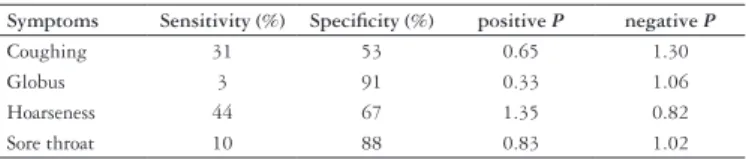
laryngitis with the pH-metry assessment for the diagnosis of GERD supplies an insuficient LR to increase the diagnostic certainty (Table 1)(34).
TABLE 1. Symptoms of laryngitis do not allow diagnostic certainty Symptoms Sensitivity (%) Speciicity (%) positive P negative P
Coughing 31 53 0.65 1.30
Globus 3 91 0.33 1.06
Hoarseness 44 67 1.35 0.82
Sore throat 10 88 0.83 1.02
Comments. The response to the therapeutic test with PPI
in patients with manifestations of chronic laryngitis does not increase the diagnostic probability of GERD. The symptoms of laryngitis, which are typical of gastroesophageal relux, occur dissociatively from the frequency and intensity of the acid relux; moreover, the possibility of non-acid and weakly acid relux is also possible. The patients with chronic laryngitis must be investigated regarding the possibility of relux.
15) What is the contribution of the therapeutic test with PPI to the diagnosis of GERD?
Grade A recommendation
The symptomatic response (86.4%) after 4 weeks of empiric treatment with esomeprazole (40 mg/day) in patients with GERD is equivalent to the treatment preceded by UDE (87.5%)(39). The omeprazole test (40 mg/day) in patients with
GERD diagnosed through pH-metry, results in a SB of 68% and a SP of 63%, with a positive and negative LR of 1.83 and 0.50, respectively(117). The sensibility of the rabeprazole
SP of 45%, positive LR of 1.5 and negative LR of 0.37. The SB, SP, positive LR and negative LR of the placebo group were 40%, 67%, 1.2 and 0.89, respectively(22).
Comments. Although the aforementioned studies have a
satisfactory level of evidence, they are heterogeneous regarding the employed PPI, used doses, time of observation and therapeutic response assessment. Thus, certain patients with GERD might nor present a positive response to the diagnostic test, eventually, because they would need a higher dose or a longer period of the test treatment. In certain patients with suspected GERD, however, the diagnostic contribution of the therapeutic test with PPI is satisfactory.
MANAGEMENT
The primary treatment objectives are the alleviation of symptoms, the healing of mucosal lesions, when they are present, and the prevention of recurrence and complications. The treatment can be considered as being clinical, surgical or endoscopic. From a practical point of view, the therapeutic approach can be divided into behavioural and pharmacologic measures. It is important that the patient is made aware that he or she has a chronic disease.
1) During the treatment of GERD, should the PPI drugs (omeprazole, lansoprazole, pantoprazole, rabeprazole, esomeprazole) be taken as a single daily dose or twice daily?
Grade A recommendation
In patients with the erosive form of the disease, the use of rabeprazole, 10 mg/day, taken in two daily doses for 8 weeks, when compared to rabeprazole 20 mg/day taken as a single daily dose, did not increase the number of patients with endoscopic improvement and increased the severity of symptoms on the 3rd day of treatment(21). The response
to the treatment with esomeprazole, 40 mg/day taken as a single dose or 20 mg/day taken twice a day for 12 days is similar, when assessed by esophageal pH-metry and UDE(53).
The response to the treatment of patients with a GERD diagnosis established by esophageal pH-metry and UDE, with esomeprazole 20 mg/day taken in two daily doses or 40 mg/day taken as a single daily dose for a period of 2 weeks, is 79% and 86%, respectively, with no statistical difference(54).
Comments. There is no difference regarding the clinical
response to the treatment with PPI taken as two daily doses, when compared to a single daily dose.
2) During GERD treatment, should the histamine H2 receptor antagonists (H2-RA: cimetidine, ranitidine, famotidine, nizatidine) be associated to PPI?
Grade A recommendation
The addition of H2-RA to the PPI treatment leads to the improvement in the general symptoms of GERD in 28/39 (72%) of the patients and in 18/27 (67%) of the patients with nocturnal relux symptoms(106). The administration
of PPI (omeprazole, 40 mg/day) associated to a H2-RA
(ranitidine, 300 mg/day) signiicantly reduces (P<0.001) the
percentage of time of gastric pH <4 for the supine period, when compared to PPI, alone (omeprazole, 40 mg/day), with no difference between a single daily dose or two daily doses taken for a period of 30 days(30). The addition of low-dose
ranitidine (75 mg/day) helps in the control of nocturnal gastric acidity, which can occur during the conventional administration of omeprazole(112). The mean value of the
percentage of time during which the intragastric pH was <4 in the supine position with omeprazole (20 mg, twice a day) was 18%, when compared to 29.7%, when a combination of omeprazole + ranitidine (150 mg/day) was administered, with a P = 0.003(62).
Grade B recommendation
Question included in the panel through the indication of participants after voting (level of agreement: 90%).
Comments.The use of H2RA associated to PPI apparently
helps in the nocturnal acid control, leads to an improvement in the nocturnal symptoms of relux and sleep disorders. It is important to remember, however, that the level of evidence is 2b, with cross-sectional, historical cohort, non-randomized studies. Thus, a reasonable degree of uncertainty persists regarding the use of H2RA at night added to the PPI.
3) Should the treatment of GERD consist in the administration of a full dose of PPI for a period of 8 weeks?
Grade A recommendation
In patients with non-erosive GERD, the nocturnal heatburn was treated with esomeprazole, 40 mg/day, 20 mg/day or placebo, for a period of 4 weeks with satisfactory results in 53.1%, 50.5% and 12.7%, respectively. The difference between esomeprazole 40 mg, esomeprazole 20 mg and placebo was 40.5% and 37.8%, respectively, with a LR= 2 in both treatments(51). The analysis of the dairy of symptoms
in patients with non-erosive GERD indicates that, after 8 weeks of treatment with lansoprazole 30 mg/day or 15 mg/ day, the persistence of nocturnal heartburn was present in 49% and 39% of the patients, respectively. When compared to the placebo response, there was a decrease in the risk of the presence of nocturnal hearburn in 19.3% and in 29.2% of the patients, respectively. Similarly, the daytime heartburn presented a decrease in the symptom index with the use 15 mg/day and 30 mg/day of 19.3% and 24.6%, respectively(108). In patients with erosive GERD, the rates
of healing with omeprazole 40 mg/day and 20 mg/day for 4 weeks were 41% and 26%, with a difference of 15%(109). The
rates of erosive esophagitis resolution in 4 weeks, with the use of pantoprazole 20 mg/day and 40 mg/day were 55% and 72%, respectively, which, compared to the placebo, results in a decrease in the risk of esophagitis of 40.6% and 57.7%, respectively(109). The decrease in the risk of erosive
esophagitis in 8 weeks with the use of pantoprazole 20 mg/ day and 40 mg/day was 45.3% and 55.5%, respectively(109).
risk of pyrosis persistence by 25.2% and 25.5%, respectively. It also decreases the risk of dissatisfaction with symptom improvement by 23.8% and 24.3%(59).
Comments When the PPI were used in full dose (esomeprazole:
20 mg/day and 40 mg/day; lansoprazole: 15 mg/day and 30 mg/day; omeprazole: 40 mg/day; pantoprazole 20 mg/day and 40 mg/day; rabeprazole: 10 mg/day and 20 mg/day), no statistical difference was observed between 4 and 8 weeks of treatment. Nevertheless, in cases of therapeutic failure, the time of treatment can be extended from 4 to 8 weeks, as although no signiicant difference was observed between the two periods, the number of satisfactory responses is higher after 8 than after 4 weeks.
4) During the treatment of GERD, is the therapeutic response to the different PPI equivalent?
Grade A recommendation
• Esomeprazole (40 mg/day) and pantoprazole (40 mg/day). • Pantoprazole and esomeprazole were equivalent regarding
symptom improvement (ReQuest scale) for 4-week treatments. Symptom recurrence after 7 days of treatment (51% versus 61%) and the number of symptomatic episodes
(0.56 vs 0.74, P = 0.0095) was lower with pantoprazole
when compared to esomeprazole(43). The number of
patients with esophagitis improvement was higher with esomeprazole than with pantoprazole in a 4–week period (81% vs 75%) and a 8-week period (96% vs 92%)(69). The
improvement of esophagitis is equivalent with the use of pantoprazole or esomeprazole as a full dose during 10 weeks (88% in both treatments). The number of patients presenting symptom improvement was also similar (50% and 47% - with no statistical difference, respectively)(40).
After a 4-week treatment period, the number of patients reporting symptom resolution was similar in the two groups of treatment (pantoprazole = 99% and esomeprazole = 98%)(120). Regarding the persistence of symptom resolution
in patients with non-erosive GERD, there is no difference between pantoprazole (20 mg/day) and esomeprazole (20 mg/day), during a 14-day treatment period (56.4% vs 54.4%) or a 28-day one (80.2% vs 79.4%)(91).
• Esomeprazole (20/40 mg/day) and omeprazole (20 mg/
day).
After an 8-week treatment with esomeprazole-20 mg/ day (90.6%) and omeprazole-20 mg/day (88.3%), the rates of esophagitis healing were equivalent(71). A higher number
of patients presented esophagitis resolution after treatment with esomeprazol-40 mg/day (75.9%) in comparison with omeprazol-20 mg/day (64.7%), during a 4-week treatment and an 8-week treatment period (respectively, 94.1% vs 86.9%). The use of esomeprazole 20 mg/day also resulted in a higher number of patients with esophagitis resolution only in the 4th week of treatment (70.5% vs 64.7%)(58). The
number of patients with GERD that presented healing with esomeprazole-40 mg/day when compared to omeprazole-20 mg/day was similar at 4 weeks (71.5% vs 68.6%) and at 8 weeks (92.2% vs 89.8%)(119).
• Esomeprazole (40 mg/day) and lansoprazole (30 mg/day).
In the resolution of relux esophagitis, the treatment with esomeprazole was superior to that with lansoprazole during a 4-week (58.6% vs 49.4%, respectively) and an 8 week period (82.4% vs 77.5% of duration, respectively)(31). In patients
with erosive esophagitis, the treatment with esomeprazole is superior to that with lansoprazole, with a healing rate in 4 weeks of 79.4% vs 75.1%, respectively and in 8 weeks of 92.6% vs 88.8%, respectively(15).
• Pantoprazole (40 mg/day) and omeprazole (40 mg/day).
The percentage of patients that presented healing of the esophagitis during treatments with pantoprazole and omeprazole after 8 (84.3% and 84.9%) and 4 weeks (65.3% and 66.3%) was equivalent(67).
• Rabeprazole (20 mg/day) vs omeprazole (20 mg/day).
After 4 and 8 weeks of treatment, the resolution of the esophagitis obtained with rabeprazole and omeprazole was equivalent, with the rates varying around 81% for both treatments at 4 weeks and 92% and 94% at 8 weeks, respectively(20).
• Lansoprazole (30 mg/day) vs omeprazole (20 mg/day) and/
or pantoprazole (40 mg/day). Lansoprazole is similar to omeprazole and pantoprazole regarding the improvement of pyrosis after 4 or 8 weeks of treatment(95). There is
no difference regarding the rates of pyrosis resolution in patients with erosive esophagitis, when treated with lansoprazole or omeprazole at 4 weeks (77.2% vs 76.2%) or at 8 weeks (84.3% vs 83.0%)(110).
• Rabeprazole (10 mg/day) vs esomeprazole (20 mg/day).
Concerning the treatment of non-erosive GERD, the time necessary to obtain a symptom-free period of 24 hours (pyrosis or regurgitation) is similar when using rabeprazole or esomeprazole. Moreover, when considering the global symptom improvement reported by the patients, rabeprazole and esomeprazole present similar results (96.0 % vs 87.9% - not signiicant)(32).
Comments. Esomeprazole 20/40 mg/day, lansoprazole 30
mg/day, omeprazole 20/40 mg/day, pantoprazole 40 mg/day and rabeprazole 20 mg/day are equivalent in the treatment of patients with erosive GERD. Esomeprazole 20/40 mg/ day, omeprazole 20 mg/day, pantoprazole 20 mg/day and rabeprazole 10 mg/day are equivalent in the treatment of patients with non-erosive GERD.
5) Should a prokinetic agent (domperidone,
mosapride, cisapride) be added to the PPI treatment of GERD ?
Grade A recommendation
In patients with heartburn and/or regurgitation symptoms, there is no difference (P = 0.11) in the response of symptoms
used the association (3.78 ± 3.62 vs 1.67 ± 2.09). In patients
with non-erosive GERD, there was no signiicant difference (P = 0.63) between the two types of treatment (pantoprazole:
17/20 and pantoprazole + cisapride: 7/9). In cases of erosive esophagitis, the symptomatic response occurred more frequently (P = 0.003) with the association (18/19 – 94.7%)
than in cases in which pantoprazole was employed exclusively (6/13 – 46.2%). The endoscopic resolution of the esophagitis, however, occurred similarly (P>0.005) with both regimens
(pantoprazole: 6/11, 54.5% and association: 12/17, 70.5%)(79).
The therapeutic outcome in asthmatic patients with GERD (diagnosed by 24-hour pH-metry) treated with the association between omeprazole, 20 mg/2x day + domperidone, 10 mg/3x day, when compared to the placebo, showed a signiicant decrease (P<0.001) in the score of daytime symptoms of
asthma (17.4% vs 8.9%), in the score of symptoms of relux (8.7% vs 1.6%) and in the use of rescue medication (23.2% vs 3.1%)(123). Considering the therapeutic plans: omeprazole
(20 mg/day) and the association between omeprazole (20 mg/ day) and cisapride (30 mg/day), the number of patients that persisted with symptom remission at the 12-month follow-up was: omeprazole = 28/35 (80%) and association = 31/35 (89%). The therapeutic plan consisting of omeprazole + cisapride was signiicantly more effective (P = 0.003) than
cisapride alone(140).
Comments. The outcome of the association between
prokinetic agents and PPI in the treatment of erosive and non-erosive GERD is not conclusive. On the other hand, the prokinetic agents available in our country (domperidone, bromopride and metoclopramide) have not been conveniently and consistently studied regarding their use associated to PPI in these patients.
6) Can the long-term use of PPI cause damage to the gastric mucosa?
Grade A recommendation
During 7 years of observation, the patients with GERD that remained negative for the presence of H. pylori did not present histological signs of gastric disease.
In patients positive for the presence of H. pylori, the use
of omeprazole 20 mg/day for 7 years resulted in glandular atrophy, which was not veriied in patients submitted to the surgical intervention(77). An increase in enterochromafin
cell hyperplasia of the oxyntic mucosa was observed in patients with GERD positive for H. pylori after the chronic
use of omeprazole 20 mg/day for 5 years, when compared to rabeprazole 10 mg/day or 20 mg/day(111). In patients with
GERD and the presence of H. pylori, the use of omeprazole
40 mg/day for a period of 12 months determined a pattern of gastric antral mucosa atrophy, when compared to those submitted to the eradication(89). After a 1-year period of
omeprazole use (40 mg/day), the prevalence of protrusion of parietal cells increased from 18% to 86% (P<0.001),
regardless of the H. pylori eradication. The prevalence of
cysts in the fundic glands, however, increased from 8% to 35% (P<0.05), being more prevalent in patients submitted
to H. pylori eradication (P<0.05)(16).
Comments. The report of the occurrence of neoplasia
with the chronic use of PPI is not supported by evidence. The gastric mucosa, however, is altered in these conditions (chronic gastritis, atrophy and polyps of fundic glands). The prevalence of gastric atrophy signs increases along the years, mainly when H. pylori is present.
7) Should H. pylori be eradicated in patients with GERD? Should the eradication of H. pylori be carried out in patients who are chronic users of PPI?
Grade A recommendation
The rate of GERD symptom recurrence in 1 year is not different in patients submitted or not to the eradication of
H. pylori(90). In patients with GERD, the eradication of H.
pylori (amoxicillin 2 g/day + clarithromycin 1 g/day) is as
high as 88%, with a decrease in gastric inlammation in 2 years, without altering the presence of GERD symptoms or the need for the chronic use of omeprazole (40 mg/day)
(68). In patients with GERD, after a 12-month follow-up, the
probability of therapeutic failure regarding the symptoms is higher in patients that underwent the eradication of H. pylori
(43.2%) than in those that did not (21.1%)(148). Throughout
1 year of omeprazole use (40 mg/day) for the treatment of GERD, the signs of chronic inlammation were decreased when compared to those patients who did not undergo H. pylori eradication(90).
Comments. At the long-term (>1 year), the eradication of H. pylori in patients with GERD does not reduce the presence
of symptoms or the rates of recurrence of the disease, although it decreases the histological signs of gastric inlammation. Therefore, it seems likely there is no association between H. pylori eradication and GERD manifestations.
8) In patients with atypical manifestations, what is the time of treatment and PPI dose that should be employed?
Grade A recommendation
In asthmatic patients, lansoprazole, 30 mg/2x day for 6 month decreased the risk of symptom exacerbation(72).
Pantoprazole, 40 mg/day for 3 months did not improve the score of symptoms and pulmonary function, although it improved the quality of life score(116). Pantoprazole, 40 mg/
day for 3 months in asthmatic patients did not improve the score of symptoms of relux, as well as did not decrease the number of patients with altered esophageal pH-metry(147). In
patients with bronchial hyperreactivity, the use of omeprazole, 40 mg/2x day for 3 months, reduced the risk of pyrosis and the esophageal pH-metry assessment(82). In patients with
laryngitis, esomeprazole, 40 mg/day for 4 months did not improve the time of pH <4 and the score of quality of life, of symptoms and of GERD(137). Lansoprazole 30 mg/2x day for
3 months in patients with laryngitis promoted improvement of GERD symptoms(26). Lansoprazole 30 mg/day compared
20 mg/2x day for 2 months in patients with non-cardiac thoracic pain increases the probability of symptom improvement and reduces the number of days with pain(1).
Comments. The cases of acid reflux and atypical
manifestations (asthma, bronchial hyperactivity, laryngitis and non-cardiac thoracic pain) respond better to a double dose of PPI for longer periods (2 to 6 months).
9) Is there any equivalence among the PPIs in the response to GERD maintenance therapy?
Grade A recommendation
• Esomeprazole (20 mg/day) and pantoprazole (20 mg/day).
At 6 months of maintenance treatment of erosive GERD, pantoprazole and esomeprazole showed the same rate of symptom remission (84% and 85%, respectively)(44). • Esomeprazole (20 mg/day) and lansoprazole (15 mg/
day). At 6 months of follow-up, the number of patients with erosive GERD presenting endoscopic remission was higher among those treated with esomeprazole than in those treated with lansoprazole (84.8% versus 75.8%).
No difference was observed between the occurrence of pyrosis (23.6% vs 26.2%) and regurgitation (20% in both regimens)(23). At 6 months of follow-up, esomeprazole
showed a higher proportion of patients in remission than lansoprazole (83% vs 74%, respectively)(70).
• Rabeprazole (10 mg/day) and omeprazole (20 mg/day).
The use of rabeprazole (10 mg/day and 20 mg/day) was equivalent to omeprazole in the maintenance of esophagitis resolution in 52 weeks(132).
• Lansoprazole (30 mg/day) and omeprazole (20 mg/day).
The follow-up of patients with erosive esophagitis during 6 months showed that 3.7% and 5%, respectively, presented therapeutic failure with lansoprazole and omeprazole(52). In patients that presented recurrence of
the disease (evaluated by symptoms and/or presence of erosions at the endoscopic assessment), no difference was observed, regarding the proportion of patients, between the two types of treatment: lansoprazole (9.5%) and omeprazole (9%)(14).
Comments. During the observed period of 6 months, in the
maintenance treatment of patients with erosive GERD, the PPI presented equivalent therapeutic response. The following PPI were studied: esomeprazole (20 mg/day), pantoprazole (20 mg/day), omeprazole (20 mg/day), lansoprazole (15 and 30 mg/day), rabeprazole (10 mg/day).
10) In the treatment of non-erosive GERD should the maintenance treatment with PPI be performed continuously, intermittently or upon demand?
Grade A recommendation
The use of esomeprazole 20 mg/day upon demand, when compared to lansoprazole 15 mg/day, used continuously, reduces the risk of treatment discontinuity due to worsening of symptoms in 7% and adverse events (headaches and diarrhea) in 6.4%(135). In patients with GERD symptoms,
the treatment upon demand with esomeprazole 20 mg/day, compared to the intermittent treatment with esomeprazole
40 mg/day, did not increase the patients’ degree of satisfaction, but decreased the number of symptom recidivisms in 6 months(88).
Comments. During the observed period of 6 months,
the treatment upon demand is preferable to the continuous or intermittent treatment, with clinical and economical advantages. The following PPI were studied: esomeprazole (20 and 40 mg/day) and lansoprazole (15 mg/day).
Note. One of the steps of the clinical treatment of GERD
is related to the non-pharmacological management: lifestyle modiications or behavioural measures, which are presented in Figure 1.
• Elevation of the headboard of the bed (15 cm)
• Ingestion of the following foods in moderation and based on symptom correlation: fatty foods, citrus, coffee, chocolate, alcoholic and carbonated beverages, mint, tomato-based
products
• Special care with “at risk” medications: anticholinergic agents, theophylline, tricyclic antidepressants, calcium channel blockers, β-adrenergic agonists, alendronate • Avoidance of lying down for 2 hours after meals
• Avoidance of large meals
• Drastic reduction in, or cessation of smoking • Decrease in body weight, if overweight
FIGURE 1. Behavioural modiications in the treatment of GERD(92)
11) Does the non-pharmacological therapy (behavioral measures) produce results in the treatment of GERD?
Grade B recommendation
Question included in the panel through the indication of the participants after voting (level of agreement: 92 %).
a) Elevation of the headboard of the bed (15 cm)
To sleep with a wedge-shaped support is associated with a lower acid exposition than in the horizontal position(47). The
elevation of the headboard (28 cm) reduces the number of relux episodes and time of acid exposition with a pH <5 (127).
b) Dietetic factors. Alcoholic beverages
The habit of consuming sweets and white bread is associated to relux symptoms(98). The habit of consuming fruit has a
protective effect on the relux symptoms(98). The ingestion of
proteins is associated to erosive GERD and the ingestion of ibers to a lower risk of GERD(27). The excessive ingestion
of sweets and food is associated with GERD(141). A fat-rich
diet does not increase the number of relux episodes or the esophageal acid exposition(102). The habit of drinking coffee
is associated to GERD(141). The ingestion of alcohol is a
risk factor for erosive GERD(64). The frequent ingestion of
alcoholic beverages constitutes a risk factor for symptoms of relux(98). The habit of drinking wine or beer increases
the risk of relux(101). The use of alcohol is a risk factor for
erosive GERD(114). The ingestion of alcoholic beverages is
associated to GERD(141).
c) Posture. Physical exercise. Nocturnal meals
are triggered by posture(64). Physical activity seems to have a
protective effect on GERD(98). A short interval between dinner
and bedtime is associated with an increased risk of GERD, especially when <3 hours(36). The later the nocturnal meal,
the higher is the rate of relux, especially in obese individuals and patients with erosive GERD(104).
d) Smoking
Smoking is associated with GERD(64). Smoking is a risk
factor for non-erosive GERD(64). Smoking is a risk factor for
relux symptoms(98). Smokers present more episodes of relux
than non-smokers, but the abstinence from smoking for 24 hours does not reduce the time of pH <4(118). Abstinence from
smoking reduces, in 24 hours, the number of relux episodes, but it does not affect the total acid exposition(142). Smokers,
after a 48-abstinence from smoking, present an increase in the esophageal acid exposition(57). Smoking is included among
the risk factors for GERD(128).
e) Obesity
A body mass index (BMI) ≥25 constitutes a risk factor for erosive GERD. The elevated BMI is associated to gastroesophageal relux(97). The BMI >25 constitutes a risk
factor for GERD(114). Patients with a BMI of around 42.5
kg/m2 do not present an association with the prevalence of
GERD(75). Obesity is associated with GERD(141). There is
an association between the relux symptoms and obesity(98).
Obesity predisposes the individual to gastroesophageal relux and the loss of weight improves the postprandial relux and reduces the time of pH <4(84). The decrease in weight does
not reduce the manifestations of gastroesophageal relux(65).
f) Stress and fatigue
Stress and fatigue trigger episodes of gastroesophageal relux(57). Stress is one of the risk factors for GERD(128).
Comments. The non-occurrence of consistent information
(evidence level 2 – grade B recommendation) regarding the elevation of the headboard, certain dietetic factors, ingestion of alcohol, physical exercise, inclined posture, smoking, presence of obesity, stress and fatigue does not decharaterize eventual recommendations of behavioral nature assessed in each case. The elevation of the headboard and to maintain an interval between the last meal and bedtime, for instance, are recommended.
12) What are the indications for the surgical treatment of GERD?
Grade B recommendation
Question included in the panel through the indication of the participants after voting (level of agreement: 93.6 %).
a) Hiatal hernia. Paraesophageal hernia. Risk factors. Prognosis.
The laparoscopic Nissen fundoplication is equally effective in patients with GERD or with paraesophageal hernia(83).
During a mean follow-up of 72 months, 93% of the patients with large paraesophageal hernias presented free of symptoms
related to GERD(86). Hiatal hernias <3 cm constitute a risk
factor for non-erosive GERD and those >3 cm, for erosive GERD and Barret’s esophagus(122). The dimensions of the
hiatal hernia, decreased pressured in the lower esophageal sphincter, esophageal acid exposition and the number of relux episodes are associated with the degree of severity of the esophagitis(55). Hiatal hernias >2 cm are associated with
erosive GERD and Barret’s esophagus(13). The presence of
a hiatal hernia is associated with more severe esophagitis and predisposes patients with non-erosive GERD to more severe histological alterations(35). The hiatal hernia constitutes
a risk factor for the occurrence of erosive GERD(64). The
recurrence of symptoms after the fundoplication (Nissen or Toupet) is higher in larger hernias (grades 3 and 4)(28). In
patients with GERD and hiatal hernia (where 31% presented erosive GERD and 75% presented lower esophageal sphincter dysfunction), the reduction, crural closure and Nissen fundoplication produced, in a 14-month follow-up, symptom improvement(37). Hiatal insuficiency and concentric hiatal
hernia are determinant factors of irreversible incontinence of the cardia(85).
Comments. The presence of a hiatal hernia requires
higher doses of PPI for the clinical treatment. The presence of permanent migration of the esophagogastric junction and the dimensions of the hiatal hernia (>2 cm) are factors of worse prognosis of GERD. In this case, hiatal hernias associated with GERD, especially the ixed ones >2 cm, must be considered for surgical treatment. The results of the laparoscopic fundoplication are adequate.
b) Motility
Grade B recommendation
Question included in the panel through the indication of the participants after voting (level of agreement: 80.9 %).
The Nissen fundoplication offers good results in patients with normal esophageal motility and the Toupet fundoplication, in patients with esophageal dysmotility(73). No difference
was observed in postoperative symptoms in patients with or without esophageal dysmotility submitted to the fundoplication (Nissen or Toupet)(9). The type of fundoplication must not be
determined by the presence of esophageal dysmotility, as the postoperative dysphagia is not related to the dysmotility(130).
Comments. The esophageal dysmotility indicates a more
severe disease, does not affect the postoperative outcomes, does not improve with fundoplication and can occur due to the surgical intervention. The surgical treatment should not, therefore, be indicated according to the parameter of esophageal dysmotility. The latter can contra-indicate the surgical treatment.
c) Costs
Grade B recommendation
Question included in the panel through the indication of the participants after voting (level of agreement: 74.9%).
of 5 years, the costs with the use of PPI are lower than the open surgery for GERD treatment(96).
Comments. The British Health System observed that the
Nissen laparoscopic fundoplication is more cost-effective than the clinical treatment with PPI over an 8-year period. When the open surgery was considered, however, the costs regarding the PPI use over a period of 5 years were lower than those concerning the surgery.
13) What are the results of the clinical treatment vs the surgical treatment of GERD?
a) Global outcome
Grade A recommendation
In patients with erosive and non-erosive GERD, the anti-relux surgery, in comparison with the anti-anti-relux treatment with PPI, reduces the time of esophageal pH <4 and improves the VAS score of symptoms, the GERD score and the score of heartburn and regurgitation(3). In patients with chronic
erosive GERD, the Nissen surgery, in comparison with PPI use, improves with the score of symptoms, including the digestive one and reduces the time of exposition to pH <4(80). In patients
with chronic erosive relux disease, Nissen surgery increases the degree of patients’ satisfaction when compared to the use of PPI(87). In patients with chronic erosive relux disease (symptoms
of relux + esophagitis + previous treatment >3 months), the treatment with omeprazole 20 mg or 40 mg was equivalent to the laparoscopic surgical treatment (Nissen), with 93% and 90% of the patients, respectively, remaining in symptom remission for 3 years(78). There was a higher incidence of therapeutic
failure after the treatment with omeprazole 40 mg or 60 mg, than after the surgery (Nissen or Toupet), with the surgery reducing the risk of therapeutic failure by 12.9%. When the clinical and the surgical forms of treatment were compared, however, the scores of symptoms (Gastrointestinal Symptoms Rating Scale - GSRS) and quality of life (Psychological General Well-Being - PGWB) were similar(76).
Comments. There is evidence of the estimated beneit
with the surgical treatment when compared to the clinical treatment, with a decrease in therapeutic failure of 12%, with the rates remaining unaltered for an observation period of 7 years. There is also evidence of the same power of equivalence between the clinical treatment with PPI (93%) and the Nissen surgical treatment (90%), with the patients remaining in symptom remission for 3 years. It would be recommended, however, to have longer periods of observation before a deinitive conclusion is reached.
b) Other variables: symptoms, esophagitis and pH; patients’ preferences; prognosis; lower esophageal sphincter pressure; stenosis; non-acid GERD
Grade B recommendation
Question included in the panel through the indication of the participants after voting (level of agreement: 91%).
Over a 12-month follow-up, the clinical and surgical (Nissen) treatments of GERD are effective. The surgery, however, offers an additional beneit in patients that presented a partial improvement with the use of medication, over a
mean follow-up period of 6.9 years(87). Over 18 months
of observation, the regression of the dysphagia obtained with the Nissen fundoplication (93.8%) is higher than that obtained with PPI use (63.2%)(115). The laparoscopic surgery
for the treatment of GERD improves the quality of life of patients whose symptoms are adequately controlled with the use of PPI(42). In patients submitted to surgery
for GERD followed for a period of 5.9 years, 37% used medication (PPI, H2-RA, anti-acids). Of these, 17% never discontinued the use and 83% re-started 2.5 years after the surgery, due to symptom recurrence. The pH-metry was abnormal in 32% of them(146). After 5 years of observation,
no symptom improvement was observed, as well as adverse events or improvement in the score of quality of life among patients with erosive and non-erosive GERD submitted to Nissen laparoscopic fundoplication(60). Heartburn and
esophagitis are effectively treated by the clinical and surgical treatments. In these patients, only the surgery improved the regurgitation, dysphagia and esophageal motility(145). Over
a period of observation of 12 months, patients with erosive GERD treated with PPI presented a rate of recurrence of 7.7% when the lower esophageal sphincter pressure was normal (>8 mm Hg). The rate of recurrence was 38.1% when there was sphincter dysfunction and 79.5% when there was sphincter dysfunction + dysmotility(66). Over a 5-year period
of follow-up, patients with an inadequate response to PPI beneited from undergoing laparoscopic fundoplication, mainly regarding the improvement of quality of life(4). The
rate of success of Nissen fundoplication was 75.3% and was associated with 77.1% of the patients that responded satisfactorily to the clinical treatment and with 56% of the patients that did not respond to the clinical treatment(94).
During a 10-year follow-up of patients submitted to Nissen fundoplication, the persistence or occurrence of symptoms was 32%, com 68% of asymptomatic ones. The quality of life remained high, although 80% were submitted to a new fundoplication procedure(105).
In patients undergoing acid suppression, the episodes of acid relux were not associated with symptoms, but with the episodes of mixed relux (liquid-gas)(136). The number
of relux events in the 24 hours after the fundoplication is signiicantly lower when compared to those in healthy individuals. After the surgery, most episodes of relux are not acid ones(113). Most of the patients undergoing prolonged
treatment with PPI with symptom persistence and a positive symptom index, presented non-acid relux, including those with atypical symptoms(81).
Comments. There is evidence of estimated beneit with the