UNIVERSIDADE NOVA DE LISBOA
INSTITUTO DE HIGIENE E MEDICINA TROPICAL
DESIGN, IMPLEMENTATION AND
EVALUATION OF A NEW eHEALTH
PHARMACEUTICAL SERVICE FOR
COOPERATIVE DISEASE MANAGEMENT
USING AN INTERACTIVE PLATFORM:
OPPORTUNITIES TO IMPROVE HEALTH
SYSTEMS PERFORMANCE
JOÃO GREGÓRIO
D
ISSERTAÇÃO PARA A OBTENÇÃO DO GRAU DED
OUTOR EMS
AÚDEI
NTERNACIONALE
SPECIALIDADE DEP
OLÍTICAS DES
AÚDE ED
ESENVOLVIMENTODEZEMBRO, 2016 D es ign, im pl em ent at ion a nd eva lua tion of a ne w eHe al th p har m ace ut ica l se rvi ce f or coo per at ive d is ea se m an age m ent us ing an in te rac tiv e pl oppor tun iti es to im pr ov e he al th sys te m s per for m ance
─ João P
edr
o G
regó
rio, Ju
lho de 201
UNIVERSIDADE NOVA DE LISBOA
Instituto de Higiene e Medicina Tropical
Design, implementation and evaluation of a new eHealth
pharmaceutical service for cooperative disease management
using an interactive platform: opportunities to improve
health systems performance
Autor: João Pedro Bernardo Gregório
Orientador: Professor Doutor Luís Velez Lapão
Coorientador: Professor Doutor Afonso Miguel Cavaco
i
SCIENTIFIC PUBLICATIONS AND COMMUNICATIONS
This thesis is based on the following papers, which are referred to in the text by their Roman numerals (I-IV):
Published papers:
I GREGÓRIO, João; CAVACO, Afonso; LAPÃO, Luís Velez. A scenario-planning approach to human resources for health: the case of community pharmacists in Portugal. Human resources for health, 2014, 12.1: 1. DOI: 10.1186/1478-4491-12-58
II GREGÓRIO, João; CAVACO, Afonso Miguel; LAPÃO, Luís Velez. How to best manage time interaction with patients? Community pharmacist workload and service provision analysis. Research in Social and Administrative Pharmacy, 2016. (in
press)
III GREGÓRIO, João; RUSSO, Giuliano; LAPÃO, Luís Velez. Pharmaceutical services cost analysis using time-driven activity-based costing: A contribution to improve community pharmacies' management. Research in Social and
Administrative Pharmacy, 2016, 12.3: 475-485. DOI:10.1016/j.sapharm.2015.08.004
IV LAPÃO, Luís Velez; MIRA DA SILVA, Miguel; GREGÓRIO, João; Implementing an Online Pharmaceutical Service using Design Science Research. BMC
Medical Informatics and Decision-Making (Paper submitted on 23/05/2016)
Communications (oral and poster presentations):
- GREGÓRIO, J. & LAPÃO, L. 2012, E-Health e a Prestação de Cuidados
Farmacêuticos: Contributo para a melhoria da qualidade da prestação de serviços de saúde. In: Congresso Nacional dos Farmacêuticos, 2012, Lisboa. (poster presentation – best poster award)
- GREGÓRIO, J., CAVACO, A., DA SILVA,M.M., LOVIS,C., LAPÃO, L.
ii
pharmaceutical care network Europe, 6–8 February 2013, Berlin, Germany. International Journal of Clinical Pharmacy Volume 35, Issue 3, pp 488-506 (poster presentation).
- GREGÓRIO, J., LAPÃO, L. 2013. Uso de cenários estratégicos para
planeamento de recursos humanos em saúde: os farmacêuticos comunitários em Portugal, 2010-2020. 2º Congresso de Medicina Tropical, Instituto de Higiene e Medicina Tropical, Lisboa, Portugal. (oral communication)
- LAPÃO,L.V., GREGÓRIO,J., CAVACO,A., DA SILVA,M.M., LOVIS,C.,.
Implementing eHealth Services for Enhanced Pharmaceutical care Provision: Opportunities and Challenges. 2nd International Conference on Serious Games and Applications for Health, SeGAH 2013, Vilamoura. (oral communication)
- GREGÓRIO, J., FERREIRA,T., CAVACO, A., DA SILVA,M.M., LOVIS,C.,
LAPÃO, L. 2013. Community Pharmacies and eHealth Services: Barriers and Opportunities for Real Primary Healthcare Integration. In: 26th IEEE
International Symposium on Computer-Based Medical Systems, Porto. (oral communication)
- GREGÓRIO, J., FERREIRA, T., LAPÃO, L. 2013. Developing eHealth services
for pharmaceutical care using Design Science Research Methodology. In: European Health Management Association (EHMA) Annual Conference - What healthcare can we afford? Better, quicker, lower cost health services, Milan. (poster presentation)
- GREGÓRIO, J., LAPÃO, L., 2013. eHealth technologies to support primary
healthcare integration with community pharmacies. In: 20th WONCA World
Conference on Family Medicine, Prague; Czech Republic. (oral communication)
- GREGÓRIO, J., LAPÃO, L. 2013. Developing eHealth services to support Community Pharmacist’s provision of Pharmaceutical Care. In: Seminário Internacional Brasil-Portugal “Trabalho em Saúde, Desigualdades e Políticas
iii - GREGÓRIO, J., LAPÃO, L., 2013. Using Strategic Scenarios for Human
Resources Planning – The case of Portuguese community pharmacists. In: Seminário Internacional Brasil-Portugal “Trabalho em Saúde, Desigualdades e
Políticas Públicas”, Instituto de Ciências Sociais, Universidade do Minho.
Braga. (oral communication)
- GREGÓRIO, J., LAPÃO, L., 2013. Pharmaceutical services costing using
time-driven activity based costing. In: 13th Annual International Conference on Health Economics, Management & Policy: Athens, Greece. (oral communication)
- GREGORIO, J., RUSSO, G., & LAPAO, L. (2015, April). Pharmaceutical
services cost analysis using time-driven activity based costing in a sample of Portuguese community pharmacies. Abstracts 9th working conference of the pharmaceutical care network Europe, 4-6 February 2015, Mechelen, Belgium. International Journal of Clinical Pharmacy (Vol. 37, No. 2, pp. 403-404). (poster presentation)
- GREGÓRIO, J., PIZARRO, Â., CAVACO, A., WIPFLI, R., LOVIS, C., MIRA,
D. S. M., & LAPÃO, L. V. (2014). Online Pharmaceutical Care Provision: Full-Implementation of an eHealth Service Using Design Science Research. Studies in health technology and informatics, 210, 261-265. 26th Medical Informatics Europe Conference, MIE 2015, Madrid, Spain. (oral communication)
- GREGÓRIO, J., PIZARRO, Â., CAVACO, A., WIPFLI, R., LOVIS, C., MIRA,
iv
ACKNOWLEDGMENTS
Firstly, I would like to express my sincere gratitude to my supervisor Prof. Luís Lapão, for the continuous support of my PhD study and related research, for his patience, motivation, creativity and knowledge. I would like to thank for encouraging my research and for allowing me to grow as a research scientist.
Besides my supervisor, I would like to thank Prof. Afonso Cavaco and Prof. Miguel Mira da Silva for their insightful comments and encouragement, but also for the questioning which led me to address my research from various perspectives.
My sincere thanks also goes to all the pharmacies’ staffs who provided me an
opportunity to access their facilities and permitted the observation of their daily work practices. Without they precious collaboration it would not be possible to conduct this research. Also, the collaboration of Dr. Tiago Ferreira, Dr. Paulo Abreu in the programming of the platform must be acknowledge as is the collaboration of Dr. Diogo Mello in the design of the Service Experience Blueprint and Drª. Ângela Pizarro for conducting the demonstration stage of the platform.
I thank my fellow PhD and department colleagues, for the stimulating discussions and for the decompression lunch talks that yielded so much fun and new ideas.
v
RESUMO
Introdução: As doenças crónicas são a principal causa de mortalidade em toda a
Europa. O aumento da prevalência de doenças crónicas está a gerar a necessidade de reformas nos sistemas de saúde. Estas reformas abordam a gestão de doenças crónicas com base em equipas multidisciplinares, com novos papéis atribuídos a profissionais não-médicos, como enfermeiros e farmacêuticos comunitários (CP). A comunicação entre profissionais e cidadãos é fundamental em todos os modelos multidisciplinares, o que torna o uso de Sistemas e Tecnologias de Informação (IST) cada vez mais indispensável. É de extrema importância para a ciência e a sociedade entender como serviços suportados por IST - eHealth - podem ser desenvolvidos e utilizados para enfrentar os constrangimentos e desafios dos futuros sistemas de saúde.
Objetivo: O objetivo principal deste projeto foi o de desenvolver, implementar e
avaliar um serviço farmacêutico de gestão de doença suportado por IST, no contexto da farmácia comunitária, utilizando a metodologia Design Science Research (DSRM) como metodologia de investigação.
Métodos: A aplicação de DSRM decorre em seis fases, desde a definição e
caracterização do problema até à avaliação da solução (ou artefacto). A primeira fase foi constituída por um exercício de cenarização, um estudo observacional de tempo e movimento e um questionário de preenchimento online, para avaliar as futuras
possibilidades para os farmacêuticos comunitários no sistema de saúde, e a atual prestação de serviços farmacêuticos suportados por IST em farmácia comunitária. Na segunda fase, foram realizadas entrevistas qualitativas com utentes de serviços de saúde. Estas duas fases informaram o desenho da plataforma web de suporte ao
serviço, que foi o objetivo da terceira fase. De seguida, nas duas etapas seguintes, a plataforma web foi testada e a usabilidade avaliada através de um estudo de caso com
utentes selecionados numa universidade sénior.
Resultados: A partir do exercício de cenarização, foi possível identificar as incertezas
vi
necessidade de melhorar a legibilidade da informação para melhorar a experiência de utilização dos utentes seniores.
Conclusão: Atualmente, o uso de IST nas farmácias comunitárias portuguesas está
principalmente focado na dispensa de medicamentos. Parece existir uma necessidade de reorganização interna das farmácias de forma a permitir aumentar a eficiência da prestação de serviços farmacêuticos e permitir a prestação de serviços farmacêuticos de eHealth. Para os serviços farmacêuticos de eHealth estarem mais integrados no modelo de negócio atual, é necessário melhorar o marketing do serviço, de forma a aumentar o recrutamento de utentes e demonstrar o valor do serviço para os doentes crónicos e médicos. A qualidade e usabilidade da plataforma eHealth é fundamental. No entanto, também o acompanhamento por um profissional de saúde e a integração dos serviços farmacêuticos com os cuidados de saúde primários são importantes para uma melhor gestão da doença. A DSRM demonstrou ser útil no desenvolvimento e implementação de serviços de eHealth, proporcionando um maior envolvimento dos utilizadores, aumentando a utilidade percebida do serviço. No próximo ciclo de DSRM, vão ser necessários os inputs de médicos de cuidados primários e outros
profissionais de saúde, de modo a desenvolver um novo artefacto, para testar e avaliar o valor clínico e económico dos serviços farmacêuticos eHealth.
Palavras-chave: Serviços farmacêuticos; eHealth; Design Science Research;
vii
ABSTRACT
Background: Chronic diseases are the main cause of mortality throughout Europe.
The increasing prevalence of chronic diseases is leading to the necessity of health system reforms. These reforms address chronic-disease management based on multidisciplinary teams, with major roles for non-physicians, such as nurses and community pharmacists (CP). A cornerstone on every multidisciplinary model is the communication between stakeholders, for which the use of Information Systems and Technologies (IST) is increasingly indispensable. It is of importance to science and society to understand how IST supported services – eHealth - could be developed and used to address the challenges and constrains of future health systems.
Aim: The main goal of this project was to design, implement and evaluate a disease management web-based interactive pharmaceutical service, within a community pharmacy setting, using Design Science Research Methodologies (DSRM).
Methods: The application of DSRM six stages’ is described, from the definition and
characterization of the problem to the evaluation of the artefact. The first stage consisted of a scenario exercise, a time and motion observational study and an online survey, to assess future roles for community pharmacists and current pharmaceutical services provision supported by IST in community pharmacy. In the second stage,
qualitative interviews with health services’ users were performed. These two stages
helped to inform the design of the web-platform, which was the goal in the third stage. After this, the web-platform was tested and the usability evaluated in the two following stages, through a case study with selected patients from the participant pharmacies and from a senior university.
Results: The scenario exercise allowed to identify the critical uncertainties that will
be the drivers of change for the Community Pharmacists. These were found to be the
“Ability to develop Services”, and the “Legislative Environment”. From both the survey and observational study, it was found that pharmacies’ IST is mainly used for dispensing medicines and administrative tasks with only 15% of the respondent pharmacies using IST to answer patients’ queries; 50% of pharmacists daily time is spent with patients, 38% on administrative tasks, while still having an average of 54 minutes of idle time spread through the day, mainly in micro-pauses. The overall costs of Pharmaceutical services across three pharmacies were found to be very similar, with the average dispensing service cost at €3.66 and €1.34 for the counselling service; 46% of the interviewed users admitted that they sought healthcare provision with the CP for minor issues before going to a physician, while home delivery was the most requested new service. In the demonstration stage, we found that the registration, monitoring and storage of biochemical and physiological data, recorded by the CP and the patients in the platform, contributed to a common interest that may allow an improvement in patients’ health outcomes. From the usability evaluation, concerns about the quick access to information were perceived as well as the need to
improve legibility, addressing senior users’ difficulties.
Conclusion: The current state of IST usage in Portuguese community pharmacies is
viii
pharmaceutical services more integrated in the current pharmacy daily business, marketing efforts need to be done, to recruit and demonstrate value to the chronic patients and physicians. The quality and usability of the web-based platform is critical, as is the close professional follow-up and integration of pharmacy and primary care services focused in disease management. DSRM helps in developing and implementing eHealth services through a higher involvement of the stakeholders, increasing the perceived usefulness of the service. The next DSRM cycle will need to use the input of primary care physicians and other health professionals in order to develop an artifact to test and evaluate the clinical and economic value of eHealth pharmaceutical services.
Keywords: Pharmaceutical services; eHealth; Design Science Research; Primary
ix
TABLE
OF
CONTENTS
SCIENTIFIC PUBLICATIONS AND COMMUNICATIONS ... i
ACKNOWLEDGMENTS ... iv
RESUMO ... v
ABSTRACT ... vii
TABLE OF CONTENTS ... ix
LIST OF FIGURES ... xi
LIST OF TABLES AND BOXES ... xii
ABBREVIATIONS ... xiii
1. INTRODUCTION ... 1
1.1.BACKGROUND AND STATE OF THE ART ... 2
1.1.1. Community Pharmacists’ new role – Pharmaceutical care and Pharmaceutical services... 3
1.1.2. The Pharmaceutical care movement in Community Pharmacy ... 5
1.1.2.1. The Dáder methodology ... 6
1.1.2.2. Pharmaceutical services ... 7
1.1.3. Integrating pharmacists in the Primary Healthcare team ... 9
1.1.4. Community Pharmacy system in Portugal ... 12
1.1.5. Information Systems and Information Technologies in Healthcare ... 14
1.1.5.1. Information systems and technologies in Community Pharmacy ... 15
1.1.6. Pharmaceutical services remuneration models ... 17
1.1.6.1. Financial incentives in Community Pharmacy ... 20
1.2.AIM OF THESIS ... 22
1.3.METHODOLOGY ... 24
1.4.SUMMARY OF STUDY DESIGNS ... 27
1.5.REFERENCES... 30
2. RESULTS ... 41
2.1.PAPER I... 41
x
2.3.PAPER III ... 71
2.4.PAPER IV ... 83
3. DISCUSSION ... 112
3.1.SUMMING UP THE RESULTS ... 112
3.1.1. Paper I ... 112
3.1.2. Paper II ... 113
3.1.3. Paper III ... 114
3.1.4. Paper IV ... 114
3.2.IMPLICATIONS FOR PRACTICE AND POLICY ... 116
3.2.1. Role definition inside Community Pharmacy ... 116
3.2.2. Role of Information Systems and Technologies ... 118
3.2.3. Envisioning remuneration models for Portuguese Community Pharmacists ... 121
3.3.HEALTH INFORMATION SYSTEMS INTEGRATION: A MODEL OF DIMENSIONS TO ASSESS ... 124
3.4.LIMITATIONS ... 125
3.5.REFERENCES... 127
4. CONCLUSION ... 130
4.1.FUTURE RESEARCH ... 131
5. APPENDIXES ... 133
5.1.INITIAL SURVEY ON PHARMACY DESCRIPTION,PHARMACEUTICAL SERVICE PROVISION AND USE OF INFORMATION SYSTEMS AND TECHNOLOGIES. ... 133
5.2.OBSERVATIONAL STUDY PROTOCOL ... 146
5.3.OBSERVATIONAL STUDY DATA COLLECTION GRID ... 152
5.4.ACTIVITY 2 INTERVIEW SCRIPT ... 153
5.5.WEB-PLATFORM PROTOTYPE DEMONSTRATION PROTOCOL ... 154
5.6.INFORMED CONSENT FORM ... 161
xi
LIST
OF
FIGURES
xii
LIST
OF
TABLES
AND
BOXES
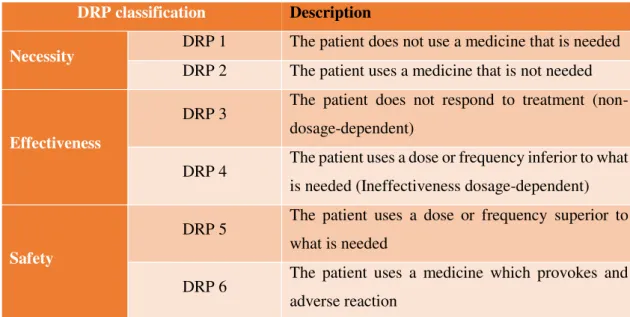
Table 1 - Definition of drug related problems (DRP) according to the Consensus of
Granada (adapted from: Martínez-Romero et al. 2001; Panel de Consenso 1999) ... 6
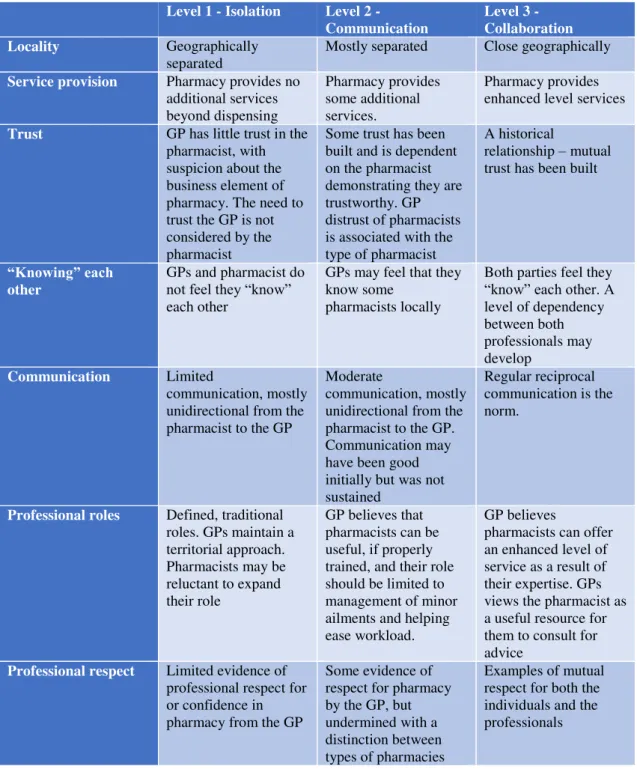
Table 2 - Dimensions and levels of GP-pharmacist integration (adapted from (Bradley et al., 2012)) ... 11
Table 3 - Design Science Research activities and tasks to perform ... 26
Box 1 - Chronic diseases prevalence in Portugal ... 3
Box 2 - External factors with influence in Community Pharmacists' role... 5
xiii
ABBREVIATIONS
AFP - Portuguese Association of Pharmacies
ANF - National Association of Pharmacies
CP - Community Pharmacist
CCM - Chronic Care Model
DRP - Drug Related Problems
DSRM - Design Science Research Methodology
ERS - Portuguese Health Regulation Authority
GP - General Practitioner
HIS - Health Information Systems
INFARMED - National Authority of Medicines and Health Products
IS - Information Systems
IST - Information Systems and Technologies
NHS - National Health Service
OF - Portuguese Pharmaceutical Society
OTC - Over-the-Counter medicines
SEB - Service Experience Blueprint
1
1.
INTRODUCTION
The study reported in this thesis centres itself in the development and implementation of a new pharmaceutical service supported by Information Systems and Technologies (IST), using Design Science Research Methodology (DSRM). The project that originated this thesis – ePharmacare Project– was financially supported by the Portuguese Foundation for Science and Technology (Ref: PTDC/CCI-CIN/122690/2010). During the DSRM process, it was expected that several findings would be made, shedding new light on the development of new roles for community pharmacists in future health systems.
This work is divided in three main sections.
In the first section, the literature review of the thesis describes a contextual framework for the study, from the trends affecting health systems to the development of the community pharmacist profession and use of Health Information Systems (HIS) (chapter 1.1). The search strategy for this literature review was to identify studies related to health system context, both national and international, community pharmacists’ new role, and IST supporting community pharmacies’ services. The main database used was PubMed, with Google® Scholar being used to aid the search for additional papers on the
subjects. The goal of this literature review was to provide a framework to understand the implications of new pharmaceutical services supported by IST in the context of future health systems. In the final chapters of this initial section (chapter 1.2 – chapter 1.4), the aim of this study is stated, a conceptual framework with an explanation of the DSRM and a short summary of the papers to be presented in the Results section are provided. The Introduction closes with the list of bibliographic references used to support the section.
The second section is the Results section, which is constituted by the four papers previously mentioned (see page i - Scientific publications and communications).
The third section contains the Discussion. It begins with a summary of the results reported in the four papers (chapter 3.1), followed by a section with implications for practice, research and policy (chapter 3.2), that will highlight the implications of IST to
2
An outline of possible remuneration models is provided in section 3.2.3. The Discussion section closes with the proposal of a conceptual framework for Health Information Systems research in community pharmacy and primary healthcare (chapter 3.3) and an overview of the research limitations. After this, the thesis closes with a final Conclusion section, where the main findings and future research directions are stated.
1.1.
B
ACKGROUND ANDS
TATE OF THE ARTAn ageing population in OECD countries, with increasing prevalence of chronic diseases (see box 1 for national details), the associated rising costs of care and lack of human resources for health have long been considered the main threats to the sustainability of global health systems (Sacco et al., 2013; WHO, 2010). Adding to this epidemiologic profile, the current economic crisis affecting some countries became another driver pressing health systems to ration expenditures while preserving quality and access to health care services (Leopold et al., 2014). These factors are inspiring political decisions to implement health system reforms, with a greater emphasis in Universal coverage, de-regulation and pro-competitive policies across health systems (Barros, 2012; Campbell et al., 2014; Carrin et al., 2008; Frenk et al., 1997; Vogler et al., 2014)
Underlining this trend, the World Health Organization (WHO) published a paradigm-shifting report in 2008, emphasizing the importance of primary healthcare, already a priority in International Health since the Alma-Ata Conference in 1978 (WHO, 2008). To achieve primary healthcare coverage, health system focus turned to people-centred care. This would require health services to be organized accordingly, with multidisciplinary teams that are responsible for defined populations, that collaborate with social services and other sectors, and coordinate the contributions of hospitals, specialists and community organizations (WHO, 2008). Primary healthcare can be defined as
“(…)the provision of integrated, accessible health care services by clinicians who are
accountable for addressing a large majority of personal health care needs, developing a
sustained partnership with patients and practicing within the context of family and
community” (Rothman and Wagner, 2003). The value of primary healthcare lies on being
3
over their own health (Seventh Consultative Committee on Primary Health Care Systems for the 21st Century, 1997).
To address the challenges of chronic diseases and universal primary healthcare coverage, interprofessional models emerged. One of these models is the Chronic Care Model (CCM), developed by Bodenheimer, Wagner and colleagues (Bodenheimer et al., 2002). The aim of the CCM is to transform the daily care for patients with chronic illnesses from acute and reactive to a proactive, planned, and population-based approach. This emergence of interprofessional models of practice has brought human resources for health issues into the international agenda for health systems strengthening and public health policies (Campbell et al., 2014; Dussault and Ferrinho, 2007).
Most people with major chronic illnesses such as diabetes, hypertension, or asthma are already receiving care from primary care physicians or nurses (Bodenheimer et al., 2002). Extending the definition of primary care professionals
beyond “clinicians”, several studies have
shown that non-physician professionals, such as community pharmacists, may be critical components of effective chronic disease care teams (Cranor et al., 2003; Makowsky et al., 2009; Willis et al., 2014).
1.1.1.COMMUNITY PHARMACISTS’ NEW ROLE – PHARMACEUTICAL CARE AND
PHARMACEUTICAL SERVICES
At the beginning of the 20th century, community pharmacists were responsible for
the preparation, provision and assessment of the medicines used in the treatment of diseases. Their main obligation was to certify that the products were pure and properly prepared, although counselling was another important function. This role began to disappear between 1930 and 1970 in more industrialized countries, when the magisterial formulas were rapidly replaced by industrially prepared formulas (Anderson, 2002).
In Portugal, the prevalence of diabetes, hypertension, asthma and chronic pain has been increasing in the last years. The prevalence of diabetes in the general population is 11.7% (Gardete-Correia et al., 2010), the prevalence of hypertension is 42.1% (Macedo et al., 2007), the prevalence of asthma 6.8% (Sa-Sousa et al., 2012) and chronic pain, an incapacitating condition, affects 37.0% of the Portuguese population (Azevedo et al., 2012).
4
Nowadays, community pharmacists are playing a growing part in primary healthcare by fulfilling an increasing range of roles and responsibilities, while retaining
the classical role of medicines’ supplier (Kennie-Kaulbach et al., 2012). Community
pharmacists’ activity is characterized by an easy accessibility and affordability, which is
a valuable asset in a health system (Chisholm-Burns et al., 2010). Often a first point of contact with the health system, community pharmacists can play a similar role to primary
care physicians’ gatekeeping, referring patients to their primary care physician when needed. The term “gatekeeping” in healthcare generally refers to a professional
“positioned at an entry point, or gate, through which patients must pass to receive care
or services” (Riley and Manias, 2009). Physician gatekeepers identify patients’ healthcare
needs and, jointly deciding with the patient, choose services that effectively meet those needs (Forrest, 2003). Assuming this role, pharmacists can simultaneously satisfy
patients’ need for a closer professional follow-up in disease management (Osterberg and Blaschke, 2005). This referral process is already a feature of Portuguese community pharmacist daily activity but most of the times it is done informally, with no remuneration associated (Barros et al., 2012).
Community pharmacists’ skills have led to their growing public recognition as a health professional (Anderson, 2002). However, the initial promise of community
pharmacists’ integration in the primary healthcare team is coming to a stall. The
worldwide change in community pharmacists’ practices and roles is occurring at a slower
pace than first envisioned, with different speeds across countries, influenced by several
external factors and also pharmacists’ personal and professional barriers (Box 2). Change processes often take longer than expected due to lack of awareness or the many challenges it implies.
5 Box 2 - External factors with influence in Community Pharmacists' role
Main External Factors Influencing Community Pharmacists’ role:
• Economic and legislative context • Commercial pressures
• Government politics • Technological innovations • New therapies
• Support from other professionals
• Integration in the primary healthcare system
1.1.2.THE PHARMACEUTICAL CARE MOVEMENT IN COMMUNITY PHARMACY
After Alma Ata’s conference and the onset of the primary healthcare movement,
the pharmacy profession started to experience several attempts for an expansion of its role. This role expansion has its roots in the clinical pharmacy movement, which started during the 1960s in some north-American hospitals, where the foundations for the level and scope of practice of a patient-oriented pharmacy practice were laid (Berenguer et al., 2004). Several progresses were made in the following decades until 1989, when Charles Hepler and Linda Strand published the breakthrough work in pharmaceutical care:
“Opportunities and responsibilities in Pharmaceutical Care” (Hepler and Strand, 1990).
In their words, pharmaceutical care is “the responsible provision of drug therapy for the
purpose of achieving definite outcomes that improve a patient’s quality of life”. It
involves a “process through which a pharmacist cooperates with a patient and other professionals in designing, implementing and monitoring a therapeutic plan that will
produce specific therapeutic outcomes for the patient”. These outcomes are the cure of a
disease; elimination of a patient’s symptoms; and slowing a disease process or preventing
it. To do so, Pharmaceutical Care relies on three main tasks: identifying, resolving and preventing potential drug-related problems (Hepler and Strand, 1990).
Due to the complexity of resolving drug related problems (DRPs), some professionals started to discuss ways to teach and implement pharmaceutical care practices almost immediately after the work of Hepler and Strand. The first system developed by Strand’s research group of the University of Minnesota consisted in eight
categories of DRPs (Strand et al., 1990). In 1998, the research group in Pharmaceutical
6
Care of the University of Granada held a meeting for professionals and groups working on the identification and resolution of DRPs. In this meeting, the reduction to six categories of DRPs was agreed, on what has come to be known as the Consensus of Granada (table 1) (Panel de Consenso, 1999).
1.1.2.1.THE DÁDER METHODOLOGY
Recognizing the necessity to train graduated pharmacists on the emerging new practices, the University of Granada developed post-graduate activities and training courses in Pharmaceutical Care, the Dáder Program on drug therapy follow up, that would give way to what is now known has Dáder Methodology (Martínez-Romero et al., 2001). At the time, it was defined that the provision of follow-up based on Dáder methodology could not need computer applications, it should only be based on a simple system for documentation of processes and results. Neither any special previous pharmacological or pharmacotherapy advanced knowledge was necessary. This was done to avoid barriers to pharmaceutical care provision that at the time were beginning to be described in the literature (Mil et al., 2001).
Table 1 - Definition of drug related problems (DRP) according to the Consensus of Granada (adapted from: Martínez-Romero et al. 2001; Panel de Consenso 1999)
DRP classification Description
Necessity DRP 1 The patient does not use a medicine that is needed DRP 2 The patient uses a medicine that is not needed
Effectiveness
DRP 3 The patient does not respond to treatment (non-dosage-dependent)
DRP 4 The patient uses a dose or frequency inferior to what is needed (Ineffectiveness dosage-dependent)
Safety
DRP 5 The patient uses a dose or frequency superior to what is needed
DRP 6 The patient uses a medicine which provokes and adverse reaction
7 an evaluation of the patient’s health status and possible DRPs found should be reported
to the primary care physician responsible for the patient. A plan is then designed in accordance with the patient and a follow-up visit should be scheduled, to evaluate the prosecution of the plan.
1.1.2.2.PHARMACEUTICAL SERVICES
Fuelled by the initial work of Hepler and Strand and the consequent emergence of new roles, the pharmacy profession developed a wide variety of pharmaceutical services. Due to the continuous development of numerous services, the conceptual discussion about what is “pharmaceutical care”, “pharmaceutical services” or “pharmacy services” is ongoing. One recent paper advocates that a “professional pharmacy service” is defined
as “an action or set of actions undertaken in or organised by a pharmacy, delivered by a
pharmacist or other health practitioner, who applies their specialised health knowledge
personally or via an intermediary, with a patient/client, population or other health
professional, to optimise the process of care, with the aim to improve health outcomes
and the value of healthcare” (Moullin et al., 2013). To distinguish services provides by
pharmacists from other services, this definition is then divided in “pharmacist services”
and “Other Healthcare Practitioner Services”; Pharmacist services are then divided in “pharmaceutical services”, when it refers to the utilization of pharmacists’ knowledge in
their field of studies (e.g. those relating to drug therapy like pharmaceutical care) and
“Other Healthcare Services” (e.g. health promotion services).
Although there is no universally accepted definition of pharmaceutical services that comprises the entire scope of activities, services, and programs provided by community pharmacies (Moullin et al., 2013), a broad number of professional services performed by
pharmacists, that may match community pharmacist’s role in primary healthcare in
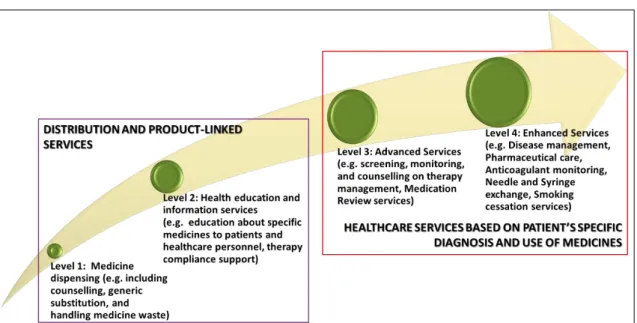
different countries, can be identified. These services can be categorized into 2 main groups (figure 1):
a) Distribution services and Product-linked services
8
healthcare personnel, therapy compliance support and counselling. These services constitute the first tier of pharmacy services, sometimes called “essential” services (Bradley et al., 2007), and are usually regulated through legislation in the respective countries.
Figure 1 - Pharmaceutical Services Maturity Framework
b) Healthcare services based on the patient’s specific diagnosis and use of
medicines
Services provided by pharmacists based on patient’s specific diagnosis relate to
monitoring of therapy efficacy and detection of early signs of disease. Medicines-use based services can focus either on the use of medicines as a whole, or on one specific type
of medicine. These are the sometimes called “advanced” and “enhanced” pharmaceutical
services (Bradley et al., 2007, 2006).
9
pharmacy services in order to differentiate them from dispensing services (Nutescu and Klotz, 2007).
This second group of services have been considered extremely valuable for health systems and professionals, not only because of economic savings but also due to a greater efficiency and improvement in health services quality and in patient health-related outcomes (Berenguer et al., 2004; Cranor et al., 2003; Nkansah et al., 2010). However, the evidence regarding the effectiveness of these services is not completely clear (Mossialos et al., 2013). The lack of solid evidence has been identified as one of the barriers for the integration of professional pharmacy services in the health system, and particularly, in primary healthcare (Mossialos et al., 2015).
1.1.3.INTEGRATING PHARMACISTS IN THE PRIMARY HEALTHCARE TEAM
Much discussion around the best way to integrate pharmacists in the primary healthcare team has happened (Mossialos et al., 2013). Studies have identified benefits for patients where pharmacists are integrated into core healthcare teams, allowing greater access and improved public health (Campbell et al., 2014), as well as gains in raising
awareness of pharmacists’ new role amongst other health professionals (Makowsky et al., 2009).
Until now, pharmacists continue to exert their supply role in the healthcare system without much innovation, in spite of the development of pharmaceutical care programs and other disease management, therapeutic management or public health services (Strand et al., 2016). However, pharmacists can contribute immediate solutions through efforts to enhance medication management, identify and solve drug‐related problems and adverse events, and help patients achieve intended outcomes, recognizing that carrying out this responsibility requires communication, collaboration and professionalism (Kennie-Kaulbach et al., 2012).
10
professional organizations and other professionals' bodies, becoming a major barrier to a new role for community pharmacists (Bardet et al., 2015; Edmunds and Calnan, 2001; Paulino et al., 2010).
The idea of primary healthcare integration can assume different arrangements:
“contracting,” “coordination,” “cooperation,” and “collaboration” (Axelsson and Axelsson, 2006). The difference between these forms of integration depends on the way the formalization of the relationship happens. If the arrangements are depending on
“contracting” it means that the integration comprises a formal contract; collaboration on
the other hand, is when integration is achieved through voluntary arrangements (Axelsson and Axelsson, 2006). Examples of formal contracts amongst physicians and pharmacists exist from the United States of America (USA) and Canada, to Europe or Australia (Benrimoj and Roberts, 2005; Bradley et al., 2012; Kroger et al., 2000; Noyce, 2007; Schulz, 2006). There are also examples of explicit agreements between GPs and pharmacists concerning their prescription policy (Bernsten et al., 2009; Kooy et al., 2007; van der Kam et al., 2001). Nevertheless, the most common form of practice is still informal collaboration (Bradley et al., 2012).
Different conceptual models have emerged in the last years seeking to define the drivers of the GP-CP collaboration. Among them, Bradley and colleagues (2012), propose a model with 3 levels of collaboration assessed on 7 dimensions: Locality, Service
Provision, Trust, “Knowing” each other, Communication, Professional roles, and Professional respect (Table 2).
Several issues arise from this model, mainly regarding the dimensions of trust and professional roles. Physicians need to trust the pharmacist but the contrary is not necessarily true (Bradley et al., 2012). To build trust, physicians need to know the pharmacist, finding it difficult to work with multiple chain pharmacies, which usually have many staff members with high turnover. This implies that in settings of high professional turnover, any form of collaboration is inhibited. Also, a preoccupation to
reinforce the traditional roles of GPs and the contempt of pharmacy’s commercial aspect
11
the need for communication. Communication is key in the success of establishing a highly productive interprofessional collaboration (Bardet et al., 2015; Roberts et al., 2008; Snyder et al., 2010). Regular GP-CP meetings, may be important in order to solidify the relation between professionals (Kooy et al., 2007; Mossialos et al., 2004).
Table 2 - Dimensions and levels of GP-pharmacist integration (adapted from (Bradley et al., 2012))
Level 1 - Isolation Level 2 -
Communication Level 3 - Collaboration
Locality Geographically
separated
Mostly separated Close geographically
Service provision Pharmacy provides no
additional services beyond dispensing Pharmacy provides some additional services. Pharmacy provides enhanced level services
Trust GP has little trust in the
pharmacist, with suspicion about the business element of pharmacy. The need to trust the GP is not considered by the pharmacist
Some trust has been built and is dependent on the pharmacist demonstrating they are trustworthy. GP distrust of pharmacists is associated with the type of pharmacist
A historical
relationship – mutual trust has been built
“Knowing” each
other GPs and pharmacist do not feel they “know”
each other
GPs may feel that they know some
pharmacists locally
Both parties feel they “know” each other. A level of dependency between both professionals may develop
Communication Limited
communication, mostly unidirectional from the pharmacist to the GP
Moderate
communication, mostly unidirectional from the pharmacist to the GP. Communication may have been good initially but was not sustained
Regular reciprocal communication is the norm.
Professional roles Defined, traditional
roles. GPs maintain a territorial approach. Pharmacists may be reluctant to expand their role
GP believes that pharmacists can be useful, if properly trained, and their role should be limited to management of minor ailments and helping ease workload.
GP believes
pharmacists can offer an enhanced level of service as a result of their expertise. GPs views the pharmacist as a useful resource for them to consult for advice
Professional respect Limited evidence of
professional respect for or confidence in pharmacy from the GP
Some evidence of respect for pharmacy by the GP, but undermined with a distinction between types of pharmacies
12
In light of these findings, and considering findings from qualitative studies in Portugal (Paulino et al., 2010), the best form for the GP-CP arrangement is still an open research question in the Portuguese context. For individual pharmacies that seek to innovate and provide advanced services, the collaboration form of GP-CP arrangement may the most feasible. Furthermore, it has been demonstrated that pharmacists will have the most important role in the development of GP-pharmacist collaboration (Bardet et al., 2015). Pharmacists as initiators of the collaboration, with frequent communication in the early stages, and physicians’ acceptability of pharmacy services, through a previous
contact with pharmacy services, are important factors in models of interprofessional collaboration (Doucette et al., 2005; Salgado et al., 2012; Snyder et al., 2010) However, this makes the success of this professional relationship highly dependent on personal attributes and wills (Doucette et al., 2005; Paulino et al., 2010).
1.1.4.COMMUNITY PHARMACY SYSTEM IN PORTUGAL
Community pharmacists in Portugal mostly work in independent pharmacies, since large chains are not allowed and small chains are only nowadays becoming a reality. The opening of community pharmacies is regulated, with main criteria being a minimum distance between pharmacies (350 meters in a straight line) and the number of serviced inhabitants (minimum 3500 inhabitants) (Ministry of Health, 2007). There are some exceptions to these rules, depending on the presence of a healthcare service in the vicinity, or in areas with low population density. Pharmacies have to be opened at least 50 hours a week. The presence of a responsible pharmacist - the technical director - is mandatory and a substitute has to be registered at the National Authority of Medicines and Health Products (INFARMED), in order to assure a pharmacist is present at all times. Non-pharmacist ownership is allowed, with the maximum number of pharmacies per owner capped at four. Pharmacies have a National Health Service (NHS) contract for dispensing
13
number of females (about 80% of the practitioners), confirming a worldwide trend of feminization in the profession (Hawthorne and Anderson, 2009). The ratio of pharmacists per pharmacy has increased between 2000 and 2014, leading to an average of more than three pharmacists per pharmacy since 2014 (INFARMED, 2014). Simultaneously, the number of pharmacy technicians per pharmacy has dropped, with pharmacists assuming the supply tasks and undifferentiated tasks as part of their work routine. This in turn may
have contributed to patients’ poor acknowledgment of different workers and
competencies at the community pharmacy counter (Cavaco and Bates, 2007).
Over the last twenty years Portuguese community pharmacies have developed consultation services to manage chronic patients and their therapies, in line with international developments on “pharmaceutical services” (Costa et al., 2006) These services have targeted the provision of tailored education on health, drug information, screening and monitoring of blood pressure, body mass index and basic clinical parameters (e.g. blood glucose, blood uric acid, cholesterol, etc.). There was also an effort to develop and implement nationwide pharmaceutical care programs for diabetes and
hypertension. These programs were developed by the owners’ association National
Association of Pharmacies (ANF), and were based in the Dáder methodology (Martínez-Romero et al., 2001). The program for diabetes care was financially supported by the NHS from 2006 to 2009. When the financial support ended, 400 pharmacies were doing patient follow-up, with an average of three patients per pharmacy (INFARMED, 2009). Soon after, most pharmacies terminated the provision of the service. A recent survey found that in a sample of 403 pharmacies (14%), only 333 pharmaceutical care consultations were provided during a 5 days period (Barros et al., 2012).
The evidence of longitudinal services provided in Portuguese pharmacies towards medicine use or other disease management services is limited (Martins and Queirós, 2014). Apart from dispensing prescription medicines, none of the new services is
supported by NHS reimbursement. These services are entirely supported by medicines’ profit margins and patients’ direct payments. Nowadays, many Portuguese pharmacies
14
practitioners inside the pharmacy are regulated and supervised by the Portuguese Health Regulation Authority (Entidade Reguladora da Saúde – ERS) (ERS, 2014).
1.1.5.INFORMATION SYSTEMS AND INFORMATION TECHNOLOGIES IN HEALTHCARE
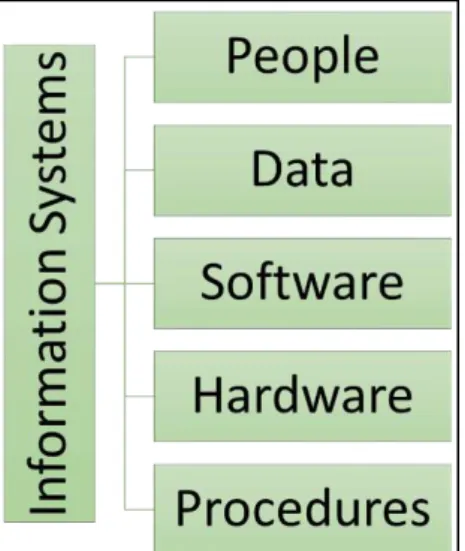
An Information System (IS) is any organized system for the collection, organization, storage and communication of information. Silver and colleagues (1995), stated that an IS must include software, hardware, data, people, and procedures (figure 2).
Figure 2 –Information systems main components (Source: (Silver et al., 1995))
Any specific information system aims to support operations, management and decision-making (Bulgacs, 2013). Information technology is the utilization of computers to support the information system (Zuppo, 2012). Since IS are nowadays supported by a myriad of different machines (e.g. desktops, laptops, mobile phones, tablets, etc.), this research work will refer to the term
“information systems and technologies (IST)”,
reinforcing the difference to IS supported by other Technologies such as paper-based records.
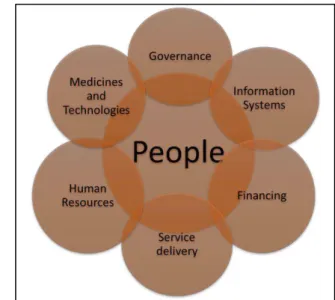
Health information systems (HIS) are now considered a building block of any health system (Alliance for Health and Systems Research Policy, 2009). Figure 3 presents the different health system building blocks, showing how they relate to each other and how they are interdependent. HIS have initially been designed to support health system
and services’ management. This was done mainly through the shifting from manual to electronic medical records, integrated data systems and architecture for HIS design (Alliance for Health and Systems Research Policy, 2009).
15
focusing on a higher level of interaction with patients, that may have a significant impact on health outcomes (Kreps and Neuhauser, 2010; Kreps, 2014; Kuhn et al., 2007).
Figure 3 - Interconnectedness of Health Systems’ building blocks
IST will be essential to effectively build patient-centred health systems. Involving patients in their disease management, in close collaboration with a health professional, has the potential to improve outcomes such as therapy
compliance or patient’s knowledge about their condition (Barrera et al., 2002). Home telemonitoring of chronic diseases seems to be a promising patient
management approach that produces accurate and reliable data, empowers patients, influences their attitudes and behaviours, and potentially improves their medical conditions (Paré et al., 2007; Sacco et al., 2013). Several telemonitoring approaches have already been tested. Examples of telemonitoring interventions exist from remote blood pressure monitoring (Green et al., 2008), congestive heart failure (Polisena et al., 2010), Chronic Obstructive Pulmonary Disease (Cruz et al., 2014), Diabetes management (Armstrong and Powell, 2008; Polisena et al., 2009) or other simpler interventions such as SMS alerts for medication intake (Vervloet et al., 2012).
1.1.5.1.INFORMATION SYSTEMS AND TECHNOLOGIES IN COMMUNITY PHARMACY
The evolution of IST probably will have an important impact on the definition of new roles for the community pharmacist (Fox et al., 2005; Katz and Moyer, 2004; Lam and Rose, 2009; Maddux et al., 2000). The use of properly developed IST based solutions
in the medicine dispensing process has the potential to relief pharmacist’s workload,
16
have mainly investigated the effects of electronic transfer of prescriptions and decision support systems on the work of community pharmacists (Astrand et al., 2009; Petrakaki et al., 2012), or the implementation of an internet-based medicine cabinet (Calabretto and Swatman, 2010; Calabretto and Warren, 2005). Calabretto and Swatman (2010), who studied the socio-technical implications for information technology related interventions in community pharmacy, including medication management, found that we are still in the
“infancy” of using IST in community pharmacies.
The issues arising with IST usage in community pharmacy are common with other settings, with most difficulties in implementation due to managerial or behavioural factors (Kuhn et al., 2007; Motulsky et al., 2011). The underuse of the current systems has been described as partially resulting from a lack of IST skills, but also from IST applications
inadequacy for community pharmacists’ needs, an insufficient patient-oriented attitude, privacy protection and time constraints (Velez Lapão, 2007; Westerling et al., 2011).
Other issues are related to safeguarding patients’ rights to privacy and confidentiality as well as establishing methods of communication among pharmacists and other healthcare professionals, in order to ensure continuity of care (Kawamoto et al., 2005).
17
1.1.6.PHARMACEUTICAL SERVICES REMUNERATION MODELS
The growing importance of pharmaceutical care services within the profession brought to light the discussion about service remuneration (Huttin, 1996). Pharmacists are typically paid for supplying medicines and attention is rarely given to pharmacy services remuneration in the context of the total healthcare budget. Instead, pharmacy services are often seen as a cost to the payer in addition to the cost of the medicines, rather than an investment in healthcare that results in improved quality, safety, better treatment outcomes and cost savings in the long term (Mossialos et al., 2015). This is especially true in an environment of evidence-based policy-making, where health system financers need to be convinced that their budget is being well spent on pharmaceutical services (George and Silcock, 1999; Mossialos et al., 2013).
Payment models for pharmacy services have progressed slowly, despite evidence that such services provide a solid return on investment and improve patient outcomes (Perez et al., 2009; Schumock et al., 2003). However, defining the best remuneration model for pharmaceutical care services is still a matter of debate within the profession and policy makers (Mossialos et al., 2013).
There is an extensive literature describing the various remuneration models throughout the world (Bernsten et al., 2010). Comparing, and describing them, is difficult since every country has its own system (figure 4). Also, it is important to distinguish between remuneration and reimbursement. Remuneration refers to a payment that is due to a provision of a service. In the case of pharmacy services, some of the remuneration is in part due to the selling of medicines that may be reimbursed. Reimbursement usually involves a third-party payer covering part of the remuneration, either before or after the acquisition of the good or service (Nutescu and Klotz, 2007). The reimbursement of medicines prices is the most common form of pharmacy remuneration across Europe (Vogler et al., 2014).
18
a small amount of care for those who cannot afford their medicines. In countries such as the United Kingdom (UK), Canada, Australia and New Zealand pharmacists are paid for providing a large number of professional services (Bernsten et al., 2009).
19
Within Europe, there are 27 different pharmaceutical pricing and reimbursement systems (Bernsten et al., 2010). Pharmacy remuneration is regulated in all countries, but there are differences in the way pharmacists are paid for professional services beyond dispensing and selling medicines (Vogler et al., 2014). Some countries have a mixed system, while others have a product-oriented system. As an example of different remuneration policies, there are formal incentives for pharmacists to work collaboratively with physicians in Holland, Germany, and Switzerland (Bernsten et al., 2010). In England and Wales, the remuneration for professional services is divided into essential services, advanced services and enhanced services (Noyce, 2007). In the UK, community pharmacies with an NHS contract need to provide the full range of essential services, whereas advanced and enhanced services are optional, and might require additional education and new pharmacy layout (a private consultation space is mandatory). The essential and advanced services are commissioned by the UK’s NHS and cover people throughout the country. The enhanced services are commissioned by the local Primary Care Trust, and consequently are not equally distributed over the country (Noyce, 2007).
In Scotland, and in some parts of England and Wales, pharmacists can be paid by the NHS for their professional services when selling Over-the-counter (OTC) medicines as part of The Minor Ailments Scheme (Bernsten et al., 2009). Remuneration for professional services also implies a commitment to assure the quality of such services in a number of countries. In the United Kingdom, community pharmacies need to provide evidence that they meet the conditions of a comprehensive quality assurance framework (Noyce, 2007).
20
provision and price depending on the will of the pharmacy owner. Some pharmacies provide these services free of charge while others choose to charge a fee supported by
patients’ out-of-pocket payments (Costa et al., 2006; Martins and Queirós, 2014).
1.1.6.1.FINANCIAL INCENTIVES IN COMMUNITY PHARMACY
The need to balance pharmaceutical expenditure budgets will become more challenging given that new and expensive medicines are likely to gain marketing authorisation in the future (Eichler et al., 2016). In this context, it is important to introduce incentives for pharmacists that are oriented to support cost-effective and high-quality medicinal therapy (Bernsten et al., 2009).
In spite of the several issues regarding pharmaceutical services implementation and sustainability, some authors argue that is necessary to introduce a set of incentives aimed at community pharmacists without which, all the potential of pharmaceutical services goes largely untapped (Bernsten et al., 2010; Kroger et al., 2000; Miller and Ortmeier, 1995; Roberts et al., 2008). It is clear that the existence of incentives for pharmaceutical services influences its provision, although it is no guaranty of future sustainability (Gastelurrutia et al., 2009; Roberts et al., 2008). Other aspects such as communication and teamwork, leadership, task delegation, external support or assistance, and reorganization of structure and function are also to be considered (Roberts et al., 2008).
The fundamental purpose of incentives is to provide the right motivation to an agent (e.g. health service provider) to perform well. This includes providing the incentive to develop the capacity to perform well, to acquire the right information, and to then act on it accordingly (Custers et al., 2008). Though there are issues with nomenclature and the definitions, the healthcare area uses different types of financial incentives including : (i) salary (payment for working for a specified time period); (ii) fee-for-service (payment for each service, episode or visit); (iii) capitation (payment for providing care for a patient or for a special population); and (iv) target payments and bonuses (payment for providing a pre-specified level or change in a specific behaviour or quality of care) (Flodgren et al., 2011).
21
for remuneration could be classified into two major types: product-oriented remuneration using a mark-up or graduated mark-up, and patient-oriented remuneration using a fee for service or capitation method. The traditional pharmacy mark-up or fixed pharmacy margin system of retribution for pharmacists is often seen as providing inadequate incentives to pharmacists; it appeals to their financial interest in selling higher-priced drugs and, in general, to increase sales (Espin and Rovira, 2007). Fee structures may be developed that set the fees based on the type of service provided. Several examples can be found in the literature of fees charged for clinical services in community pharmacies; in the USA, some providers use a capitation fee structure in which the patient might enrol in a service for a predetermined fee in exchange for a bundled package of services provided for a given period of time (Snella et al., 2004).
22
1.2.
A
IM OF THESISConsidering current trends, the development of new professional pharmacy services will inevitably require the use of sophisticated IST. However, the success of IST utilization for the provision of health care is impending on more research. The
technology’spotential to disrupt health professionals’ and users’ roles represents a threat
to the successful implementation (Katz and Moyer, 2004; Mossialos et al., 2013; Motulsky et al., 2011; Petrakaki et al., 2012). Studies show that the use of IST by healthcare professionals may be a burden when the systems are not developed considering the needs of professionals in practice settings (Darbyshire, 2004).
In order to better understand the link between the introduction and use of IST in practice settings, it is important to examine the technical and organizational challenges raised during implementation. Therefore, it is necessary to understand how health professionals and patients perceive IST usefulness for health care provision, and how are they willing to participate in the development of new services. To do so, this project proposes to address several research questions: How will a web-based pharmaceutical
service impact pharmacists’ work and patient’s own disease management? What will be
the estimated cost? Are patients willing to participate in the development of patient-oriented pharmaceutical services? What information they will value? What kind of challenges will arise?
23 Figure 5 - Conceptual model for the use of IST in the Community Pharmacy setting (adapted from ePharmacare Project (PTDC/CCI-CIN/122690/2010))
To address the mentioned research questions, the aim of this project is to design, implement and evaluate a disease management web-based interactive service, establishing its utility, acceptability, feasibility, sustainability, and adaptability for a community pharmacy setting, using design science research methodologies (Hevner et al., 2004). In this way, it is intended to explore new models of interaction between patients and health professionals that will allow some insights on the research questions.
As more specific objectives, it is proposed to:
Identify health system conditions that will be necessary to implement an online pharmaceutical service.
Identify the major patterns of pharmaceutical services provision in a sample of community pharmacies, thus establishing the current state of
pharmaceutical services provision while exploring future services’ demand;
24 Identify potential service’s features that may have an impact on health
results and patient satisfaction
Identify service’s features that most contribute to the perceived usefulness and ease of use of the internet-based patient management service, in the patient perspective;
1.3.
M
ETHODOLOGYThe design and implementation of an IST tool in a practice setting poses some challenges. It is frequent that the introduction of new tools is decided by policymakers and experts without involving future users (Fried et al., 2012). However, a user centred approach may be more useful to be certain that the system will satisfy user’s needs and that they will be enthusiastic with its use while, simultaneously, the system will be adequate and perceived as useful (Armstrong and Powell, 2008; Demiris et al., 2008). Therefore, the need to use a methodology that allows the design of an innovation with the
end user’s input is evident.
25 Figure 6 – DSRM cycle (adapted from (Peffers et al., 2007)
In Box 3, a detailed description of the activities according to Peffers and colleagues (2007), is presented. As shown in figure 6, the DSRM process can be seen as a design cycle, as is common in information systems research.
The approach that this thesis tests is the application of DSRM to the development of a pharmaceutical service supported by a web-based platform – the artifact – for the exchange of information between patients and pharmacists. As such, this project addresses the DSRM process by designing explorative studies with a specific set of tasks
Activity 1 – Problem identification and motivation: Define the specific research problem and justify the value of a solution.
Activity 2 – Define the objectives for a solution: Infer the objectives of a solution from the problem definition and knowledge of what is possible and feasible. Resources required for this include knowledge of the state of problems and current solutions, if any, and their efficacy.
Activity 3 – Design and development: Create the artifact. This activity includes determining the artifact’s desired functionality and its architecture and then creating the actual artifact.
Activity 4 – Demonstration: Demonstrate the use of the artifact to solve one or more instances of the problem. This could involve its use in experimentation, simulation, case study, proof, or other appropriate activity.
Activity 5 – Evaluation: Observe and measure how well the artifact supports a solution to the problem. This activity involves comparing the objectives of a solution to actual observed results from use of the artifact in the demonstration. At the end of this activity the researchers can decide whether to iterate back to activity 3 to try to improve the effectiveness of the artifact or to continue on to communication and leave further improvement to subsequent projects.
Activity 6 – Communication: Communicate the problem and its importance, the artifact, its utility and novelty, the rigor of its design, and its effectiveness to researchers and other relevant audiences such as practicing professionals
26
that will allow to accomplish each DSRM activity and the prosecution of this thesis’ objectives (table 3).
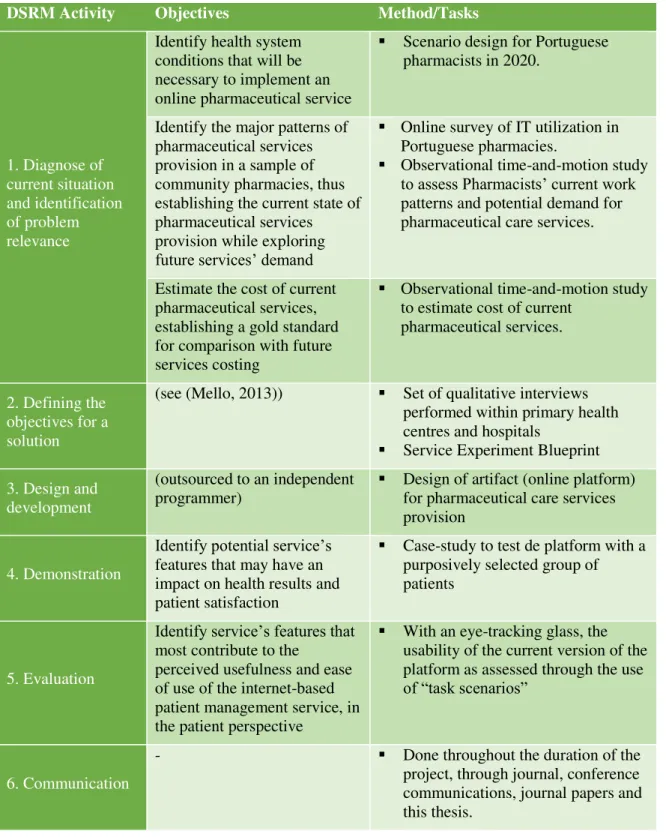
Table 3 - Design Science Research activities and tasks to perform
DSRM Activity Objectives Method/Tasks
1. Diagnose of current situation and identification of problem relevance
Identify health system conditions that will be necessary to implement an online pharmaceutical service
Scenario design for Portuguese pharmacists in 2020.
Identify the major patterns of pharmaceutical services provision in a sample of community pharmacies, thus establishing the current state of pharmaceutical services provision while exploring future services’ demand
Online survey of IT utilization in Portuguese pharmacies.
Observational time-and-motion study to assess Pharmacists’ current work patterns and potential demand for pharmaceutical care services.
Estimate the cost of current pharmaceutical services, establishing a gold standard for comparison with future services costing
Observational time-and-motion study to estimate cost of current
pharmaceutical services.
2. Defining the objectives for a solution
(see (Mello, 2013)) Set of qualitative interviews performed within primary health centres and hospitals
Service Experiment Blueprint
3. Design and development
(outsourced to an independent programmer)
Design of artifact (online platform) for pharmaceutical care services provision
4. Demonstration
Identify potential service’s features that may have an impact on health results and patient satisfaction
Case-study to test de platform with a purposively selected group of patients
5. Evaluation
Identify service’s features that most contribute to the
perceived usefulness and ease of use of the internet-based patient management service, in the patient perspective
With an eye-tracking glass, the usability of the current version of the platform as assessed through the use of “task scenarios”
6. Communication
- Done throughout the duration of the
27
This thesis will report on the findings of activity 1, 2, 4 and 5. Activity 3 was done separately by an independent programmer and will not be the object of analysis in the current thesis. Activity 6 was done throughout the duration of the project.
1.4.
S
UMMARY OF STUDY DESIGNSThe detailed explanation of the methods used in each activity are part of the papers that will be presented in the “Results” section of this thesis. Nevertheless, a short
summary of the methods follows:
Activity 1– this activity is constituted by three different studies.
Firstly, a scenario planning exercise was performed aiming at designing three future scenarios for Portuguese community pharmacists, recognizing the changing environment as an opportunity to develop the role that community pharmacists may play in the Portuguese health system. Two objectives were considered: (i) to analyse the possible
evolution of community pharmacists’ role in the Portuguese health care system by
building and studying three different scenarios and (ii) to identify the main driving forces and related uncertainties that may impact on the definition of community pharmacists’ future role. The methodological details and results of this study are reported in paper I.
Secondly, to assess the current state of pharmaceutical services provision and use of IST in community pharmacy, an online survey was launched. The online survey was based on a previously developed survey performed in Switzerland (Zehnder et al., 2004), and is presented in appendix 1 of this thesis in its English version. The survey was translated and validated with 2 community pharmacy academic researchers. After this, it was designed in the Google® forms platform and sent via email to 323 pharmacies, part
of the owner’s organization Association of Portuguese pharmacies (AFP). The results were presented in several conferences and are reported in the beginning of the results section of paper IV.