UNIVERSIDADE NOVA DE LISBOA
Faculdade de Ciências Médicas
International Master on Mental Health Policy and Services
Presented by: Adolphe Majyambere, MPH
Supervisor: Miguel Cotrim Talina , MD, MSc, PhD
Completion Year: 2017
THESIS TITLE
1 ACKNOWLEDGEMENT
My sincere gratitude goes to the entire team of the International Master in Mental Health Policy and Services Program at Nova University for initiation of the master program and most importantly their dedication to run this Master Program.
Special thanks are addressed to Prof. Miguel Cotrim Talina for rich scientific guidance while supervising this thesis.
We would like to thank Kigali Hope Association (An organization of HIV-positive young people) for ideas and support in data collection. This thesis is a result of the provided support by making available two volunteers who assisted in data collection process.
We also thank the authorities of health facilities, interviewed care providers, counselors and two senior staff from mental health and HIV/AIDS national programs.
Last but not least, we thank all HIV-positive young people, adolescents and their parents who accepted to share their life experience and testimonies.
2 RESUME
Several studies showed that HIV-positive youth and adolescents constitute a high-risk group for mental and behavioral disorders worldwide.
For young people and adolescents, it is obvious is that mental and behavioral disorders are potentially preventable when properly and timely done.
A naturalistic cross sectional, descriptive study was done in Kigali general hospitals. The main objective of this study was to assess the feasibility of mental and behavioral disorders primary prevention for HIV-positive adolescents and young adults through HIV/AIDS services.
In total, 112 adolescents and young adults aged between 14 and 25 were interviewed, 58.9% were males while 41.1% were females. Six health care providers and two policy makers were also interviewed.
Results from the study shows that among the needs of adolescents and young adults for prevention of mental behavioral disorders, there are; 1) communication and HIV status disclosure properly done to the children and adolescents; HIV disclosure counseling was qualified by all participants as an important component to prevent later mental and behavioral disorders. 2) The majority (66.9 %) of the participants were being followed up in by HIV care and treatment for more than 6 years including 15.2 % who have been enrolled for more than 15 years, continuous medical and psychosocial care were qualified as important element for prevention of mental and behavior disorders.
Lack of clear policy and guidelines, lack of trained and specialized staff, limited social support and insufficient skills for family members to support affected youth and adolescents are key identified weakness and threats.
Finally, we come up with a model named: “Model for prevention of mental and behavioral
disorders among the adolescents and youth infected by HIV”. The model proposes
3 RESUMO
Diversos estudos demonstraram que jovens e adolescentes HIV positivos constituem um grupo de alto risco para transtornos mentais e comportamentais em todo o mundo. Para os jovens e adolescentes, é óbvio que os transtornos mentais e comportamentais são potencialmente evitáveis quando devidamente e oportunamente feito.
Foi realizado um estudo descritivo transversal e naturalista em hospitais gerais de Kigali. O objetivo principal foi avaliar a viabilidade de prevenção primária de transtornos mentais e comportamentais para adolescentes e adultos jovens HIV positivos através dos serviços de HIV. No total, foram entrevistados 112 adolescentes e adultos jovens de 14 a 25 anos, sendo 66 (58,9%) do sexo masculino e 46 (41,1%) do sexo feminino. Seis prestadores de cuidados de saúde e dois responsáveis políticos foram também entrevistados.
Os resultados mostraram as seguintes necessidades para a prevenção de transtornos mentais e comportamentais entre os adolescentes e adultos jovens; 1) comunicação e divulgação do status de HIV feitas de forma adequada às crianças e adolescentes. O aconselhamento para divulgação do HIV foi qualificado por todos os participantes como um componente importante para a prevenção de distúrbios mentais e comportamentais posteriores. 2) A maioria (66,9%) dos participantes estavam sendo acompanhados pela assistência e tratamento do HIV há mais de 6 anos, incluindo 15,2% que estavam inscritos há mais de 15 anos. O tratamento médico contínuo e o atendimento psicossocial foram qualificados como elementos importantes que contribuem para a prevenção de transtornos mentais e comportamentais. Falta de políticas e diretrizes claras, a falta de pessoal treinado e especializado, apoio social limitado e competências insuficientes para os membros da família apoiarem jovens e adolescentes afetados são fraquezas e ameaças identificadas.
Finalmente, criámos um modelo denominado: "Modelo de prevenção de transtornos mentais
e comportamentais entre adolescentes e jovens infectados pelo HIV”. O modelo propõe
4 RESUMÉN
Varios estudios mostraran que los jóvenes con VIH positivo y los adolescentes hacen parte de un grupo de alto riesgo para trastornos del comportamiento y mentales en todo el mundo. Para las personas jóvenes y los adolescentes, es claro que los trastornos del comportamiento y mentales son potencialmente evitables cuando hechos de forma adecuada y puntual.
Se realizó un estudio descriptivo transversal y naturalista en los hospitales generales de Kigali. Objetivo de este estudio. El objetivo principal de este estudio fue evaluar la viabilidad de la prevención primaria de los trastornos del comportamiento y mentales para adolescentes y adultos jóvenes con el VIH positivo a través de los servicios de VIH/SIDA. En el total, 112 adolescentes y adultos jóvenes con la edad entre 14 y 25 fueron entrevistados, entre ellos, 66 (58,9%) eran machos, mientras 46 (41,1%) eran hembras. Se entrevistaron también a seis proveedores de atención de la salud ya dos responsables políticos.
Los resultados del estudio muestran que entre las necesidades de los adolescentes y adultos jóvenes para la prevención de los trastornos del comportamiento y mentales, hay; 1) divulgación y comunicación del estado del VIH, hechos adecuadamente para los niños y adolescentes. El asesoramento fue cualificado por todos los participantes como un componente importante para evitar los trastornos del comportamiento y mentales para adolescentes y adultos jóvenes infectados prenatalmente por el VIH. 2) La mayoría (66,9%) de los participantes estaban siendo seguidos por servicios del VIH y tratamiento por más de 6 años, incluyendo 15,2% que estaban registrados por más de 15 años. Médico continuo y el servicio psicosocial fueron cualificados como un elemento importante que contribuyó para la prevención de los trastornos del comportamiento y mentales.
La falta de políticas y directrices claras, la falta de personal capacitado y especializado, el apoyo social limitado y las habilidades insuficientes para que los miembros de la familia apoyen a los jóvenes y adolescentes afectados son debilidades y amenazas clave identificadas.
Finalmente, se creó un modelo llamado: Modelo para la prevención de los trastornos del
comportamiento y mentales entre los adolescentes y jóvenes infectados por el VIH. El
5 TABLE OF CONTENTS
ACKNOWLEDGEMENT ... 1
RESUME ... 2
RESUMO ... 3
RESUMÉN ... 4
LIST OF TABLES AND CHART ... 7
CHAPTER ONE: INTRODUCTION ... 8
1.1. context and problem statement ... 8
1.2. Study interest and motivation ... 12
1.3. Objectives of the study: ... 13
1.3.1. General objective: ... 13
1.3.2. Specific objectives: ... 14
CHAPTER TWO: METHODS ... 15
2.1. Study design ... 15
2.2. Research questions: ... 15
2.3. Study population: ... 15
2.4. Sampling and data collection methods: ... 16
2.5. Literature and document review: Policy documents analysis ... 16
2.6. Statistical analysis plan: ... 17
2.7. SWOT analysis:... 17
2.8. ETHICAL CONSIDERATIONS: ... 17
CHAPITER THREE: RESULTS ... 19
3.1. Specific needs for the adolescents and youth infected by HIV for prevention of mental and behavioral disorders ... 19
3.1.1. Social and demographic characteristics: ... 19
6
3.1.2.2 Services provided to adolescents and youth ... 23
3.1.2.3 Support from friends and families: ... 24
3.1.2.4 Perceived stigma and needed support: ... 24
3.2. Objective two: Assessment of the weaknesses, forces, threats and opportunities ... 24
3.3. Objective three: Analysis of policy and other guiding documents ... 26
3.4. Objective three: Model for prevention of mental and behavioral disorders among the adolescents and youth infected by HIV ... 27
3.4.1. Levels of the model: ... 28
3.4.1.1 Policy and guiding documents:... 28
3.4.1.2 Clinical practices: ... 29
3.4.1.3 Family and community involvement: ... 31
3.4.2. Cost implication for the model: ... 33
CHAPITER FOUR: DISCUSSION: ... 35
LIMITATIONS AND FUTURE DIRECTIONS: ... 41
CHAPITER FIVE: CONCLUSIONS: ... 42
REFERENCES: ... 43
7
LISTOFTABLESANDCHART
TABLES: Page
TABLE 1: Research questions, objectives, methods and data collection instruments………..…18
TABLE 2:Social and demographic characteristics……….………...…...19
TABLE 3: Age of HIV status disclosure to children, adolescents and youth………...…….21
TABLE 4: Who did the HIV disclosure to the children and adolescents? ……...………22
TABLE 5: Appreciation of HIV disclosure …….……….….22
TABLE 6: Duration in HIV care and treatment services………...…….23
TABLE 7: Presentation of strengths, weaknesses, opportunities and threats……….…25 TABLE 8: Analysis of policies of other national guiding documents………...…...26
CHART:
CHART 1: Model for mental and behavioral disorders prevention for HIV-positive adolescents
8
CHAPTERONE:INTRODUCTION
1.1. CONTEXT AND PROBLEM STATEMENT
In Rwanda, the prevalence of HIV is 3% in the general population. Among youth, the HIV prevalence is 0.6 % for those between 15 and 19 years old while it is 1.5% of the youth between 20 and 24 years old [1].
Mental health and HIV/AIDS are closely interlinked; mental health problems, including substance-use disorders, are associated with increased risk of HIV infection and AIDS and interfere with their treatment, and conversely some mental disorders occur as a direct or indirect result of HIV infection [2].
On the other hand,HIV/AIDS imposes a significant psychological burden. People with HIV often suffer from depression and anxiety as they adjust to the impact of the diagnosis of being infected and face the difficulties of living with a chronic life-threatening illness, for instance shortened life expectancy, complicated therapeutic regimens, stigmatization, and loss of social support, family or friends. HIV infection can be associated with high risk of suicide or attempted suicide. The psychological predictors of suicidal ideation in HIV-infected individuals include concurrent substance-use disorders, past history of depression and presence of hopelessness [2].
The comorbidity of mental illnesses and increased psychological distress among HIV-positive individuals is substantially higher than in the general population. Studies in both low- and high-income countries have reported higher rates of depression in HIV-infected people compared to HIV-negative control groups [2].
The level of distress often seems to be related to the severity of symptoms of HIV infection and coping styles and learnt resourcefulness may shape the experience of depressive symptoms and the ability to care for oneself [2].
9 services. According to the author, the prevalence of depression among people living with HIV/AIDS who participated in the study was 41.7%. The percentage of depressed participants is in the range between 31.83 and 52.18% (CI of 95%). This means that almost a half of people living with HIV in the present study scored positive for depression, thus confirming that there is a high prevalence of depression among people living with HIV/AIDS attending a selected primary health care centre in Kigali [3].
The significant prevalence of depression among children living with HIV in Rwanda reflects a critical need to advance mental health care in this population. 25% of children aged between 7 and 14 had a diagnosis of depression based on the clinical interview [4].
Mental health comorbidities can negatively affect disease management in adolescents with chronic illnesses [7].
Adolescents living with HIV have additional risk factors that aggravate their susceptibility to mental illness. Many may experience increased vulnerability due to loss of family and may have to live independently, with relatives or in care. These adolescents are often exposed to environments of poverty and violence and consequently experience other traumatic events [8].
Living with a chronic illness, particularly one associated with stigma, discrimination and social isolation, further impacts on one's mental health. Additionally, prolonged exposure of the central nervous system to untreated HIV during developmental years can cause neurocognitive disorders such as impaired motor skills, language difficulties and verbal and memory impairment [8].
Mental illness and substance abuse are important co-morbidities. The disclosure and declaration of HIV status to self and family is challenging and guilt in sexually infected adolescents and tendency to blame parents if vertically affected need special consideration and proper counseling [8].
In Malawi, in study done for 562 adolescents (mean age, 14.5 years [SD 2.0]; 56.1 % female), the prevalence of depression was 18.9 % [12].
10 important to address mental health issues in adolescents living with HIV, as there is a risk of delayed initiation and poor adherence to antiretroviral treatment [8].
In a study we previously carried out in Kigali for adolescents and youth infected by HIV/AIDS (double orphan, maternal orphan, paternal orphan, orphan), the rate of non-adherence to antiretroviral treatment of each orphan category was 59.3%, 44.9%, 46.7%, and 49.7%, respectively [9].
An adolescent is an individual who gets infected with HIV once but stays infected and affected for life [14].
Adolescents living with HIV experience numerous psychosocial stressors over an extended period of time. These may be related to the initial diagnosis and disclosure of their HIV status; the emotional and financial strain of long-term care and adherence to treatment; coping with stigma and discrimination; distrust of health care providers; fear and experience of legal consequences and abuse/violence (in the case of many key populations); bereavement related to the death of loved ones or apprehension about their own possible death; and concerns around emerging sexuality and desire for relationships and families of their own [16].
Research in a number of international settings indicates that HIV-affected children (i.e. those with HIV-positive caregivers) are at risk for a range of mental health problems, including depression, anxiety and social problems due to disrupted parent–child relationships, fear and misinformation [25].
Globally, antiretroviral therapy has exerted a dramatic impact on the mortality of perinatally HIV-infected children. From 2001 to 2012, AIDS-related pediatric mortality declined by 64%. In high-resource settings, the mean age at death has doubled from 9 to 18 years between 1994 and 2006 among the perinatally HIV-infected population [29, 30].
Similarly, in Africa, an increasing number of perinatally HIV-infected children have reached adolescence. Although perinatally HIV-infected children are living longer, more efforts are required to improve their mental health and their quality of life [31].
11 In Rwanda, HIV services have had a tremendous achievements and progress. Now, Rwanda has one of the highest rates of antiretroviral treatment coverage in Africa [5]. These achievements should contribute to boost mental health programs including prevention of mental and behavioral disorders focusing on most at risk groups.
In a study we recently published done on 475 perinatally HIV-infected children aged between 7 and 14 years, of all children, 22% had symptoms of depression. Among those who had depressive symptoms (n= 105), 49% had never received psychological support [40].
As stipulated by the World Health Organization, integration of mental health into HIV/AIDS initiatives and programs in countries presents an opportunity to improve the health of people with HIV/AIDS [1].
Integration of mental health prevention in existing chronic disease control programs:
Integration of mental health in chronic diseases management especially in HIV /AIDS services was recommended by the World Health Organization as a key strategy to boost mental health services. The expansion of AIDS treatment initiatives in resource-poor settings provides an opportunity for integrating mental health care into HIV treatment [27].
The WHO recommends that attention to the psychosocial needs of people with AIDS should be an integral part of HIV care. This includes assistance with employment, income, housing, informed decision-making, coping with illness and discrimination, and prevention and treatment of mild and serious mental health problem [28].
In one operational study done in Ethiopia on integration of mental health prevention and care in HIV primary health care HIV services, results show that, after training, the health care providers at the pilot HIV clinics initiated provision of mental health services, supported by
ongoing mentorship by the program’s mentors. Results from the initial group of participating
12 health officer for further assessment. The HIV clinic nurses and health officers diagnosed 616 clients with mental health problems. Among this group, the most common diagnosis was anxiety (33 percent), followed by depression (31 percent), and memory loss/dementia (14 percent)[33].
The argument for integrating mental health care into primary health care is not only due to a limited number of mental health professionals, but also to a certain number of benefits such as reduced stigma for people with mental disorders, improved access to physical health care, improved prevention and detection of mental disorders, better treatment and follow up, better human rights protection, better health outcomes and improved human resource capacity. Although there are benefits, there are also many challenges to integrating mental health care such as the integration of mental health care into primary health care that requires investment in staff training to detect and treat mental disorders, consistent availability and affordability of psychotropic medications which is necessary and difficult in many settings, health care
providers’ time which is further stretched and adequate supervision of primary care staff to
ensure quality and sustainability of mental health care [33].
In Rwanda, the Ministry of Health initiated a program focusing on management of HIV and mental disorders co-morbidity, through the HIV/AIDS and mental health national programs. The program is now at the level of general hospitals.
The core question is how prevention can be done in mental and behavioral disorders at the most at risk groups the adolescents and young adults infected by HIV. Based on facts and real needs of users, this study will contribute to improve the mental and behavioral disorders prevention component on that official program.
1.2.STUDY INTEREST AND MOTIVATION
13 Moreover, there is a researcher’s particular interest to contribute to the improvement of mental health and HIV services provided to adolescent and youth in Rwanda.
By this study, we will contribute to finding better ways to improve mental well-being of adolescents and youth infected by HIV through integration of mental and behavioral disorders prevention in existing HIV care and treatment services.
Prevention of mental disorders among children and adolescent is feasible. According to the authors, specific interventions to increase resilience in children and adolescents through parenting and early interventions, and programs for children at risk for mental disorders such as those who have a mentally ill parent or have suffered parental loss or family disruption, have also shown to increase mental well-being and decrease depressive symptoms or the onset of depressive disorders [10].
For example, in recent years, researchers and policy makers have recognized the importance of focusing on prevention efforts for depression. Prevention requires a paradigm shift from traditional disease models, in which symptoms are treated when they emerge, to a proactive focus on mental health and on maximizing protective factors while reducing risk factors for mental illness [13].
The aim of this study is to assess the feasibility of mental and behavioral disorders prevention among the HIV-positive adolescents and youth in general hospitals’ HIV services in Kigali- Rwanda.
The focus for the study is primary selective prevention. Selective prevention targets individuals or subgroups of the population whose risk of developing a mental disorder is significantly higher than average, as evidenced by biological, psychological or social risk factors [10].
1.3.OBJECTIVES OF THE STUDY:
1.3.1. General objective:
14
1.3.2. Specific objectives:
Assess the needs for prevention of mental and behavioral disorders among adolescents and youth infected by HIV
Identify strengths , weakness, opportunities and threats for HIV services to integrate prevention of mental and behavioral disorders among adolescents infected by HIV
Analyze existing national policies, plans, guidelines and tools on how they respond to the matter of mental and behavioral disorders among the HIV-positive adolescents and youth in order to inform the key stakeholders ( policy makers, health care providers , users and the community )about prevention of mental an behavioral disorders among youth and adolescents infected by HIV
Review literature and documentation about the best practices on mental health prevention and care among the HIV-positive young adults and adolescents
15
CHAPTERTWO:METHODS
2.1. STUDY DESIGN
This study is a naturalistic, cross sectional, descriptive study that targeted both direct and indirect beneficiaries. By direct beneficiaries, we mean the HIV-positive adolescents and young adults and indicted beneficiaries are health care providers and policy makers. The study was curried in three general hospitals. The three general hospitals in Kigali were selected by convenience criteria to perform the study.
In addition to the questionnaire addressed to HIV-positive adolescents and young people, interviews with health care providers and policy makers from both Mental Health and HIV/AIDS national programs were made.
2.2.RESEARCH QUESTIONS:
The study research questions are the following:
What are the specific needs for the adolescents and youth aged between 14 and 25 years infected by HIV concerning the prevention of mental and behavioral disorders in Kigali city general hospitals?
What are the strengths, weaknesses, opportunities and threats in existing HIV services to integrate prevention of mental health programs to integrate prevention of mental and behavioral disorders among adolescents and youth infected by HIV in the Kigali city general hospitals?
What are the available / lacking information in the national documents to guide the integration of mental and behavioral disorders among the HIV-positive adolescents and youth?
What can be proposed as a model for prevention of mental and behavioral disorders among adolescents and youth infected by HIV in the Kigali city general hospitals?
2.3.STUDY POPULATION:
16 2.4.SAMPLING AND DATA COLLECTION METHODS:
A random sample was done for adolescents and youth who attended the clinic during a two weeks period from 26 September to 8 October 20016. The final sample comprised 112 participants. The interviews were conducted by selected and recruited experienced peers in the health facilities.
The HIV/AIDS counselors from the health facilities were also recruited as focal points responsible for selecting eligible cases and eventually provide support if needed.
Interviews were done for health care providers of HIV and mental health services within the three health facilities (six respondents). In addition, we conducted interviews with policy makers on both HIV and mental health national programs (two informants).
During the data collection period, we interviewed all individuals who meet the inclusion criteria and attended the HIV clinics.
Inclusion criteria
Participants were adolescents and young people meeting the following criteria: 1) to be HIV-positive and aware of his /her HIV status ,
2) to be aged between 14 and 25 years old and 3) to be willing to respond to the questionnaire.
Data collection instruments:
A questionnaire was used to collect data from the participants for social demographic information and assess the needs. We developed the used questionnaire based on key needed demographic information related to the study. Inspired by other studies and official documents, we dressed a check list of specific needs of adolescents and young adults infected by HIV vis à vis prevention of mental and behavioral disorders and developed the questionnaire accordingly.
2.5.LITERATURE AND DOCUMENT REVIEW:POLICY DOCUMENTS ANALYSIS
In this study, the literature review was done for two steps in two steps:
17 disorders in general and specifically those related to prevention among the children, adolescents and young adults infected or affected by HIV/AIDS or other chronic diseases.
Step two: The second step for literature review was dedicated to the review of the existing national official document. For this, we set up a check list composed by questions related to the needed information. The overall objective of this exercise was to make analysis on the national policy, guidelines, protocols and tools vis à vis prevention of mental and behavioral disorders among the HIV-positive adolescents and youth.
2.6.STATISTICAL ANALYSIS PLAN:
Statistical descriptive analysis of socio-demographic information and assessed needs was done using SPSS-Version20.
2.7.SWOT ANALYSIS:
This was done to enumerate strengths, weakness, opportunities and threats for prevention of mental and behavioral disorders in HIV services specifically for adolescents and youth infected by HIV. This helped to know what is existing and on what the prevention interventions can be based. This combines both structures, human and financial resources aspects.
2.8.ETHICALCONSIDERATIONS:
Protection of intimacy and confidentiality for the respondents was assured adequate and consensual procedures. The provided response should not influence health care delivery to participants. Again, a consent form was proposed to respondents for free participation or not in the study. For adolescents under 18 years, parents or guardians have been given asked to give consent for them.
18
Table 1: Research questions, objectives, methods and data collection instruments:
Research questions Objectives Methods Data collection tools
1. What are the specific needs for the adolescents and youth aged between 14 and 25 years infected by HIV for prevention of mental and behavior disorders in Kigali city general hospitals
Assess the needs for prevention of mental and behavior disorders among adolescents and youth infected by HIV
-Interviews with adolescents and youth
Questionnaire.
2.What are the strengths,
weaknesses, opportunities and threats in existing HIV and mental health programs to integrate prevention of mental and behavioral
disorders among youth and
adolescents in the Kigali city general hospitals
Identify strengths , weakness, opportunities and threats for HIV services to integrate prevention of mental and behavioral disorders among adolescents infected by HIV
-SWOT analysis
- Documentation review
-SWOT analysis questions
-Interview guide for care providers
-Interviews guide for policy makers
-Documentation review
checklist
3. What are the available / lacking information in the national documents to guide the integration of mental and behavioral disorders among the HIV-positive adolescents and youth?
- Analyze existing national policies, plans, guidelines and tools on how they respond to the matter of mental and behavioral disorders among the HIV-positive adolescents and youth
- Documentation review
-Interview with policy makers
- Documentation review checklist
-Interviews guide for policy makers
4. What can be proposed as a model for prevention of mental and behavioral disorders among adolescents and youth infected by HIV in the Kigali city general hospitals?
-Review literatures and
documentation on existing best practices to inspire an integration model for prevention of mental and behavioral disorders among the HIV-positive youth and adolescents - Propose a model for integration of mental and behavioral disorders prevention among the HIV-positive adolescents
-Literature review
-Interview with policy makers
- Documentation review checklist
19
CHAPITERTHREE:RESULTS
3.1. Specific needs for the adolescents and youth infected by HIV for prevention of mental and behavioral disorders
3.1.1. Social and demographic characteristics:
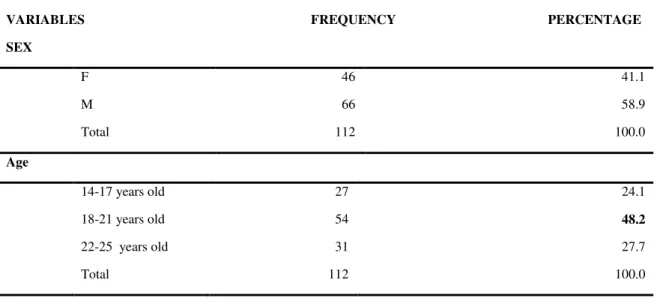
In total, 112 adolescents and young adults aged between 14 and 25 years old were interviewed. Among them 66 were males while 46 (41.1%) were females.
Most of the participants were aged between 18 and 21 with a proportion of 48.2%. 24.1 % were aged between 14 and 17 while 27.7 % were between 22 and 25 years old.
The majority were protestant with 58.9%. Catholics represent 30.4 % while Muslims were 6.3%.
For education level, 56.3% completed or were attending their secondary school, 9.3 % completed or are having university education while 20.5% completed or are in the primary level education.
97.3% of the interviewed youth and adolescents were not yet married while 2.7% were single parents. For occupation, 60.7 % of the respondents were student, 15.2% had income generation jobs while 24.1% were unemployed. The loss of parents is one of the situation affecting adolescents and youth infected by HIV. In this study, we found that 50.9 % lost one of their parents while 23. % are double orphans.
The table below summarizes that socio-demographic data for the respondents (table 2):
TABLE 2: Social and demographic characteristics (N=112)
VARIABLES FREQUENCY PERCENTAGE
SEX
F 46 41.1
M 66 58.9
Total 112 100.0
Age
14-17 years old 27 24.1
18-21 years old 54 48.2
22-25 years old
Total
31
112
27.7
20 RELIGION
Catholics 34 30.4
Protestants 66 58.9
Muslims 7 6..3
Others 5 4.5
Total 112 100.0
EDUCATION LEVEL
Not educated 4 3.6
Primary 23 20.5
Post primary 11 9.8
Secondary 63 56.3
University 11 9.8
Total 112 100.0
MARITAL STATUS
Married 0 0.0
Single 109 97.3
Single parents 3 2.7
Divorced 0 0.0
Total 112 100.0
OCCUPATION
Income generating job 17 15.2
Unemployed 27 24.1
Students 68 60.7
Total 112 100.0
ORHANS vs NON ORPHANS
Double orphans 26 23.2
Have only mother 54 48.2
Have only farther 3 2.7
Non orphans
Missing data
22
7
19.6
6.3
Total 112 100.0
21
3.1.2. Needs for HIV-positive adolescents and young adults for prevention of mental and behavior disorders:
The needs of HIV-positive adolescents and young adults may be identified according to different aspects.
For this study, we focused on needs that are linked to prevention of mental and behavioral disorders. In other words, we assessed specific elements needed for prevention of mental and behavioral disorders among the HIV-positive youth and adolescents.
3.1.2.1 Communication of the HIV status to children and adolescents:
HIV disclosure counseling is an important part of mental and behavioral disorders prevention among the adolescents and young adults infected by HIV especially those who acquired the virus from their mothers. The time to tell the child his status is an important element. Date below show at which age the interviewed adolescents and youth were informed about their HIV status. Most of them were informed about their HIV status at late age. 53.6% were informed when they were between 11 and 14 years old. Some cases were obliged to wait for the age of 15 and above to be communicated their HIV status. Most of the participants who were informed about their HIV status at late age (15 and above) were double orphans (66.7 %) of those who were informed at 15 years and above. This means that double orphan is likely at risk for a delayed information about his HIV status.
Below is a table showing when HIV status was communicated to the respondents:
TABLE 3: Age of HIV status disclosure to children and adolescents
Age at HIV disclosure Frequency Percentage
Before 7 years old 1 0.9
Between 7 and 10 years old 42 37.5
Between 11 and 14 years old 60 53.6
15 years old and above 9 8.0
22
Who did the HIV disclosure to adolescents and youth?
Most of the HIV status disclosure to the children and adolescents was done by health care providers. 49.15 of respondents were informed about their HIV status by health care providers while 43.8% were informed by their parents. Only 7.1% were informed by other close family members. The role of both care providers and parents is very crucial in the HIV disclosure process. Results are captured in table below:
TABLE 4: Who did the HIV disclosure to the children and adolescents?
Who disclosed the HIV status Frequency Percentage
Parents 49 43.8
Health care providers 55 49.1
Other family members 8 7.1
Total 112 100.0
Appreciation of how HIV disclosure was done:
Adolescents and youth who were interviewed in this study appreciated the way the HIV status was communicated to them. The majority (69.6 %) appreciated how the disclosure was done while 30.4% did not appreciate the way they were communicated their HIV status.
Below is the table describing the appreciation of the HIV disclosure process:
Table 5: Appreciation of HIV disclosure process:
Appreciate how HIV disclosure was done
Frequency Percent Valid Percentage
Valid
Yes 78 69.6 69.6
No 34 30.4 30.4
Total 112 100.0 100.0
The reason mentioned by these adolescent who didn’t appreciate the HIV the fact that they
23 status disclosure process. However, all adolescents and young people agreed that HIV status disclosure counseling done properly can help to prevent mental and behavioral disorder.
Most of the interviewed participants were able to openly disclose their HIV status to other people (60.7 %) while 39.3 % didn’t tell anybody. Near half of those who disclosed their status found support from friends and relatives (45.5%).
3.1.2.2 Services provided to adolescents and youth
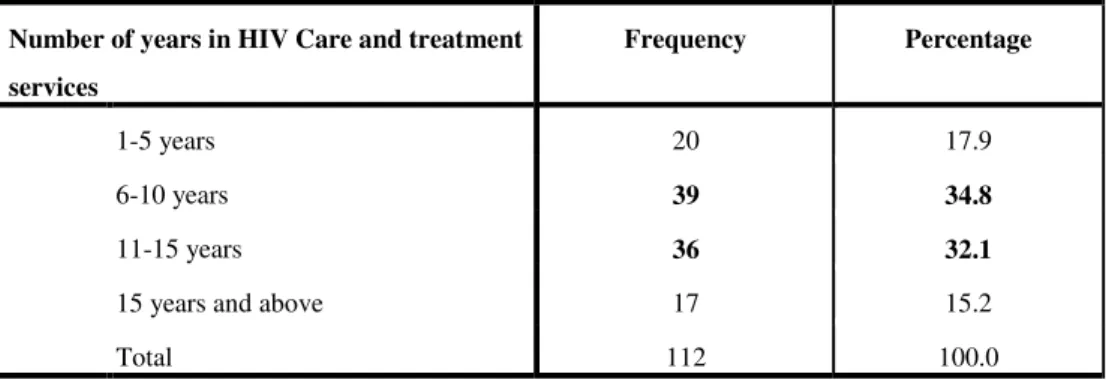
Most of the adolescents and young people have been enrolled in HIV care and treatment services for more than 6 six years (82.1%) and almost half have been followed up for more than 11 years ( 47.3%).
TABLE 6: Duration in HIV care and treatment services:
Number of years in HIV Care and treatment services
Frequency Percentage
1-5 years 20 17.9
6-10 years 39 34.8
11-15 years 36 32.1
15 years and above 17 15.2
Total 112 100.0
Among the services offered to the adolescents and youth, most of them mentioned the following packages:
1) Medical care + HIV education sessions + support groups + life skills and the plan for future (21.4%)
2) Medical care + Free of charge medical services / health care insurance+ HIV education sessions + HIV education sessions + Nutrition+ Individual Counseling and Psychotherapy+ Support group+ Income generating activities + School fees and/or materials + Life skills and the plan for future ( 19.6 %)
3) Medical care + HIV education sessions + Individual Counseling and Psychotherapy+ support groups (12.5%)
4) Medical care + Free of charge medical services / Health care insurance + HIV education sessions + Individual Counseling and Psychotherapy (12.5%)
24 (49.1%). Generally, medical and psychosocial services were qualified by participants as services that are strongly contributing to prevention of mental and behavioral disorders among the targeted age group. 72.3 % of respondents agreed while 27.7 % said that the two kind of services are not enough to prevent mental and behavioral disorders. Among the recommendations made, there is; 1) to put in place a particular follow up system for HIV-positive young people and adolescents (9.8%), 2) to increase the frequency and variation of activities for support groups and 3) reinforcement of diet and nutrition services (8%).
3.1.2.3 Support from friends and families:
Even if there a proportion of adolescents and young people who didn’t openly disclose their HIV status ( 39.3%) , it is important to highlight that nearly all respondents(92. %) recognized the role of friends and families in prevention of mental and behavioral disorders for adolescents and young people infected by HIV. However, only 52.7 5% of respondents agreed that the family members are trained and prepared to provide support to them in order to prevent mental and behavioral disorders.
Among the training topics proposed by respondents there are; 1) how to live with an HIV-positive young person (33%), 2) diet and nutrition (8%), 3) and counseling skills (6.3%).
3.1.2.4 Perceived stigma and needed support:
The great majority of participants (83%) stated that they have never experienced any kind of stigma or discrimination. Even if the rate of stigma and discrimination is low, some of the adolescents and youth fear to be stigmatized and avoid to disclose their HIV status to other people (39.3%). One of the positive elements is that the majority of those who openly talked about their HIV status were given more support (71.8%).
3.2. Objective two: Assessment of the weaknesses, forces, threats and opportunities
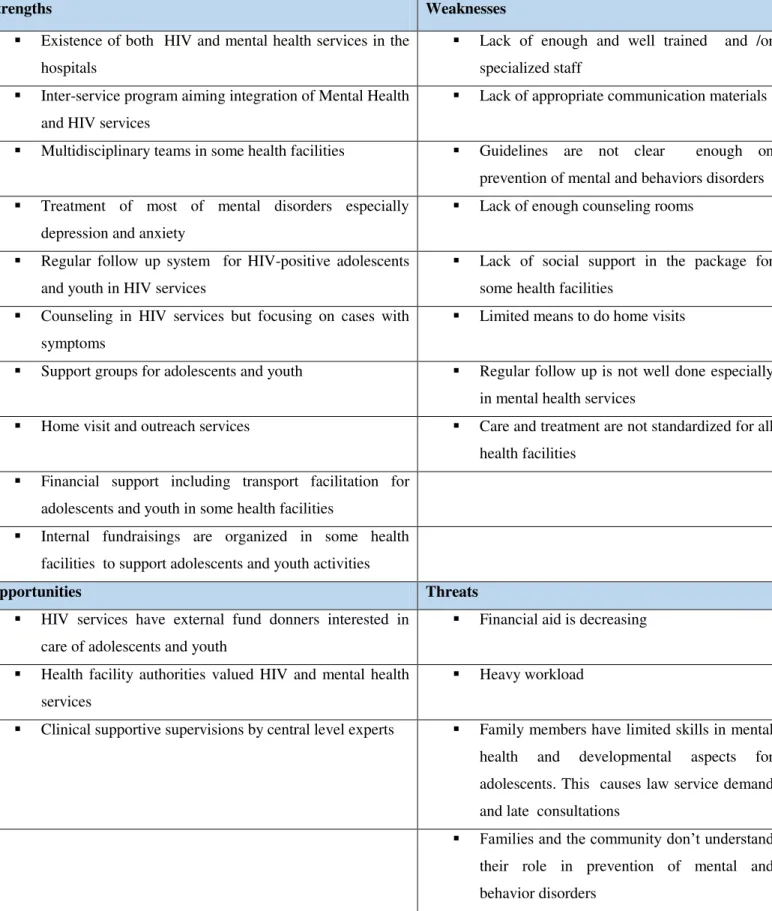
Information was collected from health care providers in HIV and mental health services in the three general hospitals in Kigali. The table below describes the key strengths, weaknesses, threats and opportunities for HIV services to integrate prevention of mental and behavioral disorders among the adolescents and youth infected by HIV.
The table below captures the information collected from six health care providers and two program managers (policy makers).
25 adolescents and youth infected by HIV. These is a result of information collected from the three urban general hospitals.
Table 7: Presentation of strengths, weaknesses, opportunities and threats:
Strengths Weaknesses
Existence of both HIV and mental health services in the
hospitals
Lack of enough and well trained and /or
specialized staff
Inter-service program aiming integration of Mental Health
and HIV services
Lack of appropriate communication materials
Multidisciplinary teams in some health facilities Guidelines are not clear enough on
prevention of mental and behaviors disorders
Treatment of most of mental disorders especially
depression and anxiety
Lack of enough counseling rooms
Regular follow up system for HIV-positive adolescents
and youth in HIV services
Lack of social support in the package for
some health facilities
Counseling in HIV services but focusing on cases with
symptoms
Limited means to do home visits
Support groups for adolescents and youth Regular follow up is not well done especially
in mental health services
Home visit and outreach services Care and treatment are not standardized for all
health facilities
Financial support including transport facilitation for
adolescents and youth in some health facilities
Internal fundraisings are organized in some health
facilities to support adolescents and youth activities
Opportunities Threats
HIV services have external fund donners interested in
care of adolescents and youth
Financial aid is decreasing
Health facility authorities valued HIV and mental health
services
Heavy workload
Clinical supportive supervisions by central level experts Family members have limited skills in mental
health and developmental aspects for adolescents. This causes law service demand and late consultations
Families and the community don’t understand
26 By looking at the findings from the SWOT analysis, it is clearly that the general hospitals have many forces and opportunities on which can be based the integration of mental and behavioral disorders prevention. Some of the needed mental disorders prevention interventions are already in place in some health facilities. The most important element to reinforce is standardization and documentation of the interventions set with clear objectives and monitoring and evaluation system. In addition, some health facilities have some innovations and initiatives that can guide policy makers in translation them into clear guidance documents.
3.3. Objective three: Analysis of policy and other guiding documents
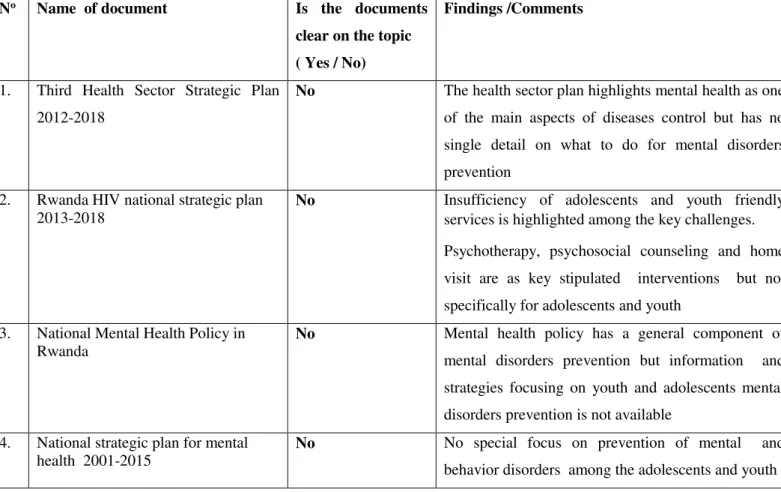
The table below summarizes information contained in the national documents to guide the implementation of mental and behavioral disorders among the HIV-positive adolescents and youth.
TABLE 8: Analysis of policies of other national guiding documents
No Name of document Is the documents
clear on the topic ( Yes / No)
Findings /Comments
1. Third Health Sector Strategic Plan
2012-2018
No The health sector plan highlights mental health as one
of the main aspects of diseases control but has no single detail on what to do for mental disorders prevention
2. Rwanda HIV national strategic plan
2013-2018 No Insufficiency of adolescents and youth friendly services is highlighted among the key challenges.
Psychotherapy, psychosocial counseling and home visit are as key stipulated interventions but not specifically for adolescents and youth
3. National Mental Health Policy in
Rwanda No Mental health policy has a general component of mental disorders prevention but information and
strategies focusing on youth and adolescents mental disorders prevention is not available
4. National strategic plan for mental
27
5. Rwanda National Health Research
Agenda 2014- 2018 No Priority research topics are mentioned including mental health but none focusing on adolescents and
youth
6. National Guidelines for Prevention
and Management of HIV, STIs & Other Blood Borne Infections. Edition 2013
No The guideline has important components on
adolescents and psychosocial in for HIV management but mental health prevention does not appear anywhere
7. Guideline for psychosocial care and
support for people infected and /or affected by HIV/AIDS
No This guideline highlights important elements that
contribute to mental health prevention such as HIV status disclosure, support groups and group/ individual counseling. It has an important part on psychosocial care of adolescents infected by HIV. However, no specific elements mentioned with a simple purpose to prevent of mental and behavioral disorders among the adolescents and youth.
8. Guideline for mental disorders
management
No Nothing proposed for mental and behavioral disorders
prevention
9. National protocol for management of
mental health disorders
No Without any prevention component
10. HIV disclosure tool for children and adolescents infected by HIV
No This is an important tools that contributes to mental
health prevention by its methodic way to proceed HIV status disclosure to children and youth. It was set in a way of helping adolescents to adhere on antiretroviral treatment.
11. Guideline for HIV management among the adolescents
No Mental health is considered as an important
component in care odd adolescents but prevention of mental and behavioral disorders in not addressed.
3.4. Objective three: Model for prevention of mental and behavioral disorders among the adolescents and youth infected by HIV
28
Chart 1: Model for mental and behavioral disorders prevention for HIV-positive adolescents and youth
3.4.1. Levels of the model:
3.4.1.1 Policy and guiding documents:
Policy and guiding documents development is the startup point for any program and intervention. Mental and behavioral disorders prevention for adolescents cannot be done if policies are not clearly considering that aspect as an important one. While the policy is developed, it has to be translated into a strategic plan, guidelines, protocols and tools to guide the implementation.
29 importance of having clear guidance documents in to set up standardized services as well as monitoring and evaluation mechanisms.
The model highlights also the reciprocal linkage between policy development and clinical practice experience. Policies orient the clinical practice on one hand, and on the other hand clinical practice experience is needed to inspire policy development. SHEKHAR S., et al, reminded that in their article. “Because of their knowledge base, mental health professionals need to advise public health planners and programme developers on the possibilities of initiating prevention interventions or integrating mental health components into existing programmes. The possibilities for this role are enormous, since most countries and communities have public health and social programmes that can serve the cause of prevention of mental disorders. Even if no changes are needed, an awareness that the programme may be having an impact on prevention of mental disorders helps to reinforce the need for the programme to be continued or expanded [10].
Inter-service collaboration is a key element for their success of this model through a well-structured referral system, regular case and information sharing meetings. One touching example is a case where the hospital HIV services staff organized a fundraising involving care providers and hospital authorities to collect some money to respond to raised social support needs for HIV-positive adolescents and youth.
SHEKHAR S., et al confirmed that, in many cases, mental health professionals need to take an active role in initiating prevention programmes. This role can be as a leader or as an active collaborator, especially in an intersectorial programme. Some of the most effective prevention programmes have been initiated by mental health professionals working in close collaboration with other professionals. [10]
3.4.1.2 Clinical practices:
30 for the normal development of the HIV-positive adolescents and youth. Interventions like HIV disclosure counseling timely and properly done have positive impact on adherence to antiretroviral treatment and the general health outcomes for children and adolescents.
An important question is how to know what approach to use to make sure adolescents and youth are served with preventive services. Among the strategies to achieve this is the set up youth friendly services equipped with multidisciplinary well trained teams to implement the minimum package clearly defined in the guidelines using appropriate tools. Again, inter-services connection and collaboration is needed to manage cases that may require more advanced and specialized care services.
Screening of mental and behavior disorders including alcohol and drug abuse
Prevention of mental and behavioral disorders among the HIV-positive adolescents and youth, clinical practices should comprise systematic screening of mental and behavioral disorders including alcohol and drug abuse.
The World Health Organization recognizes that Mental illness can take many forms, especially in adolescents as they go through emotional, social and physical changes. Most commonly, adolescents experience depression and anxiety disorders. Other mental health issues that are prevalent in adolescents include behavioral and psychiatric problems such as attention deficit hyperactivity disorder. Alcohol and other substance use, which is common during adolescence, can contribute to increased risk of mental health problems. Additionally, adolescents affected by trauma e.g. rape, abuse or other forms of violence can experience long-term anxiety and depression in addition to the physical effects of trauma [8].
The World Health Organization recommends to address mental health issues in adolescents living with HIV as mental illness increases adolescents' vulnerability to engage in risk-related behaviors, including substance use or risk-associated sex. [8]
31 Linkage between clinical practices and support from the family /community:
In addition to the health facility based clinical services, the role of care providers is important when extended to the interventions targeting the family members and the community. The modal proposes the link between the two settings and their reciprocal enrichment.
SHEKHAR S., et al, proposed that another way mental health care providers can assist in prevention efforts is by initiating prevention interventions in family members of those taking mental health care. Preventive approaches for children of parents with a diagnosed mental disorder, who are particularly at risk, can be highly effective but unfortunately not applied often. Mental health professionals need to balance their role of providing much needed care to the patients who are under treatment with preventing future need for care among their families [10].
3.4.1.3 Family and community involvement:
The role of family members and the community in prevention of mental and behavior disorders is crucial. Safe and supportive environment free of any kind of stigma is a key protective factor for adolescents and youth infected by HIV. Conclusions from a qualitative study showed that, HIV+ adolescents in South Africa experience similar concerns to those in high-income countries, socio-emotional coping may be compromised by increased levels of loss due to the late roll-out of antiretroviral treatment and challenges to caregiving contexts including poverty, stigma and minimally supported foster care arrangements. There is a need for mental health promotion programmes for adolescents to adopt an ecological approach, strengthening protective influences at the individual, interpersonal, community and policy levels [36].
Most of the interviewed participants recommended that family members should be coached by health care providers in supportive counseling of children, adolescents and youth infected by HIV.
32 behavior and social functioning, and reduces conduct problems at home and school. The programme uses videotape modelling methods and includes modules for parents, school teachers and children [10].
Again, adolescents and youth need to be taught about life skills including sensitive issues related to the future life such as marriage, how to have children etc. This model proposes also a specific package for orphans due to multiple losses, and critical socio-economic situation. For that reason, vulnerability to mental and behavioral disorders is higher. Services like parenting and other kind of social support (education and free of charge medical insurance for example) are necessary for that specific group [10].
In one family based intervention study done in one rural Rwanda district, results showed that interventions targeting families contribute to prevention of mental and behavioral disorders among the HIV- affected adolescents. According to caregivers, youth protective factors of family connectedness, good parenting, child pro-social behavior and caregiver social support improved significantly from pre-intervention to post-intervention, and changes were sustained and showed continued improvement at the 6-month follow-up. In addition, caregiver-reported youth perseverance/ self-esteem was higher at 6-month follow-up than at pre-intervention. Youth-reported social support and parental use of harsh punishment also improved significantly from pre- to post-intervention and improvements were sustained at 6 months of follow-up.
The number of children who scored in the clinical range for depression decreased from five of 32 (15.63%) at baseline to four of 31 (12.90%) at post assessment, to three of 33 (9.09%) at follow-up. The number of children whom caregivers rated in the clinical range for depression decreased from five of 37 (13.51%) at baseline, to three of 34 (8.82%) at post assessment, to zero of 34 at follow-up. According to caregivers, youth-internalizing symptoms (depression, anxiety/depression and irritability) also improved from pre-intervention to 6-month follow-up. There were no reported improvements in youth conduct problems or functional impairment [25].
33 An article on prevention of mental disorders among the adolescents highlighted that, in recent years, researchers and policy makers have recognized the importance of focusing on prevention efforts for depression. Prevention requires a paradigm shift from traditional disease models, in which symptoms are treated when they emerge, to a proactive focus on mental health and on maximizing protective factors while reducing risk factors for mental illness. In general, a review of the literature indicates that prevention programs utilizing cognitive behavioral and/or interpersonal approaches, and family-based prevention strategies, are most helpful [26].
For the American National Research Council and Institute of Medicine, Prevention emphasizes the avoidance of risk factors; promotion strives to promote supportive family, school, and community environments and to identify and imbue in young people protective factors, which are traits that enhance well-being and provide the tools to avoid adverse emotions and behaviors [13].
3.4.2. Cost implication for the model:
Considering the current available resources and the structure of HIV and mental health services in general hospitals in Kigali, this modal doesn’t have a big budget implication. Rather, it requires more restructuration, coaching, supervision and guiding documents (guidelines, protocols and tools).
34 The World Health Organization recommends that primary health-care providers, including HIV counsellors, can be trained to recognize and treat common mental and substance-use disorders and refer patients to specialized services when warranted. Such providers need to be properly trained and supported by adequate supervision, and the process of referral to mental health services needs to be an integral part of the health infrastructure [1].
35 CHAPITERFOUR: DISCUSSION:
Socio-demographic factors for Mental and behavioral disorders prevention
A sample of 112 was considered for this study. Males represent 58.9 %, while females represent 41.1%. There is a predominance of the adolescents and youth aged between 18 and 21 years old with 48.2% of all respondents. With antiretroviral treatment, children who were perinatally infected by HIV have now the chance to live longer until the adolescence and adult age.
Similarly, in the United State of American, many children infected with HIV perinatally have survived into their second or third decade of life with antiretroviral treatment [34].
In our study, most of the interviewed adolescents and youth (65.1%) are doing or had competed their secondary and/or university education level studies. This is a good sign that HIV-infected adolescents and young people in Rwanda have access to basic education. This can be considered as a mental health protective factor.
The American pediatric academy confirms that graduating from school is a major milestone for all youth [34].
Students living with HIV have a right to equal access to education and the opportunities that education creates. Being able to remain in school and pursue an education represents normalcy and the maintenance of hopes and ambitions for the future. It also allows adolescents to acquire the life skills they need to manage peer pressure, form relationships, make good decisions and achieve their goals. Schools can also serve as important partners for health services in meeting the needs of adolescents for information, testing, support and referral for appropriate services [8].
36 In other words, education provides to marginalized children and youth affected by HIV epidemic with a window of hope and opportunity for a future free from poverty, disease and disparity [37].
Most of the interviewed HIV-positive adolescents and youth have lost at least one of their parents (74.1%) including the double orphans (23.2%). The psychological wellbeing of the orphans infected by HIV is a big concern. Prevention of mental and behavioral disorders among the orphans by HIV should be given more attention.
In a study done among HIV-positive adolescents in Kenya, for mental health, orphan status was associated significantly with emotional problems, depression symptoms, exposure to traumatic events, and intrusion and arousal symptoms of PTSD. Orphan status also was significantly associated with less social support [15].
In a study done in Uganda , more orphans, than non-orphans had more common emotional
and behavioral problems e.g. more orphans reported finding “life unfair and difficult”
(p=0.03); 8.3% orphans compared to 5.1 % of the non-orphans reported having had past
suicidal wishes (p=0.30) and more reported past “forced sex / abuse” (p=0.05). Lastly, the
orphans' social functioning in the family rated significantly worse compared to the non-orphans (p= 0.05). Qualitatively, non-orphans, compared to non-non-orphans were described as
“needy, sensitive, and isolative with low confidence and self-esteem and who often lacked
love, protection, identity, security, play, food and shelter [38].
The same study recommended setting up a national policy and support services for orphans and other vulnerable children and their families, a national child protection agency for all children, child guidance counselors in those schools with many orphans and lastly social skills training for all children [38].
Delay in HIV disclosure for children /adolescents and prevention of mental and behavioral disorders
37 were informed about their HIV status between 11 and 14 years (53.6%). A certain number of them (8%) were even obliged to wait until the age of 15 and above.
Results from a study done is South Africa show that older child age was a determining factor for HIV disclosure to children, 22 (37.2%) learned of their HIV diagnosis between 11 and 16 years. The mean age of disclosed children was 10.6 years [39].
While there is little evidence that disclosure causes psychological harm and research suggests that it may actually be beneficial for a young person's mental wellbeing. A study done in Zimbabwe showed that learning about their HIV status is still one of the most difficult life events for adolescents living with HIV/AIDS [21, 22].
Despite these facts, the World Health Organization's guidelines for HIV status disclosure are limited to children under the age of twelve. Even though, many perinatally-infected children are not disclosed their HIV status until they are adolescents [23].
The American Academy of Pediatrics encourages the disclosure of HIV infection status to school-aged children [17]. Timely and properly done HIV disclosure counseling is an important element in prevention of mental and behavioral disorders for perinatal HIV infected adolescents and youth.
In addition, a study done in the United States of America concluded that there was also no significant difference between time trends in quality of life scores before and after disclosure of HIV status, suggesting that diagnostic disclosure to children should not be delayed for fear of a negative impact on quality of life [35].
38 HIV long-term follow up and integration of mental and behavioral disorders prevention:
More than 82.1 % of interviewed adolescents and young people have been adhering to the HIV care and treatment services for more than 6 years including those who are being followed up for 15 years and above (15.2%). These figures show a high retention rate and prolonged duration for follow up in HIV care and treatment services for perinatally infected adolescents and youth. For that reason, HIV care and treatment service is a better place to integrate prevention of mental and behavioral disorders among the adolescents and youth infected by HIV. While preventing and managing mental and behavioral disorders, there will be a double gain. On one hand, the infected HIV-positive adolescents and youth will develop a positive mental health and on the other hand, HIV prevention, care and treatment will be well managed.
The biopsychosocial approach is particularly important to the management of HIV infection. Successful prevention and treatment cannot occur in the absence of well integrated psychosocial approaches. Mental health workers, either directly or in consultation with other providers, have an important role to play in ensuring that these services are well-conceptualized and meet the mental health needs of those who use them [18].
While interviewing adolescents and youth, results showed that medical services combined with psychosocial counseling and psychotherapy services are essential. They were appreciated and qualified by the participants (49.1%) as key pillars in prevention of mental and behavior disorders.
39 Caregivers also benefit from support that acknowledges the stress they are under and validates their concerns about their children or charges, while enabling them to learn how to cope with the adolescent's developmental and health needs [8].
In addition, integration of HIV into mental health services provides opportunities for identifying individuals at risk of HIV infection, introducing HIV prevention and detecting those who are infected and providing them with appropriate HIV treatment and care. Mental health services should ensure access to voluntary and confidential HIV testing and counselling for those at risk [1].
Role of family members and the community support:
The role of family members and the support from the community is important in prevention of mental and behaviors disorders among the adolescents and youth infected by HIV. Participants recognized that role of family members and the community in prevention of mental and behavioral disorders (92%). However, participants declared that family members
don’t have enough skills and training to support the adolescents and youth. This have been
also confirmed by the interviewed health care providers and policy makers.
While developing and implementing a mental health prevention program, it is important to tackle on the family and community dimension. For most adolescents, families remain the primary, trusted source of emotional, material and practical support. They have an important role to play in encouraging and supporting an adolescent to live positively with HIV, beginning with disclosure of the adolescent's HIV status if they have not yet done so [8].
40 support them and issues they prefer to address on their own. In general, health care providers should always respect an adolescent's wishes in this regard [8].
Management of stigma and discrimination:
Interviewed adolescents and youth declared they have been ever stigmatized (17%). Most of the adolescents were reluctant to disclose their HIV status to other people. Only 39.3% were able to openly talk about their status to others. This means that adolescents fear to be stigmatized.
Considering the negative impact of stigma and discrimination on development of a positive mental health for adolescents and youth, community interventions should focus on promoting activities against stigma and discrimination. As it has been proved in different studies, confronting HIV stigma and managing disclosure of HIV status to others may significantly impact mental health function [19, 20].
Health care providers must also be alert to situations where there is a potential for violence against the adolescent, which is an issue in some families. In these cases, social and protective services must be engaged to ensure that the adolescent is safe and remains in care [8].
Policy and guidance documents:
41 HIV /AIDS national guiding documents highlight adolescents and youth infected by HIV as a particular category and psychosocial care services are well documented. However, a clear guidance is needed to define the concept and the package of interventions aiming to promote protective factors for the HIV-positive adolescents and youth.
LIMITATIONS AND FUTURE DIRECTIONS:
This study was done for a limited age range category and a limited location. Only the adolescents infected by HIV aged between 14 and 25 years were considered. If time and means allowed, it could cover the entire categories of adolescents and youth infected by HIV.
The fact that we only considered urban general hospitals causes some limitations. It could cover even other health structures and countrywide. Again, it could be more interesting if the proposed model was tested but due to limited time and resources, this could be a subject to more broad studies.
Further studies can focus on extension of the study to other more wide age ranges with a sample considering urban and rural realities. However, the results and the proposed model can be used as a pilot program that can be tested, extended and implemented in all general hospitals countrywide.