614
Revista da Sociedade Brasileira de Medicina Tropical 48(5):614-616, Sep-Oct, 2015
http://dx.doi.org/10.1590/0037-8682-0030-2015
Short Communication
Corresponding author: Dra. Cristiane Silveira de Brito. Laboratório de Microbiologia/Instituto de Ciências Biomédicas/UFU. Avenida Amazonas, Bloco 4C s/n, 2º andar, Campus Umuarama, 38400-902 Uberlândia, Minas Gerais, Brasil.
Phone: 55 34 3291-8670
e-mail: [email protected] Received 27 February 2015
Accepted 20 May 2015
The nares as a CA-MRSA reservoir in the healthy elderly
Cristiane Silveira de Brito
[1], Lícia Ludendorff Queiroz
[1], Paola Amaral de Campos
[1],
Deivid William da Fonseca Batistão
[1], Helisângela de Almeida Silva
[1],
Guilherme Gularte de Agostini
[2], Paulo Pinto Gontijo Filho
[1]and Rosineide Marques Ribas
[1][1]. Laboratório de Microbiologia Molecular, Instituto de Ciências Biomédicas, Universidade Federal de Uberlândia, Uberlândia, Minas Gerais, Brazil. [2]. Faculdade de Educação Física, Universidade Federal de Uberlândia, Uberlândia, Minas Gerais, Brazil.
ABSTRACT
Introduction: The frequency of methicillin-resistant Staphylococcus aureus (MRSA) has increased in the community. This study evaluated the prevalence of MRSA and community-acquired (CA)-MRSA in 120 healthy elderly. Methods: The MRSA were evaluated for the presence of the IS256, mecA, agr, icaA, icaD, fnbB,and pvl genes with PCR. Results: Frequency of
S. aureus and MRSA colonization was 17.8% and 19%, respectively. CA-MRSA isolate showed SCCmec IV, fnbB+, and icaD+.
Conclusions: CA-MRSA was detected, with genotype determined as SCCmec type IV/IS256-/fnbB+/icaA-/icaD+/bbp-/agr2/bap-/pvl,
characterizing this population as a possible reservoir of this organism in the community.
Keywords: CA-MRSA. Elderly. Reservoir.
Over the past decade, Methicillin-resistant Staphylococcus aureus (MRSA) has been a major clinical and epidemiological problem in hospitals. It is reported with increased frequency in community populations without prior health care contact(1).
Community-acquired methicillin-resistant Staphylococcus aureus (CA-MRSA) is susceptible to the majority of non-betalactamic antibiotics. It frequently expresses more virulent genes as pvl and predominantly carries the SCCmec type IV(2).
In colonized individuals, nasal carriage of MRSA acts as a potential endogenous reservoir for clinical infections or as a source of cross-colonization for spread in the community(3).
We conducted a cross-sectional study from November 2013 to February 2014 at the Faculty of Physical Education, Federal University of Uberlândia, and looked for MRSA in the anterior
nares of 120 healthy elderly (≥60 years) people who practiced
regular physical activity. The research protocols were approved by the institutional review board, and all volunteers signed informed consent forms before the study began.
Using sterile swabs pre-moistened with Triptic Soy Broth (Becton Dickinson, Le Pont de Claix, France) we collected bacterial samples from the nares. After collecting, swabs were promptly transported to the Laboratory of Microbiology and
incubated at 35ºC, overnight. About 0.1ml of this suspension was inoculated onto the surface of petri dishes selected (Mannitol Salt Agar - Himedia, India) for growing S. aureus.
The bacterial isolates were identifi ed with phenotypic classical
tests (isolates were tested for the production of the coagulase enzyme via the tube method, which indicates S. aureus and separates it from the commonly isolated negative coagulase
Staphylococcus). The MRSA and the susceptibility profi le
to several antimicrobials (oxacillin, 1µg; cefoxitin, 30mg; ciprofloxacin, 5µg; clindamycin, 2µg; gentamicin, 10µg; tetracycline, 30µg; rifampicin, 30µg; erythromycin, 15µg
and sulfamethoxazole/trimethoprim, 25µg) were confi rmed
with the disk diffusion method using Mueller Hinton Agar (Himedia, India). The cefoxitin-resistant isolates according to
disk diffusion were confi rmed based on minimum inhibitory
concentration (MIC) for oxacillin by performing the E-test®
(AB Biodisk, Solna, Sweden) and the presence of mecA with polymerase chain reaction (PCR). Staphylococcus aureus ATCC 25923 was preferred as a quality control strain(4).
Purifi cation of genomic deoxyribonucleic acid (DNA) of
four isolates characterized as MRSA by disk diffusion was prepared using QIAamp DNA Mini Kit (Qiagen) according to the manufacturers recommendations. The pvl, icaA, icaD, IS256, agr, bap, and fnbB genes were assessed with end-point PCR according to methods described by Saïd-Salim et al.(5), Martin-Lopez et al.(6), Arciola et al.(7), Gu et al.(8),
Shopsin et al.(9), Cucarella et al.(10) and Tristan et al.(11). The
oligonucleotide primers described previously by Kondo et al.(12) were used for verifying the various types of SCCmec
elements. Staphylococcus aureus ATCC 25923, Staphylococcus epidermidis ATCC 12228 and Clone Southwest Pacifi c were
615
Brito CS et al. - Reservoir for CA-MRSA
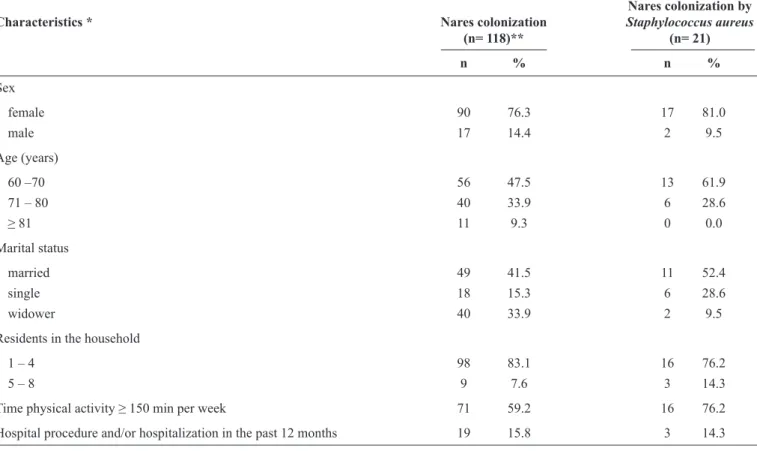
TABLE 1 - Characteristics of colonized elderly people analyzed in the study.
Nares colonization by
Characteristics * Nares colonization Staphylococcus aureus
(n= 118)** (n= 21)
n % n %
Sex
female 90 76.3 17 81.0
male 17 14.4 2 9.5
Age (years)
60 –70 56 47.5 13 61.9
71 – 80 40 33.9 6 28.6
≥ 81 11 9.3 0 0.0
Marital status
married 49 41.5 11 52.4
single 18 15.3 6 28.6
widower 40 33.9 2 9.5
Residents in the household
1 – 4 98 83.1 16 76.2
5 – 8 9 7.6 3 14.3
Time physical activity ≥ 150 min per week 71 59.2 16 76.2
Hospital procedure and/or hospitalization in the past 12 months 19 15.8 3 14.3
*It was not possible to collect information from 11 elderly individuals. **118 nares colonized of the 120 collected.
Table 1 shows that a total of 21 S. aureus isolates were recovered from the nares of 120 subjects, and the nasal carriage rate was 17.8% (21/118 nares colonized by Staphylococcus
spp.). The disk diffusion method characterized 19% (4/21)
of the isolates as MRSA and 50% (2/4) with MIC ≥4mg/L
(only one multidrug resistance isolate). In total, 50% of the MRSA showed multidrug resistance with resistance to erythromycin, rifampicin, and clindamycin. On the other hand, all
strains of MRSA were susceptible to ciprofl oxacin, gentamicin,
amikacin, tetracycline, and sulfamethoxazole/trimethoprim. The presence of the mecA gene was confi rmed in two isolates with MIC ≥4mg/L, which carried SCCmec type II and IV, respectively. Despite not being tested, it is possible that the other two samples detected in our search (mecA-, cefoxitin
resistant) have the new homologous variant mecC that has 70% identity with mecA. The mecC gene is not detected with the PCR method established for the detection of mecA; consequently,
isolates harboring this new variant can be misidentifi ed and
reported as methicillin-susceptible S. aureus(13). The CA-MRSA
isolated showed the following genotypic profi le: SCCmec
type IV/IS256-/fnbB+/icaA-/icaD+/bbp-/agr2/bap-/pvl-. None
of the elderly participants colonized with MRSA had previous hospitalization or had undergone any hospital procedure in the 12 months before the study.
The majority of studies conducted to evaluate asymptomatic carriage of MRSA have been performed in individuals in the
community who have had contact with a hospital environment. Studies of epidemiological surveillance for CA-MRSA carriage in healthy subjects are rare in Brazil. This study provides the
fi rst description of CA-MRSA with genotypic profi le in this
population.
In our study, we also detected a strain carrying the SCCmec
type II. The epidemiology of MRSA is a dynamic process that brings to light the blurring of the limits between the community and hospital(14). According to the literature, the strains carrying
SCCmec type II are associated with clinical isolates recovered from the hospital(2). One possible explanation for this is that
the elderly participants have probably had previous contact with someone who was recently hospitalized. Additionally, previous contamination of the environment is also considered an important reservoir of microorganisms(14).
Although we have found only one SCCmec type IV pvl-,
the frequency of nares colonized by MRSA (19%, 4/21) were similar to those found in Mexico City,where 12.6% of S. aureus
carriers were colonized with MRSA, both rates higher than those reported in the United States (1.5%)(3).
We compared PCR assays for the detection of the methicillin-resistance gene with classical methods in this study.
The two isolates initially classifi ed as methicillin-resistant
based on disk diffusion showed discrepant results when tested with the E-test® and PCR. Investigators have reported that the
616
ACKNOWLEDGMENTS
The authors declare that there is no confl ict of interest. CONFLICT OF INTEREST
FINANCIAL SUPPORT
REFERENCES
Rev Soc Bras Med Trop 48(5):614-616, Sep-Oct, 2015
disk technique, are not always reliable for methicillin-resistant staphylococci detection(15).
Molecular epidemiology studies have highlighted the global spread of different MRSA clones. HA-MRSA may have a hidden reservoir in the community just as the CA-MRSA has one in health services. This increases the need to monitor such clones(14). Although our isolates were not clonally typed, the
presence of CA-MRSA and HA-MRSA genotypes colonizing healthy elderly participants in a multisport center emphasizes the risk of cross-transmission. The presence of different MRSA clones in this group could not be determined in our study, but warrants additional research.
In this study of healthy elderly people in Minas Gerais, Brazil, we detected the prevalence of MRSA, including CA-MRSA, among S. aureus carriers. The importance of CA-MRSA colonization as a risk factor for cross-transmission in the community must be further analyzed.
The authors would like to thank Dra Kátia Regina Netto dos Santos (Institute of Microbiology Paulo de Goés, Universidade Federal do Rio de Janeiro-UFRJ) who kindly provided the
control strain Clone Southwest Pacifi c.
The authors would like to thank Fundação de Amparo à Pesquisa do Estado de Minas Gerais (FAPEMIG).
1. Köck R, Mellmann A, Schaumburg F, Friedrich AW, Kipp F, Becker K. The Epidemiology of Methicillin-Resistant Staphylococcus aureus (MRSA) in Germany. Dtsch Arztebl Int 2011; 108:761-767.
2. David Z, Daum RS. Community-Associated Methicillin-Resistant
Staphylococcus aureus: Epidemiology and Clinical Consequences
of an Emerging Epidemic. Clin Microbiol Rev 2010; 23:616-687.
3. Hamdan-Partida A, Sainz-Espuñes T, Bustos-Martínez J. Isolation of community-acquired methicillin-resistant Staphylococcus aureus in
healthy carriers in a Mexican community. Int J Infect Dis 2014;
18:22-26.
4. Clinical and Laboratory Standard Institute (CLSI). Performance standards for antimicrobial susceptibility testing, Approved Standard M100-S23. CLSI; 2014. (Accessed 2014 June 20)
Available at: ffi le:///C:/Users/User/Downloads/CLSI%202014.pdf
5. Saïd-Salim B, Mathema B, Braughton K, Davis S, Sinsimer D, Eisner W, et al. Differential Distribution and Expression of Panton-Valentine Leucocidin among Community-Acquired Methicillin-Resistant
Staphylococcus aureus Strains. J Clin Microbiol 2005; 43:3373-3379.
6. Martín-López JV, Díez-Gil O, Morales M, Batista N, Villar J, Claverie-Martín F, et al. Simultaneous PCR detection of ica cluster and methicillin and mupirocin resistance genes in catheter-isolated
Staphylococcus. Int Microbiol2004; 7:63-66.
7. Arciola CR, Baldassarri L, Montanaro L. Presence of icaA and
icaD genes and slime production in a collection of staphylococcal strains from catheter-associated infections. J Clin Microbiol 2001;
39:2151-2156.
8. Gu J, Li H, Li M, Vuong C, Otto M, Wen Y, et al. Bacterial insertion sequence IS256 as a potential molecular marker to discriminate invasive strains from commensal strains of Staphylococcus epidermidis. J Hosp Infect 2005; 61:342-348.
9. Shopsin B, Mathema B, Alcabes P, Saïd-Salim B, Lina G, Matsuka
A, et al. Prevalence of agr specifi city groups among Staphylococcus
aureus strains colonizing children and their guardians. J Clin Microbiol2003; 41:456-459.
10. Cucarella C, Solano C, Valle J, Amorena B, Lasa I, Penadés JR.
Bap, a Staphylococcus aureus surface protein involved in biofi lm
formation. J Bacteriol 2001; 183:2888-2896.
11. Tristan A, Ying L, Bes M, Etienne J, Vandenesch F, Lina G. Use of multiplex PCR to identify Staphylococcus aureus adhesins involved in human hematogenous infections. J Clin Microbiol
2003; 41:4465-4467.
12. Kondo Y, Ito T, Ma XX, Watanabe S, Kreiswirth BN, Etienne J, et al. Combination of multiplex PCRs for staphylococcal cassette chromosome mec type assignment: rapid identifi cation system for mec, ccr, and major differences in junkyard regions. Antimicrob
Agents Chemother 2007; 51: 264-274.
13. Gómez P, González-Barrio D, Benito D, García JT, Viñuela J, Zarazaga M, et al. Detection of methicillin-resistant Staphylococcus aureus (MRSA) carrying the mecC gene in wild small mammals in
Spain. J Antimicrob Chemother 2014; 69:2061-2064.
14. Vieira MAS. Estudo epidemiológico e molecular de portador nasal de Staphylococcus aureus e de Staphylococcus aureus
meticilina resistente em Pronto Atendimento Pediátrico e em Unidades de Terapia Intensiva Neonatal de Goiânia. 2010. 96p. (Doctor´s Thesis). Instituto de Patologia Tropical e Saúde Pública. Universidade Federal de Goiás; Goiânia; 2010.
15. Iraz M, Tekerekoglu MS, Otlu B, Ay S. Comparison of an automated system with four phenotypic methods for the detection of methicillin resistant Staphylococcus aureus. Afr J Microbiol