A comparative study of resource allocation in
in different
Brazilian ecosystems and its relationship with European studies
Silva Matos, DM.
a*, Xavier, RO.
a, Tiberio, FCS.
aand Marrs, RH.
baDepartamento de Hidrobiologia, Universidade Federal de São Carlos – UFSCar, Rod. Washington Luis, Km 235, CP 676, CEP 13565-905, São Carlos, SP, Brazil
bSchool of Environmental Sciences, University of Liverpool, Liverpool, L69 3GP, UK *e-mail: [email protected]
Received: October 5, 2012 – Accepted: December 3, 2012 – Distributed: February 28, 2012 (With 2 figures)
Abstract
Pteridium is a cosmopolitan genus that acts as an invasive species in many parts of the world. Most research on this genus has occurred in Europe, and there is a lack of data on it from South America, in spite of causing considerable conservation problems. We compared the biomass allocation of P. esculentum subsp. arachnoideum in two ecosystems in Brazil - Atlantic forest and Brazilian savanna. We measured the biomass of fronds, rhizomes and above-ground litter. We also compared the density, length and biomass of fronds from this Brazilian study with similar data of P. esculentum subsp. arachnoideum derived from Venezuela and P. aquilinum from Europe. P. esculentum subsp. arachnoideum showed a wide response range. We found a negative relationship between frond and necromass , indicating a negative feedback effect, while a positive relationship was observed between frond and rhizome biomass. The continental comparison of relationships showed that Pteridium responds in a different way in both Brazil and Europe, and that in Brazil fronds tend to be longer and heavier, presumably as a result of the continuous growing season in South America while is shortened in Europe by frost. The paper shows the ability of Pteridium to adapt to different ecosystems.
Keywords: bracken, resource partitioning, Atlantic Forest, Cerrado, biomass.
Estudo comparativo da alocação de recurso em
Pteridium
em diferentes
ecossistemas brasileiros e sua relação com estudos na europa
Resumo
Pteridium é um gênero cosmopolita que inclui espécies invasoras em várias partes do mundo. Os estudos sobre o gênero têm ocorrido principalmente na Europa, e existem poucas informações para as espécies que ocorrem na América do Sul. Nesse estudo comparamos a alocação de biomassa de P. esculentum subsp. arachnoideum em dois ecossistemas brasileiros – Mata Atlântica e Cerrado - em cada um dos quais medimos a biomassa nos rametas, nos rizomas e na serapilheira. Comparamos, também, a densidade, comprimento e biomassa dos rametas com informações obtidas sobre P. esculentum subsp. arachnoideum na Venezuela e P. aquilinum na Europa. P. esculentum subsp. arachnoideum apresentou respostas distintas. Encontramos uma relação negativa entre a biomassa de rametas e da serapilheira, indicando uma retro-alimentação negativa, enquanto houve uma relação positiva entre a biomassa dos rametas e dos rizomas. A comparação das relações entre os continentes indicou que Pteridium responde diferentemente no Brazil e na Europa, e também que no Brasil os rametas são maiores e contêm mais biomassa, possivelmente devido à estação de crescimento contínua, enquanto na Europa o crescimento é limitado pelas baixas temperaturas. Esse estudo demonstra o sucesso adaptativo de Pteridium em diferentes ecossistemas.
Palavras-chave: samambaião, alocação de recursos, Mata Atlântica, Cerrado, biomassa.
1. Introduction
Considering the impact that invasive species has been put on biological diversity all over the world, understanding how these species colonize successfully different ecosystems is a central goal in ecology. Invasive plant species, for example,
are able to maintain or even increase its fitness across a range
of environmental conditions through phenotypic plasticity (Richards et al, 2006; Rejmanek, 2011). Phenotypic plasticity refers to the ability of plants to modify its phenotype in
Biomass allocation of Pteridium
allocation, through changes in the allometric trajectories in response to environmental conditions (Carnier, 1991; Fan et al., 2009; Weiner, 2004).
Despite the controversial about resource allocation strategies (McConnaughay and Coleman, 1999; Fan et al., 2009), two main hypothesis have been proposed to describe biomass allocation (Muller et al., 2000; Shipley and Meziane, 2002; Niklas, 2005; McCarthy and Enquist, 2007;
Yang et al., 2009): 1) the optimal partitioning hypothesis
considers that plants allocate proportionally more biomass to a given organ to maximize their growth in response to
environmental changes (Yang et al., 2009), while according to 2) the isometric allocation hypothesis the allocation does
not change in response to environmental variations (Niklas, 2005; Yang et al., 2009). Thus, considering the relationship between the above and belowground biomass, the slope of the regression is 1.0 in case of isometric partitioning and variable for the optimal partitioning pattern.
Variations on biomass allocation can affect survival, growth and reproduction of individual plants and consequently shape the establishment and invasiveness in different habitats. Pteridium is a cosmopolitan genus occurring in a wide range of habitats worldwide, except in the polar regions (Marrs and Watt, 2006). Over much of its range it is a serious weed problem. Although a great deal is known about Pteridium ecology, its form and function, and control measures, most of this has been derived from studies in Europe about Pteridium aquilinum (L.) Kuhn (Marrs and Watt, 2006), and until recently there has been much less data from South America (Alonso-Amelot and Rodulfo-Baechler, 1996; Thomson and Alonso-Amelot, 2002; Hartig and Beck, 2003; Alonso-Amelot and Oliveros-Bastidas, 2005; Silva and Silva Matos, 2006; Silva Matos and Belinato, 2010; Miatto et al., 2011). This lack of data from South America is surprising because Pteridium esculentum arachnoideum abundance is causing concern for animal health across the continent (França et al., 2002; Marçal et al., 2002; Marçal, 2003). Thus, from both ecological and economic viewpoints there is a need to collect data on P. esculentum subsp. arachnoideum from South America and to relate this to the existing data available from Europe. This comparison would clearly facilitate the exchange of management practices for controlling this aggressive weed. The ideal way to study
species performance across regions in the first instance
is to compare biomass allocation data. Accordingly, here the allocation strategies of Pteridium were measured in Brazil, and compared to available literature data derived from elsewhere in South America, but mainly from the Europe. We looked for patterns of correlations in biomass
allocation between two major plant pools that could reflect
functional linkages between some species attributes. Such allocation differences would result because resource allocation to one organ or function would not be available for use by other organs or functions (Stuefer et al., 2002; Weiner, 2004).
In temperate climates Pteridium produces large stands with a dense canopy of green fronds, recruitment is rare in nature; patch expansion is achieved by vegetative growth
through the rhizomes, the rate of frond decomposition is low and the litter layer can be very deep (Marrs and Watt, 2006). Whilst litter would normally be considered as part of the necromass, it provides a major ecological function
for the species in terms of modification of the microclimate
through frost protection (Marrs and Watt, 2006) and in suppressing the ingress of other species (Ghorbani et al., 2006; Marrs and Watt, 2006). We hypothesized that as Pteridium is considered an aggressive and invasive plant, changes in biomass allocation would be expected due to climatic differences representing the adaptation of this genus to occupy different ecosystems. In this case
the optimal partitioning hypothesis (Yang et al., 2009)
would be accepted. Therefore, we aimed to answer the
two following questions: (1) is the biomass allocation similar in two contrasting Brazilian ecosystems? (2) Are
the European and South American Pteridium comparable, so that management control strategies derived in one region might be applicable elsewhere?
2. Material and Methods
2.1 Measurement of biomass allocation in Pteridium esculentum subsp. arachnoideum
Pteridium esculentum (G.Forst.) Cockayne subsp. arachnoideum (Kaulf.) J.A.Thomson, Dennstaedtiaceae, is a neotropical species within the Pteridium genus found in Brazil, according to Thomson (2012). The biomass of this species was sampled from july to september in two different Brazilian ecosystems, Atlantic Forest and Cerrado
(hereafter named as Savanna) located in eight biological
reserves (see Table 1). The Atlantic Forest is one of world most luxurious and important ecosystems for conservation because of its high biodiversity and high proportion of endemic species (Myers et al. 2000). Nowadays, it is reduced to 8% of its original area (Fundação SOS Mata
Atlântica; INPE, 2009). Brazilian Savanna is the world’s
most biologically-rich savanna ecosystems (The Nature Conservancy, 2010); originally it occupied 21% of the Brazilian territory (about 2 million km2), however at least
48% percent of it has already been severely degraded (Pereira and Gama, 2010). In both ecosystems, P. esculentum subsp. arachnoideum has been described as invasive affecting the structure of their plant community Silva Matos et al. 2002, 2005; Silva and Silva Matos 2006; Silva Matos and
Belinato, 2010; Miatto et al., 2011).
Within eight biological reserves covering the two ecosystems (Atlantic rain forest, n=4; Savanna, n=6, see Table 1), ten sites covered by P. esculentum subsp. arachnoideum were identified. Within each site,
five replicate sampling positions were located randomly.
At each of these positions a 0.5 × 0.5 × 0.5 m quadrat was positioned and all living fronds and litter biomass (hereafter
named as necromass) was harvested, and the length of all
and washed free of surface soil; the quality assurance procedure for rhizome sampling of Le Duc et al. (2003) was followed. Both frond and rhizome samples were then dried at 80oC for 48 h and weighed.
2.2 Assessment of literature data on biomass allocation in Pteridium
In order to compare the Brazilian data with data obtained from other regions of the world, a Systematic Review using two literature databases was performed
(Web of Science, Google Scholar), using “bracken” and “Pteridium” as key search terms. All papers identified were inspected, and a subset of papers that included data on biomass allocation was selected and the biomass data abstracted (see Table 2). Most papers contained data on the above-ground components; there was much less information about rhizomes so that comparisons were not viable.
2.3 Data analysis
Differences in P. esculentum subsp. arachnoideum performance between Brazilian ecosystems (Atlantic
Forest and Savanna) were assessed between ecosystems
using two-sample t-test with pooled variances of the Systat statistic package. In order to cope with errors on
both axes and doesn’t assume which is the dependent variable, reduced major axis regressions (RMA) were
estimated to data derived from the two ecosystems using
PAST (Hammer et al., 2001) and Spearman’s correlation coefficients were calculated to assess the significance of
these relationships. The comparisons of the slopes were performed through the analysis of covariance for RMA,
using the significance of the Bartlett-corrected likelihood ratio statistic testing for common slope (LR), within the
R statistical environment (R v.2.10.1, R Development Core Team, 2004).
In order to assess differences in resource partitioning,
RMA regressions were fitted to the South American and
European data (data abstracted from references in Table 2). The linear regressions obtained were compared through analysis of covariance as described above. The relationships were derived from the mean values for each variable at each site; where only a range was reported the average of the minimum and maximum value was used.
Ecosystem Study site location Longitude, latitude
Altitude (m)
Climate Mean temperature (ºC) Mean-rainfall (mm/year)
Soil description
Atlantic Forest
Parque Estadual Carlos
Botelho (PECB) W 47°59’52”S 24°04’ 23” 710 1,500-2,20018-20
Hydromorphic, yellow-red latosols and
podzol
Parque Estadual Campina
do Encantado (PECE) W47°49’ 835’’S24°39’029’’ 12 1,600-2,20017.5-27
Quartzarenic Neosol
Parque Estadual de
Jacupiranga (PEJ) W 47°50’ 303’’S 24°30’ 146’’ 548 1,600-2,20017-35
Hydromorphic, yellow-red latosols and
podzol
Parque Estadual Ilha do
Cardoso (PEIC) W 47°59’48”S 25°12’ 45” 5 3,00021.2 Sandy soils
Savanna
Reserva de Cerrado da UFSCar, adjacent to the
riparian forest (UFSCar1)
S 21°57’ 971’’
W 47°52’ 150’’ 860 1,33922.1
Alic red-yellow and distrophic
red-yellow latosols
Reserva de Cerrado da UFSCar 800m from the
riparian forest (UFSCar 2)
S 21° 58’125’’
W 47°51’ 882’’ 866 1,33922.1
Alic red-yellow and distrophic
red-yellow latosols
Estação Ecológica de
Itirapina (EEI) W 47°55’840’’S 22°12’382’’ 737 1,33922.0
Quartzarenic Neosol
Parque Estadual de Porto
Ferreira (PEPF) W 47°28’S 21°50’ 540 17.2-22.81,300
Distrophic red-yellow latosols
Reserva Biologica do IBGE
(Brasilia) (RECOR 1) W 47°51’960”S 15°56’394” 1120 1,52723
Dark-red latosols
Reserva Biologica do IBGE
(Brasilia) (RECOR 2) Wo 47°52’026”S 15°56’313” 1135 1,52723
Biomass allocation of Pteridium
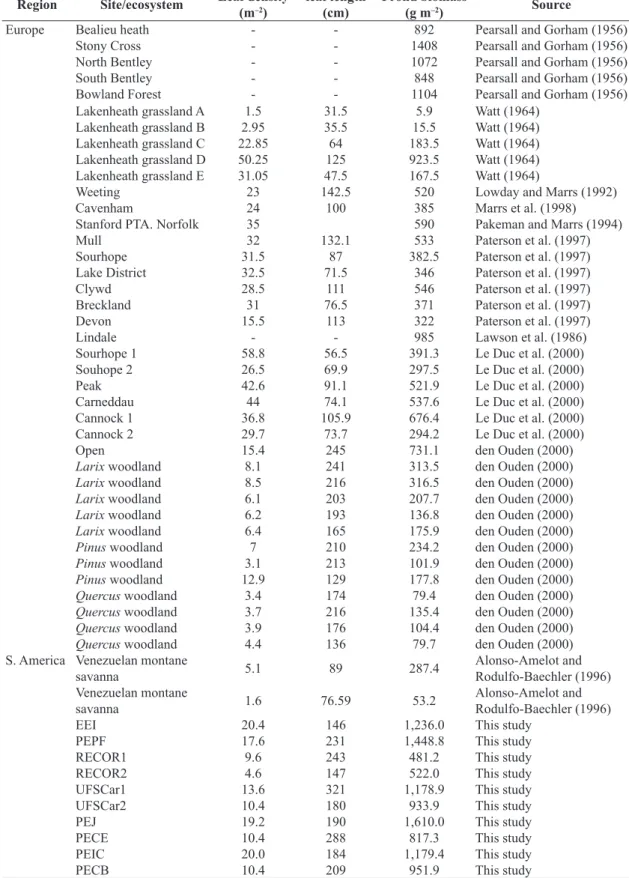
Table 2. Comparative dataset on Pteridium biomass allocation derived from the literature from Europe, South America and this study.
Region Site/ecosystem Leaf density (m–2)
leaf length (cm)
Frond biomass
(g m–2) Source
Europe Bealieu heath - - 892 Pearsall and Gorham (1956)
Stony Cross - - 1408 Pearsall and Gorham (1956)
North Bentley - - 1072 Pearsall and Gorham (1956)
South Bentley - - 848 Pearsall and Gorham (1956)
Bowland Forest - - 1104 Pearsall and Gorham (1956)
Lakenheath grassland A 1.5 31.5 5.9 Watt (1964) Lakenheath grassland B 2.95 35.5 15.5 Watt (1964) Lakenheath grassland C 22.85 64 183.5 Watt (1964) Lakenheath grassland D 50.25 125 923.5 Watt (1964) Lakenheath grassland E 31.05 47.5 167.5 Watt (1964)
Weeting 23 142.5 520 Lowday and Marrs (1992)
Cavenham 24 100 385 Marrs et al. (1998)
Stanford PTA. Norfolk 35 590 Pakeman and Marrs (1994)
Mull 32 132.1 533 Paterson et al. (1997)
Sourhope 31.5 87 382.5 Paterson et al. (1997)
Lake District 32.5 71.5 346 Paterson et al. (1997)
Clywd 28.5 111 546 Paterson et al. (1997)
Breckland 31 76.5 371 Paterson et al. (1997)
Devon 15.5 113 322 Paterson et al. (1997)
Lindale - - 985 Lawson et al. (1986)
Sourhope 1 58.8 56.5 391.3 Le Duc et al. (2000)
Souhope 2 26.5 69.9 297.5 Le Duc et al. (2000)
Peak 42.6 91.1 521.9 Le Duc et al. (2000)
Carneddau 44 74.1 537.6 Le Duc et al. (2000)
Cannock 1 36.8 105.9 676.4 Le Duc et al. (2000)
Cannock 2 29.7 73.7 294.2 Le Duc et al. (2000)
Open 15.4 245 731.1 den Ouden (2000)
Larix woodland 8.1 241 313.5 den Ouden (2000) Larix woodland 8.5 216 316.5 den Ouden (2000) Larix woodland 6.1 203 207.7 den Ouden (2000) Larix woodland 6.2 193 136.8 den Ouden (2000) Larix woodland 6.4 165 175.9 den Ouden (2000)
Pinus woodland 7 210 234.2 den Ouden (2000)
Pinus woodland 3.1 213 101.9 den Ouden (2000) Pinus woodland 12.9 129 177.8 den Ouden (2000) Quercus woodland 3.4 174 79.4 den Ouden (2000) Quercus woodland 3.7 216 135.4 den Ouden (2000) Quercus woodland 3.9 176 104.4 den Ouden (2000) Quercus woodland 4.4 136 79.7 den Ouden (2000) S. America Venezuelan montane
savanna 5.1 89 287.4
Alonso-Amelot and
Rodulfo-Baechler (1996)
Venezuelan montane
savanna 1.6 76.59 53.2
Alonso-Amelot and
Rodulfo-Baechler (1996)
EEI 20.4 146 1,236.0 This study
PEPF 17.6 231 1,448.8 This study
RECOR1 9.6 243 481.2 This study
RECOR2 4.6 147 522.0 This study
UFSCar1 13.6 321 1,178.9 This study
UFSCar2 10.4 180 933.9 This study
PEJ 19.2 190 1,610.0 This study
PECE 10.4 288 817.3 This study
PEIC 20.0 184 1,179.4 This study
3.1 Biomass allocation in Brazilian P. esculentum subsp. arachnoideum
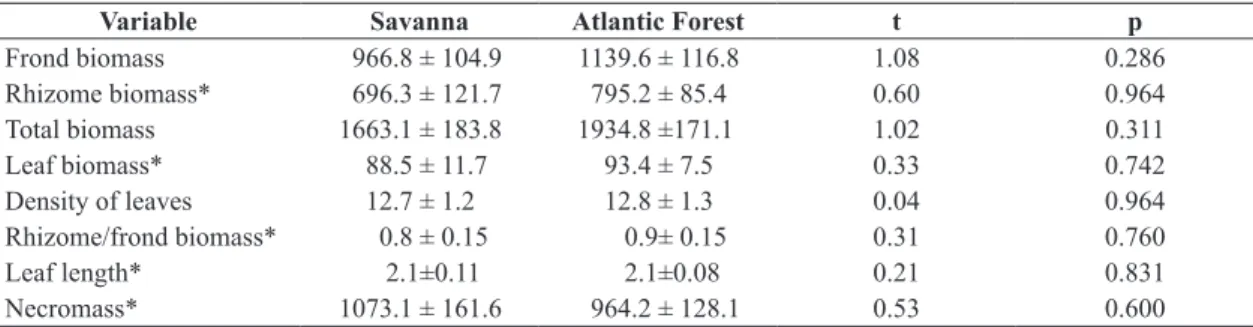
There were no significant differences between the
ecosystems for all variables: frond biomass, rhizome biomass, necromass, frond density, and frond length (see Table 3). Frond biomass was very variable in the Savanna and in the Atlantic Rain Forest, ranging from 114-2353 g m–2 and
from 284-1912g m–2, respectively. A similar pattern was
found for necromass (Savanna = 0-2970 g m–2; Atlantic
Rain Forest = 213-2264 g m–2). Leaf density and rhizome
biomass, however, did not show as extreme a pattern as these other two variables. Savanna still had the greatest variability (1-28 leaves m–2) overlapping the ranges of
the Atlantic Rain Forest (4-20 leaves m–2), and rhizome
biomass ranging from 23.5 to 2757 g m–2 in the Savanna
and from 219 to 1477 g m–2 in the Atlantic Rain Forest.
Length of expanded leaf ranged from 0.5 to 4.2 m in the Savanna, and from 1 to 4.1 m in the Atlantic Rain Forest.
When all data were combined, significant positive relationships were found between: (1) frond and rhizome biomass and (2) frond biomass and necromass, while no
relationship was observed between the rhizome/frond biomass ratio and necromass (see Table 4). Additionally, considering the ecosystem types, positive relationships
were significant only for the Savanna (see Figure 1, Table 4).
There were no significant ecosystems differences in the slopes of the relationship between (1) rhizome and frond biomass (LR=3.050, p=0.080), (2) rhizome biomass and necromass (LR=1.056, p=0.304), and (3) leaf density and frond biomass (LR=0.749, p=0.387). On the other hand, there were significant differences in the slopes of the relationships between (1) frond biomass and necromass (LR=6.651, p=0.010), albeit weakly, (2) rhizome/frond biomass and necromass (LR=7.900, p=0.005) and (3) frond biomass and total biomass (LR=4.186, p=0.041).
between South-America and Europe
A comparison of absolute values (see Table 2) showed that frond density is, in general, greater in Europe than in
South America (t-test, t= 2.55, p= 0.015). However, leaf length (t= 2.82, p= 0.007), frond biomass (t= 4.0, p= 0.002), and leaf biomass (t= 8.04, p< 0.001), calculated by dividing
the total frond biomass (g m–2) by leaf density (leaves m–2),
were significantly greater in the South American samples.
The range of frond lengths from both regions showed substantial overlap, but the European fronds were in the lower part of the range and the South American fronds in the upper part.
The relationship between European variables indicated
a negative significant relationship between (1) leaf density and leaf length and (2) leaf length and leaf biomass, whereas
a positive relationship was detected between leaf density and leaf biomass (see Figure 2 and Table 4). We observed
significant relationship for data from South America only between density and leaf biomass (LR=11.903, p=0.0006). There was no significant difference in the slope for the relationship between (1) leaf length and leaf biomass (LR= 2.318, p= 0.128) and (2), leaf density and leaf length (LR=0.256, p=0.613) (see Figure 2).
4. Discussion
4.1. Biomass allocation
In Brazil Pteridium esculentum subsp. arachnoideumis is found in both Atlantic Forest and Savanna, suggesting that this species is able to colonize contrasting ecosystems
habitat. There were no significant differences in frond
biomass, frond length, frond density and litter biomass,
but the significant differences found on the variances,
in general greater in the Savanna, indicated differences between study sites rather than ecosystems. Because of its large area, Savanna includes a high diversity of soil types, climate and vegetation types (Silva et al., 2006). We could expect such variation as a function of these environmental heterogeneity.
Table 3. Biomass allocation in P. esculentum subsp. arachnoideum stands of different Brazilian ecosystems. Mean ± SE, t-values and significance (p) values are presented;
Variable Savanna Atlantic Forest t p
Frond biomass 966.8 ± 104.9 1139.6 ± 116.8 1.08 0.286
Rhizome biomass* 696.3 ± 121.7 795.2 ± 85.4 0.60 0.964
Total biomass 1663.1 ± 183.8 1934.8 ±171.1 1.02 0.311
Leaf biomass* 88.5 ± 11.7 93.4 ± 7.5 0.33 0.742
Density of leaves 12.7 ± 1.2 12.8 ± 1.3 0.04 0.964
Rhizome/frond biomass* 0.8 ± 0.15 0.9± 0.15 0.31 0.760
Leaf length* 2.1±0.11 2.1±0.08 0.21 0.831
Necromass* 1073.1 ± 161.6 964.2 ± 128.1 0.53 0.600
*indicates unequal variances according to Levene’s test (p<0.05). Biomass and necromass are given in g/m2, density
as the number of individual fronds/ m2 and mean frond length in m. Fronds were considered as the whole group of
Biomass allocation of Pteridium
Figure 1. Relationships between production-related variables from Pteridium esculentum subsp. arachnoideum in all the points of sampling in Atlantic forest and Savanna ecosystems in Brazil: (a) Frond biomass vs Rhizome biomass, (b) Rhizome/ frond biomass ratio vs Necromass, and (c) Frond biomass vs Necromass. All data were ln transformed. Key: Savanna = + and continuous line; Atlantic Forest= *and dashed line. Regression equations are shown in Table 4a. Frond biomass, rhizome biomass and necromass are given in g per m2.
Table 4. Parameters of the reduced major axis regression estimated for data illustrated in (a) Figure 1 and (b) Figure 2. Spearman’s correlation coeficients (rs) and significance (p) are presented.
(a) Number of samples was 30 for Savanna and 20 for the Atlantic Forest, all analyses were performed using ln transformed data.
Variables Ecosystem a b R2
adjusted rs p
Frond biomass vs Rhizome biomass
Combined 0.65 1.18 0.32 0.437 0.002
Savanna 0.60 3.05 0.38 0.614 <0.001
Atlantic Forest 1.00 0.38 0.09 0.308 0.186
Rhizome biomass/Frond biomass vs Necromass
Combined 0.77 0.95 0.17 0.227 0.121
Savanna 0.93 –6.89 0.334 0.578 0.021
Atlantic Forest 1.01 –7.15 0.137 0.370 0.108
Frond biomass vs Necromass
Combined 0.97 –3.05 0.27 0.548 <0.001
Savanna 0.72 1.80 0.33 0.618 <0.001
Atlantic Forest –0.85 12.61 0.04 –0.20 0.389
(b) Number of samples was 32 for Europe and 12 for the South America, all analyses were performed using ln transformed data.
Variables Continent a b R2
adjusted rs P
Leaf density vs Leaf length Europe –0.54 6.16 0.08 –0.2758 0.12653
S. America 0.57 3.88 0.459 0.677 0.0155
Leaf density vs Leaf biomass Europe 1.04 2.70 0.661 0.813 0.0001
S. America 1.26 3.65 0.898 0.974 0.0001
Leaf length vs Leaf biomass Europe 1.89 –3.51 0.10 0.321 0.073
S. America 2.21 –4.93 0.54 0.735 0.006
It has been suggested that the development of a complex rhizome system requires a substantial investment and with this comes a considerable measurable risk (de Kroon and
van Groenendael, 1997). Our results suggest that a common
rhizome mass is able to support a large variation in frond
Environmental heterogeneity in tropical ecosystems, in terms of canopy coverage, may be a factor determining the above-ground biomass variation, considering that individual ramets have to struggle for light, to maintain the productivity of the overall clone (Huber and Hutchings, 1997).
In terms of vegetation dynamics two important results
were obtained. The first was the negative relationship
between frond and litter biomass found to Atlantic Forest data, indicating that the dense litter layer developing under the P. esculentum subsp. arachnoideum may be harmful
for its own regeneration, as first suggested by Watt (1945, 1947, 1976) as well as for other species (Marrs, 1988; Marrs et al., 2007). The second was the dense canopy of P. esculentum subsp. arachnoideum fronds which is also an important factor contributing to its ability to become a dominant species and being able to prevent the colonization by other species (Marrs, 1988; Marrs and Pakeman, 1995; Ghorbani et al., 2006). Both dense canopy cover and depth litter layer can also get one further problem with Pteridium colonization: the impoverishment of the soil seed bank (Ghorbani et al, 2006). A reduction in species present in the seed bank of Atlantic Forest was found in a previous
study (Silva and Silva Matos, 2006).
Another direct consequence of such a deep litter layer
(necromass) is that the risk and intensity of fire is increased in both ecosystems. Normally, natural fires occur in the
Savanna every two to three years (Hoffmann, 1996), but
non-natural, human-induced fires are increasingly common albeit
unpredictable including in the moist Atlantic Forest (Silva Matos et al., 2002, 2005). Unfortunately, the relationship of P. esculentum subsp. arachnoideum and fire in the Savanna is still unclear, but we might hypothesize that a positive
feedback of fire on P. esculentum subsp. arachnoideum
will develop: fire keeps the woody vegetation under
control which allows P. esculentum subsp. arachnoideum to spread increasing its biomass, which in turn increases
the risk, intensity and frequency of fire events, leading
to the decrease in the biological diversity changing the structure of the community (Hoffmann and Moreira, 2002; Pivello, 2006).
These results are worrying because these are both ecosystem types of considerable international conservation importance (Myers et al., 2000) and the P. esculentum subsp. arachnoideum here exhibits a very large range of allocation responses, implying considerable plasticity, and hence must be viewed as a major potential future invasive threat.
4.2. Comparison of biomass allocation between European and South American Pteridium
Different biomass allocation strategies were detected between European and South American Pteridium. In Europe, the frond life-cycle is expected to last at most seven months in any given annual season because all fronds are killed by winter frost (Pakeman, et al., 1994; Pakeman and Marrs, 1996; Pottier, et al., 2005; Marrs and Watt, 2006), and there should therefore be less investment in fronds, in terms of biomass/length and biomass/density. In tropical South America, by the other hand, we could expect an increase of leaf biomass after the maximum length is attained as leaves live longer than in Europe. However, the higher slope observed in the leaf density x leaf biomass relationship for the South America data, indicates that the increase of fronds causes a negative effect on the biomass allocation of P. arachnoideum. According to Weiner (2004) environmental selection pressures drive changes on plant resource allocation. So, in a large-scale comparison, between Brazil and Europe, we can assume that differences on the biomass allocation patterns resulted from different climate pressures and speciation, while in the comparison of Brazilian ecosystems such pattern resulted from small-scale environmental heterogeneity, as discussed earlier. This broad plasticity might have allowed Pteridium to develop as an invasive genus in diverse bio-climatic regions.
Biomass allocation of Pteridium
For the conservation of endangered ecosystems Pteridium poses substantive actual and potential threats (Pakeman and Marrs, 1992). Its wide geographic range coupled with the environmental plasticity demonstrated here allows it to succeed in a wide range of habitats, and also makes it
difficult to predict its invasiveness (Goodwin et al., 1999). As the Pteridium patch increases mainly through rhizome expansion (Marrs and Watt, 2006), it should be possible to control it by manipulating resource allocation between the rhizomes and fronds. In Europe, frond removal by cutting and other mechanical treatments is used routinely to control Pteridium. A similar approach should be even more effective in South America where there is a greater proportion of the resource allocated to the production of a large frond biomass. However, this strategy needs to be tested experimentally.
Acknowledgements- We thank S. Matos, A. Matos, M. Matos, A. Muller, P. Dodonov, A. de Paula, T. Sampaio e Silva, I. Silva, R. Miatto, C. Zanelli and L. Joaquim for
help with field work, CNPq and FAPESP for scholarships (CNPq, R.O. Xavier) and (FAPESP, D.M. Silva Matos
2007/05658-3; F.C.S. Tiberio, 2007/07976-2, and FAPESP
for part funding this project (2006/61570-5).
References
ALONSO-AMELOT, ME. and RODULFO-BAECHLER, S., 1996. Comparative spatial distribution, size, biomass and growth rate of two varieties of bracken fern (Pteridium aquilinum L. Kuhn) in a neotropical montane habitat.Vegetatio, vol. 125, p. 137-147. http://dx.doi.org/10.1007/BF00044647
ALONSO-AMELOT, ME. and OLIVEROS-BASTIDAS, A., 2005. Kinetics of the Natural Evolution of Hydrogen Cyanide in Plants in Neotropical Pteridium arachnoideum and its Ecological Significance. Journal of Chemical Ecology, vol. 31, p. 315-331. PMid:15856786. http://dx.doi.org/10.1007/s10886-005-1343-z BRADSHAW, AD., 1963. The analysis of evolutionary process involved in the divergence of plant population. Proceedings of the International Congress of Genetics, vol. 1, p. 143. CARNIER, E., 1991. Resource capture, biomass allocation and growth in herbaceous plants. Trends in Ecology and Evolution, vol. 6, p. 126-131. http://dx.doi.org/10.1016/0169-5347(91)90091-B DE KROON, H. and VAN GROENENDAEL, JV., 1997. The ecology and evolution of clonal plants. Leiden: Backhuys Publishers. DEN OUDEN, J., 2000. The role of bracken (Pteridium aquilinum) in forest dynamics. Netherlands: Wageningen University. PhD thesis. FAN, JW., WANG, K., HARRIS, W., ZHONG, HP., HU, ZM., HAN, B., ZHANG, WY. and WANG, JB., 2009. Allocation of vegetation biomass across a climate-related gradient in the grassland of Inner Mongolia. Journal of Arid Environments, vol. 73, p. 521-528. http://dx.doi.org/10.1016/j.jaridenv.2008.12.004 FRANÇA, TN., TKARNIA, CH. and PEIXOTO, PV., 2002. Enfermidades determinadas pelo princípio radiométrico de Pteridium aquilinum (Polypodiaceae).Pesquisa Veterinária Brasileira, vol. 22, p. 85-96.
Fundação SOS Mata Atlântica and Instituto Nacional de Pesquisas Espaciais - INPE, 2009. Atlas dos remanescentes florestais da Mata Atlântica período 2005-2008. São Paulo: Fundação SOS.
GOODWIN, BJ., MCALLISTER, AJ. and FAHRIG, L., 1999. Predicting invasiveness of plant species based on biological information. Conservation Biology, vol. 13, p. 422-426. http:// dx.doi.org/10.1046/j.1523-1739.1999.013002422.x
GHORBANI, BJ., LE DUC, MG., MCALLISTER, HA., PAKEMAN, RJ. and MARRS, RH., 2006. Effects of the litter layer of Pteridium aquilinum on seed banks under experimental restoration. Applied Vegetation Science, vol. 9, p. 127-136. http://dx.doi.org/10.1658/1402-2001(2006)9[127:EOTLLO]2.0.CO;2
HARTIG, K. and BECK, E., 2003. The bracken fern (Pteridium arachnoideum (Kaulf.) Maxon) dilemma in the Andes of Southern Ecuador. Ecotropica, vol. 9, p. 3-13.
HAMMER, Ø., HARPER, D A.T. and RYAN, P.D., 2001. PAST: Paleontological Statistics Software Package for Education and Data Analysis. Palaeontologia Electronica, vol. 4, 9 p. HOFFMANN, WA., 1996. The effects of fire and cover on seedling establishment in a neotropical savanna. Journal of Ecology, vol. 84, p. 383-393. http://dx.doi.org/10.2307/2261200
HOFFMANN, WA. and MOREIRA, AG., 2002. The role of fire in population dynamics of woody plants. In OLIVEIRA, P.S. and MARQUIS, RJ. (Eds.). The Cerrados of Brazil- Ecology and Natural Hystory of a Neotropical Savanna. New York: Columbia University Press. p. 159-177.
HUBER, H. and HUTCHINGS, MJ., 1997. Differential response to shading in orthotropic and plagiotropic shoots of the clonal herb Glechoma hirsuta.Oecologia, vol. 112, p. 465-491. http:// dx.doi.org/10.1007/s004420050336
JIMÉNEZ-AMBRIZ, G., PETIT, C., BOURRIÉ, I., DUBOIS, S., OLIVIERI, I. and RONCE, O., 2007. Life history variation in the heavy metal tolerant plant Thlaspi caerulescens growing in a network of contaminated and noncontaminated sites in southern France: role of gene flow, selection and phenotypic plasticity. New Phytologist, vol. 173, p. 199-215. PMid:17176406. http:// dx.doi.org/10.1111/j.1469-8137.2006.01923.x
LAWSON, GJ., CALLAGHAN, TV. and SCOTT, R., 1986. Bracken as an energy resource. In Smith, RT. and Taylor, JA. (Ed.). Bracken: ecology, land use and control technology. Carnforth: Parthenon. p. 239-248.
relevance for conservation management. Journal of Environmental Management, vol. 26, p. 127149.
MARRS, RH. and PAKEMAN, RJ., 1995. Bracken invasion: lessons from the past and prospects for the future. In THOMPSON DBA., HESTER AJ. and USHER MB. (Ed.). Heaths and moorlands: cultural landscape. Edinburgh: HMSO. 180-193.
MARRS, RH., JOHNSON, SW. and LE DUC, MG., 1998. Control of bracken and restoration of heathland. VII. Effects of bracken control treatments on the rhizome and its relationship with frond performance. Journal of Applied Ecology, vol. 35, p. 748-757. MARRS, RH. and WATT, AS., 2006. Biological Flora of the British Isles: Pteridium aquilinum (L.) Kuhn.Journal of Ecology, vol. 94, p. 1272-1321. http://dx.doi.org/10.1111/j.1365-2745.2006.01177.x MARRS, RH., GALTRESS, K., TONG, C., BLACKBIRD, SJ., HEYES, TJ., PAKEMAN, RJ. and LE DUC, MG., 2007. Conflicts between competing conservation goals, biodiversity or ecosystem services: quantification of element losses and species recruitment using a moorland-bracken model system. Journal of Environmental Management, vol. 85, p. 1034-1047. PMid:17207569. http:// dx.doi.org/10.1016/j.jenvman.2006.11.011
MCCARTHY, MC. and ENQUIST, BJ., 2007. Consistency between an allometric approach and optimal partitioning theory in global patterns of plant biomass allocation. Functional Ecology, vol. 21, p. 713-720. http://dx.doi.org/10.1111/j.1365-2435.2007.01276.x MCCONNAUGHAY, KD.M. and COLEMAN, JS., 1999. Biomass allocation in plants: ontogeny or optimally? A test along three resource gradients. Ecology, vol. 80, p. 2581-2593. http://dx.doi. org/10.1890/0012-9658(1999)080[2581:BAIPOO]2.0.CO;2 MIATTO, RC., SILVA, IA., SILVA-MATOS, DM. and MARRS, RH., 2011. Woody vegetation structure of Brazilian Cerrado invaded by Pteridium arachnoideum (Kaulf.) Maxon (Dennstaedtiaceae). Flora - Morphology, Distribution,Functional Ecology of Plants, vol. 206, p. 757-762. http://dx.doi.org/10.1016/j.flora.2010.12.001 MINER, BG., SULTAN, SE., MORGAN, SG., PADILHA, DK. and RELYA, RA., 2005 Ecological consequences of phenotypic plasticity. Trends in Ecology and Evolution, vol. 20, p. 685-692. PMid:16701458. http://dx.doi.org/10.1016/j.tree.2005.08.002 MULLER, I., SCHMID, B. and WEINER, J., 2000. The effectof nutrient availability on biomass allocation patterns in 27 species of herbaceous plants. Perspectives in Plant Ecology, Evolution and Systematics, vol. 3, p. 115-127. http://dx.doi.org/10.1078/1433-8319-00007
MYERS, N., MITTERMEIER, RA., MITTERMEIER, CG., FONSECA, G A.B. and JENNIFER, K., 2000. Hotspots Biodiversity hotspots for conservation priorities. Nature, vol. 403, p. 853-858. PMid:10706275. http://dx.doi.org/10.1038/35002501
Nature Conservancy, 2010. Nearly one in every four plant species on Earth can be found in Brazil. Available from: <http://www. nature.org/wherewework/southamerica/brazil/work/art5082. htmll>. Access in: 10 Feb 2010.
NIKLAS, KJ., 2005. Modelling Below- and Above-ground Biomass for Non-woody and Woody Plants. Annals of Botany, vol. 95, p. 315-321. PMid:15546927. http://dx.doi.org/10.1093/aob/mci028 PAKEMAN, RJ. and MARRS, RH., 1992. The conservation of bracken, Pteridium aquilinum (L.) Kuhn) - dominated communities in the UK, and an assessment of the ecological impact of bracken expansion or its removal. Biological Conservation, vol. 62, p. 101-114. http://dx.doi.org/10.1016/0006-3207(92)90931-C
of bracken (Pteridium aquilinum) in Britain.Journal of Applied Ecology, vol. 33, p. 561-575. http://dx.doi.org/10.2307/2404985 PAKEMAN, RJ., MARRS, RH. and JACOB, PJ., 1994. A model of bracken (Pteridium aquilinum) growth and the effects of control strategies and changing climate. Journal of Applied Ecology, vol. 31, p. 145154.
PAKEMAN, RJ. and MARRS, RH., 1994. The effects of control on the biomass, carbohydrate content and bud reserves of bracken (Pteridium aquilinum (L.) Kuhn), and an evaluation of a bracken growth model. Annals of Applied Biology, vol 124, no 3, p. 479-493. http://dx.doi.org/10.1111/j.1744-7348.1994.tb04153.x PATERSON, S., PAKEMAN, RJ. and MARRS, RH., 1997. Evaluation of a bracken (Pteridium aquilinum (L.) Kuhn) growth model in predicting the effects of control strategies across a range of climatic zones in Great Britain. Annals of Applied Biology, vol. 130, p. 305-318. http://dx.doi.org/10.1111/j.1744-7348.1997. tb06834.x
PEARSALL, WH. and GORHAM, E., 1956. Production Ecology I. Standing Crops of Natural Vegetation. Oikos, vol. 7, p. 193-201. PEREIRA, AC. and GAMA, VF., 2010. Anthropization on the Cerrado biome in the Brazilian Uruçuí-Una Ecological Station estimated from orbital images. Brazilian Journal of Biology, vol. 70, p. 969-976. PMid:21180901. http://dx.doi.org/10.1590/ S1519-69842010000500008
PIVELLO, VR., 2006. Fire management for biological conservation in the Brazilian cerrado. In MISTRY, J. and BERARDI, A. (Eds.). Savannas and Dry Forests - Linking People with Nature. Ashgate, Hants. p. 129-154.
POTTIER, J., PAKEMAN, RJ., LE DUC, MG. and MARRS, RH., 2005. Validation of a model for predicting Pteridium aquilinum (L.) Kuhn production and control across the UK BCPC. International Congress - Crop Science and Technology, vol. 200, p. 987-994. R Development Core Team, 2004. R: A Language and Environment for Statistical Computing. Vienna: R Foundation for Statistical computing. Available from: <http://www.r-project.org>. REJMANEK, M., 2011. Invasiveness. In SIMBERLOFF, D. and REJMÁNEK, M. (Eds.). Encyclopedia of Biological Invasions. Berkeley and Los Angeles: University of California Press. RICHARDS, CL., BOSSDORF, O., MUTH, NZ., GUREVITCH, J. and PIGLIUCCI, M., 2006. Jack of all trades, master of some? On the role of fhenotypic plasticity in plant invasions. Ecology Letters, vol. 9, p. 981-993. PMid:16913942. http://dx.doi. org/10.1111/j.1461-0248.2006.00950.x
SHIPLEY, B. and MEZIANE, D., 2002. The balanced-growth hypothesis and the allometry of leaf and root biomass allocation. Functional Ecology, vol. 16, p. 326-331. http://dx.doi.org/10.1046/ j.1365-2435.2002.00626.x
SILVA, JF., FARIÑAS, MR., FELFILI, JM. and KLINK, CA., 2006. Spatial heterogeneity, land use and conservation in the cerrado region of Brazil. Journal of Biogeography, vol. 33, p. 536-548. http://dx.doi.org/10.1111/j.1365-2699.2005.01422.x SILVA MATOS, DM. and BELINATO, TA., 2010. Interference of Pteridium arachnoideum (Kaulf.) Maxon. (Dennstaedtiaceae) on the establishment of rainforest trees. Brazilian Journal of Biology, vol. 70, no. 2, p. 311-316. PMid:20549062. http://dx.doi. org/10.1590/S1519-69842010000200012
Biomass allocation of Pteridium
Cecropia glazioui and Trema micrantha in a lowland Brazilian Atlantic Forest. Revista de Biologia Tropical, vol. 53, p. 1-4. SILVA MATOS, DM., SANTOS, CJ. and CHEVALIER, DR., 2002. Fire and restoration of the largest urban forest of the world in Rio de Janeiro City, Brazil. Urban Ecosystem, vol. 6, p. 151-161. http://dx.doi.org/10.1023/A:1026164427792
SILVA, USR. and SILVA MATOS, D.M., 2006. The invasion of Pteridium aquilinum and the impoverishment of the seed bank in fire prone areas of Brazilian Atlantic Forest. Biodiversity and Conservation, vol. 15, p. 3035-3043. http://dx.doi.org/10.1007/ s10531-005-4877-z
STUEFER, JF., VAN HULZEN, JB. and DURING, HJ., 2002. A genotypic trade-off between the number and size of clonal offspring in the stoloniferous herb Potentilla reptans.Journal of Evolutionary Biology, vol. 15, p. 880-884. http://dx.doi. org/10.1046/j.1420-9101.2002.00435.x
THOMSON, JA., 2012. Taxonomic Status of Diploid Southern Hemisphere Brackens (Pteridium: Dennstaedtiaceae). Telopea, vol. 14, p. 43-48. http://dx.doi.org/10.7751/telopea2012007 THOMSON, JA. and ALONSO-AMELOT, ME., 2002. Clarification of the taxonomic status and relationships of Pteridium caudatum (Dennstaedtiaceae) in Central and South America.Botanical
Journal of the Linnean Society, vol. 140, p. 237-248. http://dx.doi. org/10.1046/j.1095-8339.2002.00089.x
WATT, AS., 1945. Contributions to the ecology of bracken (Pteridium aquilinum) III. Frond types and the make-up of the population. New Phytologist, vol. 44, p. 156-178 http://dx.doi. org/10.1111/j.1469-8137.1945.tb05029.x
-, 1947. Pattern and process in the plant community. Journal of Ecology, vol. 35, p. 1-22. http://dx.doi.org/10.2307/2256497 -, 1964. Some factors affecting bracken in Breackland. Journal of Ecology, vol. 52, p. 63-77. http://dx.doi.org/10.2307/2257783 -, 1976. The ecological status of bracken. Botanical Journal of the Linnean Society, vol. 73, p. 217-239. http://dx.doi. org/10.1111/j.1095-8339.1976.tb02023.x