A
RTIGOO
RIGINAL Revista Brasileira de FisioterapiaEccentric training for shoulder abductors
improves pain, function and isokinetic
performance in subjects with shoulder
impingement syndrome – a case series
Treino excêntrico para abdutores do ombro melhora dor, função e desempenho
isocinético em sujeitos com síndrome do impacto – série de casos
Paula R. Camargo1,2, Mariana A. Avila2, Francisco Alburquerque-Sendín3, Naoe A. Asso2, Larissa H. Hashimoto2, Tania F. Salvini2
Abstract
Background: Conservative treatments have been proposed for people with shoulder impingement syndrome (SIS), such as strengthening of the rotator cuff and scapular muscles and stretching of the soft tissues of the shoulder. However, there is a lack of studies analyzing the effectiveness of eccentric training in the treatment of SIS. Objectives: To evaluate the effects of eccentric training for shoulder abductors on pain, function, and isokinetic performance during concentric and eccentric abduction of the shoulder in subjects with SIS. Methods: Twenty subjects (7 females, 34.2 SD 10.2 years, 1.7 SD 0.1 m, 78.0 SD 16.3 kg) with unilateral SIS completed the study protocol. Bilateral isokinetic eccentric training at 60o/s for shoulder abductors was performed for six consecutive weeks, twice a week,
on alternate days. For each training day, three sets of 10 repetitions were performed with a 3-minute rest period between the sets for each side. The range of motion trained was 60° (ranging from 80° to 20°). The Disabilities of the Arm, Shoulder and Hand (DASH) questionnaire was used to evaluate functional status and symptoms of the upper limbs. Peak torque, total work and acceleration time were measured during concentric and eccentric abduction of the arm at 60o/s and 180o/s using an isokinetic dynamometer. Results:
DASH scores, peak torque, total work and acceleration time improved (p<0.05) after the period of intervention. Conclusions: This study suggests that isokinetic eccentric training for shoulder abductors improves physical function of the upper limbs in subjects with SIS. Article registered in Clinicaltrials.gov under number NCT01090271.
Keywords: physical therapy; supraspinatus; subacromial; DASH.
Resumo
Contextualização: Tratamentos conservadores têm sido propostos para pessoas com síndrome do impacto (SI) do ombro, como fortalecimento do manguito rotador e dos músculos escapulares e alongamento dos tecidos moles do ombro. No entanto, são escassos os estudos que analisaram a eficácia do treinamento excêntrico no tratamento da SI. Objetivos: Avaliar os efeitos do treinamento excêntrico para abdutores do ombro na dor, função e desempenho isocinético durante a abdução concêntrica e excêntrica do ombro em indivíduos com SI. Métodos: Vinte indivíduos (sete mulheres, 34,2 DP 10,2 anos, 1,7 DP 0,1 m, 78,0 DP 16,3 kg) com SI unilateral completaram o protocolo do estudo. Realizou-se treinamento isocinético excêntrico bilateral a 60º/s para abdutores do ombro durante seis semanas consecutivas, duas vezes por semana, em dias alternados. Para cada dia de treinamento, foram realizadas três séries de dez repetições, com um período de descanso de 3 minutos entre as séries para cada lado. A amplitude de movimento treinada foi de 60° (de 80° a 20°). O questionário Disabilities of the Arm, Shoulder and Hand (DASH) foi utilizado para avaliar a função e os sintomas dos membros superiores. O pico de torque, o trabalho total e o tempo de aceleração foram avaliados durante a abdução concêntrica e excêntrica do braço a 60º/s e 180º/s por meio de um dinamômetro isocinético. Resultados: As pontuações do DASH, o pico de torque, o trabalho total e o tempo de aceleração melhoraram (p<0,05) após o período de intervenção. Conclusões: Este estudo sugere que o treinamento isocinético excêntrico para abdutores do ombro melhora a função física dos membros superiores em indivíduos com SI.
Artigo registrado no Clinicaltrials.gov sob o número NCT01090271.
Palavras-chave: fisioterapia; supraespinal; subacromial; DASH.
Received: 09/26/2011 – Revised: 09/28/2011 – Accepted: 09/30/2011
1 Physical Therapy Graduation Program, Universidade Metodista de Piracicaba (UNIMEP), Piracicaba, SP, Brazil 2 Physical Therapy Department, Universidade Federal de São Carlos (UFSCar), São Carlos, SP, Brazil 3 Physical Therapy Department, University of Salamanca, Salamanca, Spain
Eccentric training for shoulder impingement syndrome
Introduction
Shoulder impingement syndrome (SIS) is one of the most common causes of shoulder pain1. he pain occurs because of compression and mechanical abrasion of the subacromial structures against the anterior undersurface of the acromion and coracoacromial ligament, especially during elevation of the arm2. he supraspinatus tendon is usually the most af-fected structure due to its location just under the coracoacro-mial ligament3. Apoptosis in this tendon has already been described in subjects who were treated with subacromial decompression4.
Conservative treatments have been proposed for people with SIS5-9. The literature supports the strengthening of the rotator cuff and scapular muscles and the stretching of the soft tissue of the shoulder6,9,10. Good clinical results of eccentric training for the supraspinatus and deltoid muscles11 and for the rotator cuff12 were demonstrated in subjects with painful SIS. Other studies have also shown successful results with eccentric training in different types of tendinopathies13-16.
Eccentric training is very eicient for muscular and tendon strengthening17,18. Also, this type of training may induce remod-eling of the tendon18 and changes in neovessels19. Although the studies related to eccentric training in subjects with SIS have shown interesting results, more investigations are warranted to evaluate the efectiveness of eccentric training in the treat-ment of SIS.
he aim of this study was to evaluate the efects of eccentric training for shoulder abductors on pain, physical functional status and isokinetic performance during concentric and ec-centric abduction of the shoulder in subjects with SIS. It was hypothesized that eccentric training for shoulder abductors would improve pain, function and isokinetic parameters in these subjects.
Methods
Participants
The participants of this study were recruited from a physical therapy waiting list at the clinic at the Universi-dade Federal de São Carlos (UFSCar), São Carlos, SP, Brazil and also from flyer advertisements at the University prem-ises and orthopedic clinics. The participants with shoul-der pain were first evaluated and diagnosed with SIS by a physical therapist and then the diagnosis was confirmed by an orthopedic physician. The clinical diagnosis of SIS was
made following the clinical criteria of reproduction of pain by at least 3 of the tests: Neer2, Hawkins20, Jobe21, Speed22 and Gerber23. They also had to present painful range of mo-tion during active shoulder elevamo-tion. Ultrasonography for both shoulders was performed by an experienced radiolo-gist and used to check tendinopathy of supraspinatus and rule out progression of impingement to rotator cuff or long head biceps tears. Ultrasonography improves the differen-tial diagnosis for shoulder pain as it has high sensitivity (98.1%) for identifying rotator cuff tears24. Other studies also used ultrasonography in the evaluation of patients with SIS6,11,25.
Exclusion criteria included pregnancy, torn rotator cuff or long head biceps tendons, ligamentous laxity based on positive Sulcus test26 or a positive Apprehension test27,28, previous shoulder or neck surgery, hooked acromion, sys-temic illnesses, corticosteroid injection 3 months prior to evaluation, and physical therapy treatment 6 months prior to evaluation.
Thirty-seven participants (22 males) with shoulder pain were initially recruited and evaluated. Twelve of them did not meet the inclusion criteria. From the remaining 25 par-ticipants, five did not complete the period of the study be-cause of work scheduling or personal problems. Therefore, 20 participants (7 women, 34.2 SD 10.2 years (range 20-51 years), 1.7 SD 0.1 m (range 1.60–1.96 m), 78.0 SD 16.3 kg (range 55-120 kg, body mass index 25.87 SD 3.29 kg/m2 (range 20.38–31.24 kg/m2)) with unilateral SIS completed the study. The duration of their shoulder pain was 2.8 SD 2.9 years (range from 5 to 120 months) based on self-report. All participants were still able to work and perform their daily activities despite of pain. None of them was on sick leave. The involved side was the dominant side for 12 participants.
All participants gave their written informed consent to par-ticipate in this study, which was approved by the local Ethical Committee of the UFSCar (Approval 214/2007) and conducted according to the Helsinki Statement. his study was registered on Clinicaltrials.gov (NCT01090271).
Evaluations
Two baseline evaluations (evaluation 1 and evaluation 2) were performed before the start of the intervention with a period of 4 weeks between them, and 2 follow-up evaluations were performed immediately after 6 weeks of intervention (evaluation 3) and after 6 weeks after the end of the interven-tion period (evaluainterven-tion 4). Two baseline evaluainterven-tions were used to assess any possible improvement without intervention.
75
The Disabilities of the Arm, Shoulder, and Hand
(DASH) questionnaire
he DASH self-report questionnaire was used to evaluate functional status and symptoms of the upper limbs of the sub-jects. he maximum score of the questionnaire is 100, which indicates the worst possible condition29. his questionnaire was previously used to assess the efectiveness of an interven-tion program in subjects with SIS6,30 and has been shown to be a reliable, valid and responsive measure31,32.
Isokinetic evaluation
Involved and uninvolved sides were randomly chosen to begin the evaluation. As studies have shown bilateral deicits in people with unilateral SIS33-35, both sides were evaluated and trained. Peak torque, total work and acceleration time were measured during concentric and eccentric abduction of the arm using an isokinetic dynamometer (Biodex Multi-Joint System 3, Biodex Medical System Inc., NY, USA). Peak torque was deined as the mean of the maximum torque produced dur-ing the 5 repetitions. Total work was determined by the sum of work for every repetition performed in the set. Acceleration time was described as the total time used to reach the preset dynamometer speed.
Participants performed a warm-up procedure at the begin-ning of the testing sessions that consisted of shoulder move-ments in all directions followed by stretching exercises for the upper trapezius (3 repetitions of 30s), as previously proposed33. Afterwards, the participants were seated and their trunk was stabilized with diagonal and pelvic straps. he arm was posi-tioned in the scapular plane, neutral rotation and 20° abduction with the elbow in full extension. he acromioclavicular joint was aligned over the rotational machine axis. Previous studies have used this positioning to test the subjects during isokinetic abduction25,33. Although studies recommend abduction with glenohumeral internal rotation (empty can) to better activate the supraspinatus3,36, we performed a pilot study where the participants were not able to perform abduction with internal rotation without increasing pain; therefore, neutral rotation was used for evaluations and intervention. Gravity correction was performed with the arm relaxed in 80°of abduction. he total range of motion assessed was 60°. his range of motion was chosen to avoid pain and exacerbation of impingement in 90° of elevation37.
he evaluation protocol consisted of concentric and ec-centric abduction at 60°/s and 180o/s. After some procedure explanations, the participants were familiarized with the pro-cedure by performing 3 submaximal repetitions at each speed.
A 2-minute rest period was provided between familiarization and testing. he isokinetic evaluation at each speed consisted of 5 repetitions of maximal efort during the movements. he isokinetic evaluations started at 60°/s. A 2-minute rest period was given between each speed. A standardized verbal encour-agement to develop maximal strength in all contractions was given by the principal investigator in a consistent manner to all participants during the testing procedure. No participants experienced pain during the test.
Eccentric training
he positioning for the eccentric training was the same used for the isokinetic evaluation. he eccentric training for the shoulder abductors was performed with maximal strength in all contractions for 6 consecutive weeks, 2 days/ week, on alternate days. Studies have shown positive efects of a twice-week intervention5,6. he training was performed bilaterally in the isokinetic dynamometer at 60o/s38 and the range of motion trained was 60° (ranging from 80° to 20°). his range of motion was chosen to avoid impingement at 90° elevation37. For each training day, 3 sets of 10 repetitions were performed with a 3-minute rest period between the sets for each side. he same verbal encouragement given in the evaluations was provided during all training sessions. All participants performed only the eccentric training proposed in this study while the duration of the study. No other forms of intervention were provided during this period. Also, no speciic warm-up or cool-down exercises were performed in addition to the eccentric training.
Sample size calculation
Eccentric training for shoulder impingement syndrome
Statistical analysis
Statistical analysis was conducted with the SPSS16.0 package (SPSS, Chicago, Il). Mean, standard error and 95% conidence intervals of the values are presented. he Kolmogo-rov-Smirnov test showed a normal distribution of quantitative data (p>0.05). For the DASH questionnaire, a 1-way repeated measures analysis of variance (ANOVA) was used to test the main efect of time (evaluations 1, 2, 3 and 4). For each depen-dent variable (peak torque, total work and acceleration time), a 4x2 mixed model ANOVA with main efects of time (evalua-tions 1, 2, 3 and 4) as the repeated factor and side (involved and uninvolved) as the independent factor was used at each mode (concentric and eccentric) and speed, separately. Interactions of time and side were also analyzed. he Huynh-Feldt Epsilon correction and the Bonferroni test for post hoc analysis were used when necessary. A p value of less than 0.05 was consid-ered signiicant.
Efect sizes for each time were calculated using Cohen’s d coeicient45. An efect size greater than 0.8 was considered large, around 0.5 moderate, and less than 0.2 small. he time periods evaluated were paired as following: evaluation 1 – evaluation 3; evaluation 2 – evaluation 3; evaluation 3 – evaluation 4.
Results
DASH questionnaire
Statistically signiicant main efect of time was found for the DASH score (p<0.01). DASH scores were lower after the period of intervention (Table 1), which lower scores indicate better condition. here was no diference (p=0.25) between
evaluations 1 and 2. However, evaluation 4 showed lower values compared to evaluations 1 (p<0.01), 2 (p=0.02) and 3 (p=0.02); and evaluation 3 when compared to evaluation 1 (p<0.01).
A large efect size was found when evaluation 1 was com-pared to evaluation 3, and a moderate efect size was demon-strated when evaluation 3 was compared to evaluations 2 and 4 (Table 2).
Isokinetic parameters
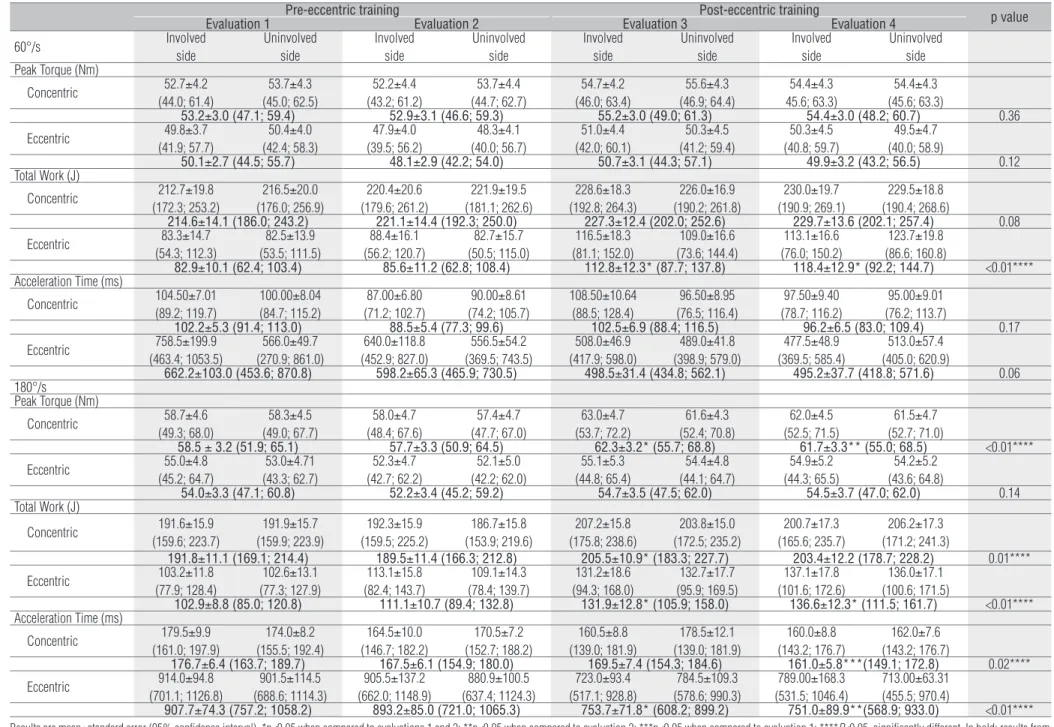
Interaction efect of side x time – here were no signiicant interactions between side and time. Peak torque (concentric-60°/s, p=0.89; eccentric-60°, p=0.80; concentric-180°/s, p=0.97; eccentric-180°/s, p=0.87), total work (concentric-60°/s, p=0.91; eccentric-60°, p=0.4; concentric-180°/s, p=0.7; eccentric-180°/s, p=0.93) and acceleration time (concentric-60°/s, p=0.77; eccen-tric-60°, p=0.29; concentric-180°/s, p=0.36; eccentric-180°/s, p=0.55) did not identify diferences between means (Table 3).
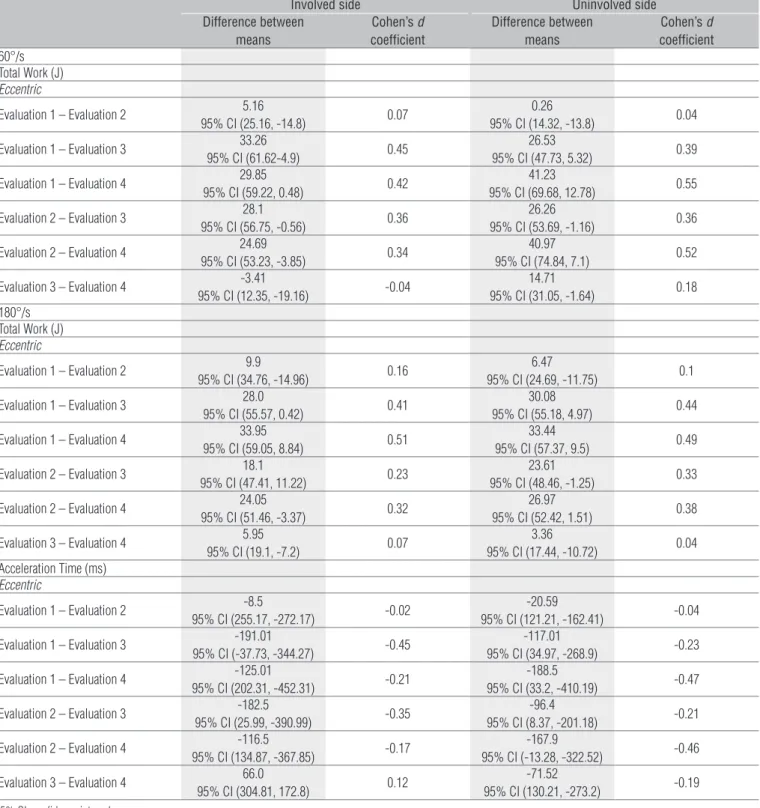
Main effect of side – The intra-side analysis, separately, showed few differences along the evaluations. However, those differences were found in the same variables for both sides (p<0.05): total work (eccentric-60º/s and 180º/s), and acceleration time (eccentric-180º/s). The post-hoc analyses identified a different pattern for pairwise comparisons of each side. In this way, the uninvolved side demonstrated to be more homogeneous in the baseline evaluations (1 and 2), with statistical differences between these evaluations and the post-intervention measures (evaluations 3 and 4). The differences were between evaluations 1 and 3 (p=0.01), eval-uations 1 and 4 (p<0.01), and evaleval-uations 2 and 4 (p=0.01) for total work (eccentric-60º/s); and between evaluations 1 and 3 (p=0.01), evaluations 1 and 4 (p<0.01), evaluations 2 and 4 (p=0.03) for total work (eccentric-180º/s). Finally, the
Table 1. DASH scores for 20 subjects with shoulder impingement syndrome.
Results are mean±standard error (95% confidence interval).*p<0.05 when compared to evaluations 1, 2 and 3; **p<0.05 when compared to evaluation 1.
Pre-eccentric training Post-eccentric training
Evaluation 1 Evaluation 2 Evaluation 3 Evaluation 4
DASH score 18.78±3.06 (20.85; 16.72) 14.28±3.24 (16.48; 12.09) 9.70±2.09 (11.12; 8.29)** 5.49±1.25 (6.34; 4.65)*
Difference between means Cohen’s d coefficient
Evaluation 1 – Evaluation 3 9.08
95% CI (3.04, 15.12) -0.78
Evaluation 2 – Evaluation 3 4.58
95% CI (-0.74, 9.91) -0.38
Evaluation 3 – Evaluation 4 4.20
95% CI (0.23, 8.18) -0.56
Table 2. Effect size for Disabilities of the Arm, Shoulder and Hand (DASH) score in 20 subjects with shoulder impingement syndrome. Evaluations 1 and 2: pre-eccentric training; evaluations 3 and 4: post-eccentric training.
95% CI: confidence interval.
77
Paula R. Camargo, Mariana A. A
vila, Francisco Alburquerque-Sendín, Naoe A. Asso, Larissa H. Hashimoto, T
ania F
. Salvini
Pre-eccentric training Post-eccentric training p value
Evaluation 1 Evaluation 2 Evaluation 3 Evaluation 4
60°/s Involved side Uninvolved side Involved side Uninvolved side Involved side Uninvolved side Involved side Uninvolved side Peak Torque (Nm)
Concentric 52.7±4.2
(44.0; 61.4)
53.7±4.3
(45.0; 62.5)
52.2±4.4
(43.2; 61.2)
53.7±4.4
(44.7; 62.7)
54.7±4.2
(46.0; 63.4)
55.6±4.3
(46.9; 64.4)
54.4±4.3
45.6; 63.3)
54.4±4.3
(45.6; 63.3)
53.2±3.0 (47.1; 59.4) 52.9±3.1 (46.6; 59.3) 55.2±3.0 (49.0; 61.3) 54.4±3.0 (48.2; 60.7) 0.36
Eccentric 49.8±3.7
(41.9; 57.7)
50.4±4.0
(42.4; 58.3)
47.9±4.0
(39.5; 56.2)
48.3±4.1
(40.0; 56.7)
51.0±4.4
(42.0; 60.1)
50.3±4.5
(41.2; 59.4)
50.3±4.5
(40.8; 59.7)
49.5±4.7
(40.0; 58.9)
50.1±2.7 (44.5; 55.7) 48.1±2.9 (42.2; 54.0) 50.7±3.1 (44.3; 57.1) 49.9±3.2 (43.2; 56.5) 0.12
Total Work (J)
Concentric 212.7±19.8
(172.3; 253.2)
216.5±20.0
(176.0; 256.9)
220.4±20.6
(179.6; 261.2)
221.9±19.5
(181.1; 262.6)
228.6±18.3
(192.8; 264.3)
226.0±16.9
(190.2; 261.8)
230.0±19.7
(190.9; 269.1)
229.5±18.8
(190.4; 268.6)
214.6±14.1 (186.0; 243.2) 221.1±14.4 (192.3; 250.0) 227.3±12.4 (202.0; 252.6) 229.7±13.6 (202.1; 257.4) 0.08
Eccentric 83.3±14.7
(54.3; 112.3)
82.5±13.9
(53.5; 111.5)
88.4±16.1
(56.2; 120.7)
82.7±15.7
(50.5; 115.0)
116.5±18.3
(81.1; 152.0)
109.0±16.6
(73.6; 144.4)
113.1±16.6
(76.0; 150.2)
123.7±19.8
(86.6; 160.8)
82.9±10.1 (62.4; 103.4) 85.6±11.2 (62.8; 108.4) 112.8±12.3* (87.7; 137.8) 118.4±12.9* (92.2; 144.7) <0.01****
Acceleration Time (ms)
Concentric 104.50±7.01
(89.2; 119.7)
100.00±8.04
(84.7; 115.2)
87.00±6.80
(71.2; 102.7)
90.00±8.61
(74.2; 105.7)
108.50±10.64
(88.5; 128.4)
96.50±8.95
(76.5; 116.4)
97.50±9.40
(78.7; 116.2)
95.00±9.01
(76.2; 113.7)
102.2±5.3 (91.4; 113.0) 88.5±5.4 (77.3; 99.6) 102.5±6.9 (88.4; 116.5) 96.2±6.5 (83.0; 109.4) 0.17
Eccentric 758.5±199.9
(463.4; 1053.5)
566.0±49.7
(270.9; 861.0)
640.0±118.8
(452.9; 827.0)
556.5±54.2
(369.5; 743.5)
508.0±46.9
(417.9; 598.0)
489.0±41.8
(398.9; 579.0)
477.5±48.9
(369.5; 585.4)
513.0±57.4
(405.0; 620.9)
662.2±103.0 (453.6; 870.8) 598.2±65.3 (465.9; 730.5) 498.5±31.4 (434.8; 562.1) 495.2±37.7 (418.8; 571.6) 0.06
180°/s
Peak Torque (Nm)
Concentric 58.7±4.6
(49.3; 68.0)
58.3±4.5
(49.0; 67.7)
58.0±4.7
(48.4; 67.6)
57.4±4.7
(47.7; 67.0)
63.0±4.7
(53.7; 72.2)
61.6±4.3
(52.4; 70.8)
62.0±4.5
(52.5; 71.5)
61.5±4.7
(52.7; 71.0)
58.5 ± 3.2 (51.9; 65.1) 57.7±3.3 (50.9; 64.5) 62.3±3.2* (55.7; 68.8) 61.7±3.3** (55.0; 68.5) <0.01****
Eccentric 55.0±4.8
(45.2; 64.7)
53.0±4.71
(43.3; 62.7)
52.3±4.7
(42.7; 62.2)
52.1±5.0
(42.2; 62.0)
55.1±5.3
(44.8; 65.4)
54.4±4.8
(44.1; 64.7)
54.9±5.2
(44.3; 65.5)
54.2±5.2
(43.6; 64.8)
54.0±3.3 (47.1; 60.8) 52.2±3.4 (45.2; 59.2) 54.7±3.5 (47.5; 62.0) 54.5±3.7 (47.0; 62.0) 0.14
Total Work (J)
Concentric 191.6±15.9
(159.6; 223.7)
191.9±15.7
(159.9; 223.9)
192.3±15.9
(159.5; 225.2)
186.7±15.8
(153.9; 219.6)
207.2±15.8
(175.8; 238.6)
203.8±15.0
(172.5; 235.2)
200.7±17.3
(165.6; 235.7)
206.2±17.3
(171.2; 241.3)
191.8±11.1 (169.1; 214.4) 189.5±11.4 (166.3; 212.8) 205.5±10.9* (183.3; 227.7) 203.4±12.2 (178.7; 228.2) 0.01****
Eccentric 103.2±11.8
(77.9; 128.4)
102.6±13.1
(77.3; 127.9)
113.1±15.8
(82.4; 143.7)
109.1±14.3
(78.4; 139.7)
131.2±18.6
(94.3; 168.0)
132.7±17.7
(95.9; 169.5)
137.1±17.8
(101.6; 172.6)
136.0±17.1
(100.6; 171.5)
102.9±8.8 (85.0; 120.8) 111.1±10.7 (89.4; 132.8) 131.9±12.8* (105.9; 158.0) 136.6±12.3* (111.5; 161.7) <0.01****
Acceleration Time (ms)
Concentric 179.5±9.9
(161.0; 197.9)
174.0±8.2
(155.5; 192.4)
164.5±10.0
(146.7; 182.2)
170.5±7.2
(152.7; 188.2)
160.5±8.8
(139.0; 181.9)
178.5±12.1
(139.0; 181.9)
160.0±8.8
(143.2; 176.7)
162.0±7.6
(143.2; 176.7)
176.7±6.4 (163.7; 189.7) 167.5±6.1 (154.9; 180.0) 169.5±7.4 (154.3; 184.6) 161.0±5.8***(149.1; 172.8) 0.02****
Eccentric 914.0±94.8
(701.1; 1126.8)
901.5±114.5
(688.6; 1114.3)
905.5±137.2
(662.0; 1148.9)
880.9±100.5
(637.4; 1124.3)
723.0±93.4
(517.1; 928.8)
784.5±109.3
(578.6; 990.3)
789.00±168.3
(531.5; 1046.4)
713.00±63.31
(455.5; 970.4)
907.7±74.3 (757.2; 1058.2) 893.2±85.0 (721.0; 1065.3) 753.7±71.8* (608.2; 899.2) 751.0±89.9**(568.9; 933.0) <0.01****
Results are mean±standard error (95% confidence interval). *p<0.05 when compared to evaluations 1 and 2; **p<0.05 when compared to evaluation 2; ***p<0.05 when compared to evaluation 1; ****P<0.05, significantly different. In bold: results from
both sides (main effect of time).
Table 3. Peak torque, total work and acceleration time during concentric and eccentric abduction of the shoulder at 60°/s and 180°/s for the involved and uninvolved sides in 20 subjects with shoulder impingement syndrome.
Rev Bras Fisioter
Eccentric training for shoulder impingement syndrome
Involved side Uninvolved side
Difference between means
Cohen’s d
coefficient
Difference between means
Cohen’s d
coefficient
60°/s Total Work (J) Eccentric
Evaluation 1 – Evaluation 2 5.16
95% CI (25.16, -14.8) 0.07
0.26
95% CI (14.32, -13.8) 0.04 Evaluation 1 – Evaluation 3 33.26
95% CI (61.62-4.9) 0.45
26.53
95% CI (47.73, 5.32) 0.39 Evaluation 1 – Evaluation 4 29.85
95% CI (59.22, 0.48) 0.42
41.23
95% CI (69.68, 12.78) 0.55 Evaluation 2 – Evaluation 3 28.1
95% CI (56.75, -0.56) 0.36
26.26
95% CI (53.69, -1.16) 0.36 Evaluation 2 – Evaluation 4 24.69
95% CI (53.23, -3.85) 0.34
40.97
95% CI (74.84, 7.1) 0.52 Evaluation 3 – Evaluation 4 -3.41
95% CI (12.35, -19.16) -0.04
14.71
95% CI (31.05, -1.64) 0.18 180°/s
Total Work (J) Eccentric
Evaluation 1 – Evaluation 2 9.9
95% CI (34.76, -14.96) 0.16
6.47
95% CI (24.69, -11.75) 0.1 Evaluation 1 – Evaluation 3 28.0
95% CI (55.57, 0.42) 0.41
30.08
95% CI (55.18, 4.97) 0.44 Evaluation 1 – Evaluation 4 33.95
95% CI (59.05, 8.84) 0.51
33.44
95% CI (57.37, 9.5) 0.49 Evaluation 2 – Evaluation 3 18.1
95% CI (47.41, 11.22) 0.23
23.61
95% CI (48.46, -1.25) 0.33 Evaluation 2 – Evaluation 4 24.05
95% CI (51.46, -3.37) 0.32
26.97
95% CI (52.42, 1.51) 0.38 Evaluation 3 – Evaluation 4 5.95
95% CI (19.1, -7.2) 0.07
3.36
95% CI (17.44, -10.72) 0.04 Acceleration Time (ms)
Eccentric
Evaluation 1 – Evaluation 2 -8.5
95% CI (255.17, -272.17) -0.02
-20.59
95% CI (121.21, -162.41) -0.04 Evaluation 1 – Evaluation 3 -191.01
95% CI (-37.73, -344.27) -0.45
-117.01
95% CI (34.97, -268.9) -0.23 Evaluation 1 – Evaluation 4 -125.01
95% CI (202.31, -452.31) -0.21
-188.5
95% CI (33.2, -410.19) -0.47 Evaluation 2 – Evaluation 3 -182.5
95% CI (25.99, -390.99) -0.35
-96.4
95% CI (8.37, -201.18) -0.21 Evaluation 2 – Evaluation 4 -116.5
95% CI (134.87, -367.85) -0.17
-167.9
95% CI (-13.28, -322.52) -0.46 Evaluation 3 – Evaluation 4 66.0
95% CI (304.81, 172.8) 0.12
-71.52
95% CI (130.21, -273.2) -0.19
Table 4. Effect size for the isokinetic variables in 20 subjects with shoulder impingement syndrome for each side. Evaluations 1 and 2: pre-eccentric training; evaluations 3 and 4: post-eccentric training.
95% CI: confidence interval.
statistical differences for acceleration time (eccentric-180-º/s) were observed between evaluations 2 and 4 (p =0.03). Notably, the involved side showed less pairwise differences and always between evaluation 1 and post-intervention measures. In this case, the differences were between evalu-ations 1 and 3 (p=0.02), evaluevalu-ations 1 and 4 (p=0.04) for total work (eccentric-60º/s); between evaluations 1 and 3
(p=0.04), and evaluations 1 and 4 (p=0.01) for total work (eccentric-180º/s), and between evaluations 1 and 3 (p=0.01, Table 3) for acceleration time (eccentric-180º/s). The effect size for the isokinetic variables for each side was small and moderate for most of the conditions. Table 4 shows the ef-fect size for the variables that reached statistically signifi-cance (p<0.05).
79
Difference between means
Cohen’s d
coefficient
60°/s Total Work (J) Eccentric
Evaluation 1 – Evaluation 3 29.89
95% CI (13.14, 46.63) 0.42
Evaluation 2 – Evaluation 3 27.18
95% CI (8.42, 45.93) 0.36
Evaluation 3 – Evaluation 4 5.65
95% CI (-5.07, 16.37) 0.07 180°/s
Peak Torque (Nm) Concentric
Evaluation 1 – Evaluation 3 3.75
95% CI (0.27, 7.24) 0.18
Evaluation 2 – Evaluation 3 4.58
95% CI (1.03, 8.13) 0.22
Evaluation 3 – Evaluation 4 -0.52
95% CI (-2.39, 1.35) -0.02 Total Work (J)
Concentric
Evaluation 1 – Evaluation 3 13.75
95% CI (0.62, 26.89) 0.19
Evaluation 2 – Evaluation 3 16.00
95% CI (1.72, 30.28) 0.22
Evaluation 3 – Evaluation 4 -2.07
95% CI (-15.98, 11.82) -0.02 Eccentric
Evaluation 1 – Evaluation 3 29.03
95% CI (11.40, 46.66) 0.42
Evaluation 2 – Evaluation 3 20.85
95% CI (2.68, 39.01) 0.28
Evaluation 3 – Evaluation 4 4.65
95% CI (-4.45, 13.76) 0.05 Acceleration Time (ms)
Concentric
Evaluation 1 – Evaluation 3 -7.25
95% CI (-30.21, 15.71) -0.16
Evaluation 2 – Evaluation 3 2.00
95% CI (-21.17, 25.17) 0.04
Evaluation 3 – Evaluation 4 -8.50
95% CI (-27.91, 10.91) -0.20 Eccentric
Evaluation 1 – Evaluation 3 -154.00
95% CI (-256.03, -51.96) -0.33
Evaluation 2 – Evaluation 3 -139.45
95% CI (-249.76, -29.13) -0.28
Evaluation 3 – Evaluation 4 -2.75
95% CI (-150.53, 145.03) -0.005
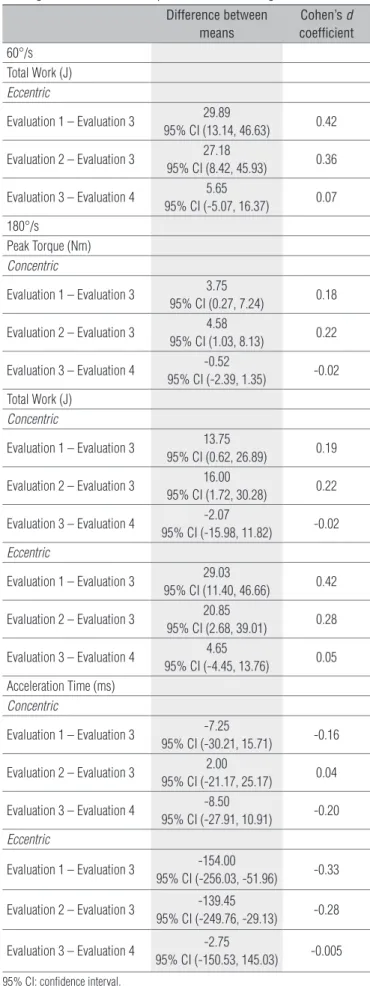
Table 5. Effect size for the isokinetic variables in 20 subjects with shoulder impingement syndrome. Evaluations 1 and 2: pre-eccentric training; evaluations 3 and 4: post-eccentric training.
95% CI: confidence interval.
Main efect of time Signiicant main efect of time was found in some conditions after the period of eccentric training, as occurred with peak torque 180°/s), total work (concentric-180°/s; eccentric-60° and 180°/s) and acceleration time (concen-tric-180º/s; eccentric-180º/s) (Table 3). Evaluation 3 improved compared to evaluations 1 and 2 for the following outcomes: peak torque (concentric-180°/s, p=0.03 and p=0.01, respectively), total work (concentric-180°/s, p=0.04 and p=0.02, respectively; eccentric-60°, p<0.01, respectively; eccentric-180°/s, p<0.01 and p=0.02 respectively), which the results after the intervention period were higher than before the exercises; and acceleration time (eccentric-180°/s, p<0.01 and p=0.01, respectively) with lower values at the two last evaluations. his tendency was maintained for peak torque (concentric-180°/s, p=0.03) and acceleration time (eccentric-180°/s, p=0.04) which improved during the follow-up period (evaluation 4) when compared to evaluation 2. Acceleration time (concentric-180°/s) also improved (p=0.02) during the follow-up period (evaluation 4) when compared to evaluation 1.
Table 5 shows the efect size for the variables that reached statistical signiicance (p<0.05), which was small for most of the conditions. As observed in the main efect of side and in the interaction efect of side by time there were no diferences (p>0.05) for the baseline period in all conditions.
Discussion
his study showed that eccentric training for shoulder abductors could be efective to reduce pain and physical im-pairment of the upper limbs during daily activities, as well as to improve isokinetic parameters in subjects with SIS. It is im-portant to state that large and moderate within-group efect sizes were only demonstrated for DASH score, while small and moderate within-group efects were observed for the isokinetic variables.
he literature supports the strengthening of the rotator cuf and scapular muscles and the stretching of the soft tissues of the shoulder to reduce pain and functional loss in people with SIS6,9,10. Although previous reports also support the idea that elevation exercises should be avoided in SIS8,46, a studyshowed good clinical results of eccentric training for the supraspinatus and deltoid muscles in chronic painful SIS11.
Eccentric training for shoulder impingement syndrome
Neovascularization also seems to play an important role lead-ing to good clinical results showed by the eccentric trainlead-ing19. It is known that SIS speciically involves the supraspinatus tendon and it has also been linked to apoptosis in this tendon4. Although it is beyond the scope of this study, we can suggest that the high forces produced eccentrically may have induced the beneicial tissue remodeling response on the supraspinatus tendon of the subjects leading to a better physical function sta-tus according to the DASH score.
he lack of studies on eccentric training in subjects with SIS is evident. One study performed with only 9 subjects in-vestigated if painful eccentric training for shoulder abductors was efective in subjects with chronic shoulder pain due to SIS11. All subjects were on a waiting list for surgery and had to perform painful eccentric training for the supraspinatus and deltoid muscles for 12 weeks, twice a day, 7 days a week. After 12 weeks of eccentric training, 5 out of 9 subjects were satisied with the result of the treatment, according to the Constant score, and withdrew from the waiting list for surgical treatment. At 52-week follow-up, these same subjects were still satisied. Despite the diference in methodology between the eccentric training performed in the current study and Jonsson’s et al.11 study, the subjects of our study also presented improved physical function of the upper limbs. However, it is important to state that our participants were younger, had shorter dura-tion of symptoms and no indicadura-tion for surgery.
Another study12 has also used eccentric training of the ro-tator cuf for patients with SIS. In addition, scapular control was also incorporated in the program and it was efective to decrease pain an increase function in these subjects.
In the present study, the eccentric training was performed with an isokinetic equipment. However, clinical relevant ec-centric exercises can also be incorporated in a treatment pro-tocol for those without isokinetic treatment. he exercises can be easily done with dumbbells and elastic bands and tubings as performed in the previous studies on eccentric training11,12.
Although there are no homogeneous isokinetic protocols to evaluate all types of patients, the use of isokinetic evalu-ation of muscle performance can be a valuable tool to as-sess the efectiveness of rehabilitation protocols because it provides objective documentation of dynamic movements. Isokinetic testing has been demonstrated to be reliable and valid to assess the shoulder complex17. However, it should be considered that this kind of testing is not speciic to a certain muscle25, it evaluates the performance of a muscle group in a determined movement.
Lombardi et al.30 assessed the efects of progressive resis-tance training on pain, function, quality of life and muscle strength in subjects with SIS. he training program was held 2 days/week for 8 weeks. he resistance was evaluated
individually every 2 weeks. Flexion, extension, medial rotation, and lateral rotation of the shoulder were the exercises done considering the eccentric and concentric phases. Peak torque and total work were evaluated during concentric lexion, ex-tension, abduction, adduction, medial rotation and lateral rotation of the shoulder at 60°/s and 180°/s. he training was efective in reducing pain and improving function and quality of life. However, there was no improvement in muscle torque. his inding was explained due to the lack of speciicity be-tween the exercises performed and the isokinetic evaluation, and to the short training period. In our study, although there was no lack of speciicity, only few improvements in muscle performance were found and of few clinical signiicance. As such, we can suggest that the time of training was short for these subjects. Maybe our participants needed a longer time of intervention to improve the isokinetic parameters and reach a better within-group efect. However, this hypothesis needs to be further tested. Another possibility for inding only few changes in muscle performance can be that the participants may not have worked on maximum efort during the train-ing sessions although the investigator asked them to perform maximal strength in all contractions. Despite the muscle soreness referred by all participants until the third session, which may indicate that they have put maximal efort during the training sessions, we cannot be conident that they were indeed working at maximum efort.
Therapeutic exercises have previously been determined to have long-term benefits for subjects with SIS51,52. In this investigation, benefits were observed even 6 weeks after the intervention period. It should be considered that no change was demonstrated in the baseline period. In comparison to studies that showed that exercise intervention is more effective than no intervention or placebo in subjects with SIS7,51,53, we can hypothesize that the natural course does not account for the positive effects in the isokinetic muscle performance, pain and physical function presented by the participants of this study. It is worth to consider the chro-nicity of the participants’ condition (average 2.83 years), which suggests unlikely spontaneous recovery for subjects within the 4-month period of this study. However, we should also consider that Hawthorne effects might have taken place where subjects improve or modify an aspect of their behav-ior being experimentally measured simply in response to the fact that they are being studied54.
One may also argue if the improvement observed in the present study is a result of learning effect as training and tests were performed in the isokinetic dynamometer. We do not believe that learning effect took place because only few significant differences occurred in the isokinetic parameters and of small effect size. It should also be stated
81
that improvement was also found in the DASH score, which is not related to the isokinetic, with large and moderate within-group effect sizes.
Further investigations are necessary to evaluate the efects of eccentric training programs on the scapular and humeral ki-nematics and on muscle activity of the supraspinatus and del-toid. It would also be relevant to perform imaging evaluation before and after the period of intervention to verify if changes in the supraspinatus tendon occur. Eccentric training has high clinical relevance, as it seems to improve the quality of the tendon by making it stronger and inducing remodeling of the collagen. In addition, eccentric training is the type of exercises that allows faster gain in muscular mass and neural adaptation compared to other types of training18. Future studies should also include a control group and wider range of motion.
Conclusions
his study suggests that isokinetic eccentric training for shoulder abductors is eicient to improve pain and function of the upper limbs in subjects with SIS and should be considered in rehabilitation.
Acknowledgments
he authors are deeply grateful to the volunteers who participated in this study and to the funding agencies Co-ordenação de Aperfeiçoamento de Pessoal de Nível Superior (CAPES) and Conselho Nacional de Desenvolvimento Cientíico e Tecnológico (CNPq).
References
1. van der Windt DA, Thomas E, Pope DP, de Winter AF, Macfarlane GJ, Bouter LM, et al. Occupational risk factors for shoulder pain: a systematic review. Occup Environ Med. 2000;57(7):433-42.
2. Neer CS 2nd. Anterior acromioplasty for the chronic impingement syndrome in the shoulder: a preliminary report. J Bone Joint Surg Am. 1972;54(1):41-50.
3. Burke WS, Vangsness CT, Powers CM. Strengthening the supraspinatus: a clinical and biomechanical review. Clin Orthop Relat Res. 2002;(402):292-8.
4. Tuoheti Y, Itoi E, Pradhan RL, Wakabayashi I, Takahashi S, Minagawa H, et al. Apoptosis in the supraspinatus tendon with stage II subacromial impingement. J Shoulder Elbow Surg. 2005;14(5):535-41.
5. Bang MD, Deyle GD. Comparison of supervised exercise with and without manual physical therapy for patients with shoulder impingement syndrome. J Orthop Sports Phys Ther. 2000;30(3):126-37.
6. Camargo PR, Haik MN, Ludewig PM, Filho RB, Mattiello-Rosa SMG, Salvini TF. Effects of strengthening and stretching exercises applied during working hours on pain and physical impairment in workers with subacromial impingement syndrome. Physiother Theory Pract. 2009;25(7):463-75.
7. Ludewig PM, Borstad JD. Effects of a home exercise programme on shoulder pain and functional status in construction workers. Occup Environ Med. 2003;60(11):841-9.
8. McClure PW, Bialker J, Neff N, Williams G, Karduna A. Shoulder function and 3-dimensional kinematics in people with shoulder impingement syndrome before and after a 6-week exercise program. Phys Ther. 2004;84(9):832-48.
9. Michener LA, Walsworth MK, Burnet EN. Effectiveness of rehabilitation for patients with subacromial impingement syndrome: a systematic review. J Hand Ther. 2004;17(2):152-64.
10. Kuhn JE. Exercise in the treatment of rotator cuff impingement: a systematic review and a synthesized evidence-based rehabilitation protocol. J Shoulder Elbow Surg. 2009;18(1):138-60.
11. Jonsson P, Wahlström P, Öhberg L, Alfredson H. Eccentric training in chronic painful impingement syndrome of the shoulder: results of a pilot study. Knee Surg Sports Traumatol Arthrosc. 2006;14(1):76-81.
12. Bernhardsson S, Klintberg IH, Wendt GK. Evaluation of an exercise concept focusing on eccentric strength training of the rotator cuff for patients with subacromial impingement syndrome. Clin Rehabil. 2011;25(1):69-78.
13. Alfredson H, Pietilä T, Jonsson P, Lorentzon R. Heavy-load eccentric calf muscle training for the treatment of chronic Achilles tendinosis. Am J Sports Med. 1998;26(3):360-6.
14. Jonsson P, Alfredson H. Superior results with eccentric compared to concentric quadriceps training in patients with jumper’s knee: a prospective randomised study. Br J Sports Med. 2005;39(11):847-50.
15. Svernlöv B, Adolfsson L. Non-operative treatment regime including eccentric training for lateral humeral epicondylalgia. Scan J Med Sci Sports. 2001;11(6):328-34.
16. Young MA, Cook JL, Purdam CR, Kiss ZS, Alfredson H. Eccentric decline squat protocol offers superior results at 12 months compared with traditional eccentric protocol for patellar tendinopathy in volleyball players. Br J Sports Med. 2005;39(2):102-5.
17. Anderson VB, Bialocerkowski A, Bennell KL. Test-retest reliability of glenohumeral internal and external rotation strength in chronic rotator cuff pathology. Physical Therapy in Sport. 2006;7:115-21.
18. LaStayo PC, Woolf JM, Lewek MD, Snyder-Mackler L, Reich T, Lindstedt SL. Eccentric muscle contractions: their contribution to injury, prevention, rehabilitation, and sport. J Orthop Sports Phys Ther. 2003;33(10):557-71.
19. Öhberg L, Alfredson H. Effects on neovascularisation behind the good results with eccentric training in chronic mid-portion Achilles tendinosis? Knee Surg Sports Traumatol Arthrosc. 2004;12(5):465-70.
20. Hawkins RJ, Kennedy JC. Impingement syndrome in athletes. Am J Sports Med. 1980;8(3):151-8.
21. Jobe FW, Moynes DR. Delineation of diagnostic criteria and a rehabilitation program for rotator cuff injuries. Am J Sports Med. 1982;10(6):336-9.
22. Caliş M, Akgün K, Birtane M, Karacan I, Caliş H, Tüzün F. Diagnostic values of clinical diagnostic tests in subacromial impingement syndrome. Ann Rheum Dis. 2000;59(1):44-7.
23. Gerber C, Hersche O, Farron A. Isolated rupture of the subscapularis tendon. J Bone Joint Surg Am. 1996;78(7):1015-23.
24. Ardic F, Kahraman Y, Kacar M, Kahraman MC, Findikoglu G, Yorgancioglu ZR. Shoulder impingement syndrome: relationships between clinical, functional, and radiologic findings. Am J Phys Med Rehabil. 2006;85(1):53-60.
25. Camargo PR, Ávila MA, Asso NA, Salvini TF. Muscle performance during isokinetic concentric and eccentric abduction in subjects with subacromial impingement syndrome. Eur J Appl Physiol. 2010;109(3):389-95.
26. Neer CS 2nd, Foster CR. Inferior capsular shift for involuntary inferior and multidirectional instability of the shoulder. A preliminary report. J Bone Joint Surg Am. 1980;62(6):897-908.
27. Lo IK, Nonweiler B, Woolfrey M, Litchfield R, Kirkley A. An evaluation of the apprehension, relocation, and surprise tests for anterior shoulder instability. Am J Sports Med. 2004;32(2):301-7.
28. Rowe CR, Zarins B. Recurrent transient subluxation of the shoulder. J Bone Joint Surg Am. 1981;63(6):863-72.
29. Hudak PL, Amadio PC, Bombardier C. Development of an upper extremity outcome measure: the DASH (disabilities of the arm, shoulder and hand) [corrected]. The Upper Extremity Collaborative Group (UECG). Am J Ind Med. 1996;29(6):602-8.
Eccentric training for shoulder impingement syndrome
31. Gummesson C, Atroshi I, Ekdahl C. The disabilities of the arm, shoulder and hand (DASH) outcome questionnaire: longitudinal construct validity and measuring self-rated health change after surgery. BMC Musculoskelet Disord. 2003;4:11.
32. Orfale AG, Araújo PMP, Ferraz MB, Natour J. Translation into Brazilian Portuguese, cultural adaptation and evaluation of the reliability of the Disabilities of the Arm, Shoulder and Hand Questionnaire. Braz J Med Biol Res. 2005;38(2):293-302.
33. Camargo PR, Haik MN, Filho RB, Mattiello-Rosa SMG, Salvini TF. Bilateral deficits in muscle contraction parameters during shoulder scaption in patients with unilateral subacromial impingement syndrome. Isokinet Exerc Sci. 2008;16(2):93-9.
34. Hébert LJ, Moffet H, McFadyen BJ, Dionne CE. Scapular behavior in shoulder impingement syndrome. Arch Phys Med Rehabil. 2002;83(1):60-9.
35. Leroux JL, Codine P, Thomas E, Pocholle M, Mailhe D, Blotman F. Isokinetic evaluation of rotational strength in normal shoulders and shoulders with impingement syndrome. Clin Orthop Relat Res. 1994;(304):108-15.
36. Townsend H, Jobe FW, Pink M, Perry J. Electromyographic analysis of the glenohumeral muscles during a baseball rehabilitation program. Am J Sports Med. 1991;19(3):264-72.
37. Michener LA, McClure PW, Karduna AR. Anatomical and biomechanical mechanisms of subacromial impingement syndrome. Clin Biomech (Bristol, Avon). 2003;18(5):369-79.
38. Ellenbecker TS, Davies GJ. The application of isokinetics in testing and rehabilitation of the shoulder complex. J Athl Train. 2000;35(3):338-50.
39. Bandholm T, Rasmussen L, Aagaard P, Jensen BR, Diederichsen L. Force steadiness, muscle activity, and maximal muscle strength in subjects with subacromial impingement syndrome. Muscle Nerve. 2006;34(5):631-9.
40. Camargo PR, Avila MA, de Oliveira AB, Asso NA, Benze BG, Salvini TF. Shoulder abduction torque steadiness is preserved in subacromial impingement syndrome. Eur J Appl Physiol. 2009;106(3):381-7.
41. Erol O, Ozçakar L, Celiker R. Shoulder rotator strength in patients with stage I-II subacromial impingement: relationship to pain, disability, and quality of life. J Shoulder Elbow Surg. 2008;17(6):893-7.
42. Ludewig PM, Cook TM. Alterations in shoulder kinematics and associated muscle activity in people with symptoms of shoulder impingement. Phys Ther. 2000;80(3):276-91.
43. Phadke V, Camargo PR, Ludewig PM. Scapular and rotator cuff muscle activity during arm elevation: a review of normal function and alterations with shoulder impingement. Rev Bras Fisioter. 2009;13(1):1-9.
44. Reddy AS, Mohr KJ, Pink MM, Jobe FW. Electromyographic analysis of the deltoid and rotator cuff muscles in persons with subacromial impingement. J Shoulder Elbow Surg. 2000;9(6):519-23.
45. Cohen J. Statistical power analysis for the behavioural sciences. Hillsdale: Lawrence Erlbaum Associates; 1988.
46. Morrison DS, Frogameni AD, Woodworth P. Non-operative treatment of subacromial impingement syndrome. J Bone Joint Surg. 1997;79(5):732-7.
47. Hortobágyi T, DeVita P. Favorable neuromuscular and cardiovascular responses to 7 days of exercise with an eccentric overload in elderly women. J Gerontol A Biol Sci Med Sci. 2000;55(8):B401-10.
48. Lindstedt SL, LaStayo PC, Reich TE. When active muscles lengthen: properties and consequences of eccentric contractions. News Physiol Sci. 2001;16:256-61.
49. Proske U, Morgan DL. Muscle damage from eccentric exercise: mechanism, mechanical signs, adaptation and clinical applications. J Physiol. 2001;537(Pt 2):333-45.
50. Kannus P, Jozsa L, Natri A, Järvinen M. Effects of training, immobilization and remobilization on tendons. Scand J Med Sci Sports. 1997;7(2):67-71.
51. Brox JI, Gjengedal E, Uppheim G, Bøhmer AS, Brevik JI, Ljunggren AE, et al. Arthroscopic surgery versus supervised exercises in patients with rotator cuff disease (stage II impingement syndrome): a prospective, randomized, controlled study in 125 patients with a 2 ½-year follow-up. J Shoulder Elbow Surg. 1999;8(2):102-11.
52. Haahr JP, Andersen JH. Exercises may be as efficient as subacromial decompression in patients with subacromial stage II impingement: 4-8-years’ follow-up in a prospective, randomized study. Scand J Rheumatol. 2006;35:224-8.
53. Faber E, Kuiper JI, Burdorf A, Miedema HS, Verhaar JA. Treatment of impingement syndrome: a systematic review of the effects on functional limitations and return to work. J Occup Rehabil. 2006;16(1):7-25.
54. McCarney R, Warner J, Iliffe S, van Haselen R, Griffin M, Fisher P. The Hawthorne effect: a randomised, controlled trial. BMC Med Res Methodol. 2007;7:30.
83