Coronary Angioplasty
versus
CABG: Review of Randomized
Pedro José Negreiros de Andrade
1, Marta Maria das Chagas Medeiros
2, Antonio Thomaz de Andrade
3,
Antonio Augusto Guimarães Lima
1Serviço de Cardiologia do Hospital Universitário Walter Cantidio da Universidade Federal do Ceará1; Departamento de Medicina Clinica da Faculdade de Medicina da Universidade Federal do Ceará2; Fortaleza, CE; Instituto de Cardiologia Dante Pazzanese3, São Paulo, SP - Brazil
Keywords
Angioplasty, transluminal, percutaneous coronary; coronary artery bypass; myocardial revascularization; meta-analysis.
Mailing address: Pedro José Negreiros de Andrade •
Rua Francisco Holanda, 992/1101 - Dionísio Torres - 60130-040 - Fortaleza, CE - Brazil
E-mail: [email protected], [email protected]
Manuscript received May 14, 2010; revised manuscript received August 23, 2010; accepted September 24, 2010.
Abstract
We carried out a review that included results of randomized trials that made a comparison between percutaneous coronary intervention (PCI) and coronary artery bypass grafting (CABG). The 25 selected trials involved 12,305 patients, 11,103 of whom were from studies in patients with multi-vessel disease and 1,212 were from studies in patients with single lesion of the left anterior descending (LAD). In the studies of multi-vessel disease patients, the PCI showed a trend towards lower early mortality (1.2% versus 2%) and lower incidence of stroke: 0.7% versus 1.65%. There was no difference in the intermediate mortality (3.8% versus 3.8%). There was a trend towards the superiority of CABG in late mortality (10.5% versus 9.6%). The difference was exclusively due to “balloon era” studies, with a trend towards an inversion in the “stent era” (9.6% versus 9.9%). In studies of single lesion of LAD, there was no significant difference in any endpoint. The aggregation of results from nine studies that assessed late mortality in diabetic patients showed a difference in favor of surgery (21.3% versus 15.9%). Two studies that evaluated main coronary artery disease did not show a significant difference in mortality at one year (3.9% versus 4.7%). The incidence of repeat revascularization was consistently higher in PCI, despite the progressive improvement in results in the stent era.
Introduction
Both the percutaneous coronary intervention (angioplasty or PCI) and the coronary artery bypass grafting (surgery or CABG) are well accepted alternative treatments for coronary insufficiency. A large number of randomized controlled trials comparing the two procedures were published1-44.
In light of these studies, there seems to be slight superiority of surgery over angioplasty in the ability to reduce anginal symptoms, and a significant difference in the ability to avoid new revascularization procedures. There seems to be no
difference with respect to the occurrence of myocardial infarction with development of Q wave. There are still some doubts about the differences in outcomes in terms of mortality in the short term and in the long term, the difference in mortality in diabetics, as well as the difference in risk of cerebrovascular accident (CVA) and the capacity of drug-eluting stents to eliminate the differences regarding the need for repeat revascularization.
The aim of this study was to carry out a review, by adding the results of randomized controlled trials that compared percutaneous transluminal coronary angioplasty with coronary artery bypass surgery.
Methods
Selection and characteristics of the studies
In the MEDLINE and CHOCHRANE database, we investigated randomized trials that compared percutaneous transluminal coronary angioplasty with coronary artery bypass surgery, published between January 1986 and March 2010. The month of January, 1986, was chosen as the start date because angioplasty started to establish itself as a therapeutic method in the mid 1980s.
In the investigation of databases, the following terms were used: angioplasty transluminal percutaneous coronary, coronary artery bypass surgery, coronary stents and randomized controlled trial. After the initial survey, which also considered references to review papers on the subject and meta-analyses, we used the following criteria to include studies in the review: to be randomized, to compare CABG with PCI, to have a follow-up of at least six months and to have been published in international journals rated as Qualis A or B by CAPES (Coordination for the Improvement of Higher Education Personnel of the Brazilian Ministry of Education). Papers resulting from observational studies (records) were not considered. We identified a total of 26 randomized studies that met the requirements: RITA1,2, ERACI3,4, EAST5-7, GABI8,9, CABRI10,11, TOULOUSE12, BARI13-16, MASSI17,18, LAUSANNE19,20, ERACI II21,22, MASS II23-25, AWESOME26,27, OCTOSTENT28, LEIPZIG29, SIMA30,31, Drenth et al32, SOS33,34, ARTS35,36, LEMANS37, SYNTAX38, MYOPROTECT39, Hong et al40, Kim et al41, Cisowski et al42, AMIST43 and CÁRDia44.
left main coronary artery, even if they also included single-vessel disease patients, were classified as multi-single-vessel disease. Complex anatomy was an exclusion criterion in all studies, except SYNTAX. Main coronary artery was usually also an exclusion criterion, except for ERACI II, SYNTAX and LEMANS. Prior CABG was an exclusion criterion in all studies, except for AWESOME. This study differed from the others because it involved patients at high surgical risk, and because it presented a mean ejection fraction that was significantly below normal. In spite of that, it was not excluded from review, since the indication for CABG for the types of patients included in it has been increasingly common in cardiology. MYOPROTECT was excluded from the review because it had extremely high early mortality (more than three standard deviations above the mean), both for PCI and CABG, and because it had tested a special form of percutaneous intervention, using retrograde perfusion.
Assessed endpoints
The endpoints of interest were: mortality, stroke and repeat revascularization. Mortality was divided into early, intermediate and late. Early mortality was defined as the percentage of deaths occurring within 30 days after the procedure, added to pre-procedure deaths2,8,33,35,38. Early mortality was provided by 23 studies. In the two in which it was not given35,38, it could be estimated by the survival curves35,38 and then it was placed in the tables, but it was not included in the calculation of the total of events (since they referred to numbers that were not actually published). The intermediate mortality was defined as the percentage of deaths reported up to a maximum period of 2.5 years after the procedure. In 19 studies, the mortality of 1 year was reported. In 2 studies, the mortality of 6 months40,42 was reported. In one study, the mortality of 1.5 year was reported21 and in 2 studies, the mortality of 2.5 years was reported1,19. This represented an average follow-up of 1.1 year. Late mortality was defined as mortality reported as having occurred 2.6 years or more after the procedure. It was provided in 18 studies. In 12 studies, the mortality of 5 years was reported; in two, the mortality of 3 years4,26; in two, of years32,11; in one, of 6.5 years1, in one, of 7.5 years28; and in one, of 10 years31. This represented an average follow-up of 4.9 years. The incidence of stroke was reported in 20 studies. In 19 studies, strokes that occurred within 30 days after the procedure were considered and, in one study, the strokes that occurred up to one year after the procedure were considered. The incidence of repeat revascularization took into account the results of the first publication, usually one year after the procedure, a period when the need for further angioplasties is more frequent. In 19 cases, the results of one year were considered and, in one case, the results of 6 months40. Based on the data reported, we calculated the incidence of repeat revascularization by an alternative procedure: surgery in patients of the PCI group and angioplasty in patients of the CABG group.
Data collection and summary of results
The results reported in each study were collected by two researchers and the incidence of events (deaths and stroke) was placed in an Excel spreadsheet. Data from studies of patients with multi-vessel disease were grouped as if they referred to a single study. The same was done with data from
studies in patients with single-vessel disease. This seemed to be justifiable for the following reasons: a) the assessed endpoints (mortality and stroke) are well-defined variables; b) all studies, whether in multi-vessel disease patients, or in single-vessel disease patients, had one element in common: patients were referred to revascularization, which could be carried out either by PCI or by CABG; c) despite the progress in interventional cardiology, there is no definitive evidence that stents have reduced the mortality or incidence of stroke when compared with PCI with balloon.
The results in diabetics, reported in nine studies, as well as those of patients with left main coronary artery disease, reported in two studies, were evaluated separately. The results of studies of the balloon era and stent era were also evaluated. The comparison between studies, both individually and in all of the results, was also made by means of a “relative risk index,” which took into account the event-free survival. This index was obtained by dividing the percentage of event-free patients from the angioplasty group by the percentage of event-free patients from the surgery group event. Neither the odds ratio nor the conventional relative risk (of event occurrence) were chosen as a source a comparison between the studies, due to the existence of a significant number of trials where the number of endpoints was zero.
Results
Out of the 25 studies, nine belonged to the balloon era1-20, 15 to the stent era, and one to an intermediate period (AWESOME)21-44. This last one was classified as a study from the stent era. Nine studies assessed only patients with single proximal lesion of the anterior descending coronary. In studies classified as multi-vessel disease, 11 evaluated patients with two-vessel or three-vessel disease; one evaluated an obstruction of the main coronary artery (LEMANS); one assessed patients with triple-vessel disease or main coronary artery disease (SYNTAX); three included patients with single-vessel, two-vessel or three-vessel disease (ARTS, RITA and OCTOSTENT). In most studies, cardiopulmonary bypass (CPB) was used in the surgery. Three studies in patients with multi-vessel disease (ARTS, SYNTAX and SOS) also used off-pump surgery in selected patients, according to local practice. In OCTOSTENT, only off-pump surgery was used. In three of the nine studies of single proximal obstruction of the anterior descending artery, the surgery was performed with CPB and median sternotomy (MASS I, LAUSANNE and SIMA). In the others, off-pump CABG was performed using left lateral thoracotomy (Drenth et al32, Leipzig, Hong et al40, Kim et al41, Cisowski et al42 and AMIST). Main coronary artery disease was an exclusion criterion in 22 studies. The main coronary artery disease was present in ERAC II (5% of patients), in SYNTAX (39% of patients), and in LEMANS (100% of patients). Only four studies (SYNTAX, LEMANS, CARDia and Hong et al41) used drug-eluting stents. One study evaluated only diabetics (CÁRDia).
the two-vessel disease was predominant in the balloon era and the three-vessel disease or main coronary artery disease was predominant in the stent era. In all the studies with patients with multi-vessel disease, over 50% of patients had three-vessel disease or main coronary artery disease and more than 50% had proximal obstruction of the left anterior descending coronary artery (in studies that reported this information). Decreased ejection fraction was almost always absent in studies with a single lesion of LAD coronary artery. In the studies in patients with multi-vessel disease, it was decreased in 18% of the patients (not considering CABRI and AWESOME, which did not report this information). The average patient age was 62 years and 77% were male. The mean age tended to be higher in studies with patients with multi-vessel disease than in single lesion of LAD coronary artery. The mean age was also higher in stent era than in the balloon era. Diabetes mellitus was present in 20% of patients. The vast majority of patients were symptomatic (unstable, stable angina or previous infarction). Unstable angina was present at a frequency that ranged from 0% (MASS studies) to 92% (ERAC II study).
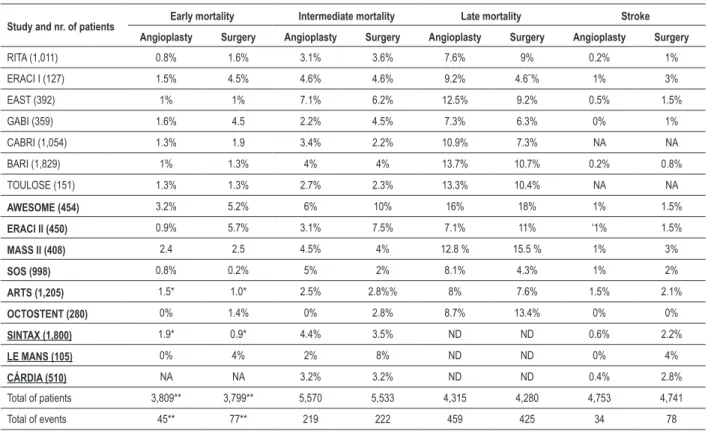
The results of studies in multi-vessel disease patients are presented in table 1 and in figures 1 to 3. Early mortality was lower with PCI in most studies. The aggregation of results was favorable to angioplasty. (1.2 versus 2%: p = 0.034). But when we include the estimated results of ARTS and SYNTAX, the differences were less significant (1.3% versus 1.7%). The studies that contributed most to the worst result of the surgery were ERACI, AWESOME and ERACI II, which included a substantial number of acute patients.
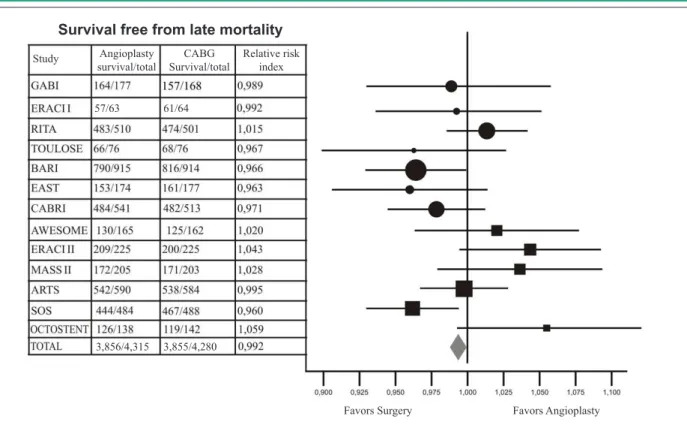
With regard to the intermediate mortality, the results were identical (3.8 versus 3.8%). In the late mortality, there was a trend towards a better outcome of surgery (10.5% versus 9.6%: p = 0.07). This difference was exclusively due to “balloon era” studies, with a trend towards an inversion in the “stent era” (9.6% versus 9.9%). Only one study of the stent era showed lower mortality with surgery (SOS), due to a higher cancer mortality in the PCI group. Figure 2 shows marked heterogeneity of results with a tendency to superiority of surgery in the balloon era, and of angioplasty in the stent era. The incidence of stroke was higher with surgery (0.7%
versus 1.65%: p < 0.001), with virtually all studies in patients with multi-vessel disease showing improved outcome with angioplasty (Fig. 3).
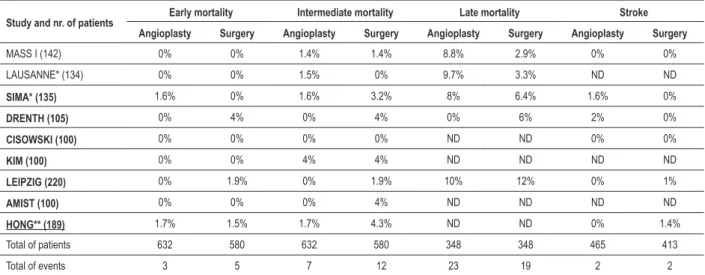
The data of studies in single lesion of LAD coronary artery are shown in table 2. In the aggregation of results, there was no significant different in any endpoint: 0.5% versus 0.9%, for early mortality; 1.1% versus 2.4%, for intermediate mortality; 6.7% versus 5.5% for late mortality; and 0.4% versus 0.5% for stroke.
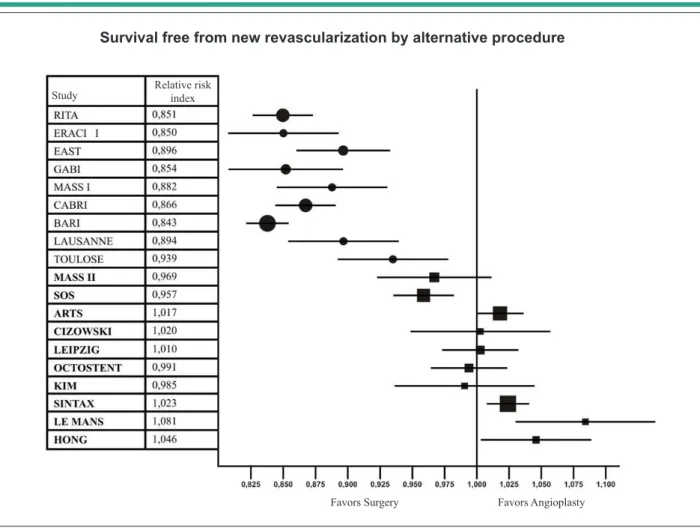
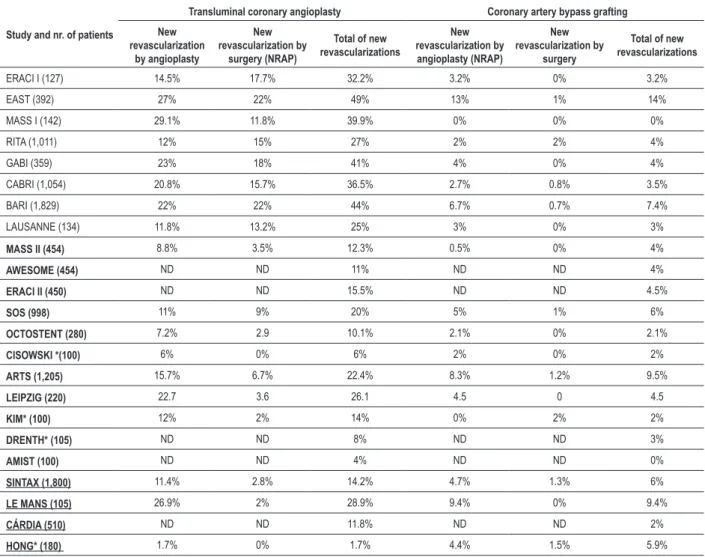
The data regarding the need for further revascularization are shown in table 3 and figure 4. The superiority of surgery over angioplasty was consistent in 23 of 24 studies. However, there has been gradual improvement in the results of PCI. In studies of multi-vessel disease patients, the incidence of repeat revascularization in the PCI group dropped from 49% in EAST and 44% in BARI to around 11% in SYNTAX and in CÁRDia. In patients with single lesions of LAD coronary artery, it dropped from 39.9% in MASS I to less than 10% in recent
studies of the stent era. Figure 4 shows that the relative risk of new revascularization by means of an alternative procedure (surgery for patients undergoing PCI and angioplasty for patients undergoing CABG) showed a clear tendency to equalization of outcomes in the stent era.
Nine studies reported late mortality in the diabetic subgroup. Six showed a trend in favor of surgery (CABRI, EAST, BARI, MASS II, ARTS and SOS), one was neutral (ERACI II) and two showed a trend in favor of angioplasty (RITA and AWESOME). By aggregating the results of these studies, the late mortality was 21.3% in the intervention group and 15.9% in the surgery group.
Two studies have mentioned the results of mortality at one year in unprotected main coronary artery disease (Table 4). In SYNTAX, the mortality was 4.2% in the PCI group versus
4.4% in the CABG group. There was a trend towards lower mortality with angioplasty in patients with low or intermediate SYNTAX score, and a tendency towards higher mortality with CABG in patients with high SYNTAX score. In LEMANS, the mortality was 2% in the PCI group versus 8% in the CABG group. When the results of the two trials were aggregated, there was no significant difference (3.9% versus 4.7%). When we added the results of LEMANS (in which most of the patients did not show high angiographic complexity) to those of the subgroups of patients with low or intermediate SYNTAX score, it was possible to notice a trend clearly in favor of angioplasty (1.1% versus 5.6%).
Discussion
Several reviews45, meta-analyses of randomized trials46-48, and a major collaborative study49 were published comparing PCI with CABG. The main difference of this review is the number of studies and patients evaluated. This was due to the fact that we considered tracks of occurrence and not rigidly fixed moments. Furthermore, there was the addition of recent studies that used drug-eluting stents39,45 and involved a large numbers of patients.
Table 1 - Mortality and stroke. Studies involving patients with multi-vessel disease
Study and nr. of patients Early mortality Intermediate mortality Late mortality Stroke
Angioplasty Surgery Angioplasty Surgery Angioplasty Surgery Angioplasty Surgery
RITA (1,011) 0.8% 1.6% 3.1% 3.6% 7.6% 9% 0.2% 1%
ERACI I (127) 1.5% 4.5% 4.6% 4.6% 9.2% 4.6¨% 1% 3%
EAST (392) 1% 1% 7.1% 6.2% 12.5% 9.2% 0.5% 1.5%
GABI (359) 1.6% 4.5 2.2% 4.5% 7.3% 6.3% 0% 1%
CABRI (1,054) 1.3% 1.9 3.4% 2.2% 10.9% 7.3% NA NA
BARI (1,829) 1% 1.3% 4% 4% 13.7% 10.7% 0.2% 0.8%
TOULOSE (151) 1.3% 1.3% 2.7% 2.3% 13.3% 10.4% NA NA
AWESOME (454) 3.2% 5.2% 6% 10% 16% 18% 1% 1.5%
ERACI II (450) 0.9% 5.7% 3.1% 7.5% 7.1% 11% ‘1% 1.5%
MASS II (408) 2.4 2.5 4.5% 4% 12.8 % 15.5 % 1% 3%
SOS (998) 0.8% 0.2% 5% 2% 8.1% 4.3% 1% 2%
ARTS (1,205) 1.5* 1.0* 2.5% 2.8%% 8% 7.6% 1.5% 2.1%
OCTOSTENT (280) 0% 1.4% 0% 2.8% 8.7% 13.4% 0% 0%
SINTAX (1,800) 1.9* 0.9* 4.4% 3.5% ND ND 0.6% 2.2%
LE MANS (105) 0% 4% 2% 8% ND ND 0% 4%
CÁRDIA (510) NA NA 3.2% 3.2% ND ND 0.4% 2.8%
Total of patients 3,809** 3,799** 5,570 5,533 4,315 4,280 4,753 4,741
Total of events 45** 77** 219 222 459 425 34 78
Early mortality - % of deaths within 30 days after the procedure. Intermediate mortality - % of deaths within 2.5 years after the procedure; Late mortality - mortality within 2.6 years or more after the procedure. Studies in bold are from the “stent era”. The other ones are from the “balloon era”. The underlined ones used drug-eluting stents. * - data estimated on the basis of curves of survival and deaths before the procedure and not considered in the aggregation of results. ND - not deined.
Figure 1 -Studies in patients with multi-vessel disease. Graphical representation of the “relative risk index” of early mortality. Values above 1 favor angioplasty and values below 1 favor surgery. Circles represent studies of the balloon era. Squares represent studies of the stent era. The diamond represents the total of results. The size of the circles and squares is directly proportional to the number of patients in the study and the bar size is inversely proportional. When the bar does not cross the midline, there was statistical difference between the results.
Study Angioplasty
survival/total
Relative risk index CABG
Survival/total
Favors Surgery Favors Angioplasty
Survival free from early mortality
Figure 2 -Studies in patients with multi-vessel disease. Graphical representation of the “relative risk index” of late mortality. Values above 1 favor angioplasty and values below 1 favor surgery. Circles represent studies of the balloon era. Squares represent studies of the stent era. The diamond represents the total of results. The size of the circles and squares is directly proportional to the number of patients in the study and the bar size is inversely proportional. When the bar does not go cross the midline, there was statistical difference between the results.
57/63 61/64
3,856/4,315 3,855/4,280
Study Angioplasty
survival/total
Relative risk index CABG
Survival/total
Favors Surgery Favors Angioplasty
Survival free from late mortality
Figure 3 -Studies in patients with multi-vessel disease. Graphical representation of the “relative risk index” of stroke. Values above 1 favor angioplasty and values below 1 favor surgery. Circles represent studies of the balloon era. Squares represent studies of the stent era. The diamond represents the total of results. The size of the circles and squares is directly proportional to the number of patients in the study and the bar size is inversely proportional. When the bar does not cross the midline, there was statistical difference between the results.
Study Angioplasty
survival/total
Relative risk index CABG
Survival/total
Favors Surgery Favors Angioplasty
Survival free from stroke
Table 3 - Studies of main coronary artery disease. Mortality in subgroups of SYNTAX and in LEMANS
Study Number of patients Angioplasty mortality Surgery mortality Signiicance (p)
SYNTAX - low risk 221 0.9% 3% 0.150
SYNTAX -intermediate risk 195 1% 6.7% 0.054
SYNTAX - high risk 285 9.7% 4.1% 0.060
LE MANS 105 2% 8% 0.370
Low risk SYNTAX + intermediate risk
SYNTAX + LEMANS 521 1.1% 5.6% 0.045
Total (SYNTAX+LEMANS) 810 3.9% 4.7% 0.410
Mortality at one year in main coronary artery disease. Subgroups of SYNTAX study and LEMANS study. The results of the SYNTAX subgroups were obtained from: Serruys P. Syntax primary end points TCT; October 14, 2008; Washington DC, being recently published54.
Table 2 - Mortality and stroke: studies in single proximal lesion of the left anterior descending (LAD) coronary artery
Study and nr. of patients Early mortality Intermediate mortality Late mortality Stroke
Angioplasty Surgery Angioplasty Surgery Angioplasty Surgery Angioplasty Surgery
MASS I (142) 0% 0% 1.4% 1.4% 8.8% 2.9% 0% 0%
LAUSANNE* (134) 0% 0% 1.5% 0% 9.7% 3.3% ND ND
SIMA* (135) 1.6% 0% 1.6% 3.2% 8% 6.4% 1.6% 0%
DRENTH (105) 0% 4% 0% 4% 0% 6% 2% 0%
CISOWSKI (100) 0% 0% 0% 0% ND ND 0% 0%
KIM (100) 0% 0% 4% 4% ND ND ND ND
LEIPZIG (220) 0% 1.9% 0% 1.9% 10% 12% 0% 1%
AMIST (100) 0% 0% 0% 4% ND ND ND ND
HONG** (189) 1.7% 1.5% 1.7% 4.3% ND ND 0% 1.4%
Total of patients 632 580 632 580 348 348 465 413
Total of events 3 5 7 12 23 19 2 2
Early mortality - % of deaths within 30 days after the procedure; Intermediate mortality - % of deaths up to 2.5 years after the procedure; Late mortality - % of mortality within 2.6 years or more after the procedure. Studies in bold are from the “stent era”. The other ones are from the “balloon era”. The underlined ones used drug-eluting stents. ND - not deined.
the later the assessment was carried out, the more “balloon era” studies were included, in which there was a tendency to the superiority of surgery. In this review, in which a more significant number of “stent era” studies were included, the late superiority of surgical results tended to decrease.
It is also possible to note the similarity of results in studies of single proximal lesion of LAD coronary artery, even with a trend toward the superiority of angioplasty in the stent era, at least in terms of early and intermediate mortality. This makes PCI, since it is less invasive, the preferred form of revascularization in patients with single proximal lesion of LAD coronary artery, unless the anatomy is clearly inadequate. The possibility that less invasive surgical techniques may improve surgical outcomes is not corroborated in this review. A separate analysis of data from tables 2 and 4 suggests that the best results of surgery were precisely in studies using conventional techniques, that is, median sternotomy and surgery with CPB (SIMA, LAUSANNE and MASS I), and the worst ones in those that used minimally invasive techniques.
The trend towards a higher incidence of stroke in the surgical group had been suggested previously48, and it had reached statistical significance in SYNTAX. The superiority of
angioplasty in this review is unquestionable, since it groups a larger number of patients and it adds the results of SYNTAX and CÁRDia. One interesting fact was that we found no difference in the incidence of stroke in studies with patients with single lesions of LAD coronary artery, nor in OCTOSTENT, which used off-pump surgery. Besides the less intense manipulation of the aorta and the almost exclusive use of mammary artery, we could suggest, as an explanation for such fact, a lower degree of atherosclerosis in these patients.
Figure 4 -Studies in patients with multi-vessel disease. Graphical representation of the “relative risk index” of survival for new revascularization by alternative procedure (surgery to patients undergoing angioplasty and angioplasty for patients undergoing surgery). Values above 1 favor angioplasty and values below 1 favor surgery. Circles represent studies of the balloon era. Squares represent studies of the stent era. The size of the circles and squares is directly proportional to the number of patients in the study and the bar size is inversely proportional. PCI - percutaneous coronary intervention, CABG - surgery.
Study Relative risk index
Favors Surgery Favors Angioplasty
Survival free from new revascularization by alternative procedure
obstruction of LAD coronary artery51,52 does not seem to be valid today, for the following reasons: a) most patients with multi-vessel disease, as defined in this review, consisted of patients with three-vessel disease or obstruction of left main coronary artery, especially in the stent era; b) there was a trend in favor of angioplasty in studies involving patients with single proximal lesion of LAD coronary artery; c) more than 50% of multi-vessel disease patients had obstruction of the proximal LAD coronary artery and about 18% had poor ventricular function, a number that is not insignificant; d) several studies suggest that conditions such as triple-vessel disease, poor ventricular function (in non-diabetics) and the obstruction of proximal LAD coronary artery do not compromise the results of PCI, compared with surgery14,22,23,49.
In the comparison between the balloon era and stent era, it is worth highlighting the improvement in the late mortality results of angioplasty in the stent era, despite the greater complexity of patients. The hypothesis for this improvement would be the progress in the interventional technique, making it possible to handle, in a more complete and secure way, the obstructions, as well as the progress in clinical treatment, due to the more liberal use of lipid-lowering agents and
antiplatelet agents. The worse surgical results in early studies of the stent era, particularly in relation to early mortality, can be attributed to the severity of the patients’ conditions, and mainly to ERACI II and AWESOME studies. Considering the results of recent studies, including those estimated by the survival curves, the surprising fact is that the operative mortality is extremely low, below 1%34,35,38. At first glance, the decrease in surgical mortality in recent studies could be explained by the improvement in postoperative care and surgical techniques, including the use of off-pump surgery in selected patients. An alternative explanation could be that the majority of patients with high risk unstable angina, in the past, often treated by surgery, are now being referred to angioplasty.
Table 4 - New revascularization and new revascularization by alternative procedure
Study and nr. of patients
Transluminal coronary angioplasty Coronary artery bypass grafting
New revascularization
by angioplasty
New revascularization by
surgery (NRAP)
Total of new revascularizations
New revascularization by
angioplasty (NRAP)
New revascularization by
surgery
Total of new revascularizations
ERACI I (127) 14.5% 17.7% 32.2% 3.2% 0% 3.2%
EAST (392) 27% 22% 49% 13% 1% 14%
MASS I (142) 29.1% 11.8% 39.9% 0% 0% 0%
RITA (1,011) 12% 15% 27% 2% 2% 4%
GABI (359) 23% 18% 41% 4% 0% 4%
CABRI (1,054) 20.8% 15.7% 36.5% 2.7% 0.8% 3.5%
BARI (1,829) 22% 22% 44% 6.7% 0.7% 7.4%
LAUSANNE (134) 11.8% 13.2% 25% 3% 0% 3%
MASS II (454) 8.8% 3.5% 12.3% 0.5% 0% 4%
AWESOME (454) ND ND 11% ND ND 4%
ERACI II (450) ND ND 15.5% ND ND 4.5%
SOS (998) 11% 9% 20% 5% 1% 6%
OCTOSTENT (280) 7.2% 2.9 10.1% 2.1% 0% 2.1%
CISOWSKI *(100) 6% 0% 6% 2% 0% 2%
ARTS (1,205) 15.7% 6.7% 22.4% 8.3% 1.2% 9.5%
LEIPZIG (220) 22.7 3.6 26.1 4.5 0 4.5
KIM* (100) 12% 2% 14% 0% 2% 2%
DRENTH* (105) ND ND 8% ND ND 3%
AMIST (100) ND ND 4% ND ND 0%
SINTAX (1,800) 11.4% 2.8% 14.2% 4.7% 1.3% 6%
LE MANS (105) 26.9% 2% 28.9% 9.4% 0% 9.4%
CÁRDIA (510) ND ND 11.8% ND ND 2%
HONG* (180) 1.7% 0% 1.7% 4.4% 1.5% 5.9%
Studies in bold are from the stent era. The other ones are from the balloon era. The underlined ones used drug-eluting stents. Numbers in bold represent: NRAP - new revascularization by alternative procedure: surgery in patients of the angioplasty group and angioplasty in patients from the surgery group. ND - not deined.
to notice the progressive improvement of angioplasty in the stent era, culminating in excellent results with the use of drug-eluting stents. This improvement is particularly striking when we consider only the risk of new revascularization by alternative procedures, in which there was a tendency to equalization of outcomes in the stent era.
Until recently, the unprotected main coronary artery disease was a definite indication for surgery. Since surgery has proven to be beneficial for the reduction in mortality and due to the catastrophic nature of an acute occlusion during percutaneous intervention, surgery has been classified as the preferred indication for main coronary artery lesion in the guidelines, with angioplasty being characterized for a long time as type-III indication and only recently as a type IIb53. The results of SYNTAX and LEMANS, as well as the trend towards the superiority of angioplasty in patients with SYNTAX score below 3354, point to the need for a better classification of percutaneous coronary intervention in a main coronary artery disease, provided that the patients’ anatomy is good for the intervention.
with surgery in diabetic patients, showed no difference in mortality at one year. However, since they are initial results, a definitive answer must wait for the late results of these studies, as well as for those of the FREEDOM study.
Conclusion
The data from this review confirm the current trend towards considering the complexity of the lesions and not the number or type of vessels involved, or even the poor ventricular function, as the main factor for choosing between the revascularization procedures.
Potential Conflict of Interest
No potential conflict of interest relevant to this article was reported.
Sources of Funding
There were no external funding sources for this study.
Study Association
This study is not associated with any post-graduation program.
References
1. Henderson RA, Pocock SJ, Sharp J, Nanchahal K, Schulper MJ, Buton MJ, et al. Long-term results of RITA 1 trial: clinical and cost comparisons of coronary angioplasty and coronary-artery bypass grafting. Lancet. 1998;352(9138):1419-25.
2. Coronary angioplasty versus coronary artery bypass surgery: the Randomized Intervention Treatment of Angina (RITA) trial. Lancet. 1993;341(8845):573-80.
3. Rodriguez A, Boullon F, Perez-Balino N, Paviotti C, Liprandi MI, Palácios I, et al. Argentine randomized trial of percutaneous transluminal coronary angioplasty versus coronary artery bypass surgery in multivessel disease (ERACI): in hospital results and 1-year follow-ups. ERACI groups. J Am Coll Cardiol. 1993;22(4):1060-7.
4. Rodriguez A, Mele E, Peyregne E, Bullow F, Perez Balbino N, Liprandi MI. Three-year follow-up of the Argentine randomized trial of percutaneous transluminal coronary angioplasty versus coronary artery bypass surgery in multivessel disease (ERACI). J Am Coll Cardiol. 1996;27(5):178-84.
5. King SB 3rd, Lembo NJ, Weintraub WS, Kosinski AS, Barnhart HX, Kutner MH, et al. A randomized trial comparing coronary angioplasty with coronary bypass surgery: Emory Angioplasty Versus Surgery Trial (EAST). N Engl J Med. 1994;331(16):1044-50.
6. King SB 3rd, Barnhart HX, Kosinsky AS, Weintraub WS, Lembo NJ, Petersen JY, et al. Angioplasty or surgery for multivessel coronary artery disease: comparison of eligible registry and randomized patients in the EAST trial and influence of treatment selection on outcomes. Emory Angioplasty versus Surgery Trial Investigators. Am J Cardiol. 1997;79(11):1453-9.
7. King SB 3rd, Kosinski AS, Guyton RA, Lembo NJ, Weintraub WS. Eight year mortality in the Emory Angioplasty versus Surgery Trial (EAST). J Am Coll Cardiol. 2000;35(5):1116-21.
8. Hamm CW, Reimers J, Ischinger T, Ruprech H, Berger J, Bleifield W, et al. A randomized study of coronary angioplasty compared with bypass surgery in patients with sintomatic multivessel coronary. N Engl J Med. 1994;331(16):1037-43.
9. Kaehler J, Koester R, Billmann W, Hamm CW, Rosmer J, Ischinger T, et al. 13-year follow-up of the German angioplasty bypass surgery investigation. Eur Heart J. 2005;26(20):2148-53.
10. First-year results of CABRI (Coronary Angioplasty versus Bypass Revascularisation Investigation). Lancet. 1995;346(8984):1179-84.
11. Kurbaan AS, Bowker TJ, Ilsley CD, Sigwart U, Rickards AF, CABRI Investigators (Coronary Angioplasty versus Bypass Revascularization Investigation). Difference in the mortality of the CABRI diabetic and nondiabetic populations and its relation to coronary artery disease and the revascularization mode. Am J Cardiol. 2001;87(8):947-50.
12. Carrié D, Elbaz M, Puel J, Fourcard J, Karowi E, Fournial G, et al. Five-year outcome after coronary angioplasty versus bypass surgery in multivessel coronary artery disease: results from the French Monocentric Study. Circulation. 1997;96(9 Suppl):II-1-6.
13. Bypass Angioplasty Revascularization Investigation (BARI) Investigators. Comparison of coronary bypass surgery with angioplasty in patients with multivessel disease. N Engl J Med. 1996;335(4):217-25.
14. Berger PB, Velianou JL, Vlachos HA, Felt F, Jacobs AK, Faxon DP, et al. Survival following coronary angioplasty versus coronary artery bypass surgery in anatomic subsets in which coronary artery bypass surgery improves survival compared with medical therapy. Results from the BARI Investigation. J Am Coll Cardiol. 2001;38(5):1440-9.
15. (Bypass Angioplasty Revascularization Investigation (BARI) Investigators). Influence of diabetes on 5-year mortality and morbidity in a randomized trial comparing CABG and PTCA in patients with multivessel disease: the Bypass Angioplasty Revascularization Investigation (BARI). Circulation. 1997;96(6):1761-9.
16. (Bypass Angioplasty Revascularization Investigation (BARI) Investigators). Five-year clinical and functional outcome comparing bypass surgery and angioplasty in patients with multivessel coronary disease. A multicenter randomized trial. JAMA. 1997;277(9):715-21.
17. Hueb WA, Bellotti G, Oliveira SA, Arie S, Albuquerque CP, Jatene AD. The medicine angioplasty or surgery study (MASS): a prospective, randomized study for single proximal left anterior stenosis descending artery stenosis. J Am Coll Cardiol. 1995;26(7):1600-5.
18. Hueb WA, Soares PR, Almeida De Oliveira S, Ariê S, Cardoso RH, Wajsbrot DB, et al. Five-year follow-op of the medicine, angioplasty, or surgery study (MASS): a prospective, randomized trial of medical therapy, balloon angioplasty, or bypass surgery for single proximal left anterior descending coronary artery stenosis. Circulation. 1999;100(19 Suppl.):II107-13.
19. Goy JJ, Eecckhout E, Burnand B, Vogt P, Stauffer JC, Hurni M, et al Coronary angioplasty versus internal mammary graft for isolated proximal left anterior descending artery stenosis. Lancet. 1994,343(8911):1449-53.
20. Goy JJ, Eeckhout E, Moret C, Burnand B, Vogt P, Stauffe JC, et al. Five-year outcome in patients with isolated proximal left anterior descending coronary artery stenosis treated by angioplasty or left internal mammary artery grafting: a prospective trial. Circulation. 1999;99(25):3255-9.
21. Rodriguez A, Bernardi V, Navia J, Baldi J, Grinfield L, Martinez JU, et al. Argentine Randomized Study: coronary angioplasty with stenting versus coronary bypass surgery in patients with multiple-vessel disease (ERACI II): 30-day and 1-year follow-up results. J Am Coll Cardiol. 2001;37(1):51-8.
22. Rodriguez AE, Baldi J, Fernández Pereira C, Navia M, Alemparti I, Delacasa F, et al. Five-year follow-up of the Argentine randomized trial of coronary angioplasty with stenting versus coronary bypass surgery in patients with multiple vessel disease (ERACI II). J Am Coll Cardiol. 2005;46(4):582-8.
23. Hueb W, Soares PR, Gersh BJ, Cesar LAM, Luz PL, Puig LB, et al. The medicine, angioplasty, or surgery study (MASS-II): a randomized, controlled clinical trial of three therapeutic strategies for multivessel coronary artery disease: one-year results. J Am Coll Cardiol. 2004;43(10):1743-51.
after the first year in diabetic subjects but not in nondiabetic subjects with multivessel disease: an analysis from the medicine, angioplasty, or surgery study (MASS). Circulation. 2006;114(1 Suppl I):420-I-42.
25. Pereira AC, Lopes NH, Krieger JE, de Oliveira SA, Cesar LA, Ramires JA, et al. Clinical judgment and treatment options in stable multivessel coronary artery disease: results from the one year follow up of the MASS II (Medicine, Angioplasty or Surgery Study II). J Am Coll Cardiol. 2006;48(5):948-53.
26. Morrison DA, Sethi G, Sacks J, Henderson W, Grover F, Swedlis S, et al. Angina With Extremely Serious Operative Mortality Evaluation (AWESOME). Percutaneous coronary intervention versus coronary artery bypass graft surgery for patients with medically refractory myocardial ischemia and risk factors for adverse outcomes with bypass: a multicenter, randomized trial. Investigators of the Department of Veterans Affairs Cooperative Study #385, the Angina With Extremely Serious Operative Mortality Evaluation (AWESOME). J Am Coll Cardiol. 2001;38(1):143-9.
27. Morrisons DA, Sedlis SP, Lorin JD, Sacks J, Grover F, Swedlis S, et al. Percutaneous coronary intervention versus coronary bypass graft surgery for diabetic patients with unstable angina and risk factors for adverse outcomes with bypass: outcome of diabetic patients in the AWESOME randomized trial and registry. J Am Coll Cardiol. 2002;40(9):1555-66.
28. Eefting F, Nathoe H, van Dijk D, Jansen E, Lahpor J, Stella P, et al. Randomized comparison between stenting and off-pump bypass surgery in patients referred for angioplasty. Circulation. 2003;108(23):2870-6.
29. Diegeler A, Thiele H, Falk V, Hambrecht R, Spyrntis S, Sick P, et al. Comparison of stenting with minimally invasive bypass surgery for stenosis of the left anterior descending coronary artery. N Engl J Med. 2002;347(8):561-6.
30. Goy JJ, Kaufnann U, Goy-Eggenberger D, Garachmani A, Hurni M, Larrel T, et al. A prospective randomized trial comparing stenting to internal mammary artery grafting for proximal, isolated de novo left anterior coronary artery stenosis: the SIMA trial. Stenting vs Internal Mammary Artery. Mayo Clin Proc. 2000;75(11):1116-23.
31. Goy JJ, Kaufmann U, Hurni M, Cook S, Versaci F, Ruchat P, et al. 10 year follow up of a prospective randomized bare-metal stenting with internal mammary artery grafting for proximal, isolated de novo left anterior coronary artery stenosis: the SIMA (Stenting versus Internal Mammary Artery grafting) trial. J Am Coll Cardiol. 2008;52(10):815-7.
32. Drenth DJ, Veeger NJ, Winter JB, Marianni MA, Boven AD, Boonstra AJ, et al. A prospective randomized trial comparing stenting with off-pump coronary surgery for high-grade stenosis in the proximal left anterior descending coronary artery: three-year follow-up. J Am Coll Cardiol. 2002;40(11):1955-60.
33. Booth J, Clayton T, Pepper J, Nugara F, Flatherr M, Sigwart U, et al. Randomized control trial of coronary artery bypass surgery versus percutaneous coronary intervention in patients with multivessel coronary artery disease: six-year follow up from the stent or surgery trial (SoS). Circulation. 2008;118(4):381-8.
34. Zhang Z, Mahoney EM, Stables RH, Booth J, Nugara F, Spertus JA, et al. Disease-specific health status after stent-assisted percutaneous coronary intervention and coronary artery bypass surgery: one-year results from the Stent or Surgery trial. Circulation. 2003;108(14):1694-700.
35. Serruys PW, Unger F, Sousa JE, Jatene A, Bounier HJM, Schomberger JP, et al. Comparison of coronary-artery bypass surgery and stenting for the treatment of multivessel disease. N Engl J Med. 2001;344(15):1117-24.
36. Serruys PW, Ong AT, van Herwerden LA, Sousa JE, Jatene A, Bournier HJM, et al. Five-year outcomes after coronary stenting versus bypass surgery for the treatment of multivessel disease: the final analysis of the Arterial Revascularization Therapies Study(ARTS) randomized trial. J Am Coll Cardiol. 2005;46(4):575-81.
37. Buszman PE, Kiesz SR, Bochenck A, Peszek-Przrya E, Szkiobka, Debwski M, et al. Acute and late outcomes of unprotected left main stenting comparison with surgical revascularization. J Am Coll Cardiol. 2008;51(5):538-45.
38. Serruys PW, Morice MC, Kappetei AP, Colombo A, Holmes DR, Mack MJ, et al. Percutaneous coronary intervention versus coronary-artery bypass grafting for severe coronary artery-disease. N Eng J Med. 2009;360(10):961-72.
39. Pohl T, Giehrl W, Reichart B, Kupatt C, Raake P, Paul S, et al. Retroinfusion-supported stenting in high-risk patients for percutaneous intervention and bypass surgery: results of the prospective randomized myoprotect I study. Catheter Cardiovasc Interv. 2004;62(3):323-30.
40. Hong SJ, Lim DS, Seo HS, Kim YH, Shim WJ, Park CG, et al. Percutaneous coronary intervention with drug-eluting stent implantation vs. minimally invasive direct coronary artery bypass (MIDCAB) in patients with left anterior descending coronary artery stenosis. Catheter Cardiovasc Interv. 2005;64(1):75-81.
41. Kim JW, Lim DS, Sun K, Shim WJ, Rho YM. Stenting or MIDCAB using ministernotomy for revascularization of proximal left anterior descending artery? Int J Cardiol. 2005;99(3):437-41.
42. Cisowski M, Drzewiecki J, Drzewiecka-Gerber A, Jaklik A, Kruczak W, Szczeklik M, et al. Primary stenting versus MIDCAB: preliminary report of two methods of revascularization in single left anterior descending coronary artery disease. Ann Thorac Surg. 2002;74(4):S1334-9.
43. Reeves BC, Angelini GD, Bryan AJ, Taylor FC, Cripps T, Spytt J, et al. A multi-centre randomized controlled trial of minimally invasive direct coronary bypass grafting versus percutaneous transluminal coronary angioplasty with stenting for proximal stenosis of the left anterior descending coronary artery. Health Technol Assess. 2004;8(16):1-43.
44. Kapur A, Hall RJ, Macik I, Qupesh AC, Butts J, Beider B, et al. Randomized comparison of percutaneous coronary intervention with coronary artery bypass grafting in diabetic patients: a one year results of the CARDia (coronary artery revascularization in diabetics) trial. J Am Coll Cardiol. 2010;55(5):432-40.
45. Zago AC, Amanda GMR, Sousa JE. Evolução da intervenção coronária percutânea em multiarteriais. Arq Bras Cardiol. 2002;78(2):250-60.
46. Hoffman SN, TenBrook Jr JA, Wolf MP, Pauker SG, Salem DN, Wong JB. A meta-analysis of randomized trial comparing coronary artery bypass graft with percutaneous transluminal coronary angioplasty: one to eight year outcomes. J Am Coll Cardiol. 2003;41(8):1293-304.
47. Daemen J, Boersma E, Flather M, Bonth J, Stables R, Rodrigues A, et al. Long-term safety and efficacy of percutaneous coronary intervention with stenting and coronary artery bypass surgery for multivessel coronary artery disease: a meta-analysis with 5-year patient-level data from the ARTS, ERACI-II, MASS-II, and SoS trials. Circulation. 2008;118(11):1146-54.
48. Bravata DM, Gienger AL, McDonal KM, Vandana S, Perez MV, Varguese R, et al. Sistematic review: the comparative effectiveness of percutaneous coronary intervention and coronary artery bypass surgery. Ann Intern Med. 2007;147(10):703-16.
49. Hlatky MA, Boothroyd DB, Bravata DM, Buersma E, Bonth E, Brooks MM, et al Coronary angioplasty compared with percutaneous coronary interventions for multivessel diseases: a colaborative analysis of individual patient data from ten randomized trials. Lancet. 2009;373(9670):1190-7.
50. Hannan EI, Racz MJ, Walford G, Jones RH, Ryan TJ, Bennett E, et al Long term outcomes of coronary artery bypass grafting versus stent implan tation. N Engl J Med. 2005;352(21):2174-83.
51. Soran O, Manchanda A, Schueler S. Percutaneous coronary intervention versus coronary artery bypass surgery in multivessel disease: a current perspective. Interact Cardivasc Thorac Surg. 2009;8(6):666-71.
52. Morrow DA, Gersh BJ. Chronic coronary artery disease. In: Mann DL, Bonow RO, Mann DL, Zipes DP. (eds). Braunwald´s heart disease. Philadelphia: Saunders Elsevier; 2008. p. 1353-405.
53. Mattos LA, Lemos Neto PA, Rassi A Jr, Marin-Neto JA, Sousa AGMR, Devito FS, et al. / Sociedade Brasileira de Cardiologia. Diretrizes sobre intervenção percutânea e métodos adjuntos diagnósticos em cardiologia intervencionista (II Edição). Arq Bras Cardiol. 2008;91(6 supl 1):1-58.