Abstract
Resumo Resumen
R E S E A R C H P A P E R
Depression in the elderly: symptoms in institutionalised
and non-institutionalised individuals
Depressão no idoso: sintomas em indivíduos institucionalizados e não-institucionalizados
Depresión en los ancianos: síntomas en individuos institucionalizados y no
institucionalizados
João Frade*; Patrícia Barbosa**; Susana Cardoso***; Carla Nunes****
Theoretical framework: Psychiatric disorders in the elderly are common and responsible for the loss of autonomy, worsening of pre-existing conditions and self-care negligence.
Objectives: This study aims to assess the association between institutionalisation and depression in the elderly.
Methodology: A cross-sectional study was conducted with a group of elderly people aged 65 years or more. The Geriatric Depression Scale (GDS) was applied.
Results: The sample was composed of 75 elderly people aged between 65 and 91 years: 44 were institutionalised and 31 lived in the community. The prevalence of depression symptoms was higher in single and widowed elders than in married elders (p<0.001). The likelihood of having depression symptoms was 74.1% lower in non-institutionalised elders.
Conclusion: The fact that the elders under study lived alone, were widowed and were institutionalised seems to clearly contribute to the presence of depressive symptoms. It would be of paramount importance to find therapeutic strategies to minimise the impact of institutionalisation.
Keywords: depression; elderly; institutionalization.
* Ph.D. student, Public Health, National School of Public Health of the New University of Lisbon. Member of the Research Health Unit of the School of Health Sciences, Polytechnic Institute of Leiria. 2nd Triennium Assistant, School of Health Sciences of the Polytechnic Institute of Leiria, 2411-901, Leiria, Portugal [joao.frade@ipleiria. pt]. Contribution to the article: study design and planning, data collection and statistical treatment, article writing and revision. Address for correspondence: Rua Gruta da Moura nº 75, 2º esquerdo. Alqueves Santa Clara, 3045-416, Coimbra, Portugal.
** Ph.D. student, Public Health, National School of Public Health of the New University of Lisbon. Research Assistant of the National School of Public Health, New University of Lisbon, 1600-560, Lisbon, Portugal [[email protected]]. Contribution to the article: bibliographic review, article writing and revision. *** Ph.D. student, Public Health, National School of Public Health of the New University of Lisbon. Professor, Colégio da Imaculada Conceição, Invited Adjunct Teacher, School of Health Sciences of the Polytechnic Institute of Leiria, 2411-901, Leiria, Portugal [[email protected]]. Contribution to the article: bibliographic review, article writing and revision.
**** Researcher of the CIESP/ENSP and CMDT.LA /IHMT. Sub-director of the ENSP/UNL. Assistant Professor of Statistics, National School of Public Health, New University of Lisbon, 1600-560, Lisbon, Portugal [CNunes@ ensp.unl.pt]. Contribution to the article: bibliographic review, data analysis, article writing and revision, work supervision.
Received for publication: 20.03.14 Accepted for publication: 17.07.14
Marco contextual: Los trastornos psiquiátricos en el anciano son comunes y responsables de la pérdida de autonomía, del agravamiento de enfermedades preexistentes y de la negligencia en el autocuidado.
Objetivos: El presente trabajo pretende estudiar la asociación entre la institucionalización y la presencia de depresión en ancianos.
Metodología: Se desarrolló un estudio transversal en un grupo de ancianos mayores de 65 años, a los que se les aplicó la Escala de Depresión Geriátrica (EDG).
Resultados: Se estudió a 75 ancianos con edades comprendidas entre los 65 y los 91 años. De estos, 44 estaban institucionalizados y 31 vivían en la comunidad. La prevalencia de síntomas de depresión fue más alta en los ancianos solteros y los viudos que en los ancianos casados (p<0,001). La probabilidad de presentar síntomas de depresión fue un 74,1% más baja en los ancianos no institucionalizados. Conclusión: El hecho de que estos ancianos vivan solos, sean viudos y estén institucionalizados parece contribuir de forma evidente a la presencia de síntomas depresivos. A este respecto, sería imprescindible encontrar actitudes terapéuticas que minimicen el impacto de la institucionalización.
Palabras clave: depresión; ancianos; institucionalización.
Enquadramento: As perturbações psiquiátricas no idoso são comuns e responsáveis pela perda de autonomia, pelo agravamento de quadros patológicos preexistentes e pela neglicência no auto cuidado. Objetivos: O presente trabalho pretende estudar a associação entre a institucionalização e a presença de depressão em idosos.
Metodologia: Foi desenvolvido um estudo transversal, realizado num grupo de idosos com mais de 65 anos, a quem foi aplicada a Escala de Depressão Geriátrica (EDG).
Resultados: Foram estudados 75 idosos com idades compreendidas entre os 65 e os 91 anos de idade. 44 encontravam-se internados institucionalizados e 31 viviam na comunidade. A prevalência de sintomas de depressão foi mais elevada nos idosos solteiros e viúvos relativamente aos idosos casados (p<0,001). A probabilidade de apresentar sintomas de depressão foi 74,1% mais baixa nos idosos não institucionalizados.
Conclusão: O facto de estes idosos viverem sozinhos, serem viúvos e estarem institucionalizados parece contribuir de forma evidente para a presença de sintomas depressivos. Encontrar atitudes terapêuticas que minimizem o impacto da institucionalização seria imperioso.
Palavras-chave: depressão; idosos; institucionalização.
ISSNe: 2182.2883 | ISSNp: 0874.0283 Disponível em: http://dx.doi.org/10.12707/RIV14030
Introduction
Perceived as a social problem in many countries, population ageing has been the subject of many studies which aim at meeting its associated needs. Therefore, the consequences of ageing on individuals and their caregivers and its implications for society in general, for example as regards the increase in health expenditure, need to be considered (Smoliner et al., 2009).
Mood disorders are one of the most common health problems in the elderly, being responsible for the loss of autonomy and worsening of pre-existing conditions. Depression is the most frequent of those problems and is associated with a higher risk of morbidity and mortality, increased use of health care services, negligence of self-care, non-adherence to therapeutic regimens and increased risk of suicide (Salgueiro, 2007). As regards suicide, in Portugal, a higher prevalence is observed in the age groups above 75 years, particularly among males (Gusmão, 2005). Depression is a pathological condition whose consequences can be severe and disabling, and which may interfere with the simplest aspects of daily life.
Per se, the association between depression and quality
of life justifies the priority given to an early diagnosis and treatment (Gerritsen et al., 2011). According to the Improving health systems and services for mental
health report (World Health Organization, 2009),
depression is associated with a wide variety of physical and functional disorders. It is, therefore, an important public health issue (Duarte & Rego, 2007). This study aims to examine the association between institutionalisation and depression in the elderly and contribute to raise awareness among caregivers and health care professionals to the need to acknowledge institutionalisation as a factor that may predispose to depression. The signs and symptoms may be early identified and/or diagnosed, thus allowing for a timely implementation of measures and strategies that seek to minimise the impact of institutionalisation on the elderly’s mental health, and on health in general, with consequent health gains.
Background
Epidemiological studies indicate rates of depression ranging between 2% and 14% among
community-dwelling elderly people. This prevalence is higher among individuals with a chronic condition who are followed by health care professionals in the various health care institutions (data resulting from a study carried out with 55 elderly people in Pernambuco, Brazil) (Siqueira et al., 2009). In 1998, a study by the American Medical Association observed that around 20% of elderly people with coronary artery disease suffered from severe depression. An even higher percentage of elderly people with coronary artery disease had mild depression (Dominique, Nemeroff, & Evans, 1998).
Some international estimates support that depression affects between 6% and 10% of the elderly population in Portugal. The more advanced age has been identified as a predisposing factor for depression (Bergdhal et al., 2005). Depression affects 15% of the general population (Pamerlee, Katz, & Lawton, 1989). It also affects between 2% and 14% of non-institutionalised elderly and reaches 30% of institutionalised elderly people (Pamerlee et al., 1989). In 2005, a study pointed out to a high general psychiatric morbidity, including mainly depression, in the group of retired elderly people (Gusmão, 2005).
Depression may be associated with other health problems or even accidents, thus conditioning health care costs. At this level, some estimates indicate that healthcare costs with depressed elderly individuals are three times higher than those with non-depressed individuals (Riedel-Heller, Weyerer, König, & Luppa, 2012). In some cases, fall risks may also be associated with a depressive disorder (Yun-Chang et al., 2012). Nevertheless, the signs and symptoms of depression are belatedly identified by health care professionals, the patients themselves and their caregivers and family members. This highly contributes to intensifying the suffering of those who do not receive adequate and timely care (Riedel-Heller et al., 2012; Pocinho, Farate, Amaral, Lee, & Yesavage, 2009). This situation is even more serious among elderly people institutionalised in nursing homes, where care should be closer and an early diagnosis should be promptly established.
Some authors point out the potential lack of more attentive and diligent medical and Nursing care in these institutions as a probable cause for the high prevalence of depressive symptoms in institutionalised elderly people (Siqueira et al., 2009; Pamerlee et al., 1989).
to its application. According to the same authors, this scale has a sensitivity of 84% and a specificity of 95%. Its major restriction is the fact that it cannot be applied in the case of cognitive impairment (Storti Braggion, Dal Santo, Fanchin, & Zanolin, 2012).
The GDS is the most commonly used instrument by researchers and clinicians to diagnose depression, being considered suitable for use in the elderly population. The scale suggests the presence or absence of depression indicators and is widely used for probable diagnosis in the elderly (Medeiros, 2010). The following scores are assigned to the answers: 1 point for yes answers to questions 2, 3, 4, 6, 8, 10, 11, 12, 13, 14, 16, 17, 18, 20, 22, 23, 24, 25, 26 and 28, and 1 point for no answers to questions 1, 5, 7, 9, 15, 19, 21, 27, 29 and 30. A total score of 0-10 points indicates no depression; 11-20 points indicate mild depression; and 21-30 points indicate severe depression. However, this classification is always dependent on clinical confirmation. The translation and validation process of the GDS for Portugal was performed in 2008 by the Group for the Study of Brain Aging and Dementia (Medeiros, 2010). In 2009, Pocinho et al. revalidated the scale for the Portuguese elderly population, establishing the cut-off point of 11 for the presence of depression. In the above-mentioned study, the authors assessed the applicability of the scale for clinical assessment and intervention in elderly people with moderate symptoms of loneliness associated with suicidal thoughts. The depression assessment scale has a Cronbach’s alpha of 0.94 (Barroso, 2008), which corresponds to good levels of internal consistency and reliability (Marôco, 2008).
According to the original GDS, the identification of 10 or less symptoms is considered normal, the identification of 11 to 20 symptoms indicates mild depression and the identification of more than 21 symptoms suggests moderate to severe depression (Pocinho et al., 2009).
All ethical principles were followed during the study, namely the signing of the informed consent form and the guarantee of confidentiality and data protection. The name of the institutions involved was coded to ensure their anonymity. Data analysis
Collected data were analysed using the SPSS, 18.0 version (Statistical Package for Social Sciences). According to Duarte and Rego (2007), the clinicians’
regular use of depression screening instruments that may easily be applied in clinical practice, such as the Geriatric Depression Scale, would allow for the early detection of many cases of illness which go unnoticed by caregivers and adversely affect the individuals’ quality of life. It would also allow for the prognosis of existing comorbidities that, in turn, contribute to increasing mortality rates, either through suicide or through the worsening of pre-existing chronic diseases.
Research questions
This study aims to measure the prevalence of depressive symptoms in elderly people institutionalised in nursing homes in comparison to elderly people living in the community, at their own homes, close to their usual modus vivendi. It also aims to identify the potential relationship between the presence of this type of symptoms and age, gender, marital status and level of education.
Methodology
An observational cross-sectional study was conducted with a convenience sample consisting of 75 elderly people aged 65 years or more and registered with a Health Care Centre in Central Portugal. Of these, 44 elderly people were institutionalised in nursing homes located in the same municipality as the area of influence of the health care centre. Data were collected in June, 2011.
The study consisted of the application of the 30-item Geriatric Depression Scale (GDS) to 31 elderly people who used the health care centre in June, 2011, and 44 elderly people who were institutionalised in nursing homes located in the same area of influence during the same period (convenience sample). Given the low level of education and advanced age of the sample subjects, the respondents were always accompanied by the interviewer, both at the health care centre and the nursing home institutions, so as to ensure the correct understanding of the GDS. According to Roman and Callen (2008), the GDS consists of 30 yes/no questions concerning the behaviours and feelings experienced in the week prior
After checking the normality and homogeneity of variances, through the application of the Kolmogorov-Smirnov and Levene tests and performing a first descriptive analysis, parametric analyses were subsequently performed for mean comparison (using the Student’s t-test to compare two groups and ANOVA to compare several groups).
Pearson’s correlation coefficient was also calculated to assess the correlation between the number of depressive symptoms and age.
To assess a possible presence of depression based on the number of depressive symptoms and the previously defined criteria, the variable number
of symptoms was transformed into two distinct
variables: 1) 3 levels (<=10 - 1 no depression; >10 ≤20 - 2 mild depression; >20 -3 severe depression; 2) 2 levels (<=10 - 1 no depression; >10 -2
depression). In order to assess the effect of the
independent variables (age, gender, marital status, level of education and place of residence) on the likelihood of the presence of depressive symptoms consistent with a probable diagnosis of depression or lack of depression, a model of binary logistic
regression was applied, in which the Odds Ratios and respective 95% confidence intervals were calculated.
Results
In terms of answer validity, a Cronbach’s alpha of 0.88 was obtained in this sample.
Table 1 shows the socio-demographic data (gender and marital status) of the 75 elderly participants in this study.
Of a total of 75 older people interviewed, 30 (40%) were males and 45 (60%) were females. Among males, 14 were married, 12 were widowers and 4 were single. Among females, 32 were widows, 9 were married and 4 were single. As a whole, the sample was composed of a significant percentage of widows (42.70%). Advanced age and the fact of being widows indicated some predisposition to depression.
In terms of age, the elderly respondents were between 65 and 91 years, with a mean age of 79.30 and a standard deviation of 8.76 years.
Table 1
Distribution of respondents by gender and marital status
Marital Status / Gender Male Female Total(n)
Married 14 9 23
Single 4 4 8
Widowed 12 32 44
Total (n) 30 45 75
Socio-demographic data (level of education and place of residence)
Table 2 shows that most participants had completed the third and fourth years of compulsory education.
As for the place of residence, the majority of the elderly (44 out of 75) was institutionalised (58.70%), a significant percentage still lived at home (33.33%), and the remaining elderly (8.0%) lived with relatives. Table 2
Distribution of individuals by level of education and place of residence
Education n Place of Residence n
No education 24 Home 25
<4th grade 24 With relatives 6
4th grade 20 Institution 44
Other 7
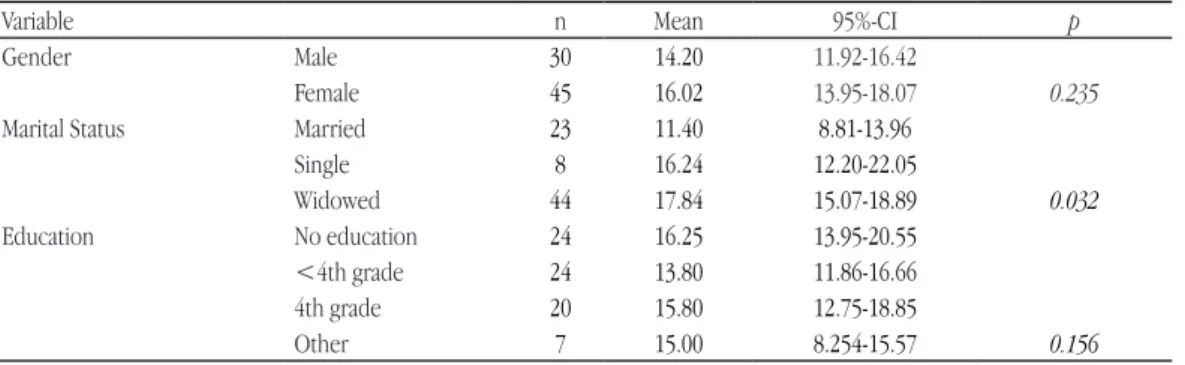
Table 3 shows the mean comparisons of depression symptoms by gender, marital status and level of education.
Men had less symptoms of depression (mean of 14.20) than women (mean of 16.92), although these were not statistically significant differences (p=0.235). Although symptoms of depression were more prevalent among older individuals, this association was not statistically significant (r2=0.163, p=0.162).
Symptoms of depression were more prevalent among elderly people living alone (widowed, n=44; and single, n=8) than elderly people living with their spouses/partners (married, n=23) (p=0.002). Whether institutionalised or not, single and/or widowed elderly seemed to be more likely to suffer from depressive symptoms (p=0.02).
Table 3
Mean number of depressive symptoms by gender, marital status and level of education
Variable n Mean 95%-CI p
Gender Male 30 14.20 11.92-16.42
Female 45 16.02 13.95-18.07 0.235
Marital Status Married 23 11.40 8.81-13.96
Single 8 16.24 12.20-22.05 Widowed 44 17.84 15.07-18.89 0.032 Education No education 24 16.25 13.95-20.55 <4th grade 24 13.80 11.86-16.66 4th grade 20 15.80 12.75-18.85 Other 7 15.00 8.254-15.57 0.156
The different levels of education did not influence the mean levels of depression for the sampled elderly population (p=0.156). This may be due to the small sample size and the fact that all participants had low levels of education.
In relation to the possible influence of the different support institutions for the elderly on the prevalence of symptoms of depression among the elderly, no statistically significant differences were found after the application of the depression assessment scales at the institutions (p=0.138). This may result from the small sample size or the possible existence of very similar resources and health care services between the various institutions.
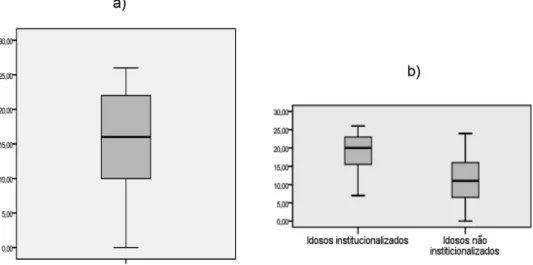
Figure 1 analyses the number of depressive symptoms among the elderly population: in terms of the total score and taking into account the participant’s place of residence (institutionalised or non-institutionalised). With regard to the total sample, 50% of individuals reported having more than 15 depressive symptoms, 25% of whom had more than 22 symptoms, while 25% had less than 10 depressive symptoms (Figure 1a). Symptoms of depression were more prevalent in the group of institutionalised elderly (mean of 18.12) than the group of non-institutionalised elderly (mean of 11.46), with statistically significant differences
(p<0.001). In the institutionalised group, 50% of individuals reported having more than 20 depressive symptoms, while, in the non-institutionalised group, 50% of individuals reported having 10 symptoms (Figure 1b).
Table 4 shows the prevalence of depressive symptoms in institutionalised and non-institutionalised elderly people based on the already mentioned 3-level classification of depression: No depression (0-10 symptoms), Mild depression (11-20 symptoms) and Severe depression (21-30 symptoms).
Figure 1. Distribution of the number of depressive symptoms in the elderly population: a) total; b)
institutionalised and non-institutionalised elderly people.
severe depression were 7.969 times more prevalent than symptoms suggesting no depression (≤10-1 no
depression) in institutionalised elderly people, as
opposed to non-institutionalised elderly participants (OR=7.969; 95%-CI: 1.922-31.885). When such symptoms (>20-3 severe depression) were compared to symptoms suggesting mild depression (>10 ≤20 - 2 mild depression), the prevalence found was only 3.069 times higher in institutionalised elderly people (OR=3.069; 95%-CI: 0.835-11.285).
It can be concluded from Table 4 that symptoms suggesting severe depression (>20 symptoms) were more frequent in institutionalised (40%) than non-institutionalised elderly people (13%). As regards the lack of depressive symptoms (≥10 symptoms), the scenario was almost the opposite: 15 of the 23 cases of elderly people with no symptoms of depression were non-institutionalised and only eight were institutionalised (19% and 47%, respectively).
Based on the results of the logistic regression, it may be concluded that symptoms consistent with Table 4
Prevalence of depressive symptoms in institutionalised and non-institutionalised elderly people
Depressive Symptoms Institutionalised n (%) Non-institutionalised n (%) Total
Severe Depression (SV) 17 (39.50%) 4 (12.50%) 21 (28.00%)
Mild Depression (MD) 18 (41.90%) 13 (40.60%) 31 (41.30%)
No Depression (ND) 8 (18.60%) 15 (46.90%) 23 (30.70%)
Total 43 (100%) 32 (100%) 75 (100%)
Considering only the possible presence or absence of depression, by combining both the mild and severe depression groups, thus creating only two categories No depression and Depression, and considering also the variables gender (bsexo= 0.208; X2
Wald(2)=0.167; p = 0.683; OR= 1,564), marital
status (bestado civil = 1.01; X2
Wald(2) = 0.544; p =
0.092; OR= 2.750), level of education (bescolaridade= 0.097; X2
Wald(2)=0.489; p = 0.485; OR=1.102) and
age (bidade= -0.051; X2
Wald(2)=1.801; p = 0.180;
OR= 0.950), no statistically significant effect was
shown on the Logit of the probability of participants presenting depressive symptoms. On the contrary, the variable place of residence (institutionalised elderly people/non-institutionalised elderly people) (bresidência=-1.351; X2
Wald (2)=6.538; p=0.011;
OR= 3.86; 95%-CI: 1.371-10.871) had a statistically
significant effect on the Logit of the probability of participants presenting depressive symptoms. These symptoms were 74.1% lower in elderly people living at home/in the community than in institutionalised elderly people.
According to Leite et al. (2006), the prevention of depression in elderly people should involve the creation of social services to support this population through activities that promote an active ageing, such as health promotion, continuity of physical exercises that are appropriate and adapted to their needs, reduction of physical barriers to allow for greater mobility, informal solidarity between citizens, e-inclusion, mental activity, socialisation and reduction of poverty.
Therefore, consistently with the results presented in this study, health care professionals should implement frequent screening interventions so as to identify depressive signs and symptoms as early as possible. This would allow for the development and adoption of strategic measures appropriate to prevent the onset or aggravation of depressive disorders among the elderly population.
This study is mainly exploratory, which draws our attention to the association between institu-tionalisation and depression in the elderly. Despite some of its possible limitations, which will be mentioned hereinafter, we believe that the results presented in this study cannot and should not be overlooked. The main limitations identified were the small size of the sample and its subgroups, which limited the interpretation of the statistical significance and made it purely indicative. The fact that the study was based on a convenience sample, which was not representative of the Portuguese elderly population, severely limited its analyses, conclusions and generalisation to the general population. An example of this limitation was the fact that it only included elderly people with low levels of education. On the other hand, this being a cross-sectional study, it did not allow for the analysis of cause and effect relationships, which would be very interesting to confirm.
Conclusion
At a time when population ageing is becoming more and more important in society due to the need for health care, the increased difficulty for families to provide such care, and the health problems caused by depression, it is crucial to understand those factors so that citizens may receive the best possible care in the best possible conditions. Therefore, health care
Discussion
At the level of the elderly population and based on the sample of institutionalised and non-institutionalised elderly individuals, the higher prevalence of depressive symptoms among the institutionalised elderly group was confirmed. The fact that elders were away from home and subject to the specific routine of the nursing home may suggest some predisposition to depression. This will probably result from a late diagnosis of depression but, above all, the routine of institutionalisation, which is substantially different to that of the family and home settings (Salgueiro, 2007). However, we should bear in mind that institutionalised elderly people usually have low levels of social and family support and a high prevalence of other comorbidities, which may aggravate the depressive symptoms pre-existing at the time of institutionalisation (Leite, Carvalho, Barreto, & Falcão, 2006; Siqueira et al., 2009).
Vaz (2009) found women to be twice more depressed than men and suggested that such discrepancy could be explained by the social environment and support provided in most cultures. In this study in particular, women showed higher levels of depression, although the results found had no statistical significance. No increase in vulnerability was, therefore, associated with gender.
As for marital status, single and widowed elderly people seemed more predisposed to depressive symptoms, although such difference was not statistically significant. It would be important to analyse if the institutionalised married elders were alone or, on the contrary, accompanied by their spouses/partners so as to understand the differences between them.
In relation to education, the sample is characterised by a generalised low level of education, thus any conclusion on the effect of this variable on the development of depressive disorders would be very precarious. In fact, every participant included in the research had only completed studies the first cycle of basic education or had no education at all. Those more affected by depression were elders who did not attend school and those who reported to have only completed the second year of the first cycle of basic education. Once again, we need to be prudent in asserting this given the small sample size, particularly in the latter group.
Leite, V., Carvalho, E. M., Barreto, K., & Falcão, I. (2006). Depressão e envelhecimento: Estudo nos participantes do Programa Universidade Aberta à Terceira Idade. Revista Brasileira de Saúde Materno Infantil, 6(1), 31-38.
Marôco, J. (2008). Análise estatística com o PASW statistics (3ª edição). Lisboa, Portugal: Silabo.
Medeiros, J. (2010). Depressão no idoso. (Tese de mestrado). Retrieved from http://repositorio-aberto.up.pt/ bitstream/10216/53479/2/Depresso%20no%20Idoso.pdf Pamerlee, P. A., Katz, I. R., & Lawton M. P. (1989). Depression
among institutionalized aged: Assessment and prevalence estimation. Journal of Gerontology, 44, 22-29.
Pocinho, M., Farate, C., Amaral Dias, C., Lee, T. T., & Yesavage, J. A. (2009). Clinical and psychometric validation of geriatric depression scale for Portuguese elders. Clinical Gerontologist, 32(1), 223-236.
Riedel-Heller, S. G., Weyerer, S., König, H. H., & Luppa, M. (2012). Depression in old age: Challenge for aging societies. Nervenarzt, 83(11), 1373-1378.
Roman,W. & Callen, B. L. (2008). Screening instruments for older adult depressive disorders: Updating the evidence based toolbox. Issues Mental Health Nursing 29(9), 924-941. Salgueiro, H.G. (2007). Determinantes psico-sociais da depressão
no idoso. Revista Nursing, 222.
Siqueira, G. R., Vasconcelos, D. T., Duarte, G. C., Arruda, I. C., Costa, J. A. S., & Cardoso, R. O. (2009). Análise de sintomatologia depressiva nos moradores do Abrigo Cristo Redentor através da aplicação da Escala de Depressão Geriátrica (EDG). Revista Ciência & Saúde Colectiva, 14, 1. Smoliner, C., Norman, K., Wagner, K. H., Hartig, W., Lochs, H.,
& Pirlich, M. (2009). Malnutrition and depression in the institutionalized elderly. British Journal of Nutrition 102, 1663-1667.
Storti, M., Braggion, M., Dal Santo, P., Fanchin, G., & Zanolin, M. E. (2012). Institutionalized elderly and depression: A multicentre observational study. Recenti Progressi in Medicina, 103(4), 154-157.
Vaz, S. A. (2009). Depressão no Idoso Institucionalizado: Estudo em idosos residentes nos lares do distrito de Bragança. (Tese de mestrado). Retrieved from file:///C:/Users/ patbarbosa.ENSP.000/Downloads/A_depressao_no_ idoso_institucionalizado.pdf
World Health Organization (2009). Improving health systems and services for mental health. Geneve, Switzerland: Author. Yun-Chang, W., Lin, F. G., Yu. C. P., Tzeng, Y. M., Liang, C. K.,
Chang, Y. W., Chou, C. C., Chien, W. C., & Kao, S. (2012). Depression as a predictor of falls amongst institutionalized elders. Aging and Mental Health, 16(6), 763-770.
professionals should be aware and truly committed to a provision of care that minimises the impact of institutionalisation on the elderly’s mental health, and on health in general. They should also contribute to decrease the need for institutionalisation by providing preventive, interdisciplinary and commu-nity care aimed at promoting the necessary self-sufficiency and independence for elders to accomplish self-care at home, close to their relatives, in their usual and family environment. On the other hand, the institutions receiving elderly people should facilitate the implementation of measures aimed at minimising the impact of institutionalisation through diversified activities that exercise the physical and mental skills of the elderly, thus contributing to prevent the deterioration of their health.
References
Barroso, V. (2008). Orfãos geriatras: Sentimentos de solidão e depressividade face ao envelhecimento: Estudo comparativo entre idosos institucionalizados e não institucionalizados. Retrieved from www.psicologia.com.pt Bergdhal, E., Gustavsson, J.M.C., Kallin, K., Wågert, P.V.H.,
Lundman, B., Bucht, G., & Gustafson, Y. (2005). Depression among the oldest old: The umea 85+ study. International Psychogeriatric Association, 17(4), 557 – 575.
Dominique, L. M. Nemeroff, C. B., & Evans, D. L. (1998). The relationship of depression to cardiovascular disease. Archives of General Psychiatry, 55, 580-592.
Duarte, M. & Rego, M. (2007). Comorbilidade entre a depressão e doenças clínicas em um ambulatório de geriatria. Cadernos de Saúde Pública, 23(3), 691-700.
Gerritsen, D., Smalbrugge, M., Teerenstra, S., Leontjevas, R., Adang, E.M., Vernooij-Dassen, M. J. F. J., Derksen, E., & Koopmans, R.T.C. M. (2011). Act in case of depression: The evaluation of a care program to improve the detection and treatment of depression in nursing homes: Study protocol. BMC Psychiatry, 11, 91.
Gusmão, R. (2005). Depressão: Detecção, diagnóstico e tratamento: Estudo de prevalência e despiste das perturbações depressivas nos cuidados de saúde primários. (Tese de doutoramento). Retrieved from file:///C:/Users/ patbarbosa.ENSP.000/Downloads/tese%20completa_ RG.pdf