
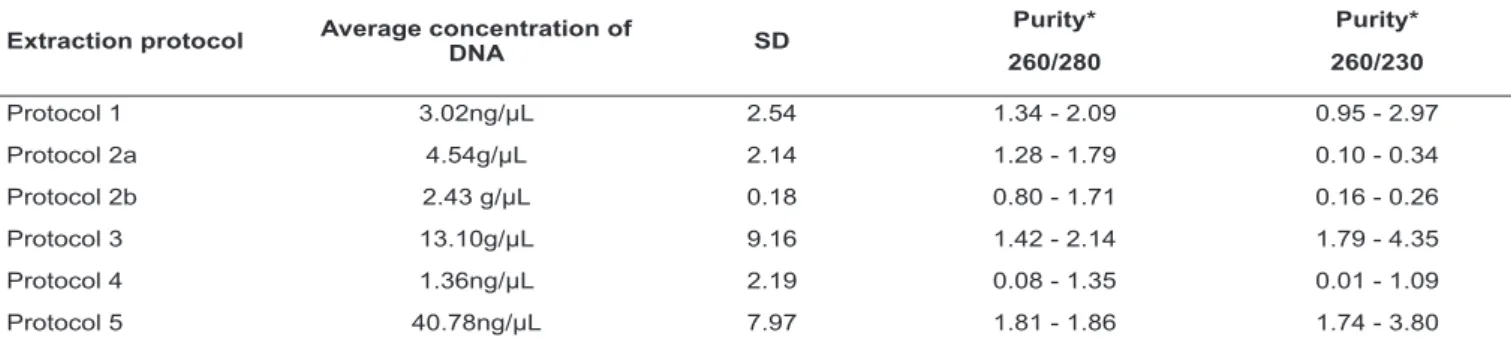
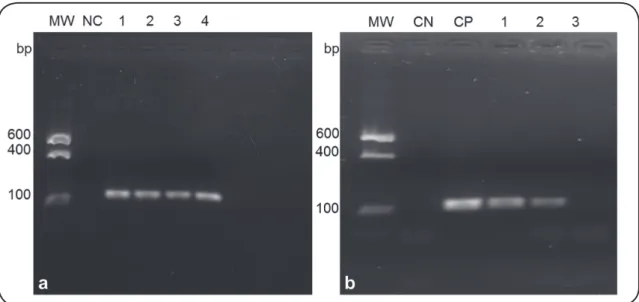
Short Communication Comparison of five methods of extraction of Staphylococcus aureus DNA for molecular detection by PCR
Texto
Imagem
Documentos relacionados
(2004) and MARUCCI (2003) used DNA extraction methods, with subsequent amplification using nested‑PCR to compare DNA extraction’s efficiency and quality by subsequent detection of
- Detection of bacterially- contaminated red blood cell units with an all-bacterial DNA probe test. - Comparison of two sampling methods in bacterially contaminated platelets with a
In the present study PCR and SYBR®Green qPCR assays were compared for detection of HAdV in water (55) and sediments (20) samples of spring and artesian wells, ponds and
Pseudoplatystoma corruscans , Pseudoplatystoma reticulatum and hybrid ‘Surubim’ were detected using multiplex PCR and PCR-RFLP in RAG2, GLOBIN, EF1 α , 18S rRNA nuclear genes,
Hence, the objective of this study was to perform a comparison between the conventional and the ultrasound-assisted methods in terms of extraction efficiency of phenolic
The second round of tests compared the extraction of 70 samples with another three commercial extraction kits: NucleoSpin TriPrep (Macherey-Nagel, Germany) DNA Blood &
out a study assessing three DNA extraction methods of parafin- embedded material, reaching better results in the ampliication of samples extracted with QIAamp DNA minikit ®.. In
In our recent study (3) using in-house protocols, we optimized the methods used for nucleic acid extraction, including co-extraction of RNA/DNA from thyroid FNA in stained
