Engineering
ISSN: 1809-4430 (on-line)
_________________________
2Universidade Estadual de Campinas / Campinas - SP, Brasil.
TECHNICAL PAPER
MULTICRITERIA DECISION AID TO IMPLEMENT AN ON-FARM STORAGE SYSTEM FOR SOYBEANS
Doi:http://dx.doi.org/10.1590/1809-4430-Eng.Agric.v36n6p1250-1260/2016
LUCAS S. BOCCA1*, MARIA L. GALVES2
1*Corresponding author. Banco Central do Brasil / Brasília - DF, Brasil. E-mail: [email protected]
ABSTRACT: Implementing an on-farm storage system for agricultural products becomes a
complex decision problem when considering risks, benefits, uncertainties and alternatives. This study aimed at applying the multicriteria decision aid (MCDA) approach to select the infrastructure
to be implemented, taking into account variables and farmer’s goals. As a result, we concluded that
the adopted approach was useful since it allowed a better understanding of the problem and provided decision-making support.
KEYWORDS: grain storage, investment, multicriteria decision aid.
INTRODUCTION
Implementing an on-farm grain storage system is a complex decision problem because it covers several variables of significant uncertainty level, such as price fluctuations, freight costs, logistics, opportunity cost, strategies of utilization for a storage system and interest rate.
Additionally, “grain production in Brazil has increased at an astounding rate, culminating in record
harvests”, but “a few Brazilian regions show a critical situation regarding their storage systems” (AGUIAR, 2013), as well as transport and shipping deficiencies (MACHADO, 2013).
It is noteworthy that there is no consensus on the static storage capacity required for the
country, and several authors support the FAO’s recommendation (Food and Agriculture
Organization), which is 120% of the annual grain production in the country (GALLARDO et al.,
2010). In the case of soybean, Brazil barely hold stocks and currently “almost all soybean produced
is exported or consumed” (CONAB, 2015).
Thus, it is of major importance to consider specific characteristics concerning grain production and transport in Brazil, while assessing a storage system implementation.
The first aspect to consider is the “soybean market and the factors that can impact on supply
and demand” (BARBOSA & VIEIRA, 2013). Brazil has a strong exporting agriculture and its main
commodity is soybeans. However, its storage seems to be commercially not interesting because “in
Brazil and in the other countries in the Southern Hemisphere harvest extends from March to May,
while in the Northern Hemisphere it takes place in September/October (in the United States)”. Thus,
“Brazilian preferential export period” occurs from “May to August, i.e., prior to American crop
harvest” (FERREIRA et al., 1993).
In addition to occurring during North American off-season, seasonal price changes preclude Brazilian harvest storage (TOMAZELA, 2010), and might become a risk due to their high volatility.
Therefore, it is important to consider additional benefits, or “utility gains” (“convenience yield”), warranting storage (POYNDER, 1999).
Another important variable is interest rate. In addition to stand for “opportunity cost of
product storing” (FERREIRA et al., 1993), if too high, it can make impractical to finance new static
capacity expansion projects (WEBBER, 2011), or even derail the operation of existing warehouses,
as occurred with public structures that have been “disabled by activity change or scrapping” during
investment may also be affected by a lack of scale in the case of small warehouses or by restricting the provision of warehousing services (PUZZI, 2000).
Regarding the installed infrastructure, locations, quantities and types of existing warehouses
do not meet the need of domestic production, and only “part of the warehouses is intended for grain reception” because “a great part is far and serves exclusively industries and ports” (AGUIAR, 2013), which makes it impractical to storage the whole production (GIOVINE, 2010). Hence, overfilling and outdoor storage are quite common for farm warehouses (LEITE, 2013; WACHTER & PEREIRA, 2015).
Furthermore, transport of grains in Brazil is done through roads (trucks), which “causes traffic
clogging, delaying unloading to warehouses/ silos and even ports” (NOGUEIRA JR &
TSUNECHIRO, 2011). On top of that, the need for a prompt production flow increases demand for vehicles surpassing the existing fleet, pushing the price of delivery charge. Besides that, rainfall
regime within the farm area should be considered, which could only have “connections with
consumer regions during the dry season” (PUZZI, 2000).
Apart from that, a bartering of stock for non-stock farm commodity could be may be a feasible alternative for not using the available structure on site, even though there are a few multipurpose structures able to retain some flexibility since they can either be used to store soybeans, corn and wheat grains (KEPLER-WEBER, 2015).
Another major concern is regarding personnel qualification, which may lead to a lack of expertise required for a long-term storage. On the other hand, the knowledge of market and business contacts is more developed in cooperatives and trading companies (PUZZI, 2000).
In brief, all opportunities and benefits from an on-farm storage system must be considered. For instance, we may cite crop processing and loss reduction (estimated at between 15% and 20% without proper storage), grain-quality control, multipurpose storage, product segregation (e.g. transgenic and organic), trading flexibility, savings in fees in third-party warehouses, direct sales to consumers and providing services (PUZZI, 2000; COSTA, 2010; NOGUEIRA JR & TSUNECHIRO, 2011; OLIVEIRA NETO & COSTABILE, 2011; BURKOT, 2014; DESSBESELL, 2014; BRITO, 2015).
On the other side, there are also risks and negative impacts on storing grains and legumes, e.g. growth of rodents and insects, as well as generation of odors, noises, toxic gases and particulate matter, explosions and fires (PUZZI, 2000; SILVA, 2010; PIMENTEL & FONSECA, 2011;
COSTA, 2012; LIMA JÚNIOR et al., 2012). Thus, “storage is a process of paramount importance”
because production can be compromised in case of “inadequate storage process”; in general, in
Brazil, “qualitative and quantitative losses during storage process are still not well controlled” (REGINATO et al., 2014).
Finally, it should be taken into account the existence of public policies that can compromise
the storage profitability since public companies determine “their storage and services fees at levels that allow only the maintenance of operational costs without profit concerns” (PUZZI, 2000). In
addition, there are minimum pricing policies that neutralize greater price variation, allowing greater profit.
Therefore, owing to the amount of variables and the complexity of decision-making context, an investment analysis for installation of warehouses in a farm merits a systematic approach, being capable of (i) structuring the problem individually; (ii) building and comparing alternatives and (iii) assisting the decision-making.
Over time, several methods have been developed to improve decision-making. In short, it has
been emphasized that “each success, each misfortune, each opportunity seized or missed is the
result of a decision that someone took—or failed to take” (ROGERS & BLENKO, 2008).
HAMMOND et al. (2008) stated that, in many cases, “bad decisions” were related to “the way they
of costs and benefits”.
Lately, a monocriteria approach has been mostly used to aid in decision-making. This approach is based on a single criterion (in general, a quantitative measure of economic efficiency) such as risk-return ratio and NPV. Finally yet importantly, mathematical optimization models have
been applied to achieve “optimal solutions” (ENSSLIN et al., 2000).
Still, multicriteria approaches which not only consider multiple variables of different natures (quantitative or qualitative, discrete or continuous), but also subjective aspects of the actors, have been increasingly adopted in decision support in different areas and activities and even to encourage changes in the choice of transport modes (VIOLATO et al., 2011). Regarding agriculture, it can be mentioned the study of BELARMINO et al. (2011) which aimed to identify innovation
opportunities in local productive arrangement (LPA) of a “peach industry” (canned) in Pelotas - RS,
Brazil. Given the above, this study aimed to test the multicriteria decision aid approach in helping a farmer to select an infrastructure to be set up.
MATERIAL AND METHODS
Multicriteria decision aid
This study was carried out under an academic research conducted at the University of Campinas, located in Campinas, São Paulo state, Brazil. The research consisted of applying the multicriteria decision aid (MCDA) to the following real situation:
A farmer, part owner of the land where it is produced grains and legumes, had to decide whether investing or not in silos in one of his properties because part of the infrastructure had already been constructed. The agricultural production was concentrated in three farms, all located
north of Campo Grande - MS, Brazil, along the highway BR–163. He also participated in a business
company (owning 10% of the shares) that operated a commercial warehouse for grain installed in São Gabriel do Oeste, also located north of Campo Grande, MS.
According to ENSSLIN et al. (2000), the MCDA can be divided into three stages: structuring of the problem, assessment of alternatives and recommendation.
The structuring is a fundamental stage in the decision aid process. It includes context characterization, identification and hierarchization of fundamental objectives, choice of attributes and proposition of alternatives (GALVES, 2005). A fundamental objective expresses an essential reason of the decision-making, while an attribute measures how much of the objective has been achieved (KEENEY, 1992). In this study, interviews were conducted with the decision maker (the farmer) to identify respective objectives, strategies, alternatives and preferences.
In the assessment stage, each alternative performance for each attribute is aggregated through
multicriteria assessment methods, which are based on the decision maker’s preferences. It was used
the additive multi-attribute value function method according to [eq. (1)]:
(1)
where,
V(A) is the global value of alternative A;
vn (A) is the value of alternative A in the attributes 1, 2, …, n;
wn is the scaling constant of the attributes 1, 2, …, n, and
n is the number of attributes.
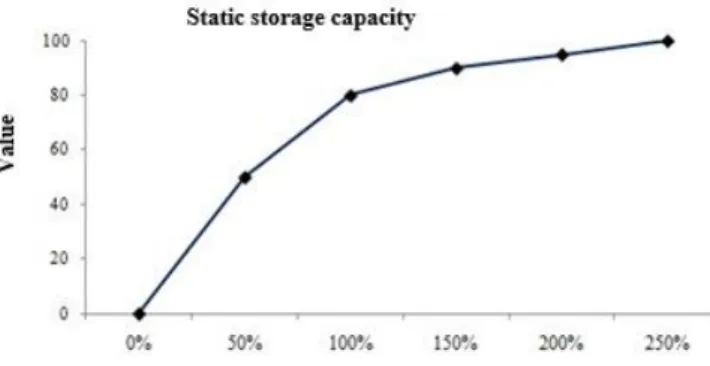
In order to build the value functions, the direct score method was used, defining the best and worst level for each attribute, which stood for the values zero and 100, respectively. Subsequently, the decision maker was asked to express, numerically, the value of other intermediate attribute levels.
The swing weight method was used to estimate the scaling constants (ENSSLIN et al., 2000). First, all attributes were considered as being at the worst level, and the decision maker was asked to choose an attribute to be moved to the best level; for this jump (swing), it was given 100 points. Next, the decision maker was questioned about which attribute he would move from the worst to
the best level, in second place, and which would be the value of this “jump”. This procedure was
repeated until defining the jumps for all attributes. Each jump magnitude was measured in relation to the first one and, finally, jumps were normalized to obtain the scaling constants.
In the recommendation stage, a sensitivity analysis was performed, assuming variations in the scaling constants for some attributes, so that it was possible to verify consequences on the assessment result. Furthermore, a monocriteria assessment was performed to compare the results.
RESULTS AND DISCUSSION
Problem structuring
Based on the interviews with the farmer, it was identified his adopted strategies for grain production flow and the existent alternatives (Table 1).
TABLE 1. Strategies for grain production flow.
Current strategy
At each crop season, the soybean storage site is chosen from the minimum cost calculation, in which:
- The closer the port is, the lower the discount in the price of the product;
- The farther away from the farm, the higher the cost of freight at harvest.
Alternative
There is the possibility to deposit the soybean in trading companies. In this case, there is no storage cost, but costs for processing/receiving the material (cleaning, drying and classification), as well as depreciation costs and technical losses (discount of 0.25% per month).
Adopting such an option, the product must be sold to the custodian warehouse
(trading), and the price to be paid is the “market price”.
Note: the price is within the range of what can be considered as “market price”.
However, it embeds increases or reductions related to the storage and logistics
premium of the trading—positive or negative regarding the location of the
farm/soybean production area. Existing
project
Construction of 4 silos with a capacity of 50,000 bags each (total of 12,000 tons) in one of the farms.
Alternative project
Construction of 3 silos with a capacity of 30,000 bags each (total of 5,400 tons) in one of the farms.
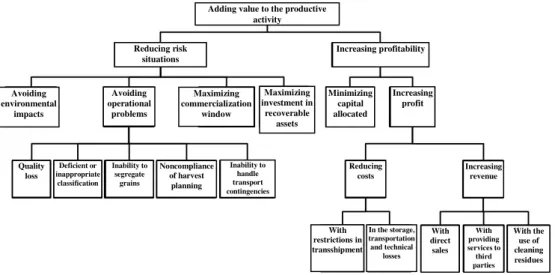
In addition, the objectives concerning the current situation were identified. Among them, it
was considered as fundamental objectives those whose importance was explained to be “essential
reasons” that motivated the decision to be taken. These objectives have been detailed and organized
FIGURE 1. Fundamental objectives hierarchy.
For each fundamental objective of the last hierarchy level, it was defined, along with the farmer, an attribute to measure it (Table 2). Some attributes are measured in quantitative scales (for example, the attributes related to costs), while others are measured in qualitative scales (for example, the attributes related to operational problems).
TABLE 2. Fundamental objectives and attributes.
Fundamental objective Attribute Description Best level Worst level
Avoiding environmental
impacts Severity of impacts
Impact levels according to the severity potential to the production and as a
cause of legal problems Insignificant High
Avoiding quality loss Quality control Capacity to ensure product quality until the sale High None
Avoiding inappropriate
classification Classification control Capacity to ensure a proper classification of the product High None
Avoiding inability to
segregate grains Segregation capacity
Existence of warehouses, control that the farmer has on them and on maintenance activities (cleaning), number of silos
High None
Avoiding noncompliance
of harvest planning Harvest control Capacity to ensure the harvest planning High None
Avoiding inability to handle transport contingencies
Storage capacity in
contingencies Capacity to storage near the production area 100% 0%
Maximizing commercialization window
Static storage capacity
Farmer storage capacity in relation to
his production 250% 0%
Maximizing investment in
recoverable assets Recoverable investment
Invested capital that can be recovered in case of the rural property be directed
to another type of production 100% 0%
Minimizing capital
allocated Annual cost of capital Total cost of implementation R$ 0.00 R$ 340,000 per year
Reducing costs in
transshipment Cost reductiontransshipment – Cost reduction with transshipment operations R$ 17,000 per year R$ 0.00
Reducing costs in storage,
transport and losses Cost reductionstorage –
Savings obtained per ton stored/moved, as well as that due to the reduction of technical losses
R$ 260,000 per
year R$ 0.00
Increasing revenue–direct
sale Capacity for direct sales Capacity to sell the product directly to the end consumers High None
Increasing revenue–
providing services Capacity for providing services
Capacity to provide services to third parties (drying, classification and
storage) High None
Increasing revenue–use of
residues Use of residues Possibility of using residues (sale or feed) Total None
Adding value to the productive activity Reducing risk situations Avoiding environmental impacts Quality loss Maximizing commercialization window Maximizing investment in recoverable assets Avoiding operational problems Deficient or inappropriate classification Inability to segregate grains Noncompliance of harvest planning Inability to handle transport contingencies Increasing profitability Minimizing capital allocated Increasing profit Reducing costs Increasing revenue With restrictions in transshipment
Drawing up alternatives is crucial because good decisions are well founded on a wide range of feasible alternatives (LUECKE, 2010). The alternatives are not a priori set on scoping the MCDA, being built over the decision process though (VIOLATO et al., 2014). Therefore, the following alternatives were defined for the considered decision problem:
1) Not building warehouses
2) Building 4 metal silos of 50,000 bags (12,000 tons) on the property
3) Building 3 metal silos of 30,000 bags (5,400 tons) on the property
4) Increasing the participation in capital (+10%) of the commercial warehouse of which is a
partner
5) Building 4 metal silos of 50,000 bags outside the rural property (in a near site)
6) Use/installation of 30 silobags (5,400 tons).
Assessment of alternatives
For the assessment of alternatives, the value functions and scaling constants were obtained in interviews with the farmer. An example of value function is shown in Figure 2.
FIGURE 2. Example of a value function.
Once defined the value functions and estimated the attribute levels per alternative, the value for each alternative in each attribute (local assessment) was obtained. Local assessments were aggregated from the lower levels of the fundamental objectives hierarchy by multiplying the attribute values by the scaling constants, as eqs. (5) to (8). Subsequently, aggregation was conducted in the second hierarchical level, as eqs. (3) and (4) and finally at the superior level, as [eq. (2)]. The global values are shown in Table 3.
VA= 0.56 × v’A (profitability)+ 0.44 × v’A (risk situations) (2)
v’A (profitability) = 0.51 × v’’A (profit)+ 0.49 × v’’A (capital allocated) (3) v’A (risk situations)= 0.37 × v’’A (operational problems)+ 0.30 × v’’A (commercialization)+ 0.18 × v’’A (recoverable
investment) + 0.15 × v’’A (environmental impacts) (4)
v’’A (profit)= 0.61 × v’’’A (cost reduction) + 0.39 × v’’’A (increase in revenues) (5) v’’A (operational problems)= 0.26 × v’’’A (harvest planning)+ 0.22 × v’’’A (contingencies) + 0.19 × v’’’A (quality loss)+ 0.17 × v’’’A (appropriate classification) + 0.16 × v’’’A (segregation capacity) (6)
v’’’A (cost reduction)= 0.54 × v’’’A (global) + 0.46 × v’’’A (transshipment) (7)
TABELA 3. Global value of the alternatives.
Alternatives Risks Profitability Global value
1) Not building warehouses 69.5 60.1 64.3
2) 4 metal silos of 50,000 bags (12,000 tons) 88.7 62.4 74.1
3) 3 metal silos of 30,000 bags (5,400 tons) 82.3 66.9 73.7
4) Increasing the participation in commercial warehouse (20%) 77.1 47.8 60.9
5) 4 metal silos of 50,000 bags (12,000 tons) outside the rural property 84.9 45.8 63.1
6) Installation of 30 silobags (5,400 mil tons) 84.2 66.6 74.4
Recommendation
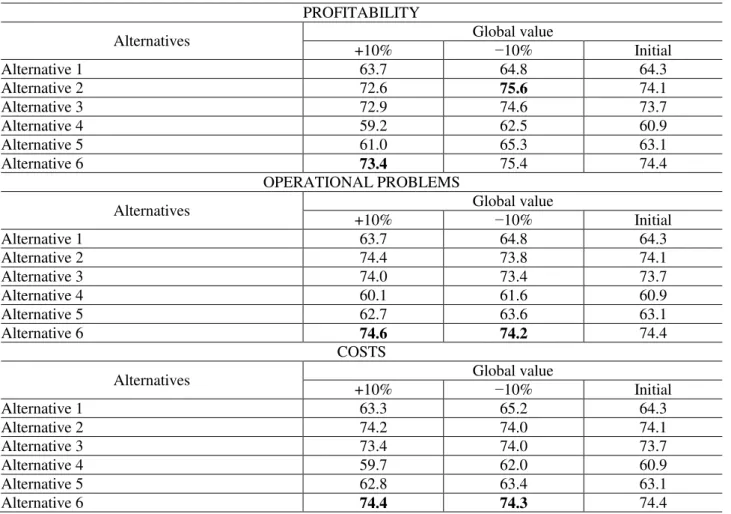
In order to support the recommendation on the most appropriate alternative, a sensitivity
analysis was conducted by applying variations of +10% and −10% in the scaling constants of the attributes that have the greatest influence on the global assessment: profitability, operational problems and costs. The new global values were calculated, being displayed in Table 4.
TABLE 4. Sensitivity analysis.
PROFITABILITY
Alternatives Global value
+10% −10% Initial
Alternative 1 63.7 64.8 64.3
Alternative 2 72.6 75.6 74.1
Alternative 3 72.9 74.6 73.7
Alternative 4 59.2 62.5 60.9
Alternative 5 61.0 65.3 63.1
Alternative 6 73.4 75.4 74.4
OPERATIONAL PROBLEMS
Alternatives +10% Global value −10% Initial
Alternative 1 63.7 64.8 64.3
Alternative 2 74.4 73.8 74.1
Alternative 3 74.0 73.4 73.7
Alternative 4 60.1 61.6 60.9
Alternative 5 62.7 63.6 63.1
Alternative 6 74.6 74.2 74.4
COSTS
Alternatives +10% Global value −10% Initial
Alternative 1 63.3 65.2 64.3
Alternative 2 74.2 74.0 74.1
Alternative 3 73.4 74.0 73.7
Alternative 4 59.7 62.0 60.9
Alternative 5 62.8 63.4 63.1
Alternative 6 74.4 74.3 74.4
According to the results, the best option for the farmer is to adopt alternative 6 (installation of 30 silobags with a total capacity of 5,400 tons). This option is maintained in the sensitivity analyzes, with the exception of only a scenario (reduction of 10% in the scaling constant of the
attribute “Profitability”; in this case, the best alternative is the option 2, i.e., building 4 silos with
total capacity of 12,000 tons). In addition, the sensitivity analysis practically did not change the order of preference of alternatives considered, indicating robustness of the model and stability of results, reducing the risk of selecting an alternative that is clearly not the most indicated to the context analyzed.
Additionally, a monocriteria analysis by the Annual Value method was performed according
to the following equation: AV = Annual Net Income − Capital Recovery Cost (Capital Recovery
annual payments; in this study, it was adopted a residual value equal to zero). Alternative 6 remains the best option (AV = R$ 78,300.00), with a difference in favor proportionally higher than that indicated by the multicriteria method. On the other hand, alternative 3 (AV = R$ 46,884.97) exceeds the option 2 (AV = R$ 21,855.49).
The advantages of a multicriteria against a monocriteria method are decision-problem better understanding, regard of qualitative aspects and chance of follow up and monitor the selected alternative according to the objectives and defined attributes. Thus, it is important to point out some aspects that can be observed from the results of the global assessment and sensitivity analysis obtained in the multicriteria assessment.
The farmer has already quotas (10%) of a commercial warehouse, which provides many functionalities and versatility in conducting his business. Consequently, by adopting alternative 6, the decision maker keeps all the advantages obtained by a complete storage system, or have few restrictions. However, if the farmer had no partner participation in the warehouse, the option for silobags would not be as attractive as it is in the current situation, since it might not contemplate the functionalities and possibilities allowed by the commercial warehouse. In this case, complete system-building options for storage would be better placed in the global assessment.
It is noteworthy that even facing this specificity (partnership in the commercial warehouse), alternative 2 (4 metal silos of 50,000 bags, with capacity of 12,000 tons) got close enough score than that of the best option (alternative 6), in addition to reach the first position in one of the scenarios considered in the sensitivity analysis. As a result, it can be indicated that the selection of such a project cannot be completely discarded.
Furthermore, it might be highlighted that silobags are more likely to undergo higher risk of loss when product is stored and, therefore, its operation must be carefully controlled, mainly
regarding grain moisture content, which aims “to minimize the risks of infestation by insects and
fungi” (SILVA, 2010).
In this context, alternative 2 becomes more interesting as it is highly important to reduce
“risky situations”. From the sensitivity analysis, it is observed that by decreasing the scaling
constant of “Profitability”, which is equivalent to increase the constant “Reducing Risk Situations”,
alternative 6 has its attractiveness (global value) decreased.
Given that the best position of silobags is closely related to low production costs, once implemented the alternative, it should be observed if the operational improvements (efficiency, versatility and operational flexibility, including prevention of risks, losses and operational issues) reach the impact levels estimated by the farmer. Otherwise, alternative 2 (building 4 metal silos) happens to be the second most interesting.
Finally, if the farmer decides to invest in warehouses outside his property, building new warehouses (alternative 5) is far more attractive than simply increasing participation in the existing commercial society (alternative 4). That is because partnership might limit his possibilities and operational strategies.
In the end, the results were shown to the farmer, who not has only found it advantageous to participate in this study, but also has approved the guidelines and recommendations. Moreover, it was not found, in the literature, similar studies for comparison with the results of this study.
CONCLUSIONS
Deploying a grain and legume storage system includes several variables, possibilities, configurations, purposes, strategies, functionalities, applicability, adjacent problems and uncertainties. In this context, the multicriteria decision aid proved quite appropriate and satisfactory, since it allows considering all the variables to be assessed, no matter how different are their natures. Thus, it is concluded that this approach is valid for this type of decision problems.
Applying in the same decision context or in similar situations other multicriteria
assessment methods (PROMETHEE, ELECTRE and AHP) in order to compare the suitability, usability, effectiveness, value and robustness of the results obtained;
Applying the multicriteria decision aid in different decision contexts and whose
characteristics are quite particular (existence of precarious roads or adverse precipitation
regime, seed production, selected grains, transgenics) to determine the methodology’s
capacity in providing appropriate solutions for each decision context;
Using the multicriteria decision aid to assess the agricultural products storage in the
country as a whole in order to guide public policies, priorities, trade agreements or even indicate investment priorities.
REFERENCES
AGUIAR, G. O gargalo da armazenagem. Bebedouro: Scot Consultoria, 2013.
BARBOSA, P. D.; VIEIRA, J. G. V. Escolha de armazém de soja: uma abordagem
multicritério. In: ENCONTRO NACIONAL DE ENGENHARIA DE PRODUÇÃO, 23., 2013,
Salvador.
BELARMINO, L.C.; MARTINS, F.M.; SIMA, L.F.; ALONSO, C.A.; HEBERLE, A.L.O.
Identificação das oportunidades de inovação em APL por Multicritério. In: CONGRESSO DA
SOBER, 49., 2011, Belo Horizonte. Anais... Brasília: Sociedade Brasileira de Economia,
Administração e Sociologia Rural, 2011.
BRITO, S. Armazenamento inadequado de grãos resulta em cerca de 15% de perdas. Jornal
Dia de Campo, Campo Grande, 29 jul. 2015.
BURKOT, C. R. A qualidade desejada na secagem e armazenagem de grãos em uma cooperativa no
município de Ponta Grossa– PR. Revista de Gestão e Organizações Cooperativas, Santa Maria,
v. 1, n. 2, 2014.
CONAB. Perspectivas para a Agropecuária – Safra 2015/2016, Produtos de verão. Brasília, v. 3,
2015.
COSTA, L. Segregar milho custaria mais. Reportagem publicada em 24/02/2010. O Estado de São
Paulo, São Paulo, 24 fev. 2010. Suplemento Agrícola.
COSTA, M. F. Qualidade e riscos de contaminação de produtos armazenados. Cuiabá:
Universidade Federal de Mato Grosso, 2012.
DESSBESELL, R. Viabilidade da implantação de uma unidade de armazenamento de grãos.
Ijuí: Universidade Regional do Noroeste do Estado de RS, Departamento de Estudos Agrários, 2014.
ENSSLIN, L.; DUTRA, A.; ENSSLIN, S.R. MCDA: A constructivist approach to the management
of human resources at a governmental agency. Internacional Transactions in Operacional
Research, 7, p. 79-100, 2000.
ENSSLIN, L.; MONTIBELLER NETO, G.; NORONHA, S.M. Apoio à decisão – Metodologias
para estruturação de problemas e avaliação multicritério de alternativas. Florianópolis: Insular, 2001.
FERNANDES, Q. S.; ROSALEM, V. O cenário da armazenagem no Brasil. In: Enciclopédia
Biosfera, Centro Científico Conhecer, Goiânia, v.10, n.19, p. 352, 2014.
FERREIRA, L.R.; BURNQUIST, H.L.; AGUIAR, D.R.D. Infra-estrutura, comercialização e
GALLARDO, A. P.; STUPELLO, B.; GOLDBERG, D. J. K.; CARDOSO, J. S. L.; PINTO, M. M. O. Avaliação da capacidade de infraestrutura de armazenagem para os granéis agrícolas produzidos no centro-oeste brasileiro. São Paulo: POLI, USP, 2010.
GALVES, M.L. Structuring decision situations: a brief overview. In: ADVANCES IN
MULTICRITERIA DECISION AID, 2004, Brest. Proceedings… Brest: GET/ENST Bretagne,
2005.
GIOVINE, H.; CHRIST; D. Estudo sobre processos de armazenagem de grãos – Um estudo de
caso: Região de Francisco Beltrão – PR. CIÊNCIAS SOCIAIS APLICADAS EM REVISTAS –
UNIOESTE/MCR, Cascavel, v.10, n.18, p. 139-152, 2010.
HAMMOND, J.S.; KEENEY, R.L.; RAIFFA, H. As armadilhas ocultas na tomada de decisões. In:
Decisões mais inteligentes. Rio de Janeiro: Ed. Elsevier, 2008.
KEENEY, R.L. Value-focused thinking: A path to creative decision making. Cambridge:
Harvard University Press, London, 1992.
KEPLER-WEBER. Catálogo Kepler-Weber – Fazenda.Catálogo de Produtos. 2015.
LEITE, G. L. D. Capacidade de armazenamento e escoamento de grãos do Estado do Mato
Grosso. Brasília: Universidade de Brasília, Faculdade de Agronomia e Medicina Veterinária, 2013. LIMA JÚNIOR, A. F.; OLIVEIRA, I. P.; ROSA, S. R. A.; SILVA, A. J. S.; MORAIS, M. M.
Controle de pragas de grãos armazenados: usos e aplicação de fosfetos. Revista Faculdade Montes
Belos, São Luis de Montes Belos, v. 5, n. 4, 2012.
LUECKE, R. Tomando decisões. Rio de Janeiro: Ed. Record, 2010.
MACHADO, M. F. M. Projeção e localização da infraestrutura de armazenamento das safras
de grãos. Campinas: Universidade de Campinas, Faculdade de Engenharia Agrícola, 2013.
NOGUEIRA JR., S.; TSUNECHIRO, A. Pontos Críticos da Armazenagem no Brasil. São Paulo:
Instituto de Economia Agrícola, abr. 2011.
POYNDER, N.J.T. Grain storage in theory and history. In: CONFERENCE OF THE
EUROPEAN HISTORICAL ECONOMICS SOCIETY, 3rd, 1999, Lisboa.
PUZZI, D. Abastecimento e armazenagem de grãos. ed. atual. Campinas: Instituto Campineiro de
Ensino Agrícola, 2000.
OLIVEIRA NETO, G. C.; COSTABILE, L. T. Análise quantitativa das perdas no transporte e armazenagem de grãos em molhadura, perdas no transporte e contaminação por pragas: um estudo
de caso malsucedido na contratação do operador logístico para carga seca a granel. SEGET –
SIMPÓSIO DE EXCELÊNCIA EM GESTÃO E TECNOLOGIA, 8., 2011, Resende. Anais...
PIMENTEL, M. A.G.; FONSECA, M. J. O. Secagem e armazenamento. Sete Lagoas: Embrapa
Milho e Sorgo, 2011. (Sistema de Produção, 1).
REGINATO, M. P.; ENSINAS, S. C.; RIZZATO, M. C. O.; SANTOS, K. K.; PRADO, E. A. Boas
práticas de armazenagem de grãos. In: 8o ENEPE UFGD, 2014.
ROGERS, P.; BLENKO, M. Quem tem a D? Como papéis decisórios explícitos aumentam o
desempenho organizacional. In: Decisões mais inteligentes. Rio de Janeiro: Ed. Elsevier, 2008.
SILVA, L. C. Estruturas para armazenagem a granel. Vitória: Universidade Federal do Espírito
Santo, Departamento de Engenharia Rural, 2010. (Boletim Técnico).
TOMAZELA, J.M. Frete custa até 50% da safra de soja de MT. O Estado de São Paulo, São
Paulo, 7 mar. 2010. Caderno Economia.
VIOLATO, R.R.; MONTEIRO, V.L.; GALVES, M.L. Incentivo às viagens pelo modo a pé:
aplicação da metodologia de auxílio multicritério à decisão. Revista dos Transportes Públicos,
VIOLATO, R.R.; GALVES, M.L; OLIVEIRA, D. D. G. Non-motorized mobility in central urban
areas: application of multi-criteria decision aid in the city of Campinas, Brazil. International
Journal of Sustainable Transport, Philadelphia, v.8, n.6, p.423-446, 2014.
WACHTER, S. A.; PEREIRA, F. A. R. Custo de armazenagem de grãos no sistema silos bolsa. Revista Comunicação & Mercado/Unigran, Durados, v.4, n.9, p.245-253, jan.-jun. 2015.
WEBBER, E. F. Viabilidade Técnico-econômica na Armazenagem de Grãos no Paraná.