Application of a Context Model in
Context-Aware Mobile Government
Services
César E. Ariza Avila
Dissertação submetida à Universidade do Minho para obtenção
do grau de Mestre em Sistemas de Informação elaborada sob a
orientação da
Doutora Helena Rodrigues
Departamento de Sistemas de Informação
Escola de Engenharia
Universidade do Minho
Guimarães, Outubro de 2006
iii
Acknowledgements
I would like to express my gratitude to all people that directly or indirectly contribute to the execution of this work.
Special thanks to my supervisor Doutora Helena Rodrigues for creating the environment for doing this research.
Special thanks also and again to Helena Rodrigues and Jason Pascoe for the revisions, suggestions and supporting in order to finish this dissertation.
Special thanks to Helder Pinto and the researchers of the Ubicomp Laboratory at University of Minho.
I would like to thank, to the Information Systems Department for creating the environment needed to this research.
v
A p l i c a ç ã o d e u m M o d e l o d e C o n t e x t o e m
S e r vi ç o s M o v e i s B a s e a d o s n o C o n t e x t o p a r a o
g o v e r n o e l e c t r ó n i c o
Resumo
As novas tecnologias móveis oferecem um elevado potencial para a interacção e a participação dos cidadãos com as autoridades locais. Estas tecnologias são exploradas nesta dissertação, tendo como objectivo promover e melhorar esta interacção, suportando e criando formas novas de comunicação e tentando tomar vantagem da mobilidade tanto quanto possível.
As aplicações baseadas no contexto utilizam o contexto para facilitar e melhorar a experiência do utilizador Estas aplicações, combinadas com as novas tecnologias móveis, podem simplificar os processos de comunicação com o governo.
Esta dissertação apresenta as áreas chaves a considerar no desenvolvimento de uma aplicação móvel baseada no contexto. Inicialmente são apresentados os principais requisitos identificados para tais aplicações. Contexto é descrito então como um modelo do ambiente circunvizinho, e um modelo de objectos é apresentado a fim de demonstrar esta visão. Para a implementação do modelo de objectos foi utilizado RDF, que permite a representação de conhecimento. Um conjunto de aplicações centrais foi desenvolvido a fim de suportar o modelo de contexto e a criação de aplicações baseados no contexto. As aplicações foram testadas no município de Vila Nova de Cerveira, com a contribuição de um conjunto de cidadãos. Por último, os cenários de teste, assim como os resultados de usabilidade são apresentados.
vii
A p p l i c a t i o n o f a C o n t e x t M o d e l i n C o n t e x t - Aw a r e
M o b i l e G o ve r n m e n t S e r vi c e s
Abstract
New mobile technologies offer a wide potential for interaction and participation between citizens and local authorities. These technologies are explored and exploited in this thesis with the aim of promoting and improving this interaction by supporting and creating novel ways of communication and taking as much advantage of mobility as much as possible.
Context Aware Applications utilise context to facilitate and improve the user experience. These applications, combined with the new mobile technologies used by citizens, can simplify their process of communication with government bodies.
This dissertation presents the key areas for consideration in developing a Context Aware Mobile Government Application. Initially we present the central requirements we identified for such applications. Our understanding of context is then described as a model of the surrounding environment, and an object model in particular is presented in order to realize this understanding. The object model was implemented using RDF, which allows the representation of knowledge, and a set of core applications were developed in order to support the context model and the creation of new context aware applications. These were tested in a trial implementation at the municipality of Vila Nova de Cerveira, which we present along with some user studies that we conducted with the help of some citizens of the municipality.
ix
Contents
Acknowledgements ______________________________________________________ iii Resumo _________________________________________________________________ v Abstract _______________________________________________________________ vii Contents _______________________________________________________________ ix List of figures ___________________________________________________________ xi List of tables ___________________________________________________________ xiii 1 Introduction _________________________________________________________ 11.1 The USE-ME.GOV project __________________________________________ 2 1.2 Context Awareness Concepts _______________________________________ 3
1.2.1 Context in aware computing ______________________________________________ 3
1.2.2 Context categorization and acquisition ______________________________________ 5
1.3 Context aware systems ____________________________________________ 6 1.4 Objectives of this dissertation ______________________________________ 8
2 Context management applications requirements ___________________________ 9
2.1 Introduction _____________________________________________________ 9 2.2 Context Information Requirements _________________________________ 10
2.2.1 Model for context Information ____________________________________________ 10
2.2.2 Representing and storing context Information _______________________________ 11
2.3 Application Context Requirements _________________________________ 12
2.3.1 Ability to communicate with other applications _______________________________ 12
2.3.2 Ability to accept new forms of context ______________________________________ 13
2.3.3 Ability to add value to the context Information _______________________________ 14
2.3.4 Ability to make complexities in context information transparent to users and applications
15
2.4 Conclusion _____________________________________________________ 15
3 Context Model ______________________________________________________ 17
3.1 Introduction ____________________________________________________ 17 3.2 The selected model ______________________________________________ 18
x
3.3 Using the Object Model ___________________________________________ 20
3.3.1 Modeling Objects ______________________________________________________ 21
3.3.2 Modelling Relationship Objects ___________________________________________ 22
3.3.3 Selection algorithms ___________________________________________________ 23
3.3.4 Context model representation ____________________________________________ 24
3.4 Conclusions ____________________________________________________ 28
4 Implementation ______________________________________________________ 29
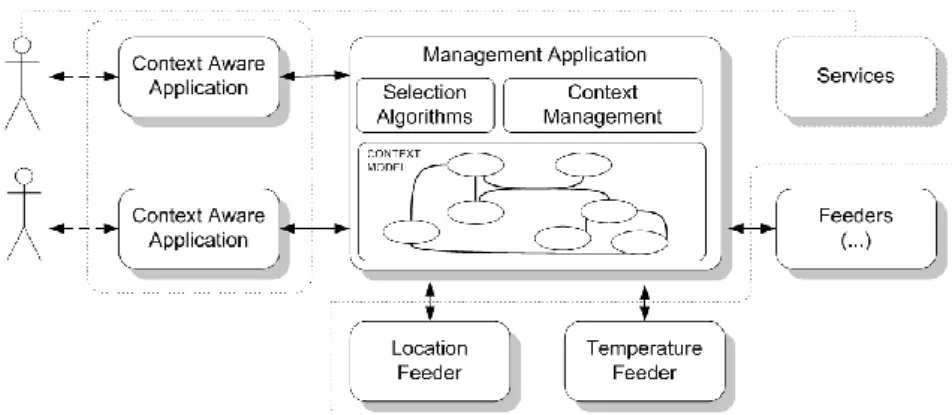
4.1 Context management architecture overview __________________________ 29 4.2 Management Application and Context Model Implementation ___________ 31
4.2.1 Representing Objects __________________________________________________ 32
4.2.2 Selection Algorithms ___________________________________________________ 34
4.2.3 The Context Manager __________________________________________________ 35
4.2.4 Invoking Selection Algorithms ____________________________________________ 37
4.3 Feeders ________________________________________________________ 38
5 Deployment and Validation ____________________________________________ 41
5.1 Introduction ____________________________________________________ 41 5.2 Populating the Model _____________________________________________ 42
5.2.1 Feeders _____________________________________________________________ 43
5.2.2 Feeder implementation issues ___________________________________________ 44
5.2.3 Complaint Services ____________________________________________________ 45
5.3 Context Aware Complaint Application _______________________________ 46
5.3.1 Interaction Model ______________________________________________________ 47
5.4 User Testing ____________________________________________________ 51
5.4.1 Test scope ___________________________________________________________ 51
5.4.2 Findings _____________________________________________________________ 52
xi
List of figures
Figure 1. Very general roles in a context aware architecture ... 12
Figure 2. The basic objects ... 19
Figure 3. Example of anonymous objects ... 19
Figure 4. Simple and complex Relationships ... 23
Figure 5. General view of the of the context aware architecture ... 24
Figure 6. RDF Model ... 25
Figure 7. Simple RDF Graph ... 26
Figure 8. RDF graph representing a Relationship. ... 27
Figure 9. Context Management Architecture ... 29
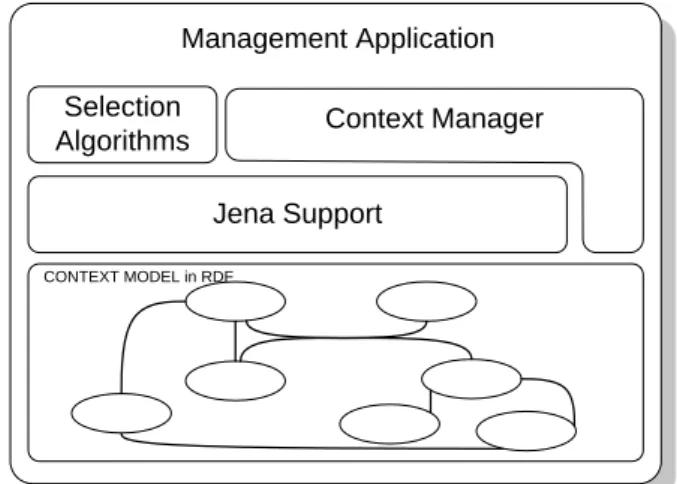
Figure 10. The Management Application overview ... 31
Figure 11. The ObjectID Type ... 33
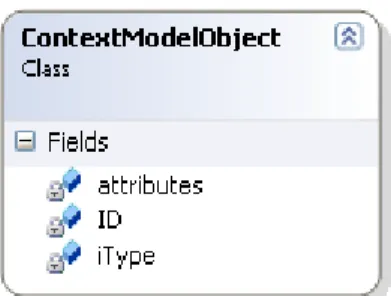
Figure 12. The ContexModelObject class ... 34
Figure 13. Selection function interface ... 35
Figure 14. The Context Manager exposed functionalities (public methods) ... 36
Figure 15. Vila Nova de Cerveira ... 42
Figure 16. Object modeling ... 43
Figure 17. Location feeder representation ... 44
Figure 18. Complaint service representation ... 45
Figure 19. Menu driven interface showed to the user ... 47
Figure 20. The general picture of the environment ... 48
xiii
List of tables
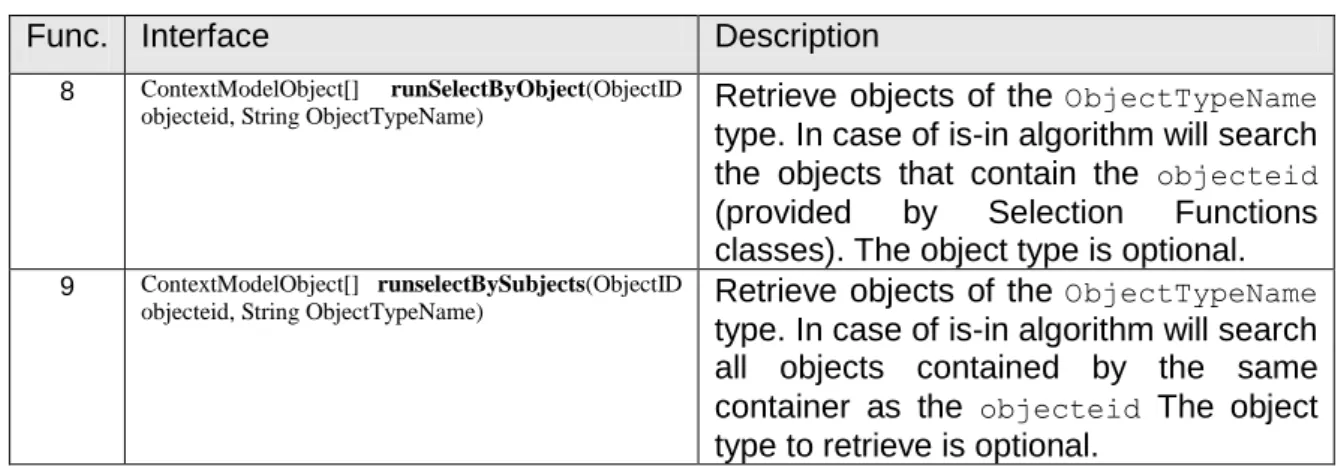
Table 1. Selection functions interface description ... 35
Table 2. Object Creation related API ... 36
Table 3. Algorithm invocation related API ... 37
Table 4. Feeding requets invocation ... 38
Table 5. Feeders Interface ... 39
Table 6. Recognition of the interface elements... 53
1 Introduction
New mobile technologies offer a wide potential for interaction and participation between citizens and local authorities. Those technologies will be explored and exploited in order to promote and improve this interaction, supporting and creating novel ways of communication and taking as much advantage of mobility as possible [1].
A good example of citizen interaction is a spontaneous participation in the community, in which citizens may have to provide, or be asked for, information about their current situation (i.e. a traffic jam, a crash, a fire, a parade, a commendation, etc). The challenge is to allow the citizen to react immediately, in the right place and at the right time. Such spontaneous participation inside a community can be seen as a new application area.
Local governments [1] like to provide communication channels to the citizens in order to improve the relationship between citizens and government. Those channels can be electronic services such as web portals, mobile services or, face to face services. In any case the citizen must know which service or channel can use and when those services are available. For instance, if a citizen wants to interact with the government in order to inform them of an anomaly or ask for information, the citizen must find the appropriate person or department to communicate with. Also the communication must be done in the appropriate time (e.g. office hours). In many cases this could discourage the citizen from contacting a government service. In the case of mobile services, the service selection can be improved if citizens are provided with a tool that helps them to discover the right services they need when the citizens want to make a spontaneous participation. This tool could take the form of a set of applications that discover or help to discover services on behalf of the user by using contextual information.
Spontaneous participation from citizens in a community faces two somewhat contradictory requirements. Firstly, it is imperative to acquire as much information as possible from situations. This information does not only include data submitted by citizens (i.e. text, pictures or video sent via SMS and MMS), but must also include information about the context, for instance the time and location of the participation. If this information can be represented in a rich and coherent structure then we expect that there will arise many useful new services that could exploit it. Secondly, a spontaneous
2
participation needs simple and easy-to-use interaction mechanisms to attract and retain as many users as possible[2].
A central issue in providing these kind of services is to accurately ascertain the context of the users based on their situation. For example in a complaint-scenario, the users location is useful in determining the topic of the complaint. But there are difficulties in getting accurate location info. For example the user can send a complaint via SMS but the location granularity provided by mobile operators is only available to the level of a mobile cell. In this situation other kind of context information are also necessary and useful, such as the type of place where the user is located (i.e. a garden, a park, a hospital, a rural zone, etc). And there are similar challenges to ascertain and represent these types too. An equally important issue is how to model and represent the context of both the user and the services provided, which includes how to describe the user, how to describe the nearby objects, how to describe the user situation and how to describe the service context (i.e. the context in which a particular local service is useful).
Finally, when the user context is known, it is necessary to find a match between the user context and the service context in order to provide an appropriate service to the user.
1.1 The USE-ME.GOV project
The USability-drivEn open platform for the MobilE GOVernment consortium (USEME.GOV project) [3] aims to develop a platform to enable the easy development and deployment of local government applications/services that citizens can access via their mobile devices (e.g. smartphones or PDAs).
The project vision is centred on the provision of appropriate services (i.e. context-dependent services) to the citizen directly in the time and place they are needed or useful [2]. One component of the USE-ME.GOV platform concept was a context model to support context-aware behaviours of the various services through the provision of a model of the surrounding environment [4].
Municipalities (or other government bodies) may have many services to offer their citizens. Consider for example, if the citizen wants to report an anomaly. In this case the citizen must know the department to interact with and the specific information to provide. It is also likely that the information given by the citizen must be processed and delivered to the correct responsible party. In the case of reporting an anomaly, for example, to a
3
damaged bench in a garden, the information must be delivered to the responsible department of gardens. This plethora of services, procedures and situations may be overwhelming for the citizen.
However, it is possible to help the Citizen and even the Municipality to select the correct service. In the garden scenario, if the citizen wants to report an anomaly immediately they could use their smart phone to access the anomaly report services that the municipality provide for that. Furthermore, by using the context information of the citizen (e.g. user location) it is possible to suppose that in the case of the garden complaint situation, that the user wants to inform the local government something related the garden. So using context information the services that will appear in the smart phone of the citizen will be only those related to the citizen’s context, such as a service service to report an anomaly for the garden.
Using contextual information benefits the citizens as well the Municipality or government. Some of the benefits derived from the use of contextual information can be: speeding up the problem resolution, simplifying the process for citizens and governments, encouraging the participation of the citizens, making easy the citizen to access to the services [1].
One of the goals of the USEME.GOV platform is to support the service discovery on behalf of the user. This service discovery is based on a component that utilises the contextual information of the user and services.
This dissertation forms part of the work developed in the USE-ME.GOV project, particular with respect to the components in charge of context information.
1.2 Context Awareness Concepts
1.2.1 Context in aware computing
According to the Merriam-Webster dictionary [5] theterm“context”hastwo meanings:
1. the parts of a disclosure that surround a word or passage and can throw light on its meaning.
4
The context concept is widely used in grammar. In some cases it is possible to know the meaning of a word by using its context. By analogy it is possible to know some facts about other entities by knowing their context. For instance if someone wearing overalls it is possible that he or she may be working. Context in this document is related to the context used in context-awareness computing.
Many definitions of context have been proposed in context-aware computing research. A widely accepted definition proposed by Dey and Abowd is:
“Context:anyinformationthatcanbeusedtocharacterizethesituationofentities (i.e. whether a person, place or object) that are considered relevant to the interaction between a user and an application, including the user and the application themselves. Context is typically the location, identity and state of people, groups and computationalandphysicalobjects.”[6].
However the definition above is very general and covers a lot of information. For this reason several types of context (sometimes known as context dimensions or categories) have been defined, such as a time context, location context, activity context, physical context, etc [2,3]. These concepts help to clarify the nature of context but they do not really address the issue of how to represent it.
There already exists several forms of representation for different types of context. For example, the location context of entities (such as objects, persons, or services) can be well expressed using GML (Geography Markup Language)[4,5] among other standards. A higher-level model is still required though in order to bring these different pieces together and to offer a unified model that may support all types of entities and contexts. The semantic web offers a means of doing so through the use of ontologies to model and represent context and related concepts [6], and also utilises previously acquired knowledge expressed as ontologies [7].
Based on these definitions, the general needs of a context aware system are: i. context acquisition: how to obtain the contextual information,
ii. context representation: how to organize and store the context information; iii. context use: how to use the context information in an appropriate manner.
One of the objectives of this work is to present a solution to the three needs presented above in a specific application scenario. The specific scenario is the participation of the
5
citizen in the community by interacting with the government. This work will also present the three basic needs about, in the form of requirements in the requirements chapter.
1.2.2 Context categorization and acquisition
There is not a unified classification of context. Many authors define those categories depending on the use of the context information. Shilit et. al. [7] defined three categories ofcontext:usercontext(user’sprofile,user’slocation,socialsituation,etc),computing context (net connectivity, communication costs, com. bandwidth), and physical context (lighting, noise levels). Dey and Abowd [6] define four main types of context: location, identity, activity, and time.
In this dissertation the term context dimension is used as context type or context category, referring to the kind of contextual information. For instance, the user feelings, the user activity, the user location, etc. are all kinds of context dimensions.
Contextual information can be acquired in several forms. For instance the altitude can be acquired by using an altimeter or a GPS, or even by heating water and calculating the altitude by measuring its boiling point with a mercury thermometer.
Context acquisition refers to the form the contexts is acquired. Mostéfaoui et. al. [8] defined three ways of context acquisition:
Sensed context: This kind of information is acquired by means of physical sensors, such as for temperature and pressure.
Derived context: Is the information computed on the fly, such as time and date. Context explicitly provided: For instance the user preferences when they are
explicitly provided to the application.
The above mentioned categories of context and context acquisition help us to realize how the context can be acquired in this work. Cities do not have an infrastructure for context sensing and acquisition. Smart spaces, instead, are provided with sensors that acquire contextual information such as temperature, noise levels, location, light intensity, etc. Also the people that use those spaces in some way have artefacts that make possible to know their position. Those artefacts can be cameras or electronic tags such RFID, or even Bluetooth devices. Cities are not smart spaces. If some sensing devices exist in cities they are often not accessible or usable. For instance, if the time is
6
considered as a context dimension, certainly the watch in the tower of the church can be hardly useful. Also Citizens lack of devices needed to contextualize in a city. However, in order to contextualize citizens or entities in a city, one of the possibility is to use (or reuse) infrastructure not intended for contextualization.
The way citizens can be contextualized is unpredictable. Nowadays citizen environments have restrictions such as the lack of sensors and the lack of accuracy in the sensed context dimensions. Assuming the citizens have as a minimum a mobile phone, in some way the position of the citizen (even with a really bad accuracy) can be revealed. Citizens with more sophisticated devices – with embedded GPS devices- can be located with a better accuracy. However, location is only one of the context dimensions, there are other dimensions, such as activity, citizen feelings, etc. If it is not possible to acquire all the required context dimensions there remains the option to ask to the user for their context.
1.3 Context aware systems
Context aware applications are those that uses context, more specifically Shilit [7] defined context aware systems as:
“A context-aware system is one that can determine and react to the current physical and computing context of mobile users and devices, by altering the information presented to users or commands issued by and on behalf of those users.”
Dey and Abowd[6] defined a context aware system as:
“Asystemiscontext-aware if it uses context to provide relevant information and/or servicestotheuser,whererelevancydependsontheuser’stask.”
Research into frameworks and models to support context-awareness in applications has tended to concentrate on particular niches.
For example, the GUIDE project [9] developed a guide for tourists in the city of Lancaster, in which, based on the user preferences and location, the application will create an appropriate guide tour. GUIDE was developed using an application centric
7
approach with any context modelling component embedded inside the application. The user preferences are obtained directly from the user and the location information is obtained by receiving location messages transmitted from strategically positioned Wi-Fi (IEEE 802.11) base stations. The physical device used was a touch-screen sub-notebook (Fujitsu TeamPad 7600 with 850g), with the software limited to this specific device.
The Context toolkit (CTK) [10] dealt primarily with handling and conversion of sensor data. The CTK proposes a network of widgets, some widgets dealing directly with sensors. The widgets communicate the contextual information to an intermediate layer using a publish/subscribe mechanism. In this approach the contextual information is categorized using a taxonomy. One of the advantages of the CTK is the separation to the applications about the context acquisition tasks and interpretation.
Two broader approaches to modelling context are SOUPA (Standard Ontology for Ubiquitous and Pervasive Applications) [11] and CoOL (Context Ontology Language to enable Contextual Interoperability) [12]. SOUPA is designed to model and support pervasive computing applications in the form of a set of ontologies that are expressed using the Web Ontology Language (OWL). SOUPA is composed of a set of core ontologies and extension ontologies. The core set includes ontologies to represent persons, events, actions, space, time and the proposed extension ontologies include location, devices, schedule, etc. These extension can be added to further, and this possibility to extend SOUPA is one of its advantages. In fact the core ontologies reuse some pre existing made ontologies such as the Friend-Of-A-Friend ontology (FOAF), DAMLTime and the entry sub-ontology of time and the spatial OpenCyc. There are developed applications that use SOUPA such as CoBrA [13]. CoBrA is a broker-centric agent architecture for supporting context-aware systems in smart spaces.
CoOL employs semantic web techniques also. CoOL uses OWL-S and its principal aim is the interoperability between web services. CoOL focuses in the description of the “semantics” (semantics refers to how to invoke the service, data types of the parameters, and data types of the received answers) of the services by using OWL-S. CoOL also allows to describe the context of use of the services by using aspects. Those descriptions are used to discover services and, once discovered, to invoke that services. The discovery process is performed by matching a given context (represented as aspects) with the service context description.
8
To summarize, GUIDE uses an applicational centric architecture and was developed for a specific device. The CTK is a good approach because it separates and hides the context acquisition from the applications, and encapsulates each context dimension in a software component (widget). SOUPA proposes the use of ontologies to model context and is used in smart spaces application. CoOL focuses on web services description and service discovering. All those approaches has its niche and contribute important ideas such as the formal representation of context, service discovery and representation, and the separation between context acquisition and the context use. These important ideas will be reflected in the development of this work.
1.4 Objectives of this dissertation
The main objective of this dissertation is to explore the manner in which to design and develop a Context-Aware mobile government application. The specific goals are:
To analyze the context requirements for context aware.
To apply one approach of representing and modelling context. Context representation can be further divided into (a) context about objects (persons and physical objects) and (b) context about services that will be offered to these objects.
To implement a mechanism to discover what services are useful for which users depending on their context.
To deploy and to analyze the results of this deployment.
The structure of this dissertation is as follows: the first chapter contains the introduction; the second chapter presents some concerns and challenges about building context aware applications; the third chapter presents the context object model as a way of modelling context; the fourth chapter presents one computational artefact that manages the context object model, the fifth chapter describes the creation of an context aware application and finally conclusions are presented in the last chapter.
9
2 Context management applications requirements
2.1 Introduction
In design of a context aware mobile government application (CAMGOV) several approaches can be used to identify its requirements. There are methodologies for software requirements specification [14], however in the area of context aware computing those guidelines are not suitable directly in a design and development process; as stated in [10] and from the experience gained in the USE-ME.GOV project. For instance in a retail business application, there are only well known operations and data to model, basically products and data related with that business such as providers, clients, inventory, sales, etc. It is not hard to affirm that all of the retail commerce sector has a similar data model; for this kind of traditional application conventional methodology is used for requirements specification and modelling.
Unlike the retail business applications, there is not a methodology for requirements specification and design of context aware applications. These applications are still under research and therefore there is not a unified view of what is a context aware application and what is the contextual information, which makes difficult the creation of this kind of application. Moreover, the data in these kind of applications can vary greatly and it is therefore very difficult to use conventional structured data types for this kind of information. Proof of that is the great number of approaches used for modelling context [15], and, for this reason a non empirical methodology is used to find out the context requirements for context aware applications.
By analysing constraints it is possible to find requirements; moreover the nature of the application implies some tacit constraints too. The identified constraints of a context aware mobile government application, in brief, are: the application must be able to acquire context information, process context information and allow using context information. Furthermore, it is necessary the representation of the context information. From another perspective, requirements can be divided into two groups, one related with context information and another related with the application that manages the context. Based in the main constraints above and in other research work, the following is the list of the key requirements for a CAMGOV.
10
2.2 Context Information Requirements
The following sections describe the requirements related about the contextual information.
2.2.1 Model for context Information
Requirement: A model for context information is necessary.
In order to use computer technology with the aim to mechanize some process it is necessary to have a model of the players involved in the process. For instance in a selling process the invoices or receipt is filled. The information found in those documents is normally related to the client and the products. This form can be filled in by hand. In the case a computer fills and prints the form, the client and the product information can modelled in form of entities and relations and those entities and relations stored as tables in a database. Similarly we need to model the context information in order to have a common understanding of how the context is used in the management system.
A good model makes smoother the representation of the real word by using data structures, for instance a model to represent location must have the possibility to represent symbolic location information such as the “EiffelTower”andnonsymbolic location information such as coordinates (i.e. latitude, longitude and altitude).
There are many approaches to model context information [15] and generally the model is very related with the way the context is represented and stored. Earlier approaches propose the use of dynamic tags associated with the objects [16], more recent works suchasDey’sContextToolkit[10] use a taxonomy for context categorization and define attributesofobjectsmerelyansweringquestionslike“who”,“where”,“what”,“when” and not defining formal model for context. The context toolkit also allows components (widgets) to create derived context information, this derived context information is not well supported by the taxonomy model and is specific for the application where the context is used.
The Context Ontology Language (CoOL) [12] is another approach for modeling context; CoOL model is very good at describing services because the ontology is based in OWL-S (formery DAML-OWL-S). OWL-OWL-S [17] is a language for describing web services in an unambiguous form. Chen et al. [11] and Wang et al. [18] propose the use of ontologies for context modelling, both models are very rich for modelling the world, and present a formal representation of context; in both approaches the prototypes that support their
11
systems are based in relatively small spaces (confined spaces) such as a kitchen or a laboratory-room, those places provided with several sensors as sources of context information. The differences in the scope of application between the two mentioned ontology approaches and the CAMGOV are the quantity of sensors used to acquire context, in [11] and [18] the number of sensors is greater than compared to the number of sensors in a city.
Additionally the specific places they consider, such as a kitchen, seems to have less activities (i.e. cooking, blending, washing) per person than in a open space as a city. However the formalism of the model approaches used in [11] and [18] (by using OWL to represent objects and services) serves as example about the importance to create a model for context in a CAMGOV.
2.2.2 Representing and storing context Information
Requirement: It is necessary to represent the model for context information using
adequate data structures.
Once the model for context is defined, the next step is to define data structures to represent this information. For example, location could be modelled as symbolic and non symbolic information. That could represented in files that use the GML[19] schema to represent location.
In order to use context information, it is necessary to find out how to represent and store (give persistency) the context information model. Representing and storing is necessary to keep historical information and for the easy querying of the data. The importance of how the model is represented is the feasibility to map entities of the model into data-entities of the representation, for instance in a library, books and readers have their representation as entities in a relational model; fields such as title, author and price are expected for books; and for the users name, address; borrowing is a relation between books and readers. The possibility the storing-artefact brings to access the information is a key characteristic in the selection of this artefact. For instance in a library; the entity relational model is stored in a relational database, books and users may have a table and may be the “borrowing-table” exist or not.
The form to represent and store context information is dependent of the structure of the model. For example, it is possible to use a database or XML files to store the same contextual objects. If the context is represented using ER (Entity Relation) models as
12
cited in [20], ER databases seem to be the best way to store and query context representation,becauseexiststhe“know how”aboutqueryingER-databases. However in [21] the authors model context using OWL and for representation translate the OWL documents to F-Logic documents in order to improve use effectiveness due to the third party backend components that are used.
There are expected characteristics of the selected way to represent and store the context information, such as was mentioned before, and including the feasibility to query data. For instance the easy way the data is managed using a SQL capable database makes it unthinkable not to use a databases in traditional applications.
2.3 Application Context Requirements
Beyond the model representation, it is also necessary to have an application to manage the model. This application must make usable the information represented by the model to other applications. The management system basically needs to enable other applications to create, to modify, to query and to update the stored context information. This access to the context information must be as simply as possible. There are two potential client of the management application: creators of context information and the consumers of context information. Next are presented requirements for the management system included those concerning to consumers and producers.
2.3.1 Ability to communicate with other applications
Requirement: The management application must allow other applications to
communicate with it in a standard way.
The management application must be able to communicate with other applications using open standards (e.g. Web Services, CORBA, Java RMI) in order to allow the use of the contextual information. As mentioned, there are two kinds of application that interacts with the system: consumers and producers; Figure 1 shows a very general view of those roles.
13
The producers of contextual information must be able to update the information maintained in the system; there are many sensors that can update context information.
Scenario 1.Tourist in a city
Let’s imagine a tourist with a mobile phone in a city. The position of the tourist is acquired
using the mobile network. Then when the tourist is in a garden and because the mobile phone is equipped with a GPS receiver, the localization was improved by using the GPS. Then the tourist enters a shopping centre, and their location is acquired inside the shopping centre thanks to the mobile phones Wi-Fi capabilities.
This scenario presents three ways to acquire the location of one person with a mobile device. In all the cases there must exist an infrastructure to detect the user and to communicate this information. For instance the shopping centre must have the sensors and Hot-Spots for the wireless network, and the software to process the information in order to detect and provide (communicate) the tourist’s location. Due to the wide variety of sensors or context producers it is important that the management application allows communication with these different kinds of contextual providers, and with the applications that use the contextual information, in an appropriate way.
Several ways can be used to communicate context information between the management application and the providers. The most common approach is by defining an API with the possible functions to invoke and use an open standard communication protocol. Irrespective of the technology of deployment, the API must have functions to create, to modify, to query and to update context information. There are examples of communication approaches. For instance in [10], the author propose a network of widgets to acquire and communicate the context, where the communication is done by transmuting XML messages over sockets.
2.3.2 Ability to accept new forms of context
Requirement: The management application must allow to add new forms of context
information.
Scenario 1 presents a hypothetical situation of one tourist. In the scenario, it is possible to acquire the location of the tourist by using the network cell, GPS devices and wireless networks. It is possible that the tourist’s device does not have those capabilities or that it has other ones such as Bluetooth or tags RFID or the facility to measure tourist’s heart
14
beat and temperature. If a new form of context are necessary for a consumer applications; it is essential to allow these new forms of context to be accepted by the management application. For example,thetourist’stemperaturemustbeabletobe modelled and used in the management application just as any other new forms of context information.
Allowing new forms of context information ensures the management application is generic, extensible and reusable. If the management application does not have this characteristic, the result will be a specific solution/application for a specific scenario.
The typical example is the application with location as context information, but we can also consider an example where an application requires theuserfeelings(“stateofthe spirit”)orotherkindofcontextualinformation. The management application, must be able to integrate such new contextual information in the system.
To integrate a new contextual dimension in the context model management application is used to define the concrete structure of the new type of context. Some providers of the new contextual dimension must be created and configured to run together the management application in order to feed the model with this data for this type of context.
2.3.3 Ability to add value to the context Information
Requirement: It is necessary to add value to the context information.
Context information like the location of one user in form of coordinates (i.e. long.: -8, lat.: 44) doesn’thavemuchsenseinthedailylife of people or to some applications. Value can be added to a pair of coordinates by converting those numbers into an understandable format or higher level abstraction suchas“youareinBraga”,“itis rainingthere” or“theweather conditions of the place you want to go are bad”.GIS’s are able to convert geographical information (e.g. symbolic to coordinates and vice versa); however context is more than geographical information.
In addition to allow the context model to be queried the management system must provide such anaddedvaluetotheinformation.“Addedvalue”canbereadasnew context information by knowledge inference or new context by transformation. Certainly, the management application can not convert or transform the information received from sensors into contextual information, it is necessary to add other layer to make this conversion. For example, lets imagine a consumer interested in location and who
15
understands location as city names. Two o three numbers as latitude and longitude do not mean anything to them; by adding meaning as latitude, longitude and altitude is possible to know if the point belongs to the city, or if there are happy people around. The management application must help to do such conversions.
Other important types of added value are context inferring or information inferring. Inferring is natural and intuitive for humans. For example, people know that when a car is moving in a street, normally someone is driving the car. If a program needs to known the location of the driver, it is possible to know this information if the system knows the relations between car and the driver (i.e. if the car is moving, the driver is driving and both are at the same place) and can be infered that the driver has the same location as the car.
2.3.4 Ability to make complexities in context information transparent
to users and applications
Requirement: It is necessary to hide the complexity of the context from applications by
supporting them in using context.
In the tourist scenario, the location of the tourist can be discovered by Bluetooth beacons, Wi-fi hot spots, RFID readers, GPS devices, mobile operator networks and even manually given by the tourist thenselves. Developing a Consumer application that understands all those formats of location context is a real challenge. Those complexities of context must be hidden to the consumer application. The consumer application should not need to know how the management application got the location, this level of transparency must be added by the management application.
2.4 Conclusion
There is no existing software engineering architecture suitable for the design of a CAMGOV application; however some of the key requirements presented above are overlapped with the typical application requirements of scalability, synchrony, extensibility, openness and reusability. Other requirements such as QoS, privacy and security must be provided by the technologies used to develop the CAMGOV. However issues such as privacy are not mentioned at all here because is considered to belong to other area.
16
Many approaches do not differentiate clearly the way to model, represent and store context information. Modelling context (the creation of the model) is from the world of ideas or a theoretical task, storing the model is a computational task, and the representation is a mixture of the two worlds. Formal definitions (or languages) to store, represent and model context will give a better approach to the problem. Context informationcan’tbemanipulatedasfullystructureddata,itisnecessarytouseasetof methodologies for semi-structured data manipulation.
17
3 Context Model
3.1 Introduction
In any computational development, it is necessary to model the topic of interest by abstractions [4]. Modelling context or modelling the surrounding environment is a challenging task and the field is still in under continuous development. As mentioned in the survey by Strang et. al. [15], there are diverse proposed models for context for a diverse set of applications. The divergence of the approaches is evident because in the validation or proof of concept it is difficult to see two different models used for the same scenario. Moreover, some models seem to be designed for specific kind of scenarios. Strang [15] states that the ontology based models and object models are good approaches to modelling context. In [11, 22] Chen also proposes the use of ontologies to model context. SOUPA is a Standard Ontology for Ubiquitous and Pervasive Applications[11]. SOUPA is composed by a set of ontologies including ontologies for persons, time and space. Gu et. al. [23] present another approach (CONON) that uses ontologies. CONON is intended for use in Smart Spaces where ontologies are used to model objects and rules.
Usually, the first context dimension that comes to mind (and often used in applications) is location and in a CAMGOV location is certainly an important dimension. Location is one of the context dimensions that allows to determine the context of the entities when combined with other information. For instance if the location of one person is the “Shoppingcentre”,it is possible to assume the person is there to buy something if the profession of the person is known (i.e. they are not a seller). Also it is possible to know the surrounding environment (e.g. nearby objects such as stores, people, facilities, etc).
The initial attempt in the development of a CAMGOV in the USEME.GOV project was to adapt previous research results. Since location was perceived to be the main context dimension, the initial literature review was targeted on location representation in aim to reuse and create a bridge (a common understanding) between GIS (Geographical Information Systems) and context-aware applications. There are a lot of models for location representation from a basic GML (Geographical Markup Language) [24] to an adequate representation of geographical locations by special data types (ADT Abstract Data Types) developed by the OpenLS initiative [24]. Those are very useful to communicate and represent information extracted from a GIS server.
18
Some locations can be easily expressed with GML, for instance a point on the earth can be defined with two coordinates, altitude and the coordinate system used. Imagine a citizen with a GPS device, it is quite simple to know the point where the citizen is. Now imagine a tourist attractionsuchas“TheAlhambracastle”. It is a complex location but can be represented using ADT coordinates; there are ways to know the spatial relation betweenthecitizenandTheAlhambrausingaGIS.Forinstance,thespatialrelation“the citizenisnearbyTheAlhambra” (represented by distance between the user and the castle) can be obtained from a GIS. In some places inside the castle it is possible to knowthecitizen“isin”theAlhambra(i.e.byusingaGPSdevice).However,frequent locationssuchas“I’minmycar”or“I’minabus”arequitedifficulttorepresentusing ADTs. GIS and ADTs are not enough to represent this kind of context location information but are useful to represent traditional location information. There are examples of architectures for mobile applications using commercial products where the location is almost the only context-dimension [25]. However, for a CAMGOV location is not the only important context dimension, and for this reason, a higher and richer level of abstraction to express context dimensions and context is necessary.
In addition to the user location and location of real word objects, it is important to be able to represent virtual entities such as software in the form of services. We can consider there are three kinds of software components in context aware systems: the core software of the context aware system, the software that captures context information (e.g. context providers) and the software that will be discovered by using context information (e.g. user services). The last two kinds of services must be modelled. For example consider a service for happy people that should only be presented to users when they are happy. The model must be able to model both the services that ascertain the mood of the user and also the services that can be used by those happy people. There are technologies that enable the description and invocation of services. WSDL[26], UDDI [27] and OWL-S [28] are technologies that can be used to describe what web services can provide and how to use them. Furthermore, UDDI and OWL-S enable the description of the semantics of the services.
3.2 The selected model
The necessity expressed above and in the requirements chapter is supplied by the object model introduced in [4]. The Object model allows the representation of the
19
surrounding environment and the relationships of this environment with services and applications.
The main element of the object model [4] is the base object, whit most of the other entities represented using this construct, even relationships and properties. The Figure 2 presents the four big roles of this model. On top, the Base Object can be used as an anonymous object. In spite of the Figure 2 shown a typical class diagram, there is not a strong concept of classes in the model due the multiple role objects can play.
Figure 2. The basic objects
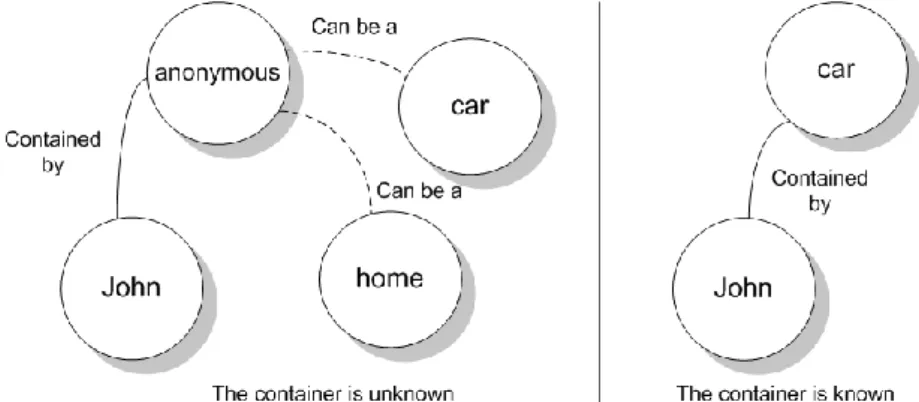
The location for material objects can be defined as container-contained relationship where the existence of the object implies the existence of the container; for instance, users can be in containers such as homes, houses, cars, offices or an unknown container. The anonymous objects help to model those unknown containers and many other anonymous objects without defining a class (see Figure 3).
Figure 3. Example of anonymous objects
One of the advantages of the anonymous objects is that those objects can be manipulated without knowing their nature. For instance consider some application that needs to know if John is close to one specific traffic light. Supposing John is with his PDA, and there exists a relationship between the PDA and John; and the PDA can run
20
an application that communicates the location of the PDA, then it is possible to create an algorithm that infers the containment relationship of John with his container by using the is-with relationship between John and the PDA. If the container of John is the same as the container of the traffic light, then further information of this container is not needed and it remains as anonymous object.
The context of one object (i.e. a person) can be seen as the relationship between this object and the other objects, including the properties of the object. As part of the object model there is computational support such as algorithms for querying the information.
The last part of this chapter describes how the context is represented by the object model using objects and relationships. At the end of the chapter is presented how the model is stored.
3.3 Using the Object Model
The model for context in a context-aware application must be able to describe the target “surroundingenvironment”that the application needs. In order to exemplify how to identify therelevantelementsinthe“surroundingenvironment”we present here two scenarios featuring a citizen in a city. Those scenarios are intended to show how an application to submit anomalies to the government authorities will work:
Scenario 1. “Johnwasdrivingdownthestreetandsuddenlysees a malfunctioning traffic light and he wants to inform to the public authority about the situation. He stops the car and with his PDA (Bluetooth capable) opens an application that helps him to inform to the public authority about the situation. Because he is currently in his car, and his car has a GPS device with Bluetooth interface,theapplicationpassestheinformationabouthislocation.”
Scenario 2. “Johnwasdrivingdownthestreetandsuddenlysess a malfunctioning traffic light, that he wants to inform to the public authority about. He activates by vocal commands his PDA (Bluetooth capable) opening an application that helps him to inform to the public authority about the situation. Because he is currently in his car, and his car has a GPS device with Bluetooth interface, the application uses theinformationabouthislocation.”
21
This scenario describes a situation where it is easy to identify physical objects. The first objects to identify are the nouns: John, street, semaphore, car, PDA, GPS. It is possible also to identify the relationships between those objects such as:
o John has a PDA o John drives the car o The car has a GPS o The car is in the street
o The semaphore is in the street
By comparing the two scenarios, other kinds of information can be supposed such as “theapplicationworkswhenthecar is stopped in case the user has to manipulate the applicationmanually”. Otherwiseiftheapplicationacceptsvocalcommands“hecan drivethecaraswellusingtheapplication”.Someobjectsare important only in some situations, for instance the application (with manual input) used by the driver to report the situation does not have sense when the car is moving. These kind of rules should be verified in the model by the context aware applications. The properties of the objects (e.g.thecar’sspeed, voice commands capabilities) can be used for this purpose.
There is information that humans are aware of but that is not formally expressed. In the scenario the GPS, the car, the PDA and John are in the same place, this kind of information can be inferred by programs if adequate information is represented in the model. It is possible to consider if John is-with the PDA, and create a program that infers both are in the same place.
Finally it is possible to infer other information such as, if John is driving, that the car has some speed. The speed of the car can be considered as a property of the car and is used to validate if an application can be launched.
3.3.1 Modeling Objects
An important question is what is an object? For instance, in the Solar System it is important to model planets as objects, asteroids, stars, satellites, comets and the gravitational relations between each planet or celestial object. Also, in an chemical reaction it can be interesting to model molecules, the atoms, and the relationships at an “atomicallyscale”,includingthebehaviourofelectrons.Inthetwoexamplesthesize level are totally different and probably electrons in the chemical model are objects, but in
22
the planetary model atoms do not exists as objects or rather are not interesting as objects, even though planets are composed by atoms. One of the advantages of the model is that anything can be considered an object, and defining “whatisanobject” depends on the desired granularity, relevance and the designer’s-point-of-view.
In a normal ER representation the user location can be a property, such as the“user houseaddress”. Then it is possible to have a entity“user”withthefields“address”anda relation with an entity“city”. Those entities will be reflected in a physical database model as two tables, one for users and another with cities. Both tables must have a fixed number of columns. A simple change in the location of the user can be untraceable in a static model; for instance the user location can be their home and moments after the location can be their car. In a static model such as an ER model, could be difficult to change the field “address”for a field that represents a “car”. In an object model the change can be easily made in the containment relation of the user. Another aspect is the dynamicity of the properties. In a static model there are a fixed number of properties. For instancethe“house address”ina static model can be a string, but a house has a more deep meaning that a string. House by itself can be a complex object, with rooms, colours, floors, spaces, sensors, etc. Some entities that in other models can be seen as properties, in the object model can be viewed as objects or relations. This flexibility of the model is clearly one of its advantages.
3.3.2 Modelling Relationship Objects
Relation is anotherimportantconceptformodellingcontext;basicallythe“surrounding environment”canbedescribedbytheobjectsandrelationsbetweenobjects.Totest the model we can consider the following scenario:
Scenario 3. In the city of Pamplona there is a square, in the square there is a
corner, in the corner there is a house, in the house there is a room, and in the room there is a bird.
Relationships can be more than a link between two objects. Scenario 3 has several objects and relationships between those objects. For example regarding the relation betweenPamplonaandthesquare,itispossibletoaffirm“TheSquareisinPamplona” or“InsidePamplonaisasquare”. In such cases the relationshiphasan“inverse” relationship, as is the case with Is-In which has an inverse of “contained-by”. The object modelallowsto“attach”properties to the relationships, and regards the relationships are objects.
23
Figure 4. Simple and complex Relationships
As well as properties like inverse and refection, relationships can have more information. The Figure 4 shows the containment relation between a church and a city. More than a simply relationship of containment; it is possible to add geographical information such as street name and number, or GPS coordinates, to the relationship. In this case the relationship will be not a simple link; it will be a complex object with information inside. In order to describe the containment relationship of a region (such as a mobile cell coverage area) or a city, the information in the relationship can be a special data type describing the boundaries of such an area.
The Selection Algorithms and the representation (using RDF [29]) are presented in the following, and provide the computational support required. Both elements are an integral part of the approach proposed in [4].
3.3.3 Selection algorithms
A query mechanism must be created in order to extract the information about objects and relationships. By examining relationships it is possible to get partial information aboutcontext.Let’simagineatouristsearching for restaurants: the location information of the tourist can be used to search for which restaurants are nearby. But for this task it is necessary to create a set of algorithms to find this kind of information (nearby things). In the case of the restaurant, the algorithm will look for near-by objects (restaurants) to the tourist. Previously will be necessary a definition of what is near-by (e.g. 600 meters).
Other kinds of algorithm can be defined depending on the needs of the context aware application. For example, an Is-In algorithm can be useful to find out if object A is in object B. Derived from the is-in algorithm, further algorithms can be created to explore containment relationships. For instance, to find which objects are contained in another object, which is the object that contain the current object, and, which are the objects in the same container. The last algorithm (which are the objects in the same container), can
24
in some way be used to resolve the restaurant scenario, to find which are the restaurants that are nearby the location of the tourist.
Figure 5. General view of the of the context aware architecture
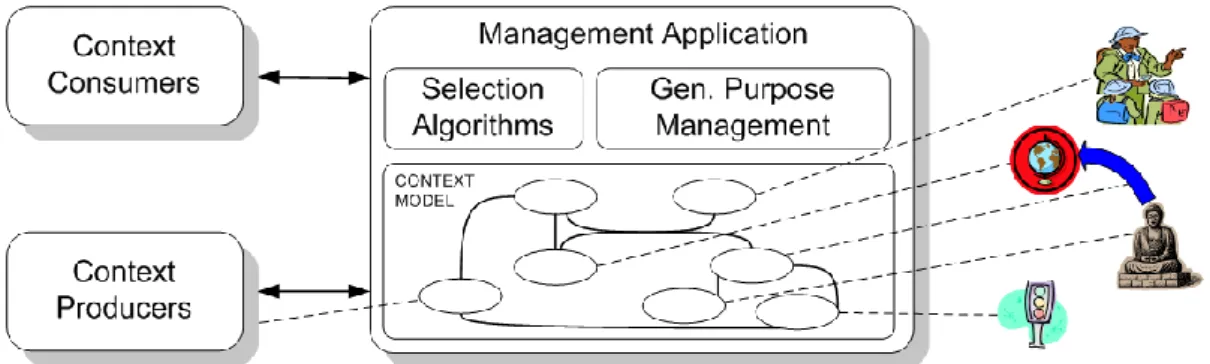
The algorithms for querying the model looking for information inside derived from the relations are called Selection Algorithms. Selection Algorithms are an integral part of the Management Application (Figure 5) that is necessary to use the context object model. The consumers must know which selection algorithm use. Also it is possible for each consumer to create its own algorithm. More details about Selection Algorithm can be found in the section 4.2.2.
Complementing the figure presented in the chapter 2; the Figure 5 adds new elements: the context model, the selection algorithms and the general purpose management application (that includes the API). The context model is the data structures that contain all the modelled objects. The general purpose management application provides functionalities for creation, updating and querying the context model.
3.3.4 Context model representation
Once the theoretical model is designed, it is necessary to represent that model by using computational artefacts. There are several ways to represent objects, and the typical case is to use a database to store objects properties. Nevertheless in new Java application development is quite common to find applications using an ORM (Object Relational Mapper) to give persistency to the objects (instances of the classes). For example in an application with the users, addresses and cities, the Hibernate [30] method makes transparent the use of the database when classes are instantiated (by embedding automatically some code in the classes).
25
The representation for context is not simple as than in traditional applications; there are no commercial context databases. Context representation normally is not approached as an isolated issue in context aware applications. It is very common to see approaches including complex architectures or frameworks for context management alongside with client applications and services. For instance in COoL [21] is used an ontology for service modelling, where the representation is made by OWL documents but those documents were converted in F-Logic [31] in order to improve reasoning process. Similarly the GAIA project [32] uses XML in a DALM format to store contextual information, and CORBA for communications.
The object model [4] is based mainly upon objects and relationships. For instance John is-in the car, or John is-with their mobile. These examples are clearly statements and statements have three parts: object, subject and predicate. There are notations for statements, such as functional notation “Is-In (John, car)” or triplets notation “(“John”, “car”,“is-in”)”. For this kind of structured information it is necessary a flexible technology with an appropriate computational support. The choice was the Resource Description Framework (RDF). Later in this chapter is present why RDF was selected.
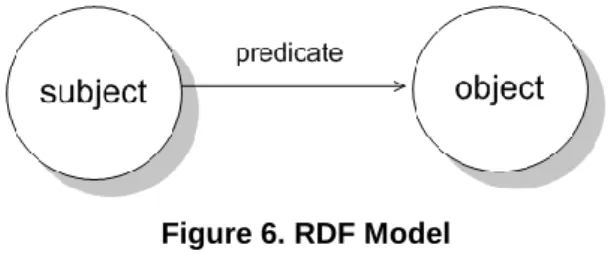
The Resource Description Framework (RDF) [29] is a general-purpose language for representing information in the Web. RDF has three basic elements subject, predicate and object. RDF was created to describe web resources, and then was extended to express relationships between entities. RDF suits very well for the object context model because it allows to create relations between objects. The basic structure in RDF is the triplet and can be represented as a graphs as showed in Figure 6.
Figure 6. RDF Model
In Figure 6 the subject and the object are represented by a node and the predicate is represented by an arrow. Let us consider the following statement:
http://www.example.org/index.html has a creator whose value is John Smith.
26 This statement decomposed into the three elements:
the subject is the URL
http://www.example.org/index.htmlthe predicate is the word "creator"
the object is the phrase "John Smith"
Notice the subject is a URL; as stated before, RDF is used to describe web resources. The first adaption to be made in the context model is to create a URL for each object to be represented in the model. In the sentence “Johnis-inthecar”,theURLrepresenting John can be something like:
http://purl.oclc.org/NET/contextobjects#Jonh
This mapping from real objects to a URL must be done by the application that creates the object John. The following fragment of RDF/XML can be used to represent the expression John is in the car.
<rdf:Description rdf:about="http://purl.oclc.org/NET/contextobjects#Jonh"> <use:is_in>car</use:is_in>
</rdf:Description>
The graph representation is as follows:
Figure 7. Simple RDF Graph
However the only object is John, the other objects (i.e. the Is-In relationship and the car) in example above are not represented in the context model, in spite of the statements in RDF to represent relations. Relationships in the context model are richer objects and must be represented as objects in a richer way. Additionally, the car in the example is only represented as a literal (value).
The form to represent a relationship in the context model is more complex. Continuing with the example that”John is in the car”, consider the following fragment of RDF/XML:
<rdf:Description rdf:about="http://usemegov.org/contextaggr/isin322"> <use:subject rdf:resource="http://purl.org/NET/contextobjects/John"/> <use:object rdf:resource="http://purl.org/NET/contextobjects/Car"/> <use:type
rdf:resource="http://purl.org/NET/contextobjects/IsInRelationship"/> </rdf:Description>