Submitted: August 09, 2017
Accepted for publication: January 26, 2018 Last revision: February 16, 2018
A multicenter study of oral health
behavior among adult subjects from
three South American cities
Abstract: The aims of this study were to describe the self-reported
oral hygiene habits, dental visit frequency, and gingival bleeding
perception in adult populations from three South American
cities, and also to assess the association of these variables with
sociodemographic data and with the clinical presence of plaque and
gingival inflammation. Five-hundred and fifty adult subjects from
each city (Porto Alegre, Brazil; Tucumán, Argentina; Santiago, Chile)
received full mouth examinations to determine visible plaque and
gingival index. A structured questionnaire on demographics, habits,
attitudes and knowledge of oral health was also administered. The
data were analyzed according to dental visit frequency, toothbrushing
frequency, interproximal tooth cleaning frequency, subjects’
perception of gum bleeding, and proportion of subject sites with VP
and bleeding sites. Analysis of the association among the variables
was performed using either a chi-square test or Fischer’s exact test.
Toothbrushing twice a day or more was reported by 84.2% of the
subjects, but only 17.7% reported daily interdental cleaning, and 60.2%
reported visiting a dental clinic only in an emergency. Only 2.97%
had no bleeding sites, whereas 33.7% had 50% or more bleeding sites.
Regular interdental self-cleaning and a dental visit every 3-6 months
was associated with less plaque and less gingival bleeding. More
than 12 years of education was associated with healthier habits, less
bleeding and plaque scores. In conclusion, the oral health behavior
of South American adult subjects from these cities is below the
international recommendations, especially in relation to interdental
cleaning and regular dental visits.
Keywords: Oral Hygiene; Epidemiology; Gingivitis.
Introduction
Self-preventive measures for the mechanical removal of dental plaque
by adequate toothbrushing and interdental cleaning have proved to be the
most significant factors in preventing oral infection diseases.
1Observing
regular dental visits for preventive dental examinations, prophylaxis
and professional reinforcement in oral hygiene instruction seems to be
the key behavior for preventing these diseases.
2,3Most oral problems,
especially cavities and gingivitis, result from poor oral hygiene, and
Mariel Viviana GÓMEZ (a)Andrés TOLEDO (a) Paola CARVAJAL (b)
Sabrina Carvalho GOMES (c) Ricardo Santos Araújo COSTA (c) Fernando SOLANES (b)
Rui Vicente OPPERMANN (c) Cassiano Kuchenbecker RÖSING (c) Jorge GAMONAL (b)
Hugo ROMANELLI (a)
(a) Universidad Maimonides, School of
Dentistry, Department of Periodontics, Buenos Aires, Argentina.
(b) Universidad de Chile, School of Dentistry,
Department of Conservative Dentistry, Santiago, Chile.
(c) Universidade Federal do Rio Grande
do Sul – UFRGS, School of Dentistry, Department of Conservative Dentistry, Porto Alegre, RS, Brazil.
Declaration of Interest: The authors certify that they have no commercial or associative interest that represents a conflict of interest in connection with the manuscript.
Corresponding Author:
Mariel Gómez,
E-mail: [email protected]
oral health status has been found to significantly
affect general health and quality of life.
4Numerous surveys have been conducted in
different populations worldwide to evaluate oral
health behavior in adult subjects. Self-reported
toothbrushing frequency, interdental cleaning and
regular intervals between dental visits have been
evaluated among adult samples from Europe,
5,6,7,8,9,10North America,
11,12Africa
13and Asia.
14,15,16,17,18,19Although data from these publications show great
variability among countries, the association of
the reported data with demographic information
has shown differences
20according to gender,
education, socioeconomic status and place of
residence (urban or rural).
In Latin America, epidemiological data regarding
oral health behavior are scarce,
21and disclose only
limited information on adult subjects. Furthermore,
the studies are either limited to students,
22,23teenagers
24or patients,
25or were conducted more
than 15 years ago.
26In this sense, studies performed
in South America are of foremost interest.
On the other hand, awareness of the signs of
gingival disease is important in helping individuals
seek treatment in the initial stages of the disease.
Self-reported gingival bleeding is a symptom that
has shown low sensitivity (0.35) for a threshold
of ≥ 40% of bleeding sites in a Scottish sample of
adult patients,
27and 0.42 for a threshold of ≥ 50%
of bleeding sites in Swedish adults.
28Such data
indicate that many people with clinically detected
signs of gingival inflammation were unaware of
any bleeding after toothbrushing. The perception of
gingival bleeding has not yet been reported among
South American populations.
Understanding regional behavior and the oral care
compliance rates by the population can guide local
public health practitioners and clinicians in designing
and promoting oral health programs. Accordingly,
we decided to describe the oral hygiene habits, the
frequency of dental visits and the perception of
gingival bleeding, as reported in a study sample
of adults from three South American cities, and
to assess the association of these variables with
sociodemographic data and with the presence of
plaque and gingival bleeding.
Methodology
Study design
The present study reports the findings of
a multicenter population-based, cross-sectional
epidemiological study conducted between January
and July 2014.
Study population
Study subjects were drawn from a
non-institutionalized adult population from three South
American cities (Porto Alegre, Brazil; Tucumán,
Argentina; and Santiago, Chile).
The study protocol followed the World Medical
Association Declaration of Helsinki (version
2008) and was reviewed and approved by the
Institutional Review Boards of the University of
Chile, the Federal University of Rio Grande do
Sul (Brazil) and the University of Maimónides
(Argentina). All study participants were informed
about the aims of the research and signed the
informed consent form.
Sample
According to the inclusion criteria, the study
participants had to (a) be 18 years of age or older, (b)
have at least four permanent teeth, (c) not be at risk for
bacterial endocarditis, (d) not be pregnant or lactating,
(e) not be taking medication affecting the periodontal
tissues, such as nonsteroidal anti-inflammatory
drugs, calcium channel blockers, cyclosporine A or
phenytoin, (f) not be taking anticoagulants, (g) not
have fixed orthodontic appliances, and (h) be willing
to sign a written consent form.
Sampling and sample sizes
A total of 1650 study subjects were evaluated
(550 individuals per city). Based on an estimated
prevalence of 93.9% on the gingival index ≥ 0.5,
29the
Definition of variables
Oral health behavioral data and
sociodemographic data
A structured questionnaire comprised of open
and closed questions on demographics (gender, age,
educational level and city), habits related to gingival
health (toothbrushing frequency, use of interdental
cleaning devices and dental visit frequency) and
gum bleeding perception (do your gums bleed?)
was administered to all the study subjects. The
questionnaire was adapted to allow understanding
among the three cities surveyed, and was tested in
focus groups.
30The data were analyzed according to the following
categories: a) age (< 30 or ≥ 30 years of age); b) educational
level (≤ 12 or > 12 years of school); c) dental visit
frequency (every 3 months; every 6 months;
every 12 months; only “when I have a problem”);
d) toothbrushing frequency (<once a day; once a day;
twice a day; >three times a day); g) interproximal
tooth cleaning frequency (do not clean; < once a
day; once a day; > once a day); and h) perception of
gum bleeding (yes/no).
Clinical data
A clinical examination was performed on all the
study subjects to evaluate the gingival index
31and
the presence/absence of visible plaque,
32as described
below. The data obtained were analyzed according
to the following categories: a) Gingival bleeding:
number and percentage of subjects with no bleeding
sites; < 10% of bleeding sites; between ≥ 10% and < 50%
of bleeding sites; and ≥ 50% of bleeding sites; and b)
Visible plaque: number and proportion of subjects
with ≤ 20% of sites with visible plaque; between 20%
and ≤ 50% of sites with visible plaque; and > 50% of
sites with visible plaque.
Clinical examinations:
All examinations were
conducted by one calibrated examiner in each city. All
the study subjects were evaluated for dental plaque
and gingival inflammation. After applying water
spray followed by gentle air drying and isolation
with cotton rolls, six sites per tooth were evaluated
(three facial and three lingual surfaces) in a full
mouth examination conducted by a trained and
calibrated examiner.
The examiners were trained in standardized
diagnostic criteria and calibrated with the reference
examiner (CKR). Each of the three examiners in the
field (RC, AT, FS) conducted test examinations on
at least 10 patients, and intra- and interexaminer
kappa coefficients for the visible plaque index and
gingival index were above 0.7 for all the examiners.
Procedures were also performed to standardize the
application of the structured questionnaire.
Visual plaque assessment:
Absence (0) or presence
(1) of dental plaque was scored for each site after visual
examination.
Gingival index:
The
Löe & Silness Gingival
Index system
31was used to evaluate gingival health.
The examiners performed the gingival evaluations
with gauze, compressed air, intraoral lighting, an
oral mirror, a periodontal probe and a #17 explorer.
Third molars and teeth with cervical restorations
or prosthetic crowns were excluded from the scoring
procedure. At the end of each day, the data were properly
identified and coded, and then sent to the clinical
investigator, who recorded the data. Approximately
15 examinations were performed per day.
Statistical methods and data assessment
Descriptive statistics were employed to calculate the
prevalence for all the variables by city, and for the total
study subject sample. The analysis of the association
among the variables in contingency tables was performed
using the chi-square tests or the Fisher exact probability
test, where appropriate. Sensitivity and specificity were
calculated. Statistical analyses were performed using
a statistical software package (Stata/IC 13.1 for Mac).
The level of significance was set at p < 0.05.
Results
A total of 1650 adults from the cities of Santiago,
Tucumán and Porto Alegre completed the questionnaire
and were examined. The distribution of the study
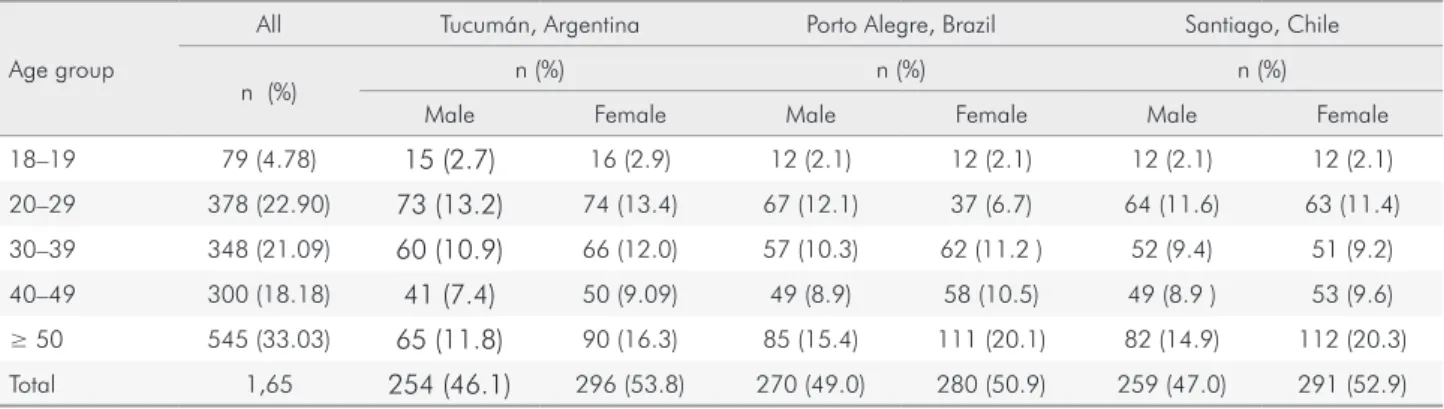
sample according to age and gender is shown in Table 1.
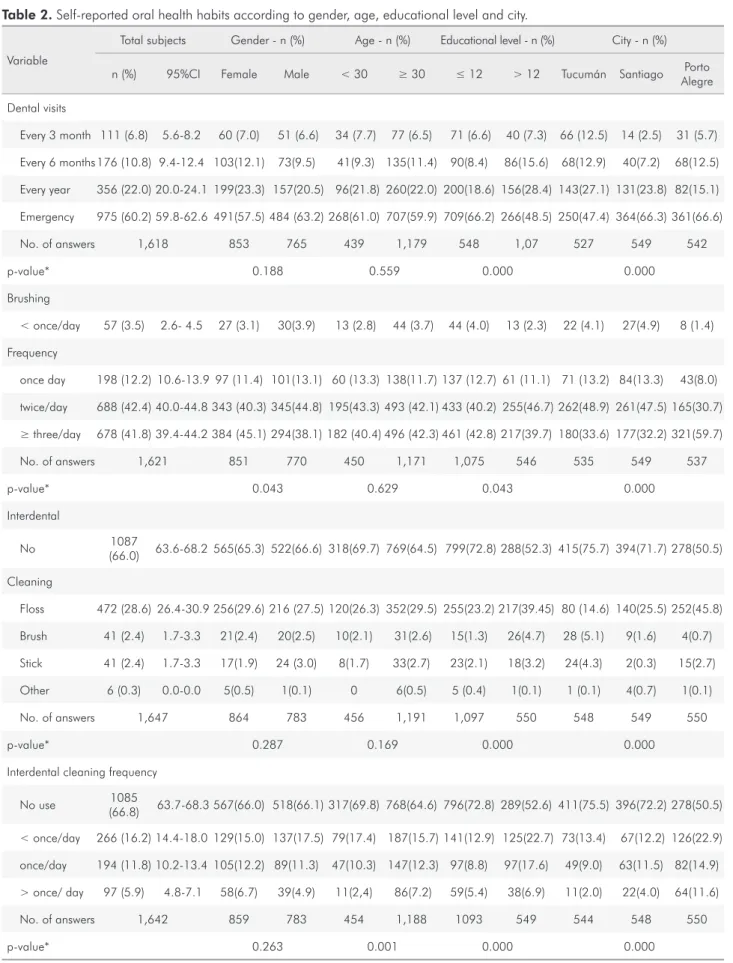
frequency: 84.2% of the study subjects reported that
they brushed their teeth twice a day or more, and
this was reported more frequently by women and
by subjects with > 12 years of education (p = 0.043).
There were no age group differences in brushing
frequency (p = 0.629). Porto Alegre subjects reported
that they brush twice a day or even more frequently
(p < 0.001). Interdental cleaning frequency: Of the total
study subject population, 66% reported that they do
not clean interdentally, and only 17.7% clean daily.
No difference was found between men and women
(p = 0.287), but a significant association was found
with age (p = 0.001) and level of education (p < 0.001).
Study subjects < 30 years of age, and subjects with
< 12 years of education reported a lower frequency
of interdental cleaning. Interdental cleaning was
significantly (p < 0.001) more frequent for Porto
Alegre study subjects. Use of dental floss was more
frequently reported (28.6%) than toothpicks (2.4%)
and interdental brushes (2.4%). Frequency of dental
visits: The great majority of study subjects reported
that they visit a dental clinic only in emergencies,
and a higher percentage of study subjects with
> 12 years of education reported dental visits every
3 to 6 months
(p < 0.001). No difference was found
among gender or age group. A significant difference
was found among the cities. Preventive dental visits
made at least once a year were more frequent in
subjects from Tucumán.
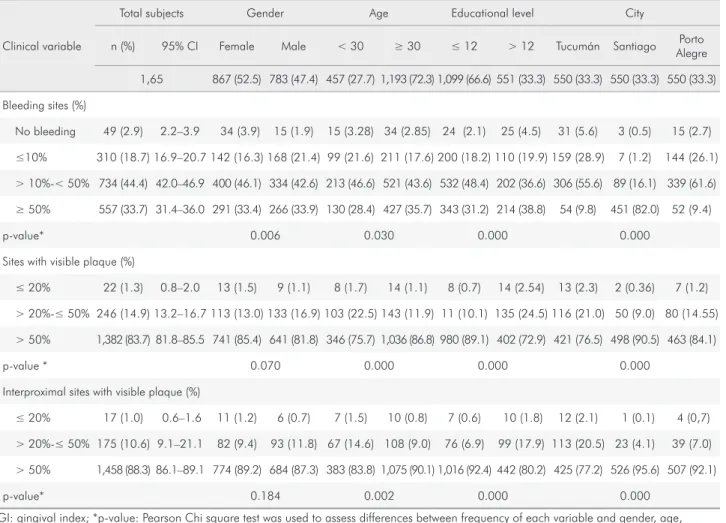
Plaque Index and Gingival Index (Table 3):
Overall, 83.7% of the study subjects had plaque in
>50% of the sites in their mouth. Visible plaque was
significantly associated with age, educational level
and city of residence, and was more frequent in
subjects > 30 years of age (p < 0.001), with ≤ 12 years
of education (p < 0.001) and in subjects from Santiago
(p < 0.001). Bleeding in ≥50% of sites was a condition
found in 33.7% of the subjects, and only 2.97%
had no bleeding sites. Considering proximal sites,
96.3% of the study subjects had ≥ 50% of bleeding
sites. Frequency of bleeding sites was significantly
lower in females (p = 0.006), in younger subjects
(p = 0.030), in subjects with > 12 years of education
(p < 0.001), and in subjects from Tucumán and Porto
Alegre (p < 0.001).
Analysis of oral health habits and their association
with plaque presence and gingival bleeding is shown
in Tables 4 and 5. Study subjects who reported dental
visits every 3 to 6 months had a lower percentage of
bleeding sites, and less visible plaque (p < 0.001).
The study subjects who reported brushing twice a
day or more had a lower percentage of bleeding sites
(p = 0.021). Regular use of interdental devices was
associated with less plaque and with fewer bleeding
sites (p < 0.001).
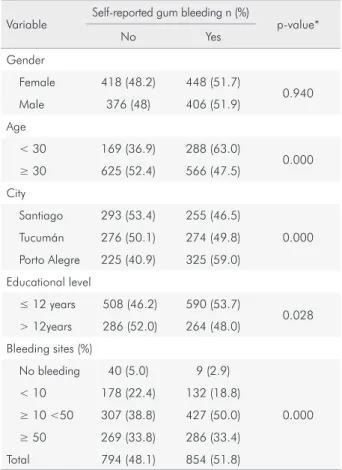
Perception of gum bleeding (Table 6): 51.8% of the
study subjects answered “yes” to the question “Do
your gums bleed?” Subjects who answered positively
to the question “Do your gums bleed?” had a higher
proportion of sites with bleeding, compared with
those who answered negatively, but 33% of the study
subjects who reported no gum bleeding had ≥50% of
bleeding sites. Positive answers were more frequently
reported by younger study subjects (p < 0.001),
by subjects with less education (p= 0.028) and by
subjects from Porto Alegre (p < 0.001).
Table 1. Study population/sample by city, age, and gender. n = 550.
Age group
All Tucumán, Argentina Porto Alegre, Brazil Santiago, Chile
n (%) n (%) n (%) n (%)
Male Female Male Female Male Female 18–19 79 (4.78) 15 (2.7) 16 (2.9) 12 (2.1) 12 (2.1) 12 (2.1) 12 (2.1) 20–29 378 (22.90) 73 (13.2) 74 (13.4) 67 (12.1) 37 (6.7) 64 (11.6) 63 (11.4) 30–39 348 (21.09) 60 (10.9) 66 (12.0) 57 (10.3) 62 (11.2 ) 52 (9.4) 51 (9.2) 40–49 300 (18.18) 41 (7.4) 50 (9.09) 49 (8.9) 58 (10.5) 49 (8.9 ) 53 (9.6)
Table 2. Self-reported oral health habits according to gender, age, educational level and city.
Variable
Total subjects Gender - n (%) Age - n (%) Educational level - n (%) City - n (%)
n (%) 95%CI Female Male < 30 ≥ 30 ≤ 12 > 12 Tucumán Santiago Porto Alegre Dental visits
Every 3 month 111 (6.8) 5.6-8.2 60 (7.0) 51 (6.6) 34 (7.7) 77 (6.5) 71 (6.6) 40 (7.3) 66 (12.5) 14 (2.5) 31 (5.7) Every 6 months 176 (10.8) 9.4-12.4 103(12.1) 73(9.5) 41(9.3) 135(11.4) 90(8.4) 86(15.6) 68(12.9) 40(7.2) 68(12.5) Every year 356 (22.0) 20.0-24.1 199(23.3) 157(20.5) 96(21.8) 260(22.0) 200(18.6) 156(28.4) 143(27.1) 131(23.8) 82(15.1) Emergency 975 (60.2) 59.8-62.6 491(57.5) 484 (63.2) 268(61.0) 707(59.9) 709(66.2) 266(48.5) 250(47.4) 364(66.3) 361(66.6) No. of answers 1,618 853 765 439 1,179 548 1,07 527 549 542
p-value* 0.188 0.559 0.000 0.000
Brushing
< once/day 57 (3.5) 2.6- 4.5 27 (3.1) 30(3.9) 13 (2.8) 44 (3.7) 44 (4.0) 13 (2.3) 22 (4.1) 27(4.9) 8 (1.4) Frequency
once day 198 (12.2) 10.6-13.9 97 (11.4) 101(13.1) 60 (13.3) 138(11.7) 137 (12.7) 61 (11.1) 71 (13.2) 84(13.3) 43(8.0) twice/day 688 (42.4) 40.0-44.8 343 (40.3) 345(44.8) 195(43.3) 493 (42.1) 433 (40.2) 255(46.7) 262(48.9) 261(47.5) 165(30.7)
≥ three/day 678 (41.8) 39.4-44.2 384 (45.1) 294(38.1) 182 (40.4) 496 (42.3) 461 (42.8) 217(39.7) 180(33.6) 177(32.2) 321(59.7) No. of answers 1,621 851 770 450 1,171 1,075 546 535 549 537
p-value* 0.043 0.629 0.043 0.000
Interdental
No 1087
(66.0) 63.6-68.2 565(65.3) 522(66.6) 318(69.7) 769(64.5) 799(72.8) 288(52.3) 415(75.7) 394(71.7) 278(50.5) Cleaning
Floss 472 (28.6) 26.4-30.9 256(29.6) 216 (27.5) 120(26.3) 352(29.5) 255(23.2) 217(39.45) 80 (14.6) 140(25.5) 252(45.8) Brush 41 (2.4) 1.7-3.3 21(2.4) 20(2.5) 10(2.1) 31(2.6) 15(1.3) 26(4.7) 28 (5.1) 9(1.6) 4(0.7) Stick 41 (2.4) 1.7-3.3 17(1.9) 24 (3.0) 8(1.7) 33(2.7) 23(2.1) 18(3.2) 24(4.3) 2(0.3) 15(2.7) Other 6 (0.3) 0.0-0.0 5(0.5) 1(0.1) 0 6(0.5) 5 (0.4) 1(0.1) 1 (0.1) 4(0.7) 1(0.1) No. of answers 1,647 864 783 456 1,191 1,097 550 548 549 550
p-value* 0.287 0.169 0.000 0.000
Interdental cleaning frequency
No use 1085
(66.8) 63.7-68.3 567(66.0) 518(66.1) 317(69.8) 768(64.6) 796(72.8) 289(52.6) 411(75.5) 396(72.2) 278(50.5) < once/day 266 (16.2) 14.4-18.0 129(15.0) 137(17.5) 79(17.4) 187(15.7) 141(12.9) 125(22.7) 73(13.4) 67(12.2) 126(22.9) once/day 194 (11.8) 10.2-13.4 105(12.2) 89(11.3) 47(10.3) 147(12.3) 97(8.8) 97(17.6) 49(9.0) 63(11.5) 82(14.9) > once/ day 97 (5.9) 4.8-7.1 58(6.7) 39(4.9) 11(2,4) 86(7.2) 59(5.4) 38(6.9) 11(2.0) 22(4.0) 64(11.6) No. of answers 1,642 859 783 454 1,188 1093 549 544 548 550
p-value* 0.263 0.001 0.000 0.000
Table 3. Distribution of subjects (n and %) according to frequency of bleeding sites (GI 2+3) and frequency of visible plaque sites, for the total sample and all demographic categories.
Clinical variable
Total subjects Gender Age Educational level City
n (%) 95% CI Female Male < 30 ≥ 30 ≤ 12 > 12 Tucumán Santiago Porto Alegre 1,65 867 (52.5) 783 (47.4) 457 (27.7) 1,193 (72.3) 1,099 (66.6) 551 (33.3) 550 (33.3) 550 (33.3) 550 (33.3) Bleeding sites (%)
No bleeding 49 (2.9) 2.2–3.9 34 (3.9) 15 (1.9) 15 (3.28) 34 (2.85) 24 (2.1) 25 (4.5) 31 (5.6) 3 (0.5) 15 (2.7) ≤10% 310 (18.7) 16.9–20.7 142 (16.3) 168 (21.4) 99 (21.6) 211 (17.6) 200 (18.2) 110 (19.9) 159 (28.9) 7 (1.2) 144 (26.1)
> 10%-< 50% 734 (44.4) 42.0–46.9 400 (46.1) 334 (42.6) 213 (46.6) 521 (43.6) 532 (48.4) 202 (36.6) 306 (55.6) 89 (16.1) 339 (61.6) ≥ 50% 557 (33.7) 31.4–36.0 291 (33.4) 266 (33.9) 130 (28.4) 427 (35.7) 343 (31.2) 214 (38.8) 54 (9.8) 451 (82.0) 52 (9.4)
p-value* 0.006 0.030 0.000 0.000
Sites with visible plaque (%)
≤ 20% 22 (1.3) 0.8–2.0 13 (1.5) 9 (1.1) 8 (1.7) 14 (1.1) 8 (0.7) 14 (2.54) 13 (2.3) 2 (0.36) 7 (1.2) > 20%-≤ 50% 246 (14.9) 13.2–16.7 113 (13.0) 133 (16.9) 103 (22.5) 143 (11.9) 11 (10.1) 135 (24.5) 116 (21.0) 50 (9.0) 80 (14.55)
> 50% 1,382 (83.7) 81.8–85.5 741 (85.4) 641 (81.8) 346 (75.7) 1,036 (86.8) 980 (89.1) 402 (72.9) 421 (76.5) 498 (90.5) 463 (84.1)
p-value * 0.070 0.000 0.000 0.000
Interproximal sites with visible plaque (%)
≤ 20% 17 (1.0) 0.6–1.6 11 (1.2) 6 (0.7) 7 (1.5) 10 (0.8) 7 (0.6) 10 (1.8) 12 (2.1) 1 (0.1) 4 (0,7) > 20%-≤ 50% 175 (10.6) 9.1–21.1 82 (9.4) 93 (11.8) 67 (14.6) 108 (9.0) 76 (6.9) 99 (17.9) 113 (20.5) 23 (4.1) 39 (7.0)
> 50% 1,458 (88.3) 86.1–89.1 774 (89.2) 684 (87.3) 383 (83.8) 1,075 (90.1) 1,016 (92.4) 442 (80.2) 425 (77.2) 526 (95.6) 507 (92.1)
p-value* 0.184 0.002 0.000 0.000
GI: gingival index; *p-value: Pearson Chi square test was used to assess differences between frequency of each variable and gender, age, educational level and city.
Table 4. Oral health behavior variables by prevalence of visible interproximal plaque: distribution of subjects (n and %) according to frequency of visible plaque sites.
Variable Total subjects
Subjects with ≤ 20%
interproximal sites with visible plaque
Subjects with > 20% -≤
50% interproximal sites with visible plaque
Subjects with > 50% sites with visible plaque
interproximal
p-value*
Dental visits
Every 3-6 months 287 (17.7) 6 (2.0) 53 (18.4) 228 (79.4)
0.000 Every year 356 (22.0) 6 (1.6) 53 (14.8) 297 (83.4)
Emergency 975 (60.2) 5 (0.5) 68 (6.9) 902 (92.5) Brushing frequency
≤ once / day 268 (16.4) 4 (1.4) 20 (7.4) 244 (91.0)
0.154
≥ twice / day 1,366 (83.6) 13 (0.9) 152 (11.1) 1,201 (87.9)
Interdental cleaning
Yes 560 (34.0) 9 (1.6) 84 (15.0) 467 (83.3)
0.000 No 1,087 (66.0) 8 (0.6) 91 (8.3) 988 (90.8)
Interdental cleaning frequency
≥ once / day 291 (17.7) 6 (2.0) 40 (1.3) 245 (84.1)
0.020 < once / day 1,351 (83.2) 11 (0.8) 134 (9.9) 1,206 (89.2)
The agreement between perception and clinical
examination was evaluated by sensitivity and
specificity (Table 7). A cross-tabulation shows that
51.5% of the study subjects (286/555) having ≥ 50%
clinical bleeding sites perceived bleeding as positive
(“yes”),
i.e.
, the sensitivity of the question was 0.51,
whereas 48% of the participants (525/1093) who had
<50% of clinical bleeding did not perceive the bleeding
as positive (“no”),
i.e.
the specificity was 0.48.
Discussion
This paper describes dental self-care practices among
a large study sample of urban South American adult
subjects. Three South American cities were chosen to be
part of this investigation: Santiago, the capital of Chile,
comprising 5.6 million inhabitants; Tucumán, the fifth
largest city in Argentina, with 1.6 million inhabitants; and
Porto Alegre, in southern Brazil, comprising approximately
1.5 million inhabitants. The choice of the cities was based
on the possibility of logistics, taking into consideration
that large cities, with at least 1 million inhabitants, better
express the data distribution in highly populated areas.
The analytical approach is the core of this study, which
made the associations meaningful.
Table 5. Oral health behavior variables by prevalence of gingival bleeding: Distribution of subjects (n and %) according to bleeding site frequency (GI 2+3).
Variable Total subjects Subjects without bleeding sites
Subjects with <10% bleeding sites
Subjects with ≥ 10
< 50% bleeding sites
Subjects with ≥
50% bleeding sites p-value* Dental visits
Every 3-6 months 287 (17.7) 14 (4.8) 69 (24.0) 148 (51.5) 56 (19.5)
0.000 Every year 356 (22.0) 16 (4.4) 78 (21.9) 146 (41.0) 116 (32.5)
Emergency 975 (60.2) 19 (0,0) 157(16.1) 421 (43.1) 378 (38.7) Brushing frequency
≤ once / day 268 (16.4) 6 ( 2.2) 43 (16.0) 106 (39.5) 113 (42.1)
0.021
≥ twice / day 1,366 (83.6) 43 (3.1) 263 (19.2) 620 (45.3) 440 (32.2)
Interdental cleaning
Yes 560 (34.0) 25 (4.4) 132 (23.5) 273 (48.7) 130 (23.3)
0.000 No 1087 (66.0) 24 (2.2) 177(16.2) 460 (42.3) 426 (39.1)
Interdental cleaning frequency
≥ once / day 291 (17.7) 16 (5.5) 68 (23.3) 134 (46.0) 73 (25.0)
0.000 < once / day 1,351 (83.2) 33 (2.4) 240 (17.7) 595 (44,0) 483 (35.7)
*p-value: Pearson Chi square test was used to assess differences between frequency of each oral health habit variable and bleeding frequency.
Table 6. Self-reported gum bleeding according to gender, age, city, educational level and % bleeding sites per subject.
Variable
Self-reported gum bleeding n (%)
p-value* No Yes
Gender
Female 418 (48.2) 448 (51.7)
0.940 Male 376 (48) 406 (51.9)
Age
< 30 169 (36.9) 288 (63.0)
0.000
≥ 30 625 (52.4) 566 (47.5) City
Santiago 293 (53.4) 255 (46.5)
0.000 Tucumán 276 (50.1) 274 (49.8)
Porto Alegre 225 (40.9) 325 (59.0) Educational level
≤ 12 years 508 (46.2) 590 (53.7)
0.028 > 12years 286 (52.0) 264 (48.0)
Bleeding sites (%)
No bleeding 40 (5.0) 9 (2.9)
0.000 < 10 178 (22.4) 132 (18.8)
≥ 10 <50 307 (38.8) 427 (50.0)
≥ 50 269 (33.8) 286 (33.4) Total 794 (48.1) 854 (51.8)
Overall, our results reveal that although 84.2%
of the participants reported brushing twice a day
or more, 66% never clean interproximally, and only
39.6% seek a preventive dental checkup at least once a
year. In our study sample, a great number of subjects
had plaque on more than 50% of their dental surfaces,
and had bleeding on proximal sites.
Men reported brushing their teeth slightly less
frequently than women, but no other gender differences
were found in regard to the other behavioral variables
studied. Clinically, no bleeding was a condition more
frequent in women. Younger subjects reported less
frequent use of interdental devices, and older subjects had
more surfaces with plaque and more gingival bleeding.
More years of education was significantly associated
with higher frequency of toothbrushing, use of dental
floss, regular dental checkups, less gingival bleeding
and lower plaque scores. Interestingly, variations
were found among the cities, that is, dental visits were
more frequent among Tucumán study subjects, and
interdental cleaning was more frequent among Porto
Alegre subjects. These differences in behavior probably
explain why study subjects from Santiago presented
the highest levels of plaque and bleeding sites.
30Our findings on oral health habits agree with those
of other studies conducted in Latin America; a high
proportion of subjects reported brushing twice a day
or more, but a lower proportion reported cleaning
interproximally. In a study of university students
< 35 years of age from Colombia
22, whereas 94% of
the study subjects brushed their teeth twice daily,
only 49% used dental floss. In Argentina, of the 3,694
patients who visited general dentists, 72.2% reported
brushing twice a day, but only 38% used dental floss
25.
In a group of 471 study subjects, 24 to 44 years of age
from Porto Alegre,
2695% reported brushing twice a
day or more, and 67.6% reported using dental floss.
In our sample from Porto Alegre, 50% of the study
subjects reported using interdental devices, a greater
proportion than the near 30% reported from Tucumán
and Santiago. These differences probably reflect
different public health policies among the cities.
A comparison of data from urban populations
shows variations in the brushing frequency reported
from country to country, but there is agreement that
daily interdental cleaning is always less frequent than
daily toothbrushing. Oral health habits similar to our
findings were reported in Denmark,
7Canada
11and
Australia.
33A higher frequency of interdental cleaning
was reported in a middle-aged sample of university
employees from Lithuanian,
10where 55% reported using
interdental cleaning tools on a daily basis. Remarkably
poorer oral health behavior for both toothbrushing and
interdental cleaning has been reported in samples from
Iran,
19Kuwait,
14Nigeria,
13China
17and Saudi Arabia.
15Although data from various publications show great
variability, our findings corroborate those of numerous
previous studies reporting that better oral hygiene practices
are significantly related to education,
7,12,13,14,26,33and that
toothbrushing frequency is related to gender.
7,10,13,14,15,17,18,22,26In agreement with some studies,
14,34we found no gender
difference in interdental cleaning frequency, although
other studies found that interdental cleaning was more
frequently reported by women.
7,17,19,26,33Previous studies that have evaluated the effect of
age on oral health habits are difficult to compare with
because of the variability in the age groups considered,
but there is a general trend that older subjects use
extra cleaning devices more frequently.
18,26,33In relation to dental visits, at least one visit a year
was reported by only 39% of our study subjects.
This proportion is lower than that reported in some
developed counties. In a Canadian sample, 69% of the
study subjects had yearly dental examinations,
1169.9%
in a United States sample,
3558.5% in an Australian
sample,
33and 51% of the respondents from Lithuanian,
10Table 7. Self-reported gum bleeding and percentage of
bleeding sites (threshold ≥ 50%).
Clinical bleeding sites (%)
No. of subjects in each bleeding
category
Self-reported gum bleeding?
No Yes < 50% 1,093 525 568
≥ 50% 555 269 286
Total no. of subjects 1,648 794 854
Sensitivity - n (95%CI) 0.51 (0.47–0.54)
whereas almost 90% from Sweden
9claimed having
regular dental checkups. A lower frequency of dental
visits has been reported in Nigeria,
13where only
26.4% of the subjects visited the dentist at least once
a year, and in China,
17where only 28% of the subjects
reported visiting a dentist in the previous 12 months.
In an adult sample from the United States,
34a statistical relationship was found among years of
education, yearly checkups, dental insurance and
income. In our study, years of education and city
of residence were associated with the frequency of
dental checkups. The highest frequency of dental visits
found among Tucumán residents is likely related to
a government policy that encourages yearly dental
checkups at no cost to the patients.
In regard to the relationship between oral health
behavior and gingival health, we observed that low
frequency of interdental cleaning and no regular
preventative dental care were associated with the
presence of more plaque and gingival inflammation,
as has been reported in previous studies.
33,34In relation
to toothbrushing and gingival health, toothbrushing
twice daily or more among our study subjects was
associated with a lower proportion of gingival
bleeding sites per subject. In relation to this result,
Crocombe et al.
33in the Australian survey found that
higher brushing frequency was associated with less
dental plaque and gingivitis in a bivariate analysis,
but only with less plaque in a multivariate analysis.
The correlation between self-assessment of gum
bleeding and clinical findings showed a sensitivity of
0.51, that is, half of the subjects with clinically positive
bleeding perceived bleeding, and the other half did
not. Low sensitivity values were also reported by
Buhlin et al.
28and Gilbert and Nuttall,
27who found
sensitivities of 0.42 and 0.35, respectively. These
results demonstrate that many subjects with clinically
detectable gingival bleeding were unaware of any
bleeding after toothbrushing or flossing; therefore,
the self-reporting of these signs may underestimate
the actual manifestation of the disease. The use of
measurements that enable accuracy in calculating
is a matter of interest and is part of the validation
process of any diagnostic tool. We understand that
self-reported perceptions of oral conditions are being
made with greater awareness, and always need to
be tested. Since these are patient-centered outcomes,
it is always important to report these self-reported
values, which need to be further investigated in the
case of the present study.
One possible limitation of the present study is
that the independent variables were collected from
self-reported information. However, this is the most
common way of gathering answers of this kind, even
though they could be biased, because they rely on
memory. Nevertheless, this is a recognized survey
tool in epidemiology.
Conclusions
The present study shows that the behavior of
South American adult subjects from the cities of
Santiago, Porto Alegre and Tucumán, in regard to their
oral health care practices, is below the international
recommendations, especially with regard to interdental
cleaning and regular dental care visits.
Toothbrushing frequency, interdental cleaning
and regular preventive dental care are important
indicators of gingival health, and educational level
is by far the most significant determinant of good
oral health behavior.
Acknowledgements
The authors declare no conflict of interest.
This study received the support of the
Colgate-Palmolive Company.
1. Lang NP, Cumming BR, Löe H. Toothbrushing frequency as it relates to plaque development and gingival health. J Periodontol. 1973 Jul;44 (7):396-405. https://doi.org/10.1902/jop.1973.44.7.396
2. Axelsson P, Nyström B, Lindhe J. The long-term effect of a plaque control program on tooth mortality, caries and periodontal disease in adults: results after 30 years of maintenance. J Clin Periodontol. 2004 Sep;31 (9):749-57. https://doi.org/10.1111/j.1600-051X.2004.00563.x
3. Armitage GC, Xenoudi P. Post-treatment supportive care for the natural dentition and dental implants. Periodontol 2000. 2016 Jun;71 (1):164-84. https://doi.org/10.1111/prd.12122 4. Locker D, Quiñonez C. To what extent do oral
disorders compromise the quality of life? Community Dent Oral Epidemiol. 2011 Feb;39 (1):3-11. https://doi.org/10.1111/j.1600-0528.2010.00597.x 5. Petersen PE, Aleksejuniene J, Christensen LB, Eriksen HM,
Kalo I. Oral health behavior and attitudes of adults in Lithuania. Acta Odontol Scand. 2000 Dec;58 (6):243-8. https://doi.org/10.1080/00016350050217073
6. Bradnock G, White DA, Nuttall NM, Morris AJ, Treasure ET, Pine CM. Dental attitudes and behaviours in 1998 and implications for the future. Br Dent J. 2001 Mar;190 (5):228-32. https://doi.org/10.1038/sj.bdj.4800935a
7. Christensen LB, Petersen PE, Krustrup U, Kjøller M. Self-reported oral hygiene practices among adults in Denmark. Community Dent Health. 2003 Dec;20 (4):229-35. 8. Suominen-Taipale L, Nordblad A, Vehkalahti M, Aromaa A,
editors.Oral health in the Finnish adult population: health 2000 survey. Helsinki: KTL-National Public Health Institute;, 2008. 9. Molarius A, Engström S, Flink H, Simonsson B, Tegelberg
A. Socioeconomic differences in self-rated oral health and dental care utilisation after the dental care reform in 2008 in Sweden. BMC Oral Health. 2014 Nov;14 (1):134. https://doi.org/10.1186/1472-6831-14-134
10. Sakalauskienė Z, Vehkalahti M, Murtomaa H, Mačiulskienė V. Factors related to gender differences in toothbrushing among Lithuanian middle-aged university employees. Medicina (Kaunas). 2011;47 (3):180-6.
11. Payne BJ, Locker D. Relationship between dental and general health behaviors in a Canadian population. J Public Health Dent. 1996;56 (4):198-204.
https://doi.org/10.1111/j.1752-7325.1996.tb02436.x 12. Ronis DL, Lang WP, Farghaly MM, Passow E. Tooth brushing,
flossing, and preventive dental visits by Detroit-area residents in relation to demographic and socioeconomic factors. J Public Health Dent. 1993;53 (3):138-45. https://doi.org/10.1111/j.1752-7325.1993.tb02692.x 13. Olusile AO, Adeniyi AA, Orebanjo O. Self-rated oral health
status, oral health service utilization, and oral hygiene practices among adult Nigerians. BMC Oral Health. 2014 Nov;14 (1):140. https://doi.org/10.1186/1472-6831-14-140 14. Al-Shammari KF, Al-Ansari JM, Al-Khabbaz AK, Dashti
A, Honkala EJ. Self-reported oral hygiene habits and oral health problems of Kuwaiti adults. Med Princ Pract. 2007;16 (1):15-21. https://doi.org/10.1159/000096134 15. Al-Otaibi M, Zimmerman M, Angmar-Månsson B.
Prevailing oral hygiene practices among urban Saudi Arabians in relation to age, gender and socio-economic background. Acta Odontol Scand. 2003 Aug;61 (4):212-6. https://doi.org/10.1080/00016350310004070
16. Kumar TS, Dagli RJ, Mathur A, Jain M, Balasubramanyam G, Prabu D et al. Oral health status and practices of dentate
Bhil adult tribes of southern Rajasthan, India. Int Dent J. 2009 Jun;59 (3):133-40.
17. Zhu L, Petersen PE, Wang HY, Bian JY, Zhang BX. Oral health knowledge, attitudes and behaviour of adults in China. Int Dent J. 2005 Aug;55 (4):231-41. https://doi.org/10.1111/j.1875-595X.2005.tb00321.x 18. Harada S, Akhter R, Kurita K, Mori M, Hoshikoshi M, Tamashiro H et al. Relationships between lifestyle and dental health behaviors in a rural population in Japan. Community Dent Oral Epidemiol. 2005 Feb;33 (1):17-24. https://doi.org/10.1111/j.1600-0528.2004.00189.x 19. Asgari F, Majidi A, Koohpayehzadeh J, Etemad K, Rafei A.
Oral hygiene status in a general population of Iran, 2011: a key lifestyle marker in relation to common risk factors of non-communicable diseases. Int J Health Policy Manag. 2015 Jan;4 (6):343-52. https://doi.org/10.15171/ijhpm.2015.18 20. Sakki TK, Knuuttila ML, Anttila SS. Lifestyle, gender and
occupational status as determinants of dental health behavior. J Clin Periodontol. 1998 Jul;25 (7):566-70. https://doi.org/10.1111/j.1600-051X.1998.tb02489.x 21. Oppermann R, Haas A, Kuchenbecker Rosing C, Susin C.
Epidemiology of periodontal diseases in adults from Latin America. Periodontology 2000. 2015 Feb;67 (1):13-33. https://doi.org/10.1111/prd.12061
22. Marulanda A, Coral D, Sabogal D, Serrano C. Periodontal conditions of Colombian university students aged 16 to 35. Braz Oral Res. 2014 May;28 (5):1-7. https://doi. org/10.1590/1807-3107BOR-2014.vol28.0009 23. Espinoza Santander I, Muñoz PobleteC, Lara Molina M,
Uribe Cifuentes JP. Hábitos de higiene oral en estudiantes de odontología de la Universidad de Chile. Rev Clín Periodoncia Implantol Rehabil Oral. 2010 Apr;3 (1):11-8. https://doi.org/10.1016/S0718-5391 (10)70035-5 24. Freddo SL, Aerts DR, Abegg C, Davoglio R, Vieira PC,
Monteiro L. [Oral hygiene habits and use of dental services among teenage students in a city in southern Brazil]. Cad Saude Publica. 2008 Sep;24 (9):1991-2000. https://doi.org/10.1590/S0102-311X2008000900005 25. Romanelli H, Gonzalez y Rivas M, Chiappe V, Gómez M,
Macchi R. Periodontal treatment needs in Argentine adult subjects. Acta Odontol Latinoam. 2007;20 (1):39-47. 26. Abegg C. [Oral hygiene habits among Brazilian
adults in an urban area of Southern Brazil]. Rev Saúde Pública. 1997 Dec;31 (6):586-93. Portuguese. https://doi.org/10.1590/S0034-89101997000700007 27. Gilbert AD, Nuttall NM. Self-reporting of periodontal health
status. Br Dent J. 1999 Mar;186 (5):241-4.
28. Buhlin K, Gustafsson A, Andersson K, Håkansson J, Klinge B. Validity and limitations of self-reported periodontal health. Community Dent Oral Epidemiol. 2002 Dec;30 (6):431-7. https://doi.org/10.1034/j.1600-0528.2002.00014.x 29. Li Y, Lee S, Hujoel P, Su M, Zhang W, Kim J et al.
30. Carvajal P, Gómez M, Gomes S, Costa R, Toledo A, Solanes F et al. Prevalence, severity, and risk indicators of gingival inflammation in a multi-center study on South American adults: a cross sectional study. J Appl Oral Sci. 2016 Sep-Oct;24 (5):524-34. https://doi.org/10.1590/1678-775720160178 31. Löe H. The Gingival Index, the Plaque Index and the Retention
Index Systems. J Periodontol 1967 Nov-Dec; 38 (6):Suppl 610-6. https://doi.org/10.1902/jop.1967.38.6.610 32. Ainamo J, Bay I. Problems and proposals for recording
gingivitis and plaque. Int Dent J. 1975 Dec;25 (4):229-35. 33. Crocombe LA, Brennan DS, Slade GD, Loc DO. Is
self interdental cleaning associated with dental plaque
levels, dental calculus, gingivitis and periodontal disease? J Periodontal Res. 2012 Apr;47 (2):188-97. https://doi.org/10.1111/j.1600-0765.2011.01420.x 34. Lang WP, Farghaly MM, Ronis DL. The relation of
preventive dental behaviors to periodontal health status. J Clin Periodontol. 1994 Mar;21 (3):194-8. https://doi.org/10.1111/j.1600-051X.1994.tb00303.x 35. Akinkugbe A, Lucas-Perry E. Trends in dental visits among