Capítulo em livro internacional a ser publicado em 2019 editado por professores da Cranfield University (Reino Unido
How food techs can reduce food losses and waste?
Luciana Marques Vieira (FGV-EAESP); Daniele Eckert (EA-UFRGS)
Abstract
Background and Aim: Food losses and waste are the new frontier in the search for
sustainability in agricultural activities and food systems. It is a complex problem, in which one of the factors involved is lack of coordination among members of the food supply chain. Food Techs, or digital business platforms, emerge as one possible solution. Therefore, this research sought to understand how Food Techs can contribute to food waste solutions by improving supply chain coordination by shortening it.
Research Design and Methods: This research uses a qualitative approach and was
carried out in two phases, based on primary data collection, through observation visits and interviews, as well as secondary data. The first phase investigated 33 individuals, among producers, associations / cooperatives and government support agencies and sought to understand the coordination difficulties faced in supply chains related to food waste. The second phase was based on primary and secondary data collection from three case studies about food digital platforms in order to describe them aspossible solutions for the problems identified in phase 1.
Findings: Food Techs contribute to food waste solutions improving supply chain
coordination mostly through informal mechanisms, increasing collaboration between supply chain agents. They act as a bridge between production and consumption, creating a new market for food that would be discarded in many stages of the supply chain either by non-standard compliance or by lack of market, also creating the consumers demand through awareness and subscription purchase mechanisms.
Research LimitationsThis research only considers three digital business platforms
located in Sao Paulo and its main stakeholders. These initiatives are recent and represents a small share of fresh food supply chain.
highlights the importance of digital platforms as an alternative coordination mechanism in the supply chain and the business opportunities that arise from such practices.
Practical impact: The practical impact of this research is that it contributes by
presenting opportunities to reduce food losses and waste through digital platforms, a new phenomenon, able of positively affecting food supply chains’ sustainability by shortening them. It brings insights to managers and policymakers in increasing this kind of platforms.
Keywords: Coordination; Digital Business Platforms; Food Tech; Food Supply
Chain; Food Waste Solutions;
1 Introduction
Agricultural activities and food systems are one of the major causes of environmental degradation (Foley et al., 2011). Companies are increasingly worried about circumstances in which food is produced and offered, seeking solutions that encompass the three dimensions of sustainability (Beske et al, 2014). In this context, food loss and waste are receiving special attention (Aschemann-Witzel et al. 2015), since due to the complexity in coordinating the members of food supply chain, food wastage has increased over the past few years (Govindan, 2018).
According to the Food and Agriculture Organization of the United Nations (2013), one-third of the food produced for human consumption is lost or wasted globally. Two-thirds of the food (about 1 billion tons) wasted along the supply chain (Zhong et al, 2009). It impacts on sustainability in the environmental, social and economic dimensions (Alexander et al., 2017). Therefore, minimising food losses and waste may lead to economic resources savings, cost reduction, and alleviation of social and environmental negative impacts (Pullman and Wikoff, 2017; Thyberg and Tonjes, 2016).
Brazil is one of the largest food producers in the world. It is responsible for, on one hand, mass scale production and export of commodities such as coffee, soybeans, and beef, which represented 22% of the GDP in 2015. On the other, in the last years, a range of social policies has increased the importance of family farming. In terms of
food and nutrition security issues, Brazil is also paradoxical and known for a “double burden”. It has been reducing undernutrition rates but also with an alarming increase in rates of overweight and obesity in the population (Santarelli et al, 2018). Managing fresh food supply in large urban towns, such as Sao Paulo, is not a trivial task. The aim of this chapter is to discuss how digital business platforms (BPs) can be an alternative to reduce food losses and waste by increasing coordination across supply chain in a large metropolis. The relevance is to describe how a new stakeholder in the chain that, by using ICT (information and communication technology), can make food demand and supply closer and minimize losses and waste. This seems a feasible alternative to be expanded and adopted by other chains in different countries and contexts. Theoretically, it proposes a new alternative form of food supply chain coordination with high social impact.
The way food is produced, processed, transported, and consumed has a great impact on whether sustainability is achieved throughout the whole food supply chain (Govindan, 2018). Novel digital technologies are creating major opportunities for the food industry (Zhu et al. 2018). In this sense, the use of ICT, business/supply chain strategy, and collaboration are identified as highly relevant for future sustainable supply chain management (Sauer & Rebs, 2018) and new technologies might be a valuable source when enabling a more sustainable business environment. Therefore, Digital business platforms are expected to be able to bring alternatives for reducing food waste by increasing coordination among the links in the supply chain.
Despite the popularity and importance of digital platforms, there is a lack of research in this area (Holland & Gutiérrez-Leefmans, 2018). As business platforms are disruptive and have potential to revolutionise traditional sectors such as food (Moazed and Johnson, 2016), investigating the relation between food waste solutions, coordination mechanism and digital platforms can bring valuable contributions to more sustainable food systems. This chapter investigates two research questions: 1. How can digital business platform (food techs) contribute to food waste solutions? 2. How do they improve supply chain coordination?
2 Literature Review 2.1 Food Waste
Food waste is defined as “any food, and inedible parts of food, removed from the food supply chain to be recovered or disposed (including composted, crops ploughed in/not harvested, anaerobic digestion, bio-energy production, co-generation, incineration, disposal to sewer, landfill or discarded to sea)” (FUSIONS 2014, p. 6). It is a food intended to feed humans, but used in another way (FAO, 2013).
Differences between loss and waste focus on the stage of food supply chain in which food is discarded. Food losses occur from agricultural production, harvesting, transport, storage and processing activities. Food waste refers to losses at the end of food supply chain, in the distribution, retail and final consumption stages (Gustavsson et al., 2011; Parfitt, Barthel, and Macnaughton 2010). Food losses in the supply chain occur predominantly in developing countries, whereas food waste in consumer households occurs primarily in developed countries (Parfitt, Barthel, and Macnaughton 2010).
Three conditions are relevant in the issue of producer-retail waste: natural causes (as a climatic condition), market trends, and management problems. The last two are relevant to the present investigation. Market trends depend on consumer awareness for non-aesthetic looking food consumption. And management skills can be transferred through training and training of producers on harvesting, handling, storage and transport to the distribution channel (Mena et al., 2011).
The most advantageous way to deal with food waste is by prevention initiatives (Göbel et al., 2015; Papargyropoulou et al., 2014). It can be achieved by surplus reduction and avoiding edible food to be discarded through the entire food supply chain. Moreover, food waste solutions require a combination of multiple actors (Aschemann-Witzel et al., 2015), since it is the result of multiple actors, such as institutions, supply chain actors, and consumers (Stuart 2009). There is an urgent call for new modes of food supply chain involving all collaborating partners from farmers, food processors, distributors and retailers (Zhu, et al., 2018). Therefore, to achieve sustainable food systems the food supply chain need to be better coordinated (Govindan, K., 2018).
2.2 Coordination Mechanisms
Coordination refers to methods by which the relationships between organizations are managed, i.e., interactions among partners to adjust their goals by allocating functions and cooperating effectively to accomplish joint and individual tasks (Gulati et al., 2012; Grandori, 1997). Coordination mechanisms are typically divided into formal and informal (Alvarez et al., 2010; Lumineau and Henderson, 2012). The formal mechanisms are related to control and communication systems as more structured command structures or legal contracts (Alvarez et al., 2010; Gulati and Singh, 1998; Pilbeam et al., 2012). The informal mechanisms or relational mechanisms (Giannakis et al., 2012) include trust, commitment and communication, influencing knowledge-sharing routines and collaboration among the actors (Alvarez et al., 2010).
Collaboration is an organizational practice that seeks information sharing, strategic alliance, performance, cost reduction, and inventory management (Chen et al., 2017). Collaborative activities start with network creation, then followed by practicing communication, knowledge and resource sharing, and developing a shared sustainability strategy with the stakeholders along the whole value chain (Dangelico et al., 2013; Sancha et al., 2015; Vachon & Klassen, 2008).
Collaboration is considered as the fundamental aspects to bridging the interaction among stakeholders (Dania, Xing & Amer, 2018). It also focuses on how companies in the supply chain are technically and logistically integrated (Vachon and Klassen, 2008). In fact, collaboration efforts correspond to one of the frequently mentioned aspects in the literature as barriers to the implementation of sustainable supply chains (Seuring and Müller, 2008).
Most of the supply chain coordination focuses on buyer supplier (dyadic) relationships as described by Chen and Paulraj (2004), but empirically size asymmetries and geographical distances make these two supply agents far from communicate to each other. This is the case in Sao Paulo, where producers are based in the outskirts of the city and main buyers are large wholesalers and retailers. The transactions have low asset specificity and occurs by spot market (Mainville, et al. 2005). Due to the high perishability of the product, the uncertainty of sale and price and sometimes difficulties to take the horticultural to the market cause losses (Silva
Based on previous literature, Neutzling, et al. (2018) provide a framework with elements that are useful to analyse inter-organizational relationships providing solutions to waste and food: motivations, collaboration and governance mechanisms (formal and informal mechanisms):
Categories of analysis Elements Literature Collaboration Communication and
information sharing; Investment in specific relationships; Joint development projects (cross-functional and technology integration); Planning and logistics integration; Resource sharing for specific objectives; Development of joint practices in sustainability programs; Values and social norms sharing; and Social ties (trust, commitment)
Beske (2012); Beske et al. (2014), Chen and Paulraj (2004); Rodrigues-Díaz and Espino-Rodriguez (2006); Zacharia et al. (2011); Touboulic and Walker (2015);
Coordination Mechanisms (formal and informal mechanisms)
a) Formal mechanisms: Control and communication systems; Command structures; Incentive systems; Standardized procedures of operations; Troubleshooting; Legal contracts. b) Informal mechanisms: Self-regulations (rules, conventions, or standards); Requirements of suppliers' self-evaluation processes; Informal social ties or social norms; Information sharing; Value systems; and Schema and culture
Alvarez et al. (2010); Dekker (2004); Gulati and Singh (1998); Pilbeam et al. (2012);
Source: Authors, based on Neutzling, et al. (2018)
Regarding this framework, it is expected that new digital approaches in the food industry are able to greatly change the business and operational processes by improving collaboration and coordination aspects. In fact, there is a research gap on investigations of existing models in this domain to accommodate the changes (Zhu et al, 2018), such as the case of digital business platforms in relation to food waste solutions.
2.3 Digital Business Platforms (food techs)
Digital platforms relate to new technologies that can originate innovative business models. They began as electronic marketplaces (Chu et al., 2007), connecting buyers and sellers, in order to facilitate the exchange of information, goods, services, and
payments in market transactions (Bakos, 1998). Digital platforms are connecting food producers and consumers in many new way (Zhu et al., 2018). They approximate distinct groups and catalyse a virtuous cycle: more demand from one side requests increased supply at the other (Eisenmann et al., 2006). They also act as coordination mechanisms to promote innovation systems in order to foster effective co-evolution (Kilelu, Klerkx & Leeuwis, 2013). Perhaps these digital platforms also have coordination mechanisms that can help reduce food waste and increase sustainability in food systems.
In fact, as digital business increases, many data-driven systems will be the future of food supply chain management, enhancing its sustainability (Zhong et al., 2009). It also appears in various organisational forms, such as across and within supply chains (Gawer, 2014). For instance, farmers who cannot supply their food products that are considered out of retail standards (due to size, colour, texture) can connect, in business platforms (BPs), to end consumers that demand more sustainable food initiatives.
Therefore, BPs may represent an alternative coordination mechanism that might prevent food losses and waste. Pagell and Wu (2009) suggest that business models and environmental and social elements of sustainability need to be aligned to lead to more sustainable supply chains. In this sense, focus must be both on coordination and flow (Ahi and Searcy, 2013). A study conducted by Kilelu, Klerkx & Leeuwis (2013) identified that the key role of platforms is in connecting the institutional change to other components of innovation by establishing effective patterns of interactions. Therefore, as Aghalaya & Verma (2018) propose, there is a need for focal players and coordinating mechanisms to ensure that players in the supply chain are setting and achieving sustainability targets for a coordinated supply chain. It the case of Food Techs it is expected that these enterprises have formal or informal coordination mechanisms and collaboration aspects in their interactions with agents in their supply chain in a way that positively impacts food waste reduction. It is also hoped that they can act as a kind of bridge between production and consumption by generating new offers and demands and making the origin of the food more visible. Figure 1 illustrates this proposition:
Figure 1: Food techs as promoters of coordination mechanisms to reduce food waste
3 Methods
This research uses a qualitative approach and was carried out in two phases, based on primary data collection, through observation visits and interviews, as well as secondary data. Since this investigation is part of a larger project, in this paper the focus was to understand the role of digital platforms in providing solutions for food waste.
3.1 Data Collection
The first phase investigated producers, associations / cooperatives and government support agencies and sought to understand the coordination difficulties faced in their supply chains in Brazil regarding food waste. The criterion that determined the choice of the interviewees was: a) located in a relevant production area in the State of São Paulo; and b) to have availability for an observation visit and to an in-depth interview. Observations visits were made to all these stakeholders. A total of 16 interviews were held between August and November of 2017, talking with a total of 28 people. Producers and associations / cooperatives interviewed were of small and medium size, the majority selling their products to intermediaries, in supply distribution centres, or, in a minority, with supply contracts for supermarkets.
The second phase was based on primary and secondary data collection from three case studies about food digital platforms in order to understand if they overcome these
difficulties encountered in the first phase and, if so, to investigate how this occurs. As proposes Silvestre (2015), this phase was carried out with the focal companies, since they are central agents to encourage more sustainable behaviour of all members of the supply chain.
The criterion that determined the choice of the interviewees was: a) to be a digital platform of food related products; b) to have availability for an observation visit and to an in-depth interview. Visits to the physical locations of platforms and interviews were conducted with the owners of each platforms, between September and October 2017. The secondary data collected were the websites, reports and news made with these platforms.
The table 1 synthetizes the information regarding data collection:
Table 1: Interviews in data collection
Phase Interviewed Interviewed Interview
Period 1 Agents of the supply chain related
to the productive process
16 producers 7 agronomists
1 cooperative/association coordinator 3 cooperative /association presidents 1 cooperative /association director
August and November of 2017
2 Digital platform A 1 Owner / founder Sep. 2017 2 Digital platform B 1 Owner / founder Sep. 2017 2 Digital platform C 1 Owner / founder Oct. 2017
3.2 Data Analysis
All interviews were taped, transcribed and analysed along with the field notes and photographs during the visits. The gathered data were analysed through content analysis, with the support of Nvivo 11 software. Two different groups of researchers analysed the data to ensure greater reliability/validity: one group made visits and carried out the interviews and the second group had access to interviews’ recordings and transcriptions to make the coding. Both groups came to similar results, which were validated in the phase 3, the workshop with different stakeholders.
The data and results obtained were validated during a workshop held in April 2018. In this stage, 19 people were present, among academic researchers studying food waste, fresh food suppliers, government agencies such as representatives of the Brazilian Agricultural Research Corporation, food bank managers, and owners of
platforms A and B. Due to the distance and daily routine, horticultural producers couldn´t join the workshop.
4 Findings
The results are presented according to the phases of the research. Phase 1 identifies the coordination problems that impact on food waste. Phase 2 presents the results with Food Techs.
4.1 Coordination’s Problems related to Food Waste
Many producers face problems with products that are out of the aesthetic standard combined via contract with their suppliers. Products with a different appearance or size than the one stipulated as ideal for market, are rejected or the value that the producer would receive on the sale would not compensate the cost of transporting them to the next link in the supply chain. Therefore, there is a high food waste index of these products, despite being in perfect consumption conditions.
This problem affects both large and small producers, regardless of whether they use high or low mechanization. This percentage of food waste varies according to the producer, the region in which it is inserted, the product, and the time of year, but reaches significant values. Throughout the visits it was possible to visualize significant quantities of food not harvested or thrown away by this problem.
A second problem identified that affects mainly small producers is the waste of food due to the lack of marketing channels. They usually have manual and low-volume production, selling their products to supply chain intermediaries, fair, in distribution centers, for chefs or even direct to consumers. These producers have low planning on their production, generating surpluses, in addition to the high concentration of the same products in the same region. When asked about the impact of their food losses and waste, these producers consider it as an inherent risk of production, with low awareness about the negative effects.
Platform A is a small company founded in 2016 that aims to reduce food waste by
the dissemination of conscious consumption. It is an intermediary between farmers and consumers, offering a signature delivery service of baskets with food that would be discarded by producers, either because they do not fit the aesthetic standard required, or because the food production exceeds market’s demand. This problem was affecting other stages of the supply chain and impacting on losses for farmers that was up to 20% of the production. They used the ‘problem’ as a market opportunity. Currently, the company has 850 subscribers.
Regarding their motivation the interview explain that:
My wife and I have always wanted to be entrepreneurs and we like food [...] In 2014 I started to do a post graduate degree in business management, with a focus on sustainability. So, there I started to see some cool things about companies that did not just care about [...] profit, they worried about how to develop the supply chain [...]. Then we decided to see how to help this chain that is behind us, in the fruits and vegetables, the producers are the most suffering, they have many intermediates, there are many food losses.
The business itself was developed in collaboration with producers, as the two founders, who had a different initial idea of work, began to visit farmers to understand what their biggest difficulties was. Based on the exchange of knowledge with these producers, who showed them the amount of food wasted because of the same difficulties found in phase 1, specially for non-standard appearance products, the owners developed the idea of Platform A venture. The problem was most affecting small producers, mainly non-organic foods family farms. Knowing the problem, they did research and were inspired by some international initiatives. From this they have entered into a supply agreement. They would purchase from these producers the foods that would be thrown away because they did not have commercialization in the market due to the aesthetic standards or harvest larger than the demand.
The owner reports that as soon as the platform began to operate, they sought to fit a transport to go to the producers or even try to economically make the products come to São Paulo. As most of these producers send other products to the São Paulo supply centre, they combined this place as a meeting point to facilitate the transportation and make the price viable for both. On the coordination of the activity, the interviewee comments that in the beginning they went from producer to producer questioning about those products that would be wasted:
‘How are you? Are you having a problem with the product? Are you going to throw away something?' And then we combined a price that justified sending the product. So, the relationship began, and then we started to appear in the media a lot, so a lot of producers came to look for us. […] We have 40 producers now, who already know us.
There is no formal specification on the products, what exists is an informal agreement in which the Platform guides producers frequently. The product that cannot be accepted is only those that are visibly crumpled, as they would spoil before they reach the customer. But the different appearance of the market patterns are accepted or even wanted by the platform, since the marketing of these products are part of the business strategy.
The performance on reducing food waste is positive. They estimate that they have so far prevented 300 tons of fruits and vegetables from being wasted. Positive feedback has also been received from producers: "We always talk to them, they say, 'Actually, this time 10% of the production was going to be lost, but I sold it for you.'" As for consumers, the business is much more focused on aware of food waste issues than focusing on selling. The sale comes as a result, even the business is divided into company and in imperfect fruit motion. They focus a lot on awareness talks at schools, companies and events.
At the same time, there is a process of education of producers. The interviewee tells the case that they combined the purchase of non-standard lettuce and when they went out on the farmer the other colleagues had passed with the tractor on top, as they were accustomed to this product not being sold. Many producers need to be re-educated in this sense, to know that there are alternatives.:
After we started to show this project [to producers] and they said 'it's really, that's the product that we consume here at home, it's good the same as the other' from there they began to see... but there is still that thought of 'but it has always been like that, the supermarket never bought, no one has ever bought this product from us. Will it really sell? Is not it a negative advertisement for my business? 'There are times until we try to talk' there's going to be a reporting, someone wants to talk to you'' and they say ‘but I'm going to talk about the bad products out of here?'' but it is not a problem, it is a normal product, and when they start to see that they have a market for it, they really began to have a better relationship. But at the beginning everyone wrinkles 'but are you going to be able to sell it anyway?' 'Do we have a market for it?'
Platform B is a small company founded in 2017 that aims to deliver fresh and
shopping list every week and receives products at home. It works by association. The business proposition is to favor local development and to promote the traceability of products.
Four people work on the platform B, including two agronomist engineers and two ICT managers. The idea of the business came from the perception that people are more interested to consume local food. Considering their professions, they were motivated to set up a platform that would provide local products, fresh and of good nutritional quality. Customers place the order on a weekly basis. The platform requests the producers to separate the food, which will be withdrawn directly from the producers. Then the delivery is made to the consumers. One of the objectives of Platform B is to educate consumers about how to store and how to handle food to improve its preservation, avoiding waste.
The relationship with the producers is "very good. There are 5 fixed producers. Most contacts take place either in person or through a mobile communication application, especially via "WhatsApp". They seek cooperation in the sense of also helping producers, once they have technical knowledge:
Once a month I also try to go on their property to talk, by my training too, to see if they are in need of any help. That's the kind of thing we're trying to do, too. When we go to rural properties we take a look, talk, discuss something they have some doubt, express some of our opinions too, sometimes even come home with doubts to solve for them.
According to the interviewee's report, the relationship is very trust based with the producers. He explains that they do not select the aesthetic of food they will receive, it is up to the producer. The only criterion they ask producers is to maintain the quality of the product, in order to use the products in the crop that are released by the regulation and that they are careful not to exceed the stipulated quantity. In addition to this criterion, they report that they do not make other demands on producers, especially considering that the partnership has worked well.
Also, in relation to food waste, a proposal of them is to instruct the producer on how much he has to plant due to demand planning, since they have witnessed the fact that one of the farmers is without demand for one of his products. Internally, they have worked to minimize waste, which is virtually nil because of the way the business is organized, especially in relation to seeking to deliver local products that require less
[to consumer] you do not have this loss of the product in the market. Also as we always deliver fresh product well, you do not lose in the hour that will clean this product”, In addition, they have been looking for packaging and carton solutions that will reduce the impact on the product during handling.
Platform C was found in 2012 and sells oranges directly from the farm to consumers.
The business began after the owner observed that a relevant part of the fruits of the farm had been discarded and serving as fertilizer, since the juice producing industries were with excess of supply. The business operates through a system of signatures. The customer receives a package of oranges of the chosen weight once a week. There is also the possibility of making single purchases. Clients are both individuals, who can select up to monthly delivery option, such as legal entities, for example, restaurants.
On motivation, the interviewee explains that her family has worked exclusively with orange for about 40 years. The motivation to begin the platform:
It started on a weekend that I was on the [family's] farm, the industry had rejected the orange because they were surplus of product […] The orange, if it has no consumption, it is harvested, ends up throwing on the ground, and serves as natural fertilizer. Being able to avoid, if this orange that had been thrown could have been consumed of another form I as person would have felt happier.
Initially, she began to sell oranges on Facebook and gradually the business evolved and grew. Currently there are ten people working exclusively with the platform. All products harvested are sent to customers, there are no appearance criteria, as long as they are fit for consumption.
As a rule the relationship is with a single supplier, who is your family, so coordination occurs very informally. In fact, producer and platform "mix in this case, it is a group of people divided, but it is a family working for the same purpose." Only when there is an off season, if necessary, look for some partner to provide orange. The orange is harvested and boxed by the producer. From there it is placed in a truck that goes to the central of supply in São Paulo, along with other deliveries. From there, the platform makes distribution to all customers. Since oranges are delivered directly to customers three days after harvest and distribution is local, in addition to the business
of selling the food that would be wasted, minimizes storage and transportation damage.
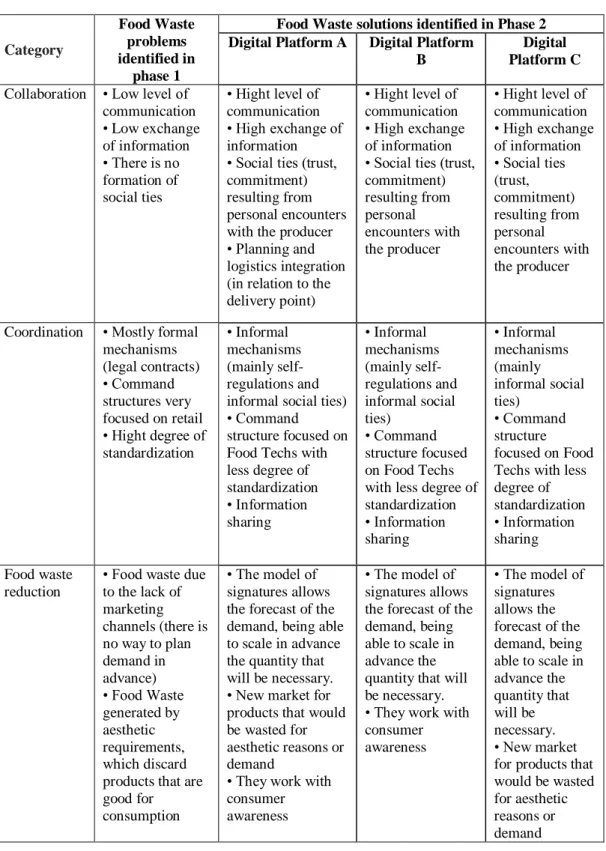
Table 2 presents a summary of the results:
Category
Food Waste problems identified in
phase 1
Food Waste solutions identified in Phase 2 Digital Platform A Digital Platform
B
Digital Platform C Collaboration • Low level of
communication • Low exchange of information • There is no formation of social ties • Hight level of communication • High exchange of information • Social ties (trust, commitment) resulting from personal encounters with the producer • Planning and logistics integration (in relation to the delivery point)
• Hight level of communication • High exchange of information • Social ties (trust, commitment) resulting from personal encounters with the producer • Hight level of communication • High exchange of information • Social ties (trust, commitment) resulting from personal encounters with the producer
Coordination • Mostly formal mechanisms (legal contracts) • Command structures very focused on retail • Hight degree of standardization • Informal mechanisms (mainly self-regulations and informal social ties) • Command structure focused on Food Techs with less degree of standardization • Information sharing • Informal mechanisms (mainly self-regulations and informal social ties) • Command structure focused on Food Techs with less degree of standardization • Information sharing • Informal mechanisms (mainly informal social ties) • Command structure focused on Food Techs with less degree of standardization • Information sharing Food waste reduction
• Food waste due to the lack of marketing channels (there is no way to plan demand in advance) • Food Waste generated by aesthetic requirements, which discard products that are good for consumption
• The model of signatures allows the forecast of the demand, being able to scale in advance the quantity that will be necessary. • New market for products that would be wasted for aesthetic reasons or demand
• They work with consumer awareness
• The model of signatures allows the forecast of the demand, being able to scale in advance the quantity that will be necessary. • They work with consumer awareness • The model of signatures allows the forecast of the demand, being able to scale in advance the quantity that will be necessary. • New market for products that would be wasted for aesthetic reasons or
• They work with consumer awareness
4 Discussion
Preliminary findings of the cross-case analysis indicate five forms that Food Techs contribute to food waste solutions improving supply chain coordination:
They establish a collaboration to promote a new market for products that would be discarded due to aesthetic standards set by retail or surplus demand. This new market is characterized by less degree of standardization which in these cases rely on informal coordination mechanisms. This is in line with the propositions already identified in the literature, since according to Gulati & Singh (1998) pooled interdependence are likely to have structures with less hierarchical control than those with interdependent alliances. The collaboration stabilised was an important factor in determining the initial structure of the network and the success of the relationship (Alvarez et al., 2010).
Food Techs promote a short supply chain with a positive result on food waste reduction. First because they decrease transportation distances avoiding losses inherent to this stage. Second, as proposes Alvarez et al. (2010), as there are few actors in this supply chain this led to very intense and frequent communication among all parties. Since communications schedule were not formal stipulated, coordination mechanisms are mostly informal, relying on norms rather (Alvarez et al., 2010). Also, communication has been found to improve buyer-supplier relationships and it represents an important enabler to capture value from the supply chain. In fact, logistical integration and enhanced communication are collaborative sustainable supply chain practices (Beske et al, 2014). Therefore, Food Techs supply chain are related to both logistical and cooperation aspects with positive results on food waste reduction.
The delivery system facilitates aspects of planning and management. It improves the problem faced by producers of food waste due to the lack of marketing channels. Seasonal fluctuations in sales faced by producers is a problem identified in the literature (Kilelu, Klerkx & Leeuwis, 2013) that food techs seem to help diminish.
The Food Techs analysed also encourage local markets, acting as a bridge between producers and consumers. As proposes Holland & Gutiérrez-Leefmans (2018), it was identified that e-commerce platforms are designed specifically to help small business. Food techs engage mostly small family farms farmers in a collaborative network that can provide better quality of life to them. This is an important aspect, since although small farmers play a significant role in sustainable food supply chain, they have weak market power compared to their competitors and are often neglected in published research studies that optimise production and supply (Zhu et al., 2018). Local distribution is also related to food waste reduction. All these benefits enhance transparency, reputation, trust and image of supply chain agents. Reputation is some kind of informal social control mechanisms related to trust (Dekker, 2004). Trust was found to be an important element in defining the initial conditions and governance mechanisms (Alvarez et al., 2010), since it can reduce the likelihood of hierarchical controls on alliances (Dekker, 2004; Gulati & Singh, 1998). Trust acts as an informal mechanism that contributes to better relationship quality and facilitates knowledge sharing (Touboulic and Walker, 2015).
Finally, some of the Food Techs also promote consumer awareness regarding non-standard products. It is a very relevant aspect, because consumers need to perceive value in this new market created by food techs. This is in line with Touboulic and Walker (2015) that identified that investments in relation-specific assets, such as substantial knowledge exchange or learning process between customers and suppliers in the sense of having a common goal and structuring solutions are some of the enablers of collaboration in supply chain. This bridges the gap between production and consumption.
Positive results are visible, since the reduction of waste is significant. For example, Fruta Imperfeita prevented a total of 300 tons of food from being lost and wasted in the last two years, resulting in various environmental and social benefits. Also, horticultural producers receive higher incomes and consumers pay lower prices. Returning to the initial proposition our finds indicate that Food Techs contribute to food waste solutions improving supply chain coordination mostly by informal mechanisms, increasing collaboration aspects with agents in their supply chain. They act as a bridge between production and consumption, creating a new market for food
conditions or by lack of market, but they also create the consumers demand through awareness and subscription purchase mechanisms.
5 Final Remarks
As a theoretical contribution this study illustrates the interface between innovative business models and sustainable supply chains in a megalopolis such as Sao Paulo. It also highlights the importance of digital platforms as an alternative coordination mechanism in the supply chain and the business opportunities that arise from such practices. Digital platforms act as bridge between horticultural producers located in peri urban areas and consumer more aware of sustainability. The practical impact of this research is that it contributes by presenting opportunities to reduce food losses and waste through digital platforms, capable of positively affecting food supply chains’ sustainability and reaching all three dimensions of sustainability.
The most important social impact refers to the fact that food losses and waste theme is part of the new agenda for integrating efforts to increase global sustainability, specifically to food and nutrition security (2030 Sustainable Development Agenda). A better coordination of food supply chain proposes an active role of private sector to reduce FLW and consequently improve food and nutrition security in an emerging country that has a double burden (undernutrition and overweight/obesity).
A research limitation is that this research only considers that from three digital business platforms located in Sao Paulo and its main stakeholders. These initiatives are recent and represents a small share of fresh food supply chain. Future studies should explore different contexts and conduct longitudinal studies, for example, returning to these platforms in a few years. Future research may also explore the coordination mechanisms of Food Techs with other supply chain agents, since this study was carried out with short supply chains.
References
Aghalaya, S.N. & Verma, P. (2018). Identifying sustainability metrics for a coordinated value chain using QFD. The 5th international EurOMA Sustainable Operations and Supply Chains Forum, University of Kassel,
Germany, March 2018.
Alexander, P., Brown, C., Arneth, A., Finnigan, J., Moran, D., & Rounsevell, M. D. A.(2017). Losses, inefficiencies and waste in the global food system.
AgriculturalSystems, 153, 190–200.
http://dx.doi.org/10.1016/j.agsy.2017.01.014.
Aschemann-Witzel, J., de Hooge, I., Amani, P., Bech-Larsen, T., & Oostindjer, M. (2015). Consumer-related food waste: causes and potential for action.
Sustainability, 7(6), 6457-6477.
Ahi, P. and Searcy, C. (2013), “A comparative literature analysis of definitions for green and sustainable supply chain management”, Journal of Cleaner
Production, Vol. 52, pp. 329-341.
Alvarez, G., Pilbeam, C. and Wilding, R. (2010), “Nestlé Nespresso AAA
sustainable quality program: an investigation into the governance dynamics in a multi stakeholder supply chain network”, Supply Chain Management: An International Journal, Vol. 15, No. 2, pp. 165-182.
Bakos, Y. (1998). The emerging role of electronic marketplaces on the Internet. Communications of the ACM, 41(8), 35-42.
Beske, P. (2012). Dynamic capabilities and sustainable supply chain management. International Journal of Physical Distribution & Logistics Management, 42(4), 372-387.
Beske, P., Land, A., & Seuring, S. (2014). Sustainable supply chain management practices and dynamic capabilities in the food industry: A critical analysis of the literature. International Journal of Production Economics, 152, 131-143. Chen, I. J., & Paulraj, A. (2004). Towards a theory of supply chain management: the constructs and measurements. Journal of operations management, 22(2), 119-150.
Chen, L., Zhao, X., Tang, O., Price, L., Zhang, S. and Zhu, W. (2017), "Supply chain collaboration for sustainability: a literature review and future research agenda", International Journal of Production Economics, Vol. 194, pp. 73-87. Chu, S. C., Leung, L. C., Van Hui, Y., & Cheung, W. (2007). Evolution of
e-Information & Management, 44(2), 154-164.
Dangelico, R. M., Pontrandolfo, P., & Pujari, D. (2013), "Developing sustainable new products in the textile and upholstered furniture industries: role of external integrative capabilities.", Journal of Product Innovation Management, Vol. 30, No.4, pp642–658.
Dania, W. A. P., Xing, K., & Amer, Y. (2018). Collaboration behavioural factors for sustainable agri-food supply chains: A systematic review. Journal of Cleaner Production.
Dekker, H. C. (2004). Control of inter-organizational relationships: evidence on appropriation concerns and coordination requirements. Accounting,
Organizations and Society, 29(1), 27-49.
Eisenmann, T., Parker, G., & Van Alstyne, M. W. (2006), “Strategies for two-sided markets”, Harvard Business Review, Vol. 84, No. 10, p. 92.
Foley, J. A., Ramankutty, N., Brauman, K. A., Cassidy, E. S., Gerber, J. S., Johnston, M., & Balzer, C. (2011). Solutions for a cultivated planet. Nature, 478(7369), 337-342.
FAO (2013), “Food Wastage Footprint: Impacts on Natural Resources - Summary Report,” (accessed April 13, 2017), [available at http://www.fao.org/]. Fusions (2015), “FUSIONS Food Waste Data Set for EU-28: New Estimates and
Environmental Impact,” (accessed February 5, 2016), [available at
http://ec.europa.eu/food/safety/food_waste/library/docs/fw_expo2015_fusions_ data-set_151015.pdf].
Gawer, A. (2014), “Bridging differing perspectives on technological platforms: Toward an integrative framework”, Research Policy, Vol. 43, No. 7, pp. 1239-1249.
Giannakis, M., Doran, D. and Chen, S. (2012), “The Chinese paradigm of global supplier relationships: Social control, formal interactions and the mediating role of culture”. Industrial Marketing Management, Vol. 41, No. 5, pp. 831-840.
Göbel, C., Langen, N., Blumenthal, A., Teitscheid, P., & Ritter, G. (2015). Cutting food waste through cooperation along the food supply chain. Sustainability,
7(2), 1429-1445.
Govindan, K. (2018). Sustainable consumption and production in the food supply chain: A conceptual framework. International Journal of Production
Economics, 195, 419-431.
Grandori, A. (1997). Governance structures, coordination mechanisms and cognitive models. Journal of Management & Governance, 1(1), 29-47. Gulati, R., & Singh, H. (1998). The architecture of cooperation: Managing
coordination costs and appropriation concerns in strategic alliances. Administrative science quarterly, 781-814.
Gulati, R., Wohlgezogen, F., Zhelyazkov, P., 2012. The two facets of
collaboration:cooperation and coordination in strategic alliances. Acad. Manag. Ann. 6, 531- 583.
Gustavsson, J., Cederberg, C., Sonesson, U., Van Otterdijk, R., & Meybeck, A. (2011). Global Food Losses and Food Waste: Extent, Causes and Prevention; Rome: FAO.
Holland, C. P., & Gutiérrez-Leefmans, M. (2018). A Taxonomy of SME E-Commerce Platforms Derived from a Market-Level Analysis. International Journal of Electronic Commerce, 22(2), 161-201.
Kilelu, C. W., Klerkx, L., & Leeuwis, C. (2013). Unravelling the role of innovation platforms in supporting co-evolution of innovation: Contributions and tensions in a smallholder dairy development programme. Agricultural systems, 118, 65-77.
Lumineau, F. and Henderson, J. E. (2012), “The influence of relational experience and contractual governance on the negotiation strategy in buyer-supplier disputes”. Journal of Operations Management, Vol. 30, No. 5, pp. 382-395. Mainville, D. Y., Zylbersztajn, D., Farina, E. M., & Reardon, T. (2005).
Determinants of retailers’ decisions to use public or private grades and
standards: Evidence from the fresh produce market of São Paulo, Brazil. Food Policy, 30(3), 334-353.
Conservation and Recycling, 55(6), 648-658.
Moazed, A., and Johnson, N. L. (2016), Modern monopolies: What it takes to dominate the 21st-century economy. St. Martin's Press.
Neutzling, D. M., Land, A., Seuring, S., & do Nascimento, L. F. M. (2018). Linking sustainability-oriented innovation to supply chain relationship integration. Journal of Cleaner Production, 172, 3448-3458.
Pagell, M. and Wu, Z. (2009), “Building a more complete theory of sustainable supply chain management using case studies of 10 exemplars”, Journal of Supply Chain Management, Vol. 45, No. 2, p. 37.
Papargyropoulou, E., Lozano, R., Steinberger, J. K., Wright, N., & bin Ujang, Z. (2014). The food waste hierarchy as a framework for the management of food surplus and food waste. Journal of Cleaner Production, 76, 106-115.
Parfitt, J., Mark B., & Sarah M. (2010), “Food Waste within Food Supply Chains: Quantification and Potential for Change to 2050,” Philosophical Transactions of the Royal Society B: Biological Sciences, 365 (1554), 3065-81
Pilbeam, C., Alvarez, G., & Wilson, H. (2012). The governance of supply networks: a systematic literature review. Supply Chain Management: An International Journal, 17(4), 358-376.
Pullman, M., and Wikoff, R. (2017), “Institutional sustainable purchasing priorities: Stakeholder perceptions vs environmental reality”, International Journal of Operations & Production Management, Vol. 37, No. 2, pp. 162-181. Rodríguez-Díaz, M., & Espino-Rodríguez, T. F. (2006). Redesigning the supply
chain: reengineering, outsourcing, and relational capabilities. Business Process Management Journal, 12(4), 483-502.
Sancha, C., Gimenez, C., Sierra, V., & Kazeminia, A. (2015), "Does implementing social supplier development practices pay off?” Supply Chain Management: An International Journal, Vol. 20, No.4, pp.389–403.
Santarelli,M, Vieira, L.M. & Constantine, J. (2018) Learning from Brazil´s Food and Nutrition Security Policies. “Working Paper”, IDS and Food Foundation. Sauer, P. C., & Rebs, T. (2018). Identifying Theories, Methods, and Applications in
Qualitative and Quantitative SSCM research – A Delphi Study. The 5th international EurOMA Sustainable Operations and Supply Chains Forum, University of Kassel, Germany, March 2018.
Seuring, S., & Müller, M. (2008). From a literature review to a conceptual framework for sustainable supply chain management. Journal of cleaner production, 16(15), 1699-1710.
Silva, M. F., & de Oliveira Pires, C. (2017). Avaliação das perdas no setor de FLV de um atacarejo na cidade de São Paulo SP. South American Development Society Journal, 2(4), 01-19.
Silvestre, B. S. (2015). A hard nut to crack! Implementing supply chain
sustainability in an emerging economy. Journal of Cleaner Production, 96, 171-181.
Stuart, T. (2009), Waste: Uncovering the Global Waste Scandal. London, UK: Penguin.
Thyberg, K. L., and Tonjes, D. J. (2016), “Drivers of food waste and their
implications for sustainable policy development”, Resources, Conservation and Recycling, Vol. 106, pp. 110-123.
Touboulic, A., & Walker, H. (2015). Love me, love me not: A nuanced view on collaboration in sustainable supply chains. Journal of Purchasing and Supply Management, 21(3), 178-191.
Vachon, S., & Klassen, R. D. (2008). Environmental management and
manufacturing performance: The role of collaboration in the supply chain. International journal of production economics, 111(2), 299-315.
UN General Assembly (2015). “Transforming our world: the 2030 Agenda for Sustainable Development”, A/RES/70/1, October 21, 2015, Retrieved December 10, 2017, from
<http://www.un.org/ga/search/view_doc.asp?symbol=A/RES/70/1&Lang=E> Williamson, O. E. (1993). Calculativeness, trust and economic organisation. Journal
of Law and Economics, Vol. 36, pp. 453-486.
Management, 29(6), 591-603.
Zhong, R., Xu, X., Wang, L. (2017) "Food supply chain management: systems, implementations, and future research", Industrial Management & Data Systems, Vol. 117, No. 9, pp. 2085-2114.
Zhu, Z., Chu, F., Dolgui, A., Chu, C., Zhou, W., & Piramuthu, S. (2018). Recent advances and opportunities in sustainable food supply chain: a model-oriented review. International Journal of Production Research, 1-23.
Presented in APA Style 6th Edition. Cited in author-year format.
Any references to code repositories such as GitHub or data repositories such as FigShare are welcome.
Appendix
As appropriate. Data collection tool (e.g. survey questions), mathematical model, simulation code, proofs of theorems, or long tables could be included here.