Article
Printed in Brazil - ©2019 Sociedade Brasileira de Química
*e-mail: [email protected]
Floral Scent and Nectar Sugar Composition of Temnadenia odorifera
(Apocynoideae, Apocynaceae)
Rafael F. Silva, a,b Natália A. B. Tinoco,a Anna Tsukui,a Cristiana Koschnitzke,c
Inara C. Silva-Batista,c Claudia M. Rezendea and Humberto R. Bizzo *,b,d
aLaboratório de Análise de Aromas, Instituto de Química, Universidade Federal do Rio de Janeiro,
21941-909 Rio de Janeiro-RJ, Brazil
bInstituto de Pesquisas de Produtos Naturais, Universidade Federal do Rio de Janeiro,
21941-902 Rio de Janeiro-RJ, Brazil
cDepartamento de Botânica, Museu Nacional, Universidade Federal do Rio de Janeiro,
20940-040 Rio de Janeiro-RJ, Brazil
dEmbrapa Agroindústria de Alimentos, Av. das Américas, 29501,
23020-470 Rio de Janeiro-RJ, Brazil
Temnadenia odorifera is an endemic species from the Brazilian Atlantic Forest. This study was developed in order to identify the volatile compounds emitted by the living flowers and nectar, to evaluate the temporal pattern of scent emission, and the sugars composition of its nectar. Analyses of the flower scent by dynamic headspace in vivo, of nectar sugar composition and studies on floral biology were performed. Twenty-three volatile compounds were identified in the flowers scent. The total amount of odor emitted by flowers varied significantly throughout anthesis, ranging from 10232.7 ng g-1 (9 to 12 h) to 620.2 ng g-1 (15 to 18 h). 2-Phenylethanol and (E)-cinnamyl alcohol
were the major compounds. Concentration ratio between disaccharides and the sum of hexoses ranged from 2.3 to 3.04, which can be correlated to the physiological needs inherent to big bees, the most frequent insects in T. odorifera. Analysis of the chemical composition of T. odorifera flowers provided a broader understanding of the mechanisms responsible for plant-insect interactions.
Keywords: volatile organic compounds (VOCs), Euglossini, insect attraction, flower scent, dynamic headspace
Introduction
The reproductive success of plants that depend on biotic vectors for pollen flow is related to the efficiency of insect
attraction.1 For pollination purposes, this involves the use of
different olfactory and visual signals by the flower, which, in turn, offers resources as a reward for pollen transfer service. The relationship between plant and pollinator is generally mutually beneficial. While insects move pollen from one flower to another, promoting cross-pollination and thereby ensuring reproductive success, they receive floral rewards for their service. Services are rewarded through the provision of resources, such as nectar, pollen,
floral oil and resin.2
Feed requirements of pollinating insects are responsible
for most of their visits to flowers, and nectar is one of the
main feeds provided by flowers.3 The chemical composition
of floral nectar can vary, but in general, it is a sweet, aqueous secretion that consists mainly of sucrose, glucose and fructose carbohydrates, whose relative proportion determines the spectrum of consumers, as insects differ in
nutrient requirements.2 Butterflies and bees, for example,
prefer sucrose-rich nectar.4
Among the sensory signals used by flowers to promote their resources, visual aspects and fragrance are the most
important characteristics.5 Historically, however, the visual
signals emitted by flowers (e.g., color and morphology)
have been rather overvalued compared with floral odor.6
Nevertheless, several studies have consolidated the understanding that complex plant-insect interactions in some systems are mainly mediated by a combination of
visual and olfactory cues.7 However, floral odor often
Floral Scent and Nectar Sugar Composition of Temnadenia odorifera
(Apocynoideae, Apocynaceae)
Rafael F. Silva, a,b Natália A. B. Tinoco,a Anna Tsukui,a Cristiana Koschnitzke,c
comprises the basis on which pollinators perform floral
choices.8
Floral odor is constituted of a complex mixture of volatile organic compounds (VOCs), which can be released
by different parts of the flower.8 Terpenes, derivatives of
fatty acids and benzenoids are the most common classes of floral volatiles. The chemical diversity of volatiles in nature
contributes to the versatility of this communication channel.9
Although some flowers apply very unusual compounds in the attraction of their pollinating insects, many plants emit common floral volatiles, which may turn the flowers
potentially attractive to a wider range of insects.10
Both polylectic and oligolectic insects use odor for
floral recognition.11 Different studies have shown that
bees can detect pollen and nectar through odor, as well as
detect recently visited flowers.12 In addition, some studies
have shown that flowers concentrate fragrance release during pollinator visit peaks, a strategy used to increase
attractiveness at the propitious time while saving energy.13
Thus, considering that the relationship between plant and insects is based on the emission of volatile compounds
and the production of resources as a reward,14 the study
of the floral odor chemistry and the sugar composition of nectar is fundamental for understanding the mechanisms that plants use to attract insects and, therefore, increase their reproductive success.
In the case of the Apocynaceae family, pollinating mechanisms are known to be complex and distinct among their subfamilies, in part because of the complexity and diversity of floral morphologies found among them. The diversity of floral fragrance patterns found within the Apocynaceae family is added to the complexity of
the floral mechanisms. Since Knudsen and Gershenzon9
published their extensive and systematic compilation of floral odor, much progress has been made in relation to the knowledge of the floral odor of species of the family Apocynaceae. However, practically all the effort dedicated to the knowledge regarding the chemical composition of the floral odor of the species of this family has been directed to the subfamilies Asclepiadoideae and Rauvolfioideae. From all species of the Apocynaceae family that had their floral odor studied by headspace techniques, 98.2% (55 species) belong to the subfamilies Asclepiadoideae and
Rauvolfioideae.15,16
The pollinating mechanism of the species from the subfamily Apocynoideae is distinct from that of the
Asclepiadoideae.17 For the subfamily Apocynoideae,
however, the chemical composition of the floral headspace odor was reported for only one species so far. It is common, for example, to find species of the subfamily Asclepiadoideae with a slightly putrid, fetid, urine-like
and pungent odor, whereas this fragrance profile is not
commonly found in the subfamily Apocynoideae.18
Jürgens et al.16 studied more than 40 species of the
subfamily Asclepiadoideae in the last 12 years, and stressed the importance of extending the studies on floral fragrance chemistry to other subfamilies in order to increase the knowledge about the chemical diversity of the floral odor of the Apocynaceae and their possible functions within the plant-pollinator relationship.
Temnadenia odorifera (Vell.)J.F.Morales (Apocynaceae)
belongs to the subfamily Apocynoideae and is an endemic species of the Brazilian Atlantic Forest, occurring in
restinga areas,19 an expression used to refer to low scrubs
and forests that are established on sea-level sandy areas
along the Brazilian coast. T. odorifera is a suitable system
for the study of the floral odor and its possible relation to plant-insect interactions, since this species has a mechanism of pollination similar to other species of Apocynoideae. Another important reason to study this species is its endemism in the Atlantic Forest, a threatened biome and
a biodiversity hotspot.20 The information gathered in this
study may contribute to its preservation.
As a first step to understand the plant-insect interaction of T. odorifera and to expand our knowledge of the diversity
of volatiles produced by Apocynaceae-Apocynoideae species, this study aimed to answer the following questions:
(i) which volatile compounds are emitted by the living
flowers and nectar?; (ii) what is the temporal pattern of
scent emission and its relation to the visitation of insects?;
and (iii) what is the sugar composition of the nectar?
To address these questions, we carried out a systematic
analysis on the flower scent of T. odorifera using dynamic
headspace in vivo, on the sugar composition of its nectar
and on its floral biology.
Experimental
Floral biology
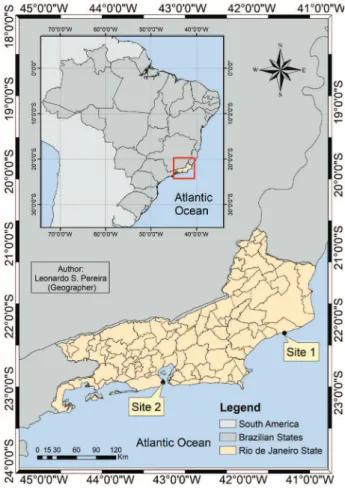
According to Brazilian law, collection and access were authorized by the Ministry of Environment (process IBAMA 02001.003166/2013-26). Material accessed after November 2015, in compliance with the law 13123/2015, was registered at SISGEN under the registry number A5AA808. The field work was carried out at two different sites: site 1, the municipality of Quissamã, state of Rio
de Janeiro (22o11’27”S, 41o25’33.5”W), with wild plants
from a restinga vegetation area; and site 2, the city of
Rio de Janeiro, state of Rio de Janeiro (22o54’29.3”S,
43o13’34.9”W), with cultivated plants from the Jardim
do Rio de Janeiro (Figure 1). The study was developed from November to June (2012 and 2013). Flowers were fixed in 70% ethanol, prepared from a 96% analytical grade ethanol (Tedia, São Paulo, Brazil) by dilution with distilled water for morphological analysis. Floral structures were measured using a Mitutoyo digital caliper (São Paulo, Brazil). Fresh flowers (n = 22) were immersed in neutral red aqueous solution for 10 min and then washed
in distilled water for the presence of osmophores.21 The
sugar concentration in the nectar was measured with an Eclipse pocket refractometer (0-45%; Turn Wells, UK). Focal observations of flowers were performed at site 1, covering all the anthesis schedules for two days, to verify the quantity and types of floral visitors.
Volatile collection for analysis of the temporal variation of floral odor emission
Floral odor was collected using a dynamic headspace
technique, based on the procedures of Raguso and Pellmyr22
and Kaiser.23
This part of the study was conducted at site 2 (Figure 1).
Altogether, six individuals were sampled, one individual per
day. The number of flowers in each day of extraction varied between one and three, according to the availability of open flowers. On the first day, the odor of two flowers of only one individual was sampled. On the second, third and fourth days,
the odor of three flowers was sampled per day. For the fifth
and sixth days, the odor of a single flower was sampled. For the extraction procedure, the entire inflorescence containing only flowers in anthesis was bagged in a polyethylene bag
(15 × 25 cm2) to isolate it from the external environment and
minimize possible contamination. The volatiles that were emitted were captured in a homemade cartridge, consisting of a glass micro tube (2 cm long, 1 mm i.d.) that was open at both ends, containing 3 mg of porous polymeric adsorbent (Porapak Q, 80-100 mesh; Sigma-Aldrich, Ontario, Canada), and was cleaned with 150 µL of hexane prior to each extraction. Adsorbent was retained in the micro tubes by means of wool and glass beads.
The volatiles emitted by the plant were forced through the cartridge containing adsorbent by means of a vacuum
pump connected to the system, with a flow of 200 mL min-1,
and checked with a rotameter. To counterbalance the vacuum, a second positive flow pump was connected to the side opposite of the vacuum pump. Inlet air was filtered through an active charcoal cartridge (30 mg) that was previously cleaned with 2 mL of hexane and dried
for 30 min in a heated oven (150 oC). To detect possible
contaminants, control extractions were carried out in the same way as above, but using empty bags.
After each extraction, the adsorbent cartridge was eluted with 50 µL of hexane (Absolv 99.5%; Tedia, São Paulo,
Brazil); then, 2 µL of a 4 mg mL-1 solution of n-octadecane
(99%; Sigma-Aldrich, Milwaukee, USA) were added as an internal standard. The eluate was transferred to a micro ampoule, torch-sealed and stored under low temperature
(–16 oC) until analysis.
The quantification of the volatiles was normalized
by dry flower mass. Flowers were dried at 40 oC until
constant mass. Pre-anthesis inflorescences were bagged, and the bags held until the beginning of the experiment. The chemical composition of the floral odor was evaluated from the extractions done in 2016 and 2017, both in the month of January.
To evaluate temporal variation of the volatile emission, the floral odor was sampled for 3 h in three periods of the day: 9-12 h, 12-15 h and 15-18 h. Sampling was repeated for six nonconsecutive days.
Volatiles collection of senescent flowers
The odor of flowers of T. odorifera in the senescence
stage was also collected using the same procedure described
above, for comparison with the volatile profile of the anthesis period. The flowers of three individuals were sampled on
three nonconsecutive days. One individual per day was
sampled. In each day, two flowers were sampled. The extraction was performed from 9 am, 27 h after the beginning of anthesis, which occurred the morning of the previous day.
Chemical analyses of floral odor collected
A 2 µL aliquot of each sample was injected in splitless mode into an Agilent 6890N gas chromatograph (GC; Palo Alto, USA) equipped with a flame ionization detector (FID)
maintained at 280 oC. Separation was achieved with an
HP-5MS fused silica capillary column (Agilent; 5% phenyl methylpolysiloxane, 30 m × 0.25 mm × 0.25 µm), using
hydrogen as carrier gas at a flow of 1 mL min-1. Injector
was kept at 250 oC. Oven temperature was varied from
40 oC (for 5 min) to 240 oC at a heating rate of 3 oC min-1.
The amount of each compound was calculated by the ratio of the internal standard absolute area to the area of each compound, corrected for the relative response factor (RRF),
and expressed as the concentration in ng g-1 of dry flower,
according to the following formula:
CFVOC = [(PAFVOC / PAstandard) × Cstandard × RRF] / Wflower (1)
where CFVOC and Cstandard are the concentrations of the target
VOC and the internal standard, respectively; PAFVOC and
PAstandard are the absolute peak areas of the dry flower VOC
and the internal standard, respectively; and Wflower is the
weight of the dried flower (g).
The samples were also analyzed by GC with mass spectrometry (MS) detection, using an Agilent 6890N GC coupled to an Agilent 5973N mass detector and Agilent HP-5MS capillary column compound. Helium was used as
carrier gas (1 mL min-1). The mass detector was operated
in electronic ionization mode (70 eV), with 3.15 scans per
second and a mass range of 40 to 450 u. The transfer line
was maintained at 260 oC, ion source at 230 oC and analyzer
at 150 oC. The temperature program and the injection
conditions were the same as those used in GC-FID.
Calculation of the RRFs
The RRFs were calculated for five different classes of
volatiles that occur in the floral odor of T. odorifera. To
calculate the RRF of a given chemical class, representative volatile substances (more than two, whenever possible) were diluted in hexane at four different concentrations (0.04,
0.08, 0.16 and 0.4 mg mL-1). An aliquot of 0.20 mg mL-1
of n-octadecane was added to all solutions. The obtained
solutions were injected in a GC-FID, in triplicate. After the injections, calibration curves were constructed for each of the representative substance, based on the ratio of the
internal standard and reference compound areas vs. the
ratio between internal standard and reference compound concentrations. The formula used was
RRF = CA / [(PAanalyte / PAstandard)] × Cstandard (2)
where CA is the concentration of the standard compound, representing a chemical group (e.g., methyl salicylate
and ethyl benzoate for aromatic esters); PAanalyte and
PAstandard are the absolute peak areas of the analyte and the
internal standard (n-octadecane), respectively; and C is the
n-octadecane concentration.24
Representative compounds used for calculation of the
response factors were limonene, α-pinene and γ-terpinene
(monoterpenes); linalool, carvone and α-terpineol
(oxygenated monoterpenes); (E)-caryophyllene and
α-humulene (sesquiterpenes); 3-octanone and acetophenone
(ketones); (E)-cinnamaldehyde and benzaldehyde
(aldehydes); methyl salicylate and ethyl benzoate (aromatic esters); and decanol and 3-methyl-2-decanol (aliphatic alcohols). All standards used were furnished by Sigma-Aldrich (purity > 98%; Milwaukee, USA).
Nectar volatiles collection and chromatographic analysis (GC-MS)
To collect odor exclusively from nectar, the volatiles were extracted by solid-phase microextraction (SPME). The fiber used was composed of divinylbenzene, carboxen and polydimethylsiloxane (DVB/CAR/PDMS; 50/30 µm; Supelco, Bellefonte, USA), and it was activated previously according to manufacturer’s instructions.
For the extraction, 50 µL of pure nectar from flowers from site 2 were transferred to a 1.5 mL vial and sealed with a poly(tetrafluoroethylene) (PTFE) septum cap. The nectar of nine individuals was collected in February (2017),
by collecting from three individuals per day and from three
flowers of each individual. The vial was heated to 40 oC for
40 min. The SPME fiber was exposed to the headspace of
the nectar for 30 min; the vial was kept at 40 oC, inserted
into the injector of the chromatograph, and kept for 3 min
at 250 oC (splitless) for the desorption and analysis of the
volatiles extracted.
flow rate of 1.0 mL min-1. Mass detector was operated in
electronic ionization mode (70 eV). The transfer line was
maintained at 260 oC, ion source at 230 oC, and analyzer
at 150 oC. Oven temperature program was the same as
that used to analyze the floral volatiles. The analyses were performed in triplicate.
Identification of volatiles
In all of the aforementioned cases, the identification of the volatile compounds was performed by comparison of both their mass spectra with those available in the
Wiley Registry of Mass Spectral Data25 and their linear
retention indices with published data.26 The linear retention
indices were calculated according to Van Den Dool
and Kratz,27 using the retention times of a homologous
series of n-alkanes (C7-C26) that were injected under the
same conditions. In addition, the identification of some
compounds present in the floral odor of T. odorifera was
confirmed by the injection of authentic standards.
Nectar collection
Nectars from sites 1 and 2 (Figure 1) were collected in January 2017 and 2016, respectively. In both cases, they were collected with a 10 µL syringe, transferred into a 1 mL vial with a 100 µL volume reducer and stored at
low temperature (–16 oC) until analysis. The flowers were
bagged a day before the beginning of anthesis to avoid the consumption of nectar by floral visitors in forage.
Analysis of nectar sugars
Nectar sugars were analyzed by high-performance liquid chromatography (HPLC) in a Shimadzu HPLC LC-20AD 19777 system (Kyoto, Japan) with refractive index detector. Sample preparation for injection consisted of diluting an aliquot of nectar sample from individual flowers in mobile phase at a 1:9 ratio (10 µL of nectar in 90 µL of mobile phase). The mobile phase was a 1 mM solution of sulfuric acid (analytical grade; Vetec Química Fina, Rio de Janeiro, Brazil), prepared in ultrapure water
(Milli-Q®, Millipore Corporation, Burlington, USA).
Sugar separation was achieved by injecting 5 µL of sample solution into a Bio Rad (Hercules, USA) Aminex HPX-87H
column (150 × 7.8 mm2, 9 µm) in isocratic mode. A flow
of 0.7 mL min-1 of the mobile phase and 7 min of total run
were sufficient for separation.
The method described above was validated for its accuracy, reproducibility, selectivity, linearity, limit of detection (LOD) and limit of quantification (LOQ). To
verify selectivity, the matrix effect was investigated for sucrose, glucose and fructose by comparing their curves in aqueous solution and matrix (aqueous solution of nectar). After determining the matrix effect, the linearity was evaluated through the Grubb test, and homoscedasticity was evaluated by the Cochran test.
Calibration curves were constructed by injecting (in triplicate) aqueous solutions of the sugars at the
concentrations of 1, 5, 10, 20 and 40 mg mL-1 for sucrose
and 1, 5, 10, 15 and 20 mg mL-1 for the hexoses. Accuracy
was determined by the recovery of sugars, and precision was determined by means of repeatability. LOQ and LOD were determined by injecting the sugars until the
signal-to-noise ratio was equal to 3 and 10, respectively.28
Data analysis
The statistical data analysis was performed using the
Statistica 7.0 software,29 applying the analysis of variance
(ANOVA) following Tukey’s test for differences among averages with 5% level of significance.
Results
Floral biology
Temnadenia odorifera is a climbing vine that blooms
from November to May, with flowering peak in January. The flowers (Figure 2a) have a tubular corolla, with a diameter of 22.4 ± 1.31 mm (18.0-24.5 mm, n = 35) and with the lobes facing to the right (Figure 2c) and perpendicular to the tube. At the base of the lobes, a platform of landing is formed that is, on average, 14.4 ± 2.3 mm (10.6-19.4 mm; n = 12) in diameter. In this area, there is a star-shaped nectar guide whose tips protrude towards the base of the lobe and have a pink color, as observed in the inner part of the tube (Figure 2c). Epipetal stamens are inserted into the median internal region of the corolla tube and are cone-shaped, surrounding the apical part of the gynoecium (Figure 2b). Due to the positioning of the reproductive structures in the corolla tube, it is subdivided into inferior and superior regions. The inferior tube communicates only with the superior tube through five small spaces with diameters of 0.69 ± 0.11 mm (0.38-0.9 mm, n = 40) between the fillets and the corolla. The corolla near the stamens and fillets presents several trichomes.
probably located on the inside of the corolla tube and on the landing platform, where the tissues are stained with neutral red. The nectary is a pentalocular disc located around the ovary, and the nectar produced accumulates at the base of the corolla tube. The overall sugar concentration of the nectar is 35 ± 2.35% (29-39%, n = 120). The flowers were most visited by Euglossini bee (Figure 2d) males and females only for collecting nectar, by Lepidoptera and, eventually, by hummingbirds. The period of greatest visitation of bees and Lepidoptera was in the first 5 h of the anthesis, and it decreased greatly in the afternoon. The rare visits of hummingbirds were always at midday.
Composition and odor temporal variation
Twenty three volatile compounds, including monoterpenes (6), oxygenated monoterpenes (2), sesquiterpene (1), phenylpropanoids and benzenoids (11), were identified in
the scent of T. odorifera flowers. The identified compounds
are listed in Table 1 in order of elution. Regardless of the anthesis period, the floral fragrance was composed of few compounds, and only 11 of them (phenylpropanoids/ benzenoids) comprised between 66.2 and 83.0% of the floral fragrance. The floral odor profiles differed significantly
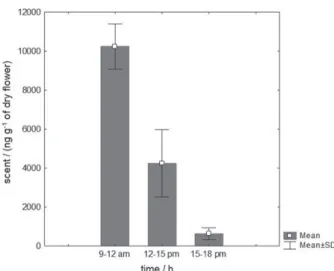
between the different periods of anthesis investigated. Floral odor emission was higher during the period from 9 to 12 h.
In addition, 2-phenylethanol and (E)-cinnamyl alcohol were
emitted at higher rates than other compounds at any other time of anthesis.
The total amount of odor emitted by flowers varied
significantly (F2,12 = 78.944, p < 0.001) throughout anthesis.
When the emission averages of the three investigated periods were compared, a significant difference
(Tukey-Kramer test, p < 0.05) was observed (Figure 3).
The analysis of the volatile chemical composition of T. odorifera in the senescence stage revealed that
flowers continued to release volatiles, although at lower concentrations and lower diversity levels compared to those observed in anthesis (Table 1).
Volatiles emitted by nectar
Eight volatile compounds were detected in the nectar of
T. odorifera flowers. The compounds are listed in Table 1.
Nectar volatiles were present in low concentration at trace level, since they were not detected by MS in scan mode, and only in the more sensitive SIM mode. The compounds
found in nectar were 3 terpenes (p-cymene, limonene, and
α-copaene), two aromatic alcohols (benzyl alcohol and
2-phenylethanol), two aromatic esters (ethyl benzoate and methyl salicylate) and one aromatic aldehyde (benzene acetaldehyde).
Composition and concentration of nectar sugars
The data from method validation is available in the Supplementary Information (SI) section, Table S1. The composition and concentration of nectar carbohydrates are
presented in Table 2. The nectar of T. odorifera contained
sucrose, glucose and fructose, which are the three most
common carbohydrates in floral nectar.30 Sucrose was
the major compound in the nectar from both sites that were investigated, with a mean percentage concentration
ranging from 68.3 to 75.0% (25.4 to 43.9 mg mL-1) of total
carbohydrates (Table 2). The percentage concentration of the hexoses, glucose and fructose, ranged from 14.1 to 12.4 and
12.6 to 17.6%, respectively (5.1 to 7.3 and 6.3 to 7.3 mg mL-1,
respectively). The concentration ratio (r) between the disaccharide and the sum of the hexoses (r = sucrose / (glucose + fructose)) ranged from 2.3 to 3.04 (Table 2).
Discussion
The total amount of odor emitted by the flowers of
T. odorifera decreases significantly throughout anthesis,
Figure 2. Flowers of Temnadenia odorifera. (a) Side view of corolla
with higher release in the morning when flowers are most visited by bees and Lepidoptera. Other authors who studied the plant-insect interaction in species that were pollinated preferentially by bees found similar results. According
to Dressler,31 the Euglossine bees are more active in the
morning, when they are usually in search of resources, such as nectar or fragrance. Thus, the convergence between greater odor emission and periods of greater activity for possible pollinators would be a strategy to concentrate their energy when the frequency of visitation to the flowers is high.
The floral odor of T. odorifera was dominated by
terpenes, phenylpropanoids and benzenoids. These classes of compounds are common among plants pollinated by
bees and butterflies.10
Studies related to scent collected from living flowers are very common for Orchidaceae, a family more studied in
Table 1. Emission rate of volatile compounds of T. odorifera flowers at different times of anthesis
Peak Compound / (ng g-1 of dry flower) LRIa LRIb 9 to 12 hc 12 to 15 hc 15 to 18 hc Senescenced Nectare
total amount – – 10232.7 5085.7 620.2 – –
1 α-pinenef 933 932 396.9 ± 83.0 189.5 ± 116.0 64.2 ± 33.9 – –
2 benzaldehydef 960 952 21.0 ± 12.0 – – – –
3 β-pinene 974 974 685.4 ± 177.6 178.5 ± 126.5 – – –
4 myrcene 992 988 10.5 ± 9.9 7.6 ± 9.3 – – –
5 n-decane 1002 1000 7.2 ± 6.8 18.2 ± 19.5 – – –
6 p-cymenef 1024 1020 27.6 ± 25.5 29.5 ± 45.5 – nq nq
7 limonenef 1026 1024 54.2 ± 12.9 167.6 ± 243.8 2.0 ± 2.2 nq nq
8 benzyl alcoholf 1035 1026 224.0 ± 82.7 97.7 ± 78.5 1.2 ± 0.5 – nq
9 benzene acetaldehyde 1042 1036 193.1 ± 58.1 233.1 ± 383.0 28.2 ± 16.9 – nq 10 (E)-β-ocimene 1049 1044 211.6 ± 92.0 97.5 ± 141.7 26.2 ± 15.8 nq –
11 γ-terpinene 1057 1054 nq nq – – –
12 acetophenone 1065 1059 nq – – – –
13 linaloolf 1096 1095 67.8 ± 38.2 99.0 9.5 ± 9.9 – –
14 nonanalf 1100 1100 125.3 ± 132.4 163.7 ± 196.2 107.5 ± 56.6 – –
15 2-phenylethanolf 1110 1106 5110.3 ± 1194.9 1836.7 ± 502.5 219.3 ± 112.9 – nq
16 camphor 1138 1141 20.1 ± 12.9 26.9 ± 17.9 – – –
17 (Z)-cinnamaldehyde 1217 1217 19.9 ± 24.4 32.3 ± 39.3 – – –
18 3-phenylpropanol 1230 1231 nq nq – – –
19 (Z)-cinnamyl alcohol 1261 1259 48.2 ± 15.7 10.3 ± 6.4 – – –
20 (E)-cinnamaldehydef 1268 1267 118.1 ± 78.4 145.4 ± 212.1 162.0 ± 73.2 – –
21 methyl 3-phenylpropanoate 1274 1277 nq – – – –
22 indole 1287 1290 – – – nq –
23 (E)-cinnamyl alcoholf 1308 1303 2762.5 ± 545.5 1406.6 ± 716.3 – – –
24 (E,E)-α-farnesene 1505 1505 128.9 ± 57.6 139.7 ± 98.8 – – –
25 ethyl benzoate 1165 1169 – – – – nq
26 methyl salicylate 1187 1190 – – – – nq
27 α-copaene 1371 1374 – – – nq nq
aExperimental linear retention index; blinear retention index from literature;26cmean ± standard deviation, n = 6; dthe extraction was performed a day
after the beginning of anthesis; ethe volatiles were extracted by (SPME) from pure nectar from flowers of site 2; fidentification confirmed with authentic
standard. nq: not quantified.
Figure 3. Comparison of the floral fragrance emission of T. odorifera in
relation to floral scent, according to Knudsen et al.32 However,
comparatively, only a few studies have been carried out on species of the family Apocynaceae or on the subfamilies
Asclepiadoideae and Periplocoideae.15,16,18,33 In some of
these studies, bioassays, GC and electroantennography detection (EAD) were used to demonstrate that floral scent
is decisive in attracting pollinators.33
The fragrance and chemical composition of orchid species are quite varied; however, some authors have noted that the floral odors of orchids pollinated by Euglossine bees have some common characteristics, such as a volatile profile with few compounds in high concentration. Furthermore, the compounds that are most commonly
found in these orchids are the monoterpenes p-cymene,
limonene, α-pinene, myrcene, and 1,8-cineol, in addition
to the benzenoids 2-phenylethanol, benzaldehyde, methyl salicylate, and benzyl benzoate. These characteristics are
present in the floral odor of T. odorifera, which is also
visited by Euglossine bees.
Only one study has been published to date on the odor of flowers from the subfamily Apocynoideae using
in vivo sampling. Joulain34 worked with living flowers of
Trachelospermum jasminoides, although the author did
not perform any study relating the floral odor with flower chemical ecology.
Among the volatiles emitted by T. odorifera, several
are known to trigger a positive behavioral response in
Euglossine bees.35 Specifically, the compounds myrcene,
limonene, linalool, methyl salicylate and (E,E)-α-farnesene
are detected by the antennas of the Eulaema nigrita
(Lepeletier), when subjected to EAD.36 This finding may
suggest that T. odorifera plants have used at least some of
these compounds to attract this species of bee. However, this hypothesis needs to be verified through behavioral bioassays.
In addition to bees, T. odorifera is visited by butterflies,
and 2-phenylethanol is one of the most recurrent compound in plants pollinated by butterflies and an important marker, arousing an electrophysiological response in
their antennas, such as in Inachis io, Aglais urticae and
Gonepteryx rhamni.37 The compound 2-phenylethanol is
present at a great proportion in T. odorifera floral odor
in all periods of the investigated anthesis, which can be considered a sign of attraction for this type of insect.
However, although this compound is commonly
associated with butterfly attraction, Kobayashi et al.38
demonstrated the electrophysiological responses of
Apis mellifera bee to this compound. Furthermore,
2-phenylethanol is very common in several species of
the genus Gongora (Orchidaceae), which is recognized
and pollinated by Euglossine bees.39 However, to
the best of our knowledge, no studies were found to associate this compound with Euglossine bees through electrophysiological studies.
The second most abundant compound in the floral
odor of T. odorifera, (E)-cinnamyl alcohol, also elicited
electrophysiological responses in butterflies (Inachis io,
Aglais urticae and Gonepteryx rhamni).37
Flowers of T. odorifera presented a sucrose-dominated
nectar at both collection sites. In addition, the concentration
of this disaccharide ranged from 25.4 to 43.9 mg mL-1
(one-way ANOVA, Tukey-Kramer test, p < 0.05). The
concentration of the hexoses, in contrast, did not show significant differences between the flowers at the sites that were investigated (one-way ANOVA, Tukey-Kramer
test, p > 0.05). Although the sucrose concentrations varied
significantly between flowers at both sites investigated, the concentrations were very high, up from 68.3%, compared to the sums of all carbohydrates present in the nectar.
There may be variability in the nectar composition in flowers of individuals of the same population and between different populations of the same species. This variability probably reflects the different photosynthetic activities of plants. As nectar sugars are derived directly or indirectly from photosynthesis, their composition may vary widely
according to the plant exposure to light.40 Since T. odorifera
plants from site 1 were much more exposed to sunlight than those at site 2, it is possible that this variation in light exposure is the reason for the higher amount of sucrose in the nectar of the former.
The carbohydrate ratio (r = sucrose / (glucose + fructose)) has been correlated to the physiological needs inherent to
Table 2. Concentration and composition of T. odorifera nectar flowers
n Concentration / (mg mL
-1)
S / (G + F) ratio
Sucrose Glucose Fructose
Site 1 5 43.9 ± 4.1a 7.3 ± 0.85c 7.3 ± 0.85c 3.04 ± 0.36d
Site 2 11 25.4 ± 6.8b 5.1 ± 1.0c 6.3 ± 1.2c 2.30 ± 0.65d
n: number of replicates; S: sucrose; G: glucose; F: fructose. Mean ± standard deviation one-way ANOVA, F5,147 = 360, p < 0.05. Different letters in the
each pollinator group.30 Thus, sucrose-dominated nectars
with r > 1.00 have been a constant in flowers pollinated by
butterflies, hummingbirds and large bees,4 as is the case of
T. odorifera species.
In addition to sugars, a broad spectrum of other minor metabolites, such as amino acids, lipids and VOCs, can often be found. The latter, however, are often neglected
in nectar chemistry studies. Raguso,12 for example, found
that among 127 studies devoted to the chemistry of nectar between 1993 and 2003, only one directly addressed the analysis of nectar odor. However, some studies have demonstrated the importance of considering the odor of
nectars in some pollination contexts.41
In the present study, from the 8 volatile compounds
detected in T. odorifera nectar, 5 were also found in floral
odor, and 2 were found exclusively in the nectar (ethyl benzoate and methyl salicylate). These 2 substances are
known for their attractiveness to bees35 and are even used as
bait for capture in entomological studies.42 An explanation
for the distinct presence of these substances in nectar could be to serve as a guide to direct their pollinators to nectar. As there are only small openings for the pollinator to introduce its tongue, or proboscide, into the lower tube of the corolla where the nectar is accumulated, the odor released by the nectar would indicate the right location for the pollinator to access the lower tube, functioning as a strategy of spatial differentiation. In addition, considering that nectar is an excellent medium for the proliferation of bacteria,
the presence of α-copaene in T. odorifera nectar may be
associated with a possible strategy of inhibiting microbial growth, since some terpenes, among them sesquiterpenes,
are known for their antimicrobial activity.43
Fragrance compounds in nectar can exhibit other ecological functions, such as antimicrobial agents, and may be used as an insect repellent for insects that are not
effective pollinators.12 Thus, whereas limonene, linalool
and aromatic esters were repellent to the hummingbird
species Archilochus alexandri and Selasphorus rufus,
aromatic alcohols were attractive. The aromatic esters methyl benzoate, ethyl benzoate and methyl salicylate had
an attractive influence on the behavior of the Manduca sexta
butterfly species.44
As already mentioned, only 2 substances were found
exclusively in the nectar of T.odorifera,which may lead
to a questioning about the origin of these volatiles. The
simplest hypothesis, according to Raguso,12 which explains
how the nectar becomes perfumed, states that volatiles released by floral tissues close to the nectar can be partially
solubilized in the aqueous medium. For T. odorifera,
this hypothesis is especially plausible, considering that the 5 volatile substances found in both nectar and floral
odor are soluble in aqueous solution, as demonstrated by
Weidenhamer et al.45
Conclusions
In conclusion, analysis of the chemical composition of
the attractive and floral resources available in T. odorifera
(volatiles and nectar, respectively) provided a broader understanding of the mechanisms responsible for plant-insect interactions. The ratio between disaccharide and hexoses of floral nectar, for example, shows a strong relationship with the prediction of its visiting insects. In
addition, several volatiles found in T. odorifera flowers
are common attractors to Euglossine bees. A considerable difference in the volatile profile of flowers in anthesis and senescence stages was observed, indicating a concentration of energetic effort of the species during anthesis. Methyl salicylate and ethyl benzoate were found only in nectar, suggesting they may act as guides to nectar. To the best of our knowledge, this is the first report on the chemistry of the scent emitted from living flowers and nectar of a species of
the subfamily Apocynoideae (Apocynaceae). T. odorifera
flowers also emitted high amounts of 2-phenylethanol and
(E)-cinnamyl alcohol, which are known to be attractive to
butterflies.
Supplementary Information
Supplementary data are available free of charge at http://jbcs.sbq.org.br as PDF file.
Acknowledgments
The authors thanks CNPq and FAPERJ for financial support. This study was financed in part by the Coordenação de Aperfeiçoamento de Pessoal de Nível Superior (CAPES, Brazil, Finance Code 001), with a scholarship for R. F. S. We thank Leonardo S. Pereira and the Laboratório de Geomorfologia Ambiental e Degradação dos Solos (UFRJ) for providing the map indicating sampling locations.
References
1. Majetic, C. J.; Raguso, R. A.; Ashman, T.; Funct. Ecol.2009,
23, 480.
2. Agostini, K.; Lopes, A. V.; Machado, I. C. In Biologia da Polinização, 1a ed.; Rech, A. R.; Agostini, K.; Oliveira, P. E.; Machado, I. C., eds.; Projeto Cultural: Rio de Janeiro, 2014, ch. 6.
3. Heil, M.; Trends Plant Sci. 2011, 16, 191.
5. Schiestl, F. P.; Johnson, S. D.; Trends Ecol. Evol.2013, 28, 307. 6. Raguso, R. A.; Entomol. Exp. Appl.2008, 128, 196.
7. Burger, H.; Dötterl, S.; Ayasse, M.; Funct. Ecol.2010, 24,1234. 8. Raguso, R. A. In Advances in Insect Chemical Ecology, 1st ed.;
Cardé, R. T.; Millar, J. G., eds.; Cambridge University Press: Cambridge, 2004, ch. 5.
9. Knudsen, J. T.; Gershenzon, J. In Biology of Floral Scent, 1st ed.; Dudareva, N.; Pichersky, E., eds.; CRC Press/Taylor and Francis: Boca Raton, 2006, ch. 5.
10. Filella, I.; Primante, C.; Llusià, J.; González, A. M. M.; Seco, R.; Farré-Armengol, G.; Rodrigo, A.; Bosch, J.; Peñuelas, J.;
Sci. Rep.2013, 3, 3434.
11. Burger, H.; Ayasse, M.; Dötterl, S.; Kreissl, S.; Galizia, C. G.;
J. Comp. Physiol., A2013, 199, 751.
12. Raguso, R. A.; Ecology2004, 85,1486.
13. Rodriguez-Saona, C.; Parra, L.; Quiroz, A.; Isaacs, R.; Ann. Bot. 2011, 107, 1377.
14. Parachnowitsch, A. L.; Manson, J. S.; Curr. Opin. Insect Sci.
2015, 8, 41.
15. Heiduk, A.; Brake, I.; Tschirnhaus, M. V.; Haenni, J. P.; Miller, R.; Hash, J.; Prieto-Benitez, S.; Jürgens, A.; Johnson, S. D.; Schulz, S.; Liede-Schumann, S.; Meve, U.; Dötterl, S.; Flora
2017, 232, 169.
16. Jürgens, A.; Dötterl, S.; Liede-Schumann, S.; Meve, U.;
Biochem. Syst. Ecol. 2009, 36, 842.
17. Moré, M.; Sérsic, A. N.; Cocucci, A. A.; Ann. Mo. Bot. Gard.
2007, 94, 485.
18. Shuttleworth, A.; Biochem. Syst. Ecol.2016, 66, 63.
19. http://floradobrasil.jbrj.gov.br/reflora/floradobrasil/FB4874, accessed in September 2018.
20. Myers, N.; Mittermeier, R. A.; Mittermeier, C. G.; Fonseca, G. A. B.; Kent, J.; Nature2000, 403, 853.
21. Dobson, H. E. M.; Raguso, R. A.; Knudsen, J. T.; Ayasse, M. In
Practical Pollination Biology; Dafni, A.; Kevan, P. G.; Husband,
B. C., eds.; Enviroquest Ltd.: Cambridge, 2005, p. 13. 22. Raguso, R. A.; Pellmyr, O.; Oikos1998, 81, 238.
23. Kaiser, R.; Chimia2000, 54, 346.
24. Costa, R.; Zellner, B. A.; Crupi, M. L.; Fina, M. R.; Valentino, M. R.; Dugo, P.; Dugo, G.; Mondello, L.; Flavour Fragrance J.2008, 23, 40.
25. McLafferty, F. W.; Stauffer, D. B.; Wiley Registry of Mass Spectral Data, 6th ed.; Wiley Interscience: New York, 1994.
26. Adams, R. P.; Identification of Essential Oil Components by Gas Chromatography/Mass Spectrometry, 4th ed.; Allured: Carol Stream, 2007.
27. Van Den Dool, H.; Kratz, P. D.; J. Chromatogr. A1963, 11, 463.
28. Tinoco, N. A. B.; Uekane, T. M.; Tsukui, A.; Aguiar, P. F.; Teixeira, C. M. L. L.; Rezende, C. M.; J. Braz. Chem. Soc.
2016, 27, 1452.
29. StatSoft, Inc.; Statistica 7.0; StatSoft, Inc., Tulsa, OK, USA,
2004.
30. Lotz, C. N.; Schondube, J. E.; Biotropica2006, 38, 3.
31. Dressler, R. L.; Annu. Rev. Ecol. Syst.1982, 13, 373. 32. Knudsen, J. T.; Eriksson, R.; Gershenzon, J.; Ståhl, B.; Bot.
Rev.2006, 72, 1.
33. Zito, P.; Dötterl, S.; Sajeva, M.; J. Chem. Ecol.2015, 41, 340.
34. Joulain, D.; Flavour Fragrance J.1987, 2, 149. 35. Dötterl, S.; Vereecken, N. J.; Can. J. Zool. 2010, 88, 668.
36. Milet-Pinheiro, P.; Navarro, D. M. A. F.; Dotterl, S.; Carvalho, A. T.; Pinto, C. E.; Ayasse, M.; Schlindwein, C.; Phytochemistry
2015, 116, 149.
37. Andersson, S.; Chemoecology2003, 13, 13.
38. Kobayashi, K.; Arai, M.; Tanaka, A.; Matsuyama, S.; Honda, H.; Ohsawa, R.; Breed. Sci.2012, 62, 293.
39. Hetherington-Rauth, M. C.; Ramírez, S. R.; Ann. Bot.2016,
118, 135.
40. Pacini, E.; Nepi, M.; Vesprini, J.; Plant Syst. Evol. 2003, 238, 7.
41. Parachnowitsch, A. L.; Burdon, R. C. F.; Raguso, R. A.; Kessler, A.; Plant Signaling Behav.2013, 8, 137.
42. Ferreira, M. G.; Pinho, O. C.; Balestieri, J. B. P.; Faccenda, O.;
Neotrop. Entomol.2011, 40,639.
43. Dötterl, S.; Jürgens, A.; Plant Syst. Evol.2005, 255, 99; Bubán, T.; Orosz-Kovács, Zs.; Farkas, Á.; Plant Syst. Evol.2003,238,
183; Tholl, D.; Chen, F.; Petri, J.; Gershenzon, J.; Pichersky, E.; Plant J.2005,42, 757; Barrero, A. F.; Moral, J. F. Q.; Lara,
A.; Herrador, M. M.; Planta Med. 2005, 71, 67.
44. Raguso, R. A.; Willis, M. A.; Anim. Behav.2005, 69, 407.
45. Weidenhamer, J. D.; Macias, F. A.; Fischer, N. H.; Williamson, B.; J. Chem. Ecol.1993, 19, 1799.
Submitted: June 7, 2018
Published online: September 24, 2018