Exposures to airborne particulate matter and adverse perinatal
outcomes: a biologically plausible mechanistic framework
for exploring potential
*Exposição à matéria particulada aérea e efeitos perinatais adversos:
referencial mecanístico biologicamente plausível
para exploração de potenciais
Srimathi Kannan 1 Dawn P. Misra 2 J. Timothy Dvonch 1 Ambika Krishnakumar 3
* This article was originally published by the journal Environmental Health Perspectives 114:1636–1642 (2006). doi:10.1289/ ehp.9081 available via http:/ /dx.doi.org/ [Online 17 August 2006] and is part of the scientific collaboration between Rev C S Col and EHP. The authors declare they have no competing financial interests. 1 Department of Environmental Health Sciences, Human Nutrition Program, University of Michigan. School of Public Health, SPH-I (Tower), Room 6338. Ann Arbor MI USA. 48109-2029. [email protected]
2 Department of Health Behavior and Health Education.
3 Department of Child and Family Studies, Syracuse University, College of Human Studies and Health Professions.
R
E
V
IS
Ã
O
R
E
V
IE
W
Abstract This article has three objectives: to de-scribe the biologically plausible mechanistic path-ways by which exposure to particulate matter (PM) may lead to adverse perinatal outcomes of low birth weight (LBW ), intrauterine growth retardation (IUGR), and preterm delivery (PTD); review ev-idence showing that nutrition affects biologic path-ways; and explain mechanisms by which nutri-tion may modify the impact of PM exposure on perinatal outcomes. We propose an interdiscipli-nary framework that brings together maternal and infant nutrition, air pollution exposure as-sessment, and cardiopulmonary and perinatal ep-idemiology. Five possible biologic mechanisms have been put forth in the emerging environmental sci-ences literature and provide corollaries for the pro-posed framework. The literature indicates that the effects of PM on LBW, PTD, and IUGR may man-ifest through the cardiovascular mechanisms of oxidative stress, inflammation, coagulation, en-dothelial function, and hemodynamic responses. PM exposure studies relating mechanistic path-ways to perinatal outcomes should consider the likelihood that biologic responses and adverse birth outcomes may be derived from both PM and non-PM sources. We present strategies for empirically testing the proposed model and developing future research efforts.
Key words Air pollution, Biomarkers, Birth out-comes, Cardiovascular disease, Nutrition
Resumo São três os objetivos deste artigo: des-crever rotas mecanísticas biologicamente plausí-veis pelas quais a exposição à matéria particula-da (MP) pode levar a efeitos perinatais adversos, como baixo peso ao nascer (BPN), retardo do cres-cimento intra-uterino (RCIU) e nascres-cimentos pré-termo (NPT); fazer uma revisão de evidências mostrando que a nutrição afeta rotas biológicas; explicar os mecanismos através dos quais a nu-trição pode modificar o impacto da exposição a MP nos efeitos perinatais adversos. Propomos um referencial interdisciplinar que aproxime nutri-ção materna e infantil, avalianutri-ção de poluinutri-ção do ar e epidemiologia cardiopulmonar e perinatal. Destacaram-se cinco possíveis mecanismos bio-lógicos. A literatura indica que os efeitos da expo-sição a MP sobre o BPN, o RCIU e os NPT podem se manifestar através de mecanismos de estresse oxidativo cardiovascular, coagulação, inflamação, função endotelial e respostas hemodinâmicas. Es-tudos de exposição à MP relatando rotas meca-nísticas a efeitos perinatais devem considerar a probabilidade de respostas biológicas e efeitos ad-versos ao nascer serem derivadas da exposição à MP e de outras fontes. Apresentamos estratégias para testes empíricos do modelo proposto e para o desenvolvimento de futuras pesquisas.
K
an
n
an
S
ri
m
Low birth weight (LBW) affects 20 million in-fants worldwide1. LBW is comprised of two
over-lapping etiologies: preterm delivery (PTD) and intrauterine growth retardation (IUGR). LBW, IUGR, and PTD are all significantly associated with infant mortality and an array of infant morbidi-ties that range from pulmonary to neurologic outcomes2. These associations form the basis for
the “fetal origins” or the “Barker hypothesis” which postulates that “fetal growth retardation conse-quent to malnutrition has long-term structural and physiologic impacts that predispose an indi-vidual to chronic diseases in adulthood”3.
Perinatal outcomes are influenced by a multi-tude of factors including nutrition and health, genetics, physiologic stressors, and environmen-tal toxicants such as ambient air pollution4. In
terms of the human health effects, the airborne particulate matter (PM) component has received the greatest attention5, and is therefore the focus
for this review.
Current epidemiologic evidence suggests that maternal PM exposure is correlated with several adverse perinatal outcomes5,6,7,8,9,10,11. Although
these studies have become increasingly sophisti-cated in their measurement of PM exposures, the biologic roles of host factors that may function as effect modifiers of their relationship with birth outcomes have been less thoroughly examined. In particular, the lack of attention to nutrition factors should be considered. Nutrition can be both confounder and effect modifier of the asso-ciations between PM exposure and reproductive effects. Given the modifiable nature of both nu-trition and PM exposures, future PM research and biomonitoring programs on young women would benefit greatly from the inclusion of se-lected nutrition factors. It is likely that women of childbearing age with nutritional risk factors (e.g., inadequate caloric intake, suboptimal protective antioxidant micronutrient status) are more like-ly to live in higher PM-exposed environments— confounded through their relation to socioeco-nomic status (SES)12. Despite the considerable
effects of nutrition among women of childbear-ing age, little is known about the nutrition inter-actions with SES and physical environment, such as PM exposure.
The specific objectives of this review are three-fold: to describe the biologically plausible mech-anistic pathways by which PM exposure may lead to adverse perinatal outcomes (LBW, IUGR, and PTD); review the evidence showing that nutri-tion affects the biologic pathways; and describe biologic markers that mediate the impact of
nu-trition and thereby explain the mechanisms by which nutrition may serve as effect modifiers of the association between PM exposure and perin-atal outcomes.
Responses to PM exposures: biologically plausible mechanisms
The specific biologic mechanisms whereby PM influences perinatal outcomes remain to be fully elucidated. However, epidemiologic, clinical, and experimental evidence correlates current levels of PM with both respiratory and cardiovascular effects13,14,15,16, and provide corollaries around
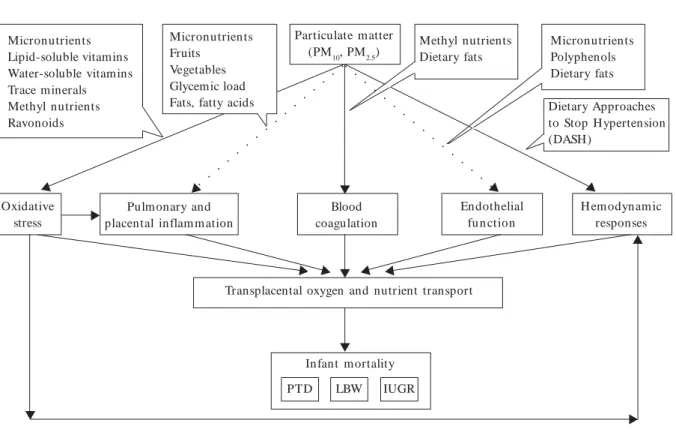
which we have developed biologically plausible hypotheses linking PM exposures and birth out-comes presented in Figure 1. Different particle size ranges including ultrafine particles (with aero-dynamic diameter < 0.1 µm), fine particles (with aerodynamic diameter < 2.5 µm), and coarse par-ticles (with aerodynamic diameter 2.5 - 10 µm) are of importance to this framework. Figure 1 illustrates both chronic and acute PM effects to-gether. Five possible albeit not exclusive biologic mechanisms have been put forth in the literature to explain these effects. In the following text, we describe these mechanisms. Although an increas-ing number of studies support the notion that PM is associated with cardiovascular effects, these studies at present provide only a fragmentary and somewhat inconclusive picture of the complex biologic pathways involved.
Oxidative stress. PM exposure may contrib-ute to systemic oxidative stress14 (Figure 1).
Di-rect effects from oxidative activities of combus-tion-derived particles or by transition-metal con-stituents (e.g., iron, copper, chromium, and va-nadium)17,18 may adversely affect the embryo in
its earliest phase of growth19. In addition,
oxida-tive stressors resulting from PM exposure may arise from organic compounds and from activa-tion of inflammatory cells capable of generating reactive oxygen species (ROS) and reactive nitro-gen species (RNS)20. F2a (8-iso-PGF2a)
isopros-tane is one of the most promising biomarkers for assessing oxidative injury21 and has been
stud-ied the most extensively for PM exposures. Oxidative stress–induced DNA damage ap-pears to be a particularly important mechanism of action of urban particulate air pollution20,22.
As theorized by Hartwig et al.23, metals such as
aú
d
e C
o
le
tiv
a, 1
2
(6
):1
5
9
1
-1
6
0
2
, 2
0
0
7
oxidative stress that may lead to DNA damage, disrupting DNA transcription which in turn may increase the number of placental DNA adducts. This hypothesis is partially supported by obser-vations from the Czech Teplice study that found that maternal blood and placental DNA adducts are more common in areas with higher levels of air pollution24. One mechanism postulated to
mediate the effects is that PM absorbs and trans-ports polycyclic aromatic hydrocarbons (PAHs), exposure to which may lead to increased DNA adducts25, thus resulting in LBW25,26 and IUGR8, 27. Researchers suggest that DNA damage
mea-sured by oxidized DNA bases purines and pyri-midines and protein and lipid peroxidation indi-cated by plasma malondialdehyde may be more sensitive than bulky DNA adducts as markers of exp osu re to PM20. PAH s in PM can in d u ce
biotransformation by cytochrome P450, expoxide hydrolase, and dihydrodiol dehydrogenase28 in
addition to the direct action of coal combustion toxics on antioxidants/enzymes (e.g., superoxide dismutase, catalase) that may adversely affect the embryo in its earliest phase of growth19.
Alterna-tively, PM may also bind receptors for placental growth factors, resulting in decreased fetal– pla-cental exchange of oxygen and nutrients8.
Nutri-ent and oxygen supply during gestation are key factors regulating fetal growth29.
Pulmonary and placental inflammation. PM exposure is associated with systemic inflam-mation30,31,32,33,34 (Figure 1). We hypothesize that
inhalation of particles during pregnancy can in-duce acute placental6 and pulmonary
inflamma-tion. In contrast to the PM composition–induced effects on oxidative stress that have been exten-sively studied, specific components in particles that elicit inflammation are less thoroughly in-vestigated, although recent research points to the contribution of compositional trace elements35
and bioavailable transition metals to cardiopul-monary injury in healthy and compromised an-imal models36. Based on cell culture
methodolo-gies, the u p-regu lation of pro-in flam m atory mediators in response to transition metals chro-mium, aluminum, silicon, titanium, iron, and copper within PM were found to contribute to pulmonary inflammation20.
○ ○
○ ○
○ ○
○ ○
○ ○
○ ○
○ ○
○ ○
Figure 1. Proposed biologic framework for exploring possible effect modification of PM–birth outcomes by
m aternal nutrition.
Micronutrients Lipid-soluble vitamins Water-soluble vitamins Trace minerals Methyl nutrients Ravonoids
Micronutrients Fruits
Vegetables Glycemic load Fats, fatty acids
Particulate matter
(PM10, PM2.5) Methyl nutrientsDietary fats MicronutrientsPolyphenols
Dietary fats
Dietary Approaches to Stop Hypertension (DASH)
Infant m ortality
PTD LBW IUGR
Transplacental oxygen and nutrient transport Oxidative
stress
Pulmonary and placental inflam m ation
Blood coagulation
Endothelial fu n ction
H em odynam ic responses
○ ○
○ ○
○ ○
○ ○
○ ○
○ ○
○ ○
○ ○
X
X
X
X
X
X
X
X X X
X X X X
K
an
n
an
S
ri
m
The most widely studied biomarkers of in-flammation are high-sensitive C-reactive protein, oxidized low-density lipoproteins, proinflamma-tory cytokines interleukin (IL)-1, IL-6, and tu-mor necrosis factor-a, serum amyloid A37, the
acute phase marker fibrinogen, neutrophilcount and blood platelet count, red blood cells and white blood cells34, and albumin38. With cell
cul-ture methods, PM exposure–induced trace ele-mental markers of inflammatory response de-noted by the release of cytokines and chemokines were recently identified by Becker et al.39, who
showed that PM constituent iron and silicon cor-related with the release of IL-6, whereas chromi-um correlated with IL-8.
Inflammation could be associated with inad-equate placental perfusion40, which can mediate
placental inflammatory responses and its biolog-ic sequelae, resulting in impaired transplacental nutrient exchange6 (Figure 1). We hypothesize that
inadequate placental perfusion may cause growth restriction in utero due to interference with some process or processes such as affecting nutrition of the fetus, reduced oxygenation of maternal blood, or both. For example, a rapid decline in the pla-cental delivery of essential fatty acids arachidonic acid and docosahexanoic acid is expected41.
Independent of the cascade of events charac-terized above, the biologic mechanisms that trig-ger adverse perinatal outcomes may include ma-ternal infections, especially during the last trimes-ter of pregnancy, and may initiate premature con-tractions and/or rupture of m em branes11.
Al-though air pollution does not directly cause ma-ternal infections, exposure to specific pollutants may enhance allergic inflammation42 and increase
the maternal risk for adverse birth outcomes. Coagulation. Systemic alterations in rheologic factors, including blood coagulability and whole blood viscosity as a result of exposure to PM, represent other potential mechanisms of PM tox-icity34,43,44,45. In response to PM exposures, increase
in any of the proteins of the clotting cascade present a possibility forcoagulation14,43. Based on
a cross-sectional study conducted in London, Pe-kkanen et al.43 found ambivalent results for the
association between PM10 (PM < 10 µm in aero-dynamic diameter) and plasma fibrinogen - this association was significant only for the warm sea-son. Other measurable biomarkers include fac-tors VII-IX, fibrinD-dimer, and von Willebrand factor46. PM exposures may also lead to changes
in hemoglobin, platelets, and white blood cells47,
which may potentially contribute to the associa-tion between PM and adverse fetal growth.
Endothelial function. Exposure to PM may influence endothelial functions and could be con-sidered as an intervening pathway in subsequent impact on fetal growth (Figure 1). Although this pathway has been less extensively studied, the impact of PM on vascular function has been the subject of recent investigations30. Inhalation of
environmental tobacco smoke (ETS) [similar in characteristics to PM2.5 (PM < 2.5 µm in aero-dynamic diameter)] causes rapid vasoconstric-tion48, increases plasma endothelin levels49, and
triggers endothelial dysfunction50. Although the
specific chemical components of ETS responsi-ble for the observed effect of vasoconstriction have not been adequately characterized, it is like-ly that the PM in ETS is primarilike-ly responsible, as summarized by Brook et al.13.
A recent anim al-based study51 found that
PM2.5 exposure increased plasma concentrations of asymmetric dimethyl arginine that is associat-ed with impairassociat-ed vascular function and increasassociat-ed risk of cardiovascular events52. Circulating
con-centrations of soluble adhesion molecules E-se-lectin, intracellular adhesion molecule (sICAM-1), an d vascu lar cellu lar adh esion m olecu le (VCAM-1) are overexpressed when the endot-helium encounters inflammatory stimuli53. The
inhalation of high urban levels of concentrated ambient particles and ozone for 2 hr caused con-duit arterial vasoconstriction in healthy adults54.
As summarized by Brook et al.13, it is possible
that acute systemic inflammation and oxidative stress following PM exposure22 are responsible
for triggering endothelial dysfunction leading to vasoconstriction55. Endothelial dysfunction can
also be secondary to other cardiovascular dis-ease (CVD) risk factors (e.g., m etabolic syn-drome)56. These pathophysiologic reactions in
response to PM exposures may result in impaired fetal growth.
Hemodynamic responses. Biologic m ea-sures that assess hemodynamic changes in re-sponse to PM exposure have typically included systolic blood pressure (SBP) and diastolic blood pressu re (DBP). Pan el stu dies con du cted of adults with preexisting CVD found an increase in SBPassociated with elevated particulate expo-sures57,58,59 (Figure 1). In contrast, based on
pop-ulation exposures, an increase of a 5-day average of ultrafine particles was associated with a small decrease in SBP and DBP60. Specific biologic
aú
d
e C
o
le
tiv
a, 1
2
(6
):1
5
9
1
-1
6
0
2
, 2
0
0
7
Another potential mechanism whereby pollut-ant components can increase BP is superoxide-mediated inhibition of the actions of nitrous ox-ide in inducing vasodilatation61.
If PM exposure is also associated with BP ele-vations in pregnant women, this could increase the risk of adverse perinatal outcomes as a conse-quence of preexisting hypertension or pregnan-cy-induced hypertension. Elevation of BP to lev-els that is defined as pregnancy-induced hyper-tension has been associated with IUGR (Misra 1996) and PTD62. Severely impaired fetal growth
is preceded by maternal hemodynamic maladap-tation63. These changes may force the fetus to
adapt, down-regulate growth, and prioritize the development of essential tissues64. Hypertension
can also be secondary to oxidative stress and vas-cular inflammation65 or other risk factors, for low
maternal body weight, for example66, thus
enhanc-ing the susceptibility to adverse birth outcomes.
Exploring effect modification by nutrition
Although the specific underlying mechanisms that contribute to normal or adverse birth out-comes are not yet fully understood, an adequate periconceptional nutrition status is considered a key determinant68,69. Given that both dietary
com-position and CVD risk are strongly socially pat-terned, this suggests one way to approach the possible interaction between air pollution and SES (in affecting birth outcomes). As is described in more detail below and illustrated in Figure 1, di-etarycomposition has been demonstrated to re-late to those same biologic mechanisms hypoth-esized to explain the possible effects of PM expo-sure on birth outcomes.
The nutrition aspects of the framework shown in Figure 1 are not intended to include every pos-sible parameter worthy of consideration. Explo-rations about what to add to various layers of the framework could be one of its most useful applications in future work on this topic. Al-though no previous studies of the perinatal ef-fects of PM exposure have examined effect mod-ification by nutrition, theoretical and empirical evidence is growing. Researchers studying air pollution and birth outcomes have suggested that nutrition status may play a role in protecting the fetus or magnifying the effects27,70. Other
investi-gators have cited the potential im portance of nutrition as a buffering or synergistic factor with regard to PM-induced cardiovascular respons-es70,71,16. Usin g data from the Third Nation al
H ealt h an d N u t r it ion Exam in at ion Su r vey (NHANES III), Schwartz16 considered the role of
nutrition in the association between PM expo-sures and incident ischemic events. Considering a limited set of dietary factors (saturated fat, fi-b er, alco h o l, caffein e, fish an d sh ellfish ) , Schwartz16 reported that the selected factors did
not m odify the association. Furtherm ore, the biomarkers were limited to fibrinogen, platelet and white blood cell count, SBP, total cholesterol, and high-density lipoprotein cholesterol. On the other hand, we propose that researchers should explore the potential effect-modifying roles us-ing a more comprehensive list of dietary vari-ables and biomarkers.
Consideration of a hypothesis of nutritional susceptibility
The Institute of Medicine72 describes
combina-tions of environmental exposures and greater susceptibility as a form of “double jeopardy.” Maternal nutrition stressors such as micronu-trient deprivation are likely to occur around the world in subpopulations that experience dispar-ate air pollution profiles. Considerable research evidence supports the important role played by nutrition, particularly micronutrients, in deter-mining positive pregnancy outcomes73. In
addi-tion, gestational energy stress, a phenomenon characterized by lower plasma volume expan-sion74, protein-energy malnutrition, and
preg-nancy complications, may also co-occur. As de-picted in Figure 1, we propose that maternal nu-trition could be exacerbating or buffering in the association between PM and birth outcomes for a subgroup of women of childbearing age. In the following section, we contextualize these biologic pathways for nutrition: first based on intakes of nutrients, next based on the consum ption of foods or of groups of foods, and finally based on indices and dietary patterns that combine both approaches75.
Nutrients potentially contributing to bio-logic pathways. In the past two decades, under-standing of cardioprotective nutrients and foods has grown substantially owing to studies of the molecular mechanisms and the metabolic effects. Investigators typically estimate nutrient intakes using food frequency questionnaires76,77,78, food
records, and/or 24-hr dietary recalls. Nutrient values may be derived using existing databases79
K
an
n
an
S
ri
m
Oxidative stress. Ingestion of particular mi-cronutrients causes a shift in oxidative status. The micronutrients most relevant to the pathways shown in Figure 1 include the fat-soluble caro-tenoids and vitamin E, water-soluble vitamin C80,
and methyl nutrients including the B vitamins pyridoxine (B6), cyanocobalam in (B12), and folate. Carotenoids may protect against oxidant damage81. Dietary micronutrient trace minerals
zinc and manganese may display indirect antiox-idant activity as constituents of enzymes includ-ing superoxide dismutase.
Micronutrients may extend the gestational period to full term or counteract the damage caused to lipids and DNA triggered by PM expo-sures82. Methyl nutrients are involved in DNA
methylation83, and the resulting methyl nutrient
status may modify PM-induced alterations in oxidative stress through its impact on DNA sta-bility, repair, and the different gene expression processes. Suboptimal methyl nutrient status may also increase the risk for PTD associated with preeclampsia84 and LBW85.
Inflammation. Dietary m acronutrient in-takes m ay produ ce in flam m atory respon ses. Un like m icronutrien ts, som e m acronutrients may show opposite effects. Reducing trans- and saturated fatty acids and increasing om ega-3 fatty acids are also associated with a reduced inflammatory status. Food sources rich in n-6 polyunsaturated fatty acids are shown to en-hance IL-1 production; n-3 fatty acids on the other hand have been demonstrated to have the opposite effect86.
Coagulation. A deficiency in any one of the m ethyl nutrients could result in elevated ho-mocysteine87. Homocysteine thiolactone can
sub-sequently influence vascular coagulation87. In
ad-dition, high total dietary fat may lead to fibrin deposits and thrombus formation through acti-vation of coagulation88.
Endothelial function. Micronutrient antiox-idants representing β-carotene subfractions de-rived from vegetables and fruits are inversely re-lated to E-selectin89. Polyphenols have been found
to inhibit expression of endothelial adhesion by regulating gene transcription90. Micronutrient
in-takes such as arginine and folic acid have been shown to improve endothelial function91. Unlike
the possible cardioprotective effects of micronu-trients and polyphenols, macronumicronu-trients may be beneficial or detrimental. Based on the Nurses Health Study, Lopez-Garcia et al.86 reported a
positive relationship between trans-fats and en-dothelial dysfunction, whereas n-3 fatty acids
were inversely associated with sICAM-1, sVCAM-1, and E-selectin.
Hemodynamic responses. The favorable ef-fects of fruits and vegetables, low-fat dairy prod-ucts, and reduced sodium suggested by Dietary Approaches to Stop Hypertension (DASH)92
in-dicate the possible role for micronutrients in re-ducing the risk for prepregnancy hypertension. Several mechanisms of polyphenols have been researched, including their antioxidant functions. Contributions of foods/food groups to bio-logic pathways. There is a growing list of foods and food groups consumption of which is asso-ciated with the various biologic pathways depict-ed in the present framework (Figure 1). Fruits and vegetables contain a myriad of different com-ponents of varying antioxidant capacity, thus offering a range of possibilities for altering PM-induced oxidative effects93. Based on the NHANES
III findings, grain consumption is inversely asso-ciated with an elevated CRP concentration94.
Sim-ilarly, fresh fruit, olive oil, mushrooms, crucifer-ous vegetables, and nuts are associated with a favorable homocysteine profile95. Adding
vege-tables may reverse the increases in ICAM-1 and VCAM-1, whereas high intakes of refined grains, and processed meat and low consumption of cru-ciferous and yellow vegetables may exacerbate the inflammatory processes96.
Dietary patterns as contributors to the bio-logic pathways. Dietary pattern analysis serves as a complementary approach to the nutrient-focu sed an d food - gr ou p an alysis d escr ibed above. Dietary patterns are food intake patterns over a referent period and consider the overall dietary matrix97,98,99,100. However, most of these
studies did not focus on the dietary patterns among women of childbearing age.
Dietary patterns cannot be measured direct-ly, and one must rely on statistical methods that employ dimension-reduction techniques such as factor analysis and cluster analysis97. The
advan-tage of novel statistical approaches such as the reduced rank regression101 is that the derived
pat-tern incorporates the biologic pathways present-ed in the current framework and thus is hypoth-esis driven.
Gene–nutrient interactions and impact on biologic pathways. Nutrigenom ic researchers have provided evidence for interactions among dietary factors, genetic variants, and biochemical markers of CVD102. Genetic background can
expo-aú
d
e C
o
le
tiv
a, 1
2
(6
):1
5
9
1
-1
6
0
2
, 2
0
0
7
sures. Similarly, genetic susceptibility related to functional polymorphisms in genes coding for antioxidant and DNA repair enzymes may be expected to modify the levels of oxidative DNA damage caused by exposure to PM. In addition, there is significant evidence that genes are involved in determining enzymes, receptors, cofactors, and structural components involved in regulation of BP and inflammatory and coagulation factors102.
Measurement indices for nutrients, foods, and food groups and dietary patterns
Individual dietary constituents may have small biologic effects that emerge only when the com-ponents are integrated into a simple unidimen-sional score. Appendix 1 lists candidate tools, and we have classified them in three categories as a function of their determination mode, based on a now classical review75: a) indices based on intakes
of nutrients (or at least of certain nutrients); b) indices based on the consumption of foods or of groups of foods; and c) indices that combine both approaches resulting in dietary patterns. In the following section, we present examples of these measurement indices that add quantitative ele-ments to qualitative aspects, and some are based on thresholds or recommendations. In a few cas-es, the indices were studied to link to the biologic parameters in the present framework.
Nutrient indices. Oxidative stress has been described as a disturbance in the balance between free radical production and antioxidant capaci-ty83. Reflecting this definition, the dietary
antiox-idant index summarizes the combined intakes of caroten oids, flavon oids, tocopherols, tocot-rienols, selenium, and vitamin C103. The
integrat-ed oxidative balance score reflects antioxidant (e.g., vitamin C) and pro-oxidant (e.g., iron) in-takes104. The antioxidant scores for commonly
consumed fruits, fruit juices, and vegetables are published as oxygen radical absorbance capacity (ORAC) or ferric-reducing antioxidant power105, 106. More than 80% of the antioxidant capacity in
fruits and veggies may also be attributed to fla-vonoids107 that have the ability to chelate metal
ions108 and have particular relevance here.
Foods and food group indices. Dietary vari-ety determined by Recommended Foods score (simple count of consumed food items) and di-versity measured as Dietary Didi-versity Score (count of represented food groups)75 are both good
can-didates for measuring overall dietary quality. The Healthy Eating Index based on the Dietary
Guide-lines for Americans is an additional measure of quality109. The Mediterranean pattern now
rec-ommended for the secondary prevention of cor-onary artery disease quantifies adherence to the traditional Mediterranean diet using a 9 point scale110. Minor variants to these indices, the
alter-nate Healthy Eating Index111 and the alternate
Mediterranean dietary pattern111 were found to
be associated with markers of inflammation. Dietary pattern indices. The possibility that dietary patterns may exert an effect on biologic measures was first suggested through the find-ings of the DASH clinical trial92 (Appendix 1). As
shown in Appendix 1, other population studies conducted in the United States indicate two ma-jor dietary patterns: “prudent” and “Western”100.
The prudent pattern was found to be inversely associated with homocysteine and positively as-sociated with folate97 while also showing a
bene-ficial effect on the endothelium. The Western pat-tern, on the other hand, was positively correlated with homocysteine, high-sensitive C-reactive pro-tein, and impaired endothelial function and neg-atively associated with folate117. Similarly,
low-glycemic load-based patterns in biomarkers of exposure/effect and are informed of inflamma-tion. Women of child-bearing age were associat-ed with improvassociat-ed fibrinolysis112. Glycemic load
may be determined using the updated table that provides glycemic index scores for 1,300 interna-tional food entries113 (Appendix 1).
Recommendations related to the proposed framework
K
an
n
an
S
ri
m
as cytochrome P450) that could underlie differ-ences in susceptibility toxicities related to PM ex-posures26, 114. Altered expressions of DNA repair
and other defense genes have yet to be studied for up-regulation of the involved PM exposures20.
The available data are consistent with the oc-currence of PM-related systemic oxidative, in-flammatory, and hemodynamic responses, but evidence on endothelial dysfunction and proco-agulatory states is limited. In addition to these pathways, other alternate mechanisms (e.g., dis-ruption in iron homeostasis)115 should be
stud-ied. Although mechanisms underlying the adverse
effects of PM on the cardiopulmonary systems remain a primary focus of research, additional hypotheses suggest the involvement of neurogenic processes116,33. Finally, researchers should also
consider the synergistic interactions among the various biologic mechanistic pathways.
Appendix 2. Recom m endations for advancing the
current framework.
Sampling, measurement, and characterization of PM exposures
.Consider the roles of co-pollutants (e.g., ozone,
car-bon monoxide, nitrogen dioxide) with PM and use multiple-influence chemical characterization models.
. Incorporate trace elements that are characteristic to
their specific source type and emissions through spe-cific source “fingerprints.”
.Integrate personal PM exposures with fixed-site and
community-level assessment.
.Consider the geographical and seasonal toxicity
pro-files for PM and constituents.
.Collect continuous ambient PM exposure over and
beyond “daily” PM data.
.Explore the intracellular pathways by which PM and
constituent transition metals may modulate the gene expression of biologic responses.
Assessing nutritional status, biologic pathways, and biomarkers of response
.Explore the possible dietary influences by
incorporat-ing a priori approach, which builds on previous knowl-edge concerning the cardiac and pulmonary effects, and birth outcomes.
.Assess specific food features, depending on the
con-texts relevant to PM monitoring area, and construct dietary indices accordingly.
.Enhance the reliability and validity of self-reported
nutrition measures by incorporating relevant biologic measures.
Clarifying the temporal and spatial vulnerabilities and unique circumstances
.Expand the proposed framework using the definition
of maternal health that fosters linkages with a wom-an’s health during her reproductive years.
.Consider all gestational time windows of PM and in
utero nutrition exposures.
.Explore susceptibility resulting possibly from
com-promised maternal health, in addition to effects ex-erted directly across the placenta.
.Clarify the roles of multiple determinants (SES and
other stressors) in causing adverse birth outcomes.
.Biomonitor women for gene polymorphisms (gene–
gene, gene–nutrient, gene–nutrient–environment) by which PM an d con stituen t tran sition m etals m ay modulate the gene expression of biological responses.
Appendix 1. Measurement indices assessing
nutrients, foods, food groups, and dietary patterns.
Dietary intakes of nutrients
. D ietary Antio xidant Index103: car oten oids,
fla-vonoids, tocopherols, tocotrienols, selenium, and vi-tamin C
. Oxidative Balance Score104: vitamin C, ß-carotene,
and iron
. Oxygen Radical Absorbance Capacity (ORAC)105,106
: ORACROO (peroxyl radical), ORAC·OH (hydroxyl
radical), and ORACCu (copper)
Dietary intakes of foods and food groups
. Dietary Diversity Score75: foods from dairy, meat,
grain, fruit, and vegetable groups
. Recommended Foods Score75: weekly consumption
of fruits, vegetables, lean poultry and alternates, low-fat dairy, and whole grains
Combined dietary intakes of nutrients, foods, and food groups
. Dietary Approaches to Stop Hypertension92: 4–5
servings fruits; 4–5 servings vegetables; 2–3 servings low-fat dairy products; 7–8 servings of grain products; 2 or less servings of meats, poultry, fish/day; 4–5 serv-ings of nuts, seeds, legumes/week
. Alternate Healthy Eating Index111: protein source,
trans fat, PFA:SFA, cereal fiber, moderate alcohol, and long-term multivitamin use
. Alternate Mediterranean Diet111: excludes potato
products from vegetable group, separates fruit and nuts in to two groups, elim in ates dairy group, in cludes “whole grain” products only, only red and processed meats for meat group
.Prudent Pattern100: fruits, vegetable, fish, whole
grains, and legumes
. Western Pattern100: red and processed meat, high-fat
dairy products, sugar-containing beverages, sweets, and desserts
aú
d
e C
o
le
tiv
a, 1
2
(6
):1
5
9
1
-1
6
0
2
, 2
0
0
7
Conclusion
Several ongoing U.S. population-based research projects funded through the National Institute of En viron m en tal H ealth Scien ces (e.g., the H ealth Disparities Initiative) provide unique opportun ities to apply an d evaluate the cur-rent fram ework. The resulting findings would be relevan t for PM regu lation an d prim ary prevention of CVD and other diseases
influ-enced by the pathways proposed in the current fram ework and reducing the risks for adverse birth effects. If exposure interactions are found for PM with nutrition, they m ay also offer geo-graph ically relevan t n u trition –en viron m en t interactions-based intervention opportunities th rou gh variou s federal food an d n u trition assistance venues including the Special Supple-m ental Nutrition PrograSupple-m for WoSupple-m en, Infants, and Children.
References
Un it ed Nat io n s In t er n at io n al Ch ild r en’s Fu n d (UNICEF). Progress for Children: Report Card for Nutrition . 2006 [accessed 2006 May 16]. Available from : http:/ / www.u n icef.org/ progressforchildren / 2006n4/index_lowbirthweight.html
Mar tin JA, H am ilton BE, Ven tur a SJ, Menacker F,
Park MM. Births: final data for 2000. Natl Vital Stat
Rep 2002; 50:1-101.
Bar ker DJP, Fall CH D. The Im m ediate an d Lon
g-Term Consequences of Low Birthweight. In:
Techni-cal Consu ltation on Low Birthweight . New Yor k: UNICEF; 1998.
Keen CL, Clegg MS, H anna LA, Lanoue L, Rogers
JM, Daston GP et al. The plausibility of
micronutri-ent deficiencies being a significant contributing
fac-tor to the occurrence of pregnancy complications. J
Nutr 2003; 133:1597S-1605S.
Srám RJ, Binková B, Dejmek J, Bobak M. Ambient air pollution and pregnancy outcomes: a review of the
literature. Environ Health Perspect 2005; 113:375-382.
Bobak M. Outdoor air pollution, low birth weight,
an d p r em at u r it y. Env iron Health Perspect 2000;
109:173-176.
Chen L, Yang W, Jennison BL, Goodrich A, Om aye ST. Air pollution and birth weight in northern
Neva-da, 1991–1999. Inhal Toxicol 2002; 14:141-157.
Dejm ek J, Solansky I, Benes I, Lenícek J, Srám RJ. The impact of polycyclic aromatic hydrocarbons and
fine particles on pregnancy outcome. Environ Health
Perspect 2000; 108:1159-1164.
Salam MT, Millstein J, Li Y-F, Lurmann FW, Marg-olis HG, Gilliland FD. Birth outcomes and prenatal exposure to ozone, carbon monoxide, and particu-late matter: results from the Children’s Health Study. Environ Health Perspect 2005; 113:1638-1644. Wang X, Ding H, Ryan L, Xu X. Association between air pollution and low birth weight: a community-based
study. Environ Health Perspect 1997; 105:514-520.
Wilhelm M, Ritz B. Local variations in CO and par-ticulate air pollution and adverse birth outcomes in
Los Angeles County, California, USA. Environ Health
Perspect 2005; 113:1212-1221.
Gwynn RC, Thurston GD. The burden of air
pollu-tion: impacts among racial minorities. Environ Health
Perspect 2001; 109(Suppl 4):501-506.
Brook RD, Franklin B, Cascio W, Hong Y, Howard G,
Lipsett M et al. Expert Panel on Population and
Pre-vention Science of the American Heart Association. Air pollu tion an d cardiovascu lar disease: a state-m ent for healthcare professionals frostate-m the Expert Panel on Population and Prevention Science of the
Am er ican H ear t Asso ciat io n . Circu lation 2004;
109:2655-2671.
Donaldson K, MacNee W. Potential mechanisms of adver se pu lm on ar y an d car diovascu lar effects of
particulate air pollution (PM10). Int J Hyg Environ
Health 2001; 203:411-415.
Pope CA III, Bu rn ett RT, Thu rston G, Thu n MJ,
Callee EE, Krewski D et al. Cardiovascular mortality
and long-term exposure to particulate air pollution. Circulation 2004; 109:71-77.
Schwartz J. Air pollution and blood markers of
car-diovascular risk. Environ Health Perspect 2001;
109:405-409.
Adam son IY, Prieditis H , Hedgecock C, Vincent R. Zinc is the toxic factor in the lung response to an
atm ospheric par ticulate sam ple. Toxicol Appl
Phar-macol 2000; 166: 111-119.
Samet JM, Dominici F, Curriero FC, Coursac I, Zeger SL. Fine particulate air pollution and mortality in 20
U.S. cities, 1987-1994. N Engl J Med 2000;
343:1742-1749.
Mohorovic L. First two months of pregnancy—crit-ical time for preterm delivery and low birth weight caused by adverse effects of coal combustion toxics. Early Hum Dev 2004; 80:115-123.
Risom L, Moller P, Loft S. Oxidative stress-induced
DNA damage by particulate air pollution. Mutat Res
2005; 592(1–2):119-137.
Morrow JD, Hill KE, Burk RF, Nammour TM, Badr KF, Roberts LJ. A series of prostaglandin F2-like com-pounds are produced in vivo in humans by a non-cyclooxygen ase, free radical-catalyzed m echan ism . Proc Natl Acad Sci USA 1990; 87:9383-9387. 1.
2.
3.
4.
5.
6.
7.
8.
9.
10.
11.
12.
13.
14.
15.
16.
17.
18.
19.
20.
K
an
n
an
S
ri
m
Soren sen M, Dr agsted LO, Her tel O, Knudsen LE, Loft S. Personal PM2.5 exposure and markers of
ox-idative stress in blood. Environ Health Perspect 2003;
111:161-166.
Hartwig A, Asmuss M, Ehleben I, Herzer U, Kostelac
D, Pelzer A et al. In terferen ce by toxic m etal ion s
with DNA repair processes an d cell cycle con trol:
molecular mechanisms. Environ Health Perspect 2002;
110(suppl 5):797-799.
Topinka J, Binkova B, Mrackova G, Stavkova Z, Benes
I, Dejmek J et al. DNA adducts in human placenta as
related to air pollution and GSTMI genotype. Mutat
Res 1997; 390(1-2):59-68.
Perer a FP, Whyatt RM, Jedr ychowski W, Rau h V,
Man chester D, San tella RM et al. recen t
develop-m en ts in develop-m olecu lar epidedevelop-m iology: a stu dy of the effects of environmental polycyclic aromatic
hydro-carbons on birth outcomes in Poland. Am J
Epide-miol 1998; 147:309-314.
Perer a FP, Jedr ych owski W, Rau h V, Whyatt RM. Molecular epidem iologic research on the effects of
environmental pollutants on the fetus. Environ Health
Perspect 1999; 3:451-460.
Dejmek J, Selevan SG, Benes I, Solanksy I, Srám RJ. Fetal growth and m aternal exposure to particulate
matter during pregnancy. Environ Health Perspect 1999;
107:475-480.
Burczynski ME, Lin HK. Penning JM. Isoform-spe-cific induction of a hum an aldo-keto reductase by polycyclic arom atic hydrocarbons (PAH s), electro-philes, and oxidative stress: implications for the al-ternative pathway for PAH activation catalyzed by
human dihyrodiol dehydrogenase. Cancer Res 1999;
59:607-614.
Harding JE, Johnston BM. Nutrition and fetal growth. Reprod Fertil Dev 1995; 7:539-547.
Brook RD, Brook JR, Rajagopalan S. Air pollution:
the “heart” of the problem. Curr Hypertens Rep 2003;
5:32-39.
Panagiotakos DB, Pitsavos C, Chrysohoou C,
Skou-mas J, Masoura C, Toutouzas P et al. Effect of
expo-sure to secondhand smoke on markers of
inflamma-tion: the ATTICA study. Am J Med 2004; 116:145-150.
Peters A, Frohlich M, Doring A, Immervoll T,
Wich-mann HE, Hutchinson WL et al. Particulate air
pol-lution is associated with an acute phase response in
men; results from the MONICA-Augsburg Study. Eur
Heart J 2001; 22:1198-1204.
Pope CA III, Hansen ML, Long RW et al. Ambient
particulate air pollution, hear t rate variability, and blood markers of inflammation in a panel of elderly
subjects. Environ Health Perspect 2004; 112:339–345.
Seaton A, Soutar A, Crawford V, Elton R, McNerlan
S, Cherrie J et al. Particulate air pollution and the
blood. Thorax 1999; 54:1027-1032.
Sald iva PH , Clar ke RW, Co u ll BA, Stear n s RC, Lawrence J, Murthy GG. Lung inflammation induced by concentrated am bient air particles is related to
particle composition. Am J Respir Crit Care Med 2002;
165:1610-1617.
Costa DL, Dreher KL. Bioavailable transition metals in particulate m atter m ediate cardiopulm onary in-jury in healthy an d com prom ised an im al m odels. Environ Health Perspect 1997; 105(Suppl 5):1053-1060.
Pearson TA, Mensah GA, Alexander RW, Anderson JL, Cannon RO III, Criqui M. Markers of inflamma-tion and cardiovascular disease: applicainflamma-tion to clin-ical and public health practice: a statement for health-care professionals from the Centers for Disease Con-trol and Prevention and the American Heart
Associ-ation. Circulation 2003; 107:499-511.
Liao D, H eiss G, Chin chilli VM, Du an Y, Folsom
AR, Lin HM et al. Association of criteria pollutants
with plasm a hem ostatic/in flam m atory m arkers: a
population-based study. J Expo Anal Environ
Epide-miol 2005; 15:319-328.
Becker S, Dailey LA, Soukup JM, Grambow SC, Dev-lin RB, Huang YCT. Seasonal variations in air pollu-tion particle-induced inflammatory mediator release
and oxidative stress. Environ Health Perspect 2005;
113:1032-1038.
Knottnerus JA, Delgado LR, Knipschild PG, Essed GG, Sm its F. H aem atologic param eters an d preg-nancy outcom e. A prospective cohort study in the
third trimester. J Clin Epidemiol 1990; 43:461-466.
Crawford M. Placental delivery of arachidonic and docosahexaen oic acids: im plication s for the lipid
nutrition of preterm infants. Am J Clin N utr 2000;
71(suppl 1): 275S-284S.
Nel AE, Diaz-Sanchez D, Ng D, Hiura T, Saxon A. Enhancement of allergic inflammation by the interac-tion between diesel exhaust particles and the immune
system. J Allergy Clin Immunol 1998; 102:539-554.
Pekkanen J, Brunner EJ, Anderson HR, Tiittanen P, Atkinson RW. Daily concentrations of air pollution
an d plasm a fibrin ogen in Lon don . Occup Environ
Med 2000; 57:818-822.
Peters A, Doring A, Wichm ann H E, Koenig W. In-creased plasma viscosity during an air pollution
epi-sode: a link to mortality? Lancet 1997; 349:1582-1587.
Prescott GJ, Lee RJ, Cohen GR, Elton RA, Lee AJ,
Fowkes FG et al. Investigation of factors which might
in dicate susceptibility to particulate air pollution . Occup Environ Med 2000; 57:53-57.
Jansson JH, Nilsson TK, Johnson O. von Willebrand factor in plasm a: a n ovel risk factor for recurren t
m yocardial infarction and death. Br Heart J 1991;
66:351-355.
Riediker M, Cascio WE, Griggs TR, Herbst MC,
Bro-mberg PA, Neas L et al. Particulate matter exposure
in cars is associated with cardiovascular effects in
healthy young men. Am J Respir Crit Care Med 2004;
169:934-940.
Ambrose JA, Barua RS. The pathophysiology of cig-arette sm okin g an d cardiovascular disease: an
up-date. J Am Coll Cardiol 2004; 43:1731-1737.
Goerre S, Staehli C, Shaw S, Luscher TF. Effect of cigarette smoking and nicotine on plasma
endothe-lin-1 levels. J Cardiol Pharmacol 1995; 26:S236-S238.
Otsuka R, Watanabe H, Hirata K, Tokai K, Muro T,
Yoshiyama M et al. Acute effects of passive smoking
on the coronary circulation in healthy young adults. JAMA 2001; 286:436-441.
Dvon ch JT, Brook RD, Keeler GJ, Rajagopalan S,
D’Alecy LG, Marsik FJ et al. Effects of concentrated
fine ambient particles on rat plasma levels of
asym-metric dimethylarginine. Inhal Toxicol 2004;
16:473-480. 22.
23.
24.
25.
26.
27.
28.
29.
30.
31.
32.
33.
34.
35.
36.
37.
38.
39.
40.
41.
42.
43.
44.
45.
46.
47.
48.
49.
50.
aú
d
e C
o
le
tiv
a, 1
2
(6
):1
5
9
1
-1
6
0
2
, 2
0
0
7
Valkonen VP, Paiva H, Salonen JT, Lakka TA,
Lehti-maki T, Laakso J et al. Risk of acute coronary events
and serum concentration of asymmetrical
dimethy-larginine. Lancet 2001; 358:2127-2128.
Hwang SJ, Ballantyne CM, Sharrett AR, Sm ith LC,
Davis CE, Gotto AM Jr et al. Circulating adhesion
m olecules VCAM-1, ICAM-1, and E-selectin in ca-rotid atherosclerosis an d in ciden t coron ary heart disease cases: the Atherosclerosis Risk In
Communi-ties (ARIC) study. Circulation 1997; 96:4219-4225.
Brook RD, Brook JR, Urch B et al. Inhalation of fine
particulate air pollution and ozone causes acute
ar-terial vasocon striction in healthy adu lts.
Circula-tion 2002; 105:1534-1536.
Bonetti PO, Lerman LO, Lerman A. Endothelial
dys-function: a m arker of atherosclerotic risk.
Arterio-scler Thromb Vasc Biol 2003; 23:168-175.
Roberts JM, Balk JL, Bodnar LM, Belizan JM, Bergel E, Martinez A. Nutrient involvement in
preeclamp-sia. J Nutr 2003; 133:1684S-1692S.
Ibald-Mulli A, Steiber J, Wichmann HE, Koenig W, Peters A. Effects of air pollution on blood pressure:
a population -based approach. Am J Public Health
2001; 91:571-577.
Linn WS, Gong H Jr, Clark KW, Anderson KR. Day-to-day particulate exposures and health changes in
Los Angeles area residents with severe lung disease. J
Air Waste Manag Assoc 1999; 49 (spec no 9):108-115. Zanobetti A, Canner MJ, Stone PH, Schwartz J, Sher
D, Eagan-Bengston E et al. Am bient pollution and
blood pressu re in cardiac rehabilitation patien ts. Circulation 2004; 10:2184-2189.
Ibald-Mulli A, Tim onen KL, Peters A, H einrich J,
Wolke G, Lanki T et al. Effects of particulate air
pol-lution on blood pressure and heart rate in subjects with cardiovascular disease: a multicenter approach. Environ Health Perspect 2004; 112:369-377.
Delfino RJ, Sioutas C, Malik S. Potential role of ul-trafin e particles in association s between airborn e
particle m ass an d cardiovascu lar h ealth . Environ
Health Perspect 2005; 13:934-946.
Misra DP. The effect of pregnancy-induced hyper-tension on fetal growth: A review of the literature. Paediatr Perinat Epidemiol 1996; 10:244-263. Duvekot JJ, Cherlex EC, Pieters FAA. Severely im -paired growth is preceded by maternal hemodynamic
maladaptation in very early pregnancy. Acta Obstet
Gynecol Scand 1995; 74:693-697.
Fall CHD, Yajnik CS, Rao S, Davies AA.
Micronutri-ents and fetal growth. J Nutr 2003; 133:S1747–S1756.
Virdis A, Schiffrin EL. Vascular inflammation: a role
in vascular disease in hypertension? Curr Opin
Neph-rol Hypertens 2003; 12:181-187.
Ehrenberg HM, Dierker L, Milluzzi C, Mercer BM. Low maternal weight, failure to thrive in pregnancy,
an d adverse pregn an cy outcom es. Am J Obsts
Gy-necol 2003; 89:1726-1730.
Henriksen T, Clausen T. The fetal origins hypothe-sis: placen tal in su fficien cy an d in heritan ce versu s maternal malnutrition in well-nourished populations. Acta Obsts Gynecol Scand 2002; 81:112-114. Hobel C, Culhane J. Role of psychosocial and
nutri-tion al stress on poor pregn an cy ou tcom e. J N utr
2003; 133:1709S-1717S.
Ritz B, Yu F. The effect of ambient carbon monoxide on low birth weight among children born in
south-ern California between 1989 and 1993. Environ Health
Perspect 1999; 107:17-25.
H en n ig B, Reiter er G, Majkova Z, O ester lin g E, Meerarani P, Toborek M. Modification of environ-mental toxicity by nutrients: implications in
athero-sclerosis. Cardiovasc Toxicol 2005; 5:153-160.
Ostro B, Broadwin R, Green S, Feng WY, Lipsett M. Fine particulate air pollution and mortality in nine
California counties: results from CALFINE. Environ
Health Perspect 2006; 114:29-33.
In stitute of Medicin e. Toward Environ m en tal Jus-tice: Research, Education and Health Policy Needs. Washington, D.C.: National Academy Press; 1999.
Black RE. Micronutrien ts in pregn an cy. Br J Nutr
2001; 85:S193-S197.
Mardon es-San tan d er DF, Rosso DP, Uiter waal D, Marshall DG. Nutritional interventions to prevent intrauterine growth retardation: evidence from
ran-dom ized con trolled trials. Eur J Clin N utr 1999;
53:970-972.
Kant AK. Indexes of overall diet quality: a review. J
Am Diet Assoc 1996; 96:785-791.
Block G, Norkus E, Hudes M, Mandel S, Helzlsouer K. Which plasm a antioxidants are m ost related to
fruit an d vegetable con sum ption ? Am J Epidem iol
2001; 154:1113-1118.
Kristal AR, Vizenor NC, Patterson RE, Neuhouser ML, Shattuck AL, McLerran D. Precision and bias of food frequency-based measures of fruit and
vegeta-ble intakes. Cancer Epidemiol Biomarkers Prev 2000;
9:939-944.
Willett W. Nutritional Epidem iology. New York:
Ox-ford University Press; 1989.
United States Department of Agriculture. Composition
of Foods: Raw, Processed, Prepared, 1963-1991. Wash-ington, D.C.: U.S. Government Printing Office; 1992. Mayn e ST. Antioxidan t n utrien ts an d chron ic dis-ease: use of biom arkers of exposure and oxidative
stress status in epidemiologic research. J Nutr 2003;
133:933S-940S.
Por rin i M, Riso P, Or ian i G. Spin ach an d tom ato consumption increases lymphocyte DNA resistance to oxidative stress but this is not related to cell
caro-tenoid concentrations. Eur J Nutr 2002; 41:95-100.
Sm olkova B, Dusinka, M, Raslova, K, McNeill, G,
Spu stova V, Blazicek P et al. Season al chan ges in
m arkers of oxidative dam age to lipids an d DNA:
correlations with seasonal variation in diet. M utat
Res 2004; 551:135-144.
Ames BN. Micronutrient deficiencies. A major cause
of DNA damage. Ann NY Acad Sci 1999; 889:87-106.
Powers RW, Evans RW, Majors AK, Ojimba JI, Ness RB, Crombleholme WR. Plasma homocysteine con-centration is increased in preeclampsia and is
asso-ciated with evidence of endothelial activation. Am J
Obstet Gynecol 1998; 179:1605-1611.
Vollsett SE, Refsum H, Irgens LM, Emblem BM,
Tver-dal A, Gjessing HK et al. Plasma total homocysteine,
pr egn an cy com plication s an d adver se pr egn an cy
outcomes: the Hordland Homocysteine Study. Am J
Clin Nutr 2000; 71:962-968. 52.
53.
54.
55.
56.
57.
58.
59.
60.
61.
62.
63.
64.
65.
66.
67.
68.
69.
70.
71.
72.
73.
74.
75.
76.
77.
78.
79.
80.
81.
82.
83.
84.
K
an
n
an
S
ri
m
Lopez-Garcia E, MB, Fung TT, Meigs JB, Rifai N,
Manson JE et al. Major dietary patterns are related
to plasma concentrations of markers of
inflamma-tion and endothelial dysfuncinflamma-tion. Am J Clin N utr
2004; 80:1029-1035.
McCully KS. Chemical pathology of homocysteine.
I. Atherogenesis. Am J Clin Lab Sci 1993; 23:477-493.
Miller GJ. Dietary fatty acids and the haem ostatic
system. Atherosclerosis 2005; 179:213-227.
Rowley K, Walker KZ, Cohen J, Jenkins AJ, O’Neal
D, Su Q et al. Inflammation and vascular
endothe-lial activation in an Aborigin al popu lation : rela-tionships to coronary disease risk factors and
nutri-tional markers. Med J Aust 2003; 178:495-500.
Carlu ccio MA, Sicu lella L, An cora MA, Massaro
M, Scoditti E, Storelli C et al. Olive oil and red wine
antioxidant polyphenols inhibit endothelial activa-tion. Antiatherogenic properties of Mediterranean
diet phytochem icals. Arterioscler Throm b Vasc Biol
2003; 23:622.
Cu evas AM, Germ ain AM. Diet an d en doth elial
function. Biol Res 2004; 37:225-230.
Appel LJ, Vollm er WM, Obarzanek E, Aicher KM,
Con lin PR, Ken n edy BM et al. Recru itm en t an d
baselin e characteristics of participan ts in the Di-etary Approaches to Stop Hypertension trial. DASH
Collaborative Research Group. J Am Diet Assoc 1999;
99(suppl 8):S69-S75.
O’Byrne DJ, DeVaraj S, Grundy SM, Jialal I. Com-parison of the antioxidant effects of concord grape ju ice flavon oids alpha-tocopherol on m arkers of
oxidative stress in healthy adults. Am J Clin N utr
2002; 76:1367-1374.
Ford ES, Mokdad AH, Liu S. Healthy Eating Index and C-reactive protein concentration: findings from the National Health and Nutrition Examination
Sur-vey III, 1988–1994. Eur J Clin Nutr 2005; 59:278-283.
Weikert C, Hoffmann K, Dierkes J, Zyriax BC,
Klip-stein-Grobusch K, MB et al. Homocysteine
metab-olism–related dietary pattern and the risk of coro-nary heart disease in two independent German study
populations. J Nutr 2005; 135:1981-1988.
Giugliano D, Nappo F, Coppola L. Pizza and
vege-tables don’t stick to the endothelium . Circulation
2001; 104:E34-E35.
Fung TT, Rimm EB, Spiegelman D, Rifai N, Tofler
GH, Willett WC et al. Association between dietary
pat-terns and plasma biomarkers of obesity and
cardio-vascular disease risk. Am J Clin Nutr 2001; 73:61-67.
Hu FB. Dietary patterns analysis: a new direction in
nutritional epidem iology. Curr Opin Lipidol 2002;
13:3-9.
Ker ver JM, Yang EJ, Bianchi L, Song WO. Dietar y patterns associated with risk factors for
cardiovas-cular disease in healthy US adults. Am J Clin N utr
2003; 78:1103-1110.
Tseng M, DeVillis R. Correlates of the “western” and
“prudent” diet patterns in the US. Ann Epidem iol
2000; 10:481-482.
Hoffmann K, Schulze MB, Schienkiewitz A, Noth-lings U, Boeing H. Application of a new statistical method to derive dietary patterns in nutritional
ep-idemiology. Am J Epidemiol 2004; 159:935-944.
Ordovas JM. The quest for cardiovascular health in the genomic era: nutrigenetics and plasma
lipopro-teins. Proc Nutr Soc 2004; 63:145-152.
Wright ME, Mayn e ST, Stolzenberg-Solom on RZ,
Li Z, Pietinen P, Taylor PR et al. Development of a
com prehensive dietary antioxidant index and ap-plication to lun g can cer risk in a cohort of m ale
smokers. Am J Epidemiol 2004; 160:68-76.
Van Hoydonck PGA, Tem m e EH M, Schouten EG.
A dietary oxidative balance score of vitamin C, β
-Carotene and iron intakes and mortality risk in male
smoking Belgians. J Nutr 2002; 132:756-761.
Cao G, Alessio HM, Cutler RG. Oxygen-radical
ab-sorbance capacity assay for antioxidants. Free Radic
Biol Med 1993; 14:303-311.
Cao G, Sofic E, Prior RL. Antioxidant capacity of
tea an d com m on vegetables. J Agric Food Chem
1996; 44:3426-3431.
Peterson J, Dwyer J. Taxonomic classification helps identify flavonoid-containing foods on a
semiquan-titative food frequ en cy qu estion n aire. J Am Diet
Assoc 1998; 98:677-682, 685.
Belguendouz L, Frem ont L, Linard A. Resveratrol inhibits metal ion-dependent and independent
per-oxidation of porcine low-density lipoproteins.
Bio-chem Pharmacol 1997; 53:1347-1355.
Ken n ed y ET, O h ls J, Car lson S, Flem in g K. The
healthy eating index: design and implications. J Am
Diet Assoc 1995; 95:1103-1108.
Trichopoulou A, Costacou T, Bamia C, Trichopou-los D. Adherence to a Mediterranean diet and
sur-vival in a Greek population . N Engl J M ed 2003;
348:2599-2608.
Fung TT, McCullough ML, Newby PK, Manson JE,
Meigs JB, Rifai N et al. Diet quality scores and
plas-ma concentrations of plas-markers of inflamplas-mation and
endothelial dysfunction. Am J Clin Nutr 2005;
82:163-173.
Jarvi AE, Karlstrom BE, Granfeldt Y, Bjorck IE, Asp NG, Vessby BO. Im p roved glycem ic con t rol an d lipid profile and normalized fibrinolytic activity on a low-glycem ic in dex diet in type 2 diabetic
pa-tients. Diabetes Care 1999; 1:10-18.
Foster-Powell K, Holt SH, Brand-Miller JC. Inter-national table of glycemic index and glycemic load
values. Am J Clin Nutr 2002; 76:5-56.
Srám RJ. Effect of glutathione S-transferase M1 poly-morphisms on biomarkers of exposure and effects. Environ Health Perspect 1998; 106:231-239. Ghio AJ, Cohen MD. Disruption of iron homeosta-sis as a mechanism of biologic effect by ambient air
pollution particles. Inhal Toxicol 2005; 1:709-716.
Cam p bell A, O ld h am M, Becar ia A, Bon d y SC,
Meacher D, Sioutas C et al. Particulate matter in
pol-luted air may increase biomarkers of inflammation
in mouse brain. Neurotoxicology 2005; 26:133-140.
Martin ez-Gon zalez MA, San ch e-Villegas A. Th e emerging role of Mediterranean diets in cardiovas-cular epidemiology: monounsaturated fats, olive oil,
red wine or the whole pattern? Eur J Epidemiol 2004;
19:9-13.
Received 9 February 2006 Accepted 16 August 2006 86.
87.
88.
89.
90.
91.
92.
93.
94.
95.
96.
97.
98.
99.
100.
101.
102.
103.
104.
105.
106.
107.
108.
109.
110.
111.
112.
113.
114.
115.
116.