Candesartan, rather than losartan, improves motor
dysfunction in thioacetamide-induced chronic liver
failure in rats
H.A. Murad
1,2, Z.J. Gazzaz
3, S.S. Ali
4and M.S. Ibraheem
5 1Department of Pharmacology, Faculty of Medicine, Rabigh, King Abdulaziz University, Jeddah, Saudi Arabia 2
Department of Pharmacology, Faculty of Medicine, Ain Shams University, Cairo, Egypt 3
Department of Medicine, Faculty of Medicine, Rabigh, King Abdulaziz University, Jeddah, Saudi Arabia 4
Department of Anatomy, Faculty of Medicine, King Abdulaziz University, Jeddah, Saudi Arabia 5
Department of Microbiology, Faculty of Medicine, Rabigh, King Abdulaziz University, Jeddah, Saudi Arabia
Abstract
Minimal hepatic encephalopathy is more common than the acute syndrome. Losartan, thefirst angiotensin-II receptor blocker (ARB), and candesartan, another widely-used ARB, have protected against developing fibrogenesis, but there is no clear data about their curative antifibrotic effects. The current study was designed to examine their effects in an already-established model of hepaticfibrosis and also their effects on the associated motor dysfunction. Low-grade chronic liver failure (CLF) was induced in 3-month old Sprague-Dawley male rats using thioacetamide (TAA, 50 mgkg–1
day–1) intraperitoneally for 2 weeks.
The TAA-CLF rats were randomly divided intofive groups (n=8) treated orally for 14 days (mgkg–1
day–1) as follows: TAA
(distilled water), losartan (5 and 10 mg/kg), and candesartan (0.1 and 0.3 mg/kg). Rats were tested for rotarod and open-field tests. Serum and hepatic biochemical markers, and hepatic histopathological changes were evaluated by H&E and Masson’s staining. The TAA-CLF rats showed significant increases of hepatic malondialdehyde, hepatic expression of tumor necrosis factor-a(TNF-a), and serum ammonia, alanine aminotransferase,g-glutamyl transferase, TNF-a, and malondialdehyde levels as well as significant decreases of hepatic and serum glutathione levels. All treatments significantly reversed these changes. The histopathological changes were moderate in losartan-5 and candesartan-0.1 groups and mild in losartan-10 and candesartan-0.3 groups. Only candesartan significantly improved TAA-induced motor dysfunction. In conclusion, therapeutic antifibrotic effects of losartan and candesartan in thioacetamide-induced hepatic fibrosis in rats are possibly through angiotensin-II receptor blocking, antioxidant, and anti-inflammatory activities. Improved motor dysfunction by candesartan could be attributed to better brain penetration and slower‘‘off-rate’’from angiotensin-II receptors. Clinical trials are recommended. Key words: Candesartan; Hepaticfibrosis; Liver failure; Losartan; Motor dysfunction; Thioacetamide
Introduction
Acute hepatic encephalopathy (HE) affects 30–45% of
patients with severe liver disease while minimal hepatic encephalopathy (MHE) affects 20–60% of patients with
liver disease (1). MHE resulting from common causes such as viral hepatitis and drug-induced hepatotoxicity is more common than acute HE (2). Due to disturbed metabolic functions in the diseased liver, HE is manifested by multiple abnormalities including motor dysfunctions (3). Many studies have confirmed that the renin-angiotensin system (RAS) plays a fundamental role in pathophysiology of liverfibrosis (4,5). In patients with chronic liver diseases, activation of the hepatic RAS generates angiotensin-II, which via its receptors activates the hepatic stellate cells and upregulates expression of transforming growth
factor b1 (TGF-b1). Consequently, the angiotensin con-verting enzyme inhibitors (ACEIs) and the angiotensin receptor blockers (ARBs) attenuate progression offibrosis in both animal and human studies (6).
Losartan, the first discovered ARB, alleviated carbon tetrachloride-induced hepatic fibrosis in Sprague-Dawley rats. It significantly decreased serum aspartate and alanine aminotransferase, and hepatic hydroxyproline. It also inhibited histopathologicalfibrotic changes and decreased tumor necrosis factor-a (TNF-a) and TGF-b1 levels in culture supernatants of Kupffer cells (7). Through antag-onizing angiotensin II, losartan decreased the expression of the angiotensin II-activated NADPH oxidase in the inflam-matory areas in the liver and consequently suppressed
Correspondence: H.A. Murad:<[email protected]><[email protected]><[email protected]>
the oxidative stress (8). Candesartan, another widely used ARB, significantly attenuated hepaticfibrosis development in rats. It suppressed hepatic hydroxyproline, hepatic TGF-b1 protein and mRNA levels, and serumfibrosis markers (9). ARBs differ in their pharmacological characteristics. Candesartan, being lipophilic, can easily penetrate the blood brain barrier (BBB) while losartan, one of the least lipophilic ARBs, cannot. However, this information is still inconclusive (10).
Hundreds of substances were found useful in preventing development of experimental hepaticfibrosis, i.e. prophy-lactic effect, while there is no data about their effects in models of establishedfibrosis, i.e. therapeutic effects. Thus, it would be‘‘more sensible if drug candidates are tested in models of established fibrosis to confirm their hepato-protective or anti-fibrotic effects’’ (11). Consequently, the current study was designed to examine effects of losartan and candesartan in a pre-established model offibrosis in rats. We hypothesized that candesartan would improve the motor dysfunction in thioacetamide-induced chronic liver failure in a model of established hepatic fibrosis in rats while losartan would not. We assumed that this effect is molecule-specific, i.e., it is a drug and not a class effect.
Material and Methods
Animals and drugs
The study protocol was approved by the King Abdulaziz University Research Ethics Committee and it adhered to the International Guidelines for the Care and Use of Laboratory Animals. Sprague-Dawley male rats aged 3 months and weighing 250–300 g were obtained from
King Fahd Research Center and housed in cages at 20°–
22°C room temperature in a 12-h light-dark cycle. Food and water were availablead libitum. All drugs and chemicals were purchased from Sigma-Aldrich Corp. (USA), unless mentioned otherwise.
Thioacetamide-induced chronic liver failure and treatment groups
Low-grade chronic liver failure (CLF) was induced in rats by injection of thioacetamide (TAA, 50 mg/kg) intra-peritoneally once daily for two weeks while a control group was given saline solution for the same duration (12). The thioacetamide-induced CLF was used for neuro-behavioral assessments in rats (13). This model of mild CLF resembles MHE in humans. The TAA-CLF rats were randomly divided intofive groups (n=8) treated once daily for 14 days by gastric gavage as follows: distilled water (control group), 5 (L5) and 10 mg/kg (L10) losartan potassium groups (14) and 0.1 (C0.1) and 0.3 (C0.3) mg/kg candesartan cilexetil groups (15). At the end of treatment duration, rats were tested with the rotarod test and the open-field test for locomotor activity. Later, blood was collected and serum was separated and kept at–80°C
for biochemical measurements. Rats were sacrificed by
cervical dislocation and livers were isolated for bio-chemical and histopathological assessments as described below.
Rotarod test
Rats were placed on a Rotarod apparatus (Ugo Basile, Italy) at afixed speed (32 rpm). The fall-off latency (time spent until the rat fell off from the rotarod) was recorded. The maximum latency time was set at 180 s. The rotarod test demands competent motor coordination with constant attention, thus it is the most appropriate test for assessing psychomotor slowing in rodents (16).
Openfield test
The locomotor activity was recorded by placing rats in the Opto-Varimex apparatus (Columbus Instruments, USA). The distance travelled and numbers of the vertical movements were recorded for 30 min (17).
Hepatic malondialdehyde (MDA) measurement The hepatic MDA was assessed as a measure of lipid peroxidation by thiobarbituric acid (TBA) reaction accord-ing to Ohkawa et al. (18). The liver was homogenized in 1.15% potassium chloride buffer and centrifuged at 10,000 g for 10 min at 4oC. TBA (0.8%), hydrochloric
acid (HCl, 0.25 N) and then trichloroacetic acid (10%) were mixed with the supernatants in different steps. The mixture was incubated for 20 min in boiling water and then centrifuged at 3000gfor 15 min at room temperature, and absorbance was read at 535 nm with a micro plate reader (Versa Max, Molecular Devices, USA).
Hepatic glutathione (GSH) measurement
The hepatic GSH was measured by GSH assay kit (Cayman Chemical Company, USA). Ellman’s Reagent (5,5’-dithiobis 2-nitrobenzoic acid, DTNB) was used according to Saha and Nandi (19). The assay involves the reduction of DTNB to a yellow product by sulfhydryl groups present in GSH. The liver was homogenized in one mL of 5% trichloroacetic acid and then centrifuged at 10,000gfor 30 min at 4°C. The GSH content in the super-natant was measured using the extinction coefficient of DTNB and corrected to the protein content in the sample.
Serum measurements
After the behavior tests, blood was collected from each animal under light anesthesia by ether. Serum was separated and stored at–80°C until measurements were
Histopathological examination
Samples of the liver were fixed in 10% phosphate-buffered formalin and then embedded in paraffin. Sections of 3–5 mm thickness were cut, stained with hematoxylin
and eosin for routine examination and Masson’s trichrome for collagen, and then examined by a light microscope. Photographs were taken using a Nikon (Japan) camera and the lesions were reported as mild, moderate or severe necrosis (20).
Quantitative RT-PCR
After sacrifice of the rats, the liver samples were taken, immediately immersed in RNAlater solution, and stored at 4°C until RNA extraction. The total RNA was extracted from hepatic tissue (30 mg) using the RNeasy kit (Qiagen, Germany) according to the manufacturer protocol, dis-solved in 30mL nuclease-free distilled H2O, and stored at
–20°C. The RT-PCR was done using 2mL template in a
20-mL reaction which contained 0.25 mM of each primer and 12.5mL Sybr Green Master Mix (Applied Biosystems, USA) (21). The primers were TNF-a forward: ACT GAA CTT CGG GGT GAT TG, and reverse: GCT TGG TGG
TTT GCT ACG AC. Each run consisted of 50°C for 2 min and 95°C for 10 min followed by 45 cycles of 95°C for 15 s, 60°C for 20 s, and 72°C for 60 s. Glyceraldehyde 3-phosphate dehydrogenase (GAPDH) was used as an internal control. The percentage calculated was based on normalization of TNF-a mRNA level against the GAPDH mRNA level in the same sample (22,23).
Statistical analysis
The chi-square test was used for comparison of nominal data. Quantitative data are reported as means±
SE and were analyzed using SPSS version 18 (USA). One-way ANOVA followed by the Tukey’s multiple com-parison post hoc test was used to assess differences among groups. Po0.05 was considered to be statistically significant.
Results
Serum measurements
The TAA-CLF rats showed significant increases of the serum levels of ammonia, ALT, GGT, MDA, and TNF-a
Figure 1.Effects of losartan and candesartan on the serum levels of:A, alanine aminotransferase (ALT),B,g-glutamyl transferase (GGT),C, malon-dialdehyde (MDA), andD, glutathione (GSH) in thioacetamide (TAA)-induced chronic liver failure rats. Losartan (L5 and L10; 5 and 10 mgkg–1
day–1) and candesartan (C0.1 and C0.3; 0.1 and 0.3 mgkg–1
day–1) were given for 14 days by gastric gavage. Data are reported as means± SE, n=8. *Po0.05 vs normal control (NC); #P
o0.05 vs TAA group; ̂Po0.05 vs L5 and C0.1. One-way ANOVA followed by Tukey’s multiple comparisonpost hoctest was used to assess differences among groups.
Table 1.Effects of losartan and candesartan for 14 days by gastric gavage on the serum level of ammonia (mmol/mL) in thioacetamide (TAA)-induced chronic liver failure rats.
NC TAA Losartan 5
(L5)
Losartan 10 (L10)
Candesartan 0.1 (C0.1)
Candesartan 0.3 (C0.3)
Serum ammonia 0.23±0.01 0.43±0.02 0.35±0.02*,# 0.26±0.02#,̂ 0.34±0.01*,# 0.24±0.02#,̂
Data are reported as means±SE, n=8. L5 and L10: 5 and 10 mgkg–1
day–1losartan; C0.1 and C0.3: 0.1 and 0.3 mg
kg–1
day–1
and a significant decrease of the serum GSH level. All treatments significantly reversed these TAA-induced changes. Both drugs showed dose-dependent effects. The L10 and C0.3 groups showed non-significant differ-ences from the normal control and between each other (Table 1, Figures 1 and 2A).
Hepatic measurements
The TAA-CLF rats showed significant increases of the hepatic MDA levels and a significant decrease of the hepatic GSH level. All treatments significantly reversed these TAA-induced changes. Both drugs showed
dose-dependent effects. The L10 and C0.3 groups showed non-significant differences from the normal control and between each other (Figure 2B and C).
Hepatic expression of TNF-amRNA
The TAA-CLF rats showed a significant increase of the hepatic expression of TNF-amRNA compared to the control rats. All treatments significantly reversed this TAA-induced change. Both drugs showed dose-dependent effects. The L10 and C0.3 groups showed non-significant differences from the normal control and between each other (Figure 2D).
Figure 2.Effects of losartan and candesartan on the levels of:A, serum tumor necrosis factor-a (TNF-a), B, hepatic malondialdehyde (MDA),
C, hepatic glutathione (GSH), and D, hepatic expression of TNF-a mRNA in thioacetamide (TAA)-induced chronic liver failure rats. Losartan (L5 and L10; 5 and 10 mgkg–1
day–1) and candesartan (C0.1 and C0.3; 0.1 and 0.3 mgkg–1
day–1) were given for 14 days by gastric gavage. Data are reported as means±SE, n=8. *Po0.05
vsnormal control (NC);#P
o0.05vsTAA group; ̂Po0.05 vs L5 and C0.1. One-way ANOVA followed by Tukey’s multiple comparison post hoctest was used to assess differences among groups.
Figure 3. Effects of losartan and candesartan on the rotarod test (A), openfield test (B and C), and hepatic histopathology (D) in thioacetamide (TAA)-induced chronic liver failure rats. Losartan (L5 and L10; 5 and 10 mgkg–1
day–1), candesartan (C0.1 and C0.3; 0.1 and 0.3 mgkg–1
day–1)
were given for 14 days by gastric gavage. Data are reported as means±SE, n=8. *Po0.05vs normal control (NC); #P
Rotarod and openfield tests
The TAA-CLF rats showed significant decreases of the fall-off latency in the rotarod test, and distance travelled and number of vertical movements in the open field test compared to the control rats. Candesartan significantly improved the TAA-induced motor dysfunction in a dose-dependent manner, in which the higher dose group showed non-significant difference from the normal control group. On the other hand, losartan failed to produce any improvement (Figure 3A–C).
Histopathological examination
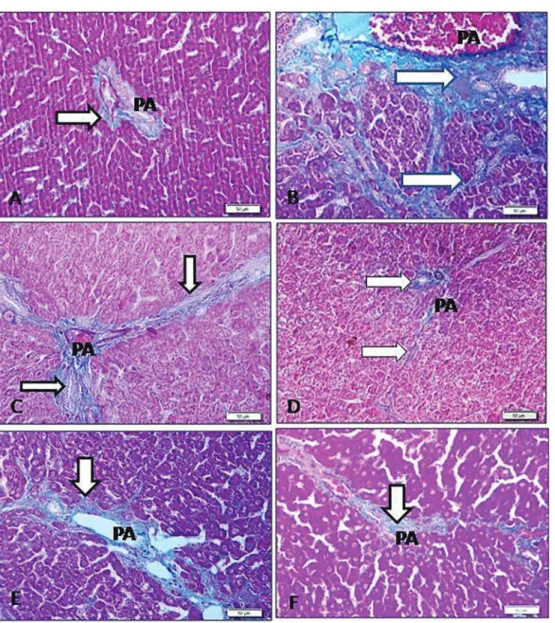
The hepatic sections stained by H&E or Masson’s trichrome showed the same pattern. The normal control
rats showed normal ill-defined lobules, where the hepatocyte cell cord radiated from the central vein to the peripheral portal area that showed absence of any signs of fibrosis or inflammatory changes. The TAA-CLF rats showed chronic mild fibrosis manifested by development of fibrous strands bridging the portal areas and delineating liver lobules with disturbed architecture, collagen deposition, and congestion of the portal vessels. Hepatocytes showed moderate damage with inflammatory cell infiltration. The TAA-induced changes were graded as moderate in L5 and C0.1 and mild in L10 and C0.3 with images nearly similar to the normal control rats (Figures 3D, 4 and, 5).
Discussion
In rats, candesartan significantly attenuated the development of carbon tetrachloride-induced hepatic fibrosis (24). In chronic hepatitis C patients candesartan in standard doses exerted an antifibrotic effect detected by measuring the following noninvasive fibrotic indexes: Forns index, the AST to platelet ratio index and FibroIndex’’ (25). Losartan attenuated development of liverfibrosis in animals (26). Also, in patients with chron-ic hepatitis C infection, losartan decreased fibrosis
progression and expression offibrogenic genes (8). In rats, TAA (ip) induced lipid peroxidation, glutathione S-transferase, and xanthine oxidase leading to formation of free radicals that cause oxidative damage, increases of hepatic damage markers and MDA, a decrease of hepatic GSH level, and liver necrosis (27). Losartan attenuated hepatic fibrosis partly through inhibition of xanthine oxidase because angiotensin-II activated endothelial xanthine oxidase causing oxidant stress (28). Fibrosis results in progressive organ dysfunction
andfinally failure. Galectin-3 is a profibrotic lectin protein and
its inhibition could be a promising therapy for fibrosis (29).
Treatments with galectin inhibitors reversed the TTA-induced fibrosis in the portal and central areas in rats and hence improved cirrhosis (30). Losartan relieved dystrophic epi-dermolysis bullosa at least partly due to reducing the increased level of galectin-3 (31), thus inhibition of galec-tin-3 could be an additional mechanism of losartan in treating
fibrosis.In vivostudies showed that inhibition of TNF-ahas
antifibrotic effect in animals, however, the role of TNF-a in liver fibrosis, whether profibrotic or antifibrotic, is still controversial (32). Inhibition of RAS in liver could be an emerging therapeutic target for the treatment of hepatic fibrosis and thus candesartan and losartan, among other agents, are currently listed onoClinicalTrials.gov4for the screening of their antifibrotic effects (33).
The TAA-CLF rats showed significant decline in riding time in the rotarod test due to motor slowing and dysfunction compared to control rats (12). Hyperammonemia activates cerebellar astrocytes and microglia leading to neuroinflamma-tion, which is associated with increased extracellular gamma amino butyric acid in the cerebellum causing motor in-coordination and impaired learning ability in the Y maze (34). This could be equivalent to the motor dysfunction in MHE patients, which include subclinical motor slowing, impaired visual perception, impaired visuo-constructive ability, mild cognitive impairment, impaired ability to do memory tasks due to attention deficit, impaired performance in recognition tasks, and altered working memory (3).
Administration of candesartan 5 h before traumatic brain injury improved motor skills on the rotarod in mice. Co-administration of peroxisome proliferator-activated receptor-gamma (PPARg) antagonist significantly reduced this effect indicating that candesartan’s neuroprotective effect occurs through AT1-receptor blocking and PPARg activation (35). In male Wistar rats, oral candesartan (3 and 5 mg/kg) for three weeks improved the tardive dyskinesia induced by the typical antipsychotics possibly via antioxidant and anti-inflammatory effects (36). In con-trast, treatment with subcutaneous losartan (10 mgkg–1
day–1) for 2 weeks in male Wistar rats did not cause any
difference in motor coordination (37). In ischemia reperfu-sion injury in rats, 1 week-pretreatment with candesartan (0.1 and 0.3 mg/kg), protected against cerebral ischemia indicating a neuroprotective effect. It significantly improved the neurobehavioral tests (locomotor activity and rotarod test), MDA, and oxidative damage (15).
Generally, the antagonistic activities of candesartan and losartan in plasma are almost equal, but the in vivo antagonistic effect of candesartan is greater. Candesartan has a slower‘‘off-rate’’from the AT1 receptor than that of losartan (38). Candesartan has maximal binding affinity to AT1 receptor subtype while losartan has minimal (39). In addition, candesartan is highly lipophilic with a high brain penetrating ability (10) and losartan is one of the least lipophilic ARBs and thus intravenous losartan (1, 3 or 10 mg/kg) partially penetrated BBB. It produced a dose-dependent inhibition of AT1 receptor subtype in brain structures both outside and within the BBB while it did not affect the nuclei that contain AT2 receptor subtype (40).
In conclusion, both candesartan and losartan exerted curative antifibrotic effects against thioacetamide-induced chronic liver failure in rats possibly through their angiotensin-II receptor blocking, antioxidant, and anti-inflammatory activi-ties. Only candesartan improved the associated motor dysfunction possibly due to better brain penetration and slower‘‘off-rate’’from the angiotensin-II receptor suggesting a potential benefit in this respect. Clinical trials are recom-mended to prove or refute these experimental results.
Acknowledgments
The participation of the medical students Abdulrahman S. Almajnuni, Ali A. Alshehri, Abdallah M. Almadani, Naser S. Al-Alharthi, Adnan M. Aldabab, and Abdulrahman M. Almutari is gratefully acknowledged. This project was funded by the Deanship of Scientific Research, (DSR), King Abdulaziz University (KAU), Jeddah under grant number (33/828/1437). The authors, therefore, acknowl-edge with thanks DSR technical andfinancial support.
References
1. Poordad FF. Review article: the burden of hepatic encepha-lopathy.Aliment Pharmacol Ther2007; 25: (Suppl 1) 3–9, doi: 10.1111/j.1746-6342.2006.03215.x.
2. Albrecht J. Cyclic GMP in blood and minimal hepatic encephalopathy: fine-tuning of the diagnosis. J Mol Med
2007; 85: 203–205, doi: 10.1007/s00109-007-0160-y. 3. Montoliu C, Rodrigo R, Monfort P, Llansola M, Cauli O, Biox
J, et al. Cyclic GMP pathways in hepatic encephalopathy: neurological and therapeutic implications.Metab Brain Dis
2010; 25: 39–48, doi: 10.1007/s11011-010-9184-z. 4. Pereira RM, dos Santos RA, da Costa Dias FL, Teixeira MM,
Simões e Silva AC. Renin-angiotensin system in the patho-genesis of liverfibrosis. World J Gastroenterol2009; 15: 2579-2586, doi: 10.3748/wjg.15.2579.
5. Munshi MK, Uddin MN, Glaser SS. The role of the renin-angiotensin system in liverfibrosis.Exp Biol Med2011; 236: 557–566, doi: 10.1258/ebm.2011.010375.
6. Abbas G, Silveira MG, Lindor KD. Hepaticfibrosis and the renin-angiotensin system.Am J Ther2011;18: e202–e208, doi: 10.1097/MJT.0b013e3181df8df5.
7. Wei YH, Jun L, Qiang CJ. Effect of losartan, an angiotensin II antagonist, on hepaticfibrosis induced by CCl4 in rats.Dig Dis Sci2004; 49: 1589–1594, doi: 10.1023/B:DDAS.00000 43369.88701.5b.
Gastrointest Liver Physiol 2009; 297: G726–G734, doi: 10.1152/ajpgi.00162.2009.
9. Yoshiji H, Kuriyama S, Yoshii J, Ikenaka Y, Noguchi R, Nakatani T, et al. Angiotensin-II type 1 receptor interaction is a major regulator for liverfibrosis development in rats.
Hepatology 2001; 34: 745–750, doi: 10.1053/jhep.2001. 28231.
10. Michel MC, Foster C, Brunner HR, Liu L. A systematic comparison of the properties of clinically used angiotensin II type 1 receptor antagonists. Pharmacol Rev 2013; 65: 809–848, doi: 10.1124/pr.112.007278.
11. Weiskirchen R. Hepatoprotective and Anti-fibrotic agents: it is time to take the next step.Front Pharmacol2016; 6: 303, doi: 10.3389/fphar.2015.00303.
12. Singh S, Trigun SK. Low grade cirrhosis induces cognitive impairment and motor dysfunction in rats: Could be a model for minimal hepatic encephalopathy. Neurosci Lett. 2014; 559: 136–140, doi: 10.1016/j.neulet.2013.11.058.
13. Sathyasaikumar KV, Swapna I, Reddy PV, Murthy ChR, Roy KR, Dutta Gupta A et al. Co-administration of C-Phycocyanin ameliorates thioacetamide-induced hepatic encephalopathy in Wistar rats.J Neurol Sci2007; 252: 67–75, doi: 10.1016/ j.jns.2006.10.014.
14. Croquet V, Moal F, Veal N, Wang J, Oberti F, Roux J, et al. Hemodynamic and antifibrotic effects of losartan in rats with liverfibrosis and/or portal hypertension.J Hepatol2002; 37: 773–780, doi: 10.1016/S0168-8278(02)00307-0.
15. Gaur V, Kumar A. Neuroprotective potentials of candesartan, atorvastatin and their combination against stroke induced motor dysfunction. Inflammopharmacology 2011; 19: 205– 214, doi: 10.1007/s10787-010-0068-y.
16. Russe OQ, Möser CV, Kynast KL, King TS, Stephan H, Geisslinger G, et al. Activation of the AMP-activated protein kinase reduces inflammatory nociception.J Pain2013; 14: 1330–1340, doi: 10.1016/j.jpain.2013.05.012.
17. Wedzony K, Maćkowiak M, Zajaczkowski W, Fija"K, Chocyk A, Czyrak A. WAY 100135, an antagonist of 5-HT1A serotonin receptors, attenuates psychotomimetic effects of MK-801. Neuropsychopharmacology 2000; 23: 547–559, doi: 10.1016/S0893-133X(00)00150-0.
18. Ohkawa H, Ohishi N, Yagi K. Assay for lipid peroxides in animal tissues by thiobarbituric acid reaction.Anal Biochem
1979; 95: 351–358, doi: 10.1016/0003-2697(79)90738-3. 19. Saha B, Nandi D. Farnesyltransferase Inhibitors reduce ras
activation and ameliorate acetaminophen-induced liver injury in mice. Hepatology 2009; 50: 1547–1557, doi: 10.1002/hep.23180.
20. Ding J, Yu J, Wang C, Hu W, Li D, Luo Y, et al. Ginkgo biloba extract alleviates liverfibrosis induced by CCl in rats.Liver Int 2005; 25: 1224–1232, doi: 10.1111/j.1478-3231.2005. 01169.x.
21. Zhang XG, Xu P, Liu Q, Yu CH, Zhang Y, Chen SH, et al. Effect of tea polyphenol on cytokine gene expression in rats with alcoholic liver disease.Hepatobiliary Pancreat Dis Int
2006; 5: 268–272.
22. Khan HA, Abdelhalim MA, Alhomida AS, Al Ayed MS. Transient increase in IL-1b, IL-6 and TNF-agene expression in rat liver exposed to gold nanoparticles.Genet Mol Res
2013; 12: 5851–5857, doi: 10.4238/2013.November.22.12. 23. Liu DF, Wei W, Song LH. Upregulation of TNF-alpha and
IL-6 mRNA in mouse liver induced by bacille Calmette-Guerin
plus lipopolysaccharide. Acta Pharmacol Sin 2006; 27: 460–468, doi: 10.1111/j.1745-7254.2006.00301.x.
24. Tuncer I, Ozbek H, Ugras S, Bayram I. Anti-fibrogenic effects of captopril and candesartan cilexetil on the hepatic fibrosis development in rat. The effect of AT1-R blocker on the hepaticfibrosis.Exp Toxicol Pathol2003; 55: 159–166, doi: 10.1078/0940-2993-00309.
25. Ueki M, Koda M, Shimizu T, Mitsuta A, Yamamoto T, Murawaki Y. Effect of an angiotensin-II type-1 receptor blocker, candesartan on hepaticfibrosis in chronic hepatitis C: a prospective study. Hepatogastroenterology2009; 56: 1100–1104.
26. Ramalho LN, Ramalho FS, Zucoloto S, Castro-e-Silva Júnior O, Corrêa FM, Elias Júnior J et al. Effect of losartan, an angiotensin II antagonist, on sondary biliary cirrhosis.
Hepatogastroenterology2002; 49: 1499–1502.
27. Sehrawat A, Sultana S. Tamarix gallica ameliorates thioacetamide-induced hepatic oxidative stress and hyper-proliferative response in Wistar rats.J Enzyme Inhib Med Chem 2006; 21: 215–223, doi: 10.1080/147563605004 80673.
28. Landmesser U, Spiekermann S, Preuss C, Sorrentino S, Fischer D, Manes C, et al. Angiotensin II induces endothelial xanthine oxidase activation: role for endothelial dysfunction in patients with coronary disease.Arterioscler Thromb Vasc Biol2007; 27: 943–948, doi: 10.1161/01.ATV.0000258415. 32883.bf.
29. Li LC, Li J, Gao J. Functions of galectin-3 and its role in fibrotic diseases.J Pharmacol Exp Ther 2014; 351: 336– 343, doi: 10.1124/jpet.114.218370.
30. Traber PG, Chou H, Zomer E, Hong F, Klyosov A, Fiel MI, et al. Regression offibrosis and reversal of cirrhosis in rats by galectin inhibitors in thioacetamide-induced liverdisease.
PLoS One 2013; 8: e75361, doi: 10.1371/journal.pone. 0075361.
31. Nyström A, Thriene K, Mittapalli V, Kern JS, Kiritsi D, Dengjel J, et al. Losartan ameliorates dystrophic epidermo-lysis bullosa and uncovers new disease mechanisms.
EMBO Mol Med 2015; 7: 1211–1228, doi: 10.15252/ emmm.201505061.
32. Distler JH, Schett G, Gay S, Distler O. The controversial role of tumor necrosis factor alpha in fibrotic diseases.
Arthritis Rheum 2008; 58: 2228–2235, doi: 10.1002/art. 23645.
33. Fagone P, Mangano K, Pesce A, Portale TR, Puleo S, Nicoletti F. Emerging therapeutic targets for the treatment of hepaticfibrosis.Drug Discov Today2016; 21: 369–375, doi: 10.1016/j.drudis.2015.10.015.
34. Hernandez-Rabaza V, Cabrera-Pastor A, Taoro-Gonzalez L, Gonzalez-Usano A, Agusti A, Balzano T, et al. Neuroin-flammation increases GABAergic tone and impairs cognitive and motor function in hyperammonemia by increasing GAT-3 membrane expression. Reversal by sulforaphane by promoting M2 polarization of microglia.J Neuroinflammation
2016; 13: 83–96, doi: 10.1186/s12974-016-0549-z. 35. Villapol S, Yaszemski AK, Logan TT, Sánchez-Lemus E,
Saavedra JM, Symes AJ. Candesartan, an angiotensin II AT1-receptor blocker and PPAR-g agonist, reduces lesion volume and improves motor and memory function after traumatic brain injury in mice. Neuropsychopharmacology
36. Thakur KS, Prakash A, Bisht R, Bansal PK. Beneficial effect of candesartan and lisinopril against haloperidol-induced tardive dyskinesia in rat. J Renin Angiotensin Aldosterone Syst 2015;16: 917–929, doi: 10.1177/1470 320313515038.
37. Pechlivanova DM, Markova PP, Stoynev AG. Effect of the AT1receptor antagonist losartan on diurnal variation in pain threshold in spontaneously hypertensive rats.Methods Find Exp Clin Pharmacol2010; 32: 663–668, doi: 10.1358/mf. 2010.32.9.1529826.
38. Fuchs B, Breithaupt-Grögler K, Belz GG, Roll S, Malerczyk C, Herrmann V, et al. Comparative pharmacodynamics and
pharmacokinetics of candesartan and losartan in man.
J Pharm Pharmacol 2000; 52: 1075–1083, doi: 10.1211/ 0022357001774994.
39. Bhuiyan MA, Shahriar M, Nagatomo T. Binding affinity of candesartan, losartan, telmisartan and valsartan with angiotensin II receptor 1 subtype. Bangladesh Pharm J
2013; 16: 10–14, doi: 10.3329/bpj.v16i1.14484.
40. Zhuo J, Song K, Abdelrahman A, Mendelsohn FA. Blockade by intravenous losartan of AT1 angiotensin II receptors in rat brain, kidney and adrenals demonstrated by in vitro