Results from Three Municipal Hospitals Regarding Radical
Cystectomy on Elderly Patients
Matthias May, Stephanie Fuhrer, Kay-P. Braun, Sabine Brookman-Amissah, Willi Richter,
Bernd Hoschke, Horst Vogler, Michael Siegsmund
Department of Urology (MM, BH, SF, KPB, SBA), Carl-Thiem Hospital, Cottbus, Department of
Urology (MS,WR), Vivantes-Clinic Am Urban, Berlin and Department of Urology (HV),
Vivantes-Clinic Friedrichshain, Berlin, Germany
ABSTRACT
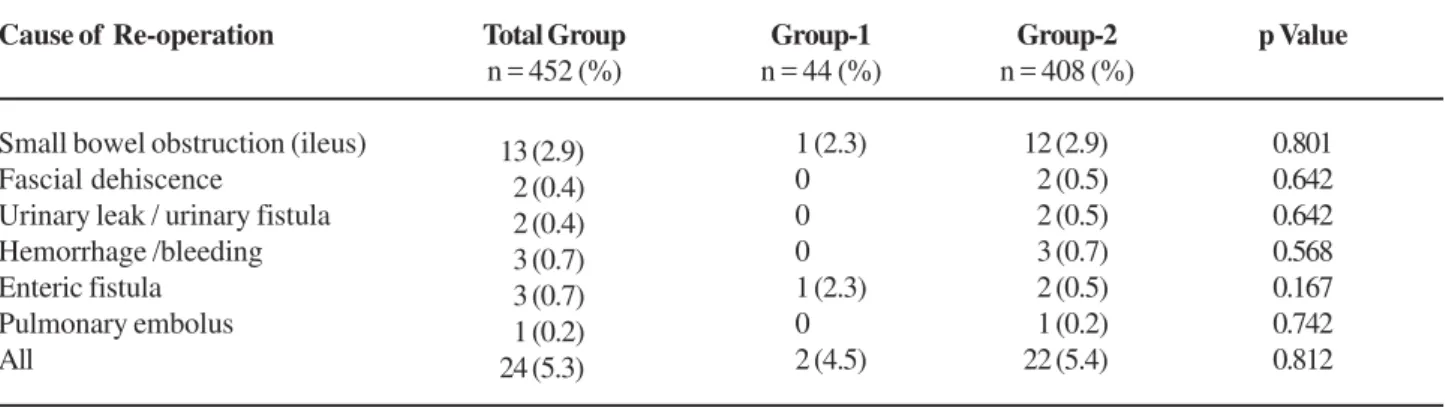
Objective: Radical cystectomy is the standard treatment for invasive bladder carcinoma in elderly patients at major surgical centers. As yet no data are available as to the question whether radical surgery on the genitourinary tract of patients over 75 can also be carried out at municipal hospitals with comparable intra and postoperative morbidity, and respective mortality. Materials and Methods: 452 radical cystectomies and urinary diversions as ileum conduits or ileum neobladders due to transitional cell carcinoma were carried out at three municipal hospitals between 1992 and 2004. At the time of the surgery, 44 patients (9.7%) were ≥ 75 (75-84) (Group-1), by comparison 408 patients were younger than 75 (35-74) (Group-2). Compari-sons are to be made between the groups for 30 day mortality, 30 day reoperation rate, early complication rate (≤ 3 months), late complication rate (> 3 months), progression-free survival, and overall survival. The results are to be discussed in view of the international literature. Mean follow-up was 49 months (median: 38 months).
Results: The perioperative mortality in Group-1 was 2.3% compared to 2.5% in Group-2 (p = 0.942). There was no significant difference in the perioperative mortality with regard to the different case load of the evaluated hospital. There were no significant group differences regarding the 30 day reoperation rate, early and late complications. Progression-free and overall survival of all patients after 5 years was 56.1% and 53.6% respectively; here again the differences between the age groups was not significant (p = 0.384 and p = 0.210). Our results for patients ≥ 75 do not differ from the published data of large clinics with a high cystectomy frequency.
Conclusions: Our data confirm that radical cystectomy on elderly patients can also be carried out in municipal hospitals with acceptable mortality and morbidity rates. Of prime importance is a careful patient selection based on comorbidity scores and possibly geriatric assessment.
Key words: bladder neoplasms; cystectomy; age; ileum; survival
Int Braz J Urol. 2007; 33: 764-76
INTRODUCTION
The highest incidence of transitional cell car-cinoma of the bladder is in the 7th decade. Around 20-40% of transitional cell carcinomas consist of a
worldwide will rise from 390 to 800 million and will be around 10% of the total population (1,2). Consequently, RC in old age will become increasingly important. By comparison, RC with urinary diversion is the most in-vasive surgery in the urogenital tract with accepted perioperative mortality between 1 and 8% (3-5). Ac-cording to a Dutch analysis of patients ≥ 75 with tu-mor disorders, 73% of patients had relevant ancillary disorders, 20% of these even had two or more addi-tional diagnoses (6).
Consistent advances in surgical technique, anesthesia of patients and postoperative intensive medical care also makes RC possible for the elderly (7). Even so, a positive benefit/risk ratio should al-ways be present here. Especially in elderly patients it must be ensured that treatment does not produce even more problems than those from the disease. In recent years, various university clinics have presented their positive experiences with RC on carefully selected elderly patients (8-33). At present, no studies are avail-able in the international bibliography that indicates that this surgery in elderly patients is possible in an ac-ceptable quality at municipal hospitals without a high level of annual cystectomies.
The goals of the current study are to update our experience in a rigorously defined population from three municipal hospitals and to compare the outcomes between younger (< 75 years) and older patients (≥ 75 years). Especially, we sought to explore the influ-ence of age on pathologic characteristics, overall sur-vival rates, disease recurrence-free sursur-vival rates, complication rates, operative mortality and length of hospital stay.
MATERIALS AND METHODS
All RC carried out between February 1992 and September 2004 at the Urological Departments of the Vivantes-Clinics Berlin-Friedrichshain (n = 268; mean annual case load: 21.5) and Berlin-Am Urban (n = 196; mean annual case load: 15.5) and at the Carl-Thiem Hospital Cottbus (n = 54; mean annual case load: 4.5) were listed retrospectively. For this study, 66 patients were excluded from the total of 518 consecutive cystectomies. Reasons for this were the
presence of gynecological malignancies where the cystectomy was carried out during frontal exentera-tion (n = 25) and palliative cystectomy with docu-mented distant metastasis (n = 12). 29 patients had non-urothelial carcinoma of the bladder (14 had ad-enocarcinoma, 9 had squamous cell carcinoma, 5 had mesenchymal tumor and one had a neuro-endocrine tumor), which were also disregarded in this study.
Consequently, 452 patients with primary tran-sitional cell carcinoma of the bladder were evaluated, who had been subjected to curatively intended RC with simultaneous bilateral pelvic lymphadenectomy. The study group consisted of 347 male (76.8%) and 105 female (23.2%) patients (ratio 3.3:1). The mean patient age when cystectomy took place was 64.3 (35-80) with a median of 64.9. When surgery took place, 44 patients (9.7%) were ≥ 75 (75-84) (Group-1), by comparison, 408 patients were younger than 75 (35-74) (Group-2).
The indication for radical cystectomy con-sisted of the muscle invasive tumor stage without dis-tant metastases (n = 338) as well as of BCG-refrac-tory, undifferentiated tumor recurrence (Ta, T1, Tis) (n = 91). In 23 cases, radical cystectomy took place due to a rTa/1(m), G2 tumor that could not be con-trolled in TUR-B. None of the assessed patients re-ceived neo-adjuvant chemotherapy.
Local tumor stage (pT-stage) and the lymph node status were described according to the TNM classification of the UICC (6th edition, 2002) (34). Pathological stages were defined with organ confined and lymph node negative tumors (pT0, pTis, pTa-pT2b), extravesical growing and lymph node negative tumors (pT3a-pT4b) as well as the lymph node positive tu-mors (pT0-pT4, pN+).
anemia followed. All patients were given a perioperative, prophylactic wide spectrum antibiotic. A nasogastric tube, intra-arterial pressure measurement and a central venous catheter were placed intraoperatively. On all patients a thoracic peri-dural catheter (PDC) was preferred, however only placement of a lumbar PDC frequently took place (n = 221). For men, the surgery consisted of a radical cystoprostatectomy and for women of a radical urethrocystectomy including the uterus and the ante-rior vagina. Appendectomy (where not yet done) and bilateral pelvic lymphadenectomy were carried out on all patients. The urinary diversion after RC took place as an ileum conduit (n = 260, 57.5%) or as ileum neobladder (n = 192, 42.5%). Irrespective of the uri-nary diversion, all ureters were catheterized.
All patients received direct post surgical moni-toring on the anesthesiology intensive care unit. The nasogastric tube was removed when food was pro-vided again and reflux had ceased. Prophylactic anti-coagulation continued as planned for 4 weeks. Re-moval of the ureter stent took place after 10-14 days. During the initial two postoperative years, all patients received after care at 3 monthly intervals, which was extended to 6 months from the third post-operative year onwards. Annual checkups were car-ried out after the fifth postoperative year. These check-ups involved a review of total body status, abdominal sonography and thorax X-ray as well as determining the lab chemical parameters. An excretory urogram was carried out after 3 months and then annually, the use of CT, MRI and bone scintigraphy depended on the individual facts.
The perioperative mortality (every death within 30 days of cystectomy), the 30 day reoperation rate, early complications (every complication within 3 months of cystectomy) and late complications (> 3 months after cystectomy) were noted. Also recorded was the intraoperative blood loss, the operating time, the blood transfusion rate and the inpatient period as well as the general preoperative status according to the criteria of the American Society of Anesthesiolo-gists (ASA) (35).
The oncological progress was determined as progression-free survival and as overall survival. Pro-gression-free survival represents the time between
radical cystectomy and initial finding of tumor relapse; whereby patients who died without tumor progress were censored at the time of death. Overall survival consists of the time from radical cystectomy until death, irrespective of cause. All patients alive when the study ended were censored according to their follow-up.
The mean observation time for the complete patient group was 49 months with a maximum follow-up of 13 years and 2 months. 83% of all patients had a ≥ 12 month observation period; the aftercare up-date took place in June 2005.
The survival probability and progression rate was determined with the Kaplan-Meier method. The Log-Rank test was used for checking the differences in the survival rates between the groups. The Mann-Whitney, respectively Chi-square test determined sig-nificant differences in the distribution of patient char-acteristics and tumor stages. A difference was de-fined with a significance level of p ≤ 0.05.
RESULTS
un-der review, late complications were observed on 159 patients (35.2%). These mainly consisted of hydro-nephrosis and mild metabolic acidosis. The 30 day reoperation rate was 5.3% (24 patients, Table-2). There were no significant differences between the groups where the complication and reoperation rate were concerned.
There were no significant differences be-tween the age groups in the pathological tumor stage (Table-3). Progression-free and overall survival of all 452 patients after 5 years was 56.1% and 53.6%, re-spectively (Table-3). Only 65% lived progression-free after 2 years, so that the majority of tumor progres-sions were noted in the initial two years after RC. In the initial 36 months after surgery, 36% of patients died, most as a consequence of progressed carcinoma
of the bladder. There were no significant differences in overall (p = 0.210, Figure-1) and progression-free survival (p = 0.384, Figure-2) between the age groups.
COMMENTS
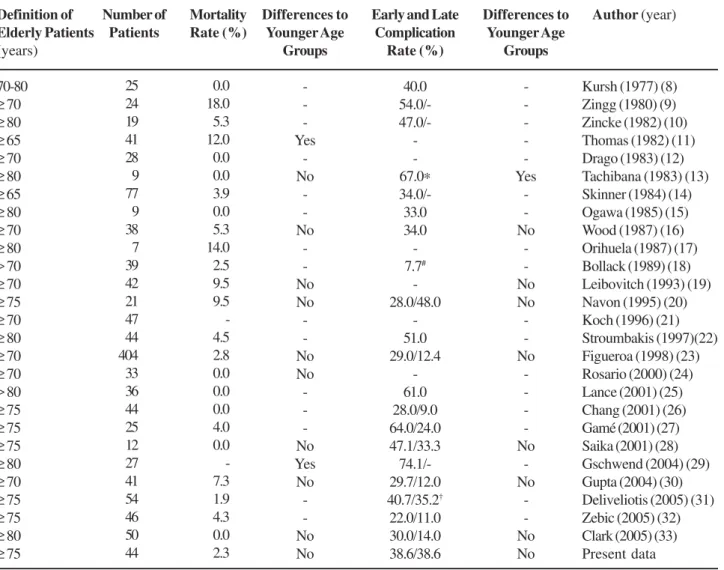
In various publications from the 1980’s, RC and urinary diversion on elderly patients had a high perioperative mortality exceeding 10% (9, 11,17). In a study by Thomas and Riddle, with 12%, it was vir-tually twice as much for patients over 65 than for pa-tients under 65 years (11). Over the last 20 years, this impression has changed considerably due to improved anesthesiology and intensive therapy capabilities (7,36). In 12 studies over the past 10 years, a 0-7.3% Table 1 – Demographic information, patient characteristics and clinical outcome of 452 patients after radical cystec-tomy (total and stratified according to age groups). The p-value refers to the comparison between the age groups.
Factors
Mean follow-up (months) Patient age (years)
Median Mean (± SD) Range
Gender ratio (M; F) Urinary diversion
Ileum conduit Ileal neobladder Perioperative mortality 30-day Re-OP rate Early complications Late complications ASA Score
Score 1 Score 2 Score 3 Score 4
Mean blood loss (mL) ± SD Mean number of EC ± SD Mean OP time (min.) ± SD Mean in patient time (d) ± SD
Total Group n = 452 (%)
49.1
65.0 64.3 (8.7)
35-84 3.3:1
260 (57.5) 192 (42.5) 11 (2.4) 24 (5.3) 180 (39.8) 159 (35.2)
45 (10) 211 (46.7) 170 (37.6) 26 (5.7) 933 ± 523 3.39 ± 2.3 279 ± 59 22.2 ± 5.1
Group-1 n = 44 (%)
36.4
77.6 78.3 (2.8)
75-84 1.8:1
38 (86.4) 6 (13.6)
1 (2.3) 2 (4.5) 17 (38.6) 17 (38.6)
0 14 (31.8) 26 (59.1) 4 (9.1) 987 ± 957
3.84 ± 3 266 ± 54 27.5 ± 10
Group-2 n = 408 (%)
50.1
63.7 62.7 (7.8)
35-74 3.6:1
222 (54.4) 186 (45.6) 10 (2.5) 22 (5.4) 163 (40.0) 142 (34.8)
45 (11) 197 (48.3) 144 (35.3) 22 (5.4) 928 ± 453 3.35 ± 2.2 281 ± 60 21.6 ± 3.9
p Value = 0.033
< 0.001
= 0.038 < 0.001
= 0.942 = 0.812 = 0.866 = 0.621 < 0.001
= 0.471 = 0.171 = 0.128 < 0.001
Table 2 – Re-operation rate (30 days) for each age group. The p-value refers to the comparison between the age groups.
Cause of Re-operation
Small bowel obstruction (ileus) Fascial dehiscence
Urinary leak / urinary fistula Hemorrhage /bleeding Enteric fistula
Pulmonary embolus All
Total Group n = 452 (%)
Group-1 n = 44 (%)
Group-2 n = 408 (%)
p Value
0.801 0.642 0.642 0.568 0.167 0.742 0.812 12 (2.9)
2 (0.5) 2 (0.5) 3 (0.7) 2 (0.5) 1 (0.2) 22 (5.4) 1 (2.3)
0 0 0 1 (2.3) 0 2 (4.5) 13 (2.9)
2 (0.4) 2 (0.4) 3 (0.7) 3 (0.7) 1 (0.2) 24 (5.3)
perioperative mortality was shown for RC on patients over 70 (Table-4) (22-33). Although no deaths oc-curred in 5 of these studies, 20 patients died in the other 7. One perioperative death occurred amongst the 44 elderly patients in our study (Group-1), due to fulminant pulmonary embolism despite heparinization. The postoperative early complications rate in the stated current studies was between 27% and 74% (22-33). In most cases, the complications were not directly connected to the operation. Urinary infections, respec-tively pyelonephritis 32%), pulmonary infections (0-20%), cardiovascular complications (6-38%) and amentia state (11-20%) occurred most frequently.
Prolonged obstipation (8-35%) and disturbed wound healing (6-24%) were prime factors for complications arising in direct relationship to the operation (22-33). When comparing morbidity rates for cystectomies on younger and elderly patients, most authors were un-able to detect any significant difference (Tun-able-4). The rate of late complications varies in the already quoted current studies between 12 and 35% (22-33). These consist primarily of surgical complications, whereby the most frequent were ileus symptoms, incisional hernias and incontinence after orthotopic bladder re-placement. This is comparable with the situation of younger patients, where problems primarily arise long-Table 3 – Pathological parameters and survival rates of 452 patients following radical cystectomy (total and stratified according to age groups). The p-value refers to the comparison between the age groups.
Factors
Mean follow-up (months) Pathological tumor stage
pT0-pT2, pN0 pT3-pT4, pN0 pN+
3 years total survival (%) 3 years PF survival (%) 5 years total survival (%) 5 years PF survival (%)
Total Group n = 452 (%)
049.1
213 (47.1) 112 (24.8) 127 (28.1) 062.9 059.6 053.6 056.1
Group-1 n = 44 (%)
36.4
20 (45.5) 13 (29.5) 11 (25.0) 56.7 55.8 49.1 49.6
Group-2 n = 408 (%)
050.1
193 (47.3) 099 (24.3) 116 (28.4) 063.6 060.0 054.1 056.7
p Value
0.033 0.725
0.210 0.384 0.210 0.384
term with regard to urinary diversion. The indication for continent, orthotopic urinary diversion was strictly specified in the assessed hospitals for patients over 75. Apart from the clearly defined non-oncological contraindications for orthotopic bladder replacement (renal insufficiency, cerebrovascular insufficiency), a raised anesthesiology risk profile (ASA ≥ 3) was seen as a relative contraindication in this age group since, apart from the operating time, the morbidity is simi-larly increased by the related urinary diversion.
Post-operative transitory psychotic syndromes were frequently reported in relation to major surgical
Table 4 – Bibliography overview of studies concerning radical cystectomy on elderly patients.
Definition of Elderly Patients (years)
70-80
≥ 70
≥ 80
≥ 65
≥ 70
≥ 80
≥ 65
≥ 80
≥ 70
≥ 80 > 70
≥ 70
≥ 75
≥ 70
≥ 80
≥ 70
≥ 70 > 80
≥ 75
≥ 75
≥ 75
≥ 80
≥ 70
≥ 75
≥ 75
≥ 80
≥ 75
Number of Patients Mortality Rate (%) Differences to Younger Age Groups -Yes -No -No -No No -No No -No Yes No -No No
Early and Late Complication Rate (%) 40.0 54.0/- 47.0/ -67.0∗ 34.0/-33.0 34.0 -7.7# -28.0/48.0 -51.0 29.0/12.4 -61.0 28.0/9.0 64.0/24.0 47.1/33.3 74.1/-29.7/12.0 40.7/35.2† 22.0/11.0 30.0/14.0 38.6/38.6 Differences to Younger Age Groups -Yes -No -No No -No -No -No -No No
Author (year)
Kursh (1977) (8) Zingg (1980) (9) Zincke (1982) (10) Thomas (1982) (11) Drago (1983) (12) Tachibana (1983) (13) Skinner (1984) (14) Ogawa (1985) (15) Wood (1987) (16) Orihuela (1987) (17) Bollack (1989) (18) Leibovitch (1993) (19) Navon (1995) (20) Koch (1996) (21) Stroumbakis (1997)(22) Figueroa (1998) (23) Rosario (2000) (24) Lance (2001) (25) Chang (2001) (26) Gamé (2001) (27) Saika (2001) (28) Gschwend (2004) (29) Gupta (2004) (30) Deliveliotis (2005) (31) Zebic (2005) (32) Clark (2005) (33) Present data 25 24 19 41 28 9 77 9 38 7 39 42 21 47 44 404 33 36 44 25 12 27 41 54 46 50 44 0.0 18.0 5.3 12.0 0.0 0.0 3.9 0.0 5.3 14.0 2.5 9.5 9.5 -4.5 2.8 0.0 0.0 0.0 4.0 0.0 -7.3 1.9 4.3 0.0 2.3
∗ = dementia rate; # = reoperation rate; † = surgical complications only.
Figure 1 – Overall survival of 452 patients after radical cystectomy for a transitional cell carcinoma of the bladder, stratified according to age groups (≥ 75 against < 75 years, Kaplan-Meier method).
candidates, who has an increased risk of early mor-tality from non-malignant associated diseases and postoperative complications. Stratification according to comorbidity provides prognostic information beyond the actual age of the patient. In this connection, the ASA score appears to be the best validated despite the inherent subjectivity of this graduation system. In a study by Malavaud et al., the ASA score was the only independent predictor for complications after RC (39). Wolters et al. showed in their study that ASA score 3 (risk ratio: 2.2) and ASA score 4 (risk ratio: 4.2) were associated with a significant increase in postoperative complications (40). Using the current data situation, it is not possible to define for patients ≥ 75 at which cut-off of one of the available comorbidity scores only a palliative treatment concept is justified. Future studies must also evaluate the functional sta-tus of the elderly based on a geriatric assessment.
On elderly patients with RC, the validation of optimized pre, intra and postoperative phases for im-proving patient outcome is undisputed. For our pa-tients, we implement effective intestinal preparation with fluid substitution to prevent dehydration, preop-erative cardiac protection through medication with beta blockers (41), careful surgical technique, intensive in-traoperative monitoring, and intensive breathing exer-cises with early mobilization and early reintroduction of food are decisive aspects for minimizing morbidity (42).
In our study, age had no significant influence on the pathological stage of the tumor, progression-free survival and overall survival; the differences be-tween Groups-1 and 2 were only tendentious and not significant in the 3 criteria. It can be concluded from this that due to RC, patients ≥ 75 similarly need to be effectively treated and benefit to an identical extent from definitive surgery as younger patients. The vir-tually identical total survival rate indicates that sur-vival of elderly patients is primarily determined by the cancer and, presuming careful patient selection, pos-sible comorbidity is only of subordinate importance here. By contrast, the results of Clark et al., indicate that patients over 80 had a lower total survival and also progression-free survival than younger patients after RC (33). When evaluating the 12-year data (1988-1999) of the National Cancer Institute’s
Sur-veillance, Epidemiology and Results, Hollenbeck et al., came to the conclusion that patients over 80 also ben-efit from aggressive treatment, provided an indication for this can be derived from their tumor stage. It must however be pointed out that of the 3,354 patients in this age group, only 11.5% were treated by cystec-tomy (43).
Some limitations of the study have to be pointed out. First of all, it mainly represents a retro-spective collection of every day practice at three municipal hospitals with 44 elderly patients (9.7% of all cases) stretched out in a 12 years period. The num-ber and amplitude of critical variables (perioperative management, differences in follow-up time between the groups) makes it quite difficult to draw conclu-sions. Secondly, the discussion about the definition of a high volume cystectomy center is still open and not part of our study. The data in this context are very conflicting. Hollenbeck et al. postulate a limit of 14 radical cystectomies per annum and department (44). Linda Elting from Anderson Cancer Center in Hous-ton / Texas defines the groups low, moderate and high volume center as ≤ 3 per year, 4 - 10 per year and ≥ 10 radical cystectomies per year (45). That would mean that we have evaluated one moderate and two high volume centers. Nevertheless we currently do not intend to join this case number discussion. In Ger-many there are still considerable differences concern-ing technical and personal equipment between uro-logical departments in university hospitals, municipal hospitals (as evaluated here) and smaller peripheral hospitals. All of the currently available studies con-cerning the question whether radical cystectomy is reasonable in elderly patients originate from univer-sity hospitals. Hence we regard the question raised by our study as extremely important, as well we record the first non-university data on this scale concerned with that subject.
and possibly the geriatric assessment. Since the sur-vival rate of younger and older patients does not dif-fer significantly in this study, we conclude that pa-tients ≥ 75 can be similarly effectively treated by RC and can benefit to an identical extent as younger pa-tients from definitive surgery.
CONFLICT OF INTEREST
None declared.
REFERENCES
1. Krege S, Friedrich C, Lummen G, Pientka L, Rubben H: Geriatric assessment. Is it significantly helpful in se-lection of elderly tumour patients for a difficult therapy? Urologe A. 2004; 43: 922-9.
2. Botteman MF, Pashos CL, Redaelli A, Laskin B, Hauser R: The health economics of bladder cancer: a compre-hensive review of the published literature. Pharmacoeconomics. 2003; 21: 1315-30.
3. Quek ML, Stein JP, Daneshmand S, Miranda G, Thangathurai D, Roffey P, et al.: A critical analysis of perioperative mortality from radical cystectomy. J Urol. 2006; 175: 886-9; discussion 889-90.
4. Knap MM, Lundbeck F, Overgaard J: Early and late treatment-related morbidity following radical cystec-tomy. Scand J Urol Nephrol. 2004; 38: 153-60. 5. Stein JP, Lieskovsky G, Cote R, Groshen S, Feng AC,
Boyd S, et al.: Radical cystectomy in the treatment of invasive bladder cancer: long-term results in 1,054 pa-tients. J Clin Oncol. 2001; 19: 666-75.
6. Coebergh JW, Janssen-Heijnen ML, Post PN, Razenberg PP: Serious co-morbidity among unselected cancer patients newly diagnosed in the southeastern part of The Netherlands in 1993-1996. J Clin Epidemiol. 1999; 52: 1131-6.
7. Peyromaure M, Guerin F, Debre B, Zerbib M: Surgical management of infiltrating bladder cancer in elderly patients. Eur Urol. 2004; 45: 147-53; discussion 154. 8. Kursh ED, Rabin R, Persky L: Is cystectomy a safe
procedure in elderly patients with carcinoma of the bladder? J Urol. 1977; 118: 40-2.
9. Zingg EJ, Bornet B, Bishop MC: Urinary diversion in the elderly patient. Eur Urol. 1980; 6: 347-51.
10. Zincke H: Cystectomy and urinary diversion in patients eighty years old or older. Urology. 1982; 19: 139-42.
11. Thomas DM, Riddle PR: Morbidity and mortality in 100 consecutive radical cystectomies. Br J Urol. 1982; 54: 716-9.
12. Drago JR, Rohner TJ Jr: Cystectomy and urinary diver-sion: a safe procedure for elderly patients. Urology. 1983; 21: 17-9.
13. Tachibana M, Deguchi N, Jitsukawa S, Murai M, Nakazono M, Tazaki H: One-stage total cystectomy and ileal loop diversion in patients over eighty years’ old with bladder carcinoma. Pre- and postoperative functional reserve of various organs. Urology. 1983; 22: 512-6.
14. Skinner EC, Lieskovsky G, Skinner DG: Radical cystec-tomy in the elderly patient. J Urol. 1984; 131: 1065-8. 15. Ogawa A, Yanagisawa Y, Nakamoto T, Wajiki M,
Hirabayashi N, Nakama M: Treatment of bladder carci-noma in patients more than 80 years old. J Urol. 1985; 134: 889-91.
16. Wood DP Jr, Montie JE, Maatman TJ, Beck GJ: Radical cystectomy for carcinoma of the bladder in the elderly patient. J Urol. 1987; 138: 46-8.
17. Orihuela E, Cubelli V: Management and results in eld-erly patients with urologic cancer. Semin Urol. 1987; 5: 134-40.
18. Bollack C, Jacqmin D, Cuvelier G, Bertrand P: Radical cystectomy in patients over 70 years. Prog Clin Biol Res. 1989; 303: 613-6.
19. Leibovitch I, Avigad I, Ben-Chaim J, Nativ O, Goldwasser B: Is it justified to avoid radical cystoprostatectomy in elderly patients with invasive transitional cell carcinoma of the bladder? Cancer. 1993; 71: 3098-101.
20. Navon JD, Wong AK, Weinberg AC, Ahlering TE: A comparative study of postoperative complications as-sociated with the modified Indiana pouch in elderly versus younger patients. J Urol. 1995; 154: 1325-8. 21. Koch MO, Smith JA Jr: Influence of patient age and
co-morbidity on outcome of a collaborative care path-way after radical prostatectomy and cystoprostatec-tomy. J Urol. 1996; 155: 1681-4.
22. Stroumbakis N, Herr HW, Cookson MS, Fair WR: Radical cystectomy in the octogenarian. J Urol. 1997; 158: 2113-7. 23. Figueroa AJ, Stein JP, Dickinson M, Skinner EC, Thangathurai D, Mikhail MS, et al.: Radical cystec-tomy for elderly patients with bladder carcinoma: an updated experience with 404 patients. Cancer. 1998; 83: 141-7.
25. Lance RS, Dinney CP, Swanson D, Babaian RJ, Pisters LL, Palmer LJ, et al.: Radical cystectomy for invasive bladder cancer in the octogenarian. Oncol Rep. 2001; 8: 723-6.
26. Chang SS, Alberts G, Cookson MS, Smith JA Jr: Radi-cal cystectomy is safe in elderly patients at high risk. J Urol. 2001; 166: 938-41.
27. Game X, Soulie M, Seguin P, Vazzoler N, Tollon C, Pontonnier F, et al.: Radical cystectomy in patients older than 75 years: assessment of morbidity and mor-tality. Eur Urol. 2001; 39: 525-9.
28. Saika T, Suyama B, Murata T, Manabe D, Kurashige T, Nasu Y, et al.: Orthotopic neobladder reconstruction in elderly bladder cancer patients. Int J Urol. 2001; 8: 533-8.
29. Gschwend JE, Hautmann RE, Volkmer BG: Radical cys-tectomy and urinary diversion in elderly patients with increased comorbidity. Urologe A. 2004; 43: 930-4. 30. Gupta NP, Goel R, Hemal AK, Dogra PN, Seth A, Aron
M, et al.: Radical cystectomy in septuagenarian pa-tients with bladder cancer. Int Urol Nephrol. 2004; 36: 353-8.
31. Deliveliotis C, Papatsoris A, Chrisofos M, Dellis A, Liakouras C, Skolarikos A: Urinary diversion in high-risk elderly patients: modified cutaneous ureterostomy or ileal conduit? Urology. 2005; 66: 299-304.
32. Zebic N, Weinknecht S, Kroepfl D: Radical cystectomy in patients aged > or = 75 years: an updated review of patients treated with curative and palliative intent. BJU Int. 2005; 95: 1211-4.
33. Clark PE, Stein JP, Groshen SG, Cai J, Miranda G, Lieskovsky G, et al.: Radical cystectomy in the elderly: comparison of clincal outcomes between younger and older patients. Cancer. 2005; 104: 36-43.
34. AJCC: Cancer Staging Manual (6 ed.), Philadelphia, Lippincott-Raven. 2002.
35. Aronson WL, McAuliffe MS, Miller K: Variability in the American Society of Anesthesiologists Physical Status Classification Scale. AANA J. 2003; 71: 265-74.
36. Krege S, Friedrich C, Pientka L, Rubben H: Geriatric urology — tumour diseases. Aktuelle Urol. 2006; 37: 45-51.
37. Dibert C: Delirium and the older adult after surgery. Perspectives. 2004; 28: 10-6.
38. Charlson ME, Pompei P, Ales KL, MacKenzie CR: A new method of classifying prognostic comorbidity in longitudinal studies: development and validation. J Chronic Dis. 1987; 40: 373-83.
39. Malavaud B, Vaessen C, Mouzin M, Rischmann P, Sarramon J, Schulman C: Complications for radical cys-tectomy. Impact of the American Society of Anesthesi-ologists score. Eur Urol. 2001; 39: 79-84.
40. Wolters U, Wolf T, Stutzer H, Schroder T: ASA classi-fication and perioperative variables as predictors of postoperative outcome. Br J Anaesth. 1996; 77: 217-22. 41. Mangano DT, Layug EL, Wallace A, Tateo I: Effect of atenolol on mortality and cardiovascular morbidity af-ter noncardiac surgery. Multicenaf-ter Study of Perioperative Ischemia Research Group. N Engl J Med. 1996; 335: 1713-20. Erratum in: N Engl J Med 1997; 336: 1039.
42. Knap MM, Lundbeck F, Overgaard J: Early and late treatment-related morbidity following radical cystec-tomy. Scand J Urol Nephrol. 2004; 38: 153-60. 43. Hollenbeck BK, Miller DC, Taub D, Dunn RL,
Underwood W 3rd, Montie JE, et al.: Aggressive treat-ment for bladder cancer is associated with improved overall survival among patients 80 years old or older. Urology. 2004; 64: 292-7.
44. Hollenbeck BK, Daignault S, Dunn RL, Gilbert S, Weizer AZ, Miller DC: Getting under the hood of the volume-outcome relationship for radical cystectomy. J Urol. 2007; 177: 2095-9; discussion 2099.
45. Elting LS, Pettaway C, Bekele BN, Grossman HB, Cooksley C, Avritscher EB, et al.: Correlation between annual volume of cystectomy, professional staffing, and outcomes: a statewide, population-based study. Cancer. 2005; 104: 975-84.
Accepted after revision: July 18, 2007 Correspondence address:
Dr. Matthias May Department of Urology Carl-Thiem Hospital Cottbus
University Teaching Hospital, Charité zu Berlin Thiemstrasse 111, D-03048 Cottbus, Germany Fax: + 49 355-462053
EDITORIAL COMMENT
This study addresses the results of radical cys-tectomy and urinary diversion for bladder cancer, fo-cusing on elderly patients. A description of peri-op-erative morbidity and mortality is given, comparing the group of patients aged 75 years or older, to the group of patients aged less than 75 years. Data was ac-quired over more of a decade of activity, at three dif-ferent Community Hospitals in Germany. The onco-logical outcome of the series of patients under study is also reported.
The study addresses an undoubtedly interest-ing issue, and represents an honest account of every-day practice. Within the limitations properly acknowl-edged by the authors, mainly consisting in the retro-spective nature of the report with the lack of a pre-set, systematic approach, this appears as an altogether informative study, worth of some reflections.
Our understanding of radical cystectomy for bladder cancer is based mainly on the reports from major referral centers which, as a matter of fact, may not reflect the general standard approach to bladder cancer, since there is evidence that radical cystec-tomy is under-performed, especially so in the elderly, even within particularly developed health-care sys-tems (1,2).
The need for re-do surgery in this study was a sober 5.3 %, that is, objectively low. I believe this data, as well as others - i.e. medical complications, length of stay, employment of medical resources, etc. - should find a place in the issue of case-loads, and be used as indicators of health-care quality, alongside with the mere assessment of “volume”. The central infor-mation of this series from three Community Hospitals
is that radical cystectomy is safe and effective in pro-viding control of bladder cancer, and it is consistent with the observations derived from major referral cen-ters.
In recent years, a more comprehensive knowl-edge of peri-operative pathophysiology coupled with the effort of enhancing the postoperative recovery of organ functions has led to the implementation of a multimodality peri-operative approach, namely, the so-called fast track surgery. Such novel approach has affected significantly on the postoperative course of abdominal surgery (3), and is currently being intro-duced in urology, specifically for radical cystectomy (4). Probably, this would contribute to expand further the diffusion of radical cystectomy in bladder cancer patients, including the elderly.
REFERENCES
1. Konety BR, Joslyn SA: Factors influencing aggres-sive therapy for bladder cancer. An analysis of data from the SEER programme. J Urol. 2003; 170: 1765-71. 2. Prout GR, Wesley MN, Yancik R, Ries LA, Havlik RJ,
Edwards BK: Age and comorbidity impact surgical therapy in older bladder carcinoma patients: a popula-tion based study. Cancer. 2005; 104: 1638-47.
3. Kehlet H, Dahl JB: Anaesthesia, surgery and challenges for postoperative recovery. Lancet. 2003; 362: 1921-1928.
4. Maffezzini M, Gerbi G, Campodonico F, Parodi D: Multimodal peri-operative plan for radical cystectomy and intestinal urinary diversion. I. Effect on the recov-ery of intestinal function and occurrence of complica-tions. Urology. 2007; 69: 1107-11.
Dr. Massimo Maffezzini
EDITORIAL COMMENT
Population with longer life expectancy in-crease continuously not only in developed countries but also in many other less developed countries. It means that in the future surgical intervention such as radical cystectomy (RC) with urinary diversion which is the standard treatment for muscle invasive bladder cancer will be more common in elderly.
The authors comprehensively evaluated their experience in RC on patients’ ≥ 75 years in municipal hospital. This is an important point because according to the standard in Germany, municipal hospital will have less (advanced) technical equipment as well as medical personnel number compared to university hospital. With careful preoperative patient evaluation and selection as well as well-planned perioperative care their results support other reports in regard of similar complication and survival between elderly and younger patients.
Almost half of their patients receive orthoto-pic ileal neobladder which is considered will prolong the operative time. However, as stated by the authors, with effective prevention of dehydration and perioperative care, the morbidity could be minimized. Huang & Stein (1) reported that the most common early complication was related to dehydration whereas only 15% related to urinary diversion.
This information could encourage other urolo-gist who works with limited resources to perform RC as long as with strict selection criteria and well planned perioperative care.
REFERENCE
1. Huang GJ, Stein JP: Open radical cystectomy with lym-phadenectomy remains the treatment of choice for in-vasive bladder cancer. Curr Opin Urol. 2007; 17: 369-75.
Dr. Rainy Umbas
University of Indonesia Faculty of Medicine, Division of Urology Jakarta, Indonesia E-mail: [email protected]
EDITORIAL COMMENT
The authors compare complication and sur-vival rates of patients older than 74 years following cystectomy for bladder cancer with younger patients. The study population is recruited from three urologi-cal departments at municipal hospitals. As mentioned by the authors, numerous studies in university hospi-tals exist, and all show that the outcome in older pa-tients is no worse than in younger papa-tients. It is stated that the main difference of the current study com-pared to existing literature is the fact that their pa-tients were operated at municipal hospitals without a high volume of cystectomies.
accounted for a large proportion of the apparent ef-fect of hospital volume, which was 39% for radical cystectomy (3). Using the Health Care Utilization Project-Nationwide Inpatient Sample, Konety et al. (4) also demonstrated a significant effect of hospital volume (low volume < 1.5 cases/year, moderate vol-ume 1.5 – 2.75 cases/year, high volvol-ume > 2.75 cases/ year) on postoperative mortality after radical cys-tectomy. Furthermore, it was shown in this study that the effect of hospital volume was greatest in older patients. Elting et al (Ref. 45 in the article) used data from the Texas Hospital Discharge Public Use Data File, indicating that the mortality following cystec-tomy in high volume hospitals (> 10 cases/year) is significantly lower. All of these studies obtained their data from national/statewide databases including all types of hospitals.
According to the above-mentioned definitions, the three municipal hospitals in this study are high/ moderate volume centers. Therefore, these results are a further contribution to the growing body of evidence
on the impact of high volume hospitals and surgeons on patients’ outcome. The type of hospital is obvi-ously less important.
REFERENCES
1. Halm EA, Lee C, Chassin MR: Is volume related to outcome in health care? A systematic review and methodologic critique of the literature. Ann Intern Med. 2002; 137: 511-20.
2. Birkmeyer JD, Siewers AE, Finlayson EV, Stukel TA, Lucas FL, Batista I, et al.: Hospital volume and surgical mortality in the United States. N Engl J Med. 2002; 346: 1128-37.
3. Birkmeyer JD, Siewers AE, Goodney PP, Wennberg DE, Lucas FL.: Surgeon volume and operative mortality in the United States. N Engl J Med. 2003; 349: 2117-27. 4. Konety BR, Dhawan V, Allareddy V, Joslyn SA: Impact
of hospital and surgeon volume on in-hospital mortal-ity from radical cystectomy: data from the health care utilization project. J Urol. 2005; 173: 1695-700.