Universidade Nova de Lisboa
Faculdade de Ciências Médicas
Reinvigorating and Redesigning Early Intervention in
Psychosis Services for Young People in Auckland
Master’s Dissertation
in International Mental Health
Policy And Services
Candidate: Ian Soosay
Supervisor: Prof. Angelo Barbato
2
Acknowledgements
I would like to thank Prof. Caldas de Almeida and Prof. Benedetto Saraceno for
organising the course, which I have found stimulating, inspiring and extremely useful in
my practice. I am also very grateful to Prof. Graça Cardoso and Prof. Angelo Barbato for
their support and patience with the thesis. Lastly, but probably most importantly, I am
3
Contents
Acknowledgements ... 2
Contents ... 3
Table of Figures ... 5
Table of Tables ... 6
Acronyms ... 7
Executive Summary ... 8
1. Background and context ... 14
1.1 Mental illness and Psychotic Disorders in New Zealand ... 14
1.2 The History of Early Psychosis Services ... 15
1.3 The Development of Services in the Auckland Region ... 17
1.4 Drivers for change ... 20
1.5 Current Evidence for Early Intervention Services ... 23
2. Audit of Early Intervention in Psychosis Service Utilization in Auckland District Health Board 26 2.1 Aim ... 27
2.2 Methods ... 27
2.3 Results ... 27
2.4 Characteristics of patients at Entry to Service: ... 28
2.5 Service Utilisation: ... 31
2.6 Discussion ... 35
3. International Guidelines for treatment and service configurations in Early Psychosis ... 39
3.1 Australia ... 39
3.2 The United Kingdom ... 49
3.3 Denmark ... 52
3.4 Canada ... 53
3.5 Hong Kong ... 56
4
4. Services in Auckland ... 59
4.1 The Demographics of Auckland ... 59
4.2 Mental Health Resources ... 60
4.4 Changes in Primary Care and Locality Planning ... 62
5. Reinvigorating and Redesigning Early Intervention in Psychosis Services in Auckland ... 63
5.1 Vision, core principals and leadership... 63
5.2 Community awareness, partnerships and early detection: ... 65
5.3 Low barrier pathways for the rapid assessment of young people suspected of psychosis ... 66
5.4 At-Risk Mental States ... 67
5.5 Target age range ... 68
5.6 Period of Early Intervention ... 70
5.8 Model of intervention ... 71
5.9 Cultural competencies ... 72
5.12 Research & Evaluation ... 73
6. Conclusion ... 75
Appendices ... 77
Appendix 1: NHS Policy Implementation Guidelines on Early Intervention in Psychosis Services 2001: ... 77
5
Table of Figures
Figure 1. Satellite Image of Auckland ... 17
Figure 2. Average annual growth in per capita health spending in real terms 2005 – 2013 (OECD Health Statistics) ... 20
Figure 3. A map of ADHB region with coverage of Community Mental Health Centres ... 26
Figure 4. Number of patients admitted to Early Intervention Services by year ... 28
Figure 5. Age Distribution on Entry to Early Intervention Service ... 30
Figure 6. Number of Contacts with Early Intervention services ... 31
Figure 7. Number of Admissions to Hospital while with Early Intervention Services ... 32
Figure 8. The Role of EPI services in British Columbia... 54
Figure 9. Age-sex structure, Auckland and rest of New Zealand 2013 ... 60
6
Table of Tables
7
Acronyms
ADHB Auckland District Health Board DUP Duration of Untreated Psychosis DHB District Health Board
EASY Early Assessment Service for Young People with Psychosis EI Early Intervention
EIT Early Intervention Teams
EPIP Early Psychosis Intervention Programme
EPPIC Early Psychosis Prevention and Intervention Centre FEPP First-Episode and Early Psychosis Program
FTE Full Time Equivalent IQR Inter Quartile Range
KPI’s Key Performance Indicators
NHS National Health Service
8
Executive Summary
Auckland has been pioneering in the adoption of Early Intervention in Psychosis models
but the design of the service has not changed in 19 years. In service utilisation data from
997 patients seen from 1996 -2012, patients had a median number of 89 contacts (IQR:
36-184), with a median duration of 62 hours of contact (IQR: 24-136). Patients spent a
median number of 338 days (IQR: 93-757) in contact with the program. 517 patients
(52%) did not require admission to hospital, and those who did spent a median of 124
days in hospital (IQR: 40-380). Asian patients had a 50% increased chance of being
admitted to hospital.
This report includes 15 recommendations to guide reforms to the service, including
outlining the importance of vision and key components. It recommends strengthened
managerial leadership and a more integrated team structure with dedicated resources
for improved community awareness, education and early detection as well as the
capacity to take direct referrals. Key Performance Indicators (KPIs) should be
established but At Risk Mental States should be excluded. Auckland should maintain the
current target age range. The duration of service should be increased to a minimum of
three years, with the option to extend this to five years. The ratio of care co-ordinator to
patients should be capped at 1:15 whilst non-clinical supporting staff should be
increased. Psychiatrists should have a caseload of about 80 per FTE. A local Service
Delivery framework should be developed, as should cultural interventions to meet the
needs of the multicultural population of Auckland. Research capacity should be
9 Any changes should involve consultation with all stakeholders, and the DHB should
commit to investing time, human and political resources to support and facilitate
10
Sumário executivo
Auckland tem sido pioneira na implementação de modelos de Intervenção Precoce em
Psicose. No entanto, esta organização do serviço não mudou nos últimos 19 anos.
Segundo os dados obtidos da utilização do serviço, no período de 1996 -2012 foram
atendidos 997 doentes, que tinham um número médio de 89 contactos (IQR: 36-184),
com uma duração média de 62 horas de contactos (IQR: 24-136). Estes doentes
passaram um número médio de 338 dias (IQR: 93-757) em contacto com o programa.
517 doentes (52%) não necessitaram de internamento no hospital, e os que foram
internados, ficaram uma mediana de 124 dias no hospital (IQR: 40-380). Os doentes
asiáticos tiveram um aumento de 50% de probabilidade de serem internados no
hospital.
Este relatório inclui 15 recomendações para orientar as reformas para o serviço e,
nomeadamente, delinear a importância de uma visão organizacional e dos seus
componentes-chave. As recomendações incluem o reforço da gestão e da liderança
numa estrutura de equipe mais integrada, com recursos dedicados a melhorar a
consciencialização da comunidade, a educação e deteção precoce, bem como a
capacidade de receber referenciações diretas. Os Indicadores Chave de Desempenho
devem ser estabelecidos, mas os Exames de Estado Mental em risco, devem ser
removidos. Auckland deve manter a faixa etária alvo atual. A duração do serviço deve
ser aumentada para um mínimo de três anos, com a opção de aumentá-la para cinco
anos. A proporção de gestor de cuidados para os doentes deve ser preconizada em
1:15, enquanto o pessoal de apoio não-clínico deve ser aumentado. Os psiquiatras
11 completo. Um serviço local de prestação de cuidados deve ser desenvolvido com,
nomeadamente, intervenções culturais para responder às necessidades da população
multicultural de Auckland. A capacidade de investigação deve ser incorporada no
Serviço de Intervenção Precoce em Psicoses.
Qualquer alteração deverá envolver contacto com todas as partes interessadas, e a
Administração Regional de Saúde deve comprometer-se em tempo, recursos humanos
e políticos para apoiar e facilitar a mudança do sistema, investindo de forma significativa
12 Resumén ejecutivo
Auckland ha sido pionera en la adopcion de los modelos de intervencion temprana en
psicosis, sin embargo la estructura de el servicio no ha cambiado de ninguna manera en
los ultimos 19 años. Segun los datos de utilizacion del servicio, 997 patients lo
atendieron desde el 1996 hasta el 2012, con un numero medio de 89 contactos (IQR:
36-184), y una duracion media de 62 horas de contacto (IQR: 93-757). 517 pacientes
(52%) no necesitaron de hospitalizacion, y los que fueron admitidos en el hospital,
pasaron alli una mediana de 124 dias (IQR: 40-380). Los datos muestran que los
pacientes de origen asiatico tienen el 50% mas de posibilidades de ser hospitalizados.
Este informe encluye 15 recomendaciones para guiar possibles reformas en el servicio.
El siguente informe recomenda el reforzamiento de la manager leadership y una
estructura de equipo mas integrada con los recursos desponible, para mejorar el
conocimiento de la comunidad sobre ese tema, su educacion y su capacidad de
identificar esta condicion prontamente, asi como de referirla a los servicios. Indicadores
llave de actuacion deberian ser estabelecidos pero los examenes de estado mentale en
riesgo deberian ser excluidos. Auckland deberia mantener el actual target de etad. La
duracion del servicio deberia ser aumentada a un minimo de tres anos, con la opcion de
extender este periodo a cinco años. El ratio entre co-ordinator de cuidados y pacientes
deberia ser mantenido a 1:15, mientras el numero de profesionales de apoyo non-clinico
deberia ser aumentado. Los psiquiatras deberian tener un numero maximo de casos de
circa 80 pacientes por FTE. Un servicio local de prestacion de attencion deberia ser
desarollado, asi como interventos culturales para satisfacer las necesitades de la
populacion multicultural de Auckland. La capacidad de la investigacion deberia ser
13 cambio deberia incluir consultationes con todos los interesados. Además el DHB
deberia comprometerse en usar tiempo y recursos politicos y humanos para suportar y
facilitar este proceso de cambio, para ofrecer un mejor servicio a la comunidad de
14
1. Background and context
1.1 Mental illness and Psychotic Disorders in New Zealand
One in six New Zealand adults are diagnosed with a common mental disorder at some
point in their life (1). Mental disorders, as a group, are the third leading cause of
disability in the country (11.1% of all health loss) after cancer (17.5%) and
cardiovascular disease (17%) (2). Ten per cent of the health budget is currently spent on
mental health. New Zealand currently spends 9.7% of its GDP on health, with a per
capita annual expenditure of $1906 (3).
Psychotic disorders, such as schizophrenia, represent the third most common group of
mental disorders after affective disorders and addictions, yet the severity of the
conditions and the associated disability result in a high proportion of the mental health
budget being spent on the conditions. Schizophrenia is estimated to affect around 0.4%
of the population of New Zealand. However, there is thought to be significant variation
amongst the population. For example, Maori are thought to have a prevalence rate of
closer to 1%, even adjusting for variations in age and socio-economic factors in that
population (4).
It is difficult to obtain current national data on bed utilisation by diagnosis. In 1992,
schizophrenia was the fourth most common cause of a first admission to a mental health
unit (11.5 per hundred thousand age standardised), and the most common cause of a
readmission (92 per hundred thousand age standardised readmission rate) (5). In an
Auckland study looking at data from the year 2000, people with schizophrenia
represented 38% of psychiatric in-patient admissions, with other psychotic disorders
15 mental health unit in Auckland was 30 days at NZ$1200 per day. Expenditure on
medications for psychotic disorders is estimated at US$1,138,192 per 100,000
population, per year. The total psychotherapeutic medicine spend is US$1,773,406 per
100,000 population per year(3) .
Psychotic disorders such as schizophrenia in New Zealand have their onset in late
adolescence and early adulthood (7), with peak ages of onset is 20-24 in men and 25-29
in women (8). The age distribution has a significant impact on societal costs beyond the
health budget. Young people with schizophrenia will often require social security
payments in the form of unemployment or disability support in addition to
accommodation supplements for sheltered or supported housing for many decades.
There are also significant opportunity costs where these young people do not fulfil the
societal and employment trajectories that would be expected of them. Globally,
schizophrenia now represents the third leading cause of disability amongst young
people (9).
1.2 The History of Early Psychosis Services
The initial impetus for the development of Early Intervention Services came from
academic studies into first episode presentations of psychosis in the 1980s that found a
delay in treatment, or extended Duration of Untreated Psychosis, was associated with a
significantly poorer outcome (10, 11).
In 1984, a ten-bed clinical research unit for first episode psychosis was established at
the Royal Park Hospital in Melbourne, Australia. They aimed to raise expectations of
positive outcomes by separating patients presenting for the first time from chronic
patients with poor prognoses and reduced the traumatic impact of hospitalization and
16 develop psychosocial interventions that were appropriate for the stage of illness and the
developmental stage of the young patients (12) . By 1992, this was expanded to include
community care and re-branded as EPPIC (Early Psychosis Prevention and Intervention
Centre). A mobile early detection team was established and patients were followed up
for two years following their first episode. In 1993, a clinic was set-up for people with
sub-threshold or prodromal psychosis, the Personal Assessment and Crisis Evaluation
(PACE) clinic.
In the United Kingdom, Early Intervention Services were established initially in North
Birmingham and at the Institute of Psychiatry in London in the 1990s. In 2001, the
Department of Health included the development of Early Intervention Services in the
National Health Service (NHS) Plan. This included a Policy Implementation Guide (13)
that set out the funding and recommended service configuration for the establishment of
approximately 50 Early Intervention Services across England with the explicit aim of
reducing Duration of Untreated Psychosis and providing an assertive model of care.
At about the same time in Stavanger, Norway, services were also developed with the
explicit aim of reducing the Duration of Untreated Psychosis (14). This involved
widespread public education about psychotic disorders and the development of active,
rapidly responding teams for the assessment of young people suspected of the
condition. The Tidlig Intervensjon ved Funkssjonell Psychose or TIPS Study
demonstrated that these interventions could reduce the time to assessment and were
associated with improved outcomes. Early Intervention Services were also established
at Yale in the United States, in Canada and in Switzerland. By 1997, the first
International Early Psychosis conference was held in the United Kingdom with active
17
1.3 The Development of Services in the Auckland Region
Figure 1. Satellite Image of Auckland
Clinicians in New Zealand were encouraged and inspired by these developments. In the
1980s and 1990s, mental health services in New Zealand were being quite radically
transformed. Psychiatric institutions which had been established in the 19th century had
fallen into disrepute and were being closed down in favour of community based mental
health services and psychiatric units that were integrated within general hospitals. The
last psychiatric hospital was closed in 1996. The establishment of geographically based
community mental health teams covering four different areas of the central city had
preceded this. Each team was comprised of a number of psychiatrists working within a
multidisciplinary team that included psychiatric nurses, occupational therapists, clinical
psychologists and social workers. These teams worked closely with local General
Practitioners and frequently saw patients in their homes.
Over subsequent years, the services were expanded. In spite of substantial increases in
18 instead, a greater number of services were provided in the community. Crisis Teams,
Home-Based Treatment Teams, and Assertive Outreach Teams were established to
increase the capability of mental health services to manage increasingly complex and
severe presentations in the community. Auckland District Health Board also invested in
the development of the non-governmental sector. Consumer advisers, peer support
workers (expert patients) and employment specialists were integrated into this
community system. A number of respite facilities were also created. These are small
residential units with between four to six beds that provided emergency or crisis
admissions for periods up to five days in cases where people did not require the
intensive input of hospitalisation, or where families needed the period of support.
Early Intervention Teams (EIT) were integrated into these Community Mental Health
Centres. Each of the Centres was allocated between three and four Full-Time Equivalent
(FTE) clinical staff dedicated to patients with first presentations of psychotic illness.
Heavily influenced by the developments in Melbourne, these teams adopted many of the
principles from the EPPIC service and attended training in Australia. However, over the
years, the four teams diverged in entry criteria and approach but in 2012, there was
agreement to align the entry criteria and philosophy of the four teams within Auckland,
but this was not a substantial change from 1996.
There is currently one EIT for young people under the age of 18 and four teams for
adults aged 18 to 30. Each adult team covers a population of approximately 100,000 to
250,000 people. They focus on patients presenting in the early phases of psychosis and
do not see people with a Duration of Untreated Psychosis in excess of two years.
Patient to clinician ratios are between 1:10 and 1:15, where young people in those
19 encompass all psychotic presentations, including affective psychoses but excluding
borderline personality disorders. The model of care in Auckland is for multidisciplinary,
multifaceted, pragmatic interventions with the aim of optimising functioning and
encouraging reintegration into mainstream society. A patient will expect to receive a
package of psychological interventions (Cognitive Behavioural Therapy for psychosis),
social support and vocational rehabilitation. There is also a strong emphasis on the use
of low-dose antipsychotics to reduce side effects.
The Early Intervention teams are expected to utilise the wider community and
hospital-based services when required. There are no separate youth friendly inpatient units for
patients over the age of 16. There is one four bedded youth focused community respite
unit. The Early Intervention Teams rely on Crisis Teams to provide emergency
20
1.4 Drivers for change
Figure 2. Average annual growth in per capita health spending in real terms 2005 – 2013 (OECD Health Statistics)
Mental health services, along with the wider public health services, have been under
substantial pressure since the global financial crisis of 2008. Although New Zealand has
weathered the storm better than many countries, the crisis resulted in the government
reining in public sector expenditure. There has been no growth in per capita health
expenditure in real terms over the period (Figure 2), and mental health has not
performed well when competing for funding against other sectors such as surgery and
paediatrics.
Demographic changes resulting from increased life expectancy and a relative decrease
in the working population over the next two decades has resulted in a policy focus on
21 government has outlined its vision for mental health services over the coming five years
in a document called, "Rising to the Challenge" (15), which is based on a policy
document, “Blueprint 2” (16), which outlines the principles for mental health reform. It
sets out its priority areas as the mental health of infants and children, and improving
early access to care for common mental disorders, particularly depression, although it
does mention early psychosis services as an important area.
These policy changes have signalled an expectation of reform to the existing community
mental health structures. Historically, these community teams have focused on the 3%
of the population with the most severe mental disorders, particularly schizophrenia,
bipolar disorder and severe depression. This was the population that was decanted from
the large psychiatric institutions into community care. However, the largest contribution
to disability measures (such as DALYs) in the New Zealand population is
mild-to-moderate depression, due to its high prevalence in the population. This group is
currently not seen in community mental health services and is largely managed primary
care. The documents attribute some of our poor outcomes, such as poor suicide rates,
due to the difficulties the population faces in accessing appropriate mental health
services in a timely fashion, and the failure to integrate primary and secondary services
in mental health.
Mental health services have also been strongly criticised by service user and family
advocacy groups. In spite of the significant changes following de-institutionalisation,
mental health services are often still seen as coercive and poorly responsive to patient
choice and individual autonomy. Some have dubbed them "institutions in the
community" which have been poorly integrated into the wider health and social care
22 physical health and shortened life expectancy. In particular, people with schizophrenia in
New Zealand die 20 years earlier than the average (18).
The scientific conceptualisation of schizophrenia and related psychotic disorders has
also changed significantly in recent years. The Kreaplinian concept of dementia precox,
where schizophrenia is a disorder of continuously deteriorating function and bleak
outcome is being challenged, as is the idea of it being a unitary disorder with a single
aetiology. Instead, it is increasingly being conceptualised as a collection of multiple
disorders with probably varying aetiologies, with a wide range of functional
outcomes(19). Studies into populations at increased risk of psychosis, including those
with attenuated psychotic symptoms, show a relatively low risk of developing psychotic
disorders (10 to 30%)(20). Some have even questioned the utility of using the diagnostic
term "schizophrenia" at all(21).
The Early Intervention Teams themselves have also faced a number of structural
challenges in terms of sustainability and consistency. The small teams embedded within
community mental health services have been prone to periods of dysfunction. The
biggest challenge has been sustaining a model of care in a team comprising three or
four people. Periods of high staff turnover or prolonged leave have significantly impacted
on the ability of the teams to deliver a comprehensive service consistent with the ethos
of Early Intervention. Structurally, they been positioned behind the interface of the
community teams with primary care in the community, and have struggled to promote
easy access for the assessment of young people suspected of having psychosis. They
have also had limited opportunities to interface with other services for young people,
particularly outside the health sector. Workforce development and the development of
23 have invested in emerging technologies (such as online resources, apps and messaging
services), which has not been possible in Early Intervention due to the lack of
economies of scale. It has also hampered the ability of the individual clinicians to build
more specialised skills in areas, as they have needed to prioritise general skills, in effect
becoming “Jacks of all trades but masters of none”.
These political, financial, social, scientific and structural challenges are driving calls for
reform and renewal of Early Intervention Services for young people with psychosis in
Auckland and New Zealand after two decades in existence. However, there has been no
National framework for the provision of Early Intervention services in New Zealand with
the government devolving policy to individual District Health Boards with the expectation
that they would provide services that will meet the specific needs of their local
populations.
1.5 Current Evidence for Early Intervention Services
The importance of early detection and prompt assessment:
The rollout of early intervention in psychosis services has been accompanied by a
significant amount of research around the effectiveness of the model. The initial findings
from the 1980s that suggested a poor outcome in those with an extended Duration of
Untreated Psychosis have been replicated in many settings. Furthermore, it has been
shown that the differences in outcomes are sustained for many years, even after
individuals receive good-quality treatment for psychosis. The Norwegian TIPs study in
the 1990s specifically looked at whether different service configurations that promoted
quicker access to services for young people presenting with psychosis impacted on
outcomes. This study compared an early detection region with a control region. Patients
24 Untreated Psychosis, less severe clinical symptoms and with decreased suicidality.
Improvements were also sustained over two years where these patients were shown to
have persistently lower negative symptoms and a trend towards better functional and
social outcomes.
In the UK, studies looked at pathways to care for young people with early psychosis with
a specific aim of better understanding the causes of delays in treatment. They looked at
the respective contributions of the delay in seeking help, the delay in referral to mental
health services and the delays in treatment within mental health services to the total
duration of untreated psychosis. Worryingly, they found that the greatest contributor to
the Duration Untreated Psychosis was the delay of treatment within mental health
services, followed by a delay in seeking help (22).
The importance of dedicated and specialised early intervention teams:
There have now been a number of large randomised controlled trials looking at the
effectiveness of early intervention models versus generic models, most notably the LEO
trial in the UK (23) and the OPUS trial in Denmark (24). These studies suggested that
people under specialised early intervention services experience better clinical, social
and vocational outcomes. They also utilise fewer inpatient bed days. Other studies have
suggested that an early intervention approach reduces the risk of a second relapse, and
that these services are popular with both young people and their families (25, 26)
Cost effectiveness:
The low caseloads and assertive outreach model of Early Intervention Teams are
associated with higher initial costs than conventional community mental health teams.
25 interventions. In the UK, it was estimated that Early Intervention saved the National
Health Service around £5700 in the first year of a patient's engagement, increasing by a
further £2300 in years two and three (27). Much of the savings are driven by the reduced
admission rates and shorter inpatient beds stays (28). An Australian study looking at
young people treated in Early Psychosis Services and comparing them to match controls
from generic services found that the Early Psychosis Service patients displayed lower
levels of positive symptoms eight years after treatment, were more likely to be in
remission and had a more favourable course of illness than the controls. 56% of the
Early Intervention patients were in paid employment compared to 33% of controls, and
on average they cost A$3445 per annum to treat compared to A$9503 per annum in the
control group (29). Similarly, analysis of the OPUS intervention in Denmark was also
found to be cost effective (30).
The Duration of an Early Intervention Programme and the longer-term sustainability of
improvements:
The more intensive inputs provided in the early phases of a psychotic episode were
expected to change the trajectory of the illness and improve outcomes over the longer
term. In Denmark, The OPUS trial found that the improvements in symptoms, treatment
adherence and outcomes seen in the first two years whilst under Early Intervention
Teams were not sustained following discharge. At five years and ten years follow-up,
there were no longer significant differences between the Early Intervention group and
the control group who experienced standard care (31). Similarly, a study in Hong Kong
suggested that Early Intervention models of service had to be extended to sustain the
26
2.
Audit of Early Intervention in Psychosis Service Utilization in
Auckland District Health Board
Figure 3. A map of ADHB region with coverage of Community Mental Health Centres
Auckland District Health Board (ADHB) mental health services have implemented an
electronic Patient Management System (PMS) called HCC (Intrahealth New Zealand
Ltd) which incorporates electronic clinical notes. The system is also used to inform
27
2.1 Aim
The aim of the audit was to examine the demographic characteristics and service
utilisation of patients within the Early Intervention Teams in ADHB from 1996 to 2012
using data extracted from HCC.
2.2 Methods
Data for all patients seen by Early Intervention Teams was extracted from HCC for the
period from 1st January 1996 to 31st December 2012. Patients over the age of 30 were
excluded to maintain consistency of criteria across the period. Data was then cleaned
and analysed using SPSS (ver 20. IBM).
2.3 Results
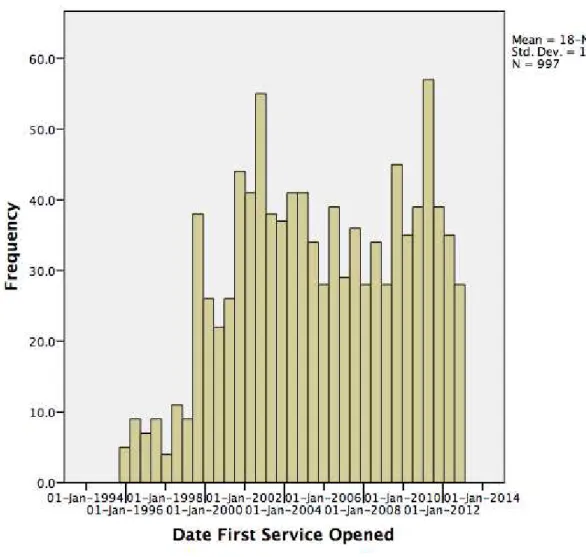
The search yielded a total of 997 patients. The total number of patients entering Early
Intervention Services per year is shown in Figure 4 below. Initially the teams were
seeing relatively small numbers but from 1998 this increased to between 30 and 60 new
cases a year, with substantial variability between years. Cases were unequally
distributed across the four geographically-based Community Mental Health Centre Early
Intervention Teams – St. Luke’s Centre (34%), Taylor Centre (29%), Manaaki House
28 Figure 4. Number of patients admitted to Early Intervention Services by year
2.4 Characteristics of patients at Entry to Service:
The demographics of the patient group is summarised in Table 1. 65% of the patients
were male. Just under half of the patients (46%) were New Zealand European. Maori
patients (17%) were the next largest ethnic group, followed by an equal proportion of
29 Per cent n
Gender
Male 66% 654
Female 34% 343
Ethnicity
NZ European 46% 459
Maori 17% 172
Pacific Islander 15% 151
Asian 15% 149
Other 5% 49
No ethnic affiliation 2% 17
Age
<=19 24% 236
20-21 22% 222
22-23 18% 180
24-26 19% 187
27+ 17% 172
Table 1. Demographics of Patients on Admission to Early Intervention Services
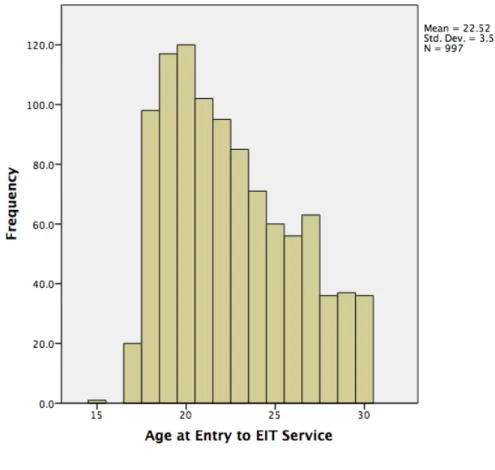
The men age at entry was 23 (SD 3.5) and is illustrated in Figure 5 below, with the age
distribution skewed towards the younger end. Almost a third were still living at home with
family when they first presented (Table 2), and people from areas of socio-economic
deprivation, as measured by neighbourhood decile NZ Depravation Band (33) are
30 Figure 5. Age Distribution on Entry to Early Intervention Service
Percentage n
Independent With Others 18.8 187
Dependant With Others 27.5 274
Independent Alone 6.6 66
Residential Care 2.1 21
Boarding House/Communal 3.2 32
Inpatient 0.1 1
No Fixed Address 0.5 5
Other 5.4 54
Not recorded 35.8 357
31 Decile Per cent n
1 5.2 52
2 5.7 57
3 5.4 54
4 11.7 117
5 10.9 109
6 16.8 167
7 4.2 42
8 10.1 101
9 11.8 118
10 17.3 172
Total 99.2 989
Missing 0.8 8
Total 100 997
Table 3. Social Deprivation Index: Larger Values Represent Greater Deprivation
2.5 Service Utilisation:
32 The 997 patients had a median number of 89 contacts (IQR: 36-184) with Early
Intervention clinicians (Figure 4), with a median duration of 62 hours of contact (IQR:
24-136). Patients spent a median number of 338 days (IQR: 93-757), or just under one year
in Early Interventions Services, significantly below the target two years recommended
provision of service. 517 patients (52%) did not require admission to hospital, and those
who did spent a median of 124 days in hospital (IQR: 40-380)
33 Table 4 below summarizes the odds of an admission to hospital whilst under the care of
the Early Intervention Services. There are no differences between genders, or any
differences between age groups. Asian patients have a 50% increased risk of an
admission whilst under the care of services, with no statistically significant differences
34
n Odds Ratio 95% CI p Odds Ratio 95% CI p
Univariate Analysis Multivariate Analysis
Gender
Male 643 1 1
Female 337 1.2 0.9-1.5 0.19 1.2 0.9-1.6 0.14
Ethnicity
NZ European 459 1 1
Maori 172 1.2 0.8-1.7 0.38 1 0.8-1.6 0.60 Pacific Islander 151 1.3 0.9-1.9 0.11 1.3 1.0-2.1 0.11 Asian 149 1.5 1.0-2.2 0.03 1.5 1.0-2.1 0.04*
Other 49 0.8 0.4-1.4 0.37 0.8 0.4-1.4 0.37
Age
19 or under 233 1 1
20-21 221 0.8 0.5-1.1 0.19 0.8 0.5-1.1 0.18 22-23 176 0.8 0.5-1.2 0.30 0.8 0.5-1.2 0.28 24-26 182 0.7 0.5-1.1 0.13 0.7 0.5-1.0 0.13 Over 27 168 0.8 0.5-1.1 0.20 0.7 0.5-1.1 0.15
35
2.6 Discussion
The audit data is consistent with what we would expect in the service for young people
with psychosis in Auckland. The patient population is young with a peak in the early 20s,
which is explained by the earlier peak in the incidence of psychosis in men. It also
explains the higher ratio of men, as we would expect the age distribution for women to
be pushed to the right as it peaks in their late 20s.
Ethnic minorities, particularly Maori, are overrepresented when compared to their overall
population numbers. However, the Maori, Pacific and Asian populations are younger
than the European population in Auckland. Our Maori and Pacific populations are also
subject to greater socio-economic deprivation, a risk for psychotic disorders.
The service utilisation data is also informative, particularly the length of time people
receive service. Some of this can be explained by the nature of supporting young people
with psychotic disorders. As assertive as services are, ultimately patients and their
families have a choice as to whether they engage with clinical services following an
episode. Many people also experience a significant amount of denial and are reluctant
to consider the possibility that they may have a relapse after their first episode. In ADHB,
7 to 10% of current patients are subject to compulsory treatment, and therefore Early
Intervention Services have to work hard to engage and maintain relationships.
Nevertheless, the median length of time the patient remained in the Early Intervention
services was around one year, with about a quarter of patients being discharged at three
months. This is consistent with results from Early Intervention Services in Christchurch
(34) and is sub-optimal number of reasons. Clinically, much of the work in Early
Psychosis teams now focuses on minimising the impact of the second episode. Teams
36 which allow them to access help a timely manner and minimise the adverse impact on
their social functioning. Secondly, the current recommendations for antipsychotic use
following a first episode is for patients to remain on these medications for at least a year.
There is reasonable evidence that the early discontinuation of antipsychotic medication
significantly increases the risk of relapse and is associated with poorer outcomes(35).
This data would suggest that half of the patients are not receiving this support from Early
Intervention teams. Patients with shorter episodes of care may also be disadvantaged in
not receiving before employment and vocational rehabilitation work that is central to
long-term improvement in outcomes.
The 50% increase in the risk of Asian patients under Early Intervention Services being
admitted to hospital is also of interest. Firstly, this represents a diverse range of
communities, with New Zealanders of Chinese, Indian, Filipino and Korean ethnic
backgrounds all falling under this category. The growth in the Asian population has been
relatively recent. As a result the cultural specific services and cultural competence of the
workforce are often less developed when compared to other groups. The more recent
nature of the immigration may also suggest that families affected by a young person with
psychosis may not have the social supports, particularly the support of friends and
extended family, which more established groups have access to. Lastly, it is possible
that this could be a result of the high numbers of students, particularly foreign students,
who live in central Auckland and attend the three local universities and other educational
institutions. These students often live in student accommodation with no local family,
and cannot be supported by assertive community treatment and are therefore more
likely to be admitted to hospital.
It is also important to note some of the limitations and challenges related to the data
37 that has to meet diverse needs. It is the primary repository for all clinical notes and
prescriptions. It is utilised by managers within clinical teams to monitor the performance
of individuals. For example, it allows a supervisor to see how frequently an individual
clinician see patients (number of contacts) and for how long (duration of contacts).
However, this system does not appear to be optimised to monitor the overall
performance of the system, or even the service. A key measure of success for Early
Intervention teams is their ability to reduce time to treatment in psychosis (Duration of
Untreated Psychosis). This is not captured in the system. Hospital admission rates are
also rather crude measures of the effectiveness of the mental health system, and in
Auckland, this does not take into account the extensive community interventions that are
available, such as crisis teams and community respite facilities. Similarly, measures of
vocational status and physical health are not captured, which would have greater face
validity as measures of outcomes, and greater acceptability amongst patients and
families.
Lastly, the data used in this audit should be interpreted with a degree of caution. Clinical
service data is not collected with the same rigours that apply in clinical research studies.
Some of the patients included may not be Early Intervention patients, as these teams do
provide a support role to other services, such as General Adult Services in the
Community Team when demand peaks. Patients over the age of 30 were excluded for
this reason, but patients presenting with other mental illnesses who were under 30 at the
time of first presentation would be included. Service utilisation data is also impacted by
the complexity of the services provided. For example, a patient who is unwell may
receive the services of the Early Intervention Teams, Crisis Teams and Home-Based
Treatment Teams during a single episode, and that these contacts may be “double
38 Similarly, the length of stay data for hospitalisation appears also to be similarly affected,
as patients who have been moved around units, for example between Intensive Care
Units and Standard Wards, have been double counted. Consequently, some of the data
39
3.
International Guidelines for treatment and service configurations
in Early Psychosis
Health services in New Zealand are highly influenced by international developments and
innovations from around the world. Partly, this is influenced by policy makers, but there
is also an effect from a highly internationalised workforce. For example, 40% of
psychiatrists in New Zealand are trained abroad, largely from the United Kingdom, the
United States, India and South Africa. A significant proportion of the healthcare
workforce also have experience of working in the Australian healthcare system, as the
two countries have a reciprocal agreement that allows freedom of movement and
employment.
With the growing evidence in favour of Early Psychosis Intervention programmes, a
number of countries have produced guidelines for the delivery of services:
3.1 Australia
As New Zealand's nearest neighbour, developments in Australia significantly influence
policy and service configurations. Some of this is due to shared institutions. For
example, the training of psychiatrists is overseen by the binational Royal Australian and
New Zealand College of Psychiatrists which results in common training on both sides of
the Tasman Sea. Nevertheless, the health system in Australia is significantly different
from New Zealand (36). The provision of secondary health services, including
community mental health teams and mental health inpatient units, are the responsibility
of individual State Health Authorities with considerable differences in the models of care
40 State-level services are complemented by the provision of Medicare, which is a federally
funded universal healthcare scheme where citizens and permanent residents are
reimbursed for their healthcare costs. Since 1999, provisions have been made to allow
patients to "top up" the universal reimbursement with private insurance coverage. This
has resulted in an expansion of privately provided healthcare, including in primary care
and mental health services. 52% of psychiatrists in Australia now work in the private
sector.
Consequently, there is a significant amount of diversity in the provision and configuration
of services for young people in the early stages of psychosis in Australia. Even in
Melbourne, home to EPPIC and seen as a centre of excellence in Early Intervention,
there have been marked differences in service provision across the city, with the west
receiving an Early Intervention in psychosis model, whilst the east of the city has
continued to provide community mental health services along traditional lines.
In 2006, a youth mental health initiative was launched by the Department of Health and
Aging, called Headspace (http://headspace.org.au/). Aimed at 12 to 25-year-olds,
Headspace hoped to support young people with a range of health issues from mental
health, sexual health and family difficulties. It also aimed to encompass a wide range of
providers and incorporating support for education and employment in addition to
healthcare. The health component was funded through Medicare and the federal
government.
Headspace caused significant controversy in Australia, particularly from Child and
Adolescent mental health providers (37). Amongst the arguments, opponents claim that
this new initiative undermined existing services, particularly child and adolescent mental
41 provided community mental health teams whilst channelling new federal money into
private providers.
In May 2013, Headspace was contracted by the Federal Government to implement a
national early intervention in psychosis program modelled on EPPIC in Melbourne.
Called headspace Youth Early Psychosis Program (hYEPP), it aimed to deliver a
seamless pathway of care from primary care into specialist secondary services. Utilising
a different funding model from the state health service, these hYEPP teams are
expected to deliver outcomes based around the following recommendations outlined
below (38):
Early detection
Component 1: community education and awareness
The development of community education programmes to improve mental health
awareness in the general public, schools, youth workers, health care professionals and
police results in an increase in early detection rates, smoother referral pathways and
earlier treatment. Evidence from a recent systematic review suggests that intensive
public awareness campaigns that target both the general public and health care
professionals may help reduce the duration of untreated psychosis, a major malleable
risk factor contributing to poor outcome in psychotic illnesses. Within the EPPIC model,
there are designated community education roles, with additional education and
awareness activities provided by EPPIC clinical teams.
42 Early psychosis services should be accessible, with one clear contact point, usually a
single toll-free telephone number. Referrals are accepted from any source, ensuring a
‘no wrong door’ policy for entry into the service. Young people who meet the entry
criteria undergo an assessment within 48 hours of being referred, while those who do
not are actively assisted with finding the most appropriate service to meet their needs.
The physical location, design and décor of a service is extremely important, as the
service needs to be easily accessible via public transport and engaging. The service
ensures that the staff and infrastructure are provided to allow a strong focus on
home-based care, which promotes engagement of young people.
Component 3: home-based assessment and care
Home-based assessment and care provided by a multidisciplinary team that is flexible in
terms of location and operational hours is important for the engagement and treatment
of young people with psychotic disorders. The EPPIC model has a youth- and
family-friendly multidisciplinary mobile Early Psychosis Assessment and Treatment Team that
includes nurses, doctors, social workers, occupational therapists and clinical
psychologists and is able to provide self-contained triage, assessment, crisis
intervention and home-based acute treatment 24 hours per day, 7 days per week,
without the need to revert to generic adult crisis teams.
Acute phase care
Acute phase care is delivered either in the community supported by the Early Psychosis
Assessment and Treatment Team or in a dedicated youth-friendly inpatient setting,
supported by the Early Psychosis Assessment and Treatment Team where necessary,
with clear access to a sub-acute setting during the transition to continuing care for those
43
Component 4: access to streamed youth-friendly inpatient care
Access to a youth and family friendly inpatient setting that provides specialist early
psychosis care is beneficial for young people with first-episode psychosis who require
acute care as it minimises hospital admission trauma and improves the engagement of
young people within the service. 19 In the EPPIC model, a youth-friendly inpatient
setting provides care until the young person is ready for discharge and ongoing
treatment, with inpatient stays being limited to the shortest possible time (<10 days).
This early discharge is only possible due to the ongoing support provided by the Early
Psychosis Assessment and Treatment team and continuing care teams.
Component 5: access to youth-friendly sub-acute beds
Some young people experiencing a first episode of psychosis may require an additional
level of support as an alternative to or following acute care that delivers intensive clinical
support in a residential setting. This allows the young person a short-term transition
phase in a community-based unit, whether this be a purpose-built facility, such as the
Youth Prevention and Recovery Care services in Victoria, or other sub-acute settings or
in houses in the general community. Considerations such as location, accessibility by
public transport, an appropriate physical environment and the provision of
developmentally appropriate activities in a least restrictive setting are important to
ensure the youth-friendliness of these settings, as well as the expertise and workplace
44 Continuing care
Component 6: case management
The treatment and management of young people with first-episode psychosis requires a
stable and trusted relationship through which delivery and coordination of care can
occur. This can only be delivered using a clinical case management model. The
continuing care team provides team-based case management and individually focused
psychological and psychosocial interventions. Young people are assigned an individual
case manager – a clinical psychologist, social worker, occupational therapist or mental
health nurse – and a psychiatrist or psychiatric registrar under the supervision of a
consultant psychiatrist. The case manager works collaboratively with the young person
and their family or significant others to provide an individually tailored therapeutic
approach, centred on the personal relationship, which matches the needs of the young
person and their stage of illness. Furthermore, case managers ensure that the young
person and their family are provided with psycho-education and linked to other useful
support services, including housing, educational, vocational, financial and legal
assistance. Under the EPPIC model, case managers have capped, low caseloads of
15–20 clients to allow them to build strong therapeutic relationships as well as deliver
specialist and mobile interventions. Continuing care case management should be for a
minimum of 2 years, with the potential of an additional 3 years of continuing care for the
significant subset of young people who have not experienced a complete recovery by 2
45
Component 7: medical interventions
Pharmacological interventions, such as antipsychotic medication, are used to manage
and reduce psychotic symptoms and should be regarded as a first-line intervention for
first-episode psychosis. The use of medication as recommended by evidence-based
clinical guidelines has been shown to optimise treatment adherence and speed recovery
in young people with first-episode psychosis. It is important to note that the medical care
of young people in the early stages of mental illnesses differs from medical care in older
patients with established illness in terms of both style and content. Low-dose atypical
antipsychotic medication is efficacious for most people with first-episode psychosis and
atypical antipsychotics are associated with superior tolerability compared to the typical
antipsychotics. A number of pharmacotherapy-related issues arise for young people with
first-episode psychosis and ultimately impact the way in which medication is delivered. A
‘start low, go slow’ prescribing approach is recommended for young people with first
-episode psychosis, as this population group responds well and more rapidly than those
with more established illness. Physical health issues, notably weight gain and metabolic
changes, are a well-established side effect of most antipsychotic medications; the
EPPIC model provides physical health monitoring and preventive interventions as a
routine part of their service.
Component 8: psychological interventions
Psychological interventions, including individual psychotherapy and cognitive
behavioural therapy (CBT), enhance symptomatic and functional recovery in
first-episode psychosis. A range of psychological interventions can be provided to a young
46 management, suicide prevention, relapse prevention and substance use reduction
strategies. Several psychological intervention programmes have been specifically
developed for first-episode psychosis: cognitively oriented psychotherapy for early
psychosis, active cognitive therapy for early psychosis, an intervention described by
Jolley and colleagues in 2003 and the Graduated Recovery Intervention Program. An
uncontrolled trial reported the efficacy of CBT for ongoing positive psychotic symptoms
in treatment resistant first-episode patients. Furthermore, in 2010, a systematic review of
CBT in early psychosis services concluded that CBT had longer-term benefits in the
reduction of symptom severity. Psychological intervention is a fundamental component
of the EPPIC model and is delivered by the case managers, as part of their case
management role, and a senior clinical psychologist overseeing these interventions.
Component 9: A functional recovery programme
Recovery programmes that include social, vocational and educational programmes for
young people with first-episode psychosis prevent loss of function, enhance recovery
and improve vocational and education outcomes. Young people with first-episode
psychosis face a range of challenges in attaining employment or education goals. The
Individual Placement and Support (IPS) model enables a large proportion of young
people with first-episode psychosis to return to employment and to fulfil their educational
goals. In a randomised controlled study, significantly better outcomes in terms of levels
of employment, hours worked per week, number of jobs acquired and employment
longevity were observed with IPS compared with treatment as usual group or treatment
alone. In the EPPIC model, case managers may provide individualised social recovery
interventions as well as facilitating access to group work, educational and vocational
services. Specialist vocational and educational recovery workers are integrated within
47
Component 10: group programmes
Group programmes can enhance symptomatic and functional recovery and provide an
alternative medium for therapeutic approaches that may better suit some young people.
They reduce social isolation and provide a safe and supportive peer group environment
for young people to work on personal issues such as lack of confidence, low
self-esteem, anxiety or symptom management. Groups are usually small, with a maximum of
eight people involved, and focus on topics ranging from health-related issues, such as
stress management, coping with anxiety and reducing drug use, to study, school and
work issues, as well as social and leisure activities such as music, art and outdoor
adventure.
Component 11: family programmes and family peer support
Family interventions are provided for all family members, close friends or anyone as a
significant other of a young person. Family work reduces the levels of distress in family
members by providing information and strategies that support the young person’s and
the family’s recovery. Family work is offered by case managers with the support of a
specific family worker, who may also take on more complex family presentations. Family
peer support workers, who have had the lived experience of a young person treated
within the EPPIC model, play a key role in this programme by providing proactive
face-to-face and phone support to new families and significant others when their family
member enters the service.
Component 12: youth participation and peer support
The incorporation of a youth participation programme contributes to ensuring that EPPIC
48 support and accountability to them. All clients are eligible to join the youth participation
team, which meets regularly to discuss improvements to the service, provide input into
staff selection by contributing to interview panels and participate in community
development and advocacy activities. Peer support workers who are past EPPIC service
users visit current young people in inpatient care, as well as providing support to other
clients on an outpatient basis. These workers receive training, mentoring and
supervision and are reimbursed for their time.
Component 13: mobile outreach
For those young people who have difficulty engaging with mental health services or
those who have more complex needs (forensic issues, homelessness, severe
personality disorder, prominent negative symptoms) an increased level of assertive and
intensive mobile outreach is required to minimise the risk of incomplete recovery as well
as the young person’s risk to self and others. Mobile outreach is provided as part of case
management either as a separate sub-team or as part of the usual case management
load (requiring monitoring of caseload intensity and acuity) with support from the Early
Psychosis Assessment and Treatment team. Interventions are based on clinical needs
and may involve, for example, crisis intervention, an increased level of individual
therapy, family support and consultation/liaison services.
Component 14: partnerships
EPPIC has established partnerships with other organisations that can enhance the care
of young people with mental health difficulties, including primary health care providers,
drug and alcohol services and community youth services. This not only enhances the
quality and breadth of the service, but also improves the referral and transition points for
49 schools and professional colleges to foster an ongoing research and learning
environment within the clinical service.
Component 15: workforce development
The creation of a highly skilled and clinically expert workforce has been the key to a
successful EPPIC service and ensures fidelity to the EPPIC model. Training, attendance
at professional development activities such as conferences and workshops, clinical
placements, entry level programmes as well as clinical supervision are all essential
aspects of this component.
Component 16: ultra-high risk young people
Early detection and intervention during the ultra-high risk stage may prevent or delay the
onset of a first episode of psychosis. Treatment for these ultra-high risk young people is
aimed at minimising symptoms and distress and maintaining a normal functional
trajectory to prevent further deterioration in functioning, as well as to prevent a first
episode of psychosis for the young person, and has been shown to lead to a 54%
reduction in the risk of transition to psychosis at 12 months. If a transition to
full-threshold psychosis does occur, the young person can be treated within the service,
which minimises the trauma and potential for iatrogenic harm associated with admission
in crisis.
3.2 The United Kingdom
The UK has traditionally benefited from a comprehensive and highly integrated NHS with
50 of use. In the 1990s, the Department of Health issued guidance in the form of National
Frameworks which outlined policy priority areas. These were then supplemented by
Policy Implementation Guidelines (PIGS).
In 2001, the Department of Health published the Policy Implementation Guideline on
Early Intervention in Psychosis Services People for people aged between 14 and 35 (13)
with a first presentation of psychotic symptoms. These teams were to provide care for
three years. The main components of service are included in Appendix 1. It proposed an
Early Intervention Service for a population size of about 250,000. Each care coordinator
was to support 1:10 to 1:15 patients, with team caseloads of 120 to 150, and medical
support comprising 0.5 Full Time Equivalent (FTE) consultant general adult input, 0.2
FTE consultant child and adolescent psychiatry input and 1.0 FTE of non-specialist
doctor support.
Since 2001, there have been significant changes to the configuration of the NHS. The
commissioning of services has increasingly been devolved to local areas, with General
Practitioners having a greater say on the allocation of resources and the prioritisation of
services. There has also been pressure on the NHS with tighter budgets since the global
financial crisis and the pressures of increased demand from an ageing population. A
report published by Rethink in 2014 “Lost Generation” (39), suggests that 50% of Early
Intervention Services have had their budgets decreased, with some reporting budget
cuts of 20%. The result has been a reduction in the quality of service and increased
delays in accessing help. 58% of services also reported a reduction in staffing numbers.
The National Institute for Health and Care Excellence (NICE) updated its
51 emphasised the importance of Early Intervention in psychosis services. Its
recommendations are outlined below:
1.3.1.1 Early intervention in psychosis services should be accessible to all people
with a first episode or first presentation of psychosis, irrespective of the person's
age or the duration of untreated psychosis. [new 2014]
1.3.1.2 People presenting to early intervention in psychosis services should be
assessed without delay. If the service cannot provide urgent intervention for
people in a crisis, refer the person to a crisis resolution and home treatment team
(with support from early intervention in psychosis services). Referral may be from
primary or secondary care (including other community services) or a self- or
carer-referral. [new 2014]
1.3.1.3 Early intervention in psychosis services should aim to provide a full range
of pharmacological, psychological, social, occupational and educational
interventions for people with psychosis, consistent with this guideline. [2014]
1.3.1.4 Consider extending the availability of early intervention in psychosis
services beyond 3 years if the person has not made a stable recovery from
psychosis or schizophrenia. [new 2014]
Of particular note, are the recommendations to open up accessibility to Early