
Braz. J. Geol. vol.45 número1
Texto
Imagem
Documentos relacionados
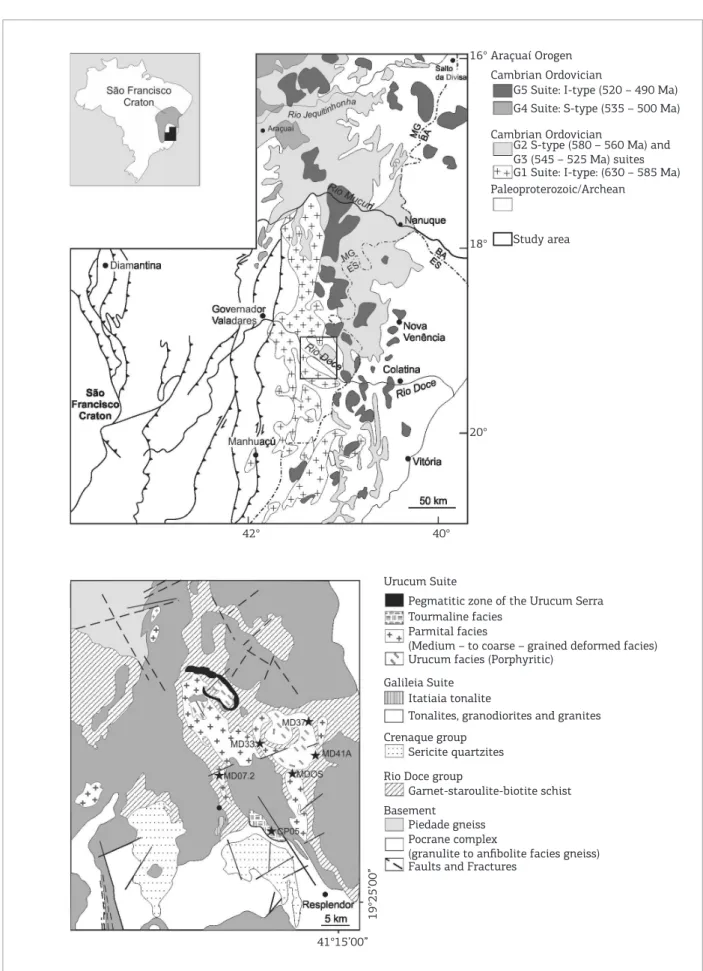
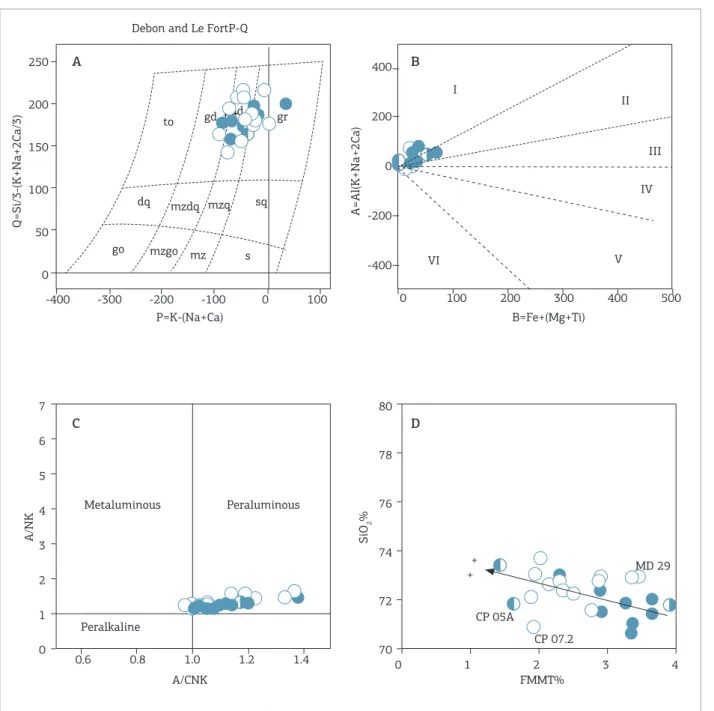
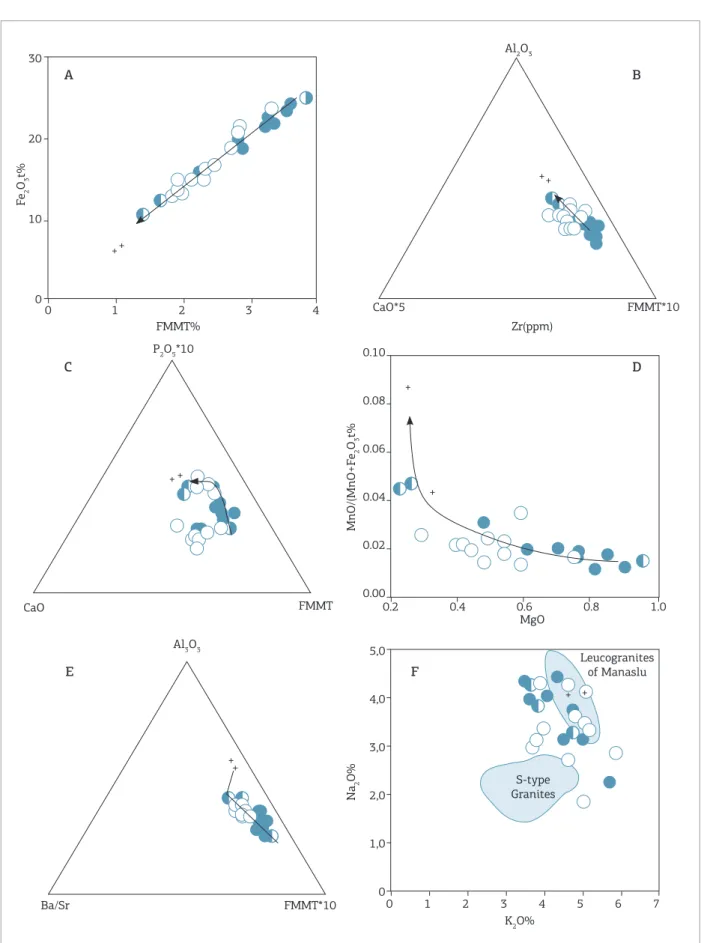
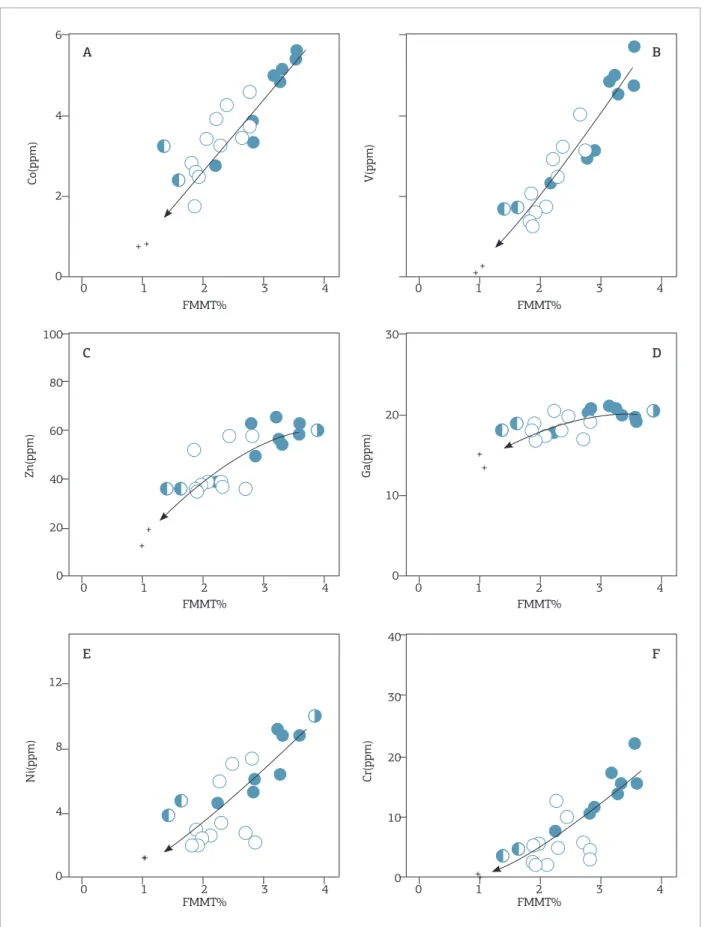
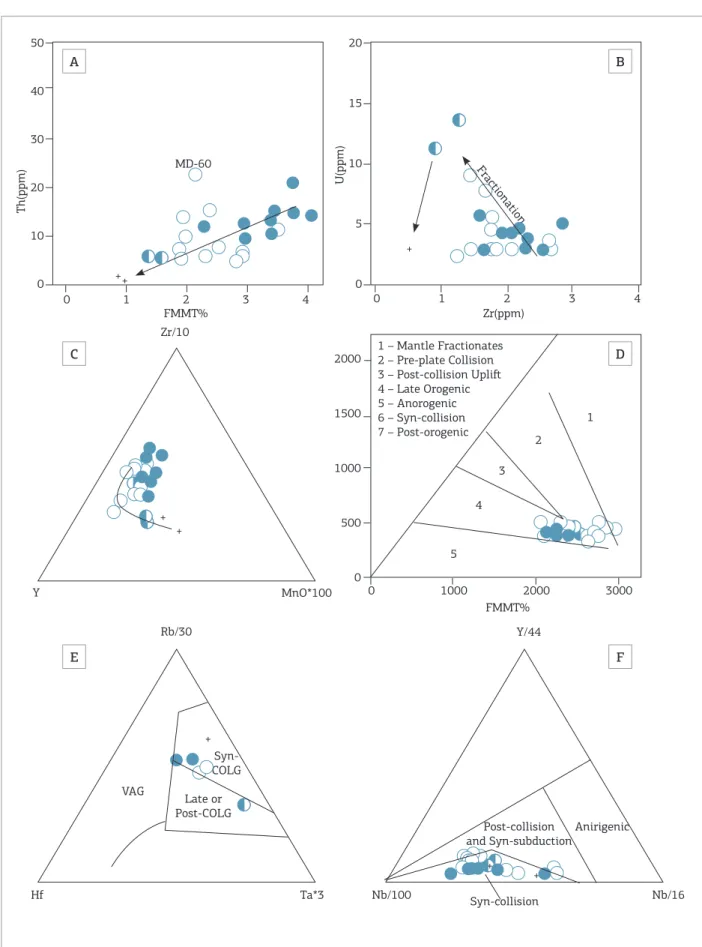
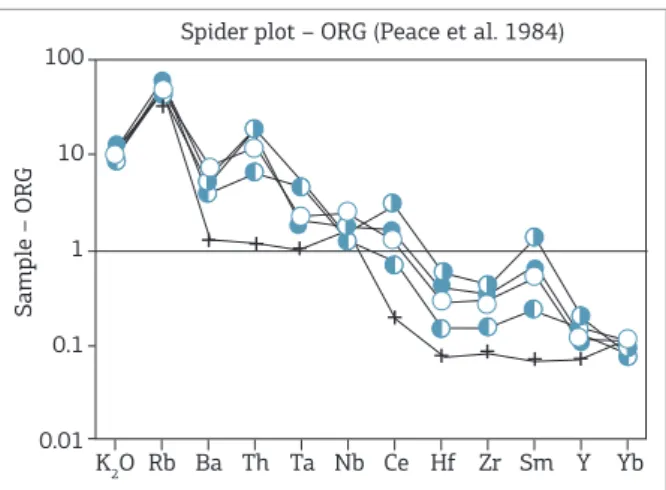
ABSTRACT The Urucum Suite granitoids (Rio Doce region, southeastern Brazil) contains four main facies: megafeldspar granites, deformed medium- to coarse-grained granites,
Sr and Nd isotopic data available for the Urucum suite granitoids are similar to those obtained for syn-collisional granites (suite G 2 of Pedrosa-Soares & Wiedemann-Leonardos
Two different facies were identified for Carbomil Well: bioclastic packstones to wackstones (sections C2, C4, C5, C6 and C7), representing a marine brackish or restricted
(A) A disposição de S0, marcado pelas variações de cor, granulação, mineralogia; (B) Nos estágios iniciais da primeira fase de deformação (Dn) ocorreu a colocação dos veios
he F2 deformation phase was less intense and had a brittle to ductile behavior that accommodated a slight shortening through normal open subvertical folds, and reverse
From this premise, a meta‑ultramaf‑ ic‑maic‑sedimentary complex (Cr‑rich magnesian schists — upper mantle or crustal ultramaic cumulate candidates; epidote amphi‑
he antecryst microtextures, such as zoned clinopyroxene megacrysts (augite cores and titanaugite rims) with partly corrod‑ ed cores, olivine crystals with corroded rims surrounded
Of the nearly 5,000 known mineral species, only 65 were irst described from Brazil, that is, the type minerals from Brazil (Table 1).. Nineteen of these were published between
