R.Adm., São Paulo, v.47, n.3, p.473-488, jul./ago/set. 2012 473 ISSN 0080-2107
Recebido em 10/abril/2012 Aprovado em 23/julho/2012
Sistema de Avaliação: Double Blind Review Editor Cientíico: Nicolau Reinhard
DOI: 10.5700/rausp1052
Edileusa Godói-de-Sousa, Graduada em Comunicação Social/Jornalismo pela Faculdades Integradas do Triângulo, em Educação Física e em Artes Plásticas pela Universidade Federal de Uberlândia, Mestre em Administração pela Universidade Federal de Uberlândia, Doutora em Administração pela Faculdade de Economia, Administração e Contabilidade da Universidade de São Paulo, é Professora na Universidade Federal de Uberlândia (CEP 38400-902 – Uberlândia/MG, Brasil).
E-mail: [email protected] Endereço:
Universidade Federal de Uberlândia Avenida João Naves de Ávila, 211 Bloco 1F – Sala 206
38400-902 – Uberlândia – MG
Rosa Maria Fischer, Socióloga, é Professora Titular do Departamento de Administração da Faculdade de Economia, Administração e Contabilidade da Universidade de São Paulo (CEP 05508-010 – São Paulo/SP, Brasil), Diretora do Centro de Empreendedorismo Social e Administração em Terceiro Setor (CEATS) e Coordenadora do MBA Gestão e Empreendedorismo Social da Fundação Instituto de Administração.
E-mail: [email protected]
The succession process at social enterprises
in Brazil
Edileusa Godói-de-Sousa Rosa Maria Fischer
O processo sucessório em empreendimentos sociais no Brasil
Este trabalho baseou-se em uma pesquisa realizada em empreendi-mentos sociais no Brasil, com o intuito de veriicar se e como esses empreendimentos realizam o planejamento e a gestão do processo sucessório das posições de direção dessas entidades. Foi investigado o subconjunto das associações dedicadas à produção coletiva de bens e serviços, por essas terem uma organização formalmente constituída e visarem acelerar o dinamismo do desenvolvimento local. A pesquisa empírica foi estruturada em duas etapas, sendo a primeira um survey com amostra de 378 empreendimentos, para identiicar quais já haviam passado ou estavam passando pela sucessão. Na segunda etapa foram entrevistados os principais gestores de 32 empreendimentos, buscando obter uma narrativa das experiências de sucessão ocorridas na trajetória do empreendi-mento. Nessa fase buscou-se analisar como interagem as dimensões Indivíduo, Organização e Ambiente na coniguração do processo sucessório, identiicando em cada uma dessas dimensões quais os fatores que podem facilitar e aqueles que podem limitar o processo sucessório. Para analisar a estrutura e as principais características do processo sucessório, os seguintes eixos orientadores foram toma - dos por base: dimensão Indivíduo – papéis da liderança, habilidade da liderança e estilos de liderança; dimensão Organização – estru- tura, planejamento, conselhos, comunicação (transparência), con-trole e avaliação; dimensão Ambiente – inluências dos stakeholders (comunidade, fornecedores, clientes, parceiros) no processo su- cessório. Os resultados apontaram que o processo sucessório nas associações pesquisadas se encontra em fase de construção: adap-ta-se às demandas do cenário atual, mas apresenta evidentes ne -cessidades de aprimoramento para uma condução mais efetiva do planejamento e da gestão compartilhada do processo.
Palavras-chave: empreendedorismo social, associações, sucessão.
R
ESU
1. INTRODUCTION
This paper focuses on the organizations that can be clas-siied as social enterprises within the broad and diverse scope of Third Sector entities. This angle is necessary due to the heterogeneous nature of Third Sector organizations and because this study centers on organizations whose mission is to engage in productive socioeconomic activities. The objective was to verify if and how social enterprises plan and manage the suc-cession process of their executive and managerial positions.
The Social Entrepreneurship concept is a relatively new element of the Theory of Organizations. This concept covers the establishment of organizations that simultaneously combine economic and social objectives. They are formal organizations from the legal standpoint, with administrative autonomy, and they engage in economic relations in the market. However, they differ from business organizations because they focus on meet-ing speciic social needs. Furthermore, they pay no dividends, because any economic or inancial surplus is invested back in their activities or organizational development, this being often established in their organizational charter (BOSCHEE, 2001). Such organizations emerged in the late 1990s in several countries. Some stemmed from non-proit organizations and others from mature social projects, or even from initiatives that resulted from a strategic alliance among organizations involved in different sectors.
These enterprises are characterized by their involvement in social activities that aim to create opportunities for social and economic participation (BRINCKERHOFF, 2000; BOSCHEE, 2001; MAIR and MARTÍ, 2004; AUSTIN, STEVENSON, and WEI-SKILLERN, 2006). They express the values and propo-sitions previously found mostly in the social movements that were not part of the speciic cultural patterns of corporations. Their often highly innovative initiatives focus on a variety of objectives, such as increasing the income of the poorer segment of the population, solidarity cooperation for mutual credit, microcredit for small businesses, and healthcare, edu-cation and aid where there is a lack of such public services. These initiatives introduce changes – albeit small and subtle ones – in the social and economic relations that characterize the capitalistic structure.
The typology that encompasses social enterprises can be broad and diverse, because of conceptual inaccuracy or be-cause of the innovative creativity of the entrepreneurs (MAIR and MARTÍ, 2006; PEREDO and McLEAN, 2006; SHAW and CARTER, 2007). This typology ranges from self-managed organizations to unstructured, informal groups of people engaged in a common effort to generate income and survive under adverse conditions of extreme poverty and exclusion. These are the so-called “inclusive businesses” that emerge in different institutional formats, depending on the legal and judicial framework of each country. Their overall objective is to promote the insertion of those who are excluded into
market relations and to empower them to participate in social and political issues.
Research studies by Lisboa (2009) state that social enter-prises are an acknowledged sector of the national economy in Colombia, Ecuador and Nicaragua. In Africa, informal groups have gained macroeconomic relevance. The author refers to similar examples in countries such as France, Belgium, Canada and the United States.
In Latin America, according to Arruda (2004), the follow-ing such enterprises stand out: rural and urban cooperatives organized by families or indigenous groups that work together (Mexico, Ecuador); eco-consumption cooperatives (Uruguay, Argentina, Mexico, Brazil); solidarity barter markets for the barter of goods and products, as well as more sophisticated mar -kets that employ community currencies (Argentina, Colombia, Mexico, Brazil); eco-villages that adopt self-management as the model for managing social and economic activities (Brazil); funding agencies and solidarity microcredit agencies (Bolivia, Mexico, Peru, Brazil); cooperative education (Venezuela, Co-lombia Argentina, Brazil); and fair trade networks that exist all over the continent. The author further emphasizes the existence of government agencies dedicated to promoting these enter-prises (Colombia, Ecuador, Brazil, Mexico, Argentina). This essentially acknowledges that Social Entrepreneurship can play a signiicant role in the improvement of people’s standard of living and that it can provide widespread access to citizenship.
Within the scope of sociological and organizational studies, the main focus of interest of national and international studies on this topic is to deine Social Entrepreneurship, with em-phasis on the characteristics of an Entrepreneur (DEES, 2001; MELO NETO and FROES, 2002; GRAYSON and HODGES, 2003; MORT, WEERAWARDENA, and CARNEGIE, 2003; OLIVEIRA, 2003). In-depth studies seek to identify if and how Social Entrepreneurship initiatives generate social value and economic value (BRINCKERHOFF, 2000; BOSCHEE, 2001; MAIR and MARTÍ, 2004; AUSTIN, STEVENSON, and WEI-SKILLERN, 2006), as well as the role of strategic cross- -sector alliances in the development of social entrepreneurship (AUSTIN, 2001; FISCHER, 2002a, 2006b, 2006c).
The bibliography – although it is recent and is still exploring this phenomenon – has already contributed to the understanding of the organizational characteristics of these enterprises and the management challenges that they face to ensure their de-velopment and perennial nature. However, there is no in-depth research about this and no references to succession planning at these organizations. One likely reason for this is that it was only in the last few years that most Third Sector organizations and social enterprises, a large number of which arose in the 1990s, had to start dealing with the need to replace their the founders and directors.
R.Adm., São Paulo, v.47, n.3, p.473-488, jul./ago/set. 2012 475 ThE SuccESSion pRocESS aT Social EnTERpRiSES in BRazil
fostering thinking on the organizational development possibili-ties of such enterprises.
Thus, the basic assumption is that the succession of cur-rent directors, especially if they were also the founders of the enterprise, imposes a management process centered on organizational development, given that this succession is an organizational change whose nature is to transform. As such, succession can become a barrier to the organization’s progress and can jeopardize its very survival (FISCHER, 2002a).
The world of social enterprises in Brazil is broad and heter-ogeneous. Therefore, the authors decided to focus this empirical study on a subgroup of associations dedicated to the collective production of goods and services. The reason for this is that these enterprises have very speciic features, such as their status as oficially established organizations; their mission to enable the poorer segments of the population to establish economic relations with producers and retailers in order to increase their income; their effort to adopt collaborative forms of collective work organization; and their objective of speeding up the dyn-amics of the local economy to expand the social participation of the community’s citizens.
The study was conducted by means of a survey and the analysis of secondary data to describe the characteristics of these productive associations. The primary data enabled be-coming acquainted with the experiences of the organizations’ directors and executives in succession-related situations. The procedures employed and the results are the subject of the items that follow.
2. METHODOLOGY
This study of succession planning at social enterprises is an organizational research study of a descriptive and exploratory nature that sought to structure currently dispersed information and knowledge on the succession processes of these entities. The overall objective was to describe the processes, to under-stand them, and thus to contribute to more in-depth studies on the speciic characteristics of the running of such organizations. However, this study can also be classiied as applied research (SILVA and MENEZES, 2000) because it sought to identify factors, resources, actions, and interventions that might help to improve the managing of these enterprises, especially in relation to succession planning.
Given the lack of empirical studies on social enterprises in Brazil, we decided to conduct ieldwork to have closer contact with the study’s subject, in order to identify how succession processes occur and to hear the opinions of the parties involved in them.
One of the main challenges of conducting an empirical study on social enterprises in Brazil is the shortage of databases with information about these organizations. Such databases would make it easier to obtain preliminary data. As productive as-sociations of a solidarity nature were the chosen object of this
study, we decided to resort to the Empreendimentos Econômicos Solidários (EES) database, which comprises information ob -tained from the mapping conducted by the Brazilian Ministry of Labor’s National Bureau of Solidarity (Secretaria Nacional de Economia Solidária do Ministério do Trabalho – SENAES/ MTE) in partnership with the Fórum Brasileiro de Economia Solidária (FBES). The results of this mapping were published in 2007. Use of the said database imposes several restrictions upon the representative nature of the researched enterprises, since the database encompasses organizations that identify themselves as belonging to the so-called Solidarity Economy. This was the solution found to address a universe of organiza-tions that might be classiied as social enterprises, although the establishment of a basis for a study restricted to the theoretical- -conceptual limits of the Solidarity Economy was not the aim of this research.
The EES/SENAES database comprises 21,859 enterprises mapped throughout Brazil. Of these, 51% (11,326) were legally organized as associations, while 10,911 stated that they were dedicated to productive activities. To ensure that the selected entities had a history of undergoing succession processes, we decided to focus on those that were organized ten or more years ago, which resulted in 6,184 entities to be studied. The next step was to ind out which of these had e-mail access and to establish contact with them. This resulted in 536 enterprises. We checked the addresses of the latter and the end result amounted to 378 entities, as we were unable to locate many of the organizations in the database.
The drop in the number of entities in the sample indicates that there are several problems affecting social enterprises, even though these organizations could be seen as relatively consolidated, given the number of years during which they had engaged in their activities. These problems include dif-icult access (many enterprises are in regions that lack access to means of communication such as the internet, mail ser-vices, etc.), inadequate premises, and a shortage of inancial resources. These problems also highlight the need to create databases and periodic updating systems, and to expand the related information.
The project’s ieldwork was divided into two parts. The irst comprised a survey of the 378 sample enterprises, to identify several characteristics of those organizations that had already undergone or were undergoing a succession process. The ques-tions included the following items: foundation year; ield of activity; number of members at the time of the survey; number of founding members and how many of them were currently involved in running the enterprise; how many founding mem-bers – if any – had been succeeded by other people; how often had succession occurred at the enterprise; and whether the en-terprise’s charter covered the management succession process.
be interested in participating in surveys or that they might lack the maturity to deal openly with the succession issue. Given that the respondents were offered access to the survey results, which would enable each enterprise to conduct a self-diagnosis of its situation, this 10% response rate calls for analysis in future research studies.
We veriied the 38 answered questionnaires and 32 were considered suitable for this study, as they concerned
organ-izations that had undergone a succession process. These 32 enterprises then became the object of the second stage of data gathering, aimed at describing their organizational characteris-tics, learning about the respondents’ opinions and perceptions on the issue of succession, and identifying the critical success factors of such processes.
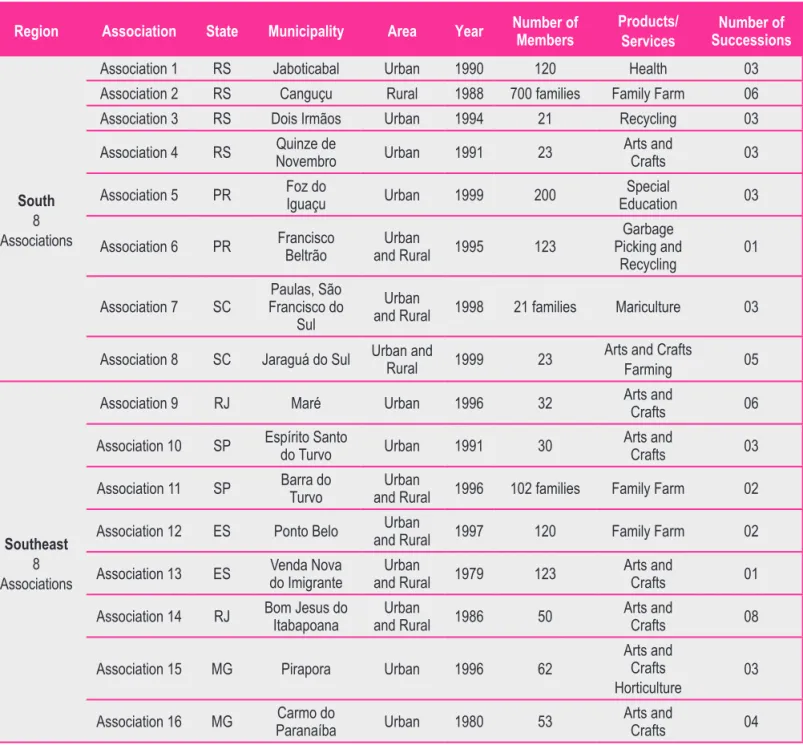
Table 1 identiies the enterprises that were part of the second stage of the research.
Table 1
Enterprises in the Second Stage of the Research
Region Association State Municipality Area Year Number of Members
Products/ Services
Number of Successions
South 8 Associations
Association 1 RS Jaboticabal Urban 1990 120 Health 03
Association 2 RS Canguçu Rural 1988 700 families Family Farm 06
Association 3 RS Dois Irmãos Urban 1994 21 Recycling 03
Association 4 RS Quinze de Novembro Urban 1991 23 Arts and
Crafts 03
Association 5 PR Foz do
Iguaçu Urban 1999 200
Special
Education 03
Association 6 PR Francisco Beltrão
Urban
and Rural 1995 123
Garbage Picking and
Recycling
01
Association 7 SC
Paulas, São Francisco do
Sul
Urban
and Rural 1998 21 families Mariculture 03
Association 8 SC Jaraguá do Sul Urban and
Rural 1999 23
Arts and Crafts
Farming 05
Southeast 8 Associations
Association 9 RJ Maré Urban 1996 32 Arts and
Crafts 06
Association 10 SP Espírito Santo
do Turvo Urban 1991 30
Arts and
Crafts 03
Association 11 SP Barra do Turvo
Urban
and Rural 1996 102 families Family Farm 02
Association 12 ES Ponto Belo Urban
and Rural 1997 120 Family Farm 02
Association 13 ES Venda Nova do Imigrante
Urban
and Rural 1979 123
Arts and
Crafts 01
Association 14 RJ Bom Jesus do Itabapoana
Urban
and Rural 1986 50
Arts and
Crafts 08
Association 15 MG Pirapora Urban 1996 62
Arts and Crafts Horticulture
03
Association 16 MG Carmo do
Paranaíba Urban 1980 53
Arts and
Crafts 04
R.Adm., São Paulo, v.47, n.3, p.473-488, jul./ago/set. 2012 477 ThE SuccESSion pRocESS aT Social EnTERpRiSES in BRazil
The second stage focused on gathering secondary data about the history and characterization of the enterprises. This entailed consulting documents made available by the entities themselves and by SENAES/MTE, as well as information available on websites and in a number of publications. The primary data was obtained through semi-structured interviews with the directors, to validate the data from secondary sources, get more detailed information and hear the succession-related experiences that had occurred over the course of the enterprise’s history. The interview approach focused on the main reasons that led to each succession process; whether or not this succession had occurred at a timely moment for the enterprise; the existence or lack of movements against the succession process, or the existence of some form of resistance; the opinions of the members about the future of the enterprise after the succession had materialized;
the transparency of the process to the members and staff; the inluence of the community, local leaders, clients, and suppli-ers during the succession process; the relationship between the successor and the person succeeded during the process; the greatest succession challenge; and other issues.
The interpretation and analysis of the information collected followed two theoretical models explained in the next item of this paper. The irst is based on the premise that succession is not an event but rather an organizational process (GERSICK et al., 1997) and, as such, must be analyzed from the standpoint of the several dimensions through which it manifests itself. In this study, we chose to analyze this process from the point of view of the Individual, of the Organization, and of the Environment to which each entity belongs (LUMPKIN and DESS, 1996). The second analytical model is based on the
North 4 Associations
Association 17 AM Alto Rio Negro Rural 1992 17 indigenous communities
Arts and
Crafts 03
Association 18 AM Manaus Urban
and Rural 1984 56
Arts and
Crafts 03
Association 19 AM Lábrea Urban
and Rural 1997 460
Agriculture and Extraction
Activities
01
Association 20 AP Macapá Urban
and Rural 1989 130
Arts and
Crafts 09
Northeast 12 Associations
Association 21 BA Tucano Urban
and Rural 1999 16
Animal Husbandry – Sheep and
Goats
02
Association 22 BA Guanambi Rural 1990 160 Family Farm 04
Association 23 BA Feira de Santana
Urban
and Rural 1997 25
Arts and
Crafts 02
Association 24 BA Valente Urban
and Rural 1980 750
Training
Farmers 05
Association 25 BA Caetité Urban
and Rural 1985 1.200 Family Farm 04
Association 26 BA Caetité Rural 1999 180 Agriculture 03
Association 27 BA Tucano Urban 1998 68 Arts and Crafts 02
Association 28 PE Gravatá Urban 1962 290 Arts and Crafts 04
Association 29 PE Camutanga Urban
and Rural 1999 167
Agriculture and Animal Husbandry
01
Association 30 PE Fernando de Noronha Urban 1991 18 Arts and
Crafts 02
Association 31 PI Simões Piauí Urban 1999 28 Apiculture 01
Association 32 MA Santa Luzia
do Paruá Rural 1998 28 Apiculture 02
proposition of Reicco and Gutierrez (2006), who associate enterprise lifecycles (Institutionalization, Decentralization and Social Conglomerate) to the leadership and management characteristics of the enterprise.
3. SUCCESSION PLANNING AT SOCIAL ENTERPRISES
The bibliographical survey on the topic of succession at Third Sector organizations revealed a shortage of literature on the subject in Brazil. As a result, this study is based on refer-ences from international research. This includes the studies of American researchers who, from the year 2000 onward, pub-lished the results of their studies on the succession processes of Third Sector organizations (WOLFRED, 2002; ADAMS, 2004; RANDALL et al., 2004; TEEGARDEN, 2004; KUN-REUTHER and CORVINGTON, 2007; SANDAHL, 2007; WOLFRED, 2008).
This line of research increasingly became the focus of scholars after they observed that most of the Third Sector organizations in the United States were entering a stage in their lifecycles that researchers named “the transition era”, i.e., a time when a trend toward replacing the leaders of these organizations became manifest. In other words, these organiza-tions were undergoing succession processes. The early studies showed that approximately 75% of the leaders of the entities were planning to resign because they wanted to retire. Although the features of American Third Sector organizations differ from those of Brazilian Third Sector organizations, this data was considered relevant for the study of succession at social enterprises, given that the Third Sector grew tremendously in the 1990s (SALAMON, 1998; FISCHER, 2005).
Thus, these organizations established ten or twenty years ago probably went through – or are currently undergoing – a “transition era,” during which the founders resigned from their positions or lost some of their inluence, a new generation of members stepped in, and the challenge was to modernize the management of such entities.
Some of the researchers see this transition as a period of vulnerability for the organizations and for the Third Sector itself: as experienced leaders step down, they create a power vacuum and an environment that can lead to tiresome conlicts (RANDALL et al., 2004; SANDAHL, 2007). Other authors, however, emphasize that these extensive changes actually provide many opportunities for diversifying leadership styles and for moving forward in terms of the development of the organizations undergoing a succession process and of the Third Sector as a whole (WOLFRED, 2002; TEEGARDEN, 2004; ADAMS, 2004, 2006; KUNREUTHER and CORVINGTON, 2007). According to these analysts, the moment of transition can drive organizations to focus on succession planning and to prepare to deal with the transformations that will help to strengthen the entities in the Third Sector as a whole.
Recent international literature has provided evidence on the main implications of this transition and the attributes of the new leadership. In addition, it has prescribed several strategies for succession planning (ADAMS, 2006; KUNREUTHER and CORVINGTON, 2007; WOLFRED, 2008).
In Brazil, very few researchers have conducted empirical research on Third Sector organizations in order to trigger dis-cussions on the preparation of successors and the management of the succession process. One of the explanations for this dearth of academic studies is the dificult access to this type of organization in Brazil, largely due to the lack of systematic data records in oficial databases.
One of the Brazilian studies in the theoretical references that formed the basis for this paper was conducted by Co -mini and Fischer (2009). Their research study involved eight Non-Governmental Organizations (NGOs) with national and international legitimacy and it focused on a preliminary ap-proach to the topic, to identify the opinions and perceptions of the NGOs’ leaders regarding succession planning and the dificulties faced by their organizations during this process. Although the respondents had manifested their interest in and voiced their concern about succession, their reports indicated that no initiative had been taken to organize and plan the suc-cession process.
The dificulties related to the scarce bibliography on the topic of succession planning at NGOs became even more evident when the researchers focused on a survey of studies on succession planning at the social enterprises chosen as the object of empirical studies, especially at the organizations involved in productive economic activities. In other words, a survey of publications evidenced that literature on Social En-trepreneurship is limited, mainly because this phenomenon is relatively new in the realm of research studies, as has already been mentioned in this paper. In addition, Brazilian scholars dedicated to studying Third Sector organizations do not regard the issue of succession planning as an important line of research. The dearth of literature on the topic drove a search for theor-etical explanatory models used to study succession planning at other kinds of organizations that had some similarities with social enterprises. This evidenced that Brazilian authors have centered their research work mostly on succession planning at family-owned companies, adopting international models, such as the analysis and planning model proposed by Gersick et al. (1997). These researchers designed a three-dimensional model for succession that seeks to understand the transitions taking place within the family, the management, and the ownership of such organizations, identifying the key challenges faced during the succession period. This model shows that the succession process must be studied from a complex perspective, as it encompasses cognitive, emotional and contextual processes.
R.Adm., São Paulo, v.47, n.3, p.473-488, jul./ago/set. 2012 479 ThE SuccESSion pRocESS aT Social EnTERpRiSES in BRazil
(1997) does not consider the context of such enterprises, since the issues of family and ownership do not apply to the reality of these initiatives. However, the adoption of a line of reason-ing similar to that of the study by Lumpkin and Dess (1996) shows that initiatives to establish entrepreneurial organizations result from a combination of three elements: the Individual, who decides to organize a social enterprise; the Organiza tion, which encompasses the structure, strategy and culture adopted to shape the enterprise; and the Environment around the enterprise, with which it interacts and whose characteristics inluence its performance. These studies enabled proposing to analyze succession planning at social enterprises as a process comprised of three elements: Individual, Organization and Environment; analytical elements were adopted for these three items in order to collect and analyze the primary and secondary data on the 32 associations examined in this study.
However, these analytical categories in themselves are insuficient to enable one to fully understand the phenomenon, given that the interaction between the Individual (the person being succeeded and the successor), the Organization and the Environment is a dynamic process involving several elements in each of these dimensions. These elements differ at each stage of the enterprise’s development. Thus, Adizes (1993) and Gersick et al. (1997) associate the succession process to the organiza-tion’s lifecycle, pointing out that the speciic characteristics of each stage of the organization’s lifecycle strongly inluence the aspects that should be taken into account to manage the succession process.
Consequently, the bibliographical research focused on studies that describe the evolutionary pathway of social enter -prises, in order to identify which organizational characteristics could be considered speciic to each of their lifecycle stages and whether such speciicities condition succession situations. Concerning social entrepreneurship speciically, Reicco and Gutierrez (2006), based on studies of more than 40 social organizations in Latin America, emphasize the powerful cor-relation between lifecycle and the role of the leaders. These authors created a descriptive typology of the four stages that a Third Sector organization undergoes: Initial; Institutionaliza-tion; DecentralizaInstitutionaliza-tion; and Social Conglomerate.
According to these authors, each of these stages requires different leadership styles. In its Initial stage, the organization usually grows under the personal inluence of a charismatic leader with the power to attract people’s support. During the Institutionalization stage, the leader guides and controls deci-sion-making and inluences all the levels of the organization to promote the adoption of an organizational culture. In the consolidation or Decentralization stage, the leader produces eficient results, thanks to his role of providing guidance for the employees and his capacity for encouraging them to take responsibility for running autonomous units. This is a critical stage for the succession planning process, because the charac-teristics of a charismatic leader able to manage an organization
do not always move towards Decentralization peacefully, as the re-allocation of power tends to be a sine qua nom condition of the shaping of the management model. The authors state that the political leadership style is more appropriate for the needs that emerge during the Renovation or Social Conglomerate stage, because at this point the leadership must focus on consolidating the organization’s interests, on establishing partnerships, on gaining more exposure for the organization, and on establish-ing explicit relationships with the stakeholders that comprise the organization’s environment.
This work builds up a “typical-ideal” model of the relation-ship between the organizations’ development stage and the leadership styles appropriate for the speciic characteristics of each organization. In practice, such characteristics can be a mixture of the “lifecycles” of the organizations, the attributes of the leader, and the styles of the directors and managers. However, the use of this general typology along with the three dimensions – Individual, Organization, and Environment – en-abled systematizing the information obtained during the study’s ieldwork, thus contributing to the understanding of important aspects of succession processes at social enterprises.
By using this analytic model, one can also obtain a prag-matic result, as organizations become able to identify what to do, how to do it, and at what time to start managed succession planning, in order to keep the enterprise from getting weaker or disappearing prematurely as a result of the failure to align the speciic needs of its lifecycle with the leadership style of its leaders.
After assessing the complexity of the dimensions of this analytical model, we concluded it would be necessary to understand the role of governance mechanisms in relation to guiding the succession process. Sathler (2008), who conducted a pioneering study in Brazil on governance in NGOs, believes that governance is applicable to these organizations because of the need for networking among people and groups with a wide variety of interests and expectations.
team; promote the organization’s public image; and encourage the bonds between the organization and society as a whole.
Within this perspective, Donaldson and Preston (1995) point out that organization directors must acknowledge the different groups involved in the enterprise and their speciic interests. Thus, one can consider that the theory of stakeholders is also a key reference for analyzing and conducting a succession process. This theory recommends verifying the inluence of each group related to the enterprise – the members, clients, community, suppliers, government and staff, among others – that is able to exert signiicant pressure on succession-related situations.
This theory is particularly important for research on Third Sector organizations, as they aim to meet social needs, even though they are formal, private-sector enterprises. This char-acteristic – in principle, at least – creates powerful ties with the stakeholders that comprise the organizations’ relationships and results in the expectation that these players will partici-pate in the management processes – which include succession planning, as highlighted in this paper – that are crucial for the perennial nature of the organization.
The structuring of the theoretical and conceptual framework of the study required extensive bibliographical research, with references to many authors and approaches, for the establish-ment of analysis parameters for the succession process at social enterprises. This is relected in Table 2, which summarizes the coniguration of the parameters for the analysis of the succes -sion process at social enterprises based on the following aspects: Individual, based on the lifecycle (ADIZES, 1993; GERSICK et al., 1997; DAFT, 2002) and types of leadership (REFICCO and GUTIERREZ, 2006); Organization, based on institutional gov-ernance mechanisms (KNOKE, 1990; CHAIT, HOLLAND, and TAYLOR, 1993; FISCHER, 2006a) and Environment, based on the stakeholder theory (DONALDSON and PRESTON, 1995; CAMPBELL, 1997; ROWLEY, 1997; FOMBRUN, GARD-BERG, and BARNETT, 2000; FREEMAN and McVEA, 2000).
4. CHARACTERISTICS OF THE SUCCESSION PROCESS AT THE ENTERPRISES ANALYZED BY THE RESEARCHERS
To analyze the structure and main characteristics of the suc-cession process at the entities studied in this piece of research, the parameter was the proposed model, whose guiding elements for each dimension were as follows: Individual: leadership roles, leadership skills, and leadership styles; Organization: structure, planning, boards, communication (transparency), and control and evaluation; Environment: stakeholders’ inluences (community, suppliers, clients, partners) on the suc-cession process. These dimensions were associated with the enterprises’ lifecycles (Institutionalization, Decentralization and Social Conglomerate) identiied on the basis of the enterprises’ characteristics, as reported by the managers during the semi- -structured interviews.
Concerning the Individual dimension, it appears that the founder’s leadership of all the aspects of the enterprise is a characteristic that stands out among the organizations in the Institutionalization stage. At this point, there is no concern for the succession process, because succession is not a managerial decision; it occurs only because of a legal determination, i.e., the tenure established by the organization’s charter. This is why the most common situation is that the leader who holds the position of president or executive director of the organization merely allocates job positions among leaders of the same group. There are no established rules for the selection of candidates to the position of president and no formal or structured actions are implemented to proceed with the succession. In general, there is no dispute for agreements, nor any selection process. Negotiations are conducted and agreements reached within the universe of the group of people who founded the organiz-ation or who are the founders’ trusted friends. It is common for a small group of people to move from one managerial or executive position to another and the turnover occurs among these individuals.
The majority of the organizations analyzed in this study are in the Decentralization stage. Here, the founders no long-er hold leadlong-ership or executive positions at the organization and the line of discourse of the current presidents is that they want to decentralize executive actions by redistributing power. However, none of the respondents mentioned the existence of a succession plan or of clearly established criteria to delegate executive responsibilities. The results indicate that there is awareness of the need to change succession procedures, align-ing succession plannalign-ing with the organization’s lifecycle; however, there is no drive toward action.
At the enterprises analyzed in this study that have reached the Renovation or Social Conglomerate stage, the found-ing members no longer hold any executive positions. The interviews with the current directors indicated that they are concerned with identifying and preparing future successors, especially in view of rising managerial complexity and of the need to modernize the organization by developing skills, as well as to reach out to younger generations. However, even though they are increasingly focused on a participatory style, these leaders still preserve predominantly executive characteristics. Table 3 summarizes the key aspects identiied in the analysis of the succession process in relation to the Individual dimen sion, according to the perception of the leaders interviewed for this study.
R
.Ad
m.
, Sã
o
Pa
u
lo
, v
.
4
7
, n
.3
, p
.4
7
3
-4
8
8
, j
u
l./
a
g
o
/se
t.
2
0
1
2
4
8
1
Th
E
S
u
c
c
E
S
S
io
n
p
R
o
c
E
S
S
a
T S
o
c
ia
l
E
n
TE
R
p
R
iS
E
S
in
B
R
a
zil
Table 2
Three-Dimensional Model for the Analysis of the Succession Process at Social Enterprises
Dimensions Theory/
Authors Categories
Phases of the Lifecycle
(Adizes, 1993; Gersick et al., 1997; Daft, 2002)
Beginning Institutionalization Decentralization Social Conglomerate
Individual
Leadership
Reicco and Gutierrez
(2006)
Roles
• Make decisions • Analyze surroundings • Build up hierarchies • Capitalize on contact networks
• Develop political structures and systems • Create work groups • Ensure economic sustainability • Reconcile different interest groups with the organization’s mission
• Expand social actions • Decentralize operations into autonomous units
• Decentralize power and delegate it to other leaders of the organization
• Reconcile interests
• Coordinate different enterprises within the same structure • Develop strategic alliance • Promote the organization’s exposure
Skill • Undertake
• Diagnose • Align strategies• Motivate • Delegate • Coordinate• Negotiate
Styles • Charismatic • Executive • Participatory • Political
Organization
Structure
• Informal and -bureaucratic • Management model operated by founder
• Informal with some procedures • Centralized and functional structure
• Formal procedures • Decentralized structure • Professionals from different ields
• Participatory management
• Team work
• Collective responsibility • Professional management
Planning • Driven by opportunities
• Establish key institutional policies
• Review vision, mission, objectives and main strategies and goals for the future
• Ensure development of adequate strategic plan • Make room for innovation
Institutional Governance
Knoke (1990) Chait, Holland, and Taylor
(1993) Fischer (2006a)
Role of Advisory and other Boards
• Contextual Dimension: adapts to distinct characteristics and to the culture of the rganization’s environment
• Contextual Dimension: based on mission, values, and on the organization’s tradition, uses these elements to guide decisions and acts to reinforce the organization’s values • Educational Dimension: self-relection, to diagnose strengths and weaknesses and analyze errors
• Interpersonal Dimension: identiies and cultivates leadership
• Strategic Dimension: a) cultivates and concentrates on processes that best deine institutional priorities b) anticipates potential problems and acts accordingly before issues become urgent
• Analytical Dimension:looks extensively for solid information and actively seeks different points of view from multiple target audiences
• Political Dimension:
a) respects the integrity of the governance process b) seeks to minimize conlicts
TIERREZ, 2006), generally because of the pressure of changes in the external context, which often oblige the organizations to “reinvent themselves” to survive.
Concerning the Organization dimension, the analyses uncovered some aspects in common:
● The structure of the succession process is characterized by informality and a short-term vision. Most of the organizations do not establish a limit on tenures and the coordination of the process is carried out by the managing directors. ● There is no effective planning of the succession process,
especially at organizations that are at the Institutionalization stage.
● There is evidence that the communities do not take part in the organizations’ daily activities or in the decision-making processes. For example, the organizations do not have advis ory boards comprised of members that are not part of the organization.
● There is no focus on internal and external communication dynamics to increase the exposure and transparency of the succession process; communication is restricted to meetings of the executive board and members of the organization sometimes do not participate in such meetings.
● The control and evaluation of the succession process are not part of the daily routine of the organizations studied in our research, mainly because of lack of planning and little or no emphasis on communication and participation.
The main results identiied in the analysis of the succession process regarding the Organization dimension are summar-ized in Table 4.
These indings are similar to those mentioned in specialized literature, which indicates that in the early development stages of an organization the structure is centralized and informal, and authority, seldom delegated (ADIZES, 1993; DAFT, 2002); that the lack of succession process planning results in part from the fact that the leaders are not under pressure for change (LODI, 1986; BERNHOEFT, 1989; COHN, 1991); and that very few organizations invite outsiders to sit on their boards because they tend to avoid the inluence of people that do not belong to the founding group (GERSICK et al., 1997). This is why the leaders of the enterprises usually begin to feel the need to implement formal control and evaluation systems when they reach the Decentralization stage (DAFT, 2002). When these procedures are added to the organization’s daily management procedures, they start driving the need to formalize the suc-cession planning process.
Since half of the 32 enterprises covered in this study are at the Institutionalization stage, it is easy to understand why they still lack speciic procedures to plan and deal with succession. However, it is important to emphasize the need to create favor -able conditions for the implementation of such practices, sys-tematically and deliberately, in order to contribute effectively to local and community development.
R.Adm., São Paulo, v.47, n.3, p.473-488, jul./ago/set. 2012 483 ThE SuccESSion pRocESS aT Social EnTERpRiSES in BRazil
Table 3
Key Aspects Identiied in the Analysis of the Individual Dimension
Phases 32
Organizations
Leaders
Roles Skill (Characteristics) Styles
Beginning OrganizationNo - -
-Institutionalization Organizations16
• Reach out to the community • Bring together people with common objectives • Re-allocate leadership positions in the same group of people
• Commitment • Vision • Responsibility
• Talent for organizational mission
• Reliable • Experience
8 managers with Charismatic style and 8 managers with a combination of styles Charismatic-Executive
Decentralization
13 Organizations
• Provide structures for the acquisition of the required skills
• Identify change-related tendencies guide strategic re-directions
• Ability to lead • Convey enthusiasm • Demonstrate responsibility to perform obligations
6 managers with Charismatic-Executive styles and
7 managers with Executive-Participatory styles
Social Conglomerate
3 Organizations
• Share experiences • Help prepare potential successors with different skills
• Share experiences • Help prepare successors with different skills
3 managers with a combination of styles: Charismatic-Executive- -Participatory-Political
Table 4
Main Aspects Identiied in the Analysis of the Organization Dimension
Stages 32
Organizations
Institutional Governance Structure Planning Advisory
Board Communication
Control and Evaluation
Institutionalization Organizations16
Centralized and informal (no structure for the succession process)
None None
No communication to increase exposure (transparency) of the process
None
Decentralization Organizations13
Some actions are implemented to build a better succession process
Emergency planning (when the need for succession arises)
None
Planning meetings are held; these meetings are open to all members
None
Social Conglomerate
3 Organizations
Sequence of actions implemented to improve structure and formality of the process
Existence of actions for the improved planning of the succession process
Only one organization has an advisory board
All members are encouraged to attend the meetings and discuss the succession process
In the survey of information about the Environment di mension, the respondents were asked about the inluence of people outside of the organization and most claimed that succes-sion planning had not undergone external inluences yet. Others stated that this inluence was limited to the time when new members had been appointed to executive positions, at which time conversations were held with the community to identify possible candidates. This allows us to state that the organiza-tions covered in this study lack a strong relaorganiza-tionship with the context around them. Thus, the role of the community is still relatively small when it comes to succession planning at these enterprises. This is a paradox, as the overall expectation is that social organizations must have strong and long-lasting ties with the community in order to build social transformation jointly. Some of the organizations voiced concerns about this isola-tion and how this might inluence their future in the aftermath of the succession process. This could become a key indicator, in the sense of provoking changes in the enterprises’ succession processes, especially when such concerns stem from funding entities and business entities that choose organizations with which to establish strategic alliances. In this respect, the litera-ture states that organizations must acknowledge the different groups involved in the enterprise and their speciic interests (DONALDSON and PRESTON, 1995) in order to beneit from outside contributions to conduct the succession process. Table 5 summarizes the analysis of the key aspects of the succession process identiied in connection with the Environ ment dimension.
It is important to emphasize that the data related to this study was collected from interviews with the leaders of the 32 participating organizations. This is why this information must still be broken down to identify the opinions of representatives from each of the levels – for example, the community, suppli-ers, clients, partners – regarding their possible inluence on the succession process of these organizations.
5. CONCLUSION
To describe the succession planning structure at the organ-izations that were the object of this study and to analyze their main characteristics, a three-dimensional analytical model was employed, which can be regarded as one of the products of the study, given that the lack of bibliographical references and speciic research studies on this topic dictated an exploratory approach for more advanced work and for the improvement of the management practices of social enterprises. The impor-tance of the model resides in its broad scope and its capacity to capture contributions from several approaches and authors in the same architecture, while still maintaining its focus on the organization and on the existing variables that are crucial for the analysis of succession planning at social enterprises.
The succession-related characteristics at the enterprises covered in this study were simultaneously associated with two basic analytical elements: the irst consists of the model’s three dimensions, obtained from the theoretical references on succession management: Individual, Organization and En vironment (LUMPKIN and DESS, 1996). The second stems from the theory of organizational lifecycles adapted to NGOs. In keeping with this theory, social enterprises go through three development stages: Institutionalization, Decentralization and Social Conglomerate (ADIZES, 1993; GERSICK et al., 1997; DAFT, 2002), to which ideal leadership types correspond (REFICCO and GUTIERREZ, 2006). These analysis parame-ters made it possible for one to identify a relationship between the succession process and the enterprises’ development stages.
The results indicate that there is an awareness of the need to change succession procedures in order to adapt the process to the organization’s lifecycle. However, no actions are being taken in this respect at most of the social enterprises covered in this study. Most of the leaders of the said organizations are aware of the importance of planning and managing succession.
How-Table 5
Key Aspects Identiied in the Analysis of the Environment Dimension
Phases 32
Organizations
Stakeholders’ Inluence
Community Partners Suppliers and
Clients
Institutionalization 16
Organizations No No No
Decentralization Organizations13 No No, but manifested interest in information on the succession process No Social
Conglomerate
3 Organizations
Yes, by means of
R.Adm., São Paulo, v.47, n.3, p.473-488, jul./ago/set. 2012 485 ThE SuccESSion pRocESS aT Social EnTERpRiSES in BRazil
ever, they lack the tools to achieve this and did not manifest the intention of seeking such instruments. They believe in the importance of shared management of the process as a way of reconciling the expectations of their clients and of outsiders. Still, this attitude is based merely on personal relationships rather than on formal procedures established to manage the relationship between the organization and its stakeholders.
Concerning the possibilities and limits of the contribution of succession planning to the development and survival of these social enterprises, this study found that the limiting factors of the process identiied in the Individual dimension concern the lack of capabilities of those who are interested in the position. Another dificulty is related to leadership training, to the fact that people are not interested in taking on responsibilities. In some cases, the founders themselves refuse to step down, which generates conlicts. The fact that executive positions at social enterprises are not remunerated is another issue. The analysis of the Organization dimension overall showed that the limiting factors include members’ resistance to change and lack of planning. Fear of changes and non-acceptance by the community were also highlighted as limiting factors in the external Environment dimension.
Several factors that might facilitate succession planning and help the development of the organizations covered by this study were identiied. The irst concerns the Individual dimen-sion, if the former president remains as a member of the new executive board or provides support as member of the advisory board. Another factor tied to this dimension is the qualiication of future successors. In relation to the Organization dimen-sion, the following positive factors were emphasized: the trust among all the players involved and their team spirit. As for the Environment dimension, the role of community councils is a major succession planning factor. However, most of the initiatives analyzed acknowledged that such councils still lack direct inluence on succession.
The specialized literature led to certain recommendations for succession planning at these initiatives. Regarding the Individual dimension, the recommendation is to intensify the communication low, to attract stronger engagement and com-mitment from all the stakeholders; another recommendation is to clarify objectives and expectations, share planning, and
pre-pare future leaders (COHN, 1991). Getting the organization’s founders and former executives to act as formal or informal advisors can reinforce the organization’s cultural patterns and be a source of inspiration for the preparation of future leaders.
Concerning the Organization dimension, there is an evi-dent need to raise the awareness of all the stakeholders as to the importance of succession planning as a driver of growth opportunities, learning experiences, and development oppor-tunities for the stakeholders and for the enterprise (WOLFRED, 2002; ADAMS, 2004, TEEGARDEN, 2004; ADAMS, 2006; KUNREUTHER and CORVINGTON, 2007); it is also neces-sary to build up organizational guidelines and strategies in a participatory manner and to prepare succession planning based on the organization’s values, mission, and future pros -pects (ADACHI, 2006). Community councils may lessen the dependence on organizations’ founders, thus strengthening the enterprise’s ties to the community.
As for the Environment dimension, the recommendation is to map the main stakeholders in order to create communication channels with them, informing them of future possibilities and changes under way at the enterprise (GOMES and MILITÃO, 2009). This makes it easier to deal with resistance and increases the exposure of future leaders and of the enterprise itself, which enables the construction and empowerment of alliances.
It is important to emphasize that there is no single model for the management of succession planning at social enterprises. Each organization has to develop its own guidelines in line with its identity, which is based on the values and the mission that justify the organization’s status as a social enterprise. Succes-sion planning must be viewed as a growth and change process involving all the parties – stakeholders and outsiders – that believe in the organization’s mission and that are willing to ensure its continuity and development.
In short, the main contribution of this research study was to propose parameters to guide and support the analysis and monitoring of succession planning at social enterprises. Several issues related to succession planning at productive organiza-tions were clariied, such as the relaorganiza-tionship between the en -terprise’s lifecycle, corporate governance, stakeholders theory, and succession planning, based on the following dimensions: Individual, Organization and Environment.
ADACHI, P.P. Família S.A.: gestão de empresa familiar e solução de conlitos. São Paulo: Atlas, 2006.
ADAMS, T. Capturing the power of leadership change – using executive transition management to strengthen organizational capacity. Baltimore, Maryland: Annie E. Casey Foundation, 2004.
ADAMS, T. Staying engaged, stepping up: succession planning and executive transition management for nonproit
boards of directors. Baltimore, Maryland: Annie E. Casey Foundation, 2006. Executive Transitions Monograph Series. ADIZES, I. Os ciclos de vida das organizações: como e por que as empresas crescem e morrem e o que fazer a respeito. 2.ed. São Paulo: Pioneira, 1993.
ARRUDA, M. Economia solidária e o renascimento de
uma sociedade humana matrística. In: IV FÓRUM SOCIAL
MUNDIAL. Painel “Por uma Economia do Povo: Realidades
R
EF
ER
En
c
e Estratégias do Local ao Global”, Mumbai, Índia, 2004. At: <www.gaiabrasil.net/site/modules/news/article. php?storyid=47>. Retrieved on: Jan. 21, 2012.
AUSTIN, J.E. Parcerias – fundamentos e benefícios para o terceiro setor. São Paulo: Futura, 2001.
AUSTIN, J.; STEVENSON, H.; WEI-SKILLERN, J. Social and commercial entrepreneurship: same, different, or both?
Entrepreneurship: Theory and Practice, Baylor University,
U.S., v.30, n.1, p.1-22, Jan. 2006.
BERNHOEFT, R. Empresa familiar: sucessão proissionalizada ou sobrevivência comprometida. São Paulo: Nobel, 1989.
BOSCHEE, J. Eight basic principles for nonproit entrepreneurs. Non Proit World, Madison, v.19, n.4, p.15-18, July/Aug. 2001.
BRINCKERHOFF, P.C. Social entrepreneurship: the art of mission-based venture development. New York, USA: Library of Congress, 2000.
CAMPBELL, A. Stakeholders: the case in favour. Long
Range Planning, London, v.30, n.3, p.446-449,
June 1997.
CHAIT, R.P.; HOLLAND, T.P.; TAYLOR, B.E. The effective
board of trustees. Phoenix: Oryx Press, 1993.
COHN, M. Passando a tocha: como conduzir e resolver os problemas de sucessão familiar. São Paulo: Makron Books, 1991.
COMINI, G.M.; FISCHER, R.M. When Cinderella gazes at herself in the mirror: the succession issue in NGOs. International Leadership Journal, Trenton, N.J., v.1, n.2, p.4-26, Mar. 2009.
DAFT, R.L. Organizações: teorias e projetos. São Paulo: Pioneira, 2002.
DEES, J.G. The meaning of social entrepreneurship. Durham, NC, EUA: Center for the Advancement of Social Entrepreneurship. Original draft: Oct. 31, 1998. Reformatted and revised: May 30, 2001.
DONALDSON, T.; PRESTON, L.E. The stakeholder theory of the corporation: concepts, evidence and implications.
Academy of Management Review, Ada, v.20, n.1, p.65-91,
Jan. 1995.
FISCHER, R.M. O desaio da colaboração: práticas de responsabilidade social entre empresas e terceiro setor. São Paulo: Gente, 2002a.
FISCHER, R.M. Mudança e transformação organizacional. In: FLEURY, M.T. (Org.). As pessoas na organização. São Paulo: Gente, 2002b. p.147-164.
FISCHER, R.M. Estado, mercado e terceiro setor: uma análise conceitual das parcerias intersetoriais. Revista de Administração da Universidade de São Paulo (RAUSP), São Paulo, v.40, n.1, p.5-18, jan./fev./mar. 2005.
FISCHER, R.M. Governance in social enterprise. In: SEKN
Effective Management of Social Enterprises – lessons from
businesses and civil society organizations in Iberoamerica. Cambridge, Massachusetts: Harvard University/
David Rockefeller Center for Latin American Studies, 2006a.
FISCHER, R.M. Organizational culture in social enterprise.
In: SEKN Effective Management of Social Enterprises –
lessons from businesses and civil society organizations in Iberoamerica. Cambridge, Massachusetts: Harvard University/David Rockefeller Center for Latin American Studies, 2006b.
FISCHER, R.M. Talk on social responsibility. In: CONFERÊNCIA INTERAMERICANA SOBRE
RESPONSABILIDADE SOCIAL DA EMPRESA: UM BOM NEGÓCIO PARA TODOS, 4., 12 dez. 2006c, Salvador, Bahia. At: <www.csramericas.org/> Retrieved on: Oct. 25, 2011.
FOMBRUN, C.J.; GARDBERG, N.A.; BARNETT, M.L. Opportunity platforms and safety nets: corporate citizenship and reputational risk. Business and Society
Review, Malden, MA: Blackwell, v.105, n.1, p.85-106,
Spring 2000.
FREEMAN, R.E.; McVEA, J. A stakeholder approach to strategic management. In: HITT, M.; FREEMAN, E.; HARRISON, J. Handbook of strategic management. Oxford: Blackwell, 2000. p.189-207.
GERSICK, K.E.; DAVIS, J.A.; HAMPTON, M.M.;
LANSBERG, I. De geração para geração: ciclos de vida da empresa familiar. 4.ed. São Paulo: Elsevier, 1997.
GOMES, T.S.; MILITÃO, M.S.R. Planejamento da sucessão familiar. 2009. At: <www.cesuc.br/revista/ed-6/ SUCESSAOFAMILIAR.pdf>. Retrieved on: Jan. 19, 2009.
GRAYSON, D.; HODGES, A. Compromisso social e gestão
empresarial. São Paulo: Publifolha, 2003.
KNOKE, D. Organizing for collective action: the political economies of associations. New York: Aldyne de Gruyter, 1990.
KUNREUTHER, F.; CORVINGTON, P.A. Next shift: beyond the nonproit leadership crisis. Baltimore, MD/New York, NY: Annie E. Casey Foundation, 2007.
LEAL, E.A.; FAMÁ, R. Governança nas organizações do terceiro setor: um estudo de caso. In: SEMEAD – Seminários em Administração, 10., 2007, São Paulo, Brasil.
Anais... São Paulo, SP: FEA-USP, 2007.
LEONE, N.M.C.P.G. Sucessão na empresa familiar: preparando as mudanças para garantir sobrevivência no mercado globalizado. São Paulo: Atlas, 2005.
LISBOA, A. Os desaios da economia popular e solidária. 2009. At: <www.humanas.unisinos.br/pesquisa/ecosol/txt/ desaios.doc>. Retrieved on: Sept. 12, 2009.
R
EF
ER
En
c
R.Adm., São Paulo, v.47, n.3, p.473-488, jul./ago/set. 2012 487 ThE SuccESSion pRocESS aT Social EnTERpRiSES in BRazil
LODI, J. B. A empresa familiar. São Paulo, Pioneira, 1986.
LUMPKIN, G.; DESS, G. Clarifying the entrepreneurial orientation construct and linking it to performance. Academy of Management Review, Briarcliff Manor, NY, USA, v.21, n.1, p.135-172, Jan. 1996.
MAIR, J.; MARTÍ, I. Social entrepreneurship: what are we talking about? A framework for future research. Working Paper n.546. Barcelona, Spain: IESE Business School – University of Navarra, 2004.
MAIR, J.; MARTÍ, I. Social entrepreneurship research: a source of explanation, prediction, and delight. Journal of World Business, v.41, n.1, p.36-44, Feb. 2006. At: <www.journals.elsevier.com/journal-of-world-business/>. Retrieved on: Sept. 21, 2011.
MELO NETO, F.P.; FROES, C. Empreendedorismo social: a transição para a sociedade sustentável. Rio de Janeiro: Qualitymark, 2002.
MENDONÇA, L.R.; MACHADO FILHO, C.A.P. Governança nas organizações do terceiro setor: considerações teóricas. Revista de Administração da Universidade de São Paulo (RAUSP), v.39, n.4, p.302-308, out./nov./dez. 2004. MIDDLETON, M. Nonproit boards of directors: beyond the governance function. In: POWELL, W.W. The nonproit sector: a research handbook. New Haven, CT: Yale University Press, 1987.
MINDLIN, S.E. A governança de fundações e institutos
empresariais: um estudo exploratório. 2009. Tese
(Doutorado) – Universidade de São Paulo, São Paulo, São Paulo, Brasil, 2009.
MORT, G.S.; WEERAWARDENA, J.; CARNEGIE, K. Social entrepreneurship: towards conceptualisations. International Journal of Nonproit and Voluntary Sector, Online ISSN: 1479-103X, v.8, n.1, p.76, July 2003.
OLIVEIRA, E.M. Empreendedorismo social no Brasil: fundamentos e estratégias. Franca. 2003. Dissertação (Mestrado) – Universidade Estadual (UNESP), São Paulo, São Paulo, Brasil, 2003.
PEREDO, A.M.; McLEAN, M. Social entrepreneurship: a critical review of the concept. Journal of World Business, v.41, n.1, p.56-65, July 2006. At: <www.journals.elsevier. com/journal-of-world-business/>. Retrieved on: Sept. 21, 2011.
RANDALL, G.; MAAS, S.; ANCRUM, R.; LISS, K. Executive
director tenure and transition in southern New England. New
England: New England Executive Transitions Partnership, 2004.
REFICCO, E.; GUTIERREZ, R. Leadership in social enterprise. In: SEKN Effective Management of Social
Enterprises – lessons from businesses and civil society
organizations in Iberoamerica. Cambridge, Massachusetts: Harvard University/David Rockefeller Center for Latin American Studies, 2006.
ROWLEY, T.J. Moving beyond dyadic ties: a network theory of stakeholders inluences. Academy of Management Review, Briarcliff Manor, NY, USA, v.22, n.4, p.887-910, Oct. 1997.
SALAMON, L. A emergência do terceiro setor: uma revolução associativa global. Revista de Administração da Universidade de São Paulo (RAUSP), São Paulo, v.33, n.1, p.5-11, jan./fev./mar. 1998.
SANDAHL, Y. Stepping up or stepping out: a report on the readiness of next generation nonproit leaders. San Francisco, CA: Young Nonproit Professional Network, Oct. 2007.
SATHLER, L. Governança no terceiro setor: estudo descritivo-exploratório do comportamento de conselhos curadores de fundações empresariais no Brasil. 2008. Tese (Doutorado) – Universidade de São Paulo, São Paulo, São Paulo, Brasil, 2008.
SCHEIN, E. Organizational culture and leadership. San Francisco: Jossey Bass, 1986.
SHAW, E.; CARTER, S. Social entrepreneurship: theoretical antecedents and empirical analysis of entrepreneurial processes and outcomes. Journal of Small Business and Enterprise Development, West Yorkshire, UK, v.14, n.3, p.418-434, Mar. 2007.
SILVA, A.L.P. Governança institucional: um estudo do papel e da operação dos conselhos das organizações da sociedade civil no contexto brasileiro. 2001. Dissertação (Mestrado) – Universidade de São Paulo, São Paulo, São Paulo, Brasil, 2001.
SILVA, E.L.; MENEZES, E.M. Metodologia da pesquisa e elaboração de dissertação. Florianópolis: LED/UFSC, 2000.
STONE, M.M.; OSTROWER, F. Acting in the public interest? Another look at research on nonproit governance. Nonproit and Voluntary Sector Quarterly, Chicago, USA, v.36, n.3, p.416-438, Sept. 2007.
TEEGARDEN, P.H. Nonproit executive leadership
and transitions survey. Baltimore, MD: Annie E. Casey
Foundation, 2004.
WOLFRED, T. Stepping up: a board’s challenge in leadership transition. Third Sector New England, Boston, MA, v.9, n.4, p.1-5, Winter 2002.
WOLFRED, T. Building leaderful organizations: succession planning for nonproits. Baltimore, MD: Annie E. Casey Foundations, 2008. Executive Transition Monograph Series.
R
EF
ER
En
c
A
B
ST
R
A
c
T
R
ESU
MEn
The succession process at social enterprises in Brazil
This research was based on a study of social enterprises in Brazil, to ind out if and how these organizations plan and manage the succession process for their senior positions. The study investigated the subset of the associations dedicated to collectively producing goods and services, because they are formally set up and aimed at speeding up the dynamism of local development. The empirical research consisted of two stages. The irst was a survey covering a sample of 378 organizations, to ind out which of those had already undergone or were undergoing a succession process. The second interviewed the main manager of 32 organizations, to obtain a description of their succession experience. In this stage, the research aimed to analyze how the Individual, Organization and Environment dimensions interact to conigure the succession process, identifying which factors of each of these dimensions can facilitate or limit this process. The following guiding elements were taken as the analytical basis: Individual dimension – leadership roles, skill and styles; Organization dimension – structure, planning, advisory boards, communication (transparency), con-trol and evaluation; and Environment dimension – inluence of the stakeholders (community, suppliers, clients, and business partners) on the succession process. The results indicated that succession in the researched associations is in the construction stage: it adapts to the requirements of current circumstances but is evidently in need of improvement in order for more effective planning and shared management of the process to be achieved.
Keywords: social entrepreneurship, associations, succession.
El proceso de sucesión en empresas sociales en Brasil
Este trabajo se fundamenta en una investigación realizada en empresas sociales en Brasil, con el objetivo de veriicar si y cómo dichas empresas efectúan la planiicación y gestión del proceso de sucesión de las posiciones de dirección de esas entidades. Se investigó el subconjunto de las asociaciones dedicadas a la producción colectiva de bienes y servicios, puesto que tienen una organización formalmente constituida y buscan la aceleración de la dinámica del desarrollo local. La investigación empírica fue estructurada en dos etapas, la primera una encuesta con una muestra de 378 empresas, para identiicar las que ya habían pasado o estaban pasando por sucesión. En la segunda etapa los principales directivos de 32 empresas fueron entrevistados, y se buscó obtener una narración de las experiencias de sucesión que se produjeron en la trayectoria de la empresa. En esta etapa se analiza cómo interactúan las dimensio-nes Individuo, Organización, y Ambiente en la coniguración del proceso de sucesión, y se identiica en cada una de esas dimensiones cuáles son los factores que pueden facilitar y los que pueden limitar el proceso de sucesión. Para analizar la estructura y las principales características del proceso de sucesión, los siguientes ejes de orientación fueron considerados como base: dimensión Individuo – roles del liderazgo, habilidades de liderazgo y estilos de liderazgo; dimensión Organización – la estructura, planiicación, consejos, comunicación (transparencia), control y evaluación; dimensión Ambiente – las inluencias de los stakeholders (comunidad, proveedores, clientes, socios) en el proceso de sucesión. Los resultados mostraron que el proceso de sucesión en las asociaciones investigadas se encuentra en fase de construcción: se adapta a las exigencias del escenario actual, pero presenta clara necesidad de perfeccionamiento para conducir más eicazmente la planiicación y la gestión compartida del proceso.