164 Rev Bras Med Esporte – Vol. 19, No 3 – May/Jun, 2013
INCIDENCE OF PHYSICAL ACTIVITY HABITS IN PLASMA
LEVELS OF HEAT SHOCK PROTEINS IN A HEALTHY
POPULATION SAMPLE
Caterina Fazzi Gómez1
Elena Espigares Rodríguez2
Cecilia Bahamonde Pérez1
1. Department of Physical Education, Sports and Recreation. Metropolitan University of Education Sciences, Santiago, Chile. 2. Department of Preventive Medicine and Public Health . University of Granada, Granada, Spain.
Mailing address:
Luis Bisquert 2765 Ñuñoa, Santiago, Chile. E-mail: [email protected]
ABSTRACT
Introduction and objective: The relationship between heat shock proteins (HSP) and physical activity habits has not been studied in depth, which raises the question about the role these proteins play in health. Based on this uncertainty, this study aims to determine whether plasma levels of these proteins are modified according to physical activity habits. Method: Twenty-four blood samples were taken to study HSP concentrations, by ELISA test, and International Physical Activity Questionnaire (IPAQ) was applied to determine physical activity habits. In statistical analy-sis, were compared HSP means (categorical variables), using ANOVA. Correlation (Spearman) was studied for continuous variables; moreover a multiple linear regression was developed in order to establish the effect of each one of the independent variables In HSP concentrations. Results: For studied sample, not statistically significant differences were found in concentrations of HSP, between active and sedentary subjects; however it was observed that as individuals become more active, levels of HSP are reduced. The correlation between energy expense and concentrations of HSP was not found. In male population, significant differences in concentrations of HSP between categories of physical activity habits (measured in three categories) were found. Conclusion: We propose to keep investigating, since the study suggests that regular practice of physical activity, acts as a protective factor reducing levels of these kinds of proteins in blood.
Keywords: health, exercise, heat-shock.
INTRODUCTION
Historically, regular practice of physical activity has had a re-markable evolution. Along of time, the role of physical activity has been changing. Since twentieth century, emphasis has been mainly set in the technological transformation of industry; thus, which has provoked that energy expenditure of workers has been tremendously reduced. This technological transformation has been increasingly present; nowadays all families have many appliances which substitute human work. This is how physical demand of daily activities has been significantly reduced due to modernity, either at work or in activities of daily living. Moreover, working hours have been reduced, which resulted in more free time for other activities. Unfortunately, this free time is dedicated to activities which are mostly sedentary1.
Epidemiological studies found that more than half of the adults in developed countries are not sufficiently active to be considered healthy, fact which is more remarkable in countries under development, according to the World Health Organization (WHO). It was also estimated that the proportion of sedentary adults in the world is located between 60 and 85%2.
Considering the mentioned epidemiological situation, we should emphasize the requirement to promote healthier lifestyles and encourage the practice of regular physical activity, to con-sequently reduce diseases and have a healthier population with
better quality of life. Moreover, it is known that physical activ-ity at certain intensactiv-ity generates physiological stress situations which may cause expression of certain proteins, better known as "stress proteins or heat shock proteins" (HSP), which are a set of proteins with specific characteristics, generally induced by en-vironmental or physiological stress, which have been studied in the last years, due to the role they play as health indicators3-5. These proteins provide important signs on the condition of certain diseases, being an indication that the body is acting to protect itself from any situation, usually harmful. One of the situations which increases the expression of these proteins is physical activity and/or exercise. Previous studies have demonstrated increase of HSP after intense physical exertion6,7. However there is still a gap about resting conditions and concerning daily habits of physical activities since it is considered that heavy exercise increases the levels of HSP; then it is possible to assume that trained individuals would present higher levels of these proteins. Therefore, from the point of view that states that active individuals present lower risk for many diseases, it can be concluded that their Hsp would be lower; however this query still remains.
Consequently, in order to determine if regular practice of physical activity affects the HSP70 concentrations in serum, IPAQ was applied to studied individuals in order to estimate habits of physical activity. Additionally, blood samples were
collect-ORIGINAL ARTICLE
165
Rev Bras Med Esporte – Vol. 19, No 3 – May/Jun, 2013
Table 1. Habits of physical activity (two categories).
Habits of
physical activity Frequency Percentage
Accumulated percentage
Sedentary 17 70.8% 70.8%
Active 7 29.2% 100%
Total 24 100%
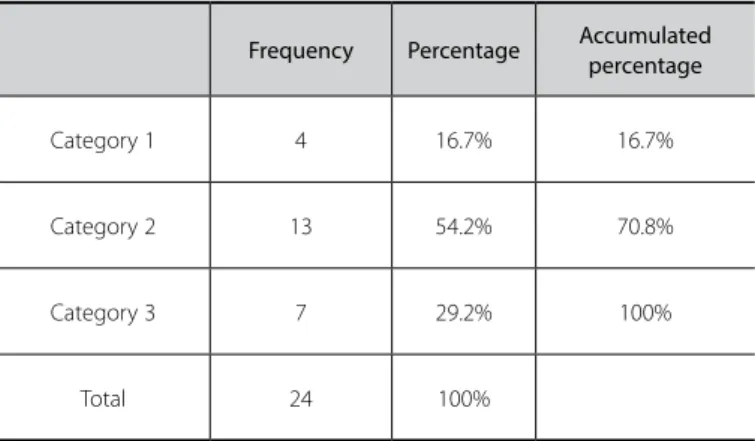
Table 2. Habits of physical activity (three categories).
Frequency Percentage Accumulated percentage
Category 1 4 16.7% 16.7%
Category 2 13 54.2% 70.8%
Category 3 7 29.2% 100%
Total 24 100%
ed through ELISA test to determine serum levels of HSP70, to subsequently accept or reject the hypothesis proposed in the study: "there are significant differences in serum levels of HSP70 between active and sedentary subjects".
METHODS
Sample
Twenty-four healthy university students from Pharmacy Scho-ol of University of Granada, Spain, who vScho-oluntarily gave written informed consent, in which is exposed the will to give 5 mL of blood, and who correctly answered the questionnaire of physical activities habits.
Blood samples were collected by Blood Bank’s team of from Andalusian Health Service (SAS), dependant on the “Junta de Andalucía” of Granada city, in Pharmacy School of University of
Granada. The Blood Bank service was for free, and only had time imposition, which limited the size of the resulting sample.
Of individuals, 50% (12 individuals) were female, while the rest 50% were male.
Minimal age was 18 and maximum 58 years. Mean was of 23.5 years and mode 18 years, with a standard deviation of 10.3 years. Participants filled out a form with personal information (sex, age etc).
Meanwhile, for the present study, information about habits of physical activity, was derived by the application of the Interna-tional Physical Activity Questionnaire (IPAQ), which considers the habits that subjects have experienced in the last week before the questionnaire application8,9. In order to obtain information about serum levels of HSP70, blood samples of about 5 mL were col-lected and these proteins were determined through ELISA test.
Samples treatment
Blood samples were treated in Laboratory of Department of Preventive Medicine and Public Health in Pharmacy School of University of Granada, where specialized technicians performed all the procedures related to the implementation of the ELISA test.
Statistical analysis
For each studied variable was performed a descriptive study of statistic measures of central tendency, such as quartiles, mean, mode, standard deviation, etc. An analytical study was performed, studying the correlation between variables (Spearman) mean were compared (ANOVA) and a multiple linear regression model was developed to determine the effect of each independent variable on the dependent variables. For data analysis used SPSS program, version 15.0.
RESULTS
Habits of daily physical activities
70.8% of individuals (17 subjects) are sedentary, while 29.2% (7 individuals) are active (table 1). The number of active indivi-duals in each gender was evaluated; results prove that men are more active than women and that there are as many active as sedentary individuals both genders; only one studied woman is active, whilst 11 are sedentary.
According to habits of physical activity classified in three levels, 16.7% of individuals (4 subjects) were situated in category 1 (most sedentary), whilst 13 subjects (54.2%) in category 2 and 29.2% of individuals (7 subjects) are classified in category 3 (most active) (table 2).
Physical activity was quantitatively measured through weekly energy expenditure and the mean obtained was 2,196.6 METs per minute in a week, mode was 1,386 METs per minute and standard deviation was 1,372.3 METs*min. The differences between genders are statistically significant (p = 0.017), men practice more physical activity (mean 2,844.3 METs per minute per week), while weekly mean expenditure for women was 1,548.8 METs per minute (table 3).
Table 3. Comparison between energy expenditure between sexes.
Gender
Weekly mean (METs/min)
N
Standard deviation (METs/min/w)
Significance (p)
Women 1.548.8 12 1.071.2 0.017
Men 2.844.3 12 1.369.1
HSP70 concentrations
Concerning to HSP70 concentrations, it is observed that mean is 819.4 ng/ml, with a minimum value of 12.2 ng/ml and a maximum of 6,544.7 ng/ml. Standard deviation is situated in 1,798.1 ng/ml.
166 Rev Bras Med Esporte – Vol. 19, No 3 – May/Jun, 2013
Table 5. Comparison of means HSP70 and physical activity habits.
A. Physics 1, 2 or 3 Men
Average Hsp70 (ng/ml) N
Standard devation (ng/ml)
Significance (p)
Category 1 6.341.5 1 _ *0.000
Category 2 135.6w 5 223.7
Category 3 357.9 6 560.4
Habits of daily physical activity
The results of comparison analysis of the means of the ha-bits of physical activities (classified in actives and sedentaries) and HSP70, show that the differences are not statistically signifi-cant (p = 0.394). Separated by sex, men (p = 0.462) and women (p = 0.683) presented not significant differences between se-dentary and active individuals for the means of HSP70.
When habits of physical activity are compared in three cate-gories, the results show that the differences in Hsp concentra-tion are not statistically significant (p = 0.304). Comparing the same three categories separately per sex, the results show that in women differences between the means of Hsp70 concentra-tions are not statistically significant (p = 0.877); conversely men present statistically significant differences (p < 0.01) (table 5).
The correlation (rho by Spearman) between energy expendi-ture (quantitative physical activity) and HSP70 concentrations was studied and is not statistically significant (p = 0.346, r = –0.201). No correlation was established for genders (women: p = 0.646; r = 0.148. men: p = 0.762; r = 0.098).
Multiple linear regression model
The model was developed with three variables: age, physical activity in three categories and heavy intensity energy expen-diture in, where the global test presented significance signs (p = 0.087). When variables included in the model were analyzed, it was verified that association is significant for age (p = 0.046) and physical activity in three categories (p = 0.019); whilst, sig-nificance inklings were found for energy expenditure in heavy intensity activities (p = 0.064).
DISCUSSION
The present study demonstrates that men significantly perform more physical activity than women, when physical
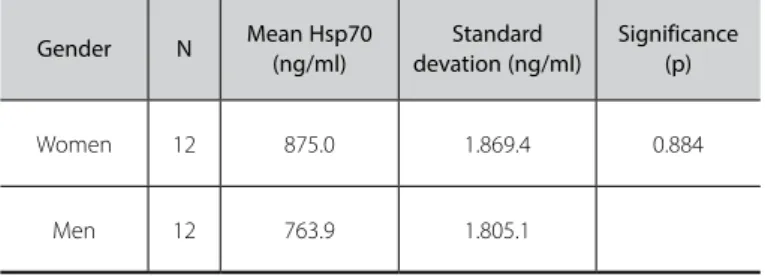
Table 4. Mean Hsp70 and gender comparison.
Gender N Mean Hsp70 (ng/ml)
Standard devation (ng/ml)
Significance (p)
Women 12 875.0 1.869.4 0.884
Men 12 763.9 1.805.1
activity is quantitatively measured (METs/minute per week). Concerning to gender comparison, serum levels of HSP70 did not present statistically significant differences between men and women (p = 0.88), however the mean values for women were higher than the ones for the men, which corroborates what has been described by other authors, although diffe-rences in those studies reached the statistical significance10.
There are significant evidences that HSP70 concentra-tions depend on age, physical activity in three categories and energy expenditure in heavy intensity activities, when these three variables act together.
There were not statistically significant differences for HSP70 concentrations, when comparing sedentary and ac-tive individuals, which contradicts the statement of Banfi6, in which athletes presented higher levels of HSP70 than non-athletes. The statistical significance was not reached at comparing Hsp concentrations between three levels of phy-sical activity habits, with the entire sample. However, when is considered only male population the statistical significance is achieved (p < 0.01). It should be observed that there is a strong tendency that suggests that HSP70 concentrations are reduced when habits of physical activity become more active (when physical activity is measured in three categories and also comparing between active and sedentary subjects). There is also consistency when physical activity is quantita-tively measured; although the correlation is not statistically significant, it is clearly negative, which means that as energy expenditure increases, HSP70 concentrations are reduced.
This research opens an interesting investigation approa-ch in whiapproa-ch regular physical activity practice may act as an instrument for health promotion, since this practice is able to reduce serum levels of HSP70, which are considered sign of disease.
CONCLUSION
This study answers some raised issues, clarifying some points; however, the sample of the study is too small, statis-tically speaking, which may have influenced not to achieve the statistical significance. Thus, we suggest that other re-searchers follow this approach in order to further study this issue, using more representative samples, in an attempt to clarify the question and optimistically end with the uncer-tainty that still exists.
ACKNOWLEDGEMENTS
To César Criado for his valuable work in the laboratory. We also thank the doctors and nurses from the Blood Bank of city of Granada. Finally, to the people who donated blood, without them it would have been impossible to conclude this work.
167
Rev Bras Med Esporte – Vol. 19, No 3 – May/Jun, 2013
REFERENCES
1. Heyward V. Evaluación y prescripción del ejercicio. 1ª. Ed. Barcelona: Editorial Paidotribo, 1996.
2. Chiu M, González C, Aguilera X, Betancur C, Guerrero A, Salinas J, et al. El Vigía, Boletín de Vigilancia en Salud Pública de Chile (Ministerio de Salud Chile) 2003;18:15-7.
3. Wright BH, Corton JM, Seguid El-Nahas, Word RFM, Pockley AG. Elevated levels of circulating heat shock protein 70 (Hsp70) in peripheral and renal vascular disease. Heart Vessels 2000;15:18-22. 4. Ramírez JR, Ortiz S, Valenzuela M, Durán V, Cabello G, Lobato S, et al. Expression and localization
of Hsp70 and Hsp27 in human breast tumors. Rev Esp Patol 2001;34:9-17.
5. Rakonczay z Jr, Takács T, Boros I, Lonovics J. Heat Shock proteins and pancreas. J Cell Physiol 2003;195:388-91.
6. Banfi G, Dolci A, Verna R, Corsi MM. Exercise raises serum heat-shock protein 70 (Hsp70) levels. Clin Chem Lab Med 2004;42:1445-6.
7. Walsh RC, Koukoulas I, Garnham A, Moseley PL, Hargreaves M, Febbraio MA. Exercise increases serum Hsp72 in humans. Cell Stress & Chaperones 2001;6:386-93.
8. IPAQ. USA Spanish version translated 3/2003. SHORT LAST 7 DAYS SELF-ADMINISTERED version of the IPAQ. Revised August 2002 [recuperado em 10 de novembro de 2009]. Disponível: http:// www.ipaq.ki.se/.
9. IPAQ (International Physical Activity Questionnaire) 2005. Guidelines for Data Processing and Analysis of the International Physical Activity Questionnaire (IPAQ) [recuperado em 10 de novembro de 2009]. Disponible en: http://www.ipaq.ki.se/scoring.pdf.