International MSc in Business Administration - Major in Marketing
In-store Buying Behaviour
Memories of Forgotten Needs
Amrita Dilipkumar Ranchhod Kanabar
ADVISORS: ANA ISABEL DE ALMEIDA COSTA
Dissertation submitted in partial fulfilment of the requirements for the degree of International MSc in Business Administration at Católica-Lisbon, School of Business & Economics
AKNOWLEGMENTS
“A journey of a thousand miles begins with a single step” – Confucius
I would like to express my gratitude to my academic supervisor, Doutora Ana Isabel Costa, whose expertise, patience and support in all phases of this master’s dissertation added considerable value to its final quality. Without her motivation and encouragement I would not have considered a graduate career in research.
I would also like to show my appreciation to all my friends that are present in my life, and in particular I must acknowledge Filipa Marques for the help and energy transmitted and, Mitul Kanji, whose support vastly contributed during my thesis.
Above all, I would like to thank to the most important people in my life – my Family, specially my Mum and Dad for the patience and help given during my academic path. Without them, I would not be where I stand today. Therefore, I dedicate this dissertation to them.
In conclusion, I recognize that this research would not have been possible without the financial support of Fundação para a Ciência e a Tecnologia, through the Research Assistant Grant UNICEE-103929-BI5 and the Research Project FCT-103929/2008, and of a Portuguese retail company that wishes to remain anonymous.
ABSTRACT
In-store Buying Behaviour Memories of Forgotten Needs
Amrita Kanabar
This study aims to better illustrate in-store buying behaviour, in terms of how different stimuli activate parts of shoppers’ brains to remember items that were not part of their shopping plans. The aim is to shed some light on shopper’s attitudes and reactions towards national brands or private labels, the impact of loyalty cards on cardholders’ shopping decisions, how shoppers with company behave differently than solo shoppers, and on the role of consumers’ hedonic and utilitarian motivations in determining shopping behaviour.
In order to conduct the analysis proposed on this dissertation, it was used a set of primary data from a study that covered all stages of the consumer decision-making process. Research showed that while shoppers tend to plan their trips, the difference is marginal. Study of unplanned shopping revealed that choices tend to favour national brands. Loyalty cardholders are also revealed to favour national brands. Among those shopping with company, the study found that couples plan their trips more than shoppers who go with their children, extended family or friends. Finally, consumers with hedonic motivations were found to make more in-store purchases than shoppers with utilitarian motivations.
The results provide important insights for retailers and manufacturers, allowing them to price their products optimally, drive more effective promotions, segment their customers more precisely, and manage their brands and positioning better. A better understanding of shopper’s motivations can help retailers provide better shopping experiences for customers. Ultimately, these actions can result in increased footfall, market share and profits.
SUMÁRIO
In-store Buying Behaviour Memories of Forgotten Needs
Amrita Kanabar
Este estudo procura ilustrar melhor o comportamento dos consumidores dentro dos espaços de retalho, em termos da forma como diferentes estímulos afectam partes do cérebro dos compradores, lembrando-os de produtos que não estavam na lista de compras original. O objectivo é clarificar as atitudes e reações dos compradores face a produtos de marca de referência ou de marca branca, o impacto dos cartões de desconto nas decisões de compra, a forma como compradores que vêm acompanhados agem de forma diferente dos que vêm sozinhos, e no papel das motivações utilitárias ou hedónicas em determinar o comportamento dos clientes. No intuito de conseguir responder às questões colocadas nesta dissertação, foram utilizados um conjunto de dados primários recolhido de um estudo que abrangeu todas as fases do processo de tomada de decisão do consumidor. A pesquisa mostrou-nos que embora os compradores tendam a planear as suas visitas e compras, a diferença é marginal. Este estudo de compras não planeadas revelou que as escolhas tendem a favorecer os produtos de marca de referência. Clientes com cartão de desconto também preferem este tipo de produtos. Entre os clientes que visitam os espaços acompanhados, o estudo revelou que os casais tendem a planear mais as suas compras do que clientes que visitam acompanhados dos seus filhos, amigos ou outros familiares. Por fim, clientes com motivações hedónicas tendem a fazer mais compras não planeadas do que clientes com motivações utilitárias.
O estudo sugere também formas de utilizar esta informação da melhor forma. Os resultados revelam conclusões interessantes para retalhistas e produtores, permitindo-lhes optimizar os seus preços, tornar as suas promoções mais eficazes, segmentar os clientes com maior precisão, e gerir melhor as suas marcas e posicionamento. Ao compreenderem melhor as motivações dos seus clientes, os retalhistas podem proporcionar experiências melhores. Estas ações podem resultar em mais vistas aos espaços de retalho, maiores quotas de mercado e lucros superiores.
TABLE OF CONTENTS
CHAPTER 1: INTRODUCTION ... 6
1.1. Background and problem statement ... 6
1.2 Aims and scope ... 9
1.3. Methodology ... 10
1.4. Relevance and implications ... 10
1.5. Dissertation outline ... 12
CHAPTER 2: LITERATURE REVIEW AND CONCEPTUAL FRAMEWORK ... 13
2.1. Consumer decision-making ... 13
2.2. In-store buying behaviour ... 14
2.3. Determinants of in-store buying behaviour ... 15
2.3.1 Product category characteristics ... 15
2.3.2 Retail marketing activities ... 16
2.3.3. Customer Characteristics ... 18
2.3.4 Shopping trip characteristics ... 20
2.4. Main Conclusions ... 23
2.5. Research Hypotheses ... 26
CHAPTER 3: METHODOLOGY ... 29
3.1 Research purpose and approach ... 29
3.2 Research strategy and method ... 29
3.3 Study Design ... 29
3.3.1 Population and Sample ... 29
3.3.2 Data collection ... 31
3.4 Data analysis ... 34
3.4.1 Assessment of purchase intentions ... 34
3.4.2 Assessment of shopping trip motivations and plans ... 34
3.4.3 Assessment of planned and in-store purchase decisions ... 34
3.4.4 Assessment of National Brands vs. Private Labels ... 34
3.4.5 Loyalty Cards Usage ... 35
3.4.6 Accompanied vs. Alone Shopping Trip ... 35
3.4.7 Utilitarian and Hedonic Motivations ... 35
CHAPTER 4: RESULTS AND DISCUSSION ... 37
4.1. In-store buying behaviour ... 37
4.2. In-store buying behaviour at brand level ... 38
4.3. Effect of Loyalty Card ownership ... 39
4.4. Accompanied Shopping vs. Alone Shopping Trip ... 40
4.5. Utilitarian vs. Hedonic Shopping Motivations ... 42
4.6. Conclusions ... 43
CHAPTER 5: CONCLUSIONS ... 44
5.1. Conclusions and implications ... 44
5.3. Directions for future research ... 47
REFERENCES ... 49
Annex 1 - Practical details of the study (n=156) ... 54
Annex 2 - Supermarket sections selected ... 54
Annex 3 - Supermarket product categories list ... 55
Annex 4 - Recruitment of participants ... 56
Annex 5 - Interview at store entrance ... 56
Annex 6 - Interview at store exit ... 58
Annex 7 - Self-administred questionnaire ... 60
LITS OF FIGURES Figure 3.1 - The ICA (Ida às Compras Acompanhada) data collection technique ... 31
LITS OF TABLES Table 2.1 - Factors influencing in-store buying behaviour ... 24
Table 3.1 - Socio-demographic of the study sample (n=156) ... 30
Table 3.2 - Measures of utilitarian and hedonic motivations ... 36
Table 4.1 - Mean differences between the percentage of in-store purchases of national brands and private labels (n=156) ... 38
Table 4.2 - Mean differences in the share of in-store purchases of national brands and private labels in Euros (n=156) ... 39
Table 4.3 - Mean differences in the share of in-store purchases for national brands and private labels across consumers who have a loyalty card (n=137) ... 40
Table 4.4 - Mean differences in the share of in-store purchases across accompanied vs. solo shoppers (n=156) ... 40
Table 4.5 - Mean differences in the share of in-store purchases between participants shopping with spouses and the remaining participants shopping accompanied (n=78) ... 41
Table 4.6 – Mean differences in the share of in-store purchases (%) across consumers with utilitarian and hedonic motivations (n=156) ... 42
Table 4.7 - Mean differences in the share of in-store purchases (€) across consumers with utilitarian and hedonic motivations (n=156) ... 42
CHAPTER 1: INTRODUCTION
1.1. Background and problem statement
Grocery shopping is a universal aspect that characterizes modern society. When entering a store, consumers are presented with countless sensory stimuli that help them make decisions among the variety of products available. More often than not, the set of incentives available inside the store can make consumers remember, or even reconsider, what they came to buy. Consequently, many purchase decisions may result from in-store activation of consumption needs or desires that did not exist prior to the shopping trip. Indeed, there seems to be a real opportunity to influences consumer choices at the point of purchase. According to POPAI (POPAI, 1995), more than two-thirds of all purchase decisions involve some level of in-store decision-making, consisting in what is typically called unplanned buying behaviour (Buckling & Lattin, 1991).
Inman, Ferraro & Winer (2004) proposed a model of unplanned grocery buying that included several determinants and was consisted of four procedural stages: The first stage involved consumers entering the store and be exposed to several categories and displays which were influenced by some “contextual factors”, mainly trip type, number of aisles shopped, trip type and purchase involvement. Consumers then, generated motivational process for the in-store stimuli encountered, which are moderated by factors such as deal proneness, age, need for cognition and time pressure. When the stimuli encountered affected the decision of the consumer, the need to buy a product of a certain category was acquiesced, whether or not the consumer had planned initially to buy the product. The last stage was composed of the outcome of the decision making process, that is, the categories purchased – both those that were planned prior to entering the store and the ones occurred in-store. This comprehensive framework simultaneously incorporates the effects of product category, individual shopper and shopping trip features. An survey study employing this framework to assess in-store decision making in US grocery stores showed how variables like in-store displays, category hedonism, shopping habits, familiarity with the store, length and path of the shopping trip, gender, household size and social influences, can influence the decisions made inside the store. Similarly, Bell, Corsten & Knox (2011) have recently investigated how three groups of factors – consumer demographics and shopping habits, store environment features and shopping trip goals – may determine the number of unplanned categories present in the grocery shopping basket. The results of their consumer panel study show, however, that
unplanned buying is only partially explained by consumer demographics and shopping habits. The specific characteristics of each shopping trip, which encompass prior shopping experiences, in-store cues and shopping goals play, according to these authors, at least an equally influential role in explaining in-store decision making.
In light of the recent economic crisis, consumers have been forced to make sacrifices,
carefully adapting to the circumstances by being more cost conscious
(Groceryheadquarters.com, 2011). Retailers are thus forced to adapt to the increased price sensitivity and find new solutions to keep consumers interested in visiting the stores. One of the strategies is to invest further in the sales of private labels. Private labels are developed by various manufacturers and sold under the retailer’s brand name, and are opposed to national brands that are sold under the manufacturer’s own brand name (Raju et al., 1995). Private labels are often referred as private labels; however they are fully managed by a specific chain of stores. Data revealed by a recent study conducted by AC Nielsen (2010) indicates that the sales of private labels in Portugal are growing at about 6% annually, whereas national brands fall by 2.6%. A study conducted by APED (2009) showed that Portuguese consumers have already started to change their shopping habits, by buying smaller sized packaged products, seeking for lower prices and discounts, and buying private labels more often.
In spite of the growing relevance of private labels in the retail industry, no studies have yet focused on the relationship between these brands and in-store decision-making. For instance, by knowing whether or not private labels are more or less preferred by consumers who make mostly in-store purchase decisions, retailers may be able to concentrate on developing innovative products and, better position products in shelves and on augmented attributes like “health promotion” or “user-friendliness”, in order to increase quality perception. According to some observers, private labels are successful not only because of their lower prices, but also because they increasingly offer good quality products (Karolefski, 1990). As retailers gain more experience in managing their own brands and improve them, national brands began to lose much of their appeal to consumers (Lenchek, 1990). As consumers’ trust in the quality of private labels grows, they may become more likely to make more purchase decisions inside the store.
Loyalty card programs are an increasingly important tool for customer relationship management and promotional activities. These programs often offer important product discounts and other type of rewards to card owners, with the aim of increasing store patronage, raise the amount of money currently spent on the brand and attract new customers (Bellizzi & Bristol, 2004).
All the discounts are accumulated in the card and the consumer is entitled to use the money stored in future shopping trips. Card ownership is typically free of charge, with consumers having to provide some limited personal information in exchange. Not much is known about whether card holders make more in-store buying decisions than the non-card holders, who are not entitled to receive a discount and have to pay the regular price (Weinstein, 1999). By knowing whether the cardholders or non-card holders conduct their decisions inside the store, it will be possible to better understand if the retailers are using the loyalty cards as an effective marketing tool or merely as an electronic discount tool.
A recent study conducted by POPAI (2011) indicates that shopping trips and their outcomes may depend heavily on the size and composition of the shopping party. Namely, it shows that solo shoppers are more likely to spend more than those shopping with friends or family. In contrast, Inman, Winer & Ferraro (2009) did not find a significant relationship between spending and shopping party size. Solo and accompanied shoppers may share the same purchase goals at store entrance, but once inside the store they may conduct their shopping trip differently as a result of social influences. According to POPAI (2012), it seems that accompanied shoppers tend to stick more to what is really necessary than solo one, even in the presence of family or peer pressure, particularly if they shop with the aid of a written shopping list. However, according to Kahn & McAlister (1997), accompanied shoppers tend to shop longer and cover more store space than solo shoppers, which may in fact increase their spending These contradictions highlight the importance of studying further the effects of shopping trip party size on in-store decision-making. Asides size, the composition of the shopping trip party may also play an important role. It is known that reference groups can influence how information is processed by an individual and, consequently, their purchase decisions (Netemeyer & Teel, 1989). According to Bearden & Etzel (1982), the products and brands selected by each individual may indeed be influenced by the opinions of their reference groups. Nevertheless, the potential effects of different compositions of the shopping trip party on in-store decisions remains a rather understudied topic.
Consumers may have different goals and motivations when conducting their shopping trips. According to Cardoso & Pinto (2010), purchase motivations can be broadly divided into two groups: utilitarian and hedonic.. Consumers with utilitarian motivations employ a more rational approach to their shopping activities and derive little fun or enjoyment from a particular shopping trip (Babin et al., 1994). In contrast, hedonic shopping involves impulsive and enthusiastic motivations felt during the shopping trip, and the creation of close relationships with products and particularly brands (Hirschman & Holbrock, 1982). Prior
studies have looked into how unplanned purchases can be motivated or inhibited by the utilitarian and hedonic character of products or product category. For instance, Inman, Ferraro & Winer (2009) concluded that products from essentially hedonic categories were more susceptible to stimulate unplanned buying than those from utilitarian ones. On the other hand, Wakefield & Inman (2003) examined if the consumers were equally price sensitive when buying with hedonic vs. utilitarian motivations, and whether this was influenced by the social context of the purchase. However, little is known about how the overall hedonic or utilitarian character of a particular shopping trip, rather than of the individual products purchased, influences in-store decision making.
1.2 Aims and scope
- The aim of this dissertation is to study how retailers’ marketing and branding activities and shopping trip characteristics influence the occurrence of in-store buying decisions during grocery shopping. In view of this, the following research questions are put forward: Does the preference for private label brands affect the level of consumers’ in-store decision making?
- Does ownership of a store loyalty card affect consumers’ level of unplanned purchases?
- Do accompanied shoppers make more or less in-store buying decisions than those carrying out their grocery shopping trips alone? And does it matter who exactly is brought along in the shopping trip (e.g. spouse, children, friends, colleagues)?
- How do the overall grocery shopping motivations (utilitarian vs. hedonic) affect the incidence of unplanned purchases?
The research questions proposed will be answered based on primary data collected in a field study, carried out in three large grocery stores of a leading food retailer in Portugal. According to Farhangmehr et al. (2000), hypermarkets and supermarkets are the preferred store format for grocery shopping in Portugal, one of the reasons being that their assortment often includes product categories other than food, personal hygiene and household cleaning products, such as home decoration and home improvement products, books and stationery, sports and outdoors equipment and clothing, among others.
1.3. Methodology
The performance of the field study involved the development of a new method of data collection: the Ida às Compras Acompanhada (ICA), or Accompanied Shopping Trip. This technique aims to gather data from all the stages of the grocery shopping trip: the pre-shopping phase - which occurs prior to store entrance and where purchase goals, intentions and plans are formulated -, the actual shopping trip, and the post-shopping phase, in which shoppers evaluate the results of their shopping upon leaving the store. This approach combines the advantages of the methods previously employed to study shopping behaviour: Shopping with Consumers (Otnes, McGrath & Lowrey, 1995), the POPAI surveys (POPAI, 2009-2010) and the analysis of shopping lists (Spiggle, 1987). One-hundred and fifty-six supermarket shoppers were randomly selected upon entering the store and recruited for an ICA, which included two individual interviews (pre- and post-shopping), the observation of shopping behaviour and answering a self-administered, written questionnaire. The data collected in this way, along with the contents of the corresponding payment receipts was then submitted to statistical analysis.
1.4. Relevance and implications
Retailers have been paying increasing attention to numerous factors that influence purchase decision making inside their stores - such as store image, organization of the passageway, product placement and packaging -, in order to optimize their promotional strategies accordingly (POPAI Europe, 1998). The study of in-store decisions that might lead to planned or unplanned buying has thus important implications for managers and their strategic planning, as well as for academics interested in learning more about consumers’ buying decisions and the role play by situational cues in decision-making
Products acquired through supermarket shopping bring value to the consumer by satisfying needs and providing functional benefits and/or psychological satisfaction (Martin, 1998). Consequently, both manufacturers and retailers can more easily optimize their marketing activities and achieve their business goals, if they can learn more about the sources of value shoppers in different segments gain from in-store activities. This knowledge can, for instance, help marketers design new methods to approach shoppers that are more likely to lead to in-store decisions - for instance, the bundling of offers may yield better results for hedonic than for utilitarian oriented consumers. Moreover, given that traditional marketing efforts are becoming less effective (Gretzel, Yuan & Fesenmaier, 2000), marketers should try to increase promotional efforts that helps consumers to make decisions inside the store, like store
coupons, attractive displays, active bundling and multi-unit packaging. Finally, learning about the relative importance of situational and individual factors will help both retailers and manufacturers to better allocate their promotional budgets.
Retailers can benefit with consumers that purchase more private labels since private labels have reduced advertising costs and the marketing of the products is done at the store it-self. Additionally, knowing in which categories private labels are being more consumed, retailers can improve their products and perhaps increase the number of private labels in other categories that are less purchased under this type of brand.
Regarding loyalty cards, retailers can design special promotions to the products that give discounts with the presence of the loyalty card. For instance, consumers that hold a loyalty card and make more decisions inside the store will notice the discounts offered and purchase more products that were initially planned. Consumers will then encourage others to take advantage of the loyalty card and explain the advantages that bring to their shopping experience, which will affect directly the retailers by retaining existing customers, acquire new customers, generate more frequent visits and increase product awareness.
Some consumer prefers to shop alone while other prefer the company of family and friends. Regardless their differences, both type of consumers are different. Even thought the stimuli encountered in-store is equal for solo and accompanied shoppers, both have high expectations before entering the store and retailers should develop customize marketing since both type of consumers when interacting with in-store marketing realize a larger mean in spending than those who planned prior to entering the store.
For the consumers who are more hedonically oriented, retailers should stress the emotional side of the shopping experience by developing attractive displays for them. For the highly utilitarian oriented consumers, good price/quality balance, promotions based on price and functionality of the product, emphasize innovations, efficient store organization and comparisons of price and products might be the variables to take more into account.
Taking all of this into account, this dissertation should give a valid contribution to answer a few of the questions retailers might have about how consumers make their choices, in particular when, how and why they engage in in-store buying decisions. The results yielded by it should thus be relevant for the design and planning of store layout, assortment and promotional activities, particularly in the case of Portuguese retailers. They should help retailers become more competitive, achieve higher profits and ultimately increased the satisfaction of its customers.
1.5. Dissertation outline
Chapter 2 provides the outcome of the literature review related to the consumer’s buying decisions inside the store. The hypotheses will be derived from the literature and constitute a framework that will guide the implementation of an empirical study. Chapter 3 explains the methodology adopted followed by the Chapter 4 that introduces to the discussions of the results obtained on performance of the data analysis. Finally, Chapter 5 reviews the main conclusions and the relevance and implications of the study conducted. The limitations of the investigation as well as possibilities for further research are also considered on this part.
CHAPTER 2: LITERATURE REVIEW AND CONCEPTUAL FRAMEWORK This chapter starts by presenting a general description of the various types of consumer decision-making processes. A detailed literature review on in-store buying decision and which variables, so far, have accounted for the occurrence of unplanned purchases is next presented. This review is structured according to the conceptual framework used by Inman, Ferraro & Winer (2009) to group the variables that can potential affect in-store buying, which divides them into product, customer and shopping trip characteristics. Based on its results, testable research hypotheses are derived at the end of the chapter.
2.1. Consumer decision-making
Babin & Harris (2009) define three main types of perspectives that can be employed in the study of consumer decision-making processes: the rational, behavioural influence and experiential decision making perspective.
The rational perspective proposes that when consumers decide what to buy, they try to incorporate as much information as possible with what they already know about the product, compare the services, features and after weight the positives and negatives of the alternatives to arrive at a satisfactory decision. This process is often associated to the evaluation of the functional or utilitarian value of the purchases. Utilitarian value is derived from the purchase of products or information in a fast and efficient manner, and reflects a less emotional evaluation of the shopping outcome (Babin et al., 1994; Hirschman & Holbrook, 1982). The behavioural influence perspective, on the other hand, suggest that consumers often choose products based mainly on situational cues such as promotional stimuli, store layout features or point of purchase advertising (Babin & Harris, 2009). Finally, the experimental perspective suggests that consumer choose products based on the intangible emotional value or appeal they hold to them. In this case, the utility of a product derives from the experience consumers enjoy while buying or using it – the hedonic value - rather than from its functional or utilitarian aspects. As they are here described, all three types of consumer decision making process proposed by Babin & Harris (2009) bear great relevance for the study of in-store decision making in the context of grocery shopping trips.
Solomon (2010), on the other hand, identifies three types of consumer’s decisions: The extended problem solving corresponds to a traditional decision-making perspective, where more expensive or innovative products are bought and purchases are more infrequent and
entail higher levels of risk and involvement. In this case, consumers take more time and effort searching for and selecting amongst different product offers. In this case, product information can come from internal sources (e.g. previous experiences) and/or external sources (e.g. internet). Each alternative offer is carefully evaluated and the appropriate choices are be made to reach the ultimate satisfaction of the consumer. The limited problem solving approach, however, is used when consumers use simple decision rules to choose among alternatives. There is less time spent deciding then with the extended problem solving, since there is low amount of risk associated with the purchase as well as a low product involvement. Habitual decision-making (or routine decision making) occurs when the choices are made with little to no conscious effort, for low cost products, for frequent purchases and lower involvement. In this case, consumers hardly spend any time searching for and deciding about alternative product offers, they already know what brand and products are more likely to satisfy their needs. This approach to decision making categorizes grocery shopping as a type of habitual decision making process, since consumers are assumed to make in-store decisions mainly based on past purchase behaviour and fairly automated routines. As they are here described, all three types of consumer decision making process proposed by Solomon (2010) do not offer much in terms of providing a valuable account of the process of in-store decision making, as it is carried out in complex environments such as grocery stores.
2.2. In-store buying behaviour
In-store buying decisions can be defined as the set of purchase decisions made exclusively inside the store, that is, which were in no way planned prior to store visit. The result of such in-store buying decisions is also known in literature as unplanned purchases, or unplanned buying behaviour (Park, Iyer & Smith, 1989). Conversely, planned purchases are those which were deliberately planned by shoppers for a particular shopping trip, prior to entering the store (Bucklin & Lattin, 1991).
It is assumed that consumers make in-store decisions mainly as a response to stimuli present in the store environment during the shopping trip, for instance, point of purchase promotional activities, store layout, assortment characteristics, price, among others. These stimuli prompt consumers to consider or remember that there is a need for a certain product category which was not considered at the time when the shopping plans were made (Inman, Winer & Ferraro, 2009). The study of consumer behaviour inside the retail environment aims mainly at the segmentation of customers based on their shopping patterns. (Applebaum, 1951). This can help retailers to better understand consumer responses to the various incentives presented
inside the store, and thus find better solutions to various marketing issues posed by design of the retail space, product placement and positioning. Point-of-purchase marketing strategy and tactics are thus crucially dependent on a good understanding of what factors affect in-store decision-making. It In view of this, Kaltcheva & Weitz (2006) suggested that the type of shopping trip can also influence the decisions made inside the store, along the actual shopping paths undertaken by consumers inside the store (Chandon et al. 2002).
2.3. Determinants of in-store buying behaviour 2.3.1 Product category characteristics
Inman, Ferraro & Winer (2009) have recently carried out an insightful study on in-store decision-making. In this study, interviews to 2300 grocery shoppers in 14 U.S. cities were conducted, resulting in a very large cross-sectional purchase data set. The authors argue that consumers make decisions inside the store as a response to the incentives they encounter in the shopping environment. However, they also argue that consumer responses to in-store stimuli should be moderated by a number of category-level and trip-level factors. Their results show that a lower purchase frequency, a higher display advertising intensity and the more pronounced hedonic character of categories all promote unplanned buying.
While shopping, consumers are faced with countless choices between hedonic and utilitarian products. The difference between these two choices is that the first is more driven by emotional desires and the second on cognitive reflections. According to Khan & Dhar (2004) hedonic goods are “multisensory and provide for experimental consumption, fun, pleasure and excitement”. On the other hand, utilitarian goods are “primarily instrumental and their purchases are motivated by functional product aspects”. It is relevant to state that both of hedonic and utilitarian consumption depend on the perception of each consumer. As stated on the study carried by Khan & Dhar (2004), the choices of hedonic vs. utilitarian products are not in between positive and negative choices. Both selections differ on the perception of the consumers.
Shopping dilemmas also arise when consumers have to choose between vices and virtue products (Wertenbroch, 1998). Hui, Bradlow & Fader (2009), for instance, suggest that the purchase of virtue items (e.g. fruits, vegetables) can increase the consumer willingness to purchase vice items (cakes, ice-cream), motivated by impulsive behaviour, and the contrary can also happen, when more vice items are bought, consumers increase the negative self-attribution, and might buy more virtue products, motivated by rational behaviour. As suggested by Ainslie (1975), when consumption is still far away, consumer might have
planned to buy something that will benefit them on the long run, but when the time arrives to make a decision, consumers end up making decisions on the immediate appeal without thinking how it will affect later. This type of contradiction has major implications on the decision-making theory inside the store environment (Read & Loewenstein,1999).
Dhar & Wertenbroch (2004) developed a conceptual integration between hedonic/utilitarian and vice/virtue products and made a research addressing the two origins that, till the date were from different theoretical backgrounds. On their study, first it was described the differences between these two propositions and then demonstrated that they are not necessarily inconsistent. It was described that the hedonic/utilitarian paradigm tends to focus on obstacles faced by the consumers on choosing hedonic products whereas the vice/virtue paradigm has concentrated on the impulsivity of vice categories, which will be based on a decision made automatically for immediate consumption. Basically, the research on the hedonic/utilitarian distinction demonstrates the outcome of the effective vs. functional priorities and how consumers change their decisions between these attributes. In contrast the vice/virtue distinction has emphasized the self-control on consumers that may maximize impulsive shopping. As stated on this study, hedonic products deliver immediate benefits, similar to vice products that not also provide immediate benefits but also delay negative consequences. Similarly, utilitarian good deliver benefits after the consumption of the products, which is parallel to the acquisition of virtue products that also bring positive consequences after the consumption. Regarding in-store decision-making, some studies uncovered that “vice” products (,beer, high-fat foods, chocolate) are more likely to be purchased on impulse than “virtue” products. (Wertenbroch, 1998). Moreover, Kurt & Stilley (2011) conducted a shopping survey and two field experiments, revealing that a virtuous (vs. a vice) shopping basket can license subsequent impulsive spending. This implies that when a customer has already assembled a more virtuous grocery-shopping basket, the likelihood of conducting more in-store buying afterwards increases.
2.3.2 Retail marketing activities
• Private vs. National Brands
The products displayed in grocery stores have different prices and it is the consumer’s choice to find the best alternatives to fit their preferences on saving money. Some alternatives presented by Garretson, Fisher & Burton (2002) include coupons offered by manufacturers, special promotions on particular product categories, searching for shelf discounts, or purchase private label brands. When studying the products manufactured for the food market, it is
interesting to analyse the parallel distribution of national brands, distributed under a brand name owned by the producer or distributor, and that of private labels, owned and controlled exclusively by retailers (Sethuraman & Cole, 1999). In order to control the supply channel in the presence of both national and private brands, manufacturers and retailers have both a complex and inter-dependent relationship, since they both compete to maximize the share on the products sold in the supermarket. Manufacturers increase the market shares of their brands mainly by ensuring customer loyalty. For retailers, it is important to keep their customers fully satisfied, as they will switch stores if their favourite brands are not available during their shopping trip.
Retailers are gaining significant power in order to seize consumers. The main reason for this is the growth of private labels in Europe, as the power of retailers is increasing and becoming consolidated, and the quality of the products offered is largely improving. ACNielsen (2005), conducted a study with 21,100 respondents in 38 countries with the aim of better understanding their opinions about retail private labels as an alternative to national brands in terms of their quality, value for money, packaging and positioning. About 78% of Europeans agreed that private labels were indeed a good alternative. Strikingly, 89% of the Portuguese consumers interviewed perceived private labels as a good alternative, mainly because of the superior quality/price ratio of private labels, as well as due to the strong presence of hard discount stores. The same study also uncovered that the more consumers are exposed to private labels, the better they perceive them. In contrast, in markets where private labels are less prevalent, fewer consumers purchase them, and more assume that these are of lower quality and performance.
Private labels appeared in Portugal in the early 90’s. At this stage, they were associated with a lower quality to justify the lower price. Now, after 20 years, private labels have finally won the confidence of Portuguese consumers, to the point where the retailers started to put their names on the products as a brand. In comparative studies, the private labelled products are often the right choice for its quality and price, particularly in the case of a food basket, as they can provide 30% of savings for consumers when compared to equivalent products of national brands (Revista DECO, 2011).
• Loyalty Cards
During the 1990’s, new methods for collecting consumer’s data were introduced which allow retailers to store consumer’s purchase information and purchase history through the use of loyalty, reward, points, advantage or club cards (Glossary L., 2011). A card-based program
allows consumers to present their card during the checkout, to become entitled to receive a discount on the current purchase, or an accumulation of points that can be used in future purchases (Bellizzi & Bristol, 2004). The main objective of introducing these card-based programs was to increase loyalty, by trying to promote re-purchases (Smith et al., 2003). Some authors have questioned the usefulness of the loyalty programs and stated that the card-based programs can also differentiate from the competitors (Dowling & Uncles, 1997). Others authors like Ziliani & Bellini (2004) stated discount cards are more important to provide useful data on consumers which can later be used for designing different kind of marketing strategies. Bellizzi & Bristol (2004) suggested that discount cards do not make any difference in terms of greater store loyalty, but may deliver higher sales.
2.3.3. Customer Characteristics
In-store buying behaviour can be heavily moderated by consumer demographics and shopping habits (Bell, Corsten & Knox, 2011). Kollat & Willet (1967) originally studied the degree to which customer characteristics can lead influence unplanned purchasing by conducting interviews with 596 shoppers before and after they entered grocery stores in the US. In this way, they obtained a cross-sectional data set of grocery store purchases in 64 product categories. Their findings suggest that 50% of all grocery shopping is unplanned, and that this is mainly due to shopper recalling forgotten needs inside the store, when exposed to certain environmental cues. They also ascertained that household size, gender, number of shopping trips per week, number of purchases, use of a shopping list (only when more than 15 products are purchased), shopping trip goal and the number of years that the shopper has been married, were the main factors leading to in-store buying behaviour. Later on, Inman, Ferraro & Winner (2009) showed that women made more unplanned purchases than men, and that the greater the size of the household, the greater the occurrence of unplanned purchases.
Bell, Corsten & Knox (2011), on the other hand, studied consumer’s goals, objectives and out-store marketing activities, and how these influenced the decisions made inside a grocery store. They concluded that the higher the level of abstractness of consumer’s shopping goals, the higher the occurrence of in-store buying behaviour. More recently, Knox, Corsten & Bell (2011) studied the effect of culture drivers on consumers tendency to carry unplanned shopping, by using longitudinal shopping data from the United States, China, Western Europe and Brazil. They found that, irrespectively of country-of-origin, shoppers who had more abstract goals prior to entering the store conducted more unplanned purchases, which in contrast revealed that the concreteness of the shopping trip goal could be influenced by
immediate needs. They also uncovered that those shoppers that are more concerned about budget carry more in-store decisions than the ones concerned about time.
Park, Iyer & Smith (1989) conducted a large experiment in an urban university involving 68 subjects (53 females and 15 males) responsible for grocery shopping for their household. Their study investigated how subjects’ store knowledge and time available for shopping affected their purchase intentions, mainly the failure to make intended purchases, unplanned buying and brand or product class switching. This study drew some interesting conclusions, namely that in-store information processing occurred mainly when subjects had lower store knowledge and felt more time pressure, and that this, in turn, increased the level of in-store buying behaviour. Furthermore, these factors also increased brand switching, due to increased difficulty felt when searching for the products needed, and thus increased the rate of failure to make intended purchases. In contrast, subjects with high store knowledge and less time pressure were more involved in making comparisons between brands and products and hence switched brands less often. In general, however, subjects who shopped under the high-store knowledge condition switched brands/products more often than those who shopped under the low-store knowledge condition, irrespective of the level of time pressure.
Most studies of in-store decision-making and its determinants reviewed so far have focused on how stimuli encountered inside the store had an affect on consumers and categories. Bell, Corsten & Knox (2011), however, focused on examining consumer’s goals, objectives and out-store marketing activities and how these influenced the decisions made inside a grocery store. They concluded that the higher the level of abstractness of consumer’s shopping goals, the higher the occurrence of in-store buying behaviour. Beatty & Ferrel (1989) discovered that when consumers are conduct a pleasant shopping trip generate a positive feeling about the shopping environment, influencing to conduct more unplanned purchases.
Finally, Inman, Ferraro & Winer (2004) showed that deal prone consumers are more predisposed to in-store decision-making. The number of shopping trips conducted per week also has some impact on in-store decision. Moreover, shoppers who carry a list decide less inside the store, since they were are more certain of which categories to buy. In addition to this, larger households, households with greater incomes and shoppers who considered themselves as impulsive were more prone to carry in-store decision-making. Hence, customer activities such as list use, more frequent trips, limiting the aisles visited, and paying by cash reduce in-store buying.
2.3.4 Shopping trip characteristics
Inman, Ferraro & Winer (2004) showed that situational factors, (e.g. shopping pattern, the presence and location of in-store displays or shopping party size) constituted the most significant driver of in-store decision-making. For instance, customer activities such as, shopping. However, it seems that not all reasons for the occurrence of in-store buying behaviour results from the fact that consumers are persuaded by in-store stimuli and deviated from their original shopping plans. Some consumers often make in-store decisions consciously and believe that it might be beneficial. For example, Stilley, Inman & Wakefield (2010) suggests that consumers may leave room for impromptu decisions to be made inside the store, since they may not want to invest further time and cognitive effort to plan every purchase of their grocery-shopping trip. Therefore, it is proposed that consumers have in-store slack, meaning that when consumers predict the budget allocated for the shopping trip, they also include the possibility of making decisions inside the store.
It is important to analyse the numerous intangible and emotional behaviour on the acquisition of products before we can understand the total consumption and behavioural activity inside the grocery store. Babin, Darden & Griffin (1994) recognized that a shopping trip can either be valuable or valueless, depending on its hedonic and utilitarian outcomes, which, in turn, can promote or restrain impulse buying. Also, it is important to analyse the influence of the atmosphere of the store and how it reflects on the consumer’s shopping behaviour (Kaltcheva & Weitz, 2006), which also depends on the shopping motivations for a particular trip (utilitarian vs. hedonic).
Engaging in major shopping trips also enhance in-store buying behaviour as found in Kollat & Willet (1967), however Knox, Corsten & Bell (2011) not only confirmed the above but also studied the abstractness of the shopping goals and how positively relates to major shopping trips and fill-in shopping trips. Also, findings uncovered from this study state those shoppers that are more concerned about budget carry more in-store decisions than the ones concerned about time. So far, the studies conducted in the area of in-store buying behaviour only captured the consumer’s final purchases at the checkout point and focused on static factors rather than the entire process and its’ dynamics.
• Hedonic vs. Utilitarian Motivations
It is important to analyse the numerous intangible and emotional behaviour on the acquisition of products before we can understand the total consumption and behavioural activity inside the grocery store. Babin, Darden & Griffin (1994) recognized that a shopping trip can either
be valuable or valueless, depending on hedonic and utilitarian outcomes, which can increase awareness on the consumer’s consumption behaviour (e.g. impulsivity). Also, it is important to analyse the influence of the atmosphere of the store and how it reflects on the consumer’s shopping behaviour (Kaltcheva & Weitz, 2006), which also depends on the shopping motivations for a particular trip (utilitarian vs. hedonic).
Voss et al (2003) view utilitarian attitudes as more instrumental and concerned with the more functional consequences of product usage”, while hedonic attitudes “are based on affective/emotive gratification derived from sensory product/brand attributes”. Consumers with utilitarian motivations conduct their shopping for necessity, concentrating in buying solely products that are needs, finishing their shopping trip fast and search information that’s is just necessary to complete the task. On the other hand, consumers with hedonic motivations are willing to experiment new products, services and the browsing effect increases (Kaltcheva & Weitz, 2006)
Utilitarian and hedonic shopping motivations may also result from a specific shopping situation. Van Kenhove et al. (1999) explains that when consumers realise they need something urgently, they give more value to store proximity, become more utilitarian oriented, whilst consumers that are hedonic oriented give more importance in finding new ideas while shopping. Finally, Dawson et al. (1990) explained the relationship between the consumer’s shopping motivations and their emotional states. For example, situational factors, such as “crowding or atmospherics” may cause negative emotions that might interfere with the shopping motivations and goals of the consumers. He makes a correlation between these motivations and goals, by concluding that when utilitarian motivations is high, goal attainment suggests control, since the ultimate objective is the acquirement of the product. In the contrary, when hedonic motivation is high, the main goal for the consumer is to experience fun and pleasure. As also enlightened by Lunardo & Mbengue (2009) utilitarian oriented consumers want to achieve their goals “quickly, easily and efficiently, whilst for the consumers with higher levels of hedonic motivations are less prone to attain their goals by controllability.
• Accompanied vs. Alone Shopping Trip
Rook (1987) called for a deeper investigation of the social factors (group vs. solo buying) affecting unplanned purchases, particularly impulsive buying. Rook & Fisher (1995) discovered that normative evaluations influence consumer’s buying behaviour and suggested that when consumers shopping alone, they might feel less socially observed, allowing them to
act on impulse. In contrary, shopping with others should increase one’s inhibitions when acting on impulse. Consistent with this, Inman, Winer & Ferraro (2009) suggested that shoppers who were accompanied by others while shopping were not significantly more likely to make unplanned purchases. However, Luo (2005) found that the presence of others increases one’s normative evaluations during the shopping trip, which makes them act less on impulse. He also investigated whether the two primary sources of social influence (peers and family) activated different behaviour in in-store decision-making, depending on the group’s cohesiveness and the individual susceptibility to influence. Peer groups should make less pressure and judge less someone’s unplanned purchases, whereas family members may voice more economical concerns and give less room for one to make in-store decisions.
A reference group is a group to which an individual or another group is compared (Kelley, 1947), and to which the individual relates or aspires to belong. Comparisons with reference groups frame one’s self-knowledge and self-evaluations (Thompson & Hickey, 2005). Childers & Rao (1992) distinguish two types of reference groups: the familial and the peer-based reference group. They also studied how these two types of reference groups had different levels of influence on individual purchase decisions, including across cultures. Sociological studies distinguish two types of families: the nuclear families and the extended families. According to Schaninger & Buss (1986), nuclear families are composed by two spouses and children, representing one family unit. On the other hand, extend families are typically composed by the parenting figures, siblings and their spouses who all live in “one large joint-family arrangement” (Rao et al. 1991). Childers & Rao (1992) emphasize how extended families can strongly influence one individual’s consumption behaviour based on existent interaction and observation. On the other hand, nuclear families (spouse and children) can also have great impact in one’s decision making, because individuals identify themselves to a greater degree with their close family members. In particular, and according to Park (1982), a husband and wife take a common view and even come to “act as joint decision makers”. In this so-called synoptic ideal, the couple assigns defined roles to each spouse, where each of them makes individual decisions that aim to maximize the couple’s joint utility. A recent study from POPAI (2011) examined the impact of having a second person during the shopping trip and if they had any influence on the final purchases of the shopper. The study revealed that consumers shopping alone spent more than the ones that were accompanied. Both groups had budgeted the same amount of money before entering the store and spent less than what it was planned initially. However, despite the similarities of both groups, solo shopper spent on average more 11% than accompanied shoppers. Another insightful
conclusion was the impact of shopping companions on solo shopper was low, and that there seemed to be was little to no influence of companions on the final shopping basket (except for infrequent shoppers). However, when considering who came along with the solo shoppers, it was found out that family had much more influence on solo shopper’s purchases than those coming with friends.
2.4. Main Conclusions
The literature review performed shows that there are many internal and external factors that may lead to the occurrence of in-store decision making and unplanned purchases in the grocery store environment. Table 2.1 summarizes all the variables that increase or decrease in-store buying behaviour that were studied so far, divided in three main groups: product category, customer characteristics and shopping trip characteristics.
2.5. Research Hypotheses
The hypotheses are developed to investigate relationships between consumer’s in-store purchases and private labels vs. national brands, loyalty cards, alone vs. accompanied consumers and hedonic vs. utilitarian.
Due to the economic downturn, consumers started to change their shopping habits and consequently find new strategies in order to adapt to the current scenario by purchasing more private labels. According to ACNielsen (2010) consumers started to realize that the quality of the products is the same for private labels when compared to national brands. However, according to Abratt & Goodey (1990); Inman, Ferraro & Winer (2004) promotional activities like point of sales, shelf designs and how products are positioned, can affect in-store purchases, and let consumers to spend more money in national brands. Therefore, it is assumed that:
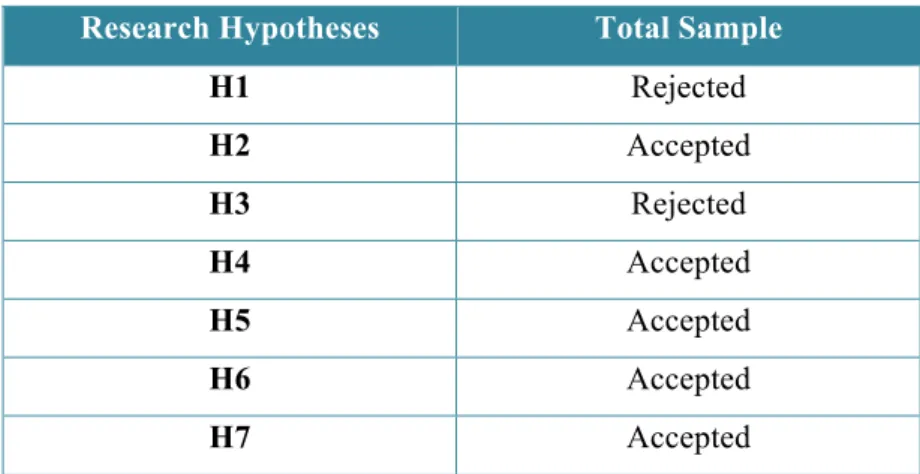
H1: Consumers that make more in-store buying decisions purchase more private labels than
national brands.
H2: The total amount in euros spent for in-store buying decisions is higher for national
brands than private labels.
As stated by Mauri (2003), supermarkets have been trying to increase loyalty to keep consumer’s interest on their stores by find new promotional methods, specially discounts on the products offered. Promotional activities, as seen, increase in-store buying behaviour (Abratt & Goodey, 1990; Inman, Ferraro & Winer, 2004) and according to Knox, Corsten & Bell (2011), when consumers are more concerned about their budget while shopping, the proportion of in-store buying behaviour increases. However, Bellizzi & Bristol (2004) suggest that loyalty cards do not make much difference in terms of store loyalty, but might deliver greater sales. Therefore the question remains if consumers who have loyalty cards spend more money in in-store decisions, since they might have discounts accumulated from previous shopping trips. If the consumer does in fact increase in-store buying behaviour when, it might reveal that these consumers have accumulated more money on their loyalty cards from past shopping trips and used it for future shopping, since they mentally think that the money stored in the loyalty card will be useful for immediate needs realized only inside the store. Consumers might also use the advantage to have a loyalty card to receive discounts in national brands, since promotional efforts and communication is higher for this type of
brands. Therefore, it is proposed that:
H3: Consumers who have a loyalty card make more in-store decisions than planned
purchases.
H4: Consumers who have a loyalty card make more in-store purchases for national brands.
Studies have yielded opposing controversial results about the relationship between shopping party size and in-store decision-making. Inman, Winer & Ferraro (2009) conclude that accompanied shoppers carry out less in-store buying behaviour. The composition of the shopping party may also play an important role on this matter (Luo 2005; POPAI (2011). Luo (2005) states that the two primary sources of social influence – peers and family – activate different in-store buying behaviour. Members of peer groups who accompany the shopper should be more carefree and judge unplanned purchases less negatively, while family members could have more economical concerns and thus be more likely to advise against them. Consistent also with Park (1982), who claimed that couples shopping for groceries often take a common view and act as joint decision makers to make purchases, it is proposed that:
H5: Accompanied shoppers make more in-store buying decisions than shoppers who carry
out their shopping trip alone.
H6: Customers shopping has a couple make less unplanned purchases than those shopping
with other family members, friends or acquaintances.
Van Kenhove et al. (1999) suggest that consumers who have more utilitarian orientations are more keen to finish their shopping trip quickly. Also according to Knox, Corsten & Bell (2011), shoppers who are more concerned about time make less in-store decisions. On the other hand, customers who are more hedonically oriented in their shopping trip give more importance to browsing while shopping, which might make them spend more time inside the store, and hence increase of the proportion of unplanned purchases in their shopping basket. Moreover, the higher the level of abstract goals, the higher the proportion of unplanned purchases (Bell, Corsten & Knox, 2011), and since abstract goals relate closely to more hedonic shopping motivations (Blythe, 2008), it is proposed that:
H7: Consumers with hedonic shopping trip motivations make more in-store decisions than
consumers in mainly utilitarian shopping trips.
The next chapter presents the methodology employed in the performance of a field study, with the aim of statistically testing the research hypotheses put forward.
CHAPTER 3: METHODOLOGY
In order to address the aims of this dissertation, the research hypotheses formulated in Chapter 2 were tested through the performance of a field study amongst supermarket shoppers. The present chapter describes in detail the methodological approach employed to conduct this study and analyse its results.
3.1 Research purpose and approach
An explanatory approach was selected to investigate how retailers’ marketing and branding activities, as well as shopping trip characteristics, influence the occurrence of in-store buying decisions during grocery shopping. This is the appropriate methodological approach to empirically test research hypotheses and establish causal relationships between the variables investigated (Saunders, Lewis & Thornhill, 2007).
3.2 Research strategy and method
In view of the explanatory approach undertaken, a quantitative research strategy was developed that entailed the collection of primary data through the performance of a field study (Ghauri & Gronhaug, 2005). The ICA (Ida às Compras Acompanhada), the data collection technique employed, was purposefully developed for this study and entails both the performance of one-to-one, structured interviews with supermarket shoppers and the observation of their actual shopping behaviour, as well as self-administered questionnaires. This approach combines advantages of some methods employed in the past to study shopping behaviour: Shopping with Consumers (Otnes, McGrath & Lowrey, 1995), the POPAI surveys (POPAI, 2009-2010) and the analysis of shopping lists (Spiggle, 1987).
3.3 Study Design
3.3.1 Population and Sample
The population of interest was defined as adults (i.e. older than 18 years) residing in Portugal for the last 5 years, who carry out their regular grocery shopping trips in large supermarkets
of the Lisbon area. To guarantee a randomly selected sample, every 10th shopper entering the
store (or one every 5 minutes, whichever came first) was intercepted by an interviewer (POPAI, 2009-2010; Stilley, Inman & Wakefield, 2010b). Measures were taken to ensure that one shopper only participate in the study once. A sample of 156 individuals who met the
population requirements and completed the study was gathered through this procedure, which yielded thus a total of 156 valid, individual shopping trips.
Table 3.1 presents the socio-demographic characteristics of the sample. It was composed by women (75%) and men (25%), aged between 22 and 84 years old, mainly married and with children. The majority of the participants had a high education level, were employed and stated to benefit from a household monthly net income of between €1000 and €1999.
Table 3.1 – Socio-demographic characteristics of the study sample (n=156).
Variables Percentage Gender Female 75% Gender 25% Age Mean ± SD 48.01 ± 14.75 Marital Status Married or cohabiting 59.3% Single 23.9% Divorced 12.3% Widow 4.5% Children Yes 68% Number of children No children 32.1% 1 26.9% 2 26.9% 3 or more 14.1%
Number of people in the household
Mean ± SD 2,71 ± 1,61
[Minimum; Maximum] [1;7]
Number of people in the household under 18 years old
Mean ± SD 0,53 ± 1
Educational attainment
Elementary school 21%
High school grad 26%
Higher education 53% Current occupation Student 2.6% Self-employed 8.3% Employed 62.2% Housewife 2.6% Retired 21.8% Unemployed 2.6%
Household monthly net income
Low (< € 1000) 11.5%
Middle (€1000 - €1999) 44.2%
High (≥ 2000) 33.3%
3.3.2 Data collection
With the cooperation of a major Portuguese retail company, data collection was conducted in three large supermarkets in the area of Lisbon: Amadora, Oeiras and Carnide. Eleven interviewers participated in the study, being carefully selected and trained to guarantee the quality of the data collected. Data collection took place between May 20 and June 18, 2011. Specific dates were chosen to ensure that both weekdays and weekends were covered, as well as national holidays and different times of the day. Annex 1 summarizes some of the practical details of the field study. Annex 2 list the sections of the supermarket considered in the shopping visits, while Annex 3 details the main product categories on offer.
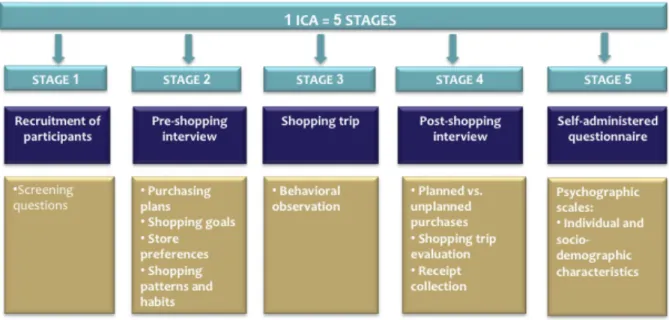
Figure 3.1 presents the ICA, the data collection technique employed, which comprises 5 stages: recruitment of participants, interview at store entrance, accompanied store visit, interview at store exit and self-administered questionnaire.
Figure 3.1 – The ICA (Ida às Compras Acompanhada) data collection technique
Stage 1: Recruitment of participants
In order to check if potential participants belonged to the population of interest, a few questions were made as presented in Annex 4. If recruited, the participants were only informed that the purpose was to learn how shoppers behave inside the store. At this point, they were also informed that with their collaboration they would be compensated with a €10 gift card, which could be used only in future shopping trips.
Stage 2: Interviews at store entrance
An interview was conducted before participants entered the store in order to better understand their overall shopping motivations, shopping plans and specific purchase intentions a (see Annex 5). First, shoppers were asked whether they had brought a written shopping list with them or not; if this was the case, the list was copied by the interviewer. Participants were subsequently asked to enumerate any other items they were intending to purchase, which, for any reason, had not been written down in the list. At the end of the shopping trip, and given the consent of participants, the actual shopping lists were also collected. In the absence of a written shopping list, participants were asked to enumerate the items they were planning to purchase in that specific shopping trip. These items were recorded by the interviewers, who were instructed to write down all the items mentioned by the exactly same words being used by participants (Kollat & Willett, 1967). Questions about purchase intentions were carefully designed and interviewers were told to be careful when formulating them, in order to influence participants’ answers as little as possible. Consequently, shoppers were not asked about the specific items (products, brands, categories) they were or were not intending to buy, but rather about their general purchase intentions, namely “what” they were coming to buy at the store. Participants were thus free to reveal their purchasing intentions at any level of aggregation. Participants were then asked about the kind of shopping trip they were engaging in. Their answers were coded into one of more of 17 pre-defined types of shopping trips developed from previous studies (Bell, Corsten & Knox, 2011; POPAI, 2009-2010). To ascertain store preferences, participants were also asked why they had chosen that specific supermarket to conduct their shopping trip. Their answers were coded into one of more of 19 pre-defined types of store preferences developed from previous studies (Bell, Corsten & Knox, 2011; POPAI, 2009-2010; Young-Kyung & Kang, 2001, Handelman & Arnold, 1999; Sirohi, McLaughlin & Wittink, 1998; Arora, 1982). If interviewers could not match (a part of) a participant’s answer to a pre-defined type, they wrote the contents of his or her answer as completely as possible. Finally, data on the resources committed to the shopping trip (time and money, means of transportation, size and composition of the shopping party), participants’ shopping habits and other characteristics of that particular shopping trip were also collected
Stage 3: Accompanied store visit
Stage 2 was crucial to build rapport with the participant, in order to reduce the discomfort or psychological barriers that could compromise the quality of the data collected during the next