CENTRAL BANK’S GOLD RESERVES:
HEDGE OR WEAPON?
TERESA SOUSA BARROS
Dissertation written under the supervision of Professor Eva Schliephake
Dissertation submitted in partial fulfilment of requirements for the MSc in
Finance, at the Universidade Católica Portuguesa, January 2020.
CENTRAL BANK’S GOLD RESERVES:
HEDGE OR WEAPON?
TERESA SOUSA BARROS
Abstract
Gold remains one of the safest assets in the world. In 2018, the central banks' gold reserves reached a maximum of almost 34,000 tonnes of gold, making it the third largest reserve asset in the world. Thus, throughout the use of an innovative econometric model, we conduct an extensive empirical analysis of the determinants of gold holdings for both developed and developing countries, for the time-frame between 2000 and 2018. We find evidence that both groups of economies tend to hold a lower level of gold when there is a higher risk of government default, therefore, using it as a source of liquidity. These results are consistent with the view that investors still consider gold as a substitute investment in times of considerable uncertainty, and also that the central bank's gold position signals economic strength. Further, our findings expose the real consequences of the Trade War, which started in 2014 and intensified under Trump's administration. We show that US sanctions and Imports from China are playing a significant role in the emerging market's gold reserves adjustments. This work has led to the conclusion that the central banks use gold as both collateral and substitute.
BANCOS CENTRAIS E RESERVAS DE OURO:
PROTECÇÃO OU ARMA?
TERESA SOUSA BARROS
Abstracto
O ouro continua a ser um dos ativos mais seguros do mundo. Em 2018, as reservas de ouro dos bancos centrais atingiram um máximo de quase 34.000 toneladas, tornando-o no terceiro maior ativo de reserva do mundo. Assim, através do uso de um modelo econométrico inovador, realizámos uma extensa análise empírica dos determinantes das reservas de ouro para os países desenvolvidos e em desenvolvimento, no período de 2000 a 2018. Encontrámos evidências de que quanto maior for o risco de incumprimento do governo, menor será o nível de ouro para ambas economias, mostrando, portanto, que os bancos centrais usam o ouro como fonte de liquidez. Os resultados são consistentes com a visão de que os investidores ainda consideram o ouro como um investimento substituto em tempos de considerável incerteza, como também, que a posição de ouro do banco central transparece força económica. Além disso, os nossos resultados expõem as reais consequências da Guerra Comercial, que iniciou em 2014 e intensificou-se com a administração de Donald Trump. Mostrámos que as sanções impostas pelos EUA e as importações da China estão a desempenhar um papel significativo nos ajustes das reservas de ouro para os países em desenvolvimento. Esta tese leva à conclusão de que os bancos centrais usam ouro tanto como garantia, como substituto.
Acknowledgments
I would like to thank, in the first place, to my supervisor, Professor Schliephake,
for the guidance and devoted support during this process.
I also want to thank Católica University and my professors during the Master,
which inspired me and allowed me to grow academically. Especially to Paulo
Silva who taught me Investing in Financial Global Markets and where I learned
all the academic background needed for this dissertation.
Additionally, I want to thank my friend Joana Gomes for patience and statistical
knowledge. I would also like to thank my dear friends Inês Santos Silva and
Carolina Soares de Sousa for their constant support during this last month. A big
thanks to my colleagues and friends Margarida Fonseca and Manuel Murta for
encouraging me to do better, during the all master period.
Finally, a big and very special thanks to my parents and brothers for the support
and wise advices, Thank you.
Teresa Sousa Barros
Católica Lisbon School of Business and Economics January 2020
Table of Contents
1.Introduction ... 1
2. Literature Review ... 5
2.1 Determinants of gold demand ... 5
2.2 International Reserves ... 6
3.Data & Methodology ... 8
3.1 Data Collection ... 8 3.1.1 Macro Variables ... 8 3.1.2 Financial Variables ... 10 3.2 Descriptive statistics ... 10 3.3 Correlation Matrix ... 11 3.4 Methodology ... 12
4.Empirical Analysis and Results ... 14
4.1. Developed Countries ... 14 4.1.1. The 2000-2006 Period ... 14 4.1.2 The 2007-2013 Period ... 15 4.1.3 The 2014-2018 Period ... 15 4.2 Developing Countries ... 16 4.2.1 The 2000-2006 Period ... 16 4.2.2 The 2007-2013 Period ... 16 4.2.3 The 2014-2018 Period ... 17 4.3 Discussions ... 18 5.Robustness Tests ... 20
5.1. Sanction as a determinant for emerging markets ... 20
5.2. Imports from China ... 21
5.3. Different Estimation Models ... 22
5.3.1 Fixed-Effects model ... 22
5.3.2 System GMM model ... 23
5.3.3 Discussions ... 23
5.4. Gold to GDP, Gold to Total Reserves or Gold itself? ... 24
5.3.1. Gold to GDP ... 24
5.3.2. Gold to Total International Reserves ... 25
5.3.3. Discussions ... 25
7.Figures and Tables... 28
Figure I US dollar Allocation ... 28
Figure II Gold in Tonnes - Developed Countries ... 29
Figure III Gold in Tonnes - Developing Countries ... 29
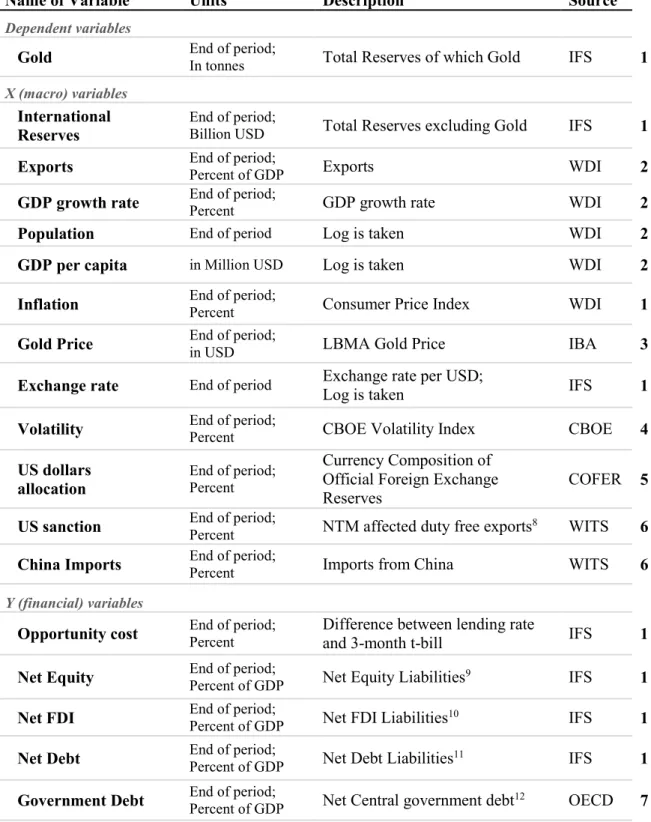
Table A.1 Variables Definitions and Sources ... 30
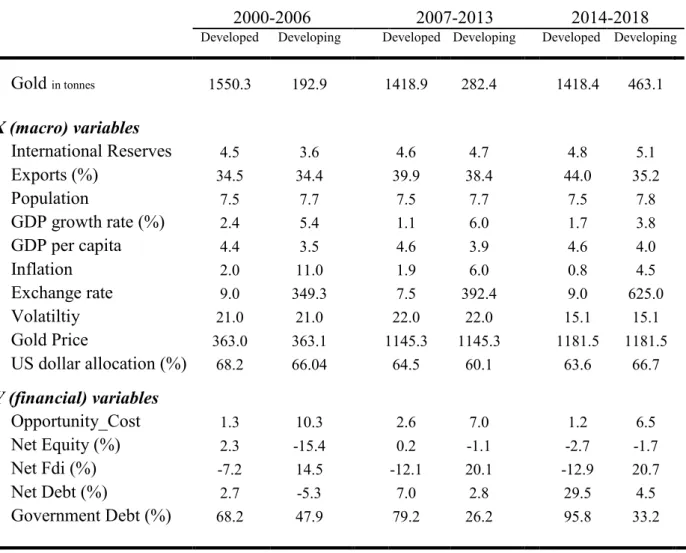
Table A.2 Summary Statistics ... 31
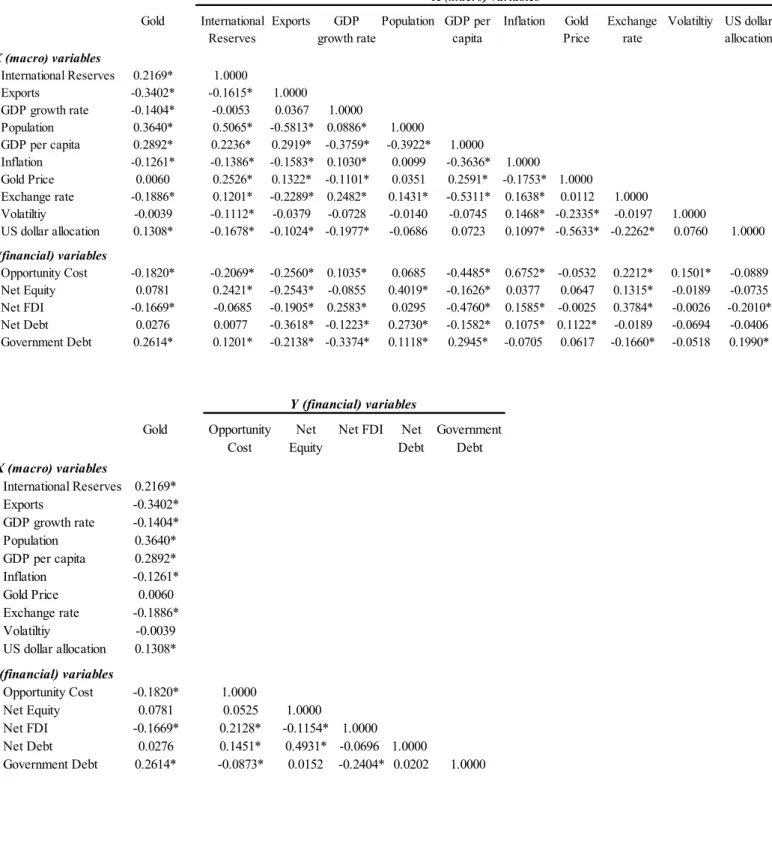
Table A.3 Correlation Matrix ... 32
Table B.1 List of Countries ... 32
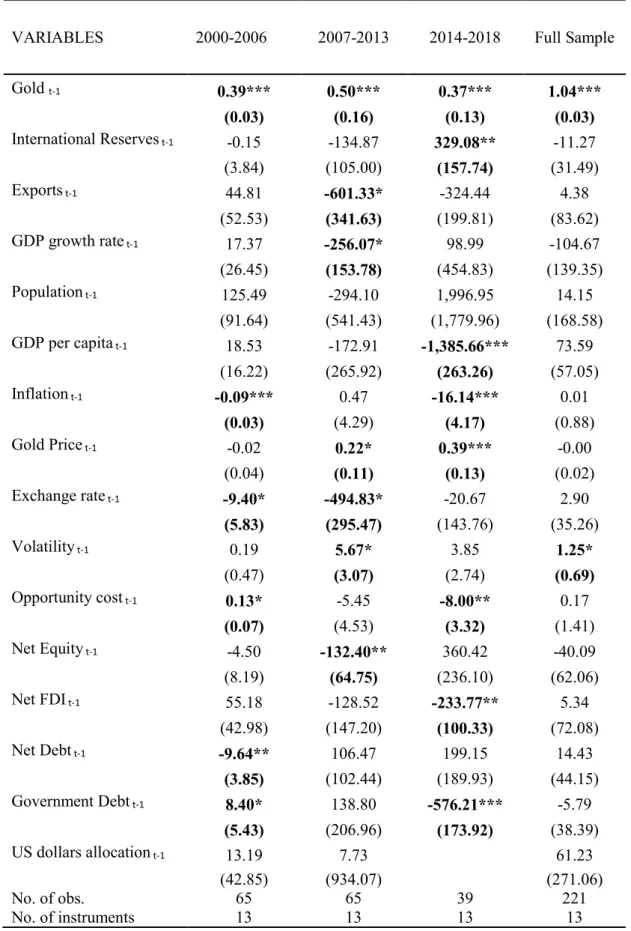
Table I Baseline Results – Developed Countries ... 34
Table II Baseline Results – Developing Countries ... 35
Table III US Sanctions – Developing Countries ... 36
Table IV Imports from China – Full sample ... 37
Table V New estimation models – Developed Countries ... 38
Table VI New estimation models – Developing Countries ... 39
Table VII New dependent variables – Developed Countries ... 40
Table VIII New dependent variables – Developing Countries ... 41
1
1. Introduction
Gold is considered both a liquid, counter-cyclical asset, and a long-term storage of value. As such, it can help central banks to meet their core objectives of safety, liquidity, and return. Even though there is a sizeable body of literature regarding foreign reserves, the existing empirical evidence concerning gold reserves is very scarce. Therefore, the debate on the determinants of gold holdings by central banks is far from being settled.
The 2008 crisis has cast doubt on the US dollar long-term health as a safe asset, especially for emerging markets. Some developing countries were forced to sell dollars to prevent their currency from depreciating, even though they were not directly involved in the global financial crisis1. In the aftermath of the financial crisis, foreign reserves for emerging markets decreased
from 15% to 10%, with particular emphasis on the US dollar,as illustrated in Figure I (Cheung, et al., 2015). The US dollar's current status as a primary currency reserve allows the US economy to be insulated from external shocks. If emerging markets are attempting to compete with other economies while struggling to value their currencies, they will have to protect themselves against future crisis: liquidity is the key (Feldstein, 1999). As a result, the appeal of gold has increased.
Gold remains one of the safest assets in the world whilst undeniably preserving its historical role. Figure II illustrates that developed and developing countries have been behaving oppositely over the last two decades. Moreover, with the implementation of the Central Bank Gold Agreement, the advanced economies have consented to limit the amount of gold sold in any one year since 1999. There have been three further agreements, in 2004, 2009 and 2014. With the signatories of 20 European countries, a major element of market disturbances had been effectively removed with the introduction of greater transparency. Furthermore, since 2014, emerging market countries have progressively begun to increase their hoarding of gold reserves. The rise in central bank demand for gold reflects current geopolitical and economic conditions, such as the Trade War between the US and China, the Brexit, and the general Low Interests
Rates Environment.
2
The goal of this dissertation is to understand why the central banks of developing countries are hoarding gold reserves. International reserves are defined as foreign assets readily available for intervention in financing needs while maintaining confidence in the currency and economy. As gold reinforces confidence in the stability of the central bank balance sheet and creates a sense of security, it could act as the basis for reconstruction in case of a system collapsing. The US dollar continues to experience the confidence of markets, governments, and central banks. However, faith in the US dollar mildly weakens every year, as illustrated in Figure I. Generally, when the US gets involved in a trade conflict or anything with geopolitical ramifications, investors move into safe investments. It implies to go either into countries that are seen as safe repositories or occasionally to precious metals like gold. Europe, China, Russia, and many small countries set up new yearly initiatives to become independent from the dollar2. Thus, one of the
objectives of this dissertation resides on understanding whether the excessive gold holdings increase can be related to the de-dollarization. As for the world financial system, neither the euro nor the yuan, among others, seem to offer a viable and complete alternative to the US dollar. We aim to clarify if these countries may be looking for a new currency based on gold, or if they are just buying excessive amounts for protection and liquidity. Hence, the research questions are:
(i) Are the emerging markets preventing a dollar decline as the primary reserve status and, therefore, to use gold as a protector?
(ii) Is this new emerging market attitude meant to destroy the dollar and therefore create a new primary currency reserve based on gold?
To address these challenges, we will apply an empirical model suggested by Cheung, & Ito (2007). The model uses two groups of variables: macro, considering International Reserves,
Exports, GDP growth rate, Population, GDP per capita, Inflation, Gold Price, Exchange rate, Volatility, US dollars allocation; and financial variables encompassing Opportunity Cost, External Debt Liabilities variables and Government Debt. A reduction in the timeframe leads
to a considerable change in the value of our coefficients. Thus, isolating the effects of the determinants, we will be able to understand how the different central banks are behaving throughout three different time samples: 2000-2006, 2007-2013, and 2014-2018.
3
This paper aims to increase our understanding regarding the drivers of the central bank's gold demand. Furthermore, this investigation expands the economic literature by exploring new variables that have played a crucial role in recent events and understand what are the emerging markets doing in order to protect themselves. Hence, the first contribution to the academic literature is the new dependent variable used. Cheung, & Ito (2007); Aizenman, & Inoue (2013); Oktay, et al. (2016), use International Reserves to GDP. In contrast, we will use the Gold Reserves held by country in tonnes. We have performed a robustness test to corroborate this choice. Since GDP is growing much more than gold holdings, it would create a strong bias in the results. When analyzing along Gold to GDP instead, we were unable to assess whether central banks are increasing/decreasing their gold levels, how different these economies behave, and which determinants are playing a major role. Furthermore, we find evidence that within new determinants of the central bank's gold holdings such as Exports, Volatility, Gold Price, and US dollar allocation, we have a more accurate analysis than with the traditional variables used.
For the developed countries, the main determinants are the size capture variables. According to authors like Aizenman, & Marion, (2003); Edison, (2003); Lane, & Burke, (2001), the transaction demand for gold reserves falls as the income per capita rises. Furthermore, we find evidence that advanced countries view the US dollar and gold as complements for the traditional assets, showing that developed countries seek to diversify their heavy dollar reserve portfolios. Moreover, our results suggest that gold holdings respond positively to macroprudential policies for developing countries. Besides, our findings present evidence that emerging markets are using gold as a source of liquidity.
Among the financial determinants of gold reserves, the set of explanatory variables does not change across different economies. When there is a higher government default risk, the countries tend to hold a lower level of the precious metal. There is evidence that gold is used as a source of liquidity.
Further, our findings expose the real consequences of the Trade War between US and China, which has started in 2014 and intensified with Trump's administration. When we control for US
sanctions, one can see that there is a rise in positive significant variables, such as the External Debt Variables and also Population. Emerging markets have experienced overpopulation. This
4
productivity. Besides, since there is less economic capacity, these countries will suffer from a lower GDP per capita. The variable that has more explanatory power is Imports from China, corroborating our choice of robustness. For our dissertation, this is the main finding for understanding the reason why central banks are increasing their gold reserves. According to Frenkel, (1974a) imports measure the trade openness. The author states that the positive effect on the demand for international reserves represents the precautionary motives of holding reserves. Thus, a higher level of international reserves is expected to cover a higher level of imports. These findings are in line with the recent interpretation that gold can be used as collateral (Cheung, et al. 2015).
The remainder of this dissertation is organized as follows. Section 2 summarizes the main achievements of the existing literature, which will provide the main inputs to address our empirical analysis. Section 3 presents the collected data, the description of the variables, the summary statistics and the methodology applied to perform the study. Section 4 displays the empirical results and the discussions of the main findings. Section 5 presents the robust checks made. Section 6 concludes and discusses the main limitations and future research.
5
2. Literature Review
This section summarizes the main academic literature explaining the central bank’s reserves behavior. While gold is gaining much importance, there is little consensus in the literature on what factors drive countries’ gold reserves. Thus, we will present the literature for the factors driving gold demand and central banks’ determinants for the international reserves separately.
2.1 Determinants of gold demand
A rich part of the existing literature has focused on the gold’s safe haven concept. Baur, & Lucey, (2010) define a safe haven asset as one that is uncorrelated or negatively correlated with another asset or portfolio at certain times. Unlike other assets, gold does not bear the risk of becoming worthless in times of extreme volatility or market turmoil. Hillier, Draper & Faff, (2006) show that, in times of market distress, precious metals are more negatively correlated with stock market returns. They also find that when a financial portfolio contains a moderate weighing of gold, it will perform better than a portfolio constructed with only financial assets. Qatan, & Cohen, (2010) study if the VIX3 motivate the gold price or vice-versa. Their findings
suggest that in unstable market periods, VIX is affected by the precious metal returns. Thus, reflecting that investors consider gold as a substitute investment in times of considerable uncertainty.
A growing body of literature has examined the role of gold in asset allocation decisions. Being an asset that performs independently from the others, adding gold to different types of portfolios ultimately increases the average return and decreases the standard deviation of each portfolio (Jeffrey, 1989; Emmrich, & McGroarty, 2013). To corroborate these findings, Baur, & Lucey (2010) study how the relations between the US, UK, and German stock and bond returns affect gold returns. The results show that for stocks, gold always behaves as a safe haven; as of for bonds, this behavior only appears for a limited period, around 15 trading days. Conversely, Bredin, Conlon, & Poti (2015) find that gold acts as a safe haven for traditional assets upon one year. However, Baur, & Glover (2012) find that this perception of safe haven may change over time. As gold’s popularity as a safety investment increases, investors could be forced to sell a vast range or all of their gold holdings due to liquidity constraints. Since gold can be used to raise liquidity when needed, this interpretation is one of the key focus of our dissertation when there is a seller behavior from the central banks.
6
Even though there is a vast literature on some of the variables that may affect the gold performance, others are still relatively unexamined. One such overlooked gold’s determinants is it property as inflation hedger. Fortune, (1987) finds that the changes in the gold price have a positive relationship with inflation. Therefore, when individuals are expecting it to rise, they are encouraged to convert their assets into gold. Furthermore, changes in gold extracting costs are driven by the rate of inflation. Thus, a growing gold price will arise to compensate for the increasing costs (Levin, Montagnoli, & Wright, 2006). Over the long term, the authors also state that US inflation is the only determinant for the gold price.
Governments and central banks claim about past historical events to support and justify their current policy decisions. The Bretton Woods’s system plays a key role in understanding the central bank's behavior. One of the main factors behind this system’s collapse was the loss of credibility of the US authorities to maintain a stable and consistent monetary policy. Inflation and the depreciation of the national currency were the consequences of a lax monetary policy. According to Feldstein, (1999) a government that committed itself to a pegged exchange rate to the dollar was implicitly linked to the same inflation rate as the United States. Hence, the US has a safe position due to its currency current status as the primary international reserve. O'Connor, & Lucey, (2012) further find that there is a negative relationship between gold and the US dollar. The authors have measured the movements in the bilateral value of the dollar against six other currencies, the trade-weighted value of the dollar. Their findings suggest that gold acts like any other currency, so if the dollar is losing value against the other partners, it is also depreciating against gold. Moreover, Escrivá, et al. (2008) show that after the Bretton Woods’s system collapse, countries with large surpluses had to revalue their currencies, especially when there was a threat of sanctions.
2.2 International Reserves
The hoarding of international reserves (IR) by emerging markets has been increasing since East Asian crisis. It reflects the self-insurance politics against market turmoil and deleveraging crises (Aizenman, & Lee, 2008). Overall there is limited literature that assesses the impact of international reserves hoarding. While some authors focus on which determinants are affecting their foreign reserves, there is a gap within the literature that examines the causes of the central bank’s gold reserves holdings.
7
Using a dataset from more than 100 countries for the period from 1975 to 2004, Cheung, & Ito, (2007) conducted an extensive empirical analysis of the determinants of international reserves hoarding. The authors find that this relationship is different between developed and developing countries. The first one tends to hold a lower level of reserves than the second one. Furthermore, the authors also suggest that it also differs concerning the time sample. Moreover, Aizenman, & Lee, (2008) find that the relationship between international reserves and their determinants also diverges within developing countries. China’s hoarding reflects the precautionary behavior against financial instability; Japan and South Korea hoard due to export promotion and financial mercantilism. However, the authors find that all the East Asian countries have a common goal about the international reserves: improve competitiveness. Besides, Cheung, et al. (2015) find that the 2008 financial crises have affected this behavior mainly due to the existence of sovereign wealth funds and rebalancing of emerging markets.
Concerning gold reserves, Aizenman, & Inoue (2013) show that the central bank's holdings are correlated with global power - being a past empire, size of a country, supplier of key currency. Furthermore, Gosh, (2016) by performing an analysis on the Group of Seven (G7) nations, the author finds that GDP and exports of goods and services are the main drivers for gold holdings. Moreover, Gopalakrishnan, & Mohapatra (2017) show that this hoarding increases as a compensation for a higher global risk.
Even though there is a vast body of literature that assesses the importance of gold as a hedger and diversifier, there is a gap within the literature that evaluates the determinants for central bank’s gold reserves. Furthermore, this dissertation aims to analyze the central bank's behavior for gold hoarding, by exploring which are the main determinants. It contributes to the literature by studying the different behaviors across two types of economies: developed and developing countries, and also across three different time samples. In spite of that, it also contributes by providing new variables and pursuing a method that allows us to construct more efficient estimates of the panel data model by Arellano-Bond (1991). This model will be discussed in detail in Section 3.
8
3. Data & Methodology
This section presents how the study sample is collected and the empirical model based on econometric specification. In order to identify the determinants of gold holdings by the central banks, our panel regression is based on Cheung, & Ito, (2007) approach. Furthermore, this section also presents the respective summary statistics and the correlation matrix.
3.1 Data Collection
We obtain annual data for central banks’ gold reserves from International Financial Statistics (IFS) database. The macroeconomics variables were retrieved from World Development Indicators (WDI) database, except for Gold Price that was from the LMBA database and
Volatility, from the Chicago Board Options Exchange VIX database. The financial variables
were obtained from IFS database with exception of Government Debt, which was from the Organization for Economic Co-operation and Development (OECD) Database. All variables description, units, and sources are described in Table A.1.
The dependent variable is built by using the Gold Reserves held by country in tonnes.4 As of
the independent variables, we follow the Cheung, & Ito (2007) approach, by grouping the determinants of gold reserves into two categories: macro variables and financial variables. It will allow us to trace the theoretical developments and understand how these facts change over time. Thus, the first group of variables, the macro ones, consists of International Reserves,
Exports, GDP growth rate, Population, GDP per capita, Inflation, Gold Price, Exchange rate, Volatility, US dollars allocation; and the financial variables contains Opportunity Cost, External Debt Liabilities variables and Government Debt.
3.1.1 Macro Variables
According to Aizenman, & Inoue (2013), the significant coefficients on the lagged ratio of reserve holdings to GDP indicate a strong history dependence of gold and non-gold international reserve holdings. Thus, we are expecting a positive significance level of this explanatory variable on the dependent one.
4 Contrarily to Cheung, & Ito (2007); Aizenman, & Inoue (2013); Oktay, et al. (2016), that use International Reserves to GDP.
In our time sample, GDP growth has been continuous and acute, especially for developing countries. Although there is growth in gold holdings, when compared to GDP, the effect of this growth will be lost.
9
A vast literature shows that the hoarding of international reserves is related to growth strategy, especially for developing countries. Therefore, we include GDP growth (Benigno, & Fornaro, 2012; Cheung, et al., 2014). To capture the size of the country, we incorporate GDP per
capita (Marc-Andre, & Parent, 2005) and Population. Following Aizenman, & Marion, (2003);
Edison, (2003); Lane, & Burke, (2001), we are expecting a negative effect on our dependent variable.
According to Aizenman, & Inoue, (2012), the determinants of gold reserves are quite similar as for international reserves. The Opportunity Cost Of Holding reserve has been included in models that compare the costs and benefits of holding international reserves (Heller, 1966; Frenkel, & Jovanovic, 1981). Wherefore, we are also including in our model the opportunity cost of holding, which is commonly measured by the difference between the local interest rate and the US interest rate.5
The US economy is protected from external shocks since the US dollar is the primary reserve currency. We introduce the Exchange Rate to the US dollar and also the Exports to GDP as new variables. If emerging markets are attempting to compete with other economies while struggling to value their currencies, they could be using the gold reserves as a hedge for future external shocks. If their exports start to decline and their currency against dollar appreciates, they could be hoarding gold reserves to prevent a crisis. Hence, we also include US dollars allocation as a control 6. With this variable, we intend to see if developing countries are using gold as a
substitute for the US dollar.
Feldstein, (1980) states that an increase in the expected inflation causes nominal interest rates to rise, i.e., pushing up the gold price. The interpretation of this variable can be ambiguous. On the one hand, one would expect a decrease in gold hoarding when inflation arises due to liquidity constraints. On the other hand, the central banks could be buying more gold to prevent a rise in inflation. Thus, we are using these two variables to understand the holding behavior:
Inflation and Gold Price. Concerning gold’s property of safe heaven, Cohen, & Qadan, (2010)
find that in times of crisis, gold drives the VIX, making it a better safe asset. With the inclusion
5 Due to data availabilities, we are using the differential between the domestic lending rates and 3 Month Treasury Bill Rate. 6 The Currency Composition of Official Foreign Exchange Reserves (COFER), an IMF database. Individual data are strictly
confidential, we can only find data for emerging markets and developed countries, with no-individual effect. The data is only available until 2014.
10
of this control, we are expecting a positive effect of the dependent variable in the 2007-2013 period.
3.1.2 Financial Variables
Within the financial variables, Lane, & Milesi-Ferretti, (2006) examine the individual effects of net external liabilities to capture the differential effects of those types of capital flows.7 8
Aizenman, & Inoue, (2012) find that central banks are likely to use gold to reduce their sovereign debts. Following this approach, we are expecting a negative correlation with our dependent variable.
3.2 Descriptive statistics
In order to describe the variables used in our model, Table A.2 reports the summary statistics of our sample. Following the literature, we find evidence that supports the fact that developed and developing countries behave in completely different ways. Regarding gold holdings, we can see a pattern: since 2000, developed economies have been decreasing their reserves, where the developing countries have been increasing it until 2018.
Cheung, & Ito, (2007) show that among the developed economies, macroeconomic variables usually remain relatively stable across the time sample. Since data is more recent, we would not expect stability through the time sample.
Starting with the International Reserves, we can see that both economies have been increasing their reserves. Also, since the financial crisis, the developing countries have overtaken the developed. Regarding Exports, there is a curious change: From 2014, the developed countries have been increasing their levels, where the developing ones have been reducing. Since China has a large share of global trade, and a high commodity intensity, a Chinese economic downturn harms Asian countries and especially the commodity exporters. This economic slowdown led to a more moderate trade, lower commodity prices, and a lack of confidence in global financial markets, affecting these countries' exports. Thus, the weakest period for this variable is the last.
7 Three variables are used to capture this effect: debt financing, portfolio equity financing and FDI financing. 8 Cheung, & Ito (2007) have use LM database, since there isn’t data availability, we use the IMF one.
11
Regarding GDP growth, the developed economies experience a slight decrease due to the 2008’s debt crisis. Moreover, the developing economies have a significant decrease in the last period. Since 1990, these economies were a vital source of growth for the global economy. The ongoing maturity process suggests that economies start to experience an aging population, higher income, and a more stable market economy. Thus, as emerging markets begin to catch-up with developed countries, this growth is naturally set to slow. The Opportunity Cost Of
Holding international reserves peaks for developed countries as results of the financial crisis.
Conversely, the emerging market’s opportunity cost has been decreasing since 2000. Developing countries’ market can be extremely volatile given the political, social, and economic factors. As they experience the ongoing maturity process, their default risk becomes typically lower, and consequently, their opportunity cost of holding international reserves. Concerning US dollar allocation, the developed countries have been decreasing their dollar allocation, showing that they are shifting towards other currencies, like yen and Canadian dollar. Contrarily, the emerging markets have decreased their dollar allocation until 2013 and then onwards increasing. One could interpret that since the 2008 financial crisis, these economies find the US dollar as a hedge asset.
The second group of variables, the financial determinants, exhibits more distinct differences between the economic groups. For the developed countries, FDI flows experience increasing importance, while external equity is decreasing. Therefore, they are becoming more net receivers of equity liabilities and more borrowers of debt liabilities. As far as sovereign debt ratios, the developed countries have been accumulating debt since the beginning of our sample, where the developing economies have suffered a reverse back in the crisis period.
3.3 Correlation Matrix
We performed a correlation analysis in order to understand the relationship between our variables and the expected response. Regarding the coefficients’ correlation, theoretically, the ideal scenario would be having zero correlation among explanatory variables, and be highly correlated with the dependent variable, gold holdings.
Table A.3 shows that almost every variable is significant at a 5% level. There are only three variables not significant: Gold Price, Volatility, And Net Equity.
12
Among the explanatory variables, all have a correlation below 0.5 except for US dollar
allocation vs. Goldt-1, suggesting that they are being used as substitutes. As well as for Exports
vs. Population, where they are negatively correlated at 58%. And lastly, the Opportunity Cost vs. Inflation. We were expecting such correlation, since that in times of high inflation, the interest rate for the specific country tends to rise, and consequently, the gap between interest rate and the t-bill also increases.
3.4 Methodology
The sample presents observations between 2000 and 2018, and it is an unbalanced panel data which contains 187 country-year observations, meaning 27 different countries.9 The sample is
grouped by developed and developing countries. This list of countries represents the top 25%, gold holders. We have excluded from our sample Taiwan and Lebanon because their gold holdings did not have any change in our time sample. Similarly, Philippines, since its holdings' changes, are related to gold production; and also, Venezuela as a result of data availability. Since 2014, Colombia and Qatar have been buying tonnes of gold, therefore including them will help us to understand the determinants of this behavior.
Following Cheung, & Ito (2007), we have three different time samples: 2000 to 2006, 2007 to 2013, and 2014 to 2018. This sub-sample analysis was motivated by the importance of the macroeconomic context of the central banks, and therefore crucial to modeling gold holdings. A straightforward reduction in the timeframe leads to a considerable change in the value of our coefficients. Thus, by isolating the effects of the determinants, we will be able to understand how the different central banks are behaving.
Nevertheless, the effects of the variables described in section 3.1 are studied using the following regression equation:
where Goldi,t is the official gold holdings of economy i at time t measured in tonnes. The two
types of determinants of gold reserves are denoted by
X
i,t-1 (={x
i,k,t-1; k =1,..., Nx}) whichcontains the macro variables, and
Y
i,t-1 (={y
i,k,t-1; k =1,..., Ny}) which denotes the financial
9 Unlike Cheung, & Ito, (2007), we do not exclude the periods of market turmoil, because we also want to understand if there
is an impact.
13
variables. The coefficient vectors
δ
1,δ
2, andδ
3 are conformable to the associated explanatoryvariables. The country-specific intercept and the error term are given by
μ
i andε
i,t, respectively.When the panel data estimation has a lagged dependent variable, the coefficients obtained from panel data estimation with fixed effects are likely to be biased due to serial correlation, also known as Nickell bias (Nickell, 1981).10 Taking into consideration this bias, the dynamic panel
generalized of moments is used to estimate equation (1).
There are two types of panel estimators suitable for these dynamic panel estimators – a difference GMM proposed by Arellano-Bond (1991) and system GMM by Arellano & Bover (1995). The first one uses the moment conditions of lagged levels as instruments for the differenced equation. In addition to this, the second panel estimator also uses the lagged differences of the dependent variable as instruments for the level equation. Arellano-Bond (1991) suggests that general estimators are designed for situations where there is:
I) A linear functional relationship;
II) Dependent variable: dynamic and dependent on its own past realizations; III) Independent variables: not severely exogenous;
IV) Fixed individual effects.
Taking these characteristics into consideration, we will use difference GMM, the Arellano-Bond (1991) model, for our subsequent analysis, given its higher efficiency. 11 Furthermore,
we lag all the explanatory variables by one period to avoid potential endogeneity problems.
10 As a robust, we have also performed the FE estimation. 11 As a robust, we have also performed the SGMM estimation.
14
4. Empirical Analysis and Results
This section presents the estimation results. Developed and devolving countries are analyzed separately for three non-overlapping periods, namely 2000-2006, 2007-2013, and 2014-2018. A straightforward reduction in the timeframe leads to a considerable change in the value of our coefficients. Thus, by isolating the determinants’ effects, we will be able to understand how the different central banks are behaving.
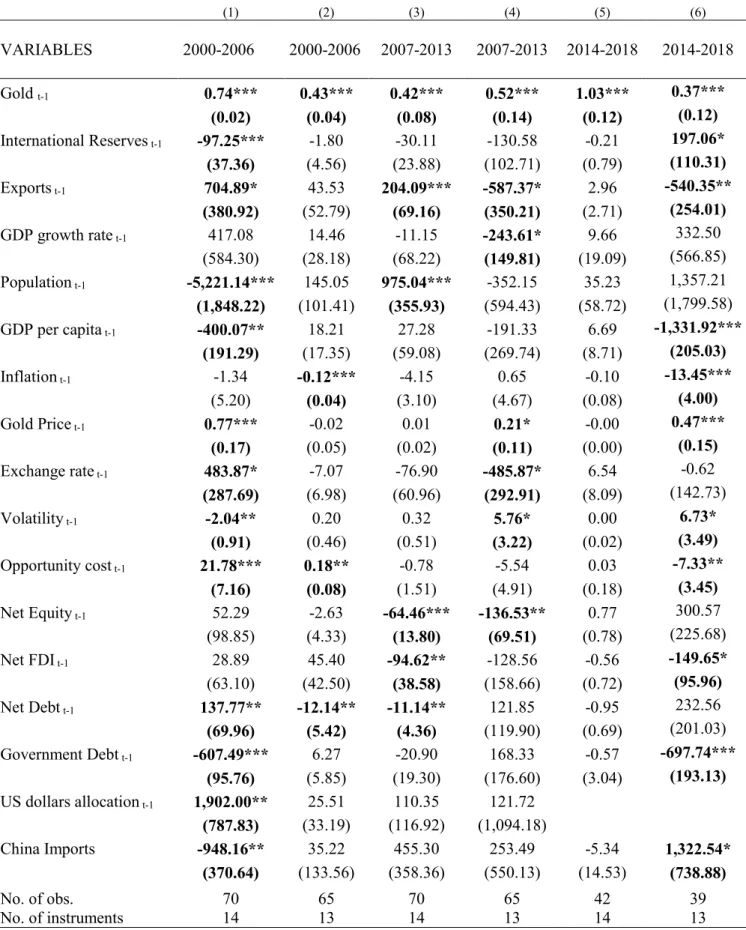
Estimation results for developed economies are presented in Table I for each of the three periods referred above. Those for developing economies are presented in the same format in Table II.
4.1. Developed Countries
4.1.1. The 2000-2006 Period
A substantial number of macro variables are found to be significant. Results suggest that an increase in the size-capture variables will have a negative impact on the gold holdings. Following Aizenman, & Marion, (2003); Edison, (2003); Lane, & Burke, (2001), the larger is the country, the lower is the gold demand.
From 2000 to 2003, the Fed has lowered the interest rates from 6% to 1%12, making borrowing
more affordable. Thus, the positive coefficient on Opportunity Cost and Net Debt Liabilities indicates that net borrowers are more likely to hold higher levels of gold holdings, which can be served as implicit collaterals. Cheung, & Ito, (2007) suggest that international reserves and net debt liabilities can be considered as substitutes. As a matter of fact, our findings suggest the same.
The negative coefficients on Volatility and Government Debt may suggest that gold is a safe haven. High levels of volatility and government debt increase the country’s default risk. Hence, it leads to an interpretation that central banks buy more gold to prevent the default risk.
A key result was found in this sample. An increase in Gold Price encourages central banks to buy more gold. This is consistent with the CBGA113, where central banks stated that gold would
12 See Leonhardt D., “Federal Reserve Lowers Key Rate To 1%, Lowest Level Since 1958”, New York Times, 2003, for more
information.
15
remain an essential element. In addition to that, it was also agreed to limit its sales, securing high levels of gold price.
The positive and high coefficient on the US dollar allocation suggest that gold and traditional reserve assets play a complementary role alongside with alternative assets. Thus, showing that developed countries seek to diversify their heavy dollar reserve portfolios.
4.1.2 The 2007-2013 Period
In this period, Exports by developed countries have suffered large setbacks due to the financial crisis. Even so, a rise in exports will lead to an extension in the holdings of gold reserves. Since an increase in exportations causes a higher economic growth, these findings underline the precautionary motive to guard against adverse trade flows. Contrarily to the previous period, now Population’s coefficient is positive, suggesting that as the country gets larger, there is a greater need to hold gold.
External debt variables are all significant for this period. Net receivers’ countries of external financing are playing a more prominent role.14 These variables’ coefficient suggests that net
borrowers tend to hold lower levels of gold in the market turmoil period. Hence, debtor economies regard gold reserves as a substitute to external finance.
4.1.3 The 2014-2018 Period
For this period, the only significant variable is the lagged gold, prompting that previous gold holdings will have a positive effect on the existing one. Thus, it will encourage these economies to increase their gold reserves.
The coefficients for the remaining variables are all low and with no significance. Since the 2008 financial crisis, developed countries did not change their levels of gold holdings, therefore this result was already anticipated.
16
4.2 Developing Countries
4.2.1 The 2000-2006 Period
Cheung, & Ito, (2007) identify structural changes in the emerging markets’ international reserves after the Asian financial crisis. Lagged gold’s coefficient remains significant and positive for these economies, although lower when compared with developed ones.
For this period, we expected few significant variables. The results are widely in line with recent literature. Inflation is the most significant variable. Evidently, this was already expected due to the Asian crisis. The negative coefficient suggests that gold and inflation can be seen as substitutes amongst these economies. In addition to this, the positive and significant level of the variable Opportunity Cost comes to corroborate our previous interpretation. Since having a bigger opportunity cost increases the country's default risk, gold could be used as collateral.
For this period, most of these countries are debt receivers. The specific coefficient results support Cheung, & Ito (2007) findings, who conclude that emerging markets tend to hold lower levels of gold when there is a high level of debt. Thus, one can assume once more that gold can be used as a substitute for external debt.
4.2.2 The 2007-2013 Period
In contrast to developed countries, the Exports’ coefficient is now significantly negative. In respect of the GFC15, exports of emerging markets have suffered a downturn between 2008 and
2010, since they were mostly to developed countries. The negative coefficient suggests that emerging markets are using gold as a substitute to protect themselves from the market turmoil. The results for GDP growth support the same conclusion - when countries are recovering from a financial crisis, there is, on average, a negative impact on gold holdings. Hence, developing countries use gold as a source of liquidity.
Lane, & Milesi-Ferretti, (2006) show that portfolio equity liabilities are typically correlated with currency movements. Developed countries’ assets tend to be expressed in a foreign currency, as opposed to its liabilities, which are denominated in its domestic currency. On the other hand, emerging markets experienced the inverse. Whereas their liabilities are mostly denominated in foreign currency, an unexpected exchange rate depreciation will diminish their
17
foreign liabilities position. That being said, one would expect the variables with the highest negative coefficients to be both Exchange Rate and Net Equity liabilities. As the latter is likely to be linked to the performance of domestic currency, we can interpret that gold is being also used as a substitute for external debt.
As expected, in this period, it was evident the high levels of Volatility and historical maximum of Gold Price. Contrarily to our earlier interpretation, an increase in volatility will conduct emerging markets’ central banks to invest in gold. This is consistent with previous literature that suggests that in response to higher volatility risk, gold holdings of central banks increase (Gopalakrishnan, & Mohapatra, 2017).
4.2.3 The 2014-2018 Period
This period can be described as considerably uncertain: Trump's election, the Brexit, Trade
War, etc. Unlike developed countries, in this time lapse we have the greatest amount of
significant variables. In fact, it is the most important era in what concerns this dissertation.
International Reserves’ coefficient is, for the first time, significant and positive. Cheung, et al.,
(2015) find that international reserves respond positively to macroprudential policies for developing countries. In addition to that, we found that it will also affect gold holdings. Despite the number of significant variables in this period, this is the only positive. Therefore, the only that explains our research question: Why are central banks increasing their gold reserves? As in the 2007-2013 period, Gold Price’s coefficient remains positively significant. However, its magnitude is very low.
The GDP per capita has been decreasing since the beginning of this time sample. As emerging markets begin to catch-up with developed countries, their growth is naturally set to slow. With the negative coefficient, we can interpret that as GDP increases, so does the country's economy. Therefore, the ongoing maturity process leads developing countries to need fewer protection (Aizenman, & Marion, 2003; Edison, 2003; Lane, & Burke, 2001).
Inflation is hard to interpret. Half of these countries have suffered an increase through the time
sample. The other half experienced a downturn over the period. The negative coefficient suggests that the higher inflation emerging markets experience, less gold they will hold. As in opposition to the 2000-2006 period, now the Opportunity Cost has a negative coefficient,
18
meaning that the more default risk these countries have, the less gold they will hold. These results are consistent with the variable Inflation, reinforcing that the emerging markets are using gold as a source of liquidity.
For this sample period, the data from developing economies allow us to discriminate the behaviors between net creditors and net debtors16. Like portfolio equity liabilities, FDI
liabilities are typically correlated with currency movements (Lane, & Milesi-Ferretti, 2006).
Due to Trump's new attempts to depreciate dollar against other currencies, the emerging markets’ FDI liabilities position have been shrieked, since their liabilities are in foreign currency. Once again, these results suggest that emerging markets are view gold and external debt as substitutes.
Furthermore, Government debt’s coefficient is, for the first time, significantly negative. Aizenman, & Inoue, (2013) state that the CBGA may prevent central governments from selling their gold to cut their sovereign debt. We can assume that emerging markets are using gold for the same purposes as developed countries used in the 2000-2006 period – liquidity constrains.
4.3 Discussions
In conformity with Cheung, & Ito, (2007), the determinants of gold reserves are different for developed and developing countries. A straightforward reduction in the timeframe leads to a considerable change in the value of our coefficients. Thus, the estimation results corroborate our choice of three-time samples.
Differences are clear for both economies groups. For developed countries, the importance of the variables is decreasing at the expense of the time sample, wherein the developing economies the opposite happens.
The role of the macro determinants deserves some thoughtfulness. Although the literature has paid some attention to these implications, some variables now have a sizable explanatory power. Variables that in the past did not play a role, suddenly are playing a role. In consequence of instability or moreover, that variables that were characterized with zero volatility are now
19
highly volatile. Starting with the International Reserves, we have found opposite effects, in different time samples, for the two groups of economies. At the beginning of the century, this variable has a negative effect on developed countries, suggesting the use of foreign reserves as a substitute to gold, wherein developing countries it has a positive effect. Following Cheung, et al., (2014), a high level of national saving leads to a higher international reserve holdings, suggesting that gold is used as a hedge. The variable Volatility has the same coefficient signs, corroborating our previous interpretation. When there is high volatility, developed countries tend to lower their gold holding level, whereas emerging markets are likely to increase it for hedging purposes. We were expecting more explanatory power for Exports, especially for developing countries in the last period. Gold Price’s coefficient appears as a positively significant. Nevertheless, it gains importance only in the last two periods of time for the emerging markets. The results are line with the literature that states that individuals are encouraged to convert their assets into gold when they are expecting inflation to rise (Fortune, 1987).
Concerning the financial variables, there are also distinct behaviors. On the one hand,
Opportunity Cost’s coefficient is positive for both economies in the first period, suggesting that
an increase of the default risk would lead to more holdings of gold. On the other hand, in the last period, emerging markets experience the opposite, indicating that they are using it as a source of liquidity.17 All external debt financing variables have the same effect on the two
economic groups. Both tend to lower their levels of gold holdings if there is an increase in their external debt financing, i.e., becoming a more net debt receiver. The results suggest that as the country becomes more dependent of external debt financing, less gold will hold. Thus, external debt and gold are viewed as substitutes.
In general, these findings support the literature and suggest that new variables like Exports,
Inflation, Gold Price, Exchange rate and US dollar allocation should be controlled, in order to
study the determinants of the central bank's gold holdings. Next section will perform a variety of robustness tests to analyze how US sanctions, Imports from China, the model used and different dependent variables help us understand the reason why central banks are increasing their gold reserves.
20
5. Robustness Tests
In this section, we present the robust tests made. Several robustness checks with alternative dependent variables, different estimation methods and new control variables were performed. The results are presented in Table III to VII.
5.1. Sanction as a determinant for emerging markets
The privileged status of the dollar allows the US to issue sanctions on countries and, deliberately, use the dollar as a weapon. Most of these sanctions are implemented in three areas: energy, military action and trade. The expansion of the US economic sanctions regime has led a significant group of countries to declare their intention to reduce the use of the dollar or, eventually, abandon the US currency18. The risk of excessive use of sanctions could not only
lead to a reduction in the activity of the US financial system as it could also make the dollar play a lesser role as the primary reserve currency. If the sanctions applied are considered insufficiently justified or inadequate, the US loses credibility. Therefore, the United States will allow others to play a more prominent role in the global financial system, in particular, China, as it is the second largest economy in the world.
The core of US sanctions on China is based on ongoing trade, which has intensified under Trump's presidency. The US imposes tariffs and trade blocs for Chinese goods and services in order to damage the Chinese economy, preventing the yuan from becoming unnaturally weak against other major currencies, including the US dollar. In what concerns to Russia, these sanctions are based on military actions. When Russia violated Ukraine's sovereignty in 2014, thereby violating its international obligations, the US were forced to act, thus imposing sanctions on Russia. Since 2014, these sanctions have been increasing significantly.
For these reasons, we tested the baseline specification by adding US Sanctions as a new control. Data has been collected from the WITS database. Although, due to confidentiality and data availability, the measure for these sanctions is the percentage of exports that are affected by the US’s MFN duty free tariff. The results are reported in Table III.
For the first two period samples, this new variable does not require any further clarification as it does not alter our previous analysis. The last period deserves more attention. When
21
controlling this new variable, the determinants with more explanatory power become even more clarifying, such as GDP per capita, Inflation, and Government Debt. At the same time, new explanatory variables arise. Exports and Exchange Rate are now negatively significant. These outcomes show us the real effects of the Trade War that has started in 2014 and intensified more under Trump's administration.
The aim of this dissertation is to understand why central banks are increasing their gold reserves. In our baseline results, we show that the only determinant that was affecting the central bank’s increasing gold reserves is International Reserves. Therefore, our analysis was imprecise. Thus, when we control for US sanctions one can see that there is a rise in positive significant variables, such as the External Debt Variables and also Population. Emerging markets have experienced overpopulation. It results in fewer supplies to sustain their population, therefore, less human resources and lower productivity. Furthermore, since there is less economic capacity, these countries will suffer from a lower GDP per capita. Moreover, the positive coefficient of the external debt variables suggests that as more net receivers emerging markets are, a higher level of gold they will tend to hold. It is the first time the regression for developing economies gives a positively significant external debt effect. The finding is in line with the recent interpretation that gold can be used as collateral (Cheung, et al. 2015).
Overall, by controlling this new variable, one might conclude that the lower it is the expectation of a country's economic capacity, both by population and debt, the higher is the central bank’s gold hoarding.
5.2. Imports from China
As stated earlier, China today presents itself as a new superpower. Although the Trade War between the United States and China, has been affecting China's exports, it remains a vital trading partner worldwide. China is in the top 5 imports trade partner for all countries in our sample.19 Thus, a slowdown in the Chinese economy causes catastrophic consequences, not
only for China itself but also for the rest of the world. This robustness test serves the purpose of examining if China is trying to secure this privileged place, as the world's largest exporter, using gold reserves as collateral. The results are in Table IV, columns (1), (3) and (5), for developed countries. The remaining columns reflect the results of developing countries.
22
For developed countries, the differences are only in the first period. When controlling this new variable, Exports, has for the first-time explanatory power. Curiously, the coefficient signs for this variable and Imports from China are the opposite. If there is a substantial increase in the exports, the advanced economies tend to increase their gold levels, as in the second period. Instead, if there is an increase in the imports from China, they will lower their gold level reserves significantly.
As of developing countries, the main differences appear in the last period. Contrarily to developed countries, the emerging markets will decrease their levels of gold if their exports rise. This suggests that developing countries view this variable and gold as alternatives. Moreover, Volatility now has explanatory power. Following the previous interpretation, they also act as substitutes, suggesting one of the gold's properties: hedger.
The variable that has more explanatory power is Imports from China, corroborating our choice of robustness. As a matter of fact, this is the variable with the highest positive coefficient. For our dissertation, this is the main finding for understanding the reason why central banks are increasing their gold reserves. Unlike developed countries, when China's exports to the emerging markets increase, their gold reserves also increase. Meaning that, as the world begins to consider China as a superpower and a trustworthy partner, more gold emerging markets will hold. Like in US Sanctions, these outcomes similarly show us the real effects of the Trade War. Indeed, with the slowdown of the global economy, volatility and concerns arise. Generally, when the US gets involved in a trade conflict or anything with geopolitical ramifications, investors tend to move into safe investments. It implies to go either into countries that are seen as safe repositories or occasionally to precious metals like gold.
5.3. Different Estimation Models
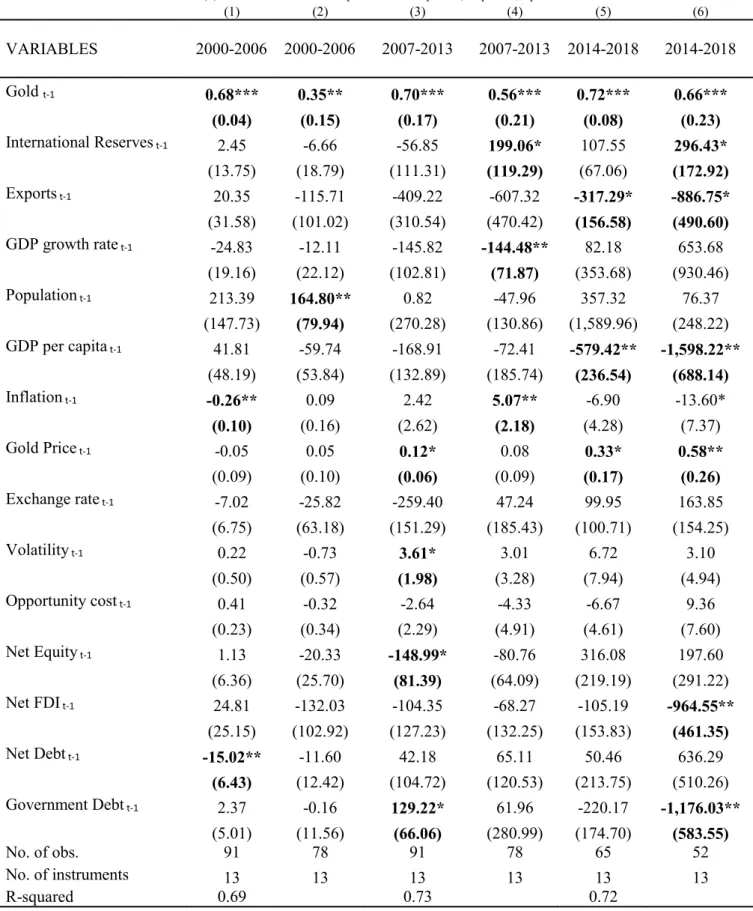
For this additional analysis, we regress equation (1) using different estimation models. The results can be found in Table V, column (1), (3), and (5) for the fixed-effects model, and Table VI, the remaining columns, for the System Generalized Method of Moments.
5.3.1 Fixed-Effects model
In order to understand which model executes better, the Hausman specification test was performed, suggesting that we use the fixed-effects model. This model explores the relationship
23
between independent and dependent variables within an entity. It assumes that time-invariant characteristics are unique to each country, and they shouldn't be correlated with other country characteristics.20
For the developed countries, the results are in line with our baseline. The sample has an overall 97% of explanatory power, but this one is only 79% for the GFC crises period. Here is where we find more significant variables playing the gold price and volatility, a more prominent role. For the emerging markets, there's also a high level of explanatory power, but when we sub-sample in periods, this decreases to an overall 71% level. The main differences are only in the last period since we only have 4 significant variables. In general, the outcomes from this model are in line with our baseline results, and we have a sizeable explanatory level of the model.
5.3.2 System GMM model
In addition to the Arellano-Bond (1991) moment conditions of lagged levels as instruments for the differenced equation, Blundell, & Bond, (1998) proposed a "system-GMM". It is an estimator that uses the lagged differences of the dependent variable as instruments for the level equation. Comparing these methods, the results for developed countries suggest that there's almost no explanatory power. The only variable consistently significant is the lagged gold and the exports only for the first period. Contrarily, the emerging markets have explanatory power.
Nonetheless, for both periods of crises, the only explaining variables are the capture size ones and volatility. With the difference GMM, we can have more information. The last period is more consistent with our findings and suggests that exports play a large role in the central bank's gold holding.
5.3.3 Discussions
By performing these robustness checks with these alternative estimation methods, we can see the noticeable differences between them. When using fixed-effects, the results are in line with ours, except for the last period for emerging markets. It would be expected since this model assumes that the time-invariant characteristics are individual and should not be correlated with the characteristics of other countries. In recent years, we have seen countries acting together
20 For this reason, we don’t find this model appropriate for our analysis. Since countries in Asian are much correlated to each
24
and determining specific measures together (such as the BRICs) to combat the dollar. Therefore, this assumption is violated, and thus this method could not be the most suitable for our estimation.
By performing the SGMM estimation model, the differences are also visible, but in this case, only in the developed countries sample. Since this method also uses the lagged differences of the dependent variable as instrument for the level equation, and as for this group there are almost no differences in the dependent variable, the results give us very little information and only two significant variables for all time sample.
5.4. Gold to GDP, Gold to Total Reserves or Gold itself?
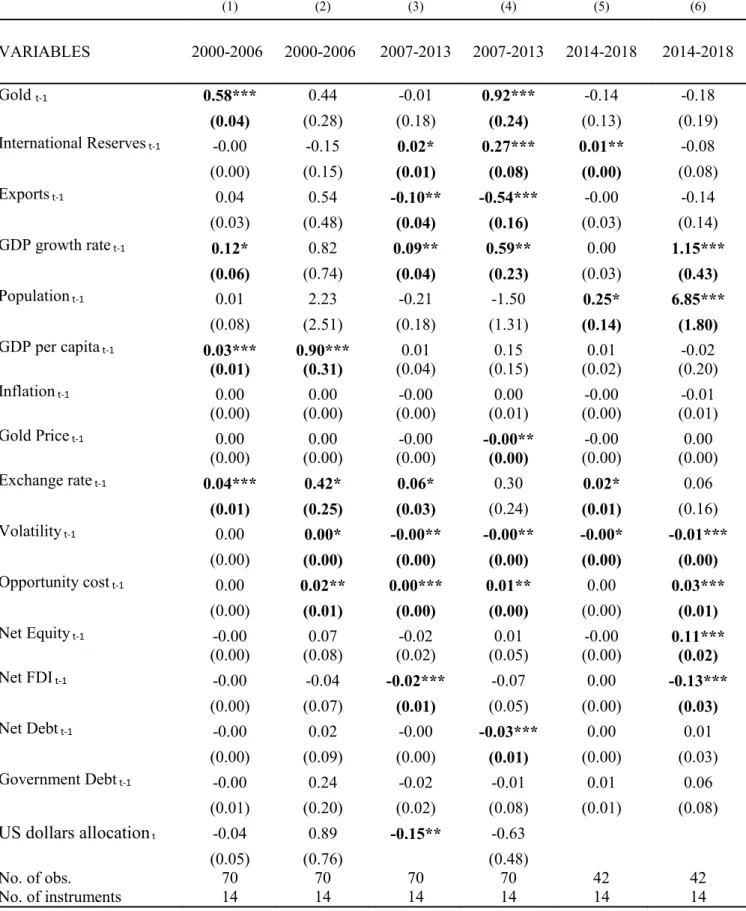
The purpose of this test is to compare results from other papers that use Gold to GDP or Gold to Total International Reserves as the dependent variable (Cheung, & Ito, 2007; Aizenman, & Inoue, 2013). The results for this robustness can be seen in Table VI and Table VII for Gold to GDP and Gold to Total International Reserves, respectively.
5.3.1. Gold to GDP
When Gold to GDP is tested, several differences can be seen. Overall fewer variables are explaining the central bank's behavior.
For the emerging market's sample, the explanatory power of the variables is being diminished over time. In the last period, where there is excessive hoarding behavior for these economies, and it is the one where we find only one significant variable. Opportunity Cost, International
Reserves, and GDP per capita are no longer relevant variables.
For the developed countries, Inflation, Gold Price, and all the external debt variables are also no longer significant. The crisis period is the most explainable. On the one hand, an appreciation of the foreign currencies against the US dollar and an increase in the opportunity cost will lead these economies to hold more gold. On the other hand, as volatility increases, developed countries tend to hold less gold. Lastly, US dollar allocation has an opposite behavior from our baseline sample. It is only significant for the second period suggesting that developed countries view US dollars and gold as substitutes.
25
5.3.2. Gold to Total International Reserves
When Gold to Total International Reserves is regressed, there's also a more prominent explanation for the developed countries than the developing ones. The crisis period is again the one more significant. The macro variables play a bigger role. An increase in exports, gold price, and volatility will affect the gold holding negatively. Unlike our results, gold price and volatility are no longer substitutes for each other. For the last period, the size capture variables are both positively significant, and the financial variables play a role, suggesting that equity and FDI liabilities have opposite behaviors.
For the emerging markets, the explanatory power is also decreasing through time. In the first period, the financial variables have more impact, demonstrating the Asian financial crisis influence. Following this interpretation, in the GFC period, the only significant variables are also the financial ones. Interestedly, the US dollar allocation has a reverse effect for these periods. For the first one, where these economies were more affected, they lean towards higher their gold level, and in the second one, they tend to lower their gold level. When facing a global financial crisis, they use gold as a substitute for the US dollar, but wherein their own economic crises, they viewed as a complement for the US currency. For the last period, there's only one significant variable: the exchange rate. It suggests that an appreciation of the foreign currency to the US dollar will incline the emerging markets to increase their gold levels.
5.3.3. Discussions
When either of these variables is used as a dependent one, there is a major decrease in significant variables. In both cases is hard to analyze why central banks are increasing/decreasing their gold levels; how different these economies behave, and what are the main gold characteristics in line. For instance, when Gold to Total International Reserves is the dependent variable, the results suggest that there is greater importance in the international reserve's historical past than in gold itself.
When we analyze either GDP or Total International Reserves, is visible that both of them are increasing much more than gold holdings so the results will be biased.
26
6. Conclusion
This dissertation analyzed the link between the hoarding of gold in central banks' reserves and its causes. Two groups of determinants were considered: macro and financial variables. To account for the anecdotic evidence that gold is mainly hold as a safe haven, we have considered at three different time samples. Each period has particular characteristics. The first period represents the post Asian crisis, 2000-2006. The second represents the Global Financial Crisis, from 2007 to 2013. The third represents the beginning of the Trade War between the US and China, 2014-2018.
Following the literature, we find evidence that developed and developing countries behave in completely different ways. For the developed countries, the significance level of the variables is decreasing over time, wherein the emerging markets the opposite happens. While in developed countries, there is evidence of seller behavior and consequent measures applied by the CBGA21 to fight it. Size-capture and financial variables were the most significant in the
developed countries' performance. In emerging markets, Volatility, Exports, Exchange Rate,
Opportunity Cost, and International Reserves were the most explanatory variables.
We find evidence that US sanctions and Imports from China are having a major impact on the central bank’s gold reserves for the developing countries. Once these variables are added, we gain a more in-depth understanding of the central bank's behavior. We find evidence that the Trade War's affects the exports for these economies, which illustrates the importance of how emerging markets are protecting themselves.
The high level of complexity and confidentiality of central bank’s holdings are major limitations to our research. First, as shown in section 5, US Sanctions weigh heavily on central bank decisions to hold gold in the developing countries. The measure used for such analysis was the only one available that was efficient enough to quantify the sanctions imposed by the US. Secondly, confidentiality still represents a barrier to our investigation. Despite that, it is public that the Chinese renminbi has recently been considered as a SDR22. Therefore, central
banks are now able to make this currency their primary foreign reserve. However, we cannot conclude that central banks are actually shifting from dollar to yuan or whatsoever due to the
21 Central Banks Gold Agreement. 22 Special Drawing Rights.
27
fact that the currency composition of international reserves is kept from the public since 2014. Thirdly, countries such as China and Russia are now starting to make internal deals that require the trade currency to be either Chinese yuan or Russian ruble. Once again weakening the dollar's role in the financial system. All of these restrictions and confidentially enable us to answer our second research question: Is this new emerging market attitude meant to destroy the dollar and therefore create a new primary currency reserve? As soon as data and measures that allow a better quantification of the newly arranged partnerships between countries is available, future research can generate more robust analysis to this question and therefore understand if a new currency based on gold is being used.
Furthermore, in recent years, new trade partnerships have emerged between Russia, China, Kazakhstan, and even Saudi Arabia. Given the brief existence of these deals, and the high level of confidentiality it unable us to understand the fundamental rationale behind these events. Besides, in 2019, Poland and Hungary bought more than 100 tonnes together. As some countries started to increase their gold reserves there might be reasons that will make other countries to behave like this as well.
28
7. Figures and Tables
Figure I
US dollar Allocation
The sample includes the two groups of economies: developed and developing countries, as well as the world group, for the period 2000-2018. The table presents the US dollar Composition of Official Foreign Exchange Reserves. Due to confidentiality, data since 2014 is not disclose either for developed or developing countries.
0 20 40 60 80 2000 2001 2002 2003 2004 2005 2006 2007 2008 2009 2010 2011 2012 2013 2014 2015 2016 2017 2018 US do ll ar all oc ati on (% )
29
Figure II & III
Gold in tonnes
The sample includes the two groups of economies: developed and developing countries, for the period 2000-2018. The figure II and III presents the gold holdings by the central banks for both developed and developing countries, respectively.
Figure II Developed Countries
Figure III Developing Countries 0 1000 2000 3000 4000 5000 6000 7000 8000 2000 2001 2002 2003 2004 2005 2006 2007 2008 2009 2010 2011 2012 2013 2014 2015 2016 2017 2018 Gol d in to n n e s
Austria Belgium France Germany
Italy Japan Netherlands Poland
Portugal Spain Sweden Switzerland
United Kingdom United States
0 500 1000 1500 2000 2000 2001 2002 2003 2004 2005 2006 2007 2008 2009 2010 2011 2012 2013 2014 2015 2016 2017 2018 Gol d in to n n e s
China Colombia India Korea, Rep.
Mexico Qatar Russian Federation Saudi Arabia
Serbia Thailand Turkey Uzbekistan