AR
TICLE
1 Departamento de Vigilância de Doenças e Agravos Não Transmissíveis e Promoção da Saúde, Ministério da Saúde. Setor SAFS Quadra (Setor de Administração Federal Sul) Edifício Premium/Torre 1/Bloco F/Sala 16, Zona Cívico-Administrativa. 70070-600 Brasília DF Brasil.mdm.mascarenhas@ gmail.com
2 Departamento de Medicina Social, Faculdade de Medicina de Ribeirão Preto, Universidade de São Paulo. 3 Escola Nacional de Saúde Pública, Fiocruz.
Emergency room visits for work-related injuries:
characteristics and associated factors –
Capitals and the Federal District, Brazil, 2011
Abstract Work-related injuries, often classified as occupational injuries (OI), stand out among visits due to external causes (accidents and violence) in health services. To describe the characteristics and factors associated with emergency room visits for OI, a cross-sectional study was conducted using data from the Survey of Violence and Injuries in Emergency Services (VIVA Inquérito 2011) in 24 state capitals and the Federal District. The prev-alence of treatment for OI and prevprev-alence ratios (PR) with confidence intervals of 95% (95%CI) were calculated. There were 29,463 emergency room visits due to accidental injuries in the pop-ulation above 18 years of age. The prevalence of OI was 33.4% and was positively and significantly associated with the male gender, age 30-59 years old, industrial workers, agricultural sector or re-pair and maintenance services. The occurrence of OI was significantly higher in attendance for ob-jects falling on people (PR = 3.37, 95% CI 2.80 to 4.05) and injuries due to perforating object (PR = 3.01, 95% CI 2.50-3.65). The results support the surveillance of external causes and direct public policies to promote occupational health.
Key words Occupational health, Work-related
accidents, External causes, Emergency medical services
Marcio Dênis Medeiros Mascarenhas 1
Mariana Gonçalves de Freitas 1
Rosane Aparecida Monteiro 2
Marta Maria Alves da Silva 1
Deborah Carvalho Malta 1
M
ascar
e
nhas MDM Introduction
External causes (e.g., accidents and violence) of morbidity and mortality are of substantial importance in public health, given their magni-tude and impact on people’s lives, particularly in developing countries1-3. According to the Pan American Health Organization (PAHO), exter-nal factors constitute the leading cause of lost years of life in two-thirds of the American na-tions, and transport-related accidents, homicides and suicides are among the five main causes of premature death4.
In Brazil, the mortality rates of these events are high and have been increasing since the 1980s5, which demonstrates the relevance of this problem for the country6. The mortality rate for external causes in Brazil has varied from 69.3 deaths per 100,000 inhabitants in 2001 to 75.1 deaths per 100,000 inhabitants in 2010 (i.e., an increase of 8.4 %). In 2010, external causes were the third-leading cause of death among the to-tal population and the leading cause of death among adolescents (10 to 19 years old) and young adults (20 to 39 years old). Deaths from aggression and road traffic accidents were re-sponsible for approximately 70 % of all deaths from external causes. In 2011, external causes of death accounted for 8.6 % of all hospitalizations in the Brazilian Public Health System (Sistema Único de Saúde – SUS), occupying the fifth rank in Brazil. The highest hospitalization rates were found among men aged between 20 and 39 years old (89.7 per 10,000 men) and women aged 60 years and older (74.3 per 10,000 women). In the period from 2002 to 2011, the hospitalization by intentional injury rate increased by 19.3 %7.
Among the external causes treated at health-care services, work-related accidents, or occupa-tional accidents (OAs), are important. However, in this area, knowledge is limited because only injuries to formally hired workers (approximate-ly one-fourth of the total active work force) are reported to the National Social Security data system. Thus, employees without registered jobs and statutory employees are excluded8.
Brazilian OAs are most likely underreported for two main reasons: 1) they are not recognized as work-related and therefore appear in official statistics under common homicides and general accidents and 2) a single system that centralizes all available information on OAs in the country is lacking9,10. The most comprehensive database is managed by the Ministry of Social Security (Ministério da Previdência e Assistência Social –
MPAS). However, MPAS does not collect infor-mation on accidents that occur in the informal labor market of the Brazilian economy10.
According to Santana et al.11, the OA mortal-ity rate is 13.2 per 100,000 formal workers, and the annual cumulative incidence of non-fatal accidents is approximately 3 % to 6 %. These conditions result in high health-care costs in the country, in addition to social security expenses. It is estimated that the expenses of the National Social Security Institute (Instituto Nacional de Seguridade Social – INSS) for sick leave and oc-cupational conditions represent more than half the benefits paid by INSS (62.8 %)11,12.
In Brazil, surveillance and monitoring of ac-cidents and violence are performed through a systematic stream of primary and secondary data for which the major sources are the mortality and hospitalization information systems, police reports, communication of OAs (comunicação de acidente de trabalho – CAT), toxico-pharma-cological information and periodic health
sur-veys13,14.
However, because of the difficulty of obtain-ing data on morbidity with respect to injuries with lower severity that do not imply death or hospitalization but that have a high impact on the demand for urgent care services, the Minis-try of Health introduced the Surveillance System for Violence and Accidents (Sistema de Serviços Sentinelas de Vigilância de Violências e Acidentes – VIVA) in 2006. This surveillance system has two components: 1) surveillance of violence and accidents in hospital emergencies, which aims to characterize urgent care services required for injuries with external causes (VIVA Survey), and 2) surveillance of sexual, domestic and/or other interpersonal violence, which considers the legal requirement to report violence against children, adolescents, women and the elderly15.
In the 2011 VIVA Survey, a variable was add-ed to identify whether the injury is work-relatadd-ed, and the type of occupation practiced, regardless whether the work was performed in the formal, informal or autonomous labor sector. This mod-ification was useful because it rendered nugatory the reductionist views that regarded these occur-rences as simple events caused by worker error and thus enabled research to focus on OA pre-vention16.
e C
ole
tiv
a,
20(3):667-678,
2015
results can support the surveillance of violence and accidents and can help in the development of public policies aimed at the promotion of worker health, including the health of the working popu-lation not typically included in the official MPAS reports.
Methods
This cross-sectional study is based on data from the VIVA Survey performed between September and November 2011 in 71 urgent and emergen-cy care services of the SUS located in the Federal District and 24 state capitals of Brazil. Manaus (Amazonas State – AM) and São Paulo (São Pau-lo State – SP) did not administer the survey be-cause of operational factors. The inclusion of the selected service units was validated by the local teams according to the following criteria: 1) the health facility was recorded as qualified to pro-vide urgent and emergency care assistance in the National Registry of Health Facilities (Cadastro Nacional de Estabelecimentos de Saúde – CNES); 2) records were available on the requirement of hospitalization for external causes in the Hospi-tal Information System of the SUS (Sistema de Informações Hospitalares do SUS – SIH/SUS); 3) the number of treatments identified in the 2006, 2007 and 2009 VIVA Survey17-19.
Data were collected during a period of 30 consecutive days that were divided into 12-hour shifts, totaling 60 shifts: 30 day shifts (7:00 am to 6:59 pm) and 30 night shifts (7:00 pm to 6:59 am). Shifts were drawn by means of single-stage cluster sampling, with the shift as the primary sampling unit. The number of shifts drawn for each establishment was obtained according to the minimum sample size (i.e., 2,000 per state capital), and the mean of treatments for external causes performed at the health-care service was obtained assuming a coefficient of variation be-low 30 % and a standard error bebe-low 317-19.
All victims of injuries with external causes who sought urgent and emergency care assistance for the first time in the selected units and during the drawn shifts and who agreed to participate in the survey were considered eligible for the in-terview. Data were collected using a standardized form, which was administered by trained teams. Assistance was classified into two groups accord-ing to intentionality: 1) the accident was defined as “an unintentional and avoidable event causing physical injuries and/or emotional distress with-in the domestic settwith-ing or with-in other social
envi-ronments, such as work, school, sports or leisure activities”20 (e.g., accidents caused by road traffic, falls, burns, cuts, falling objects, poisoning, suf-focation and drowning); 2) violence was consid-ered as “the intentional use of physical force or power, threatened or actual, against oneself, an-other person, or against a group or community, that either results in or has a high likelihood of resulting in injury, death, psychological harm, maldevelopment or deprivation”3 (e.g., self-in-flicted injuries, mistreatments and aggression).
The reported event (i.e., the accident/vio-lence) was considered to be work-related when the victim (or the legal guardian/next of kin if the patient was unconscious or under 18 years of age) declared that the event occurred during work or on the way to or from work by positively answering the question Did the occurrence occur while at work or commuting to work? This ap-proach enabled the identification of typical OAs (which occur at the workplace) and commuting OAs (which occur while traveling to or from work, provided that the commuting is ordinary commuting with no stops or detours during the home-to-work or work-to-home route).
The patient was also asked about his/her oc-cupation during most of the day up to the occur-rence of the reported event, either in the formal, informal or autonomous labor sector. Occupa-tions were coded according to the Brazilian Clas-sification of Occupations, 2002 edition (Clas-sificação Brasileira de Ocupações, edição 2002 – CBO-2002) and combined into large groups according to level of competence and the similar-ity of the performed activities21.
In this analysis, medical records from emer-gency care assistance provided to accident injury patients aged 18 years and older were included considering the following characteristics:
M
ascar
e
nhas MDM bodies, being struck by a falling object, animal
accidents, burns); 3) assistance-related: means of traveling to the hospital (on foot, private vehicle, mobile emergency care service (MECS)/ambu-lance/rescue vehicle, bus/van, police car, other), time (night, day), day (Sunday, Monday, Tues-day, WednesTues-day, ThursTues-day, FriTues-day, Saturday), evolution (discharge, hospitalization, referral to outpatient treatment, discharge against medical advice, death).
The analyses were processed by groups of treatments performed in the selected services while comparing accident victim characteristics according to the relationship of the event to the occupation. The null hypothesis of independence between qualitative variables was determined using the chi-square test at a significance level of 5 %. The prevalence ratio and the respective 95 % confidence intervals were estimated with
Poisson regression. The svy command of Stata
software, version 11 (Stata Corp., College Station, TX, USA) was used to obtain unbiased estimates with data derived from complex sampling plans.
The 2011 VIVA Survey project was evaluat-ed and approvevaluat-ed by the National Committee for Ethics in Research (Comissão Nacional de Ética
em Pesquisa – CONEP). Further information on study sample design, research organization and implementation can be found in other publica-tions15-18.
Results
In the 2011 VIVA Survey, a total of 29,463 emer-gency treatments for injuries with accidental causes were identified in the adult population (18 years and older). The mean prevalence of work-related events in this population was 33.4 % for all state capitals and the Federal Dis-trict. The state capitals of the North and North-east, such as Macapá, Fortaleza, Boa Vista and São Luís, exhibited the lowest prevalence, whereas the highest prevalence was observed in the capitals of Brazil’s more developed states, such as Curitiba, Florianópolis, Vitória, Campo Grande and the Federal District (Figure 1).
Table 1 summarizes demographic character-istics of emergency treatments according to acci-dent, prevalence and factors associated with the occurrence of work-related events. Among all of the interviewees, male (65.0 %), young patients
Figure 1. Ratio of emergency treatments by work-related injury – State capitalsa and Federal District, Brazil,
2011.
Source: Health Ministry, Health Surveillance Secretariat, Surveillance System for Violence and Accidents (Sistema de Vigilância de Violências e Acidentes –VIVA), 2011 Survey. a Except Manaus – Amazonas State (AM) and São Paulo – São Paulo State (SP).
0 5 10 15 20 25 0 35 40 45 50
%
Macapá Fortaleza Boa V ista
São L uís
João P esso
a Natal
Rio B ranc
o
Salvad or
BelémAracaj u
Mace ió
Recif e
Palmas Porto
Aleg re
Teresina Goiânia Porto V
elho Cuiabá
Rio d e Jane
iro
Belo H orizo
nte
Dist rito F
eder al
Camp o Grand
e
Vitór ia
Florianóp olis
e C
ole
tiv
a,
20(3):667-678,
2015
between 18 and 29 years of age (38.2 %) who declared having black/brown skin (65.2 %) with more than 8 years of education (51.1 %) were pre-dominant. Only 4.1 % declared a disability. More than half the patients reported that their occupa-tion belonged to the industrial goods and services sector (34.0 %) or that they were service work-ers and salespwork-ersons (33.5 %). The occurrence of work-related events was significantly higher among adult males between 30 and 39 years of age. Workers from the industrial goods and vices sector, managers, repair/maintenance ser-vice workers, salespersons, medium-level techni-cians and farmers exhibited a higher OA rate than science and art professionals. Elderly and disabled
persons exhibited a significantly lower OA ratio (Table 1).
Table 2 shows the proportional distribu-tion of the characteristics of the accidents that required emergency treatment. Events that occurred on public streets (41.5 %) with in-juries that involved cuts/lacerations/amputa-tions (27.8 %) that primarily affected the limbs (62.6 %) were predominant. The most fre-quent types of occurrence were traffic accidents (33.9 %) and falls (29.4 %). The prevalence of work-related events was significantly higher among accidents in factories/plants, construc-tion sites, stores, service establishments and bars. Fractures and traumas were 20 % to 30 % less
Characteristics
Gender Female Male
Age range (years) 18 to 29 30 to 39 40 to 59 60 and older Race/skin color
White Black/brown Yellow/Amerindian
Educational level (years of education) 9 and above
0 to 8 Disability
No Yes
Occupational group
Science and arts professionals
Industrial goods production and services Service providers and salespersons Administrative service providers Medium-level technicians Agricultural laborers
Repair and maintenance services Public and business managers
Armed and police forces, and fire service
Total (n = 29,463)b
%c
35.0 65.0
38.2 23.4 26.5 11.9
32.6 65.2 2.2
51.1 48.9
95.9 4.1
5.5 34.0 33.5 7.2 6.4 4.7 4.5 3.4 0.8
No (n = 19,709)b
%c
77.7 60.6
65.8 59.9 63.7 88.6
67.9 65.9 65.9
66.7 65.6
65.8 82.7
70.0 44.7 55.9 59.2 61.0 54.3 48.4 66.8 65.2
Yes (n = 9,754)b
%c
22.3 39.4
34.3 40.1 36.3 11.4
32.1 34.1 34.1
33.3 34.4
34.2 17.3
30.0 55.4 44.1 40.8 39.0 45.7 51.6 33.2 34.8
PR
1.00 1.77
1.00 1.17 1.06 0.33
1.00 1.06 1.06
1.00 1.03
1.00 0.50
1.00 1.85 1.47 1.36 1.30 1.52 1.72 1.11 1.16
95%CI
-1.68-1.86
-1.12-1.23 1.01-1.12 0.30-0.37
-1.00-1.13 0.95-1.20
-0.99-1.08
-0.42-0.60
-1.63-2.09 1.29-1.68 1.17-1.59 1.13-1.50 1.33-1.75 1.48-2.00 0.91-1.34 0.89-1.52
p value
-0.000
-0.000 0.023 0.000
-0.063 0.302
-0.136
-0.000
-0.000 0.000 0.000 0.000 0.000 0.000 0.298 0.279
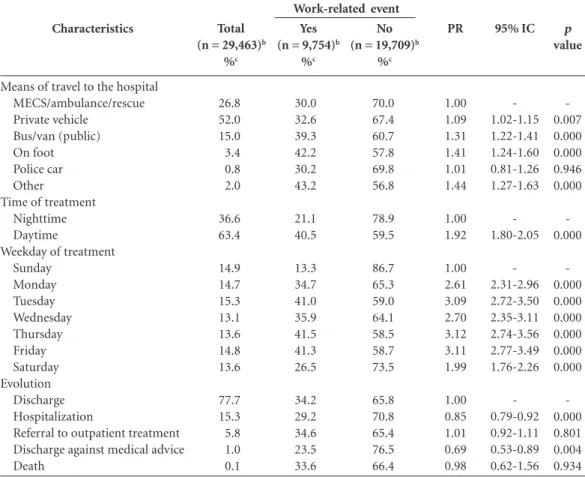
Table 1. Sociodemographic characteristics of patients treated at emergency care services as a result of accidents according to work-related event – State capitalsa and Federal District, Brazil, 2011.
Source: Health Ministry, Health Surveillance Secretariat, Surveillance System for Violence and Accidents (Sistema de Vigilância de Violências e Acidentes – VIVA), 2011 Survey. a Except Manaus – Amazonas State (AM) and São Paulo – São Paulo State (SP); b Absolute number of observations; c Weighted percentage. PR: prevalence ratio; 95%CI: 95% confidence interval.
M
ascar
e
nhas MDM
associated with OAs than events that caused no physical injuries. Regarding body parts, the limbs and the thorax/abdomen/pelvis were associated with the occurrence of OAs. Patient consump-tion of alcoholic beverages exhibited a significant association with OAs but at a 75 % lower ratio than that of patients who had not consumed al-cohol. The prevalence of work-related events was higher among treatments for the following
oc-currences: being struck by a falling object, punc-ture wounds, foreign bodies, burns and sprains. The prevalence of OAs was significantly higher in treatments because of being struck by a falling object (PR = 3.37; 95 %CI 2.80-4.05) and punc-ture wounds (PR = 3.01; 95 %CI 2.50-3.65).
The characteristics of the treatments pro-vided for accident injuries in the emergency units are listed in Table 3. Treatments that in-Characteristics
Place of occurrence Home Public street Store/service establishment/bar Recreational area Factory/plant/construction site School Other Type of injury
No injury Cut/laceration/amputation Sprain/dislocation Bruise Fracture Trauma Other
Afflicted body part Head/neck Thorax/abdomen/pelvis Limbs Multiple organs/sites Alcohol use No Yes
Type of occurrence Accident with animals Traffic accident Fall
Puncture wound
Struck by an object/person Sprain
Foreign body
Struck by falling object Burn
Other accidentsd
Total (n = 29,463)b
%c 32.4 41.5 13.4 5.0 4.7 0.7 2.3 5.9 27.8 20.7 19.3 11.9 8.3 6.2 17.6 9.2 62.6 10.6 88.8 11.2 3.2 33.9 29.4 6.9 5.7 5.7 4.8 4.4 2.0 4.0 No (n = 19,709)b
%c 89.5 69.8 14.2 95.5 4.5 69.7 55.1 64.6 64.0 67.8 65.5 71.0 74.6 59.3 70.4 65.4 64.9 71.6 63.5 91.0 82.0 68.7 76.9 45.6 71.9 61.8 50.3 39.2 61.2 47.4 Yes (n = 9,754)b
%c 10.5 30.2 85.8 4.5 95.6 30.4 44.9 35.4 36.0 32.2 34.5 29.0 25.4 40.8 29.6 34.6 35.1 28.4 36.6 9.0 18.1 31.3 23.1 54.4 28.2 38.2 49.7 60.8 38.9 52.6 PR 1.00 2.88 8.18 0.43 9.11 2.89 4.28 1.00 1.02 0.91 0.97 0.82 0.72 1.15 1.00 1.17 1.18 0.96 1.00 0.25 1.00 1.73 1.28 3.01 1.56 2.12 2.75 3.37 2.15 2.92 95%IC -2.66-3.13 7.49-8.92 0.32-0.59 8.33-9.97 2.26-3.71 3.81-4.80 -0.92-1.12 0.83-1.00 0.89-1.07 0.74-0.91 0.63-0.82 1.03-1.29 -1.07-1.27 1.11-1.26 0.88-1.05 -0.21-0.28 -1.44-2.09 1.08-1.52 2.50-3.64 1.30-1.87 1.72-2.60 2.26-3.34 2.80-4.05 1.74-2.66 2.41-3.53 p value -0.000 0.000 0.000 0.000 0.000 0.000 -0.739 0.056 0.581 0.000 0.000 0.014 -0.000 0.000 0.374 -0.000 -0.000 0.005 0.000 0.000 0.000 0.000 0.000 0.000 0.000
Table 2. Characteristics of accidental events that required assistance at emergency care services according to work-related event – State capitalsa and Federal District, Brazil, 2011.
Source: Ministry of Health, Health Surveillance Secretariat, Surveillance System for Violence and Accidents (Sistema de Vigilância de Violências e Acidentes – VIVA), 2011 Survey. a Except Manaus – Amazonas State (AM) and São Paulo – São Paulo State (SP); b Absolute number of observations; c Weighted percentage; d Includes suffocation, drowning, poisoning, intoxication, injury due to firearms, crushing and other non-classified injuries. PR: prevalence ratio; 95%CI: 95% confidence interval.
e C
ole
tiv
a,
20(3):667-678,
2015
volved traveling to the hospital by private vehi-cle (52.0 %) during the daytime (63.4 %) from Monday to Friday were predominant. Most of the patients were discharged (77.7 %) within the first 24 h after emergency care. The prevalence of work-related events was higher among pa-tients who traveled to the hospital on foot or via public transportation and were treated during the daytime from Monday to Friday. Work-re-lated accidents were significantly less frequent among treatments that required hospitalization or among patients who discharged themselves against medical advice relative to the majority of patients who were discharged within the first 24 h after emergency assistance.
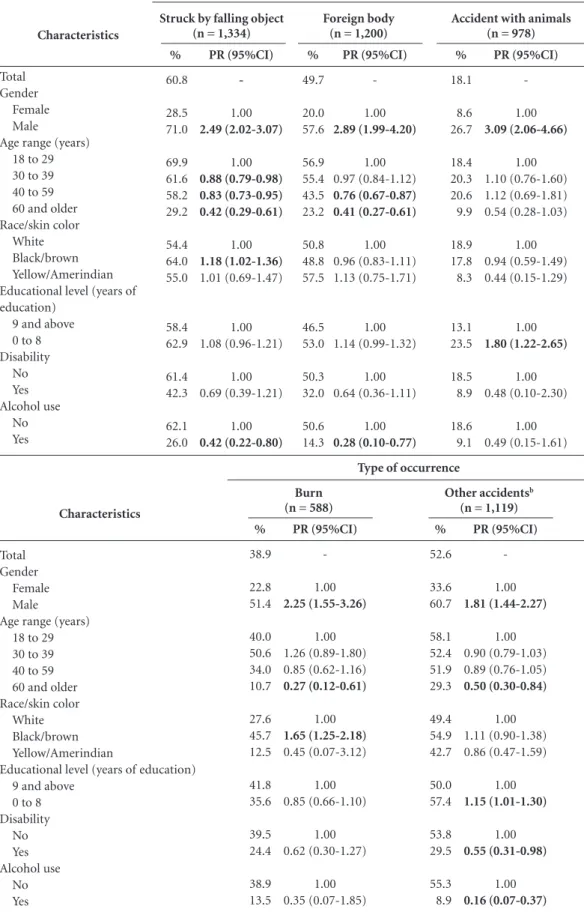
Table 4 specifies the prevalence of OAs among the different types of event and identifies factors associated with their occurrence. The OA ratio was significantly higher among men for all types
of occurrence, except being struck by an object/ person. OAs were positively associated with age between 30 and 39 years in treatments for inju-ries caused by traffic accidents, falls, being struck by an object/person and sprains. The OA ratio was significantly higher among black/brown individuals treated for falls, puncture wounds, being struck by falling objects and burns. A low educational level was positively associated with the occurrence of work-related events among treatments for accidents with animals, punc-ture wounds, being struck by a falling object, sprains and other accidents. A negative associ-ation between OAs and disability was found in treatments for falls, puncture wounds, sprains and other accidents. The OA ratio among alcohol consumers treated for accidental events was also significantly lower, except for accidents with ani-mals and burns.
Characteristics
Means of travel to the hospital MECS/ambulance/rescue Private vehicle
Bus/van (public) On foot Police car Other
Time of treatment Nighttime Daytime
Weekday of treatment Sunday
Monday Tuesday Wednesday Thursday Friday Saturday Evolution
Discharge Hospitalization
Referral to outpatient treatment Discharge against medical advice Death
Total (n = 29,463)b
%c
26.8 52.0 15.0 3.4 0.8 2.0
36.6 63.4
14.9 14.7 15.3 13.1 13.6 14.8 13.6
77.7 15.3 5.8 1.0 0.1
No (n = 19,709)b
%c
70.0 67.4 60.7 57.8 69.8 56.8
78.9 59.5
86.7 65.3 59.0 64.1 58.5 58.7 73.5
65.8 70.8 65.4 76.5 66.4
Yes (n = 9,754)b
%c
30.0 32.6 39.3 42.2 30.2 43.2
21.1 40.5
13.3 34.7 41.0 35.9 41.5 41.3 26.5
34.2 29.2 34.6 23.5 33.6
PR
1.00 1.09 1.31 1.41 1.01 1.44
1.00 1.92
1.00 2.61 3.09 2.70 3.12 3.11 1.99
1.00 0.85 1.01 0.69 0.98
95% IC
-1.02-1.15 1.22-1.41 1.24-1.60 0.81-1.26 1.27-1.63
-1.80-2.05
-2.31-2.96 2.72-3.50 2.35-3.11 2.74-3.56 2.77-3.49 1.76-2.26
-0.79-0.92 0.92-1.11 0.53-0.89 0.62-1.56
p value
-0.007 0.000 0.000 0.946 0.000
-0.000
-0.000 0.000 0.000 0.000 0.000 0.000
-0.000 0.801 0.004 0.934
Table 3. Characteristics of emergency treatments as a result of accidents according to work-related event – State capitalsa and Federal District, Brazil, 2011.
Source: Ministry of Health, Health Surveillance Secretariat, Surveillance System for Violence and Accidents (Sistema de Vigilância de Violências e Acidentes – VIVA), 2011 Survey. a Except Manaus – Amazonas State (AM) and São Paulo – São Paulo State (SP); b Absolute number of observations; c Weighted percentage. PR: prevalence ratio; 95%CI: 95% confidence interval.
M
ascar
e
nhas MDM Table 4. Prevalence (%) and prevalence ratio (PR) of work-related events among emergency treatments by type
of occurrence according to victim characteristics – State capitalsa and Federal District, Brazil, 2011
it continues Characteristics Total Gender Female Male
Age range (years) 18 to 29 30 to 39 40 to 59 60 and older Race/skin color
White Black/brown Yellow/Amerindian Educational level (years of education)
9 and above 0 to 8 Disability No Yes Alcohol use No Yes % 31.3 25.8 33.2 28.8 35.0 36.4 14.8 33.3 30.6 29.1 33.3 30.0 31.5 29.3 36.9 8.2 PR (95%CI) -1.00 1.28 (1.17-1.41) 1.00 1.21 (1.13-1.31) 1.26 (1.17-1.37) 0.51 (0.39-0.67) 1.00 0.92 (0.84-1.01) 0.87 (0.69-1.11) 1.00 0.90 (0.84-0.96) 1.00 0.93 (0.71-1.22) 1.00 0.22 (0.19-0.26) Traffic accident
(n = 10,463)
% 23.1 16.9 29.3 26.5 32.4 27.5 6.9 20.3 24.4 31.7 23.9 22.9 24.3 9.3 24.8 7.5 PR (95%CI) -1.00 1.74 (1.55-1.95) 1.00 1.22 (1.08-1.38) 1.04 (0.91-1.18) 0.26 (0.21-0.33) 1.00 1.21 (1.07-1.36) 1.56 (1.23-1.99) 1.00 0.96 (0.87-1.06) 1.00 0.38 (0.28-0.52) 1.00 0.30 (0.23-0.40) Fall (n = 8,317)
% 54.4 33.5 61.4 54.9 59.3 54.9 31.8 48.4 56.8 59.9 47.9 60.5 55.2 20.5 56.9 20.8 PR (95%CI) -1.00 1.83 (1.56-2.15) 1.00 1.08 (0.96-1.21) 1.00 (0.89-1.12) 0.58 (0.43-0.78) 1.00 1.17 (1.02-1.35) 1.24 (0.94-1.62) 1.00 1.26 (1.12-1.42) 1.00 0.37 (0.18-0.79) 1.00 0.37 (0.25-0.52) Puncture wound
(n = 2,302)
Characteristics
Total Gender
Female Male
Age range (years) 18 to 29 30 to 39 40 to 59 60 and older Race/skin color
White Black/brown Yellow/Amerindian
Educational level (years of education) 9 and above
0 to 8 Disability No Yes Alcohol use No Yes % 28.2 25.1 29.5 22.0 38.0 34.6 13.1 29.9 27.0 31.7 26.1 31.8 28.3 23.3 29.0 10.5 PR (95%CI) -1.00 1.17 (0.95-1.44) 1.00 1.73 (1.35-2.22) 1.57 (1.22-2.04) 0.60 (0.29-1.24) 1.00 0.90 (0.78-1.04) 1.06 (0.62-1.82) 1.00 1.22 (1.03-1.46) 1.00 0.82 (0.40-1.67) 1.00 0.36 (0.15-0.88) Struck by object/person
(n = 1,607)
% 38.2 33.8 41.5 35.9 44.2 42.2 12.9 38.3 38.6 28.2 34.3 44.1 38.8 17.4 39.6 8.9 PR (95%CI) -1.00 1.23 (1.03-1.46) 1.00 1.23 (1.03-1.47) 1.18 (0.98-1.40) 0.36 (0.17-0.76) 1.00 1.01 (0.84-1.21) 0.74 (0.45-1.21) 1.00 1.29 (1.13-1.46) 1.00 0.45 (0.20-0.99) 1.00 0.22 (0.10-0.53) Sprain (n = 1,512) Type of occurrence
e C ole tiv a, 20(3):667-678, 2015
Tabela 4. continuation
Source: Ministry of Health, Health Surveillance Secretariat, Surveillance System for Violence and Accidents (Sistema de Vigilância de Violências e Acidentes – VIVA), 2011 Survey. a Except Manaus – Amazonas State (AM) and São Paulo – São Paulo State (SP); b Includes suffocation, drowning, poisoning, intoxication, injury due to firearms, crushing and other non-classified injuries. Significant differences appear in bold (p<0.05). PR: prevalence ratio; 95%CI: 95% confidence interval.
Characteristics
Total Gender
Female Male
Age range (years) 18 to 29 30 to 39 40 to 59 60 and older Race/skin color
White Black/brown Yellow/Amerindian Educational level (years of education)
9 and above 0 to 8 Disability No Yes Alcohol use No Yes % 60.8 28.5 71.0 69.9 61.6 58.2 29.2 54.4 64.0 55.0 58.4 62.9 61.4 42.3 62.1 26.0 PR (95%CI) -1.00 2.49 (2.02-3.07) 1.00 0.88 (0.79-0.98) 0.83 (0.73-0.95) 0.42 (0.29-0.61) 1.00 1.18 (1.02-1.36) 1.01 (0.69-1.47) 1.00 1.08 (0.96-1.21) 1.00 0.69 (0.39-1.21) 1.00 0.42 (0.22-0.80) Struck by falling object
(n = 1,334)
% 49.7 20.0 57.6 56.9 55.4 43.5 23.2 50.8 48.8 57.5 46.5 53.0 50.3 32.0 50.6 14.3 PR (95%CI) -1.00 2.89 (1.99-4.20) 1.00 0.97 (0.84-1.12) 0.76 (0.67-0.87) 0.41 (0.27-0.61) 1.00 0.96 (0.83-1.11) 1.13 (0.75-1.71) 1.00 1.14 (0.99-1.32) 1.00 0.64 (0.36-1.11) 1.00 0.28 (0.10-0.77) Foreign body
(n = 1,200)
% 18.1 8.6 26.7 18.4 20.3 20.6 9.9 18.9 17.8 8.3 13.1 23.5 18.5 8.9 18.6 9.1 PR (95%CI) -1.00 3.09 (2.06-4.66) 1.00 1.10 (0.76-1.60) 1.12 (0.69-1.81) 0.54 (0.28-1.03) 1.00 0.94 (0.59-1.49) 0.44 (0.15-1.29) 1.00 1.80 (1.22-2.65) 1.00 0.48 (0.10-2.30) 1.00 0.49 (0.15-1.61)
Accident with animals (n = 978)
Characteristics
Total Gender
Female Male
Age range (years) 18 to 29 30 to 39 40 to 59 60 and older Race/skin color
White Black/brown Yellow/Amerindian
Educational level (years of education) 9 and above
0 to 8 Disability No Yes Alcohol use No Yes % 38.9 22.8 51.4 40.0 50.6 34.0 10.7 27.6 45.7 12.5 41.8 35.6 39.5 24.4 38.9 13.5 PR (95%CI) -1.00 2.25 (1.55-3.26) 1.00 1.26 (0.89-1.80) 0.85 (0.62-1.16) 0.27 (0.12-0.61) 1.00 1.65 (1.25-2.18) 0.45 (0.07-3.12) 1.00 0.85 (0.66-1.10) 1.00 0.62 (0.30-1.27) 1.00 0.35 (0.07-1.85) Burn (n = 588)
% 52.6 33.6 60.7 58.1 52.4 51.9 29.3 49.4 54.9 42.7 50.0 57.4 53.8 29.5 55.3 8.9 PR (95%CI) -1.00 1.81 (1.44-2.27) 1.00 0.90 (0.79-1.03) 0.89 (0.76-1.05) 0.50 (0.30-0.84) 1.00 1.11 (0.90-1.38) 0.86 (0.47-1.59) 1.00 1.15 (1.01-1.30) 1.00 0.55 (0.31-0.98) 1.00 0.16 (0.07-0.37) Other accidentsb
(n = 1,119) Type of occurrence
M
ascar
e
nhas MDM Discussion
External causes are an important reason for hospitalization and urgent and emergency care assistance in health-care services. Among such cases, OAs exhibit high relevance and magni-tude. According to the 2011 VIVA Survey data, approximately one-third of all treatments were for injuries occasioned by work-related events. The victims of work-related accidents were pri-marily male, young (30 to 39 years old), brown and black, industrial goods and services work-ers, farmers or repair and maintenance service workers. The occurrences were more frequent during the daytime and from Monday to Friday. OAs were more prevalent among accidents that involved being struck by falling objects, puncture wounds, foreign bodies and burns. The locations with the highest OA occurrence were factories/ plants/construction sites, stores/service estab-lishments/bars, public streets and schools.
OAs are the leading cause of work-related deaths and severe disabilities worldwide, al-though many countries do not differentiate their accident statistics with respect to occupational illnesses. The population afflicted by OAs consti-tutes an important recipient group of emergency services treatments11. This study reaffirms this finding, demonstrating that more than one-third of the injuries treated at the urgent and emer-gency care units were work-related, which agrees with a study conducted by Conceição et al.8 in Salvador (Bahia State – BA), who found 31.6 % of emergency assistance services were provided to OA victims.
Treatments identified by the VIVA Survey could be an invaluable source of information on these occurrences and support the understand-ing of work-related events. Current data on OAs reported to the INSS using CAT do not cover all types of worker because the system is exclusively dedicated to formal workers, who represent less than half the active work force8.
Currently, OAs generate significant social and economic losses, with large amounts spent on welfare benefits paid by the INSS. It is estimated that approximately half a million working days are lost per year because of OAs. Among the con-ditions and diseases that generate benefits, 7.3 % are the result of OAs, with a higher ratio among workers in the manufacturing and construction/ electricity/gas industries12.
Regarding sociodemographic factors, the VIVA Survey indicated the predominance of male, young (30 to 39 years), brown and black,
less-qualified workers. Except for the predom-inance of women, this profile is in agreement with findings from a community-based cohort study on 2,512 individuals residing in Salvador (BA). Specifically, 628 workers reported an OA in the follow-up period, with a predominance of women (64 %), young adults between 18 and 30 years old (41.6 %), blacks (66.4 %), and individ-uals with a low educational level (51.4 %), low socioeconomic status (55.1 %) and informal em-ployment (54.3 %)11.
The data from the VIVA Survey also exhib-ited a higher prevalence ratio of workers from the industrial goods and services sector, farm-ers and repair and maintenance service workfarm-ers compared with science and art professionals, which was also observed by Santana et al.12 This outcome may be the result of the higher risk in-volved in these sectors, in which more caution is required for the execution of the job and the use of personal protective equipment and measures to guarantee a safer workplace are necessary.
By analyzing the logistic regression of a data-base of typical OAs reported to the INSS, other authors have found that educational level and income were predictive variables for OAs, where-as the remaining variables, such where-as age, race/skin color, smoking, and alcohol use disappeared af-ter the adjustment for educational level and in-come22. This type of analysis was not the aim of the present study. However, the predominance of brown/black victims and workers with a low edu-cational level could be identified as proxy for low socioeconomic status.
Regarding the distribution of emergency treatments for work-related injuries according to the Brazilian state capitals and Federal District, the lowest ratio was found in North and North-east Brazilian cities, whereas the highest ratio was found in the cities of South, Southeast and Cen-ter-West Brazil. This profile coincides with the level of development in the country. The more developed regions exhibited a higher ratio of work-related accidents, possibly because of their higher concentration of industries and mainte-nance and repair services.
e C
ole
tiv
a,
20(3):667-678,
2015
consumption was associated with 9 % of all OA cases, which is a lower occurrence compared with other types of accidents and violence (44 %)19.
The majority of the emergency treatments were the result of traffic accidents, of which 31.3 % were work-related. However, other char-acteristics of today’s world that are linked to the informal labor market have broadened the array of events, including traffic accident victims who work on the streets, such as street traders, paper and cardboard collectors, motorcycle couriers, and motorcycle taxi drivers. A study conducted in Campinas (SP)9 revealed that most OA victims (59.0 %) were active in the informal labor mar-ket at the time of death. This finding suggests a higher vulnerability of the informal worker in addition to the greater exposure to the street and direct contact with the public of such workers, thus increasing the risk of traffic accidents and violence in general. Although other types of treatment were less frequent, they exhibited the highest prevalence of OAs: being struck by fall-ing objects, puncture wounds, foreign bodies and burns. These occurrences are the most frequent in occupations in the services, maintenance and farming sectors, which exhibited the highest OA ratio relative to professionals with a higher edu-cational level.
Ordinance no. 1823 of August 23, 2012, which instituted the National Worker’s Health Policy, established the compulsory notification of severe and fatal OAs24. However, a significant number of minor and moderate accidents (approximately 80 %) do not require reporting. OA victims in-creasingly require assistance at urgent and emer-gency care services, considering the magnitude of such accidents (approximately 30 % of all treat-ments) and the social and economic impact they entail. Many of these accidents remain invisible to the INSS. Thus, studies performed in urgent and emergency care units are vital to providing more reliable measurements of the occurrence of these accidents. The VIVA Survey identifies occurrences in urgent and emergency care ser-vices of the Brazilian state capitals and thereby includes the low-income population that works in the informal labor market that is not included in the National Social Security system. This in-formation can help improve the inin-formation on OAs and offer a more accurate diagnosis of their actual occurrence in Brazil. Additionally, it can provide support for the implementation Work-er’s Health Surveillance activities.
Collaborations
M
ascar
e
nhas MDM
Gawryszewski VP, Silva MMA, Malta DC, Mascarenhas MDM, Costa VC, Matos SG, Moraes Neto OL, Mon-teiro RA, Carvalho CG, Magalhães ML. A proposta da rede de serviços sentinela como estratégia de vigilân-cia de violênvigilân-cias e acidentes. Cien Saude Colet 2006; 11(Supl.):1269-1278.
Almeida IM, Vilela RAG, Silva AJN, Beltran SL. Modelo de Análise e Prevenção de Acidentes - MAPA: ferra-menta para a vigilância em Saúde do Trabalhador. Cien
Saude Colet 2014; 19(12):4679-4688.
Ministério da Saúde (MS). Viva: vigilância de violências
e acidentes, 2006 e 2007. Brasília: MS; 2009.
Brasil. Ministério da Saúde (MS). Viva: vigilância de
violências e acidentes, 2008 e 2009. Brasília: MS; 2010.
Brasil. Ministério da Saúde (MS). Viva: Vigilância de
Violências e Acidentes, 2009, 2010 e 2011. Brasília: MS;
2013.
Brasil. Ministério da Saúde (MS). Portaria nº 737, de 16 de maio de 2001. Institui a política nacional de redução da morbimortalidade por acidentes e violências. Diário
Oficial da União 2001; 18 mai.
Brasil. Ministério do Trabalho e Emprego (MTE).
Clas-sificação Brasileira de Ocupações 2002 [internet].
Bra-sília: MTE [acessado 2014 maio 27]. Disponível em: http://www.mtecbo.gov.br/cbosite/pages/informacoes Gerais.jsf
Lima RC, Victora CG, Agnol MD, Facchini LA, Fassa A. Associação entre as características individuais e só-cio-econômicas e os acidentes de trabalho em Pelotas, Rio Grande do Sul, Brasil. Cad Saude Publica 1999; 15(3):569-580.
Santana VS, Xavier C, Moura MCP, Oliveira R, Espíri-to-Santo JS, Araújo G. Gravidade dos acidentes de tra-balho atendidos em serviços de emergência. Rev Saude
Publica 2009; 43(5):750-760.
Brasil. Ministério da Saúde (MS). Portaria nº 1.823, de 23 de agosto de 2012. Institui a Política Nacional de Saúde do Trabalhador e da Trabalhadora. Diário Oficial
da União, 2012; 24 ago.
Article submitted on 10/22/2014 Approved on 11/24/2014
Final version submitted on 11/26/2014 15.
16.
17. 18. 19.
20.
21.
22.
23.
24. References
World Health Organization (WHO). Injury
surveillan-ce guidelines. Geneva: WHO; 2001.
World Health Organization (WHO). Guidelines for
conducting community surveys on injuries and violence.
Geneva: WHO; 2004.
World Health Organization (WHO). World report
on violence and health. Geneva: WHO; 2002.
Fraade-Blanar L, Concha-Eastman A, Baker T. Injury in the Americas: the relative burden and chalenge. Rev
Panam Salud Publica 2007; 22(4):254-259.
Malta DC, Silva MMA, Mascarenhas MDM, Souza MFM, Morais Neto, Costa VC, Magalhães M, Lima CM. A vigilância de violências e acidentes no Sistema Único de Saúde: uma política em construção. Divulg Saúde
Debate 2007; (39):82-92.
Gawryszewski VP, Rodrigues EMS. The burden of in-jury in Brazil, 2003. Sao Paulo Med J 2006; 124(4):208-213.
Brasil. Ministério da Saúde (MS). Informações de saúde [dados na Internet]. Brasília: MS [acessado 2014 maio 27]. Disponível em: http://www.datasus.gov.br Conceição PSA, Nascimento IBO, Oliveira PS, Cerquei-ra MRM. Acidentes de tCerquei-rabalho atendidos em serviço de emergência. Cad Saude Publica 2003; 19(1):111-117. Binder MCP, Cordeiro R. Sub-registro de acidentes do trabalho em Botucatu-SP. Rev Saude Publica 2003; 37(4):409-416.
Hennington, EA, Cordeiro R, Moreira Filho DC. Tra-balho, violência e morte em Campinas, São Paulo, Bra-sil. Cad Saude Publica 2004; 20(2):610-617.
Santana VS, Araújo GR, Espírito-Santo JS, Araújo-Fi-lho JB, Iriart J. A utilização de serviços de saúde por acidentados de trabalho. Rev Bras Saúde Ocup 2007; 32(115):135-144.
Santana VS, Araújo-Filho JB, Albuquerque-Oliveira PA, Barbosa-Branco A. Acidentes de trabalho: custos previdenciários e dias de trabalho perdidos. Rev Saude
Publica 2006; 40(6):1004-1012.
Minayo MCS. Violência: um problema para a saúde dos brasileiros. In: Brasil. Ministério da Saúde (MS).
Impacto da violência na saúde dos brasileiros. Brasília:
MS; 2005. p. 9-42.
Silva MMA, Malta DC, Morais Neto OL, Rodrigues EMS, Gawryszewski VP, Matos S, Costa VC, Carvalho CG, Castro AM. Agenda de prioridades da vigilância e prevenção de acidentes e violências aprovada no I Seminário Nacional de Doenças e Agravos Não Trans-missíveis e Promoção da Saúde. Epidemiol Serv Saúde 2007; 16(1):57-64.
1. 2.
3. 4.
5.
6.
7.
8.
9.
10.
11.
12.
13.