RBCCV 44205-1539 DOI: 10.5935/1678-9741.20140039
High postoperative serum levels of surfactant
type B as novel prognostic markers for congenital
heart surgery
Níveis séricos pós-operatórios tipo surfactante B elevados como novos marcadores prognósticos para
cirurgia cardíaca congênita
Onur Isık
1, MD; Olcay Murat Disli
2; Tolga Bas
2, MD; Hakan Aydın
1, MD; Murat Koç
1, MD; Ali
Kutsal
11Dr. Sami Ulus Maternity and Children’s Research and Education Hospital,
Department of Cardiovascular Surgery, Ankara, Turkey.
2 Inonu University, Turgut Ozal Medical Center, Department of
Cardiovas-cular Surgery, Malatya, Turkey.
This study was carried out at Dr. Sami Ulus Maternity and Children’s Re-search and Education Hospital, Ankara, Turkey; Department of Cardiovas-cular Surgery, Dr. Sami Ulus Maternity and Children’s Research and Educa-tion Hospital, Altindag Ankara, Turkey.
No inancial support.
Correspondence address:
Onur Isık
Dr. Sami Ulus Maternity and Children’s Research and Education Hospital Department of Cardiovascular Surgery
Babur street no 14 - Altindag Ankara, Turkey E-mail: [email protected]
Article received on August 5th, 2013
Article accepted on November 28th, 2013
Abstract
Objective: Congenital heart diseases are observed in 5 to 8
of every 1000 live births. The presence of a valuable biomarker during the surgical periods may aid the clinician in a more ac-curate prognosis during treatment.
Methods: For this reason, surfactant protein B plasma levels
may help to evaluate patients with cardiac problems diminish-ing the alveolocapillary membrane stability. In this study, plas-ma levels of this bioplas-marker were measured in the preoperative and postoperative periods. This study was conducted to detect the differences between pulmonary hypertensive and normo-tensive patients. The differences before and after cardiopulmo-nary bypass were examined.
Results: The differences in cardiopulmonary bypass time,
cross-clamp time , inotropic support dose, and duration of inten-sive care of patients with and without pulmonary hyperteninten-sive
were found to be statistically signiicant (P<0.05). The results revealed that this pathophysiological state was related to other variables that were studied. We believe that the differences in preoperative and postoperative SPB levels could be attributed to alveolocapillary membrane damage and alveolar surfactant dysfunction. We found that this pathophysiological condition
was signiicantly associated with postoperative parameters.
Conclusion: The indings of the current study showed that
surfactant protein B was present in the blood of patients with a congenital heart disease during the preoperative period. Long by-pass times may exert damage to the alveolocapillary mem-brane in patients with pulmonary hypertension and preopera-tive heart failure, and it is recommended to keep the option of surfactant therapy in mind during the postoperative course at the intensive care unit before preparing the patients for extu-bation.
Descriptors: Heart Surgery. Biological Markers. Pulmonary
Surfactant-Associated Protein B. Heart Defects, Congenital.
Resumo
Objetivo: As cardiopatias congênitas são observadas em 5 a
8 em cada 1.000 nascidos vivos. A presença de um biomarcador importante durante os períodos cirúrgicos pode auxiliar o clíni-co a um prognósticlíni-co mais preciso durante o tratamento.
Métodos: Por esta razão, os níveis plasmáticos de
dife-icine (Date: 16/10/2012, Number: 70), and written informed consent was obtained from the patients’ families. Thirty pa-tients who were admitted to our clinic for open heart surgery due to congenital heart disease, who were diagnosed using catheter angiography in 2011, and who had undergone sur-gery by the same surgeon were included in the study. The detailed description of the patients’ congenital heart diseases and the performed surgeries are presented in Table 1.
All patients with congenital heart disease were exam-ined in two groups; patients with (group 1, n1=13) or without (group 2, n2=17) pulmonary hypertension. Pulmonary
hyper-tension was deined as systolic pulmonary artery pressure
higher than 50% of the systolic systemic pressure[3].
Patients were also assessed regarding inotropic medi-cation they received, total cardiopulmonary bypass (CPB) INTRODUCTION
Cardiac surgery has been a rapidly developing scientiic
area that has experienced many innovations in the second half of the last century. The rapid advances in surgery have cre-ated a need for markers to guide intensive care follow-up[1].
The discovery of a biomarker that will guide the postop-erative intensive care follow-up, aid in anticipating compli-cations, shape treatment, and facilitate decision-making for
the duration of intensive care follow-up has great beneits.
Furthermore, the biomarker’s ability to provide results in a
short time and reliability is beneicial, as well.
Surfactant protein B (SPB) can be used for the aforemen-tioned purposes; since it is not present in the peripheral blood of healthy individuals, but rather enters into the peripheral bloodstream as a result of a pressure imbalance in the pulmo-nary alveolocapillary membrane due to heart failure[1].
SPB is used as a biological marker to determine the de-gree of pulmonary dysfunction in adult patients with heart failure and the detection of the response to medical treat-ment. However, the research on the use of SPB in congenital
cardiac surgery has not been suficient yet[2].
This study examined the levels of SPB protein in the pe-ripheral blood of patients with congenital heart disease under-going open heart surgery, in the preoperative and postoperative periods. The study further investigated their relationships with mortality and morbidity by comparing these values with rou-tine variables obtained in intensive care follow-ups.
METHODS
Ethics approval was obtained from Clinical Research Ethics Review Board of Ankara University Faculty of
Med-Abbreviations, Acronyms & Symbols
CPB cardiopulmonary bypass DMV duration of mechanical ventilation PH pulmonary hypertension SPA Surfactant protein A SPB surfactant protein B SPC surfactant protein C SPD surfactant protein D XCT cross-clamp time
renças entre pacientes hipertensos e normotensos em nível pul-monar. As diferenças antes e depois da circulação extracorpórea foram examinadas.
Resultados: As diferenças no tempo de circulação
extracor-pórea, tempo de pinçamento, a dose de drogas vasoativas, e a duração da terapia intensiva de pacientes com e sem
hiperten-são pulmonar foram estatisticamente signiicativas (P<0,05). Os
resultados revelaram que este estado isiopatológico foi relacio
-nado a outras variáveis que foram estudadas. Acreditamos que as diferenças nos níveis de SPB pré-operatório e pós-operatório pode ser atribuída a danos na membrana alvéolo-capilar e dis-função do surfactante alveolar. Descobrimos que esta condição
isiopatológica foi signiicativamente associada com parâmetros
pós-operatórios.
Conclusão: Os resultados do estudo mostraram que a
pro-teína B surfactante estava presente no sangue de pacientes com doença cardíaca congênita no pré-operatório. Longos tempos de circulação extracorpórea podem exercer danos na membrana alvéolo-capilar em pacientes com hipertensão pulmonar e
in-suiciência cardíaca pré-operatória, e recomenda-se manter a
opção de terapia com surfactante em mente durante o período pós-operatório na unidade de terapia intensiva antes de prepa-rar os pacientes para a extubação.
Descritores: Cirurgia Torácica. Marcadores Biológicos.
Pro-teína B Associada a Surfactante Pulmonar. Cardiopatias Con-gênitas.
Table 1. Patient diagnose and performed surgery.
Diagnose Sec ASD P. VSD PAPVC Aortic Rg. AVSD TOF TGA T. Arteriozus ALCAPA
Procedure Primary Closure
Patch Closure Interatrial bafle reconstruction
Mechanical AVR Australian Technique Total Correction (transannular patch)
Arterial Switch
Total Correction (12 mm valved tube graft) Detachment reatachment
and aortic cross-clamp time (XCT), duration of mechanical ventilation and pressure support ventilation, liver and kidney functions in the postoperative period, intensive care time, and discharge time.
All patients underwent median sternotomy and aorto-bi-caval cannulation. During CPB, hypothermia (up to 28-32°C) was used with respect to the patient’s cardiac pathology. Di-astolic cardiac arrest was achieved using topical cold and an-tegrade hypothermic crystalloid cardioplegia.
After induction of anesthesia, blood samples were taken from all patients to investigate the BNP and the surfactant protein B. Then, the samples were centrifuged at 1000 rpm at room temperature (22°C) for 15 minutes. Separated plasma was placed in a polypropylene tube and stored at -20°C. Tests for hemodynamic data, arterial blood gas samples, and sam-ples for BNP and surfactant protein B values were repeated in
the irst hour after the surgery. In addition, patients’ inotropic
treatment needs after surgery, CPB time, cross-clamp (XCT), duration of mechanical ventilation (DMV), and pressure sup-port in providing the appropriate tidal volume were recorded. The collected plasma samples were studied using a Hu-man Pulmonary Surfactant Associated Protein B ELISA kit (Cusabio Biotech Co. Ltd. Wuhan, PR China).
Measurement of Surfactant Protein B
Microtiter surfaces that were pre-coated with a speciic
antibody against surfactant protein B were used in this kit. Then, the samples were properly placed on a micro-surface together with avidin-conjugated horseradish peroxidase,
which was prepared with antibodies speciic to biotin-con -jugated SPB, and were later incubated. Next, a tetramethyl-benzidine substrate solution was added to each sample. Color change was observed only in the samples containing SPB, i.e. samples containing biotin-conjugated antibodies and en-zyme-conjugated avidin.
For the samples terminating with the enzyme substrate reaction, the samples were spectrophotometrically measured at a wavelength of 450 nm after the addition of sulfuric acid solution. The SPB concentration in the samples was calculat-ed by a comparison of the standard slope of normal values.
Statistical Analysis
Based on post-hoc power analysis, a sample size of 13 achieved 99% power to detect a mean of paired differences
of 0.50 with an estimated standard deviation of differences of
0.40 and with a signiicance level (alpha) of 0.05 using a
two-tailed paired t-test. The quantitative variables were represent-ed as mrepresent-edian (min-max). Kolmogorov Smirnov test was usrepresent-ed
as a goodness of it test to assess the normality of the sample
distribution. Mann-Whitney U-test and Wilcoxon test, where appropriate, were used for the comparison of all quantitative
variables. Spearman’s rho correlation coeficient was used
in the correlation analyses. P values <0.05 were considered
as statistically signiicant. SPSS for Windows 21.0 statistical
software was used for data analysis.
RESULTS
Patients were divided into two groups according to pul-monary artery pressure, measured with catheter angiography in the preoperative examination. 13 patients were included in the group of patients with pulmonary hypertension (PH), whereas 17 patients were included in the group of patients without PH.
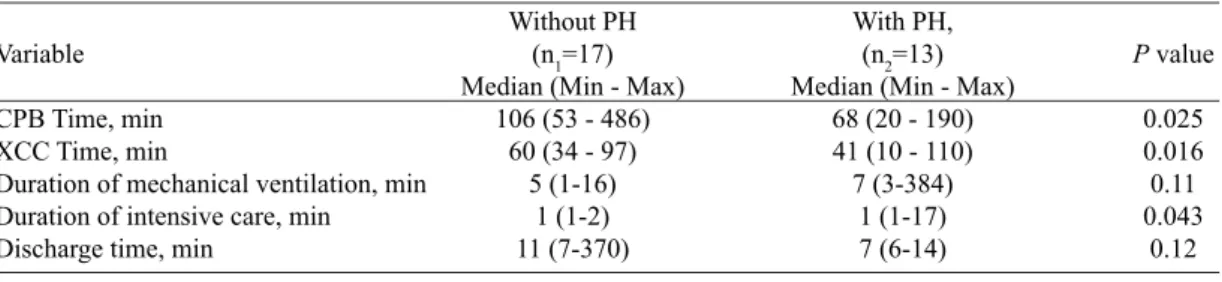
Table 2 presents the comparison of patients with and without PH in terms of CPB time, XCT time, duration of me-chanical ventilation, duration of intensive care, and discharge time of patients. The differences in CPB time, XCT, inotro-pic support dose, and duration of intensive care of patients
with and without PH were found to be statistically signiicant
(P<0.05), whilst duration of mechanical ventilation, pressure support ventilation and discharge time were not statistically
signiicant (P>0.05).
Table 3 demonstrates SPB serum levels before and after sur-gery. In patients with and without PH, the differences between the SPB blood values in the preoperative and postoperative
peri-ods were observed to be statistically signiicant (P<0.05). The levels of pre-SPB and post-SPB between the groups
were not found to be signiicant (P>0.05).
Table 4 deines the BNP levels before and after surgery.
The increases in BNP values, which were simultaneously
studied with SPB, were found to be signiicant (P<0.05). Whereas the levels of pre-BNP and post-BNP between the
groups were not statistically signiicant (P>0.05).
When two groups were formed of patients who died in the postoperative period and who were discharged, the in-creases of percentage in SPB levels of these patients were
observed to be statistically signiicant (P<0.05).
Table 2. Descriptive statistics of patients with and without PH.
Variable
CPB Time, min XCC Time, min
Duration of mechanical ventilation, min Duration of intensive care, min Discharge time, min
Without PH (n1=17) Median (Min - Max)
106 (53 - 486) 60 (34 - 97)
5 (1-16) 1 (1-2) 11 (7-370)
With PH, (n2=13) Median (Min - Max)
68 (20 - 190) 41 (10 - 110) 7 (3-384)
1 (1-17) 7 (6-14)
P value
0.025 0.016 0.11 0.043
Signiicant increases were found in SPB levels of the pa -tient group requiring prolonged mechanical ventilation and pressure support ventilation in the preoperative and postop-erative periods (P<0.05).
Positive correlations were found between CPB time and XCT time (Spearman’s rho=0.92, P<0.001) and hospital stay duration (Spearman’s rho=0.53, P=0.02). Positive correla-tions were detected between mechanical ventilation time and hospital stay duration (Spearman’s rho=0.63, P=0.005) and discharge time (Spearman’s rho=0.49, P=0.04). Similarly, discharge time was positively correlated with duration of in-tensive care (Spearman’s rho=0.70, P=0.001) and discharge time (Spearman’s rho=0.49, P=0.04).
DISCUSSION
Lung epithelial cells provide a large surface area allow-ing for gas exchange between capillary vessels. The greatest problem of such a large and hydrated area is the collapse of the alveolar surfaces in the expiratory phase of respiration. This problem is solved by a lipid-rich surface generated by pulmonary surfactant protein on the epithelial cells, sepa-rating alveolar gas and liquids. Pulmonary surfactant phos-pholipids decrease the surface tension to negligible levels by forming mono- and multi-layers[4].
There are four types of surfactant protein in the alveoli, namely: Surfactant protein B (SPA), Surfactant derived tein B (SPB), surfactant protein C (SPC) and surfactant tein C (SPD). Although the chemical structures of these pro-teins are different, their tasks within the alveoli overlap each other. The functions of these proteins are to prevent alveolar collapse at the end of expiration, to create a large surface area for gas exchange, and to perform immunoregulation against external aggressors[5-7].
Among these proteins, SPB is different in terms of its en-trance into the blood after the pressure changes in the
respira-tory and circularespira-tory physiopathology by passing through the alveolocapillary membrane due to its molecular size. The half-life of this protein in the blood is short about 3 to 12 minutes. Although SPB is not the smallest of the surfactant proteins in the alveoli, it is the smallest surfactant that can be measured in the bloodstream. At the same time, alveolar concentration of SPB also changes after these transformations[8,9].
Because of these characteristics, SPB has become the subject of research in acute and chronic lung injuries, heart failures, and congenital lung diseases.
Dyspnea is a major inding resulting from pulmonary
edema that occurs with congestive heart failure. Based on this fact, De Pasquale et al.[8] used SPB blood levels as a
bio-marker of lung function and status in follow-ups of patients with heart failure. Since SPB blood levels have a tendency to increase in all pulmonary diseases, this marker was used only in the follow-up of lung status in patients with conges-tive heart failure and damaged alveolocapillary membranes. They explained that during patient follow-ups, SPB levels were increased in decompensation periods of heart failure, and that compensation had a low course of progression with medical treatment. The researchers described SPB as a useful biomarker for anticipation of the future progression of the pa-tients with congestive heart failure in the clinical follow-ups. West et al.[10] showed the structural fragility of the
alveolo-capillary barrier under high pulmonary pressure and designat-ed this situation as ’stress failure’. Pascual-Figal et al.[11]
com-pared the SPB blood levels of patients with heart failure to SPB blood levels of normal, healthy people and found that blood
levels of this protein were signiicantly higher in patients with
heart failure. De Pasquale et al.[12] categorized the patients in their research according to the NYHA functional classiication
and 6-minute walk test, and they found the differences in SPB levels in blood samples of these patients to be in accordance with the functional groups. Magri et al.[13] monitored patients
with congestive heart failure and explained that SPB values
Table 4. BNP levels before and after surgery.
Variable
Pre-BNP levels Post-BNP levels
P value
Without PH (n1=17) Median (Min - Max)
129 (44-18208) 161 (68-35000)
<0.001
With PH, (n2=13) Median (Min - Max)
170 (32-1250) 900 (54-18000)
0.001
P value
0.39 0.32 Table 3. SPB serum levels before and after surgery.
Variable
Pre-SPB serum levels Post-SPB serum levels
P value
Without PH (n1=17) Median (Min - Max)
2.95 (2.42 – 4.31) 3.48 (2.96 – 5.35)
<0.001
With PH, (n2=13) Median (Min - Max)
3.18 (2.46 - 3.74) 3.51 (3.00 – 4.23)
0.002
P value
were increased in the peripheral blood samples of patients with heart failure, and also that these values were directly related to the damage of gas diffusion in the lungs. Researchers also reported that SPB blood levels correlated with the degree of heart failure. The results of this study were similar. SPB levels were higher in the pulmonary hypertension group and this sub-group’s clinical condition was worse than the group without pulmonary hypertension.
Pulmonary dysfunction after cardiac surgery is a signif-icant morbidity despite advancing heart-lung pump tech-nology and developing intensive care conditions. This dys-function includes a wide range of consequences from severe ARDS tables to more moderate extubation delays or mild re-spiratory failures. Anesthesia, cardiopulmonary bypass, and surgical trauma are included together in the etiology of this dysfunction[14,15]. Tennenberg et al.[16] in their study aimed at
enlightening how lung physiology changed after CPB, as-serted that lung function was impaired. They related the im-pairment of lung function with the decrease in lung volume, the decrease in carbon monoxide transfer, and the increase in alveolar-arterial oxygen pressure gradient. They suggested that these changes were not caused by the increase in pulmo-nary endothelial permeability.
Cox et al.[17] investigated the cause of postoperative
pul-monary dysfunction occurring after CPB and considered that cardiopulmonary bypass triggered the dysfunction through leukocyte and complement activation. They indicated that this system could result in the deterioration of gas exchange in the postoperative period, increased alveolar-arterial oxy-gen gradient, and decreased pulmonary compliance; these
factors were relected as atelectasis and as an increase in
respiratory workload depending on the clinical status of the patient. Although the researchers explained the mechanism of action as such, they did not report any differences between the control group and patients without any pulmonary dis-ease in the preoperative period and with good myocardial performance in terms of lung dysfunction[15,16].
Following total correction of the primary congenital heart disease, the patients without pulmonary hypertension made a good recovery and had an uneventful postoperative course. We
believe that the literature indings which were discussed in the
preceding paragraph are the underlying reasons for this good outcome. On the other hand, patients in the pulmonary hyper-tension group had various respiratory system complications, as well as longer discharge times. Griese et al.[18] argued that
CPB caused acute lung injury in various degrees and asserted that complex congenital heart patients under the age of one year were the most risky candidates of this group. They ex-plained the mechanism of this injury as the mediators released from activated platelets following the contact of blood with non-physiological surfaces, the activation of the complement system, the activation of the kallikrein-kinin system, and the development of interstitial edema in the pulmonary capillary
endothelium following the sequestration of activated PMN (polymorphonuclear) cells into pulmonary alveoli.
They suggested that this edema directly impaired the in-tra-alveolar surfactant metabolism. In order to demonstrate this, the researchers took alveolar lavage samples from in-fants with complex congenital heart disease with long CPB times and with poor general conditions in the postoperative period; they assessed the samples in terms of surfactant ac-tivity and found functional disorders afterwards[18].
Preoperative SPB blood levels of all patients included in the study were high due to alveolocapillary membrane dam-age that was caused by the hypoxia or the left to right shunt of various degrees, which developed as secondary to the con-genital heart anomaly. SPB values, measured in all patients within the preoperative and postoperative periods, had a ten-dency to increase due to alveolocapillary membrane damage, resulting both from the immunological and acute pressure changes, which took place during and after CPB. The fact that there was an increase in SPB in the blood, which was higher in patients with pulmonary hypertension before and after surgery, suggested that high pulmonary blood pressure damaged alveolocapillary membrane more severely in this patient group and these patients suffered greater pulmonary damage from CPB.
Higher pressure required to obtain normal tidal volume in mechanical ventilation in patients with higher SPB levels in the postoperative period suggested that this was accordant with the fact that these patients were more complex cardiac patients, they required longer CPB times, consequently suf-fering from greater alveolar surfactant dysfunction, and had more severe alveolocapillary membrane damage.
Study Limitations
The current study had certain limitations, including small sample size, variability in age and primary pathologies in the subgroups; however, the groups were divided according to the pulmonary artery pressures.
CONCLUSION
SPB is a protein that is normally undetectable in periph-eral circulation, but it enters into the bloodstream when the structure of the alveolocapillary membrane is disrupted for any reason. In the current study, SPB was present in the blood in patients with congenital heart disease (pulmonary hypertension, heart failure, hypoxic pathophysiology) in
the preoperative period. We believe that the signiicant dif -ferences in preoperative and postoperative surfactant type B levels could be attributed to alveolocapillary membrane damage and alveolar surfactant dysfunction. We found that
Long by-pass times may exert damage to the alveolocapil-lary membrane in patients with pulmonary hypertension and preoperative heart failure, and it is recommended to keep the option of surfactant therapy in mind during the postoperative course at the intensive care unit before preparing the patients for extubation.
The indings of the current study should be reproduced
and validated on a larger sample population to be able to use SPB as an indicator of mortality and morbidity in the inten-sive care follow-ups of patients who underwent open heart surgery due to congenital heart disease. Overall, this study showed that surfactant protein B plasma levels may provide useful as a prognostic marker for all phases of pediatric car-diac surgeries.
Authors’ roles & responsibilities
OI Primary responsibility for protocol development, outcome assessment, preliminary data analysis and writing the manuscript
OMD Participated in the development of the protocol and preliminary data analysis and writing the manuscript TB Participated in the outcome assessment
HA Participated in the development of the protocol MK Participated in the writing the manuscript AK Participated in the development of the protocol
REFERENCES
1. Whitsett JA, Weaver TE. Hydrophobic surfactant proteins in lung function and disease. N Engl J Med. 2002;347(26):2141-8.
2. Wright JR. Immunoregulatory functions of surfactant proteins. Nat Rev Immunol. 2005;5(1):58-68.
3. Banjar HH. Review of management guidelines of pulmonary arterial hypertension in the pediatric population. PVRI Rev. 2010;2(3):100-13.
4. Ryan MA, Akinbi HT, Serrano AG, Perez-Gil J, Wu H, McCormack FX, et al. Antimicrobial activity of native and synthetic surfactant protein B peptides. J Immunol. 2006;176(1):416-25.
5. Hawgood S. Surfactant protein B: Structure and function. Biol Neonate. 2004;85(4):285-9.
6. Floros J, Lin Z. Genetic Variability of Surfactant Protein-B and
Respiratory Distress Syndrome: Clinical Implications. Med Gen Med. 1999;1(3) [Accessed 2014 May 29]. Available at: http:// www.medscape.com/viewarticle/408742
7. Parra E, Alcaraz A, Cruz A, Aguilella VM, Pérez-Gil J. Hydrophobic pulmonary surfactant proteins SP-B and SP-C induce pore formation in planar lipid membranes: evidence for proteolipid pores. Biophys J. 2013;104(1):146-55.
8. De Pasquale CG, Arnolda LF, Doyle IR, Aylward PE, Chew DP, Bersten AD. Plasma surfactant protein-B: A novel biomarker in chronic heart failure. Circulation. 2004;110(9):1091-6.
9. Guyton AC, Hall JE, editors. Textbook of Medical Physiology. Michigan: Elsevier Saunders; 2005.
10. West JB, Tsukimoto K, Mathieu-Costello O, Prediletto R. Stress failure in pulmonary capillaries. J Appl Physiol (1985). 1991;70(4):1731-42.
11. Pascual-Figal DA, Sánchez-Más J, de la Morena G, Casas T, Garrido IP, Ruipérez JA, et al. Pulmonary surfactant protein B in the peripheral circulation and functional impairment in patients with chronic heart failure. Rev Esp Cardiol. 2009;62(2):136-42.
12. De Pasquale CG, Bersten AD, Doyle IR, Aylward PE, Arnolda LF. Infarct-induced chronic heart failure increases bidirectional protein movement across the alveolocapillary barrier. Am J Physiol Heart Circ Physiol. 2003;284(6):H2136-45.
13. Magrì D, Brioschi M, Bani C, Schmid JP, Palermo P, Contini M, et al. Circulating plasma surfactant protein type B as biological marker of alveolar-capillary barrier damage in chronic heart failure. Circ Heart Fail. 2009;2(3):175-80.
14. Bersten AD, Hunt T, Nicholas TE, Doyle IR. Elevated plasma surfactant protein-B predicts development of acute respiratory distress syndrome in patients with acute respiratory failure. Am J Respir Crit Care Med. 2001;164(4):648-52.
15. Matthay MA, Wiener-Kronish JP. Respiratory management after cardiac surgery. Chest 1989;95(2):424-34.
16. Tennenberg SD, Clardy CW, Bailey WW, Solomkin JS. Complement activation and lung permeability during cardiopulmonary bypass. Ann Thorac Surg. 1990;50(4):597-601.
17. Cox CM, Ascione R, Cohen AM, Davies IM, Ryder IG, Angelini GD. Effect of cardiopulmonary bypass on pulmonary gas exchange: a prospective randomized study. Ann Thorac Surg. 2000;69(1):140-5.