BAR, Rio de Janeiro, v. 11, n. 2, art. 4, pp. 188-209, Apr./June 2014
The Determinants of Credit Rating: Brazilian Evidence
Flávia Cruz de Souza Murcia E-mail address: [email protected] Universidade Federal de Santa Catarina – CPGA/UFSC UFSC, Campus Universitário Trindade, 88040-900, Florianópolis, SC, Brazil. Fernando Dal-Ri Murcia E-mail address: [email protected] Universidade de São Paulo - PPGCC/FEA/USP USP, Av. Prof. Luciano Gualberto, 908, 05508-010, São Paulo, SP, Brazil.
Suliani Rover E-mail address: [email protected] Universidade Federal de Santa Catarina – PPGC/UFSC UFSC, Campus Universitário Trindade, 88040-900, Florianópolis, SC, Brazil.
José Alonso Borba E-mail address: [email protected] Universidade Federal de Santa Catarina – PPGC/UFSC UFSC, Campus Universitário Trindade, 88040-900, Florianópolis, SC, Brazil.
Received 11 December 2012; received in revised form 11 October 2013 (this paper has been with the authors for two revisions); accepted 15 October 2013; published online 1st April 2014.
Abstract
This study attempts to identify the determinant factors of credit rating in Brazil. The relevance of this proposal is based on the importance of the subject as well as the uniqueness of the Brazilian market. As for originality, the great majority of previous studies regarding credit rating have been developed in the US, UK and Australia; therefore the effect on other markets is still unclear, especially in emerging markets, like Brazil. We’ve used a Generalized Estimating Equations (GEE) model considering a panel structure with a categorical dependent variable (credit rating) and ten independent variables: leverage, profitability, size, financial coverage, growth, liquidity, corporate governance, control, financial market performance and internationalization. The sample consisted of 153 rating observations during the period of 1997-2011 for a total of 49 public firms operating in the Brazilian Market. Results showed that leverage and internationalization are significant at the 1% level in explaining credit rating. Performance in the financial market was significant at a 5% level; profitability and growth were also statistically significant, but at a 10% significance level.
Introduction
Credit rating agencies play an important role in modern financial markets since they are institutions with privileged access to private information about security issuers thanks to their screening processes (Calderoni, Colla, & Gatti, 2009). According to Kang and Liu (2007), credit ratings have been broadly embraced by financial markets because the levels and changes in ratings are likely to predict the likelihood of defaults. Regarding this aspect, prior studies have showed that default risk has a significant association with the ratings assigned by agencies.
In the market view, rating agencies are expected to be independent third parties in the borrower/lender relationship, which evaluates the financial condition of the debt issuer. In fact, as López (2007) states, new laws and regulations recommend the use of external ratings by supervisory authorities as relevant information to control the financial solvency of the entities themselves.
Papaikonomou (2010) certifies that, undoubtedly, credit rating agencies can provide a valuable service for capital markets if they deliver a credible and independent assessment of the relative default probability of financial credit instruments that enables investors to reduce the information asymmetry they face vis-à-vis borrowers. Investors should be able to make better decisions as they can differentiate good quality security from lemons. In this sense, one expects rating agencies to contribute to a more efficient resource allocation in the economy.
Due to the evolution of financial markets and the correspondent increase in regulation, rating agencies are becoming more important on a global scale. In spite of the drop in the cost of acquiring information, owing to technological progress, the role of global credit rating agencies is thus becoming even more fundamental for the working of world financial markets (Ferri & Liu, 2002).
According to Poon and Chan (2008) one strand of credit rating research focuses on the determinants. This literature focuses on the predictability of credit rating changes based on companies’ financial information and capital market conditions. It primarily uses deterministic models such as discriminant and cluster analyses to investigate the underlying determinants of credit ratings. This deterministic model approach assumes that the financial analysts of credit rating agencies use all of the accounting information of the issuer as well as capital market conditions in determining the credit rating of a particular company.
Gray, Mirkovic and Ragunathan (2006) state that there is a substantial literature that seeks to quantify the relationship between financial and industry data, and credit ratings that has progressed with the development of econometric techniques for analyzing categorical dependent variables.
This line of research that uses financial ratios and firm characteristics to explain the ratings has appeared primarily in the accounting and finance literature (Bouzouita & Young, 1998). In these papers, credit rating is a proxy for credit risk and consequently tends to be influenced by variables related to a company’s financial position, as well as qualitative variables that are taken into account by rating agencies. Among these studies, it is worthwhile to mention the seminal paper of Altman (1968, p. 594), entitled “Financial Ratios, Discriminant Analysis and the Prediction of Corporate Bankruptcy”, that used a model with accounting ratios to discriminate solvents and insolvent companies.
For Adams, Burton and Harwick (2003), insights into the determinants of credit ratings could assist industry regulators, policyholders, and investors when deciding whether or not to rely on the ratings assigned by credit rating firms. It is argued that investors could adjust their investment portfolio based on the results presented by credit rating models.
This study is also relevant due to the incipience of credit rating studies in the Brazilian Market. According to Creighton, Gower and Anthony (2007) most previous studies have used data from the United States, where there is a more significant role for credit ratings. While there is no previous work on this topic relating to emerging markets, “there is substantial literature in mature markets (mainly the United States) on the relationship between rating changes and their effects on bond and stock prices” (Richards & Deddouche, 2003, p. 339).
According to Han, Shin, Reinhart, and Moore (2009), credit ratings, especially those issued by Standard & Poor’s and Moody’s are critical to international investors who wish to invest in corporate debt from emerging markets because: (a) financial information in emerging markets is much less transparent than in developed markets, (b) there are no reliable financial institutions in emerging markets that can certify the eligibility of a debt to international investors; (c) many foreign institutional investors are not allowed to invest in speculative grade bonds in emerging markets, and (d) bank regulators use ratings for financial regulation and supervision and capital adequacy rules.
Furthermore, the Brazilian market has some specific characteristics that can lead to different results than those founded in other markets. Note, for example, that Brazil has adopted a Code Law legal system, mainly derived from Portugal. According to prior research regarding law and finance (La Porta, Lopes-de-Silanes, Schleifer, & Vishny, 1997, 1999, 2000, 2002), code law countries have: (a) less developed equity markets; (b) firms with more concentrated control; (c) a lower number of publicly traded companies and smaller number of initial public offering each year; (d) more companies penalized by investors in the valuation process; and (e) companies that pay lower dividends.
According to Lopes and Walker (2012), the Brazilian Market is characterized by low enforcement, incentives for manipulation of financial statements due to tax influences, an unstable financial market and poor governance standards. In this sense, it is not clear if credit rating has a significant role in the Brazilian Market. Moreover, note also the economic importance that Brazil has been gaining in the global economy, due to high economic growth rates presented in recent years, inflation being under control and the stability of its financial institutions. In 2012, Brazil became the 7th largest economy. In short, the Brazilian market presents a unique setting for conducting studies on credit rating.
Literature Review
The word risk has its origins in the sixteenth-century Europe, during the Renaissance, and derives from the Italian word risicare, which in turn has its origin in the Latin risicu, riscu, which means to dare. In this sense, risk is a choice, not a fate (Bernstein, 1997).
According to Guerron-Quintana (2011, p. 10), in the field of Economics, risk was seminally discussed by Frank Knight in 1921, in his book entitled “Risk, Uncertainty, and Profit”. Knight outlined the difference between risk - unknown outcomes whose probability of happening can be measured, or at least have a good knowledge - and uncertainty - uncertain events that people do not know how to describe.
Credit risk, in turn, is associated with the fulfillment of the obligations to the lender. According to Sales (2006), the concept of credit risk can be understood as the probability of an issuer to default, leading to non-payment of interest and/or principal.
In financial markets, investors are often interested in measuring the risk of a company or country to decide about possible investments (Sih, 2006). According to Callado, Vasconcelos, Rodrigues and Libonati (2008) since the 1980’s, the demand for information related to credit risk analysis has increased dramatically in the international financial market, and from that demand, several methodologies have been developed.
Credit ratings express the agency’s opinion about the ability and willingness of an issuer to meet its financial obligations in full and on time (Standard & Poor’s, 2011). Jorion, Liu and Shi (2005) agree with this concept when they state that ratings express the opinion of the future ability, legal obligation, and willingness of a bond issuer or other obligor to make full and timely payments on
principal and interest due to investors. According to Gray et al. (2006), a corporate credit rating is an independent evaluation of a firm’s ability to make debt payments in a timely fashion. In this context, credit rating can also be understood as a relative measure of credit risk, based on the analysis of quantitative and qualitative variables (Sales, 2006).
According to Kim and Gu (2004) the bond rating is an indicator of a firm’s default risk. Choy, Gray and Ragunathan (2006) claim that studies on rating trends demonstrate that there is a clear correlation between credit ratings and the likelihood of subsequent default, that is, the higher the initial rating, the lower the probability of default and vice versa.
Commonly, ratings are defined by symbols, and the same symbols are used for both corporate and bond ratings. Table 1 shows the rating categories used by Standard & Poor’s (S&P), Moody’s and Fitch.
Table 1
Ratings Definitions
S&P and Fitch/Moody’s DESCRIPTION
Inv
estment
G
ra
de AAA/Aaa Extremely strong capacity to meet financial commitments. Highest rating. AA/Aa Very strong capacity to meet financial commitments.
A/A Strong capacity to meet financial commitments, but somewhat susceptible to adverse economic conditions and changes in circumstances.
BBB/Baa Adequate capacity to meet financial commitments, but more subject to adverse economic conditions.
Sp
ec
ula
tiv
e
G
ra
de
BB/Ba Less vulnerable in the near-term but faces major ongoing uncertainties to adverse business, financial and economic conditions.
B/B More vulnerable to adverse business, financial and economic conditions but currently has the capacity to meet financial commitments.
CCC/Caa Currently vulnerable and dependent on favorable business, financial and economic conditions to meet financial commitments.
CC/Ca Currently highly vulnerable.
C/C A bankruptcy petition has been filed or similar action taken, but payments of financial commitments are continued.
D/- Payments default on financial commitments.
presented by Fitch Ratings. (n.d.). Ratings internacionais de crédito de longo prazo. Retrieved from http://www.fitchratings.com.br/pages/rtg_intl_long and Moody’s Investors Service. (2013). Ratings symbols and definitions. Retrieved from https://www.moodys.com/researchdocumentcontentpage.aspx?docid=PBC_79004
The agencies S&P and Fitch emphasize that ratings from AA to CCC may be modified by the addition of positive (+) and negative (-) signs to show the relative position within the rating categories. Moody’s (2013) notes that ratings can also be changed from the addition of numbers 1, 2 and 3 for each category from Aa through Caa, in order to show the relative position of each rating within the category.
According to Camargo (2009), due to the sophistication of financial instruments, agencies have sought to improve their criteria and methodologies. Gray et al. (2006) argue that the rating standards used by agencies are increasing over time; in other words, as agencies are becoming more rigorous, a firm would need to improve its financial ratios over time just to maintain its credit rating.
To formulate their opinions on companies’ credit risk, rating agencies use different methodologies. Some focus only on quantitative data, which are incorporated into mathematical models. Others use both quantitative and qualitative information obtained through meetings with company/government personnel (Standard & Poor’s, 2011). This second approach uses a set of criteria consisting of principles, methodologies and assumptions. According to Standard & Poor’s (2010), the principles are the fundamental elements for the analysis of credit risk and the treatment of quantitative and qualitative information; methodologies are specific methods that govern the application of the principles to a specific rating; and assumptions are projections, estimates and parameters used in the models.
Is it important to mention that credit risk can also be measured using other methodologies. For instance, it can be measured by risk premium embedded in Yield-to Maturity (YTM) of corporate bonds, which is based on an equilibrium model instead of a credit rating based on a corporate decision. In approach, the yield-to-maturity (YTM) of a fixed-rate bond is defined as the constant internal rate of return that recovers the price. Using this concept, one can compute a spread measure by comparing the YTM of a risky bond to that of a hypothetical treasury bond, risk free, with the same maturity as the risky bond. This hypothetical bond is determined by interpolating with a reference curve that is constructed from benchmark Treasury securities.
It is worth mentioning that the importance of corporate credit rating can be analyzed from the perspective of companies receiving the rating, investors, regulators or even taking into account the view of the market as a whole.
From the company perspective, a credit rating has great practical importance since it impacts the firm’s cost of debt, its financing structure, and even its ability to continue trading (Gray, Mirkovic, & Ragunathan, 2006). The rationale here is that the cost of debt becomes more expensive as the rating deteriorates. For this reason, the rating also impacts managers’ decisions on new loans and financing.
According to Kang and Liu (2007), also from the company view, monitoring exercised by rating agencies may supplement payment schemes based on shares and other corporate governance mechanisms to discipline CEOs. This constant monitoring exercised by rating agencies tends to influence management to act in the interest of shareholders to maximize the value of the firm. In other words, credit rating does have a corporate governance function.
In the view of investors, “ratings are the principal source of information about the “quality” and marketability of various bond issues” (Pinches & Singleton, 1978, p. 29), as rating agencies have access to confidential information that is not available to the market. This can potentially increase the value of credit ratings to the public (Jorion, Liu, & Shi, 2005).
Regulators, like investors, use credit ratings to save resources they would otherwise devote to credit evaluation. In particular, regulators employ a variety of specific ratings as thresholds for determining capital charges and investment prohibitions on institutional portfolio holdings (Cantor & Packer, 1997). In fact, regulators recognize that the major financial market participants use such credit ratings as a reference for the calculation of their capital requirements for solvency purposes or for calculating risks in their investment activity (Papaikonomou, 2010).
Finally, the credit rating agencies have an important role to play in supplementing the solvency monitoring systems of insurance industry regulators, as well as enhancing the screening and monitoring activities of investment analysts and providers of corporate debt (Adams, Burton, & Harwick, 2003). To the extent that they are specialists in obtaining and processing information about default risk, rating agency actions reduce lenders’ information-gathering costs and thereby facilitate securities markets operations (Creighton, Gower, & Anthony, 2007, pp. 1-2). Table 2 presents prior studies on determinants of credit rating.
Table 2
Reference Literature Regarding Determinants of Credit Rating
AUTHORS SAMPLE SIGNIFICATIVE VARIABLES
Bouzouita and Young (1998)
US insurance companies that received a rating from the A.M. Best in 1989-1992.
Profitability, Growth in surplus, Leverage, Line mix, Liquidity, Size, Organizational form
Adams, Burton and Hardwick (2003)
UK insurance companies that received a rating from the A.M. Best and S&P.
Capital adequacy, Profitability, Liquidity, Growth, Size, Reinsurance, Organizational form, Business activity
Bhojraj and Sengupta (2003)
Industrial bond issues that received a rating from 1991-1996.
Institutional ownership, Proportion of the board consisting of outsiders, Concentrated ownership, Debt/Equity, Profit margin, Total assets, Market value of common equity/Book of common equity
Kim and Gu (2004) 25 casino and hotel firms that had
ratings by Moody’s from 1996-2001.
Debt service coverage, Profitability, Size
Roje (2005) Firms that have credit ratings in years 1998-2002.
Return on assets, Return on equity, Profit, Market value of equity, Tangible book value/Assets, Leverage, Long term debt/Total assets, Projected benefit obligation-pension plan assets/Total assets, Volatility of earnings
Ashbaugh-Skaife, Collins and LaFond (2006)
Firms with different corporate governance levels that received ratings by S&P.
Number of outside blockholders, Quality
accruals, Timeliness of firms’ earnings,
Independence of board, CEO power, Percentage of shares held by officers or directors, Board expertise, Leverage, Return on assets, Net income before extraordinary items, Size, Subordinated debt, Interest coverage
Gray, Mirkovic and Ragunathan (2006)
Australian firms that received ratings by S&P from 1995 through 2002.
Interest coverage, Leverage, Profitability, Industry concentration
Sales (2006) 44 Brazilian banks. Total assets, Equity, Deposits, Gross profit, Net profit, Operating profit
Sih (2006) Firms that operate in the USA. Industry, Cash, Market value
Bone (2007) Bone (2010)
Only Petrobrás (2007). Only Repsol-YPF (2010).
Interest coverage, Short-term debt/Total debt
López (2007) Financial firms that operate in Europe. Reinsurance, Profitability
Table 2 (continued)
AUTHORS SAMPLE SIGNIFICATIVE VARIABLES
Damasceno, Artes and Minardi (2008)
39 firms that operate in Brazil. Ibovespa participation, Total gross debt + Other liabilities/Total assets, Return on assets
Shiu and Chiang (2008)
Firms that make up the Lloyd's Market.
Leverage, Reinsurance, Concentration index, Profitability, Liquidity, Growth, Size
Bone and Ribeiro (2009)
16 non-financial Brazilian firms. Total debt/EBITDA, Net cash flow/Total debt
Matousek and Stewart (2009)
681 international banks. Equity/Total assets, Liquidity, Size, Net interest margin, Operating expense/Operating profit, Return on assets
Finally, is worthwhile mentioning that credit agencies have been criticized due to their failure to accurately predict and warn investors about companies’ financial difficulties. For instance, some banks that filed for bankruptcy during the 2008 crisis had investment grade ratings. For Bone and Ribeiro (2009), the rating classification process lacks transparency, leading to the question of what are the relevant factors taken into consideration by the agencies.
It is also argued that agencies do not have incentives to seek detailed information about debt issuers, given the high cost of new information. Thus, agencies tend to follow only the market risk, rather than company-specific risk. In this case, market participants argue that ratings are predictable, since they only reproduce the sensitivity found in the market, and don’t have any inherent informational content.
Methodology
Description of this study’s methodological aspects is divided into three parts. First, we describe the hypotheses, together with their theoretical justifications. Second, the model, statistical technique, variables and proxies are discussed. Finally, data collection steps and the study’s sample are presented.
Hypotheses development
To identify the determinants of credit ratings, ten hypotheses were formulated, which are presented below.
Leverage
H1: Less leveraged firms have better credit ratings.
Firms finance their operations with liabilities and equity. In general, as you increase the level of debt in the capital structure of an entity, other variables held constant, the company becomes riskier. Therefore, we expect a negative relationship between credit ratings and debt level.
Gray et al. (2006) argue that the greater the degree of financial leverage, the smaller the cushion the firm has with respect to any unanticipated changes to its fortunes. Thus, higher leverage is usually associated with lower credit ratings.
Profitability
H2: More profitable firms have better credit ratings.
Generally, a profitable firm has a greater ability to generate cash to meet its financial obligations (Gray et al., 2006). In this context, we expect a positive relationship between credit rating and profitability.
According to Bouzouita and Young (1998, p. 26) “profitability reflects the ability of management to maintain strong operation and adequate pricing”. In this sense, companies that experience a sustained increase in the level of their surplus are more likely to receive a better rating.
Adams et al. (2003) point out that examination of profitability enables financial analysts and industry regulators to assess a firm’s ability to invest annual surpluses efficiently in order to generate new business. Furthermore, measures of profitability also provide insights into management’s ability to control expenses effectively and to set competitive rates of premium.
Size
H3: Larger firms have better credit ratings.
As observed in business practice, large companies have easier access to credit and are considered important for the economy of a country as a whole. Thus, they tend to receive aid from the government, as they are to big to fail.
Moreover, Bouzouita and Young (1998, p. 27) argue that “large companies are better able to sustain unfavorable changes in economic conditions”. Bhojraj and Sengupta (2003) agree when they mention that large companies have high ratings because of their low market risks. Kim and Gu (2004) found a positive relationship between size and rating. According to these authors, this is due to their better ability to minimize the impact of economic, social, and political changes.
Financial coverage
H4: Firms with higher financial coverage have better credit ratings.
The financial coverage indicators attempt to capture a company’s ability to generate cash flow to pay interest expenses (Bone, 2007). Therefore, we expected financial cover to be positively correlated to a credit rating.
According to Gray et al. (2006) credit ratings tend to be highly sensitive to a firm’s interest coverage ratio; thus firms with higher coverage ratios are likely to have higher credit ratings. For Ashbaugh-Skaife, Collins and LaFond (2006) as a company’s operating cash flow declines, the default risk increases, leading to lower credit ratings. Thus, a low level of financial coverage may represent high risk.
Growth
H5: Firms with higher growth rates have better credit ratings.
view, Bouzouita and Young (1998, p. 26) claim that “firms who experience a sustained increase in the level of their surplus are more likely to receive a better rating”.
Liquidity
H6: Firms with greater liquidity have better credit ratings.
“A high degree of liquidity enables the insurer to meet unexpected needs for cash without having to sell assets at a discounted value” (Bouzouita & Young, 1998, p. 27). In general, higher liquidity indicates that a firm has a better ability to cover short-term liabilities with current assets that can be transformed into money much faster than long-term assets (Roje, 2005). Empirical evidence shows that liquidity is an important factor in the corporate decision to obtain a credit rating (Adams et al., 2003).
Corporate governance
H7: Firms with better corporate governance have better credit ratings.
According to Bhojraj and Sengupta (2003) an effective corporate governance mechanism can affect bond yields and ratings through its impact on default risk. The rationale is that companies with good governance practices would be seen as the most reliable companies, with a higher level of disclosure and transparency.
Also, governance mechanisms tend to reduce potential conflicts of interests between management and providers of capital through effective monitoring of their actions. This can reduce expropriation and misallocation of funds, improve the firm’s productivity and disclosures and provide management with a long-term planning horizon. All these could be perceived positively by bondholders, resulting in a reduction in the firms' perceived default risk, therefore improving credit rating.
Control
H8: State-controlled firms have better credit ratings than private firms.
It can be argued that state-controlled enterprises are less likely to default as they tend to get help from state in bad times. Moreover, in Brazil, many companies that provide basic services to the population (electricity, water etc.) are controlled (i.e. majority of ordinary shares) by the government. As we know, these services are essential to the population, which makes default and or bankruptcy a ‘political’ event, which tends to be avoided by politicians in power.
Is it is worthwhile to mention that this hypotheses has not been tested in prior studies and therefore the link between government control and credit rating is not quite clear in the existing literature.
Performance in the financial market
H9: Best performing firms in the financial market have better credit ratings.
Thus, good performance in financial markets could reflect improvements that would be difficult to capture by other measures. According to the Efficient Market Hypothesis (EMH), the market absorbs information immediately, quickly reflecting any new relevant facts in stock prices. In this context, a company’s value is influenced by any new information that is relevant.
In this sense, performance in financial markets could be related to corporate rating, because both are affected by new relevant information. Although the relationship might not be direct (rating-price-rating) as already highlighted, several kinds of qualitative information taken into account by agencies, which are difficult to model, should also impact share price.
For this reason, we’ve chosen to use a variable related to performance in financial markets in order to capture the effects of all new information that impact the stock price. It is worth mentioning that the inclusion of this variable is unprecedented in determinant rating studies and has not been tested previously by other authors.
Internationalization
H10: Firms that issues ADRs have better credit ratings.
Several Brazilian companies have sought to diversify their portfolio of investors by issuing American Depositary Receipts (ADR) and obtaining resources in the US market through the dual listing of shares. Camargos, Gomes and Barbosa (2003) argue that the lack of long-term funds in the Brazilian market has been the leading factor for the issuance of ADRs by Brazilian companies. Also, as known, companies aim to obtain international visibility and cheaper capital.
According to Coffee (1999), firms use ADR to help attract more capital through external financing. The author also claims that the supervision by the Securities and Exchange Commission (SEC) and U.S. sanction laws can protect minority shareholders, deterring potential fraud involving foreign companies listed on U.S. capital market, thus minimizing agency cost.
It is worth mentioning that foreign companies that trade ADRs in levels II and III are also subject to the requirements of Sarbanes-Oxley (SOX) Act 2002, among which one can highlight: arrangement of an audit committee, the presence of a financial expert on the board of directors, strengthening of controls, higher disclosure requirements, etc.
In this sense, we expect the impacts of lower cost of capital, international visibility, better governance practices and SEC supervision, all resulting from cross listing in the US, to be positively related to corporate rating.
Statistical technique
According to Gujarati (2006) a variable can be treated as ordinal when its values represent categories with some intrinsic ranking like a degree of satisfaction. Although degree of satisfaction is not a scale variable, one is able to order the different levels in a ranking: high level, medium level, etc. This is the same with credit ratings, which are presented in terms of categories (AAA, AA etc.) that can be seen as a result of a continuous variable capacity to honor debt obligations.
The Generalized Estimating Equations (GEE) was first introduced by Liang and Zeger (1986) as a method of estimation of regression model parameters when dealing with correlated data. Regression analyses with the GEE methodology are commonly chosen when the outcome of the measure of interest is discrete, like a credit rating, rather than continuous.
account but treated as a nuisance, whereas this dependence is of central interest in multilevel modeling.
In this sense, the GEE is appropriate for this study, as data was collected across successive points in time; thus, if this correlation is not taken into consideration, the model will not be valid.
Camargo (2009) highlights that, to use the information in rating regressions, several authors have transformed ratings into numerical values. By doing so, one obtains an ordinal variable, a type of non-metric scaling, which may be ordered. Following this same line of thinking, Silva, Santos, Torres, and Ferreira (2009) mention that the conversion of credit ratings into numerical values allows the equivalence between the ratings issued by different credit rating agencies. They also emphasize that the numbers used only indicate the relative positions of an ordered series.
Some previous studies (Ashbaugh-Skaife, Collins, & LaFond, 2006; Damasceno, Artes, & Minardi, 2008; Silva, Santos, Torres, & Ferreira, 2009) have opted to split the ratings into seven groups, which we have also done in the present study.
However, very few companies were assigned ratings of 1, 2 and 6. In this sense, for technical reasons related to parameter estimation, ratings classes were redefined by incorporating ratings 1 and 2 into class 3 and rating 6 into class 5. In this sense, a three-level classification has been used in this paper, as shown in Table 3.
Table 3
Dependent Variable Classes
S&P MOODY’S OLD CLASSES NEW CLASSES
In v estme n t G rad e
AAA Aaa
7
3
AA+ Aa1
AA Aa2
AA- Aa3
A+ A1
6
A A2
A- A3
BBB+ Baa1
5
BBB Baa2
BBB- Baa3
Sp ec u lativ e Gr ad e
BB+ Ba1
4 2
BB Ba2
BB- Ba3
B+ B1
3
1
B B2
B- B3
CCC+ Caa1
2
CCC Caa2
CCC- Caa3
CC Ca
1
C C
Variables measured on an ordinal scale such as a rating do not exhibit a measure of actual magnitude in absolute terms. What can be inferred is only the order among values, but not the difference between them. Thus, an AAA, which receives a value of 16 on a numerical scale, cannot be regarded as twice as good as a BBB, whose value is eight on a numerical scale.
Regarding ordinal data, the difference between the values 15 and 16 may not be assumed to be equal to the difference between the values of 8 and 9, for example. The most that can be said is that if the rating increases on a numerical scale, there is a monotonic relationship of growth in credit quality (Camargo, 2009).The dependent variable, the credit rating, is composed of 22 levels on Standard & Poor’s scale and 21 levels on Moody’s scale.
With respect to the independent variables derived from the hypotheses, Table 4 summarizes their proxies and previous studies that have tested and confirmed their statistical significance.
Table 4
Hypotheses, Proxies and Reference Literature
HYPOTHESES PROXY REFERENCE LITERATURE
Leverage (-)
LEV
Current liabilities + Long-term liabilities / Total assets
Adams, Burton and Hardwick (2003) Gray, Mirkovic and Ragunathan (2006) Damasceno, Artes and Minardi (2008) Shiu and Chiang (2008)
Profitability (+)
PROF
Net profit / Equity Bouzouita and Young (1998) Adams, Burton and Hardwick (2003) Kim and Gu (2004)
Gray, Mirkovic and Ragunathan (2006) López (2007)
Damasceno, Artes and Minardi (2008) Shiu and Chiang (2008)
Matousek and Stewart (2009)
Size (+) SIZE
Natural logarithm of total assets Bhojraj and Sengupta (2003) Kim and Gu (2004)
Sales (2006) Sih (2006)
Shiu and Chiang (2008) Matousek and Stewart (2009)
Financial coverage (+)
COV
EBIT/ Financial expense Kim and Gu (2004)
Gray, Mirkovic and Ragunathan (2006) Bone (2007)
Growth (+)
GRO
Change in annual revenues Bouzouita and Young (1998) Shiu and Chiang (2008)
Liquidity (+) LIQ
Current assets / Current liabilities
Adams, Burton and Hardwick (2003) Shiu and Chiang (2008)
Matousek and Stewart (2009)
Table 4 (continued)
HYPOTHESES PROXY REFERENCE LITERATURE
Corporate governance (+)
CG
Dummy variable: 1 for firms in the
Level 2 and Novo Mercado; 0 for others
Bhojraj and Sengupta (2003)
Ashbaugh-Skaife, Collins and LaFond (2006)
Control (+)
CONT
Dummy variable: 1 for government
control and 0 for private control
Sales (2006)*
Performance in the financial market (+)
PERF
Market to book = Stock Market value /
Equity
Variables that are unprecedented in rating studies and have not been tested previously by other authors
Internationalization (+)
INTER
Dummy variable: 1 for firms that
issues ADRs II and III levels; 0 for others
Note. *Control was tested by Sales, B. F. (2006). Desenvolvimento de metodologia de rating baseado no modelo ordered probit (Dissertação de mestrado). Fundação Getúlio Vargas, Rio de Janeiro, Brasil., but we´ve adopted another proxy.
The following equation presents the panel model with ten independent variables:
where is a non-observable latent variable that originates the credit rating, β are parameters, j=0,...,10 and are normal random errors.
As our data presented a panel structure, with 49 companies and 153 observations, we have conducted a panel data analysis to assure the validity of the statistical tests. We used the Generalized Estimating Equations (GEE) model, for an unbalanced panel, assuming errors have a poisson distribution. For all tests conducted, Wald Chi-Square was statistically significant, which shows the models’ adherence. We used the Stata 11® to conduct the statistical analysis. The correlation matrix for the study’s independent variables is presented in Table 5:
Table 5
Correlation Matrix
LEV PROF SIZE COV GRO LIQ CG CONT PERF INTER
LEV 1 .161* -.405** .038 -.033 -.189* .151 -.490** -.103 .011
PROF 1 .050 .028 -.071 .004 -.007 -.051 -.521** -.053
SIZE 1 .025 -.087 -.049 -.271** .508** -.072 .325**
COV 1 .050 .122 .027 -.177* .056 .109
GRO 1 -.053 .051 -.151 .071 -.008
LIQ 1 .325** -.147 .164* -.006
CG 1 -.179* .060 .001
CONT 1 -.119 .046
PERF 1 .177*
INTER 1
It is worthwhile to mention that no correlation between the independent variables was higher than 70%, so it was not necessary to previously exclude any variables in the previously presented model. The highest correlation found was between the variables profitability and performance, with a negative correlation of 52.1%.
Data and sample
To identify the determinants of credit ratings we used Brazilian companies’ current and past ratings, as well as accounting, financial and market information available in the Economática® database. Data regarding presence in Levels of Corporate Governance were collected from the BM&FBovespa site (the São Paulo Stock Market). Data about the issuance of ADRs were found on the Brazilian Securities Commission website (Comissão de Valores Mobiliários [CVM]).
We used all credit ratings issued by Standard & Poor’s and Moody’s for companies operating in Brazil, which were available at these rating agencies’ databases.
Just like other prior studies (Damasceno et al., 2008; Kang & Liu, 2007; Roje, 2005), our paper utilizes ratings of long-term domestic bonds, and does not include financial firms in the final sample, due to differences in accounting standards and interpretation of various ratios (Gray et al., 2006).
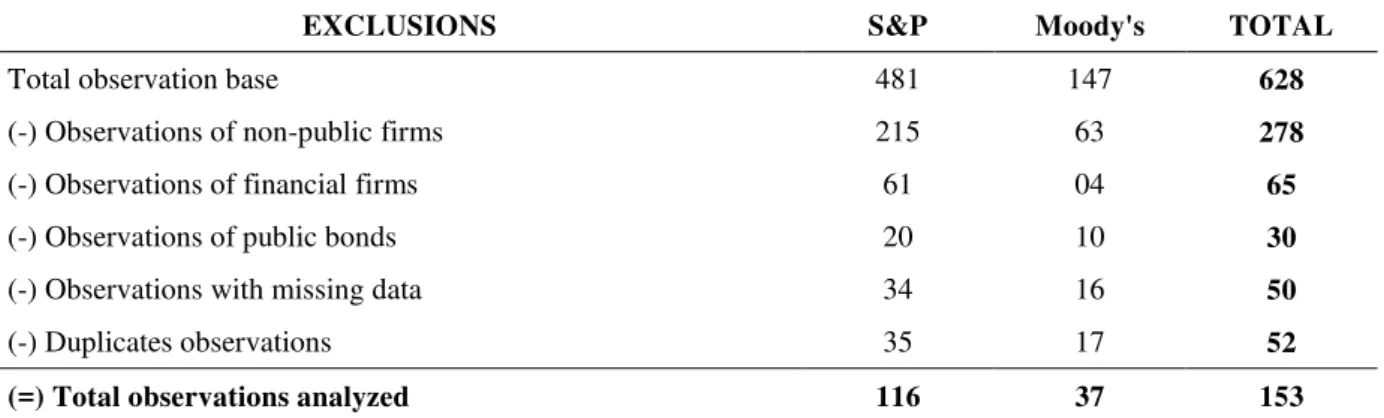
Table 6 presents the observations contained in Standard & Poor’s and Moody’s databases and exclusions made due to different issues in order to arrive at this study’s final sample.
Table 6
Information about the Study’s Sample
EXCLUSIONS S&P Moody's TOTAL
Total observation base 481 147 628
(-) Observations of non-public firms 215 63 278
(-) Observations of financial firms 61 04 65
(-) Observations of public bonds 20 10 30
(-) Observations with missing data 34 16 50
(-) Duplicates observations 35 17 52
(=) Total observations analyzed 116 37 153
It is worthwhile to mention that in the cases where more than one rating was assigned for the company during the year, either by the same rating agency or not, only the first rating issued has been considered. For example, if the company received one rating in January and another in November, only the January rating was considered in our model.
The two databases together (S&P and Moody’s) had a total of 628 observations and this study’s final sample consisted of a total of 153 observations, derived from 49 companies during the period 1997-2011.
Results
(SIZE), financial coverage (COV), growth (GRO), liquidity (LIQ), corporate governance (CG), control (CONT), financial market performance (PERF), and internationalization (INTER).
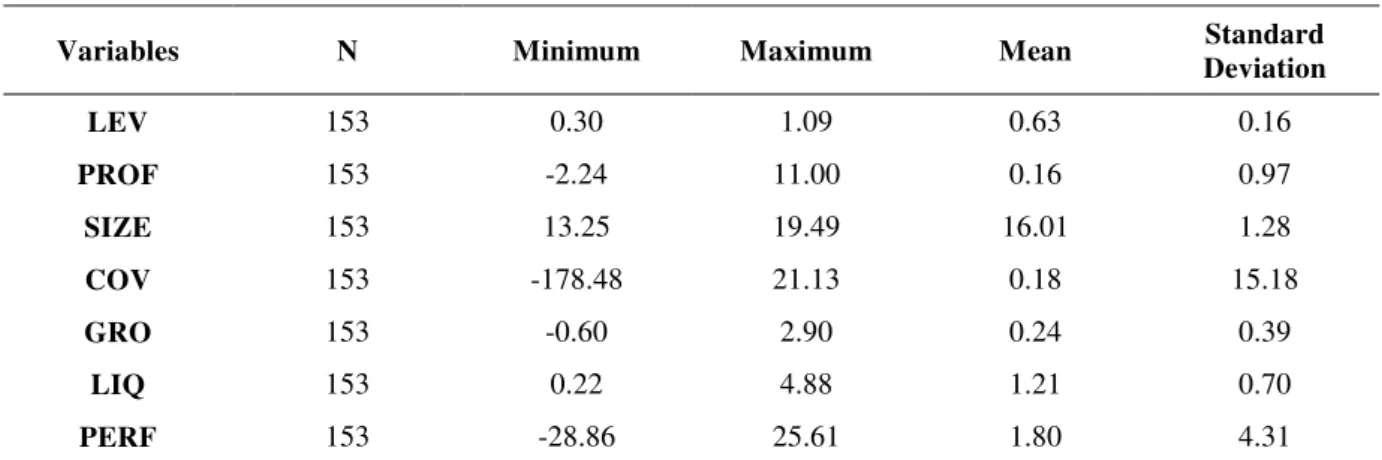
Table 7 provides a descriptive analysis of the quantitative dependent variables.
Table 7
Descriptive Analysis of Independent Quantitative Variables
Variables N Minimum Maximum Mean Standard
Deviation
LEV 153 0.30 1.09 0.63 0.16
PROF 153 -2.24 11.00 0.16 0.97
SIZE 153 13.25 19.49 16.01 1.28
COV 153 -178.48 21.13 0.18 15.18
GRO 153 -0.60 2.90 0.24 0.39
LIQ 153 0.22 4.88 1.21 0.70
PERF 153 -28.86 25.61 1.80 4.31
As presented in Table 7, we calculated the minimum, maximum, mean and standard deviation for all seven independent variables. Corporate governance, control and internationalization were not analyzed quantitatively as they are binary variables. Regarding these three variables, the following was observed: 22.9% of the sample was listed in Level 2 and in the New Market of BM&FBovespa; 22.2% were companies controlled by the State and 39.9% were companies cross-listed in the United Statesd with ADRs in levels II and III.
Table 8 presents a descriptive analysis of the dependent variable: rating.
Table 8
Frequency Distribution of the Dependent Variable
Rating N Percentage
1 43 28.1%
2 72 47.1%
3 38 24.8%
Total 153 100%
The majority of ratings found in the sample are those belonging to groups BB of Standard & Poor’s (BB +, BB and BB-) and Ba by Moody’s (Ba1, Ba2 and Ba3), which were converted into level 4, as described earlier. Furthermore, one might note that 71.9% of ratings are in the Speculative Grade category, while the other 28.1% were in the Investment grade category.
There are no ratings at level 7 in the sample, those belonging to group AA (AA +, AA and AA-) and AAA – in the classification adopted by Standard & Poor’s – and their equivalents in group Aa (Aa1, Aa2 and Aa3) and Aaa –Moody’s ratings.
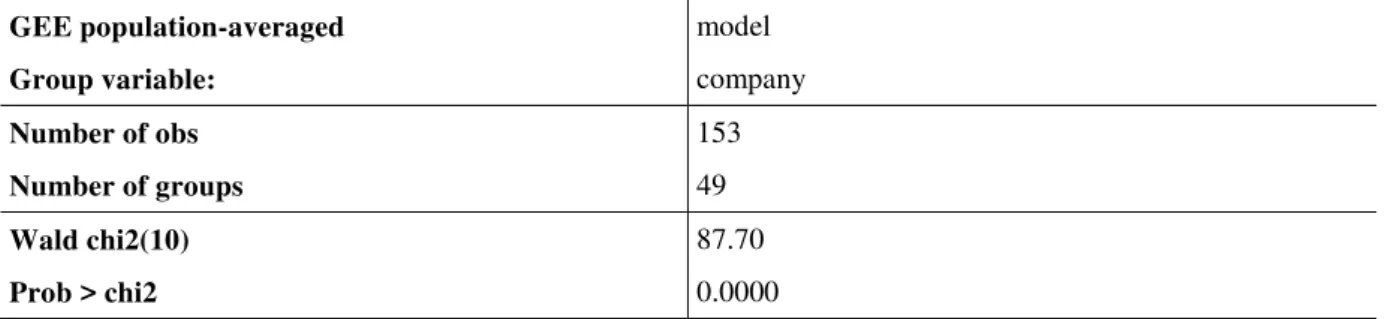
Table 9 displays the significance of the initial model.
Table 9
Significance of the Initial Panel Model
GEE population-averaged model
Group variable: company
Number of obs 153
Number of groups 49
Wald chi2(10) 87.70
Prob > chi2 0.0000
The initial model consists of all ten variables and was significant at the 1% level.
Table 10 presents the results of the initial panel model, with the respective significance for each variable and coefficient.
Table 10
Results of the Initial Panel Model
Coef. Std. Err. z P>z
LEV -.9181874 .1946228 -4.72 0.000
PROF .0676682 .0453362 1.49 0.136
SIZE .0373189 .033267 1.12 0.262
COV -.0009486 .0005064 -1.87 0.061
GRO -.0682239 .0463388 -1.47 0.141
LIQ .0443729 .0378304 1.17 0.241
CG -.0306068 .0683893 -0.45 0.654
CONT -.0912558 .123126 -0.74 0.459
PERF .0216867 .0121431 1.79 0.074
INTER .1339771 .0650917 2.06 0.040
_CONS .5488962 .5530447 0.99 0.321
In the initial panel model, the variable leverage (LEV) was statistically significant at the 1% level and internationalization (INTER) was significant at the 5% level. The variables financial coverage (COV) and financial market performance (PERF) were significant at the 10% level.
Following, we’ve excluded all the non-significant variables, one at the time, and tested the model again as follows: first we excluded corporate governance (CG), with a significance level of 0.654 and tested all variables again; then we removed the variable control (CONT), with significance of 0.471; next, size (SIZE) with a significance of 0.293 and liquidity (LIQ) with a significance of 0.295; and finally financial coverage (COV) with 0.128.
Table 11
Significance of the Final Panel Model
GEE population-averaged model
Group variable: company
Number of obs 153
Number of groups 49
Wald chi2(5) 57.03
Prob > chi2 0.0000
The final panel model was significant at the 1% level. Table 12 presents the results of the final panel model, with the significance for each variable and respective coefficient.
Table 12
Results of Final Panel Model
Coef. Std. Err. z P>z
LEV -.9602618 .1839527 -5.22 0.000
PROF .0745925 .0452558 1.65 0.099
GRO -.0803098 .0470839 -1.71 0.088
PERF .0229738 .0111409 2.06 0.039
INTER .1609862 .0573787 2.81 0.005
_CONS 1.18955 .1085322 10.96 0.000
In the final panel model, the variables leverage (LEV), and internationalization (INTER) were statistically significant at the 1% level; financial market performance (PERF) was statistically significant at the 5% level. The variables profitability (PROF) and growth (GRO) were also relevant, but at the 10% level.
One might note that the two new variables proposed by this study – performance and internationalization – were found to be relevant factors in explaining credit rating of companies operating in Brazil.
Regarding the expected signals, the variable growth presented a sign contrary to what was expected, as our hypothesis was that firms with higher growth rates would present better credit ratings.
Conclusions
The empirical results showed that five variables are statistically significant: leverage, profitability, growth, financial market performance, and internationalization.
The two variables introduced by this study proved to be significant: financial market performance, measured by the ratio of market value of shares and equity, was significant at a 5% level and internationalization, a dummy variable indicating whether the company had issued ADRs of levels II or III, was significant at a 1% level. As an indication for future work, we suggest the analysis of the determinant factors of credit rating in other countries, as the great majority of previous studies regarding the determinants of credit rating have been conducted in the USA, UK and Australia, so the effect in other markets is still unclear, especially in emerging economies.
Acknowledgments
We would like to thank CAPES, CNPq and IAAER/Deloitte for financial support.
References
Adams, M., Burton, B., & Hardwick, P. (2003). The determinants of credit ratings in the United Kingdom insurance industry. Journal of Business Finance & Accounting, 30(3/4), 539-572. doi: 10.1111/1468-5957.00007
Altman, E. (1968). Financial ratios, discriminant analysis and the prediction of corporate bankruptcy. The Journal of Finance, 23(4), 589-609. doi: 10.1111/j.1540-6261.1968.tb00843.x
Ashbaugh-Skaife, H., Collins, D., & LaFond, R. (2006). The effects of corporate governance on firms’ credit ratings. Journal of Accounting and Economics, 42(1), 203-243. doi: 10.1016/j.jacceco.2006.02.003
Bernstein, P. (1997). Desafio aos deuses: a fascinante história do risco (I. Korytowski, Trad.). Rio de Janeiro: Campus. (Obra original publicada em 1996)
Bhojraj, S., & Sengupta, P. (2003). Effect of corporate governance on bond ratings and yields: the role of institutional investors and outside directors. The Journal of Business, 76(3), 455-476. doi:10.2139/ssrn.291056
Bone, R. B. (2007). Determinantes de ratings corporativos no setor de petróleo: o caso da Petrobrás.
RAC-Eletrônica, 1(3), 107-125. Retrieved from
http://www.anpad.org.br/periodicos/arq_pdf/a_667.pdf
Bone, R. B. (2010). Determinantes dos ratings corporativos na indústria petrolífera: o caso da Repsol-YPF. Revista Eletrônica de Administração, 16(1), 1-21. Retrieved from file:///C:/Users/RAC/Downloads/38977-155048-1-PB.pdf
Bone, R. B., & Ribeiro, E. P. (2009, julho/agosto). Conteúdo informacional dos ratings corporativos de empresas brasileiras, 1995-2007. Anais do Encontro Brasileiro de Finanças, São Leopoldo, RS, Brasil, 9.
Bouzouita, R., & Young, A. (1998). A probit analysis of best ratings. Journal of Insurance Issues, 21(1), 23-34.
Callado, A. A. C., Vasconcelos, M. M. F., Rodrigues, R. N., & Libonati, G. (2008). O impacto da primeira emissão de conceito de risco crédito sobre os preços das ações: um estudo empírico sobre a reação do mercado acionário brasileiro para o setor bancário. Revista Ciências Administrativas, 14(1), 80-88.
Camargo, A. C. B. (2009). Bônus corporativos: um estudo sobre as variáveis que afetam o rating de uma emissão (Dissertação de mestrado). Programa de Pós-Graduação em Administração de Empresas, Pontifícia Universidade Católica do Rio de Janeiro, Rio de Janeiro, Brasil.
Camargos, M. A., Gomes, G. D., & Barbosa, F. V. (2003). Integração de mercados e arbitragem com títulos transfronteiriços: ADR – American Depository Receipts. Caderno de Pesquisas em Administração, 10(2), 51-67.
Cantor, R., & Packer, F. (1997). Differences of opinion and selection bias in the credit rating industry. Journal of Banking & Finance, 21(10), 1395-1417. doi: 10.1016/S0378-4266(97)00024-1
Choy, E. Y. W., Gray, S. F., & Ragunathan, V. (2006). Effect of credit rating changes on Australian stock returns. Accounting and Finance, 46(5), 755-769. doi: 10.1111/j.1467-629X.2006.00192.x
Coffee, J. C., Jr. (1999). The future as history: the prospects for global convergence in corporate governance and its implications. Northwestern University Law Review, 93(3), 641-707.
Creighton, A., Gower, L., & Anthony, J. R. (2007). The impact of rating changes in Australian financial markets. Pacific-Basin Finance Journal, 15(1), 1-17. doi: 10.1016/j.pacfin.2006.04.003
Damasceno, D. L., Artes, R., & Minardi, A. M. C. F. (2008). Determinação de rating de crédito de empresas brasileiras com a utilização de índices contábeis. Revista de Administração, 43(4), 344-355.
Ferri, G., & Liu, L.-G. (2002). Do global credit rating agencies think globally? The information content of firm ratings around the world. Retrieved from http://repec.org/res2002/Ferri.pdf
Fitch Ratings. (n.d.). Ratings internacionais de crédito de longo prazo. Retrieved from http://www.fitchratings.com.br/pages/rtg_intl_long
Gray, S., Mirkovic, A., & Ragunathan, V. (2006). The determinants of credit ratings: Australian
evidence. Australian Journal of Management, 31(2), 333-354.
doi: 10.1177/031289620603100208
Guerron-Quintana, P. A. (2011). Risk and uncertainty. Business Review, Q1, 10-18.
Gujarati, D. (2006). Econometria básica (M. J. C. Monteiro, Trad.). Rio de Janeiro: Elsevier. (Obra original publicada em 1975)
Han, S. H., Shin, Y. S., Reinhart, W., & Moore, W. T. (2009). Market segmentation effects in corporate credit rating changes: the case of emerging markets. Journal of Financial Services Research, 35(2), 141-166. doi: 10.1007/s10693-008-0049-0
Jorion, P., Liu, Z., & Shi, C. (2005). Informational effects of regulation FD: evidence from rating agencies. Journal of Financial Economics, 76(2), 309-330. doi: 10.1016/j.jfineco.2004.05.001
Kang, Q., & Liu, Q. (2007). Credit rating changes and CEO incentives [Working Paper]. Social Science Research Network. Retrieved from http://ssrn.com/abstract=971277
Kim, H., & Gu, Z. (2004). Financial determinants of corporate bond ratings: an examination of hotel and casino firms. Journal of Hospitality & Tourism Research, 28(1), 95-108. doi: 10.1177/1096348003261217
La Porta, R., Lopes-de-Silanes, F., Schleifer, A., & Vishny, R. W. (1997). Legal determinants of external finance. The Journal of Finance, 52(3), 1131-1150. doi: 10.1111/j.1540-6261.1997.tb02727.x
La Porta, R., Lopes-de-Silanes, F., Schleifer, A., & Vishny, R. W. (1999). The quality of government. The Journal of Law, Economics and Organization, 15(1), 222-279. doi: 10.1093/jleo/15.1.222
La Porta, R., Lopes-de-Silanes, F., Schleifer, A., & Vishny, R. W. (2000). Investor protection and corporate governance. Journal of Financial Economics, 58(1/2), 3-27. doi: 10.1016/S0304-405X(00)00065-9
La Porta, R., Lopes-de-Silanes, F., Schleifer, A., & Vishny, R. W. (2002). Investor protection and corporate valuation. The Journal of Finance, 57(3), 1147-1170. doi: 10.1111/1540-6261.00457
Liang, K. Y., & Zeger, S. L. (1986). Longitudinal data analysis using generalized linear models. Biometrika, 73(1), 13-22. doi: 10.1093/biomet/73.1.13
Lopes, A., & Walker, M. (2012). Asset revaluations, future firm performance and firm-level corporate governance arrangements: new evidence from Brazil. The British Accounting Review, 44(2), 53-67. doi: 10.1016/j.bar.2012.03.007
López, R. F. (2007). Análisis de los determinantes del riesgo de crédito: aplicación de técnicas emergentes em el marco de los acuerdos de Basilea II y Solvencia II. Revista Española de Financiación y Contabilidad, 36(135), 649-653.
Markowitz, H. (1952). Portfolio selection. The Journal of Finance, 7(1), 77-91. doi: 10.1111/j.1540-6261.1952.tb01525.x
Matousek, R., & Stewart, C. (2009). A note on ratings of international banks. Journal of Financial Regulation and Compliance, 17(2), 146-155. doi: 10.1108/13581980910952586
Moody’s Investors Service. (2013). Ratings symbols and definitions. Retrieved from https://www.moodys.com/researchdocumentcontentpage.aspx?docid=PBC_79004
Papaikonomou, V. L. (2010). Credit rating agencies and global financial crisis: need for a paradigm shift in financial market regulation. Studies in Economics and Finance, 27(2), 161-174. doi: 10.1108/10867371011048643
Pinches, G. E., & Singleton, J. C. (1978). The adjustment of stock prices to bond rating changes. The Journal of Finance, 33(1), 29-44. doi: 10.1111/j.1540-6261.1978.tb03387.x
Poon, W. P. H., & Chan, K. C. (2008). An empirical examination of the informational content of credit ratings in China. Journal of Business Research, 61(7), 790-797. doi: 10.1016/j.jbusres.2007.08.001
Richards, A., & Deddouche, D. (2003). Bank rating changes and bank stock returns: puzzling evidence from the emerging markets. Journal of Emerging Market Finance, 2(3), 337-363. doi: 10.1177/097265270300200304
Roje, G. (2005, May). The role of accounting determinants in predicting long term credit ratings. Proceedings of the European Accounting Association Congress, Gotheborg, Sweden, 28.
Shiu, Y., & Chiang, C. (2008). Determinants of financial strength ratings: evidence from the Lloyd’s
Market. Retrieved from
http://portal.business.colostate.edu/projects/ARIA/Shared%20Documents/2a_Shiu_Determinant s%20of%20Financial%20Strength%20Ratings.pdf
Sih, A. (2006). Predição do grau de ratings corporativos (Dissertação de mestrado). Programa de Pós-Graduação do Departamento de Engenharia Elétrica, Pontifícia Universidade Católica do Rio de Janeiro, Rio de Janeiro, Brasil.
Silva, E., Santos, J., Torres, F., & Ferreira, L. (2009, setembro). Os efeitos da governança corporativa sobre os ratings de crédito das debêntures emitidas por empresas listadas nos níveis diferenciados de governança da Bovespa. Anais do Encontro Nacional da Associação Nacional de Pós-Graduação e Pesquisa em Administração, São Paulo, SP, Brasil, 33.
Standard & Poor’s Ratings Services. (2010). Guide to credit ratings criteria: Why criteria are important and how they are applied. Retrieved from http://pt.scribd.com/doc/142361735/Guide-to-Credit-Ratings-Criteria
Standard & Poor’s Ratings Services. (2011). Guide to credit rating essentials: what are credit ratings
and how do they work? Retrieved from