Transcriptome Characterization of
Developing Bean (Phaseolus vulgaris
L.) Pods
from Two Genotypes with Contrasting Seed
Zinc Concentrations
Carolina Astudillo-Reyes1, Andrea C. Fernandez1, Karen A. Cichy2*
1Department of Plant, Soil and Microbial Sciences, Michigan State University, 1066 Bogue St., East
Lansing, MI, United States of America,2USDA-ARS, Sugarbeet and Bean Research Unit and Department
of Plant, Soil and Microbial Sciences, Michigan State University, 1066 Bogue St., East Lansing, MI, United States of America
Abstract
Dry bean (Phaseolus vulgarisL.) seeds are a rich source of dietary zinc, especially for
peo-ple consuming plant-based diets. WithinP.vulgaristhere is at least two-fold variation in
seed Zn concentration. Genetic studies have revealed seed Zn differences to be controlled by a single gene in two closely related navy bean genotypes, Albion and Voyager. In this study, these two genotypes were grown under controlled fertilization conditions and the Zn concentration of various plant parts was determined. The two genotypes had similar levels of Zn in their leaves and pods but Voyager had 52% more Zn in its seeds than Albion. RNA was sequenced from developing pods of both genotypes. Transcriptome analysis of these genotypes identified 27,198 genes in the developing bean pods, representing 86% of the genes in theP.vulgarisgenome (v 1.0 DOE-JGI and USDA-NIFA). Expression was
detected in 18,438 genes. A relatively small number of genes (381) were differentially expressed between Albion and Voyager. Differentially expressed genes included three genes potentially involved in Zn transport, including zinc-regulated transporter, iron regu-lated transporter like (ZIP), zinc-induced facilitator (ZIF) and heavy metal associated (HMA) family genes. In addition 12,118 SNPs were identified between the two genotypes. Of the gene families related to Zn and/or Fe transport, eleven genes were found to contain SNPs between Albion and Voyager.
Background
Zinc is essential to human health and nutrition. Zinc is an important enzyme cofactor and component of proteins, and is needed for DNA synthesis, RNA transcription, and cell division [1]. Human Zn deficiency symptoms are quite varied, including reduced immune function, fetal brain cell development, and reproductive and cognitive development [2]. Mild to
OPEN ACCESS
Citation:Astudillo-Reyes C, Fernandez AC, Cichy KA (2015) Transcriptome Characterization of Developing Bean (Phaseolus vulgarisL.) Pods from Two Genotypes with Contrasting Seed Zinc Concentrations. PLoS ONE 10(9): e0137157. doi:10.1371/journal.pone.0137157
Editor:Mukesh Jain, National Institute of Plant Genome Research, INDIA
Received:May 19, 2014
Accepted:August 14, 2015
Published:September 14, 2015
Copyright:This is an open access article, free of all copyright, and may be freely reproduced, distributed, transmitted, modified, built upon, or otherwise used by anyone for any lawful purpose. The work is made available under theCreative Commons CC0public domain dedication.
Data Availability Statement:Raw data files are available from the GEO Repository and the accession number for the study is GSE67121. Individual file accessions are GSM1639667: Albion Rep 1, GSM1639668 : Albion Rep 2, GSM1639669 : Albion Rep 3, GSM1639670: Voyager Rep 1, GSM1639671: Voyager Rep 2, GSM1639672 : Voyager Rep 3. They are publically available at:
http://www.ncbi.nlm.nih.gov/geo/query/acc.cgi?acc= GSE67121.
moderate Zn deficiency is common, especially in populations consuming vegetarian diets rich in unrefined cereals [3]. Biofortification of staple foods such as wheat and dry beans with Zn is one agricultural science based approach being developed and applied to combat micronutrient malnutrition [4].
Dry beans (Phaseolus vulgarisL.) are a nutrient dense food crop and a dietary staple in East Africa and Latin America. Genotypic variability for seed Zn levels is relatively high within the species and Zn seed levels from 20 to 59μg g-1have been observed [5,6]. Understanding the genetic control of seed Zn content has the potential to improve the breeding process for this important nutritional trait by identifying candidate genes for marker assisted selection and also increase the overall Zn content levels achievable through breeding.
Numerous genes involved in Zn transport have been characterized in model plant species includingArabidopsisandMedicago[7]. Major gene families shown to play a role in transport of Zn include, ZIP, YSL, NAS, ZIF, HMA and MTP. The ZIP family is made up of ZRT (zinc related transporter) and IRT (iron related transporter) like proteins. The common feature of members of this family is eight transmembrane domains and a metal binding domain [8]. In addition, transcription factors that regulate ZIP genes include members of the basic region leu-cine zipper (bZIP) gene family. bZIP19 and bZIP23 genes have been shown to interact with ZIP genes inArabidopsis[9]. Yellow stripe like (YSL) is a gene family that transport metal-NA complexes long distance. InArabidopsis AtYLS2is responsible for mobilization of micronutri-ents such as Mn, Zn, Cu and Fe from leaves and for loading of Fe-NA complex into seed [10]. Nicotianamine (NA) a non proteinogenic amino acid chelates Fe and Zn phloem movement to sink tissue [11]. Four NA synthase genes have been characterized [12] and are related in reproduction and seed Fe loading [13]. Zinc sequestration and detoxification occurs in the vacuoles when zinc is abundant providing a site of zinc storage [14–16]. Several gene trans-porters have been reported to be involved in zinc translocation to the vacuoles. Zinc induced facilitator (ZIF1) protein contributes to Zn and NA sequestration into the vacuoles thus removing the opportunity for both to be transported symplastically [17]. Two members of the heavy metal ATPase gene family (HMA) HMA2 and HMA4, mediate the release of zinc in root-to-shoot transport of zinc into the xylem [8,18]. Two members of the cation diffusion facilitator (CDF) family, the metal tolerance protein (MTP) MTP1 and MTP3, have been found to be involved in vacuolar zinc sub-cellular sequestration and contribute to zinc toler-ance inA.thaliana[19,20]. NRAMP (natural resistance associated macrophage protein) are involved in transport of metals out of vacuoles [21]. Six members have been identified in Ara-bidopsis. NRAMP3 and NRAMP4 are involved in iron remobilization from the vacuole [22]. In a yeast complementation analysis only NRAMP4 was able to complementzrt1zrt2growth under low zinc levels [23].
These gene families involved in mineral transport and sequestration represent some of the most obvious candidate genes for increased Zn seed levels in crops such asP.vulgaris. Very lit-tle is known about how Zn is transported from leaf xylem to phloem of developing seeds and ultimately unloaded into seeds [24].
Here we characterize the transcriptome of developing pod of two bean genotypes. These genotypes were shown to have similar Zn concentration in roots sampled during vegetative growth, leaves, and pods, but different levels of Zn in the seed. A total of 381 genes were differ-entially expressed including four genes that may play a role in Zn or other mineral transport to seeds including zinc-regulated transporter, iron regulated transporter like (ZIP), bZip tran-scription factor, zinc-induced facilitator (ZIF) and natural resistance associated macrophage protein (NRAMP) family genes. A total of eleven genes in the ZIF, NRAMP, YSL, and ferritin gene families contained SNPs between the two genotypes.
Materials and Methods
Plant Material
The two common bean genotypes used for this study both are navy beans from the Mesoameri-can gene pool. Albion is a navy bean variety released by Asgrow in 1987, Voyager, is a navy bean released by Rogers Seed Company in 1995. These genotypes were selected based on their contrasting seed Zn concentration. Voyager has higher levels of seed Zn than Albion in diverse growing conditions [25]. In addition, in contrast to Voyager, Albion exhibits foliar Zn defi-ciency symptoms in low Zn and/or calcareous soils [26].
Plant Zinc Uptake Experiment
Seeds of Albion and Voyager were individually planted in 500 ml pots with 3:1 Sunshine Brand premium grade vermiculate and horticultural perlite grade (P.V.P. Industries, Inc). Treatments consisted of 0.5X strength modified Hoagland solution [27] with zinc added and without zinc (3 mMKNO3, 2 mM Ca (NO3)2x 4H2O, sequestrene DTPA 10% Fe, 1.0 mM MgSO4x 7H2O,
23.1 mM H3BO3, 0.38 mM ZnSO4x 7H2O, 0.16 mM CuSO4x 5H2O, 4.6 mM MoO4x 2H2O,
1M KH2PO4(pH to 6.0) was used as a fertilization treatment at a rate of 400 ml three times per
week. Plants were grown in a growth chamber with a photoperiod of 16 hours light and 8 hours dark. Two replicates per plant were harvested as follows: roots and leaf tissue samples of vegetative plants were collected when the third trifoliate leaf had unfolded. Tissue of roots and leaves during flowering was collected when 30% of flowers were opened. Flowering was moni-tored daily and pods were collected 20 d after flowering. Seed was collected at physiologic maturity. Tissue was collected in liquid nitrogen and stored at -80°C. All samples were lyophi-lized and ground to powder with a Geno/Grinder 2000 (SpexCertiPrep, Metuchen, NJ) and zir-con grinding balls. Plant tissue samples sent to A & L Laboratories (Fort Wayne, IN) for mineral analysis using induced coupled plasma spectroscopy. Mineral concentration was mea-sured on 48 beans samples as follows: six tissue types, two Zn fertilization treatments, two genotypes, and two replications of each. Statistical significance was determined using proc glm and Tukey tests for pairwise comparisons in SAS for Windows v.9.2 (SAS Institute Inc., Cary, NC, USA).
Greenhouse RNA Seq Experiment
Seed of Voyager and Albion were planted in a greenhouse at Michigan State University. Two seeds were planted in 10 cm diameter clay pots filled with SureMix potting soil (Michigan Peat Company). Three pots were planted of each genotype and each pot was treated as a replication. Plants were watered as needed and fertilized with 0.5X Hoaglands solution (3 mM KNO3, 2
mM Ca (NO3)2× 4H2O, sequestrene DTPA 10% Fe, 1.0 mM MgSO4× 7H2O, 23.1 mM
H3BO3, 0.38 mM ZnSO4× 7H2O, 0.16 mM CuSO4× 5H2O, 4.6 mM MoO4× 2H2O, 1M
KH2PO4(pH to 6.0) biweekly starting at 20 d after germination. At anthesis, flowers were
concentration as described above and nitrogen concentration according to the Dumas method. Statistical significance was determined using proc glm and Tukey tests for pairwise compari-sons (P<0.05) in SAS for Windows v.9.2 (SAS Institute Inc., Cary, NC, USA).
RNA Sequencing and Pre-Processing
Six RNA samples in total (3 replicates each of Albion and Voyager) were sequenced at the Michigan State University Research Technology Support Facility (RTSF) using an Illumina Genome Analyzer II (GA II). The library and flow cell preparation using kits and protocols from Illumina was conducted by the MSU RTSF. The sequencing was conducted as 75-bp paired-end reads. The RNA sequence was received from RTSF in FASTQ formatted files con-taining 75-bp paired-end reads. The file contained sequences and quality information about each sequence. The data were filtered using scripts from FASTX-Toolkit (FASTQ Quality Trimmer and FASTQ Quality Filterhttp://hannonlab.cshl.edu/fastx_toolkit/). FASTQ Quality Trimmer clipped the low quality ends with a quality threshold of 20 and removed the reads shorter than 64 bp. Subsequently, FASTQ Quality Filter script was used to remove low quality sequences with quality scores of 20 or less.
TheP.vulgarisreference genome sequence v. 1.0 (DOE-JGI and USDA-NIFA and corre-sponding gene model annotation files were obtained directly fromhttp://www.phytozome.net) [28]. AP.vulgarisgenome index was built using Bowtie v. 0.12.7 [29]. Paired-end clean reads for each individual were aligned to the reference genome by TopHat v 1.4.1 [30] with the pro-vided guidance of annotated gene models (GTF file). Bam files for each alignment are depos-ited in Gene Expression Omnibus (GEO).
Gene Ontology Enrichment Analysis
Mapped reads were evaluated for homology and annotated using Blast2GO software (http:// www.blast2go.com). This process included three steps: 1) BLAST to find homologous sequences, with the following options, e-value threshold of E-10, non-redundant protein data-base (nr), high-scoring segment pairs (HSP) length cutoff 33. 2) MAPPING to retrieve (Gene ontology) GO terms and 3) ANNOTATION to select reliable functions, with e-value hit filter of 1E-6, cutoff 55, GO weight 5, Hsp-Hit coverage cutoff 0BLASTx sequence translation tool. We evaluated the functional enrichment level using the David Bioinformatics Database [31]. Significance of the enrichment analysis was declared whenp-value<0.05.
Differential Expression Analysis
Abundance estimation was carried out using Cufflinks v1.3.0 with default parameters [32]. Normalization, estimated abundance, and tests for differential expression between tissue sam-ples were performed using the program Cuffdiff with default parameters. The value used to compute significance of the observed change of transcript abundance was measured in frag-ments per kilobase of transcript per million mapped reads (FPKM) [33]. The differentially expressed genes were reported as fold change (on a log2scale), and significance in terms ofp
-value andq-values. FPKM greater than zero was used as the threshold to consider a gene as being expressed. The significance of the gene expression difference was determined when the
p-value was lower than the false discovery rate (q-value) (FDR<0.05). To validate the accuracy
SNP Discovery and Validation
Single nucleotide polymorphisms between Voyager and Albion were discovered. Samtools mpileup [35] and bcftools were used for discovery and filtering using the following parameters: Alignments with a unique location, mapping quality>30, minimum depth = 8 and presence of
SNP in>90% of reads on both forward and reverse strand. The options selected were–D
(Out-put per-sample read depth),–u (Compute genotype likelihoods), and–f (The faidx-indexed ref-erence file in the FASTA format). To validate SNPs called from the transcriptome sequence analysis, three genes YSL, HMA and ZIF were selected based on their role in Zn transport and presence of more than three SNPs. Primers were designed to amplify a template approximately 700 bp long. DNA was extracted from primary leaf tissue of Voyager and Albion using centrif-ugal filter“DNeasy Plant Kit”(QIAGEN) and quantified with Quant-iTPico Green dsDNA Assay kit (Invitrogen) following the manufacturer’s instructions. The mixture for each gene was optimized to contain 30 ng of DNA extract, 30 pmol of the primers and 0.5 U of Taq poly-merase (AccuPrimePfxSuperMix, Invitrogen). After initial denaturation (95°C 5 min) 35 cycles (95°C 30 sec, 63°C 30 sec, 72°C 30 sec) of amplification were performed, followed by a final extension of 72°C for 5 min. Amplification products of both parents Albion and Voyager were visualized by electrophoresis on 2% agarose gel, stained with ethidium bromide and detected by ultraviolet trans illumination. PCR products with a single band were purified by ethanol precipitation, and directly sequenced via Sanger sequencing with the same primers used for PCR. Sequencing was conducted at the MSU RTSF. Sequenced products were compared and aligned with the reference common bean genome using Geneious (v. 5.6.2) (Biomatters).
Results and Discussion
Growth Chamber Experiment
seed Zn concentration differences between Voyager and Albion have been shown to be con-trolled by a single gene [25] thereby making these two genotypes excellent candidates for tran-scriptome analysis to identify genes responsible for the seed Zn differences.
Pod Transcriptome Characterization
Voyager and Albion were grown in a replicated greenhouse experiment. Under these growing conditions Voyager had 1.4 times more seed Zn than Albion (Table 1). These values observed in greenhouse grown plants are similar to what has been observed for these genotypes in some field studies in Michigan (Cichy, unpublished). Seed Fe levels were variable in the greenhouse grown plants and therefore no significant differences were detected. However other studies have shown Voyager to have higher seed Fe than Albion [38]. Voyager also had 12.5% more N
Fig 1. Zinc concentration of roots, leaves, pods and seed of two bean genotypes grown under normal Zn and no Zn fertilization.
in the seed than Albion (Table 1). Positive correlations between seed Zn and N have been found in a number of crops including wheat and beans [39,40].
Developing pods were collected from the greenhouse grown plants at 12 days after flower-ing. At this developmental stage, 84% of pod weight was the pod wall and 15% was the develop-ing seed in Voyager and 66% was the pod wall and 34% was the developdevelop-ing seed in Albion. This developmental stage has been characterized as the time prior to seed filling and when nitrogen is accumulating in the pods [41].
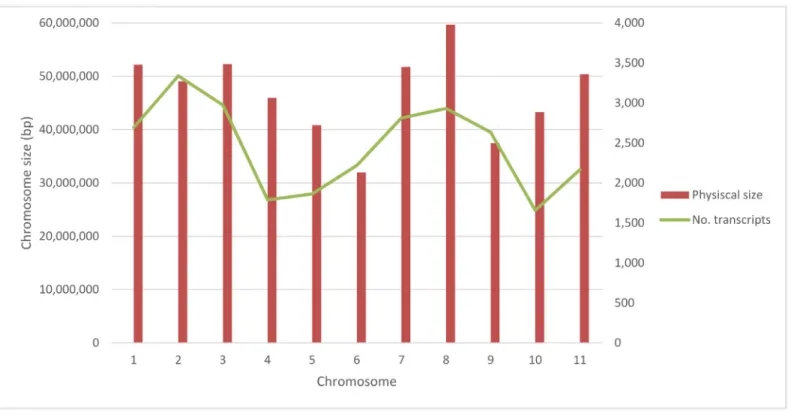
Voyager and Albion pod RNA was sequenced as 75 bp paired end reads. RNA reads were mapped to theP.vulgarisgenome sequence, v 1.0 DOE-JGI and USDA-NIFAhttp://www. phytozome.net) [28] with an average of 31,505,836 high quality mapped reads per sample. A total of 27,197 genes were detected in the transcriptome of developing pods. Analysis of the number of transcripts per chromosome showed that chromosomes 1, 2, 3, 7, 8, and 9 contained the highest number of transcripts. Chromosome 10 had the lowest number of transcripts. In dry bean mapping populations, few quantitative trait loci have been found on chromosome 10 and it is often difficult to identify polymorphic markers on this chromosome, indicating a low rate of recombination [42]. A positive correlation (r = 0.5; P<0.05) between size of the
chromo-some and number of transcript was discovered. Chromochromo-somes 2, 3, 7, and 11 had the highest number of highly expressed genes in the pods (Fig 2).
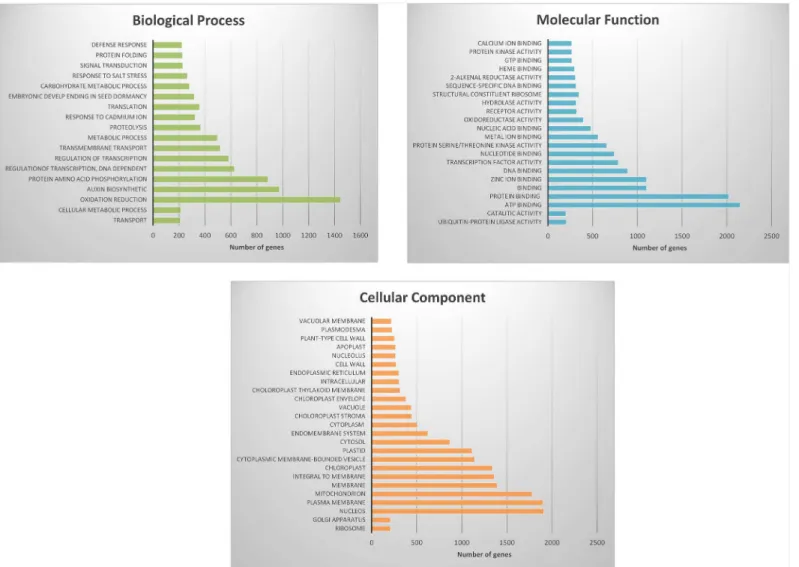
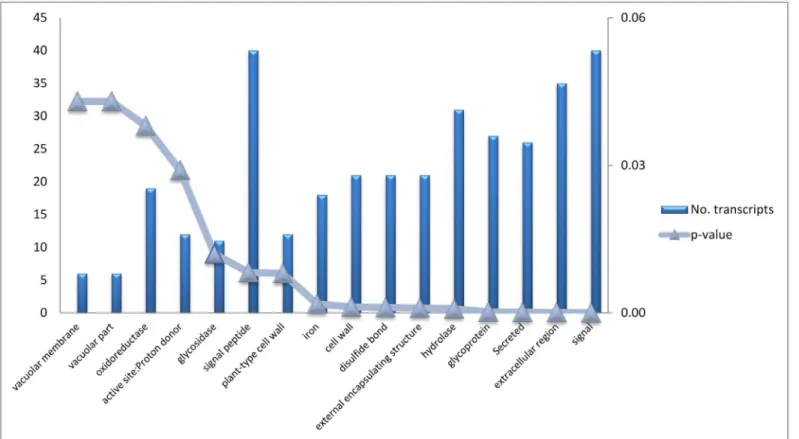
Gene annotation was achieved using Blast2Go (using BLASTx and E-value-6as parame-ters). Using gene ontology, graphs were developed which classify gene expression in the bean pods. Transcripts expressed during this pod developmental stage were most related to oxida-tion reducoxida-tion, auxin biosynthesis and amino acid phosphorylaoxida-tion (Fig 3a). Transcripts func-tioning in the nucleus and plasma membrane were the most represented cell types in the developing bean pods (Fig 3b). Transcripts related to ATP binding and protein binding were the most highly abundant gene types (Fig 3c). Enrichment analysis of differential expression genes determined their association to a specify pathway [31]. Genes were clustered into nine GO categories according to the David bioinformatics database as shown inFig 4.
Genes highly expressed in developing pods included several seed maturation proteins, acid phosphatase and lipid synthesis related genes. The most highly expressed genes in the transcrip-tome of developing pods of dry beans were haloacid dehalogenase IIIB acid phosphatase (HAD), lipid transfer protein 3 (LTP3), PAP85 cupin protein, PRXR1 peroxidase protein, and phaseolin. The HAD IIIB acid phosphatase belongs to a family of plant phosphatases. Some members of this family have been annotated as vegetative storage proteins (VSP) highly expressed in soybean leaves and also abundant inA.thalianaflowers [43]. LTP3 (lipid transfer protein 3) transfer sev-eral different phospholipids and can bind fatty acids and could play a major role in membrane biogenesis [44]. PAP85 cupin family are metalloenzymes with two motif conserved sequences which act as ligands for the binding of an active-site metal ion, such as Fe, Mn, or Zn [45]. Addi-tionally, they encode seed storage proteins and are involved in the regulation of nitrogen utiliza-tion [46]. Phaseolin is the seed storage protein most abundant inP.vulgarisseeds [47]. It is a
Table 1. Mean concentration of zinc, iron, and nitrogen in pods and seeds of Albion and Voyager plants from which RNA samples for sequencing were taken.
Pod Seed
Zn (ug g-1) Fe (ug g-1) Zn (ug g-1) Fe (ug g-1) N (%)
Voyager 36a 92a 42a 101a 3.19a
Albion 28b 75b 29b 88a 2.79b
Means followed by the same letter in a column are not significantly different at P = 0.05
glycoprotein formed by two genes, theαandβphaseolin genes with a relative electrophoretic diversity useful for discriminating geographical origin and wild and domesticated beans [47,48]. These results demonstrated that inP.vulgaris, storage protein transcripts were the most abun-dant process beginning at R5 and R6 growth stage which involve storage product accumulation, phases of cell expansion and synthesis of reserve metabolites [49].
Differential Expression
The expression levels of genes in developing pods were measured in fragments per kilobase of exon model per million mapped reads (FPKM). With this criterion,19,510 expressed genes were detected in Albion and 19,527 expressed genes in Voyager. We determined the correlation between normalized sequencing counts and RT qPCR gene expression data and there was a high correlation between the two methodologies (r = 0.85 p = 0.05) (Table A inS1 File).
The distribution of gene expression values in log10was left-skewed; the median and mean
FPKM values are 11.11 and 45.43 respectively. There were 381 differentially expressed genes in Albion and Voyager of which 6 were exclusively expressed in Albion and 3 genes were only expressed in Voyager. Genes with the highest differential expression patterns between the two genotypes included cysteine proteinases and MLP-like protein-43 more highly expressed in Albion pods (Table 2). These genes are related to growth and mobilization and accumulation of storage proteins in seeds in development [50]. In Voyager, the genes most highly differen-tially expressed as compared to Albion were cinnamoyl-CoA reductase (CCR-like) and 2Fe-2S ferredoxin-like. Both of these genes are related to metal ion transport in addition to abscisic acid biosynthesis and the electron transport chain. Differential expression analysis showed that the cinnamoyl-CoA reductase (CCR-like) and 2Fe-2S ferredoxin-like genes were 1.65 and 1.42 respectively more expressed in Voyager pods than Albion pods.
Fig 2. Number of transcripts and their distribution along of eleven chromosomes of common bean.
Gene families known to be involved in Zn transport were identified and their expression in the developing pods of Albion and Voyager was quantified (Fig 5). These families included ZRT and IRT–like protein (ZIP), basic region/leucine zipper motif (bZIP) transcription factors, vacuolar iron transport (VIT), natural resistance-associated macrophage protein (NRAMP), zinc induced facilitator (ZIF), yellow stripe (YSL), heavy metal ATPase (HMA), nicotianamine synthase (NAS), dehydrin, and metallothionein. The ZRT and IRT–like protein (ZIP) family is involved in uptake, transport to leaves and translocation to seeds, embryo, endosperm, and seed coat of zinc [51]. It was the largest family and 20 out of 23 members [34] were found in the developing pod transcriptome of which fifteen were expressed (Table 3). Expression analy-sis of this family in dry bean showed that some members were highly expressed in leaves and pods under two Zn treatments [34]. Additionally, inArabidopsisand maize, some members of this family are preferentially expressed in the embryo and endosperm [52]. These results emphasize the importance of these genes in Zn transport into sink organs. bZIP transcription factors bZIP19 and bZIP23 inArabidopsis, were associated to promoter regions of the zinc deficiency-induced ZIP4 gene of ZIP family [9]. These bZIPs belong to group F, have been
Fig 3. Histogram representation of GO classification.Transcripts of developing pods were annotated in three categories: biological processes (3a), molecular function (3b) and cellular components (3c).
described containing two DNA binding domains needed to respond to low zinc supply in Ara-bidopsis[9]. Two bZIP basic leucine-zipper transcription factor genes homologous to bZIP23 inArabidopsiswere identified and both were expressed in pods.
We identified fifteen vacuolar iron transport (VIT) genes which nine members were expressed in developing pods. Relatively low levels of expression (0 to 38 FPKM) was observed. InArabidopsis, VIT1 has been found highly expressed in the developing seeds and mediates iron storage in the embryo [53]. Nicotianamine synthase (NAS) is a metal chelator that pro-duces a nonproteinogenic amino acid which binding a variety of transition metals [54,55]. Metallothionein proteins bind transition metals and play a role in the homeostasis and detoxi-fication of non-essential minerals [56]. Four metallothionein genes were identified in the devel-oping pods and three of them were highly expressed (246 to 3,989 FPKM) but none were differentially expressed. InArabidopsis, AtMT4a and AtMT4b have been suggested to be involved in Zn storage in seeds [57].
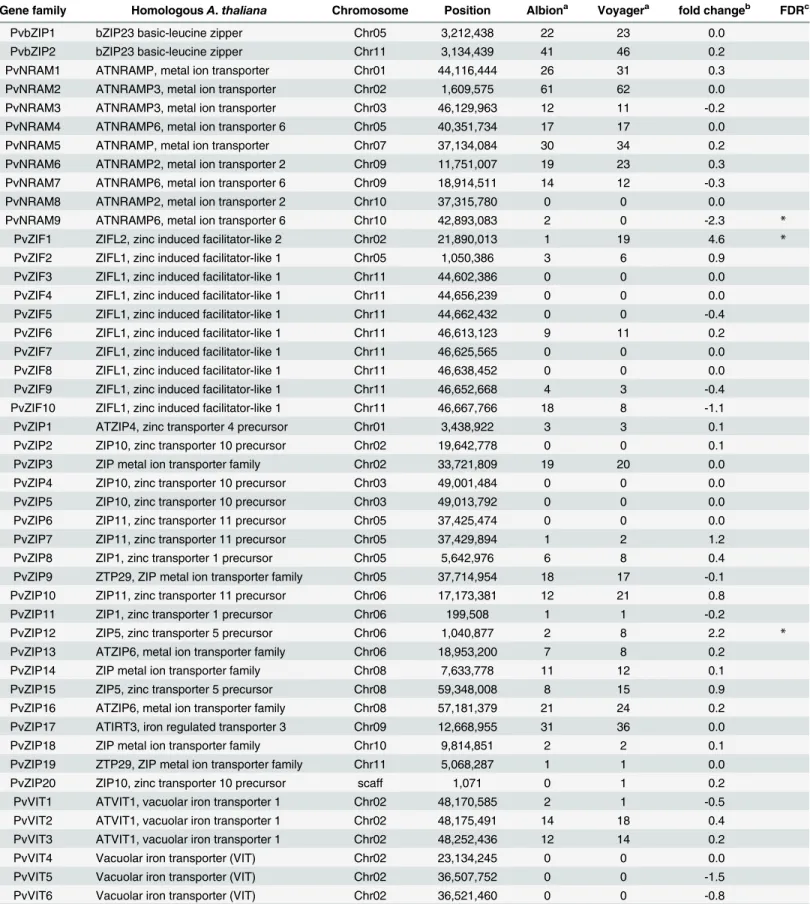
Very few of the Zn and/or Fe transport related genes were differentially expressed. Those that were differentially expressed included one gene each from NRAMP, ZIP and ZIF families (Table 3). A member of NRAMP was expressed in Albion and not expressed in Voyager (2.3 fold change). NRAMP family genes have been involved mainly in iron translocation [21,22]. However, complementation analysis showed that a member of NRAMP was able to comple-ment growth in yeast [23]. PvZIF1and PvZIP12 were more expressed in Voyager than Albion in 4.6 and 2.2 fold change respectively. ZIP and ZIF family genes have been shown to be involved in transportation of minerals to the vacuole and transport to seeds inArabidopsis
[8,23]. This suggests that one possible reason why Albion has lower seed Zn that Voyager is
Fig 4. Enrichment analysis of 381 differential expressed genes between Albion and Voyager.X axis indicates GO terms where genes were grouped, left Y axes indicate the number of genes and the right Y axis indicatesp-valuesshow significance of association of genes with GO term.
because it is being moved to the vacuoles and not transported to the seed. However, for each Zn/Fe related family analyzed transcripts were from 1 to 72 of FPKM value which was rela-tively low as compared to those genes related to lipid synthesis and storage protein. Therefore future studies may need to target earlier and later developmental time points to better charac-terize genotypic differences in Zn remobilization.
The transcript sequences from Voyager and Albion were also analyzed for SNPs. A total of 12,118 SNPs were identified between the two genotypes (S2 File). In total 3,401 genes con-tained SNPs and on average there were 3.6 SNPs per gene. Sanger sequencing was used to vali-date SNPs in nine genes (Table 4). Of the gene families related to Zn and/or Fe transport, eleven genes were found to have SNPs with a total of 47 SNPs average of four SNPs per gene. In total, 15 of the SNPs resulted in an amino acid change (Table 5). Of the genes with SNPs, the same ZIF gene (Phvul.002G108300) which was more highly expressed in Albion than Voy-ager contained 10 SNPs in the coding region. This gene maps to chromosome 11 and while numerous studies have reported QTL for seed Fe and Zn concentration [37,58,59], this ZIF gene is not within those regions. It is interesting to note that the HMA gene (Phvul002G288300 and Phvul002G19000) maps to chromosome 2 in a region where a major QTL for seed Zn con-centration has been identified in bean RIL populations from both Mesoamerican and Andean
Table 2. Genes and function of the most highly differential expressed in Albion and Voyager.
Genotype Function Albiona Voyagera log2 (Fold
Change)b, c
Albion
Cysteine proteinases Extracellular proteinase probably having a crucial role during rapid
cell growth and leaf expansion 791 203 -2
MLP-like protein 43 Associated with fruit andflower development and pathogen
defense responses 732 98 -3
SCR-like 11 S locus cysteine-rich protein 392 66 -3
Serine carboxypeptidase-like Serine-type carboxypeptidase activity involved in proteolysis 237 81 -2 Aspartic proteinase A1 Encodes an aspartic proteinase that forms a heterodimer and is
stable over a broad pH range 231 76 -2
Low-molecular-weight cysteine-rich Predicted to encode a PR (pathogenesis-related) protein. 215 31 -3
Voyager
CCR-like Cellular cation homeostasis, divalent metal ion transport.
Expressed in embryo axis, cotyledons. 146 460 2
2Fe-2S ferredoxin Abscisic acid biosynthetic process, electron transport chain,
pentose-phosphate shunt. 110 295 1
Zinc-binding ribosomal protein DNA recognition, RNA packaging, transcriptional activation, regulation of apoptosis, protein folding and assembly, and lipid binding.
74 169 1
Adenine nucleotide alpha hydrolases Function unknown. Involved in response to stress. Expressed
during petal differentiation and expansion stage. 65 162 1 Bifunctional inhibitor/lipid-transfer protein/
seed storage 2S albumin superfamily protein
Function in lipid binding. Located in endomembrane system. Expressed in shoot apex, embryo,flower, leaf, seed. Expressed
during cotyledon expansion stage.
35 161 2
Basic chitinase Defense response after wounding or pathogenic attack 10 150 4
aThe value used to compute signi
ficance of the observed change of transcript abundance was measured in fragments per kilobase of transcript per
million mapped reads (FPKM.)
bLog2 (Fold change): negative values indicate that the gene is more highly expressed in Albion and positive values indicate the gene is more highly expressed in Voyager.
cAll genes were signi
ficantly differential expressed FDR<0.05
intra gene pool crosses [37,59]. The seed Zn differences in Albion and Voyager with single marker genetic analysis indicated that this trait associated with SSR markers BM154 and BM184 found on chromosome 9 [38]. Based on the physical position of these markers on chro-mosome 9 (1,856,660 1,718,891bp respectively) genes such as dehydrin and bZIP44 were found in the surrounding region (922,386 and 1,006,283). Dehydrins are responsible for osmotic stress from drought, cold, and high salinity but also binds metals reducing metal toxic-ity in plant cells under water-stressed conditions [60].
Accumulation of minerals in the seed involved several complex and still unknown mecha-nisms. The ability to uptake and accumulate minerals, how much mineral is absorbed by roots, transfer into the shoots and leaves via the xylem, and translocation to seeds via the phloem are all potentially important genetic regulation points. It still unclear which mechanism is the most important step in terms of uptake, transport, remobilization and accumulation to determine where our effort to increase concentration of Zn in seed should focus. InPisum sativum, Zn remobilization from vegetative tissues to the seeds has been measured and 75–95% of mineral content in pods was remobilized to the seed tissue [61]. In this study we reported the main genes that likely are related to Zn remobilization during the seed filling period.
RNA sequencing was used to identify members of mineral transporter gene families expressed during bean pod development. The comparative analysis of two closely related bean genotypes with different levels of seed Zn indicate which genes are differentially expressed and
Fig 5. Expression levels of the ten gene families involved in Zn transport and accumulation identified in developing pod transcriptome.Bars
represent each gene family and colors correspond to different member within each family. Height of each bar represents gene fold change in Albion and Voyager. ZIP (zinc-regulated transporter, iron regulated transporter like), NRAMP (natural resistance associated macrophage protein), bZIP (bZip transcription factor), ZIF (zinc-induced facilitator), HMA (heavy metal associated), VIT (vacuolar iron transport), YSL (yellow stripe like), NAS (nicotiamine synthase), FRO (Iron reductase) and ferritin.
Table 3. Gene families involved in Zn and/or Fe transport and expression analysis in the developing pods of Albion and Voyager.
Gene family HomologousA.thaliana Chromosome Position Albiona Voyagera fold changeb FDRc
PvbZIP1 bZIP23 basic-leucine zipper Chr05 3,212,438 22 23 0.0
PvbZIP2 bZIP23 basic-leucine zipper Chr11 3,134,439 41 46 0.2
PvNRAM1 ATNRAMP, metal ion transporter Chr01 44,116,444 26 31 0.3
PvNRAM2 ATNRAMP3, metal ion transporter Chr02 1,609,575 61 62 0.0
PvNRAM3 ATNRAMP3, metal ion transporter Chr03 46,129,963 12 11 -0.2
PvNRAM4 ATNRAMP6, metal ion transporter 6 Chr05 40,351,734 17 17 0.0
PvNRAM5 ATNRAMP, metal ion transporter Chr07 37,134,084 30 34 0.2
PvNRAM6 ATNRAMP2, metal ion transporter 2 Chr09 11,751,007 19 23 0.3
PvNRAM7 ATNRAMP6, metal ion transporter 6 Chr09 18,914,511 14 12 -0.3
PvNRAM8 ATNRAMP2, metal ion transporter 2 Chr10 37,315,780 0 0 0.0
PvNRAM9 ATNRAMP6, metal ion transporter 6 Chr10 42,893,083 2 0 -2.3 *
PvZIF1 ZIFL2, zinc induced facilitator-like 2 Chr02 21,890,013 1 19 4.6 *
PvZIF2 ZIFL1, zinc induced facilitator-like 1 Chr05 1,050,386 3 6 0.9
PvZIF3 ZIFL1, zinc induced facilitator-like 1 Chr11 44,602,386 0 0 0.0
PvZIF4 ZIFL1, zinc induced facilitator-like 1 Chr11 44,656,239 0 0 0.0
PvZIF5 ZIFL1, zinc induced facilitator-like 1 Chr11 44,662,432 0 0 -0.4
PvZIF6 ZIFL1, zinc induced facilitator-like 1 Chr11 46,613,123 9 11 0.2
PvZIF7 ZIFL1, zinc induced facilitator-like 1 Chr11 46,625,565 0 0 0.0
PvZIF8 ZIFL1, zinc induced facilitator-like 1 Chr11 46,638,452 0 0 0.0
PvZIF9 ZIFL1, zinc induced facilitator-like 1 Chr11 46,652,668 4 3 -0.4
PvZIF10 ZIFL1, zinc induced facilitator-like 1 Chr11 46,667,766 18 8 -1.1
PvZIP1 ATZIP4, zinc transporter 4 precursor Chr01 3,438,922 3 3 0.1
PvZIP2 ZIP10, zinc transporter 10 precursor Chr02 19,642,778 0 0 0.1
PvZIP3 ZIP metal ion transporter family Chr02 33,721,809 19 20 0.0
PvZIP4 ZIP10, zinc transporter 10 precursor Chr03 49,001,484 0 0 0.0
PvZIP5 ZIP10, zinc transporter 10 precursor Chr03 49,013,792 0 0 0.0
PvZIP6 ZIP11, zinc transporter 11 precursor Chr05 37,425,474 0 0 0.0
PvZIP7 ZIP11, zinc transporter 11 precursor Chr05 37,429,894 1 2 1.2
PvZIP8 ZIP1, zinc transporter 1 precursor Chr05 5,642,976 6 8 0.4
PvZIP9 ZTP29, ZIP metal ion transporter family Chr05 37,714,954 18 17 -0.1
PvZIP10 ZIP11, zinc transporter 11 precursor Chr06 17,173,381 12 21 0.8
PvZIP11 ZIP1, zinc transporter 1 precursor Chr06 199,508 1 1 -0.2
PvZIP12 ZIP5, zinc transporter 5 precursor Chr06 1,040,877 2 8 2.2 *
PvZIP13 ATZIP6, metal ion transporter family Chr06 18,953,200 7 8 0.2
PvZIP14 ZIP metal ion transporter family Chr08 7,633,778 11 12 0.1
PvZIP15 ZIP5, zinc transporter 5 precursor Chr08 59,348,008 8 15 0.9
PvZIP16 ATZIP6, metal ion transporter family Chr08 57,181,379 21 24 0.2
PvZIP17 ATIRT3, iron regulated transporter 3 Chr09 12,668,955 31 36 0.0
PvZIP18 ZIP metal ion transporter family Chr10 9,814,851 2 2 0.1
PvZIP19 ZTP29, ZIP metal ion transporter family Chr11 5,068,287 1 1 0.0
PvZIP20 ZIP10, zinc transporter 10 precursor scaff 1,071 0 1 0.2
PvVIT1 ATVIT1, vacuolar iron transporter 1 Chr02 48,170,585 2 1 -0.5
PvVIT2 ATVIT1, vacuolar iron transporter 1 Chr02 48,175,491 14 18 0.4
PvVIT3 ATVIT1, vacuolar iron transporter 1 Chr02 48,252,436 12 14 0.2
PvVIT4 Vacuolar iron transporter (VIT) Chr02 23,134,245 0 0 0.0
PvVIT5 Vacuolar iron transporter (VIT) Chr02 36,507,752 0 0 -1.5
PvVIT6 Vacuolar iron transporter (VIT) Chr02 36,521,460 0 0 -0.8
Table 3. (Continued)
Gene family HomologousA.thaliana Chromosome Position Albiona Voyagera fold changeb FDRc
PvVIT7 Vacuolar iron transporter (VIT) Chr02 36,533,751 0 0 0.4
PvVIT8 Vacuolar iron transporter (VIT) Chr02 36,541,077 0 0 0.0
PvVIT9 Vacuolar iron transporter (VIT) Chr04 27,416,262 10 19 0.9
PvVIT10 Vacuolar iron transporter (VIT) Chr07 7,508,398 28 38 0.4
PvVIT11 ATVIT1, vacuolar iron transporter 1 Chr08 6,284,802 6 7 0.4
PvVIT12 Vacuolar iron transporter (VIT) Chr08 49,131,247 6 6 0.0
PvVIT13 vacuolar iron transporter (VIT) Chr09 8,164,280 8 7 0.0
PvVIT14 Vacuolar iron transporter (VIT) Chr10 3,221,741 1 1 0.1
PvVIT15 vacuolar iron transporter (VIT) Chr10 3,229,195 0 0 1.0
PvYSL1 ATYSL1, Yellow stripe like 1 Chr01 13,421,083 18 28 0.0
PvYSL2 YSL6, Yellow stripe like 6 Chr01 16,152,062 60 65 0.1
PvYSL3 YSL7, Yellow stripe like 7 Chr03 626,298 16 18 0.1
PvYSL4 YSL7, Yellow stripe like 7 Chr03 631,299 2 2 0.0
PvYSL5 ATYSL1, Yellow stripe like 1 Chr04 21,588,269 3 4 0.4
PvYSL6 YSL7, Yellow stripe like 7 Chr04 41,773,229 17 15 -0.1
PvYSL7 YSL7, Yellow stripe like 7 Chr06 20,249,225 0 0 0.0
PvYSL8 ATYSL3, Yellow stripe like 3 Chr08 40,137,873 4 9 0.0
PvYSL9 ATYSL3, Yellow stripe like 3 Chr09 9,292,230 62 72 0.0
PvHMA1 HMA5, heavy metal atpase 5 Chr02 29,860,709 11 5 -1.1
PvHMA2 HMA5, heavy metal atpase 5 Chr02 29,878,666 1 0 -0.6
PvHMA3 HMA5, heavy metal atpase 5 Chr02 45,175,820 0 0 0.0
PvHMA4 HMA5, heavy metal atpase 5 Chr02 45,187,687 0 0 0.3
PvHMA5 HMA6, PAA1P-type ATP-ase 1 Chr02 36,870,747 5 6 0.3
PvHMA6 HMA7, copper-transporting ATPase Chr02 34,600,085 13 13 0.0
PvHMA7 ATHMA1, heavy metal atpase 1 Chr03 5,628,284 30 26 -0.2
PvHMA8 ATHMA1, heavy metal atpase 1 Chr03 46,285,474 26 25 -0.1
PvHMA9 ATHMA2, heavy metal atpase 2 Chr03 33,726,455 20 19 -0.1
PvHMA10 ATHMA4, heavy metal atpase 4 Chr09 35,288,969 1 1 -0.5
PvHMA11 ATHMA8, type ATPase Chr09 13,120,413 8 7 -0.2
PvHMA12 HMA7, copper-transporting ATPase Chr09 35,544,425 33 35 0.1
PvHMA13 HMA5, heavy metal atpase 5 Chr10 3,512,059 3 3 0.1
PvNAS1 ATNAS2, nicotianamine synthase 2 Chr01 48,680,147 0 0 -0.2
PvNAS2 ATNAS4, nicotianamine synthase 4 Chr05 6,792,803 0 0 0.0
PvNAS3 ATNAS4, nicotianamine synthase 4 Chr06 23,217,021 0 0 -0.1
PvDehydrin Dehydrin Chr04 44,048,043 2 1 -1.8
PvDehydrin Dehydrin Chr09 921,414 24 14 -0.8
PvDehydrin Dehydrin Chr11 49,334,383 0 0 0.3
PvMT metallothionein 2A Chr08 11,131,986 3262 3989 0.3
PvMT metallothionein 2A Chr10 1,509,086 669 847 0.3
PvMT metallothionein 2A Chr10 1,905,781 310 246 -0.3
PvMT metallothionein 2A Chr10 1,900,737 0 1 1.1
aThe value used to compute signi
ficance of the observed change of transcript abundance was measured in fragments per kilobase of transcript per million mapped reads (FPKM)
bLog2 (Fold change): negative values indicate that the gene is more highly expressed in Albion and positive values indicate the gene is more highly expressed in Voyager
c*indicates genes were signi
ficantly differential expressed FDR<0.05
which contain SNPs. This information is useful to identify candidate genes for seed mineral biofortification and the most promising candidate from this study is the ZIF gene
(Phvul.002G108300).
Supporting Information
S1 File. This file contains the description of validation of the RNA-seq results with quanti-tative RT-PC and supplementary tables. Table A. Comparison of fold change of PvZIP and Pv bZIP obtained from RNA-seq and qRT PCR validation of PvZIP and Pv bZIP genes in developing pods. Correlation between normalized sequencing counts in RNA-seq and expres-sion determined by RT qPCR showed high correlation between two methodologies (r = 0.85 p = 0.05).Table B.Primer list for gene expression analysis via RT-qPCR. Four member of the ZIP gene family and two member of the bZIP family were amplified via RT-qPCR to validate the expression profiles obtained by RNA-seq.
(DOCX)
S2 File. List of SNPs found in the pod transcriptome of Albion and Voyager. (XLSX)
Table 4. Forward and reverse sequence for all primer pairs used to validate putative SNPs in genotypes Albion and Voyager.
P.vulgarisgenome ID Gene Forward primer Reverse primer Product Size (bp)
Phvul.008G157800 PvYSL CGCTATGTCGTAACACTTCTGCACC TTTGTGCTTGCTGCCTTAGGTGGG 741
PvYSL GGGAAGGGCAGAAAAGCCTTCGAC TTGCCTTGATCCTCGGTGATGGGT 874
Phvul002G19000 PvHMA AACCTCTCACCGCGACCTCACTAC CCCACACAACAACCCCATCGGAAG 1483
PvHMA AACCTCTCACCGCGACCTCACTAC CATGTTCGCAGATCCACGGCGTAA 1131
PvHMA GACACGGCGGTTTTGCTGACTTTG GCACTCTCTAATGCCTGCCCTCCT 746
PvHMA GTTGGTGCATCTCAGGGTGTGCTC GGCCAATGGATGCTCACTATTCACCT 853
Phvul.011G173100 PvZIF GCCCAGCATTGGGAGGCTATTTGG AAGCCACATTCGGAACATGACCGC 1211
PvZIF CGTGACGTGTGCAATGATGCCACT CGCACCAACAACACAAAACAGGGA 561
PvZIF AGGTGGTGCAGTGTGAGTGTTCCT AGGCAAGTTACAGATTGAATTGGTTCCCT 886
doi:10.1371/journal.pone.0137157.t004
Table 5. Identification of SNPs in genes that are members of Zn and/or Fe transport-related families, followed by the length of the CDS, genomic length, number of SNPs between Albion and Voyager, whether those SNPs validated via PCR and if the SNPs resulted in an amino acid change.
P. vulgaris genome ID
Family CDS Length
Genomic Length
SNPs in CDS
Chr SNPs confirmeda
AA change
Phvul002G288300 HMA 2,982 5,648 5 2 Syn, Syn, Syn, Syn, Phe/Ser
Phvul002G19000 HMA 2,958 4,150 6 2 * Syn, Syn, Syn, Syn, Syn, Syn
Phvul.002G208800 HMA 2,835 24,712 1 2 Ala/Thr
Phvul.003G047300 HMA 3,564 9,174 4 3 Syn, Syn, Syn, Syn
Phvul.002G014300 NRAMP 1,524 2,952 4 2 Val/Leu, Syn, Syn, Syn
Phvul.008G157800 YSL 1,908 2,751 3 8 * Met/Ile, Syn, Syn
Phvul.001G081600 YSL 2,031 6,538 2 1 Gly/Ser, Syn
Phvul.011G173100 ZIF 1,470 5,330 10 11 * Gln/Leu, Asp/Glu, Arg/Pro, Ala/Val, Syn, Syn, Syn, Thr/Ile, Val/Ile, Gln/His
Phvul.011G189500 ZIF 1,470 4,785 5 11 Syn, Ile/Val, Syn, Syn, Syn
Phvul.008G221200 Ferritin 891 2,550 1 8 Glu/Lys
a:
*indicates SNPs were confirmed by PCR amplification and sequencing.
Author Contributions
Conceived and designed the experiments: KAC. Performed the experiments: KAC CA. Ana-lyzed the data: CA ACF. Contributed reagents/materials/analysis tools: CA ACF KAC. Wrote the paper: CA KAC.
References
1. Chasapis CT, Loutsidou AC, Spiliopoulou CA, Stefanidou ME (2012) Zinc and human health: an
update. Archives of Toxicology 86: 521–534. doi:10.1007/s00204-011-0775-1PMID:22071549 2. Hambidge M (2000) Human zinc deficiency. The Journal of Nutrition 130: 1344S–1349S. PMID:
10801941
3. Sandstead HH (1991) Zinc deficiency: a public health problem? American Journal of Diseases of Chil-dren 145: 853–859. PMID:1858720
4. Bouis HE, Hotz C, McClafferty B, Meenakshi J, Pfeiffer WH (2011) Biofortification: a new tool to reduce micronutrient malnutrition. Food & Nutrition Bulletin 32: 31S–40S.
5. Islam F, Basford K, Jara C, Redden R, Beebe S (2002) Seed compositional and disease resistance dif-ferences among gene pools in cultivated common bean. Genetic Resources and Crop Evolution 49: 285–293.
6. Blair MW, González LF, Kimani PM, Butare L (2010) Genetic diversity, inter-gene pool introgression
and nutritional quality of common beans (Phaseolus vulgaris L.) from Central Africa. Theoretical and Applied Genetics 121: 237–248. doi:10.1007/s00122-010-1305-xPMID:20224891
7. Waters BM, Sankaran RP (2011) Moving micronutrients from the soil to the seeds: genes and
physio-logical processes from a biofortification perspective. Plant Science 180: 562–574. doi:10.1016/j.
plantsci.2010.12.003PMID:21421405
8. Guerinot ML (2000) The ZIP family of metal transporters. Biochimica et Biophysica Acta
(BBA)-Bio-membranes 1465: 190–198.
9. Assunção AG, Herrero E, Lin Y-F, Huettel B, Talukdar S, Smaczniak C, et al. (2010) Arabidopsis
thali-ana transcription factors bZIP19 and bZIP23 regulate the adaptation to zinc deficiency. Proceedings of the National Academy of Sciences: 201004788.
10. Waters BM, Chu H-H, DiDonato RJ, Roberts LA, Eisley RB, Lahner B, et al. (2006) Mutations in
Arabi-dopsis yellow stripe-like1 and yellow stripe-like3 reveal their roles in metal ion homeostasis and loading of metal ions in seeds. Plant Physiology 141: 1446–1458. PMID:16815956
11. Curie C, Cassin G, Couch D, Divol F, Higuchi K, Le Jean M, et al. (2009) Metal movement within the
plant: contribution of nicotianamine and yellow stripe 1-like transporters. Annals of Botany 103: 1–11.
doi:10.1093/aob/mcn207PMID:18977764
12. Haydon MJ, Kawachi M, Wirtz M, Hillmer S, Hell R, Kramer U (2012) Vacuolar nicotianamine has
criti-cal and distinct roles under iron deficiency and for zinc sequestration in Arabidopsis. The Plant Cell Online 24: 724–737.
13. Schuler M, Rellán-Álvarez R, Fink-Straube C, Abadía J, Bauer P (2012) Nicotianamine functions in the
phloem-based transport of iron to sink organs, in pollen development and pollen tube growth in Arabi-dopsis. The Plant Cell Online 24: 2380–2400.
14. Samardjieva KA, Tavares F, Pissarra J (2015) Histological and ultrastructural evidence for zinc
seques-tration inSolanum nigrumL. Protoplasma 252: 345–357. doi:10.1007/s00709-014-0683-3PMID:
25119835
15. Morel M, Crouzet J, Gravot A, Auroy P, Leonhardt N, Vavasseur A, et al. (2009) AtHMA3, a P1B-ATPase allowing Cd/Zn/Co/Pb vacuolar storage in Arabidopsis. Plant Physiology 149: 894–904. doi:
10.1104/pp.108.130294PMID:19036834
16. Haydon MJ, Cobbett CS (2007) A novel major facilitator superfamily protein at the tonoplast influences
zinc tolerance and accumulation in Arabidopsis. Plant Physiology 143: 1705–1719. PMID:17277087 17. Ricachenevsky FK, Sperotto RA, Menguer PK, Sperb ER, Lopes KL, Fett JP (2011) ZINC-INDUCED
FACILITATOR-LIKE family in plants: lineage-specific expansion in monocotyledons and conserved genomic and expression features among rice (Oryza sativa) paralogs. BMC Plant Biology 11: 20. doi: 10.1186/1471-2229-11-20PMID:21266036
18. Hanikenne M, Talke IN, Haydon MJ, Lanz C, Nolte A, Motte P, et al. (2008) Evolution of metal
hyperac-cumulation required cis-regulatory changes and triplication of HMA4. Nature 453: 391–395. doi:10.
19. Ricachenevsky FK, Menguer PK, Sperotto RA, Williams LE, Fett JP (2013) Roles of plant metal toler-ance proteins (MTP) in metal storage and potential use in biofortification strategies. Frontiers in Plant Sciences 4.
20. Migocka M, Kosieradzka A, Papierniak A, Maciaszczyk-Dziubinska E, Posyniak E, Garbiec A, et al. (2014) Two metal-tolerance proteins, MTP1 and MTP4, are involved in Zn homeostasis and Cd sequestration in cucumber cells. Journal of Experimental Botany: eru 459.
21. Lanquar V, Ramos MS, Lelièvre F, Barbier-Brygoo H, Krieger-Liszkay A, Kramer U, et al. (2010) Export
of vacuolar manganese by AtNRAMP3 and AtNRAMP4 is required for optimal photosynthesis and growth under manganese deficiency. Plant Physiology 152: 1986–1999. doi:10.1104/pp.109.150946
PMID:20181755
22. Thomine S, Lelièvre F, Debarbieux E, Schroeder JI, Barbier-Brygoo H (2003) AtNRAMP3, a
multispeci-fic vacuolar metal transporter involved in plant responses to iron demultispeci-ficiency. The Plant Journal 34: 685–695. PMID:12787249
23. Zhao H, Eide D (1996) The yeast ZRT1 gene encodes the zinc transporter protein of a high-affinity uptake system induced by zinc limitation. Proceedings of the National Academy of Sciences 93: 2454–
2458.
24. Olsen LI, Palmgren MG (2014) Many rivers to cross: the journey of zinc from soil to seed. Frontiers in Plant Sciences 5.
25. Cichy KA, Forster S, Grafton KF, Hosfield GL (2005) Inheritance of seed zinc accumulation in navy bean. Crop Science 45: 864–870.
26. Moraghan JT, Grafton K (1999) Seed-zinc concentration and the zinc-efficiency trait in navy bean. Soil Sci. Soc. Amer. J. 63: 918–922.
27. Hoagland DR, Arnon DI (1950) The water-culture method for growing plants without soil. Circular
Cali-fornia Agricultural Experiment Station 347.
28. Schmutz J, McClean PE, Mamidi S, Wu GA, Cannon SB, Grimwood J et al. (2014) A reference genome for common bean and genome-wide analysis of dual domestications. Nature Genetics 46: 707–713.
doi:10.1038/ng.3008PMID:24908249
29. Langmead B, Trapnell C, Pop M, Salzberg SL (2009) Ultrafast and memory-efficient alignment of short DNA sequences to the human genome. Genome Biology 10: R25. doi:10.1186/gb-2009-10-3-r25 PMID:19261174
30. Trapnell C, Pachter L, Salzberg SL (2009) TopHat: discovering splice junctions with RNA-Seq. Bioinfor-matics 25: 1105–1111. doi:10.1093/bioinformatics/btp120PMID:19289445
31. Huang DW, Sherman BT, Lempicki RA (2008) Systematic and integrative analysis of large gene lists using DAVID bioinformatics resources. Nature Protocols 4: 44–57.
32. Trapnell C, Williams BA, Pertea G, Mortazavi A, Kwan G, van Baren M, et al. (2010) Transcript assem-bly and quantification by RNA-Seq reveals unannotated transcripts and isoform switching during cell differentiation. Nature Biotechnology 28: 511–515. doi:10.1038/nbt.1621PMID:20436464 33. Trapnell C, Hendrickson DG, Sauvageau M, Goff L, Rinn JL, Pachter L (2013) Differential analysis of
gene regulation at transcript resolution with RNA-seq. Nature Biotechnology 31: 46–53. doi:10.1038/
nbt.2450PMID:23222703
34. Astudillo C, Fernandez AC, Blair MW, Cichy KA (2013) The Phaseolus vulgaris ZIP gene family: identi-fication, characterization, mapping, and gene expression. Frontiers in Plant Science 4.
35. Li H, Handsaker B, Wysoker A, Fennell T, Ruan J, Homer N et al. (2009) The sequence alignment/map
format and SAMtools. Bioinformatics 25: 2078–2079. doi:10.1093/bioinformatics/btp352PMID:
19505943
36. Sankaran RP, Huguet T, Grusak MA (2009) Identification of QTL affecting seed mineral concentrations
and content in the model legume Medicago truncatula. Theoretical and Applied genetics 119: 241–
253. doi:10.1007/s00122-009-1033-2PMID:19396421
37. Cichy KA, Caldas GV, Snapp SS, Blair MW (2009) QTL analysis of seed iron, zinc, and phosphorus
lev-els in an Andean bean population. Crop Science 49: 1742–1750.
38. Gelin J, Forster S, Grafton K, McClean P, Rojas-Cifuentes G (2007) Analysis of Seed Zinc and Other Minerals in a Recombinant Inbred Population of Navy Bean (L.). Crop Science 47: 1361–1366. 39. Pinheiro C, Baeta JP, Pereira AM, Domingues H, Ricardo CP (2010) Diversity of seed mineral
composi-tion of Phaseolus vulgaris L. germplasm. Journal of Food Composicomposi-tion and Analysis 23: 319–325. 40. Cakmak I, Pfeiffer WH, McClafferty B (2010) Review: Biofortification of durum wheat with zinc and iron.
41. Oliker M, Poljakoff-Mayber A, Mayer A (1978) Changes in weight, nitrogen accumulation, respiration and photosynthesis during growth and development of seeds and pods of Phaseolus vulgaris. Ameri-can Journal of Botany: 366–371.
42. Bhakta MS, Jones VA, Vallejos CE (2015) Punctuated Distribution of Recombination Hotspots and Demarcation of Pericentromeric Regions in Phaseolus vulgaris L. PloS One 10: e0116822. doi:10. 1371/journal.pone.0116822PMID:25629314
43. Berger S, Bell E, Sadka A, Mullet JE (1995) Arabidopsis thaliana Atvsp is homologous to soybean VspA and VspB, genes encoding vegetative storage protein acid phosphatases, and is regulated simi-larly by methyl jasmonate, wounding, sugars, light and phosphate. Plant Molecular Biology 27: 933–
942. PMID:7766883
44. Arondel V, Vergnolle C, Cantrel C, Kader J-C (2000) Lipid transfer proteins are encoded by a small mul-tigene family inArabidopsis thaliana. Plant Science 157: 1–12. PMID:10940464
45. Rashid A, Badhan A, Deyholos M, Kav N (2013) Proteomic profiling of the aleurone layer of mature Ara-bidopsis thaliana seed. Plant Molecular Biology Reporter 31: 464–469.
46. Chappell J, Chrispeels MJ (1986) Transcriptional and posttranscriptional control of phaseolin and phytohemagglutinin gene expression in developing cotyledons ofPhaseolus vulgaris. Plant Physiology 81: 50–54. PMID:16664806
47. Gepts P, Osborn T, Rashka K, Bliss F (1986) Phaseolin-protein variability in wild forms and landraces of the common bean (Phaseolus vulgaris): evidence for multiple centers of domestication. Economic Botany 40: 451–468.
48. Debouck DG, Toro O, Paredes OM, Johnson WC, Gepts P (1993) Genetic diversity and ecological dis-tribution ofPhaseolus vulgaris (Fabaceae) in North western South America. Economic Botany 47: 408–423.
49. Bobb AJ, Eiben HG, Bustos MM (1995) PvAlf, an embryo-specific acidic transcriptional activator enhances gene expression from phaseolin and phytohemagglutinin promoters. The Plant Journal 8: 331–343. PMID:7550372
50. Sheokand S, Dahiya P, Vincent J, Brewin N (2005) Modified expression of cysteine protease affects
seed germination, vegetative growth and nodule development in transgenic lines of Medicago trunca-tula. Plant Science 169: 966–975.
51. Grotz N, Fox T, Connolly E, Park W, Guerinot ML, Eide D (1998) Identification of a family of zinc trans-porter genes from Arabidopsis that respond to zinc deficiency. Proceedings of the National Academy of Sciences 95: 7220–7224.
52. Li S, Zhou X, Huang Y, Zhu L, Zhang S, Zhao Y, et al. (2013) Identification and characterization of the zinc-regulated transporters, iron-regulated transporter-like protein (ZIP) gene family in maize. BMC Plant Biology 13: 114. doi:10.1186/1471-2229-13-114PMID:23924433
53. Kim SA, Punshon T, Lanzirotti A, Li L, Alonso JM, Ecker JR, et al. (2006) Localization of iron in Arabi-dopsis seed requires the vacuolar membrane transporter VIT1. Science 314: 1295–1298. PMID:
17082420
54. Stephan UW, Scholz G (1993) Nicotianamine: mediator of transport of iron and heavy metals in the phloem? Physiologia Plantarum 88: 522–529.
55. Hell R, Stephan UW (2003) Iron uptake, trafficking and homeostasis in plants. Planta 216: 541–551.
PMID:12569395
56. Guo W-J, Meetam M, Goldsbrough PB (2008) Examining the specific contributions of individual Arabi-dopsis metallothioneins to copper distribution and metal tolerance. Plant Physiology 146: 1697–1706.
doi:10.1104/pp.108.115782PMID:18287486
57. Ren Y, Liu Y, Chen H, Li G, Zhang X, Zhao J (2012) Type 4 metallothionein genes are involved in regu-lating Zn ion accumulation in late embryo and in controlling early seedling growth in Arabidopsis. Plant, Cell & Environment 35: 770–789.
58. Blair MW, Medina JI, Astudillo C, Rengifo J, Beebe SE, Machado G, et al. (2010) QTL for seed iron and zinc concentration and content in a Mesoamerican common bean (Phaseolus vulgarisL.) population.
Theoretical and Applied Genetics 121: 1059–1070. doi:10.1007/s00122-010-1371-0PMID:20532862 59. Blair MW, Astudillo C, Grusak MA, Graham R, Beebe SE (2009) Inheritance of seed iron and zinc
con-centrations in common bean (Phaseolus vulgaris L.). Molecular Breeding 23: 197–207.
60. Hara M, Fujinaga M, Kuboi T (2005) Metal binding by citrus dehydrin with histidine-rich domains. Jour-nal of Experimental Botany 56: 2695–2703. PMID:16131509