X Chromosome Inactivation
during
Drosophila
Spermatogenesis
Winfried Hense, John F. Baines, John Parsch*
Department of Biology II, University of Munich, Planegg-Martinsried, Germany
Genes with male- and testis-enriched expression are under-represented on the Drosophila melanogaster X chromosome. There is also an excess of retrotransposed genes, many of which are expressed in testis, that have ‘‘escaped’’ the X chromosome and moved to the autosomes. It has been proposed that inactivation of the X chromosome during spermatogenesis contributes to these patterns: genes with a beneficial function late in spermatogenesis should be selectively favored to be autosomal in order to avoid inactivation. However, conclusive evidence for X inactivation in the male germline has been lacking. To test for such inactivation, we used a transgenic construct in which expression of alacZreporter gene was driven by the promoter sequence of the autosomal, testis-specificocnusgene. Autosomal insertions of this transgene showed the expected pattern of male- and testis-specific expression. X-linked insertions, in contrast, showed only very low levels of reporter gene expression. Thus, we find that X linkage inhibits the activity of a testis-specific promoter. We obtained the same result using a vector in which the transgene was flanked by chromosomal insulator sequences. These results are consistent with global inactivation of the X chromosome in the male germline and support a selective explanation for X chromosome avoidance of genes with beneficial effects late in spermatogenesis.
Citation: Hense W, Baines JF, Parsch J (2007) X chromosome inactivation duringDrosophilaspermatogenesis. PLoS Biol 5(10): e273. doi:10.1371/journal.pbio.0050273
Introduction
Sex chromosomes, such as the X and Y chromosomes of Drosophila, are thought to have evolved from a pair of homologous autosomes that lost their ability to recombine with each other [1,2]. Over evolutionary time, the sex chromosome that is present only in the heterogametic sex (the Y inDrosophilaand mammals) tends to degenerate, losing most of its gene complement and accumulating transposable elements [3–6]. The X chromosome, which is still able to recombine within the homogametic sex, maintains a fully functional complement of genes and resembles an autosome in its size, cytogenetic appearance, repetitive element con-tent, and gene density. Recent genomic studies, however, have revealed a number of more subtle differences in gene content, expression pattern, and molecular evolution be-tween the X chromosome and the autosomes [7].
One pattern that has emerged from the genomic analysis of Drosophila melanogasteris that there is a significant excess of gene duplications in which a new autosomal gene has arisen from an X-linked parental gene through retrotransposition [8]. Most of these new autosomal genes appear to be functional and are expressed in testis [8]. Several of these genes that have been studied in detail show evidence of adaptive evolution and/or functional diversification [8–11]. Another pattern that has emerged from functional genomic studies is that genes with male-enriched expression are under-represented on the X chromosome [12,13]. For example, about 19% of all D. melanogaster genes reside on the X chromosome, but only 11% of the genes with a 2-fold or greater male bias in expression are X-linked [14]. Further-more, the male-biased genes that are X-linked tend to show less sex bias in their expression than those that are autosomal [15].
A number of hypotheses have been put forth to explain the above observations [16–18]. To explain the large excess of
retrotransposed genes that have ‘‘escaped’’ the X chromo-some, Betra´n et al. [8] proposed the X inactivation hypothesis, which posits that genes with a beneficial effect late in spermatogenesis are selectively favored to be autosomally located. Otherwise, their expression would be prevented by male germline X inactivation, which is supposed to occur early in spermatogenesis when autosomal genes are still actively transcribed. Early X inactivation could also explain the paucity of genes with male-biased expression on the X chromosome: if X-linked genes cannot be expressed in the later stages of spermatogenesis, then one would expect to see fewer X-linked genes with enriched expression in adult males. In particular, this should be true for genes expressed in the male germline and those encoding sperm proteins, which has been observed [12,19].
Male germline X inactivation, however, cannot completely explain the observations. For instance, male-biased genes that are expressed only in somatic cells, where X inactivation does not occur, are also significantly under-represented on the X chromosome [12,20]. An alternative explanation that accom-modates this observation invokes sexual antagonism, that is, evolutionary conflict between males and females. The fixation probability of an X-linked, sexually antagonistic mutation is expected to differ from that of an autosomal one, with the
Academic Editor:Mohamed A. F. Noor, Duke University, United States of America
ReceivedFebruary 21, 2007;AcceptedAugust 17, 2007;PublishedOctober 9, 2007
Copyright:Ó2007 Hense et al. This is an open-access article distributed under the
terms of the Creative Commons Attribution License, which permits unrestricted use, distribution, and reproduction in any medium, provided the original author and source are credited.
Abbreviations:CV, coefficient of variation; qRT-PCR, quantitative reverse-tran-scription PCR; SAXI, sexually antagonistic X inactivation; UTR, untranslated region
direction of this difference depending on the dominance coefficient [21,22]. If the antagonistic effects are (at least partly) dominant, then female-beneficial/male-harmful muta-tions will accumulate on the X chromosome, while male-beneficial/female-harmful mutations will be removed from the X. This is because the X chromosome spends two-thirds of its evolutionary history in females and, thus, is more often under selection in the background of this sex. Since genes with sex-biased expression may be prime targets for sexually antagonistic mutations, the above scenario could lead to an excess of female-biased genes and a paucity of male-biased genes on the X [13], resulting in‘‘feminization’’or‘‘ demas-culinization’’of this chromosome [12].
A hypothesis that combines the concepts of sexual antagonism and X inactivation was proposed by Wu and Xu [23]. This hypothesis, termed SAXI (sexually antagonistic X inactivation), suggests that natural selection has favored the movement of sexually antagonistic X-linked genes whose expression is beneficial to males to the autosomes, leaving those beneficial to females on the X. Over evolutionary time, the accumulation of female-beneficial/male-harmful genes on the X leads to selection for X inactivation in the male germline, particularly during the later stages of spermato-genesis where the effects of sexual antagonism are expected to be greatest [23]. The hypotheses of Betra´n et al. [8] and Wu and Xu [23] assume that the X chromosome becomes inactive before the autosomes during spermatogenesis. This phenom-enon has been established in mammals and nematodes [24– 26]. However, the evidence for male germline X inactivation inDrosophilahas been equivocal. Lifschytz and Lindsley [27] cited cytological observations and genetic experiments to argue that X inactivation during spermatogenesis was common to most animal species with heterogametic males, includingD. melanogaster. However, similar evidence was used to argue against X inactivation inDrosophila[28]. A later study of the expression of sperm-specific proteins in transgenic
Drosophilaprovided experimental support for X inactivation [29]. Here the authors used a testis-specific promoter to drive the expression of altered forms of b-tubulins in the male germline and noted that X-linked inserts of the constructs showed reduced expression relative to autosomal inserts. Although this result was consistent with X inactivation, there were some limitations. For instance, the sample sizes were small for each of the expression constructs, with only one or two X-linked inserts per construct. Furthermore, the ex-pression level of the genes was only roughly estimated from protein abundance on electrophoresis gels.
A more recent experimental study failed to find support for male germline X inactivation in Drosophila [30]. These authors examined the expression and intracellular location of the MLE protein (encoded by maleless), as well as the acetylation pattern of histone H4, in male germline cells. Although MLE is known to be involved in X chromosome hypertranscription in somatic cells, presumably through the recruitment of histone acetylation factors [31,32], it does not associate specifically with the X chromosome in male germ cells. Furthermore, H4 acetylation at lysine 16, which is thought to be a reliable marker for active transcription, was observed equally on the X chromosome and the autosomes. Thus, there was no evidence for dosage compensation or X inactivation in the male germline. However, it is not necessary that these two processes occur through the same mechanism, or that they rely on the same proteins required for somatic cell dosage compensation. Indeed, a microarray analysis of germline gene expression indicated that dosage compensation does occur in the male germline [33]. Because these microarray experiments used reproductive tissues that contained somatic cells and germline cells from all stages of gametogenesis, they could not directly address the issue of early X inactivation. However, the fact that most X-linked genes showed similar levels of expression in both male and female reproductive tissues suggests that, if X chromosome inactivation does occur in the male germline, it does not have a large effect on the global pattern of sex-biased gene expression.
In this study, we perform a more rigorous experimental test for X inactivation in the male germline. Using a transgenic construct in which the expression of a reporter gene is driven by the promoter of the autosomal, testis-specificocnus (ocn) gene, we show that autosomal inserts are expressed specifically in males and in testis. X-linked inserts, in contrast, show greatly reduced levels of expression. These results hold for a large sample of independent insertions and for two different transformation vectors and, thus, provide strong support for inactivation of the X chromosome during Drosophilaspermatogenesis.
Results
Identification and Functional Analysis of theocnPromoter
Theocngene is expressed specifically in testis and encodes a protein abundant in mature sperm [19,34]. It is part of a cluster of three tandemly duplicated genes on chromosome arm 3R that are present in all species of the D. melanogaster species subgroup and shares greatest homology to the neighboring janusB (janB) gene, which is also expressed in testis. Althoughocnlies only 250 bp distal tojanB,it produces a unique transcript that does not overlap with that of janB
Author Summary
During spermatogenesis, the X chromosome is inactivated in the male germline (sperm cells), thereby silencing, or inactivating, genes residing on the X chromosome. X chromosome silencing is thought to be common among species with XY sex determination and has important implications for genome evolution. For example, genes with increased expression in the male tend to be under-represented on the X chromosome, and many testes-specific genes have been
‘‘retrotransposed,’’or moved, from the sex to autosomal chromo-somes. However, compelling evidence for X chromosome inactiva-tion in the fruit flyDrosophila has been lacking. Here, we used a transgenic technique to test for male germline X inactivation in this important model organism. We randomly inserted a‘‘reporter gene’’
[34]. The first half of thejanB-ocnintergenic region is highly diverged among species of theD. melanogastersubgroup and cannot be aligned unambiguously. However, the portion just upstream of theocnstart codon is well conserved, suggesting that it has regulatory function (Figure S1). We refer to this region as theocnpromoter. To test its ability to drive tissue-specific gene expression, we fused it to the open reading frame of the Escherichia coli lacZ gene, which encodes the enzyme b-galactosidase (Figure 1A). Transgenic flies with autosomal insertions ofP[wFl-ocn-lacZ]showed reporter gene expression specifically in testis, as expected (Figure 2).
Comparison of Autosomal and X-Linked Insertions
Overall, we obtained 15 independent autosomal insertions ofP[wFl-ocn-lacZ]. The meanb-galactosidase activity in adult males was 8.67 units, while that in adult females was 0.34 units. The difference between the sexes was highly significant (Mann-Whitney U test,p,0.001). The meanb-galactosidase activity of gonadectomized males was 0.24 units, which was significantly less than whole males (Mann-Whitney U test,p, 0.01).
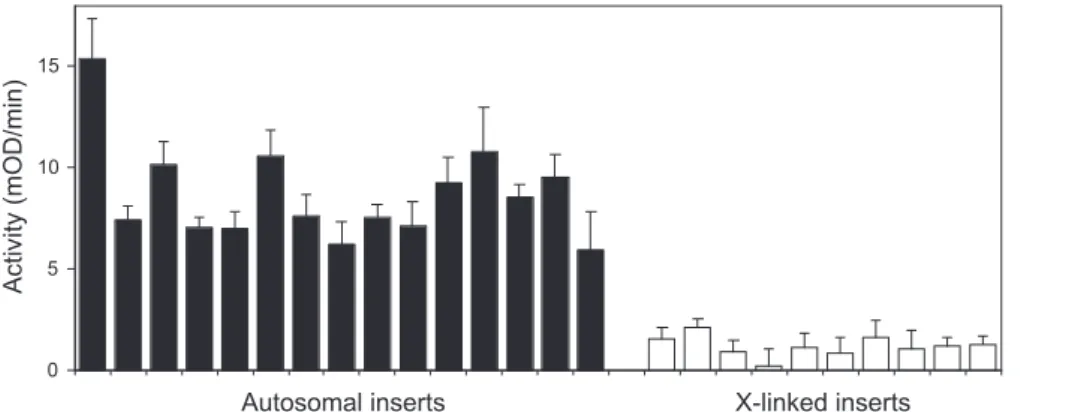
If the X chromosome is inactivated before the autosomes during spermatogenesis, then one would expect transgenic lines with X-linked insertions ofP[wFl-ocn-lacZ]to show lower levels of reporter gene expression than those with autosomal insertions. This is indeed what we observed. In total, we obtained ten independent X-linked insertions of P[wFl-ocn-lacZ]. All of these lines showed reduced b-galactosidase activity in adult males relative to the autosomal-insertion lines (Figures 2 and 3). On average, the activity difference between autosomal and X-linked insertions was 7-fold (8.67 versus 1.19 units), and the difference between the two groups was highly significant (Mann-Whitney U test, p , 0.001). Although b-galactosidase activity was very low for the X-linked insertions, it was significantly greater than zero. Assuming a normal distribution of activity among the
X-insertion lines, the 95% confidence interval was 0.82–1.56 units. Five of the autosomal insertion lines (the last five in Figure 3) were obtained through the re-mobilization of X-linked inserts (see Materials and Methods), demonstrating that the reduction in expression was not caused by undesired sequence changes in the ocn promoter or lacZ coding sequence, but instead was a direct result of X linkage.
Because the assays of b-galactosidase activity measure expression at the level of protein abundance, it is possible that they do not reflect underlying levels of transcription. To test this possibility, we performed quantitative reverse-tran-scription PCR (qRT-PCR) to estimate the relative transcript abundance of a subset of eight transformed lines, including four with autosomal and four with X-linked inserts. The autosomal inserts had significantly higher transgene expres-sion at the level of mRNA (Mann-Whitney U test, p¼0.02), with the relative expression difference being 5-fold (Figure 4B), which corresponds well to the observed difference inb -galactosidase activity and suggests that the enzymatic assays provide a reliable estimate of expression.
Effect of Chromosomal Insulator Sequences
To test if the reduced expression of the X-linkedocn-lacZ transgenes could be attributed to the presence of localized transcriptional repressors bound to the X chromosome, we performed additional experiments using the P[YEStes-lacZ] transformation vector (Figure 1B), which contains binding sites for the protein encoded bysuppressor of Hairy-wing. These binding sites flank the inserted transgene and serve to insulate it from the effects of external transcriptional regulators [35]. We obtained 12 independent autosomal insertions of P[YEStes-lacZ], and these lines showed male-and testis-specific expression of thelacZreporter gene. The meanb-galactosidase activity in adult males was 1.84 units, which was significantly greater than that of adult females (mean ¼ 0.42; Mann-Whitney U test, p , 0.001) or gonadectomized males (mean¼0.22; Mann-Whitney U test, p,0.001).
We also obtained ten independent insertions of P[YEStes-lacZ]on the X chromosome. Adult males of these lines had a mean b-galactosidase activity of 0.17 units, which differed significantly from the autosomal-insert lines (Mann-Whitney U test, p ,0.001), but did not differ significantly from zero (95% confidence interval ¼ 0.09–0.43). The reduction in
Figure 1.Schematic Diagram of theocn-lacZExpression Constructs (A) The pP[wFl-ocn-lacZ]vector. Theocnpromoter fused to thelacZopen reading frame was inserted into the pP[wFl]transformation vector, which contains thewhitegene as a selectable marker. The boundaries of the DNA inserted into theDrosophilagenome are indicated by ‘‘P’’. The portion of the plasmid used for replication inE. coliis labeled‘‘pUC’’. (B) The pP[YEStes-lacZ]vector. Theocnpromoter and 39UTR were fused to respective ends of thelacZopen reading frame and inserted into the YES transformation vector. Binding sites for the Suppressor of Hairy-wing protein, which functions as a chromosomal insulator, are labeled‘‘S’’. doi:10.1371/journal.pbio.0050273.g001
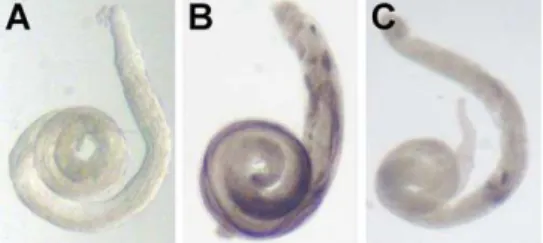
Figure 2.Reporter Gene Expression in Testis
Testes were dissected and incubated with S-GAL, which forms a black precipitate in the presence ofb-galactosidase. Shown are testes fromy w males (negative control) (A),y wmales with an autosomal insertion of P[wFl-ocn-lacZ](B), andy wmales with an X-linked insertion of P[wFl-ocn-lacZ](C). Staining was performed in parallel for the same length of time. The strongest signal is in the proximal region of the autosomal-insert testis. Note that weak staining is visible in the proximal region of the X-insert testis.
reporter b-galactosidase activity caused by X linkage was more than 10-fold (Figure 4A). We also assayed expression at the level of transcript abundance by performing qRT-PCR on a subset of eight transformed lines (four with autosomal and
four with X-linked inserts). Again, the X chromosome insertion lines showed significantly less transgene expression than the autosomal insertion lines (Mann-Whitney U test, p¼ 0.02). The reduction in reporter gene expression measured by qRT-PCR was 3.4-fold (Figure 4B). Thus, the presence of the chromosomal insulator sequences did not alleviate transcrip-tional repression of the X-linked transgenes.
For adult males with autosomal insertions, the coefficient of variation (CV) forb-galactosidase activity was lower among theP[YEStes-lacZ]transformed lines (CV¼0.16) than among the P[wFl-ocn-lacZ] transformed lines (CV¼ 0.28). A more pronounced difference was seen at the level of mRNA abundance, where the CVs for P[YEStes-lacZ] and P[wFl-ocn-lacZ] transformants were 0.07 and 0.44, respectively. This suggests that the insulator sequences successfully reduced position effect variation caused by the chromosomal context of the insertion. The P[YEStes-lacZ] transformants, however, showed significantly less b-galactosidase activity than the P[wFl-ocn-lacZ] transformants (Mann-Whitney U test, p , 0.001; Figure 4A). Interestingly, this difference was not detectable at the level of mRNA abundance (Figure 4B), which suggests additional, post-transcriptional regulation of theP[YEStes-lacZ]transgenes.
Discussion
Although a number of hypotheses regarding genome and sex chromosome evolution assume that the Drosophila X chromosome becomes transcriptionally inactive before the autosomes during spermatogenesis, little direct evidence for this scenario has been reported. Our experimental results indicate that X chromosome inactivation does occur in Drosophilaand that it can have a considerable effect on gene expression in the male germline. In total, we examined 27 autosomal and 20 X-linked insertions of a testis-specific reporter gene in two different transformation vectors. In all cases, transformed lines with autosomal insertions showed significantly greater transgene expression than their X-linked counterparts, with the differences in expression ranging from 3.4- to 10-fold. The consistency of these results across a large number of independent insertions suggests that this tran-scriptional inactivity is a global property of the X chromo-some. The fact that we observe the same pattern when using a vector that insulates the transgene from external
transcrip-Figure 3.Averageb-Galactosidase Activity of Adult Male Flies with Autosomal (Solid Bars) or X-Linked (Open Bars) Insertions ofP[wFl-ocn-lacZ] Each bar represents a different transformed line with a unique, independent transgene insertion. Error bars indicate the standard error of the mean, calculated from the variance among all replicate measurements within each independent insertion line.
doi:10.1371/journal.pbio.0050273.g003
Figure 4. Expression Levels of Autosomal (Solid Bars) and X-Linked (Open Bars) Insertions of the Two ocn-lacZ Transformation Vectors Shown in Figure 1
(A) Averageb-galactosidase activity of adult males.
(B) Relative expression measured by qRT-PCR. Transcript abundance was standardized to that of the ribosomal protein geneRpL32and is given in arbitrary units. Error bars indicate the standard error of the mean, calculated from the variance among the means of the independent insertion lines.
tional regulators further suggests that inactivation of the X chromosome in the male germline occurs through a major structural change, rather than by the binding of localized transcriptional repressors.
Could our results be explained by something other than male germline X inactivation? One possibility is that there is an insertional bias of our transgenes that differs between the X chromosome and the autosomes. For example, X-linked inserts could preferentially target inactive or heterochro-matic regions. To investigate this possibility, we used inverse PCR to map the insertion sites (Figure 5). We found that the insertions span the euchromatic regions of the X and autosomes, with many being in or near genes (Table S1). Thus, our mapping results run counter to the expectations of insertional bias as a cause of the observed differences in expression. Another possibility is that insertion of the transgenes onto the X chromosome may cause rearrange-ments or other disruptions to the gene or promoter that prevent proper expression. However, by remobilizing multi-ple, independent X inserts to new autosomal locations, we have shown that their expression can be restored. Thus, the X-linked insertions must have been intact. Finally, a lack of proper dosage compensation of transgenes inserted onto the X chromosome could possibly lead to reduced expression. We consider this mechanism unlikely for two reasons. First, X chromosome dosage compensation has been shown to occur on a global level in theDrosophilagermline [33]. Second, the expression assays for the autosomal-insert lines were
per-formed on flies heterozygous for the insertion. Thus, even if dosage compensation did not occur, we would expect to observe equal expression of X-linked and autosomal trans-genes. Any degree of dosage compensation would result in higher activity in the X-insertion lines, which makes our test conservative.
The use of the ocnpromoter may make our experimental system especially sensitive to the effects of male germline X inactivation for two reasons. First, the promoter fragment used here is rather short (150 bp) and, thus, may be abnormally influenced by differences in chromatin environ-ment between the autosomes and the X chromosome. It should be noted, however, that other known testis-specific promoters are also relatively short, in the range of 76–390 bp [36–38]. Second,ocnis likely to be expressed relatively late in spermatogenesis, when the effects of X inactivation should be pronounced. The ocn gene was originally identified as one encoding a protein abundant in the testes of mature males, but absent from those of immature males [34]. Our observation that b-galactosidase activity imparted by the ocn-lacZtransgenes is greatest in proximal regions of the testis (Figure 2) also supports its relatively late expression. Furthermore, levels of b-galactosidase activity, as well as transgene transcript abundance as measured by qRT-PCR, are at least 50-fold lower in the third larval instar stage, when spermatogenesis is not yet complete, than in adult males (unpublished data). Thus, it may be that a large proportion of ocnexpression occurs after the X chromosome is inactivated. Indeed, if X-linked genes expressed early in spermatogenesis are hypertranscribed through a dosage compensation mech-anism [33], the effects of later X inactivation may be masked. Finally, we wish to point out that, although testis-expressed genes are under-represented on the X chromosome, they are not absent. Thus, many X-linked genes involved in spermato-genesis must be expressed at levels sufficient for proper function. This may be a result of their (hyper)transcription early in spermatogenesis. Recently, it has been noted that a region of the X chromosome is enriched for newly evolved, testis-expressed genes [39–41], which suggests that this region may escape germline X inactivation. One of our transgene inserts falls within ;500 kb of this interval, but does not differ in expression from other X-linked insertions. A higher density of X-linked transgene insertions may reveal specific regions that escape inactivation.
Overall, P[YEStes-lacZ] transformants had much lower b -galactosidase activity thanP[wFl-ocn-lacZ]transformants (Fig-ure 4A). This difference was not observable at the level of mRNA (Figure 4B), suggesting additional regulation at the level of translation. Two major differences between the vectors could account for the discrepancy between the enzymatic assays and the qRT-PCR measurements. The first is thesuppressor of Hairy-wingchromosomal insulator sequen-ces inP[YEStes-lacZ](Figure 1). However, it seems unlikely that these insulator sequences, which lie far outside of the transcriptional unit, would be involved in post-transcrip-tional regulation. Furthermore, putting the transgenes into a genetic background homozygous for a mutant suppressor of Hairy-wing allele had no effect on levels of b-galactosidase activity (Figure S2). The second difference is that P[YEStes-lacZ]contains theocn39untranslated region (UTR) (Figure 1). Although functional information for this 39UTR is lacking,
Figure 5.Chromosomal Location of the Transgene Insertions
Arrows indicate the insertion sites ofP[wFl-ocn-lacZ](black) and P[YEStes-lacZ](gray) transgenes as determined by inverse PCR. Nine additional inserts could be assigned only to the X chromosome or autosomes by genetic crosses and are not shown.
the presence of two conserved sequence blocks suggests that it may play a role in the regulation of expression (Figure S1). Our finding that a testis-specific gene is not properly expressed when located on the X chromosome provides compelling experimental evidence for male germline X inactivation inDrosophila, something that was first proposed over thirty years ago [27]. It is also consistent with a selective explanation for the overabundance of retrotransposed genes that have moved from the X to the autosomes [8]. If such genes have a beneficial effect when expressed in testis (especially in later stages of spermatogenesis), then selection would favor the maintenance of autosomal copies. The acquisition of expression late in spermatogenesis may even predispose a gene to adaptive evolution, as testis-expressed genes appear to be targets of positive selection more often than genes of other expression classes [42]. Our results also have relevance to the SAXI hypothesis [23], which proposes that sexual antagonism leads to the selective relocation of male-beneficial genes expressed late in spermatogenesis to the autosomes. After all such genes have been relocated, selection could favor global inactivation of the X chromo-some during spermatogenesis to prevent the expression of female-beneficial genes that have a harmful effect when expressed in males. Alternatively, the X may be inactive at this stage simply because it no longer contains genes with the proper regulatory sequences required for male germline expression. Our results are consistent with the former scenario, as the ocn promoter, which drives testis-specific expression on autosomes, does not function properly when relocated to the X chromosome.
Materials and Methods
Transformation vector construction. Two different expression
vectors that combined theocn promoter ofD. melanogasterwith the
lacZcoding region ofE. coliwere generated using standard techniques
[43]. For the first, we PCR-amplified a 150-bp fragment of D.
melanogastergenomic DNA that spanned bases 25,863,383–25,863,532 of Chromosome 3R in genome release 5 (http://www.fruitfly.org/ sequence/release5genomic.shtml). The amplified region includes 80
bases of 59flanking sequence and 70 bases of 59UTR of theocngene,
corresponding to bases165 to16 relative to the A in the ATG start
codon. We chose to end the promoter fragment at16 because the
preceeding sequence presented a good target for PCR-primer design; we know of no functional reason to include or exclude the final 15 bp before the start codon. The PCR product was cloned directly into the pCR2.1-TOPO vector (Invitrogen, http://www.invitrogen.com/). The identity and orientation of the cloned fragment were confirmed by restriction analysis. A 3.5-kb NotI fragment containing the complete E. coli lacZopen reading frame was excised from the plasmid
pCMV-SPORT-bgal (Invitrogen) and inserted into the NotI site of the above
plasmid, just downstream of the ocn promoter and in the same
orientation. A 3.6-kb fragment containing theocnpromoter and the
lacZcoding region was then excised as an SpeI/XbaI fragment and
cloned into the SpeI site of the pP[wFl]transformation vector. This
vector is based on thePtransposable element and contains theD.
melanogaster white (w) gene as a selectable marker [44]. The final
construct was designated pP[wFl-ocn-lacZ](Figure 1A).
The second expression vector contained the ocn promoter
described above as well as theocn39UTR sequence (Figure S1). The
ocnpromoter was excised from the pCR2.1-TOPO vector as a BamHI/
XbaI fragment and inserted into the BamHI/XbaI sites of the plasmid
pUC18 (Invitrogen). Theocn 39UTR sequence was PCR-amplified
from genomic DNA corresponding to bases 25,862,721–25,862,830 of
chromosome arm 3R (bases16 toþ93 relative to the T in the TGA
stop codon) and cloned into the pCR2.1-TOPO vector. After confirming the identity and orientation of the cloned fragment by restriction analysis, a HindIII fragment (where one HindIII site was
internal to the 39UTR fragment, occurring 30 bp from the 59end)
was extracted and inserted into the HindIII site of the pUC18 plasmid
containing theocn promoter, such that the promoter and 39 UTR
were in the same orientation. An SpeI fragment containing both the
promoter and the 39UTR was then excised and cloned into the XbaI
site of the YES vector [35]. This vector is also based on the P
transposable element and contains theyellow (y)gene ofD. melanogaster
as a selectable marker. Additionally, it contains binding sites for the Suppressor of Hairy-wing protein that flank the inserted DNA and serve to insulate it from position effects caused by random insertion of the vector into the genome [35]. The resulting transformation vector was designated as YEStes (YES vector for testes-specific
expression) and contains the ocn promoter and 39 UTR separated
by unique XbaI and NotI restriction sites. To complete the expression
construct, a 3.5-kb NotI fragment of the plasmid pCMV-SPORT-bgal
containing the completelacZopen reading frame was cloned into the
NotI site of the YEStes vector in the appropriate orientation. This
final construct was designated pP[YEStes-lacZ](Figure 1B).
Germline transformation. Plasmid DNA of the above expression constructs was purified using the QIAprep Spin kit (QIAGEN, http:// www.qiagen.com/) and used for microinjection of early stage embryos
of they w;D2–3,Sb/TM6 strain ofD. melanogasterfollowing standard
procedures [45,46]. Because it carries both theyandwmutations, this
strain could be used for both transformation vectors. TheD2–3P
element on the third chromosome served as source of transposase
[47]. Following transformation, all lines were crossed to ay wstock to
remove the transposase source.
In cases where the transgene insertion was linked to the D2–3
source of transposase, the inserts were immediately remobilized by
crossing transformed males toy wfemales and selecting offspring
carrying the transgene, but not theD2–3 element. These flies were
then mated to y w flies of the opposite sex to establish stable
transgenic lines.
X-linked insertions were identified by crossing transformed males
toy wfemales and following inheritance of the phenotypic marker (yþ
orwþ
); crosses in which all daughters, but no sons, showed the marker phenotype revealed X linkage. Some X-linked insertions were mobilized to the autosomes by the following procedure. Transformed
females were mated toy w;D2–3,Sb/TM6 males and the male offspring
carrying both the transgene and theD2–3 source of transposase were
mated to y wfemales. From this cross, we selected male offspring
carrying the transgene (which could not be on the X chromosome
inherited from the mother). These males were mated toy wfemales to
establish stable transformed lines with new autosomal insertions of the transgene.
To map the intrachromosomal location of the transgene
inser-tions, the genomic sequence flanking the P-element vector was
determined by sequencing the products of inverse PCR [48]. Briefly, genomic DNA was extracted from insertion-bearing flies and digested with either HpaII or HinP1I. The digestion products were self-ligated and used as a template for PCR with primer pairs Pry1 CCTTAGCATGTCCGTGGGGTTTGAAT-39) and Pry2 (59-CTTGCCGACGGGACCACCTTATGTTATT-39); Plac1 (59-CACC CAAGGCTCTGCTCCCACAAT-39) and Plac4 (59-ACTGTGCGT
TAGGTCCTGTTCATTGTT-39) to determine 39 or 59 flanking
sequences, respectively. PCR products were sequenced with BigDye v1.1 chemistry on a 3730 automated sequencer (Applied Biosystems, http://www.appliedbiosystems.com/) using the PCR primers as se-quencing primers. In all cases, the chromosomal locations assigned by inverse PCR were consistent with those determined by genetic crosses.
b-Galactosidase assays.To determine in vivo expression levels of
our transgenic constructs, we measured the level ofb-galactosidase
activity in transformed flies. For all autosomal insert lines,
trans-formed males were mated toy wfemales and offspring heterozygous
for the transgene insertion were used for assays. For transformants
with X-linked inserts, females were mated toy wmales and offspring
heterozygous (female) or hemizygous (male) for the transgene insertion were used for assays. In all cases, the offspring were collected shortly after eclosion and separated by sex until they were assayed at age 5–7 d. All flies were raised on cornmeal-molasses
medium at 258C.
For assays ofb-galactosidase activity, five adult flies of the same sex
were homogenized in 150ll of a buffer containing 0.1 M Tris-HCl, 1
mM EDTA, and 7 mM 2-mercaptoethanol at pH 7.5. After incubation
on ice for 15 min, the homogenates were centrifuged at 12,000gfor
15 min at 48C and the supernatant containing soluble proteins was
retained. For each assay, 50ll of this supernatant were combined
with 50ll of assay buffer (200 mM sodium phosphate [pH 7.3], 2 mM
MgCl2, 100 mM 2-mecaptoethanol) containing 1.33 mg/ml o
-nitro-phenyl-b-D-galactopyranoside.b-Galactosidase activity was measured
8C. b-Galactosidase activity units were quantified as the change in absorbance per minute multiplied by 1,000 (mOD/min). For all transformed lines, we performed at least two technical and two biological replicates (always in equal numbers), where the former used the same soluble protein extraction and the latter used extractions from independent cohorts of flies. The activity of each line was calculated as the mean over all replicates, with the variance and standard error calculated among replicates. For comparisons between chromosomes or vectors, we averaged over the means of the individual lines and used the among-line variation to calculate variance, standard error, and CV. This approach is conservative, as the among-line differences (position effects) tended to be the largest source of variation. Statistical tests for differences between groups were performed using nonparametric methods, such as the Mann-Whitney U test, that do not rely on estimates of variance. For our purposes this approach is conservative.
For lines that showed b-galactosidase activity in adult males, we
also performed assays on gonadectomized males. This was done following the above protocol, after removal of the testes by manual
dissection. For visualizingb-galactosidase activity in whole tissues, we
incubated dissected testes in the above assay buffer containing 1 mg/ ml ferric ammonium citrate and 1.8 mg/ml of S-GAL sodium salt
(Sigma-Aldrich, http://www.sigmaaldrich.com/) for 6 h at 378C.
Quantitative reverse-transcription PCR (qRT-PCR). To measure expression at the level of transcription (mRNA abundance), we performed qRT-PCR using a TaqMan assay (Applied Biosystems) designed specifically to our transgene (i.e., spanning the junction
between theocn59UTR and thelacZcoding region). For this, 1lg of
DNase I-treated total RNA isolated from heterozygous (autosomal insertions) or hemizygous (X insertions) males was reverse tran-scribed using Superscript II reverse transcriptase and random hexamer primers (Invitrogen) according to the manufacturer’s protocol. A 1:10 dilution of the resulting cDNA was used as template for PCR on a 7500 Fast Real-Time PCR System (Applied Biosystems). The average threshold cycle value (Ct) was calculated from two technical replicates per sample. Expression of the transgene was
standardized relative to the ribosomal protein geneRpL32(TaqMan
probe ID Dm02151827). Relative expression values were determined
by theDDCt method according the formula 2(DCtxDCtmin), where
DCtx¼CttransgeneCtRpL32for a given transformed linex, andDCtmin
represents the corresponding value of the line displaying the lowest
level of transgene relative toRpL32expression. Statistical analyses
were performed as described above forb-galactosidase activity.
Supporting Information
Figure S1.Sequence Alignment of theocnPromoter and 39UTR
(A) Alignment of theocn 59flanking and 59 UTR sequences ofD.
melanogaster, D. simulans, D. sechellia, D. yakuba, and D. erecta. The
arrowheads indicate the boundaries of theocn promoter sequence
included in our expression constructs. The transcriptional start site is indicated by an arrow.
(B) Alignment of the ocn 39 UTR sequences of D. melanogaster, D.
simulans, D. sechellia, D. yakuba,andD. erecta. The two conserved regions
are shaded. The arrowheads indicate the boundaries of the 39UTR
sequence included in our expression construct.
Found at doi:10.1371/journal.pbio.0050273.sg001 (40 KB PDF).
Figure S2.Effect ofsuppressor of Hairy-wing Genetic Background on Transgene Expression
Theb-galactosidase activity imparted by the transgenes was measured
in a background where the third chromosome was homozygous for
either the mutantsu(Hw)8allele (solid bars) or the wild-type allele
(open bars).
(A) Activity comparison of eight heterozygous second-chromosomal insertions.
(B) Activity comparison of eight hemizygous X-chromosomal in-sertions. In both cases, the genetic background had no significant
effect on activity (two-tailed Wilcoxon signed ranks test,p.0.10).
Error bars indicate the standard error of the mean, calculated from the variance among all replicate measurements within each inde-pendent insertion line.
Found at doi:10.1371/journal.pbio.0050273.sg002 (65 KB PDF).
Table S1.Chromosomal Locations of Transgene Insertions Found at doi:10.1371/journal.pbio.0050273.st001 (25 KB PDF).
Accession Numbers
The FlyBase (http://www.flybase.org/) accession numbers for the genes
discussed in this article are janus B (CG7931; FBgn0001281), ocnus
(CG7929; FBgn0041102), RpL32 (CG7939; FBgn0002626), white
(CG2759; FBgn0003996), andyellow(CG3757; FBgn0004034).
Acknowledgments
We thank H. Gebhart for excellent technical assistance in the lab. The manuscript was improved thanks to comments from A. Betancourt, C. Meiklejohn, D. Presgraves, and three anonymous reviewers.
Author contributions.JP conceived and designed the experiments. WH, JFB, and JP performed the experiments, analyzed the data, and wrote the paper.
Funding.This work was supported byDeutsche Forschungsgemeinschaft grant PA 903/3.
Competing interests.The authors have declared that no competing interests exist.
References
1. Charlesworth B (1996) The evolution of chromosomal sex determination and dosage compensation. Curr Biol 6: 149–162.
2. Rice WR (1996) Evolution of the Y sex chromosome in animals. Bioscience 46: 331–343.
3. Ganguly R, Swanson KD, Ray K, Krishnan R (1992) A BamHI repeat element is predominantly associated with the degenerating neo-Y chromosome ofDrosophila mirandabut absent in theDrosophila melanogaster genome. Proc Natl Acad Sci U S A 89: 1340–1344.
4. Steinemann M, Steinemann S (2000) Common mechanisms of Y chromo-some evolution. Genetica 109: 105–111.
5. Steinemann S, Steinemann M (2001) Biased distribution of repetitive elements: A landmark for neo-Y chromosome evolution in Drosophila miranda. Cytogenet Cell Genet 93: 228–233.
6. Bachtrog D (2005) Sex chromosome evolution: Molecular aspects of Y-chromosome degeneration inDrosophila. Genome Res 15: 1393–1401. 7. Vicoso B, Charlesworth B (2006) Evolution on the X chromosome: Unusual
patterns and processes. Nat Rev Genet 7: 645–653.
8. Betra´n E, Thornton K, Long M (2002) Retroposed new genes out of the X in Drosophila. Genome Res 12: 1854–1859.
9. Betra´n E, Long M (2003) Dntf-2r, a youngDrosophilaretroposed gene with specific male expression under positive Darwinian selection. Genetics 164: 977–988.
10. Betra´n E, Bai Y, Motiwale M (2006) Fast protein evolution and germ line expression of aDrosophilaparental gene and its young retroposed paralog. Mol Biol Evol 23: 2191–2202.
11. Kalamegham R, Sturgill D, Siegfried E, Oliver B (2006) Drosophilamojoless,a retroposedgsk-3,has functionally diverged to acquire an essential role in male fertility. Mol Biol Evol 24: 732–742.
12. Parisi M, Nuttall R, Naiman D, Bouffard G, Malley J, et al. (2003) Paucity of genes on theDrosophilaX chromosome showing male-biased expression. Science 299: 697–700.
13. Ranz JM, Castillo-Davis CI, Meiklejohn CD, Hartl DL (2003) Sex-dependent gene expression and evolution of theDrosophilatranscriptome. Science 300: 1742–1745.
14. Hambuch TM, Parsch J (2005) Patterns of synonymous codon usage in Drosophila melanogaster genes with sex-biased expression. Genetics 170: 1691–1700.
15. Connallon T, Knowles LL (2005) Intergenomic conflict revealed by patterns of sex-biased gene expression. Trends Genet 21: 495–499.
16. Rogers DW, Carr M, Pomiankowski A (2003) Male genes: pelled or X-cluded? Bioessays 25: 739–741.
17. Schlotterer C (2003) Where do male genes live? Science 299: 670–671. 18. Oliver B, Parisi M (2004) Battle of the Xs. Bioessays 26: 543–548. 19. Dorus S, Busby SA, Gerike U, Shabanowitz J, Hunt DF, Karr TL (2006)
Genomic and functional evolution of the Drosophila melanogaster sperm proteome. Nat Genet 38: 1440–1445.
20. Swanson WJ, Clark AG, Waldrip-Dail HM, Wolfner MF, Aquadro CF (2001) Evolutionary EST analysis identifies rapidly evolving male reproductive proteins inDrosophila. Proc Natl Acad Sci U S A 98: 7375–7379. 21. Rice WR (1984) Sex chromosomes and the evolution of sexual dimorphism.
Evolution 38: 735–742.
22. Charlesworth B, Coyne JA, Barton NH (1987) The relative rates of evolution of sex chromosomes and autosomes. Am Nat 130: 113–146.
23. Wu CI, Xu EY (2003) Sexual antagonism and X inactivation—The SAXI hypothesis. Trends Genet 19: 243–247.
25. Kelly WG, Schaner CE, Dernburg AF, Lee MH, Kim SK, et al. (2002) X-chromosome silencing in the germline ofC. elegans. Development 129: 479– 492.
26. Fong Y, Bender L, Wang W, Strome S (2002) Regulation of the different chromatin states of autosomes and X chromosomes in the germ line ofC. elegans. Science 296: 2235–2238.
27. Lifschytz E, Lindsley DL (1972) The role of X-chromosome inactivation during spermatogenesis. Proc Natl Acad Sci U S A 69: 182–186. 28. McKee BD, Handel MA (1993) Sex chromosomes, recombination, and
chromatin conformation. Chromosoma 102: 71–80.
29. Hoyle HD, Hutchens JA, Turner FR, Raff EC (1995) Regulation of beta-tubulin function and expression inDrosophilaspermatogenesis. Dev Genet 16: 148–170.
30. Rastelli L, Kuroda MI (1998) An analysis of maleless and histone H4 acetylation inDrosophila melanogasterspermatogenesis. Mech Dev 71: 107– 117.
31. Gu W, Szauter P, Lucchesi JC (1998) Targeting of MOF, a putative histone acetyl transferase, to the X chromosome of Drosophila melanogaster. Dev Genet 22: 56–64.
32. Smith ER, Pannuti A, Gu W, Steurnagel A, Cook RG, et al. (2000) The Drosophila MSL complex acetylates histone H4 at lysine 16, a chromatin modification linked to dosage compensation. Mol Cell Biol 20: 312–318. 33. Gupta V, Parisi M, Sturgill D, Nuttall R, Doctolero M, et al. (2006) Global
analysis of X-chromosome dosage compensation. J Biol 5: 3.
34. Parsch J, Meiklejohn CD, Hauschteck-Jungen E, Hunziker P, Hartl DL (2001) Molecular evolution of theocnusandjanusgenes in theDrosophila melanogasterspecies subgroup. Mol Biol Evol 18: 801–811.
35. Patton JS, Gomes XV, Geyer PK (1992) Position-independent germline transformation in Drosophila using a cuticle pigmentation gene as a selectable marker. Nucleic Acids Res 20: 5859–5860.
36. Michiels F, Gasch A, Kaltschmidt B, Renkawitz-Pohl R (1989) A 14 bp promoter element directs the testis specificity of the Drosophila beta 2 tubulin gene. EMBO J 8: 1559–1565.
37. Yanicostas C, Lepesant JA (1990) Transcriptional and translationalcis
-regulatory sequences of the spermatocyte-specificDrosophila janusBgene are located in the 39exonic region of the overlappingjanusAgene. Mol Gen Genet 224: 450–458.
38. Nurminsky DI, Nurminskaya MV, De Aguiar D, Hartl DL (1998) Selective sweep of a newly evolved sperm-specific gene inDrosophila. Nature 396: 572–575.
39. Levine MT, Jones CD, Kern AD, Lindfors HA, Begun DJ (2006) Novel genes derived from noncoding DNA inDrosophila melanogasterare frequently X-linked and exhibit testis-biased expression. Proc Natl Acad Sci U S A 103: 9935–9939.
40. Begun DJ, Lindfors HA, Kern AD, Jones CD (2007) Evidence forde novo evolution of testis-expressed genes in theDrosophila yakuba/Drosophila erecta clade. Genetics 176: 1131–1137.
41. Chen ST, Cheng HC, Barbash DA, Yang HP (2007) Evolution ofhydra, a recently evolved testis-expressed gene with nine alternative first exons in Drosophila melanogaster. PLoS Genet 3: e107.
42. Pro¨schel M, Zhang Z, Parsch J (2006) Widespread adaptive evolution of Drosophilagenes with sex-biased expression. Genetics 174: 893–900. 43. Sambrook J, Fritsch EF, Maniatis T (1989) Molecular cloning: A laboratory
manual. Ed. 2. Cold Spring Harbor (NY): Cold Spring Harbor Laboratory Press. 1659 p.
44. Siegal ML, Hartl DL (1996) Transgene coplacement and high efficiency site-specific recombination with the Cre/loxPsystem in Drosophila. Genetics 144: 715–726.
45. Spradling AC, Rubin GM (1982) Transposition of cloned P-elements into Drosophilagerm line chromosomes. Science 218: 341–347.
46. Rubin GM, Spradling AC (1982) Genetic transformation ofDrosophilawith transposable element vectors. Science 218: 348–353.
47. Robertson HM, Preston CR, Phillis RW, Johnson-Schlitz DM, Benz WK, et al. (1988) A stable genomic source ofPelement transposase inDrosophila melanogaster. Genetics 118: 461–470.