RESEARCH ON PROBLEMS WITH PROJECTS AND PARTNERSHIPS THAT PUBLIC INSTITUTIONS IN THE CENTRE REGION FACED IN ACCESSING
EUROPEAN FUNDS
Ranf Diana Elena
“Lucian Blaga” University of Sibiu
“Hermann Oberth” Faculty of Engineering
Dumitrascu Dănut
“Lucian Blaga” University of Sibiu
“Hermann Oberth” Faculty of Engineering
European project management is the main filed of the article. Assuming a connection between the degree of absorption of European funds and the degree of maturity of the Romanian society in terms of project management, the article seeks to identify the negative factors on accessing and carrying out European projects.
The identified problem is a low degree of absorption of European funds in Romania, and the main objective of the research is to identify the problems faced by the public institutions in the Centre Region in accessing European funds and also the causes that led to the low absorption of European funds.
This article’s research is based on a preliminary analysis performed by the authors on the rate of accessing of European funds published in the article called “The current state of European funds absorption through funding programmes – measure of the Romanian performances in the project management practice”. The conclusion of this article was a low rate of absorption of European funds in Romania, a fact that reveals a poor practice of the theory on project management. This article identifies part of the causes of this situation by identifying a part of the problems that stood in the way of beneficiaries of European funds
The qualitative and quantitative research methods are used in combination in the research. The investigation has however a highly quantitative character, the purpose of the qualitative research being to provide the prerequisites for achieving the quantitative research. The interview-based qualitative research enabled the researcher to get acquainted with the subjects’ problems related to the theme of investigation, the causes that have generated these problems. This preliminary investigation to the questionnaire-based research aims to provide information that would help the researcher prepare the questionnaire, so that the questions allow getting the most comprehensive information to solve the identified problems.
The qualitative research revealed the existence of some problems faced by institutions in relation to accessing and developing projects that focus on several directions: when filling out the application form, the technical-financial reporting, at the contracting phase of the projects, problems of partners. This article deals with the problems encountered during the projects’ contracting stage and problems caused by partners. The respondents’ answers place the problems of partners on top of the categories of problems that stood in the way of European funds’ beneficiaries. A series of causes that have led to the occurrence of these problems have also been identified.
project management are unique and original and meet a current and pressing requirement of the Romanian society.
Keywords: funds, projects, problems, partnership, absorption. Cod JEL: M16.
1. INTRODUCTION
The present article continues the study on identifying the problems that beneficiaries of European funds in Centre Region faced, as well as their causes. The first article dealt with the problems encountered during the stage of filling out the application form and the technical and financial reporting stage. The research continues with dealing with the problems faced by beneficiaries at the contracting stage and problems with the partners.
The research which integrates the two articles assumes that there is a correlation between the degree of maturity of the project management in the Romanian society and the low degree of absorption of European funds, thus, identifying a solution to prepare Romanian for the next programming period 2014-2020 in view of obtaining higher rates of absorption becomes a necessity.
Certainly, the usefulness of the present articles is not limited to European funded projects. A contribution of the research is the attempt to include the European projects into the wider notion of projects. Consequently, the chances of creating a coherent vision on European funds increase, on their characteristics, but also on the common elements with the actions any project involves. Therefore, the preparation for European funds absorption should enter into a broader vision: in the future, we should not focus only on attracting structural funds, but on attracting any type of funds meant to stimulate development. Training in the field of projects must not end after the structural funds have been attracted, but it should be destined to modernize our thinking and actions. We should not forget about the next period coming up: 2014-2020 and that must find us prepared, more capable to prove seriousness and professionalism.
2. PREVIOUS RESEARCH
The study is part of the approach of a PhD thesis entitled “Strategic management in European project funding”, which began with identifying the current stage of the scientific knowledge in the field of project management. Research has revealed that the study theme is unique and it completes the studied field. They show the authors’ interest for the studied field.
The conclusions of an article published by the authors (Ranf and Dumitrascu 2011: 153-163) identified a low rate of absorption of European funds of approximately 17%, and now, a year later, of 25%. This analysis of the rate of absorption of European funds in Romania has identified the problem that led to the research of these articles. These results indicate the existence of an immaturity of the project management practice in Romania. Identifying the causes of this low level of maturity in the field of project management should be a priority for the whole society, in order to turn structural funds into opportunity.
But, in order to improve the ability to absorb European funds there must be first identified the main gaps, insufficiencies or inefficiencies encountered by the people responsible with writing projects and implementing them during the first period of programmes, so that we are better prepared and more efficient in the second period.
3. METHODOLOGY OF RESEARCH
The investigation included two successive studies, the first one being an exploratory qualitative research, meant to outline the qualitative aspects of the investigated phenomena and the other one a quantitative research, in the form of occasional surveys.
elaborating new hypotheses; establis ideas. This research was designed an the development, under better condit The interviews conducted among res institutions in relation to accessing filling out the application form, the projects, problems of partners. The stage of filling out the application contracting stage, problems with formulates the premise that the quest The population of interest for the composed of public institutions (tow prefectures) or NGOs located in Cen Mures and Sibiu), the greatest par opportunity to identify and anal implementing projects.
A number of 95 questionnaires wer remaining 22 respondents being inst processing would have vitiated the re
4. RESULTS OF THE RESEARC With regard to the first stage studied
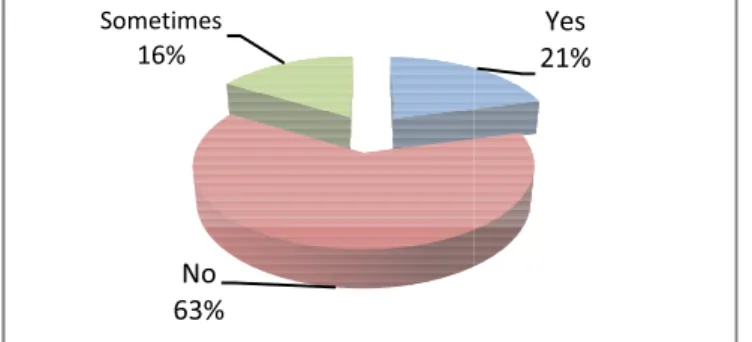
Figure 1. Situation of projects that ha in the contracting phase (ma
;( L ( #& '
L
lishing further research priorities; generating new s and carried out only as a preliminary stage, meant ditions, of the quantitative research.
respondents revealed the fact that the problems enc ng and developing projects focus on several direc he technical-financial reporting, at the contracting
he present article deals with the problems encoun on form, the technical and financial reporting, t h the partners. This conclusion of the qualitat estionnaire-based quantitative research started with he study, namely the population chosen for the own halls, county councils, foundations, public adm entre Region (the counties of Alba, Brasov, Covasn art that have accessed European funds, in order
alyse the main difficulties they faced in ac
ere correlated, of which 73 questionnaires were pr nstitutions that have not accessed any type of fund
results.
CH
ed, namely that of contracting projects, problems a still existing, namely ther who answer yes and 16% sometimes.
The reason of this question number of projects that we and have not been complet contract. There are va problems after signing the may result in its terminatio
had problems ade by author)
' L
solutions and ant to facilitate
ncountered by rections: when g phase of the untered in the , the projects’ tative research ith.
the sample, is dministrations, asna, Harghita, er to have the accessing and
processed, the nds and whose
are fewer, but ere is a 21% % who answer
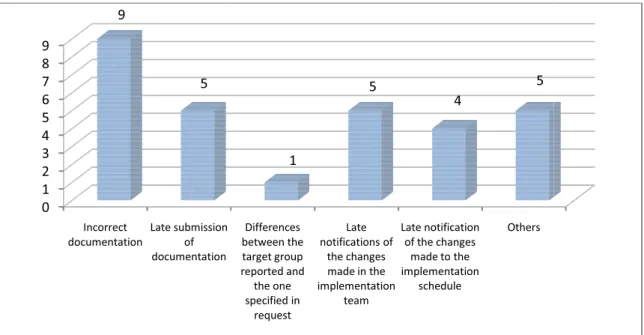
Figure 2. Problems faced by
Figure 2 shows the frequency of pro and the frequency of their occurrenc
Figure 3. The main cau in the co
Problems in the contracting phase a documents such as inappropriate C many letters of clarification and to require long assessment periods of th the good course of the project. From that are approved and then put on ho
,
"(# (+ ##&(
D#'+6 &''&( () (+ ##&(
3
P Intr Product Growing
Product Development 4
Theoretical LCP from marketing point of view: research, introduction, develop, saturation,
CAU
y respondents in the contracting phase (made by au
roblems encountered by respondents in the contract nce, and figure 3 outlines the causes of their occurre
auses of the problems encountered by respondents contracting phase (made by author)
e are due both to the beneficiaries that have sent CVs, unsigned partnership agreements or they h
to the Intermediate Bodies and Management Aut f the documentation, periods that exceed even a yea rom the respondents’ answers it appears that there
hold for long periods of time. &))'
6#:#3 #.#.(+% %(#
#3( '%&)&&
8+'#
D# (#&)&#&('()
#33.'  & %$ ##&(
#
D#(#&)&#&( ()#33.'
#(#3 & %$ ##&(
'3+$
K#3'
Knowled ge
Engineer
2 Product
troduction
Product Saturation
New produ Dynamic curve for sale on market
Theoretical tre LCP on market AUSES
author)
acting phase rence.
nt inconsistent have sent too uthorities that ar, damaging re are projects duct
When asked if they had problems fr answered that they did not, while 47
Figure 4. Frequency
The respondents who had problems they encountered and their frequenc number of problems identified from from partners in the implementation From figure 4 it can be noticed tha encountered problems being related such as those related to the inconsist
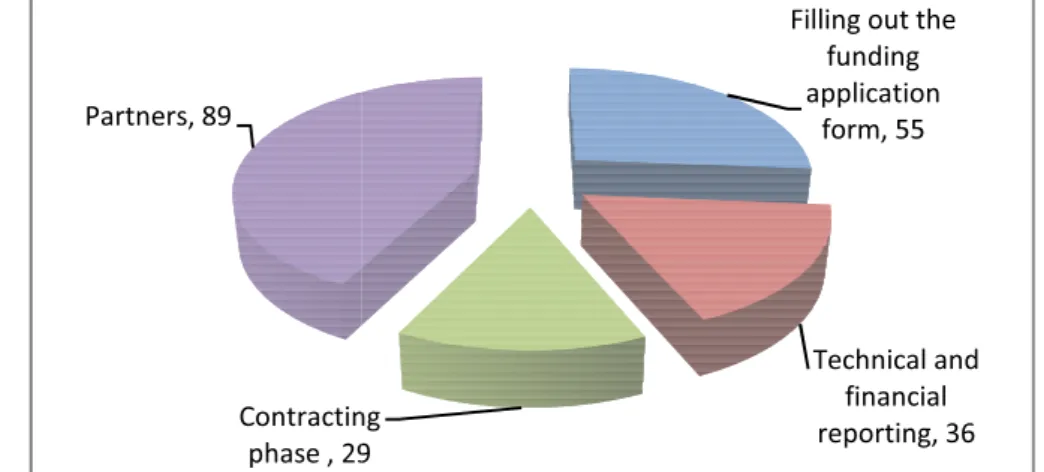
Figure 5. Comparison betwe
Figure 5 compares the frequency of can be noticed from the figure that m are those from partners, followed b form. Although this category of pro degree of difficulty the technical a faced a great number of problems ca projects. ;(#'+6 &##&. #3 (+ ##&( &( #(#3 8+& #' "('&'#! :#3#& '3+$()#3 %(I# (##& %3' #'
from partners in carrying out projects, 53% of the 47% admit that they sometimes did.
cy of problems from partners (made by author)
s with partners were asked to mention the types ncy. To make the answer easier, the questionnair m other sources, which might represent problems n of projects. These are outlined in figure 4. hat the frequency of such problems is relatively s ed to the late reporting of certain changes, planni istency with the time schedule.
ween problems faced by beneficiaries (made by aut
of the studied types of problems until now in bot t most problems faced by beneficiaries in carrying by the problems encountered when filling out the problems is usually underestimated, respondents c
and financial reporting on the first place but the caused by partners, with negative effects on the per
! )( &. &$&.&6$ 0%'' D5())& ( &# # )( %#' D# (#&)&#&(() #& 3.' K#3'=/./ 63() ''+ (6$&.#&('> , &$$&.(+##3 )+&. %%$&#&( )( 73&$ )&&$ %(#&. &. e respondents
es of problems aire contains a s encountered
similar, most ning problems
uthor)
oth articles. It ng out projects the application consider as a they have also erformance of ./
5. CONCLUSIONS AND RECOMMENDATIONS
The research, whose target group is the public institutions in Centre Region aims to obtain information from the respondents regarding: the problems faced by them in the projects’ contracting phase and problems caused by partners.
As expected, the contracting phase had fewer problems from the beneficiaries, but with effects on the long term. For example, sometimes (24% of the cases) big delays at the signing of contracts were encountered, reaching periods that exceeded one year (17 months), delays which may bring significant changes between what was declared in the application form and later reporting from the beneficiaries.
Respondents accuse a great number of problems encountered from partners (89), the most problems faced by institutions in carrying out projects.
Regarding the usefulness of the results, it must be stated that the information obtained from the research we consider useful not only for the possible beneficiaries of European funds (public, private organizations, NGOs, the state, etc.), but for the entire Romanian society, because the money that these investments bring will contribute to the increase of economic stability or will even generate an economic growth with direct benefits on the population, such as the increase of jobs, the development of the social sector, etc.
Obviously, the usefulness of the research lies in the fact that its results allow us to develop recommendations, both for the institutions that carry out projects and for the institutions that deal with the management of European funds in Romania (Intermediary Bodies and Management Authorities).
Recommendations for the project development institutions to obtain better results in the development and implementation of projects would be:
- studying in detail of the Funding Guide in order to reduce the number of problems encountered during all four situations studied in both articles;
- putting a greater emphasis on the quality of “partner”, because, although they have encountered several problems from partners, the interviewed institutions (53%) were themselves partners in 1 or more projects.
Recommendations for institutions dealing with European funds in Romania:
- elaboration of Funding Guide that would provide detailed and explicit information to possible applicants on projects to ease the filling out of the application form;
- approval in advance of possible changes that occur in the Funding Guide; - correlation of information from Funding Guides to the current legislation; - reducing projects’ evaluation periods which have exceed even a year.
- reducing the periods between approval of projects and signing the contracts, periods that have reached even 17 months;
- simplification of public procurement procedures.
Romania should prepare thoroughly for the 2014-2020 financial period. The best lesson for this purpose is the institutions’ experience from the period 2007-2013. Under these circumstances, the information obtained from this study are useful not only for project development or managing institutions, but also to any bodies responsible with spending European money, with great contribution to the development of the Romanian society.
6. NOTE
7. REFERENCES
Books:
1. Cătoiu, Iacob. Marketing research. Bucureçti: Uranus Publishing House, 2009.
2. Datculescu, Petre. Marketing research. Bucureçti: Brandbuilders Grup Publishing House, 2006.
3. Dumitraçcu, D. and Pascu, V.R. Project management. Sibiu: Editura ULBS, 2005.
4. Turner, J.R. çi Simister, S.J. Manualul Gower de management de proiect. Bucureúti: Codecs Publishing House, 2004.
Articles published in on-line Journals:
1. Abrudan, Maria Madela and Matei, Mirabela Constanta. “Talent management – a strategic priority.” Annals of Faculty of Economicsof Oradea. Vol. 4 (2009): 25-30, accessed at 10 of April 2012. http://econpapers.repec.org/article/orajournl/v_3a4_3ay_3a2009_3ai_3a1_3ap_3a25-30.htm.
2. Pop Cohuì, Ioana Crina. „The potential of female entrepreneurship as a regional ghowth and development engine in the Western Romania”. Annals of Faculty of Economicsof Oradea. Vol. 1 (2011): 237-243, accessed at 25 of March 2012. http://econpapers.repec.org/article/orajournl/v _3a1_3ay_3a2011_3ai_3aspecial_3ap_3a237-243.htm.
3. Ranf, Diana. “Project management – than and now”, Annals Universitatis Apulensis Series Oeconomica (2011): 596-603, accessed at 5 of April 2012. http://econpapers.repec.org /article/alujournl/v_3a2_3ay_3a2011_3ai_3a13_3ap_3a41.hm.