A Work Project, presented as part of the requirements for the Award of a Master Degree in Management from the NOVA-School of Business and Economics
IWP Strategy – SME Competitiveness Dom Pedro and its Internalization to Rio de Janeiro
Marcelo Filipe Simões Vicente Nr.982
A Project carried out on the Management course, with the supervision of: Professor Sonia Dahab
1 Executive summary
This thesis studies the possible expansion of Dom Pedro Hotels to Rio de Janeiro. Dom Pedro is a successful Portuguese hotel chain with a huge experience in amazing Brazilians guests and with several important connections in Brazil. Rio de Janeiro is one of the most desired destinations by hotel groups and their main “customer” is Brazilians. At first sight, it seems reasonable to say that Dom Pedro should enter in Rio, but in order to make an educated guess about this question I analyzed several factors.
In the first part the reasons why Dom Pedro is successful in Portugal are identified and then analyzed, in a posterior phase it is shown that those reasons could be copied in the new market. A deeper analysis of Rio de Janeiro was followed to find out the country macro-economic context and to provide better understanding of the tourism market in Rio de Janeiro. After a careful analysis of the several strategies that Dom Pedro could use to enter in Brazil, it was identified that a management contract is the best option. Taking all the information that I gathered in to account, I concluded that Rio de Janeiro is a market that Dom Pedro shouldn’t pursue.
Description of the firm
Dom Pedro Hotel Group was one the first successful Portuguese hotel chains and had a very large contribution to the development of the tourism industry in Portugal. The group was created 40 years ago by Pietro Saviotti, an Italian businessman who opened the first property on the island of Madeira and has grown into a well-respected hotel chain with 8 landmark (three, four and five-star properties) . The hotels are located in Portugal, in central Lisbon, the sunny Algarve’s coast in the beautiful Madeira’s Island, and in Brazil in Ceará, Northeastern Brazil (Appendix 1- Dom Pedro hotels in images).
2 Both Dom Pedro Palace (Lisbon) and Dom Pedro Laguna (Ceará) are part of the Great Hotels of the World, an organization that selects the best 4 and 5 star luxury hotels and resorts in the world. Furthermore, the Dom Pedro Laguna received a Certificate of Excellence by Tripadvisor in 2012.
According to Dr. Pedro Ribeiro, Dom Pedro’s Marketing & Sales director, the group has no stated vision and mission, and consequently no defined strategy. Due to this, the development of the Group was done pursuing opportunities on the market and this is reason why the Group has 3*,4* and 5* hotels.
Perspective of the Business Mission and Strategic Objectives
As previously mentioned, the vision and the mission of the group are not well defined, so what I present is what I believe is their mission, vision and mantra
Mission To make the stay of each single customer the most pleasurable, safest and productive of his life
Vision To become the leading brand in Portugal and Brazil known for its outstanding and innovational service within the next five years
Mantra Outstanding service
The Group’s strategic objectives for the next 3-5 years are: Reinforcement of Group’s presence in Portugal Further exploration of the Brazilian market
Assessment of possible national and international destinations for the opening of new hotel(s)
Further diversification of service offer keeping always the quality of the group Value Chain analysis
The value chain of any Hotel is very complex 1; there are a lot of activities being performed at the same time to assure the best experience possible for the guests.
3 The primary activities of a Hotel are:
Inbound Logistics- The activities that are involved in the reception of the guests, the reservation, check-in, queue management, baggage handling, room allocation, car parking, room choice, upgradation options and guest mix management.
Operations- The activities needed to provide the service, Executive/Club house options, room service, housekeeping flexibility, business centre, in-room facilities , retailing outlets in hotels .
Outbound Logistics- The activities involving in the departure of the guest, the check-out, express systems, baggage handling, car return, taxi, coach, airport.
Sales/Marketing- The activities that are used to promote the hotel and increase the number of guests, personal selling, group sales, public relations, road shows , sponsorship of events , web use and direct mail.
Service- Guest’s survey analysis, complains handling, coaching and mentoring.
Finally, the supporting activities are:
Firm Infrastructure-involves financing, accounting, legal issues, quality management and ERP systems’ management.
Human Resource Management-Of crucial importance for a hotel , because a bad employee can ruin a guest stay in the Hotel, leading to negative word of mouth and loss of “sales”. Involves the recruitment and training of the best employees for the group and the evaluation the employees performance.
4 Technology Development- Trying to come up with innovations that will improve the guests experience.
Procurement-The function responsible for finding the best suppliers for the hotel.
Industry mapping
A hotel in order to do business has to interact with a high number of players (Appendix 3). It needs to buy food for the restaurant; it may need to update the travel agencies and the tour operators about new prices and promotions. It has to respect the respect the rules of the regulatory entities and to be aware about their competitor’s strategies.
While some agents only interact with Dom Pedro in one country (suppliers, regulatory entities, competitors), there are some agents that interact with the group both in Brazil and Portugal (tour operators, travel agencies, TAP , the press, clients).
Competitive advantage of the enterprise
To understand why Dom Pedro is so successful I started by conducting a Porter’s 5 force analysis of the Portuguese market ( Appendix 4). The main conclusions that I achieved was that although the suppliers’ power is low and the threat of substitutes is also low, the buyers have a very high power , there are new firms trying to enter and there is a huge rivalry among the existing firms. To sum up, the Portuguese hotel industry is very mature and competitive.
To be successful is such a competitive industry, clearly the group must have some competitive advantages, in order to help me identifying and understanding them I elaborated a SWOT analysis (Appendix 5) , a TOWS analysis (Appendix 6) and a
5 VRIO framework (shown above). With the help of these frameworks, I identified the quality of the service, the networking and their reputation as the group’s competitive advantage. I also identified the lack of a defined strategy as a disadvantage of the Dom Pedro Group.
Within the 40 years of its existence Dom Pedro build an image of what they referred as “laid off lifestyle”3
. The Group is associated with the pleasures of life, because it gives the opportunity to the guests to experience a certain lifestyle when they stay at one of their hotels. To maintain this image the Group sponsors several events like golf tournaments, tennis tournaments and participates in sailing regattas. It is also very common for Dom Pedro to give several exclusive parties throughout the year and in all of these parties there are always several Portuguese and international celebrities. All of these events are published trough the press and reinforce the idea in the guests mind that by staying in Dom Pedro they are part of an elite.
One of the Group’s strong beliefs, as was expressed by Dr.Pedro Ribeiro, is that “Tourism is a business of people, of knowing people, of networking”3
. In terms of networking Dom Pedro is probably the best hotel in Portugal, maintaining good relations with all its collaborators. Due to their connections they are the official hotel of Rock in Rio, Rally de Portugal, Fashion Week , Fashion Awards and also the hotel where the majority of celebrities that visit Lisbon stay.
The other strength that I identified was the quality of their service that can be seen in the 2011 satisfaction surveys of Dom Pedro Palace (Appendix 7), the surveys show that from the guests that answer all questions, more than half classifies the hotel as excellent and 96% classifies the Hotel as good or better.
6 Table1-VRIO analysis
Resources Valuable Rare Costly to Imitate Organized Competitive Implications
Quality of the service
YES YES YES YES Sustainable
Advantage Highly-trained multilingual workforce and superlative service
YES NO NO YES Parity
External supplier network for better service offer
YES NO NO YES Parity
Business contacts in strategic countries
YES YES YES NO Unexploited
Advantage
Key hotel locations
YES NO YES NO Parity
Reputation YES YES YES YES Sustainable
Advantage
Capacity of generating and managing partnerships
YES YES YES YES Sustainable
Advantage
Lack of strategy NO NO NO NO Competitive
Disadvantage
Why Brazil?
There are several reasons why I decided to study Brazil as a possible destination for a new Dom Pedro Hotel. First, the fact that Brazilians really like the Dom Pedro “concept” and the previous experience with Brazilians customers, not only in Brazil, but also in Portugal. In fact, Brazilians represent the majority of the guests in the chain in Portugal (Appendix 8).Moreover, this is extremely important because 95% of the tourism in Brazil comes from locals 4.Second, it is align with the strategic objectives, the further exploration of the Brazilian market . Third, the networking that the Group
7 has in Brazil, the group already has a lot of business contacts in the country. Fourth, the booming of tourism industry in Brazil, the companies in the tourism sector recorded an increase in average sales of 18.3% in 20115. Five, Brazil will host the 2016 Olympiads and the 2014 Football World Cup, big international events that will bring a lot of tourists to Brazil.
Why Rio de Janeiro?
After have selected a country, I needed to select where in that country the Group should have a hotel, there were several factors that lead me to decide to study Rio de Janeiro. Rio is the second city in Brazil that receives more tourists6,the 2016 Olympiads and some of the matches of the 2014 Football World Cup will occur in Rio. The city is currently the fastest growing destination city in the world, enjoying a grow rate of 28.6% 7Additionally, there is a possibility of through their networking copying what they do in Lisbon, hosting the musicians that will perform in Rock in Rio (Appendix 9-musicians of Rock in Rio that stayed in Dom Pedro).
For a better understanding of this new market I developed a PESTEL analysis (Appendix 10). The main conclusions that I achieved were that there is a stable government that understands the importance of tourism for the community, and it is trying to foster the growth of the tourism industry by making huge investments in the structures needed for tourism like roads for instance.
In terms of economic factors, the country is growing a lot and the revenues of the companies in the tourism sector are also growing a lot. The Social factors represent both a threat and an opportunity, on one hand there is a strong contrast between rich and poor
8 and there is a lack of qualified professionals, but on the other hand the Brazilians are travelling more in Brazil6.
Other important factors are the legal factors, the Brazilian labor legislation is more complex than the Portuguese and it is very difficult to obtain financing in Brazil, in the few cases where there is a bank willing to finance the interest rates are very high.
Factor’s of firm success in Rio de Janeiro
Regarding the first advantage, as is shown in the industry map, some corporations that work with the group do it in both Brazil and Portugal. In the case of a possible expansion for Rio de Janeiro, they may need to find suppliers for several things needed to operate a hotel, food, cleaning, security and maintenance. However, some of the collaboration that they already have can be used in Rio. The tour operators and travel agencies already work with them selling their hotels in Brazil and Portugal, the new the hotel would be just another option that they could sell.
Dom Pedro uses lots of events to promote its brand, not only in Portugal but also in Brazil. In order to assure that the press makes the hotel looks the best it can, it normally makes an agreement with them, they have the exclusivity of the parties/events and the press makes the hotel look good. This can be easily replicated in Rio.
Another collaboration that could work with the new hotel is the partnership with TAP (Portuguese airlines), by maintaining the same partnership that they already have, the possibility of earning miles for each stay in Dom Pedro’ Hotels. Additionally, they can try to copy what they were able to do with the Hotel in Ceará. In the first months after
9 the inauguration of Dom Pedro Laguna, the Group was able to flight in, free of charge, several important guests to stay in the hotel and experience a wonderful time in Brazil
To ensure that quality of the service is the same as in the others the group will face a problem, the lack of qualified professionals. An example that shows the dimension of this problem is the case of Atlantica Hotels International, a local company, that has at least 100 positions available. “A few years ago the issue of labor in Brazil was nothing … It’s becoming more difficult to staff hotels,” said the CEO12
. As it did it the Ceará they should try to hire people from others hotels and send someone from within the organization to train them. It could also be important to define some standards that the hotel must respect at all time.
One more factor that I believe that will help the company to be successful in this new market, is the fact the Brazilians like the Dom Pedro “concept”, they are the group’s main client (Appendix 8). In addition to this, the brand is known in Brazil, not only because several Brazilians stayed in a hotel of the group, but also because they do road shows every year in Brazil and are present in the most important tourism fairs of Brazil.
Positioning
When asked about what type would be more interesting in Brazil, Dr. Pedro Ribeiro, an expertise in the Brazilian market, advised me that the most interesting project for the Group would be a 3 or 4 stars business hotel13. After conducting some research I achieved to the same conclusion, success is on the middle class.
There are already several hotels in the luxury market, it is on Rio de Janeiro where they represent a higher percentage of the types of hotel (Graph 5) in addition to this several
10 international hotel chains are already in the process of entering in the market to compete in this segment making the competition even fiercer.
In other hand, the Brazilians are getting richer and travelling more in Brazil, a mid scale hotel would be an interesting project to capture those Brazilians that, even though have more money now can’t afford staying in a 5* hotel.
As the Vice President of development in Latin America of InterContinental Hotels said “We truly believe the great opportunity in Brazil is midscale hotels”11
. Finally, it will be a business hotel because Rio is the city that receives more business travelers, actually leisure tourists already represents less than 33% of the tourist of Rio de Janeiro14.
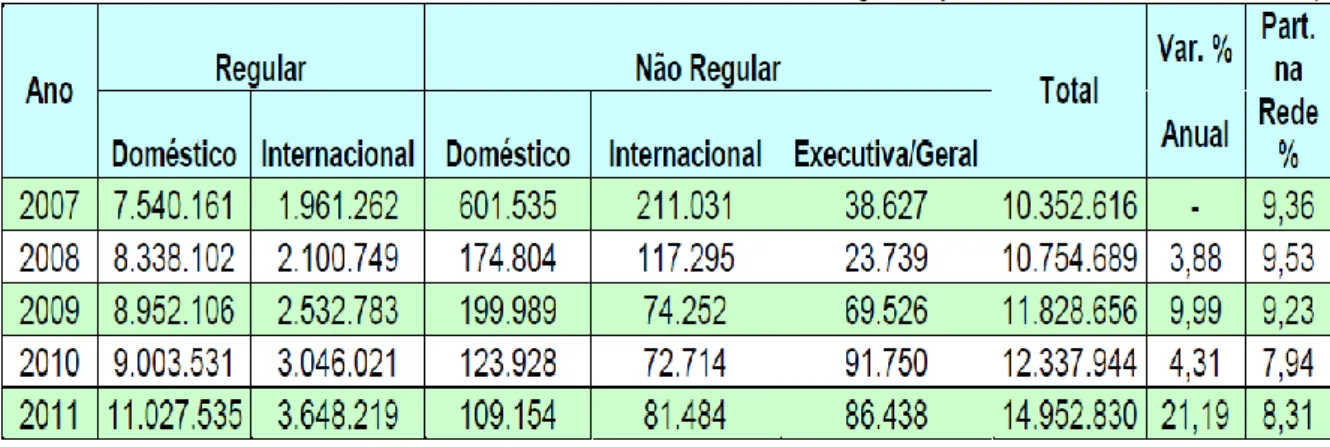
Table 2-Analysis of the market (Evolution of the number of tourists)
Source:INFRAERO
The number of national tourists has been increasing throughout 2007 and 2011, between 2010 and 2011 there was a growth of 21% and in the last period this type of tourists accounted for 74% of the visits to Rio de Janeiro.
11 The International Tourists also increased between 2007 and 2011, but unlike the national tourist, their growth was very constant during these periods , as a final point, currently the International tourism is responsible for 26% of the passengers that go to Rio de Janeiro
Graph 3-Hotel industry performance analysis
12 Average daily rate is one of the commonly used financial indicators in hotel industry to measure how well a hotel performs compared to its competitors and itself (year over year). 15In both segments the average daily rate increased throughout the years.
Revenue per available room is a performance metric in the hotel industry, which is calculated by dividing a hotel's total guestroom revenue by the room count and the number of days in the period being measured15 .Both segments experienced a growth of the RevPAR between 2007 and 2011.
Regarding the occupancy rate, we can see that in Rio de Janeiro there was an increase of this indicator in both segments. In 2011 it was 70% in the upscale segment and 78% in the midscale segment; all these values indicate an excellent performance of the tourism industry in Rio.
National Tourists
Rio de Janeiro is the second most visited Brazilian city by Brazilians10.It is interesting to notice that people from Rio represent 50% of the tourist that visited Rio de Janeiro (Appendix 11). Another important trend in the national tourists, is that Brazilians with lower income have a higher interest in visiting Rio the Janeiro than the Brazilians with higher income ( Appendix 12).This findings support my idea that a midscale business hotel it is the best option for Dom Pedro.
International Tourists
Rio is the city in Brazil that has the most international events (Appendix 13), as a result of this it is the second city in Brazil that receives more international tourists and the
13 eighth city in Latin America that receives more tourists ( Appendix 14) having received 900 000 international tourist in the first half of 2012. All these made Rio the city that received more business tourists9.
In the appendix 15 it is represented the profile of the international tourist that visited Rio. The main conclusions we can obtain with the profile is that regarding the origin of the tourists, the two countries stand out are United States of America and Argentina. The main reason why international tourists go to Rio is leisure (51,9%), half of them stayed in a hotel, flat or in a inn and the majority of the tourists goes alone.
Regarding duration, regardless of the motivation for tourist, on average, an international tourist stays in Rio for more than a week, 9,2 days on average. Regarding the organization of the trip, most of the tourist used the internet and talk with their friends and 70% of the tourists didn’t used a travel agency. More than 75% of them have higher education or postgraduate.
Finally, in terms of satisfaction a vast majority was very happy with their stay in Rio, the only thing they dislike is the prices, Rio is the fifth more expensive city to stay17, and 95,4 % showed interest in visit Brazil again.
Dom Pedro should use this information to their advantage, by knowing exactly who their “typical” international tourist is, they can know how to promote their hotel easier and more effectively and also what they need do to provide a wonderful experience to their guests. Since almost everyone replied that they are interested in visiting Brazil again, it would be important to have flyers of the Dom Pedro Laguna in this new hotel
14 and vice-versa. In order to inform the guests that they can visit another region of Brazil and still enjoy the Dom Pedro experience.
Competitors
In 2011 there were 609 lodging establishments (Appendix 15) in the metropolitan region of Rio de Janeiro, from those establishments 250 are hotels, being 194 independent, 37 part of a Brazilian hotel chains and 19 part of an international hotel chains18 .More information about these lodging establishments is represented in the graphs below.
15 Graph 5- Distribution of lodgings establishments, by category of establishment by area
Hotels represent the majority of lodging establishment in Rio (52,5%), motels represent 24.6 % of these establishments and inns only represent 9,4%. Regarding the category of the establishments we can see that economic type predominates with 34,6%, followed by simple class. It is also very important to notice that Rio de Janeiro is where the luxury class represents a higher percentage; this indicates that the luxury segment has already a lot of players.
In the business hotel segment there are, according to Expedia19, 27 business hotels in Rio, being 13 independent and the rest part of international hotel chains such as: Accor (7), Louvre (3),Starwood (2), Caesar Park (1) and Marriot (1).
16 This is the location of the top trendy business hotels in Rio de Janeiro
This is the location of the top trendy business hotels in Rio de Janeiro
As it is easily identifiable most of those hotels are located in Ipanema and Copabana, in my opinion Dom Pedro should have a hotel outside of those two regions.
Classification
There are several sites that allow a guest that stayed in a hotel to give feedback about his stay and rate the hotel, to help possible guests to compare the hotels and facilitate the choice of the hotel to stay. I used the classification of the top rated business hotel in Rio de Janeiro in www.expedia.com, www.tripadvisor.com and www.booking.com to calculate a new variable called weighted rating, that was obtained by dividing each classification by the maximum value it could be, giving the same weight to each website and finally multiplying by 10. The following table shows the classification of the hotels.
17 My calculations suggest that the main local competitors are Hotel Santa Teresa- Relais & Chateaux, Promenade Visconti, Windsor Atlântica and Windsor Florida Hotel. Regarding the international competitors, the main competitors are Marriott with one hotel that has the second highest weighted rate and Accor that owns four hotels that are presented on the table.
A limitation on my classification about the main competitors is the rating system of tripadvisor, a guest can only select a rate that is multiple of 0.5, originating substantial differences in the ratings. Hotels with a better classification in Tripadvisor obtained a higher weighted rate due to this.
The business tourism is growing20and the hotel owners realize their importance for their business revenues. Due to this, nowadays, even if opening a Hotel that is located near
18 the beach and will focus mainly on leisure, they will also include in the Hotel installations that can accommodate events. As an example of this we have the case of Dom Pedro Laguna, it was projected without having any space to receive events, conferences or reunions, and after 6 months in business they realized the importance of such space and build an area for it.
Due to this , the fact that they are 29 business hotels in Brazil, according to Expedia, does not represent the reality because a business tourist can choose any of those 29 but also a vast majority from the rest of the other hotels in Rio because they have the infrastructures to satisfy the needs of a business tourist.
Future
Rio de Janeiro is currently the fastest growing destination city in the world, enjoying a grow rate of 28.6% 7, and companies in the tourism sector recorded an increase in average sales of 18.3% in 2011.These factors are attracting several companies that want to enter in the Brazilian market, Rio is expected to have, at least, 85 new hotels by the time of the Olympiads21. If currently there is a lot of competition, in the future the competition will become even fiercer.
Analysis of the mode of entry
In order to select the best mode of entry for Dom Pedro Hotels in Rio de Janeiro, we need to understand the different modes of entry and the advantages and disadvantages associated with each of them.
19 Due to the fact that we are analyzing the entry of a hotel group in a new region exporting does not make sense. A possible entry mode that the group can choose is a “Green field” entry, the establishment of a new wholly owned subsidiary, this was the strategy used by Dom Pedro in Ceará. With this type of entry the group is able to fully control the new firm and also avoids a possible problem of integration of a new firm. The Green Field entry strategy also avoids the risk of overpayment that can occur if they decide to buy an existing Hotel .Moreover, this type of entry has the most potential to provide above average return14 The disadvantages with of the Green Field entry strategy are that it will take several years before Dom Pedro could receive their firsts guests in the new hotel and it has a high cost, this is huge problem in Brazil where is very difficult to obtain funds and when it is available, interest rates are often very expensive7.
Another possible entry strategy is the acquisition of a hotel in Rio de Janeiro, Accor used this strategy to bypass the challenges of building hotels in Brazil 1. The positive aspects of an acquisition of a hotel are that Dom Pedro can quickly enter in the Brazilian market and the fact that an acquisition offers lower risk than a Green field strategy because the outcomes can be estimated more easily and accurately22. There are several problems that can arise with the acquisition of a hotel, it can be very difficult to integrate two organizations that have different cultures, control systems, and relationships. Another problems are that it also requires a huge investment, there is a risk of overpaying because there uncertainty about the targets value and is very difficult to obtain financing in Brazil.
Franchising can be defined as “A system in which semi-independent business owners (franchisees) pay fees and royalties to a parent company (franchiser) in return for the
20 right to become identified with its trademark, to sell its products or services, and often to use its business format and system”23.Several international hotel chains like Accor or Hilton offer a possibility of a franchise. This type of entry has advantages and disadvantages. In one hand, it is low cost for franchiser, it can avoid trade barriers and grants access to local knowledge. In the other hand, the franchisees may turn into future competitors , a wrong franchisee may ruin the company’s reputation in the market and the company has less control of the operations. Although the Dom Pedro brand is known in Brazil, possible franchisees will prefer a franchise of a huge international hotel group like Accor or Hilton that is known by everybody.
A joint venture is when a new firm is formed to achieve specific objectives of a partnership between two or more firms. With a joint venture a company has access to partner’s local knowledge (competitive conditions, culture, language, political systems and business systems) and will still have significant control. Additionally, both parties involve will have some performance incentives. There are also several problems that can occur in a joint venture, companies fear the potential loss of proprietary knowledge to the partner, there can be a conflict of interests and none of the companies has an incentive to full performance or full control over the operation.
A management contract is a business format that separates ownership from operations. It is an arrangement under which a hotel owner gives the operational control to another company that will perform the necessary managerial functions on return for a fee, this is preferred method of Hilton Hotels for new hotels in Brazil. The advantages associated with this type of strategy are the quick entry in the country, the control of operations and low investment needed. One negative aspect of this strategy is that sometimes the interests of hotel owners and the management companies they employee sometimes can
21 conflict. Furthermore, there are several international hotel groups that want to obtain a management contract in Rio de Janeiro, some of these groups have a better reputation that Dom Pedro. This will influence the decision of a hotel owner that wants the best possible managing company to obtain higher possible revenue and will choose these brands over Dom Pedro, making very difficult the entry of the Group trough this strategy.
In my opinion, the best strategy for the Group’s entry in Rio de Janeiro is a management contract with a hotel owner. With this strategy they will avoid the need for a huge investment and can quickly start receiving guests. As previously mentioned, every company wants to enter in Rio de Janeiro so it is very difficult to obtain one. It is difficult but not impossible, for example Vila Galé, a Portuguese hotel chain, is managing a hotel of a Brazilian Fund in Rio de Janeiro.
Proposal of implementation plan
The Group already had an opportunity to enter in this market in past but declined. This indicates that Dom Pedro does not perceive Rio as a market worth pursuing. However, due to their belief that “opportunity is everything”13,
if a good opportunity appears in the market they will take it. Due to this reasoning I will analyze the best possible scenario for the company.
Optimistic Scenario: Dom Pedro through their networking is able to find someone that owns a hotel and wants to perform a management contract.
Men: In order to find a management contract in the city, it is crucial that Dr. Pedro Ribeiro goes to Brazil and uses his connections to find someone that owns a hotel and it is interested in a management contact.
22 As aforementioned mentioned, Dom Pedro will need to train their new employees, for that job I suggest the same people that they used for training the staff of Dom Pedro Laguna. They should also copy the strategy that they are using in Brazil, at least one Portuguese for every position, with this strategy they can guarantee that there is always a qualified professional to solve the most complex problems that they face. Furthermore, the person responsible for managing the Hotel should be an expatriate with experience in managing hotels.
Money-In order to enter in this market the group will face several expenses (you can see the all the calculations of the expenses in appendix 17).The first expense that Dom Pedro will have will be the transportation and accommodation of Dr. Pedro Ribeiro, supposing that he has to be there one week in order to find the contract, it will have a cost of 2015€. After obtaining the contract, they can decide that the hotel needs some renovations and this will have a high cost (2000000€).In terms of staff, they will have to pay a normal salary to the local employees and a higher salary to the expatriates. Assuming a hotel with 100 rooms, it will be needed 17 local employees , 8 expatriates and one hotel management that will work 7 months this year, this will amount into a total costs of salaries of 110271 €.
In order to create awareness they should make a Grand Opening with several Brazilians celebrities and also sponsor a tournament which will costs 6500€.Another very important cost will be the fee of the management contract that will depend on the revenues of the hotel. Knowing all this, we can estimate that it will be needed around 320 000€ to start operating the hotel.
23 Minute- The activities and the timeline needed to open the hotel
Memo-
Strategic theme Objectives Measurement Target Initiative Financial Increase Profitability Increase Revenue RevPar Occupancy rate 230 80% Promotion
Host a local event
Sponsor a tournament Customer Increase brand awareness Market study Number of repeated Improvement of the results of the market Promotion
Host a local big event
24 Increase loyalty customers study Increase of 20% of repeated costumers Internal Efficient staff Reviews by
their superiors All employees have a review of excellent or very good
Training with the best employee of Dom Pedro in each position
Learning Learn how to provide an extraordinary experience to all the guests
Satisfaction surveys
85 % classify the service as excellent
Training of the staff
Careful analysis of all the feedback of guests (surveys, tripadvisor, expedia)
Conclusion
The group’s competitive advantages made it successful in Portugal and Ceará, but in any of these places there wasn’t the degree of competition that exists in Rio. There is already a high level of competition in the market, and this competition will only intensify as more and more company are attracted by the outstanding results of the
25 tourism industry in Rio. In addition to this, it would be very difficult for Dom Pedro to enter in this market.
Due to all these factors I advise Dom Pedro to not enter in Rio de Janeiro, even if the optimistic scenario comes to reality, which is highly unlikely, my recommendation would still be to not enter in the market.
My final recommendation for the group is that instead of pursuing Rio de Janeiro, they should continue to explore Ceará and after that possibly other regions of Brazil where there is not a level of competition as fierce as in Rio, for instance the south of Brazil.
References
1-Kumar, Prasanna,2010 , Marketing of hospitality and tourism services, New Delhi:Tata McGraw Hill Education Private Limited.
2-Tavitiyaman, Pimtong, Qu, Hailin, and Zhang, Qiu Hanqin.2011. “Industry Forces, Competitive Strategies, and Performance in the Hotel Industry,” International
Journal of Hospitality Management. Vol. 30, No. 3, pp648-657.
3- First interview with Dr.Pedro Ribeiro, 9-11-2012.
4- Financial times.2012. Vincent Benvis. http://blogs.ft.com/beyond-brics/2012/04/05/brazil-tourism-forget-the-gringos/#axzz2Eb72yG8t (Last accessed November 15 of 2012).
5-Investininbrazil.2012. http://investinbrazil.biz/news/ministry-tourism-publishes-research-companies-operating-sector-turnover-was-r-509-billion-2011 (Last accessed November 15 of 2012).
26
6- Ministry of Tourism.2012.
http://www.turismo.gov.br/turismo/noticias/todas_noticias/20121026-1.html (Last accessed November 15 of 2012) .
7-Hedrick-Wong, Yuwa.2012. MasterCard Global Destination Cities Index 2Q 2012.
8- Financial Times.2012. Joe Leahy http://www.ft.com/intl/cms/s/0/e23a2b34-678e-11e1-b4a1-00144feabdc0.html#axzz2EtTnldY6 (Last accessed November 28 of 2012).
9- Correio Brazilense.2012. Agência Brasil.
http://www.correiobraziliense.com.br/app/noticia/politica-brasil- economia/33,65,33,3/2012/12/10/internas_economia,338455/inflacao-oficial-deve-ficar-em-5-6-em-2012-segundo-coordenador-da-fgv.shtml (Last accessed November 28 of 2012) .
10- Ministry of tourism.2012.
http://www.turismo.gov.br/turismo/noticias/todas_noticias/20121024-2.html (Last accessed November 28 of 2012)
11- Hotel news now.2012. Patrick Mayock.
http://www.hotelnewsnow.com/articles.aspx/8098/brazil-development-on-track-for-demand-influx (Last accessed November 28 of 2012)
12- Hotel news now .2011. Stephanie Wharton.
http://www.hotelnewsnow.com/Articles.aspx/6404/Investors-eye-development-in-thriving-Brazil (Last accessed November 28 of 2012)
27 14-Financial Times.2012. http://www.ft.com/intl/cms/s/0/e23a2b34-678e-11e1-b4a1-00144feabdc0.html#axzz2EtTnldY6 (Last accessed November 28 of 2012).
15- STR Global .2012.
16- Jornal do Brasil.2012. http://www.jb.com.br/rio/noticias/2012/05/26/rio-capital-brasileira-do-turismo-de-negocios/ (Last accessed December 15 of 2012).
17- Exame.2012.Lilian Sobral, http://exame.abril.com.br/mundo/noticias/as-10-cidades-onde-e-mais-caro-se-hospedar (Last accessed December 15 of 2012).
18- IBGE.2012.
http://www.ibge.gov.br/home/estatistica/economia/comercioeservico/psh/2011_todas_re gioes/defaulttabzip.shtm (Last accessed December 15 of 2012).
19-Expedia.2012. http://www.expedia.com/Rio-De-Janeiro-Hotels-Business-Hotel.0-0-d178301-tBusinessHotel.Travel-Guide-Filter-Hotels (Last accessed January 3 of 2013).
20- Business tourism partnerdhip.2006. Tony Rogers.
http://www.businesstourismpartnership.com/pubs/Tony%20Rogers.pdf (Last accessed January 3 of 2013).
21-Rio Negócios.2012. http://rio-negocios.com/cidade-vai-ganhar-85-hoteis-com-17-mil-quartos-a-tempo-das-olimpiadas/ (Last accessed January 3 of 2013).
22-Hitt, A. 2009. Strategic Management Competitiveness and Globalization, Nelson Education Ltd
23-- Zimmerer, T. W.; Scarborough, N. M. 2008. Essentials of Entrepreneurship and
Small Business Management, New Jersey: Pearson Prentice Hal
28 Appendix 1- Dom Pedro Hotels in images
Hotel Dom Pedro Palace 5*,Lisbon
Dom Pedro Golf Resort 4*,Algarve Dom Pedro Marina 4*,Algarve
Dom Pedro Porto Belo 4*,Algarve Dom Pedro Meia Praia Beach Club 3*,Algarve
Dom Pedro Garajau 3*,Madeira Dom Pedro Baía Club 4*,Madeira
Dom Pedro Laguna 5*,Ceará
29 Appendix 2- Supply Chain of a Hotel (generic hotel, I was not able to obtain values of the company)
30 Appendix 3- Industry Mapping
Appendix 2- Porter’s five forces for the Hotel Industry in Portugal
Press Press
31 Appendix 4- Porter’s five force analysis of the hotel industry in Portugal
Supplier Power: The supplier base of the hotel industry is extensive in almost every field. According to Dom Pedro Hotels’ sales manager Sónia Matias “the power is on hotels’ hands”, because Hotels are big customers to these suppliers and the list of suppliers is big”. To conclude, suppliers’ power is the weakest force on this industry.
Buyer Power: The bargaining power of customers is one of the major forces driving change in the hotel industry worldwide. Historically buyer power was not always high in this industry, but nowadays is higher than ever. Through the internet customers can easily and in transparent away compare prices and offers and also check for opinions about different hotels. These opinions are one of the major factors behind a hotel’s choice and manage the relationship with customers is critical. The switching costs are very low and how to retain customers stills a challenge to hotels, some hotels use strategies as partnerships with companies, offering special discounts, or loyalty cards. In summary, customers’ power is high and
tends to increase in the next years and dramatically affect company’s strategies.
Competitive Rivalry: The competition in the hotel industry is becoming fiercer, and Portugal is not an exception. This tendency in part results from the international expansion of big international hotel chains According to Dom Pedro Hotels Sales Manager just in Lisbon around 20 new hotels are expect to open until the end of 2013. Also according to Dom Pedro Hotels there are three factors that determine hotel’s competitors: location, price and star rating. This is supported by the findings of Tavitiyaman, Qu and Zhang about US hotel industry2. One of the characteristics of the Portuguese market is the
huge number of four- and five-star and its proximity in the main touristic places; this intensifies the competition and reduces margins. Moreover, three- and four-star hotels in Portugal are perceived by customers has having a quality above the average and this represents additional competition to the four- and five-star category respectively. In Portugal,
nowadays this is the strongest force affecting industry’s profitability.
Threat of Substitute Products: Typically this force is reported as weak in the hotel’s industry and in Portugal this is also true. However, and according to Dom Pedro Hotels’ sources, hostels are targeting younger clientele (with high income) and are becoming an important player on the accommodation’s industry in Portugal. Moreover, hostels in Portugal are considered the best worldwide and even not being a direct competitor of Dom Pedro Hotels, because Hotels’ target is different, in the future hostels seems to be a real threat. To conclude, substitute products are not a significant force
affecting industry’s profitability, but it is important to be aware in order to not be in disadvantage in the future.
Threat of New Entrants: There are several entry barriers in this industry, first the capital required is very high and second the economies of scale and scope as well as their reputation of existing hotels prevent the entrance of new players. This is true for potential small family owned hotels, however in the perspective of an established small hotel chain, the threat is real, because big international chains are expanding aggressively and can “easily” enter in other markets where they are not present and be a fierce competitor. In summary, this force is weak for industry’s profitability, but it
32 Appendix 5- SWOT analysis of Dom Pedro
Strengths:
• 40 years experience in managing different hotel styles • High-class workforce and services
• Quality of the service • Business contacts • Key hotel locations • Reputation
• Capacity of generating and managing partnerships
WEAKNESSES
• Lack of clearly defined strategy • Lack of standardized processes • Risk of outsourcing services
OPPORTUNITIES
• Growing tourism market
• Upper class little affected by economic downturn • Some hospitality segments are fast growing
THREATS
• High dependence on specific customer segments/markets
• “Substitute countries” attracting Dom Pedro’s customers with cheaper offers • Economic and political instabilities constrain strategy implementation
33 Appendix 6- TOWS analysis
Strengths Weaknesses
Opportunities Using reputation,
experience and contacts to open new high
standard hotel in market with attractive industry structure
Following demographic development to address most attractive customer segments in all markets Dom Pedro is present
Importance to find the right trade-off of defining clear standards/guidelines and still maintaining flexibility to address new market trends (e.g. eco, adventure
tourism)
Establishing relationships with local partners/using already existing business contacts/collaborative arrangements in order to enter markets out of “comfort zone”
Threats Using the strength of being able to manage different styles of hotels (varied portfolio) in order to adapt to threats from other countries’ or
companies’ offers e.g. by reducing prices in
specific hotel types for some time
Entering a country out of comfort zone by
collaborating with local partner and hence overcoming the threat of being too dependent on a few customer segments and on the Portuguese economic conditions
34 Appendix 7- 2011 Guests’ survey results
35 Appendix 8- Origin of Dom Pedro guests
TOP TEN NATIONALITIES
COUNTRY (MARKET) YEAR TO DATE (R.N.) %
BRASIL 14.409 20,52% ESPANHA 9.445 13,45% PORTUGAL 8.646 12,31% FRANCA 5.004 7,12% REINO UNIDO 4.142 5,90% E.U.AMERICA 3.136 4,47% ITALIA 3.058 4,35% RUSSIA 2.971 4,23% ALEMANHA 2.700 3,84% JAPAO 1.531 2,18% OUTROS 15.191 21,63% TOTAL 70.233 100%
36 Appendix 9- Musicians of Rock in Rio that stayed in Dom Pedro Palace
Stevie Wonder Joss Stone
Ivete Sangalo Fred Dust
37 Appendix 10-PESTEL analysis of Rio de Janeiro
Political factors Stable government
Government is doing major investments to promote the growth of the tourism industry
Brazil’s Ministry of Tourism and the Brazilian Development Bank (BNDES), is providing a US$581m line ofcredit for property upgrades and new construction, through
the Pro-Copa Turismo program. Economic factors
Brazil has the sixth largest GDP in the world8
Inflation has been drastically reduced over recent years and is now 5,6%9
Companies in the tourism sector recorded an increase in average sales of 18.3% in 20115 Social Factors
Aging of the population
Rio is a city of strong contrasts between the rich and the poor. One third of people live in districts of self-built homes called favelas.
The Brazilians are traveling more in Brazil10
Technological factors
Rapid development of internet and e-commerce
New technologies made possible for a guest to see the review of several guests that already stayed at that hotel and also made very easy to compare prices
Environmental factors Green trend
Government is making huge investments in eco-friendly tourist facilities Legal factors
Complex labor legislation
Investments can be purchased as 100% Freehold Credit accessibility is very difficult11
38 Appendix 11-The regions that send more tourists to Rio de Janeiro
39 Appendix 13- International events in Brazil per region
40 Appendix 14- Latin America Top 10 Destination Cities by International Visitors, 1st semester 2012
41 Appendix 15- Profile of the international touristic demand that stayed in Rio de Janeiro
42 Appendix 16- Lodging establishments per area
Appendix 17 –Money calculations
Pedro Ribeiro Trip
Flight 954,59
Acomodation using ADR 659,568
Food 400
Total 2014,158
The price of the flight in the website www.Rumbo.pt for a stay from 4-2-2013 until 11-2-13
Human resources
Salary local employess 36771
Salary expatriates 56000
Salary hotel management 17500
Total 110271
I assumed a wage for the local of 309€, for expatriates 1000€ and a salary of 2500€ for the hotel manager.