Vilma Sousa SantanaI Cibele XavierI
Maria Claudia Peres MouraII Rosane OliveiraI
Jônatas Silva Espírito-SantoI Gustavo AraújoIII
I Programa Integrado em Saúde Ambiental e do Trabalhador. Instituto de Saúde Coletiva (ISC). Universidade Federal da Bahia (UFBA). Salvador, BA, Brasil II Curso de Especialização em Saúde do
Trabalhador. ISC-UFBA. Salvador, BA, Brasil III Programa de Pós-Graduação em Ciências
Sociais em Saúde. ISC-UFBA. Salvador, BA, Brasil
Correspondence: Vilma Sousa Santana Instituto de Saúde Coletiva Campus Universitário do Canela R. Augusto Vianna s/n, 2º andar 40110-040 Salvador, BA, Brasil Email: [email protected] Received: 10/3/2008 Revised: 3/16/2009 Approved: 3/31/2009
Severity of occupational injuries
treated in emergency services
ABSTRACT
OBJECTIVE: To estimate the severity of occupational injuries and associated factors.
METHODS: Longitudinal study performed in the city of Salvador, Northeastern Brazil, with all 406 occupational injury cases treated in two emergency rooms of public hospitals, between June and August 2005. Participants were identiied during admission to the emergency room and interviewed monthly in their homes, until returning to work or ending the treatment. Severity was deined by the Abbreviated Injury Scale, used to calculate scores from the Injury Severity Score. Hospital lethality and mortality, and length of inpatient and intensive care unit (ICU) stay were estimated. Descriptive variables were sex, age, economic ield of activity and occupation. Proportions, proportion ratios and conidence intervals were used for statistical inference and mean, and the Student t test for normal continuous variables.
RESULTS: The majority of the 406 cases had a mild (39.4%) and moderate severity (38.7%), followed by serious (17.2%), severe (3.2%) and critical severity (1.5%). Overall lethality was 0.7% and 5.0% among those who stayed for inpatient treatment (14.8%), whereas mean length of inpatient stay was 3.2 days (SD=2.8). A total of three cases (0.7%) required ICU (mean=8.4 days, SD=1.2). The majority of serious cases occurred among men and those older than 37 years of age. Injuries among transport (PR=2.20; 90% CI: 1.06;4.58) and retail workers (PR=1.85; 90% CI: 1.14;3.00) were more serious than those in the reference group. Proportion of serious injuries was 54% higher among commuting accidents than among typical ones. In all, there were 325 days of inpatient stay and 34 days of ICU stay.
CONCLUSIONS: Severity of occupational injuries was high, especially those occurring among transport and retail workers, thus affecting emergency services and hospital bed and ICU occupancy.
DESCRIPTORS: Emergency Medical Services. Length of Stay. Statistics on Sequelae and Disability. Occupational Health. Injuries, Occupational, prevention & control. Injury severity. Severity scales.
INTRODUCTION
In addition to deaths, occupational injuries cause permanent and temporary disabilities.1 In Brazil, from all 376,240 occupational injuries recorded in 2000,
81% resulted in temporary disability, 4% in permanent disability and 1% in deaths.a In the state of Bahia, in 2000, health-related compensation beneits
provided by the Previdência Social (National Institute of Social Security) show that 9.6% of work injuries caused total permanent disability.12 Even
though statistics on occupational injuries11 and their
consequences for impairment of insured workers in Brazil are known,a information about the severity of
injuries could not be found. The severity of injuries, intoxications, poisonings and drowning, when work-related, is similar to those known as external causes in general. In addition, knowledge about the severity of injuries is useful to deine priorities for prevention, to estimate medical and social security costs, and to identify the needs for specialized care such as rehabi-litation.9 Injury severity levels are usually recorded as
standardized scales based on three constructs: risk of death, functioning and disability.b
The advantages and disadvantages of severity scales depend on the context and research questions.b Among
injury severity scales, the Abbreviated Injury Scale (AIS) has been the most frequently used worldwide since 1971.6 To cover the common occurrence of
multiple injuries, the Injury Severity Score (ISS) was developed from the AIS, based on anatomical regions.13
These scales have been reviewed,c validated and used
in several types of research6,8,9,13 or in clinical practice,
especially in emergency services.5,4,c,d
The AIS13 corresponds to an ordinal value: 1 – mild
severity, 2 – moderate, 3 – serious, not life-threatening, 4 – serious with risk of death, although with probable survival, 5 – critical, with uncertain survival, and 6 – maximum severity without chance of survival. This scale is used to classify severity based on the exten-sion and depth of injury, involvement of inner organs such as visceral rupture, or amputation, considering six anatomical regions: head, thorax, abdomen, upper and lower limbs, and external surface. Based on AIS data, the ISS is calculated using the sum of squares of the three highest scores, which correspond to the three most severely, injured anatomical regions. ISS scoring varies from 1 to 75, and the index is categorized as mild (1-3), moderate (4-8), serious (9-15), severe (16-24), and critical (25-75).14
There are few studies on the severity of occupational injuries using standardized scales, none of which was carried out in Brazil. This makes it dificult to deine priorities for planning and criteria for notiication. In 2004, occupational injuries were included in the
Sistema Nacional de Agravos de Notiicação (Sinan
a Ministério da Previdência Social. Anuário Estatístico da Previdência Social –2004. Brasília; 2004 [cited 2005 May 05]. Available from: http:// www.mps.gov.br/conteudoDinamico.php?id=531
b Expert Group on Injury Severity Measurement. Discussion document on injury severity measurement in administrative datasets. Atlanta: National Center for Health Statistics; 2004.
c Massachusetts Department of Public Health. Inpatient Hospitalizations for Work-Related Injuries and Illnesses in Massachusetts, 1996-2000. Boston: Occupational Health Surveillance, 86pp. 2005. Technical Report OHSP-0501.
d Massachusetts Department of Public Health. Emergency Department Visits for Work-Related Injuries and Illnesses in Massachusetts, 2001-2002. Boston: Occupational Health Surveillance, 52pp. 2007. Technical Report OHSP-0701.
e Ministério da Saúde, Secretaria de Atenção a Saúde, Departamento de Ações Programáticas Estratégicas. Notificação de acidentes do trabalho fatais, graves, e com crianças e adolescentes. Brasília: Ministério da Saúde; 2006.
f World Health Organization. Update on the international collaborative effort on injury statistics. Brisbane: Collaborating Center for the Family of International Classifications for North America, 2002. Available from: http://www.aihw.gov.au/international/who_hoc/hoc_02_papers/ brisbane37.doc
– Information System for Notiiable Diseases) list, limited to “severe cases”, i.e., fatal cases, “mutilations” or those requiring inpatient treatment, in addition to any type of injury occurring in children or adolescents under 18 years of age.e However, the use of these criteria
has been hindered by the underlying subjectivity of the “mutilation” concept, for example, as it is not based on standardized injury severity scales.
The present study aimed to estimate the distribution and factors associated with the severity of occupational injuries.
METHODS
This was a longitudinal, prospective cohort study, carried out with all individuals who were treated in emergency rooms for occupational injuries in two large public hospitals in the city of Salvador, Northeastern Brazil, between June and August 2005. The study population size was deined according to operational feasibility. Data was collected in two phases: 1) identi-ication and recruitment of study subjects in emergency rooms; and 2) follow-up with household visits.
In the irst phase, workers from the reception and triage staff were informed about the study aims and strategy. Occupational injuries were identiied at the hospital reception/triage. Due to the known under-reporting of work-relatedness when diagnosing injuries, trained ield workers followed the hospital admission interview with the victims or informants. On this occasion, the inter-viewer used questions recommended by the International Collaborative Effort on Injury Statistics (ICE)f to
about how to reach their household for the follow-up visits. When patients were not able to provide informa-tion, a family member was interviewed.
In the second phase, after hospital discharge, monthly visits were made until the study subjects returned to work or the treatment ended. Questionnaires were used to obtain sociodemographic, family, occupational and work injury data. A total of three research instruments, specially designed for this study, were used: a hospital spreadsheet, an in-hospital identiication questionnaire and a follow-up questionnaire. The hospital spreadsheet comprises the already mentioned work-relatedness ques-tions, allowing the identiication of occupational injuries from all trauma cases in the emergency room reception or during triage; the in-hospital identiication questionnaire was used to gather personal and address data, detailed information about how to reach their households, job places or irms, clinical conditions, and the International Statistical Classiication of Diseases and Related Health Problems, 10th revision (ICD-10) coded diagnosis. Data
on injury severity per anatomical region were also recorded for the severity score assessment. After hospital discharge, during household visits, sociodemographic, occupational, family, social security and health data were all recorded using special questionnaires. Occupational injuries were deined as cases of injuries, traumas and poisonings occurring in the workplace, while performing work-related tasks out of the work environment, or commuting to/back from work, which corresponds to the legal Brazilian deinition. Occupational injury severity was estimated using the AIS and ISS, categorized on ive levels: mild (1-3), moderate (4-8), serious (9-15), severe (16-24) and critical (25-75).14 These levels were
dichotomized into mild (ISS 1-8) and serious (ISS 9-75) for the inal analysis.
Descriptive variables were: sex, age (analyzed in tertiles, 14-27, 28-37 and 38-69 years of age), ethni-city (white, mixed and black), education coded as low (below primary education), medium (below high school), and high (high school or above); Family and worker monthly income were analyzed in tertiles: low (less than US$254.00 per month), medium (from US$254.10 to US$424.00) and high (from US$424.10 to US$3,602.00); and worker income per month, low (less than US$140.00), medium (from US$140.10 to US$212.00) and high (over US$212.00). Socioeconomic status was based on the number of household appliances and family assets: car, computer, washing machine, VCR, laser stereo, microwave oven, dishwasher, telephone access, and beach house. The total number of items was categorized into: low (fewer than three); medium (from three to ive items) and high (above ive items). Occupational characteristics were: trade (manufacturing, construction, retail, domestic services, transport, and others); and job title (bricklayers, carpen-ters, electricians, housemaids, kitchen helpers/waicarpen-ters,
janitors, motoboys (messengers or workers in charge of delivery who use a motorcycle), health professio-nals, sellers, security guards, mechanic operators, drivers and managers. Workplaces were categorized into company/irm, government institutions, outdoor and domiciles. Placements in the labor market were as follows: biscateiros (own-account), self-employed, informal, and formally hired wage workers (those having a formal job contract registered in a national reporting card). Occupational training was analyzed as an occupational variable (yes/no). Characteristics of work injuries were: type (whether commuting or other), causes and lesions based on the ICD-10. Researchers also recorded when a legal medical declaration was issued to the worker, and when the injury was notiied to the National Institute of Social Security (INSS) using the Comunicação de Acidente
de Trabalho (CAT – Occupational Injury Claim). Data entry was performed using EpiInfo 6.0, and statistical analyses with the SAS 9.1. Proportions and means were calculated and compared using Pearson chi-square or Student’s t-test. Due to the non-normality of ISS distributions, log transformation was used and antilogarithms of the resulting geometric means were estimated for inal presentation. Proportion ratios were estimated with their respective Mantel Haenszel’s 90% conidence intervals for statistical inference.
The study was approved by the Comitê de Ética em Pesquisa do Instituto de Saúde Coletiva da Universidade Federal da Bahia (Federal University of Bahia, Institute of Collective Health, Research Ethics Committee). Information conidentiality and anonymity in data records and publications were ensured.
RESULTS
at critical level of severity, there were four cases of multiple lesions and one of irearm wound. A total of 60 workers (14.8%) remained in inpatient hospital care, an average of 3.2 days (SD=2.8) length of stay. A total of three workers required intensive care (ICU) (mean=8.4 days; SD=1.16), and six were in coma, which lasted 2.9 days in average (SD=2.6). Approximately 45% were referred for outpatient treatment. The estimated proportion of critical cases was 2.2%. There were three cases of death (0.7%) and 13 evolved to permanent disability (2.7%). The severity of occupational injuries had an impact on hospital services, representing a total of 325 days of in-patient stay and 34 days in ICU.
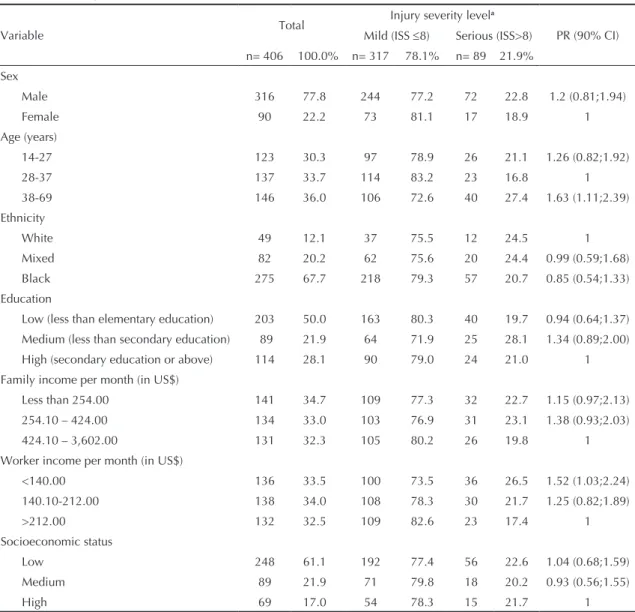
Table 1 shows the sociodemographic characteristics of the study population according to the injury seve-rity groups, categorized as mild (ISS 1-8) and serious
(ISS>8). The majority of cases were males (77.8%), older than 28 years of age (69.7%), black (67.7%), and had less than secondary education (72.0%). Monthly family income below US$424.00 (67.7%) was the most common. There were no differences in injury severity, according to demographic characteristics, except for age, with serious cases more likely to occur among cases of 37 years of age or over (PR=1.63; 90% CI: 1.11;2.39). Occupational injuries were more severe among workers having family income below US$140.00 per month than those in the referent group (PR=1.52; 90% CI:1.03;2.24).
Most serious injured workers were from transport (PR=2.72; 90% CI: 1.06;4.58) and retail trades (PR=1.94; 90% CI: 1.14;3.00), when compared to management (Table 2). In addition, injuries that
Table 1. Sociodemographic characteristics of the study population, according to the Injury Severity Score. City of Salvador, Northeastern Brazil, 2005.
Variable Total
Injury severity levela
PR (90% CI) Mild (ISS ≤8) Serious (ISS>8)
n= 406 100.0% n= 317 78.1% n= 89 21.9%
Sex
Male 316 77.8 244 77.2 72 22.8 1.2 (0.81;1.94)
Female 90 22.2 73 81.1 17 18.9 1
Age (years)
14-27 123 30.3 97 78.9 26 21.1 1.26 (0.82;1.92)
28-37 137 33.7 114 83.2 23 16.8 1
38-69 146 36.0 106 72.6 40 27.4 1.63 (1.11;2.39)
Ethnicity
White 49 12.1 37 75.5 12 24.5 1
Mixed 82 20.2 62 75.6 20 24.4 0.99 (0.59;1.68)
Black 275 67.7 218 79.3 57 20.7 0.85 (0.54;1.33)
Education
Low (less than elementary education) 203 50.0 163 80.3 40 19.7 0.94 (0.64;1.37)
Medium (less than secondary education) 89 21.9 64 71.9 25 28.1 1.34 (0.89;2.00)
High (secondary education or above) 114 28.1 90 79.0 24 21.0 1
Family income per month (in US$)
Less than 254.00 141 34.7 109 77.3 32 22.7 1.15 (0.97;2.13)
254.10 – 424.00 134 33.0 103 76.9 31 23.1 1.38 (0.93;2.03)
424.10 – 3,602.00 131 32.3 105 80.2 26 19.8 1
Worker income per month (in US$)
<140.00 136 33.5 100 73.5 36 26.5 1.52 (1.03;2.24)
140.10-212.00 138 34.0 108 78.3 30 21.7 1.25 (0.82;1.89)
>212.00 132 32.5 109 82.6 23 17.4 1
Socioeconomic status
Low 248 61.1 192 77.4 56 22.6 1.04 (0.68;1.59)
Medium 89 21.9 71 79.8 18 20.2 0.93 (0.56;1.55)
High 69 17.0 54 78.3 15 21.7 1
occurred in domiciles (PR=2.66; 90% CI: 1.16;6.10) or outdoors (PR=2.40; 90% CI: 1.01;5.78) were more serious than those in the referent group (government institutions). No differences in injury severity were found for outsourcing, informal jobs, placement in the labor market, and job training experience.
Table 3 shows that commuting injuries represented 18.4% of all cases and were more serious than the others (PR=1.54; 90% CI:1.10;2.16). Among them, serious lesions were also more frequent among vehicle-related trauma, when compared to injuries resulting from exposure to mechanical forces. Although poisoning tend to be more serious (PR=2.24; 90% CI: 0.88;5.70) than other type of trauma, the difference was not statistically signiicant. Thorax injuries (PR=4.08; 90% CI: 1.24;1.50), multiple injuries (PR=3.69; 90% CI:1.63;8.47) and hip and lower limbs injuries (PR=2.39; 90% CI:1.01;5.71) were more commonly serious than those in the referent group. Moreover, CAT reports to the INSS were also more frequently issued for serious injuries than mild ones (PR=2.16; 90% CI: 1.27;2.59) (Table 3). When ISS-based severity scoring was compared to the notiication criteria used by the Sinan, the majority of cases classiied as severe or critical (ISS >15) would not be eligible for notiication (Table 4). Among the 67 cases classiied as serious by the ISS, only eight were eligible for notiication.
The Figure shows the injury severity score distribu-tion according to industry trades. The most severe cases (ISS=25-75) were observed in transport, 7.0%), followed by retail work-related injuries (1.4%). Serious or critical cases (ISS=16-75) included more retail workers (6.9%), followed by construction workers (4.7%).
DISCUSSION
Results from the present study show that occupational-injured workers treated in the two largest emergency rooms of the city of Salvador, were mostly of mild or moderate severity (77.1%). Serious, severe or critical injuries, considered under the overall category of “serious” (ISS ≥9), comprises a substantial part (21.9%) of cases, and they had at least temporary disability, and work days lost.
Higher severity levels occurred in commuting inju-ries, involving run-overs or collisions. More serious injuries were thorax trauma, multiple traumas and hip or lower limb lesions. Occupational injury severity was positively associated with work in domiciles or outdoors, and with transport and retail industries,
regardless of the occupation. Cases above 37 years of age were more serious, although differences in ethnicity, level of education or socioeconomic varia-bles were not observed, except for family income lower than US$254.00. Occupational Injury Claims were more frequently issued for serious injuries, even though this did not occur for legal medical declarations. Compensation claims were iled only for 50% of all cases eligible for Social Security compensation beneits while impaired to work.
These indings reveal the importance of occupational injuries for public health, as they represent a relevant number of deaths from external causes and disability resulting from preventable hazardous conditions in the workplace. Deaths and permanent disabilities are responsible for social and economic losses and great impact on the life of family members.5 In addition, the
number of serious occupational injuries reveals the impact of work-related injuries on health services, as they contribute to the demand for specialized health care and the use of hospital-beds, including in the ICU, in addition to outpatient clinical treatment, and long-term psychotherapy, physiotherapy, and rehabilitation.
The impact of injuries from external causes on hospital care has been addressed in other studies conducted in Brazil.11 Using data from the Autorizações de
Internações Hospitalares (AIH – Hospital Admission
Authorizations) information system, it was found that 6% of all admissions were due to external causes, in the SUS (Brazilian National Health System) public hospital facilities and hired inpatient clinics,10 although the
proportion of occupational injuries were not reported. In another study of AIH data, from 1998 to 1999, 0.3% of hospitalizations were caused by occupational injuries.10 In the state of Massachusetts, in the US,
hospitalizations due to occupational diseases and inju-ries combined represented only 0.6% of the total,a but
these data were restricted to cases covered by workers’ health plans. With data from this same US surveillance program, based on emergency rooms recording, the proportion of visits due to occupational health problems was estimated as 4.3% in Massachusetts,b and 7% in
Illinois.5 However, comparisons with indings from
this study are limited because not only external causes were considered, but the overall demand as well. Studies performed in Brazil show that the proportion of occupational injuries among external causes treated in emergency rooms varies between 15% and 18.7% in Rio de Janeiro3 and 30% in the city of Salvador.2
Apart from hospital costs, such health problems contribute to a disproportionate number of patients in highly specialized trauma services, which may result
a Massachusetts Department of Public Health. Inpatient Hospitalizations for Work-Related Injuries and Illnesses in Massachusetts, 1996-2000. Boston: Occupational Health Surveillance, 86pp. 2005. Technical Report OHSP-0501.
in long waiting lines, reduction in the quality of care and increased dissatisfaction.
Besides the relevance to the demand of emergency rooms, occupational injuries also represent an important
component of in-patient stay and bed utilization. In the present study, the average stay of 3.2 days was lower
than the 5.07 and 5.8 days10 estimated with AIH data for
Brazil, in 1994. However, they were lower than the 4.3
Table 2. Occupational characteristics of the study population, according to the Injury Severity Score. City of Salvador, Northeastern Brazil, 2005.
Variable Total
Injury severity levela
PR (90% CI) Mild (ISS 1-8) Serious (ISS >8)
n=406 100,0% n=317 78.1% n=89 21.9%
Tradesa
Manufacturing 23 5.7 21 91.3 2 8.7 0.56 (0.42;1.92)
Construction 106 26.1 86 81.1 20 18.9 1.22 (0.60;1.83)
Retail 146 36.0 102 69.9 44 30.1 1.94 (1.14;3.00)
Domestic services 32 7.9 26 81.3 6 18.7 1.21 (0.55;2.44)
Transport 15 3.7 11 73.3 4 26.7 2.72 (1.06;4.58)
Others 84 20.6 71 84.5 13 15.5 1
Occupation
Bricklayers 102 25.1 85 83.3 17 16.7 0.76 (0.39;1.47)
Carpenters 17 4.2 13 76.5 4 23.5 1.07 (0.43;2.66)
Electricians/mechanics 46 11.3 37 80.4 9 19.6 0.89 (0.43;1.87)
Domestic services and other
related jobs 45 11.1 31 68.9 14 31.1 1.42 (0.73;2.75)
Janitors 30 7.4 22 73.3 8 26.7 1.22 (0.58;2.56)
Motoboys/drivers 28 6.9 22 78.6 6 21.4 0.98 (0.43;2.20)
Health workers 26 6.5 26 100.0 - -
-Vendors 52 12.8 38 73.1 14 26.9 1.23 (0.63;2.39)
Safety guards 14 3.4 10 71.4 4 28.6 1.31 (0.54;3.17)
Management professionals 32 7.9 25 78.1 7 21.9 1
Others 14 3.4 8 57.1 6 42.9 1.96 (0.93;4.14)
Workplace
Company/firm 218 53.7 171 78.4 47 21.6 2.16 (0.96;4.84)
Government institutions 40 9.8 36 90.0 4 10.0 1
Outdoors 54 13.3 41 75.9 13 24.1 2.40 (1.00;5.78)
Domiciles 94 23.2 69 73.4 25 26.6 2.66 (1.16;6.10)
Outsourcing (n=361)
Yes 306 84.8 241 78.8 65 21.2 1.26 (0.53;1.66)
No 55 15.2 44 80.0 11 20.0 1
Informal jobs
Yes 185 45.6 143 77.3 42 22.7 1.07 (0.74;1.54)
No 221 54.4 174 78.7 47 21.3 1
Placement in the labor market
Biscateiro (own account) 42 10.3 30 71.4 12 28.6 1.34 (0.85;2.12)
Self-employed 93 22.9 68 73.1 25 26.9 1.26 (0.88;1.80)
Informal wage worker 50 12.4 45 90.0 5 10.0 0.47 (0.23;0.98)
Formal wage worker 221 54.4 174 78.7 47 21.3 1
Occupational training
Yes 213 52.4 168 78.9 45 21.1 1
No 193 47.6 149 77.2 44 22.8 1.08 (0.75;1.56)
days estimated in a US study.a This difference could be
the result of: the type of population studied, composed
by cases which remained in the hospital after emergency room visits exclusively; or the small population size. The
Tabela 3. Characteristics of the study population according to the Injury Severity Score. City of Salvador, Northeastern Brazil, 2005.
Variable Total
Injury severity levela
PR (90% CI) Mild (ISS 1-8) Serious (ISS >8)
n=406 100.0 n=317 78.1% n=89 21.9%
Commuting injuries
Yes 75 18.4 52 69.3 23 30.7 1.54 (1.10;2.16)
No 331 81.6 265 80.1 66 19.9 1
Cause (ICD-10) (N=399)
Exposure to mechanical forces (W20-64) 190 46.8 156 82.1 34 17.9 1
Falls (W00-W19) 89 21.9 68 76.4 21 23.6 1.32 (0.75;2.10)
Transport injuries (V01-V99) 73 18.0 49 67.1 24 32.9 1.84(1.26;3.08)
Contact with heat and hot substances
(X10-X19) 13 3.2 10 76.9 3 23.1 1.29 (0.54;2.38)
Contact with venomous animals/plants
(X20-X29) 10 2.5 10 100.0 - -
-Poisoning (X40-X49) 5 1.2 3 60.0 2 40.0 2.24 (0.88;5.70)
Overexertion (X50-X57) 7 1.7 6 85.7 1 14.3 0.80 (0.17;3.74)
Assault (X85-Y09) 5 1.2 4 80.0 1 20.0 1.12 (0.25;4.96)
Others 7 1.7 7 100.0 - -
-Injury (ICD-10)
Injuries to the head (S00- S19) 58 14.3 49 84.5 9 15.5 1.58 (0.63;4.03)
Injuries to the thorax (S20-S29) 10 2.5 6 60.0 4 40.0 4.08 (1.50;1.24)
Injuries to the abdomen, lower back,
lumbar spine and pelvis (S30- S39) 15 3.7 11 73.3 4 26.7 2.73 (0.95;7.83)
Injuries to the upper limbs (S40- S69) 112 27.6 92 82.1 20 17.9 1.83 (0.78;4.28) Injuries to the lower limbs (S70- S99) 64 15.8 49 76.6 15 23.4 2.39 (1.01;5.71) Injury involving multiple body regions
(T00- T07) 69 17.0 44 63.8 25 36.2 3.69 (1.63;8.47)
Effects of foreign body entering through
natural orifice (T15- T19) 41 10.0 37 90.2 4 9.8 1
Burns and corrosions (T20-T32) 20 4.9 14 70.0 6 30.0 3.06 (1.17;8.05)
Toxic effects of non-medicinal substances
(T51- T65) 17 4.2 15 88.2 2 11.8 1.20 (0.31;4.62)
Work ability
No disability 269 66.3 246 91.5 23 8.5 1
Temporary disability 124 30.5 69 55.6 55 44.0 5.18 (3.6;7.5)
Permanent disability 13 2.7 2 15.4 11 84.6 9.95 (6.8;14.5)
Legal medical declaration issued
Yes 103 25.4 80 77.7 23 22.3 1.02 (0.89;1.13)
No 303 74.6 237 78.2 66 21.8 1
Notification to the National Institute of Social Security (n=221)
Yes 76 34.4 51 67.1 25 32.9 2.16 (1.27;2.59)
No 145 65.6 123 84.8 22 15.2 1
a Severity level – Injury Severity Score (ISS): Mild= ISS 1-8; Serious= ISS>8.
ICD-10: International Statistical Classification of Diseases and Health Related Problems, 10th Revision
duration of ICU stay for external causes was estimated as 8.3 days on average in a study by Iunes7 (1997), similar
to 8.4 days, as estimated in this investigation.
In the present study, lethality of occupational injuries treated in emergency rooms was 0.7%, lower than the 1.0% estimate from Massachusetts by Forst et al4
(1999). However, hospital lethality in this study was 5%, considering the 60 patients who remained for inpatient care. There is no data on hospital lethality of occupational injuries in Brazil, but the ratio of deaths/ hospital admissions was estimated as 1.2:100 in 1998, 1.4:100b in 1999, and 1.7:100 in 2000,a lower than
2.2:100 in 1994, based on AIH data.10 These indings
are similar to those found in Massachusetts, where the ratio of deaths/admissions due to external causes was 1.40:100. These differences can be explained by the distinct nature of services provided by emergency rooms when compared to hospitals. In the present study, the mean ISS of 4.9 (SD=5.9) was lower than the estimate from Illinois (Mean=6.1; SD=7.4)5 although
comparison is limited because of the non-normal distributions of ISS scores. In this study, the frequency of cases with ISS≥16 was lower (4.6%) than the esti -mates from the Massachusetts study (7.2%),5 even
though the lethality in emergency rooms was similar. Considering the AIH-based findings from Brazil, cases of occupational injuries in emergency rooms from this study are more severe and hospital lethality higher. Because data on occupational-related diseases and injuries from the SUS are widely recognized to be underreported, occupational injury lethality estimated with AIH data may be biased, once they concentrate more severe cases. The eligibility criteria for severe occupational injures notiication used by Sinan would
not cover great part of severe cases lagged by the ISS. This points to the need of further assessment of other severity criteria operational feasibility, such as the ISS, for planning and prevention programs, instead of the SINAN occupational injury notiication, whose main purpose is individual case investigation.
In the literature on severity of occupational injuries from emergency services, the larger number of severe cases are males and the elderly.1,2,4,10 However, the
present study shows that severity increases with age, but there were no sex differences. Moreover, in agreement with other studies, more severe cases were related to motor vehicle accidents and showed longer in-patient and ICU stay.5,a Nonetheless, no studies on the
association of severity and trades were found, despite common reports on higher mortality among construc-tion workers. In contrast, results from this study reveal that transport and retail showed a greater proportion of severe cases among the victims treated in the public emergency rooms of this study.
Conclusions from the present study need to be viewed with caution. It is dificult to compare hospital-based data from two emergency rooms with population-based morbidity or mortality. In a large urban area such as Salvador, even though the largest emergency rooms were used, this study population could not be representative of all cases, because special lows with overrepresentation of certain occupations or trades could have occurred. Only census data or studies based on samples of complex design of all emergency rooms could depict the overall epidemiological distribution with increased accuracy. This could also show the true pattern of occupational injury severity across trades,
Table 4. Comparison of Sinan and Injury Severity Scale classifications of severe injuries, including deaths. City of Salvador, Northeastern Brazil, 2005.
Injury Severity Scorea
Sinan criteria for severity of occupational injuriesb
Total Fatal Mutilation or hospitalization Younger than 18 years Not serious
n % n % n % n % n %
Mild (1-3) 0 - 0 - 1 0.2 158 38.6 159 39.2
Moderate (4-8) 0 - 0 - 6 1.5 154 37.7 160 39.4
Serious (9-15) 0 - 8 2.0 0 - 59 14.4 67 16.5
Severe (16-24) 1 0.2 1 0.2 0 - 9 2.2 11 2.7
Critical (25-75) 2 0.5 1 0.2 0 - 9 2.2 12 2.2
Total 3 0.7 10 2.4 7 1,7 389 95.1 409 100.0
a Injury Severity Score based on the Abbreviated Injury Scale (AIS);
b Sinan severity criteria can be seen in the Instrução Normativa and the Protocolo de Registro de Acidentes da COSAT/Ministério
da Saúde (Ministry of Health, Coordination of Workers’ Health, COSAT, Injury Record Protocol and Normative Guidance)
a Serafim JA. Dados sobre a Saúde do Trabalhador segundo o DATASUS/MS. In: Anais do Seminário Nacional de Estatísticas sobre Doenças e Acidentes de Trabalho no Brasil: situação atual e perspectivas. São Paulo: Fundacentro, 2000. pp35-42.[cited 2009 Aug 18]. Available from: http://www.ibram.org.br/sites/700/784/00001034.pdf
allowing the identiication of those at higher risk and severity, making it possible to deine priorities for prevention. Hospital-based study populations, such as the one used in this study, show only part of the pheno-menon under investigation, thus limiting conclusions. Although the size of the population in this study was small, its strong points are the longitudinal design and the great detail of the information gathered.
Severity levels are important data for patient referral to other higher complexity services, helping to better organize health care services, thus increasing rationa-lity, effectiveness and promptness and reducing cost.5
Injury severity records from all emergency services would make it possible to estimate cumulative inci-dence, allowing surveillance and monitoring. This type of data allows minor errors in relation to data obtained from other services, because most severe occupational injuries are treated in emergency rooms in Brazil.a
Injury severity is important information for health surveillance, planning and management. In addition to their being a predictor of disability, severity scores are associated with type, complexity and duration of treat-ment and, therefore, direct and indirect costs. However, studies on occupational injuries usually deine severity based on work days lost b or incapacity due to sequelae
for social security purposes.12 To assess severity, full
recovery or end of treatment is a required condition, limiting the adoption of timely preventive programs. The present study showed original data on occupational injury severity and its impact on emergency rooms in a large urban area of Brazil, revealing the importance of road trafic accidents among the most serious injuries. Researchers hope that, when discussing the challenges of public hospital funding, information about the high cost of injuries imposed on workers may become a relevant factor in deining prevention priorities.
Occupational injuries can be prevented, once a great part of their political, managerial and legal issues and their determinants are already known. In addition, effective and not necessarily high-cost technologies are already available and widely adopted in countries that show better epidemiological indicators as compared to Brazil. One of the irst steps for occupational injuries to become a priority is to ind out their full extent and seve -rity, not only for workers insured by the Previdência Social, but rather to the entire working population. The improvement of occupational injuries data from SUS, especially from the emergency services network, inclu-ding parameters of severity, may constitute an essential step to prevent this important public health problem.
0% 10% 20% 30% 40% 50% 60% 70% 80% 90% 100%
Retail Constrution Transport Manufacturing Domestic Services Other
Mild (1-3) Moderate (4-8) Serious (9-15) Severe (16-24) Critical (25-75)
Figure. Proportion of cases by severity level and trades.
a Massachusetts Department of Public Health. Emergency Department Visits for Work-Related Injuries and Illnesses in Massachusetts, 2001-2002. Boston: Occupational Health Surveillance, 52pp. 2007. Technical Report OHSP-0701.
1. Concha-Barrientos M, Nelson DI, Fingerhut M, Driscoll T, Leigh J. The global burden of occupational injuries. Am J Ind Med. 2005;48(6):470-81. DOI: 10.1002/ajim.20226
2. Conceição PSA, Nascimento IBO, Oliveira PS, Cerqueira MSM Acidentes de trabalho atendidos em serviços de emergência. Cad Saude Publica.
2003;19(1):111-7. DOI: 10.1590/S0102-311X2003000100012
3. Deslandes SF. O atendimento às vítimas de violência na emergência: “prevenção numa hora dessas?” Cienc
Saude Coletiva. 1999:4(1):81-94. DOI: 10.1590/
S1413-81231999000100007.
4. Forst LS, Hryhorczuk D, Jaros M. A state trauma registry as a tool occupational injury surveillance.
J Occup Environ Med. 1999;41(6):514-20. DOI:
10.1097/00043764-199906000-00019
5. Friedman LS, Forst L Occupational Injury Surveillance of Traumatic Injuries in Illinois, Using the Illinois Trauma Registry: 1995–2003. J Occup
Environ Med. 2007; 49(4):401-10. DOI: 10.1097/
JOM.0b013e31803b9527
6. Gennarelli TA, Wodzin E. AIS 2005: A contemporary injury scale. Injury. 2006; 37(12):1083-91. DOI: 10.1016/j.injury.2006.07.009
7. Iunes RF. III Impacto econômico das causas externas no Brasil: um esforço de mensuração. Rev Saude
Publica. 1997;31(4 Supl):38-46. DOI:
10.1590/S0034-89101997000500004
8. Kines P, Spangenberg S, Spyreborg S. Prioritizing occupational injury prevention in the construction industry: Injury severity or absence? J Saf Res.
2007;38(1):53-8. DOI: 10.1016/j.jsr.2006.09.002
9. Krause N, Frank JW, Dasinger LK, Sullivan TJ, Sinclair SJ Determinants of duration of disability and return-to-work after return-to-work-related injury and illness: challenges for future research. Am J Ind Med. 2001;40(4):464-84. DOI: 10.1002/ajim.1116
10. Lebrão ML, Mello Jorge MHP, Laurenti R. II Morbidade hospitalar por lesões e envenenamentos. Rev Saude
Publica. 1997;31(4 Supl):26-37. DOI:
10.1590/S0034-89101997000500003
11. Santana VS, Nobre L, Waldvogel B. Acidentes no Brasil entre 1994 e 2004: uma revisão. Cienc Saude
Coletiva. 2005;10(4):841-55. DOI:
10.1590/S1413-81232005000400009
12. Santana VS, Araújo-Filho JB, Albuquerque-Oliveira PR, Barbosa Branco A. Acidentes de trabalho: custos previdenciários e dias de trabalho perdidos. Rev Saude
Publica. 2006;40(6):1004-12. DOI:
10.1590/S0034-89102006000700007
13. Stevenson M, Segui-Gomez M, Lescohier I, Di Scala C, McDonald-Smith G. An overview of the injury severity score and the new injury severity score. Inj Prev.
2001;7(1):10-3 DOI: 10.1136/ip.7.1.10
14. Stephenson S, Henley G, Harrison JE, Langley JD Diagnosis based injury severity scaling: investigation of a method using Australian and New Zealand hospitalizations. Inj Prev. 2004;10(6):379-83. DOI: 10.1136/ip.2004.005561
REFERENCES
This research project was funded by the Departamento de Ciência e Tecnologia/Ministério da Saúde (Ministry of Health Department of Science and Technology/Process n. 25.000.093.947/2004-19).