Article
Evaluation of the Computerized Strategic Reading Program applied to
Elementary School Students
1Maria Cristina Rodrigues Azevedo Joly2
Nayane Martoni Piovezan
Universidade São Francisco, Itatiba-SP, Brazil
Abstract: Nationwide studies and evaluations performed in Brazil have shown that most elementary education students have
dificulties in reading comprehension, despite the fact it is a skill that is essential for academic success. This study evaluates
a Computerized Strategic Reading Program (Programa Informatizado de Leitura Estratégica - PILE) intended to improve
reading comprehension of elementary school students. A total of 58 students attending from the 5th to 8th grades, with a
mean age of 12.52 years, participated: 29 comprised the control group (CG) and 29 comprised the intervention group (IG).
A Cloze test was used pre- and post-measurement. The PILE was administered for six weeks, totaling 19 meetings. There was signiicant improvement from the pre- to the post-measurements for levels of reading comprehension in both the IG and the CG. The IG experienced a greater impact from the intervention, suggesting that PILE was effective in improving reading
comprehension among these students.
Keywords: Elementary Education, Psychological Assessment, Reading Comprehension.
Avaliação do Programa Informatizado de Leitura Estratégica para
Estudantes do Ensino Fundamental
Resumo: Estudos e avaliações nacionais realizadas no Brasil têm revelado que alunos do ensino fundamental apresentam,
em sua maioria, diiculdades para compreender textos, apesar de esta competência ser imprescindível para o sucesso escolar.
O presente estudo objetivou avaliar o Programa Informatizado de Leitura Estratégica (PILE) destinado a promover a compreensão em leitura de alunos do ensino fundamental. Participaram 58 alunos de 5ª a 8ª séries, com idade de 12,52 anos,
em média, 29 estudantes compuseram o grupo controle (GC) e 29 o de intervenção (GI). O Teste Cloze Básico-MAR foi utilizado como pré e pós-medida. O PILE foi administrado durante seis semanas, totalizando 19 encontros. Veriicaram-se melhoras signiicativas, da pré para a pós-medida, para os níveis de compreensão em leitura de GI e GC. Constatou-se que
GI sofreu grande efeito da intervenção, o que sugere que o PILE foi efetivo na implementação da compreensão em leitura desses estudantes.
Palavras-chave: Ensino Fundamental, Avaliação Psicológica, Compreensão da Leitura.
Evaluación del Programa Informatizado de Lectura Estratégica para
Estudiantes de Escuela Primaria
Resumen: Estudios y evaluaciones realizadas en Brasil revelaron que alumnos de enseñanza primaria presentaron, en su
mayoría, diicultades para comprender textos, aunque esta competencia sea imprescindible para el éxito escolar. Así, el objetivo
de este estudio es evaluar el Programa Informatizado de Lectura Estratégica (Programa Informatizado de Leitura Estratégica-PILE) que tiene el propósito de promover la comprensión en lectura de alumnos de enseñanza primaria. Participaron 58 alumnos de 5º a 8º años, con promedio de 12,52 de edad. De ellos, 29 compusieron el grupo control (GC) y 29 el de
intervención (GI). El Teste Cloze Básico-MAR fue utilizado como pre y post-medida. El PILE fue administrado durante seis semanas, totalizando 19 encuentros. Fueron veriicadas mejoras signiicativas para los niveles de comprensión en lectura
del GI y GC. El GI tubo gran efecto de la intervención, lo que sugiere que el PILE fue efectivo en la implementación de la comprensión en lectura de esos estudiantes.
Palabras clave: Enseñanza de Primer Grado, Evaluación Psicológica, Comprensión de Lectura.
1 Article derived from dissertation defended by the second author under the guidance of irst author, with the Post-graduate studies in Psychology at the
Universidade São Francisco. Support: Coordenação de Aperfeiçoamento
de Pessoal de Nível Superior (CAPES). 2 Correspondence Adress:
Maria Cristina Rodrigues Azevedo Joly. Rua Alexandre Rodrigues
Barbosa, 45. CEP 13.251-900. Itatiba-SP, Brazil.
E-mail: [email protected]
The National Curriculum Parameters (NCP) for the
Portuguese language (Ministry of Education [MEC], 1998)
propose that students of the 5th to 8th grade are able to use
various technological resources and information sources to
acquire and construct knowledge, from their skill in reading. It is expected that the students, in order to inalize this irst stage of formal schooling, are skilled readers and that they
use different forms of language to communicate.
Despite these goals, in Brazil 11.8% of the population
aged over 15 years show little proiciency in reading and
writing and this rate increases to 26% if those who have not completed the initial four years of primary school are
[IBGE], 2006). Besides, the evaluations on the performance in reading carried out by the National Evaluation System of Elementary Education (SAEB) in 2003 revealed that 59% of the elementary education 4th grade Brazilian students had not mastered the written language, and thus make up the proile of individuals that are in the phase of decoding words
(Instituto Nacional de Estudos e Pesquisas Educacionais
Anísio Teixeira [INEP], 2003).
In this overview of the initial years of schooling, these national evaluations (INEP) found that students in higher grades still present poor performance with regard to
language. The reports of SAEB revealed that only 10% of the
8th grade graduates (INEP) and 5% of those who completed
the elementary education in the 3rd year of high school were
considered competent readers (INEP, 2004). Further to this, Brazilian studies on the theme (Carvalho, 2006; Joly & Nicolau, 2005-2006) show results which corroborate those of the INEP, revealing that elementary education students have,
in the majority of cases, dificulty comprehending texts. Reading comprehension corresponds to extracting the main message of a text and is considered a complex procedure of decoding graphic symbols. This requires the interaction of the reader with the text in order to understand
it and is revealed as the fundamental cognitive ability for
the acquisition of knowledge. It covers some aspects of intelligence, such as analytical skills (analysis, evaluation or comparison), practical skills (application of knowledge in speciic situations or tasks) and creative skills (original
thought, invention, or imagination) that are directly or indirectly involved in the procedures used for effective comprehension. Given this information, it can be observed that reading comprehension is a result of a cognitive effort
directed toward the way the task is accomplished, both from the view of the reader and the task itself (Brown & Smiley,
1978; Calderón, 2003; Joly & Lomônaco, 2003; Marchant,
Lucchini, & Cuadrado, 2007; Randi, Grigorenko, & Sternberg, 2009; Salvia & Ysseldyke, 1991; Sánchez, 1995;
Schreiber, 2009).
The strategic reader processes the information read in light of the macro and micro textual levels, with the micro exempliied by the search for the idea or meaning of a speciic phrase and the macro by the summary of the main ideas of the text. Apart from the use of speciic procedures
for each level, the strategic reader promotes the interaction
of these procedures with their prior knowledge on the theme, then constructs a mental image of the text and an adequate comprehension (Grifith & Ruan, 2009). Skills are involved
in information processing and the implementation of reading strategies that require the interaction and coordination of many components, thus, the evaluation of reading comprehension requires instruments focused on the proposed objective.
Capovilla, Joly and Tonelotto (2006) indicate some
instruments available for evaluating reading comprehension
in Brazil, which include the veriication of word decoding,
for the purpose of this study, the Cloze technique is highlighted among the comprehension measurement methods. It consists
of a text with some words omitted with the respondent illing the gaps so that the phrases make sense. This technique, according to a review undertaken by Joly (1999, 2006, 2009)
on the studies carried out in Brazil since 1970, is effective not only as a diagnostic measure, but also as an intervention strategy to improve reading comprehension.
In order to use the Cloze as a reading comprehension evaluation instrument, Joly (2004) constructed the Basic
Cloze Test-MAR for students of the 2nd stage of elementary
education (4th and 5th year). In order to verify the psychometric properties of the test, two studies were performed. The irst
was performed by Joly and Nicholas (2005-2006) with 511 students aged 9-14 years (M = 9, SD = 8.4), with 53.4% of the children male, in the 4th grade of elementary education,
of both public and private schools of the state of São Paulo.
The accuracy of the evidence was obtained by means of
Cronbach’s alpha coeficient, which revealed a good index
(α = 0.95). Guttman’s Method of Halves, applied to obtain the reliability coeficient of the test through the internal consistency of the items, revealed an accuracy of 0.90 (α = 0.90 for part 1 with 30 items and α = 0.92 for part 2 with 29 items) and a correlation of 0.83 between the two forms. The
test presented evidence of validity regarding the criterion age
and also when comparing the extreme groups, allowing the discrimination in the study sample of the skilled readers in relation to those who presented dificulties in reading (Joly
& Nicolau, 2005-2006).
The second study conducted for the Basic Cloze
Test-MAR (Joly, 2004), with the same sample, was performed by Joly, Nicolau, Piovezan, Dias and Istome (2007) in which
the Item Response Theory was applied. For this study, the test again revealed a good level of reliability (α = 0.95). An
estimation of the parameters of the items was performed through the two-parameter logistic model, which indicated
a good it for this model, due to 98.4% of the items being
adjusted, and the fact that these do not present residues
greater than 1.46. The test revealed a mean dificulty index of
0.81 (SD=1.16). Of the total items, it was noted that 25 could
be considered dificult, because they had dificulty values (b)
above 1.50. However, only one item of the test proved to be very dificult (b= 3.00) for the sample studied, due to it
presenting a dificulty index above the critical value of 2.95. The discrimination (a) of the items of this test showed an
average index equal to 1.04 (SD=0.25), but with a variation from 0.61 to 1.75, above the critical value of 0.30.
To evaluate the eficacy of the Cloze technique as a
and through an intervention program using several texts in which the technique was applied. The students made the corrections immediately after completing the text, through the reading of the full text by the test supervisor. In the pre- and post-test, the texts were organized by omitting the 5th
term; in the other stages of the intervention program, every 10th term was omitted, with the ratio of omissions gradually decreasing in order to increase the level of dificulty.
The study lasted two months and the sessions were held weekly, with eight sessions in total. In the pre-test all the
students were at the level of frustration, i.e. none of them achieved more than 40% of correct answers in the applied Cloze test. In the post-test 11 students remained at the level of frustration, while four moved to the instructional level
and 10 to the independent level. The results showed that this technique applied to a text appropriate for the age group of
the respondents, seems appropriate to evaluate and develop reading comprehension.
Joly (2006, 2009) proposed the organization of the text from the speciic criteria relative to the number of words,
omissions of terms, size of gaps and answer choices, aiming
to determine different levels of dificulty using the Cloze technique. This variation was called the Cloze Oriented
System (COS) and can be strategically used to broaden the
skills required in the comprehension of a text and, therefore, to prevent later problems. The COS is organized from a particular criterion, which in turn determines the dificulty of the text.
The analysis of the eficiency of the COS concerning its
relationship with reading attitude and its validity was the aim
of a study by Joly (2007). The Computerized Comprehension
Program (Programa Informatizado de Compreensão - PIC) was applied with 40 students of the 1st to 4th grades of elementary education and based on the COS of excerpts from stories of Brazilian children’s literature. It was administered twice a week, with a total of 18 sessions. Before and after
the PIC, the participants responded to a traditional Cloze test and also to the Reading Attitude Inventory, a printed protocol adapted to Portuguese, aiming to evaluate the reading attitude
of the students and the inluence of the PIC on academic and recreational reading. The results showed that the performance
of all the participants in reading comprehension was higher
after participating in the PIC and signiicant differences were found regarding the reading attitude. Signiicant differences were veriied in the attitude toward academic reading in the post-test between the proicient readers and those who had little skill.
Brazilian studies using the Cloze technique to measure
the reading comprehension of students veriied levels below expectations for the level of schooling investigated (Joly &
Nicolau, 2005-2006; Oliveira, Boruchovitch, & Santos, 2007,
2008) and also conirmed the eficacy of the technique in the
diagnosis of reading comprehension. Intervention studies
with the Cloze technique corroborate the lower than expected performance in reading tasks related to comprehension and luency and indicate the scope for higher levels after the
interventional procedure in this area (Englert, Zhao, Collings, & Romig, 2005; Gabl, Kaiser, Long, & Roemer, 2007;
Joly, 2007; Joly & Lomônaco, 2003).The Cloze technique, therefore, is conigured as effective both in the diagnosis and
the remediation of reading comprehension.
Considering the relevance of reading for learning, as noted earlier, and the need for educational programs valid for this purpose, this study aimed to evaluate the Computerized Strategic Reading Program (Programa Informatizado de Leitura Estratégica - PILE) for the development of reading comprehension of elementary education students.
Method
Participants
A total of 58 students who had the permission of their parents or guardians, and regularly attended the 5th (51.7%),
6th (24.1%), 7th (15.5%) and 8th (8.6%) grades of elementary
education in a public school in Brazil, participated in this
study. It was therefore a convenience sample taken from
the entire population of students of the 5th to 8th grades of the educational institution where this study took place
(Maroco, 2007). A total of 58.6% of the participants were
female and 41.4% male. The mean age of the participants
was 12.52 years (SD = 1.417). The students were divided
into two groups, using simple random selection, composing the control group (CG) (n = 29) and the intervention group (IG) (n = 29). The speciic characteristics of each group are
presented in Table 1.
Table 1
Characterization of the Groups of Participants Regarding Gender, Grade and Age
Variable Control Group Intervention Group
Gender (%)
Female 58.6 58.6
Male 41.4 41.4
Grade (%)
5th 51.7 51.7
6th 27.6 20.7
7th 10.3 20.7
8th 10.3 6.9
Age (years)
Minimum 11 11
Maximum 16 16
Mean 12.31 12.72
Instruments
The following describes the instruments used in the
study.
Basic Cloze Test-MAR (computerized) developed for the
Brazilian socio-cultural context by Joly (2004). It consists of an extract from the story of the children’s book The Brown Boy
(Pinto, 1986), indicated to evaluate reading comprehension for students of the 4th to 8th grades of elementary education. The text has about 300 words, contains 59 omissions replaced by lines, all of which are the same size. The completion of
the gaps is literal, and for every correct answer one point is
awarded, giving the maximum possible score of 59 points.
Studies on the psychometric quality of the instrument were perfromed by Joly and Nicolau (2005-2006) and Joly et al. (2007).
The Computerized Strategic Reading Program
(Programa Informatizado de Leitura Estratégica-PILE)was developed by Joly (2008) with the aim of promoting reading comprehension, and is intended for students of the 5th to 9th years of elementary education. The PILE originated and was
adapted from the program created by Joly (1999) in terms of
computer language, quantity of text and level of dificulty. It consists of a series of excerpts from stories to which
the Cloze Oriented System (Joly, 2006, 2009) is applied,
in a sequence of gradually increasing dificulty regarding
the number of words between omissions and additional clues (choice options, size of the space, word database), considering the Cloze Oriented System as the criteria for the
organization of the texts. The texts were selected considering
their appropriateness for the age of the participants, regarding
the topic, text structure and vocabulary.
The sessions of the program are divided into three
stages:
Stage 1 - The Cloze technique is applied to three
extracts of 150 words each from different stories of literature
(Bandeira, s.d.), appropriate for the education level, with the omission of the 10th term and with two options for illing the
gaps
Stage 2 - The Cloze technique is applied to three extracts
of 200 words each from different informative science texts (taken from texts related to environmental conservation projects for example), appropriate for the level of education,
with the omission of the 8th term with three options for illing
the gaps.
Stage 3 - The Cloze technique is applied to three extracts
of 250 words each from different informative texts related to
modern themes (internet, selective garbage collection and transgenic foods), appropriate for the level of education, with the omission of the 6th term, with a single list of words for illing all of the gaps.
The program records the responses of the student who, when inished, has the opportunity to correct the gaps illed
incorrectly. At the moment when the system records the
performance of at least 75% correct answers the program
passes to the next text, with the rate of illing the gaps of each text deined by the participant. The texts of the irst stage are
literary, while the second and third are informative.
With each new stage, the respondent rehearses an
example to ensure that they know the type of response required for the texts of the next stage. Additionally, an image-summary of each text can be accessed to assist in the comprehension and illing the gaps. The option to access the image is also available in the examples of the three stages.
After illing in the gaps of each text and achieving the
necessary level of correct answers, the respondent informs
the program of any words in the text that were unknown. Next some comprehension questions concerning the text are answered. For the texts of the irst stage, two literal
comprehension questions are presented, while in the second stage there are three comprehension questions, two literal
and one inferential. For the third step, ive comprehension
questions are presented, two literal, one inferential, one
critical and one creative. The instructions for the completion
of the PILE are described in the initial screens of the software. In all the intervention sessions, a monitor was present to guide the students, answer questions and solve technical problems.
Procedure
Data collection
The Basic Test Cloze-MAR was applied as the pre-measurement, in the computer lab of the school. This was
carried out collectively before the groups were divided and the intervention started, and was computerized. After this, the students who would compose the intervention and control groups were randomly selected.
The students who composed the IG participated in the PILE. The program was administered over six weeks, three times a week, with an approximate duration of 1 hour per
meeting, totaling 19 meetings. Once the IG concluded the
PILE, the computerized Basic Cloze Test-MAR was reapplied
as the post-measurement, both with the IG and the CG, at the same time, to verify possible changes in comprehension of
texts and the use of metacognitive reading strategies. It is
important to highlight that the IG participants completed the PILE from the 5th session of intervention.
Data Analysis
The data analysis was performed using parametric
to the criteria of Siegel (1975). It should be noted that the IG and CG were organized by simple random selection of the participants, a method that increases the strength of the inferences from the results of the analyzes performed with the margin of error of 5% (Bunchaft & Kellner, 1998;
Maroco, 2007). The tests used were the Student’s t test for independent samples when comparing the IG to the CG and for the paired samples when verifying the performance in reading comprehension of the IG before and after the
PILE. The calculation of the effect (d) was used according to the procedure presented by Cohen (1988) aiming to analyze the differences in the scores of the IG and the CG in comprehension based on the other measurement parameter
and on the practical signiicance of the result. It should be
noted that, according Maroco, analysis of the power of the
statistical test, of the conidence interval, of the sample size,
of the observed variance and/or of the size of the effect can help to diagnose the presence or absence of statistical
signiicance. Together with these analyzes, multiple linear
regression was carried out with enter and then stepwise
selection of the variables, to obtain a parsimonious model that allows predicting the comprehension performance as a function of the independent variables (scores of the steps and total of the PILE).
Ethical considerations
The Research Ethics Committee of the São Francisco University reviewed and approved the execution of this
study under CAAE protocol number 0260.0.142.000-08. It should be noted that, before the start of data collection the
Terms of Free Prior Informed Consent (TFPIC) were sent
to the parents of the students to obtain permission for the participation of their children. Furthermore, the consent of the director of the institution to conduct the entire study procedure was also obtained.
Results and Discussion
In view of the objective of this study, the Student’s t test for independent samples was performed to verify whether the control and intervention groups were different regarding the level of reading comprehension in the pre-measurement, so that the inferences to be made could prove the hypothesis of the validity of the PILE to develop reading comprehension.
There were no signiicant differences observed between the
groups in relation to comprehension performance (t[56] = 1.467; p = 0.148). Therefore, the equivalence of the IG and
CG at the initiation of the study was determined.
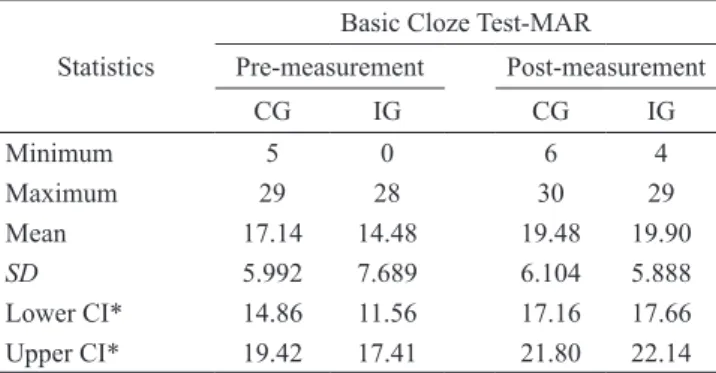
Table 2 presents the descriptive statistics regarding the
performance of the participants in reading comprehension
in the two evaluations performed. The maximum possible score of the Basic Cloze Test-MAR used to assess the level
of reading comprehension before and after the intervention
is 59 points. The midpoint of this test is, therefore, between
29 and 30 points. It can be noted that the two groups did not reach a score greater than the midpoint. Considering that the test was constructed for students of the educational level
attended by the participants, this inding corroborates the
national studies carried out by INEP (2003, 2004), as well as investigations by Joly and Nicolas (2005-2006) and Oliveira
et al. (2007, 2008, 2009), that indicate dificulty in reading and text comprehension.
Table 2
Descriptive Statistics of the Reading Comprehension score regarding the pre- and post-measurements by Group based on the Basic Cloze Test-MAR
Statistics
Basic Cloze Test-MAR
Pre-measurement Post-measurement
CG IG CG IG
Minimum 5 0 6 4
Maximum 29 28 30 29
Mean 17.14 14.48 19.48 19.90
SD 5.992 7.689 6.104 5.888
Lower CI* 14.86 11.56 17.16 17.66
Upper CI* 19.42 17.41 21.80 22.14
Note. CG - Control group. IG - Intervention group.
*CI - conidence interval of 95%.
The performance in the PILE was veriied through the means of the scores in each text. The scores were also
compared to the standard scale for the purposes of comparison
of the performance of each text and stage. It was observed that the performance of students in the third and inal stage was the highest among the stages (Table 3).
Table 3
Descriptive Statistics of the Scores in the Programa Informatizado de Leitura Estratégica-PILE in the Standardized Scale
PILE Minimum Maximum Mean SD
Stage 1
Text 1 -2.44 0.65 -0.0012 0.9999
Text 2 -3.15 0.75 -0.0027 1.0001
Text 3 -2.76 0.70 -0.0019 0.9999
Stage 2
Text 1 -2.31 1.37 -0.0015 1.0000
Text 2 -1.76 1.11 -0.0006 0.9999
Text 3 -2.02 1.17 -0.0013 0.9999
Stage 3
Text 1 -0.75 2.18 0.0003 1.0000
Text 2 -0.90 1.89 0.0005 1.0000
The t test for dependent samples was applied to verify possible differences in the performance of the IG and CG in relation to the level of reading comprehension at the pre- and post-measurement, considering that the IG participated in
the PILE. There were signiicant differences for both the IG
(t[28] = -5.122; p ≤ 0.001) and for the CG (t[28] = -5.147; p
≤ 0.001), revealing that there were alterations in the pattern
of comprehension of both groups.
Due to these results, the calculation of the effect (d) of the PILE on the performance of each group was carried out, considering the evaluation performed at both times (pre-
and post-measurements). The effect size shows, through the
standardized scale “z”, how much the two means differ in
terms of standard deviations. This analysis aimed to evaluate
the effect of the PILE on the reading comprehension through another parameter and was another way to verify differences between the means, having the procedures proposed by Cohen (1988) as the reference.
Based on the criteria established by Cohen (1988), it was noted that the CG had a small to medium effect size (d = 0.386), while the PILE had a large effect on the IG (d
= 0.798), suggesting that the Program was effective for the implementation of reading comprehension for these students.
The effect observed for the CG possibly denotes the teaching
and school development relative to the level of education
that the student belongs. According to Cohen’s criteria, this conirms the results of the analysis of the effect (d), and attributes criterion validity to the PILE.
These results corroborate the study of Joly (1999)
regarding the effect of the intervention program used to implement comprehension, as well as the studies by Joly
(2007) and Joly and Lomônaco (2003). They also indicate
the importance of intervention to implement the performance
in reading comprehension, conirming studies by Girgin
(2007), Joly (2006), Joly and Istome (2008), among others.
It should be noted that the eficiency of the COS applied to
intervention programs (Joly, 2007, 2009) and of the Cloze as a diagnostic and remedial technique (Englert et al., 2005;
Gabl et al., 2007; Santos, 2004) were veriied.
In order to identify the stage and texts of the PILE
that contributed most to the performance of the IG after
the program, the associations were veriied between the performance of the IG in the PILE and Basic Cloze Test-MAR. The total score on the Basic Cloze Test-MAR at the post-measurement was associated positively and signiicantly with the performance in the second and third texts of step 3
(rtexto2 = 0.421, p < 0.05; rtexto3 = 0.574, p < 0.00), as well as the total score of the third stage (rstage3 = 0.507, p < 0.00) and the total score of the PILE (rstage3 = 0.424, p < 0.05). Due to this, the multiple linear regression with enter and then stepwise
selection of the variables, was used to obtain a parsimonious model that allows the prediction of the comprehension performance at the post-measurement according to the independent variables (scores of the stages and total of the
linear regression between the Basic Cloze Test-MAR score
in the post-test as the dependent variable and the score of the 3rd stage of the PILE that this step, among the independent
variables of the PILE, was the most representative to verify the prediction.
The stepwise multiple linear regression, between the scores of the Basic Cloze Test-MAR in the post-test as the
dependent variable and the scores of the stages of the PILE as independent variables, allowed the third stage of the PILE
to be identiied as the only independent variable in the model that best explains the variability of 23% of the performance in
reading comprehension at the post-measurement (F [1.27] = 9.354; p = 0.005; R²a = 0.23). The model predicts 50.7% of the performance of the post-measurement in comprehension.
By way of summary, it was found that the Computerized Strategic Reading Program (PILE) (Joly, 2008) is appropriate to intervene in the reading comprehension of
elementary education level students in a irst exploratory
study of feasibility and validity. It is important to realize that computerized intervention programs are becoming important means to enable the formation of strategic readers through critical and autonomous reading comprehension, as they promote greater control of the time and answers, as well as minimize costs and stimulate the use of technology by the students.
Conclusions
Considering the results found in this study, evidence of
validity for the PILE was veriied, although the proof of its eficacy in promoting the level of reading comprehension of
the students who participated in the intervention was limited to the results of the analysis of the effect (d). Despite the advances provided by the results of this study, the limitations are emphasized regarding the size and homogeneity of the sample with respect to the type of school. It is suggested that
studies be undertaken that also consider the answers given to the questions that follow the texts, the response time, the total
time consumed in carrying out the program for each student, among other variables, with larger, more representative
samples and with students of the private teaching network.
Future studies are also suggested that evaluate the
dificulty level of the texts, include a training module
on metacomprehension, cover the teaching of basic
metacognitive strategies, evaluate the basic reading skills, and compare good and poor readers or that include speciic modules with informative texts by area of knowledge
(geography, history, science, etc.). It is important to verify
that only stage 3 of the PILE is suficient to implement the
reading comprehension of the students, given its predictive
capacity for such performance identiied in this study. Along
with these suggestions, studies that aim to adapt the PILE
to other levels of education, for example, the irst stage of
In addition, it is also suggested that the performance in the PILE be related to other variables that are associated with school performance, such as motivation for learning, memory,
attention, phonological awareness, among others. Thus,
considering the technological advances already discussed and the PILE as a computerized tool, teaching methods can
be expanded so as to minimize possible learning dificulties resulting from the deicit in reading comprehension.
References
Bandeira, P. (s.d.). O tamanduá e as formigas. São Paulo: Seed Editorial.
Brown, A. L., & Smiley, S. S. (1978). The development of strategies for studying texts. Child Development, 49(4), 1076-1088.
Bunchaft, G., & Kellner, S. R. O. (1998). Estatística sem mistérios. Petrópolis, RJ: Vozes.
Calderón, K. A. (2003). Los processos metacognitivos: La metacomprensión y la actividad de la lectura. Actualidades Investigativas en Educación, 3(2), 1-17.
Capovilla, A. S. G., Joly, M. C. R. A., & Tonelotto, J. F.
(2006). Avaliação neuropsicológica e aprendizagem. In A. P. P. Noronha, A. A. A. Santos, & F. F. Sisto (Orgs.),
Facetas do fazer em avaliação psicológica (pp. 141-162). São Paulo: Vetor.
Carvalho, M. R. (2006). Estratégias metacognitivas de leitura utilizadas de 2ª a 4ª série do ensino fundamental. Dissertação de Mestrado não publicada, Universidade São Francisco, Itatiba, SP.
Cohen, J. (1988). Statistical power for behavioral sciences
(2nd ed.) New York: Academic Press.
Englert, C. S., Zhao, Y., Collings, N., & Romig, N. (2005).
Learning to read words: The effects of internet-based
software on the improvement of reading performance.
Remedial and Special Education, 26(6), 357-371. Gabl, K. A., Kaiser, K. L., Long, J. K., & Roemer, J. L. (2007).
Improving reading comprehension and luency through
the use of guided reading. Chicago, IL: Saint Xavier
University & IRI/Skylight Professional Development.
Girgin, U. (2007, maio). Evaluation of hearing impaired student’s reading comprehension with the cloze procedure.
Trabalho apresentado no International Educational Technology (IETC) Conference, Nicosia, Turkey. Grifith, P. L., & Ruan, J. (2009). What is metacognition and
what should be its role in literacy instruction? In S. E.
Israel, C. C. Block, K. L. Bauserman, & K.
Kinnucan-Welsch (Eds.), Metacognition in literacy learning: Theory, assessment, instruction and professional development
(pp. 3-18). Mahwah, NJ: Lawrence Erlbaum.
Instituto Brasileiro de Geograia e Estatística. (2006).
Educação no Brasil. Recuperado em 16 de outubro, 2006, de http://www.ibge.gov.br/ibgeteen/pesquisas/ educacao.html
Instituto Nacional de Estudos e Pesquisas Educacionais
Anísio Teixeira. (2003). Qualidade da educação: Uma nova leitura do desempenho dos estudantes de 8ª série do ensino fundamental. Recuperado em 16 outubro 2006,
de http://www.rbep.inep.gov.br/index.php/RBEP/article/
viewFile/106/108
Instituto Nacional de Estudos e Pesquisas Educacionais
Anísio Teixeira. (2004). Qualidade da educação: Uma nova leitura do desempenho dos estudantes de 3º ano do ensino médio. Brasília, DF: INEP.
Joly, M. C. R. A. (1999). Microcomputador e criatividade em leitura e escrita no ensino fundamental. Tese de
Doutorado não publicada, Universidade de São Paulo, São Paulo.
Joly, M. C. R. A. (2004). Teste Cloze Básico-MAR (TCB-MAR) – Teste em desenvolvimento. Manuscrito não publicado, Núcleo de Avaliação Psicológica Informatizada, Universidade São Francisco, Itatiba, SP.
Joly, M. C. R. A. (2006). Cloze Oriented System (COS) in an electronic comprehension program and reading attitude in Brazil. In A Mendéz-Villas, B. G. Pereira,
J. M. González, & J. A. M. González (Eds.), Current developments in technology-assisted education (pp.
1669-1674). Badajoz: Indugraic.
Joly, M. C. R. A. (2007). The validity of Cloze Oriented
System (COS): A correlation study with an electronic comprehension test and a reading attitude survey.
Psicologia Escolar e Educacional, 11(No. Esp.), 49-57. Joly, M. C. R. A. (2008). Programa Informatizado de Leitura
Estratégica (PILE) – Pesquisa em desenvolvimento.
Itatiba, SP: Universidade São Francisco.
Joly, M. C. R. A. (2009). Estudos com o Sistema Orientado de Cloze para o ensino fundamental. In A. A. A. Santos, E. Boruchovitch, & K. L. Oliveira (Orgs.), Cloze: Um instrumento de diagnóstico e intervenção (pp. 119-146). São Paulo: Casa do Psicólogo.
Joly, M. C. R. A., & Istome, A. C. (2008). Compreensão em leitura e capacidade cognitiva: Estudo de validade do
Teste Cloze Básico-MAR. Psic, 9(2), 219-228.
Joly, M. C. R. A., & Lomônaco, J. F. B. (2003). Avaliando a compreensão de leitura no ensino fundamental: Uma comparação entre o instrumento eletrônico e o impresso.
Boletim de Psicologia, 53(119), 131-147.
Joly, M. C. R. A., & Nicolau, A. F. (2005-2006). Avaliação de compreensão em leitura usando Cloze na 4ª série. Temas Sobre Desenvolvimento, 14(83-84), 14-19.
Joly, M. C. R. A., Nicolau, A. F., Piovezan, N. M., Dias, A. S., & Istome, A. C. (2007, abril). Análise de itens de um teste de Cloze para ensino fundamental. Trabalho
apresentado no Congresso Nacional de Psicologia Escolar e Educacional, 8, São João Del Rei, MG.
Marchant, T., Lucchini, G., & Cuadrado, B. (2007). ¿Por qué
Maroco, J. (2007). Análise estatística com utilização do SPSS. Lisboa: Edições Sílabo.
Ministério da Educação. (1998). Parâmetros curriculares nacionais:Terceiro e quarto
ciclos do ensino fundamental: Língua portuguesa.
Recuperado em 11 novembro 2010, de http://portal.mec. gov.br/seb/arquivos/pdf/portugues.pdf
Oliveira, K. L., Boruchovitch, E., & Santos, A. A. A. (2007). Compreensão de leitura em alunos de sétima e oitava séries do ensino fundamental. Psicologia Escolar e Educacional, 11(1), 41-49.
Oliveira, K. L., Boruchovitch, E., & Santos, A. A. A. (2008).
Leitura e desempenho escolar em português e matemática
no ensino fundamental. Paidéia (Ribeirão Preto), 18(41), 531-540. doi: 10.1590/S0103-863X2008000300009 Oliveira, K. L., Boruchovitch, E., & Santos, A. A. A. (2009).
Leitura e desempenho escolar em alunos do ensino fundamental. In A. A. A. Santos, E. Boruchovitch, & K. L. Oliveira (Orgs.), O Cloze como instrumento de diagnóstico e intervenção (pp. 149-164). São Paulo: Casa do Psicólogo.
Pinto, Z. (1986). O menino marrom. São Paulo: Melhoramentos.
Randi, J., Grigorenko, E. L., & Sternberg, R. J. (2009). Revisiting deinitions of reading comprehension: Just
what is reading comprehension anyway? In S. E. Israel,
C. C. Block, K. L. Bauserman, & K. Kinnucan-Welsch
(Eds.), Metacognition in literacy learning: Theory, assessment, instruction and professional development
(pp. 19-39). Mahwah, NJ: Lawrence Erlbaum.
Salvia, J., & Ysseldyke, J. E. (1991). Avaliação em educação especial e corretiva. São Paulo: Manole.
Sánchez, E. (1995). A aprendizagem da leitura e seus problemas. In C. Coll, J. Palácios, & A. Marchesi (Orgs.),
Desenvolvimento psicológico e educação (pp. 100-115). Porto Alegre: Artes Médicas.
Santos, A. A. A. (2004). O Cloze como técnica de diagnóstico e remediação da compreensão em leitura. Interação em Psicologia, 8(2), 215-224.
Schreiber, F. J. (2009). Metacognition and self-regulation in
literacy. In S. E. Israel, C. C. Block, K. L. Bauserman,
& K. Kinnucan-Welsch (Eds.), Metacognition in literacy learning: Theory, assessment, instruction and professional development (pp. 215-240). Mahwah, NJ: Lawrence Erlbaum.
Siegel, S. (1975). Estatística não-paramétrica. São Paulo:
Mc-Graw Hill.
Maria Cristina Rodrigues Azevedo Joly is a PhD Professor in the Post-graduate Program in Psychology and in the undergraduate course in Psychology of the Universidade São Francisco, Itatiba (SP), Brazil.
Nayane Martoni Piovezan is a PhD student in the Post-graduate Program in Psychology of the Universidade São Francisco, Itatiba (SP), Brazil.
Received: Sept. 18th 2010
1st revision: Feb. 17th 2011
2nd revision: Sept. 29th 2011