Subtotal glossectomy by modiied keyhole
lingual resection technique for the treatment
of true macroglossia
Glossectomia subtotal pela técnica de ressecção lingual em orifício
de fechadura modiicada como tratamento de macroglossia verdadeira
ABSTRACT
We describe a case of true macroglossia in a 6-year-old child that was surgically treated with a midline elliptical excision and anterior wedge resection along a Gothic-shaped arch. The postoperative result was considered satisfactory with regard to both the volume of the tongue, which now remains entirely within the mouth, and the aesthetic appearance; the ability to taste has been maintained.
Keywords: Macroglossia/congenital. Macroglossia/surgery, Glossectomy. Tongue/surgery.
RESUMO
Neste artigo é apresentado o caso de macroglossia verdadeira em criança de 6 anos de idade, tratada cirurgicamente, com excisão elíptica na linha média da língua e ressecção ampla na ponta da língua em arco gótico. O resultado pós-operatório foi considerado satisfatório, tanto sob o aspecto de volume da língua, que passou a se manter totalmente dentro da boca, como sob o aspecto estético, mantendo a capacidade de gustação normal.
Descritores: Macroglossia/congênito. Macroglossia/cirurgia, Glossectomia. Língua/cirurgia. Study conducted at the Universidade
Estadual do Ceará (State University of Ceará), Fortaleza, CE, Brazil.
Submitted to SGP (Sistema de Gestão de Publicações/Manager Publications System) of RBCP (Revista Brasileira de Cirurgia Plástica/Brazilian Journal of Plastic Surgery).
Article received: February 22, 2010 Article accepted: June 4, 2011
1. Plastic surgeon, Associate Professor at the Universidade Estadual do Ceará (State University of Ceará), Fortaleza, CE, Brazil.
2. Specialist member of the Sociedade Brasileira de Cirurgia Plástica (Brazilian Society of Plastic Surgery), Surgery Assistant at the Clínica de Cirurgia Crânio-Facial do Hospital Infantil Albert Sabin (Facial-Skull Clinic at Albert Sabin Children’s Hospital), Fortaleza, CE, Brazil.
3. Medical student at the Universidade Estadual do Ceará (State University of Ceará), Fortaleza, CE, Brazil.
* In memoriam.
Moacir cyMrot1
Francisco de assis
alves teixeira2*
Felipede castro
dantas sales3
Francisco Júlio
Muniz neto3
INTRODUCTION
Macroglossia is an unusual pediatric condition with a va riety of etiologies1,2. It is classiied as true macroglossia when the tongue size is larger than normal, and as relative macroglossia when the oral cavity is not large enough to ac -co mmodate the tongue.
Macroglossia may be congenital or acquired2. The diag-nosis is based on the presence of tongue protrusion with re ference to the teeth, open lips, and maintenance of open- mouth posture3.
Myer et al.4 classiied the etiologies of macroglossia – con genital, inlammatory, traumatic and neoplastic – as either
generalized or localized (Table 1), according to the extent of the disease process5-24.
The tongue is involved in many functions, including swallowing, phonation, breathing, and normal development of the alveolar process and facial bone structure. Because of this, macroglossia may cause a number of problems, inclu-ding dificulty in speaking, chewing, and swallowing as well as airway obstruction. In addition, tongue protrusion predis-poses to tongue trauma, dry mouth, and repeated infections of the upper airways25.
phonation, and alteration of dental occlusion. Effort should also be made to try to identify any undiagnosed syndrome.
The therapeutic approach should include followup ob -servations, treatment of any underlying systemic condi tion that may be causing tongue enlargement, orofacial the rapy, and proper surgical intervention that preserves the vascula-rization and innervation of the tongue.
Surgical resection is considered the most appropriate treat -ment in the pediatric age group. Keyhole subtotal glossectomy is an optimal technique for these patients because it allows normal body development and prevents dentoalveolar compli-cations. This technique was originally described by Morgan et al.26 and differs as to the reduction of muscle size in the 3 planes.
Surgical success should be evaluated by many factors, such as the disappearance of teeth marks on the edges of the tongue; proper positioning of the tongue within the oral cavity; improvement in or resolution of respiratory disorders; improvement in swallowing and phonation; preservation of taste, heat pain, epicritic and protopathic sensitivity; and im -provement in tongue mobility.
Currently, priority is given to multidisciplinary treatment, including orthodontic, surgical, and phonoaudiological eva -luation.
CASE REPORT
The patient, a 6-year-old girl, presented with a tongue with increased length and width. The tongue was resting and was interposed between the teeth, interfering with phona-tion and causing difficulty in chewing. Assessment of the skeletal profile showed absence of any alterations related to dentofacial deformities. A diagnosis of true macroglossia was made (Figure 1).
Table 1 – Summary of macroglossia causes.
Etiology Extent of
disease Example
Congenital
Localized Hemangioma, lymphangioma
Generalized
Down syndrome, Beckwith-Wiedemann syndrome, triploid syndrome, Behmel syndrome, gargoylism, mucopolysaccharidosis,
gangliosidosis type 1, Tollner syndrome
Inlammatory Localized
Tuberculoses, syphilitic gum, dental infection, ranula, Riga disease, actinomycosis
Generalized Chronic glossitis
Metabolic Generalized Amyloidosis, lipoid proteinosis, chronic treatment with steroids, acromegaly, myxedema
Traumatic Localized Hematoma, dental irritation, postoperative edema Generalized Postoperative edema
Neoplastic Benign Localized Carcinoma, sarcoma
Malign Generalized Granular cell tumor, neuroibroma, leiomyoma, lipoma
Figure 1 – Preoperative condition.
Glossoplasty was performed under general anesthesia, according to the technique of modiied keyhole subtotal glos sectomy with Gothic arch-shaped extensive resection of the tongue ends (Figures 2 and 3).
DISCUSSION
Subtotal glossectomy is the appropriate surgical treat ment in most cases in patients with airway obstruction, dif iculty in speaking, dysphagia, and aesthetic damage.
Several surgical techniques are described for the correc-tion of true macroglossia; these are subdivided into median line and peripheral glossectomies27.
In 1950, Edgerton28 described a technique consisting of
excision along the center of the tongue with preservation of blood vessels, nerves, and taste buds, obtaining as result Figure 2 – Glossoplasty planning.
Figure 3 – Keyhole subtotal glossectomy, with gothic
arch-shaped extensive resection of the tongue ends.
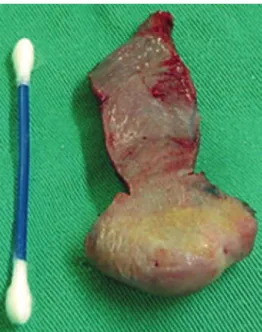
Figure 4 – Excess tongue tissue removal.
Figure 5 – Large rhomboid resection of the anterior third of the tongue.
getting the strengthening of the tongue without changing the length (Figure 7). In 1965, Kole29 proposed a triangular
incision at the end of the tongue, reducing the length and thickness of the anterior third of the tongue (Figure 8).
The surgical technique presented in this article is a variant of keyhole glossectomy, originally described by Morgan et al.26, and involves a large excision of the distal end of the
tongue, thus further reducing its length.
The realization of this technique has shown good results in the case shown (Figure 9), as in others described in the li terature27-30.
In cases of macroglossia with idiopathic muscle hyper-trophy, such as the reported in this paper, there is risk of relapse, thus, the surgical indication must be individualized, taking into consideration the risks and possible beneits for the patient31,32.
REFERENCES
1. Horn C, Thaker HM, Tampakopoulou DA, De Serres LM, Keller JL, Haddad J Jr. Tongue lesions in the pediatric population. Otolaryngol Head Neck Surg. 2001;124(2):164-9.
2. Vogel JE, Mulliken JB, Kaban LB. Macroglossia: a review of the condi-tion and a new classiicacondi-tion. Plast Reconstr Surg. 1986;78(6):71523. 3. Dolan EA, Riski JE, Mason RM. Macroglossia: clinical considerations.
Int J Orofacial Myology. 1989;15(2):4-7.
4. Myer CM 3rd, Hotaling AJ, Reilly JS. The diagnosis and treatment of
macroglossia in children. Ear Nose Throat J. 1986;65(10):444-8. 5. Jian XC. Surgical excision of lymphangiomatous macroglossia: a case
report. J Oral Maxillofac Surg. 1997;55(3):306-9.
6. Dios PD, Posse JL, Sanromán JF, Garcia EV. Treatment of macroglos-sia in a child with Beckwith-Wiedemann syndrome. J Oral Maxillofac Surg. 2000;58(9):1058-61.
7. Murphy JP. Comment on macroglossia and reduction glossectomy. Am J Orthod Dentofacial Orthop. 1997;111(4):29A-30A.
8. Moura CG, Moura TG, Durães AR, Souza SP. Exuberant macroglossia in a patient with primary systemic amyloidosis. Clin Exp Rheumatol. 2005;23(3):428.
9. Kempton JJ, Latto C. Neuroibromatosis presenting as macroglossia. Arch Dis Child. 1951;26(125):76-7.
10. Wittmann AL. Macroglossia in acromegaly and hypothyroidism. Vir-chows Arch A Pathol Anat Histol. 1977;373(4):353-60.
11. Bamelis M, Boyden B, Sente F, Madoe V. Sweet’s syndrome and acute myelogenous leukemia in a patient who presented with a sudden mas-sive swelling of the tongue. Dermatology. 1995;190(4):335-7. 12. García de Guilarte RF, Frönher BB, Urcelay PR, Nájera RC, Meli BG,
Enríquez de Salamanca Celada J. An idiopathic case of macroglossia. J Plast Reconstr Aesthet Surg. 2009;62(2):e41-3.
13. Meares N, Braude S, Burgess K. Massive macroglossia as a presen ting feature of hypothyroid-associated pericardial effusion. Chest. 1993; 104(5):1632-3.
14. Linder N, Kuint J, German B, Lubin D, Loewenthal R. Hypertrophy of the tongue associated with inhaled corticosteroid therapy in premature infants. J Pediatr. 1995;127(4):651-3.
15. Ramesh V. Tuberculoma of the tongue presenting as macroglossia. Cutis. 1997;60(4):201-2.
16. Rizer FM, Schechter GL, Richardson MA. Macroglossia: etiologic con-siderations and management techniques. Int J Pediatr Otorhinolaryngol. 1985;8(3):225-36.
17. Loefler JR, Duray PH, Sasaki CT. Macroglossal lymphangioendothe -liomatosis. Report of a case in a pregnant woman. Arch Otolaryngol. 1984;110(9):600-3.
Figure 7 – Elliptical excision in the center of the tongue, as proposed by Edgerton28.
Figure 8 – Triangular incision at the end of the tongue, as proposed by Kole29.
Figure 9 – Anatomical presentation of the
Correspondence to: Moacir Cymrot
Rua Bonfim Sobrinho, 316 – ap. 901 – Fátima – Fortaleza, CE, Brazil – CEP 60040-500 E-mail: [email protected]
18. Donnelly LF, Jones BV, Strife JL. Imaging of pediatric tongue abnor-ma lities. AJR Am J Roentgenol. 2000;175(2):489-93.
19. Gupta OP. Congenital macroglossia. Arch Otolaryngol. 1971;93(4):378-83. 20. Luna Ortiz K, Carmona Luna T, Herrera Gómez A, Cano Valdez AM.
Macroglossia caused by adenoid cystic carcinoma. Case report. Med Oral Patol Oral Cir Bucal. 2008;13(6):E395-7.
21. Zúñiga S, Benveniste S, Egger E, Salgado C, Artigas R, Carter R, et al. Tumors of the tongue in children. Rev Chil Pediatr. 1982;53(4):338-44. 22. Abbott FC, Shattock SG. I. Neuroibromatosis of the nerves of the
tongue (macroglossia neuroibromatosa) and of certain other nerves of the head and neck. Ann Surg. 1903;37(3):321-35.
23. Roles DM. Lipoma of the tongue. Br J Oral Maxillofac Surg. 1995; 33(3):196-7.
24. Guelmann M, Katz J. Macroglossia combined with lymphangioma: a case report. J Clin Pediatr Dent. 2003;27(2):167-9.
25. Wolford LM, Cottrell DA. Diagnosis of macroglossia and indications for reduction glossectomy. Am J Orthod Dentofacial Orthop. 1996; 110(2):170-7.
26. Morgan WE, Friedman EM, Duncan NO, Sulek M. Surgical manage-ment of macroglossia in children. Arch Otolaryngol Head Neck Surg. 1996;122(3):326-9.
27. Gasparini G, Saltarel A, Carboni A, Maggiulli F, Becelli R. Surgical management of macroglossia: discussion of 7 cases. Oral Surg Oral Med Oral Pathol Oral Radiol Endod. 2002;94(5):566-71.
28. Edgerton M. The management of macroglossia when associated with prognathism. Br J Plast Surg. 1950;3(2):117-22.
29. Kole H. Results, experience, and problems in the operative treatment of anomalies with reverse over bite (mandibular protrusion). Int J Oral Surg. 1965;19:427-50.
30. Kaufman Y, Cole P, McKnight A, Hatef DA, Hollier L, Edmonds J. A modiied keyhole technique for correction of macroglossia. Plast Reconstr Surg. 2008;122(6):1867-9.
31. Davalbhakta A, Lamberty BG. Technique for uniform reduction of macroglossia. Br J Plast Surg. 2000;53(4):294-7.