ISSN: 1676-4285
Plan of nursing care for the sleep of
infants
Soia Esmeraldo Rodrigues¹, Tamires Rebeca Forte Viana¹,
Mariana Cavalcante Martins¹, Maria Vera Lúcia Moreira Leitão Cardoso¹ 1. Nursing Department, Federal University of Ceará. Fortaleza, Brazil
ABSTRACT
Aim: To elaborate a nursing care plan for infants between 12 and 18 months with altered sleep patterns.
Method: a descriptive study with a quantitative approach, carried out in two public institutions in Fortaleza / CE. The sample comprised 128 participants: 64 infants and 64 caregivers. An instrument for sociodemographic characterization and the Infant Sleep Questionnaire (ISQ) - Brazilian version were applied. Results: the plan of care was elaborated according to the questionnaire and based on the most frequent alterations identiied by caregivers and the scientiic literature. The most discussed items were “waking up during the night” and “sleeping in bed with their parents”. Conclusion: we emphasize the importance of implementing the plan as a nursing care tool in order to promote well-being and quality of care with regard to infant sleep.
INTRODUCTION
Good quality sleep is essential to human life, especially regarding health in general. In addition to physiological parameters, it must be taken into account by clinical evaluation. Diiculties to fall or stay asleep afect the po-pulation in 15% to 35% of cases, and a poor sleep quality is an indicator of many diseases, especially those related to physical and cogni-tive aspects(1).
Studies show that poor quality sleep le-ads to diiculties in reduced response speed, concentration and performance, memory loss, increase in concentration of pain, low self--perception of health, diiculties in performing daily activities, increased use of health services and low survival rates(2).
Sleep has a direct consequence on children’s development in their irst years of life - in their behavior, learning, mood and in brain high cognitive functions - and issues in these can be characterized as a direct consequence of sleep problems(3, 4).
Thus, it is extremely important to evaluate children’s pattern of sleep in order to identify behaviors of maturation of the sleep-wake cycle, and whether these are altered or not. In this approach, nurses can be seen as the health professionals who work precisely in the evalua-tion of performance and quality of infant sleep. In this regard, there are technologies (such as instruments and scales) that contribute to its assessment.
In using health technologies for the eva-luation of infant sleep, we cite the Infant Sleep Questionnaire - ISQ(5), which analyzes the
in-luence of sleep at children of 12 to 18 months of age, favoring the early identiication of an altered behavior. The ISQ was translated into Portuguese in 2013, in a study by the Newborn and Children Health Research Group
(NUPES-NEC) of the Federal University of Ceará (UFC), in diferent clinical situations, such as low- and middle-threatening health alterations, as well as cerebral palsy.
The basic care plan is considered an essen-tial instrument, as it traces the infants’ needs and is also a legal document for the veriication and provision of care measures by nurses. It also promotes health, encouraging counseling and self-care, which raises its own relevance.
The need to prepare a care plan that could intervene in the sleep quality of infants of 12 to 18 months of age showed up after considering that there is currently no plan facing this issue speciically. Faced with scarcity of publications providing data for the construction of this kind of project, nursing assessment becomes relevant in the pediatric ield for the early detection of changes in sleep behavior and, based on that, the implementation of efective treatment, as nurses are the health professionals in the conti-nuous patient care process, who act to prevent diseases aggravation.
Based on this, the aim of this study was to develop a nursing care plan for infants of 12 to 18 months of age with altered sleep patterns.
METHOD
This is a descriptive study with a quantita-tive approach.
The study population comprises caregivers and infants of 12 to 18 months of age, with con-secutive convenience sampling of 128 subjects comprising 64 caregivers and 64 healthy infants, who attended the sampling sites between De-cember 2013 and February 2014. We decided to analyze the caregivers’ variables together with the children’s, since the inluence of the family role in sleep behavior characteristics is already consolidated in international literature and the questionnaire used is answered by mothers/ caregivers.
Instruments used: A form with demogra-phic data such as age, gender, marital status, occupation, address, education level, monthly income, and place of birth, characterize the mo-thers/caregivers; and chronological age, gender, gestational age, birth weight for infants’ details, and the ISQ in the Brazilian version. Instruments were applied by nurses and graduate students trained by members of NUPESNEC, respecting the Kappa value of 80% for veriication of inter--rate reliability. The ISQ consists of 10 questions about the sleep of children from 12 to 18 mon-ths of age divided into three categories: “When going to bed / sleep at night”; “Waking up at night”; and “Sleeping in bed with parents”. Each question has a score ranging from 0 to 7 accor-ding to the marked response, a total of 38 at the end of the questionnaire. After the form illing, we obtain the sleep pattern evaluation by three criteria described below. It is noteworthy that the author of the ISQ did not set scores as proof of a sleep disorder, but signaled that the infants presented altered sleep patterns when the ISQ score was greater than or equal to 12. The ISQ can be answered and registered by a caregiver in cases of parental choice by verbal response(5).
In the assessment of sleep problems by the ISQ - Brazilian version, the assessor bases the work on records under the following criteria: 1. Sleeping and waking up: child presents
pro-blem sleeping or awakening in ive or more nights a week and on two or more consecutive months; child takes more than 30 minutes to fall asleep; child wakes up three or more times per night; child remains awake for more than 20 minutes during the night or sleeps in parents’ bed.
2. Maternal: infant’s mother or primary caregiver classiies the sleep problem as severe, mode-rate or mild.
3. Score Severity: inal score according to the caregiver’s responses to each question, ran-ging up to 38, and the higher the value of the total score, the greater the likelihood of a pos-sible sleep disorder(6). The assessor identiies
by diferent criteria any possible alteration in the child’s sleep.
After identifying the main problems, the authors developed a care plan according to Swearingen’s methodology(6) in three stages
these are: problem identiication; intervention based on scientific literature regarding the theme; and the expected results, which will be described below. In the irst stage they used instruments emphasizing the prevalent pro-blems. We highlight the need of characterizing the approach of the caregivers responsible for providing information about the children’s sleep and their diferent variables, as a way to research possible factors inluencing sleep.
The second stage was characterized by the construction of action plans directly related to the problems identiied, to be used in the target population. The third stage presents any results or lack of these, regarding the proposed interventions. These steps are detailed in Table 1.
RESULTS
Participant Characterization
All of the infants’ caregivers are fema-le: 32 (50%) are 30 years of age or more; 38 (59.4%) were born in Fortaleza, and 20 (31.3%) in other locations. Most of them were housewives (35 women, 54.7% of total); 44 (68.8%) considered themselves of black race/ color. Of the 64 participants, 28 (43.8%) were married. Regarding education, 25 (39.1%) have completed high school and 31 (48.4%) have family income of one to two minimum wages; only six (9.4%) declared having family incomes greater than four minimum wages (minimum wage at the time of the survey: R$ 724.00); 50 (78.1%) reported to be living in homes with more than four rooms.
Neonatal variables were assessed and the following data were found: 44 (68.8%) of infants were born within 37 to 41 weeks of pregnancy, and only 14 (21.9%) presen-ted a gestational age below 37 weeks; six (9.4%) caregivers were not able to confirm the gestational age of the child; 31 (48.4%) were born weighing between 3000 and 3999 grams; 16 (25%) weighed from 1000 to 2499 grams; 13 (20.3%) weighed between 2500 and 2999 grams, three (4.7%) weighed more than 4000 grams; and one (1.6%) had no confirmed weight. As for APGAR indexes, 31 (48.4%) and 41 (64.1%) scored between eight and 10 at 1 and 5 minutes respectively, 9 (14.1%) and 1 (1.6%) scored 4 and 7 at 1 and 5 minutes, and caregivers could not provide information of 2 (3.1%) and 22 (34.4%) for the requested scores. Most infants are males: 36 (56.3%) are between 12 and 13 months of age; 29 (45.3%) and 20 (31%) are 14 to 15 months old, and 15 (23, 4%) are 16 to 18 months of age.
Infant Sleep Assessment
Regarding ISQ final score, 38 infants (59.4%) scored up to 11, and 26 (40.6%) scored over 12, which shows an altered sleep pattern in almost half of the sample.
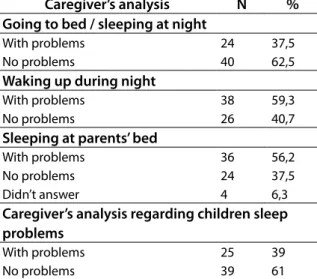
Table 1 is based on the perception of caregivers about the presence of infant sleep pattern alterations. In the ISQ, the term used for research deviations in sleep hygiene is “problems.” The data build option is based on the terms of the questionnaire.
Table 1 - Main problems encountered accor-ding to ISQ - Brazilian version categories in caregiver’s analysis. Fortaleza, 2014. N-64
Caregiver’s analysis N % Going to bed / sleeping at night
With problems 24 37,5
No problems 40 62,5
Waking up during night
With problems 38 59,3
No problems 26 40,7
Sleeping at parents’ bed
With problems 36 56,2
No problems 24 37,5
Didn’t answer 4 6,3
Caregiver’s analysis regarding children sleep problems
With problems 25 39
No problems 39 61
Source: Authors’ research
After the final assessment made in accor-dance with the criteria of the caregivers and professionals/assessors, 39 (61%) reported that the infant had no trouble sleeping, and 25 (39%) said yes according to the caregivers’ criteria. However, in the assessors’ criteria, 47 (74%) infants showed no difficulties in sleeping and only 17 (26%) presented altered behavior.
caregivers reported infants who showed no problems in this matter.
In light of the study’s results, we elabora-ted a plan of nursing care in order to provide resources for professional nurses in promo-ting the quality of infant sleep.
Nursing Care Plan
• Target: Infants of 12 to 18 months of age (ISQ – Brazilian version is the instrument used for this age group).
• Goal: To identify changes in sleep pattern. In addition, the family also benefited from the positive results of interventions.
• Definitions
• Sleep: a natural and periodic physiological condition of brain activity, characterized by
a modiied state of consciousness, reduced sensitivity to environmental stimuli, accom-panied by its own motor and postural charac-teristics, as well as autonomous changes(1).
• Changes in sleep pattern: Interruptions in the quality and quantity of sleep.
• Family: composition of a system made up of values, beliefs, science and practices that guides the professionals in the area of health promo-tion and is intended to assist in the prevenpromo-tion and treatment of certain pathology(6).
• Chart 1: aspects related to the nursing care plan: potential problem, intervention, expected results after the implemented intervention, and justifications based on evidence in the literature about the theme.
DISCUSSION
The nursing care plans can be seen in a standard or common language as a stan-dardized health care plan. Some authors(12)
state that only recovery and survival are not enough; it is necessary for nurses to provide measures aimed at the infants so they can evolve completely.
In its construction, it is essential that the professional first investigates Child Life data, grouping what is, or what is not, in normal
Chart 1 - Nursing care plan for the altered sleep behavior. Fortaleza, 2014.
Problem / Potential Problem
Intervention Expected results Justiications
Children sleeps at parents’ bed
- To encourage parents to create a proper environment for the infant to sleep.
Infants should become indepen-dent and sleep in their own bed or cot.
- Sleep habits associated with co-sleeping hamper or discourage the infant to sleep alone(7).
- To guide the parents that child must begin to sleep alone and not with the aid of external factors/ac-tions (like sleeping being cherished, nurtured or watching TV).
range. Focusing on the theme, we evaluate families’ complaints about infant’s sleep and whether they are able to deal with problems or to provide preventive care. It is noteworthy that physiological factors of the child such as age and cultural aspects influence directly in sleeping habits, and should thus be relevant in the consideration of nurses when applying the care plan(13).
Considering that sleep disorders impair children’s development, it is important for nurses to call the attention of caregivers to the
hygiene of healthy sleep and potential risks related to sleep deprivation in children(14,15).
As for the sleep behavior, a study con-ducted in Italy with children of less than 12 months of age reported that about 80% of the subjects needed some kind of support to sleep, e.g. breastfeeding, packing and pacifier use. In addition, 50% slept in a crib in the par-ents’ room. It was noticed that the nocturnal awakenings were more common in babies who slept in the same room(7).
Problems putting the baby to sleep
- To guide and encourage the child during the day by creating activities that require efort and cause fati-gue, providing rest breaks.
Infants should not present problems to sleep at night.
- The infant should also have the habit of being put to bed/cot at least 30 minutes befo-re bedtime(9).
- To promote the creation of a sleep ritual selecting activities that are performed in a sequence at the time of going to sleep (Food at the same time every day, give bath, dress the child with a suitable outit to sleep, dim the environment).
- Parents should also be advised to place the children in crib still awake or sleepy in their room and at the same time, encourage them to create and establish set times for sleeping and waking(10).
Problems with the baby waking frequently at night
- When the infants wake up at night the parents should avoid take them out of the crib or feed them.
Infant should sle-ep quietly without waking frequently during the night.
The constant parental interventions hinder sleep consolidation process, inhibiting the in-dependence of the children to fall back asleep by themselves(7).
- Avoid feeding before bedtime, so that if the infants want to go to the bathroom, they will do it before going to bed(11).
A routine schedule for sleeping and waking is also indicated to reduce sleep problems, and reduce the frequency the child wakes up at night(9).
The of giving bath before the child is put to bed is advised. There are no studies to conirm this matter, however, the bath in young adults results in passive increase in body temperatu-re, which increases the perception of sleepi-ness(9).
Caregivers report that child has problems to sleep.
- Explain that early intervention in altered sleep behavior increases the chances of avoiding major proble-ms in the future.
Seek help from professionals to identify the problem and treat it, promoting children’s and, consequently, family’s sleep quality.
Many of the sleep problems in children are presented arising from parents’ sleep hygiene, and the children’s altered sleep pattern can inluence the sleep of the family, which makes the diiculties to sleep/stay asleep a two-way problem. Thus it is necessary to include the investigation of maternal and paternal factors in children’s sleep behavior analysis(11).
It is also known that the family is part of the care scenario, and nurses are the profes-sionals responsible for the plan who must understand its potential in the context of care measures and planning, directing and plotting strategies to facilitate the learning and development of the plan combined with child care(16).
The best way to avoid sleep pattern changes is to have as a main objective the guidance of parents and families to establish rituals of sleep at the time of going to bed. Among them, the one with actual results is to place the child awake in their own cot or bed(15).
What is important in the management of the altered sleep pattern is to make specific behavioral treatments early in the baby’s life. The treatments relate to the extinction of habits that impair sleep initiation (a gradual change in habits with the interaction of par-ents); waking up at scheduled times; sleep habit routines with positive and negative reinforcement; fading bedtime; and parental education(17).
Parents can adopt other strategies de-scribed in the literature if sleep disturbance is already present. Researchers from Australia, in a study conducted with parents of children between six and 18 months of age, found that techniques such as systematically ignoring a child’s call at night (increasing the time between checks and pretending to sleep in child’s room) were equally effective regarding the management of certain modifications of the sleep pattern of the child(18).
It should be noted that the investiga-tion of infant sleep problems is not limited to the characteristics of the child. It is relevant to check all of the cognitive aspects of the parents related to sleep hygiene, since it is such a vital factor when choosing/building
a clinical intervention for the prevention of sleep disorders(7).
In a review article that evaluates infant insomnia in the first years of life and its reper-cussions, the authors propose measures simi-lar to this study with regard to the prevention of sleep disorders. These include scheduled habits and rituals; avoiding physical, mental or emotional stimulation close to bedtime; avoiding feeding at night; avoiding light sources during the night sleep; and stimulat-ing children’s sleep without the presence of the mother or caregiver(19).
Only 10 articles were included in the systematic review conducted in Brazil on the most effective approaches to sleep hygiene in childhood, and none was Brazilian. The findings of this study corroborate existing interventions in the care plan framework, such as the stimulus to an infant’s independence to sleep alone, scheduled habits for going to bed and the creation of a peaceful environment before taking the infant to bed(20).
CONCLUSION
Sleep is fundamental to a child’s devel-opment. Thus, health professionals should be alert to parents’ complaints regarding the sleep of children.
This study supports what previous re-search has suggested: the mother is the pri-mary caregiver, and the first to identify any altered sleep pattern. Therefore, the care plan is designed to promote children’s sleep qual-ity and hence bond this care measure to the family, since it plays a crucial role in building an infant’s sleep habits.
elabo-rated by nurses; limited sampling; the care plan was not validated and the authors did not have the opportunity to apply it to the target population.
Care plans are relevant to nursing prac-tice because they offer scientific support for this, and are also a proof of the care provided. This way, we suggest that nurses develop systematic plans and work towards their ap-plication in order to promote well-being and quality care for children more often.
REFERENCES
1. Costa SV, Ceolim MF. Fatores que interferem na qualidade do sono de pacientes internados. Rev Esc Enferm USP. 2013;47(1).
2. Clares JWB, Freitas MC, Galiza FT; Almeida PC. Sleep and rest needs of seniors: a study grounded in the work of Henderson. Rev Acta Pauli Enferm on-line 2012;45(8).
3. Owens JA. Behavioral sleep problems in chil-dren. [períodicos na Internet]. 2013. [cited 2014 oct 13]. Available from: http://www.uptodate. com/contents/topic.do?topicKey=PEDS/6353. 4. El Shakankiry HM. Sleep physiology and sleep
disorders in childhood. Nature and Science of Sleep. 2011;3:101-114.
5. Morrell JMB. The Infant sleep Questionaire: A new tool to assess infant sleep problems for clinical and research purposes. Child Psycho-logy and Psychiatry Review. 1999; 4(1):20-26. 6. Swearingen PL. Seizures and epilepsy. In All--in-one Care Planning Resource. 3 ed. St. Louis, Missouri: Elsevier Mosby; 2012. p. 297-305. 7. Bruni O, Baumgartner E; Sette S, Ancona M, Caso
G, Di Cosimi ME, et al. Longitudinal study of sleep
behavior in normal infants during the irst year
of life. J Clin Sleep Med. 2014; 10(10): 1119-1127. 8. Brescianini S, Volzone A, Fagnani C, Patriarca V, Grimaldi V, Lanni R. Serino L, Mastroiacovo P, Stazi MA. Genetic and Environmental Fac-tors Shape Infant Sleep Patterns: A Study of 18-Month-Old Twins. Pediatrics. 2011; 127(5): 1296-1302
9. Galland BC, Mitchell EA. Helping children sle-ep. Arch Dis Child. 2010;95:850–853.
10. Pessoa JHL. Distúrbios do sono da criança: abordagem pediátrica. Pediatr Mod. 2013; 49(2): 73-79.
11. Sadeh A, Tokotzky L, Scher A; Parenting and infant sleep. Sleep Medicine Reviews. 2010; 14: 89-96.
12. Mello DF, Lima RAG. Êxito técnico, sucesso prático e sabedoria prática: bases conceituais Hermenêuticas para o cuidado de enferma-gem à criança. Rev Latino-am Enfermaenferma-gem. 2009; 17(4).
13. Galland BC, Taylor BJ, Elder DE, Herbison P. Normal sleep patterns in infants and children: A systematic review of observational studies. Sleep Medicine Reviews. 2012;16: 213-222. 14. Cardoso MVLML, Lélis ALPA, Oliveira NR, Viana
TRF, Praciano PAS, Oliveira ET. A influência dos distúrbios do sono no desenvolvimento infantil. Cogitare Enferm. 2013;19(2):368-375. 15. Caulfield A. The specialist nurse in the field of childhood sleep disorders. Community Prac-titioner. 2011;84(2):32-35.
16. Silva TP, Leite JL, Santos NLP, Silva IR, Men-donça ACA, Santos MJC, Silva LJ. Cuidados de enfermagem à criança com câncer: uma revisão integrativa da literatura. Rev Enferm UFSM. 2013;3(1):68-78.
17. Owens J. Serviços e programas comprova-damente eficazes no manejo de distúrbios do sono do bebê e da criança e seu impacto sobre o desenvolvimento social e emocional de crianças pequenas (0-5 anos). In: Tremblay RE, Boivin M, Peters RDeV, eds. Enciclopédia sobre o Desenvolvimento na Primeira Infância [on-line]. 2012 [cited 2014 oct 20]. Available from: http://enciclopedia-crianca.com/Pages/ PDF/OwensJPRTxp1.pdf
18. 1Črnčec R, Matthey S. Comparison of two stra-tegies to improve infant sleep problems, and associated impacts on maternal experience, mood and infant emotional health: A single case replication design study. Early Human Development. 2012; 88: 437–442.
anos de vida e repercussão nas mães: atuali-zação. Rev Paul Pediatr .2010;28(2):221-226. 20. 20. Halal CSE, Nunes ML. Education in children’s
sleep hygiene: which approaches are effec-tive? A systematic review. J Pediatr (Rio J). 2014;90(5):449-456.
All authors participated in the phases of this publication in one or more of the following steps, in According to the recommendations of the International Committee of Medical Journal Editors (ICMJE, 2013): (a) substantial involvement in the planning or preparation of the manuscript or in the collection, analysis or interpretation of data; (b) preparation of the manuscript or conducting critical revision of intellectual content; (c) approval of the versión submitted of this manuscript. All authors declare for the appropriate purposes that the responsibilities related to all aspects of the manuscript submitted to OBJN are yours. They ensure that issues related to the accuracy or integrity of any part of the article were properly investigated and resolved. Therefore, they exempt the OBJN of any participation whatsoever in any imbroglios concerning the content under consideration. All authors declare that they have no conlict of interest of inancial or personal nature concerning this manuscript which may inluence the writing and/or interpretation of the indings. This statement has been digitally signed by all authors as recommended by the ICMJE, whose model is available in http://www. objnursing.uf.br/normas/DUDE_eng_13-06-2013.pdf