doi:10.1590/0037-8682-0415-2015
Major Article
Corresponding author: Dr. rer. nat. Jorge Molina.
e-mail: [email protected]
Received 5 January 2016
Accepted 12 July 2016
Behavioral fever response in
Rhodnius prolixus
(Reduviidae: Triatominae) to intracoelomic inoculation
of
Trypanosoma cruzi
Gloria Hinestroza
[1],
Mario Iván Ortiz
[2]and
Jorge Molina
[2][1]. Proyecto Maricultura Isla de Providencia, San Andrés y Providencia, Colombia. [2]. Centro de Investigaciones en Microbiología Parasitología Tropical, Universidad de los Andes, Bogotá, Colombia.
Abstract
Introduction: Behavioral fever is a response to infections with microorganisms observed in some poikilothermic animals.
Rhodnius prolixus is involved in the transmission of two parasites: Trypanosoma cruzi (pathogenic for humans and transmitted in
feces) and Trypanosoma rangeli (non-pathogenic for humans, pathogenic for Rhodnius and transmitted by the bite of an infected
individual). Only T. rangeli is found in the hemolymph of Rhodnius as it travels to the salivary glands. Methods: To study
vector-parasite interactions, we evaluated possible behavioral fever responses of R. prolixus to intracoelomic inoculation with
T. cruzi or T. rangeli. Temperature preferences of fi fth-instar nymphs of R. prolixus were evaluated after inoculation with T. rangeli
KP1(+), KP1(-), T. cruzi I, or the Trypanosome culture medium. Four different fi xed temperatures (25, 30, 35, and 40°C) in two
simultaneous experiments (enclosed and free-moving insects) were evaluated. Free-moving insects were marked daily according to their temperature preferences on each of the 15 days after inoculation. Numbers of insects in each temperature shelter and daily
mortality were compared with those enclosed shelters of different temperatures. Results:Rhodnius prolixus inoculated with both
strains of T. rangeli and with the trypanosome culture medium showed preferences for the lowest temperatures (25°C). However,
R. prolixus inoculated with T. cruzi I showed signifi cant preferences for temperatures around 35°C. Conclusions: This is the fi rst
known investigation to demonstrate a behavioral fever response in R. prolixus injected intracoelomically with T. cruzi I.
Keywords: American trypanosomiasis. Rhodnius prolixus. Trypanosoma rangeli. Trypanosoma cruzi. Behavioral fever.
INTRODUCTION
In endothermic animals, fever is a common internal response
to overcome microorganism infections(1). However, ectothermic
animals can only raise their internal body temperature to reduce microorganism infections by moving to warmer areas
in a classic behavioral response called behavioral fever(1) (2) (3).
Evidence that insects can become feverish was fi rst observed
in the cockroach Gromphadorhina portentosa injected with
an Escherichia coli suspension(4). Studies over the past 25
years(5) (6) (7) (8) (9) have shown that a febrile response is not only
possible, but widespread among ectotherms(10). However,
to our knowledge, there is only one previous study testing behavioral fever in blood-sucking insects involved in parasite
transmissions(11).
Triatominae (Hemiptera: Reduviidae) are blood-sucking insects that are important vectors in the transmission of
Trypanosoma cruzi, the causative agent of American
trypanosomiasis or Chagas disease(12). Chagas disease is a very
complex anthropozoonosis that is widely distributed in 21 Latin-American countries, where it affects approximately 7.7 million people, with approximately 12,500 deaths and approximately
41,200 new cases each year(13). In addition, Trypanosoma rangeli
(apathogenic to vertebrate hosts) is also frequently found and
transmitted by triatomines in Latin-America(14). Interestingly,
while T. cruzi is apathogenic for triatomines, T. rangeli is
considered pathogenic to these insects(15).
In triatomines, T. cruzi never leaves the digestive tract system
and is transmitted through contaminated feces(16). Conversely,
T. rangeli always leaves the digestive tract to travel to the salivary glands and is transmitted through the bite of an infected
individual(14) (17). According to Zingales et al.(18), six groups of
T. cruzi are recognized (T. cruzi I to VI), while for T. rangeli
only two groups have been defi ned [T. rangeli KP1(-) and
T. rangeli KP1(+)](19).
In Colombia, the main vector of Chagas disease is Rhodnius
prolixus and T. cruzi I and T. rangeli KP1(+) and KP1(-) are
widely distributed(19) (20). A close association of R. prolixus
with T. rangeli KP1(+) has been observed, as it travels to the
salivary glands through the hemolymph. In contrast, T. rangeli
Hinestroza G et. al -Behavioral fever response in Rhodnius prolixus
Rhodnius belonging to the pallescens group(17) (21). Recently, a
trypanolytic factor acting against T. rangeli KP1(-) was found
in the hemolymph of R. prolixus(17) (22).
Thermopreferences in triatomines, such as Rhodnius,
have been studied in several species, and are a dynamic process influenced by daily rhythms and starvation
levels(23) (24) (25) (26) (27). In Triatoma infestans and T. brasiliensis,
daily temperature preferences vary across a broad range(23) (25),
while in Panstrongylus megistus and R. prolixus, the range of
daily temperature preferences varies only slightly(24) (27). Lower
temperature preferences in triatomines during the photophase and with increasing starvation would avoid unnecessary waste
of water and nutrients(24).
The thermopreferences of Triatomines and the interaction
between two Trypanosoma species with different developmental
cycles inside Rhodnius represents a model to test the behavioral
fever response against microorganisms present in the
hemolymph of R. prolixus. We intracoelomically inoculated
T. cruzi (not present in the hemolymph) and T. rangeli (present in the hemolymph). Our objectives were: 1) To test whether
R. prolixus is able to adapt thermopreferences to develop a behavioral fever strategy; 2) to test whether behavioral fever depends on specifi c associations with microorganisms and
the body parts they occupy in R. prolixus, and 3) to analyze
the impact of environmental temperature on the survival of
intracoelomically infected R. prolixus to evaluate the adaptive
value of behavioral fever.
METHODS
Insects
Rhodnius prolixus were captured from wild populations in 1979 and have been maintained since as a laboratory colony. We used 1,800 fi fth-instar nymphs nourished with live hen's blood every 15 days and reared at 27 ± 2°C, 75 ± 10% relative humidity, under a 12/12h light/dark schedule. Nymphs were separated into fi ve treatments for the experiments.
Strains of Trypanosoma
Three strains of trypanosomes were evaluated in the
experiment: a) T. rangeli KP1(+), isolated from domestic
R. prolixus and maintained for 21 cycles in the laboratory; b)
T. rangeli KP1(-), isolated from wild R. prolixus and maintained
for 23 cycles in the laboratory; and c) T. cruzi I, isolated from
wild R. prolixus and maintained for 20 cycles in the laboratory.
All strains were maintained in Tobie culture medium(28) under
the same laboratory conditions (temperature 25°C and 70% relative humidity).
Treatments
Five treatments were evaluated daily for 15 days: Control 1: Non-inoculated insects, Control 2: Insects inoculated only
with Tobie culture medium, Experiment 1: T. cruzi I in Tobie
culture medium, Experiment 2: T. rangeli KP1(+) in Tobie
culture medium, and Experiment 3: T. rangeli KP1(-) in Tobie
culture medium.
For each treatment including controls, 360 nymphs were evaluated. Nymphs used in control 2 and experiment 1 to
3 were held ventral side up on a fl at surface and inoculated intracoelomically between the last fourth abdominal sternites with a tuberculine syringe. Each insect was inoculated with approximately 10µl of Tobie culture medium with a
concentration of 1.32 × 10⁴ trypanosomes/µl (determined with
a Neubauer chamber or hemocytometer).
Experimental arena and shelters
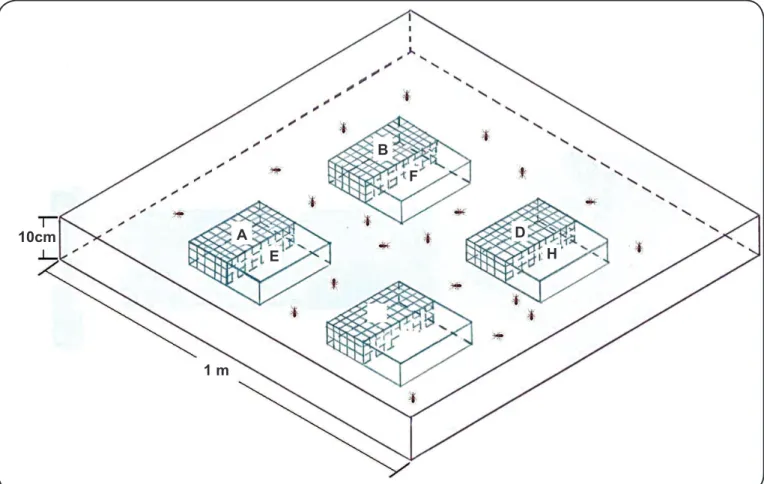
All treatments were conducted on a square slide of superboard (1m × 1m × 2cm) surrounded by transparent acrylic walls 10cm in height and covered with vaseline to prevent the insects from climbing out. A square (1m × 1m × 3mm) of transparent acrylic covering the experimental arena was used to maintain constant temperature and relative humidity during the experiments. On the experimental arena, four metallic plates (20cm × 20cm) were placed at equal distances from the walls and from each other. Electric heaters were placed below each metallic plate and connected to power supplies through separately controlled thermostats to supply constant and independent temperature to each plate. Experimental temperatures were 25°C, 30°C, 35°C, and 40°C measured with thermometers (-10 to 80°C ± 0.1). A constant light source (Philips Genie 14W warm white) in the center of the arena was placed 9cm from the acrylic cover
to provide 24h illumination to the arena (Figure 1). The light
source induced insects to search for a shelter to avoid lights(29).
Two rectangular (10cm × 20cm × 5cm) and unconnected shelters were placed on each of the thermal plates. In total, eight shelters were provided for each treatment, four (shelters
A to D in Figure 1) maintained 60 nymphs each at a constant
temperature, while the other four (shelters E to H in Figure 1)
were open to both lateral sides and allowed 120 free-moving insects to choose one of the four temperatures available.
The number of free-moving insects inside each shelter was counted daily at 18:00h, and individuals were marked on the legs according to their preferred temperature.
Dissections and parasitemia
Daily dissections of two insects from each of the closed
shelters (A to D Figure 1) were conducted at 24h
post-inoculation. Salivary glands of nymphs infected with T. rangeli
KP1(+), salivary glands and hindguts (rectal ampulla) of
R. prolixus infected with T. rangeli KP1(-), and hindguts (rectal
ampulla) of R. prolixus infected with T. cruzi I were dissected
in Phosphate Buffered Solution pH = 7.2 according to standard
methodology(30). Average numbers of parasites were determined
daily with a Neubauer chamber or hemocytometer using a light microscope at 400 × magnifi cation.
Data analysis
The effect of treatments and temperatures on mortality of insects enclosed in shelters A to D and the average number of insects in shelters E to H after 15 days post-inoculation were analyzed with two-way analysis of variance (ANOVA), to determine the effect of each variable independently, and the interaction between them. We assumed a mixed-design ANOVA
model with one fixed effect factor (treatment: T. cruzi or
FIGURE 1. Experimental arena with shelters. Shelters A to D: housed insects continually enclosed at a constant temperature. Shelters E to H: were open and
free to access by free-moving fi fth-instar nymphs of Rhodnius prolixus 10cm
1 m A
E
B
F
D
H
Post-hoc multiple comparisons using the Scheffé test were conducted to evaluate the effect of treatments and temperature
on the survival of R. prolixus(31). All statistical analyses were
performed with the software Statgraphics Centurion XVI.
RESULTS
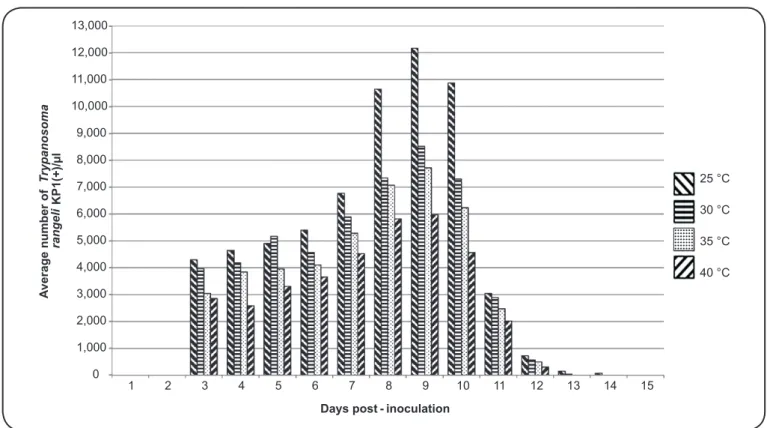
Rhodniusprolixus maintained at constant temperatures for
15 days (shelters A to D in Figure 1) only showed the presence
of T. rangeli KP1(+) in salivary glands after the third day
post-inoculation (Figure 2). The average number of parasites
detected in salivary glands increased until ten days post-inoculation and was higher in insects maintained in shelters at
25°C (Figure 2). No trypanosomes were found in the salivary
glands or rectal ampullae of insects inoculated with T. rangeli
KP1(-) or T. cruzi I.
Rhodniusprolixus kept at constant temperatures for 15 days
(shelters A to D in Figure 1) showed statistically signifi cant
differences in mortality between the fi ve treatments tested (p = 0.015, F-ratio = 7.4, df = 4 two-way ANOVA), between the temperatures tested (p = 0.028, F-ratio = 5.2, df = 3 two-way ANOVA), and a signifi cant interaction between treatments and temperatures (p = 0.038, F-ratio = 4.2, df = 1 two-way ANOVA). Post-hoc analysis showed only statistical significances in
mortalities of control R. prolixus (non-inoculated or inoculated
with Tobie medium) between the lower temperatures (25 and 30°C) and higher temperatures (35 and 40°C) (p < 0.05 Scheffé
test). Insects inoculated with T. rangeli KP1(-) showed statistical
differences only between 35°C and the other temperatures tested (p < 0.03 Scheffé test), and insects inoculated with
T. cruzi showed statistical differences in mortality between all temperatures tested, except when comparing 30 and 40°C (p < 0.05 Scheffé test). No signifi cant differences were observed
between the temperatures in insects inoculated with T. rangeli
KP1(+) (p > 0.05 Scheffé test). All together, these results confi rm that mortalities higher than 10 insects found in both controls at 25°C and 30°C is suggesting that factors additional to hunger and inoculation procedures may have caused mortality of the
triatomines (Figure 3).
Two interactive effects of temperature and treatment on results considering mortality are of especial interest: a reduction
in mortality in R. prolixus inoculated with T. cruzi and T. rangeli
KP1(-) at 35°C (p < 0.05 Scheffé test), and, an increase in
mortality at 35°C in insects inoculated with T. rangeli KP1(+)
compared to the control (p < 0.05 Scheffé test). This suggested
that R. prolixus maintained at 35°C were possibly able to control
a parasite infection, with the exception of those inoculated with
T. rangeli KP1(+) (Figure 3). A temperature of 40°C still had
0 5 10 15 20 25 30 35
Control Tobie KP1(+) KP1(-) cruzi
Number of dead
Rhodnius prolixus
Treatment
25 °C
30 °C
35 °C
40 °C
FIGURE 3. Total number of dead Rhodnius prolixus after 15 days maintained at a constant temperature. .
Hinestroza G et. al -Behavioral fever response in Rhodnius prolixus
0 1,000 2,000 3,000 4,000 5,000 6,000 7,000 8,000 9,000 10,000 11,000 12,000 13,000
1 2 3 4 5 6 7 8 9 10 11 12 13 14 15
A
verage number of
T
rypanosoma
rangeli
KP1(+)/µl
Days post - inoculation
25 °C 30 °C 35 °C 40 °C
0 10 20 30 40 50 60
Control Tobie KP1(+) KP1(-) cruzi
A
verage daily number of
Rhodnius prolixus
Treatment
25 °C
30 °C
35 °C
40 °C
Outside 25 °C
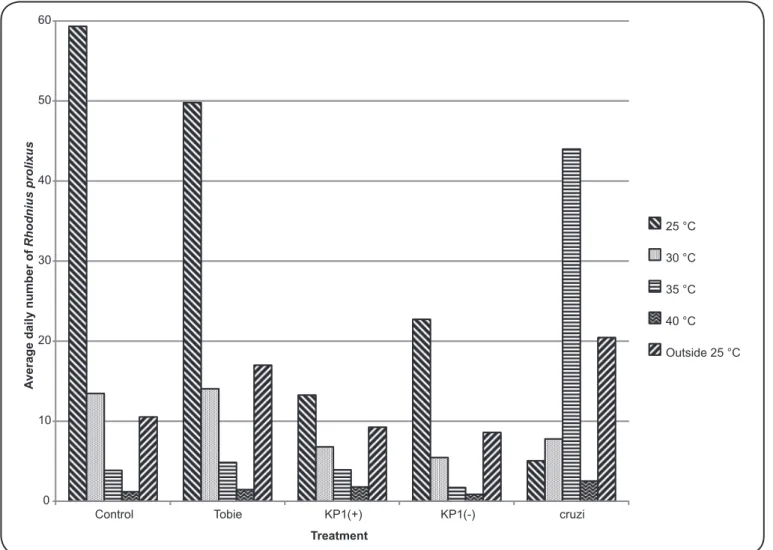
FIGURE 4. Average daily number of living Rhodnius prolixus observed over the 15 days in each evaluated temperature.
temperature on the insects was stronger and again, an increase
in mortality was observed in all treatments (Figure 3).
These results indicated that Rhodnius prolixus inoculated
only with T. rangeli KP1(-) or T. cruzi and that were free to move
between shelters with different temperatures searched for shelters with temperatures around 35°C to overcome the infection.
Interestingly, insects that were free to move between shelters
(E to H in Figure 1) showed preferences related to treatment
(p = 0.04, F-ratio = 4.1, df = 4 two-way ANOVA), temperature (p = 0.02, F-ratio = 5.8, df = 3 two-way ANOVA), and a signifi cant interaction between both factors (p = 0.042, F-ratio
= 4.0, df = 1 two-way ANOVA) (Figure 4). Post-hoc analysis
showed statistical signifi cant preferences in R. prolixus in control
experiments (non-inoculated or inoculated with Tobie medium) for shelters at 25°C (p < 0.02 Scheffé test), 30°C, or 25°C outside (p < 0.05 Scheffé test), and that insects consistently avoided
shelters at 35°C or 40 °C (Figure 4). Insects inoculated with
T. rangeli KP1(+) or KP1(-) also showed a preference for shelters at 25°C (p < 0.05 Scheffé test); however, on average more nymphs
inoculated with T. cruzi were found in shelters at 35°C (p < 0.03
Scheffé test) or at 25°C outside (p < 0.04 Scheffé test) (Figure 4).
Finally, a post-hoc comparison of treatments and temperatures
showed that R. prolixus inoculated with T. cruzi signifi cantly
preferred shelters at 35°C in comparison to all other treatments at the same temperature (p < 0.05 Scheffé test).
In summary, R. prolixus inoculated with T. rangeli [KP1(+)
or KP1(-)] showed higher mortality rates and resulted in fewer live insects after 15 days on average, compared to non-inoculated
insects, and insects inoculated with Tobie or with T. cruzi (Figure 4).
DISCUSSION
Insects can respond to microbial and parasite infections by altering their thermoregulatory behavior and developing behavioral fever. An increase in body temperature above normal thermal levels from moving to warmer areas has been shown to favor host survival in a number of host-pathogen
interactions(4) (5) (6) (7) (8) (9), including Rhodnius prolixus-Trypanosoma
interactions (Figure 3 and Figure 4).
Thomas et al.(11) demonstrated behavioral fever in Xenopsylla
cheopis infected with Yersinia pestis. Results showed that fl eas
infected with Yersinia bacteria did not exhibit preferences for
Triatominae insects exposed to constant light sources exhibit
a strong, negative, phototactic response(29). Our experiments
used this phototactic response to induce infected Rhodnius
prolixus to move to one of the four dark shelters with different temperatures available in the experimental arena.
We hypothesized that R. prolixus inoculated with T. rangeli
KP1(+)and T. rangeli KP1(-) should behaviorally search for
shelters with higher temperatures to overcome the infection with
parasites that are pathogenic for triatomines(14) (15). However, our
experiments with nymphs maintained at constant temperatures showed that non-inoculated triatomines or insects inoculated with Tobie presented a higher mortality at 35°C and 40°C (Figure 3). Therefore, individuals must achieve a balance between temperatures high enough to reduce the infection, but not survival.
Trypanosoma cruzi and T. rangeli in Tobie culture medium
under laboratory conditions are incubated at 25°C to 28°C(32).
Constant temperature above 30°C is lethal for trypanosomes in culture medium (unpublished data from our group), suggesting that shelters at 35°C could provide the ideal solution to reduce infection with minimum impact on survival.
The interaction between temperature and treatments presented two possible results depending on the parasite that was inoculated: a synergistic effect between temperature and parasites (in this case an increase in mortality was expected in triatomines exposed to higher temperatures compared to those exposed to lower temperatures); and, an inhibitory effect between temperature and parasites (in this case lower mortality was expected in triatomines exposed to higher temperatures than in those exposed to lower temperatures). We regarded the second possibility as the true behavioral fever response.
Our results showed both kinds of possible responses (Figure 3).
Rhodnius prolixus showed an increase in mortality when
T. rangeli KP1(+) and higher temperature were positively
associated (See Figure 3). Conversely, a reduction in mortality
of R. prolixus was observed when insects were inoculated with
T. rangeli KP1(-) or T. cruzi exclusively at 35°C (Figure 3).
The differences in responses observed between R. prolixus
inoculated with T. rangeli KP1(+) and KP1(-) can be partially
explained by coevolutionary processes. T. rangeli KP1(-) is a
trypanosome circulating in the Andes mountains and is mainly
associated with Rhodnius of the pallescens group, while
T. rangeli KP1(+) circulates to the east of the Andes in close
association with Rhodnius of the prolixus group(21) (33).
Given the results from R. prolixus maintained at a constant
temperature, we expected that bugs free to move to a shelter would prefer 35°C, but only if they were inoculated with
T. rangeli KP1(-) or T. cruzi.
Experiments with free-moving triatomines showed preferences for shelters at 25 and 30°C in both non-inoculated
R. prolixus and those inoculated with Tobie medium (Figure 4). These results were unsurprising as this is the temperature range maintained in the laboratory breeding conditions and corresponds to the temperatures recommended
for triatomines care and maintenance procedures(34).
However, when nymphs of R. prolixus were inoculated with
T. cruzi they showed behavioral fever responses by moving to
shelters at 35°C (Figure 4).
A possible explanation for the behavioral fever response
observed in R. prolixus could be the route of inoculation.
Intracoelomic inoculation introduces T. cruzi (a non-pathogenic
Trypanosoma for triatomines) directly into the hemocoel, where
T. cruzi is not present under natural conditions(35). In other words, the presence of a foreign cell in the hemocoel produced a behavioral fever response to overcome the infection and reduce
mortality (Figure 3).
Why was behavioral fever not observed in R. prolixus
inoculated with T. rangeli KP1(-)? A possible explanation is a
recently discovered trypanolytic protein in R. prolixus that can
function as an additional barrier against parasites. This molecule
is responsible for inhibiting the development of T. rangeli KP1(-),
making R. prolixus resistant to this kind of parasite strain(17). In
addition, it has been demonstrated that behavioral fever in insects is
a specifi c response expressed toward a small subset of pathogens(8).
From an immunological point of view, behavioral fever responses to a subset of pathogens can be expected as different
survival of T. rangeli and T. cruzi in the hemolymph of R. prolixus
has been observed after inoculation into the hemocoel(35) (36).
Differences in the survival of parasites have been related to an induction of lysozymes, agglutinating, prophenoloxidase, and
hemocyte activity(36) (37). For instance, the presence of T. rangeli
in the hemocoel of R. prolixus activates the prophenoloxidase
system, phagocytosis, hemocyte microaggregation, superoxide
and nitric oxide activity, and eicosanoid biosynthesis(38).
This study of R. prolixus inoculated intracoelomically with
Trypanosomes showed that behavioral fever should only be expected in those cases where hosts have not coevolved to make the appropriate response against parasites. As with other
insects(4) (5) (6) (7) (8) (9), R. prolixus is only able to develop behavioral
fever against unknown microorganisms in the hemolymph. Future experiments with other triatomine species, including different routes of infection, such as ingesting blood infected with trypanosomes, would confi rm the effect of behavioral fever on Trypanosoma spp. It would also be interesting to evaluate the effect of behavioral fever on natural populations of triatomines exposed to pathogens that are potentially involved in biological
control, such as fungi(9) (39) (40) (41) (42) (43) and viruses(44) (45).
Confl ict of interest
The authors declare that there is no confl ict of interest.
Acknowledgments
We would like to thank Dr. Gustavo Vallejo (Laboratorio de Investigaciones
en Parasitología Tropical, Universidad del Tolima, Ibagué, Colombia) for supplying the T. rangeli KP1(-) strain.
Financial support
This study was supported by the Research Funds of the Faculty of Sciences, Universidad de Los Andes, Bogotá.
REFERENCES
1. Casterlin ME, Reynolds WW. Behavioral fever in the crayfi sh.
Hydrobiologia 1977; 56:99-101.
2. Cabanac M, Rossetti Y. Fever in snails, refl ection on a negative
result. Comp Physiol Biochem1987; 87A:1017-1020.
3. Sherman E, Baldwin L, Fernandez G, Deurrel E. Fever and thermal
tolerance on the toad Bufo marinus. J Therm Biol 1991; 16:297-301.
4. Boorstein SM, Conner WE. Endotoxin-induced behavioral fever in
the Madagascar cockroach Gromphadorhina portentosa. J Insect
Physiol 1984; 30:327-330.
5. Boorstein SM, Ewald PW. Costs and benefi ts of behavioral fever
in Melanoplus sanguinipes infected by Nosema acridophagus.
Physiol Zool 1987; 60:586-595.
6. McClain E, Magnuson P, Warner SJ. Behavioural fever in a namib
desert tenebrionid beetle, Onymacris plana. J Insect Physiol 1988;
34:279-284.
7. Watson DW, Mullens BA, Petersen JJ. Behavioral fever
response of Musca domestica (Diptera: Muscidae) to infection
by Entomophthora muscae (Zygomycetes: Entomophthorales).
J Invert Pathol 1993; 61:10-16.
8. Adamo SA. The specifi city of behavioral fever in the cricket
Acheta domesticus.J Parasitol 1998; 84:529-533.
9. Ouedraogo RM, Cusson M, Goettel MS, Brodeur J. Inhibition of
fungal growth in thermoregulating locusts, Locusta migratoria,
infected by the fungus Metarhizium anisopliae var acridum.
J Invert Pathol 2003; 82:103-109.
10. Moore J. Parasites and the behavior of animals. Oxford: Oxford University Press; 2002.
11. Thomas RE, Karstens RH, Schwan TG. Effect of Yersinia pestis infection on temperature preference and movement of the oriental
rat fl ea (Xenopsylla cheopis) (Siphonaptera: Pulicidae). J Med
Entomol 1993; 30:209-213.
12. Lent H, Wygodzinsky P. Revision of the Triatominae (Hemiptera,
Reduviidae), and their signifi cance as vectors of Chagas disease. Bull Am Mus Nat Hist 1979; 163:123-520.
13. Organización Mundial de la Salud. Reporte del Grupo de trabajo científi co sobre la enfermedad de Chagas, 2005. Ginebra: TDR/ Organización Mundial de la Salud;
14. Guhl F, Vallejo G. Trypanosoma (Herpetosoma) rangeli Tejera,
1920: An updated review. Mem Inst Oswaldo Cruz 2003; 98: 435-442.
15. Schaub GA. Pathogenicity of trypanosomatids on insects. Parasitol
Today 1994; 10:463-468.
16. Moncayo A, Ortiz Yanine MI. An update on Chagas disease (human American trypanosomiasis). Ann Trop Med Parasitol
2006; 100:663-677.
17. Pulido XC, Perez G, Vallejo GA. Preliminary characterization
of a Rhodnius prolixus hemolymph trypanolytic protein, this
being a determinant of Trypanosoma rangeli KP1(+) and KP1(-)
subpopulations' vectorial ability. Mem Inst Oswaldo Cruz 2008; 103:172-179.
18. Zingales B, Andrade SG, Briones MRS, Campbell DA, Chiari
E, Fernandes O, et al. A new concensus for Trypanosoma cruzi
intraspecifi c nomenclature: Second revision meeting recommends TcI to TcVI. Mem Inst Oswaldo Cruz 2009; 104:1051-1054.
19. Vallejo GA, Guhl F, Carranza JC, Lozano E, Sanchez JL, Jaramillo
JC, et al. kDNA markers defi ne two major Trypanosomarangeli lineages in Latin-America. Acta Trop 2002; 81:77-82.
20. Herrera C, Bargues MD, Fajardo A, Montilla M, Triana O, Vallejo GA, et al. Identifying four Trypanosoma cruzi I isolate haplotypes from different geographic regions in Colombia. Infect Genet Evol
2007; 7:535-539.
21. Vallejo GA, Guhl F, Carranza JC, Triana O, Pérez G, Ortiz PA,
et al. Interacción tripanosoma-vector-vertebrado y su relación con
la sistemática y la epidemiología de la tripanosomiasis americana.
Biomédica2007; 27:110-118.
22. Sánchez IP, Pulido XC, Carranza JC, Triana O, Vallejo GA.
Inmunidad natural de R. prolixus (Hemiptera: Reduviidae:
Triatominae) frente a la infección con Trypanosoma (Herpetosoma)
rangeli KP1(-) aislados de R. pallescens, R. colombiensis y R.
ecuadoriensis. Rev Asoc Col Cien Biol 2005; 17:108-118. 23. Lazzari CR. Temperature preference in Triatoma infestans
(Hemiptera: Reduviidae). Bull Entomol Res 1991; 81:273-276. 24. Pires HHR, Lazzari CR, Schilman PE, Diotaiuti L, Lorenzo MG.
Dynamics of thermopreference in the Chagas disease vector
Panstrongylus megistus (Hemiptera: Reduviidae). J Med Entomol 2002; 39:716-719.
25. Guarneri AA, Lazzari C, Xavier AAP, Diotaiuti L, Lorenzo MG. The effect of temperature on the behaviour and development of
Triatoma brasiliensis. Physiol Entomol 2003; 28:185-191.
26. Minoli SA, Lazzari CR. Chronobiological basis of thermopreference
in the haematophagous bug Triatoma infestans. J Insect Physiol
2003; 49:927-932.
27. Schilman PE, Lazzari CR. Temperature preference in Rhodnius
prolixus, effects and possible consequences. Acta Trop 2004;
90:115-122.
28. Vallejo GA, Marinkelle CJ, Guhl F, de Sanchez N. Laboratory
maintenance of Trypanosoma (Herpetosoma) rangeli Tejera, 1920.
Rev Biol Trop 1986; 34:75-81.
29. Reisenman CE, Lazzari CR, Giurfa M. Circadian control of
photonegative sensitivity in the haematophagous bug Triatoma
infestans. J Comp Physiol A 1998; 183:533-541.
30. Molyneux DH, Ashford RW. The Biology of Trypanosoma and
Leishmania, Parasites of Man and Domestic Animals. London: Taylor and Francis; 1983. 294p.
31. Zar JH. Biostatistical Analisis. New Jersey: Prentice Hall; 1999. 663p.
32. Bernabé C, Tibayrenc M. Trypanosoma cruzi: long-term
sub-cultures in two different culture media do not confi rm the existence of highly versatile multilocus genotypes. Int J Parasitol 2004; 34:779-784.
33. Urrea DA, Carranza JC, Cuba CA, Gurgel-Goncalves R, Guhl F, Schofi eld CJ, et al. Molecular characterisation of Trypanosoma
rangeli strains isolated from Rhodnius ecuadoriensis in Peru, R.
colombiensis in Colombia and R. pallescens in Panama, supports a
co-evolutionary association between parasites and vectors. Infect
Genet Evol 2005; 5:123-129.
34. Azambuja P, Garcia ES. Care and maintenance of triatomine
colonies. In: Crampton JM, Beard CB, Louis C, editors. The
molecular biology of insect disease vectors: a methods manual.
London: Chapman & Hall; 1997. p. 56-64.
35. Mello CB, Azambuja P, Garcia ES, Ratcliffe NA. Differential in
vitro and in vivo behavior of three strains of Trypanosoma cruzi in
the gut and hemolymph of Rhodnius prolixus. Exp Parasitol 1996;
82:112-121.
36. Mello CB, Garcia ES, Ratcliffe NA, Azambuja P. Trypanosoma
cruzi and Trypanosoma rangeli: Interplay hemolymph components
37. Azambuja P, Feder D, Mello CB, Gomes SAO, Garcia ES. Immunity
in Rhodnius prolixus: Trypanosomatid-vector interactions.
Mem Inst Oswaldo Cruz 1999; 94 (suppl I):219-222.
38. Azambuja P, Ratcliffe NA, Garcia ES. Towards an understanding
of the interactions of Trypanosoma cruzi and Trypanosoma rangeli
within the reduviid insect host Rhodnius prolixus. An Acad Bras
Cienc 2005; 77:397-404.
39. Inglis GD, Johnson DL, Goettel MS. Effects of temperature
and thermoregulation on mycosis by Beauveria bassiana in
Grasshoppers. Biol Control 1996; 7:131-139.
40. Fargues J, Luz C. Effects of fl uctuating moisture and temperature
regimes on the infection potential of Beauveria bassiana for
Rhodnius prolixus. J Invert Pathol 2000; 75:202-211.
41. Lecuona RE, Rodriguez J, La Rossa FR. Effect of constant and
cyclical temperatures on the mortality of Triatoma infestans
(Klug) (Hemiptera:Reduviidae) treated with Beauveria bassiana (Bals.) Vuill. (Hyphomycetes). Neotrop Entomol 2005; 34:675-679. 42. Pedrini N, Mijailovsky SJ, Girotti JR, Stariolo R, Cardozo RM,
Gentile A, et al. Control of pyrethroid-resistant Chagas disease
vectors with entomopathogenic fungi. PLoS Negl Trop Dis 2009; 3:e434.
43. Anderson RD, Blandford S, Jenkins NE, Thomas MB. Discriminating fever behavior in house fl ies. PLoS ONE 2013;
8:e62269.
44. Muscio OA, La Torre JL, Bonder MA, Scodeller EA. Triatoma
virus pathogenicity in laboratory colonies of Triatoma infestans
(Hemiptera: Reduviidae). J Med Entomol 1997; 34:253-256. 45. Rozas-Dennis GS, Cazzaniga NJ. Effects of Triatoma virus (TrV)
on the fecundity and moulting of Triatoma infestans (Hemiptera: